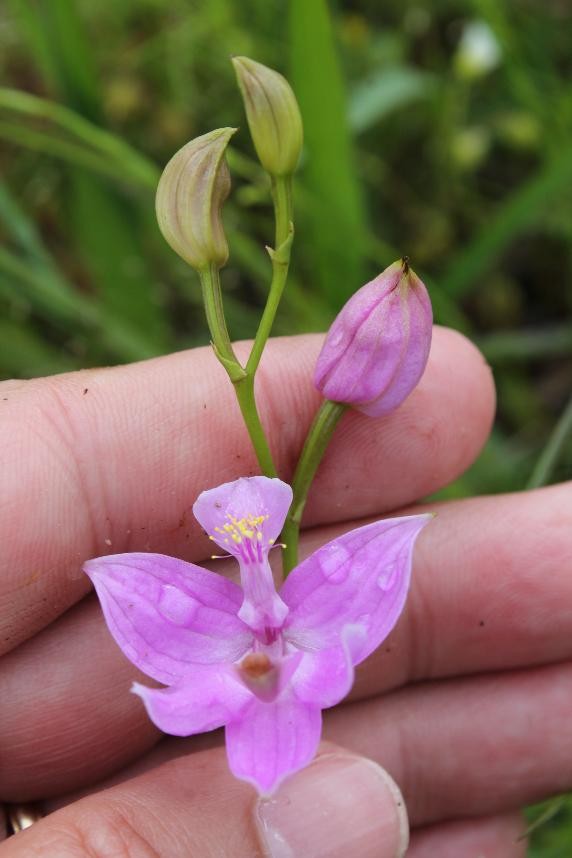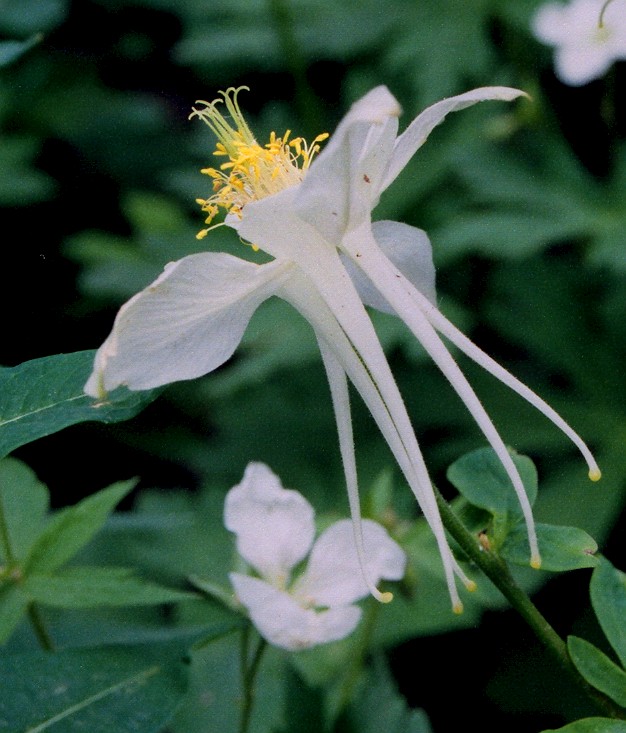
White columbine (genus Aquilegia) in subalpine meadow near Snowbird, Utah.
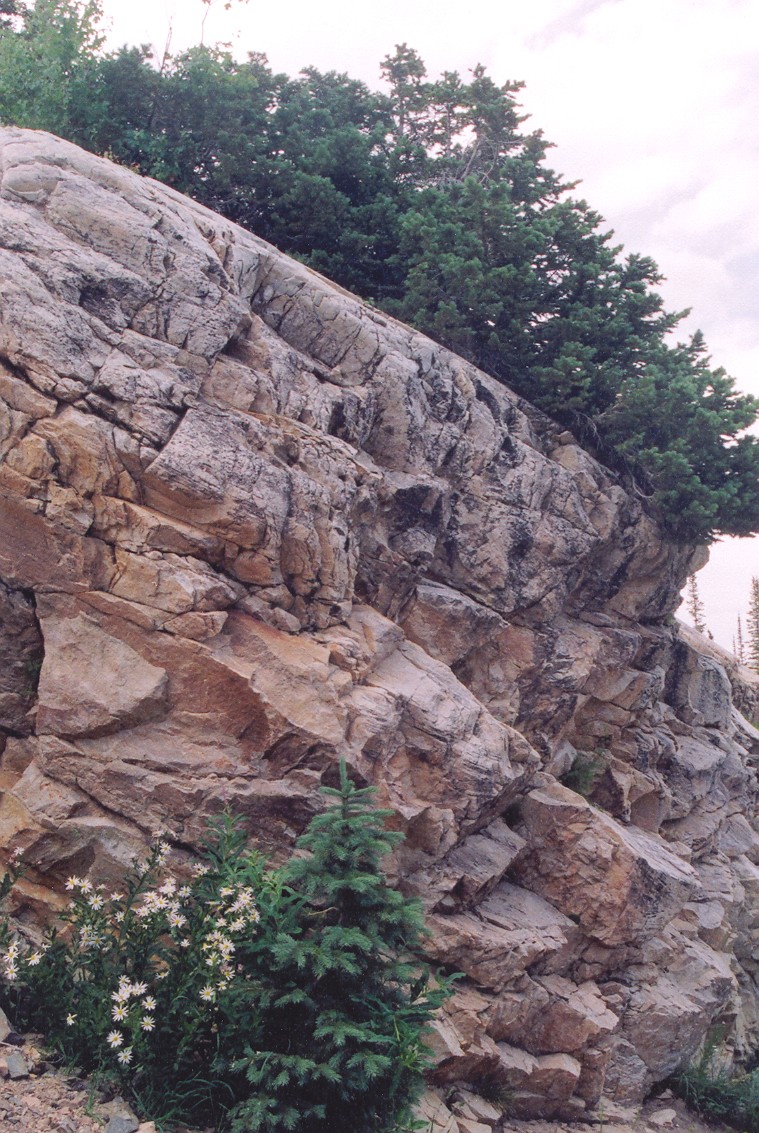
Timberline krummholz trees near Snowbird, Utah.
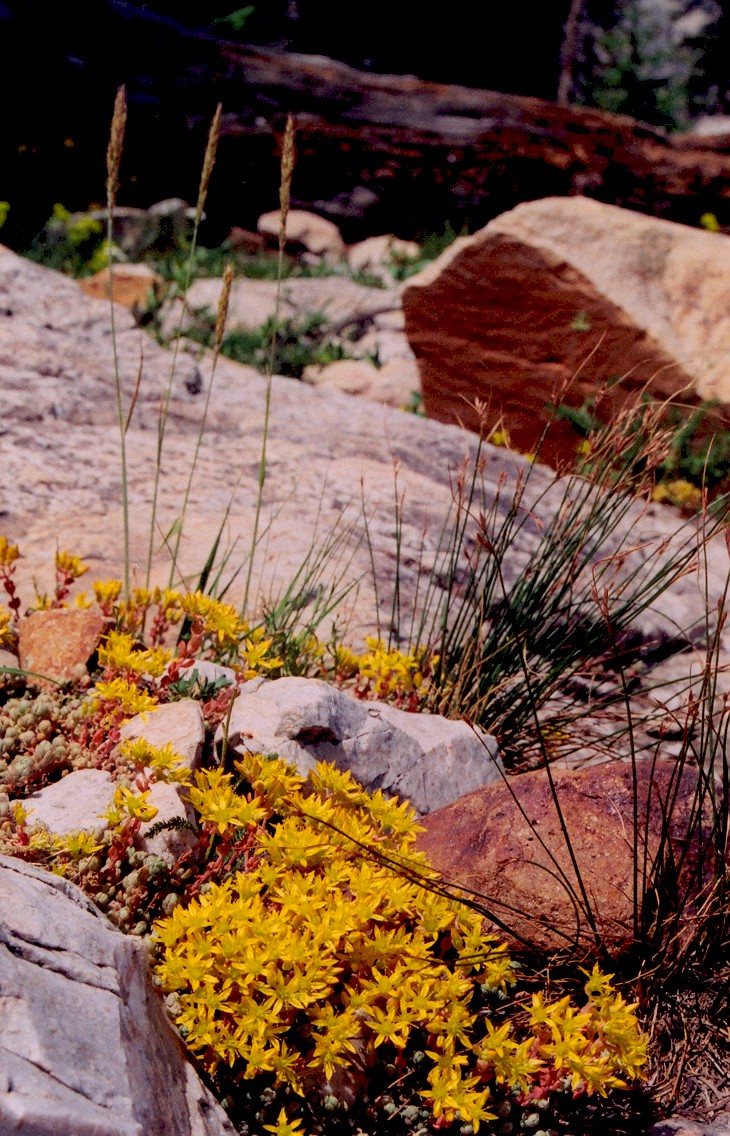
Sedum flowers on rocks near alpine timberline near Snowbird, Utah.
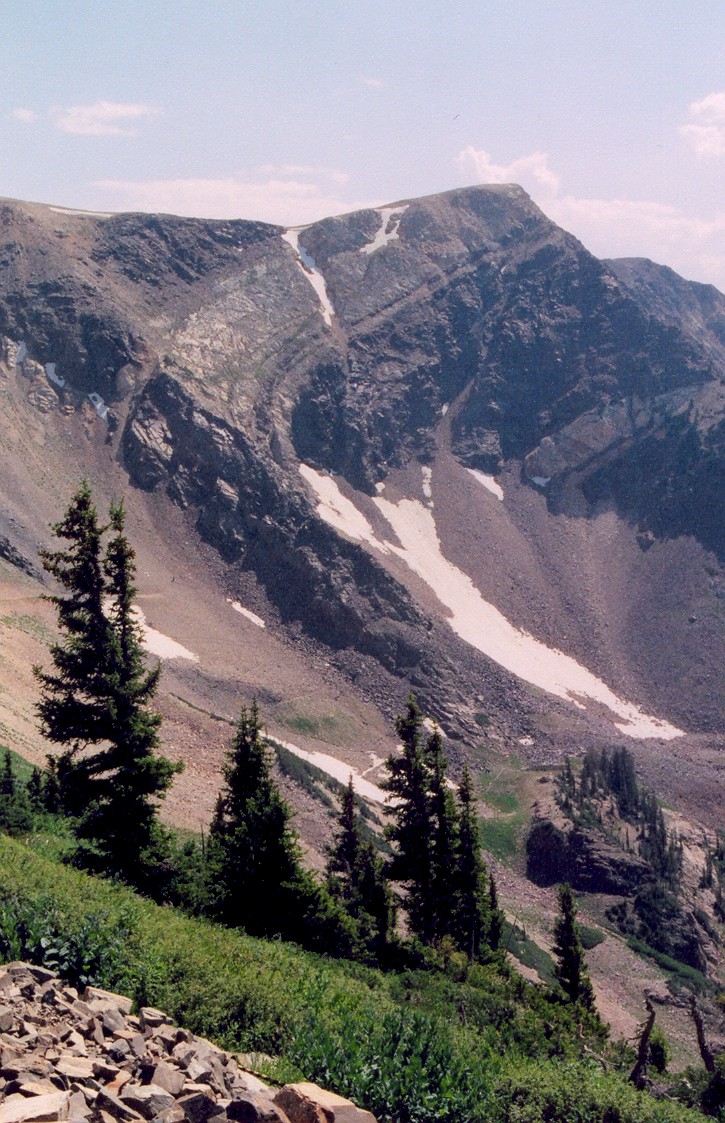
Alpine tundra and subalpine conifers near Snowbird, Utah.
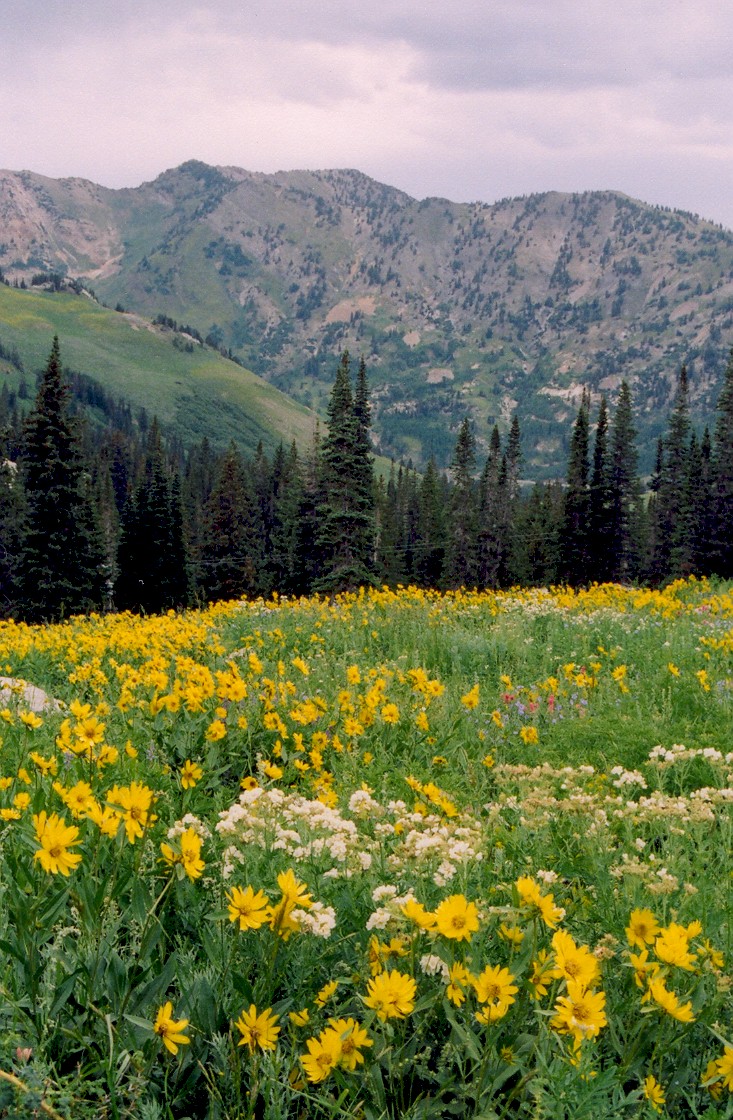
Subalpine meadow (dominated by Arnica cordifolia) below alpine tundra near Snowbird, Utah.
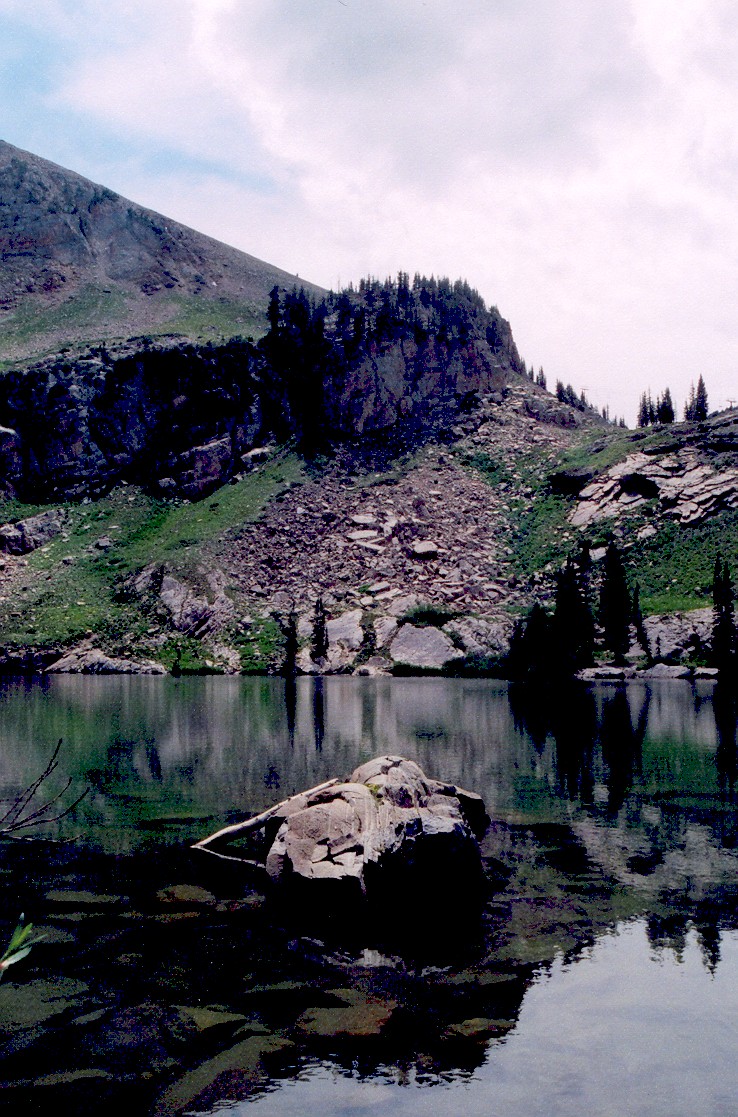
Alpine lake near Snowbird, Utah.
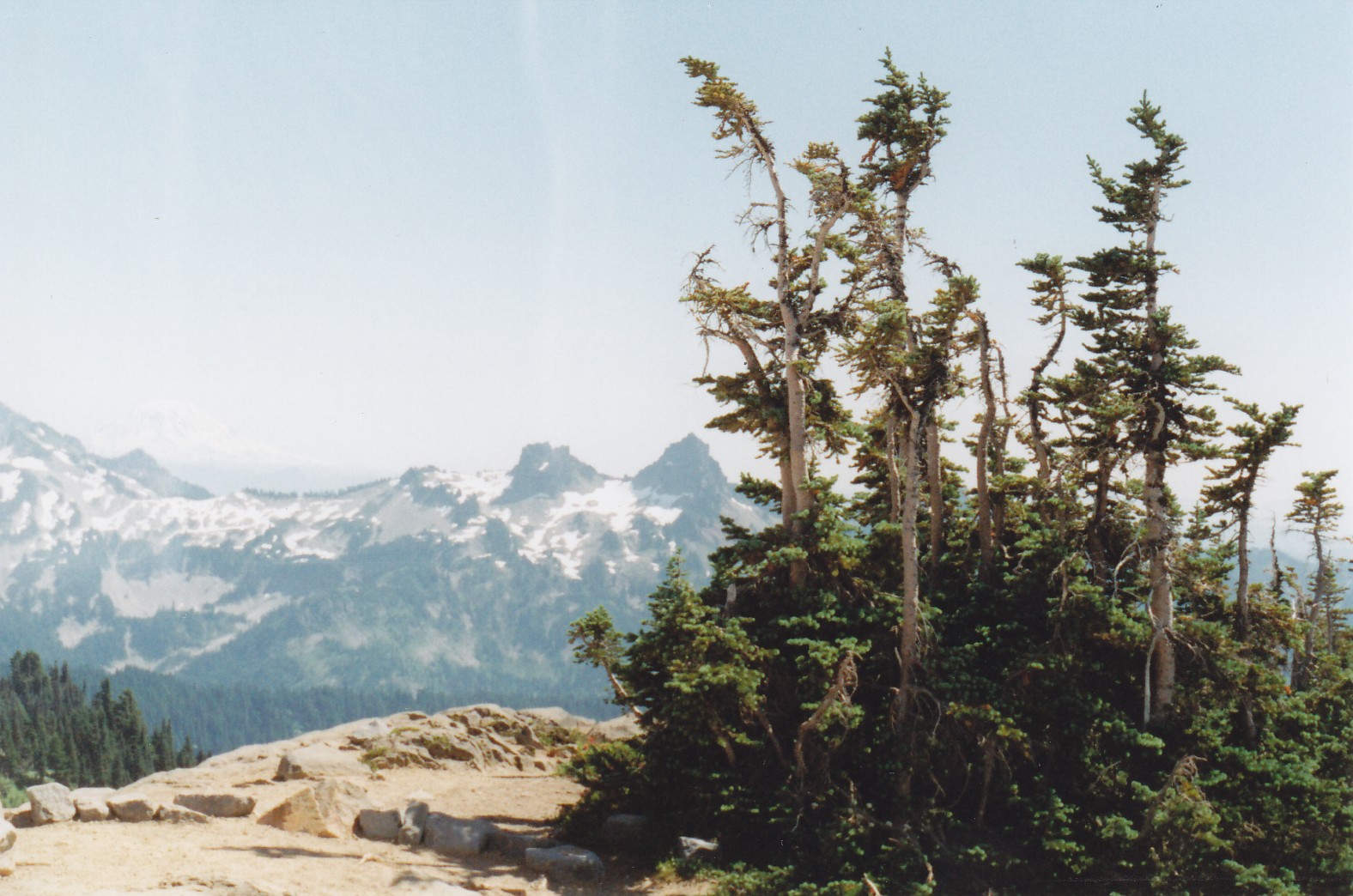
Krummholz conifers near timberline near Mt. Rainier, Washington. Krummholz trees grow short enough to stay under the protective snow in the winter, and their branches grow primarily on the leeward side of the trunk.
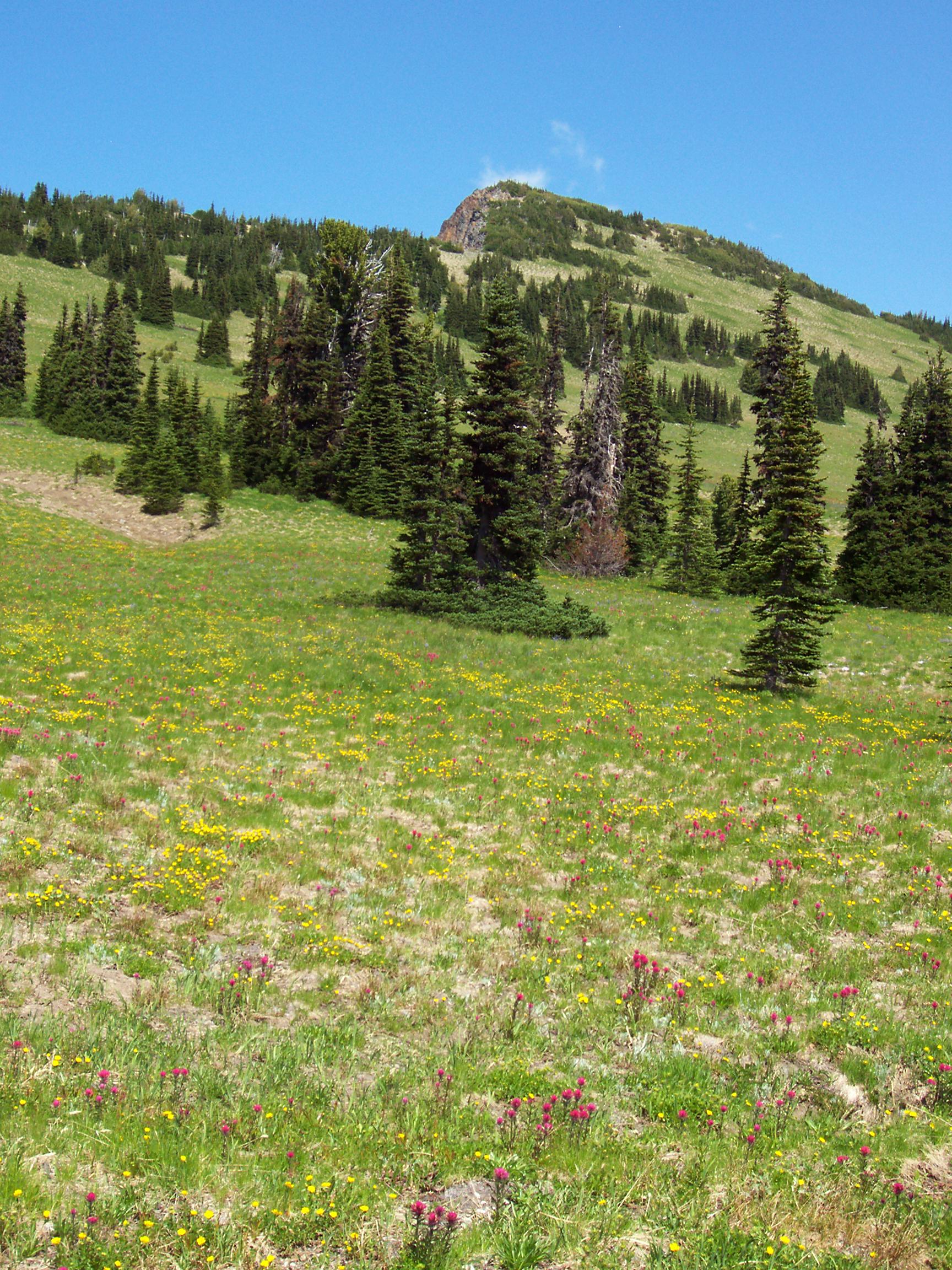
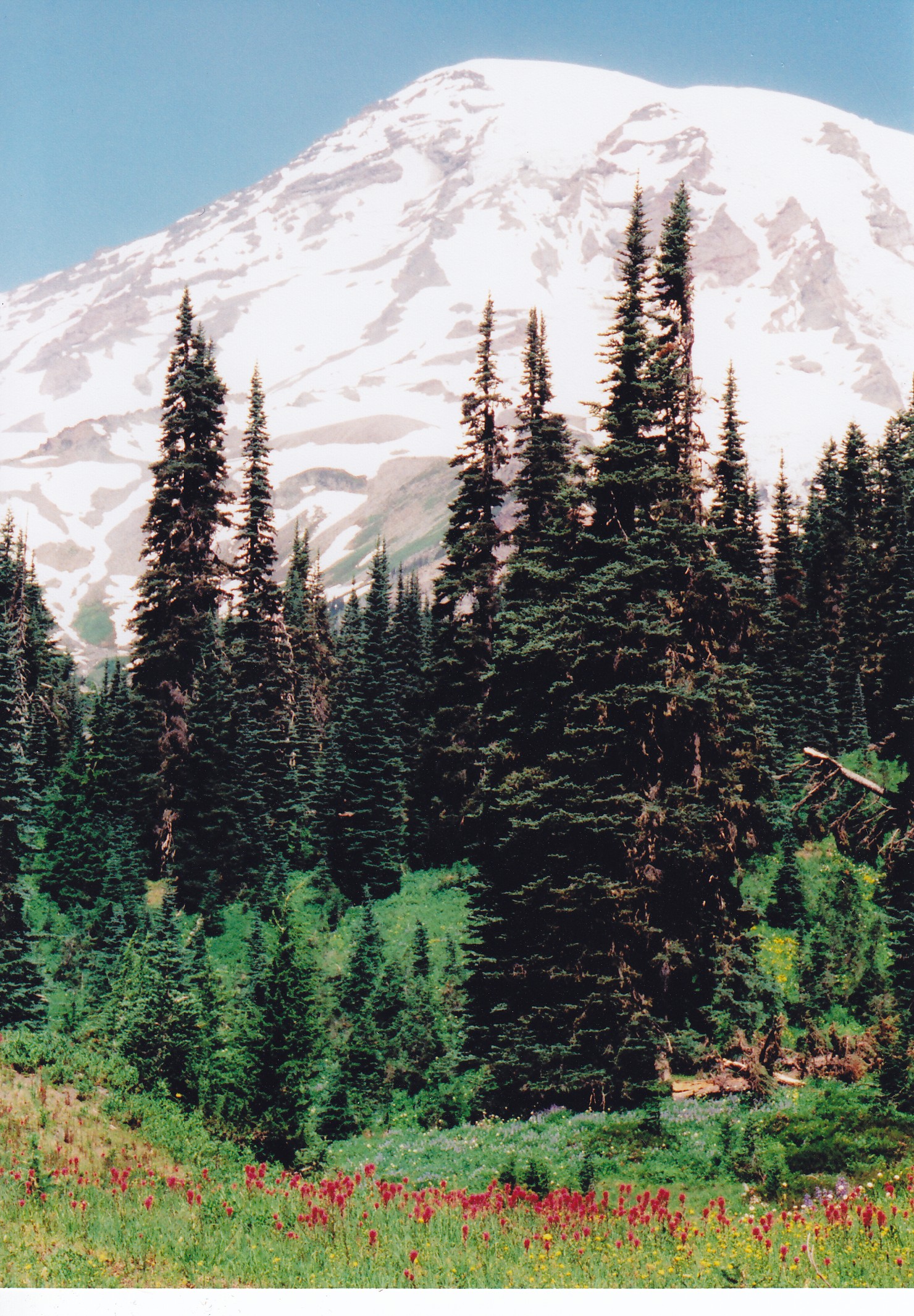
Indian paintbrushes (genus Castilleja) in a subalpine meadow near Mt. Rainier in Washington.
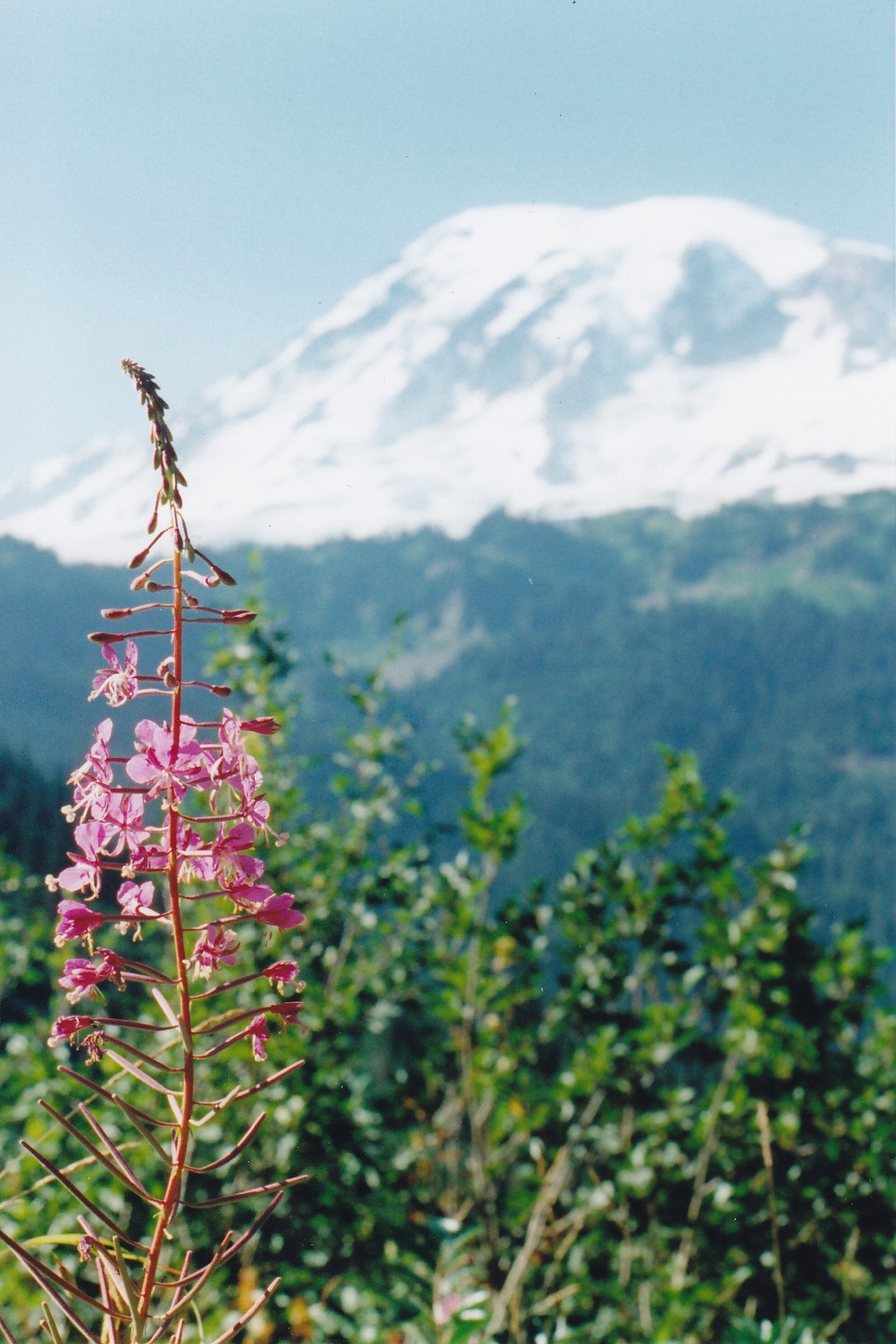
Fireweed (Chamaenerion angustifolium, formerly Epilobium) in a subalpine opening near Mt. Rainier in Washington.
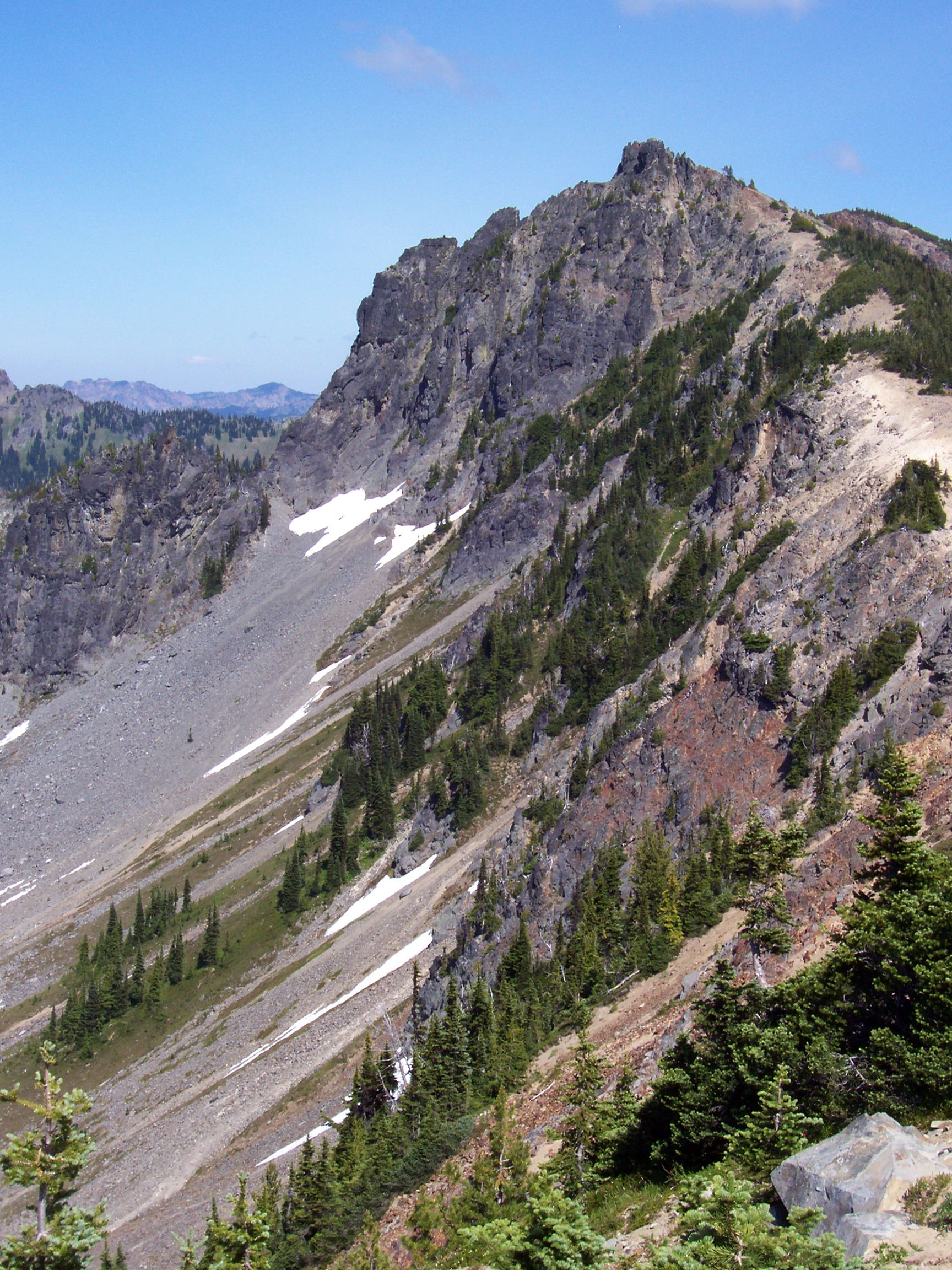
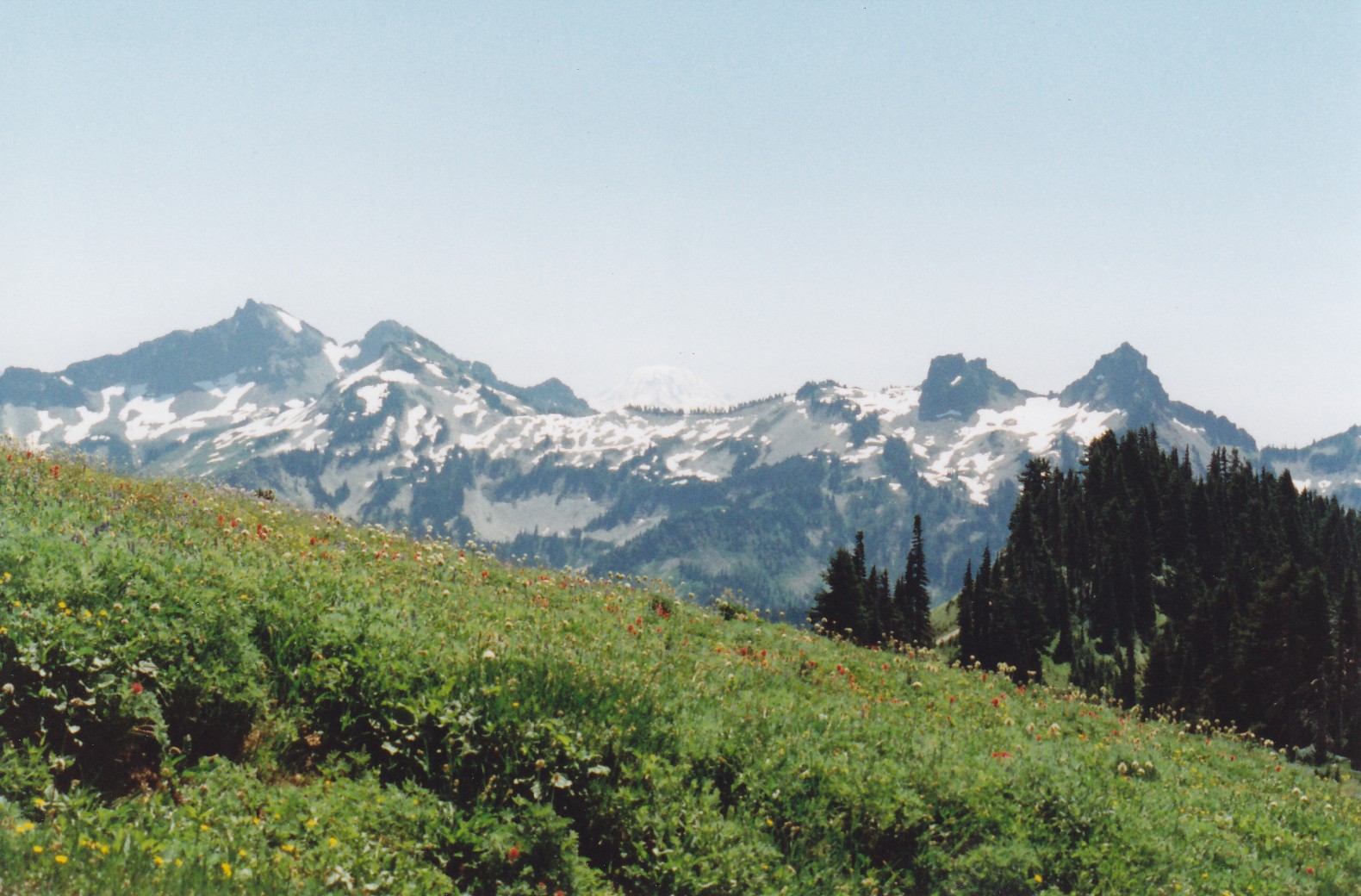
Tatoosh Mountains near Mr. Rainier, with alpine tundra and subalpine meadow vegetation.
A subalpine meadow in Montana.
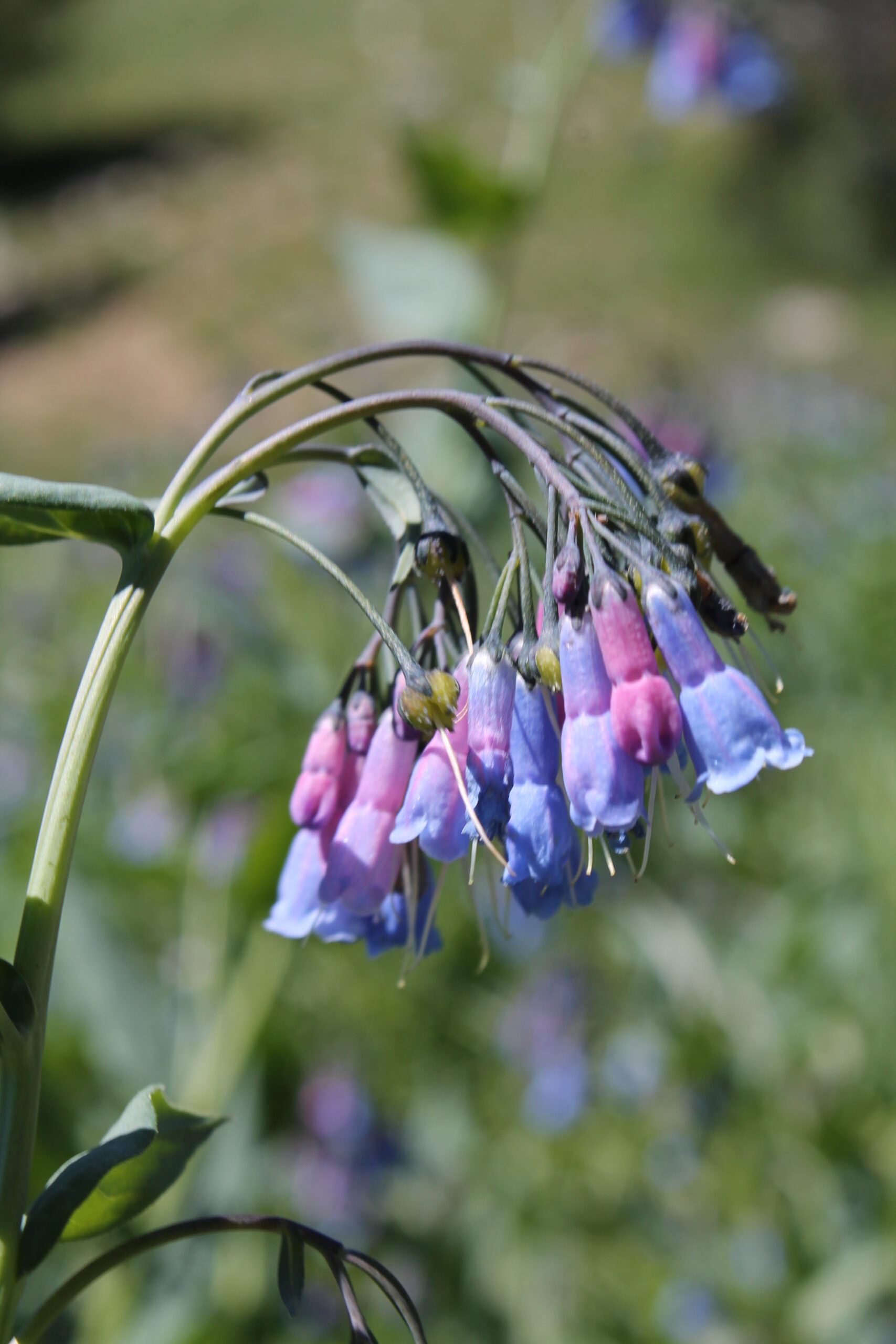
Mertensia bluebells in a subalpine meadow in Montana.
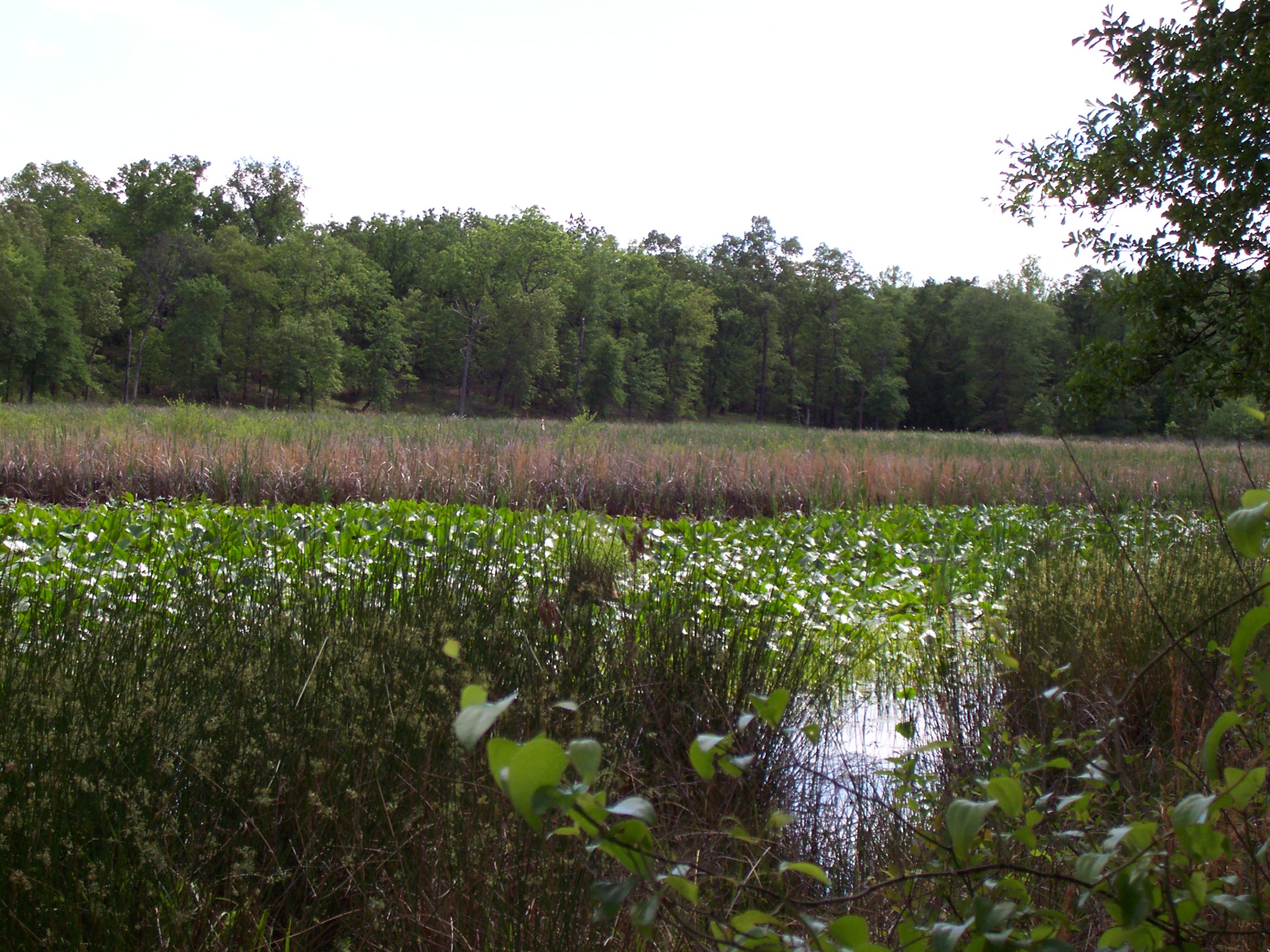
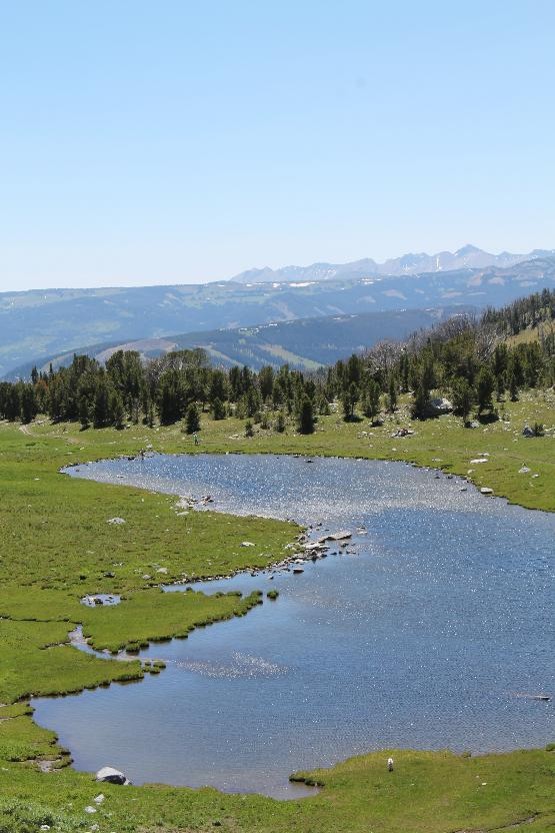
Pond in alpine tundra in Montana.
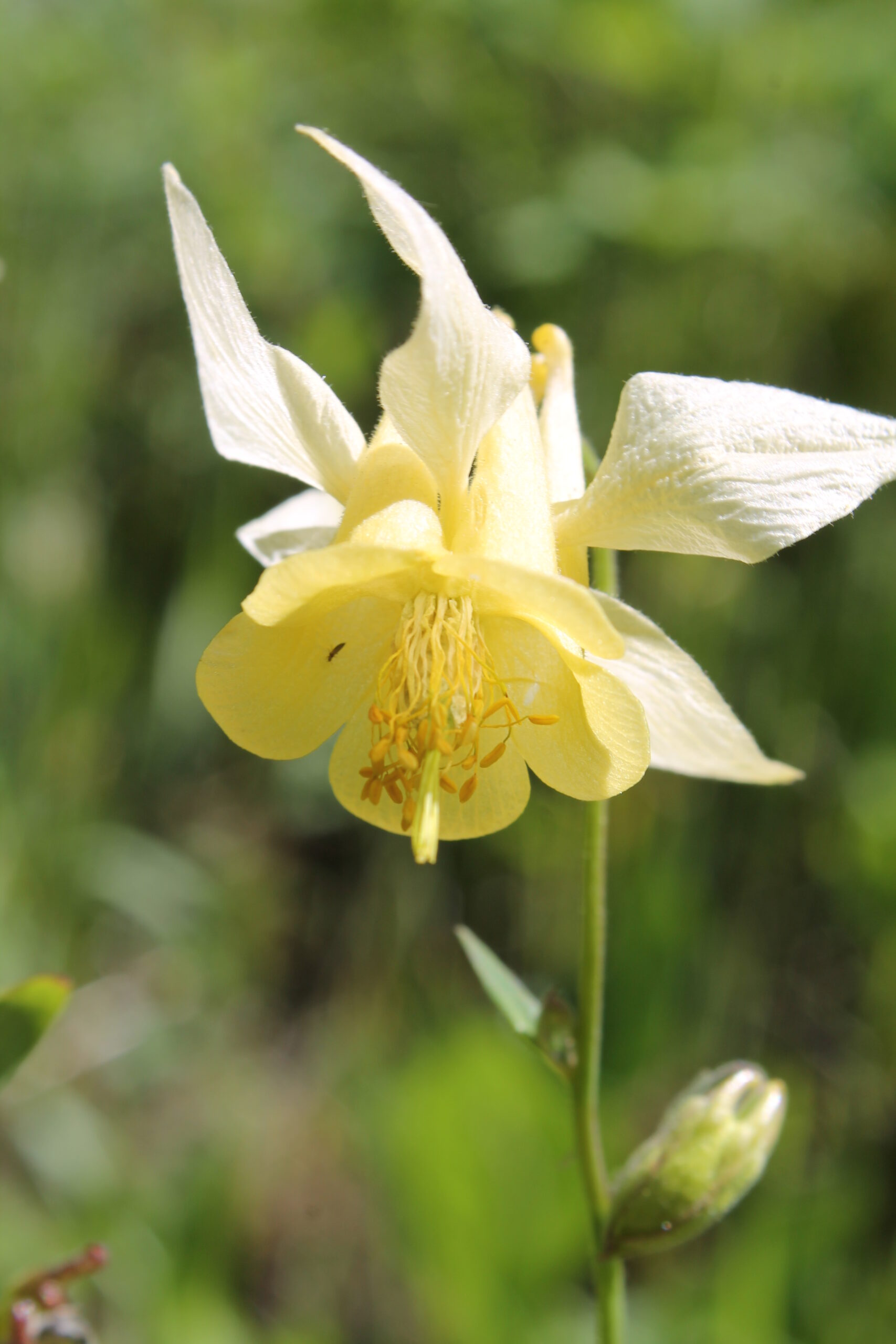
Columbine (genus Aquilegia) in a subalpine meadow in Montana.
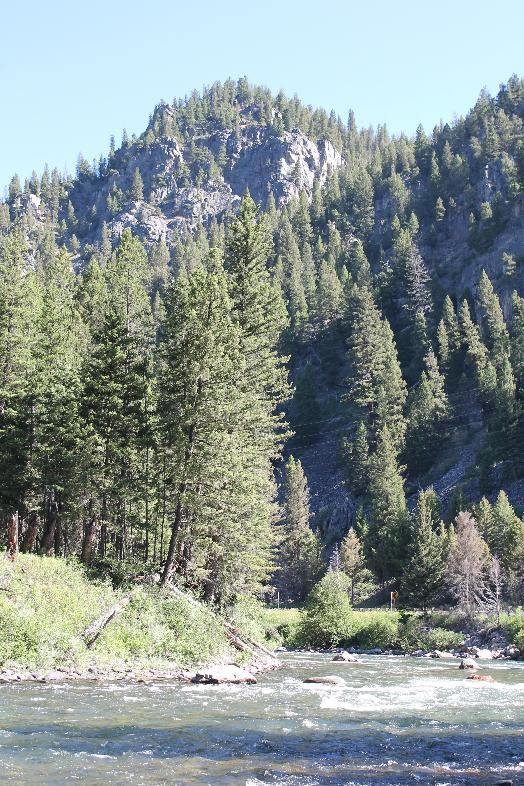
Gallatin River, subalpine zone, Montana.
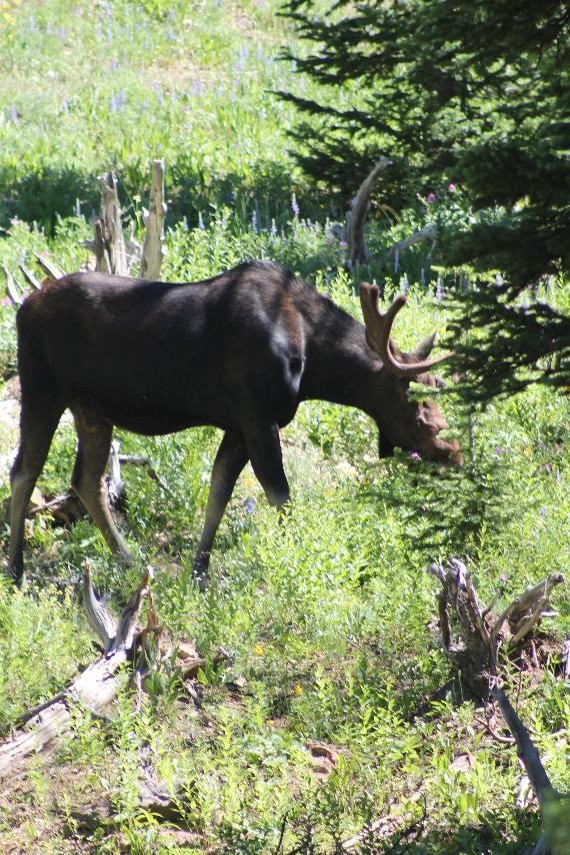
Moose in subalpine meadow in Montana.
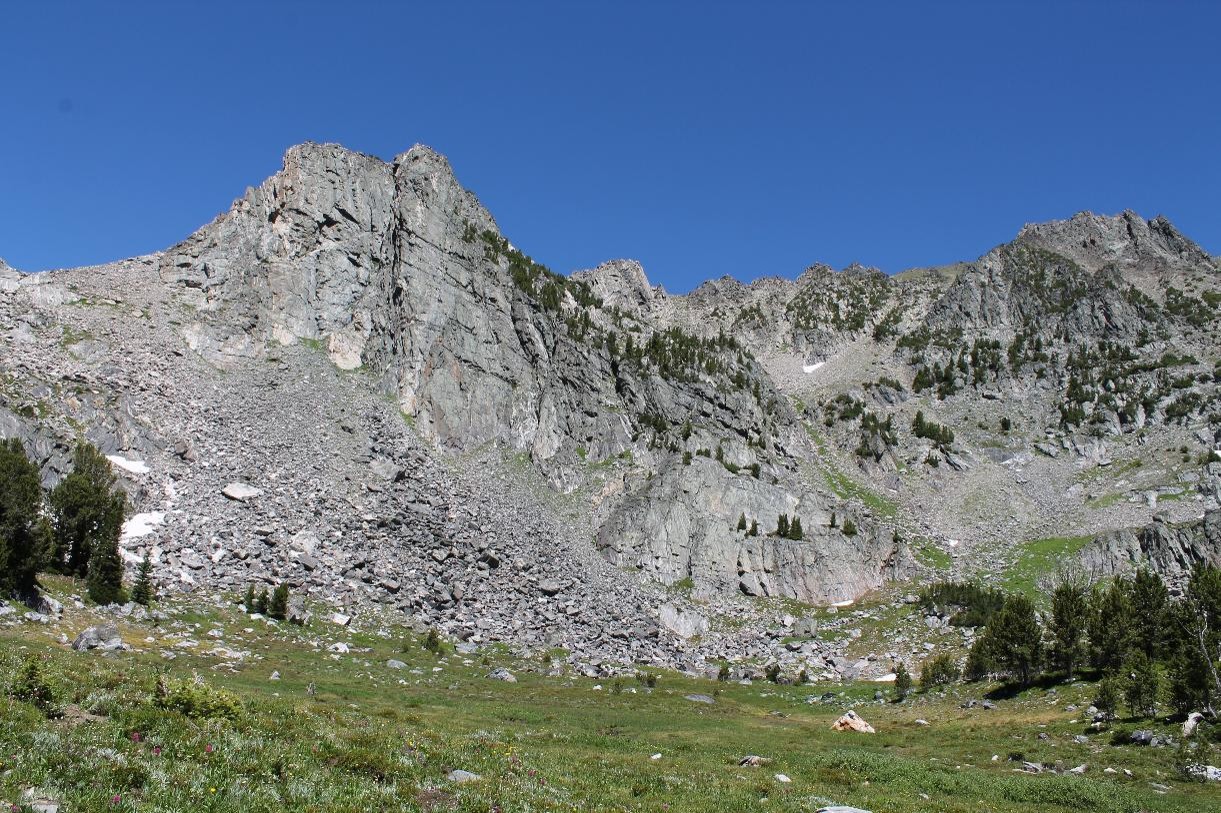
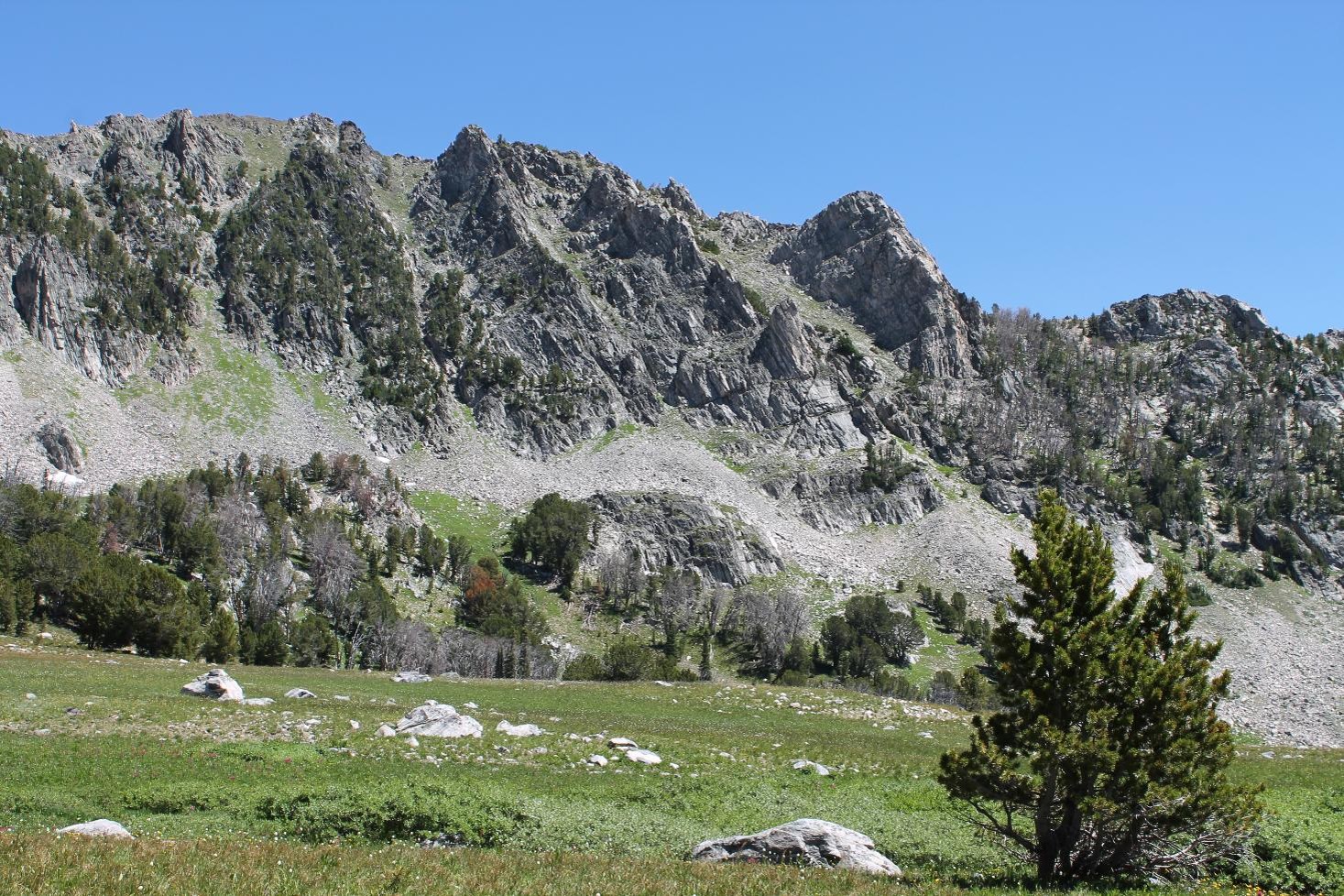
Subalpine meadow below alpine tundra in Montana.
Hoosier Pass through the alpine tundra of Colorado, snowfields in June.
Alpine tundra above subalpine conifers near Crestone, Colorado.
Alpine lake above Crestone, Colorado.
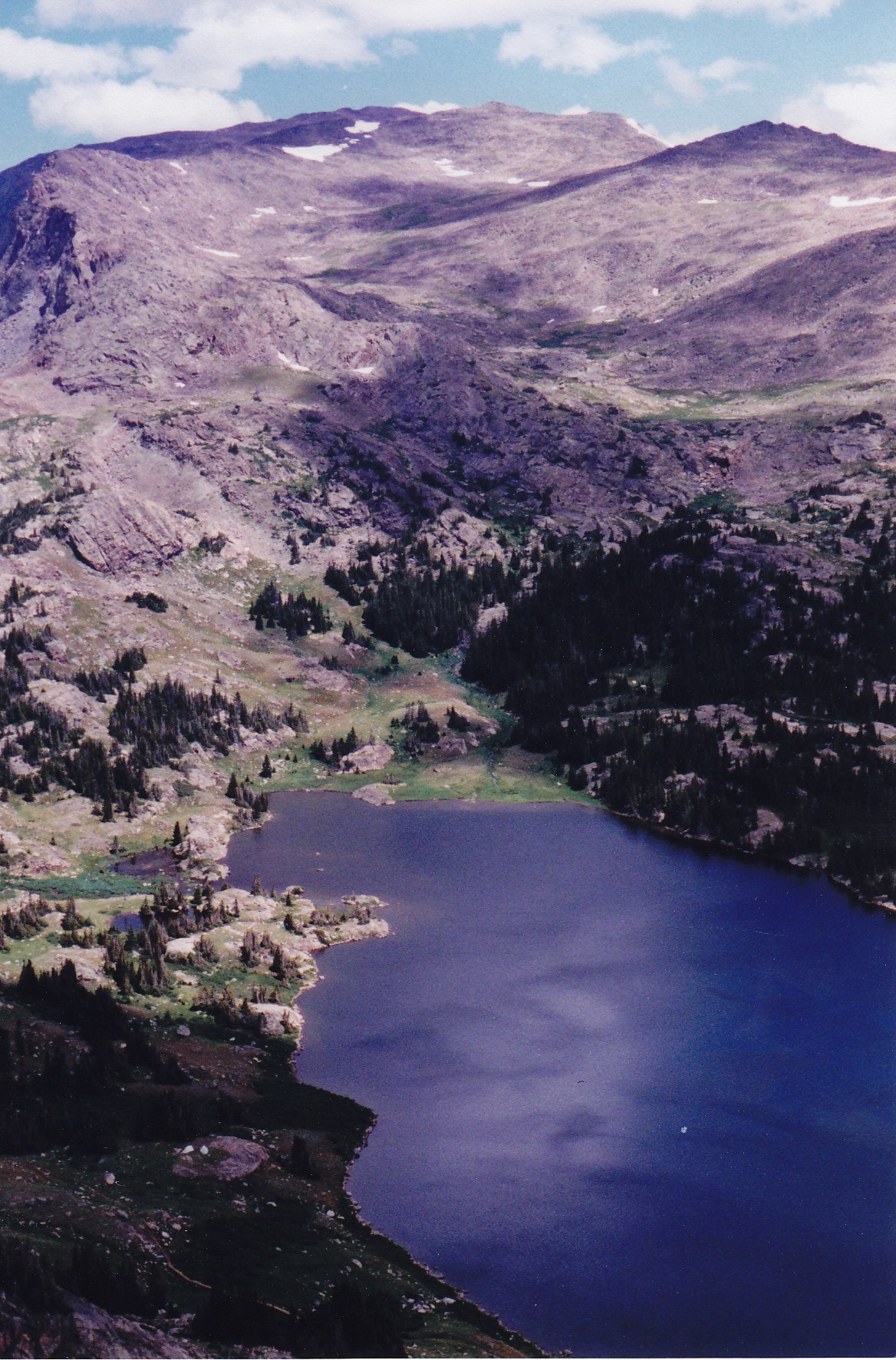
Alpine tundra lake in Bighorn Mountains, Wyoming.
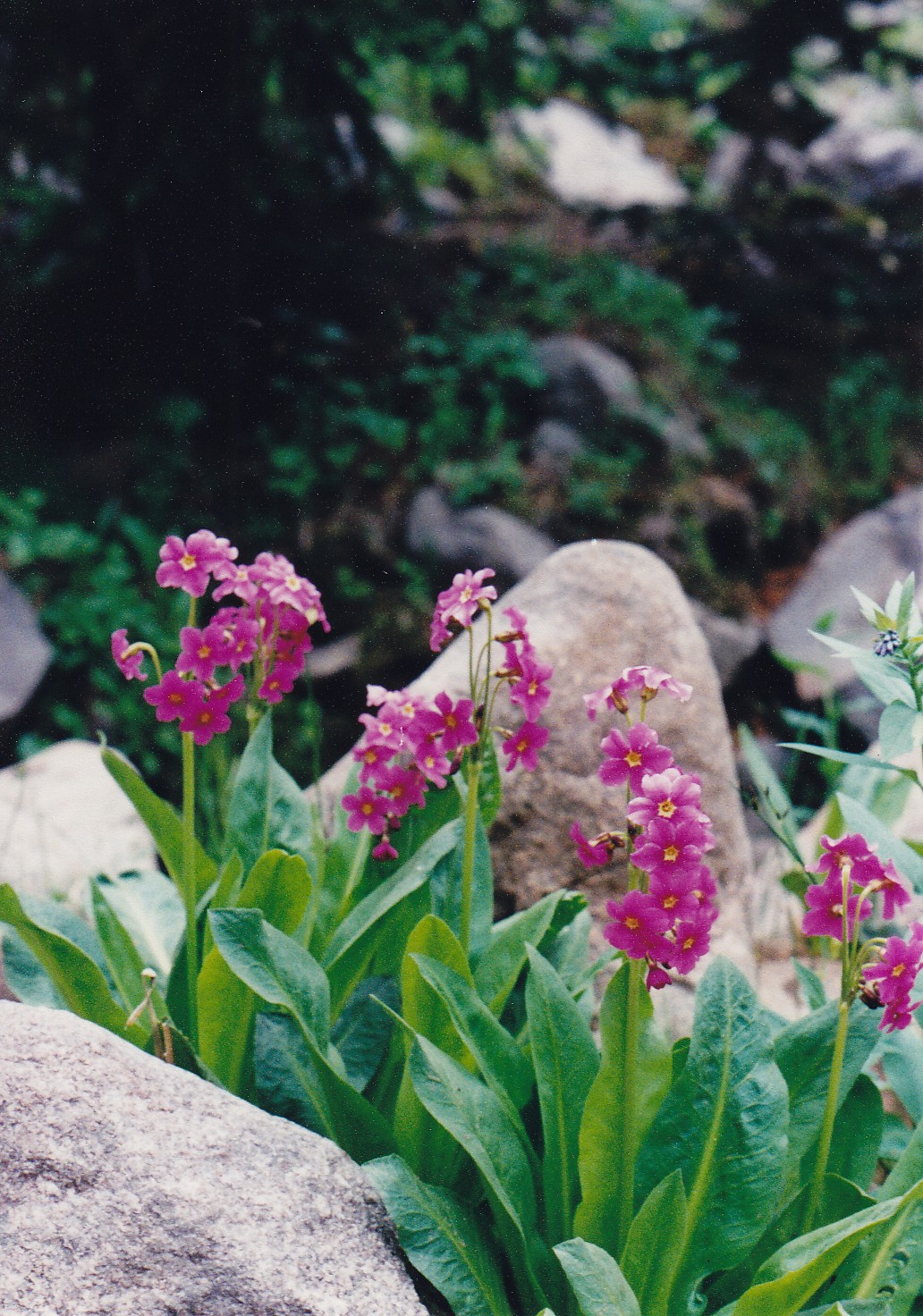
Primula parryi in subalpine meadow in the Bighorn Mountains of Wyoming.
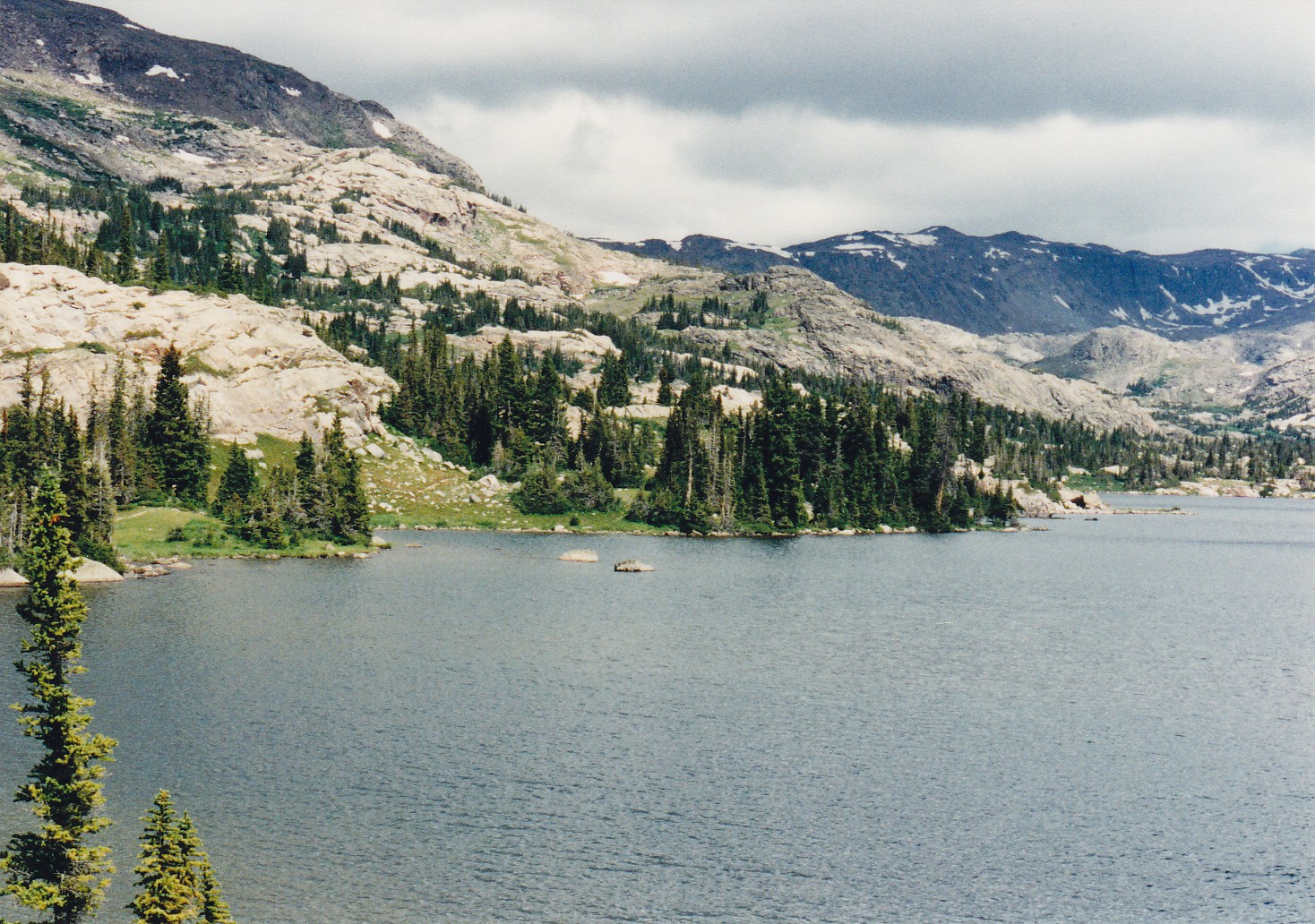
Lake Helen, subalpine zone of the Bighorn Mountains, Wyoming.
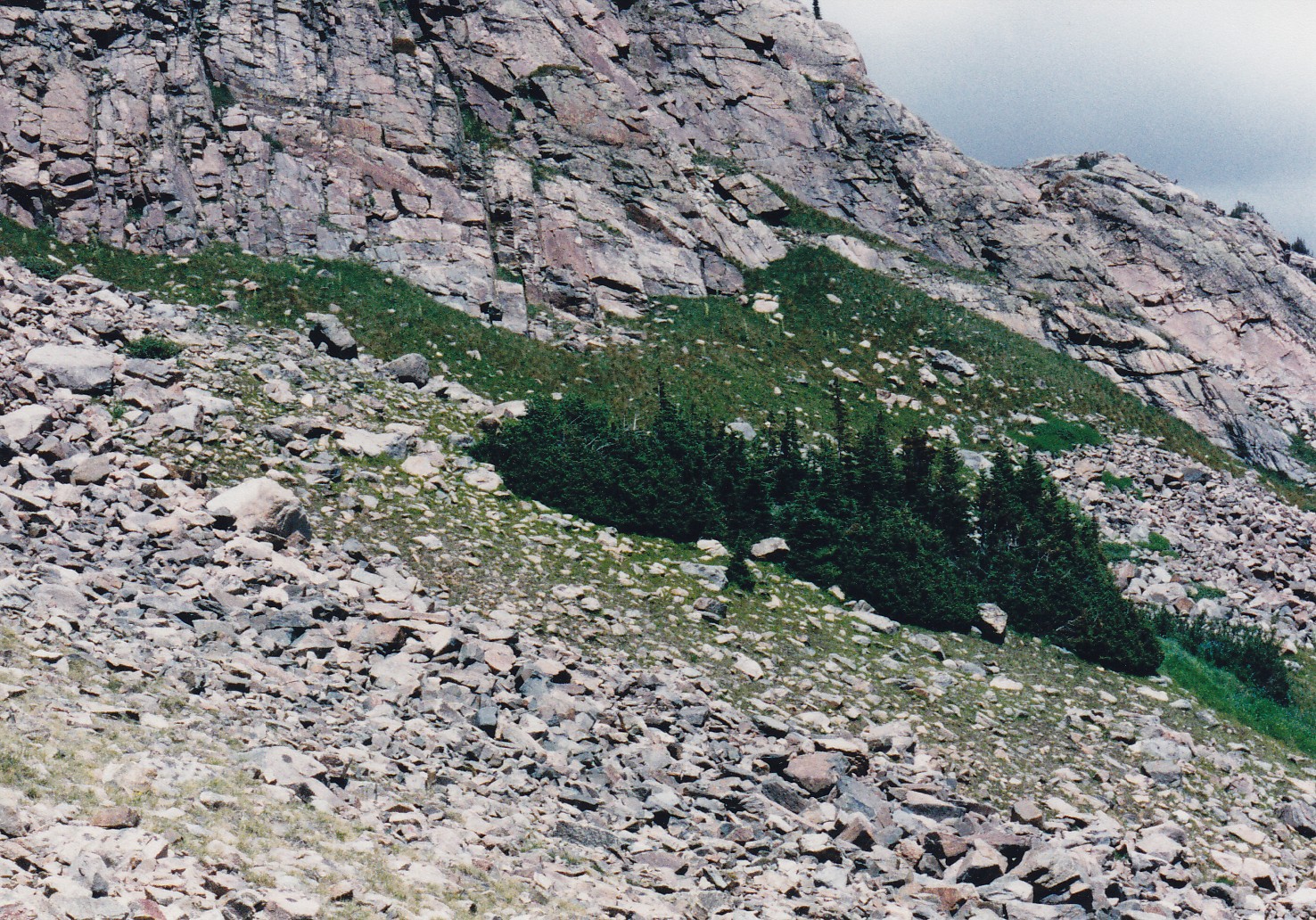
Krummholz conifers near timberline in Bighorn Mountains, Wyoming. Krummholz trees grow short enough to stay under the protective snow in the winter, and their branches grow primarily on the leeward side of the trunk.
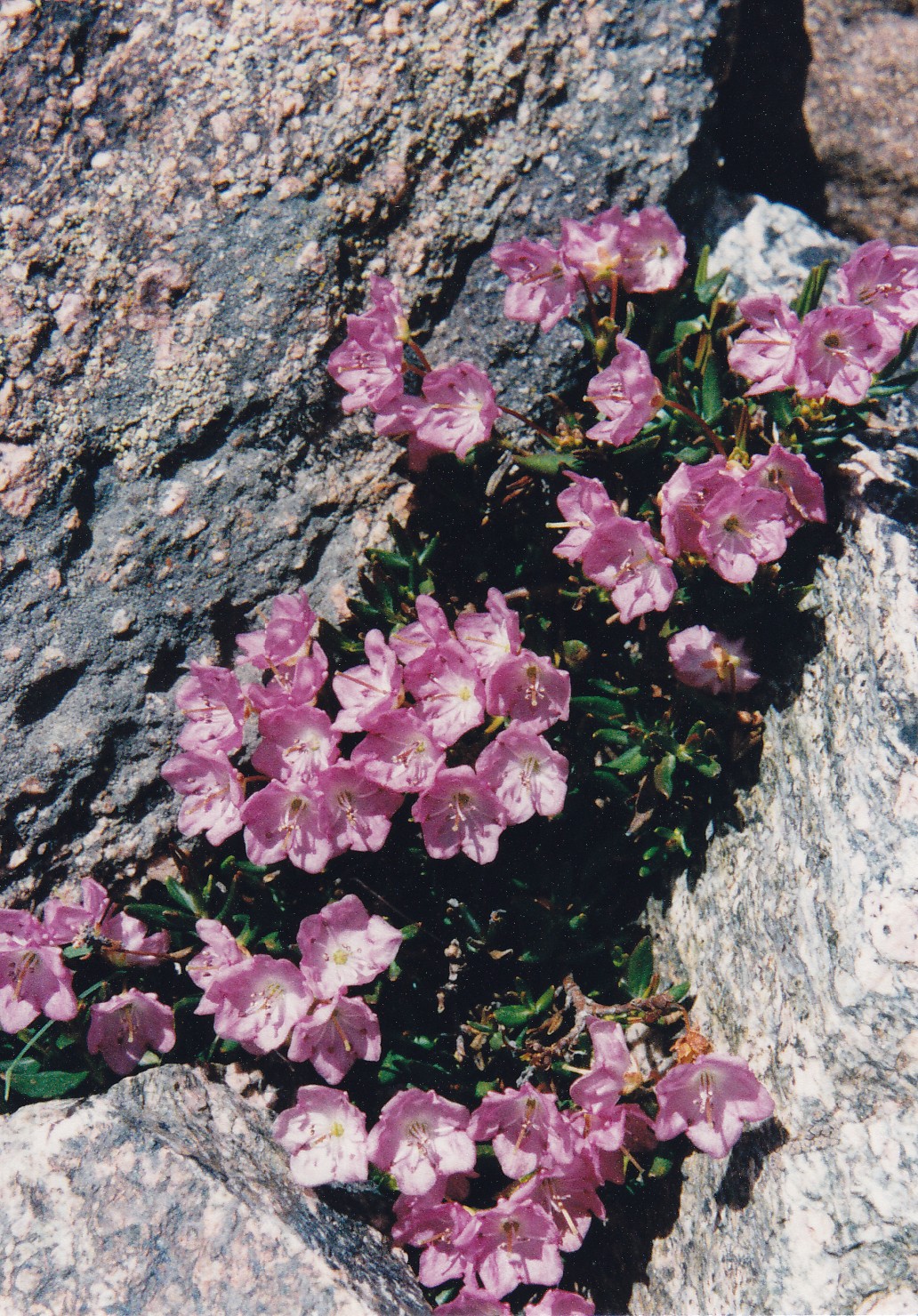
Kalmia procumbens, the alpine azaelea, grows in cracks in rocks in the alpine zone.
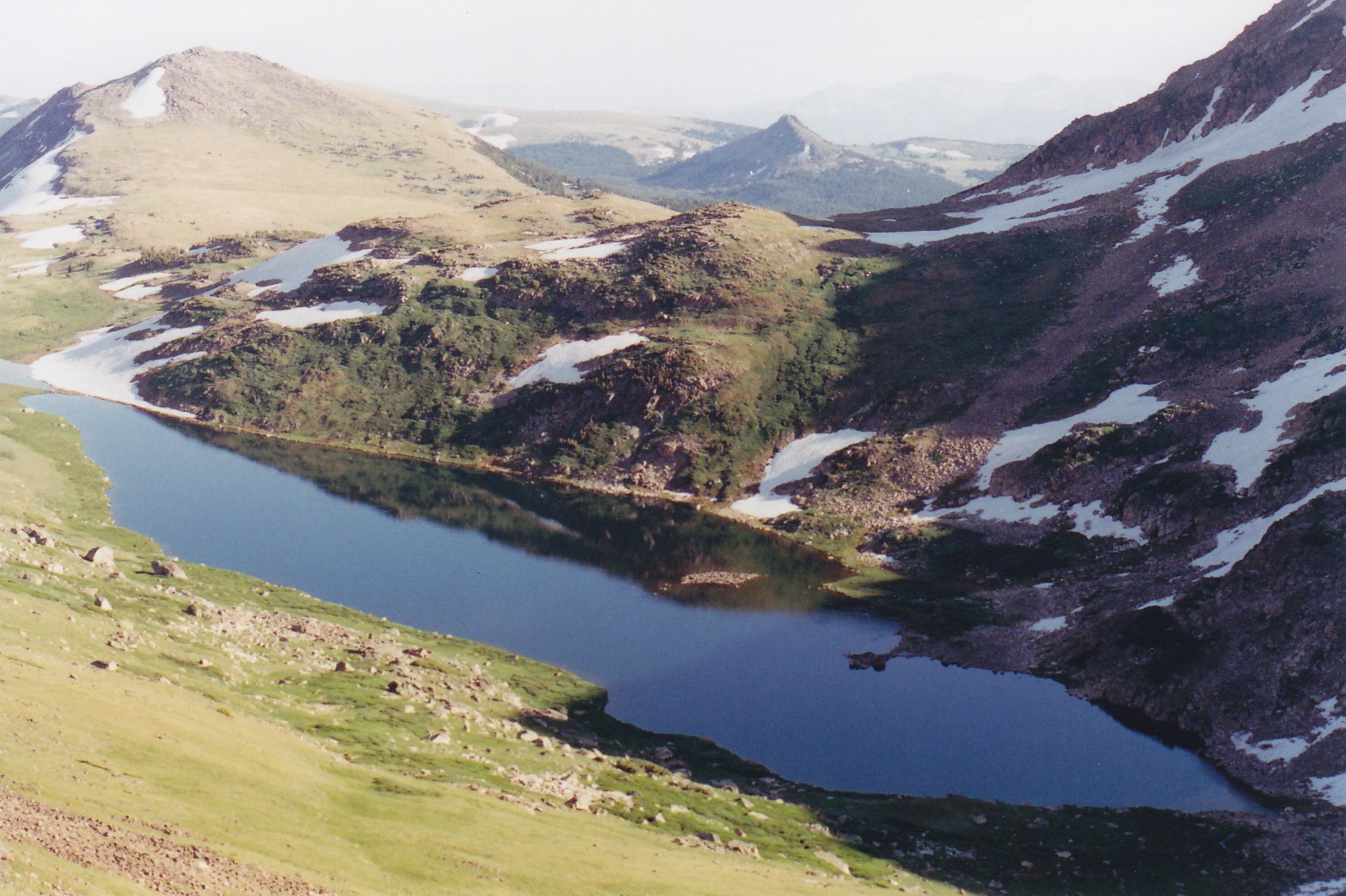
Alpine tundra lake, Beartooth Mountains, Montana. The summer is too short and all the plants must overwinter under the snow, so there are no tall trees in this zone.
Badlands South Dakota
Wildlife
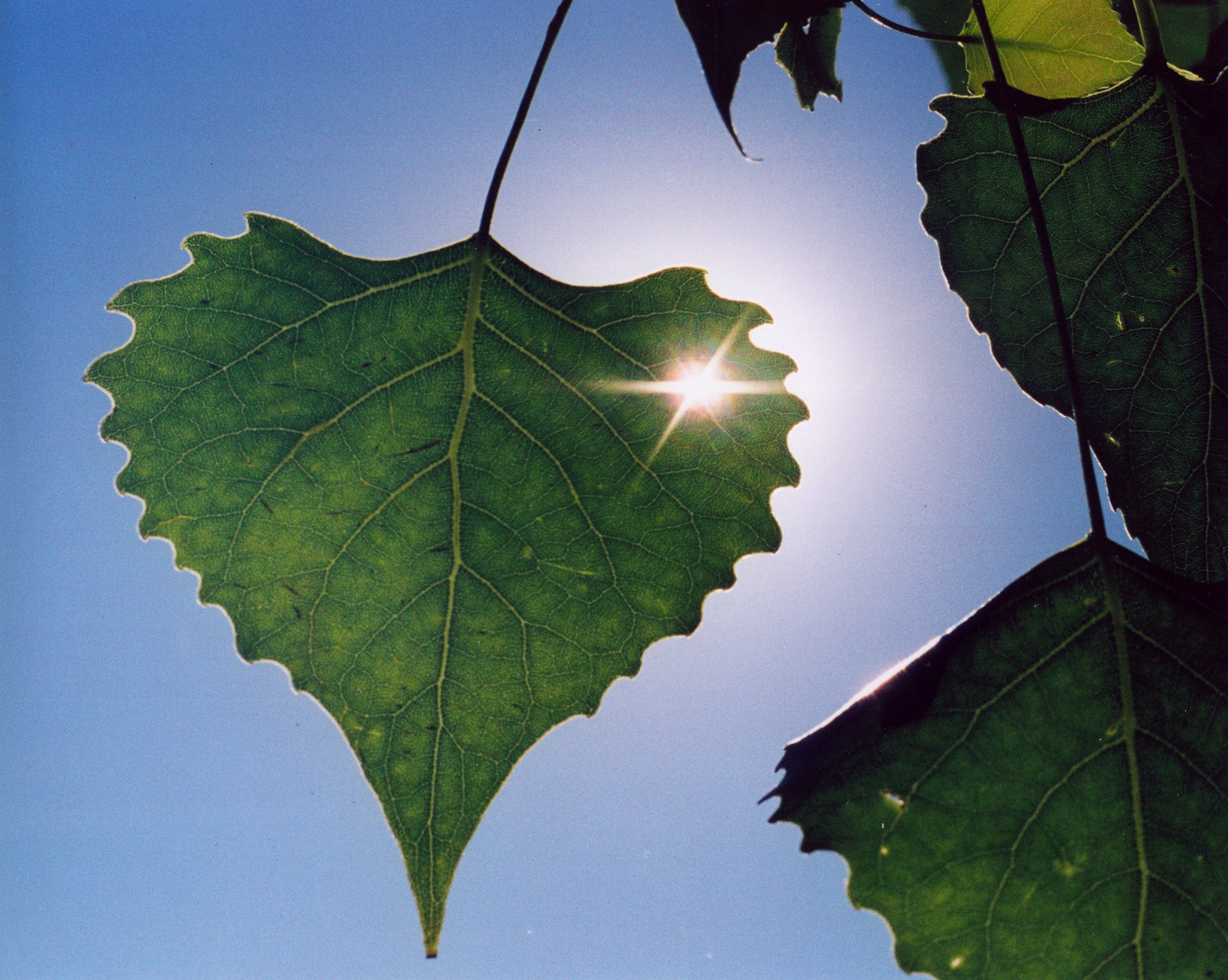
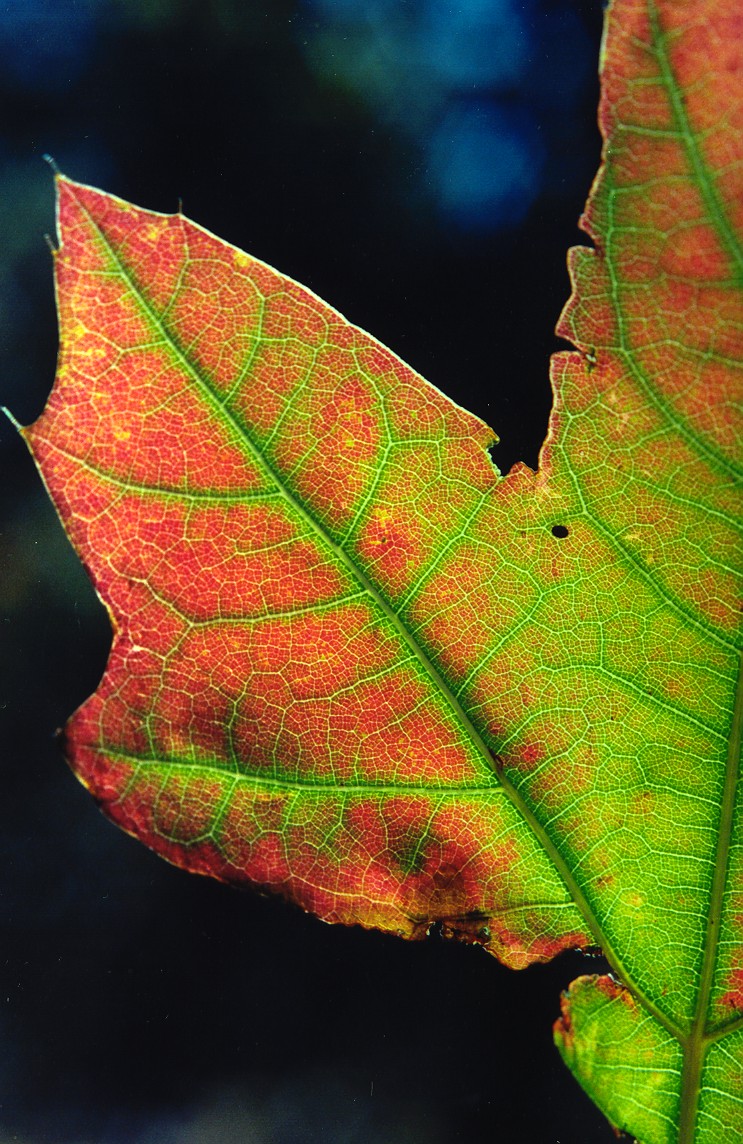
Sunlight through a cottonwood leaf (Populus deltoides) in the Badlands of South Dakota. This is a real photo, not artificially produced.
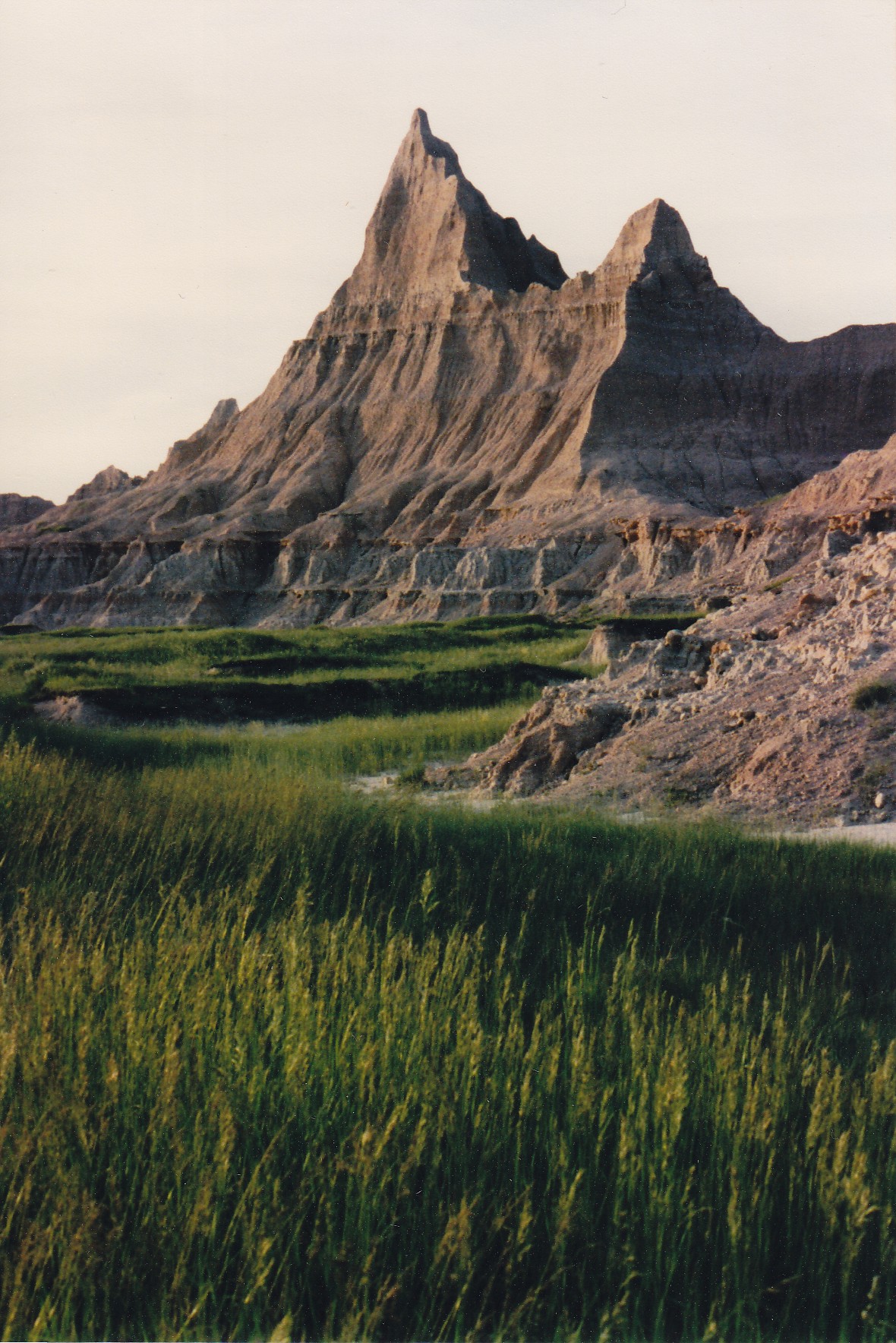
Mud spires in the Badlands National Park, South Dakota.
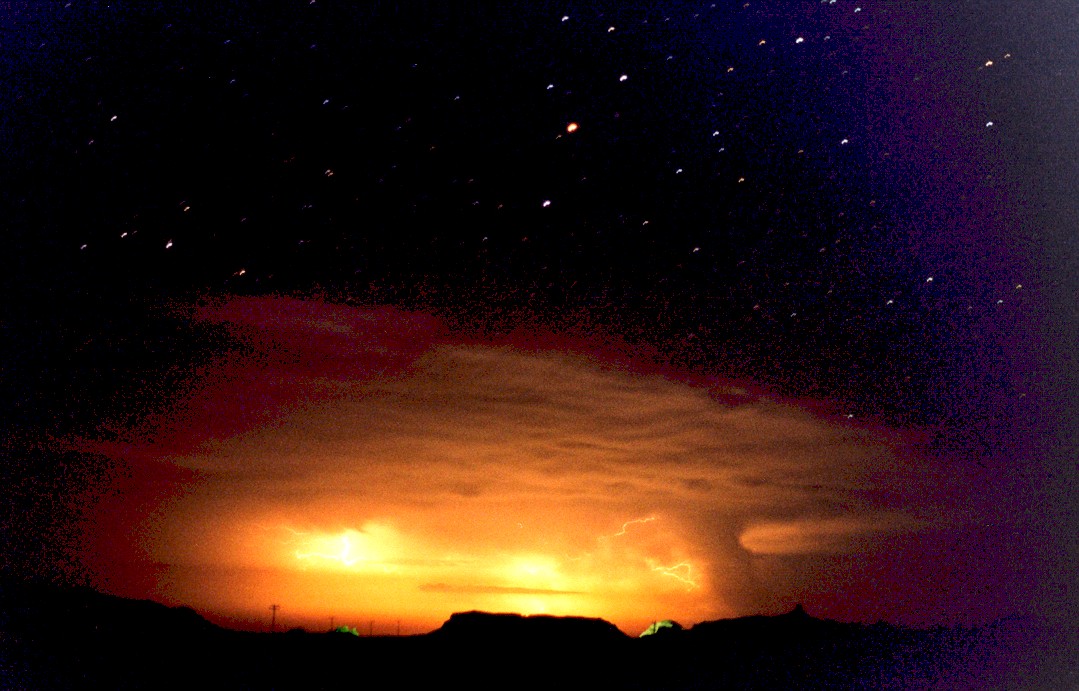
Nocturnal time lapse photo of a receding storm in the Badlands of South Dakota. This is a real photo.
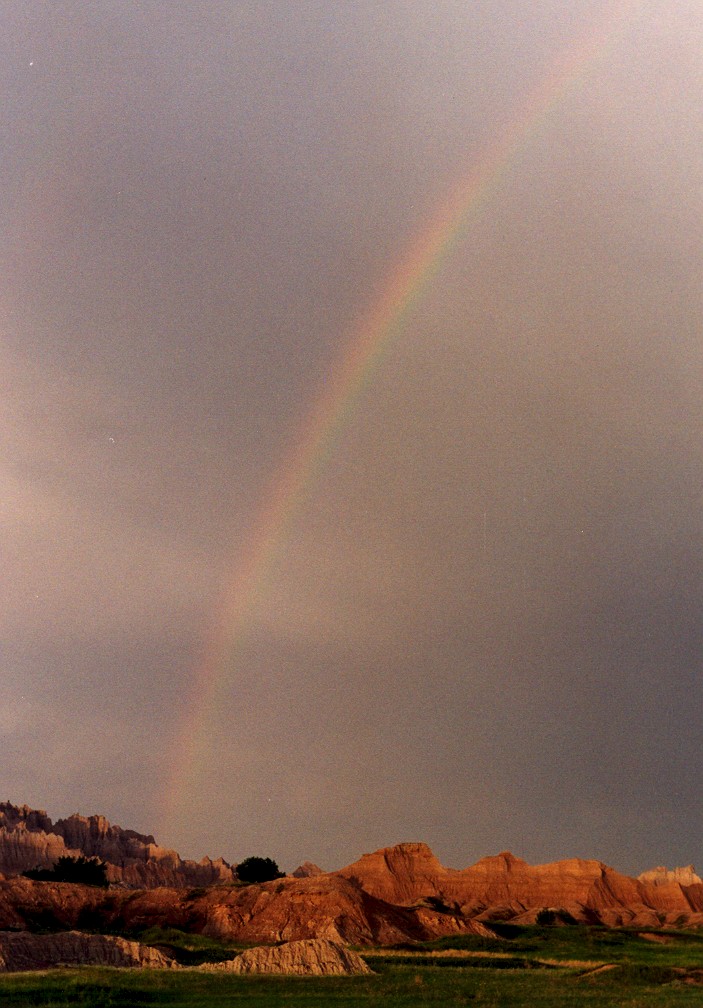
Rainbow in the Badlands of South Dakota.
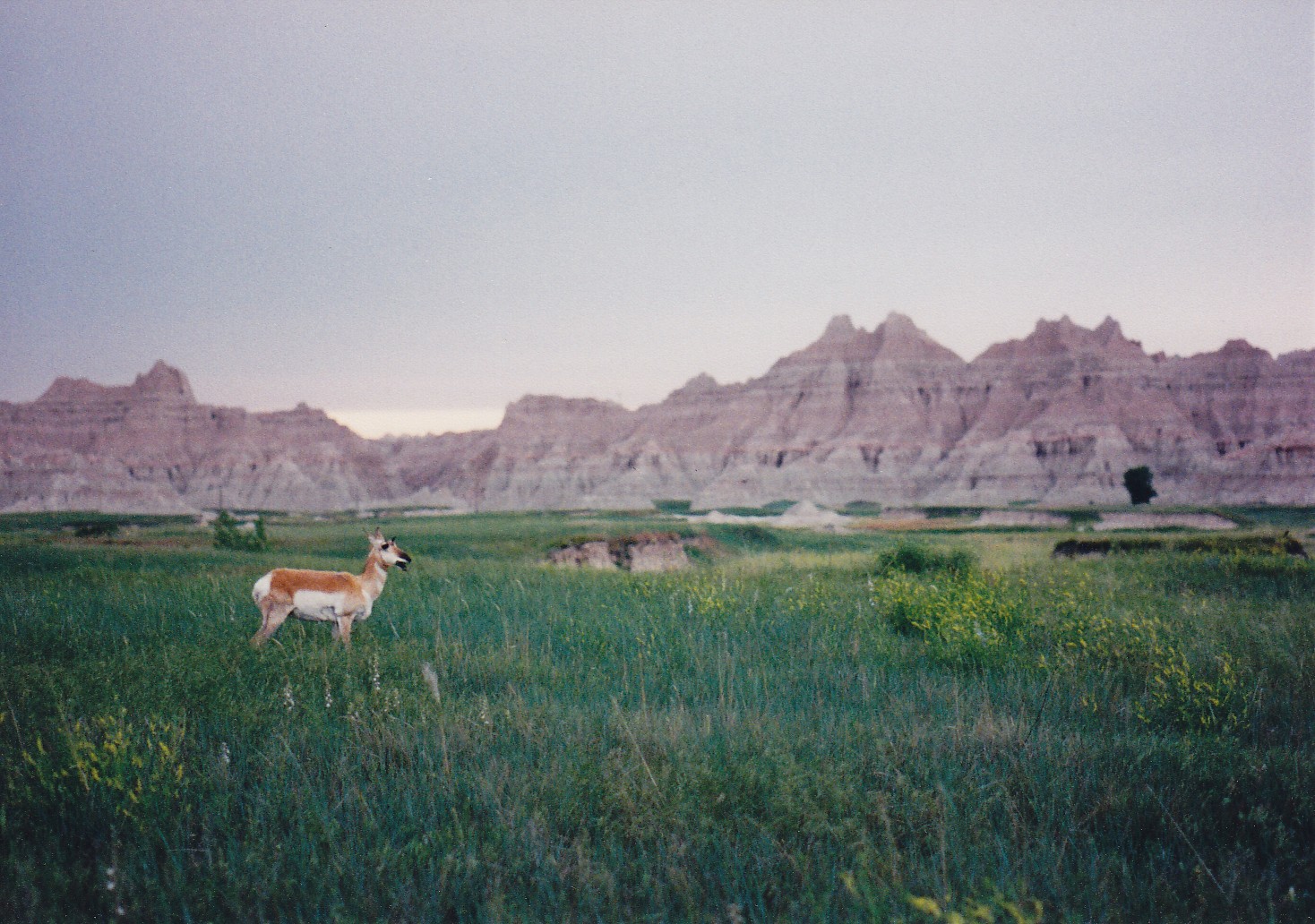
Pronghorn in the Badlands of South Dakota.
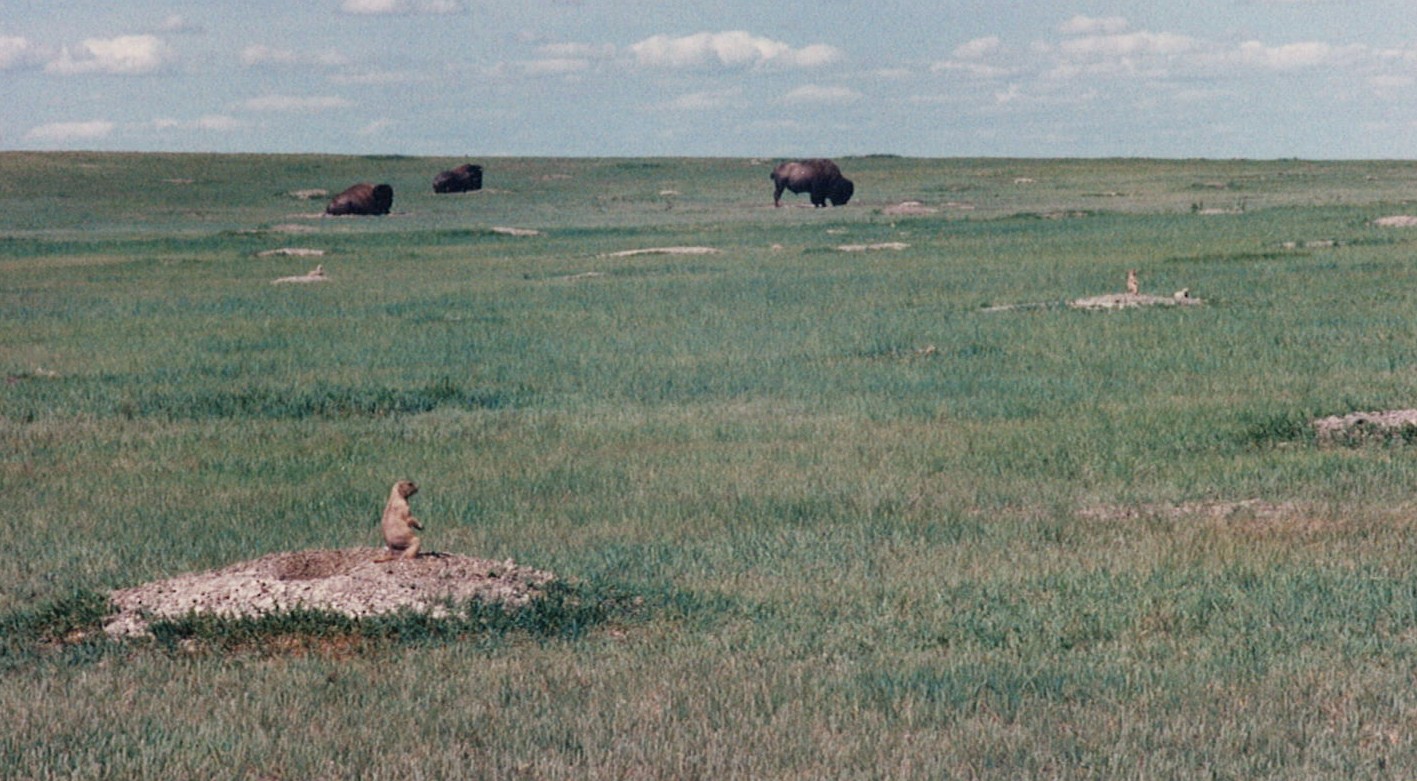
Prairie dog and bison in a grassland in Badlands National Park in South Dakota.
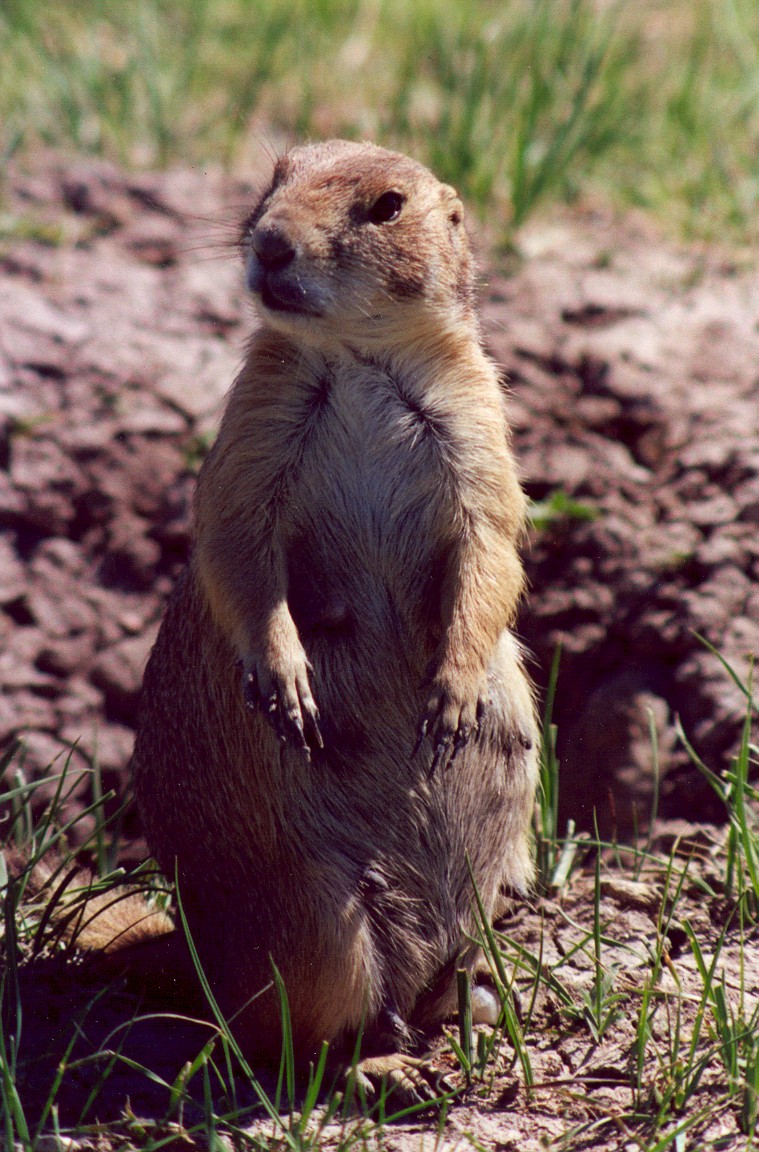
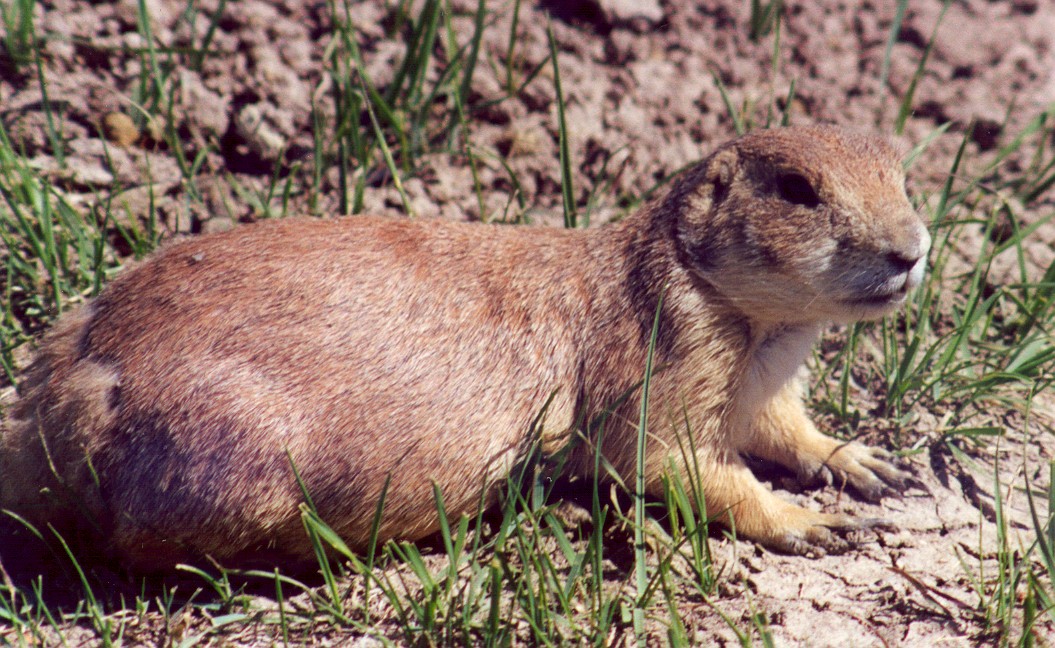
A prairie dog in a grassland in Badlands National Park, South Dakota.
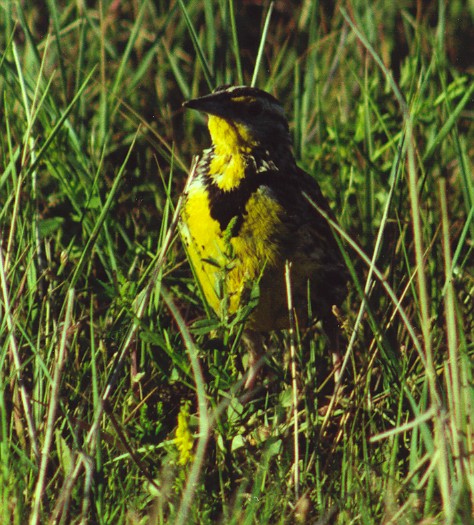
Western meadowlark (Sturnella neglecta) in a grassland in Badlands National Park, South Dakota.
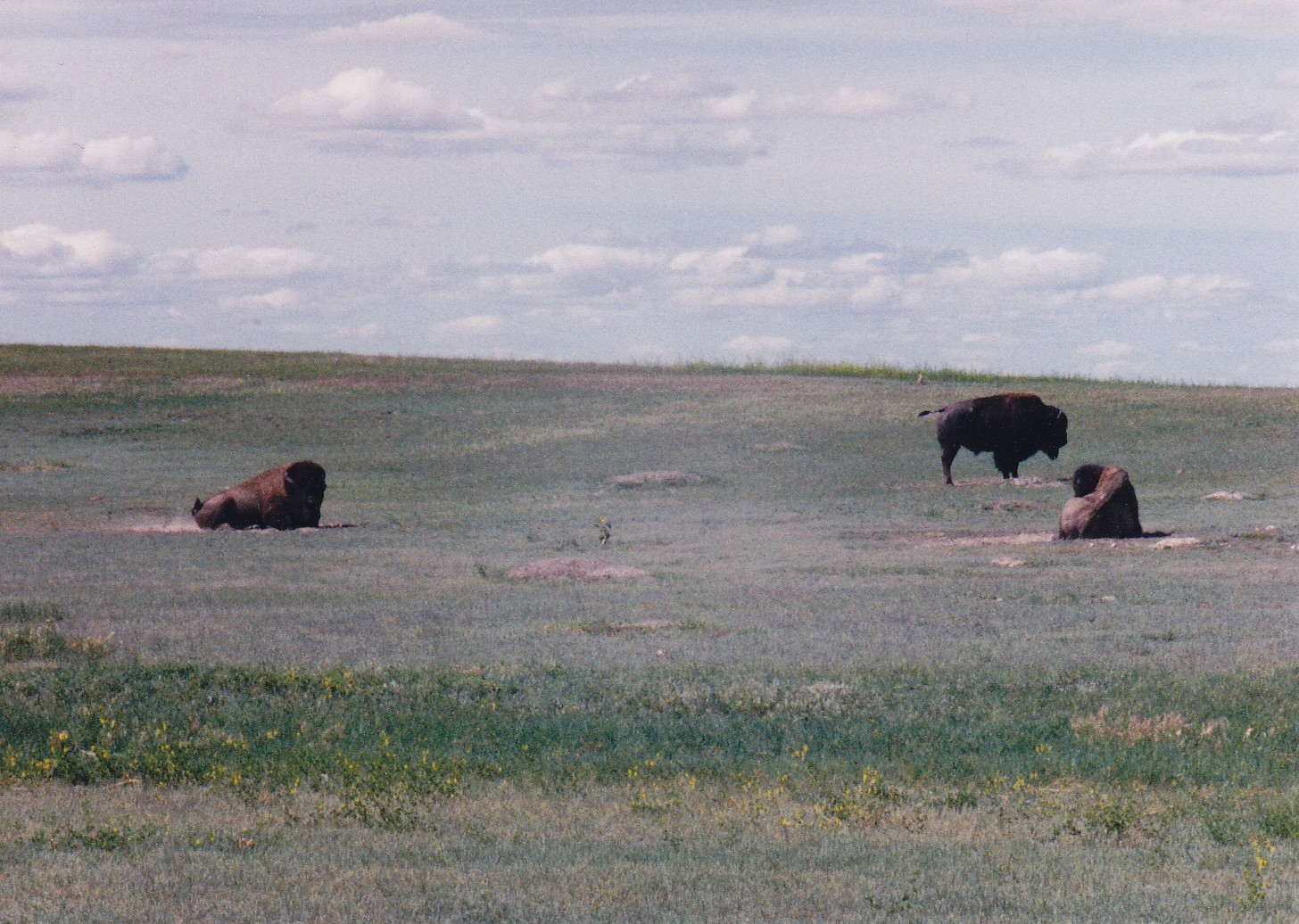
Bison wallowing in a grassland in Badlands National Park, South Dakota. They can’t scratch their own backs and this is the only way for them to deal with itches.
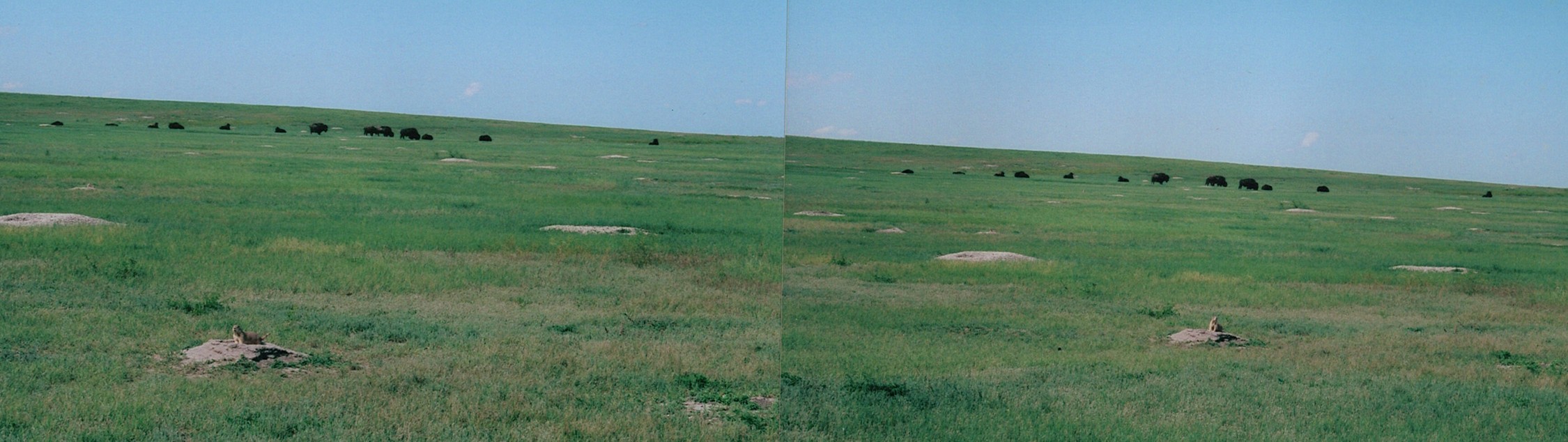
Panoramic view (from two photos) of bison in a grassland in Badlands National Park, South Dakota.
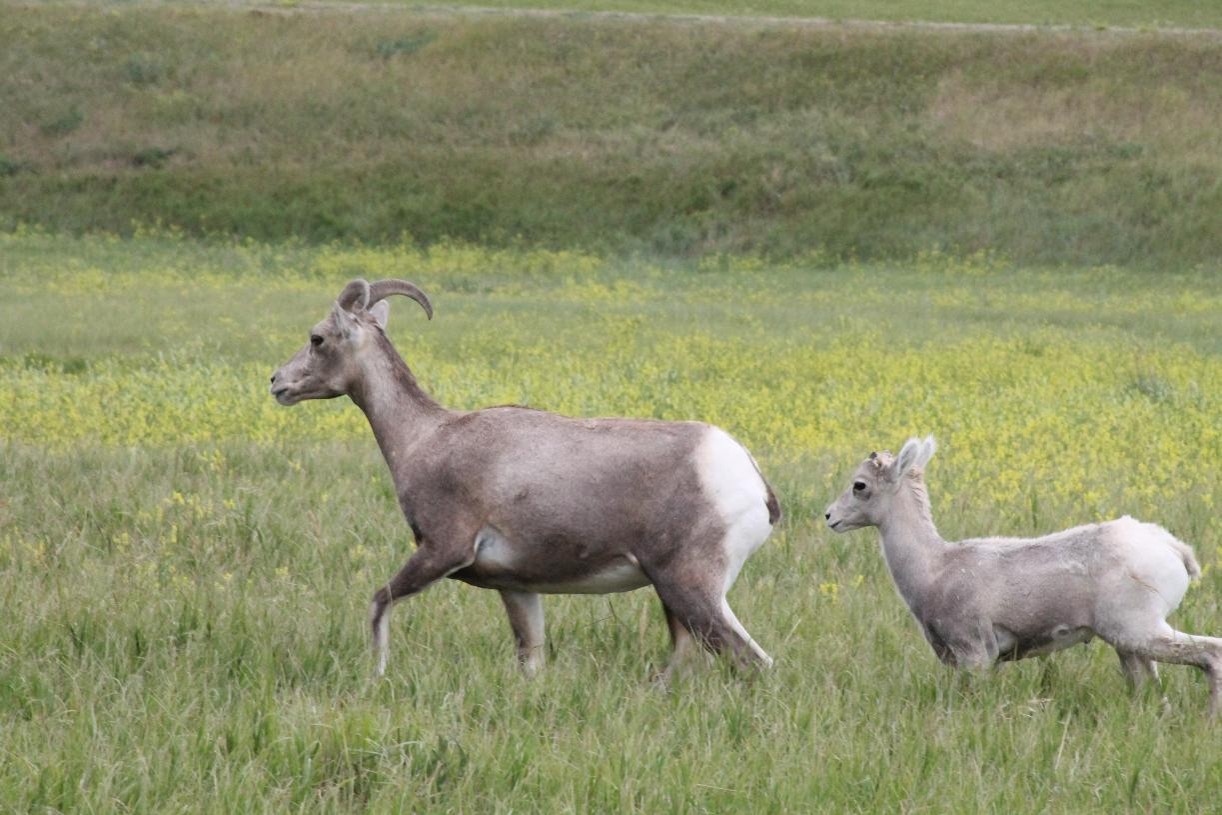
Bighorn sheep in the Badlands of South Dakota.
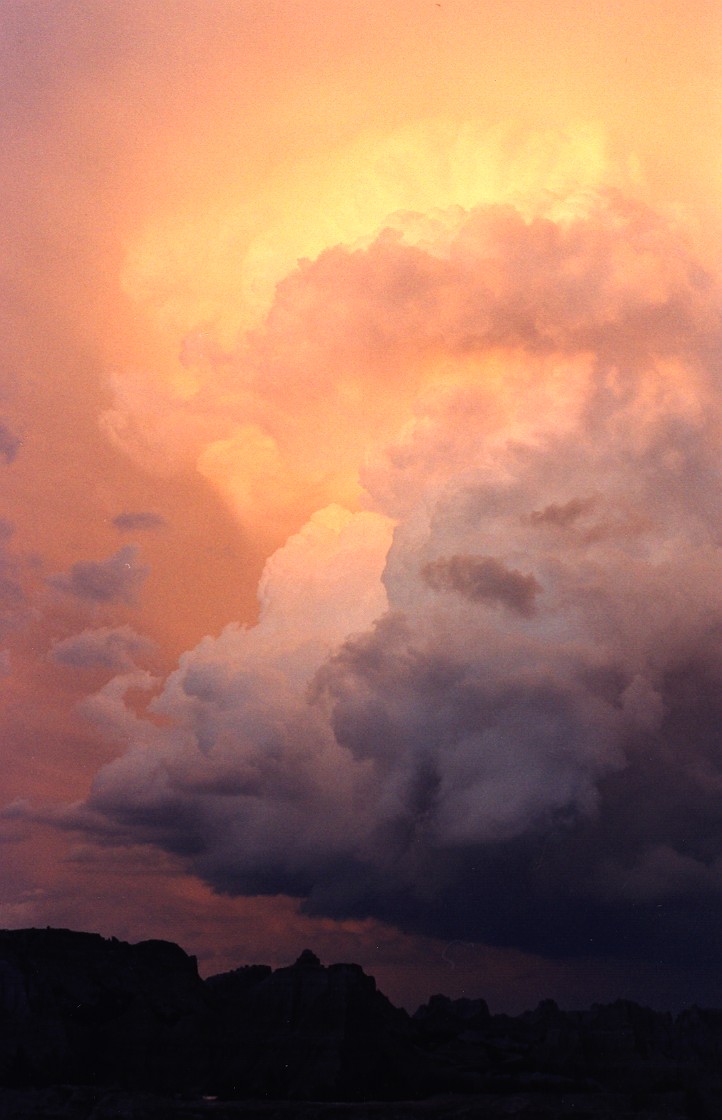
A storm approaches in the Badlands of South Dakota.
Plants
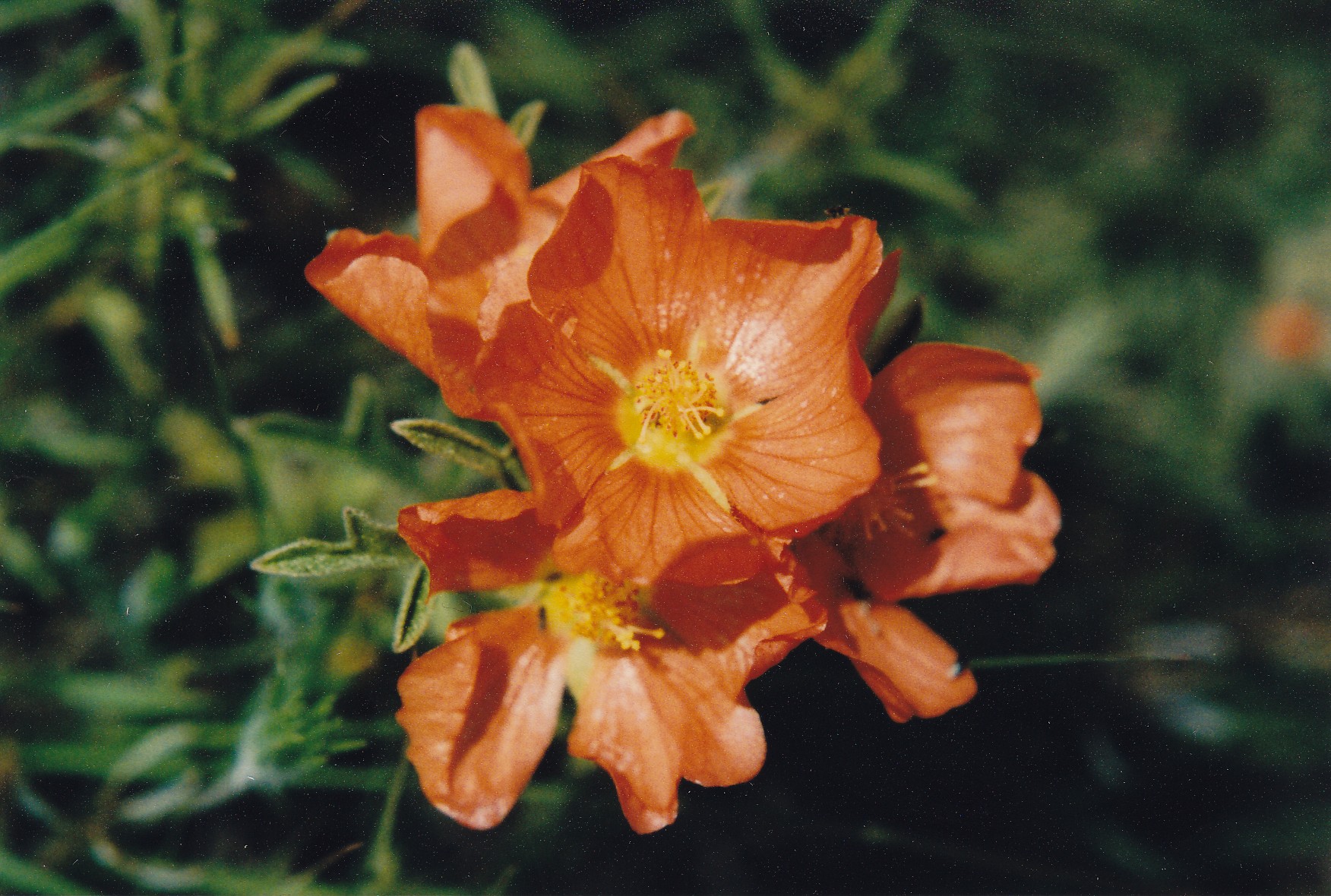
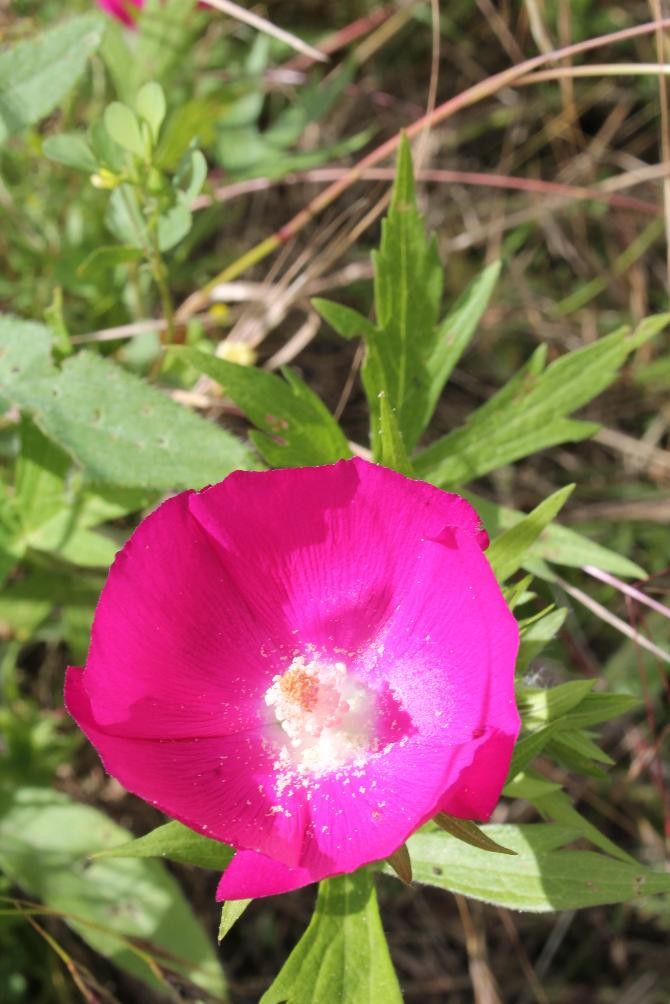
Scarlet globemallow (Sphaeralcea coccinea) in the Badlands of South Dakota.
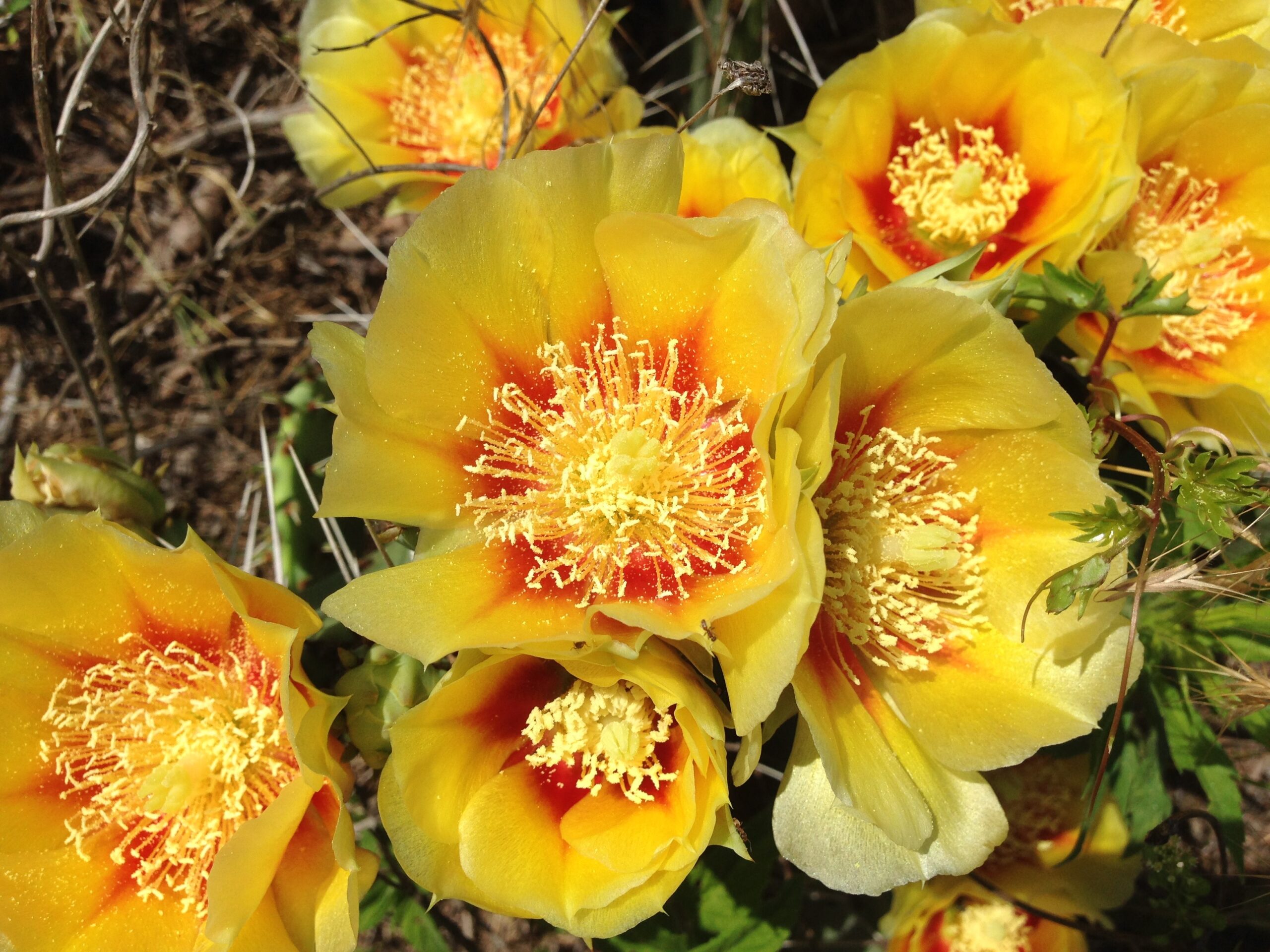
Opuntia cactus flowers in the Badlands of South Dakota.
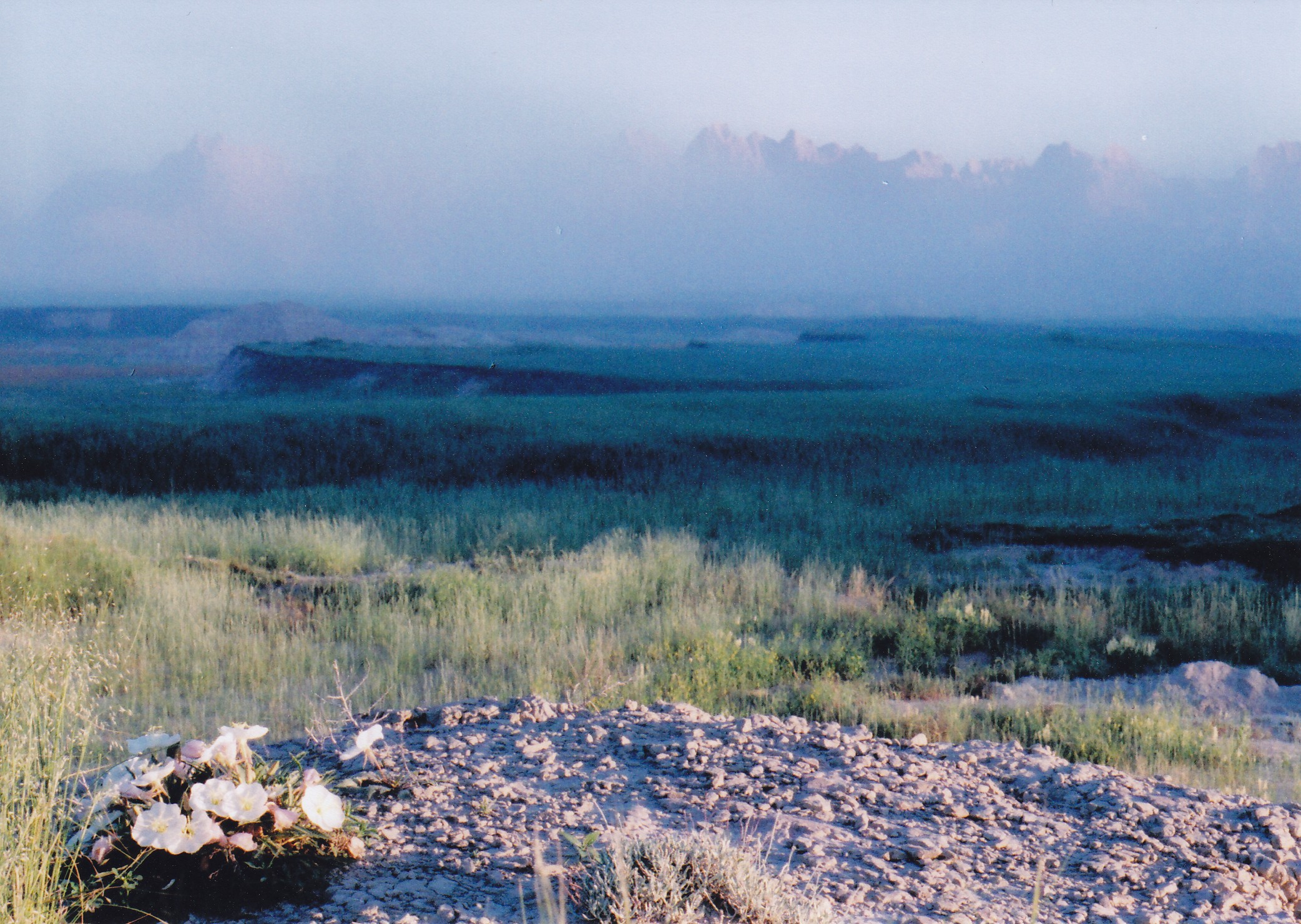
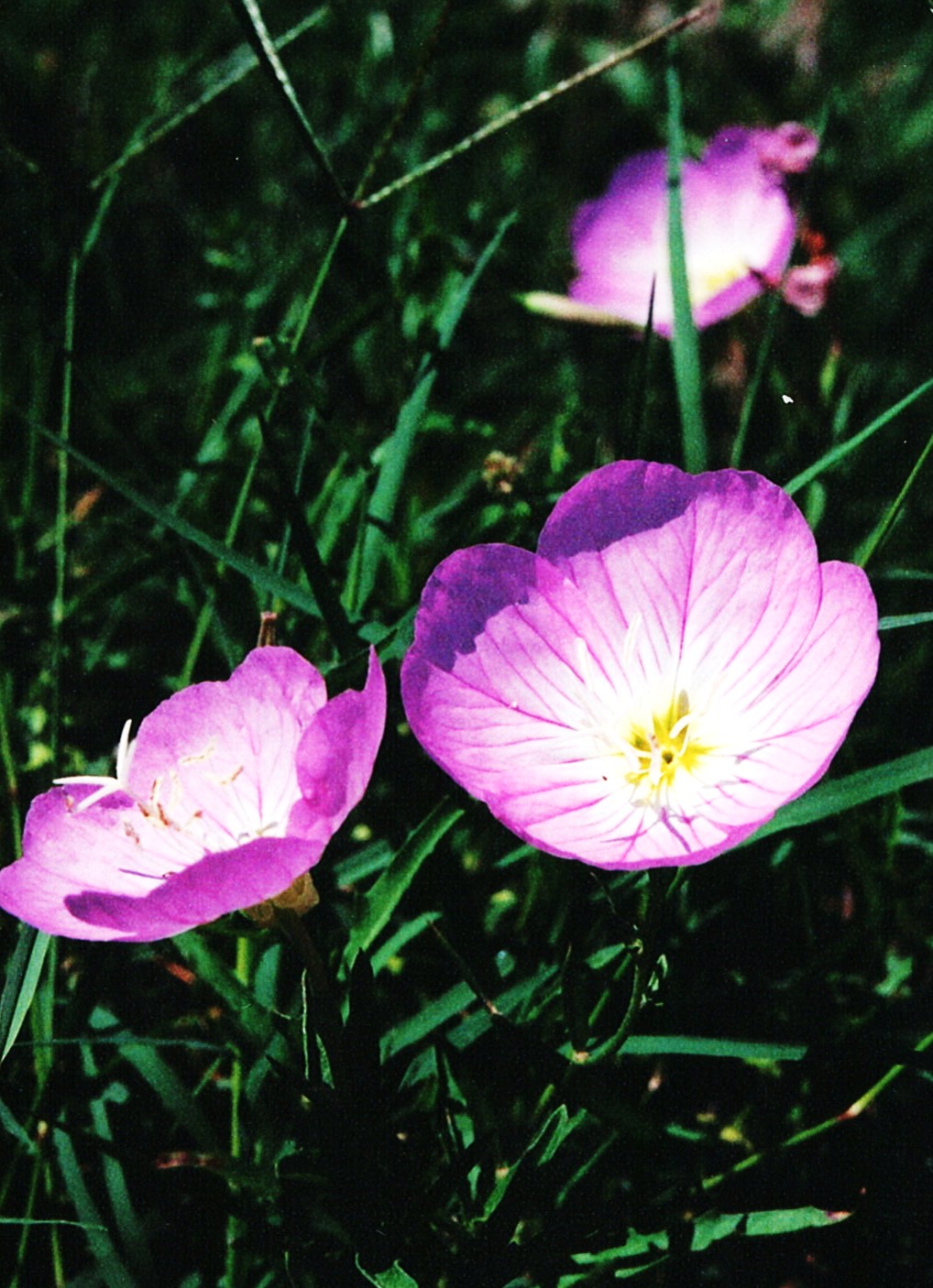
Oenothera caespitosa evening primroses in the Badlands of South Dakota on a misty morning. The wildflowers cannot compete with grasses, and they grow on eroded openings.
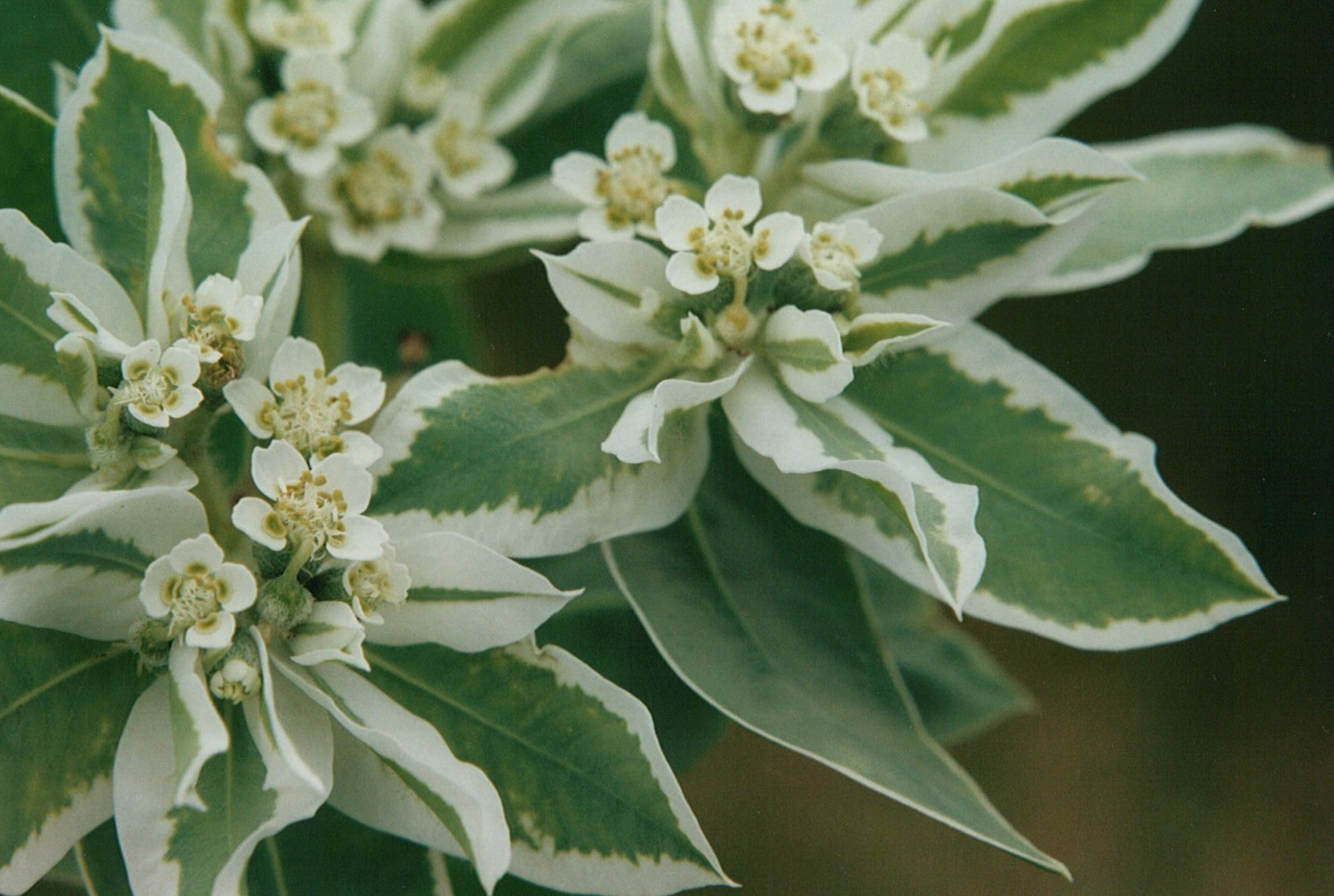
Euphorbia marginata, a weed in the Badlands of South Dakota. As usually in the Euphorbiaceae, what looks like flowers are actually inflorescences; each “petal” is a separate flower.
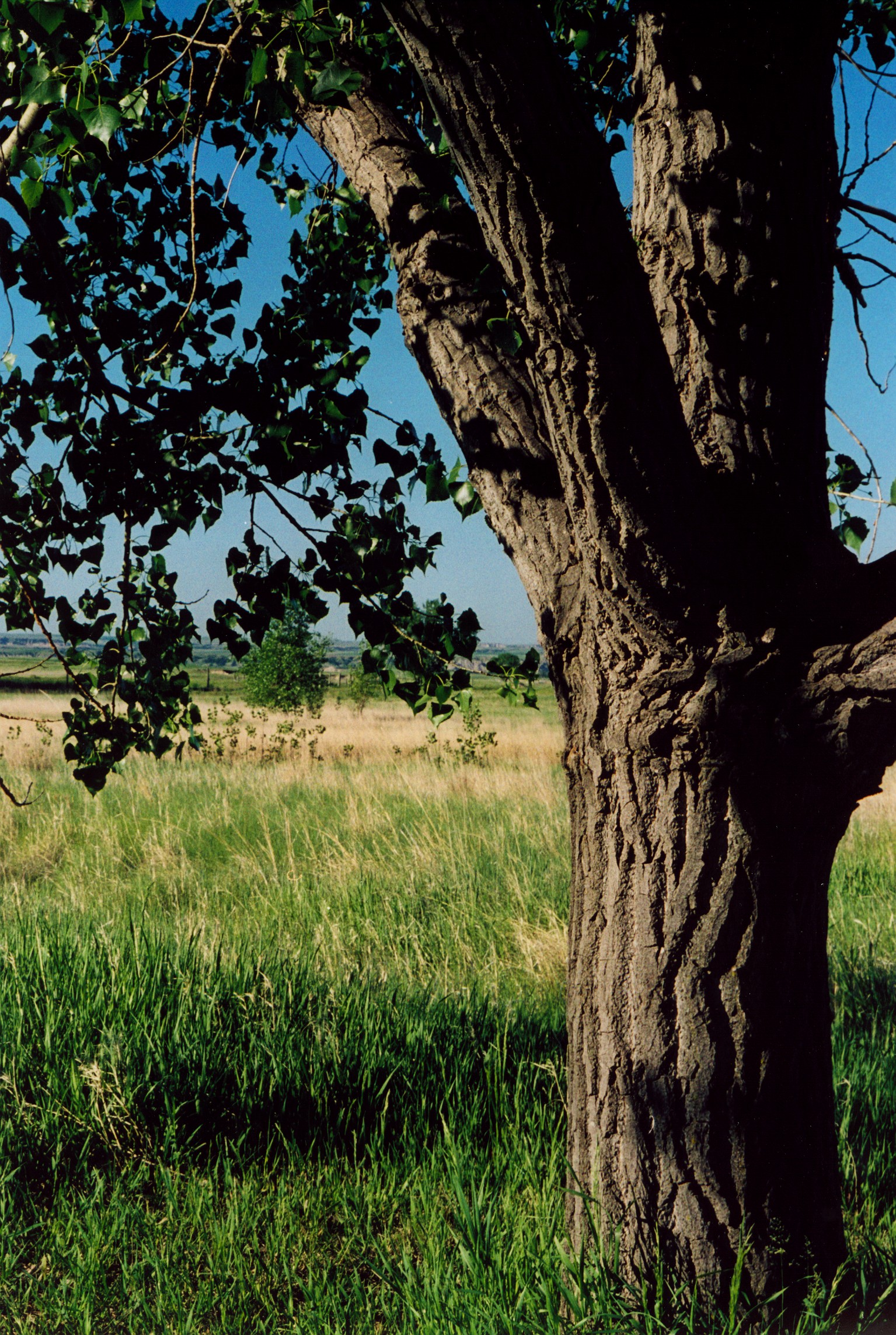
A cottonwood (Populus deltoides) growing near a wetland (actually a sewage pond) in the Badlands of South Dakota.
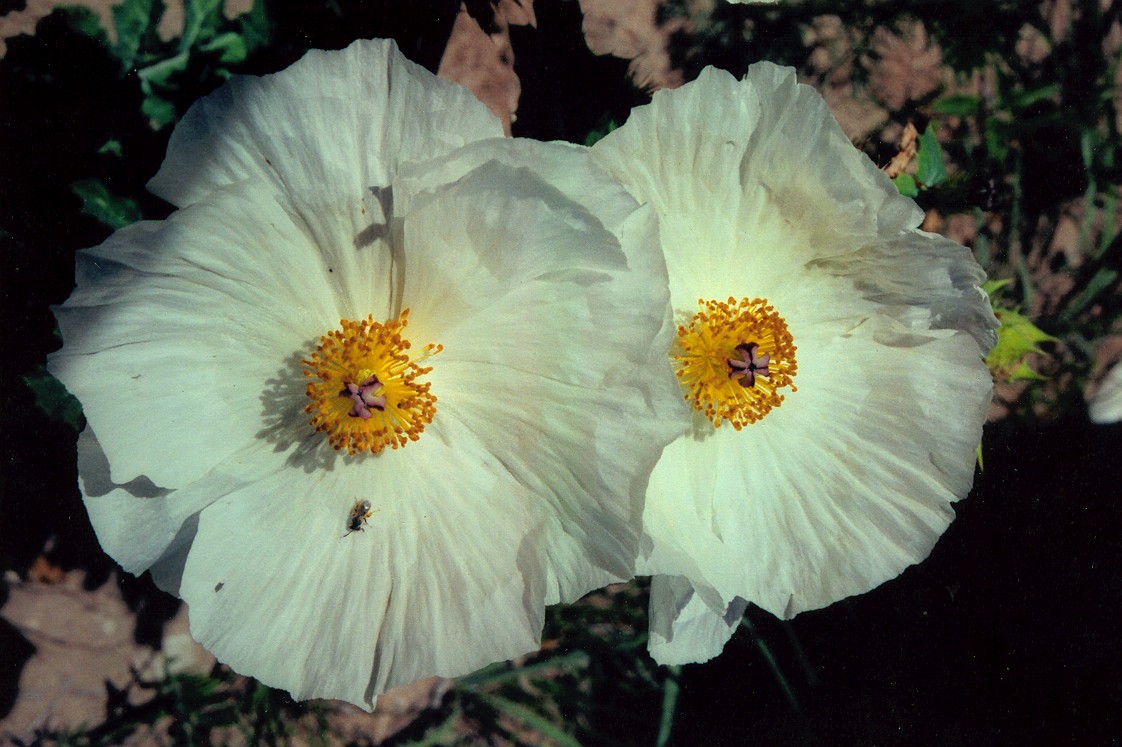
Argemone albiflora, the prickly poppy, is a large weed widely distributed in dry western areas in America.
Black Hills South Dakota
Wildlife
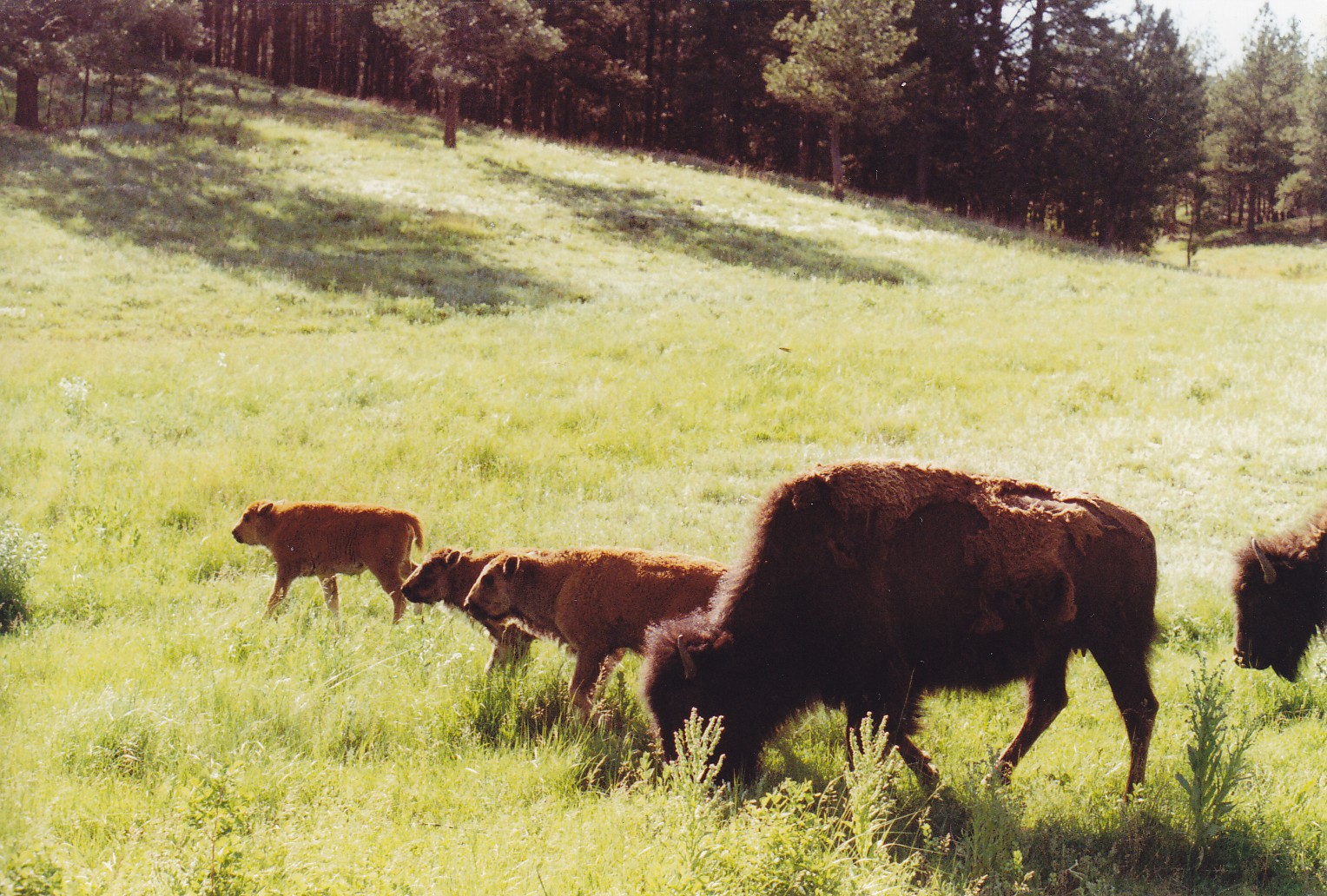
A bison herd with young in Wind Cave National Park, Black Hills, South Dakota.
Along US 385 in Wind Cave National Park, a man got too close to a male bison. I kept waiting for the bison to charge and trample, but it didn’t happen, this time. But I had my camera ready.
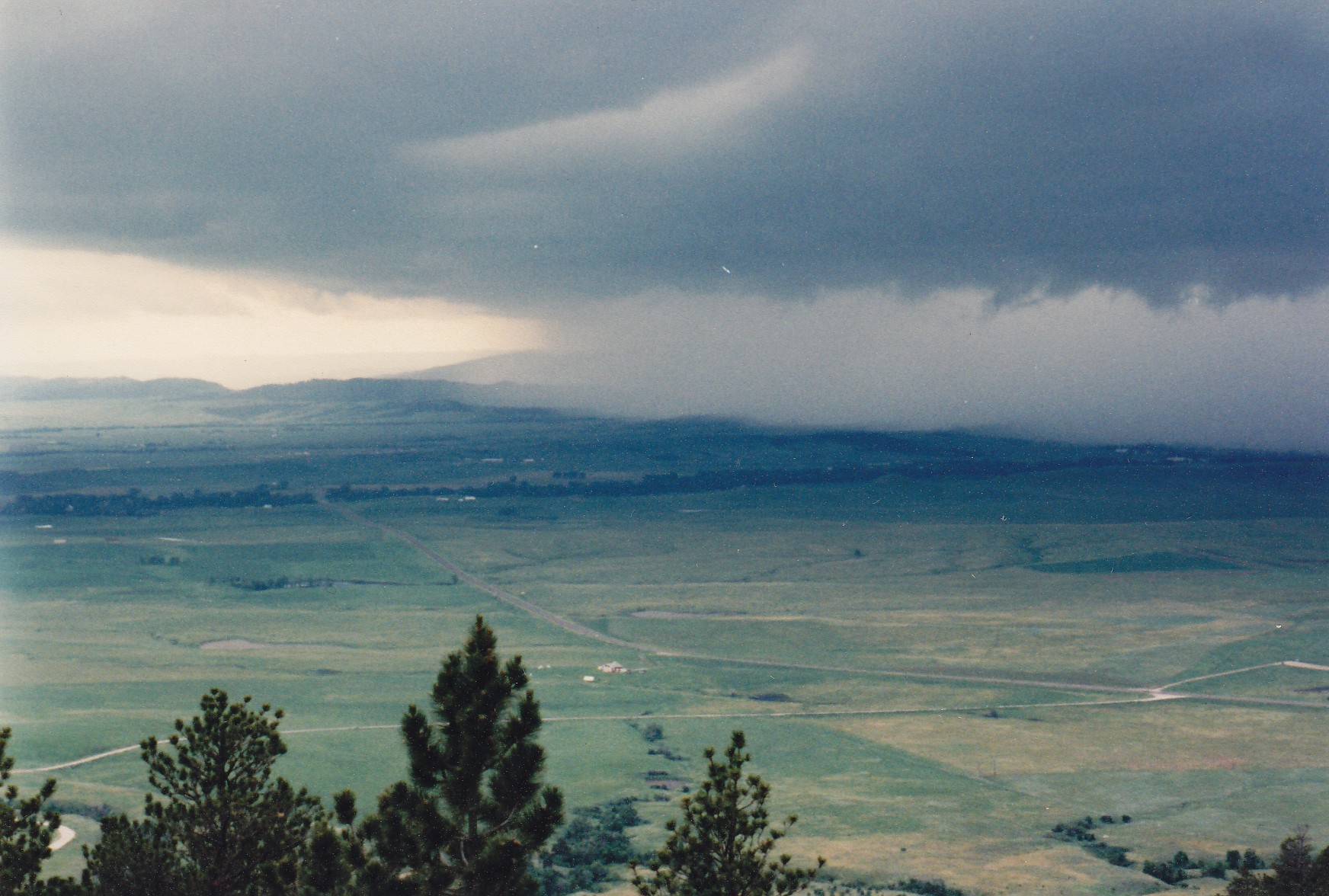
A storm drenches the Black Hills in South Dakota, as seen from Bear Butte.
Time exposure of a thunderstorm at night in the Black Hills of South Dakota. Photo by Stan Rice.
Special effects photo of a thunderstorm at dusk in the Black Hills of South Dakota. Photo by Stan Rice.
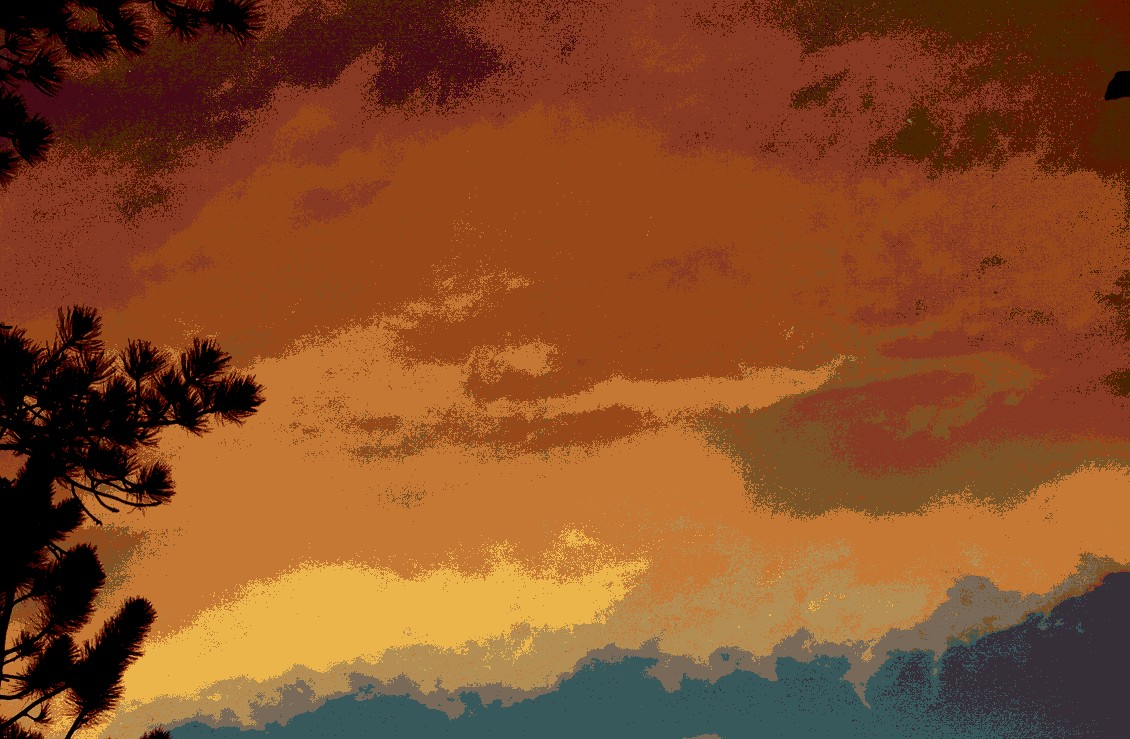
Special effects photo of a sunset in the Black Hills, South Dakota. Photo by Stan Rice.
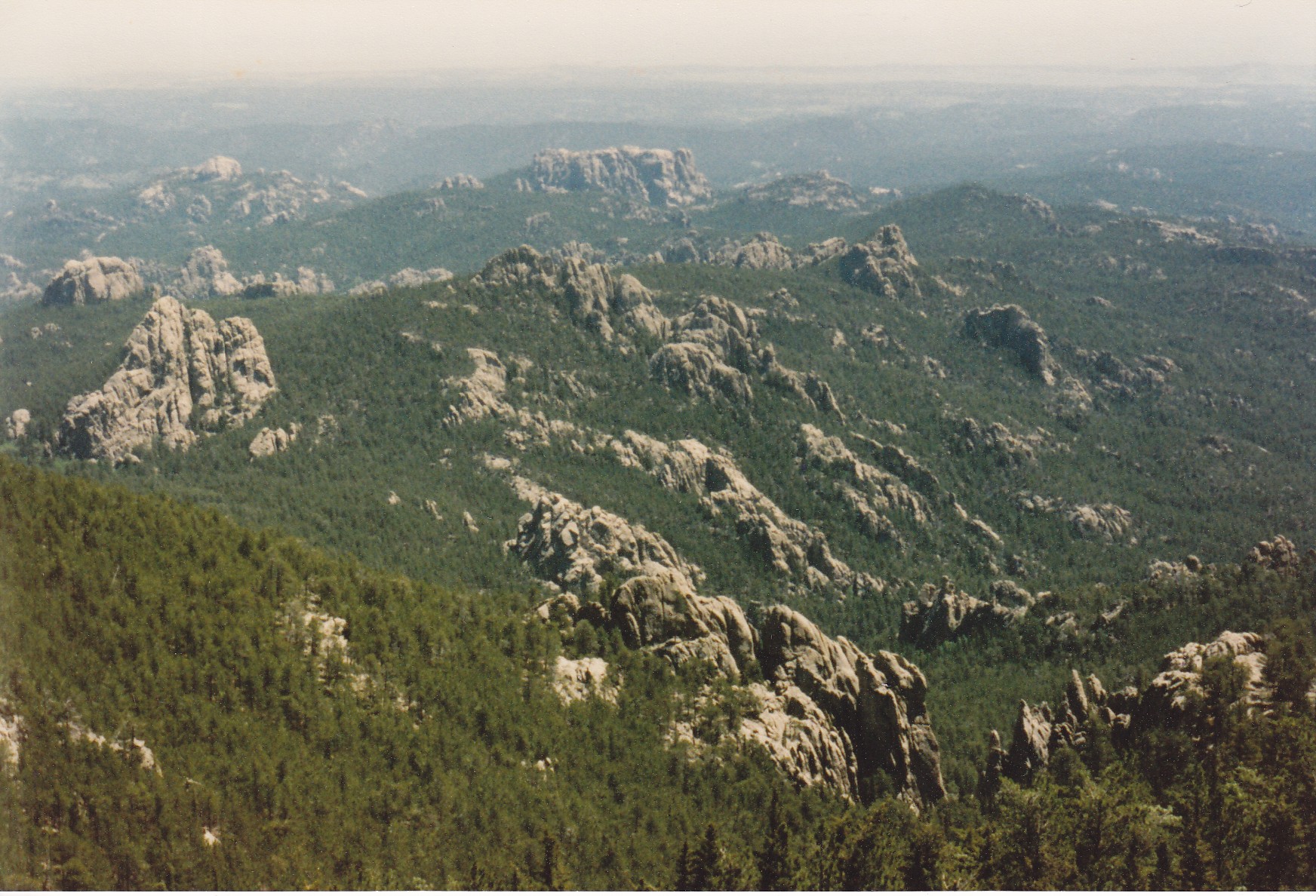
The Black Hills of South Dakota as seen from its highest point, Harney Peak.
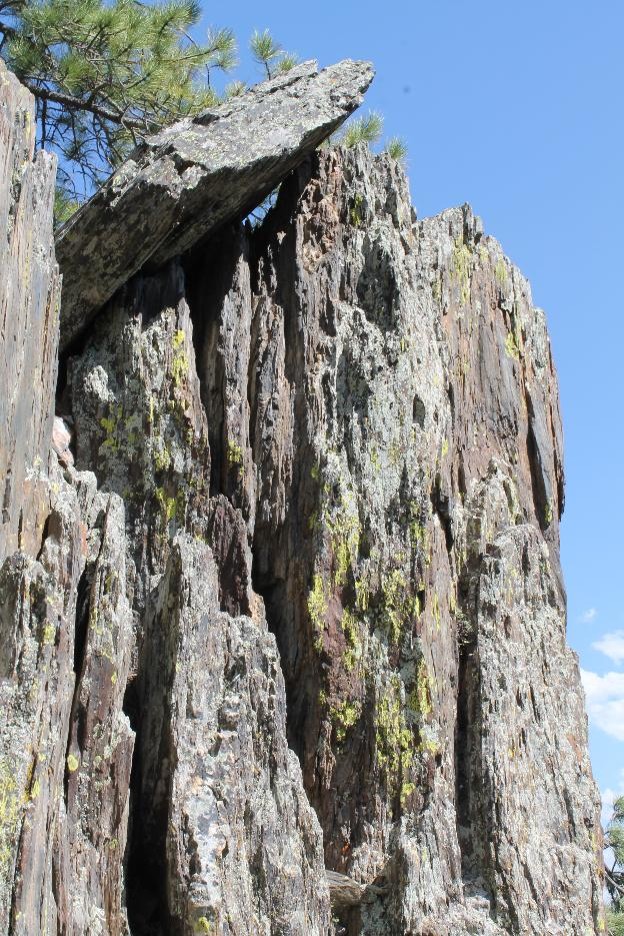
Steep shale rocks of Razorback Ridge, near Hisega, in the Black Hills of South Dakota.
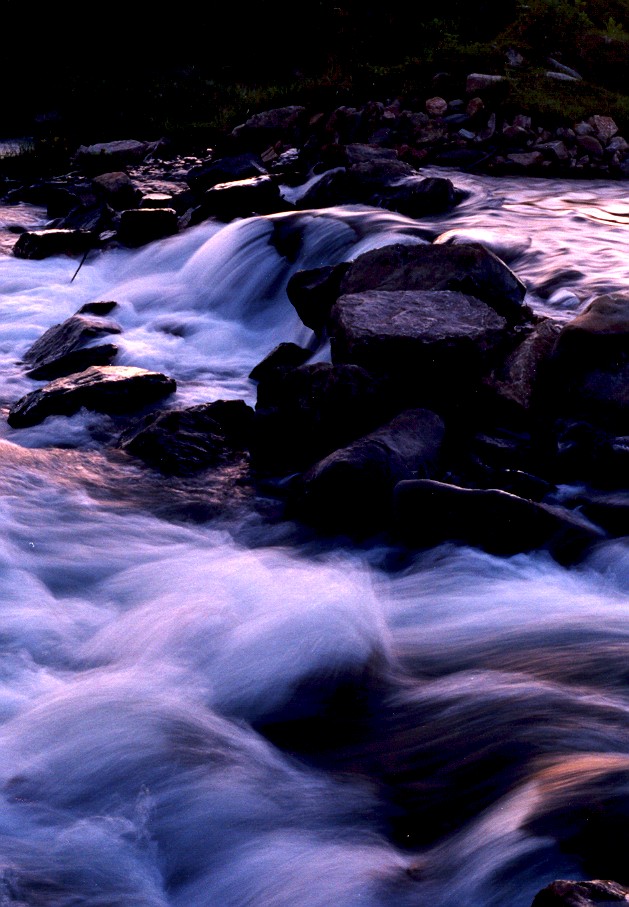
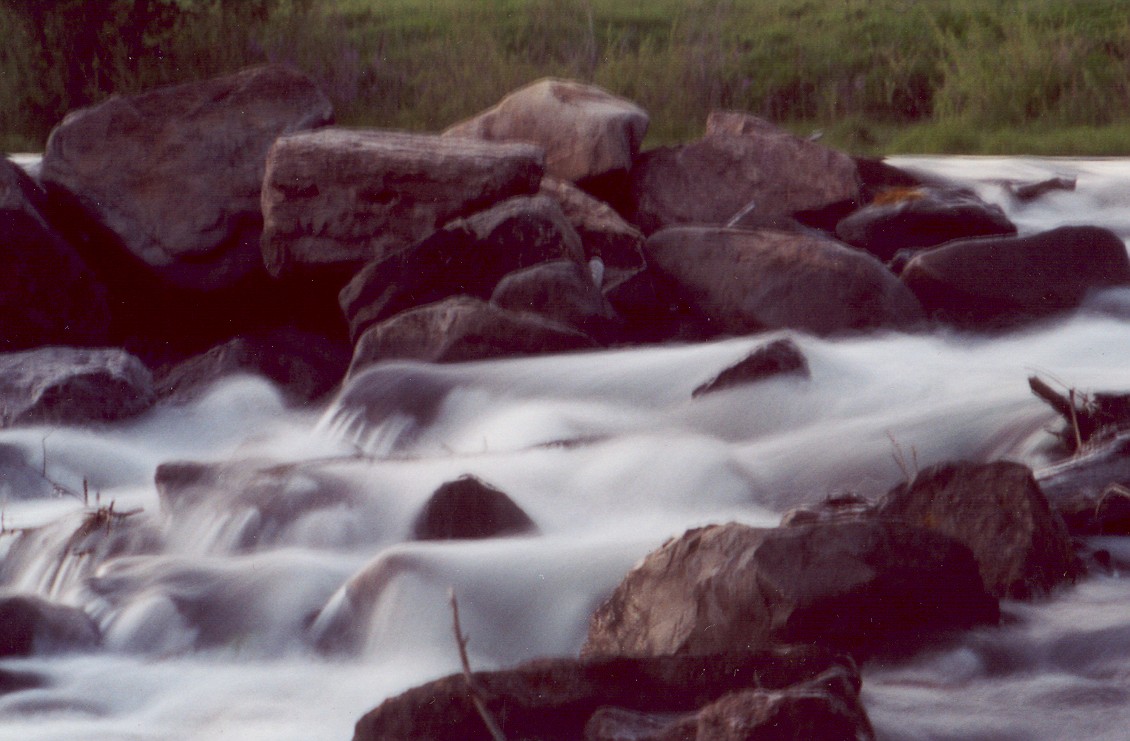
Slow exposure of Rapid Creek near Hisega in the Black Hills of South Dakota. Photo by Stan Rice.
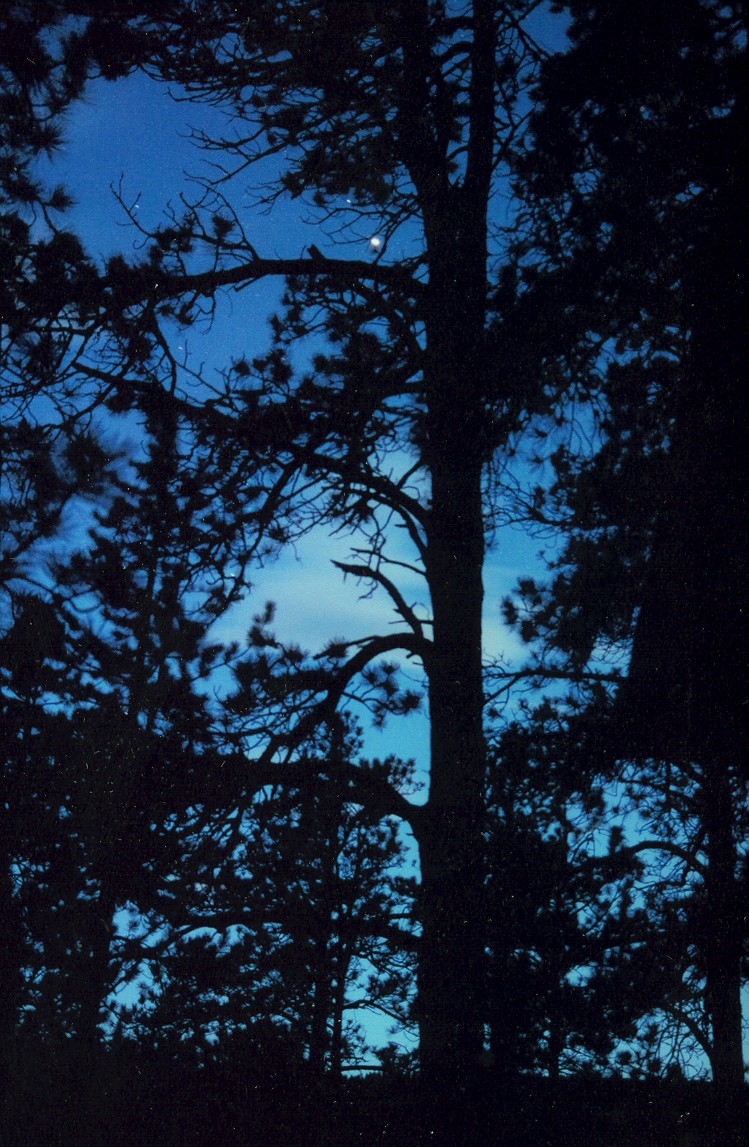
Ponderosa pines and the Evening Star in the Black Hills of South Dakota.
These mountain goats have found a salt lick near Mt. Rushmore in the Black Hills of South Dakota.
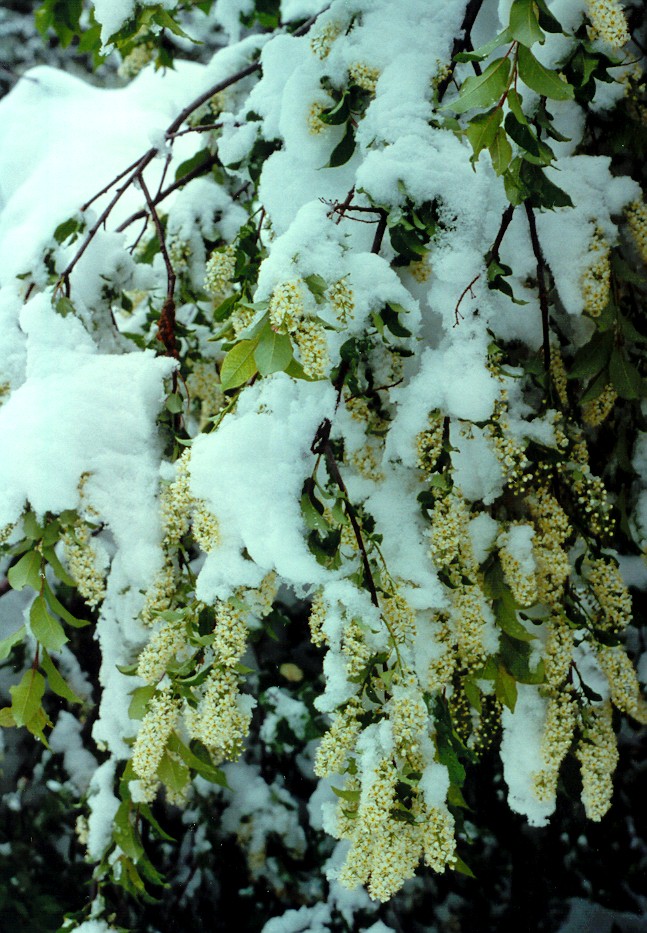
A July snowstorm has covered the flowering stalks of chokecherry in the higher elevations of the Black Hills of South Dakota.
Special effects photo of a chimney fireplace by Stan Rice.
Special effects closeup of part of the face of the uncompleted Crazy Horse Mountain sculpture in the Black Hills of South Dakota. Photo by Stan Rice.
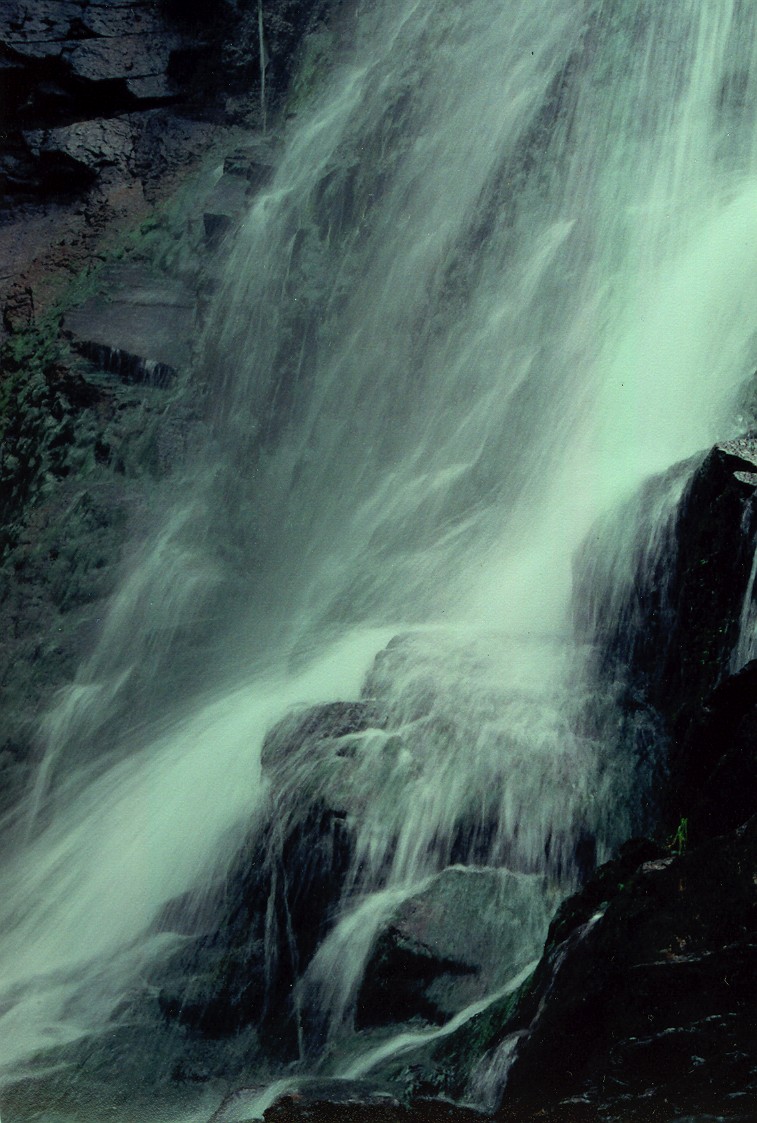
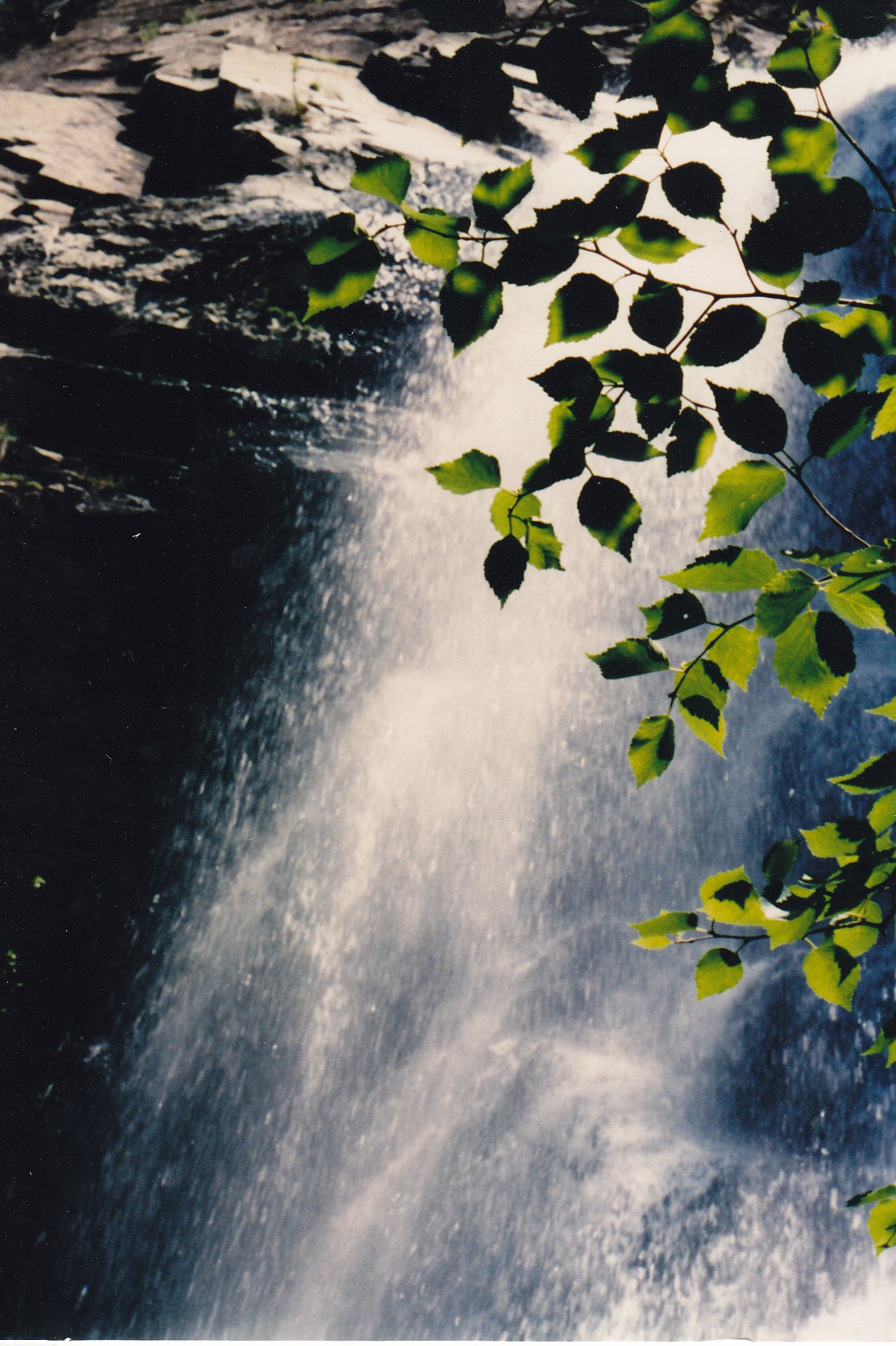
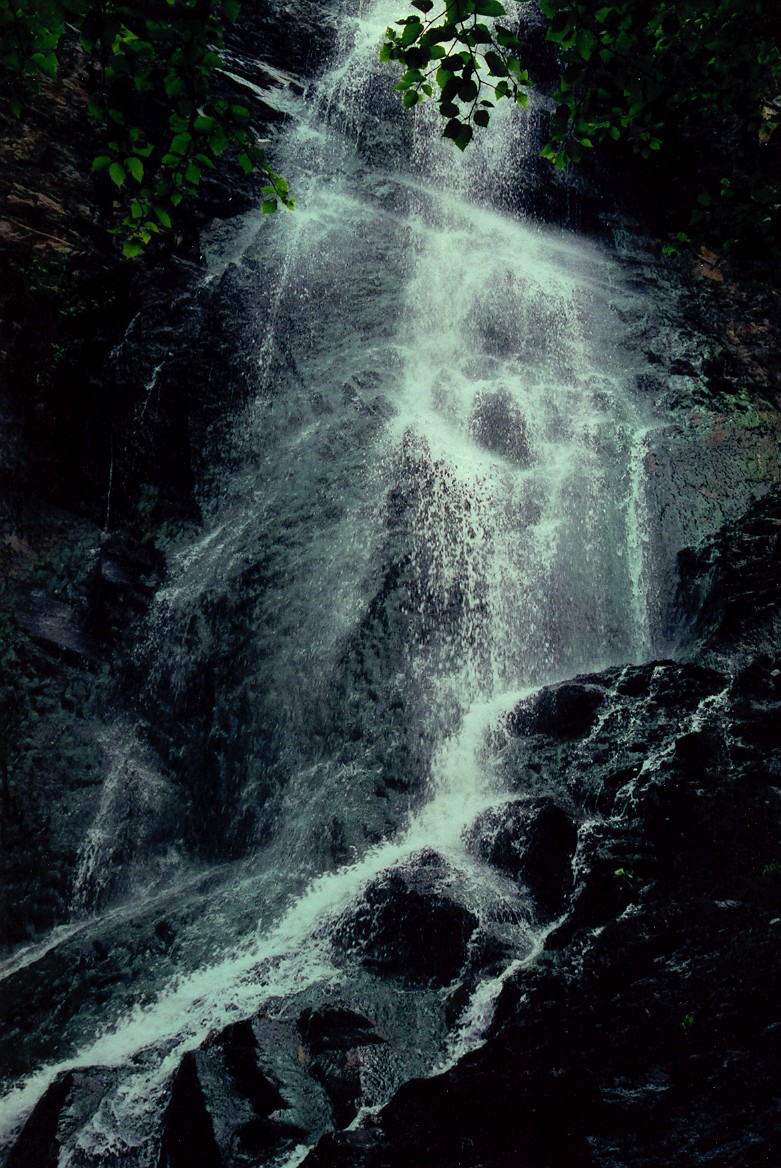
Bridalveil Falls in the Black Hills of South Dakota.
Bog birch (Betula pumila) grows in a bog near Black Fox campground in the Black Hills of South Dakota. Acid conditions have caused the organic sediments to turn red.
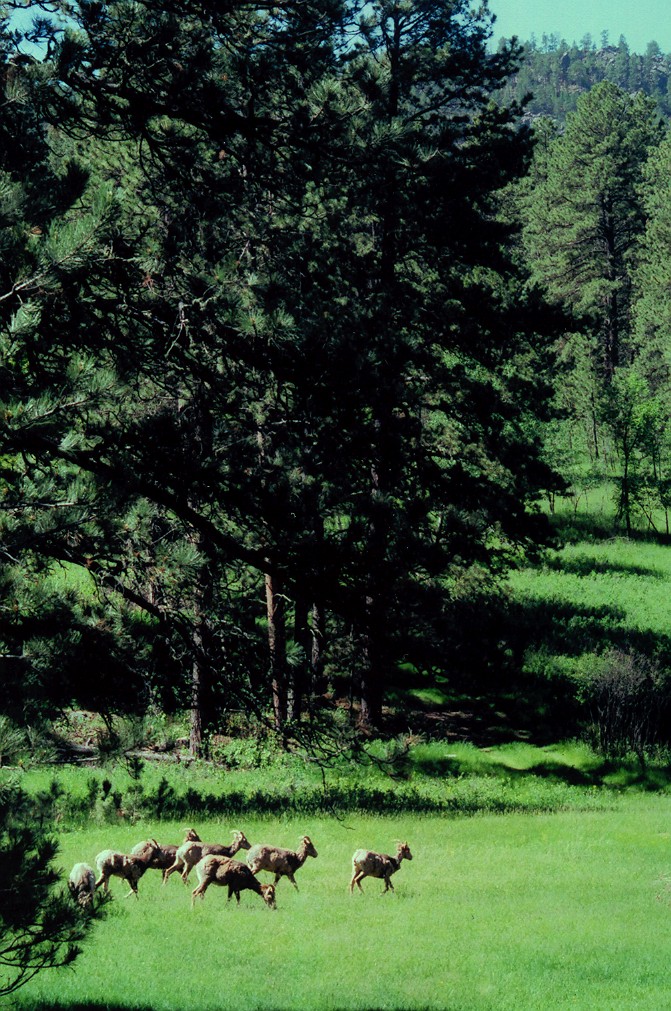
Bighorn sheep run through an open field near Hisega in the Black Hills of South Dakota.
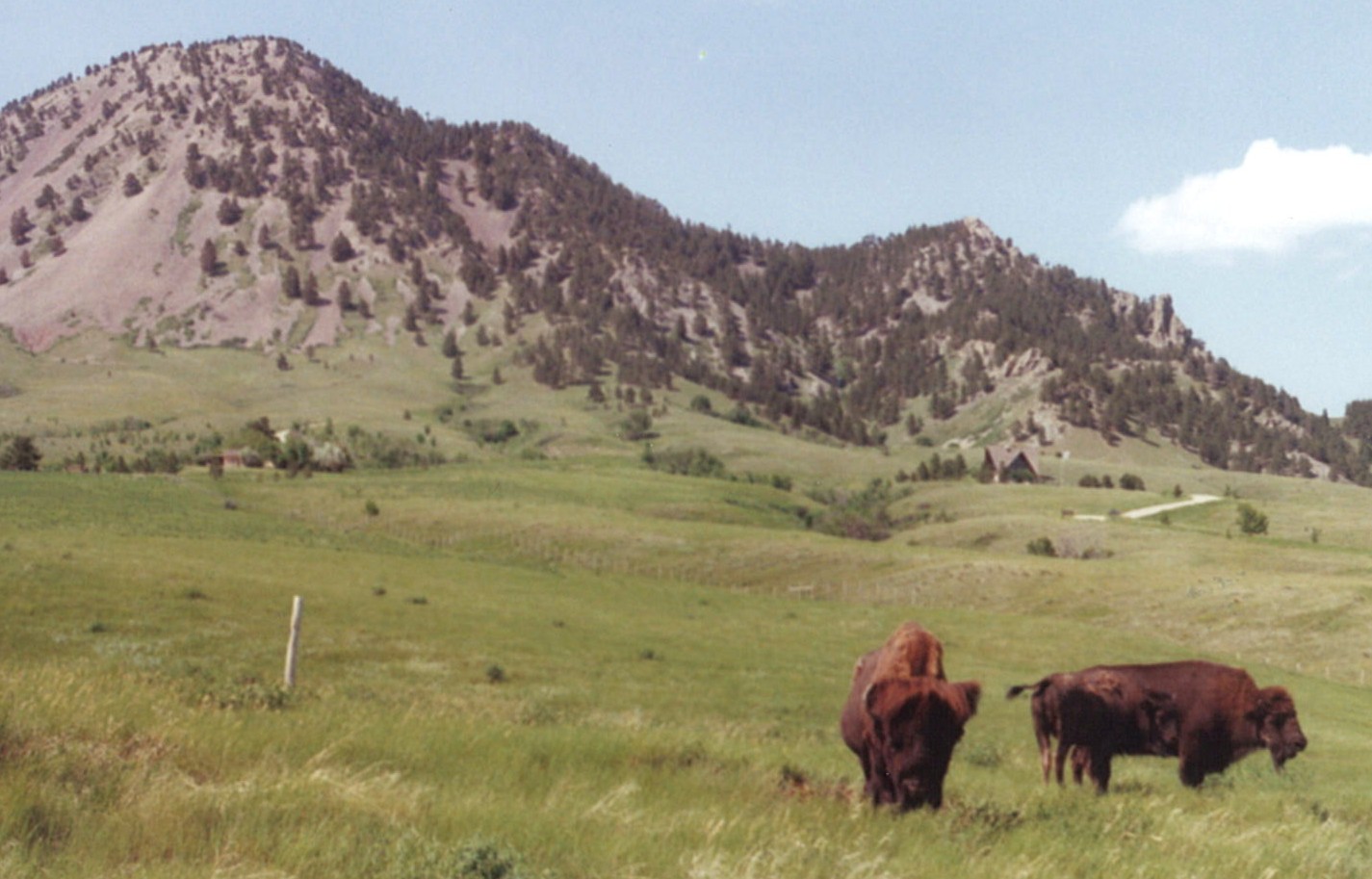
Bison graze on the slopes of Bear Butte, just north of the Black Hills of South Dakota. This was before the fire that burned all the pines about 1998.
Plants
Zigadenus elegans, a camass lily from the Black Hills of South Dakota.
A Calochortus lily from a grassland in the Black Hills of South Dakota.
Two species of Artemisia from the Black Hills of South Dakota.
Twinflower (Linnaea borealis) from the subalpine forest zone of the Black Hills of South Dakota.
Sedum, a succulent plant from the Black Hills of South Dakota.
A Geranium in the Black Hills of South Dakota.
A Potentilla in the Black Hills of South Dakota.
Bark and needles of Ponderosa pine in the Black Hills of South Dakota.
Male cones of Pinus ponderosa in the Black Hills. These cones produce only pollen (lots of it). To minimize the risk of pollen floating down and pollinating the female cones of the same tree, the male cones are near the bottom of the tree so that pollen lands on female ones only if wind has blown it probably from another tree.
Female cones of Pinus ponderosa in the Black Hills of South Dakota. To minimize the risk of pollen floating down and pollinating the female cones of the same tree, the female cones are near the topof the tree so that pollen lands on female ones only if wind has blown it probably from another tree.
Ponderosa pine seedling, Black Hills, South Dakota.
Ponderosa pine trees produce so much pollen that what appears to be yellow dust in this photo, on a windy warm day in June, is actually pine pollen. Black Hills, South Dakota.
Closeup of ponderosa pine bark, Black Hills, South Dakota.
Closeup of ponderosa pine bark, Black Hills, South Dakota, special effects.
Phlox, Black Hills, South Dakota. Note that the two flowers, of the same species, are not identical.
Monotropa in the Black Hills of South Dakota. Monotropa has no chlorophyll; it lives off of molecules supplied to it by decomposer fungi.
Lilium philadelphicum, Black Hills, South Dakota.
The Black Hills of South Dakota has abundant lichens because of its mists, even though it is a relatively dry ponderosa pine forest.
The Black Hills of South Dakota has abundant lichens because of its mists, even though it is a relatively dry ponderosa pine forest. These lichens are on birch bark.
Iris missouriensis in the Black Hills of South Dakota.
Frasera speciosa, the green gentian, a subalpine flower on Cement Ridge in the Black Hills of Wyoming.
Fruits of Geum triflorum, the prairie smoke, in the Black Hills of South Dakota.
Forget–me-nots (Genus Myosotis) from a streamside in the Black Hills of South Dakota.
Genus Erigeron in the Black Hills of South Dakota. The white ray flowers and the yellow disc flowers are all separate flowers clustered together into one head.
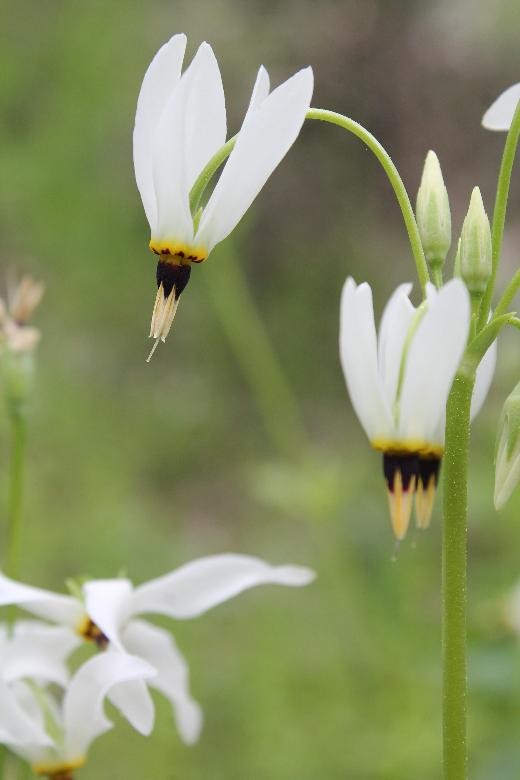
The shooting star (Dodecatheon pulchellum) in the Black Hills of South Dakota.
A lady’s-slipper orchid (genus Cypripedium) in a moist forest in the Black Hills of South Dakota.
Bunchberry (Cornus canadensis) is actually a herbaceous dogwood. It has four big white bracts with small white flowers in the center. This one was in the northern Black Hills of South Dakota.
The bur oak (Quercus macrocarpa) lives in river bottoms in the Black Hills of South Dakota. Most Black Hills species are western, but this tree is from the eastern part of the continent. It is the only oak found in the Black Hills.
Linum lewisii is a wild flax that grows in the Black Hills of South Dakota.
Trunk of a paper birch (Betula papyrifera) in a wet forest in the Black Hills of South Dakota.
Special effects photo of the trunk of a paper birch (Betula papyrifera) in the Black Hills of South Dakota.
Closeup of the bark of a paper birch (Betula papyrifera) growing in the Black Hills of South Dakota.
Balsamorhiza sagittata in the Black Hills of South Dakota.
Asplenium septentrionale is a fern (that’s right, a fern) that grows on granite rock crevices near Mt. Rushmore in the Black Hills of South Dakota.
Monkshood (genus Aconitum) is a poisonous plant growing in the Black Hills of South Dakota.
California and Pacific Coast
Bristlecones
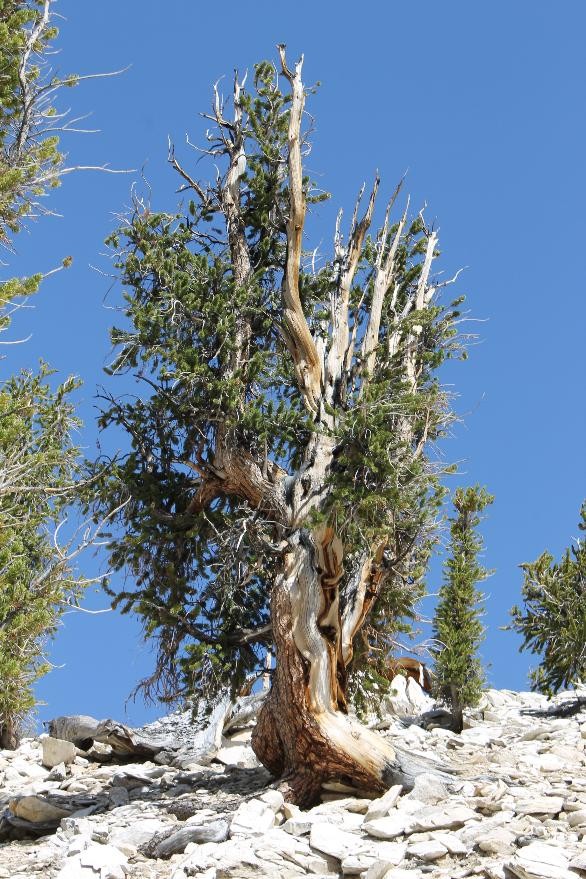
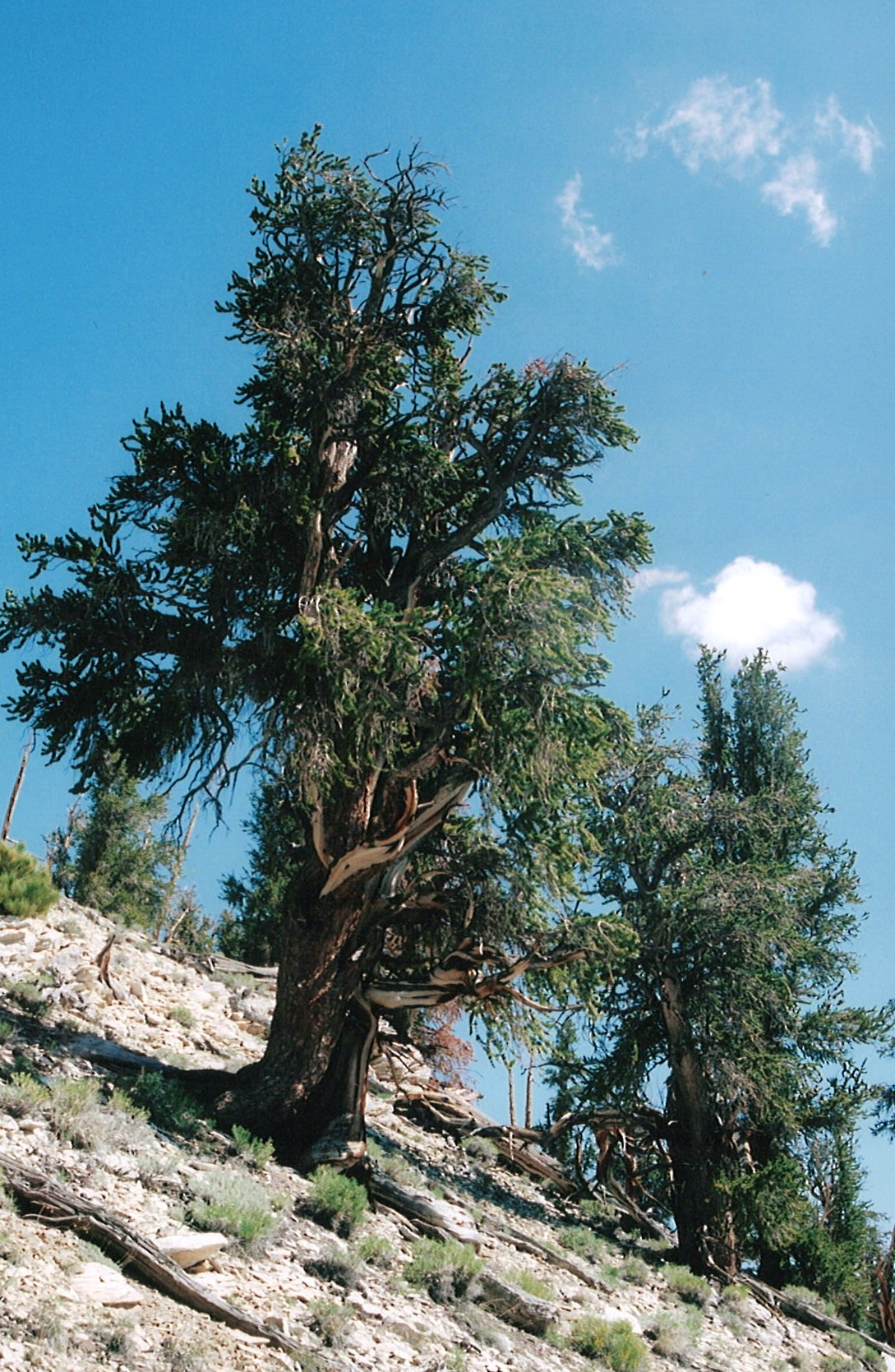
This bristlecone pine (Pinus longeava) is more dead than alive, but has persisted in this state for centuries. These pines are in the Inyo Mountains, dry and cold, in the rain shadow of the Sierra Nevada to the west. Ancient Bristlecone Pine Reserve near Bishop, California.
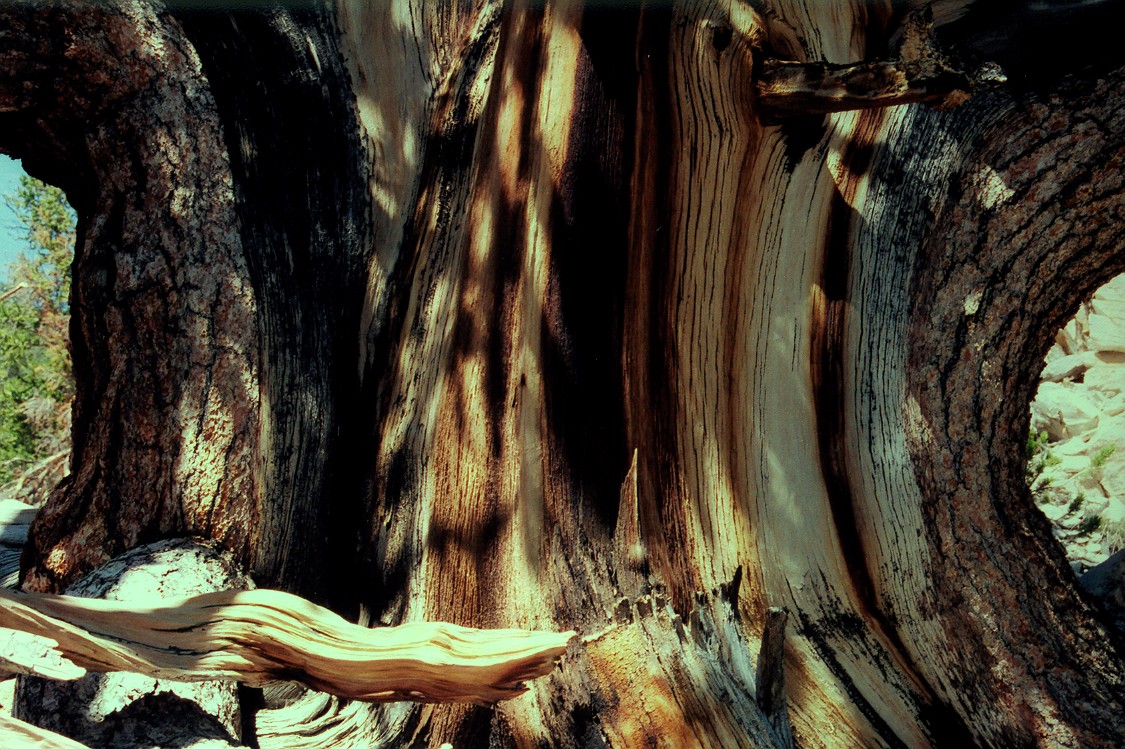
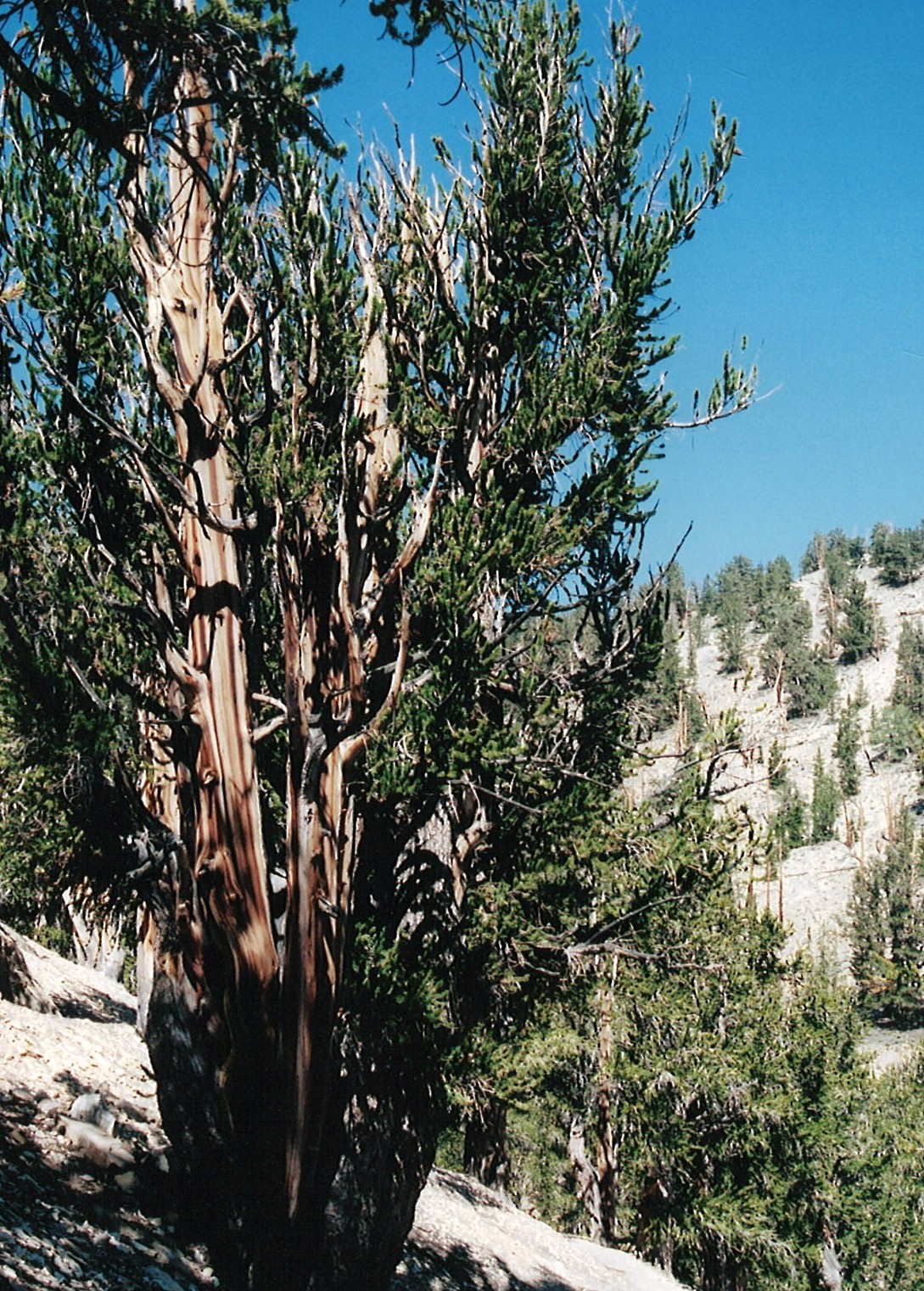
Closeup of the trunk of one of the older bristlecone pines (Pinus longeava) in the Schulman Grove, Inyo Mountains, California. This portion of the trunk is dead, as the bark has died. The Inyo Mountains are in the rain shadow of the Sierra Nevada mountains to the west.
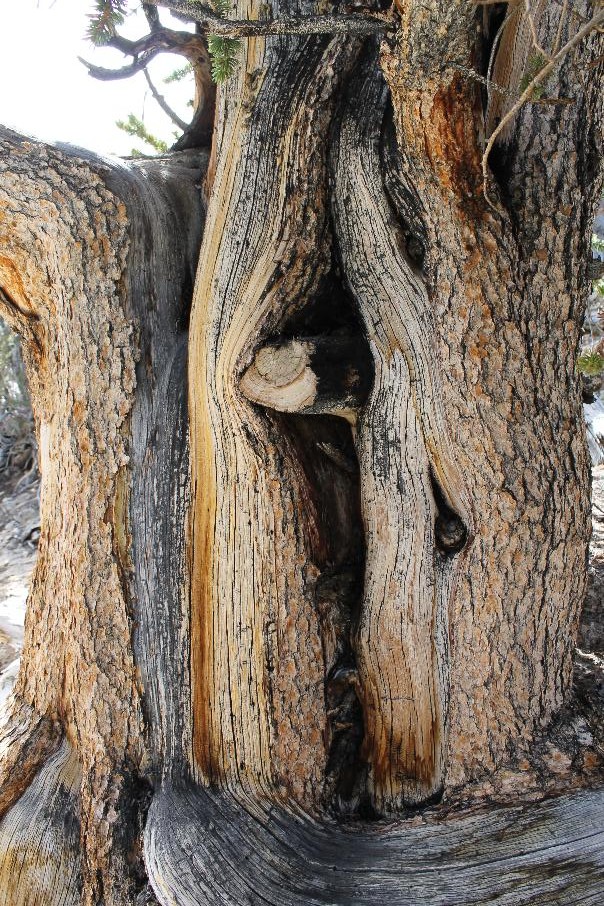
Closeup of the trunk of one of the older bristlecone pines (Pinus longeava) in the Schulman Grove, Inyo Mountains, California. This portion of the trunk is dead, as the bark has died. The Inyo Mountains are in the rain shadow of the Sierra Nevada mountains to the west. Though the tree is only about thirty feet tall, the trunk is six feet wide and the tree is over four thousand years old. The part of the trunk without bark is dead; the rest is alive.
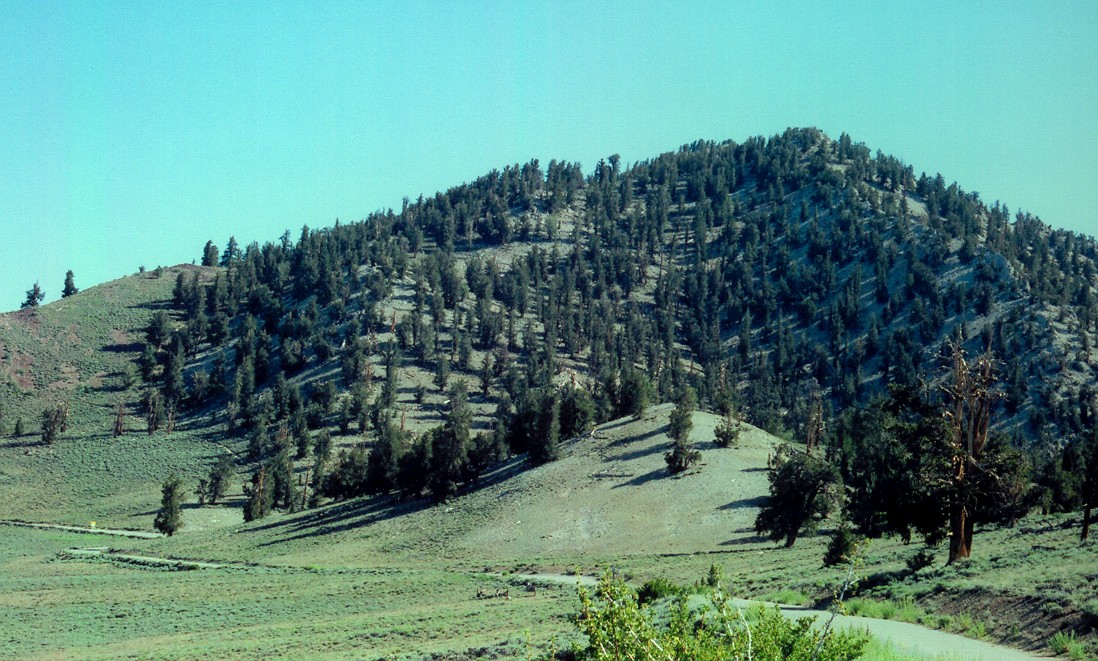
Schulman Grove, Inyo Mountains, near Bishop, California. Many of these trees are extremely old bristlecone pines (Pinus longeava), just under 5000 years old, first studied by Edmund Schulman. The Inyo Mountains are in the rain shadow of the Sierra Nevada mountains to the west.
This bristlecone pine (Pinus longeava) is more dead than alive, but has persisted in this state for centuries. These pines are in the Inyo Mountains, dry and cold, in the rain shadow of the Sierra Nevada to the west. Ancient Bristlecone Pine Reserve near Bishop, California.
This bristlecone pine (Pinus longeava) is more dead than alive, but has persisted in this state for centuries. These pines are in the Inyo Mountains, dry and cold, in the rain shadow of the Sierra Nevada to the west. Ancient Bristlecone Pine Reserve near Bishop, California. Somewhere nearby is the oldest tree in the world, almost 5000 years old. The exact location is kept secret to prevent vandalism.
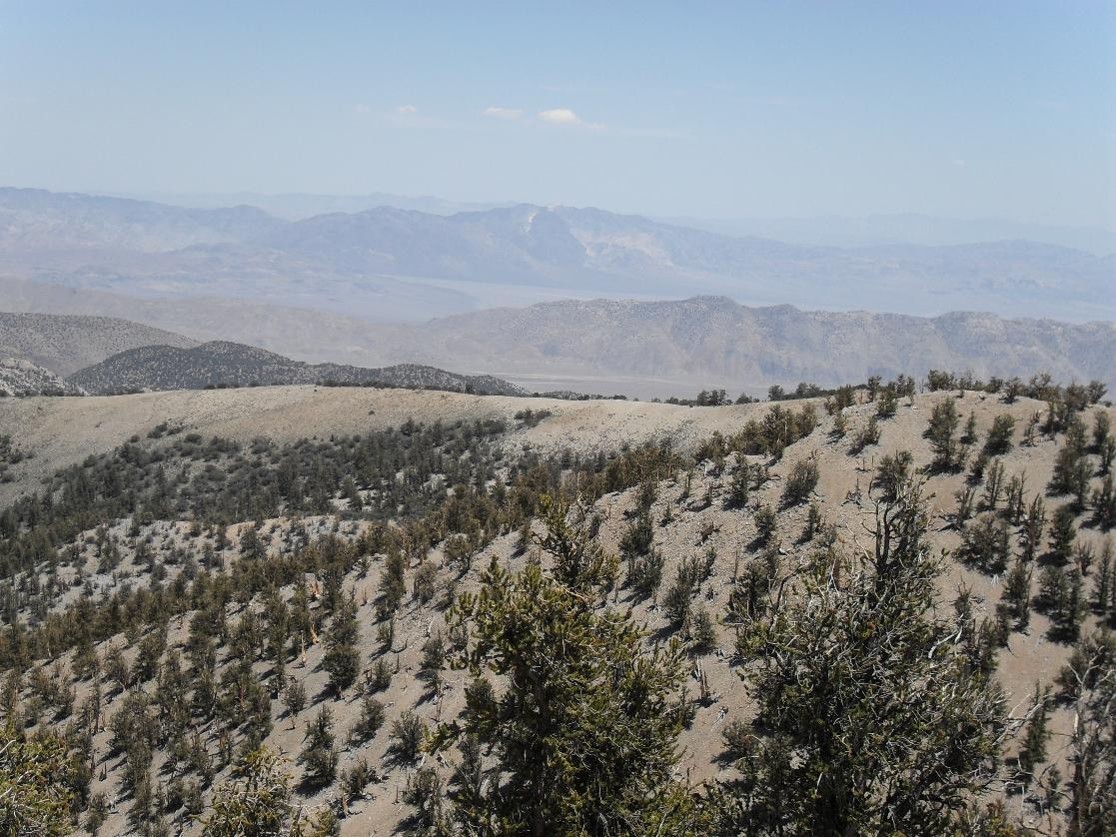
Schulman Grove, Inyo Mountains, near Bishop, California. Many of these trees are extremely old bristlecone pines (Pinus longeava), just under 5000 years old, first studied by Edmund Schulman. The Inyo Mountains are in the rain shadow of the Sierra Nevada mountains to the west. Looking eastward, you can see the desert.
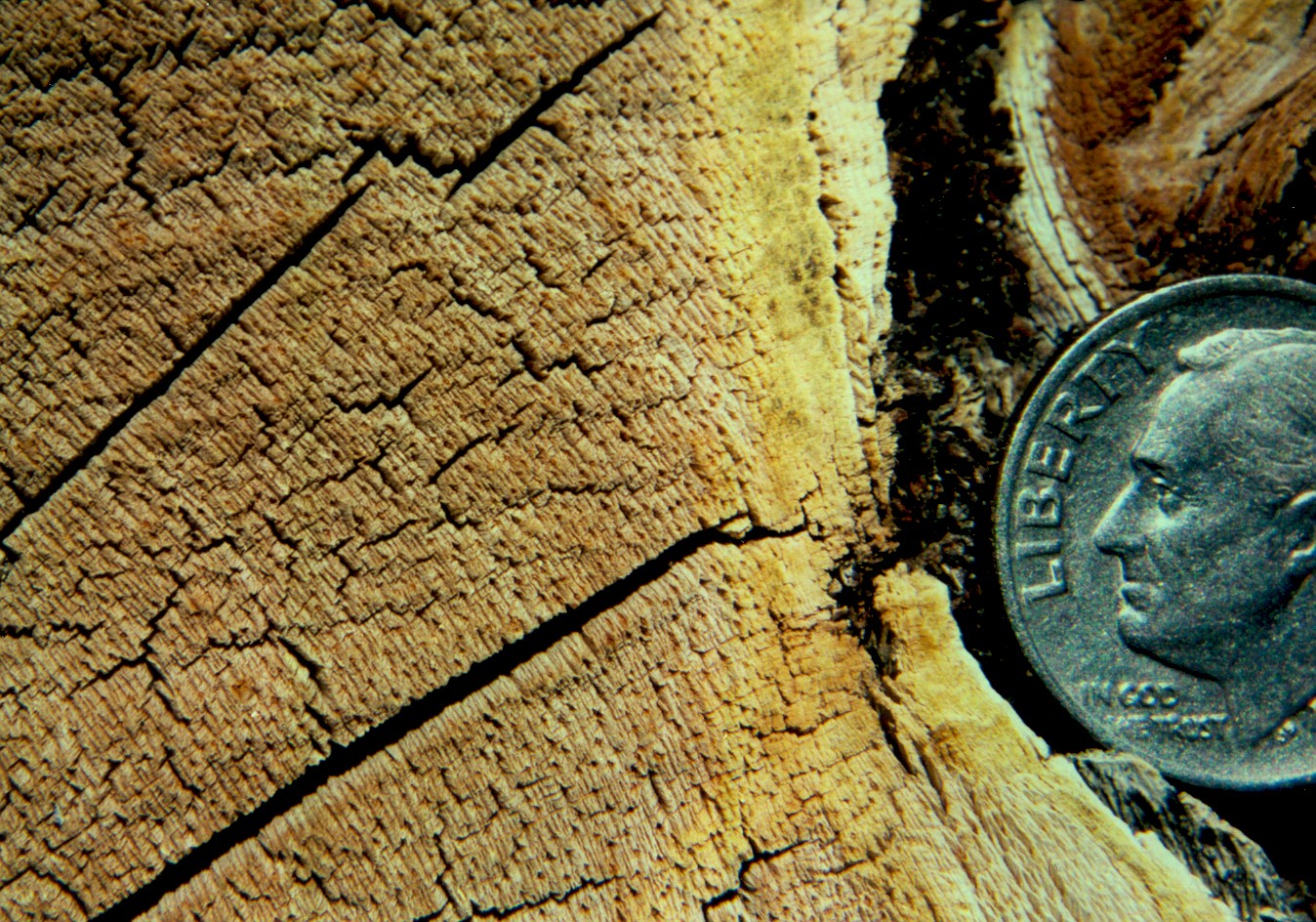
An exposed section of a bristlecone pine (Pinus longeava) trunk in the Inyo Mountains of California. These pines are among the oldest trees in the world. The trunk was cut because the tree fell over on the trail. The wood rings, one produced each year, are the vertical lines tilting to the left, not the big cracks. Photo by Stan Rice.
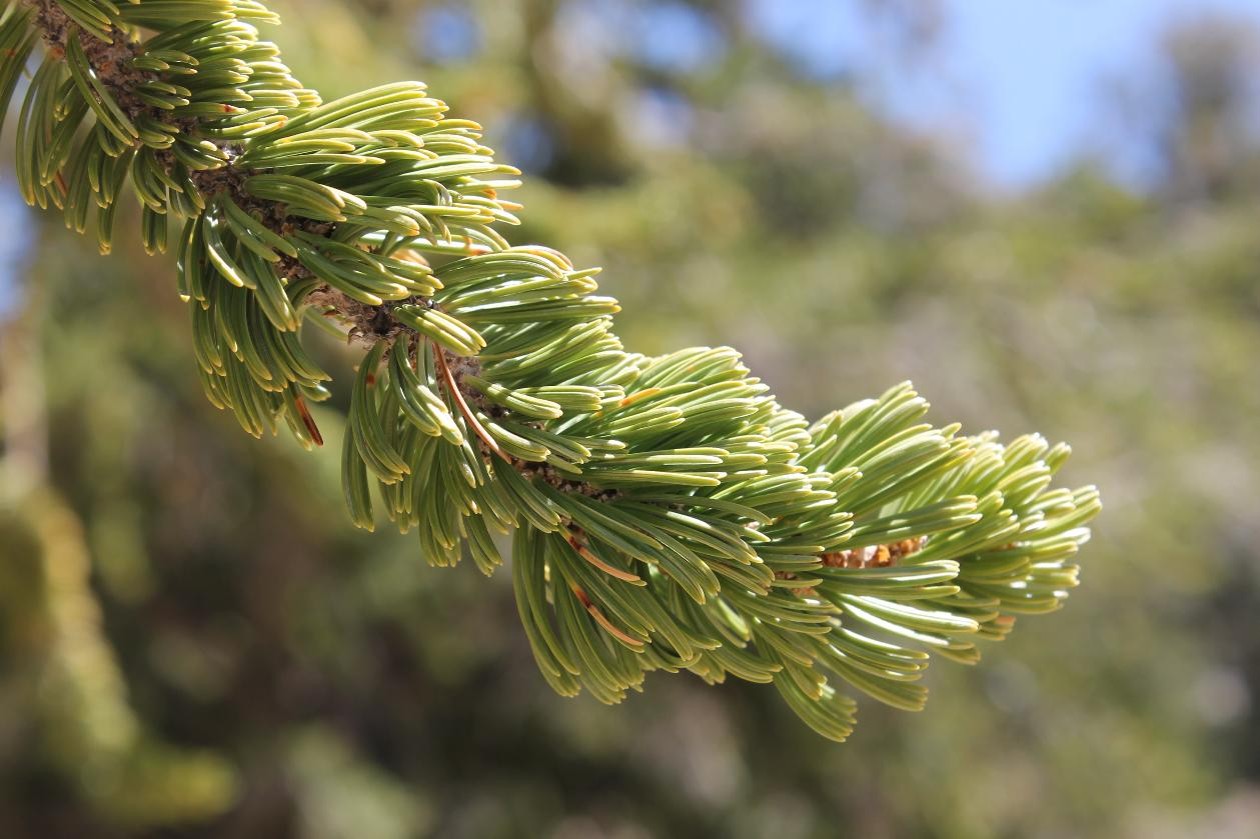
Closeup of the needles of bristlecone pine (Pinus longeava) in the Inyo Mountains of California, near Bishop. The adaptation of these pines to cold, dry conditions is to grow extremely slowly; many are almost 5000 years old. The needles also live a long time. Most pine needles are shed after a couple of years, but the needles in the older part of this branch may be decades old. Photo by Stan Rice.
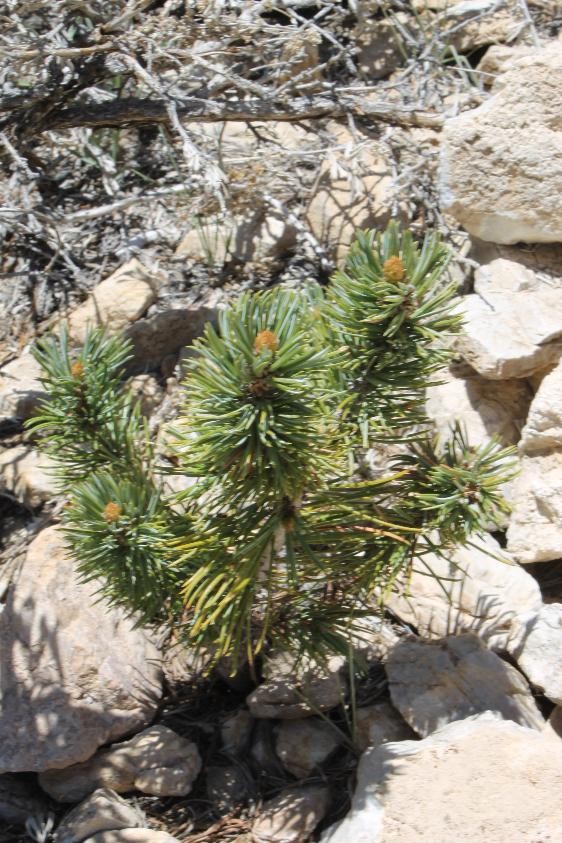
This tine bristlecone pine (Pinus longeava) seedling in the Inyo Mountains of California near Bishop may be fifteen years old. A major adaptation of these pines to the cold, dry conditions at high elevation in the rain shadow of the Sierra Nevada mountains is to grow slowly and live for a long time.
Closeup of the trunk of one of the older bristlecone pines (Pinus longeava) in the Schulman Grove, Inyo Mountains, California. This portion of the trunk is dead, as the bark has died. The Inyo Mountains are in the rain shadow of the Sierra Nevada mountains to the west.
Pacific Coast
Travel
Special effects photo of a moonrise over the Pacific Ocean north of Santa Barbara. Because the coast runs east and west at Santa Barbara, the moon rises over the Pacific. Photo by Stan Rice.
A bonsai forest of conifers (including Pinus contorta and Cupressus goveniana) in shallow soil in Mendocino County, California. The photographer, five and a half feet tall, gives perspective. The adaptation of these conifers to shallow soil is to grow slowly and short.
Seedlings of bishop pine (Pinus muricata) grow abundantly right after a fire in 1995 destroyed the adult trees. The seeds remain in the cones on the adult trees until a fire bakes them open, thus allowing the pines to outcompete other tree species. In the Santa Ynez mountains of California, near Lompoc. Bishop pines are dependent on fire for the completion of their life cycles. Photo by Stan Rice.
North Pacific Coast sunset, North America.
Bigleaf maple (Acer macrophyllum) and a large coast redwood (Sequoia sempervirens) in a remnant sequoia grove along the Pacific coast of northern California. These sequoias are the tallest trees in the world.
North Pacific Coast sunset, North America.
The photographer, Stan Rice, is not as strong as he appears when holding a boulder in one hand. The boulder is diatomaceous earth (diatomite), created by the slow accumulation of dead diatoms off the Pacific coast near Lompoc north of Santa Barbara in California. The diatomite rock was lifted by the San Andreas fault above sea level about a million years ago. Diatomite is much lighter than rock. It is mined industrially, hence the requirement for a hard hat. Photo 1978.
Cliffs north of San Diego, Pacific Ocean, California.
A grove of Torrey pines (Pinus torreyi) near San Diego. These pines require a fire cycle for their seeds to germinate.
Walkway at the reconstructed Mission Santa Ynez near Lompoc, California, from the Spanish colonial period.
Chapel at the reconstructed Mission Santa Ynez near Lompoc, California, from the Spanish colonial period.
Sunset off the coast of La Jolla, California.
Cliffs north of San Diego, Pacific Ocean, California.
Tidepools off the coast of La Jolla, California.
Cliffs north of San Diego, Pacific Ocean, California.
Santa Ynez mountains, one of the coast ranges of California. The dark plants on the mountains is chaparral.
Chaparral and vernal pool in the coastal mountains east of San Diego, after a fire.
A grove of Monterey pines (Pinus radiata) in coastal California. This pine species is now widespread on Earth, having been planted in many places where it has since become an invasive species, but this is one of the original groves. Monterey pines require fire for the completion of their life cycles.
Plants
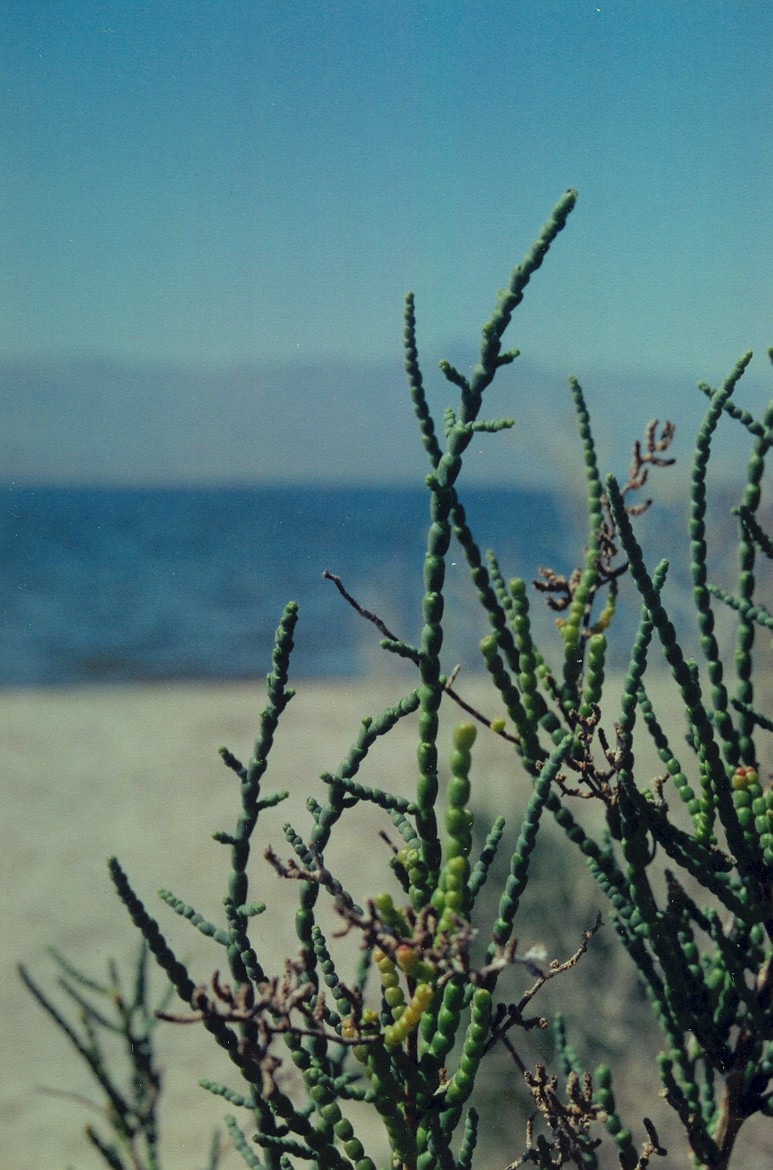
Pickleweed (Salicornia) grows in saltmarshes in coastal California. It resists salinity because it accumulates both salt, and extra water, in its succulent tissues.
Ice plants (genus Mesembryanthemum) are native to South Africa but have spread widely on coastal cliffs in California. It resists salinity by accumulating both salt and water in its succulent tissues.
Calystegia soldanella is an evening primrose that grows in sand dunes along the Pacific coast in California.
Abronia maritima, the sand verbena, grows in sand dunes along the Pacific coast in California.
The California laurel (Umbellularia californica) grows along creeks in the dry coastal mountains of California.
California coastal live oaks (Quercus agrifolia) become twisted as they grow old.
Torreya californica is a conifer that grows along the Pacific coast only in California. It is disjunct from the torreya species that grows in the southeastern United States.
Large cone of the fast-growing Torrey pine in a grove near San Diego, California.
Quercus wislezenii is a chaparral and scrub oak that grows in the dry coastal mountains of California.
Quercus lobata on the interior (eastern) slopes of the California coastal range.
California coastal live oaks (Quercus agrifolia) become twisted as they grow old.
Poison oak (Toxicodendron diversilobum) is an abundant shrub in the coastal mountains of California. It is closely related to poison ivy in eastern North America.
Platanus racemosa is the disjunct California species of sycamore that grows along creeks and rivers.
Bishop pines (Pinus muricata) grow rapidly after a fire only seven years earlier in the Santa Ynez mountains of California. The cones will mature but remain closed until the next fire.
An artichoke field in the heavily agricultural coastal range of California. The bare hills indicate a very dry climate but irrigation allows crops to grow abundantly.
Ramalina menziesii is the largest species of lichen in the world. It grows abundantly on live oaks (Quercus agrifolia) in the Santa Ynez mountains of coastal California. Fog provides all of the water, and dust all of the nutrients, to this lichen, which clings to the tree branches. It is also called Spanish moss but is unrelated to the Spanish moss of the southeastern United States.
Eucalyptus trees are native to Australia but were introduced to California as a source of cheap wood. They have taken over large areas of coastal California, where the toxins in the leaves (eucalyptus oil) not only keeps herbivores away but poisons the soil underneath them. The toxins even inhibit decomposition of the leaf litter.
Cakile maritima is a mustard plant that grows in sand right next to the ocean in coastal California. Its capsules produce two seeds, one which breaks off and travels with the surf to a new location, and the other which remains in place when the parent plant dies.
Eriodyction californicum is a shrub that grows in the coastal mountains of California. Because of its herbal properties, it is also called yerba santa (holy herb).
Clarkia wildflowers grow on dry slopes of the California coast range and Sierra Nevada.
The genus Ceanothus, which has many species, grows in the chaparral of California.
This bush poppy (Dendromecon rigida) grows in the chaparral of California.
Adenostoma fasciculatum, the chamise, grows in the chaparral of California.
San Joaquin Valley
Grinding holes used in earlier centuries by Yokuts Native Americans to make flour from acorns. In the foothills east of Lindsay, California.
Cave paintings made by Yokuts Native Americans in foothills east of Lindsay, California. Most Yokuts lived on reservations by the twentieth century. Note the smoke smudge on the cave ceiling.
An orange grove near Lindsay, California, in the San Joaquin Valley, which is a very productive agricultural area due to irrigation. The winter nights, when clear and cold, could kill the orange trees or at least damage the fruits. Wind machines are airplane propellers on poles that stir the air up just enough to prevent deep freeze.
An orange grove in Lindsay in the San Joaquin Valley of California. The San Joaquin Valley has productive agriculture because of irrigation.
Irrigation allows the San Joaquin Valley, which receives little rainfall, to have abundant agriculture, here, onions.
One of the major agricultural crops of the San Joaquin Valley of California is olives. The trees become very gnarled when they are older. Irrigation allows agriculture in the San Joaquin Valley which receives little rainfall.
Irrigation allows the San Joaquin Valley of California (here, near Lindsay) to have abundant agricultural production, especially orange trees. The Friant-Kern Canal (upper left) was built during the New Deal, replacing the Lindmore canal (between Lindsay and Strathmore) in the upper right.
Irrigation allows the San Joaquin Valley of California (here, in Lindsay) to have abundant agriculture, primarily oranges. The Friant-Kern Canal follows the base of the Sierra Nevada foothill southward.
Irrigation allows the San Joaquin Valley of California (here, in Lindsay) to have abundant agriculture, primarily oranges. The Friant-Kern Canal follows the base of the Sierra Nevada foothill northward.
Irrigation allows the San Joaquin Valley of California (here, in Lindsay) to have abundant agriculture, primarily oranges. The Friant-Kern Canal follows the base of the Sierra Nevada foothill southward.
The hills east of the San Joaquin Valley of California (here in Lindsay) are very dry but irrigation allows orchards, such as oranges and pomegranates, to grow.
Special effects photo of olives in the San Joaquin Valley, near Lindsay, California. Photo by Stan Rice.
Sierra Nevada
Eastern Sierras
View eastward from summit of Mt. Whitney into the desert toward Death Valley. Rain and snow come from the west; the Sierra Nevada block most of it, creating deserts.
View eastward from summit of Mt. Whitney into Owens Valley. Rain and snow come from the west; the Sierra Nevada block most of it, creating deserts to the east.
The dry (rain shadow) side of the high Sierras, as seen from Owens Valley. Mt. Whitney is the high peak on the right.
Mono Lake in Owens Valley, in the rain shadow of the Sierra Nevada.
Alkaline deposits left by the receding shoreline of Mono Lake in the rain shadow of the Sierra Nevada. The lake has been getting smaller partly because water from the watershed has been pumped to Los Angeles. The mineral concentration of the lake has thus increased.
Despite high mineral content, Mono Lake supports many invertebrates, which are food for large populations of eared grebes.
The rain shadow (and snow shadow) of the Sierra Nevada is most obvious in late winter when the snow, from Pacific moisture, stays mostly on the western slope, away from the desert of Owens Valley.
Rain shadow of the Sierra Nevada. At about seven thousand feet elevation on the Pacific slope, dense forests grow; on the eastern slope, in Owens Valley, desert shrubs dominate.
Lassen Peak
View from summit of Lassen Peak, a volcano in the Sierra Nevada, looking west toward the San Joaquin Valley.
The red color on the snow below Lassen Peak in the Sierra Nevada results from microscopic algae that make food by photosynthesis and get minerals from dust.
A krummholz conifer below Lassen Peak in the Sierra Nevada of California. The way for a tree to survive at timberline was to hide under the snow in winter. A rock allowed snow buildup to protect the tree.
In mountains around the Northern Hemisphere, subalpine conifer seeds are dispersed by jays. The birds pry open the cones with their beaks, store the seeds in their crops, then plant them at other locations where they can find them later and eat them. They forget where some of them are, and the forgotten seeds grow into new conifer seedlings. The sticky sap helps to keep out mammalian seed predators such as squirrels.
Summer view from the top of Lassen Volcano in the Sierra Nevada of California.
Loiseleuria procumbens flowers grow in the moist cracks between rocks in the alpine zone of Mt. Lassen, a volcano in the Sierra Nevada of California.
On Lassen Volcano in the Sierra Nevada of California, conifers find it difficult to grow on steep slopes of loose rock.
A fir with cones on Lassen Volcano in the Sierra Nevada of California.
Sierra Foothills
Spring grasslands cover the foothills of the Sierra Nevada near Lindsay, California. Now used as pastures, these grasslands were maintained by fire, many deliberately set by Native Americans Oaks grow only on the hills with granite outcrops.
Grasslands cover the foothills of the Sierra Nevada of California in early spring. Wildflowers include the Amsinckia fiddlenecks in the foreground. Groves of Quercus douglasii also occur.
Although the upper foothill shrublands of the Sierra Nevada in California receive little rain in the summer, the Kaweah River rushes with water from snowmelt.
Lake Kaweah, in the dry foothills of the Sierra Nevada in California, was created by Terminus Dam, built by the Army Corps of Engineers primarily for flood control during summer snowmelt.
Grasslands cover the foothills of the Sierra Nevada of California in early spring. Groves of Quercus douglasii oaks occur especially in areas with granite outcrops.
Sierra Nevada
In 1996, wildfire smoke filled the Kaweah River Valley in Sequoia National Park in the Sierra Nevada of California.
Highest peaks in the Sierra Nevada, framed by a sugar pine (Pinus lambertiana), in Sequoia National Park, California, May 1975. An extended drought killed the tree and made such a thick snowpack unusual in most but not all winters after that time.
Sierra Nevada subalpine forest, with krummholz trees leading up to alpine granite boulders.
A giant sequoia tree (Sequoiadendron giganteum) surrounded by bracken ferns (Pteridium aquilinum) near Crescent Meadow in Sequoia National Park.
Moro Rock emerges from mountains in Sequoia National Park, Sierra Nevada, California. it is surrounded by a mosaic of montane coniferous forest, chaparral, and oak woodland.
Crescent Meadow, Sequoia National Park, Sierra Nevada, California. Giant sequoia trees (Sequoiadendron giganteum) surround the meadow. The youngest ones reach their full height in about 500 years, still pointed; the next two thousand years of their lives, the canopy fills out and becomes round.
A gorge in the Sierra Nevada of California (Sequoia National Park) was formed by a glacier in a recent ice age.
A subalpine glacial lake in Sequoia National Park, Sierra Nevada, California.
The entire group of redwoods (Sequoia and Sequoiadendron) were named after Sequoyah, the Cherokee Native American scholar (he was not actually a chief). This giant sequoia was individually named after him. Sequoia National Park Sierra Nevada, California.
The afternoon sunlight makes these giant sequoia trees (Sequoiadendron giganteum) glow. They grow only in small groves in a small area of the Sierra Nevada mountains of California, most of them in Sequoia National Park.
Moro Rock at sunset, Sequoia National Park, California.
In June, tens of thousands of phlox (Linanthus montanus) bloom in granite gravel in Sequoia National Park.
A giant sequoia tree (Sequoiadendron giganteum) in Sequoia National park. Just one of its large branches would be considered a big tree in the second-growth forests of eastern North America.
The top of the General Sherman tree, a giant sequoia (Sequoiadendron giganteum) in Sequoia National Park, California. This tree is the largest tree, and the largest organism, in the world.
A view of the entire General Sherman tree, a giant sequoia (Sequoiadendron giganteum) in Sequoia National Park, California. This tree is the largest tree, and the largest organism, in the world.
The base of the General Sherman tree, a giant sequoia (Sequoiadendron giganteum) in Sequoia National Park, California. This tree is the largest tree, and the largest organism, in the world.
An alpine lake, far above timberline, from the trail leading to the summit of Mt. Whitney, Sierra Nevada, California, from the west side.
Kings Canyon National Park, along the Kings River, Sierra Nevada, California. Cattails and willows grow in the river’s margin.
The Kern River Basin, Sequoia National Park, California. The river divides the Sierra Nevada into two ridges, the lower west ridge and the higher east ridge.
A snowmelt lake as seen from the top of Mt. Whitney, the tallest mountain in the lower 48. Sequoia National Park, California. This is the highest lake in the lower 48.
Mt. Whitney, the tallest peak in the lower 48 states, seen from the west (Pacific) side. I have posted another photo of the same mountain from the east side.
A storm envelops Mt. Whitney in the Sierra Nevada of California. Mt. Whitney is the highest mountain in the lower 48 states.
A giant sequoia tree seen from inside the burned heart of another giant sequoia tree. Sequoia National Park, California.
Kern River Basin and Moro Rock seen from the summit of Alta Peak, Sequoia National Park, California.
Acorn woodpeckers have drilled holes in a dead tree, and they fit an acorn perfectly into each hole. Sequoia National Park, California.
Sierra Nevada and Foothill Plants
Tiger lily in a sequoia forest, Sequoia National Park, California.
Phacelia ciliata is a spring wildflower in the foothills of the Sierra Nevada, California.
Orthocarpus, the owl’s-clover, is a spring wildflower in the foothills of the Sierra Nevada in California.
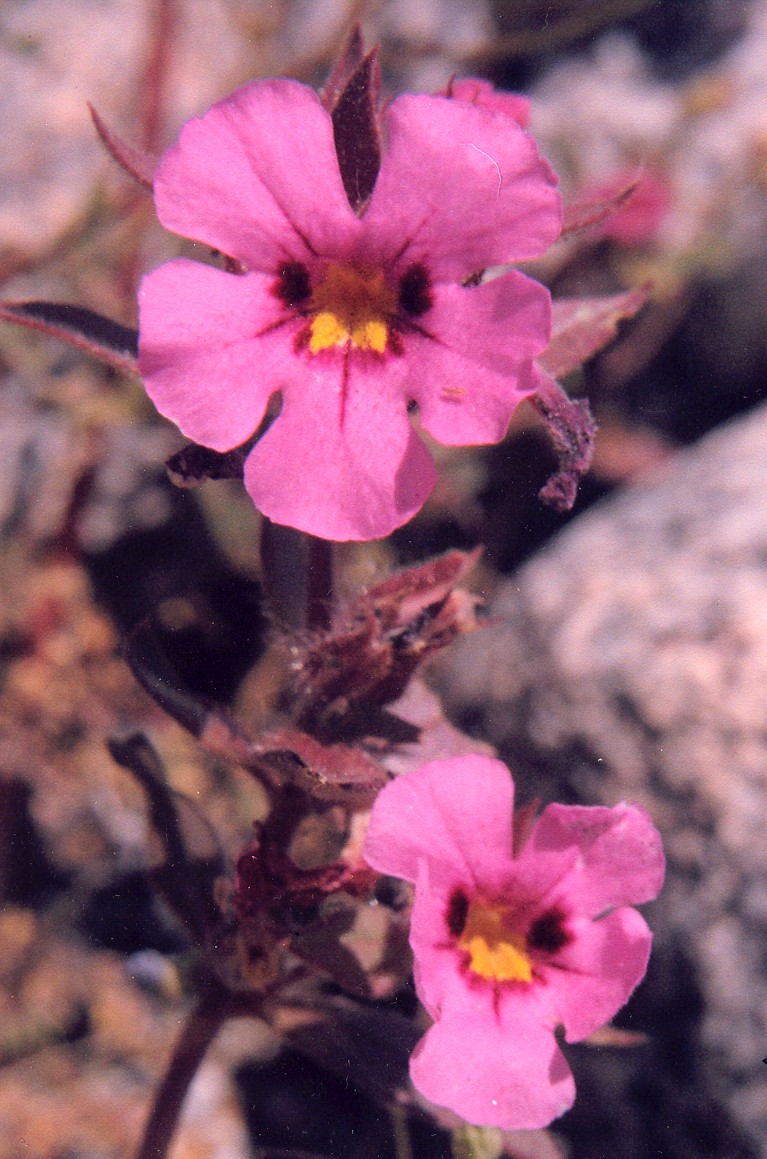
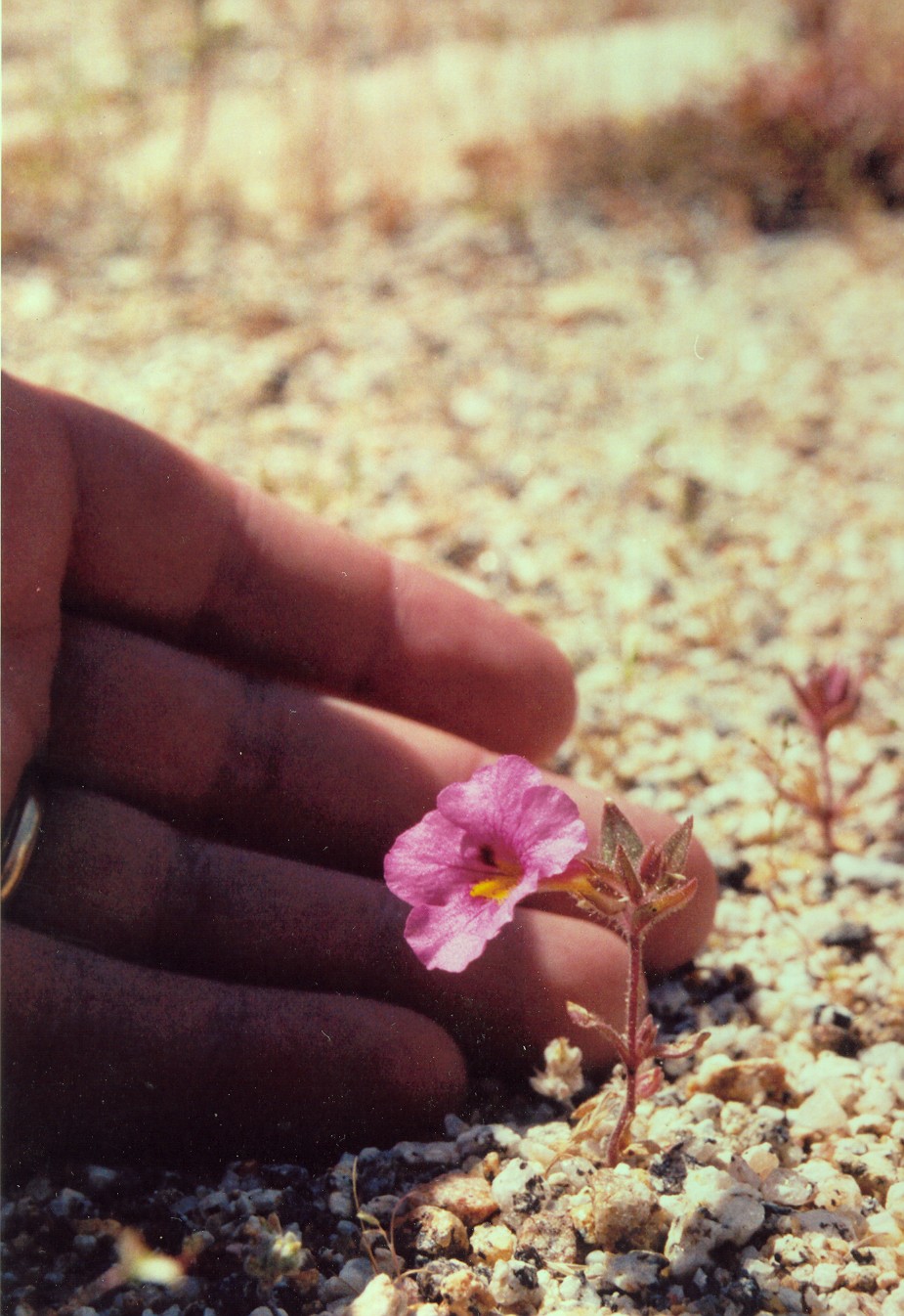
Mimulus dudleyi is a tiny spring wildflower found only in cracks in granite boulders in the foothills of the Sierra Nevada, California. It is too small to compete with larger plants in the surrounding soil.
A lupine in a spring grassland of a foothill of the Sierra Nevada mountains in California, east of Lindsay. The older flowers are developing leguminous fruits.
Many different lichens live on granite boulders of the Sierra Nevada foothills, California (near Lindsay). Their colors (red, yellow, gray green, and greenish black) result from the algae that live inside the fungus outer structure of the lichen. In the summer, they shrivel up but do not die; in the moist cool winter and spring, they absorb water and reveal their colors. California poppies in the background.
Crassula erecta is a tiny succulent plant growing in the very thin soil on top of granite boulders in the foothills of the Sierra Nevada, California (near Lindsay).
Claytonia perfoliata, miner’s lettuce, is an edible spring wildflower in the foothills of the Sierra Nevada in California (near Lindsay).
Brodiaea lilies (the purple flower in the foreground) store food in edible corms. They bloom in the spring in the foothills of the Sierra Nevada in California, near Lindsay. There are orange Amsinckia flowers in the background.
Amsinckia intermedia is an abundant spring wildflower in the grasslands of the foothills of the Sierra Nevada, California (near Lindsay).
Quercus kelloggii is a deciduous black oak that grows in the Sierra Nevada of California, seen here in Sequoia National Park. Many of these trees are being killed by a fungus-like pathogen, Phytophthora ramorum, a relative of the pathogen that killed the potatoes in the Irish Potato Famine.
A Maianthemum lily-of-the-valley grows in Sequoia National Park in California.
Linanthus montanus is a phlox that grows abundantly in granite gravel in Sequoia National Park in California. The photographer (Stan Rice) considers it the most beautiful flower in the world.
Lichens grow abundantly on tree trunks in Sequoia National Park, California, especially on white fir bark.
Shooting stars (genus Dodecatheon) grow in Crescent Meadow in Sequoia National Park, California.
Cornus nuttallii is a dogwood that grows in the Sierra Nevada, here in Sequoia National Park, California. It has large white bracts; the flowers themselves form a little cluster in the center.
The Calycanthus occidentalis spice bush grows in wet areas of the Sierra Nevada, here in Sequoia National Park, California.
Aesculus californica is a buckeye that grows in the Sierra Nevada, here in Sequoia National Park in California. It is summer-deciduous, losing its leaves when the long hot dry summer begins.
Sarcodes sanguinea is a flowering plant without chlorophyll that grows in wet soil in the Sierra Nevada, here in Sequoia National Park in California. It gets food and minerals from symbiotic fungi that get them from decomposing plant matter.
Fremontodendron californicum (Fremontia) is a shrub that grows on the dry eastern slopes of the Sierra Nevada in California.
Ephedra grows in the desert on the rain shadow (east) side of the Sierra Nevada in California. It is a gymnosperm, not a flowering plant.
Dwarf mistletoe (genus Arceuthobium) grows on a Coulter pine in the eastern Sierra Nevada of California. Like regular mistletoe, it gets water from its host tree. In this photo, I cannot determine if it has its own chlorophyll. If not, then it also gets nutrients from its host.
Aesculus californica is a buckeye that grows in the Sierra Nevada, here in Sequoia National Park in California. It is summer-deciduous, losing its leaves when the long hot dry summer begins.
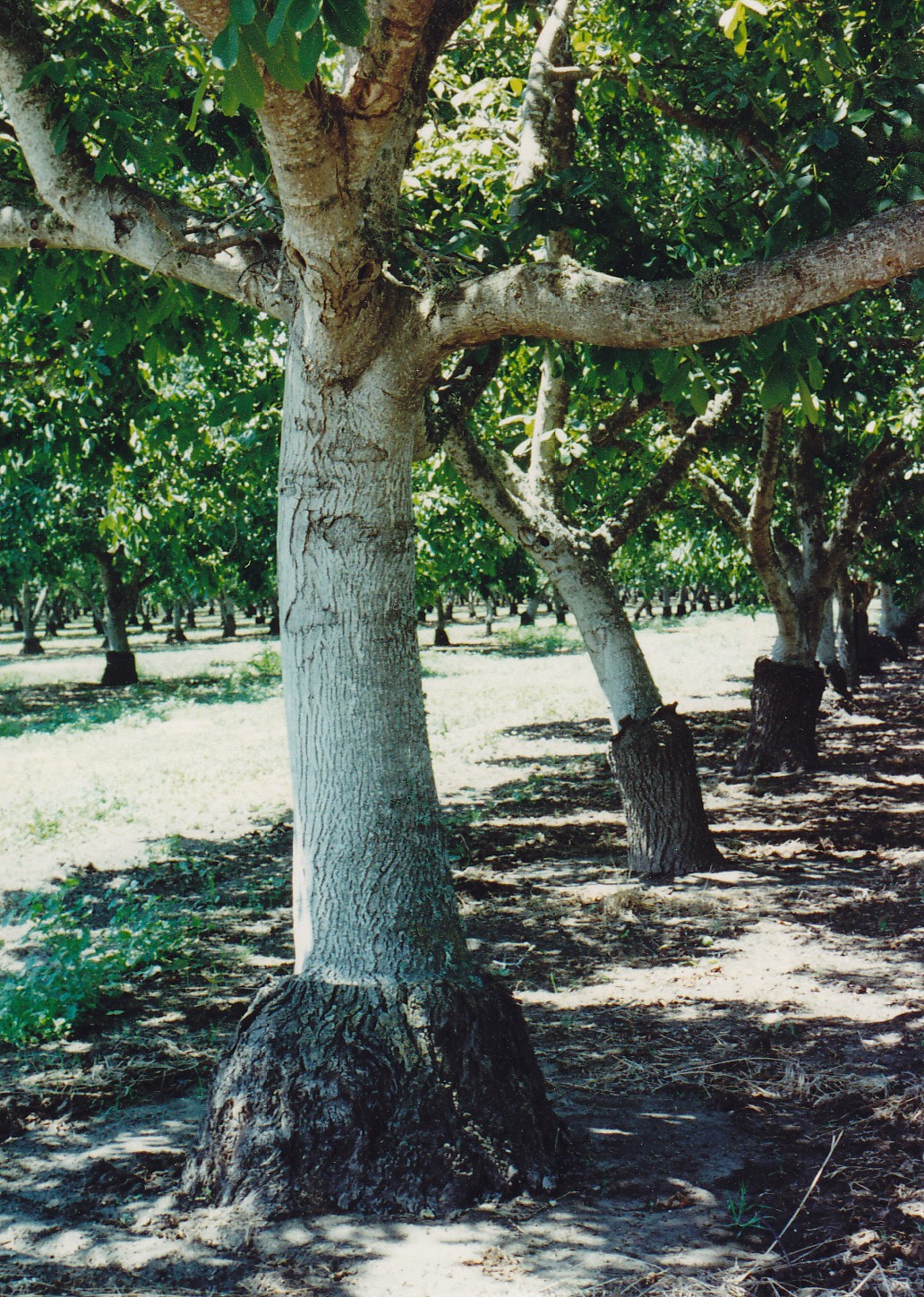
European walnuts (Juglans regia) are propagated in California by grafting their branches onto rootstocks of native Juglans californica saplings. The native saplings can grow better in the California soil than can the European roots. The two species grow at different rates, meaning that the California black walnut base swells out; however, the xylem and phloem graft remains functional.
Deserts
Big Bend
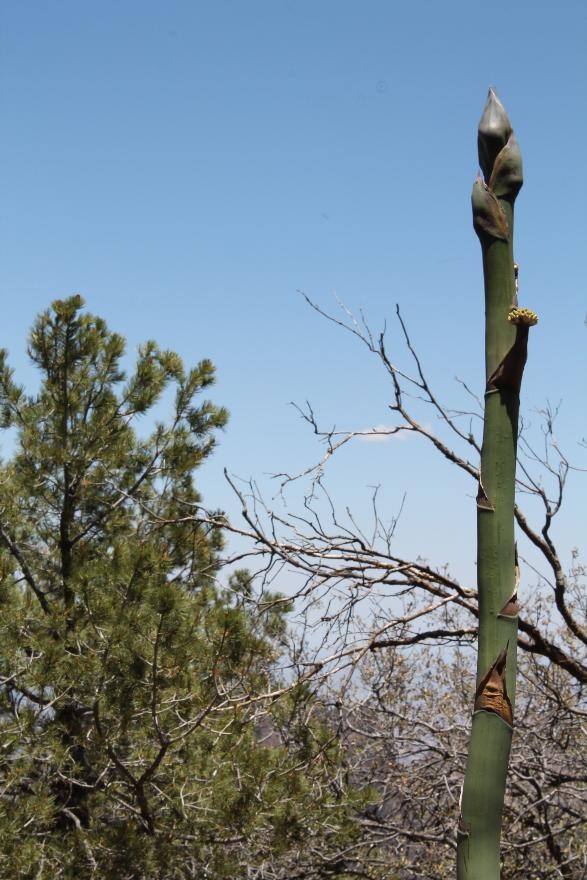
A yucca stalk in Big Bend National Park looks like an asparagus stalk, a plant to which it is in fact closely related.
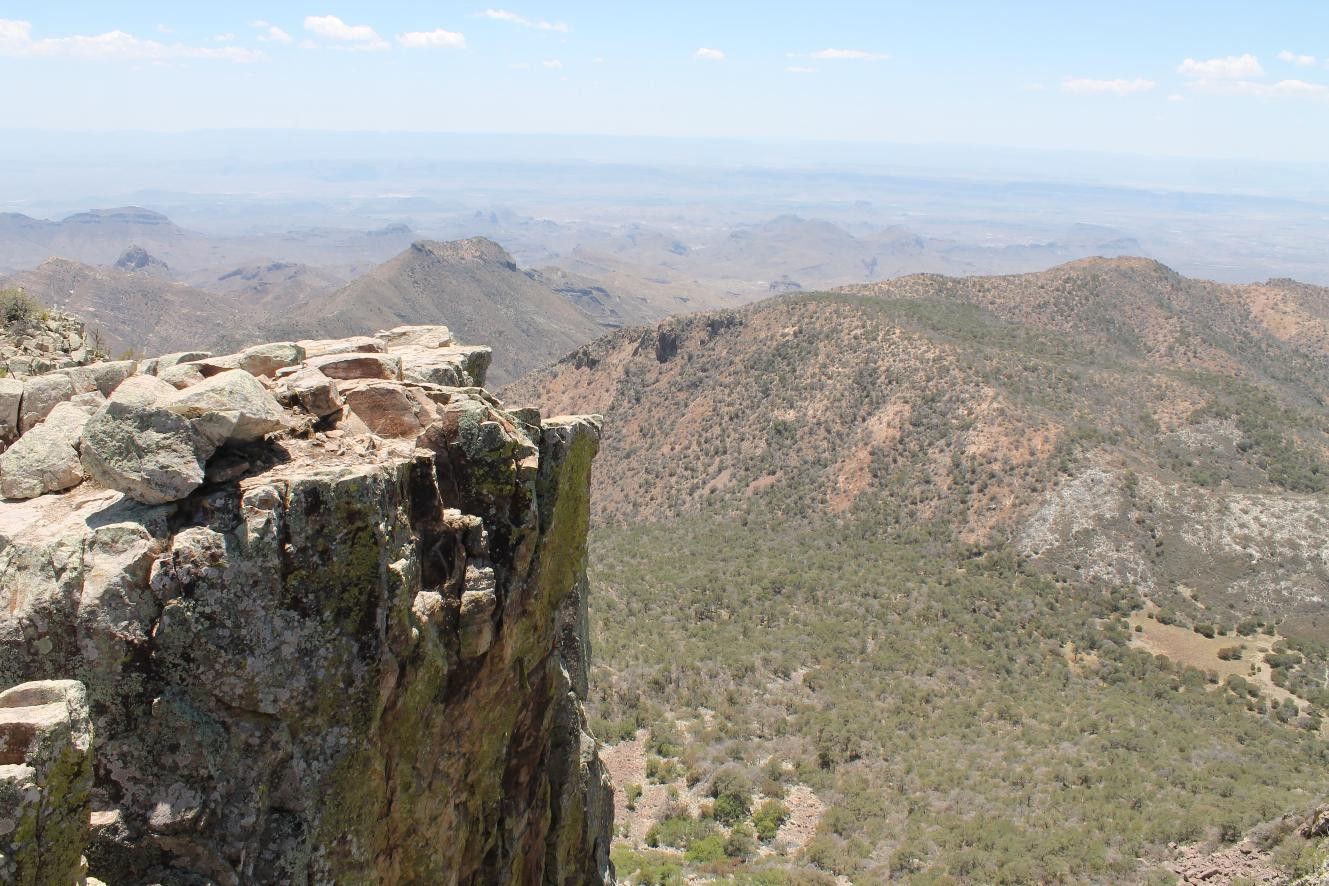
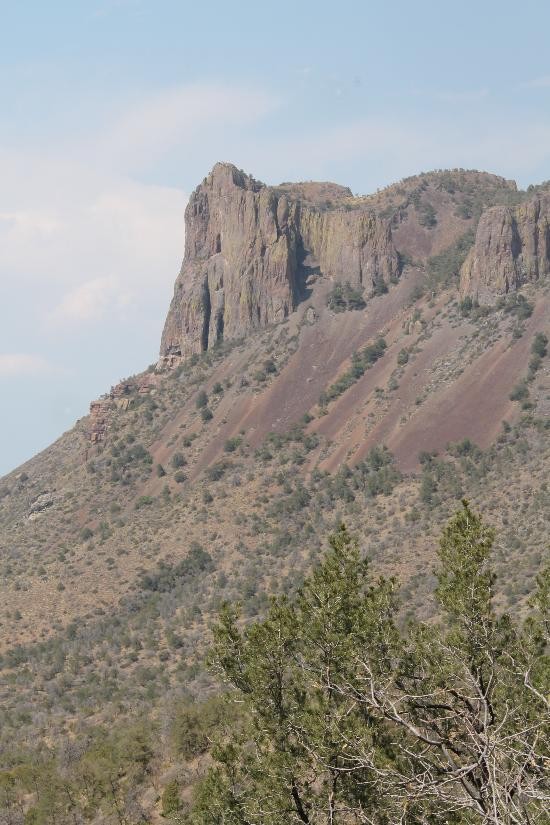
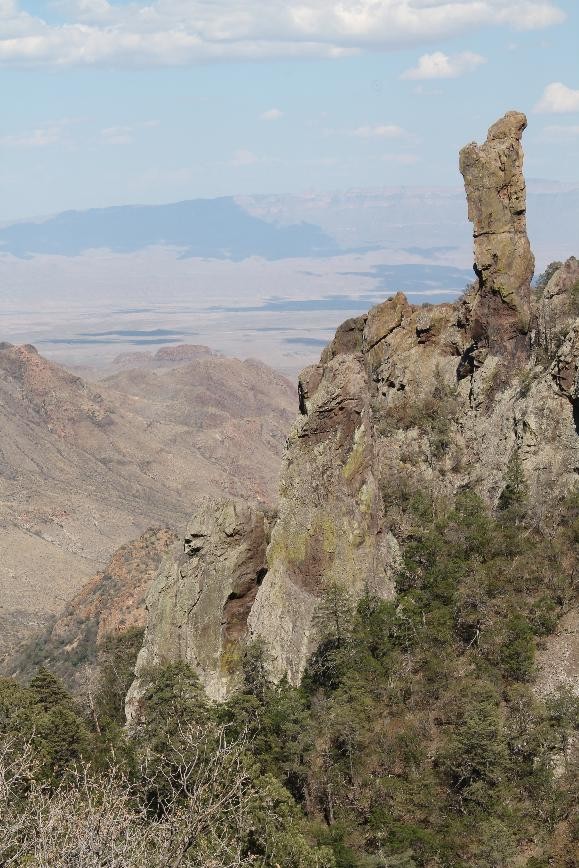
View from the top of Emory Peak, Big Bend National Park.
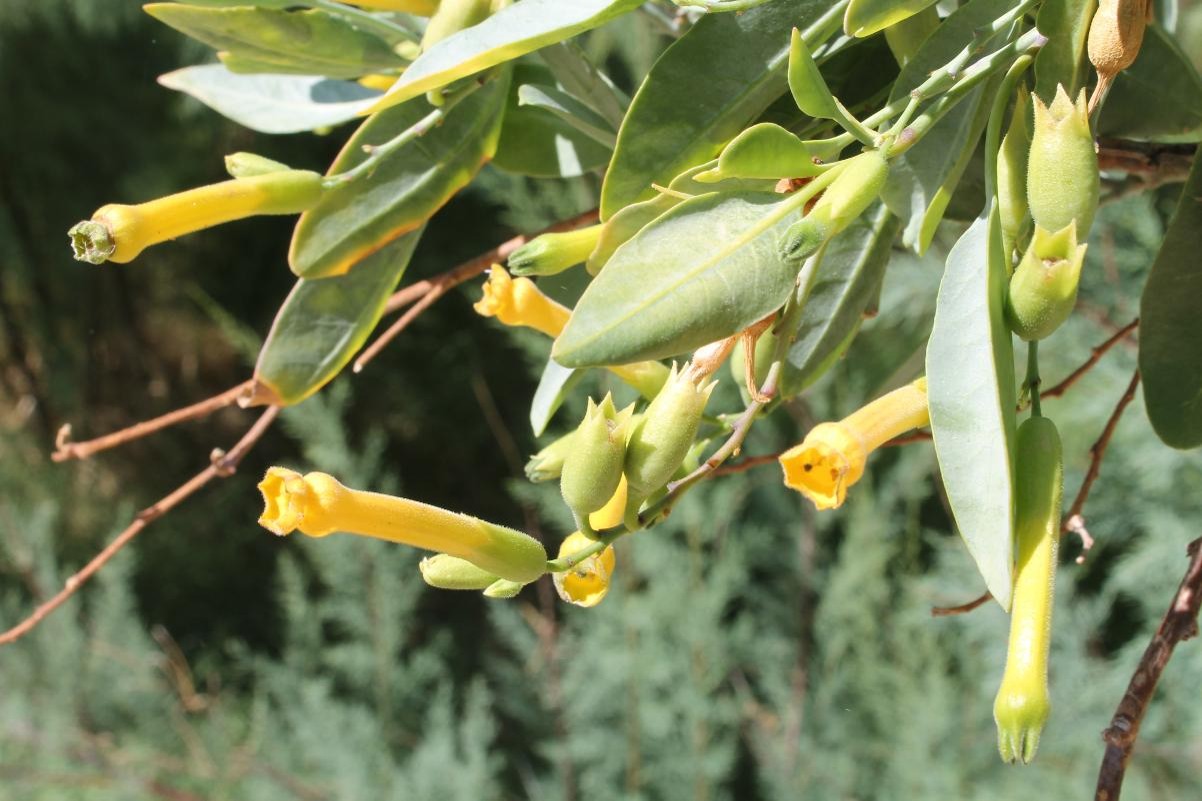
Tree tobacco (Nicotiana glauca) near water in Big Bend National Park.
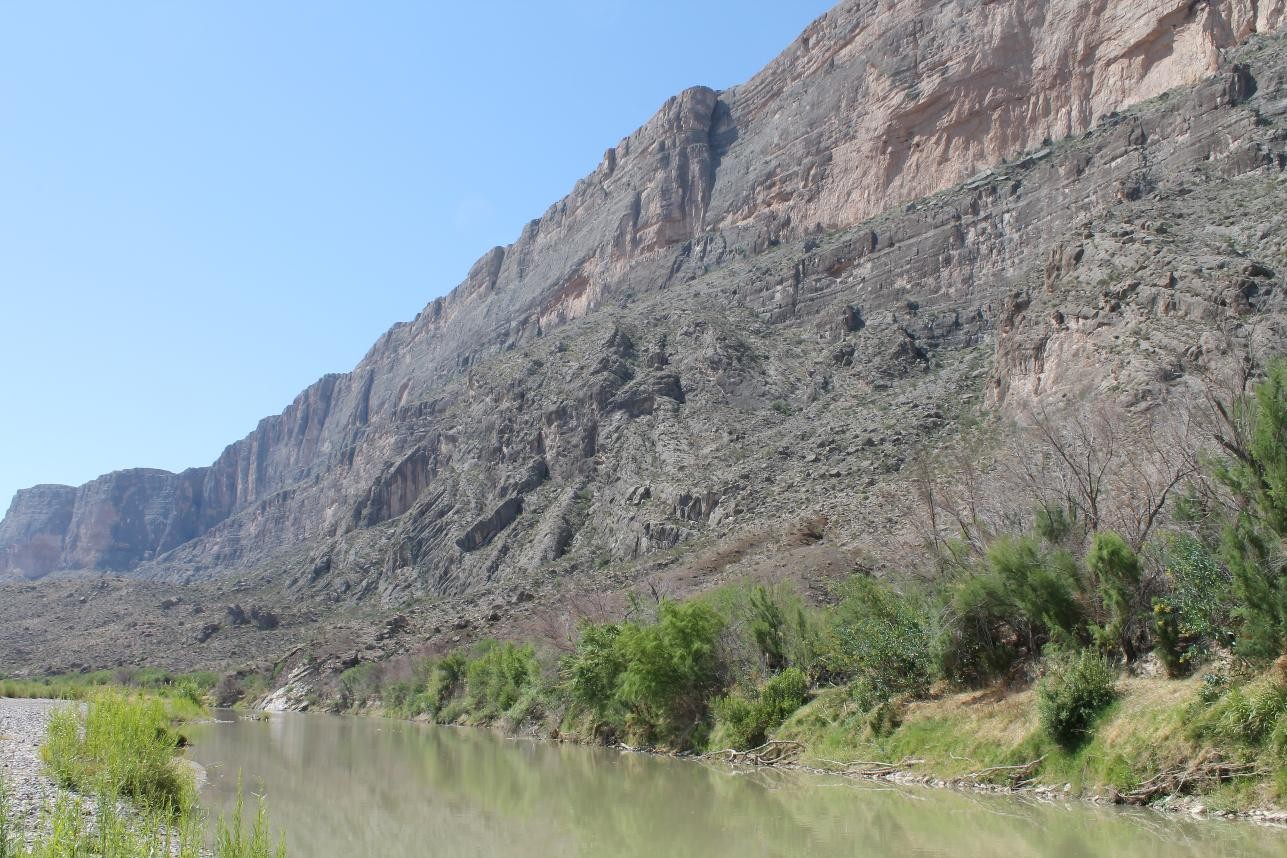
Santa Elena Canyon, along the Rio Grande, Big Bend National Park, Texas.
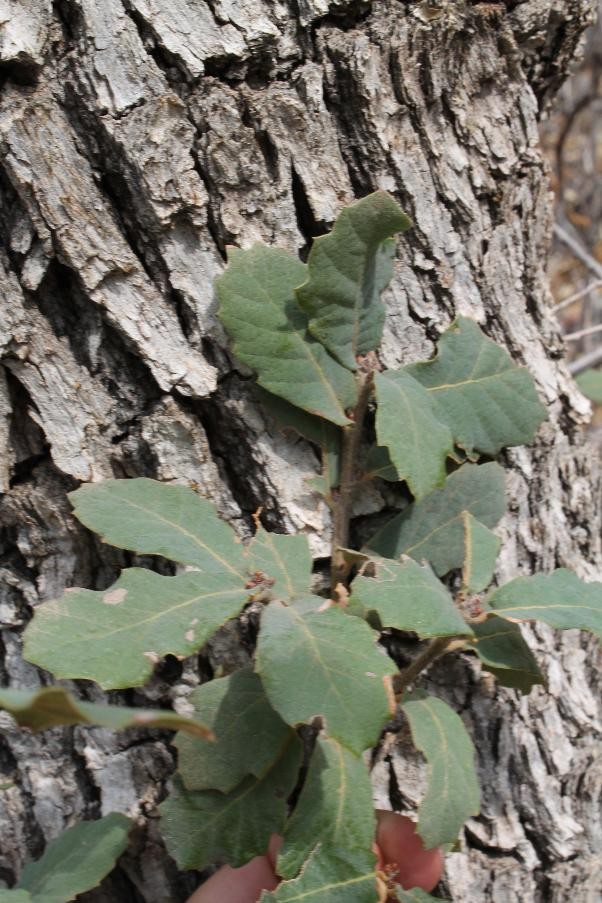
Quercus rugosa in a moist canyon in Big Bend National Park, Texas. Oaks used to be abundant in this region millions of years ago, but a drier climate forced the oaks to survive only in a moist canyon near the Palisades. They grow almost nowhere else within hundreds of miles.
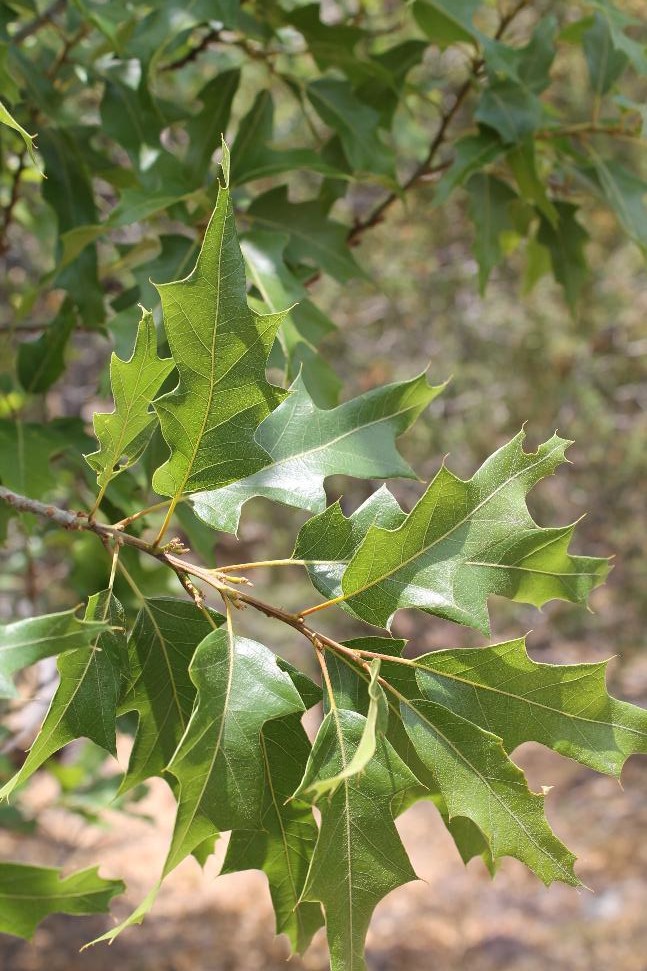
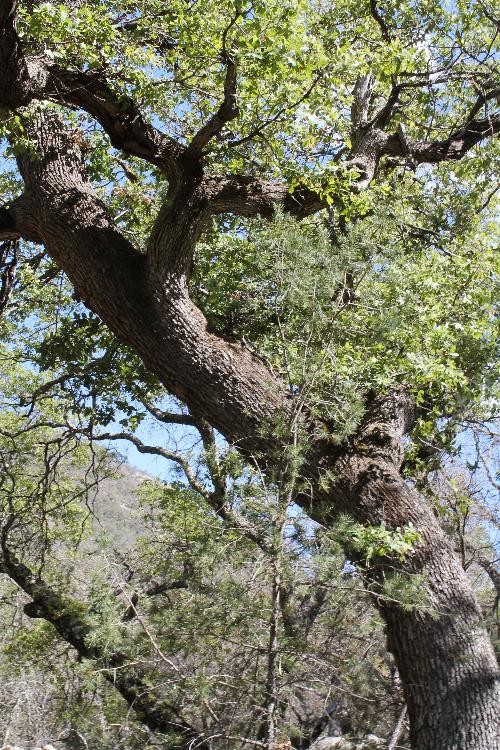
Quercus grisea in a moist canyon in Big Bend National Park, Texas. Oaks used to be abundant in this region millions of years ago, but a drier climate forced the oaks to survive only in a moist canyon near the Palisades. They grow almost nowhere else within hundreds of miles. Key words: microclimate, ecological refuge, biogeography. Chihuahuan desert.
Quercus gravesii in a moist canyon in Big Bend National Park, Texas. Oaks used to be abundant in this region millions of years ago, but a drier climate forced the oaks to survive only in a moist canyon near the Palisades. They grow almost nowhere else within hundreds of miles.
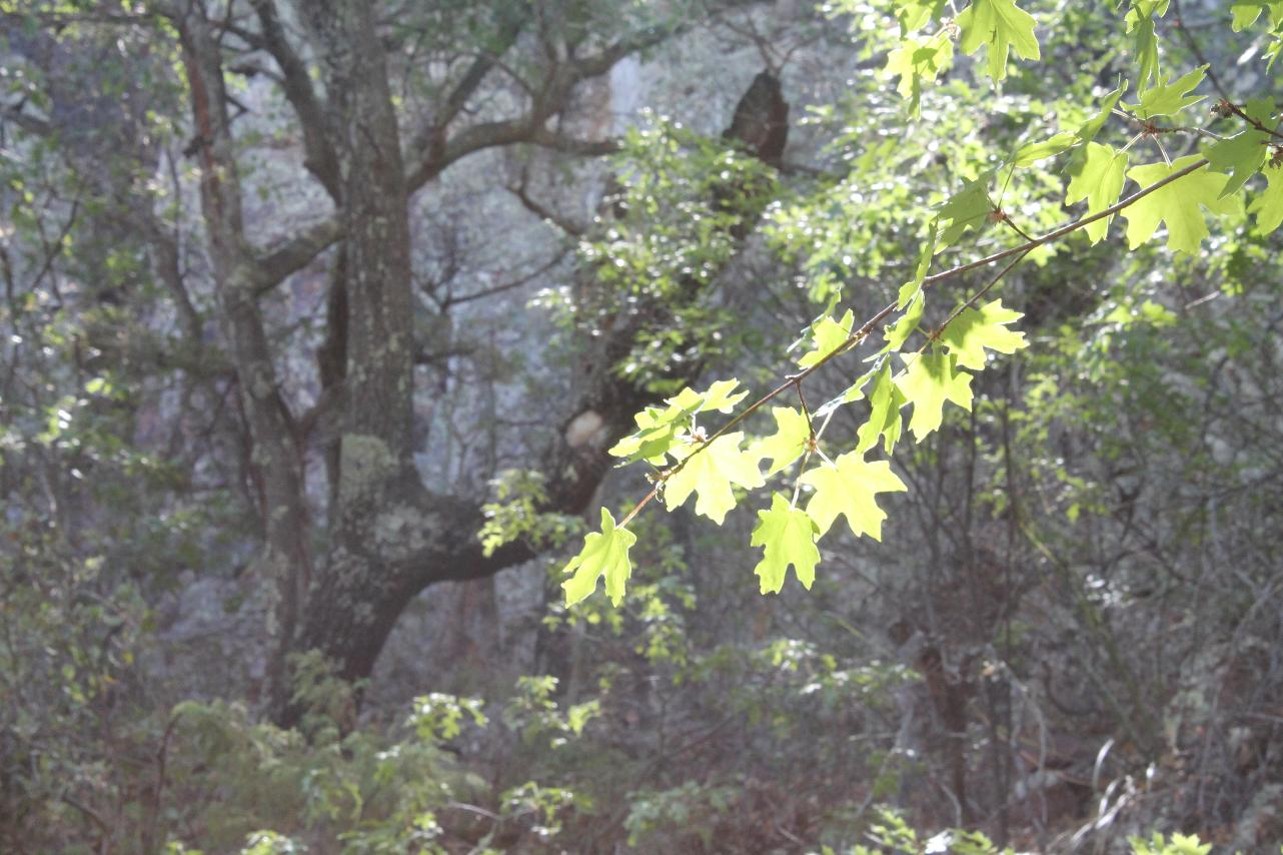
Acer saccharum, the sugar maple, usually grows in moist forests in eastern North America. But this remnant population grows in a moist canyon in Big Bend National Park, Texas. Maples were common in the vicinity millions of years ago, but as the climate became hot and dry, this population persisted in a moist canyon next to the Pinnacles.
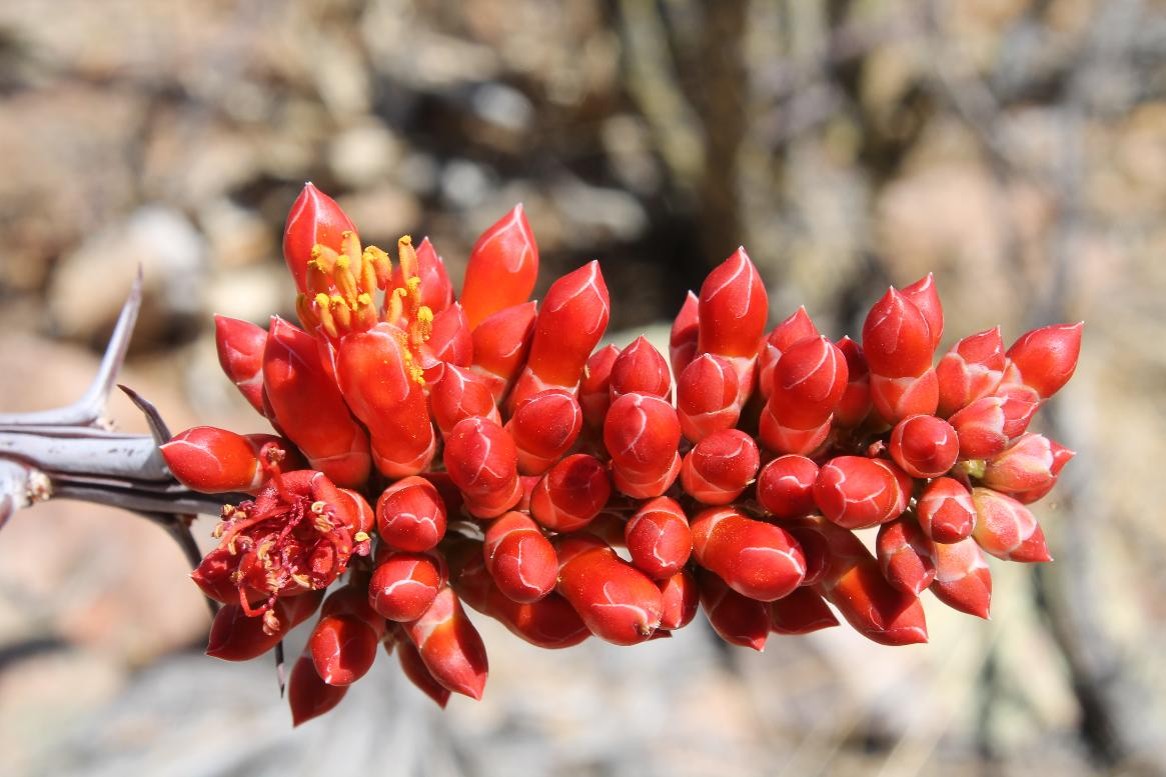
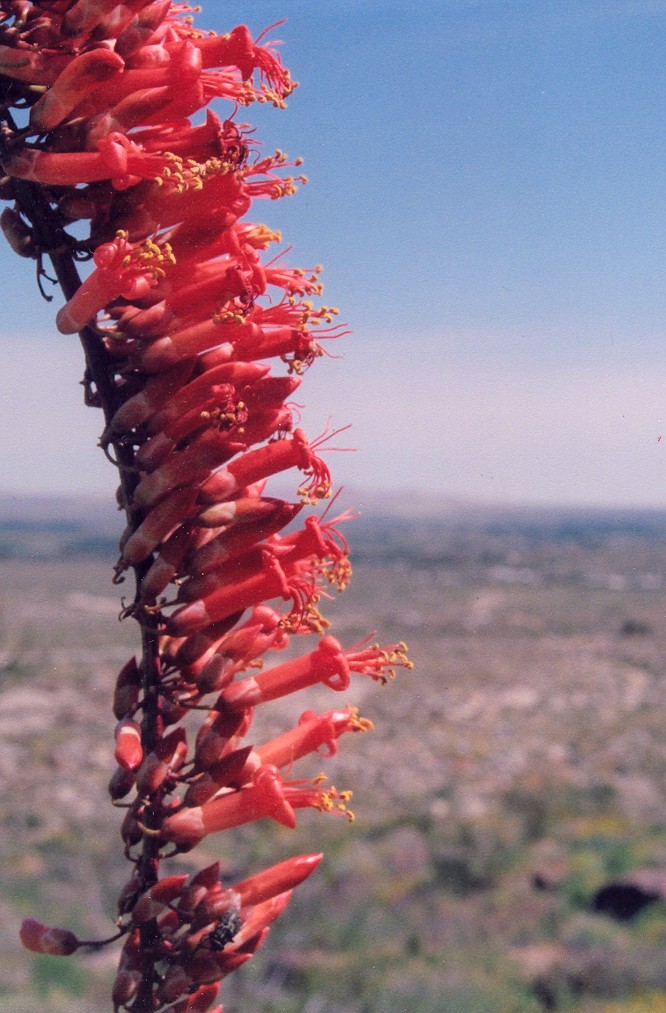
Ocotillo (Fouquieria splendens) is a common shrub in the Chihuahuan desert. It blooms in May. Big Bend National Park, Texas.
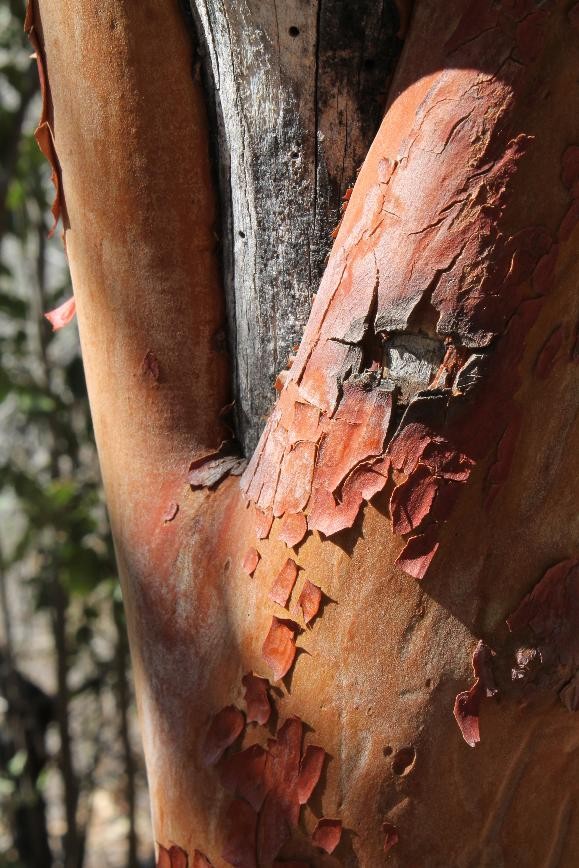
Madrone grows in a moist canyon in Big Bend National Park, Texas. Like its Pacific coast relatives, this madrone has flaky, red bark.
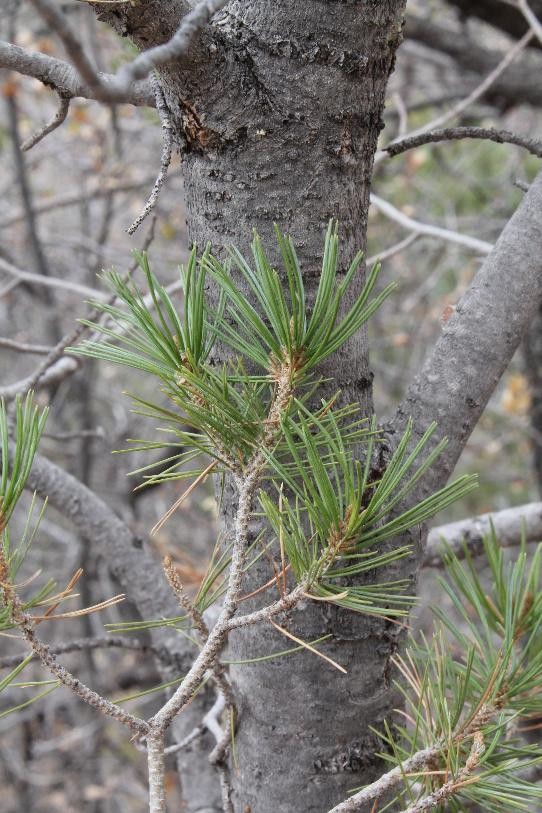
Limber pines (Pinus flexilis), here in Big Bend National Park, usually grows in subalpine mountain forests. But when the climate became dry and hot, some limber pines got trapped near the top of the Chisos Mountains.
Chisos Mountains, Big Bend National Park, Texas. Pines grow in a wet area.
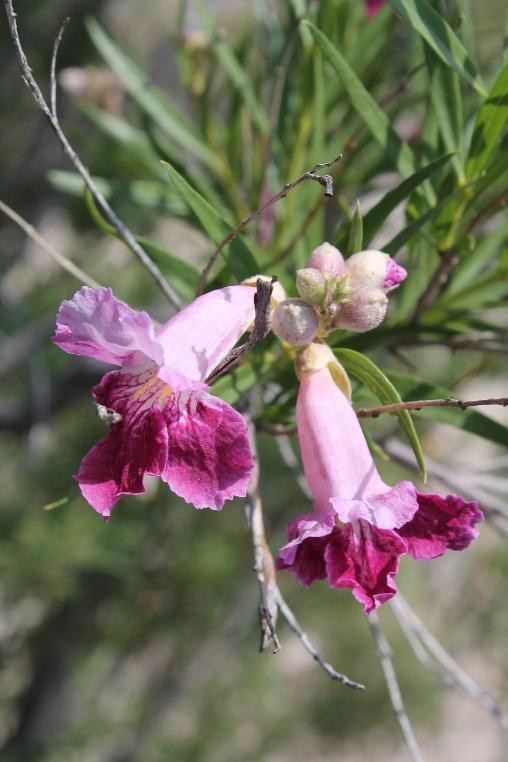
Chilopsis linearis is a common bush along arroyos in the southwest desert, here in Big Bend National Park, Texas.
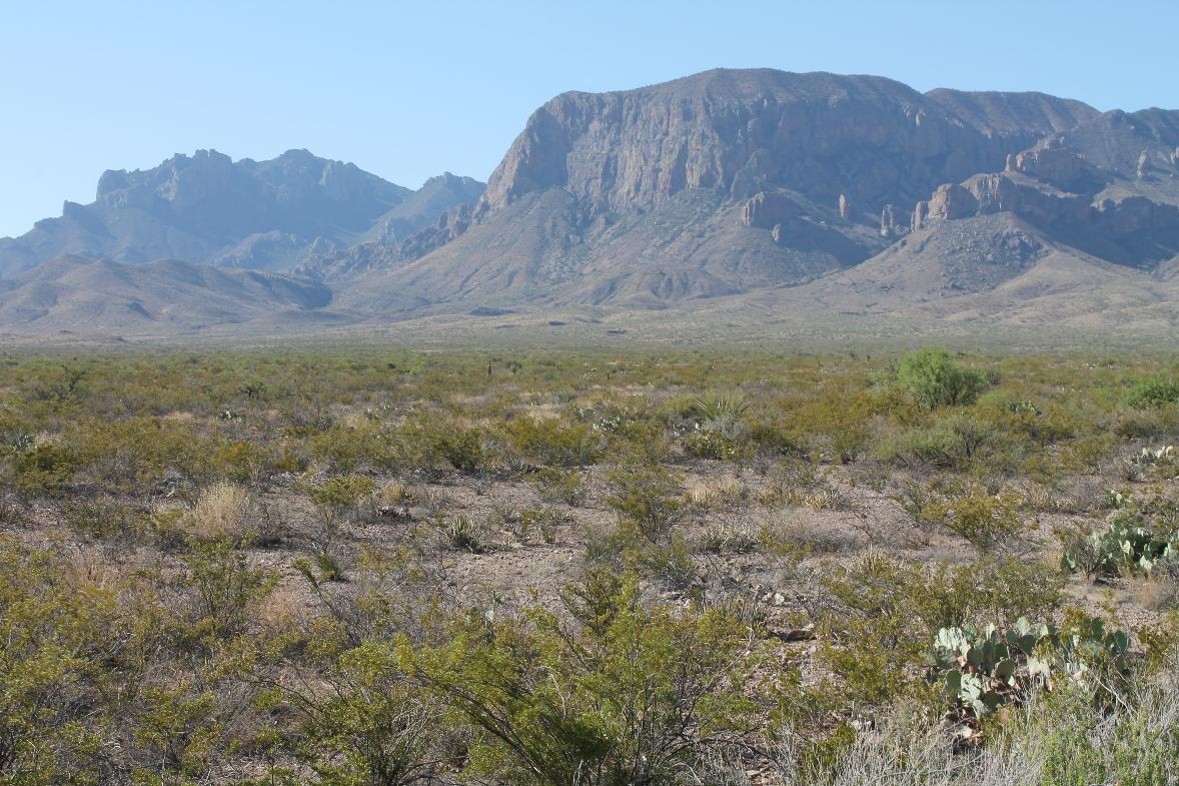
The Chihuahuan desert, here in Big Bend National Park, Texas, is like the Mojave Desert (with creosote bushes) but with more abundant grasses.
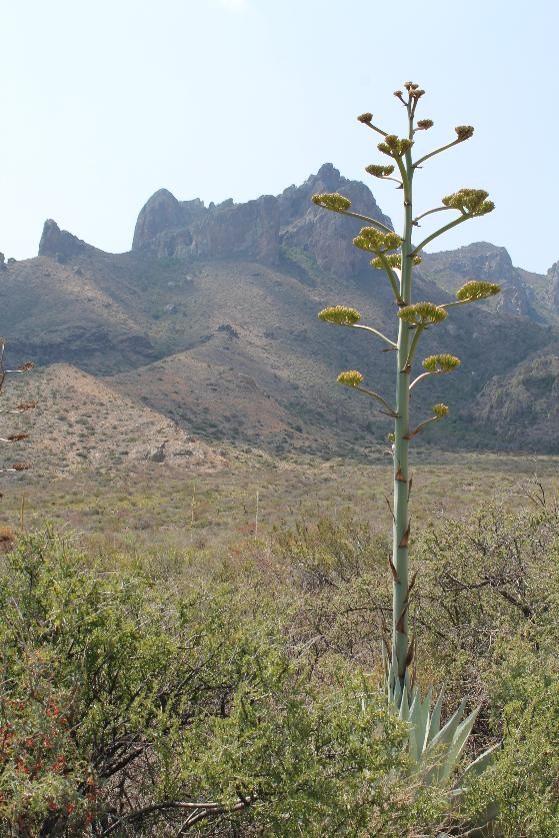
A century plant (Agave americana) grows as a tuft of succulent leaves for many years (not necessarily an entire century) then produces a gigantic flowering stalk before dying back to just a few underground buds. Here seen in Big Bend National Park, Texas.
Boot Canyon, Chisos Mountains, Big Bend National Park, Texas.
A gray oak tree (Quercus grisea) grows in a moist canyon in Big Bend National Park, Texas.
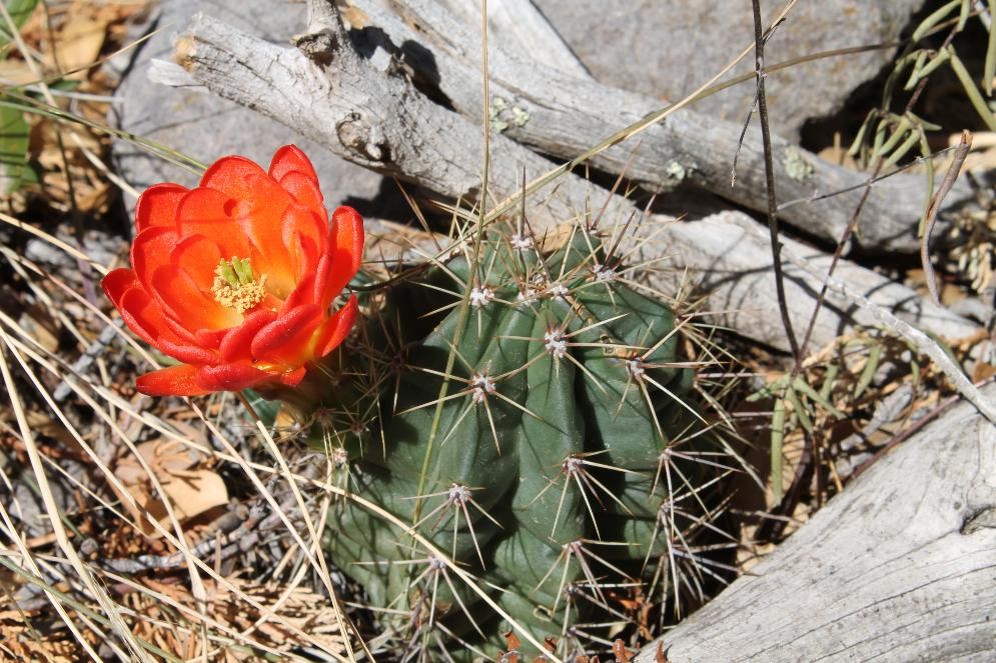
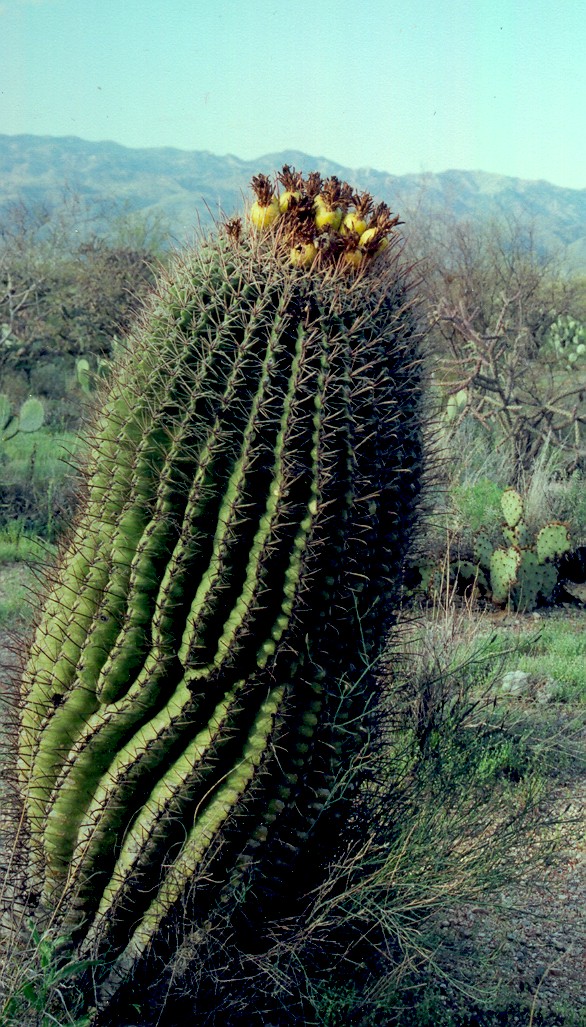
A blooming barrel cactus (genus Ferocactus) in Big Bend National Park, Texas.
Chaco Canyon
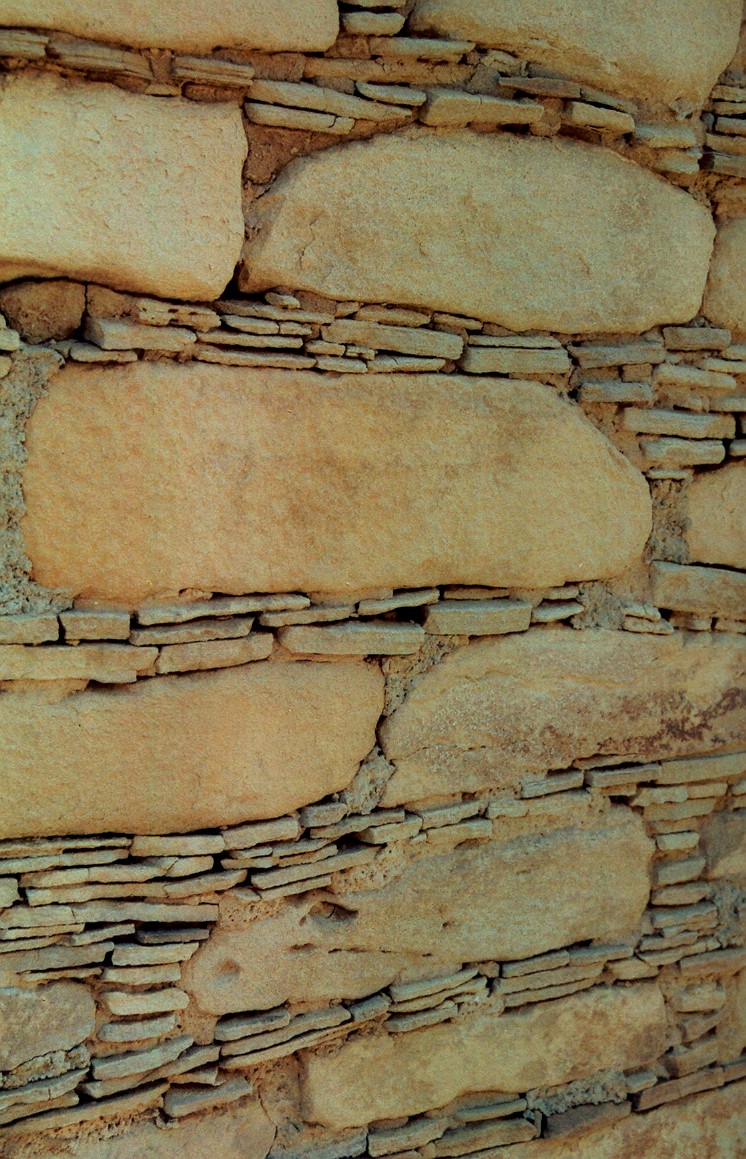
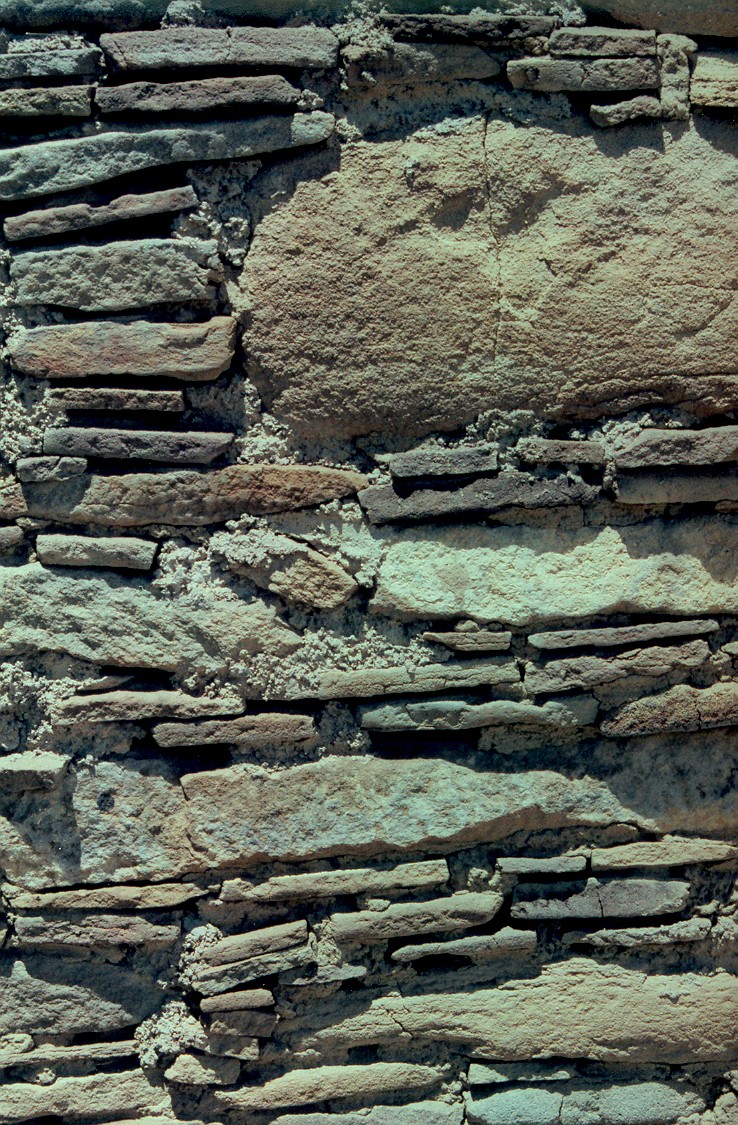
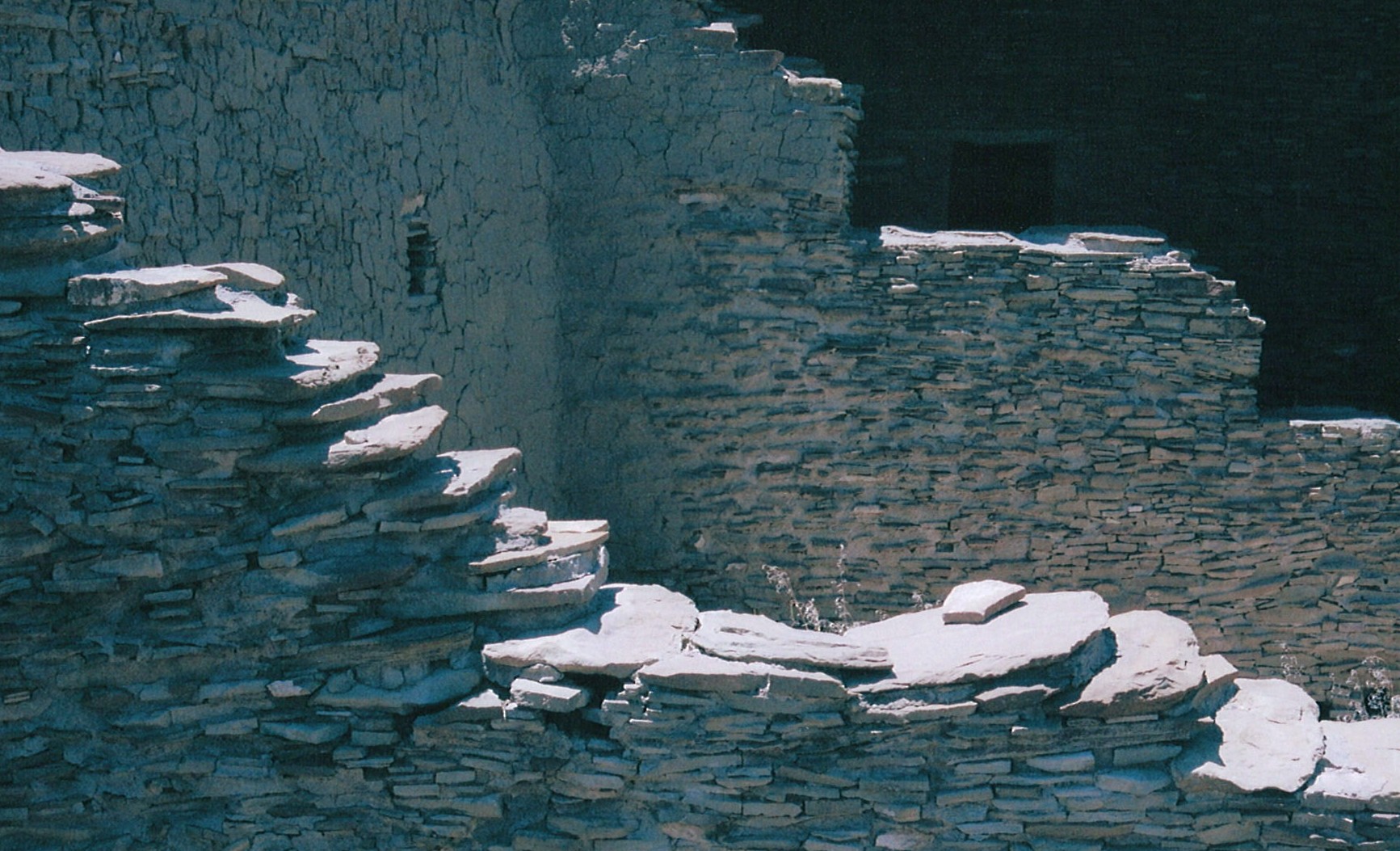
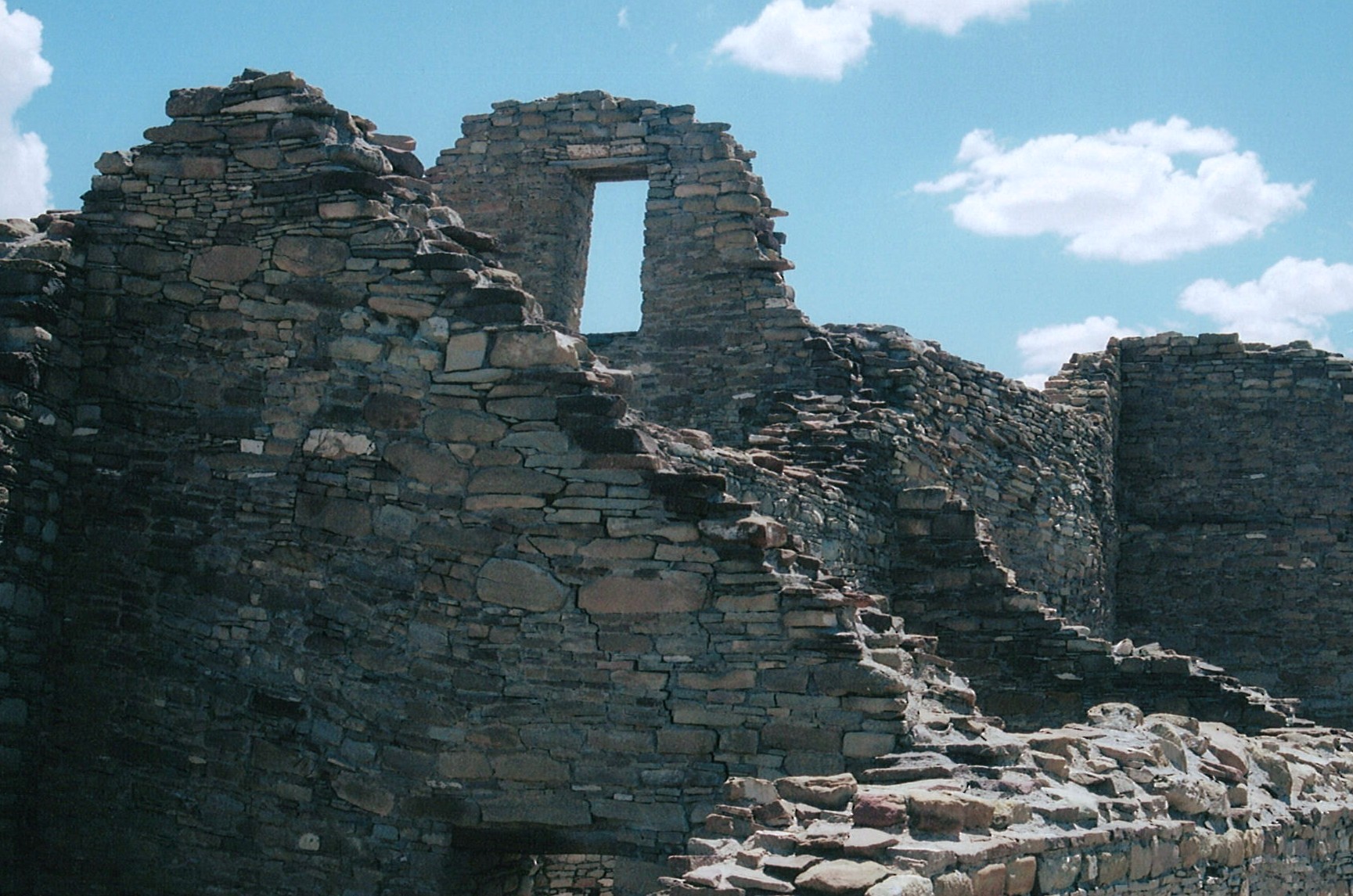
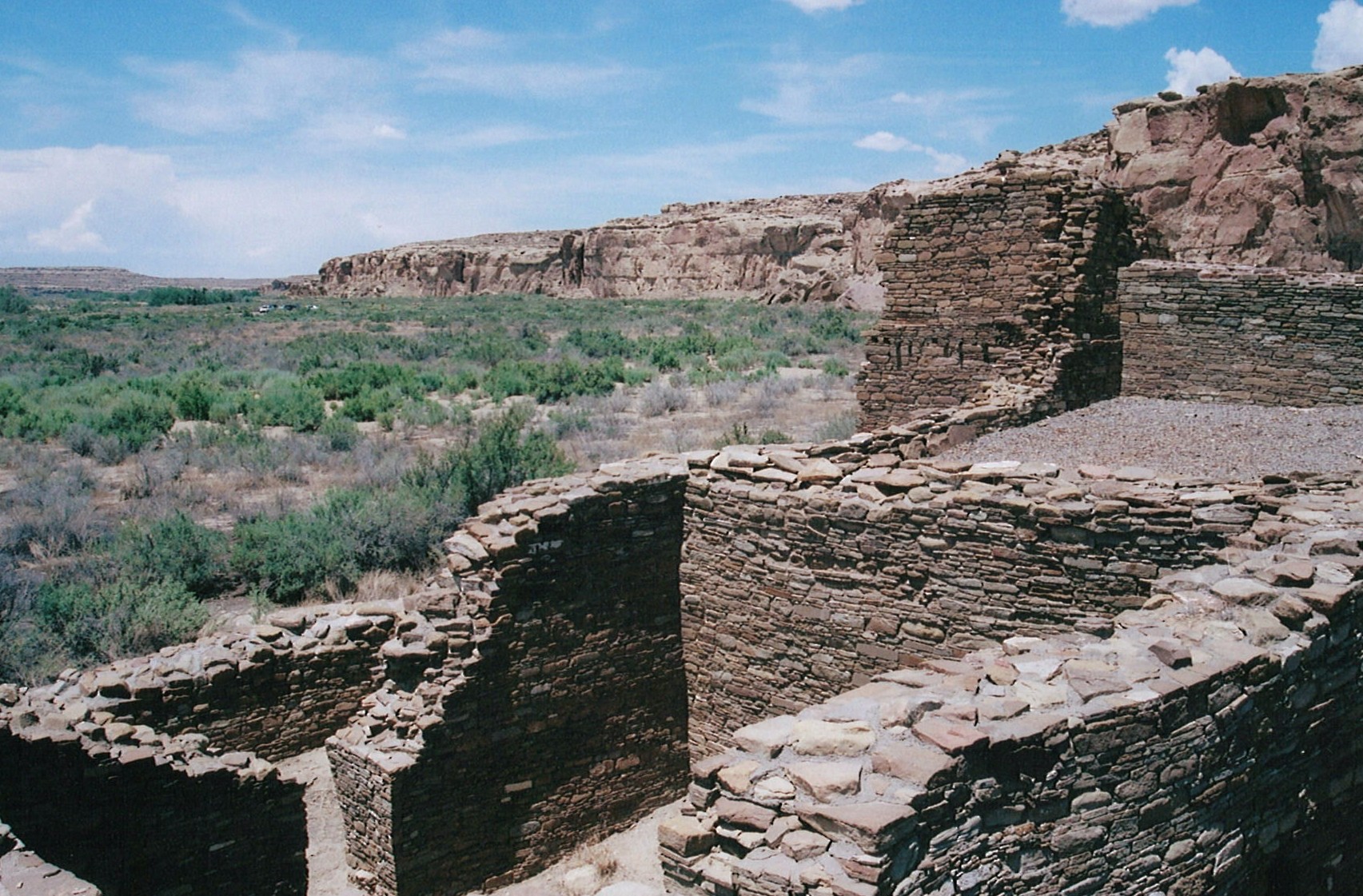
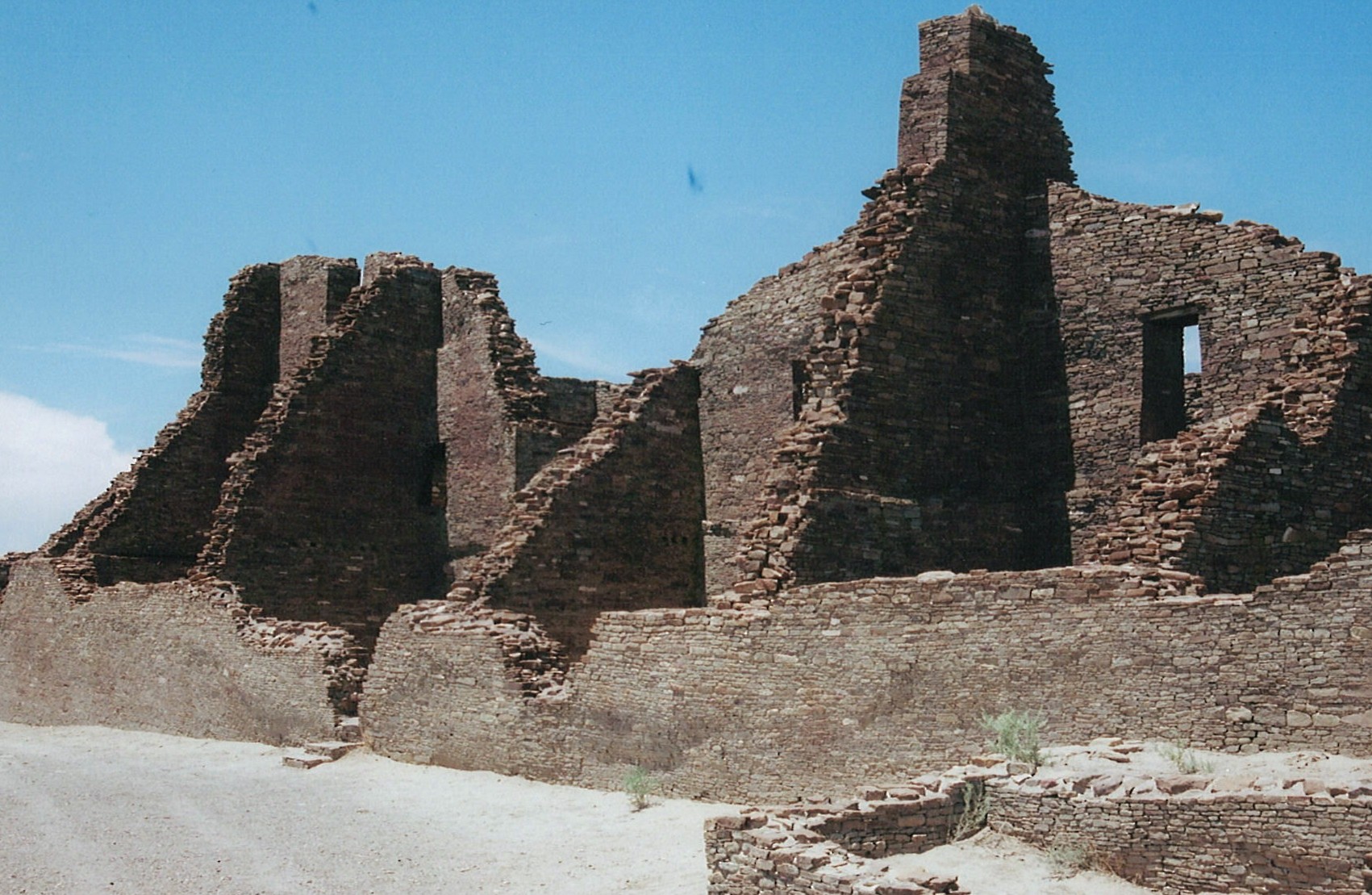
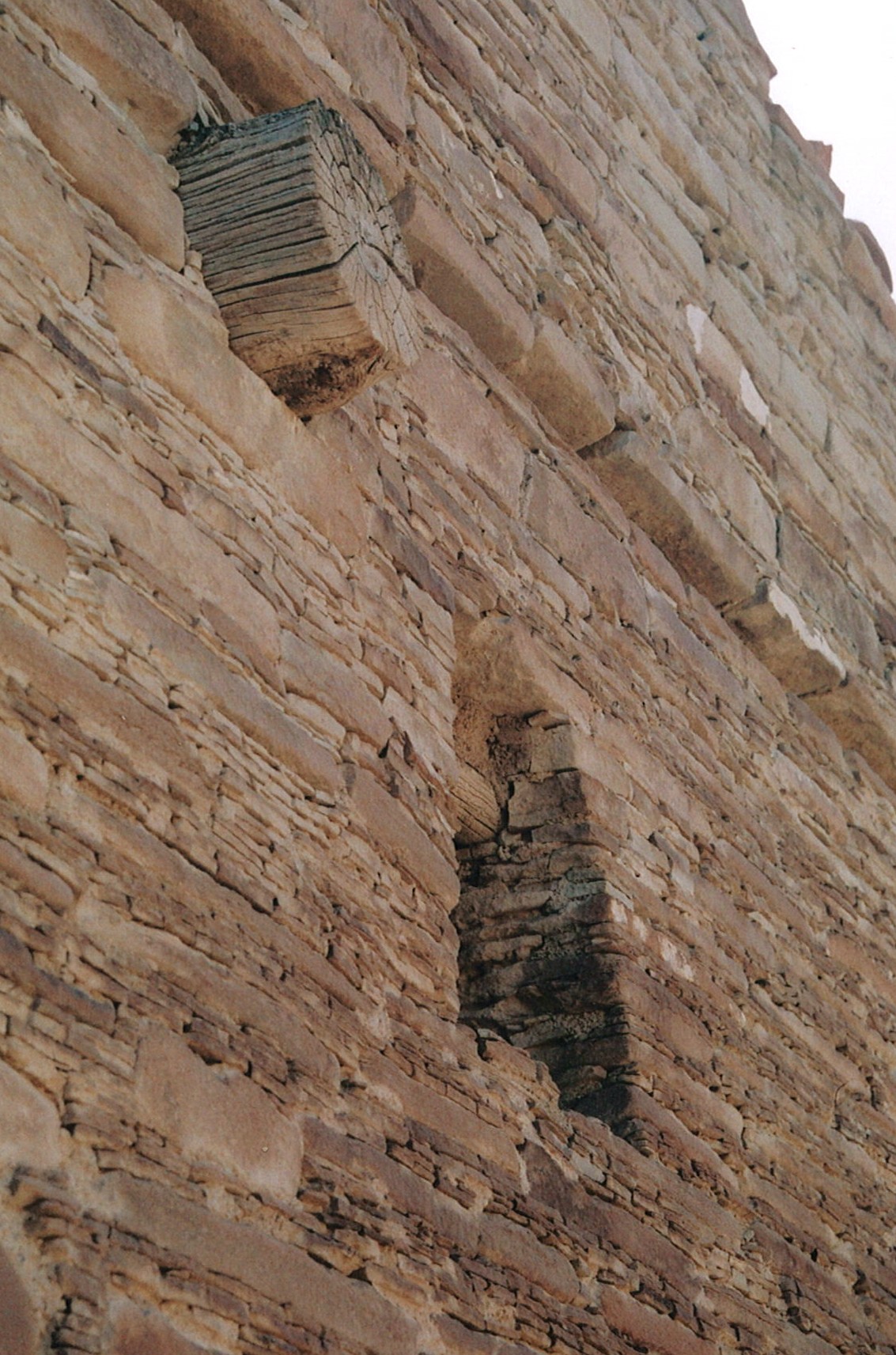
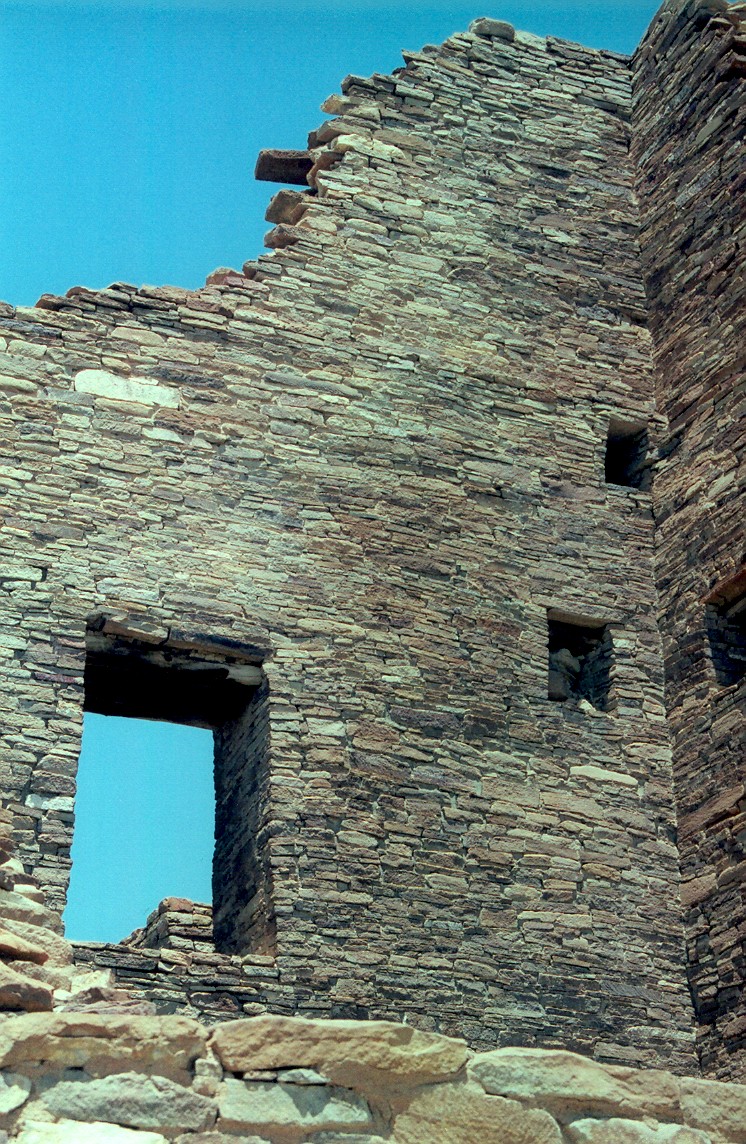
Reconstructed walls from Chaco Canyon, where the Anasazi civilization flourished until the 1300s of our calendar. This Native civilization developed and declined entirely without European contact. We do not know what they called themselves; Anasazi is the Navajo name for them. The walls were constructed of large and small sandstone tiles fitted tightly together.
Reconstructed walls from Chaco Canyon, where the Anasazi civilization flourished until the 1300s of our calendar. This Native civilization developed and declined entirely without European contact. We do not know what they called themselves; Anasazi is the Navajo name for them.
Reconstructed walls from Chaco Canyon, where the Anasazi civilization flourished until the 1300s of our calendar. This Native civilization developed and declined entirely without European contact. We do not know what they called themselves; Anasazi is the Navajo name for them. The walls were constructed of large and small sandstone tiles fitted tightly together. Tree trunks supported floors and ceilings. Study of tree rings in the beams allowed archaeologists to determine the date at which the buildings were constructed.
Reconstructed walls from Chaco Canyon, where the Anasazi civilization flourished until the 1300s of our calendar. This Native civilization developed and declined entirely without European contact. We do not know what they called themselves; Anasazi is the Navajo name for them.
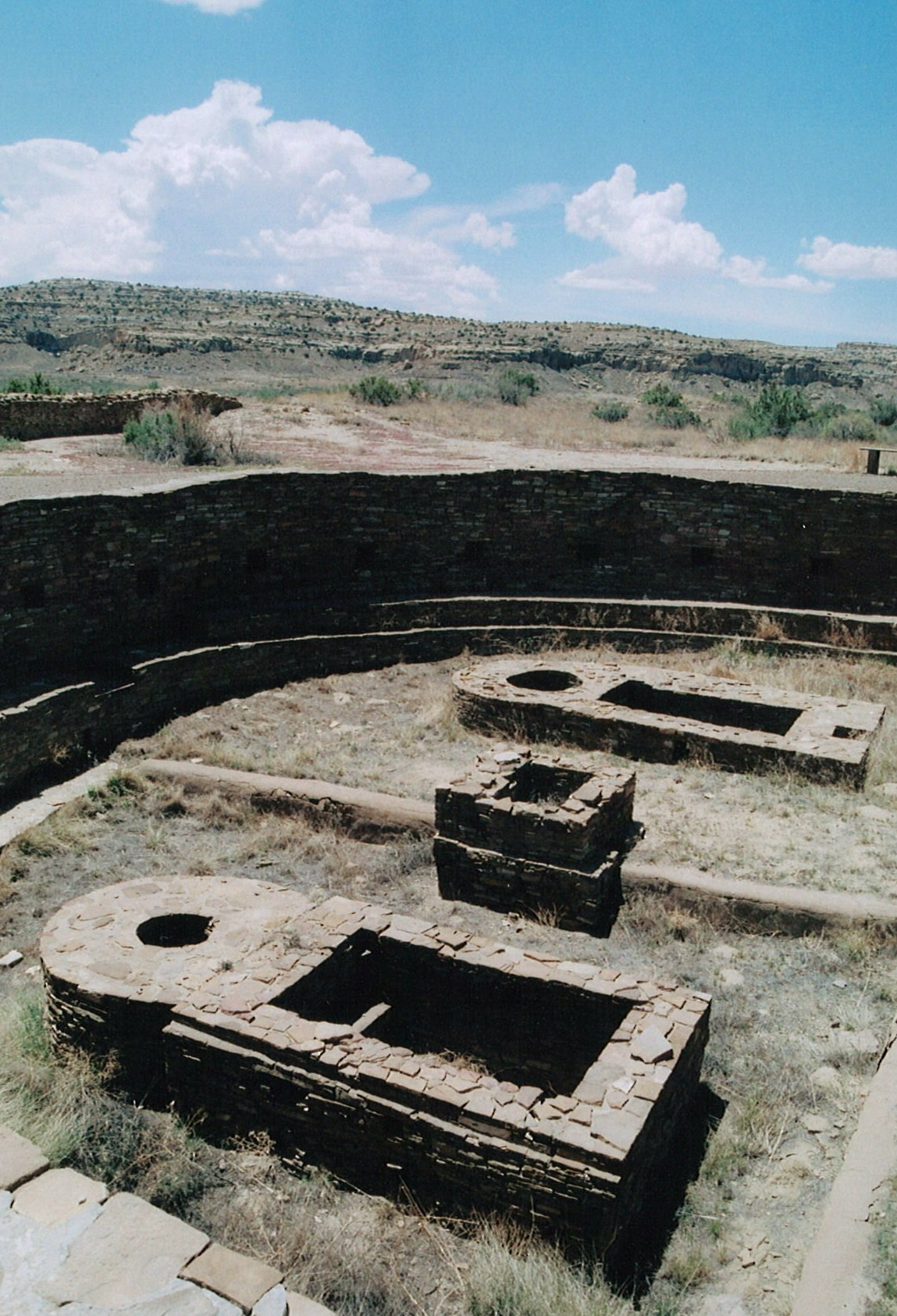
Reconstructed walls from Chaco Canyon, where the Anasazi civilization flourished until the 1300s of our calendar. This Native civilization developed and declined entirely without European contact. We do not know what they called themselves; Anasazi is the Navajo name for them. There were hundreds of rooms, many of them kivas, which contained underground chambers for religious ceremonies.
Desert Plants
Pickleweed (Salicornia) grows well in very salty water; its succulent tissues accumulate both water and salt. Here seen near the Salton Sea, California, which was not naturally a salty habitat but which became salty from a flood of Colorado River water then subsequently used for irrigation.
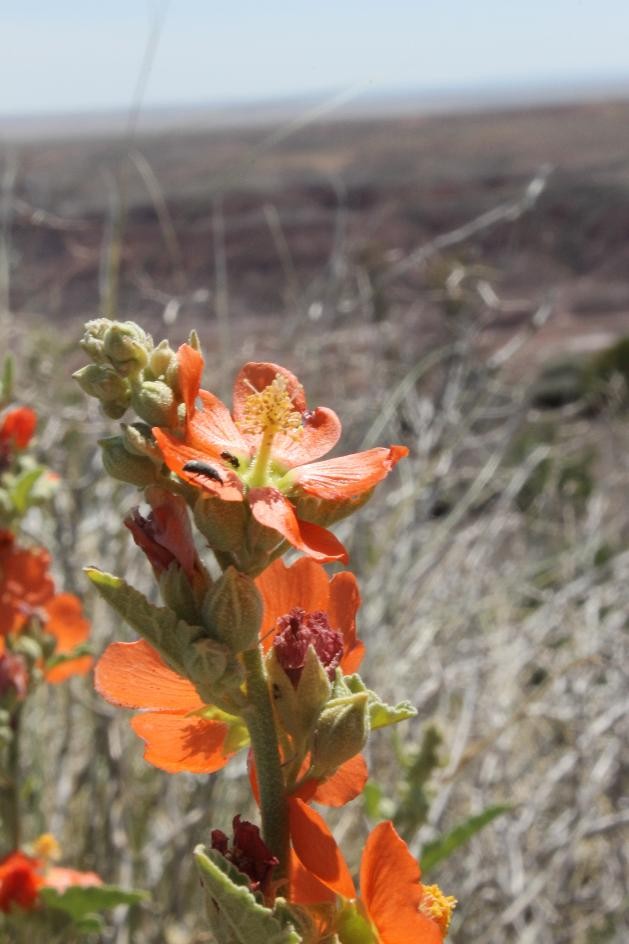
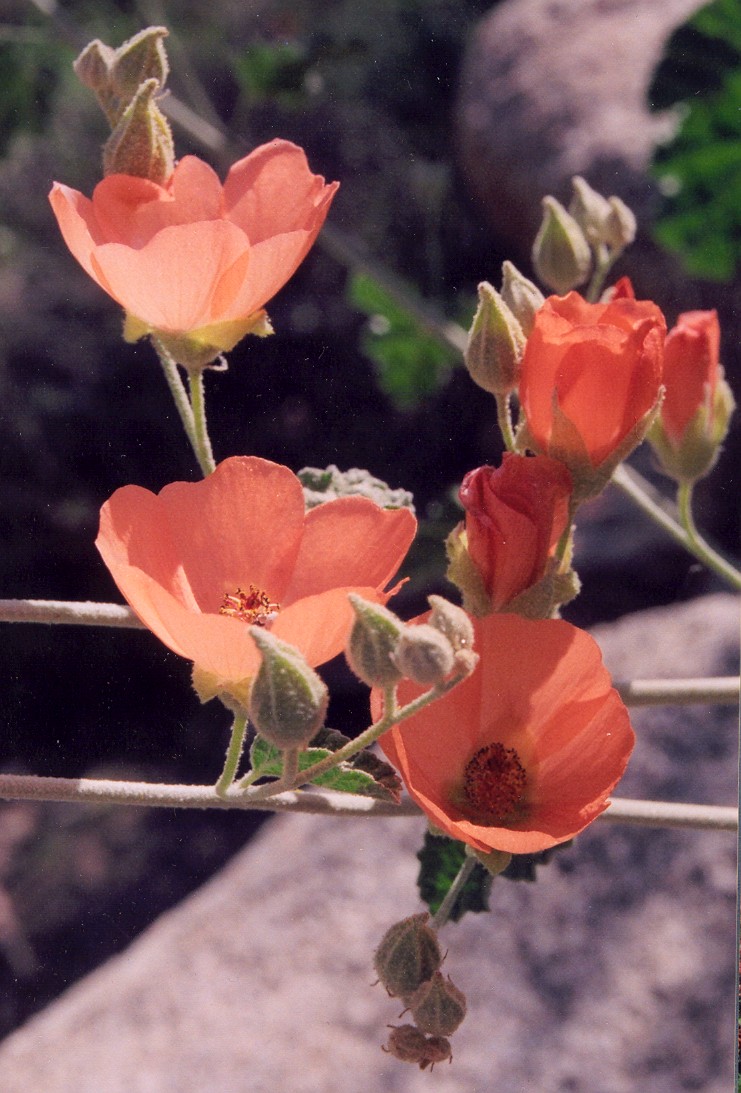
Scarlet globemallow (genus Sphaeralcea) in the Petrified Forest desert in Arizona.
The desert smoke tree (Psorodendron spinosum) is so called because its fruits look like smoke from a distance. Near an arroyo, Petrified Forest National Park, Arizona.
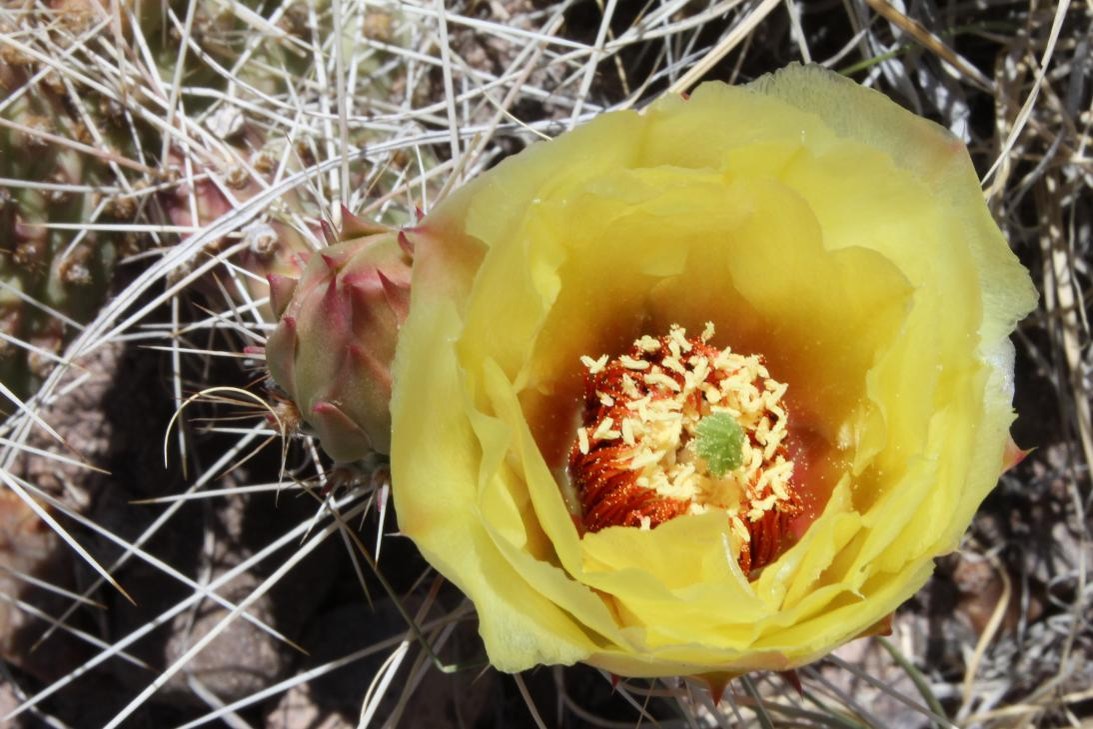
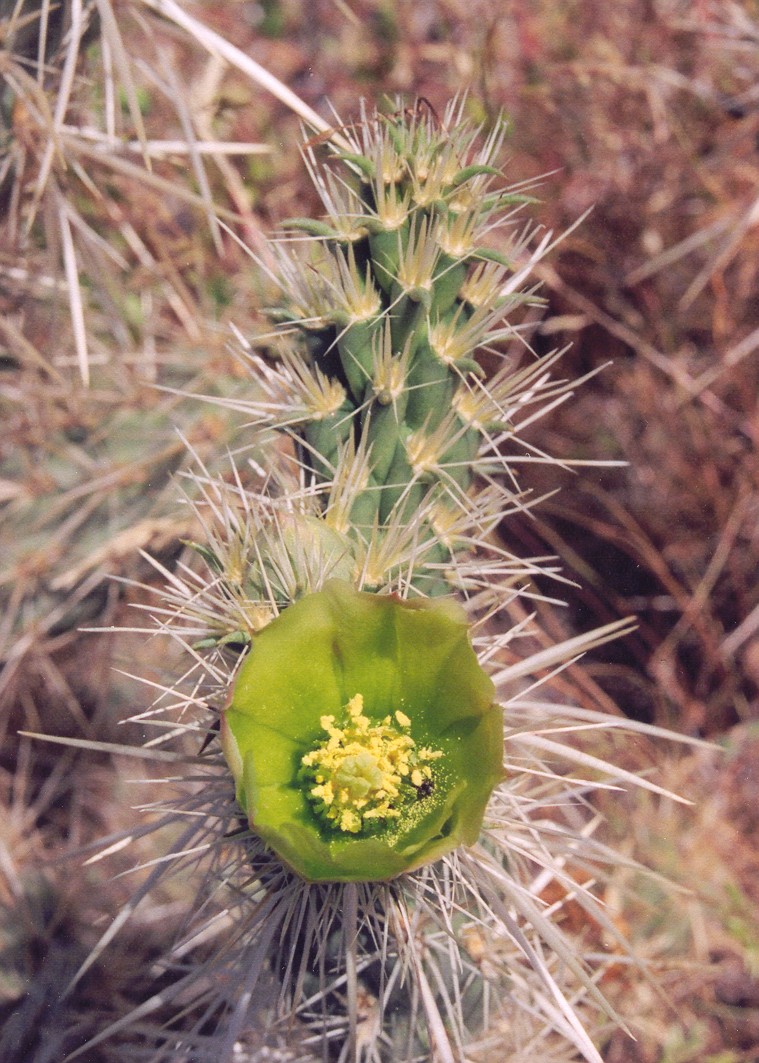
Cholla cactus flower blooming in Petrified Forest National Park, Arizona.
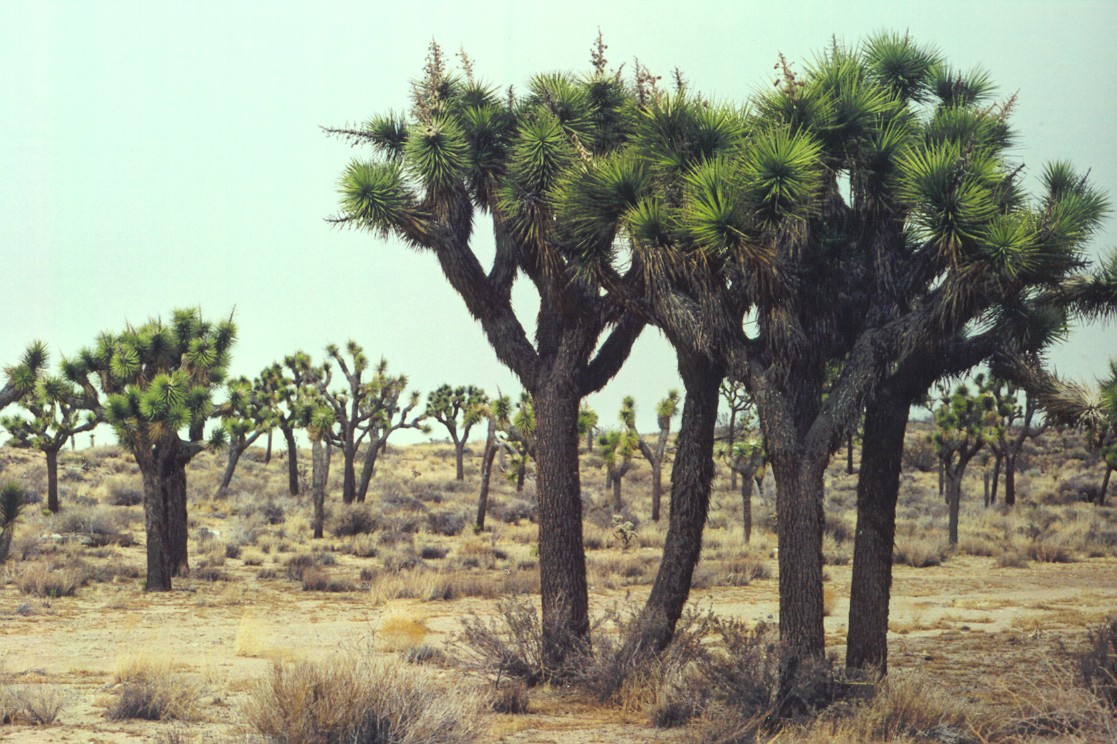
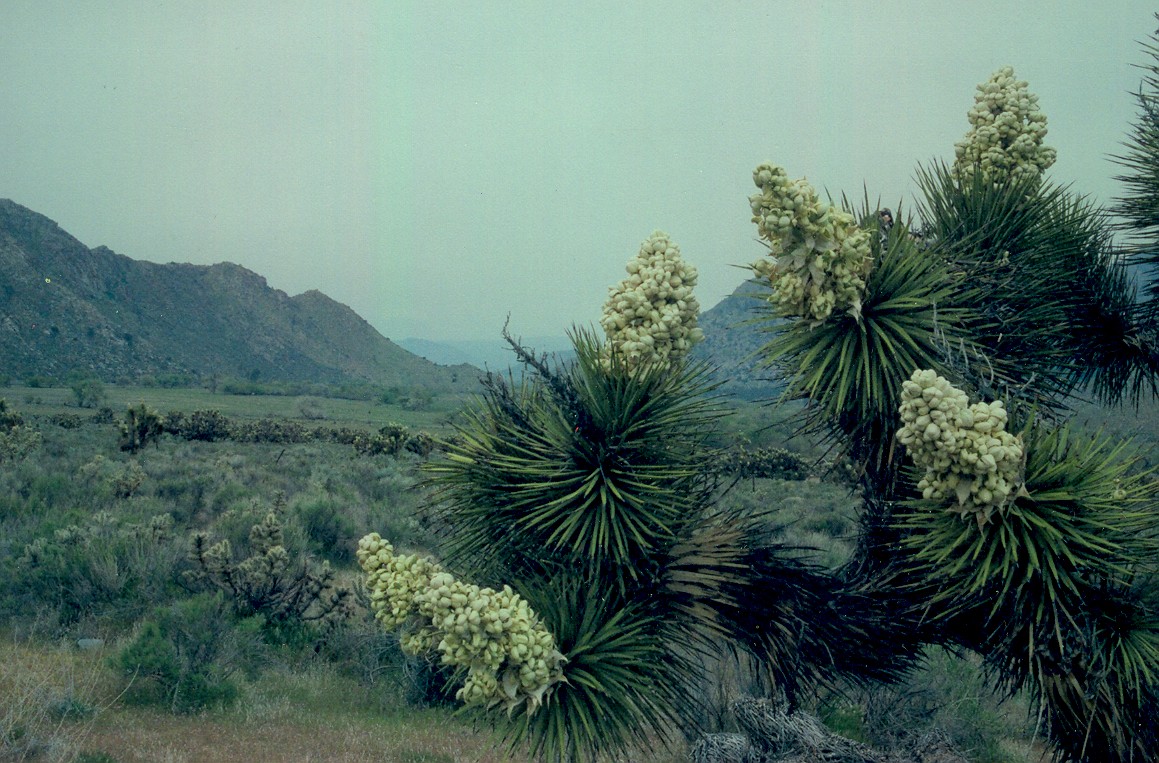
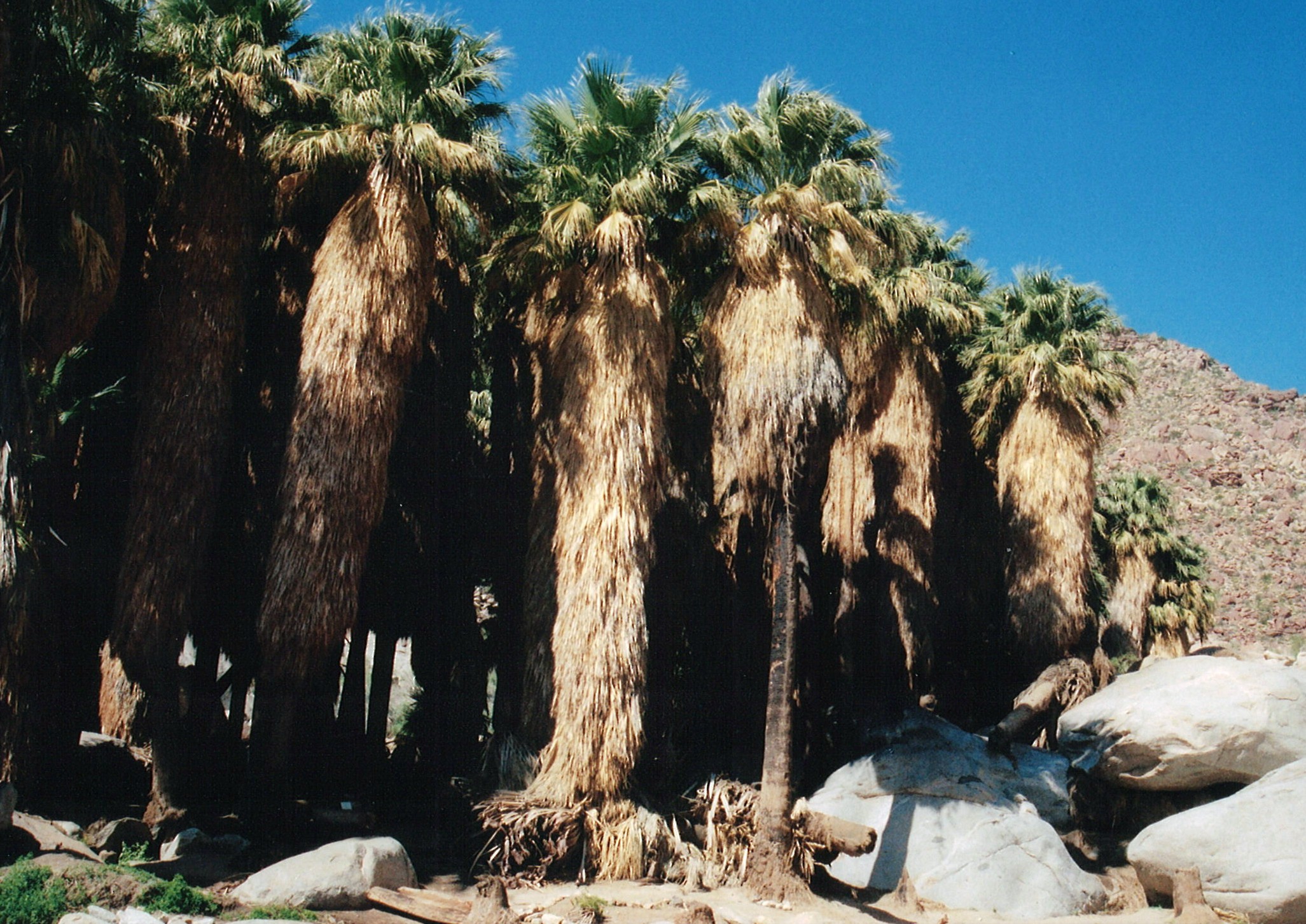
Joshua trees (Yucca brevifolia) is a tree-sized yucca that grows in slightly wetter areas of the Mojave Desert, here in California.
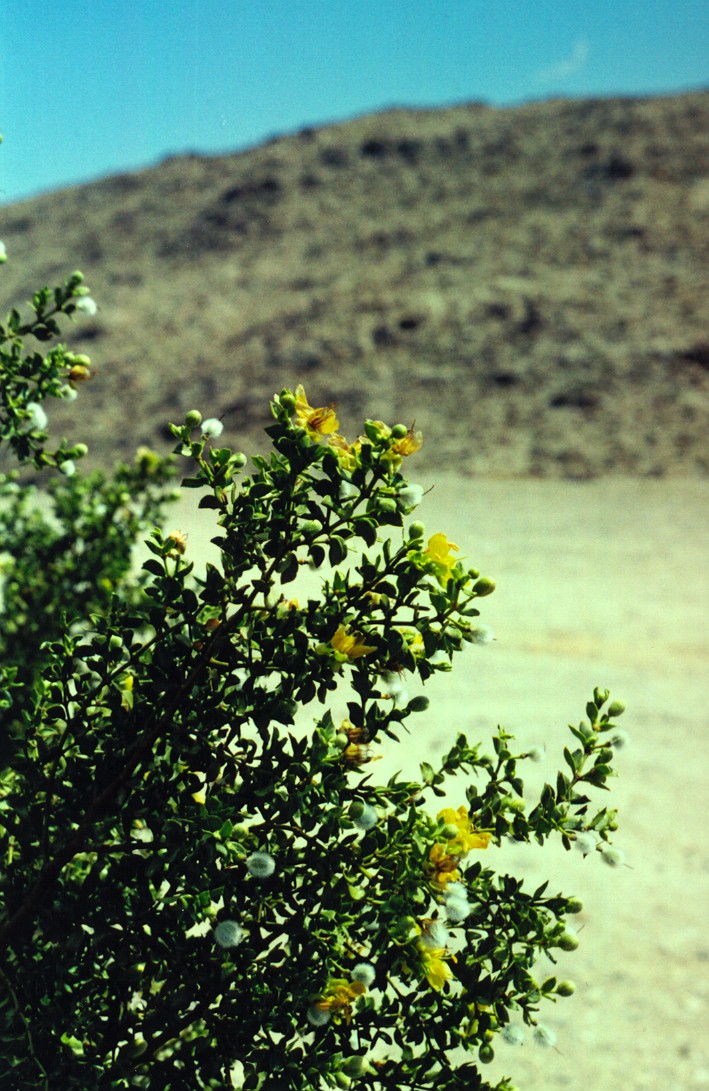
Creosote bush (Larrea tridentata) in bloom in the Mojave Desert of California.
Joshua trees (Yucca brevifolia) is a tree-sized yucca that grows in slightly wetter areas of the Mojave Desert, here in California.
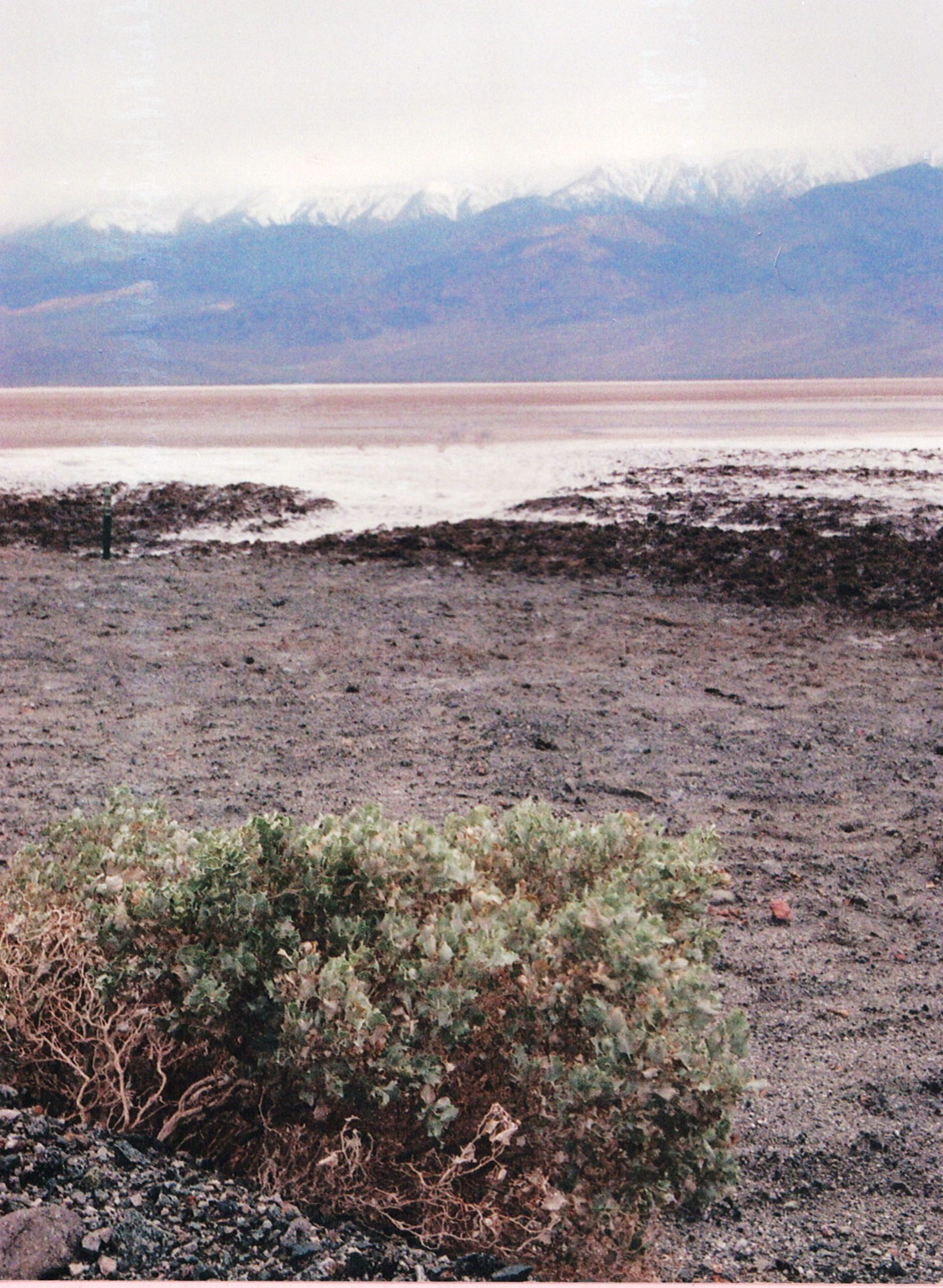
Tidestromia oblongifolia is a desert shrub that thrives in extremely hot temperatures and high salinity, here at Badwater, well below sea level at the bottom of Death Valley National Park in California.
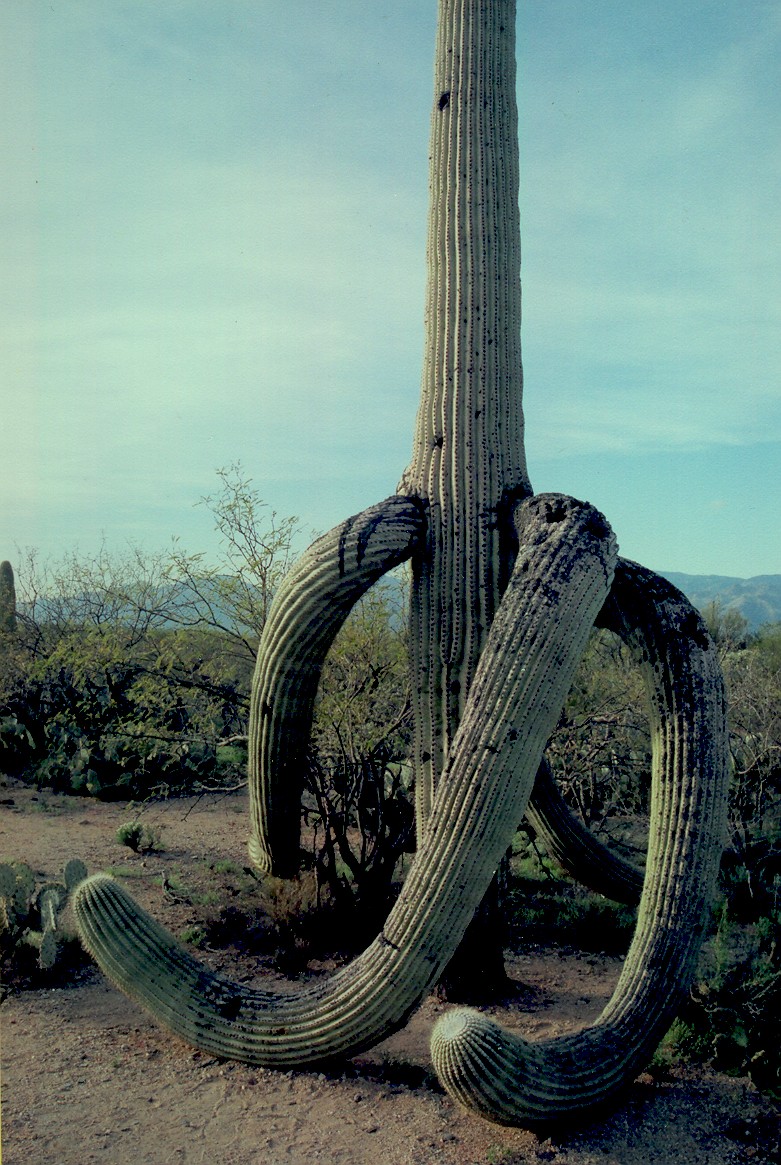
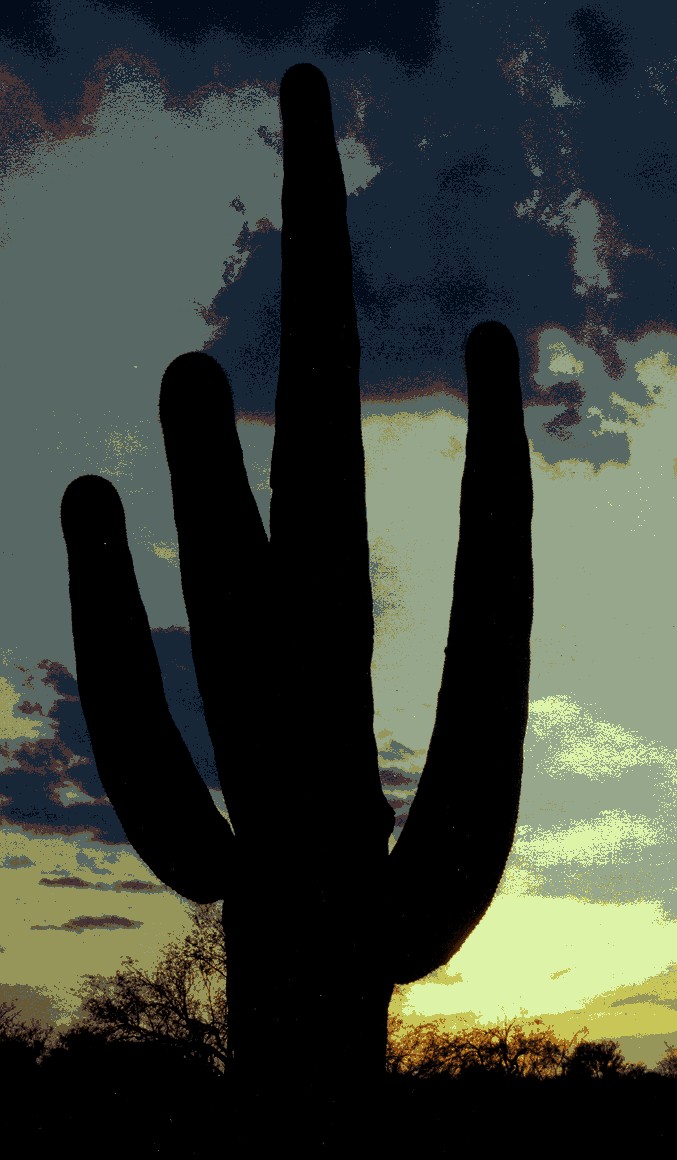
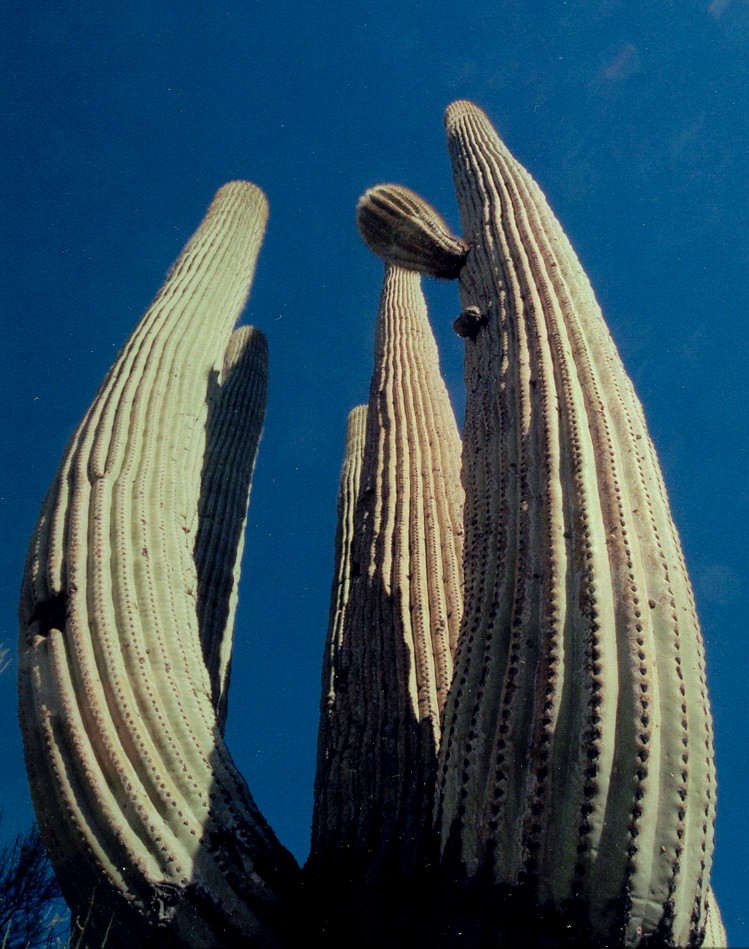
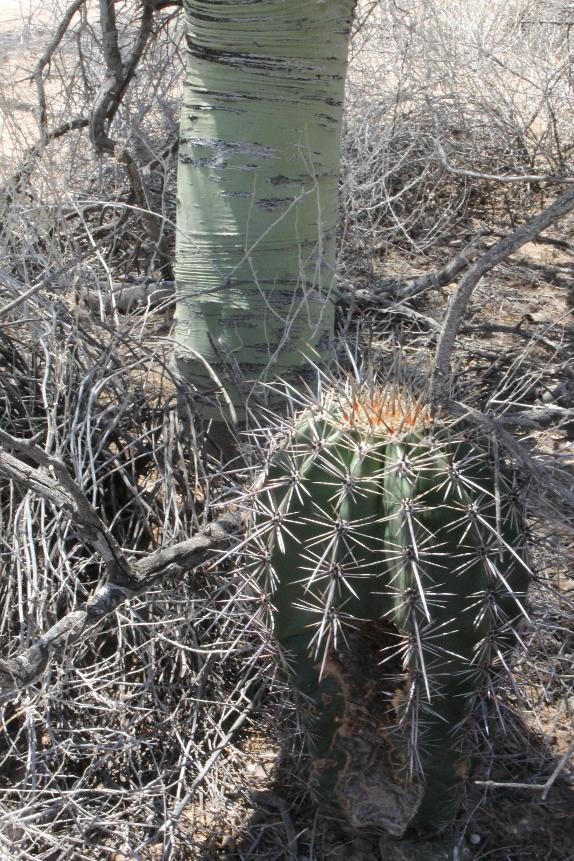
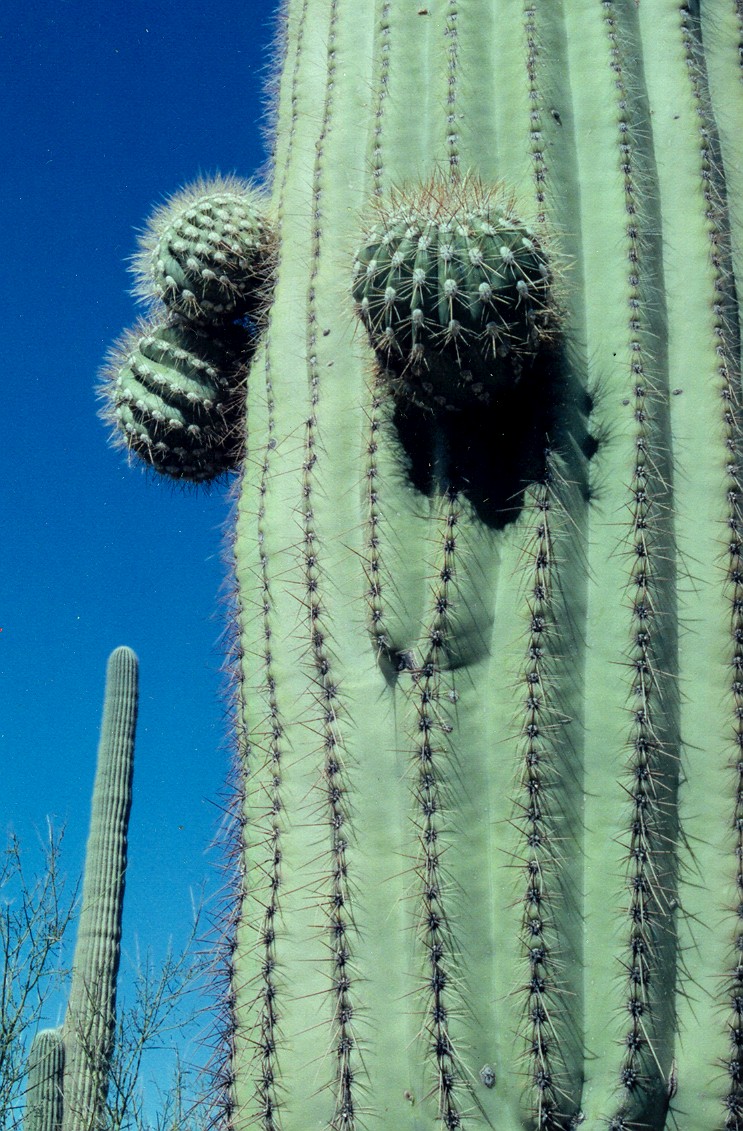
A saguaro cactus (Carnegiea gigantea) near Tucson, Arizona.
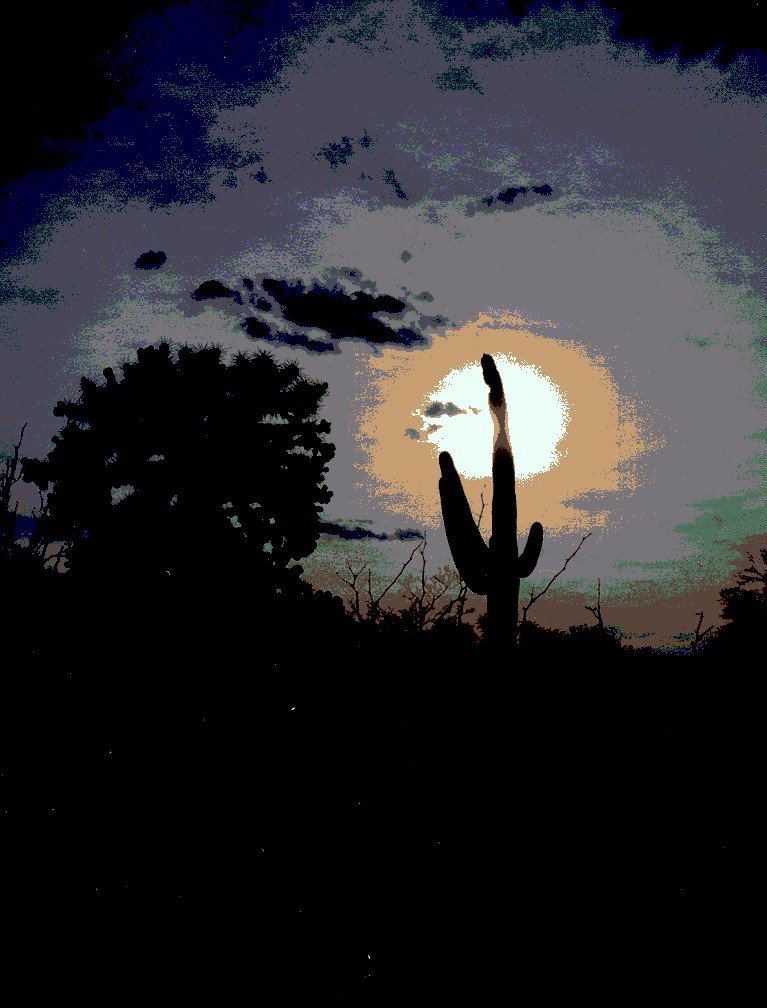
Special effects photo of a saguaro cactus in the sunset.
Profiles in courage! A saguaro cactus near Tucson, Arizona.
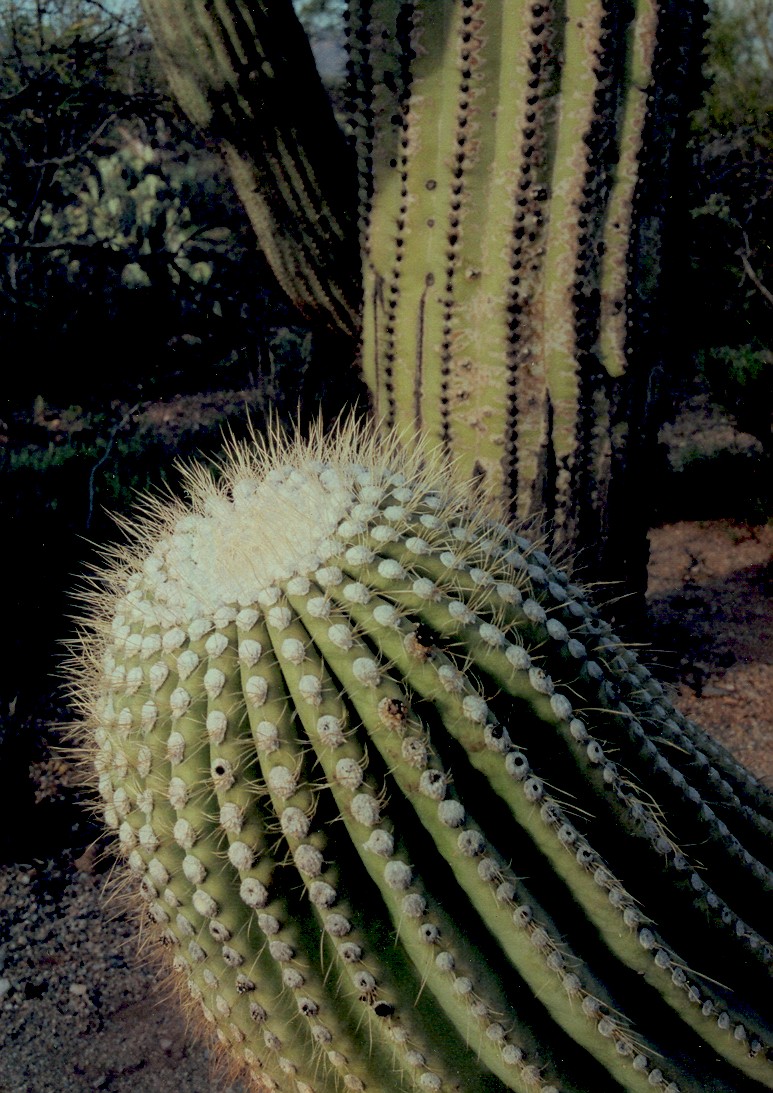
Growing tip (apical meristem) of a saguaro cactus near Tucson, Arizona.
A young saguaro cactus grows up in the shade of a nurse tree (palo verde) near Tucson, Arizona.
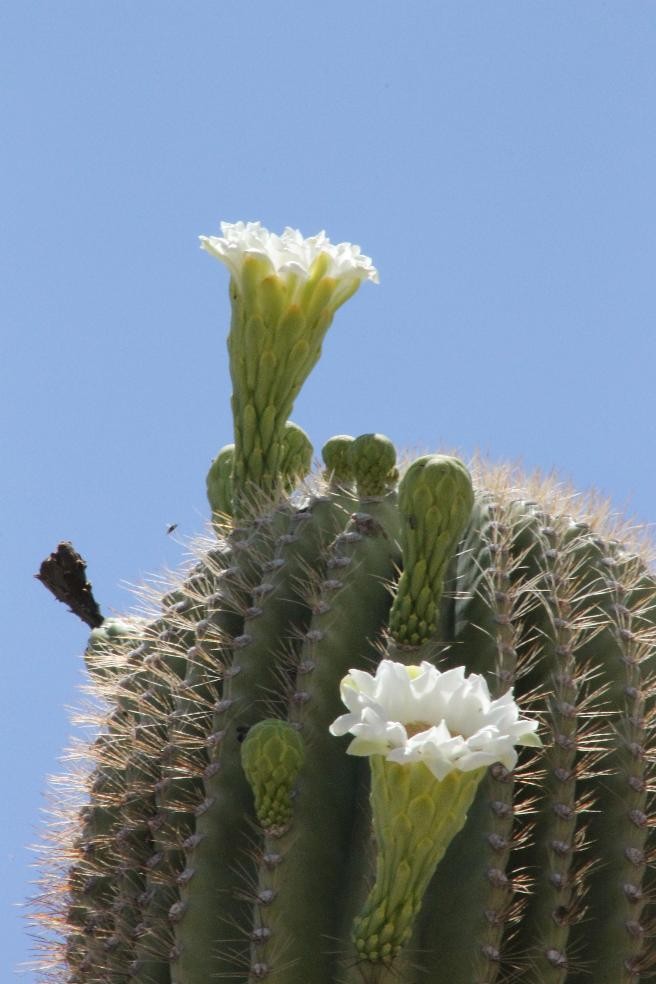
Saguaro cactus in bloom near Tucson, Arizona. They grow far above the ground. The spines keep herbivorous mammals from climbing up from the ground. Bats pollinate the flowers.
Buds on a saguaro cactus near Tucson, Arizona.
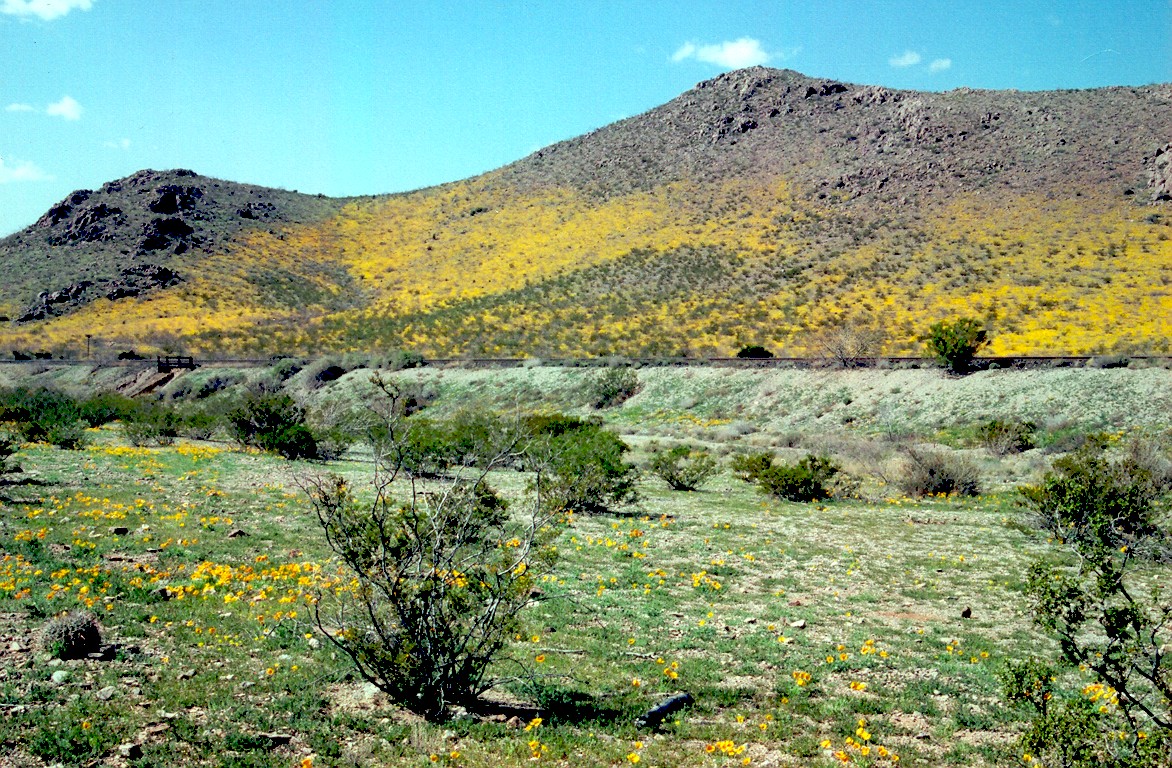
Mexican poppies (Eschholzia mexicana) on spring hillsides near Tucson, Arizona, above a desert of creosote bushes.
Desert owl-clover (Orthocarpus) and Mexican poppies in a desert field near Tucson, Arizona.
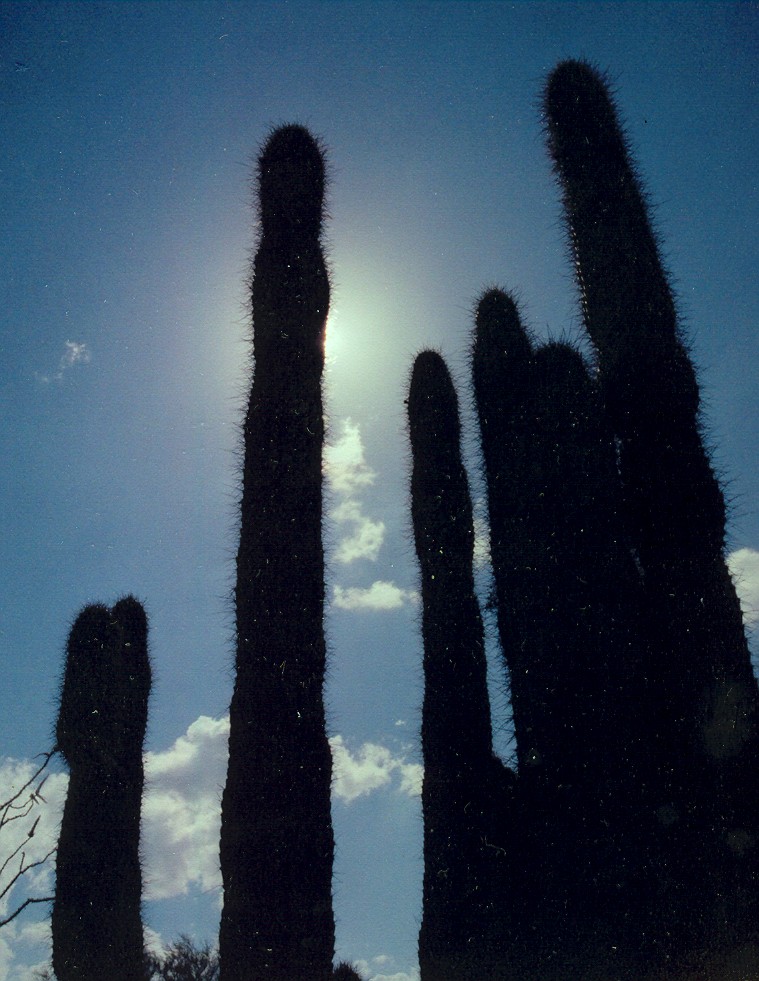
Organ pipe cactus silhouettes in Arizona.
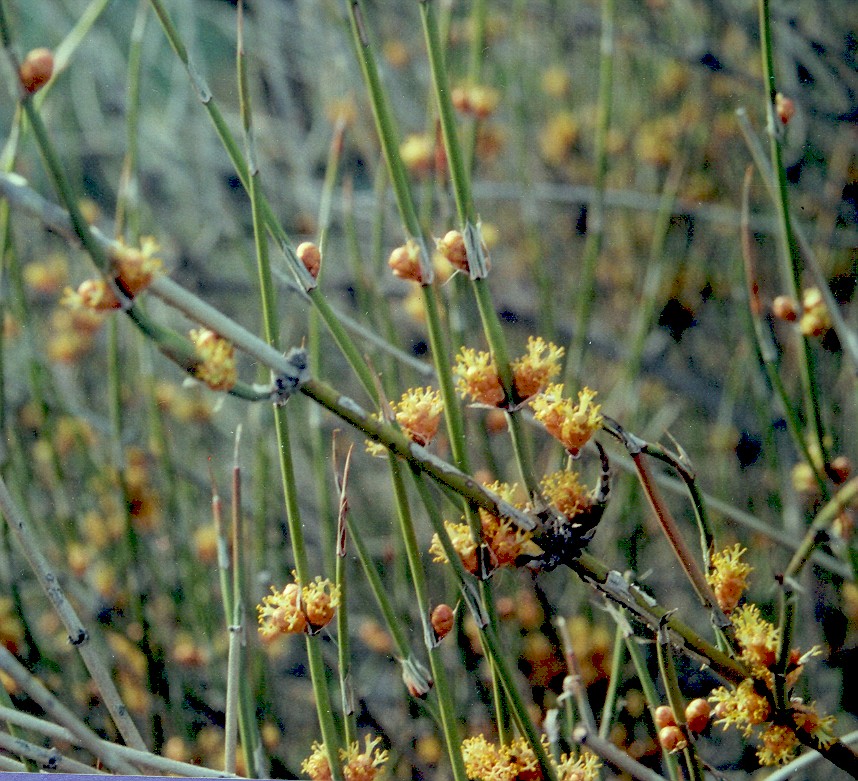
Ephedra in the desert near Tucson, Arizona. Ephedra is a gymnosperm, not a flowering plant.
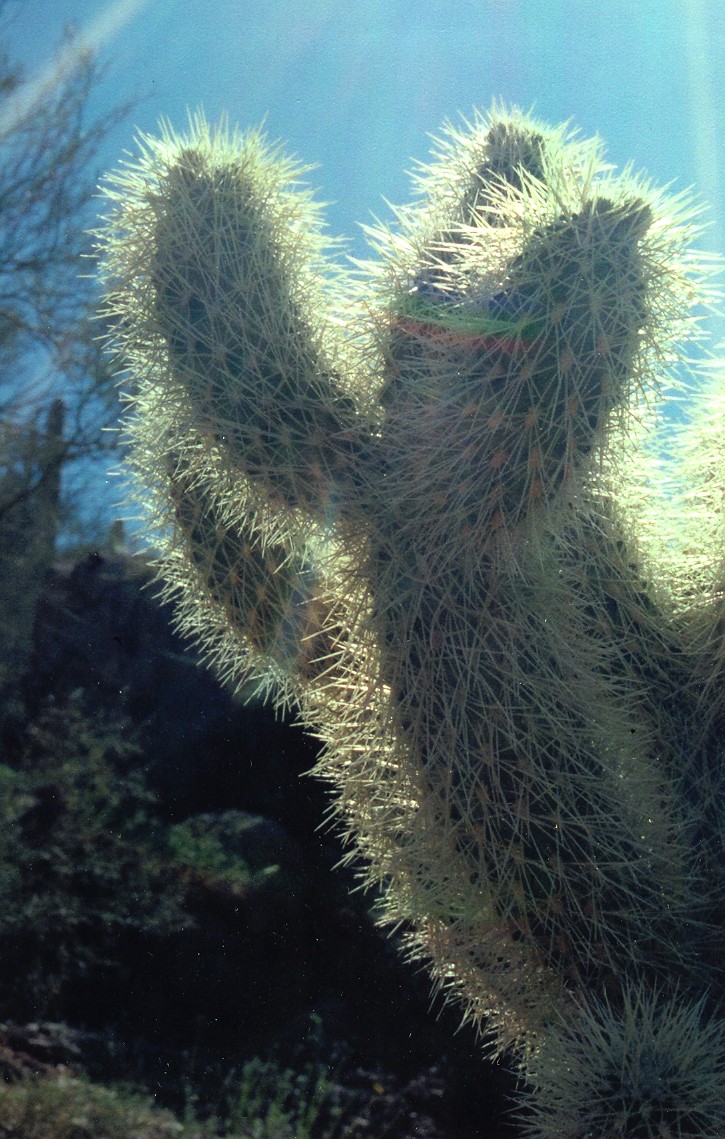
A jumping cholla cactus in the Arizona desert. If an animal or human brushes against the cactus, a branch might detach as the spines stick in the skin or hair.
A barrel cactus in fruit near Tucson, Arizona.
Scarlet globemallow flowers (genus Sphaerancea) in a desert near Tucson, Arizona.
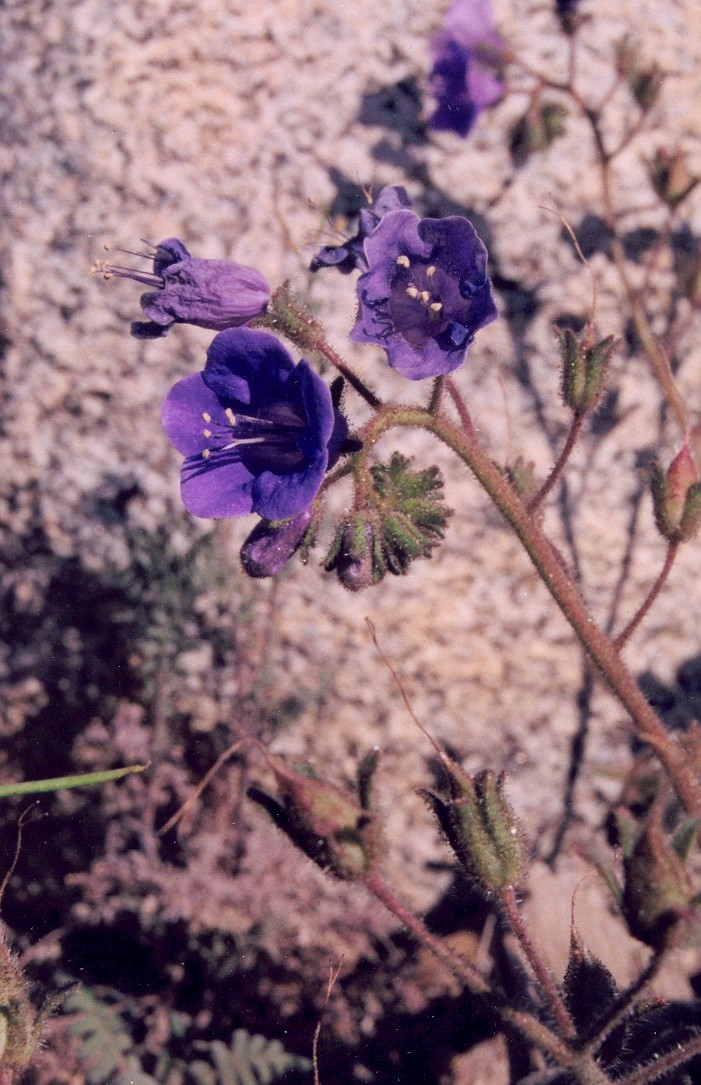
A Phacelia wildflower in a desert near Tucson, Arizona.
In the middle of the Utah desert, a shady canyon is home to mosses and ferns: the Virgin River in Zion National Park.
White Sands National Park, New Mexico.
Animal tracks and a cottonwood leaf at White Sands National Park, New Mexico.
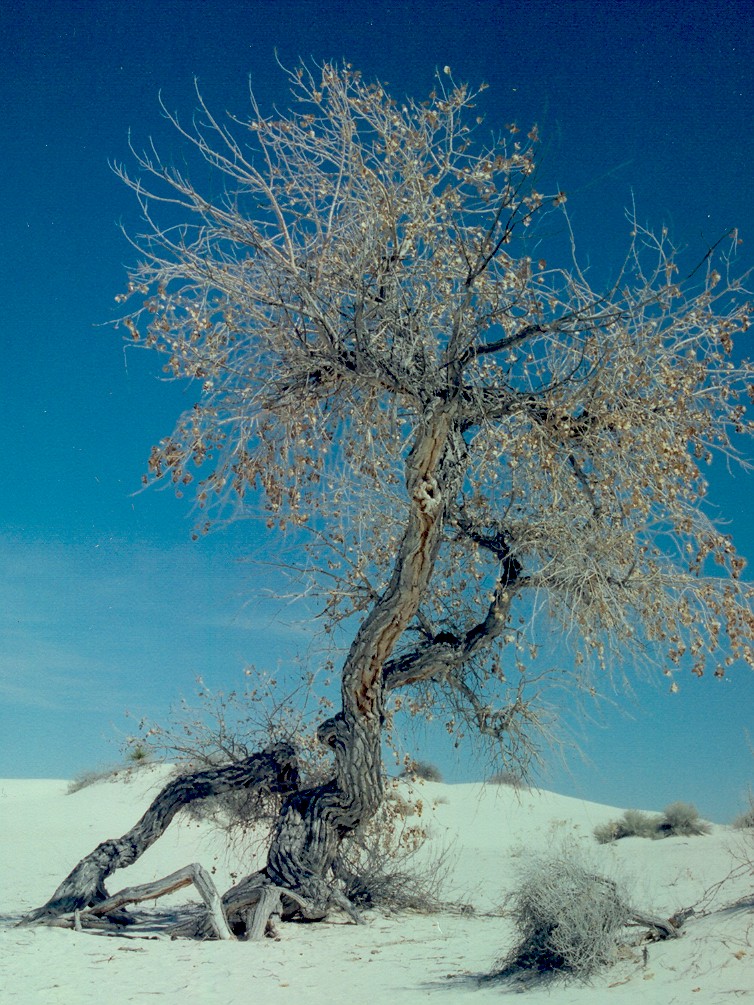
A cottonwood tree, not yet leafed out for spring, has found water deep underneath a dune at White Sands National Park in New Mexico.
Sandstone arches at Arches National Park, Utah.
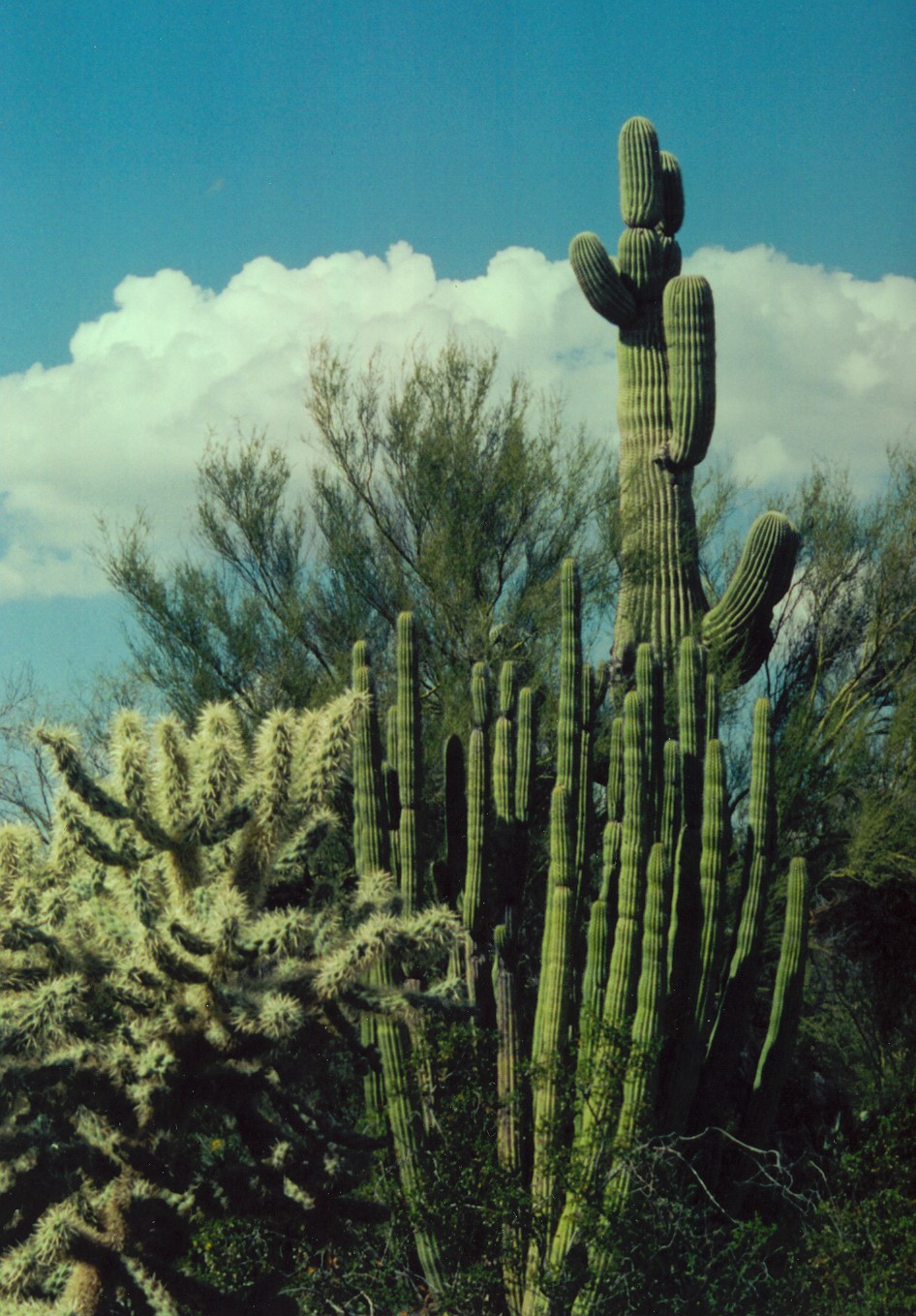
Three kinds of cactus at Organ Pipe Cactus National Monument, Arizona: Cholla (Cylindropuntia fulgida, left), organ pipe (Stenocereus thurberi, right), and saguaro (Carnegiea gigantea, back right), and a palo verde nurse tree in whose shade many cactuses begin to grow.
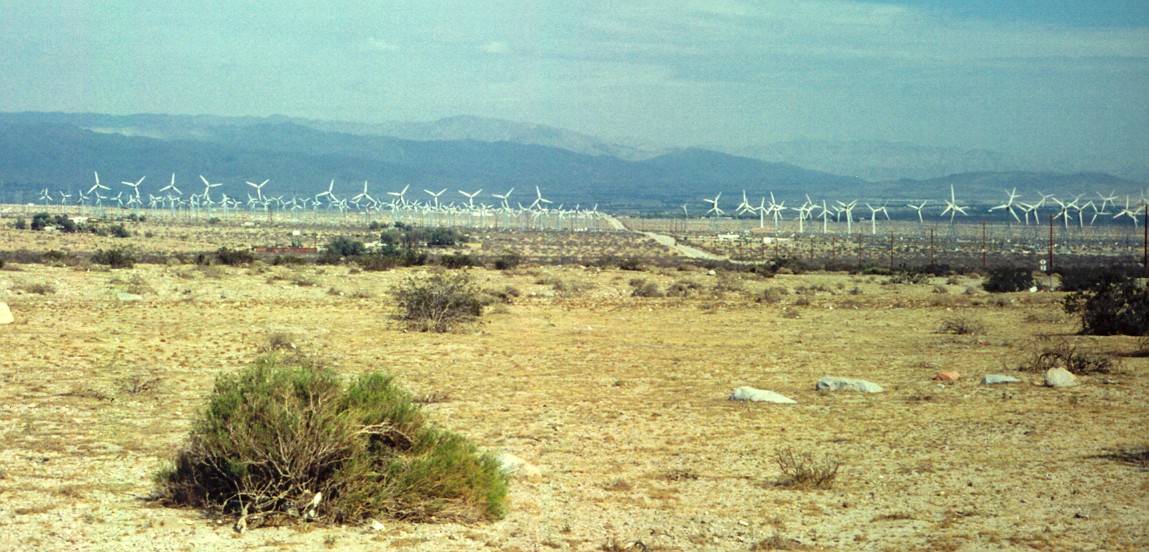
The Mojave Desert of eastern California and western Arizona has a lot of sunlight and not very many people, the ideal place for alternative energy production: wind energy and solar energy.
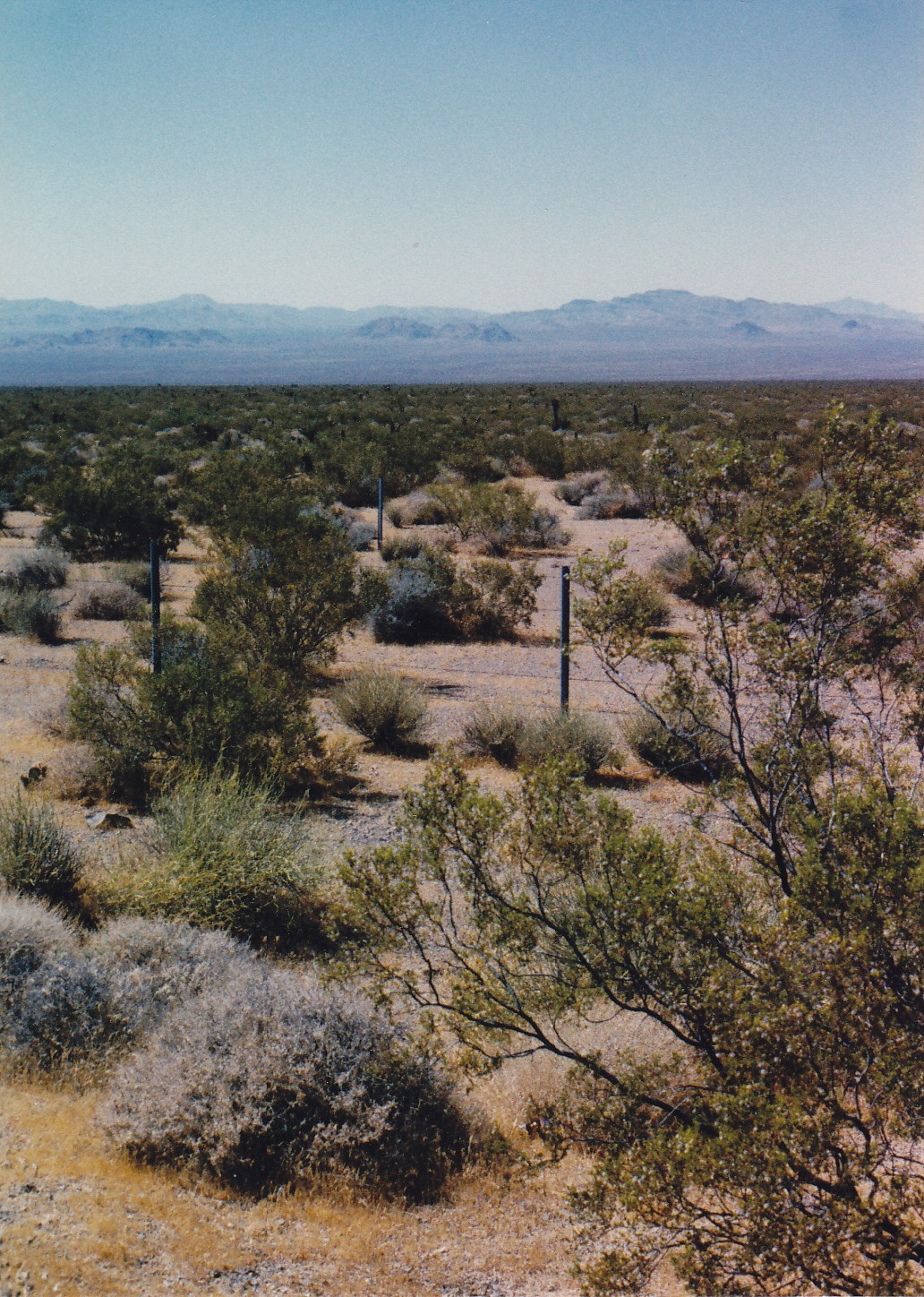
The vast landscape of the Mojave Desert is mostly filled with Larrea tridentata creosote bushes and Ambrosia dumosa shrubs, widely and evenly spaced as their root systems compete for water in the soil.
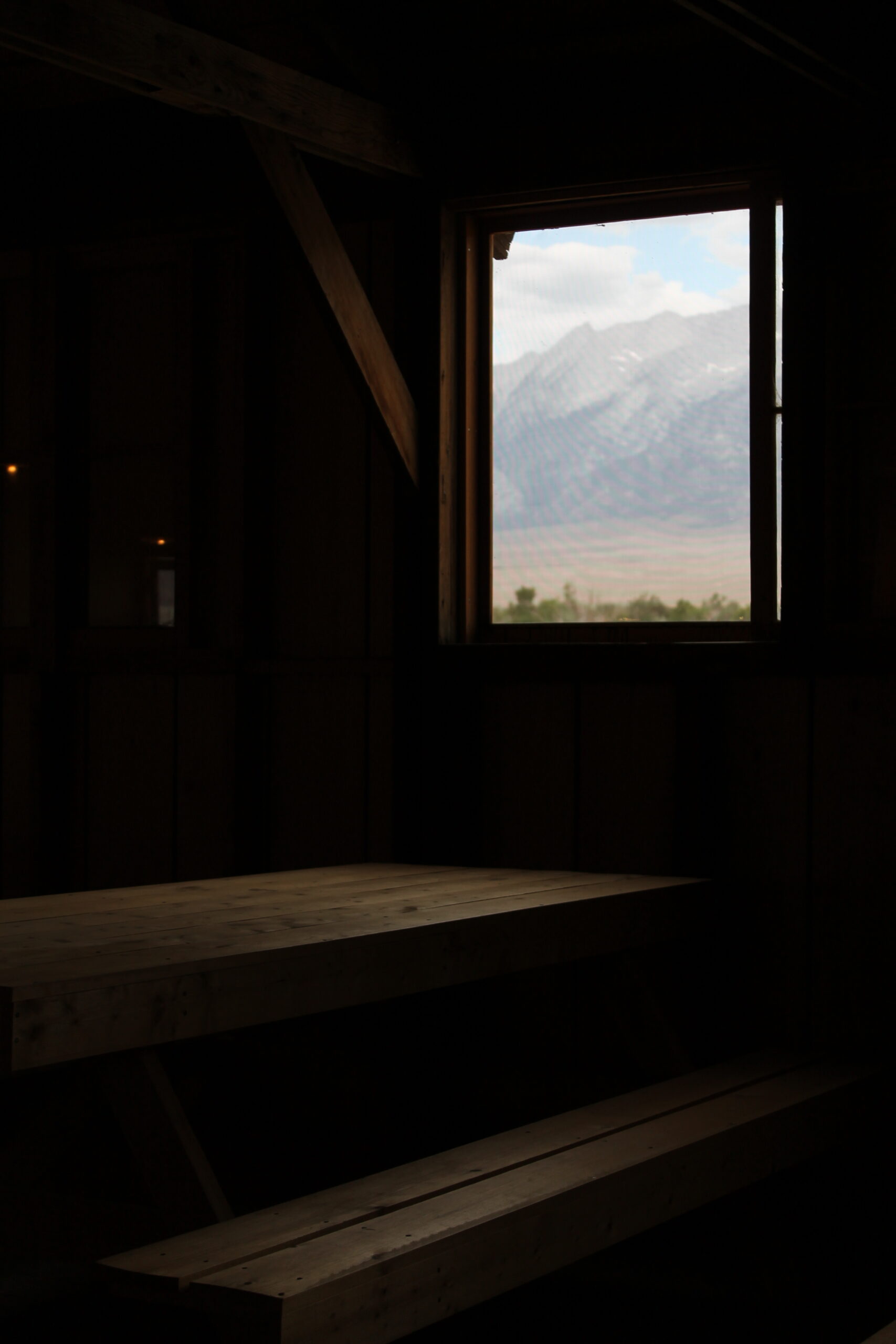
The Manzanar detention facility housed American citizens of Japanese descent during World War Two. They were treated kindly but had no rights. The facility fell into disrepair after the war but has recently been reconstructed. It was in the rain shadow desert east of the Sierra Nevada in California, as seen through the window.
The Manzanar detention facility housed American citizens of Japanese descent during World War Two. They were treated kindly but had no rights. The facility fell into disrepair after the war but has recently been reconstructed. It was in the rain shadow desert east of the Sierra Nevada in California. All that remains of most of the buildings is the foundation.
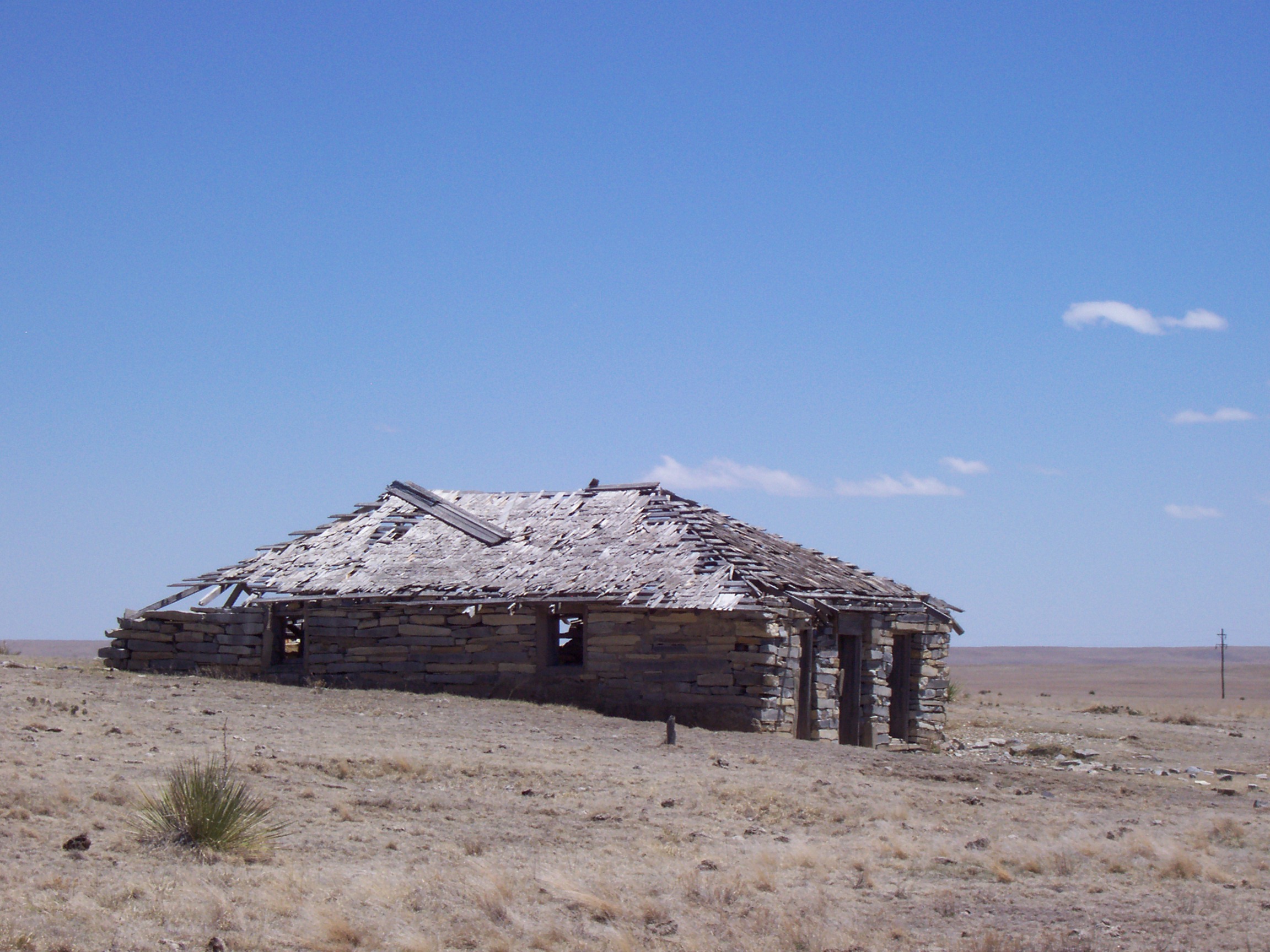
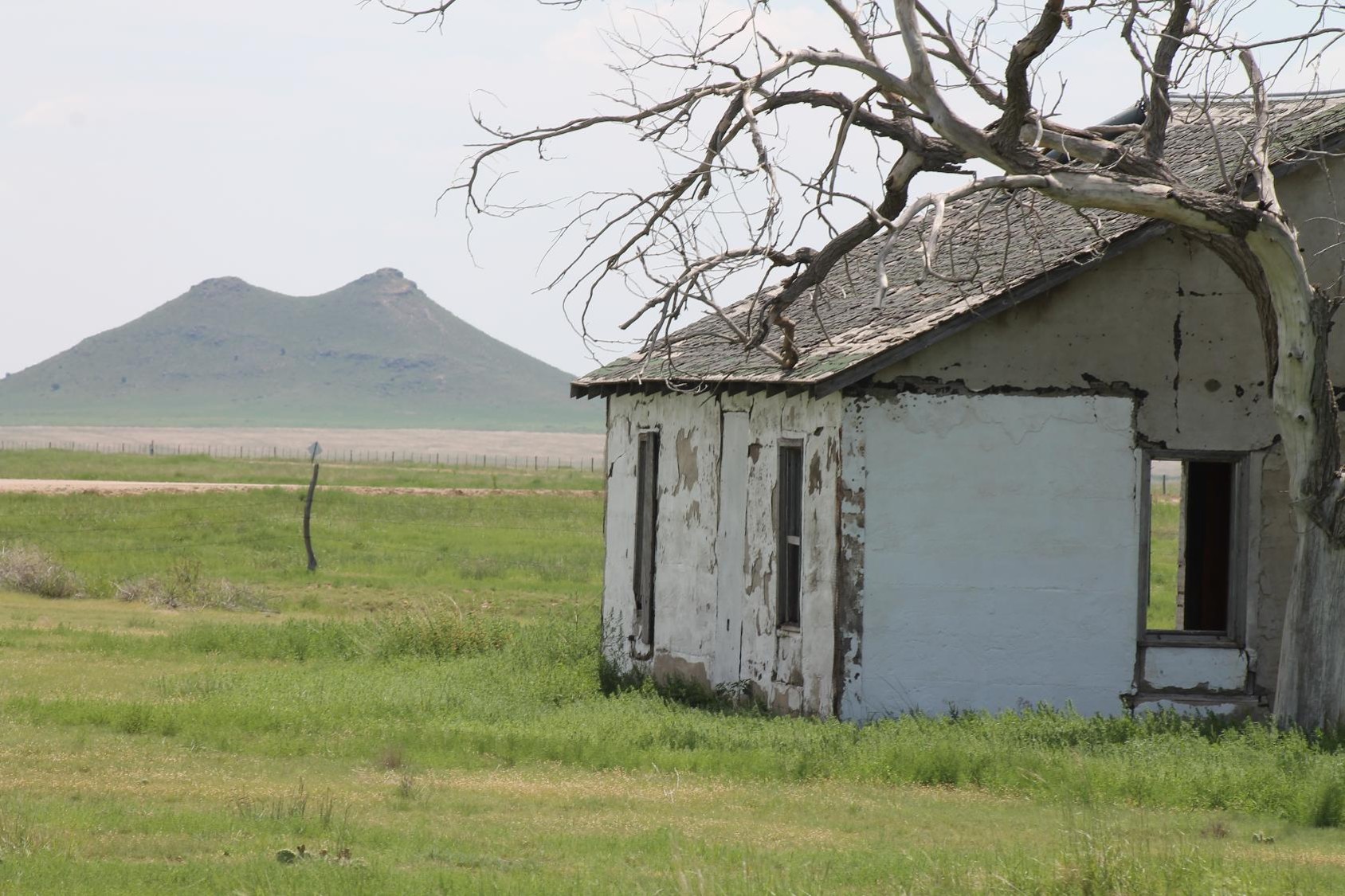
On the high plains (here, New Mexico), the Dust Bowl created desert conditions and many people abandoned their houses and moved elsewhere. This house probably dates from after the Dust Bowl, also called the dirty thirties because of the dust from soil erosion.
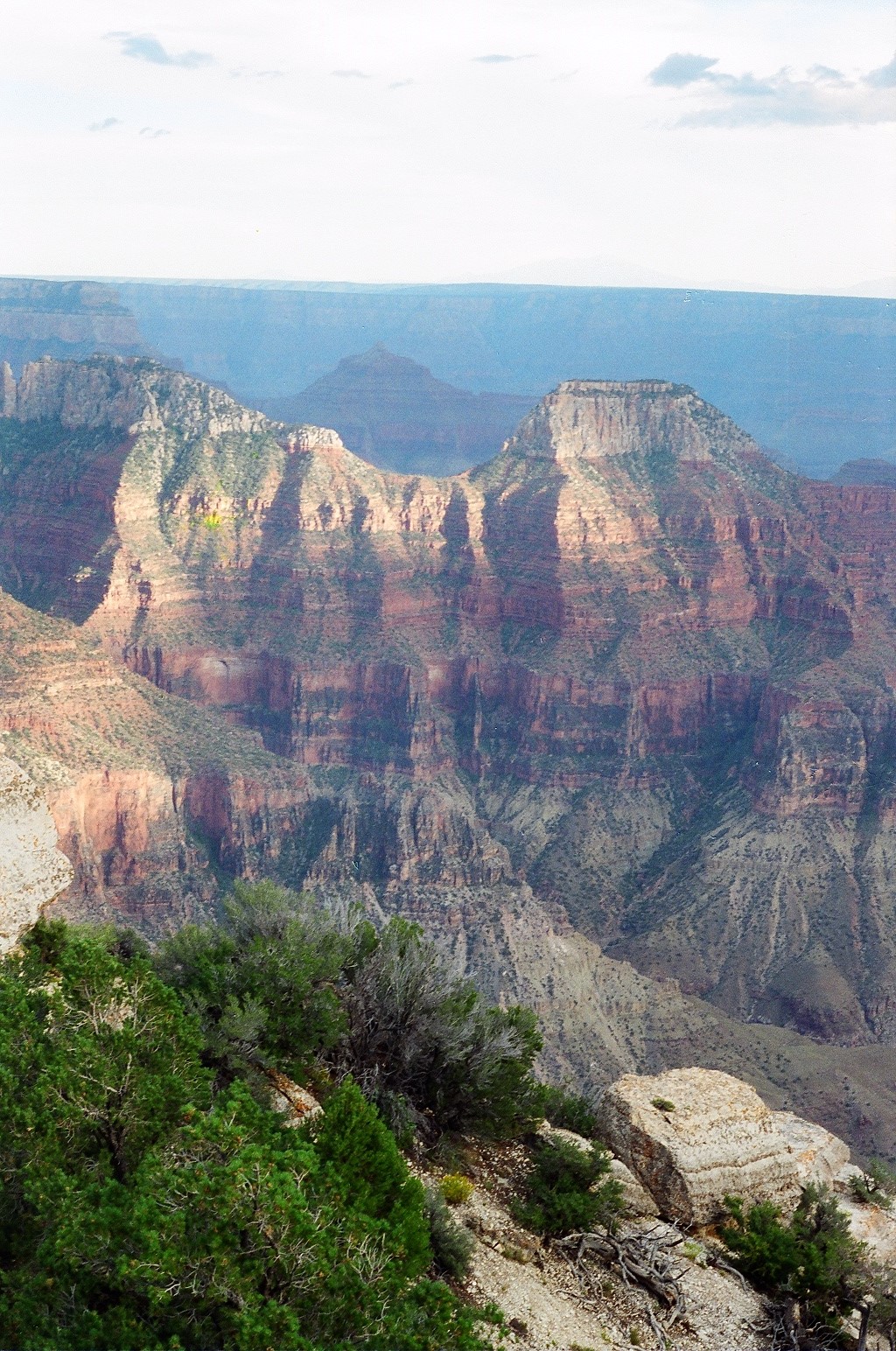
Grand Canyon of the Colorado, here seen from the North Rim.
Crescent moon in Death Valley sunset. Photo by Stan Rice.
A salt plain in the bottom of Death Valley, California. The salt is the remnant of an ice age lake.
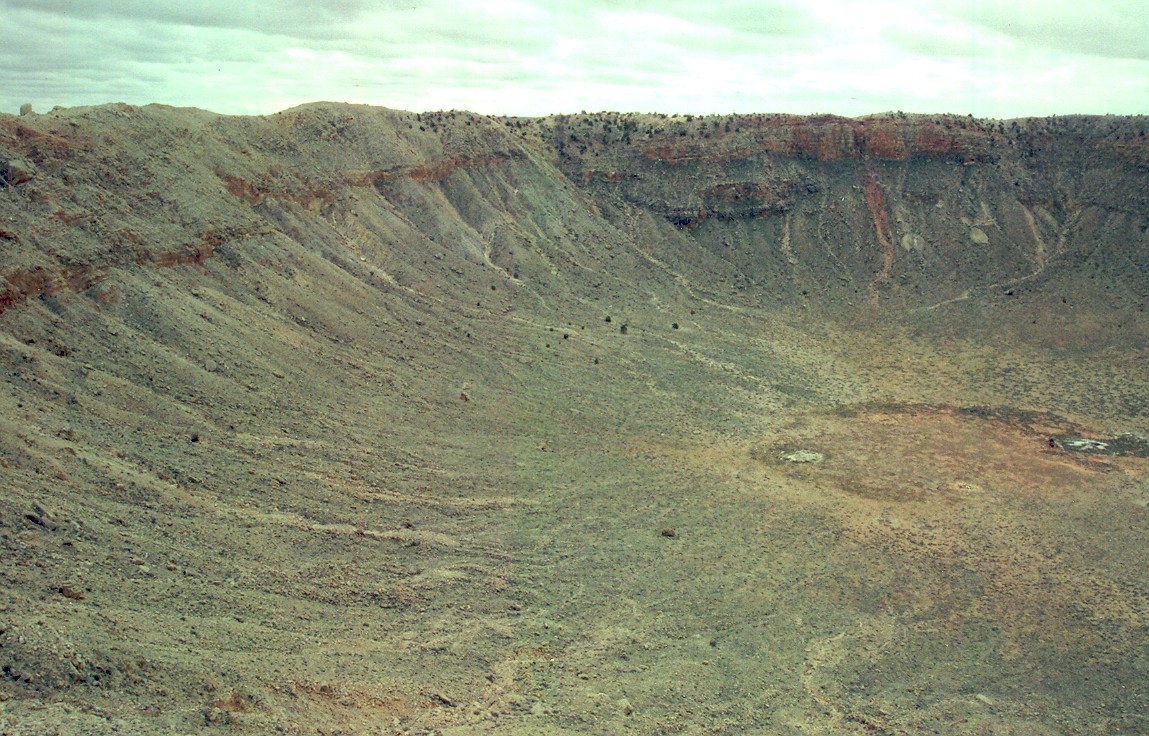
Barringer Crater (Meteor Crater) in Arizona, formed by a meteorite about 50,000 years ago. The lack of extensive rainfall has prevented the crater from eroding away.
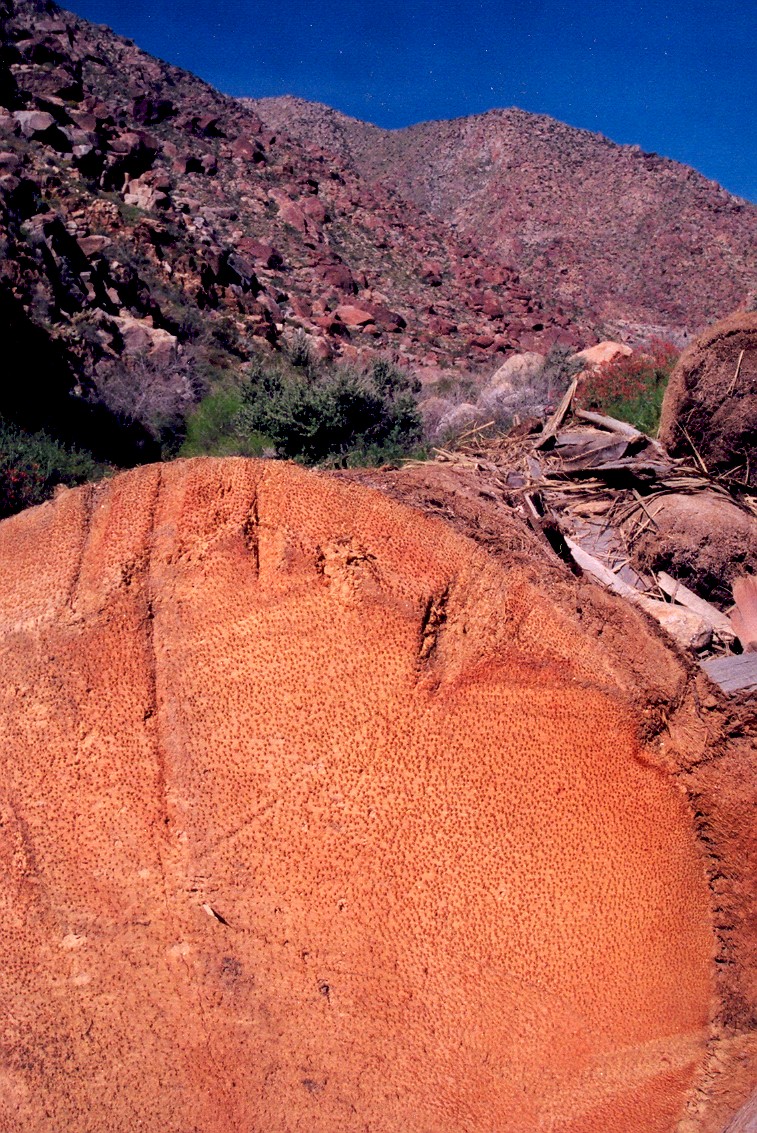
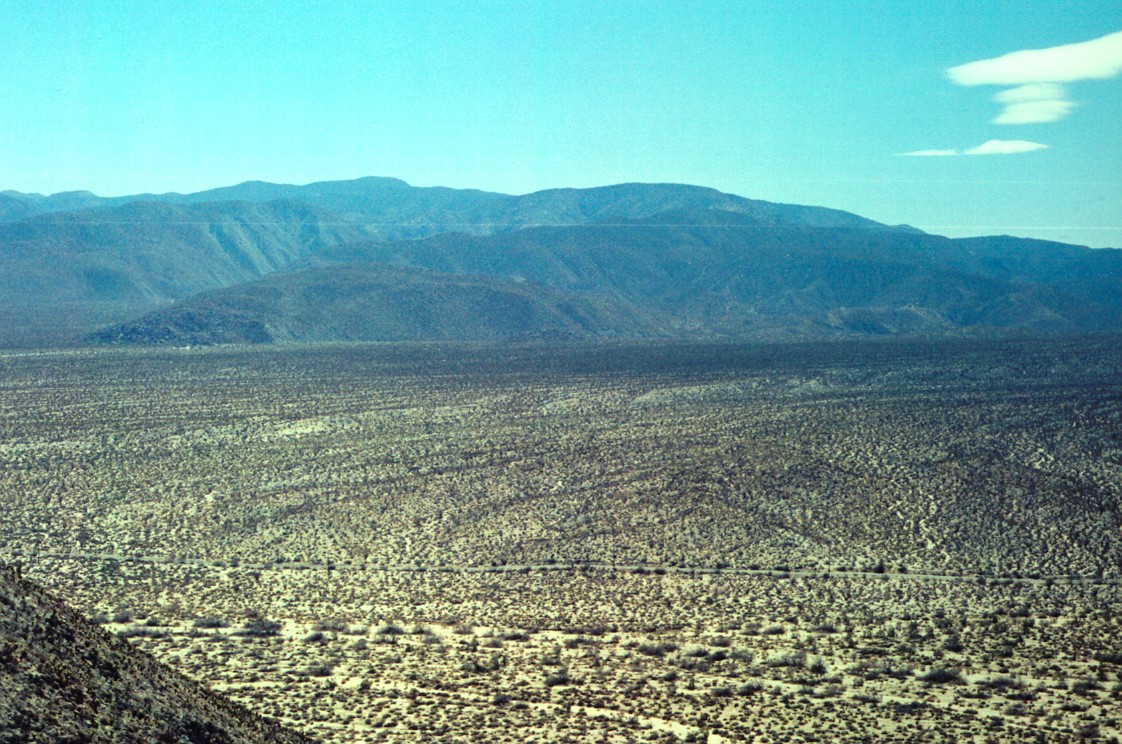
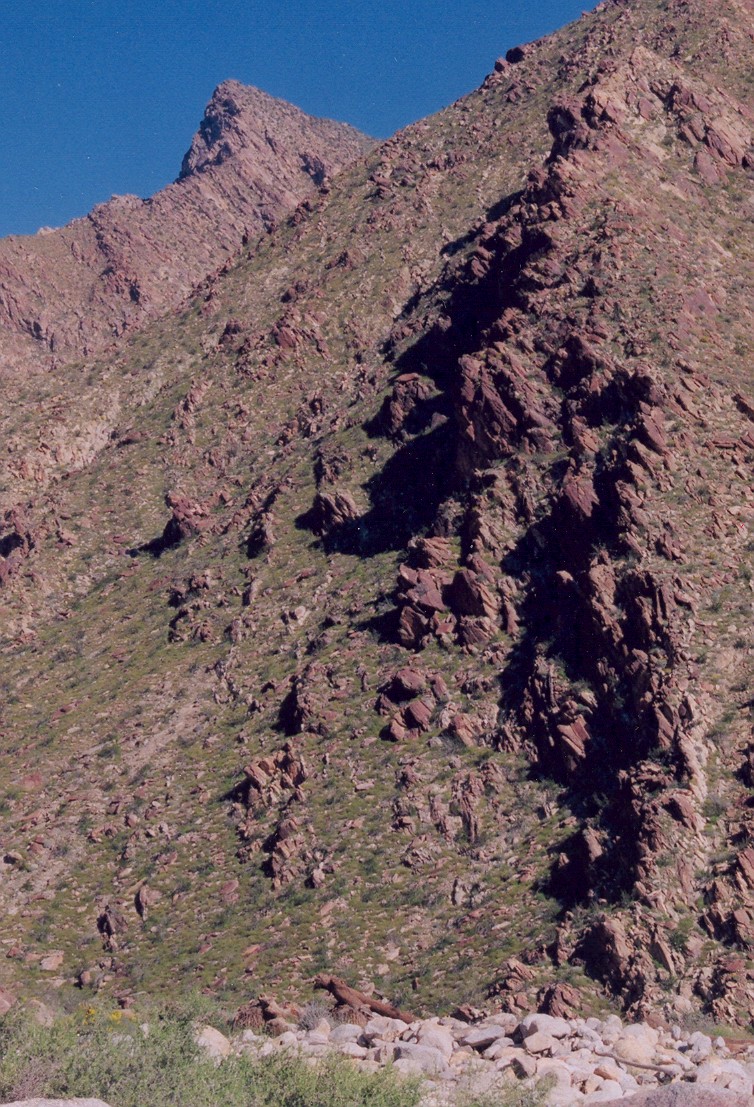
Anza-Borrego desert mountains east of San Diego.
Eastern Deciduous Forest
Hikes
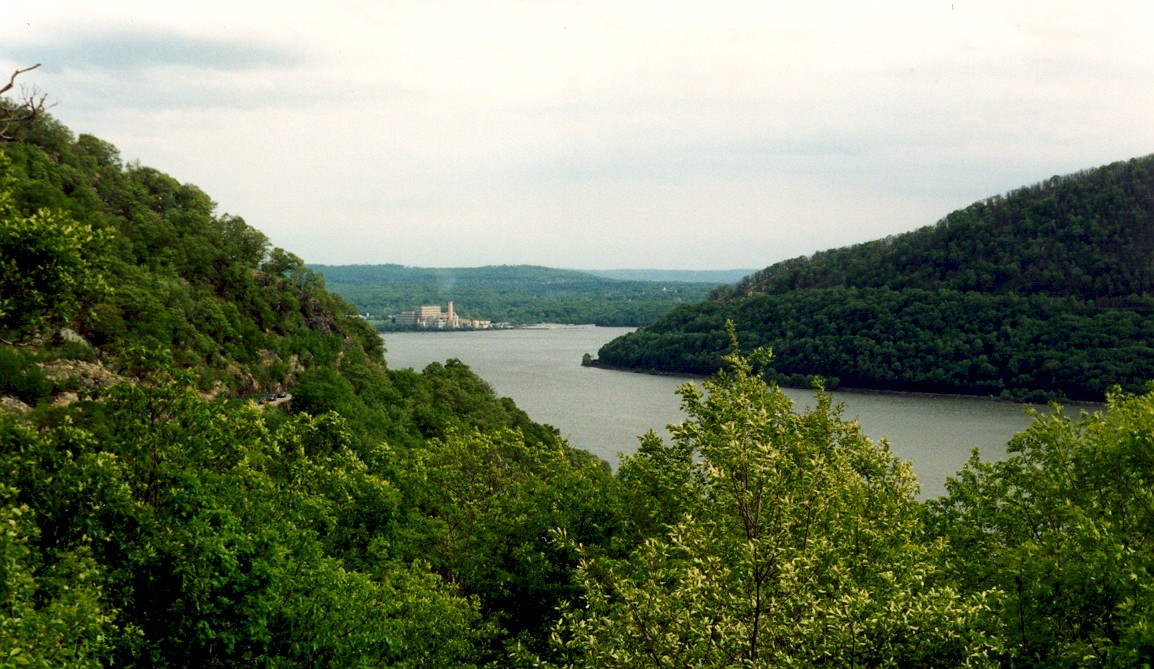
Fall colors in the deciduous forest near Mohonk, New York. Most of the colors are sugar maple (Acer saccharum), which does not grow in Europe. Europe has no equivalent displays of fall color and when painters depicted vivid fall colors in America the European artists accused them of making it all up. The leaves manufacture the red anthocyanins when warm sunny days are followed by chilly nights. The red leaves you see in Europe are from Virginia creeper (Parthenocissus quinquefolia) and sweetgum (Liquidambar styraciflua), native to America but widely planted or escaped in Europe.
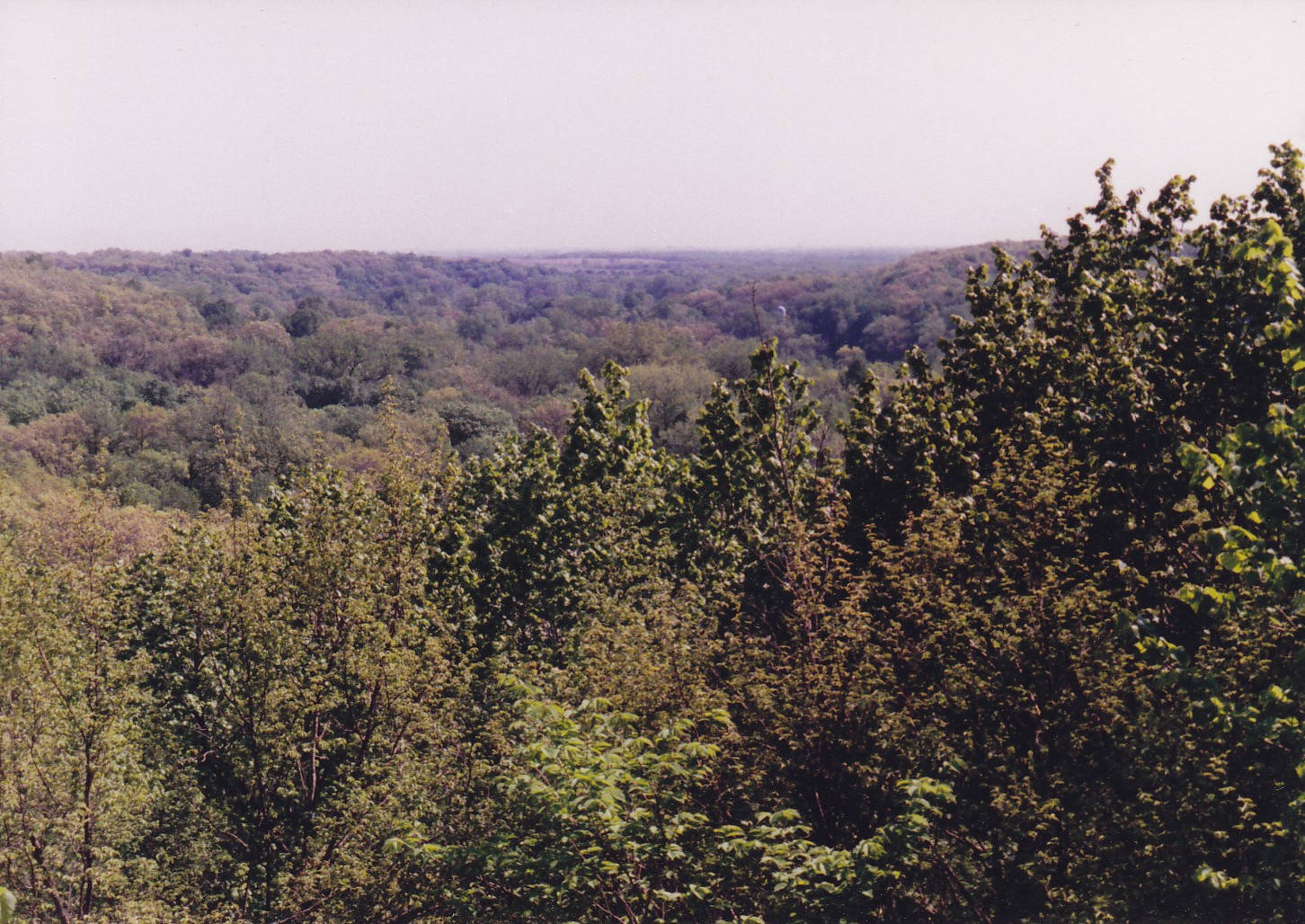
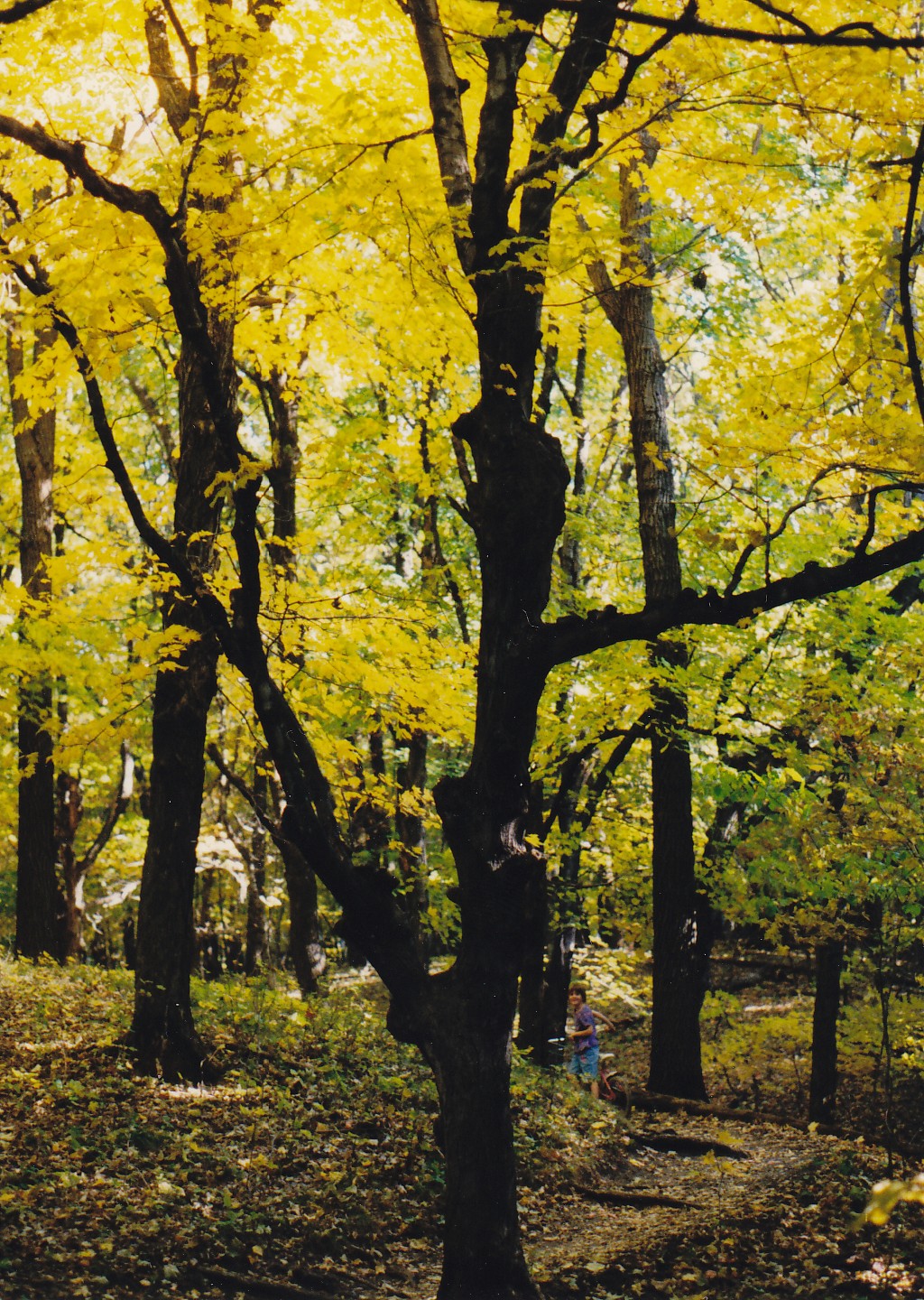
Southwestern Minnesota is mostly prairie (and agricultural fields) but there are a few forests in low lying areas, dominated by oak and sugar maple. Camden State Park.
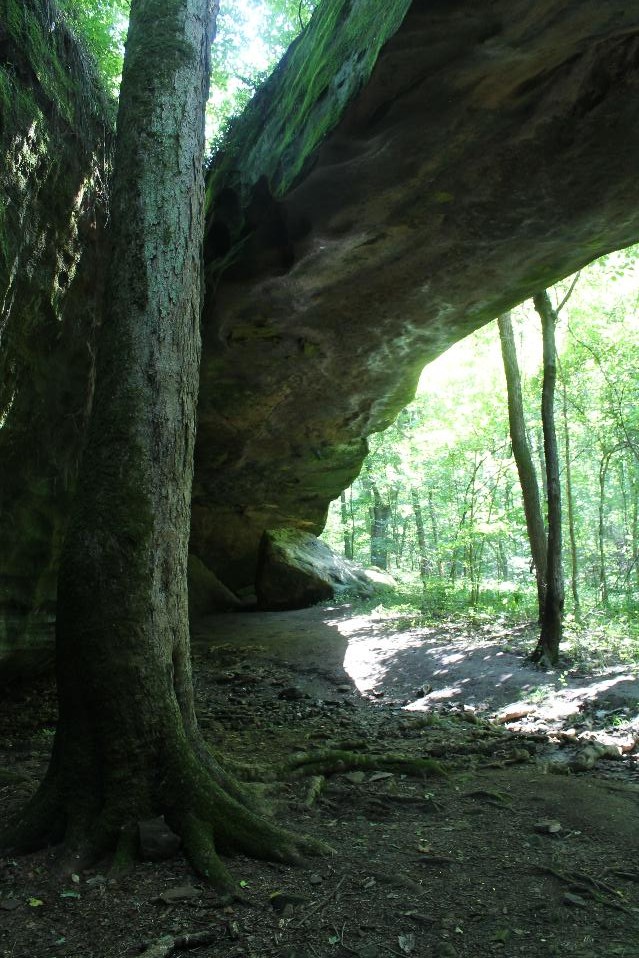
Mantle Rock is a sandstone arch in northwestern Kentucky, on land protected by The Nature Conservancy. This was where the Hilderbrand contingent of Cherokees on the Trail of Tears camped in winter 1838.
A remnant of the original Cherokee Trail of Tears near Mantle Rock in northwestern Kentucky. This is where thousands of Cherokees, imprisoned by the American army, were forced to migrate from eastern Tennessee to what is now eastern Oklahoma in 1838.
Sugar maple (Acer saccharum) is one of the tree species near Mantle Rock, a Nature Conservancy preserve in northwestern Kentucky, through which the Trail of Tears passed. The American government forced thousands of Cherokees to leave eastern Tennessee and move to what is now eastern Oklahoma in 1838.
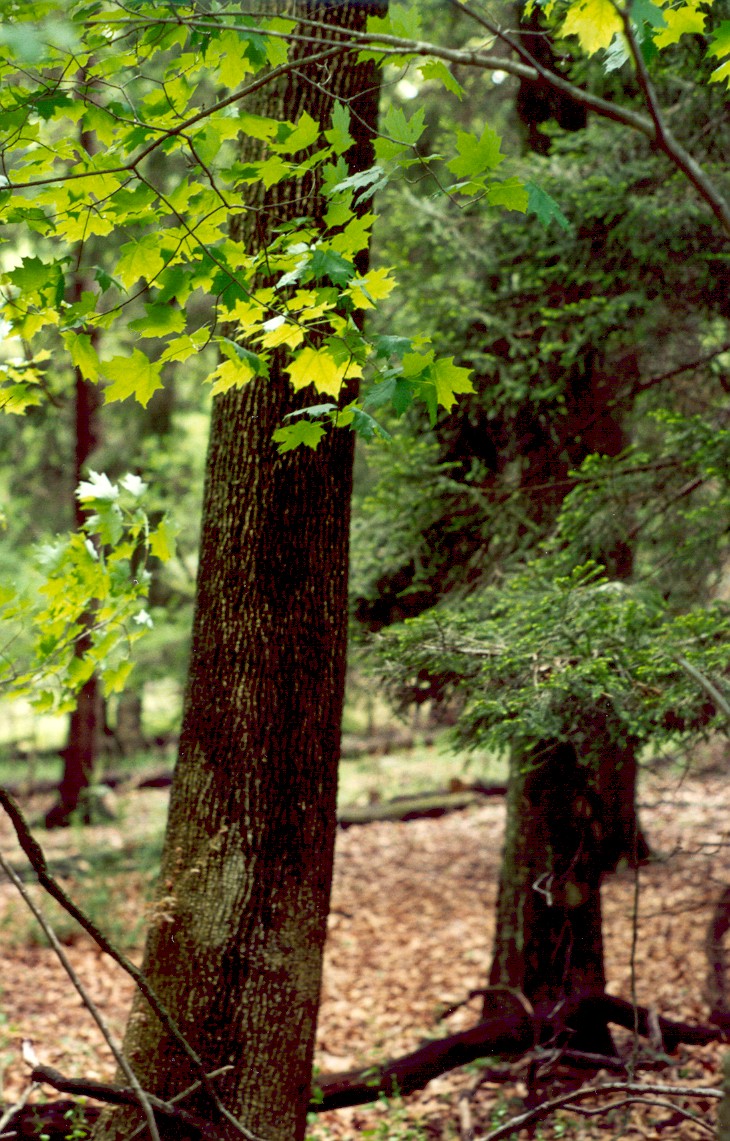
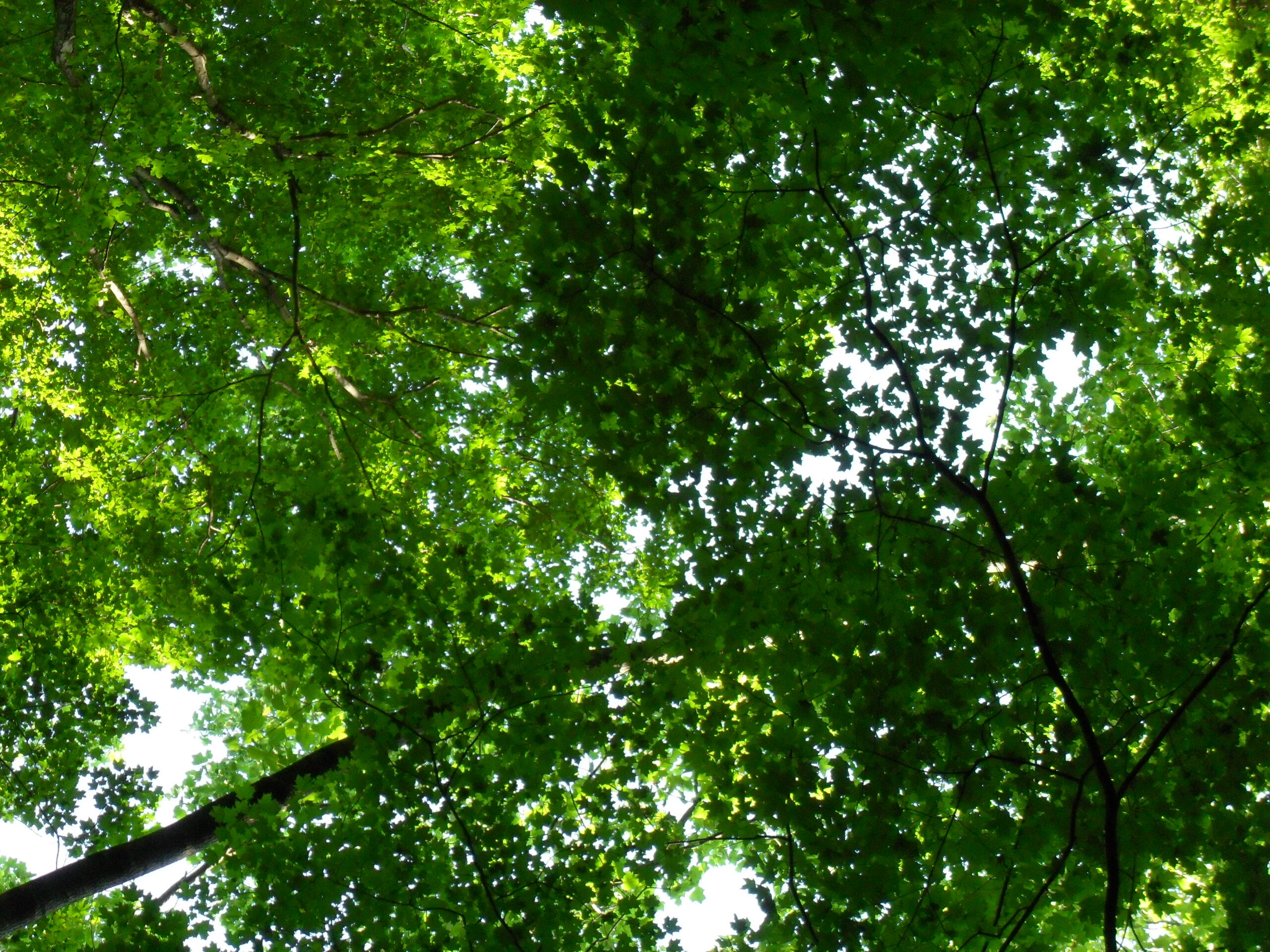
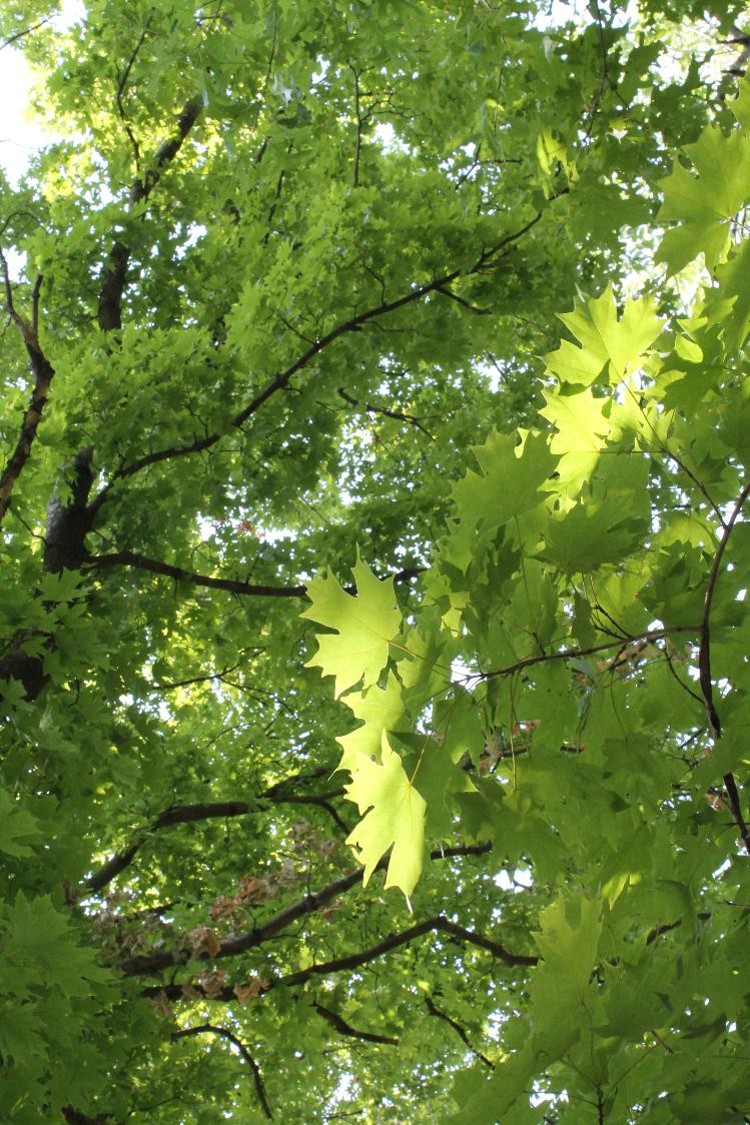
A sugar maple (Acer saccharum) canopy in Shades State Park, Indiana. Maples, an old forest species, have fewer layers of leaves than do tree species that typically grow in the open or in young forests.
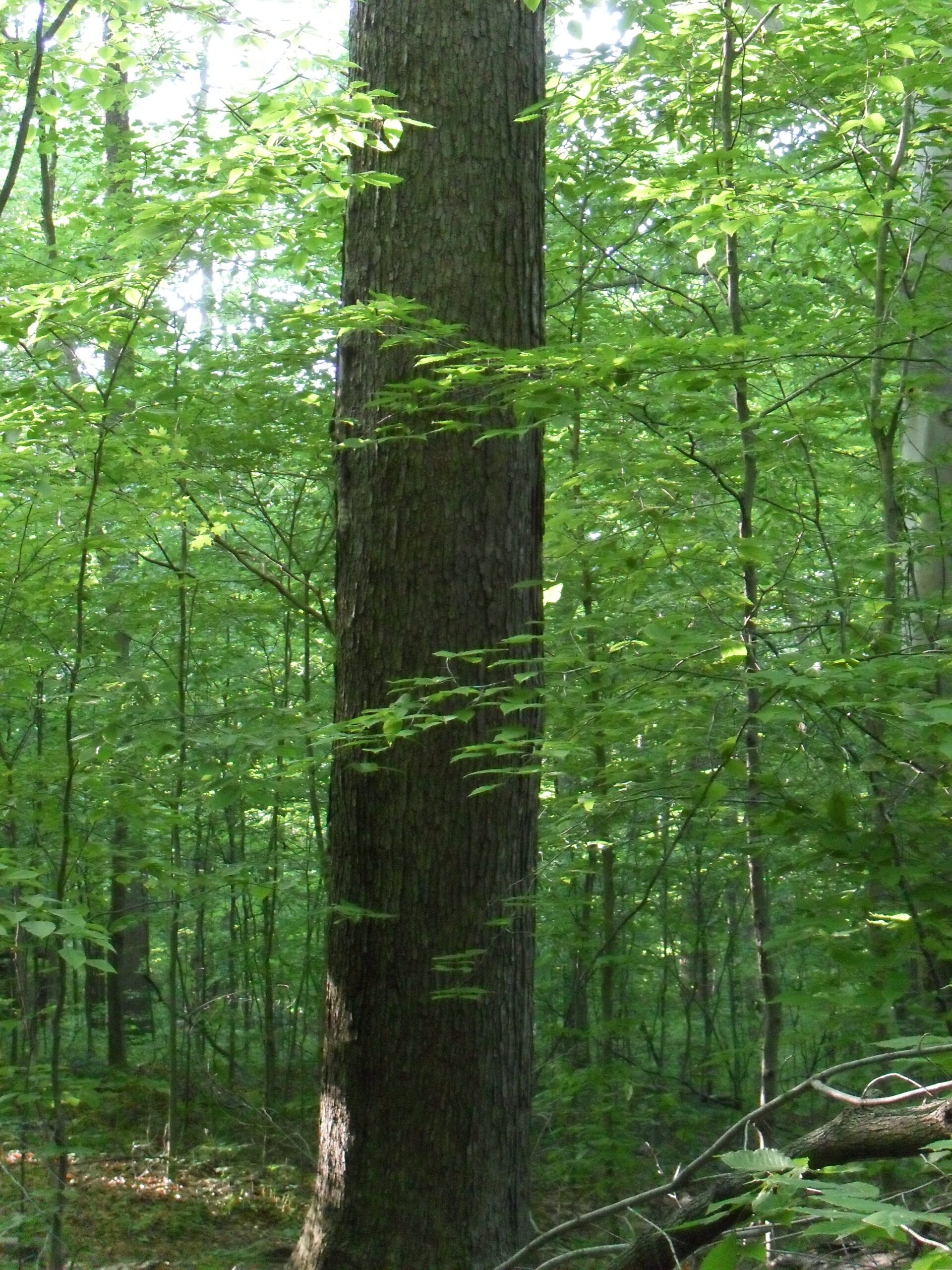
An old-growth deciduous forest at Shades State Park in Indiana.
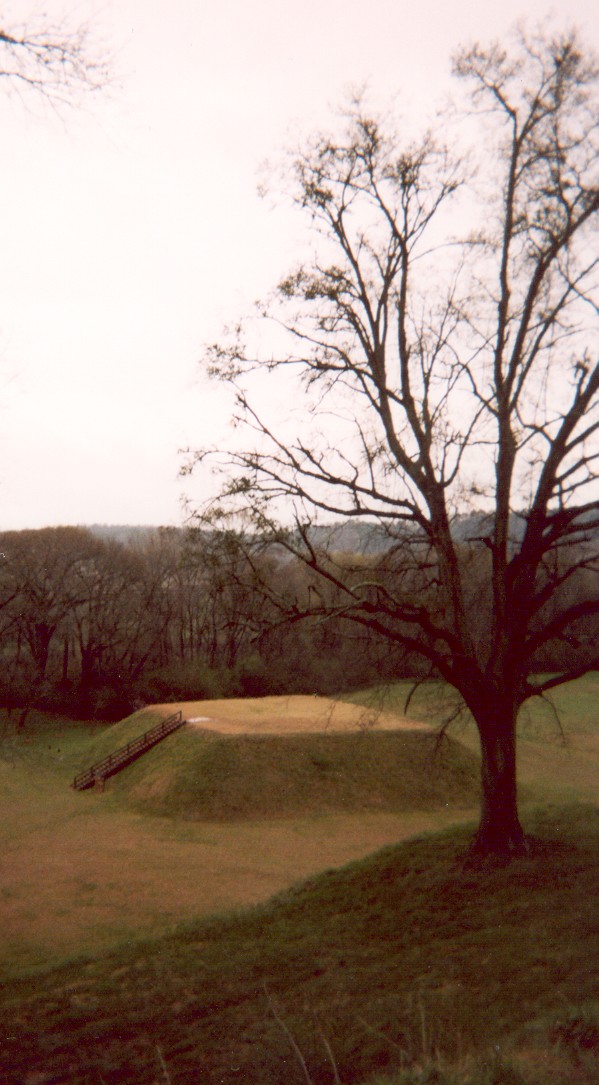
Etowah Mound near Cartersville, Georgia. Reconstructed by archaeologists, this mound is a remnant of the Mississippian civilization of Native Americans which flourished and collapsed before the first Europeans came. The civilization was also called Cahokian because its capital appeared to be Cahokia, now in southern Illinois. The mound had a wooden building on top used for religious rites.
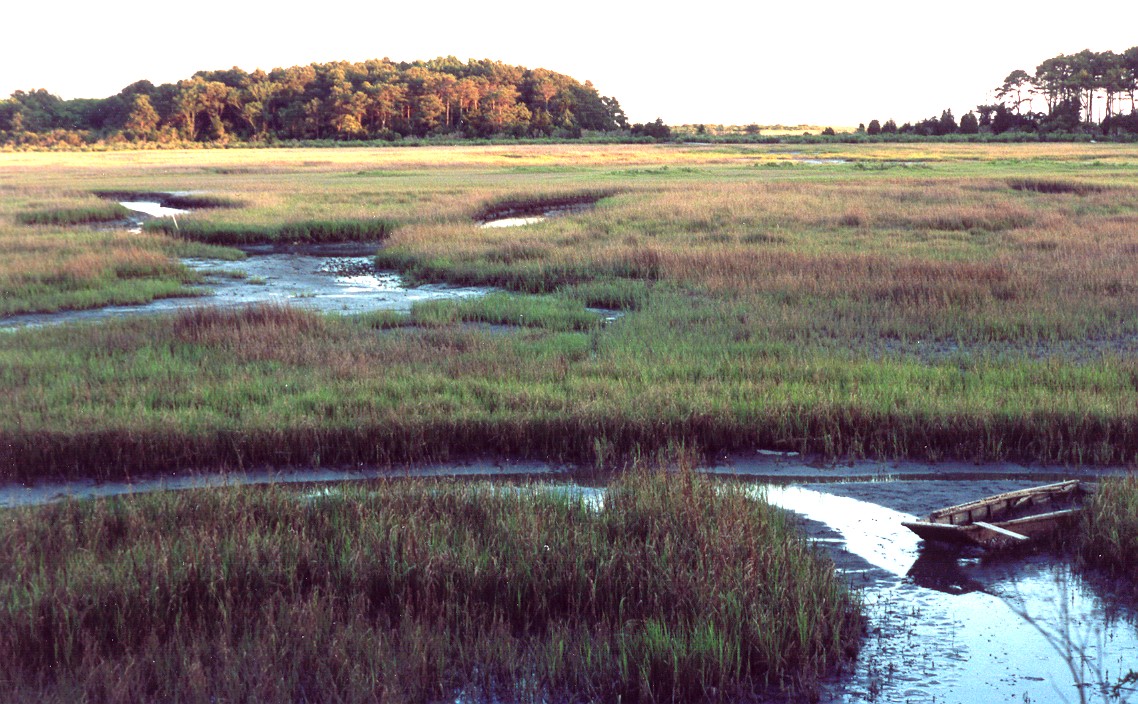
A salt marsh on the Delmarva Peninsula (Delaware-Maryland-Virginia), east of Chesapeake Bay.
Sugar maples (Acer saccharum) dominate the forest at Camden State Park in Minnesota. Most of the habitats in this area were originally prairie, maintained by Native American fires. This grove of sugar maples is one of the furthest west populations.
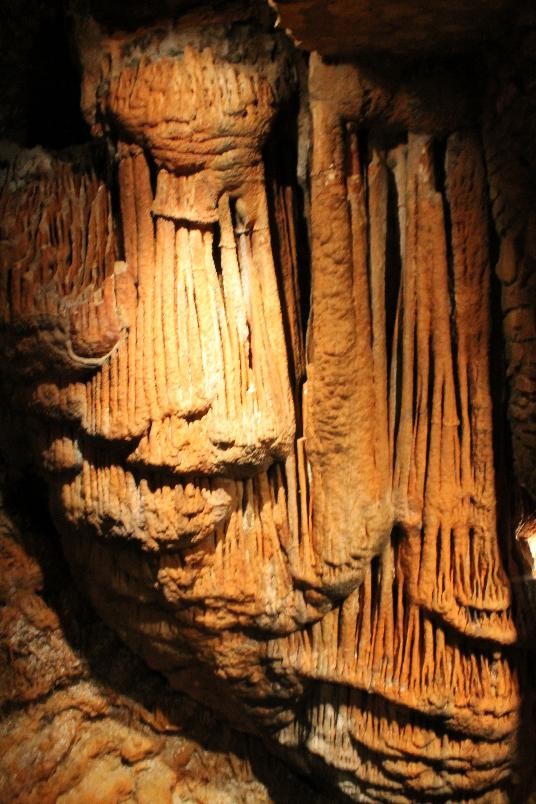
Mystic Cavern near Buffalo River National Park in Arkansas.
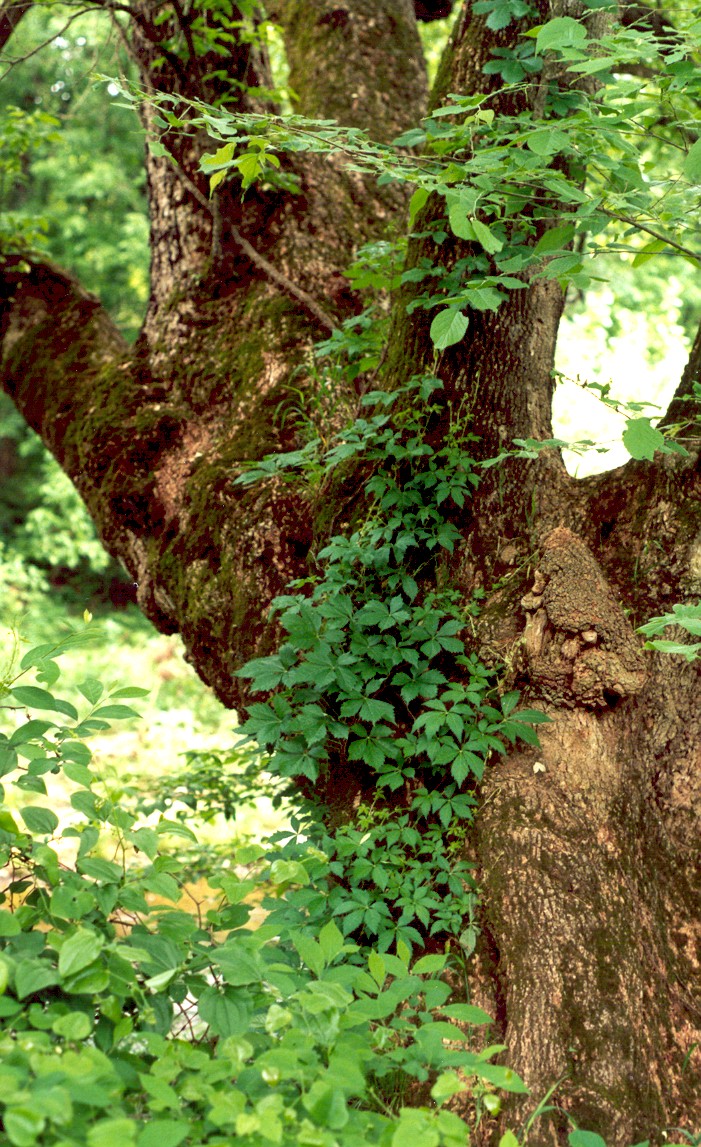
A boxelder (Acer negundo) forest along the Buffalo River in Arkansas. They are early-successional trees which will be replaced by other hardwood species if left undisturbed by river floods.
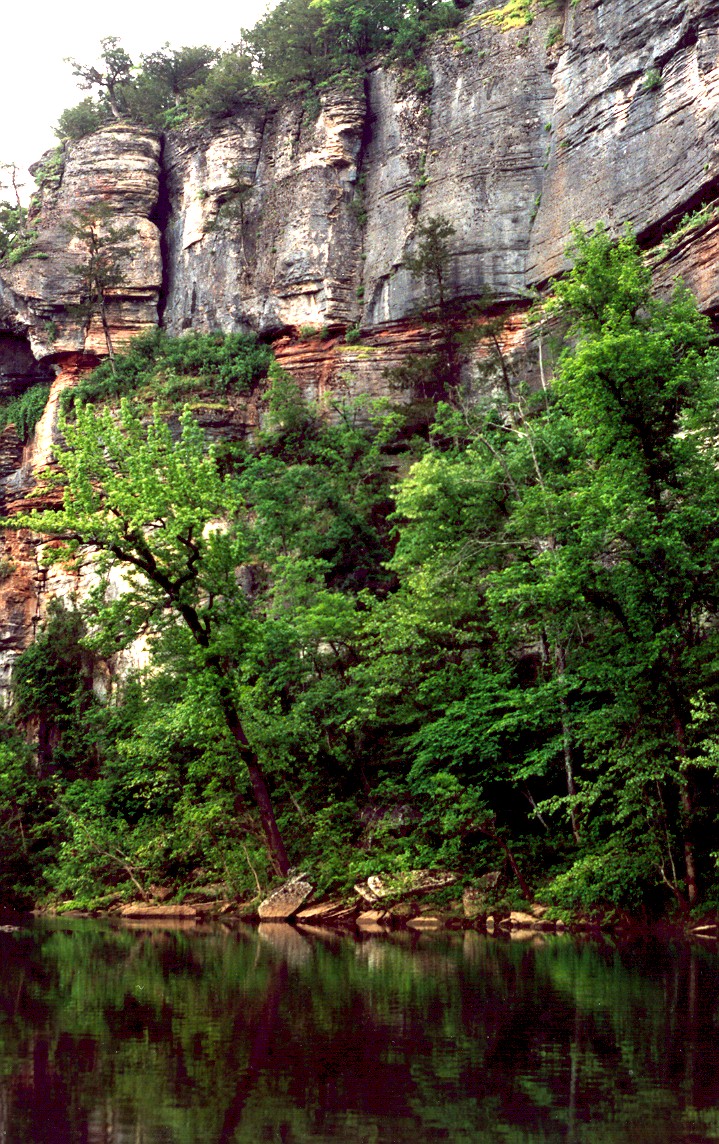
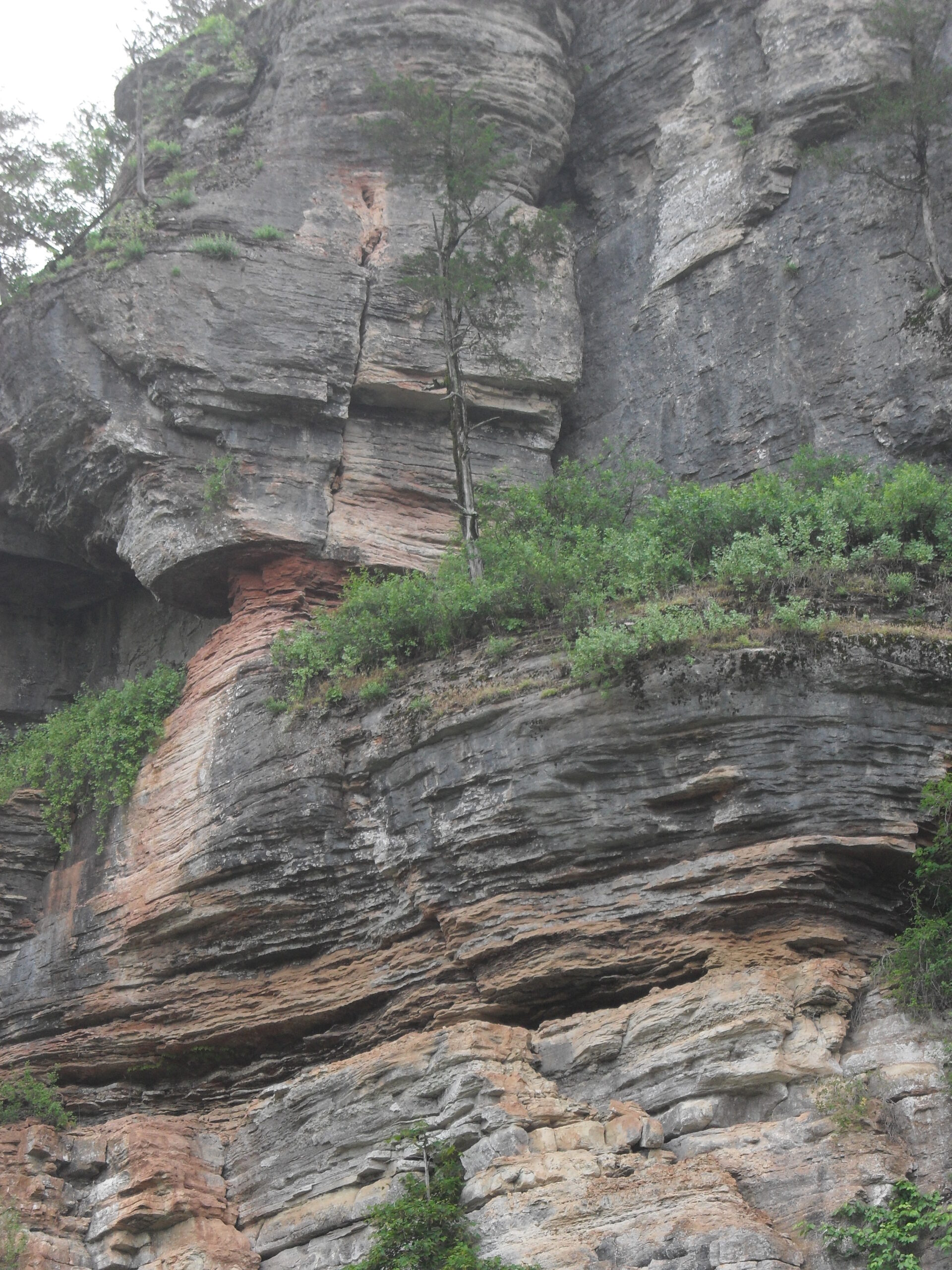
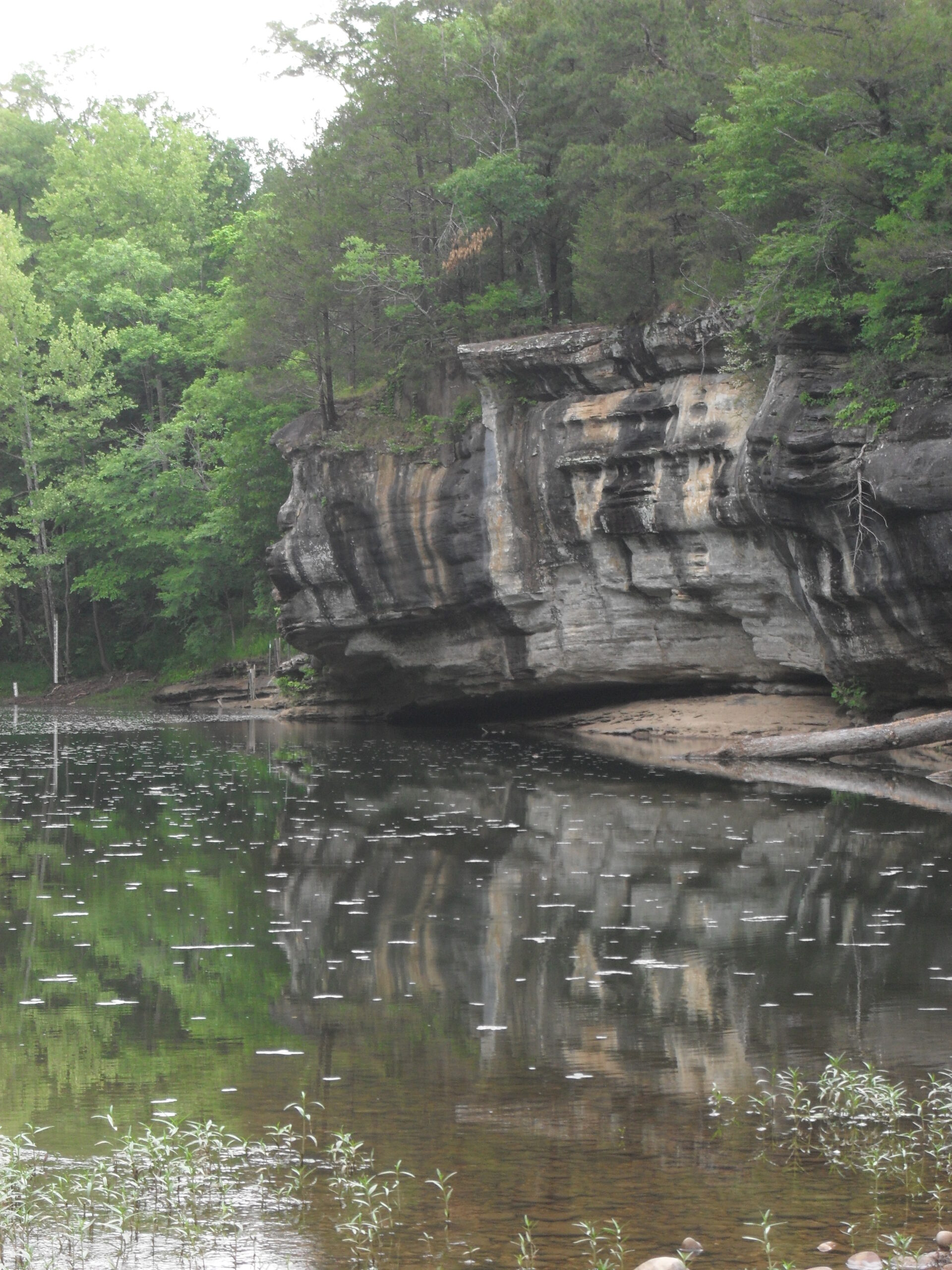
Cliffs along the Buffalo River in Arkansas.
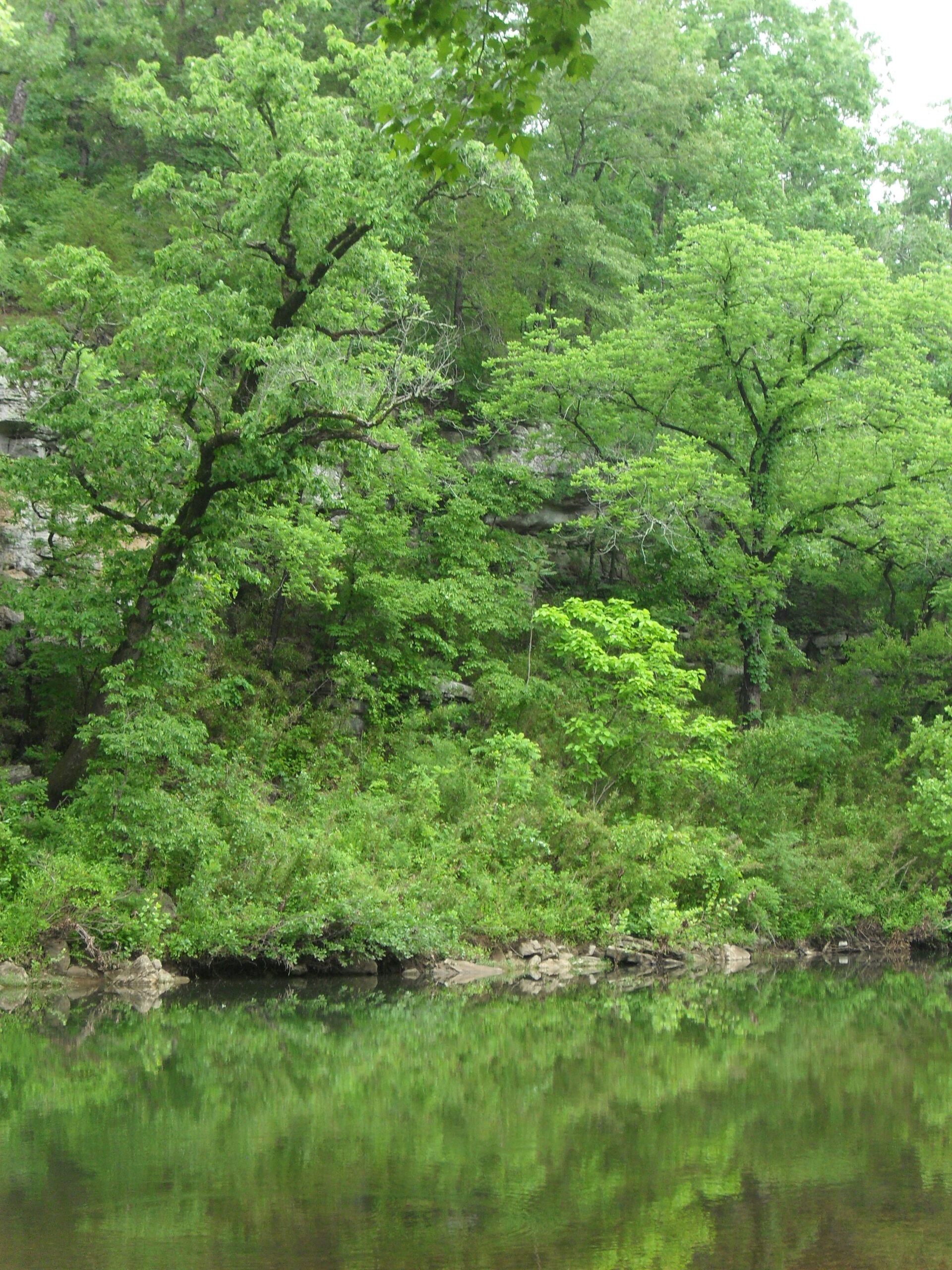
Deciduous forest along the Buffalo River, Arkansas.
Don’t get this close to a snapping turtle, as I did in Bluffwoods State Park in Missouri.
Fall colors in black oak (Quercus velutina) in Oklahoma. The leaves manufacture the red anthocyanins when warm sunny days are followed by chilly nights.
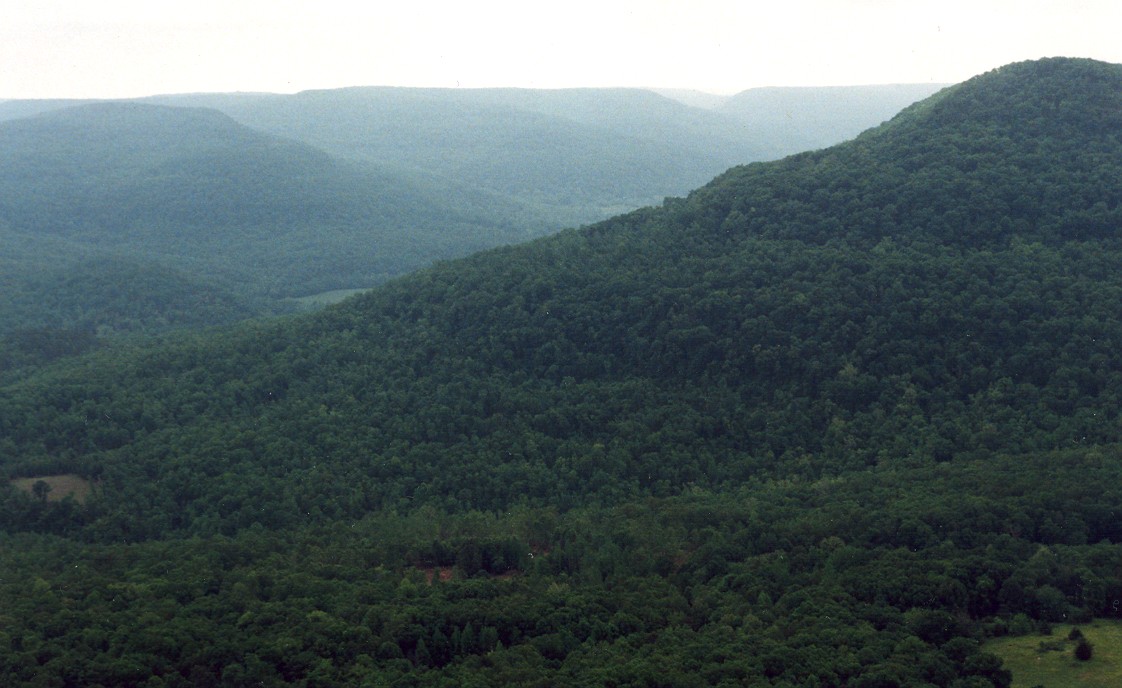
Deciduous forest in Ozark Mountains in Arkansas. Much of the mist comes from transpiration from the leaves.
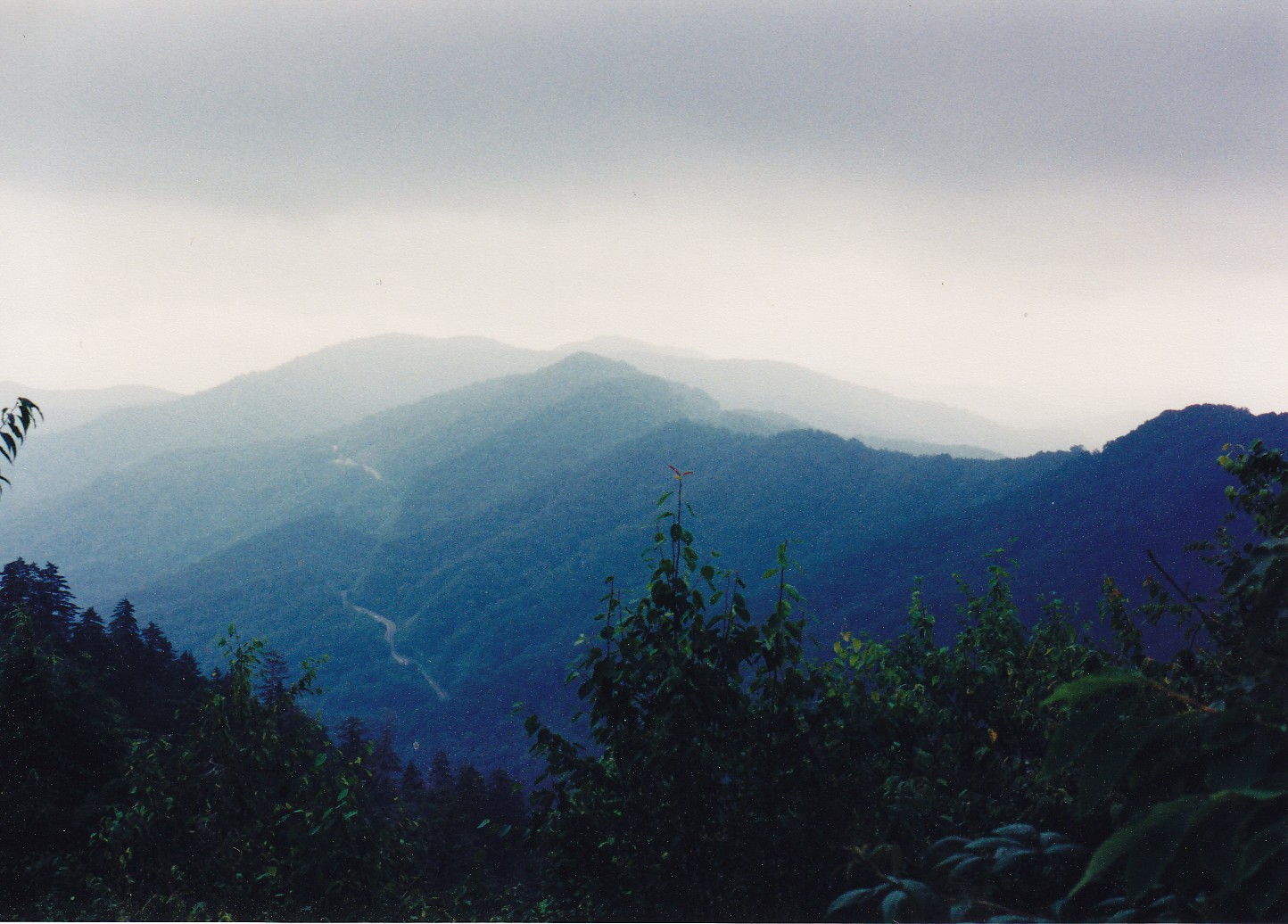
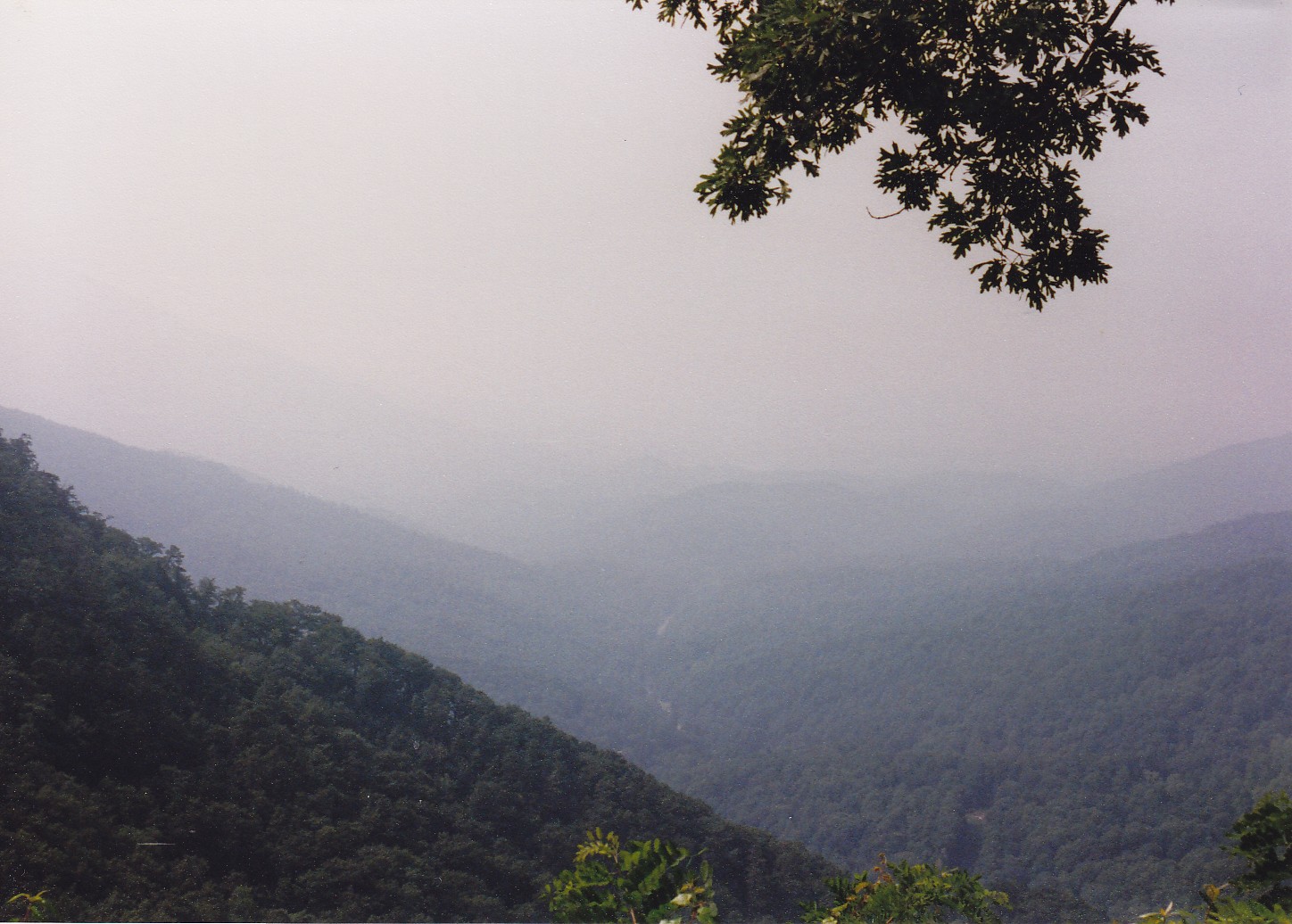
An Appalachian hardwood deciduous forest.
Plants
Pawpaw (Asimina triloba) along a river near Joplin, Missouri.
A spicebush (Lindera benzoin) in a deciduous forest near Joplin, Missouri.
A beech tree (Fagus grandifolia) in Indiana Dunes National Park.
A tuliptree (Liriodendron tulipifera) in Indiana Dunes National Park.
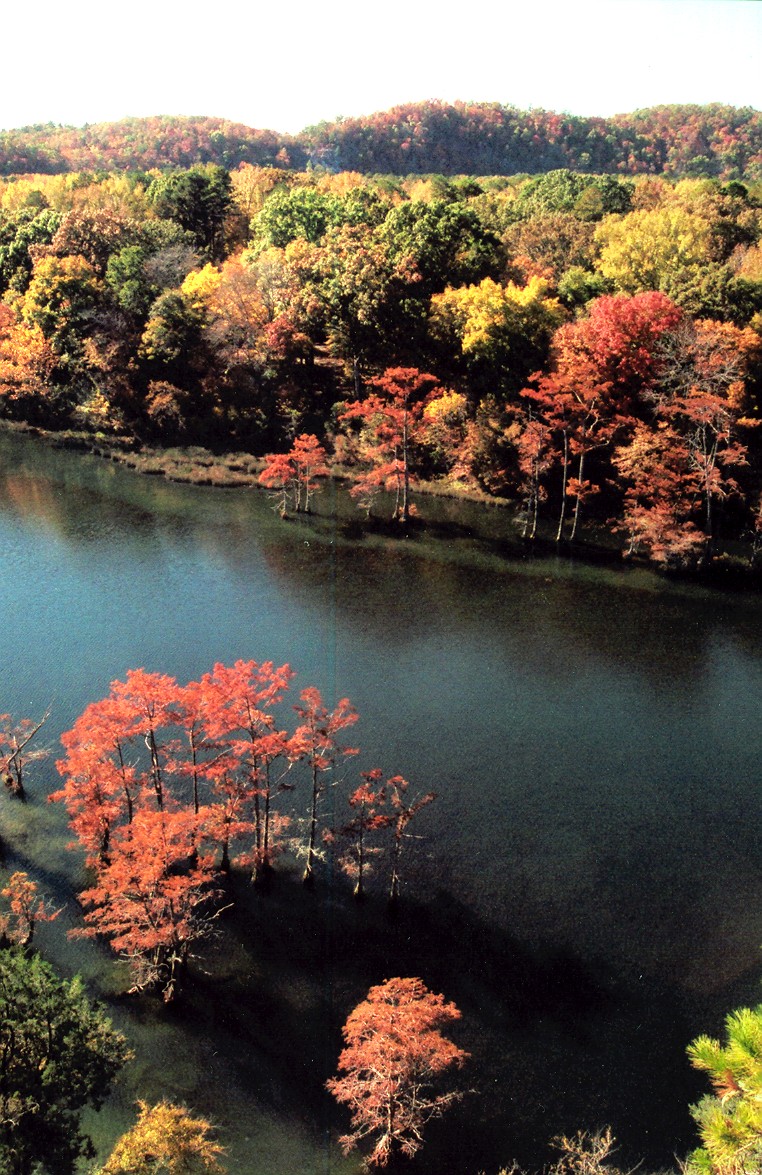
Bald cypress trees (Taxodium distichum) in a swamp in southeastern Oklahoma.
Justicia americana, an aquatic plant in the eastern deciduous forest zone.
A white ash tree (Fraxinus americana) in Buffalo River National Park, Arkansas.
An American hornbeam tree (Carpinus caroliniana) in Buffalo River National Park, Arkansas.
River birch (Betula nigra) in Buffalo River National Park, Arkansas.
Hawaii
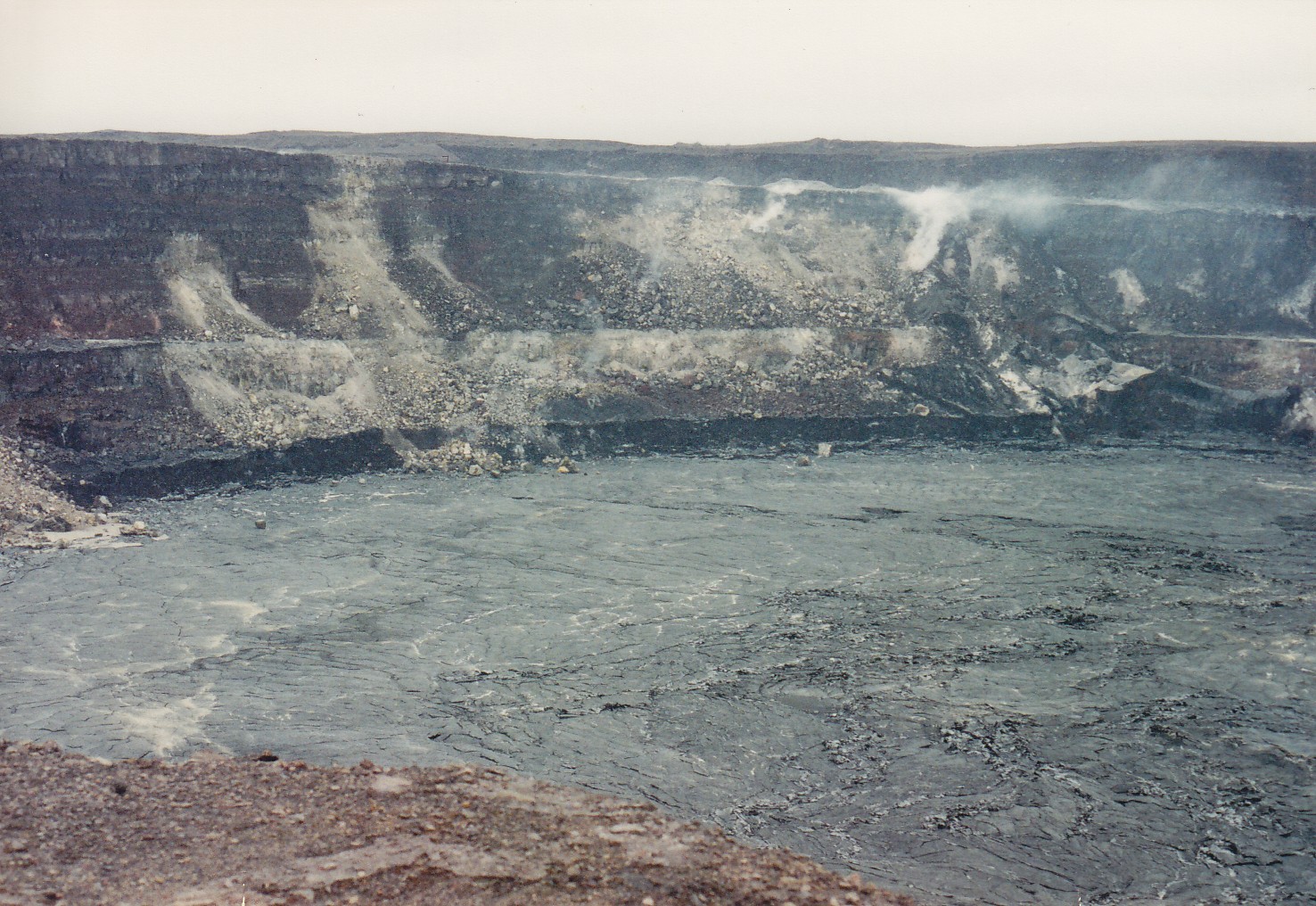
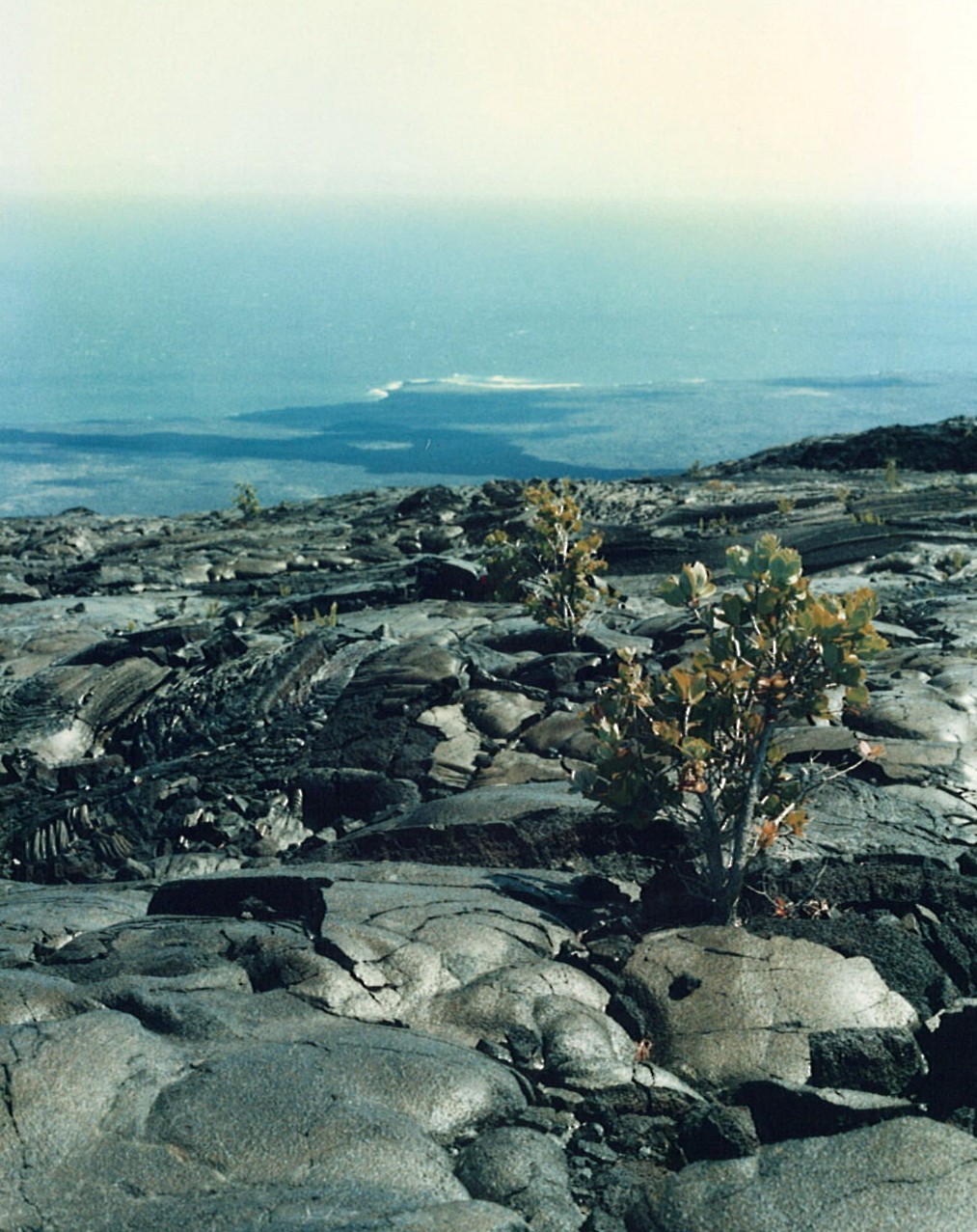
Kilauea, a live volcano on the big island of Hawaii.
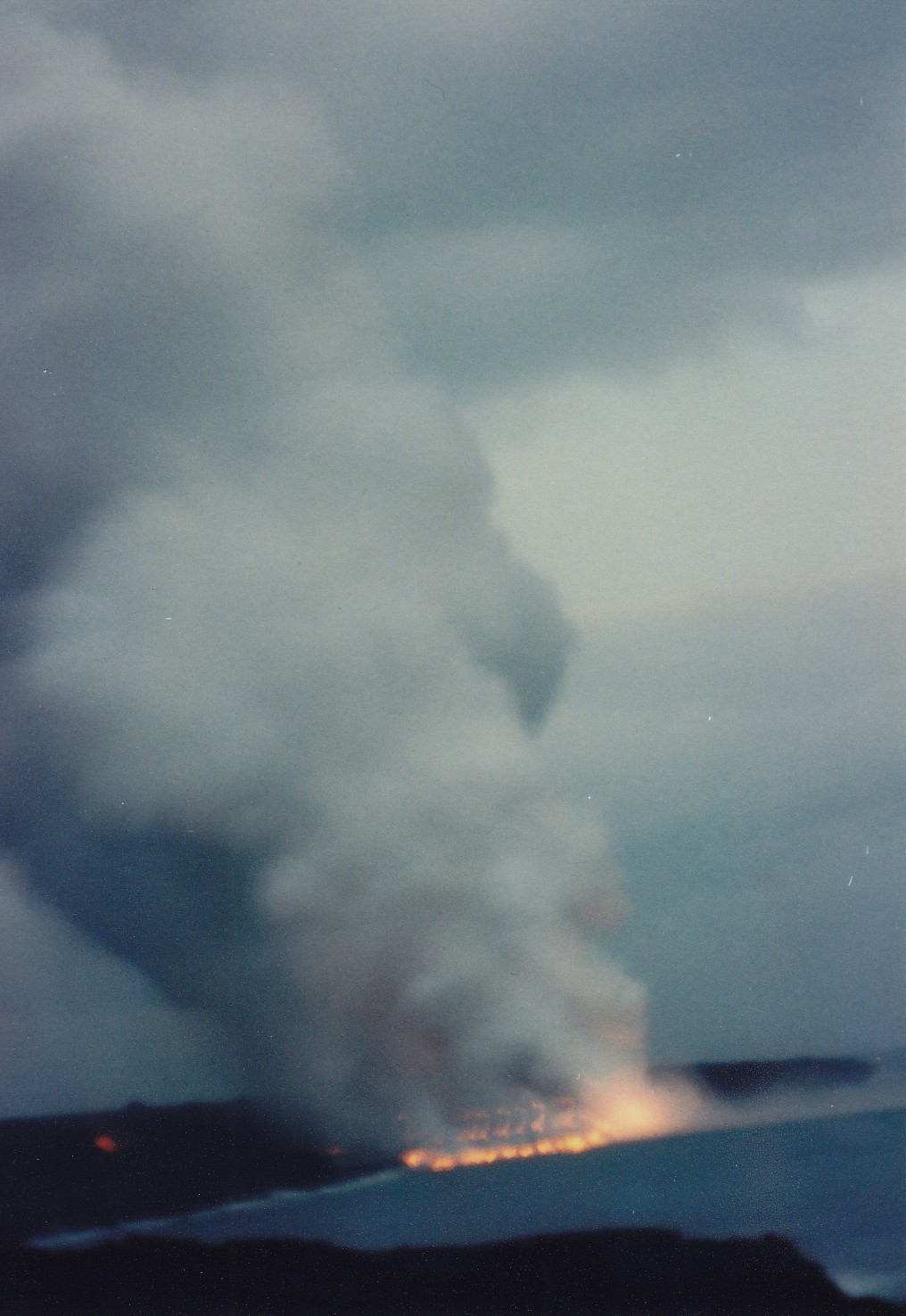
Lava flows from Kilauea volcano in Hawaii to the sea in 1997.
The original infra-red gas analyzer that has been used since 1957 to monitor atmospheric levels of carbon dioxide in the longest-running data set demonstrating carbon dioxide increasing in the atmosphere. Mauna Loa observatory high in the atmosphere on the big island of Hawaii. The air mixes as it blows across the Pacific Ocean and is thus not influenced by local urban sources of carbon dioxide. Photo from 1992 by Stan Rice.
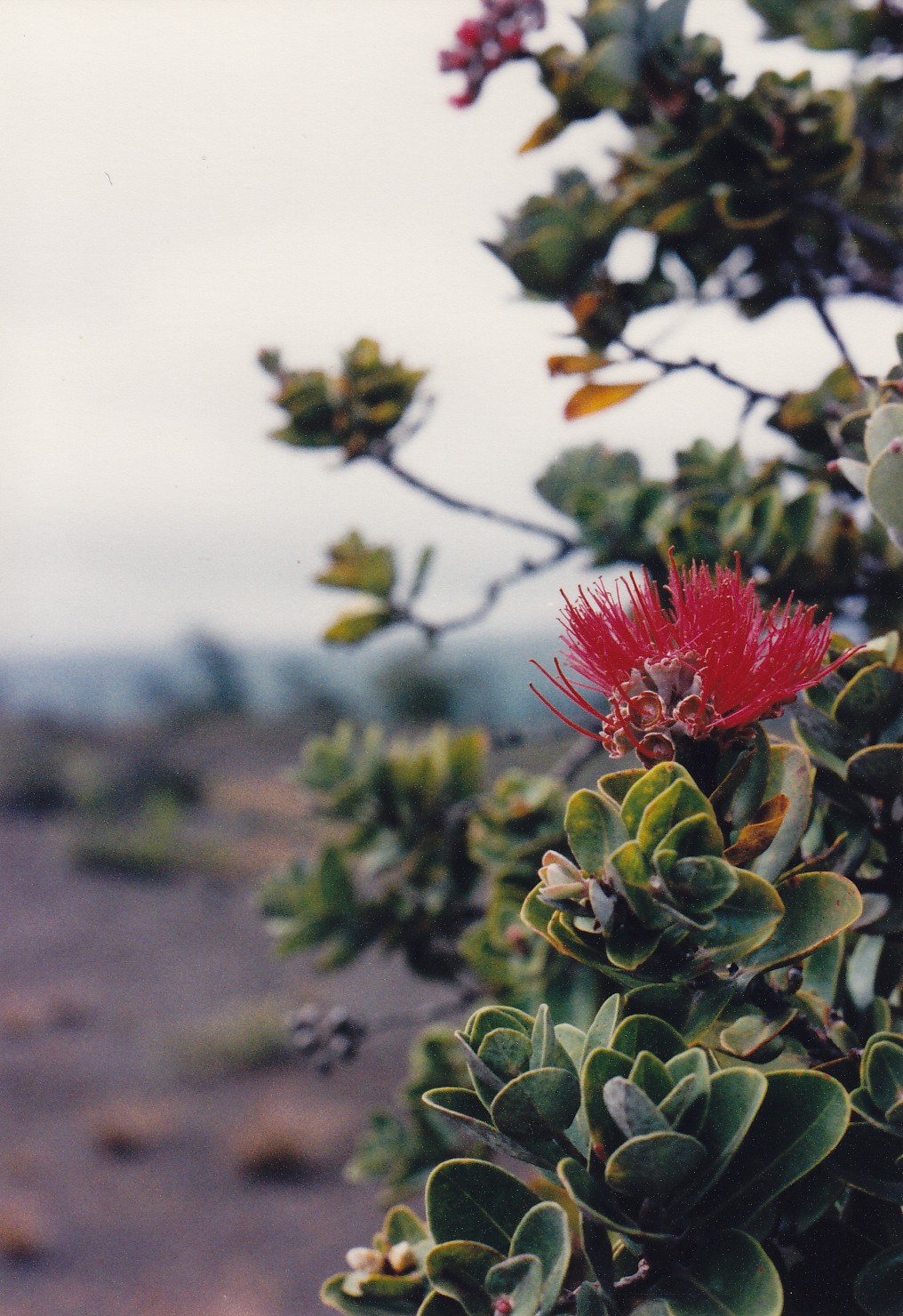
Ohia (Metrosideros polymorpha) is one of the earliest trees to grow in cracks in lava on the big island of Hawaii. It is also the dominant old forest tree. Photo by Stan Rice.
Ohia (Metrosideros polymorpha) is a common myrtle tree that not only grows in cracks in lava but also dominates the old forests in Hawaii.
Mauna Kea observatory on the big island of Hawaii, one of the major astronomical observatories in the world.
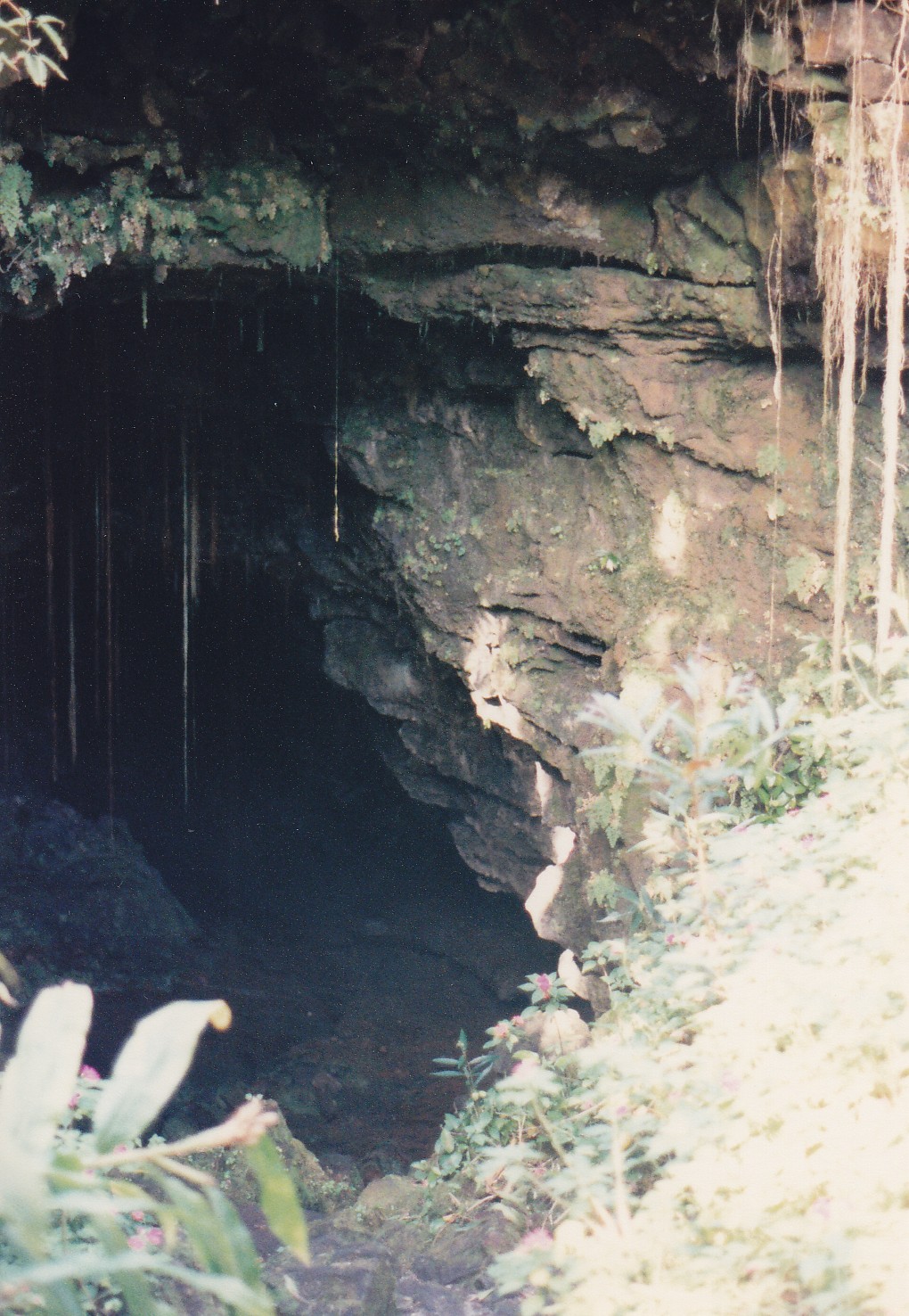
A lava tube on the big island of Hawaii.
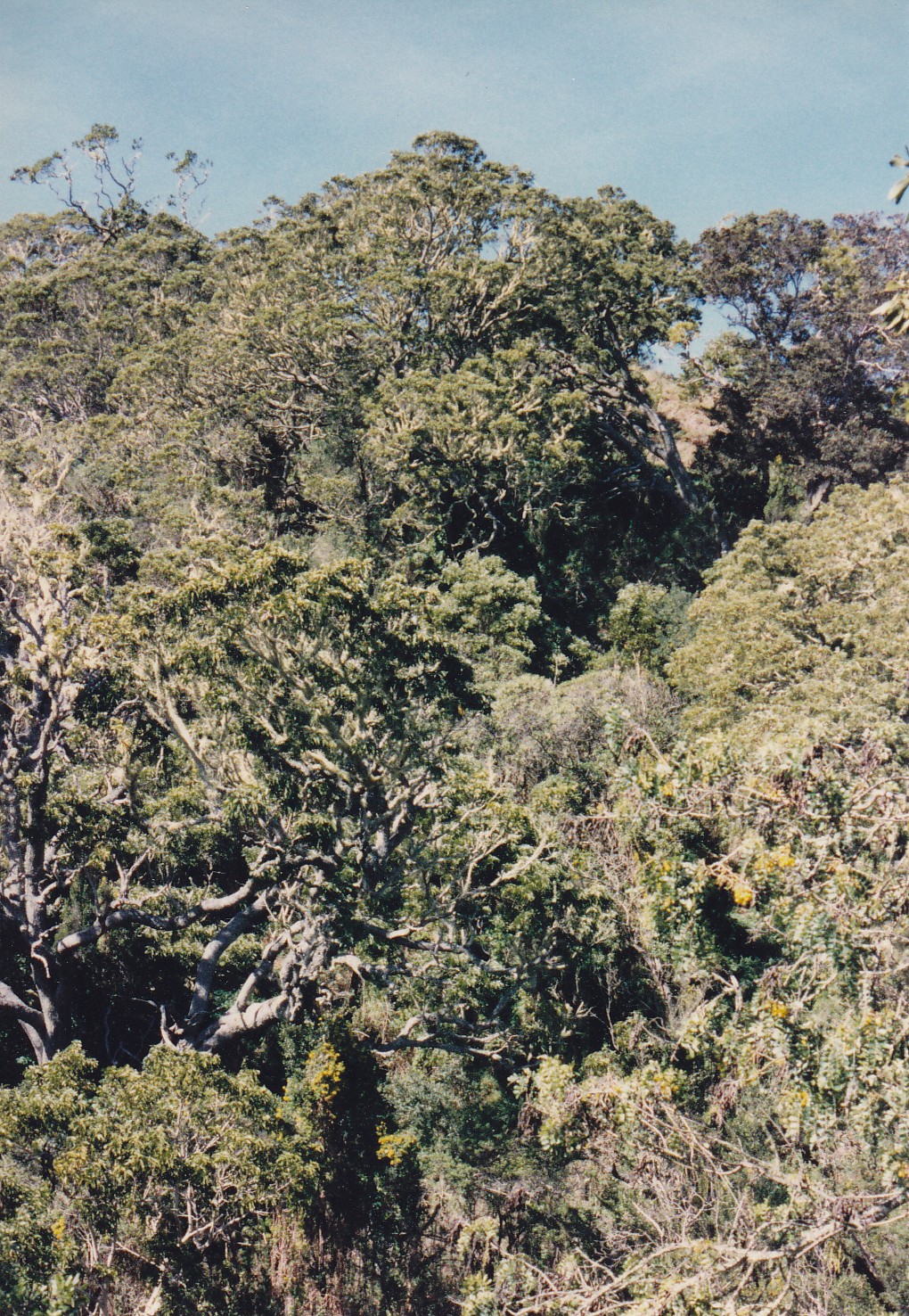
A Hawaiian koa (Acacia koa) forest on the big island of Hawaii.
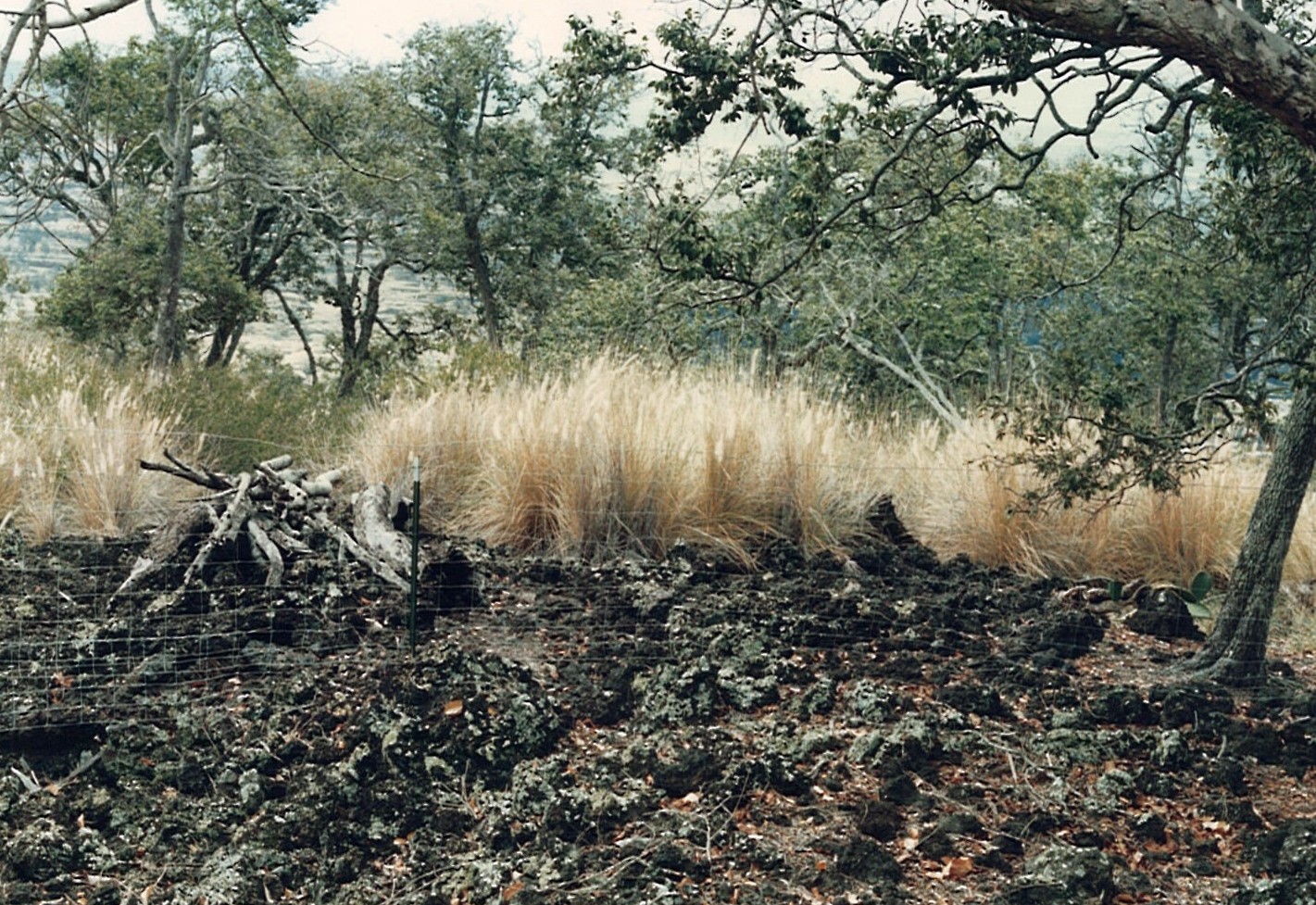
An ecological experiment on the big island of Hawaii in which invasive grasses have been removed to allow regeneration of native trees, including a native Hawaiian ebony tree (Diospyros sandwicensis). Photo by Stan Rice.
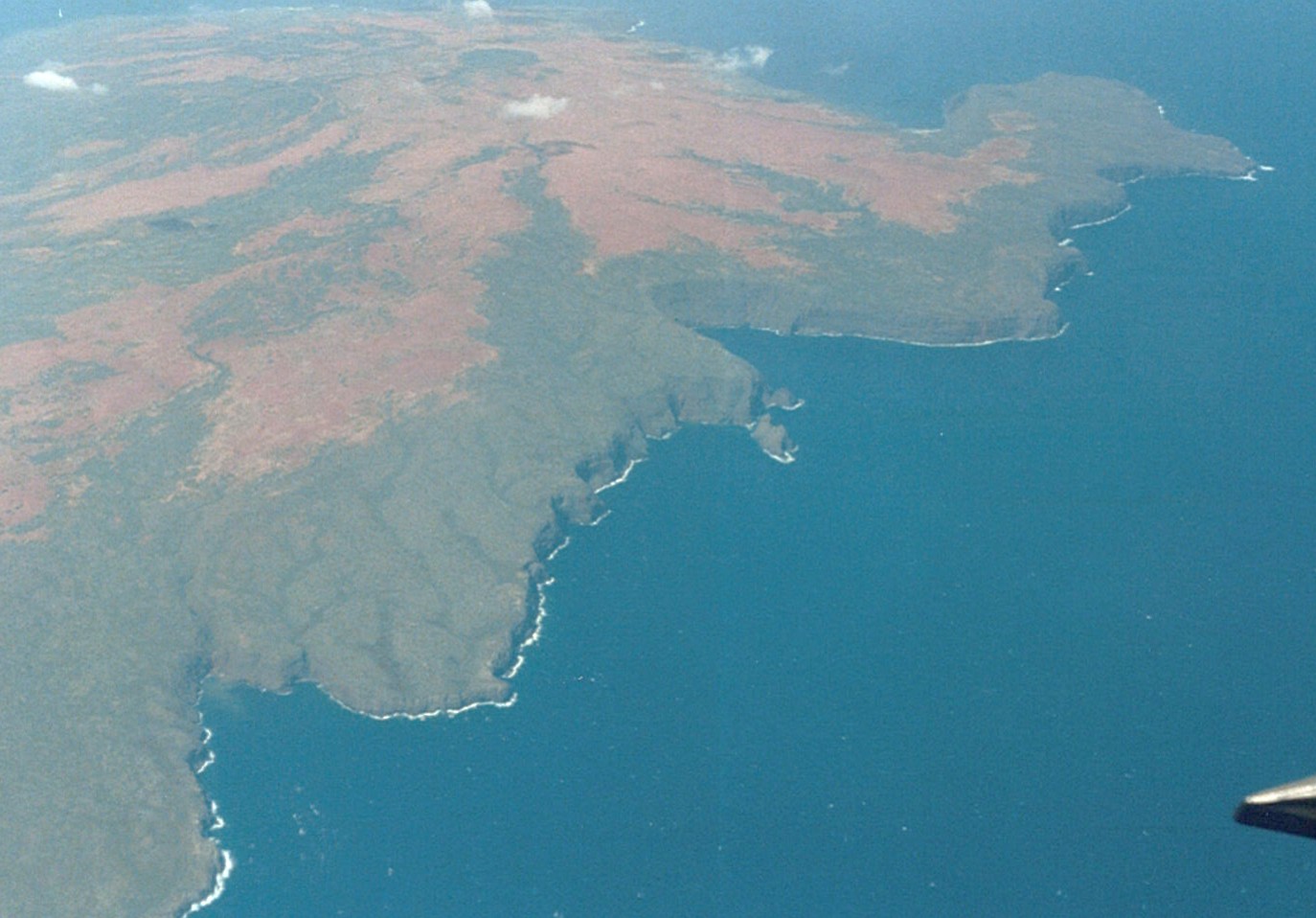
An aerial view of the big island of Hawaii.
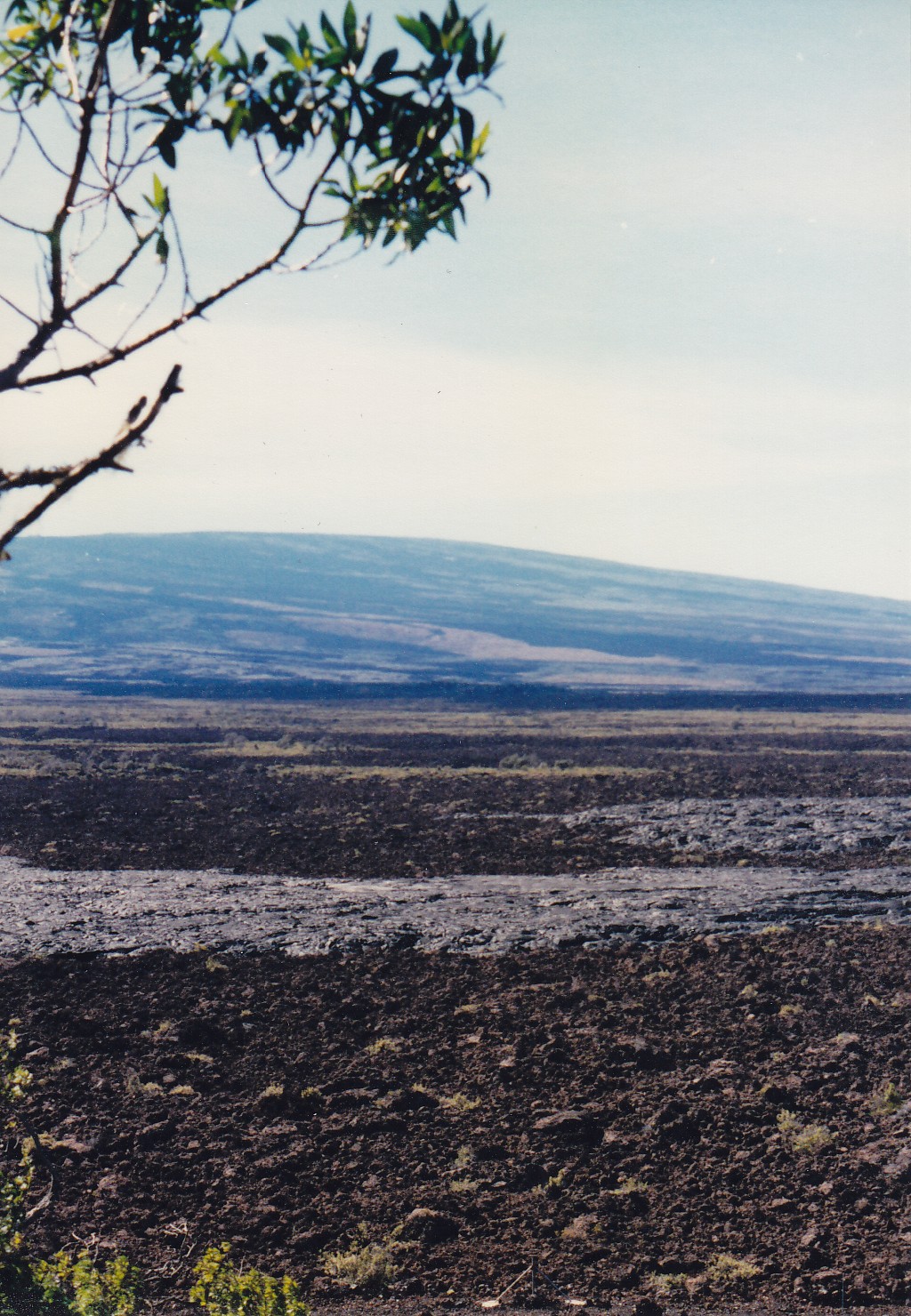
Two kinds of lava visible from the Saddle Road across the big island of Hawaii. A flow of smooth lava (pahoehoe) across the sharp a’a lava. A’a lava has more gas bubbles which create a rough surface as they escape while the lava is cooling.
Oklahoma
Ice Storm 2013
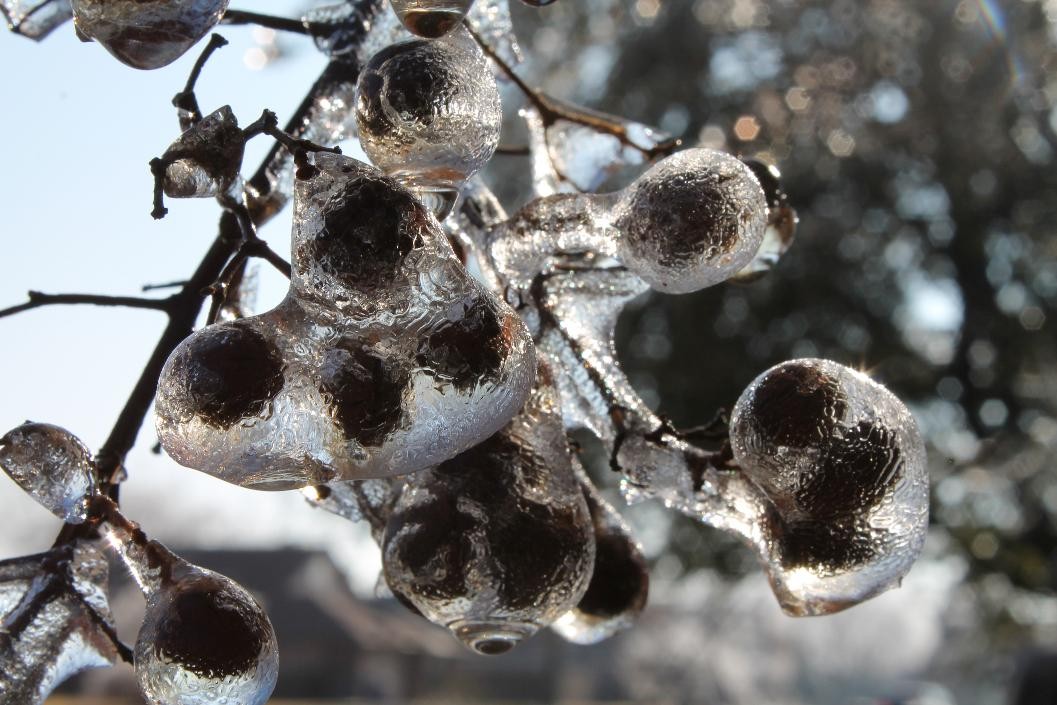
Soapberry (Sapindus drummondii) fruits in an Oklahoma ice storm in 2013. Photo by Stan Rice.
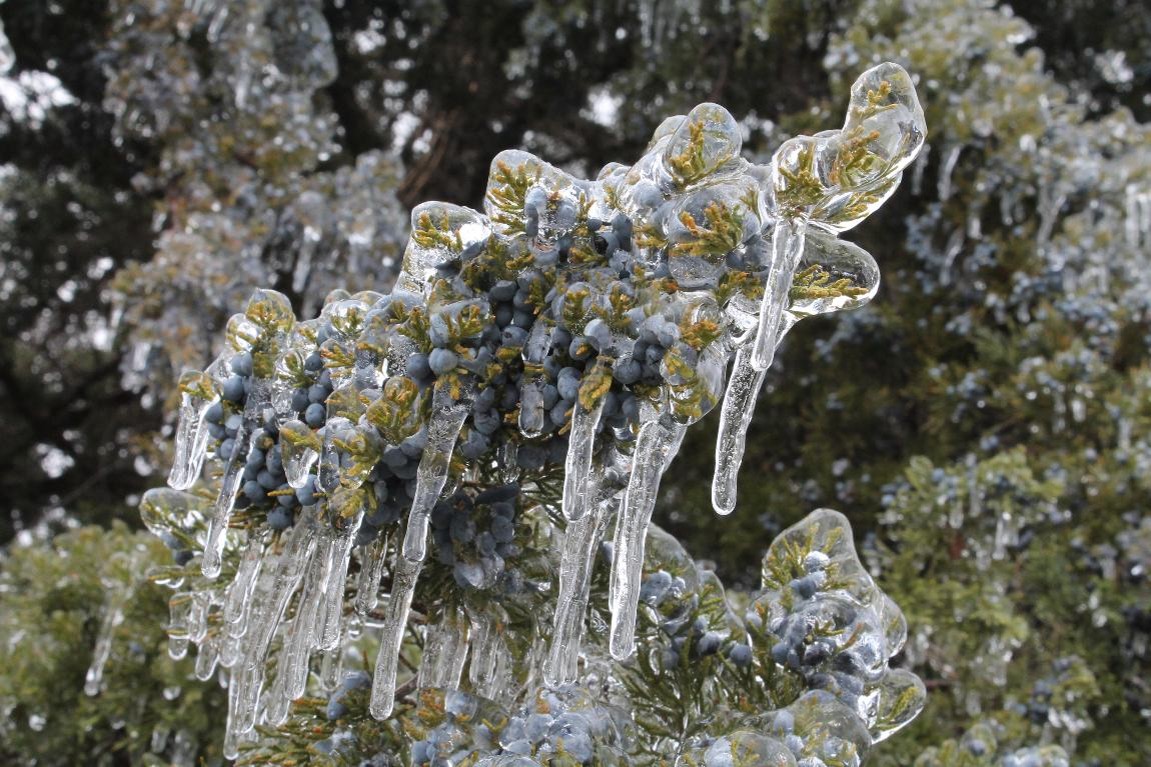
Cedar (Juniperus virginiana) branches in an Oklahoma ice storm in 2013. Photo by Stan Rice.
Sycamore (Platanus occidentalis) seed ball during an Oklahoma ice storm in 2013. Photo by Stan Rice.
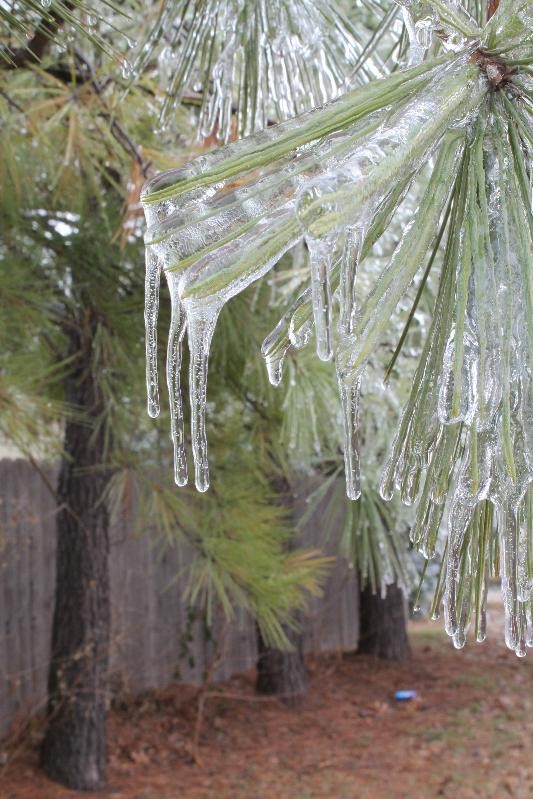
Pine needles during an Oklahoma ice storm in 2013. Photo by Stan Rice.
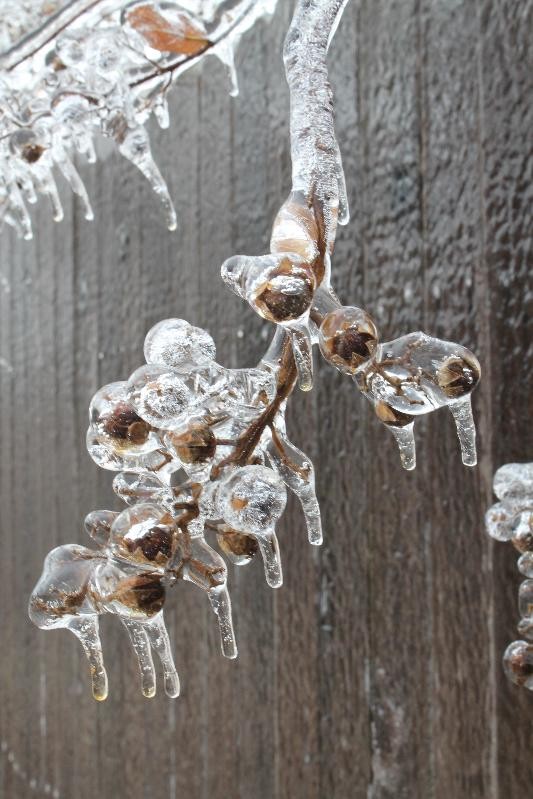
Crape myrtle capsules during an ice storm in Oklahoma in 2013. Photo by Stan Rice.
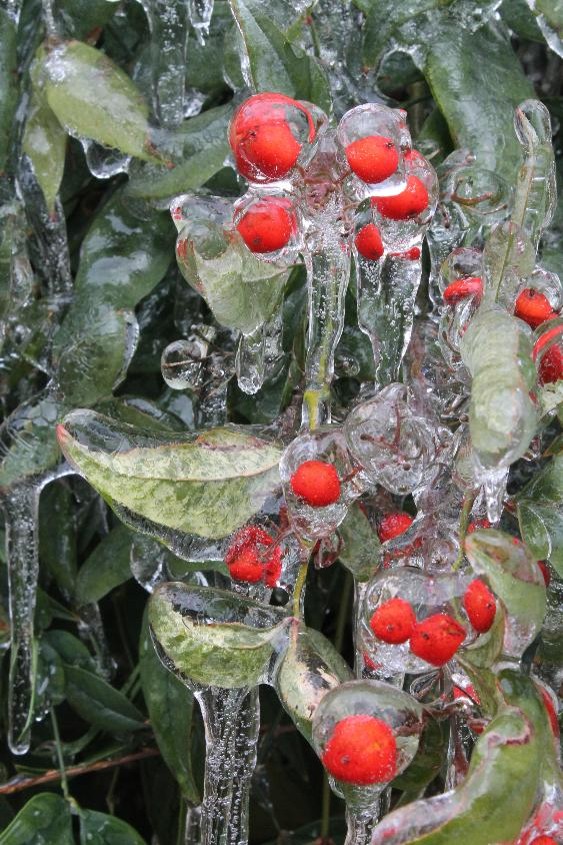
Holly berries during an Oklahoma ice storm in 2013. Photo by Stan Rice.
Plants
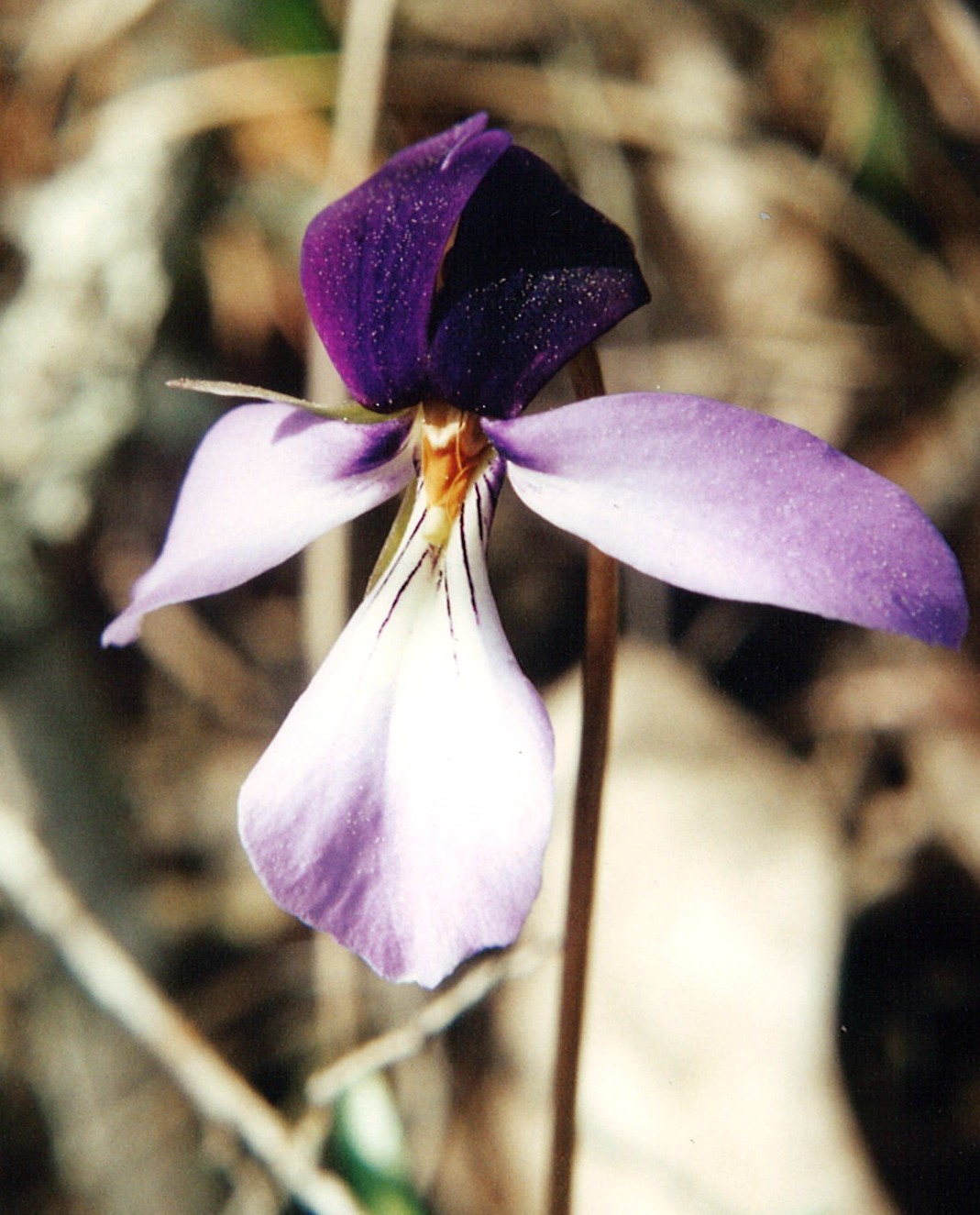
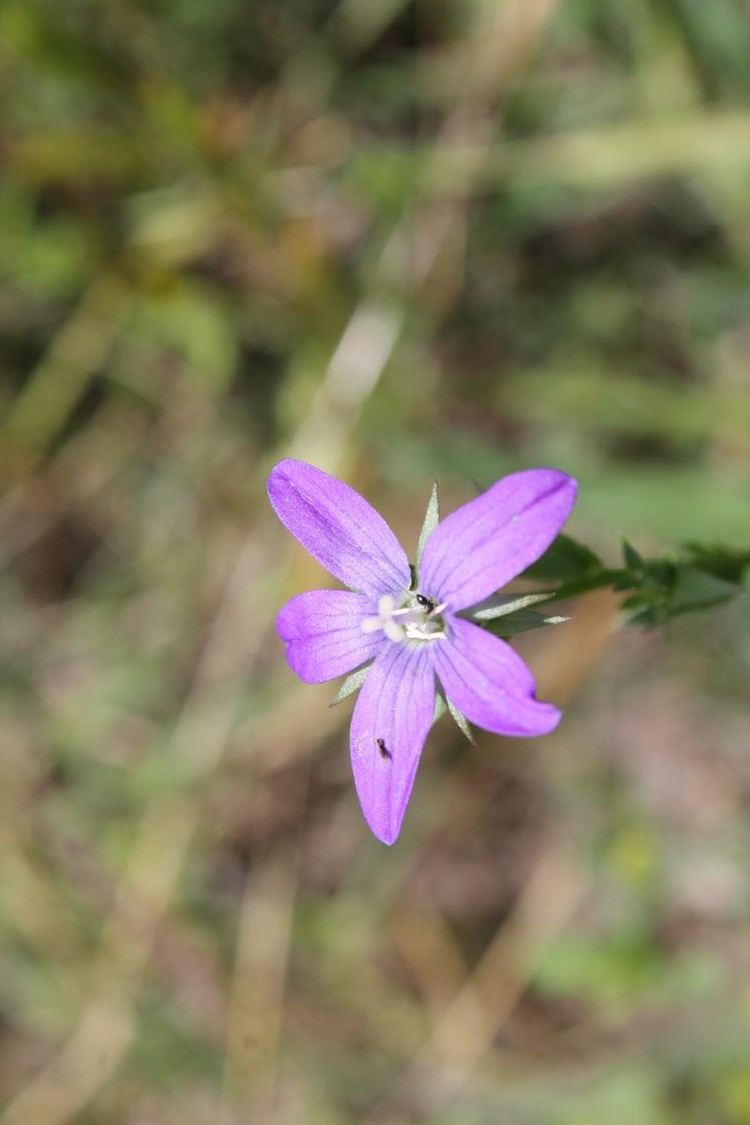
A violet (genus Viola) from an eastern Oklahoma forest.
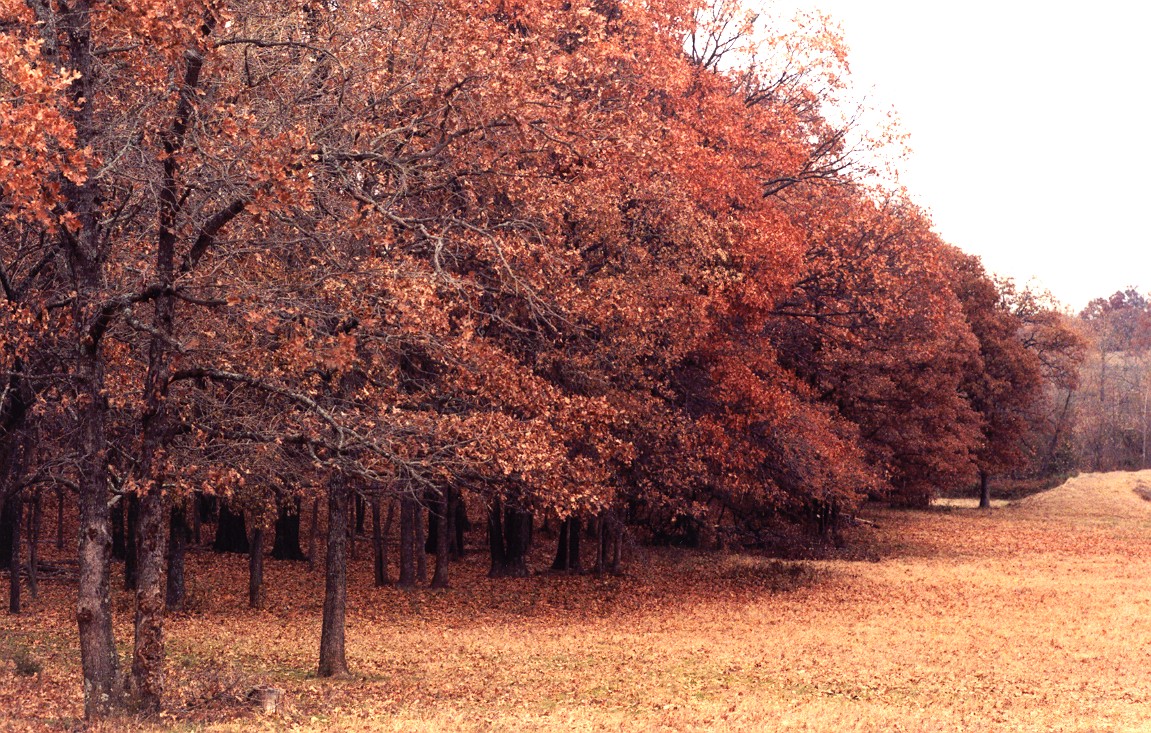
In autumn, many post oaks (Quercus stellata) have coppery colored leaves.
Penstemon oklahomensis grows in prairies almost exclusively in Oklahoma.
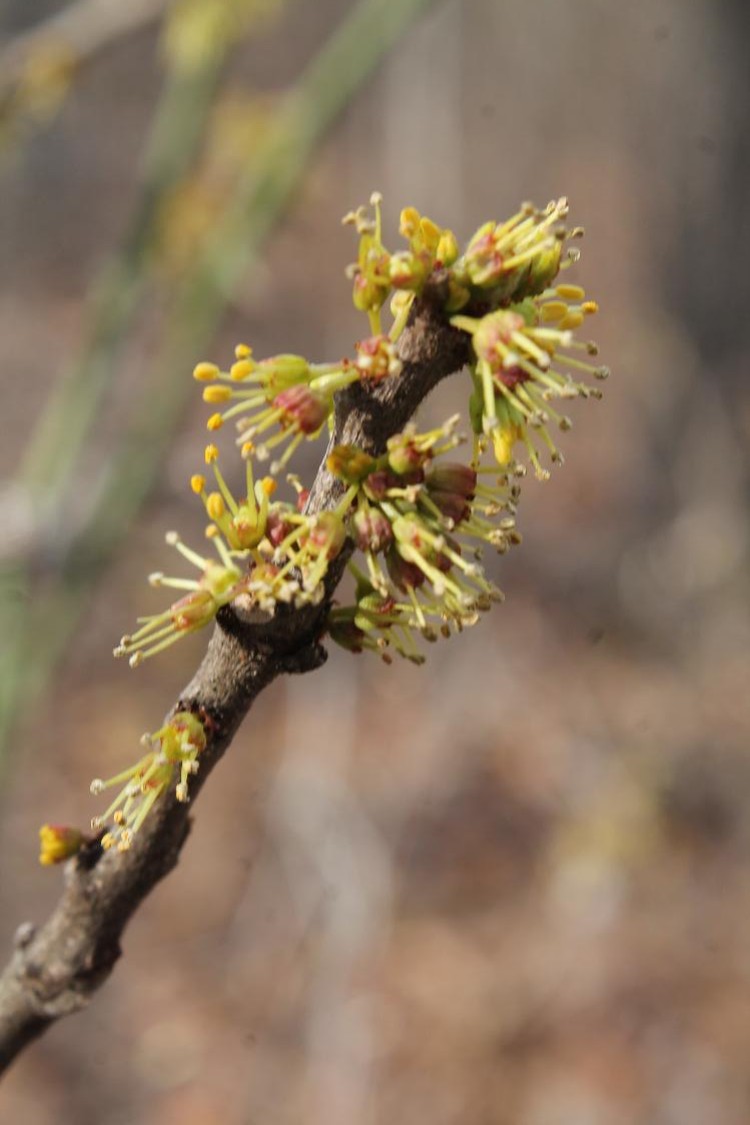
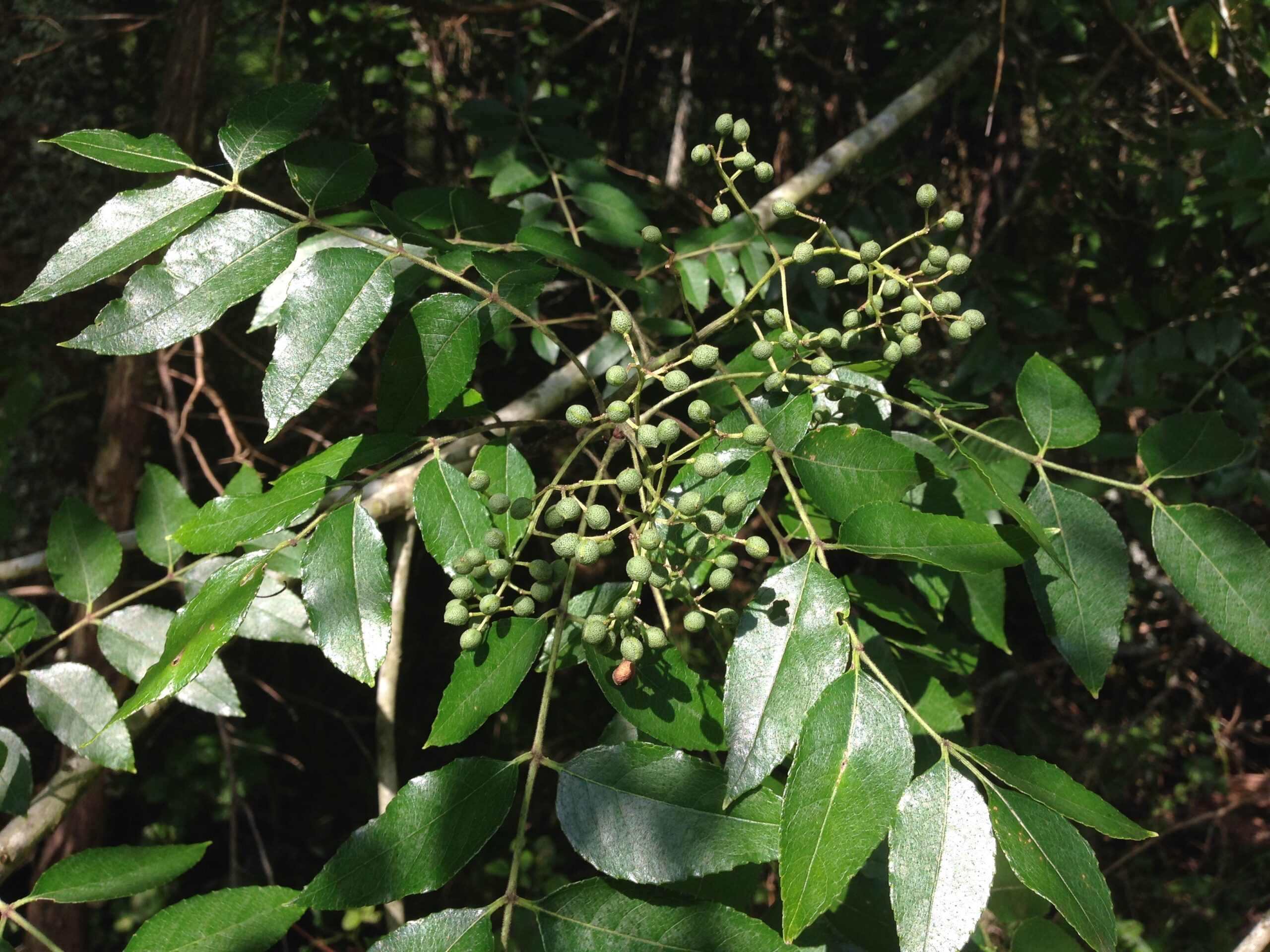
Zanthoxylum americanum from a cross-timbers deciduous forest in northeastern Oklahoma.
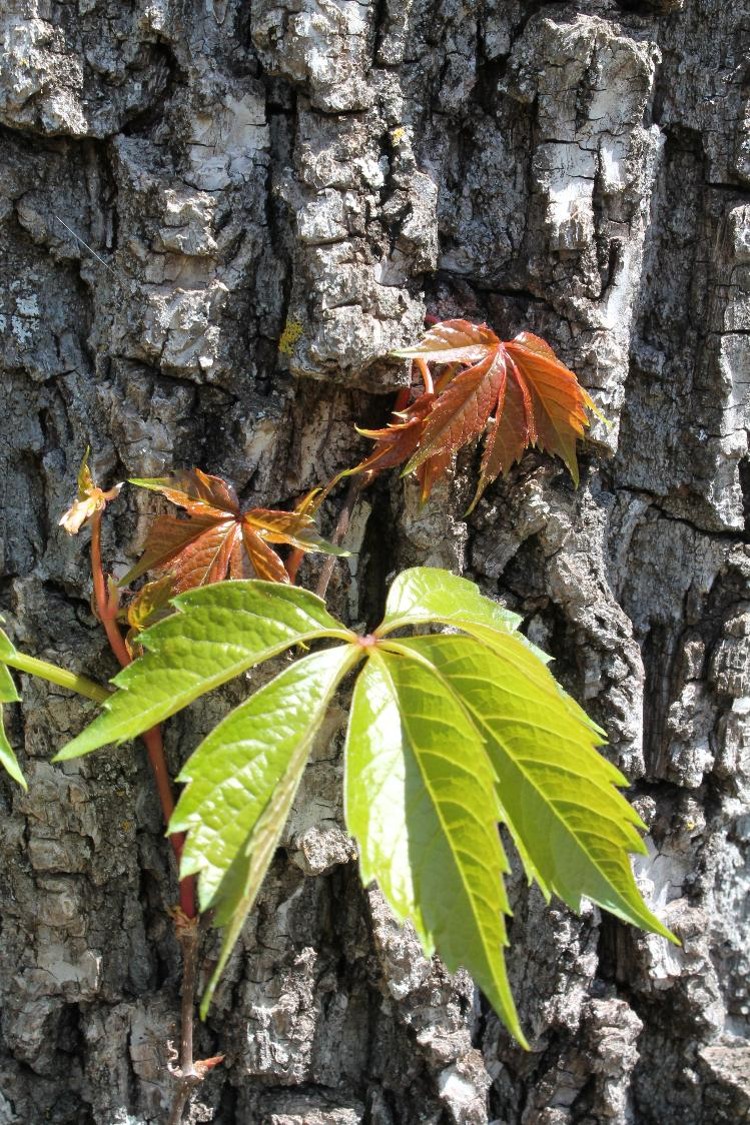
Virginia creeper (Parthenocissus quinquefolia) in a deciduous forest in northeastern Oklahoma.
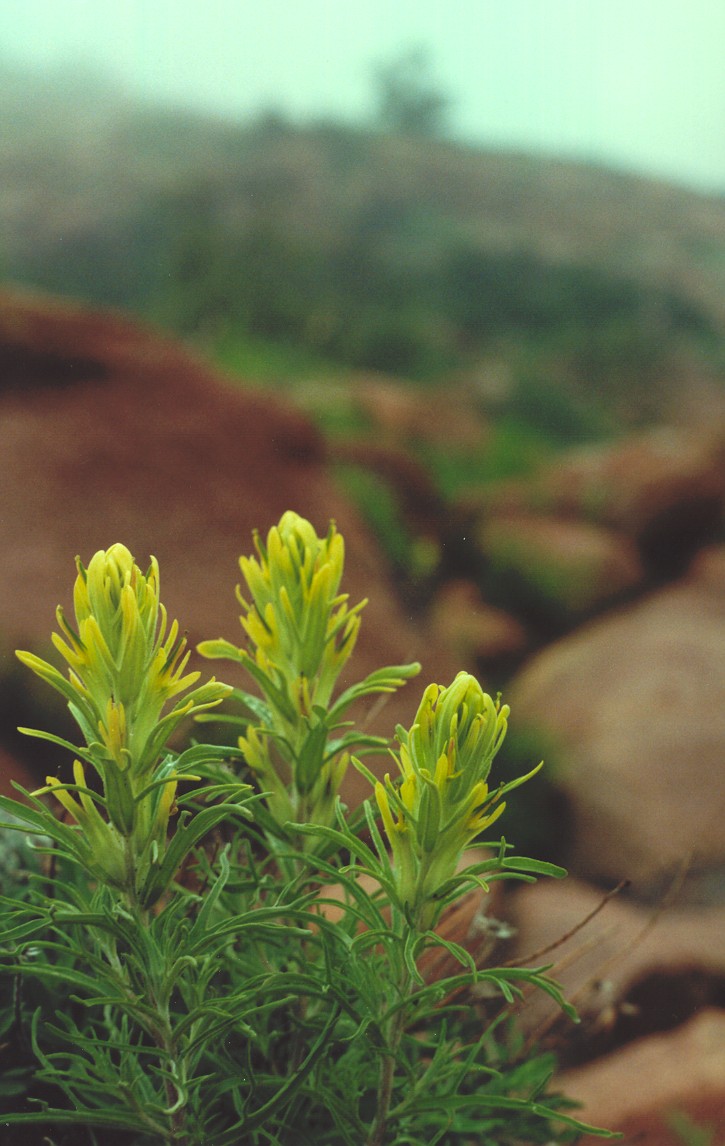
Castilleja sulphurea in northwest Oklahoma.
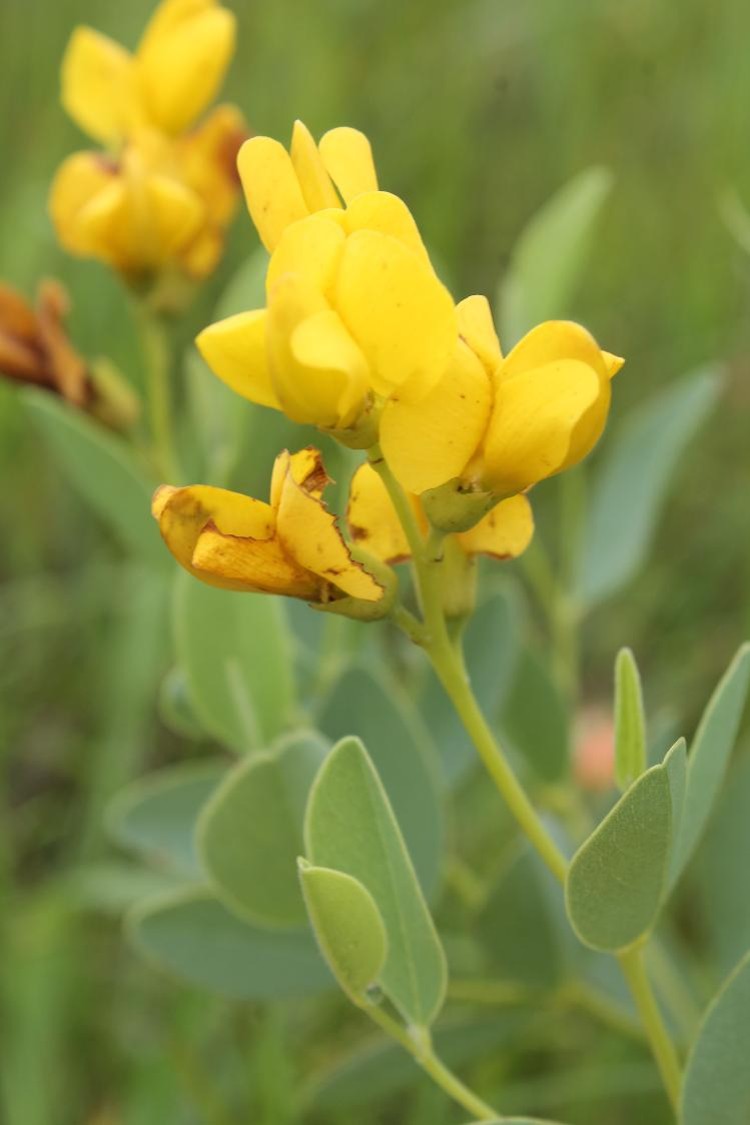
A yellow Baptisia from a field in Oklahoma.
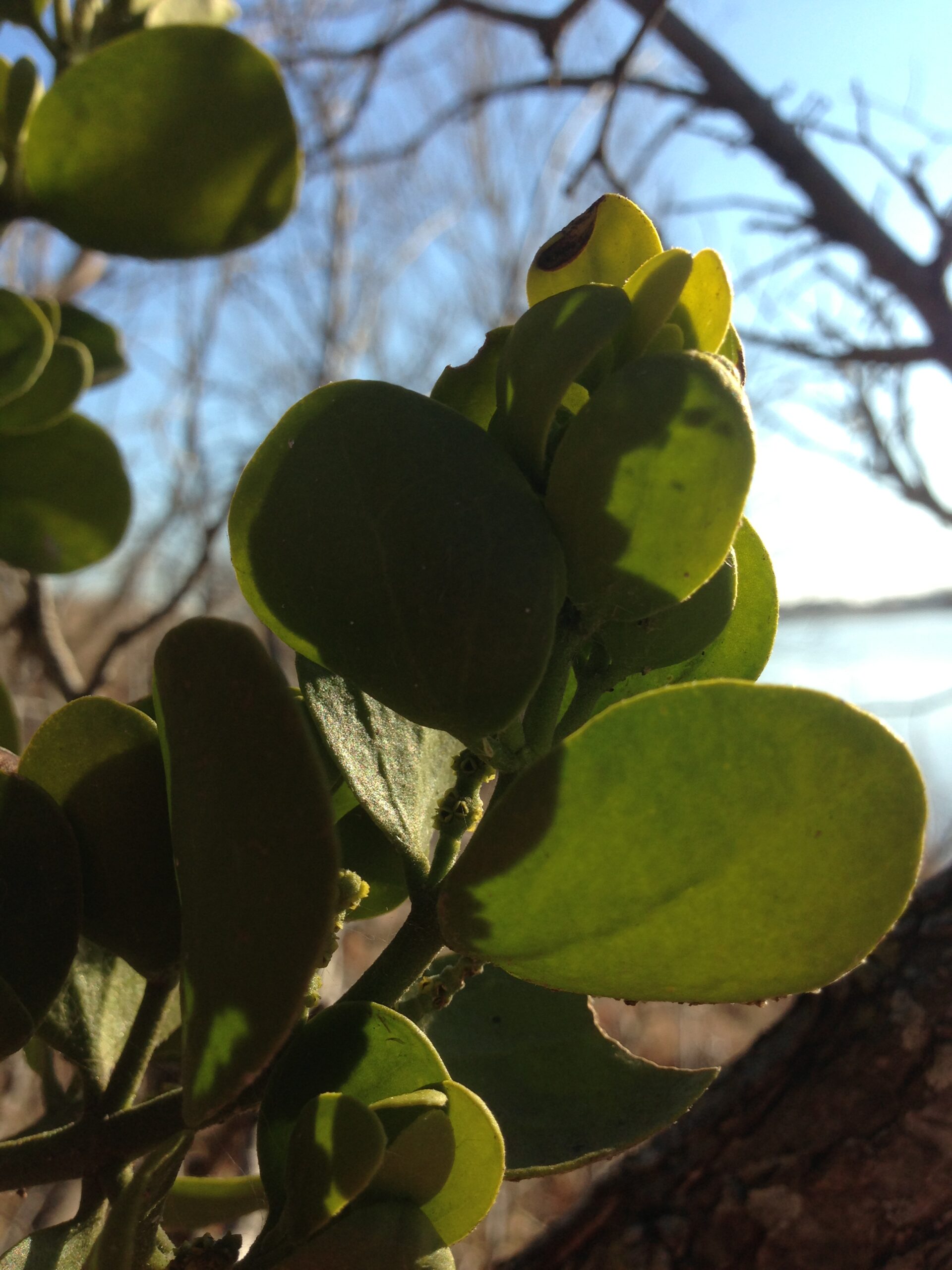
A mistletoe (genus Viscus) in winter in northeastern Oklahoma. The leaves are succulent and evergreen, very visible on deciduous trees.
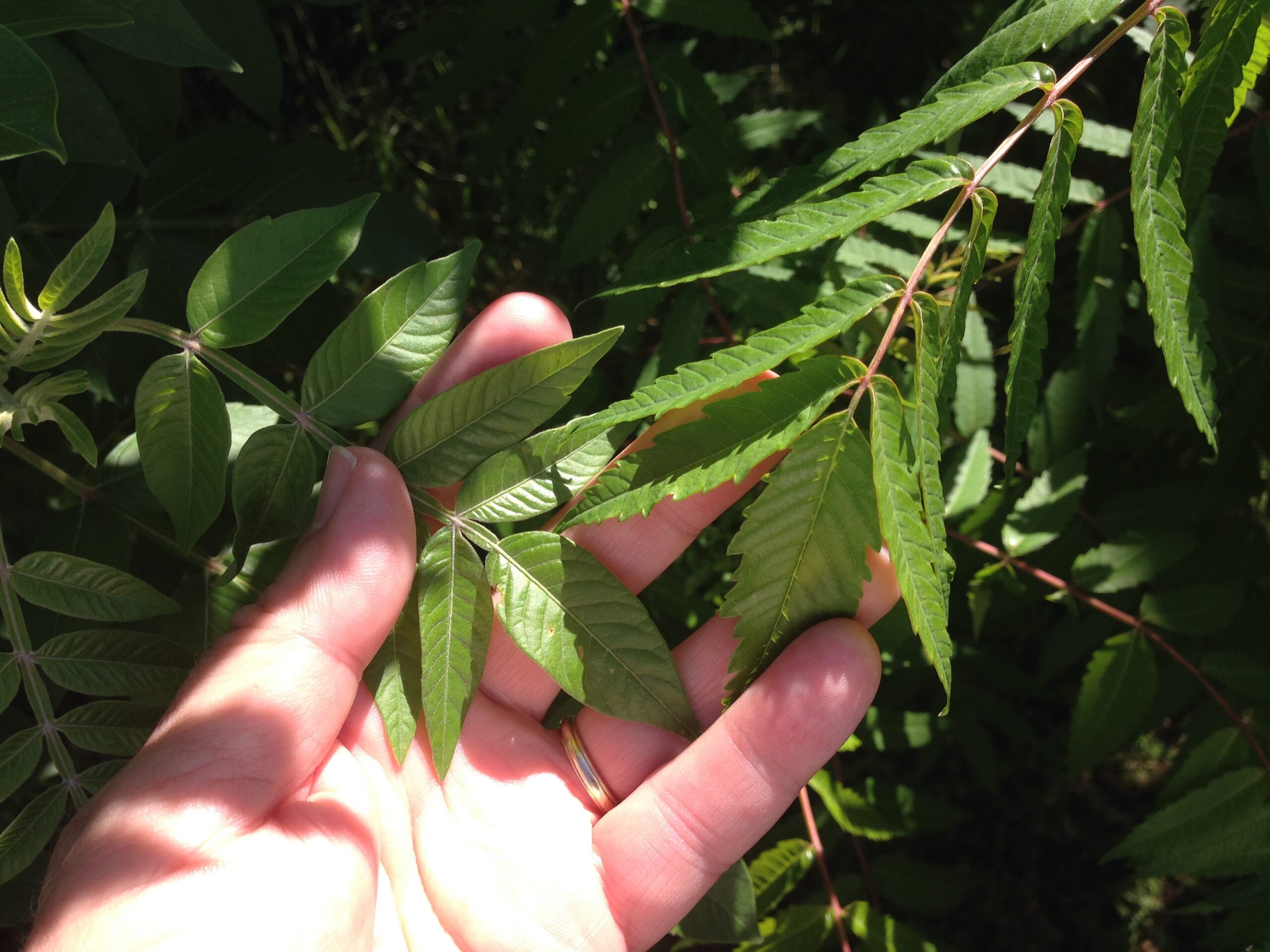
A comparison between the leaves of winged sumac (Rhus copallina) and smooth sumac (Rhus glabra) in a field in northeastern Oklahoma. Photo by Stan Rice.
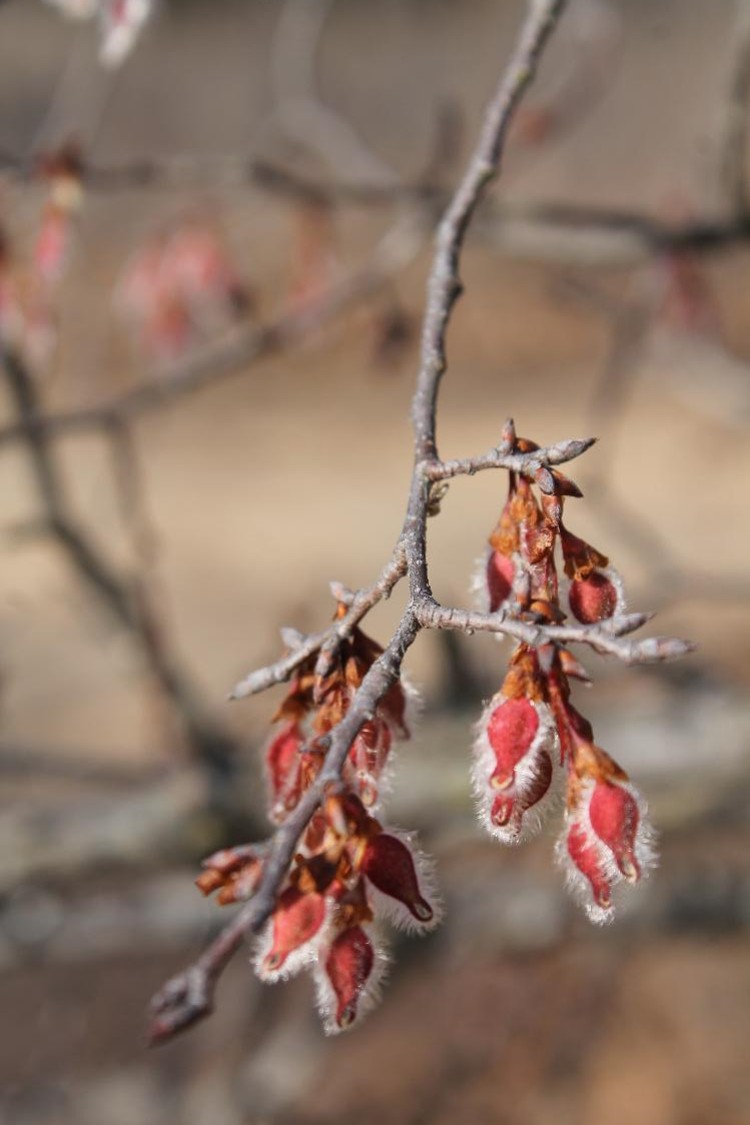
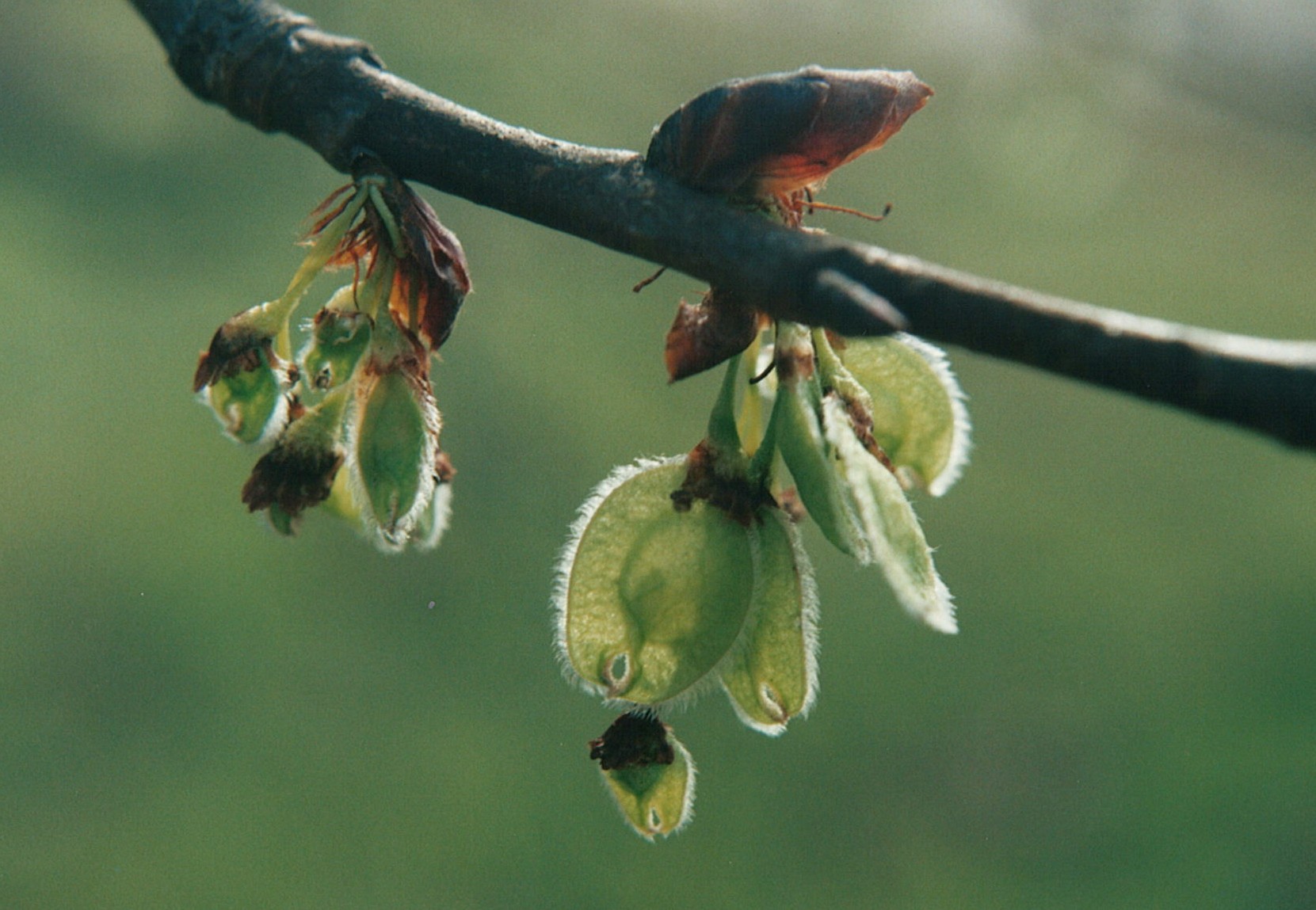
The fruits of winged elm (Ulmus alata) are small and hairy. They mature in late spring in Oklahoma.
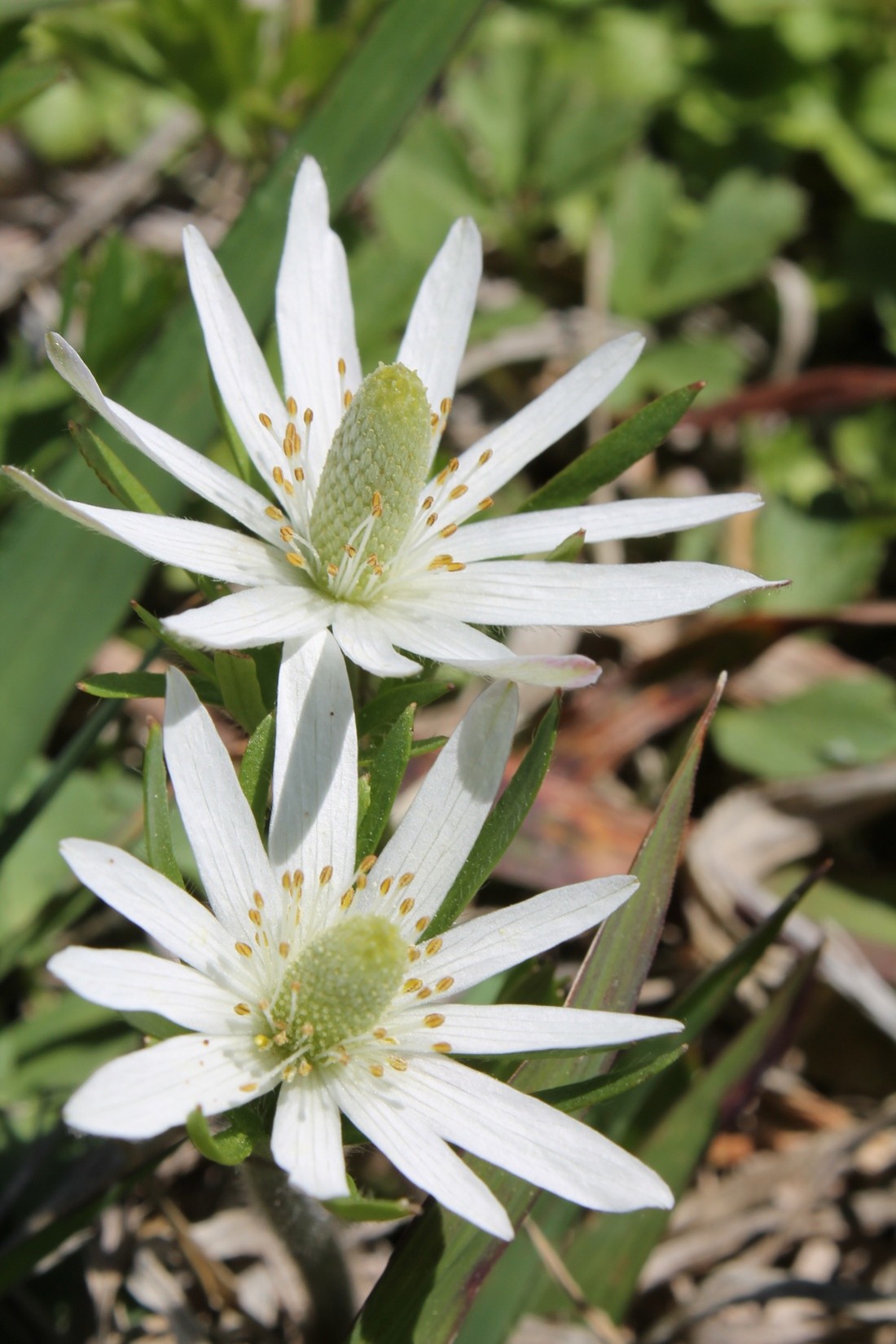
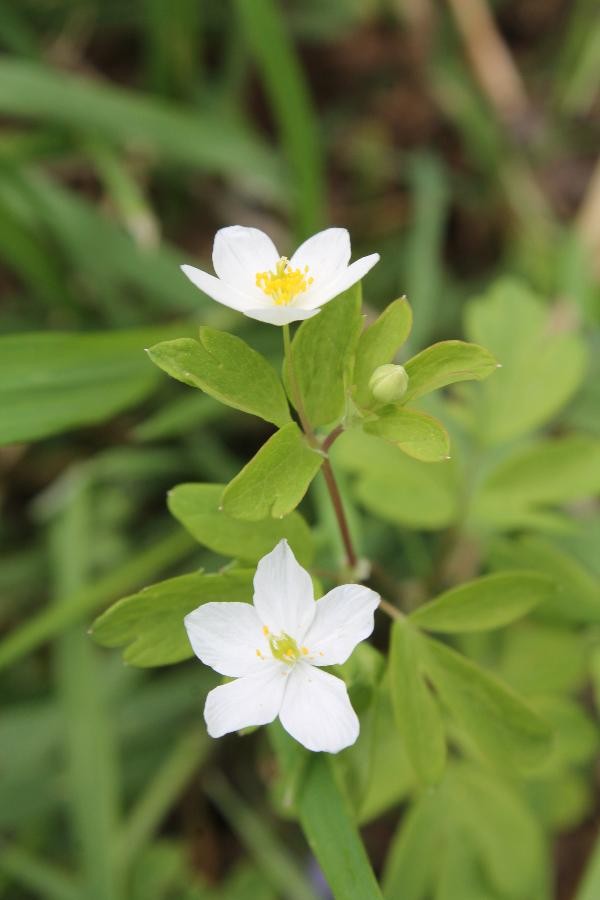
A windflower (genus Anemone) in Oklahoma.
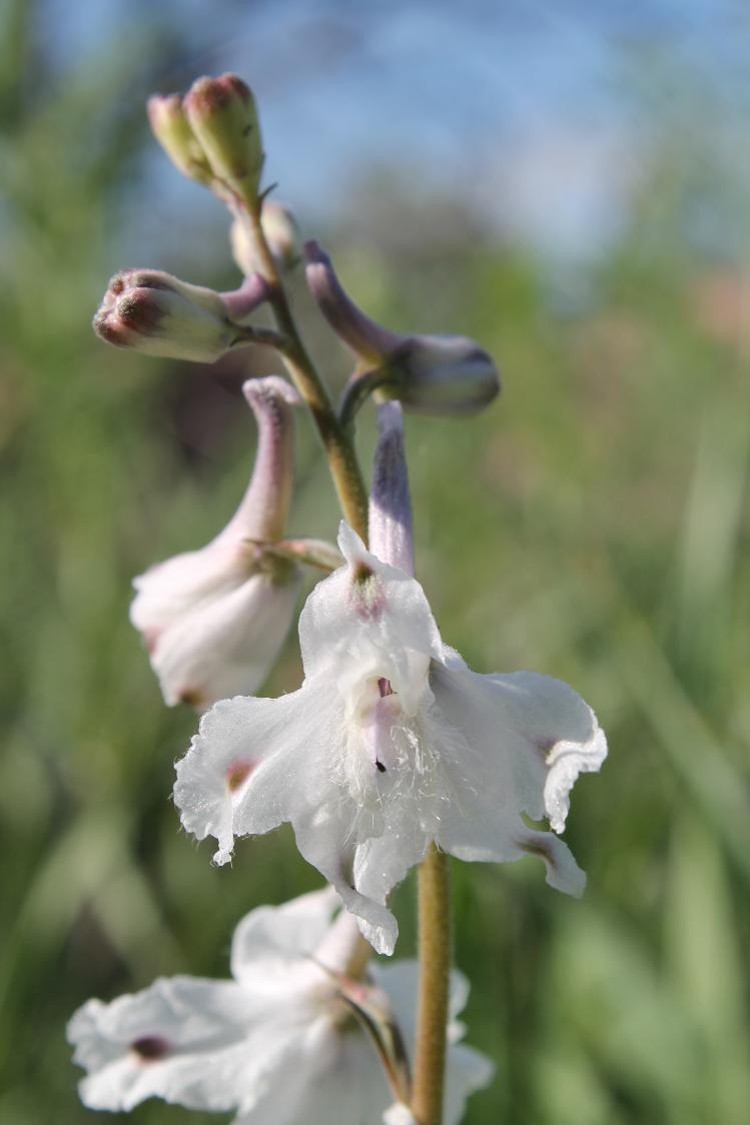
A white Delphinium (larkspur) in a field in southern Oklahoma.
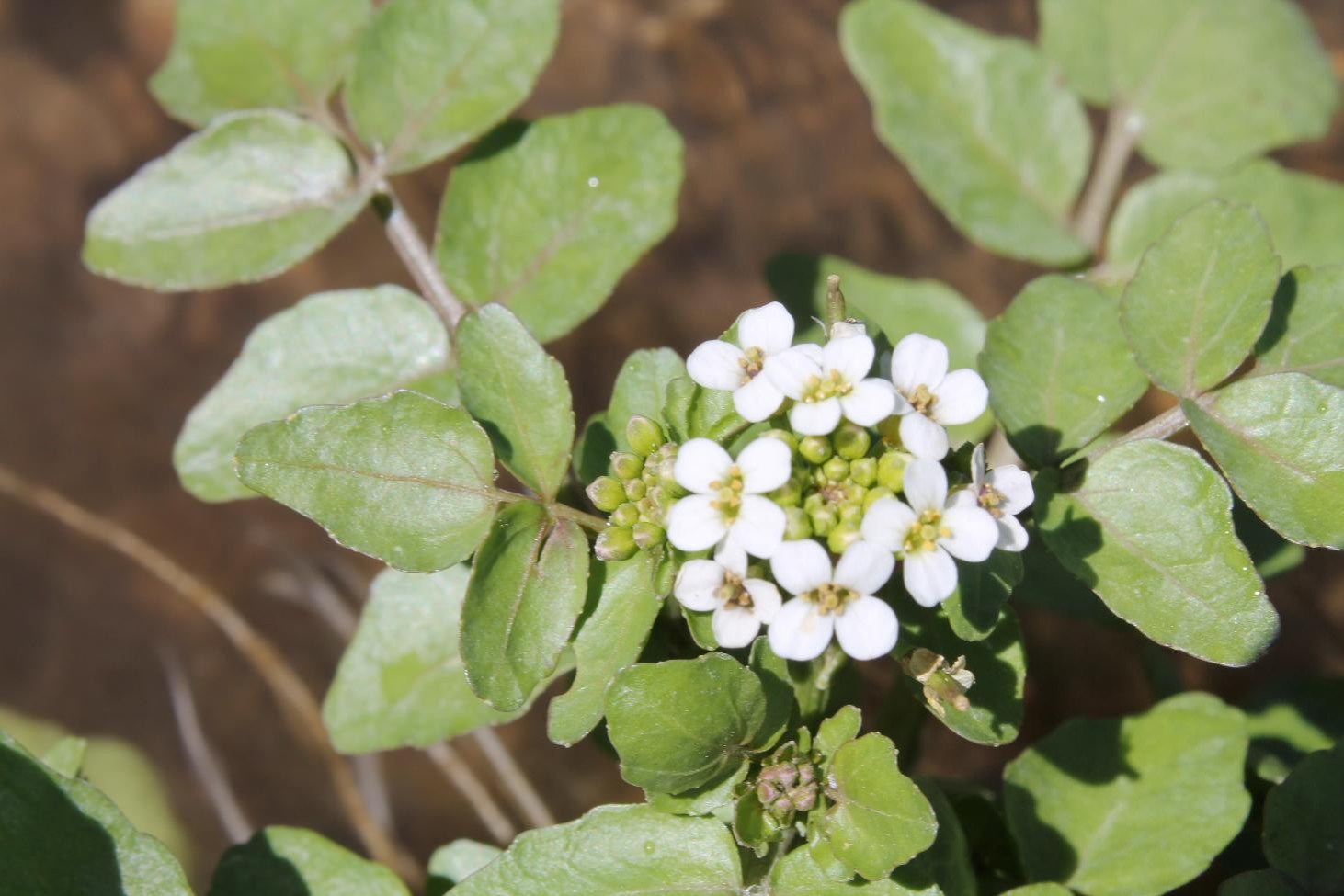
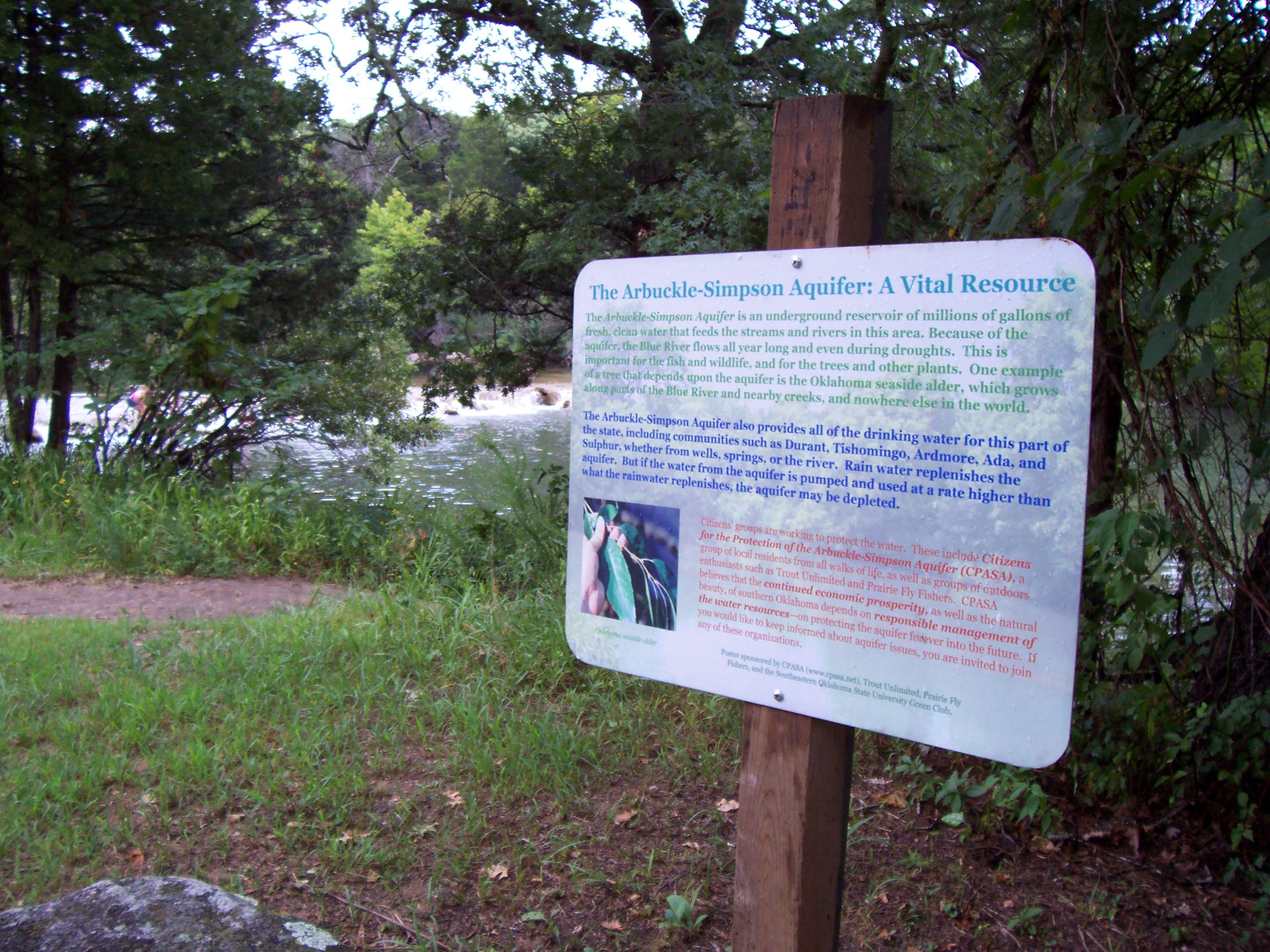
A floating watercress plant (Nasturtium officinale) in the Blue River of south central Oklahoma. Watercress grows widely in the Northern hemisphere.
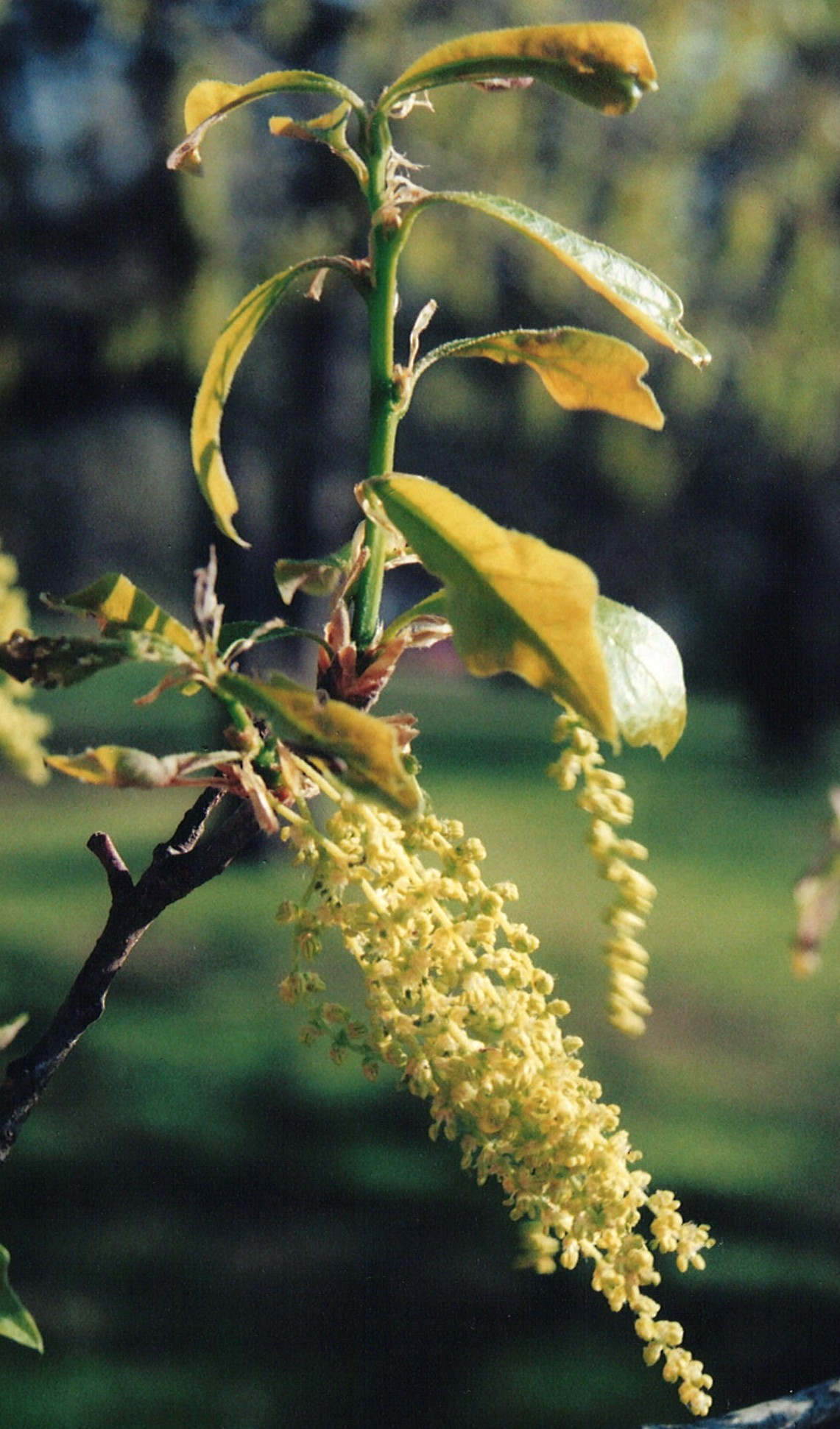
Male catkins and baby acorns on a water oak (Quercus nigra) in Oklahoma.
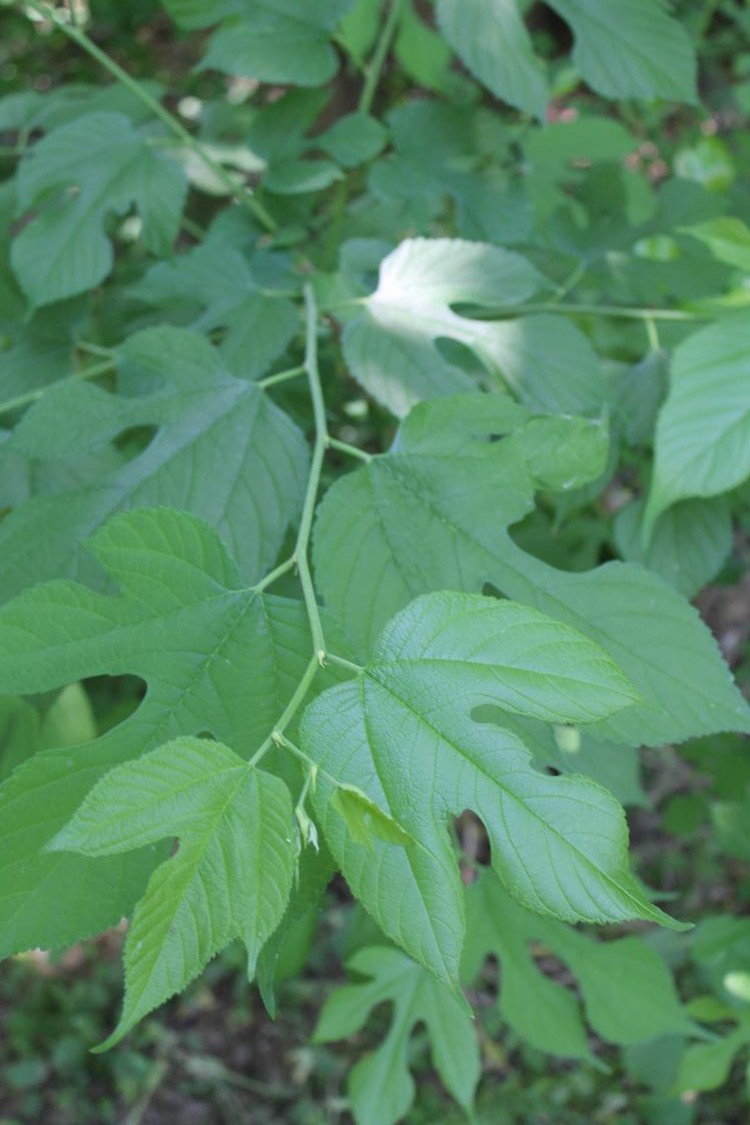
A mustang grape, Vitis mustangensis, has deeply lobed leaves that are densely hairy on the underside, in comparison with other grape species in Oklahoma.
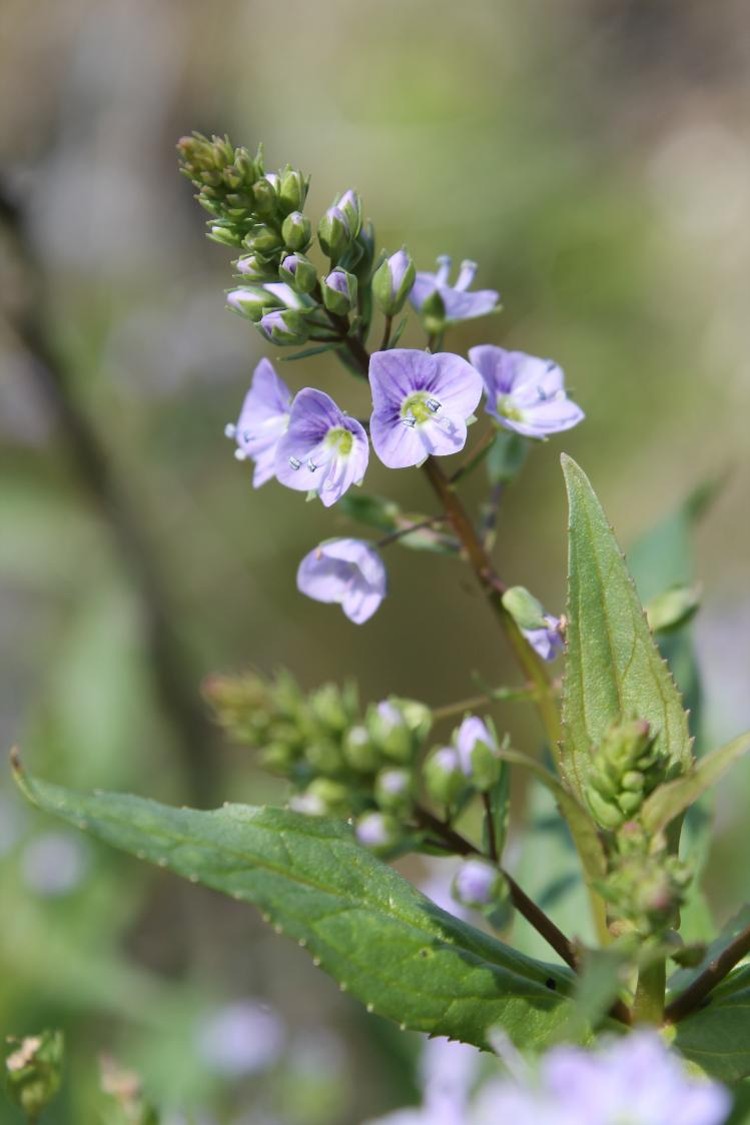
A speedwell (genus Veronica) in Oklahoma. What appears to be four petals is actually five, with two of them fused.
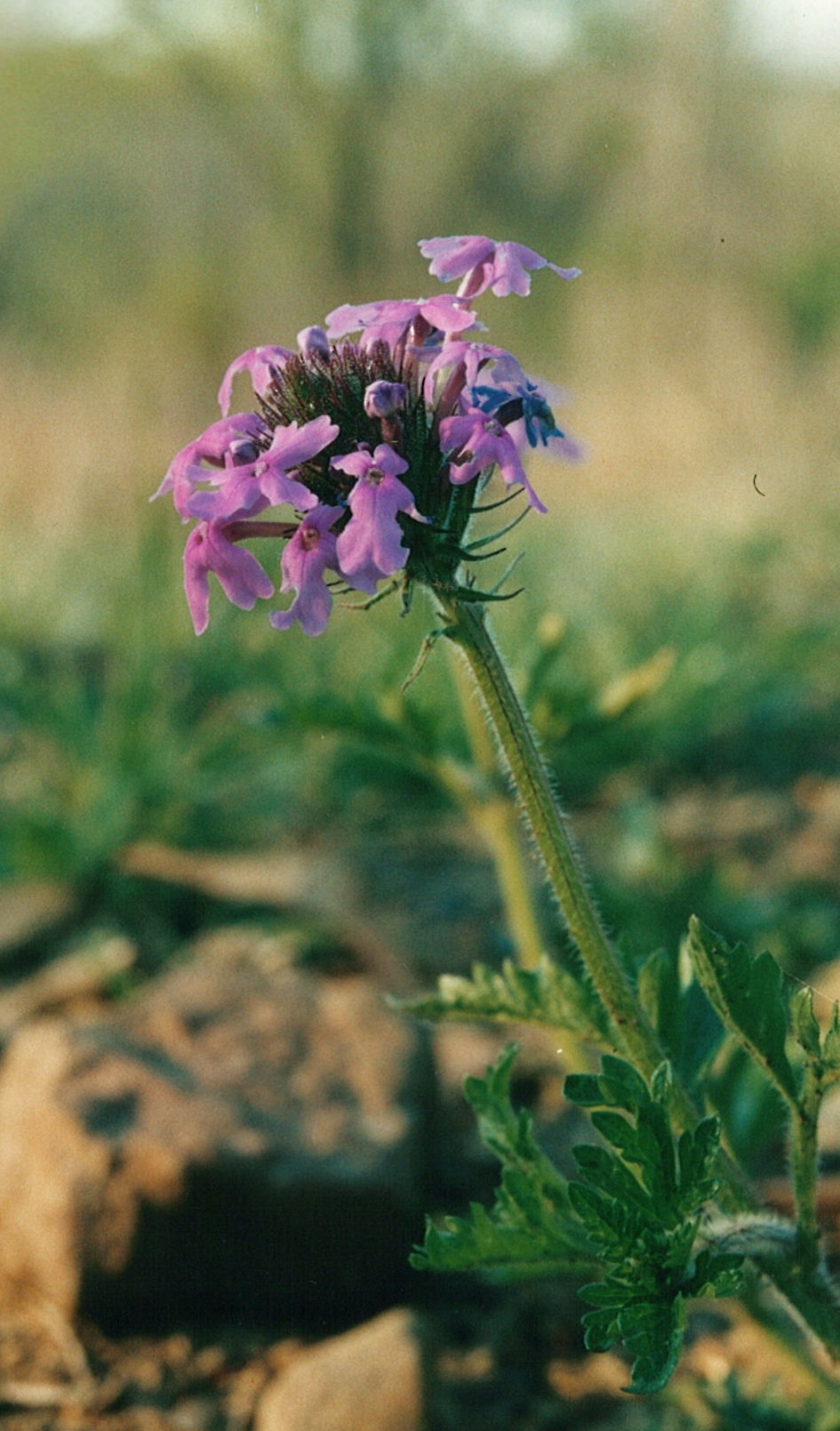
A verbena in Oklahoma.
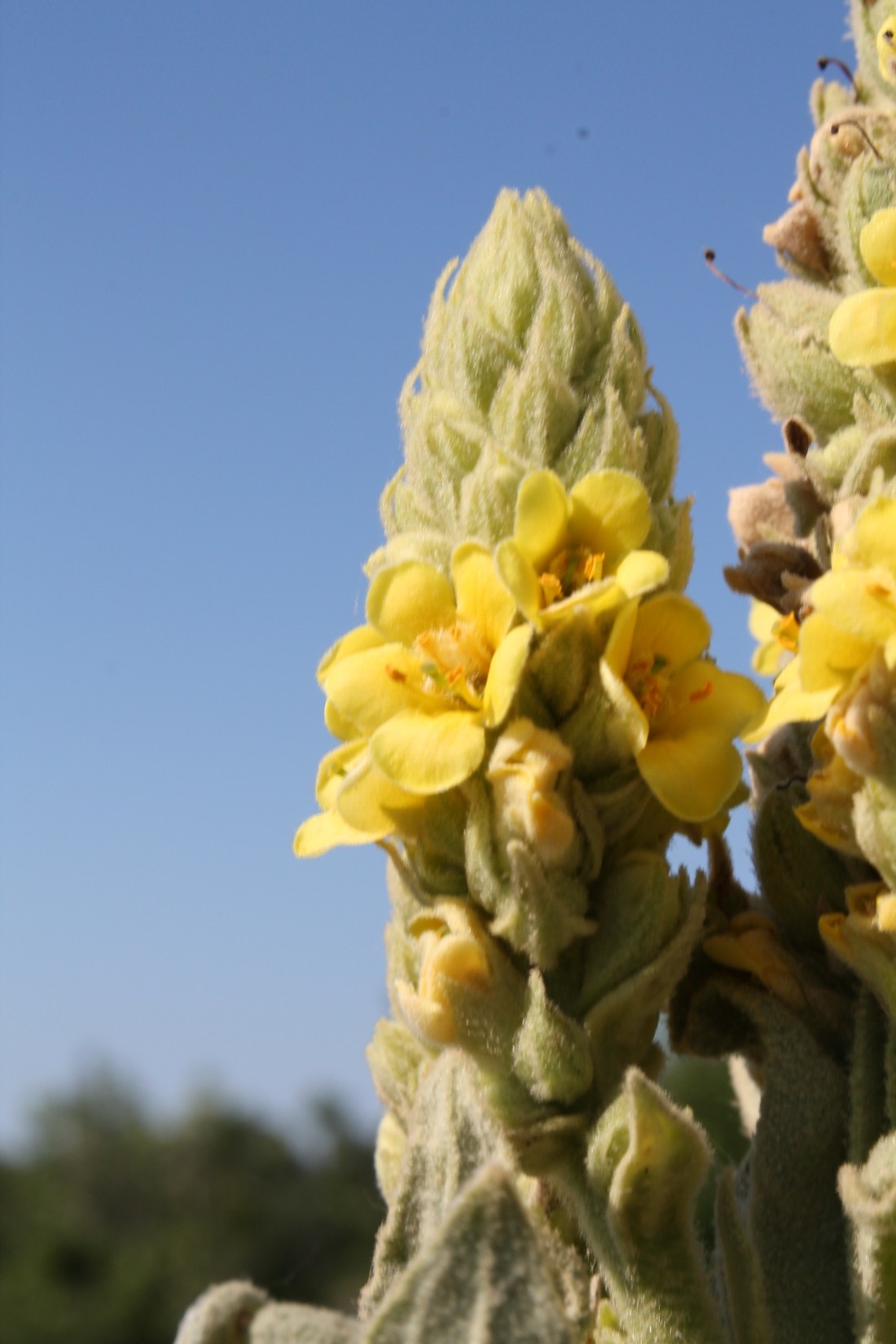
Verbascum thapsis (mullein) in a weedy field in northeastern Oklahoma.
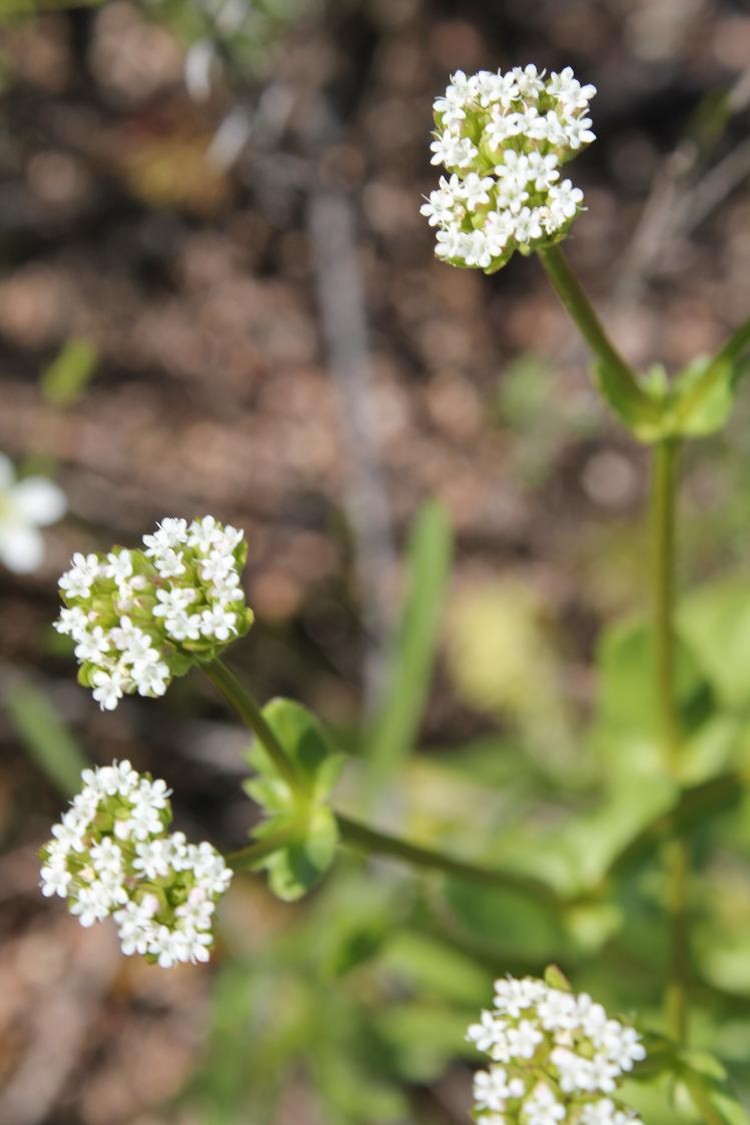
A valerian flower in Oklahoma.
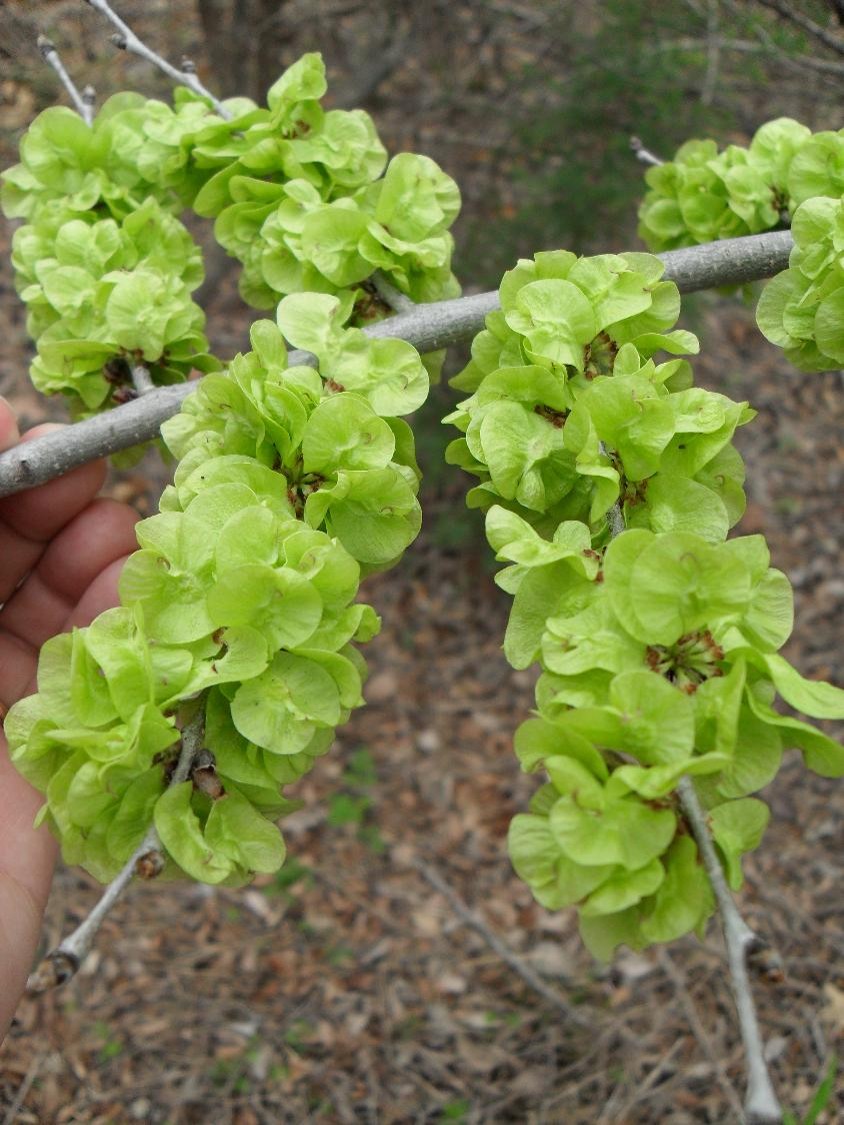
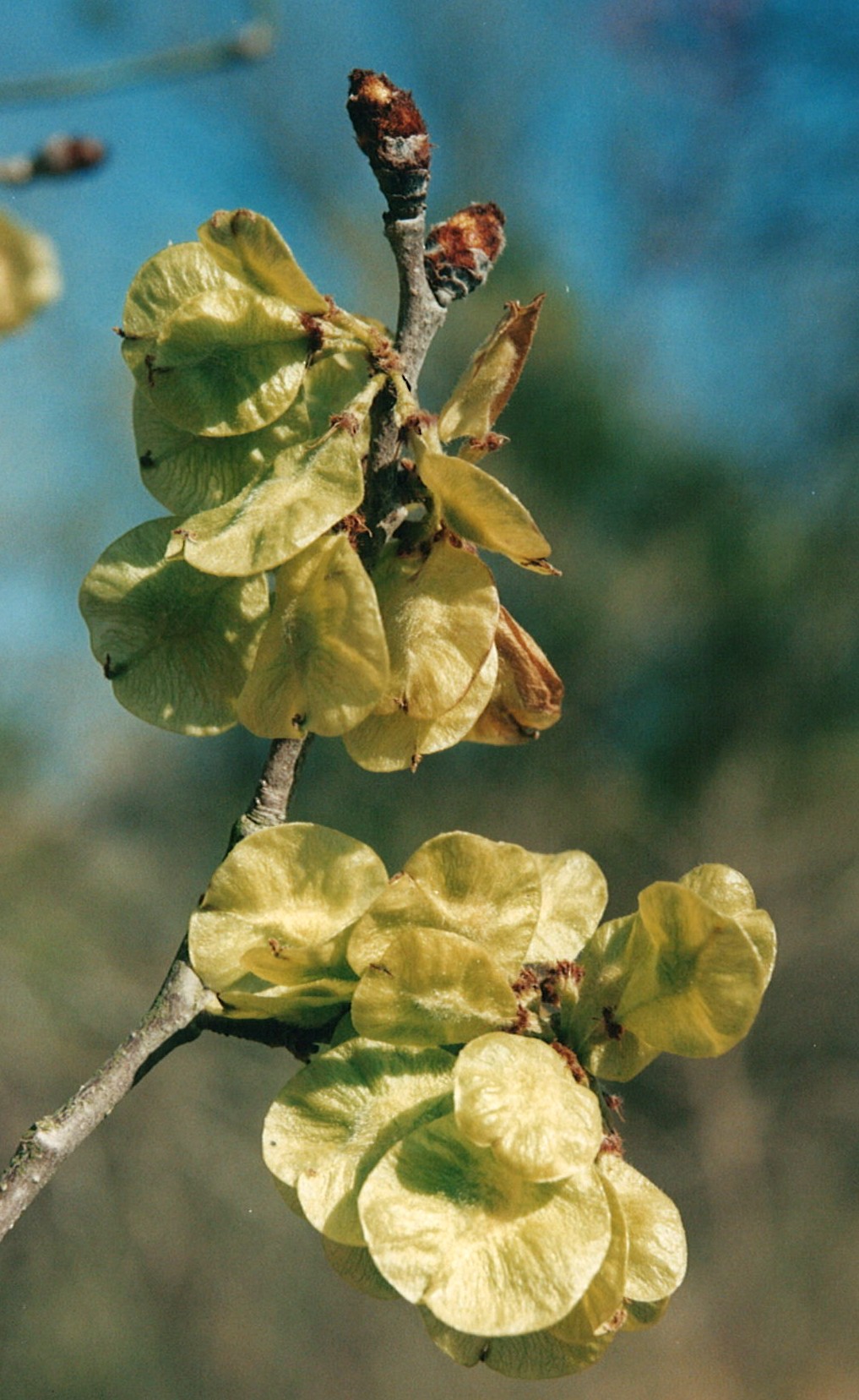
Green fruits of slippery elm (Ulmus rubra). It is distinguished from American elm because the fruits have no hairs.
A Triodanis (Venus looking-glass) flower in Oklahoma.
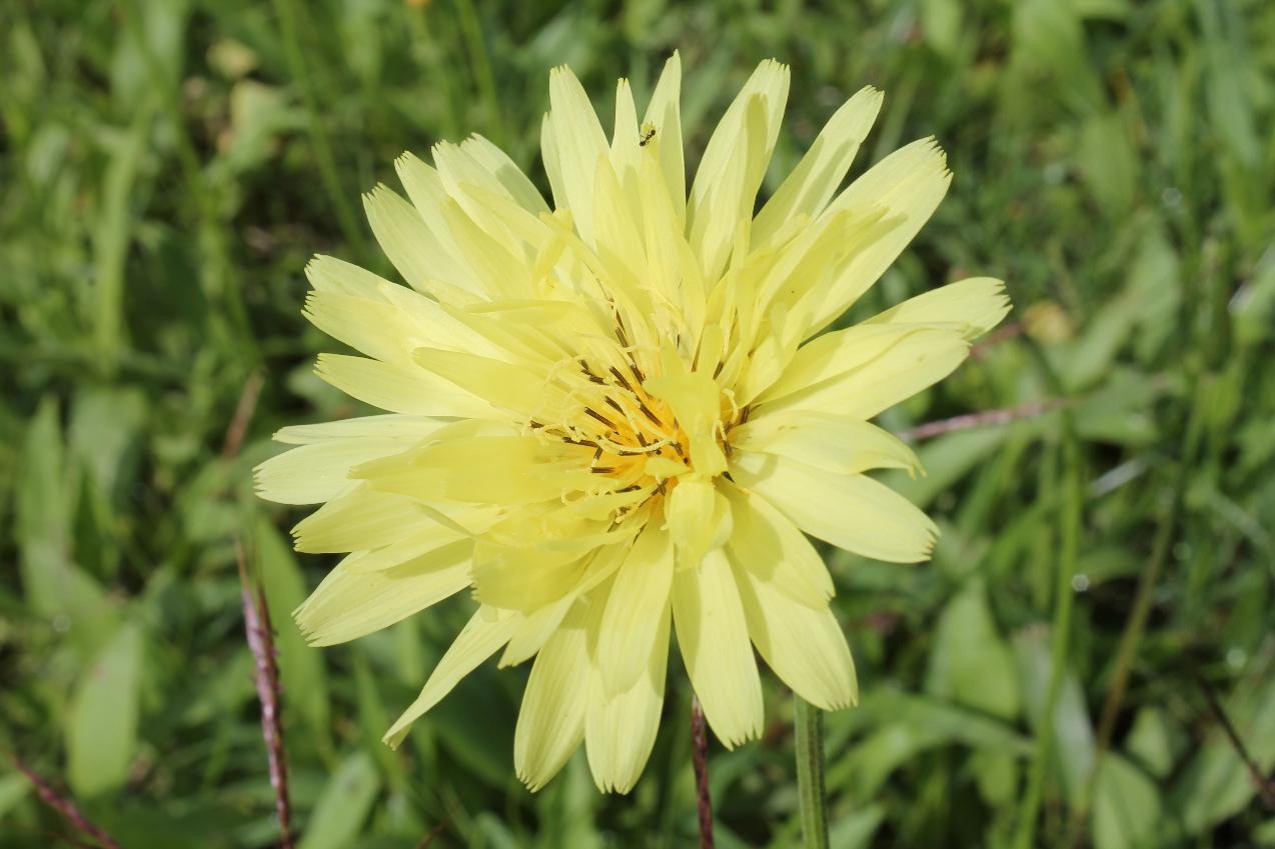
A Tragopogon (goatsbeard) flower in Oklahoma. The “flower” consists of a couple of dozen ligulate (ray) flowers constricted into one head.
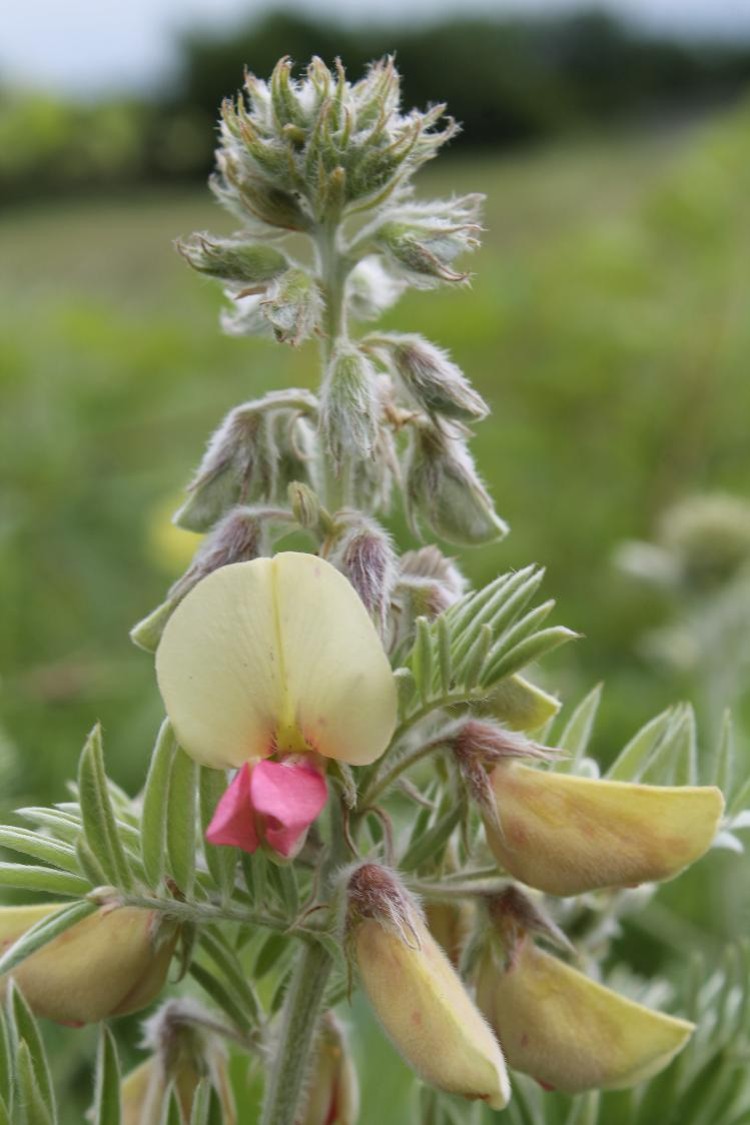
A Tephrosia flower in a prairie remnant in southern Oklahoma.
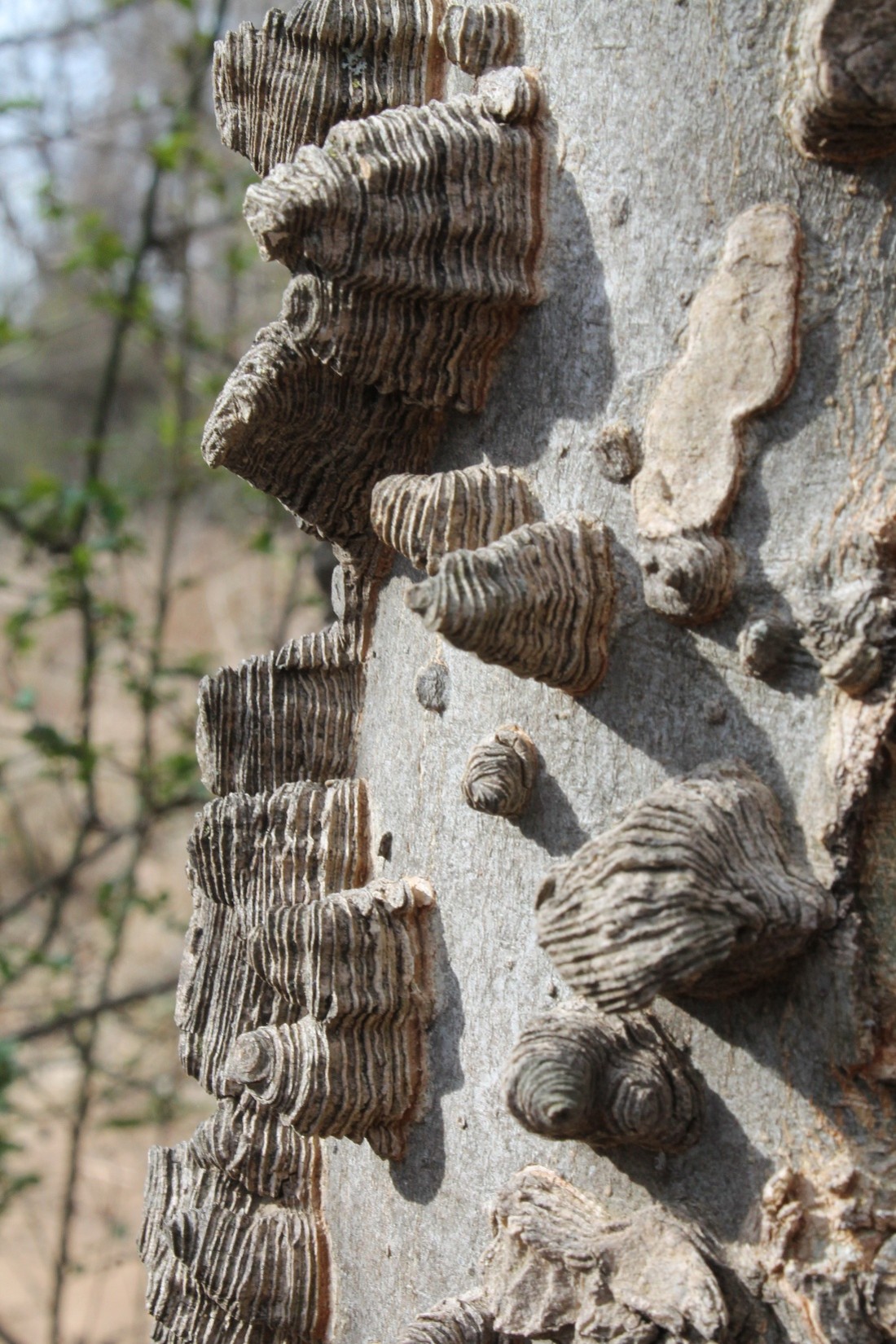
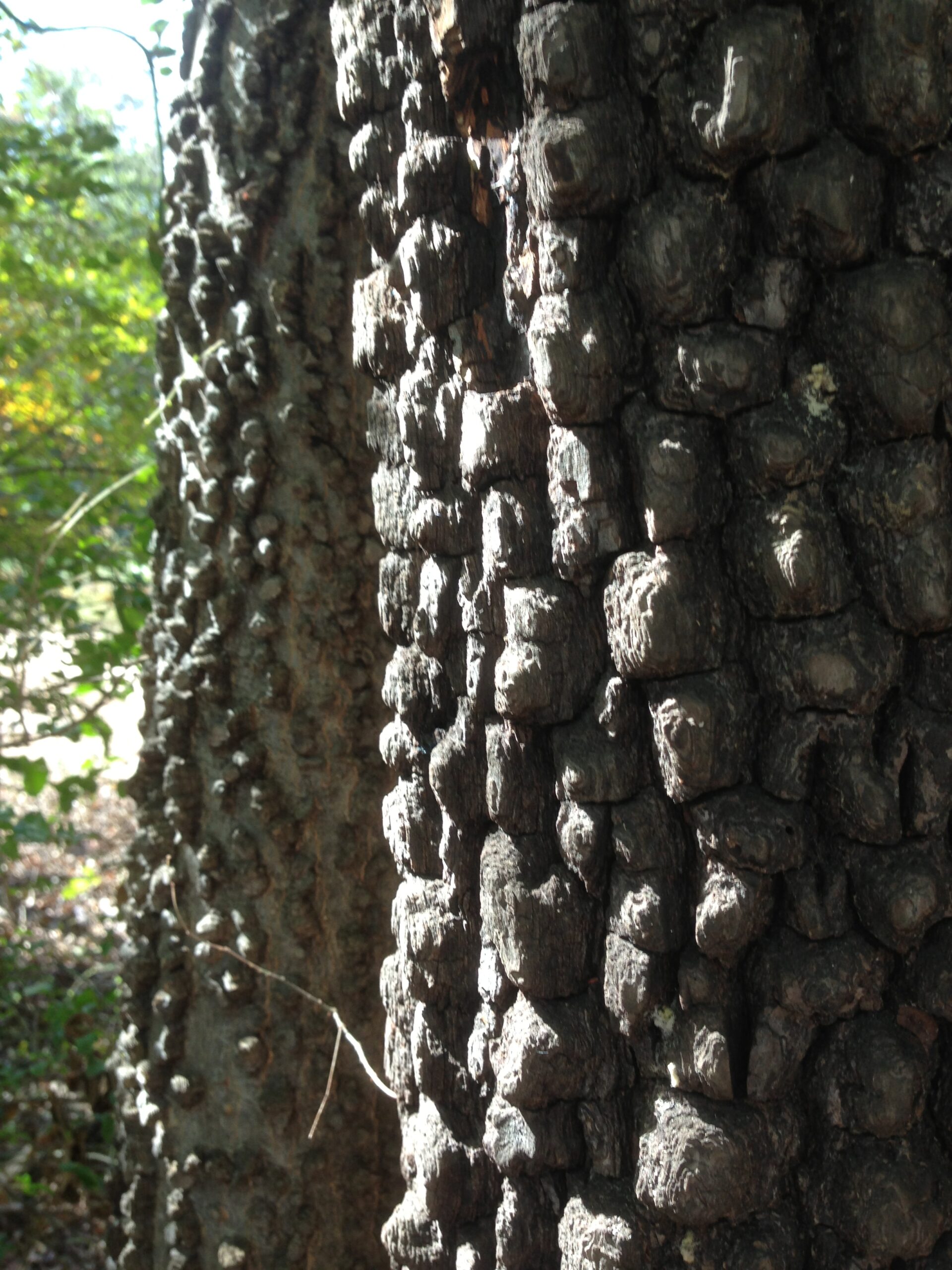
Sugarberry (Celtis laevigata) bark has thick ridges of layers of cork.
Sugar maple (Acer saccharum) in northeast Oklahoma. Near the southwestern edge of its distribution range, sugar maples can grow only in shady, humid microclimates, such as the north side of cliffs, as in Redbud Valley near Tulsa.
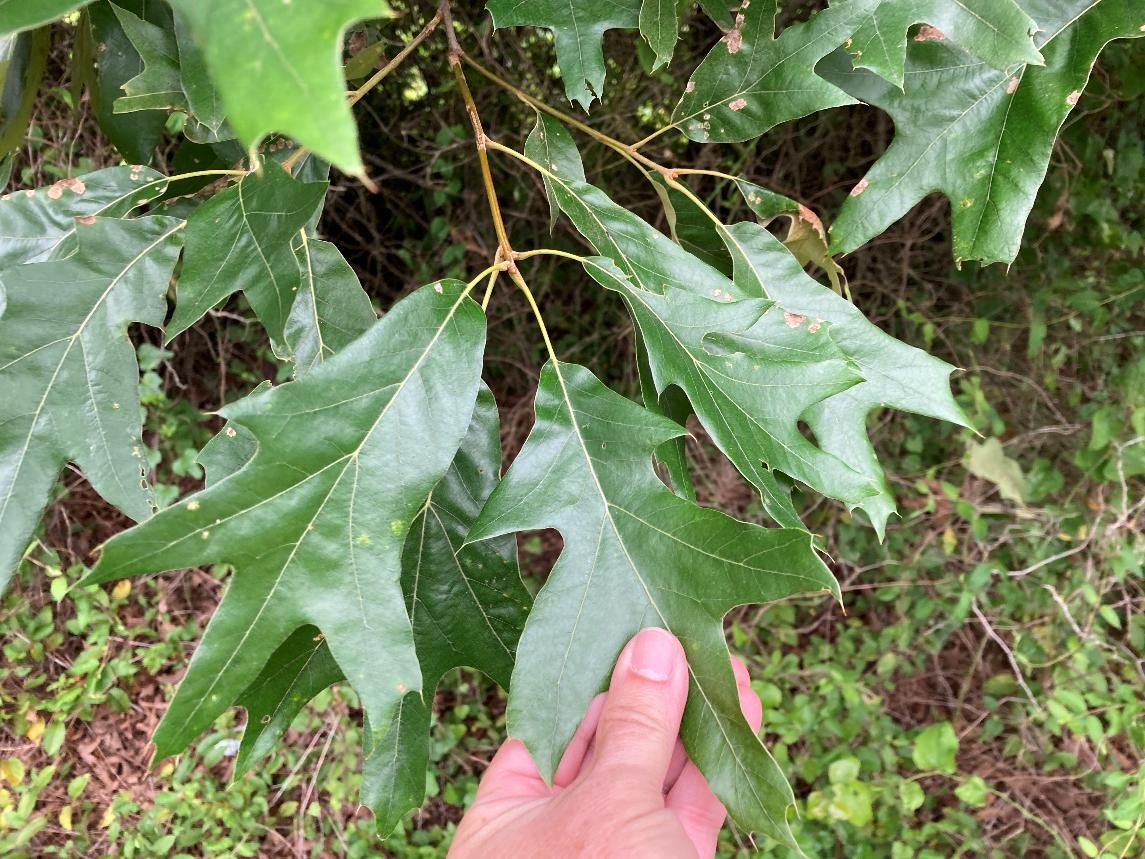
A southern red oak (Quercus falcata) in a wet area of south central Oklahoma.
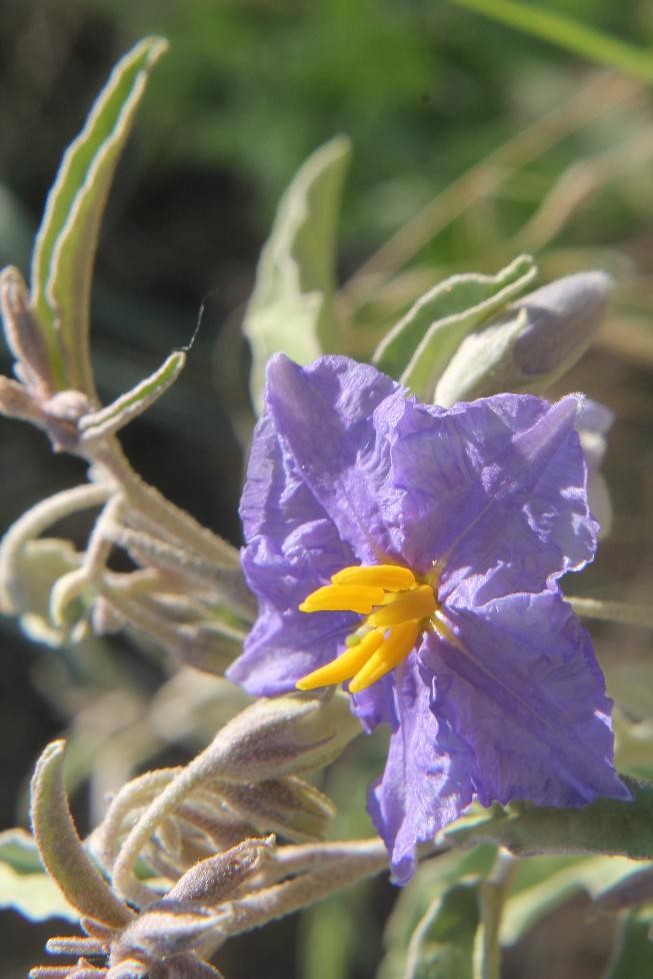
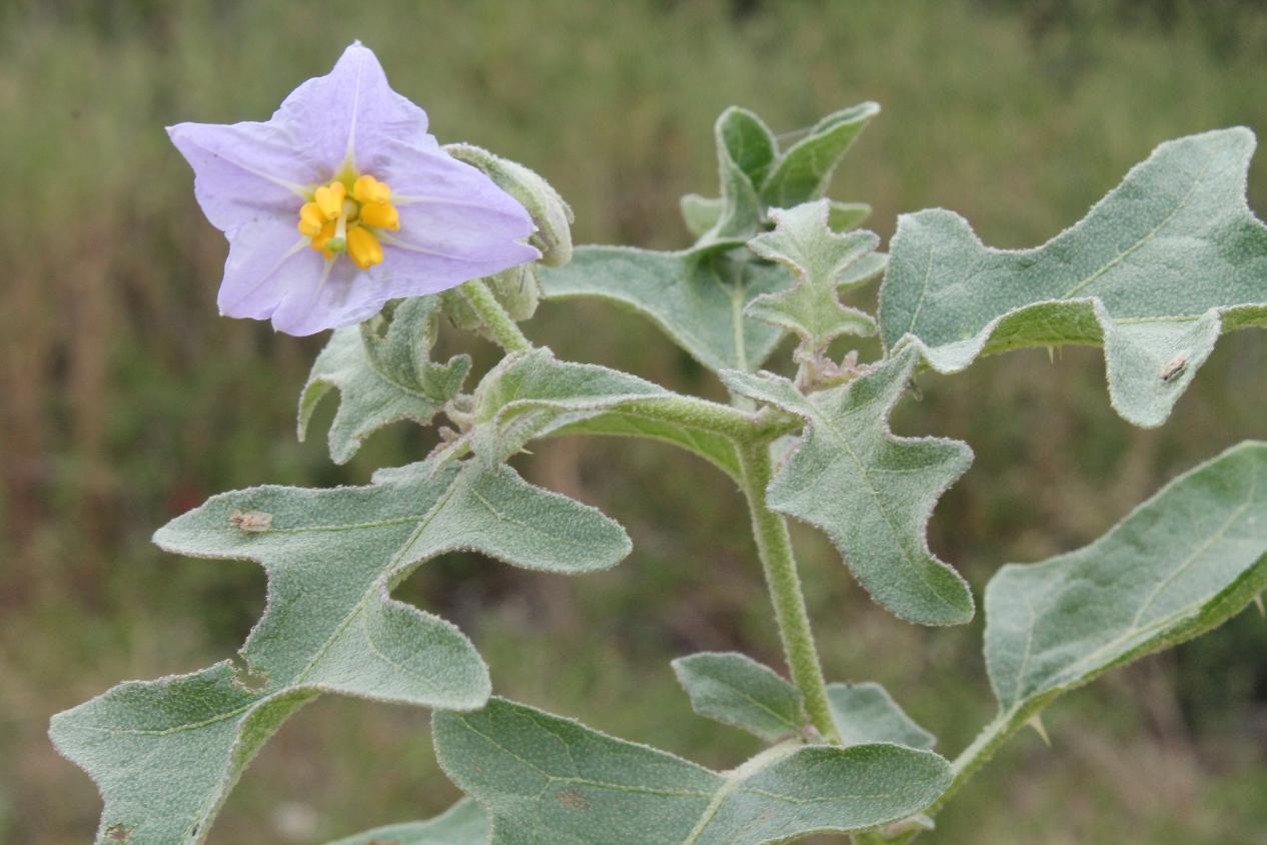
A nightshade (Solanum) flower in Oklahoma.
Soapberry (Sapindus drummondii) fruits in Oklahoma.
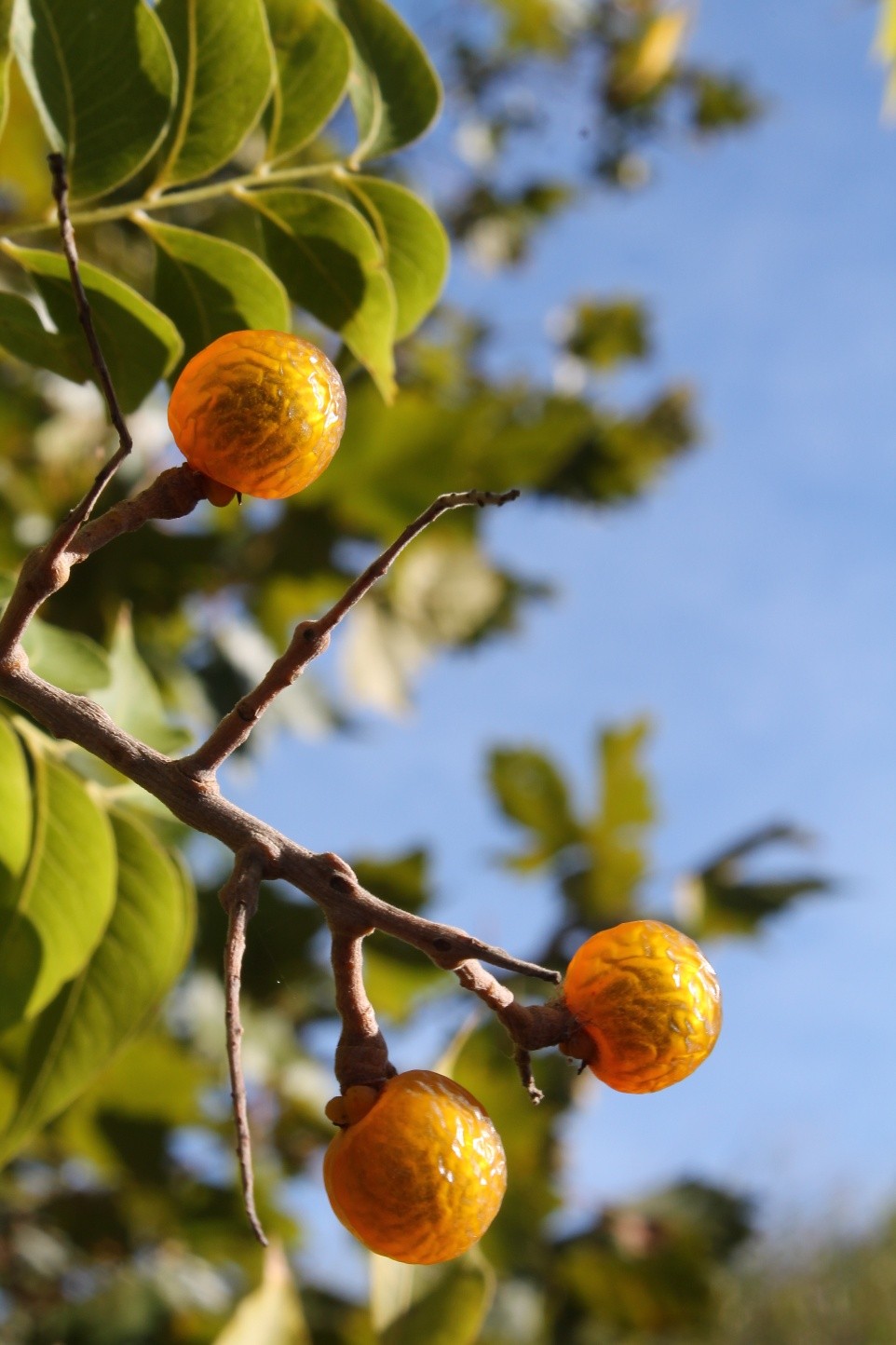
Cocculus carolinus (snailseed) vine and fruit in Oklahoma. The name comes from the shape of the seed inside the fruit.
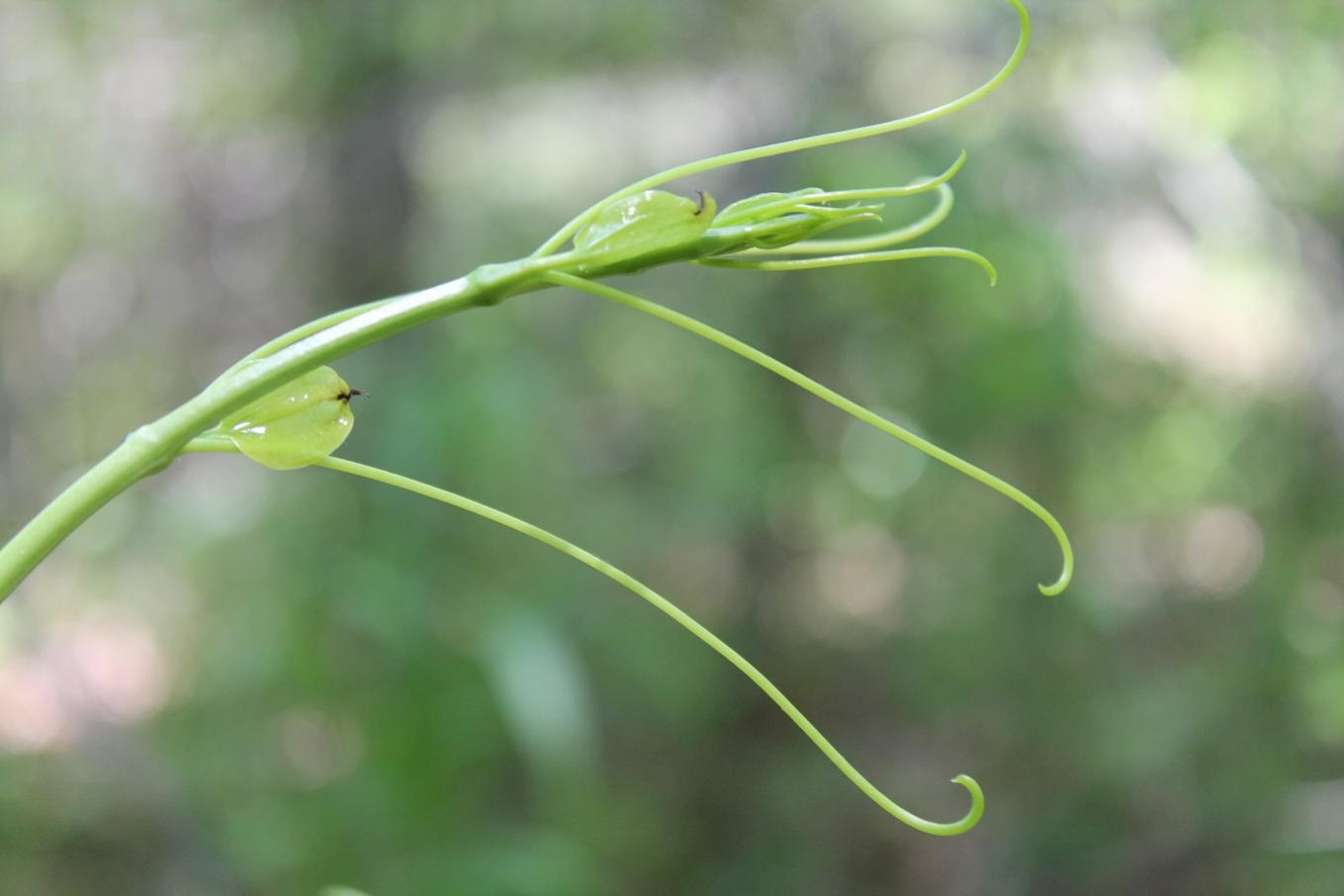
The spring shoot of a briar (genus Smilax) in Oklahoma. They are edible and taste a little like asparagus.
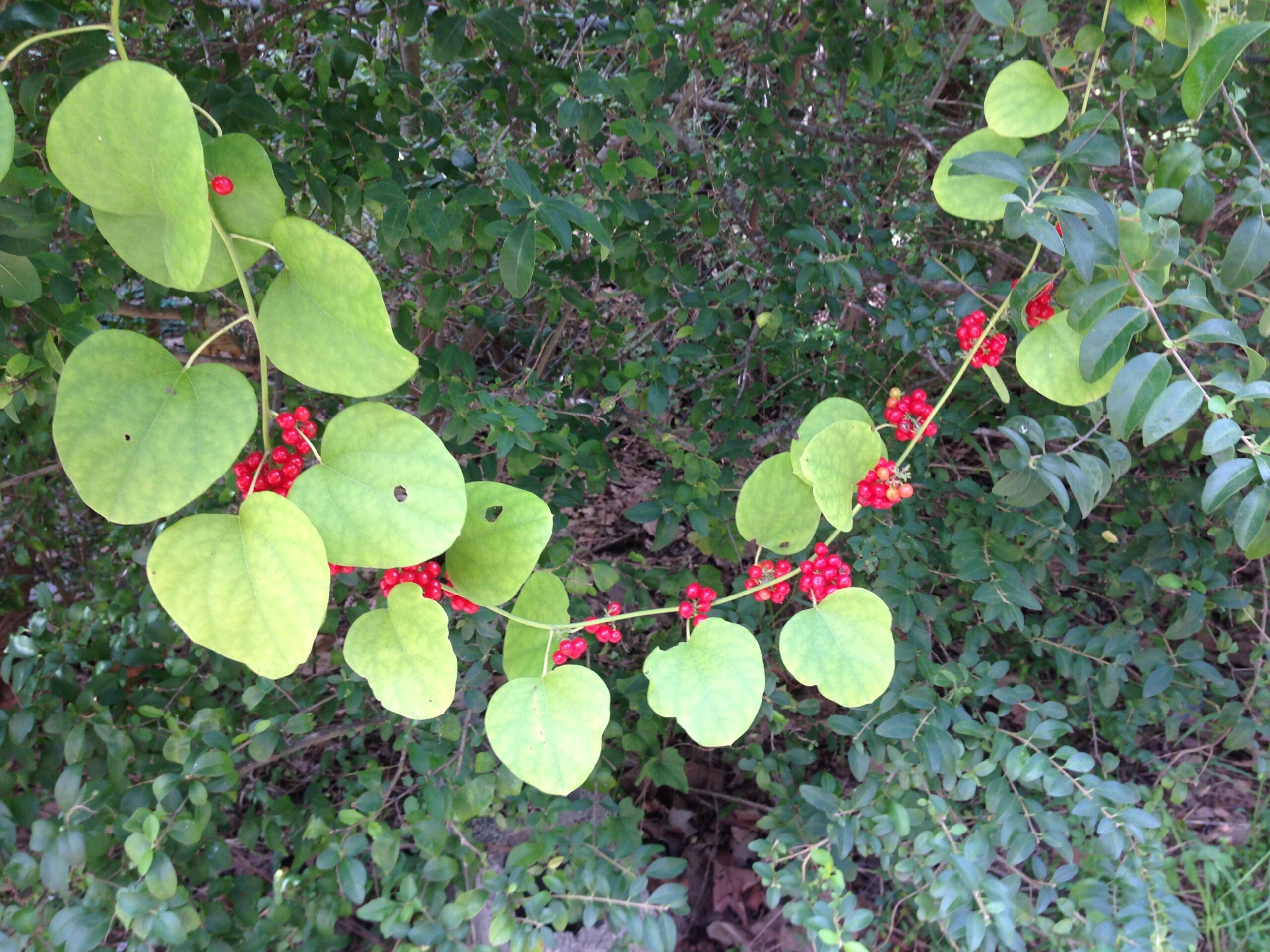
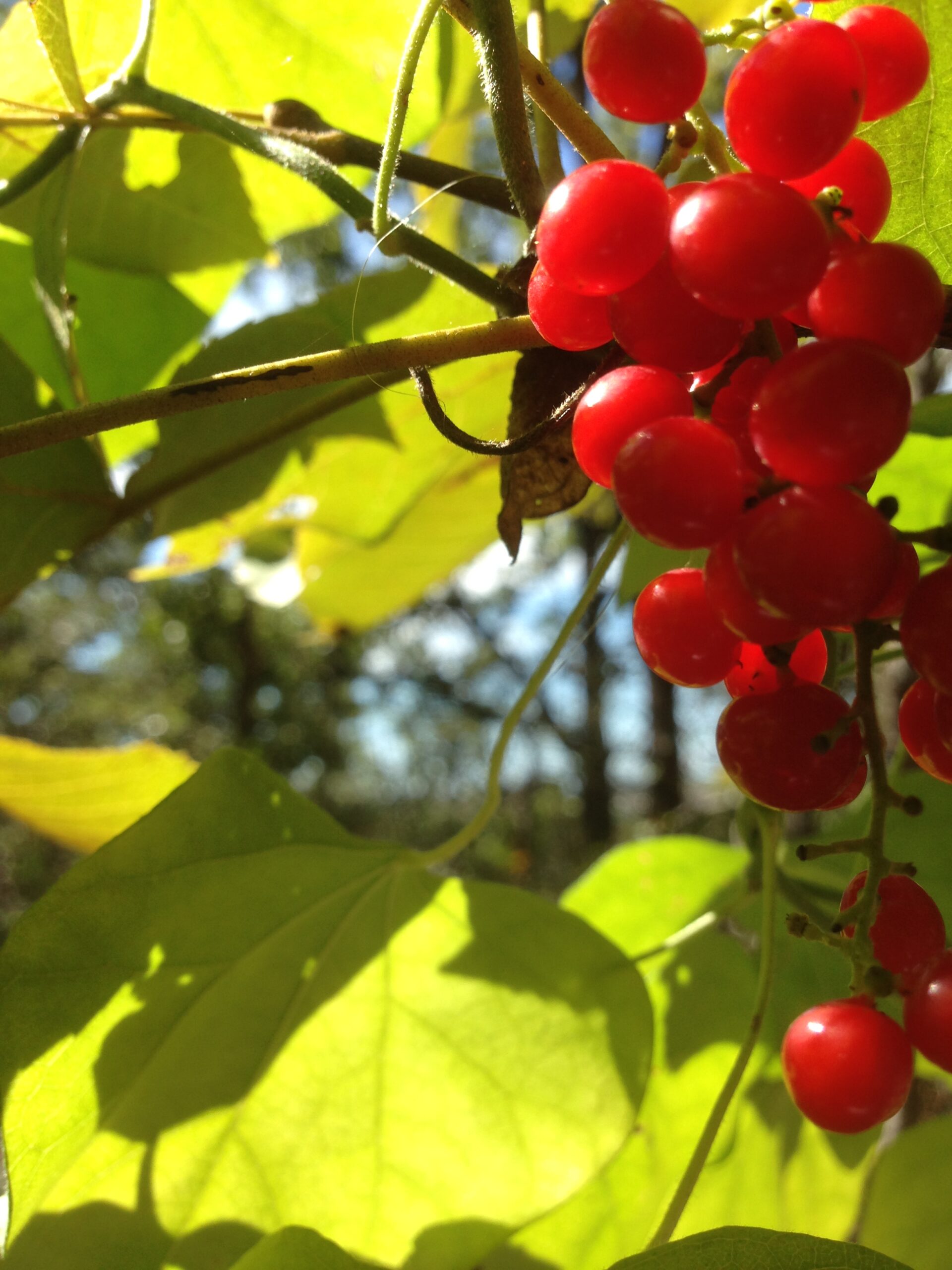
Crimson fruits of Smilax rotundifolia, a greenbriar in Oklahoma.
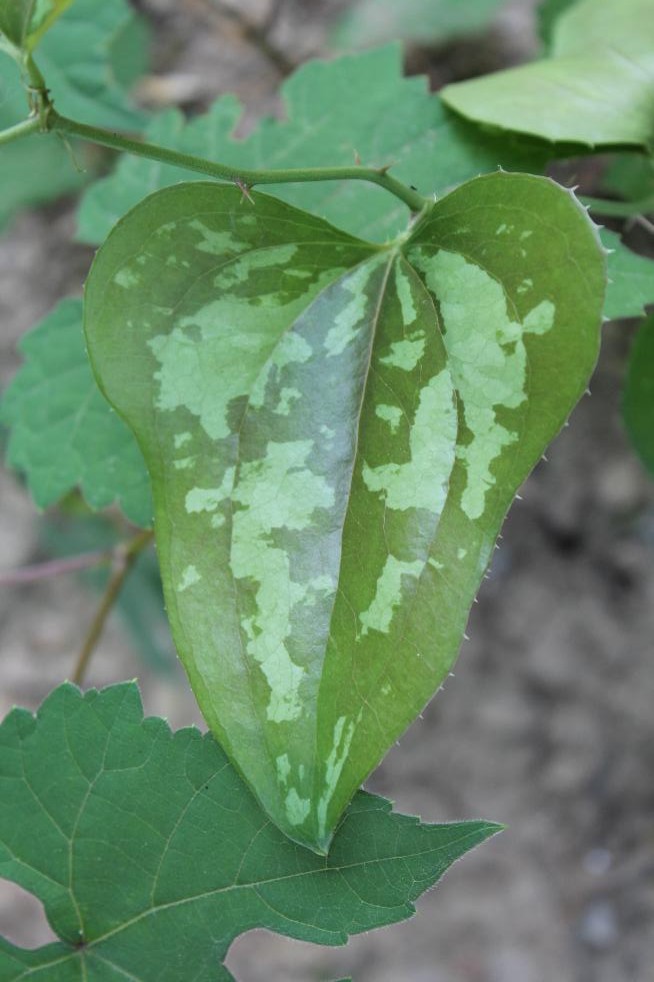
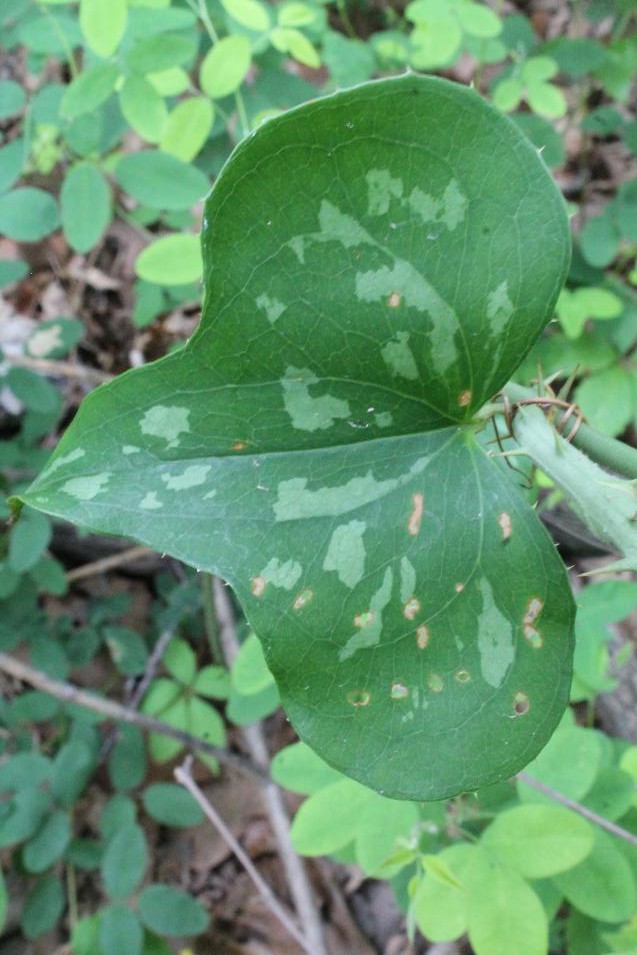
The leaves of Smilax bona-nox, a greenbriar in Oklahoma, are variegated.
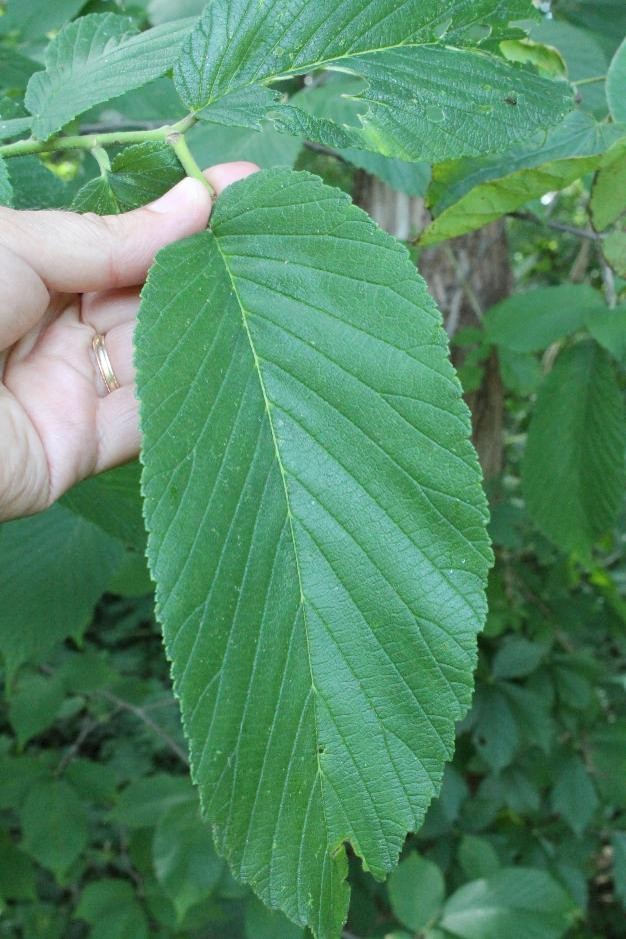
The slippery elm (Ulmus rubra) in Oklahoma have leaves much larger than most elms. Notice the uneven leaf bases. The name comes from the mucilage underneath the epidermis of young stems.
Green fruits of slippery elm (Ulmus rubra). It is distinguished from American elm because the fruits have no hairs.
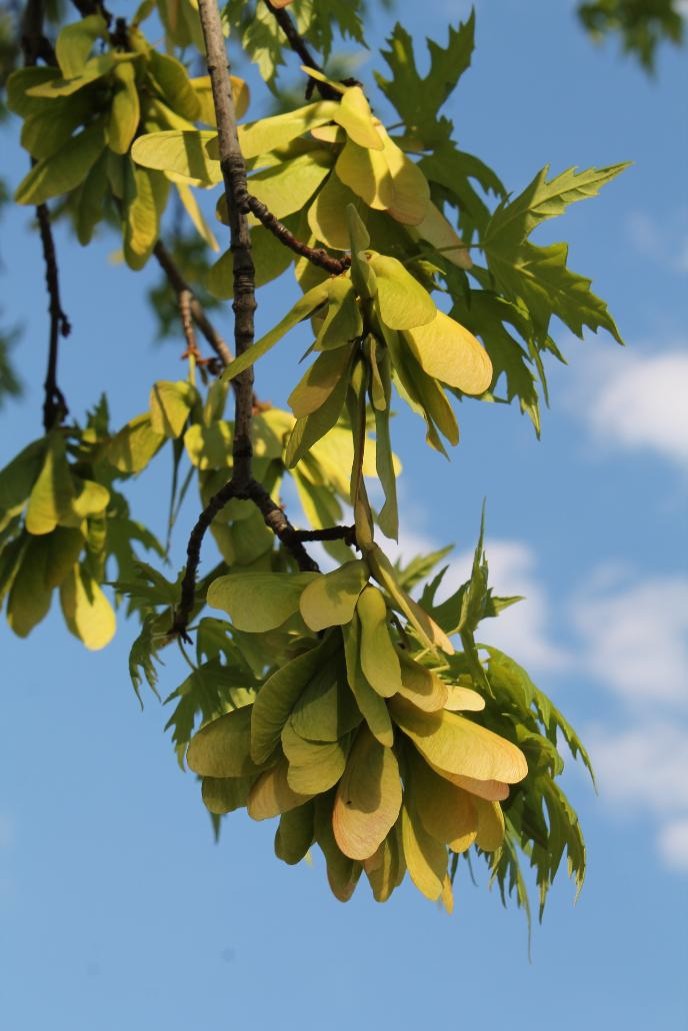
Silver maples (Acer saccharinum) live in floodplains and produce their samara (“helicopter”) fruits in late spring. Oklahoma.
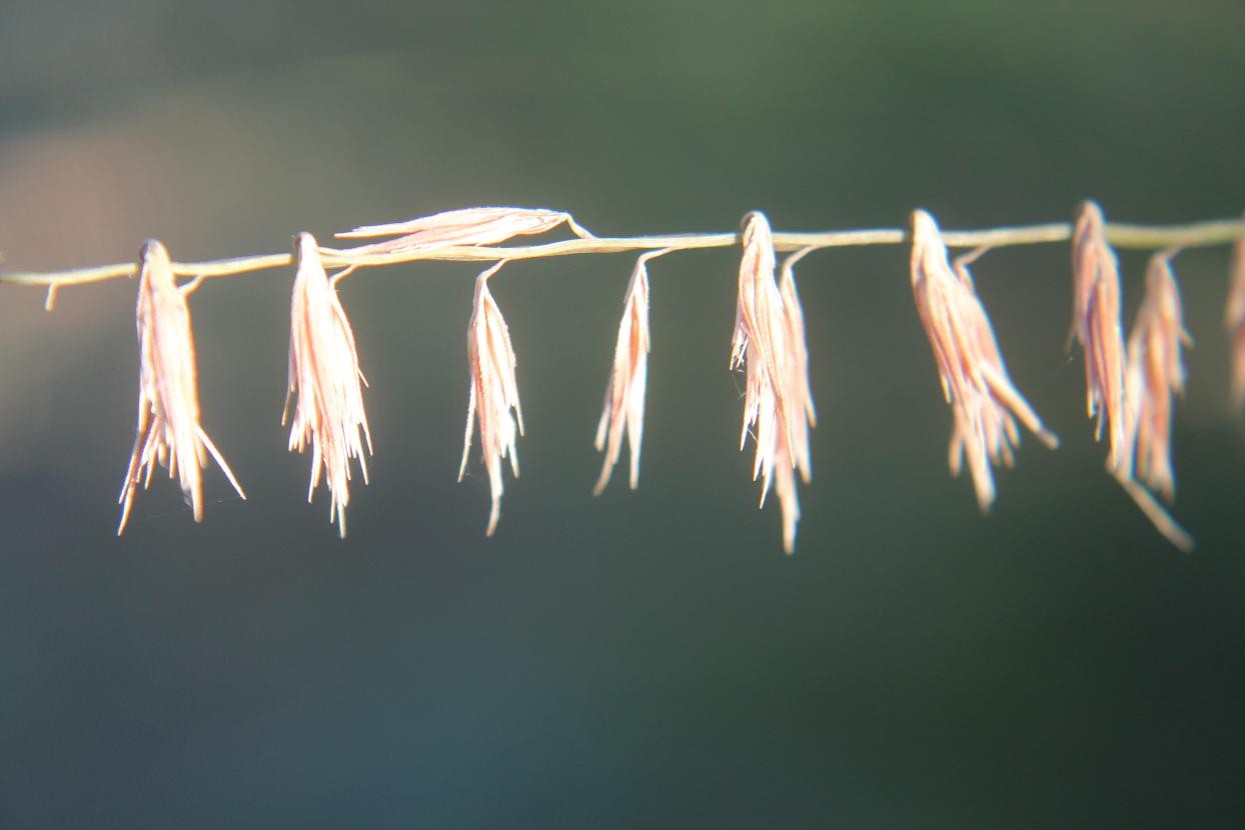
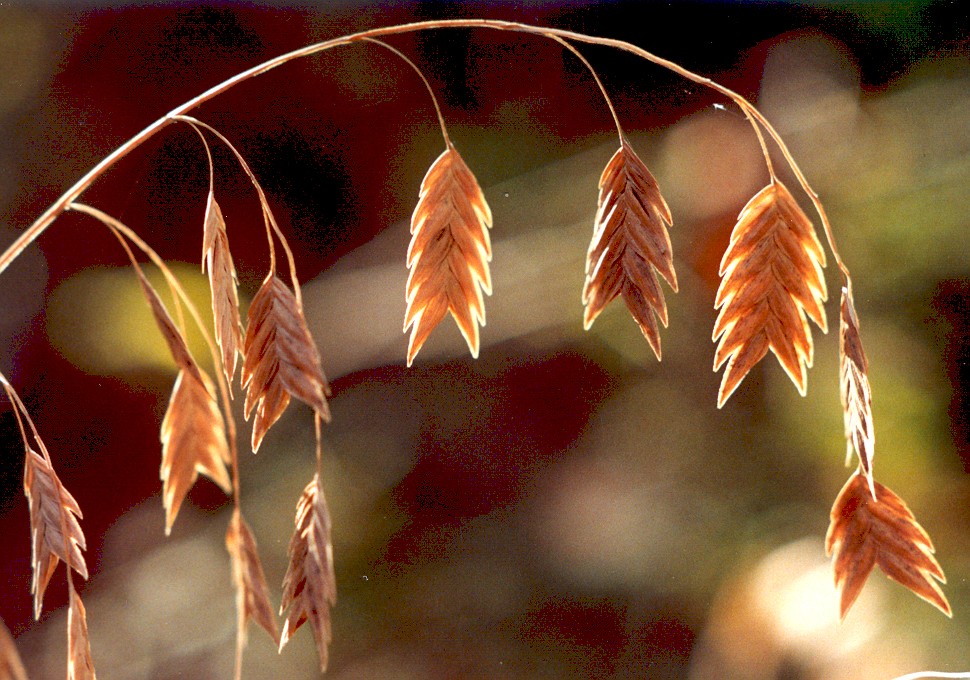
Side-oats grama (Bouteloua curtipendula), here in a grassland in Oklahoma, produce flowers and fruits on just one side of the flowering stalk.
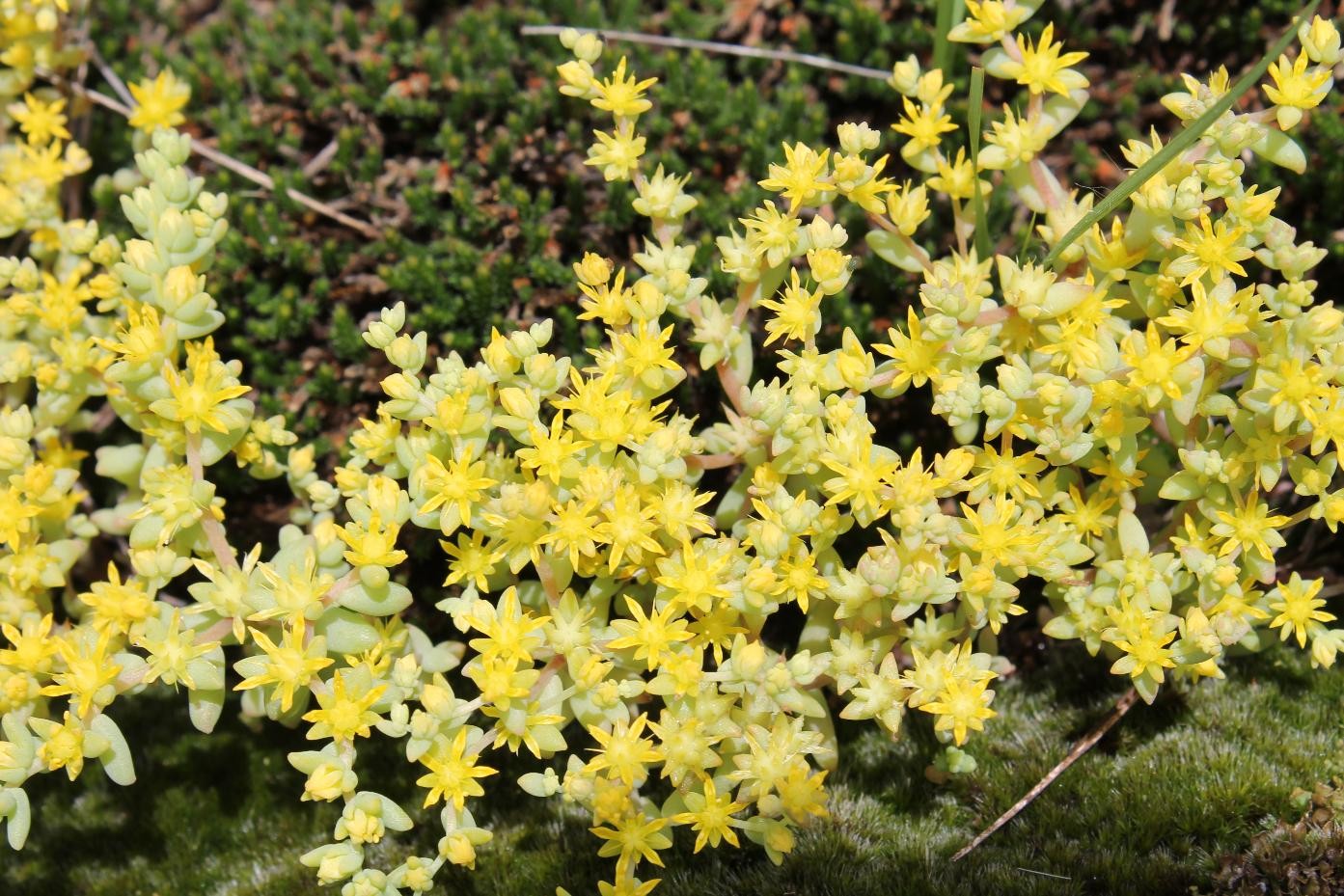
This Sedum is a succulent plant that grows on granite rocks in southern Oklahoma.
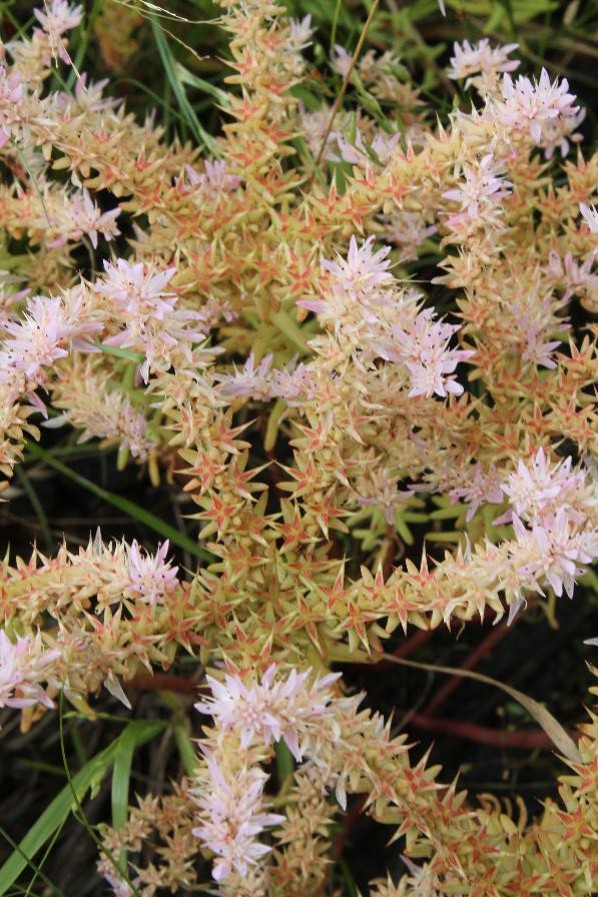
This Sedum pulchellum is a succulent plant that grows on granite rocks in southern Oklahoma.
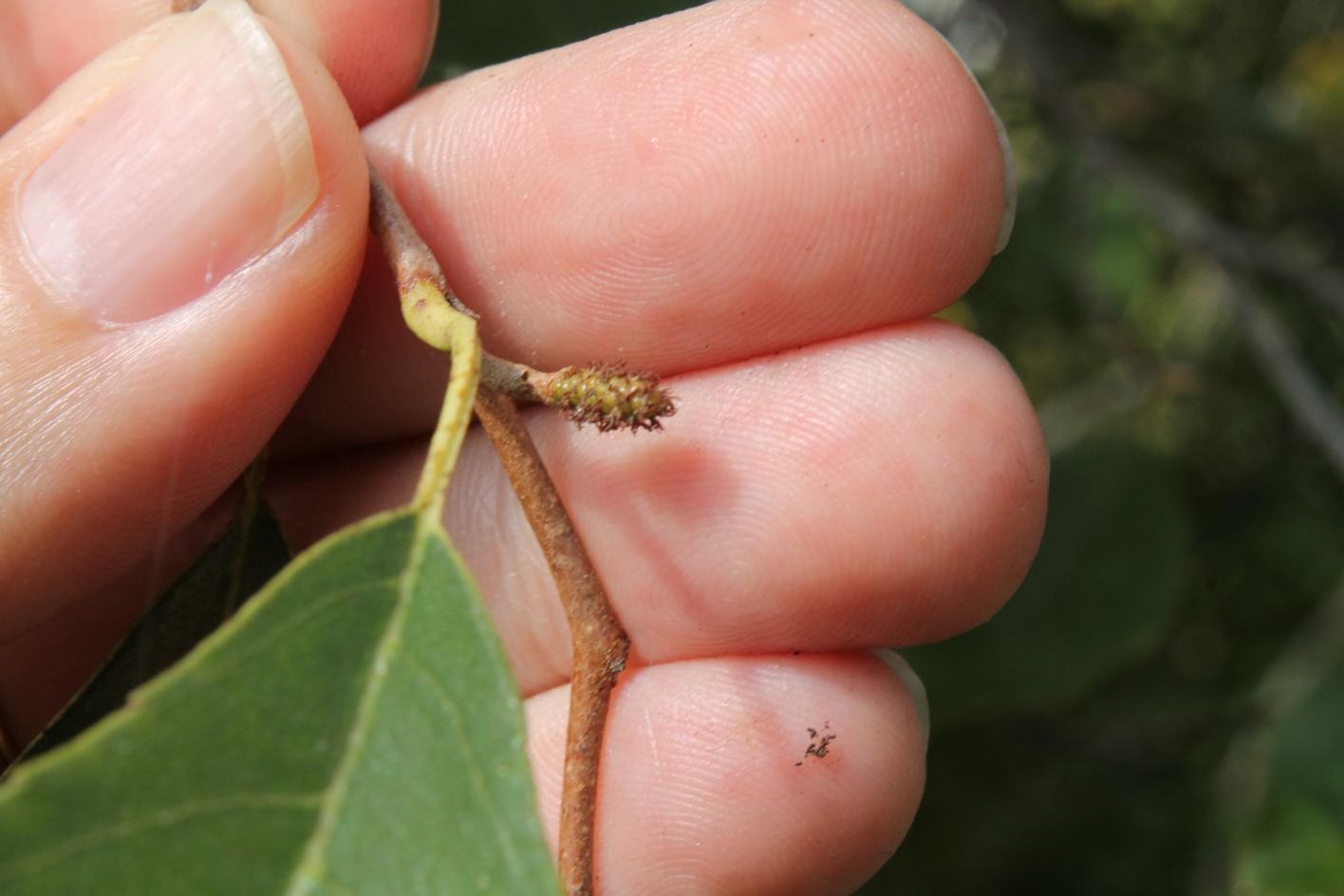
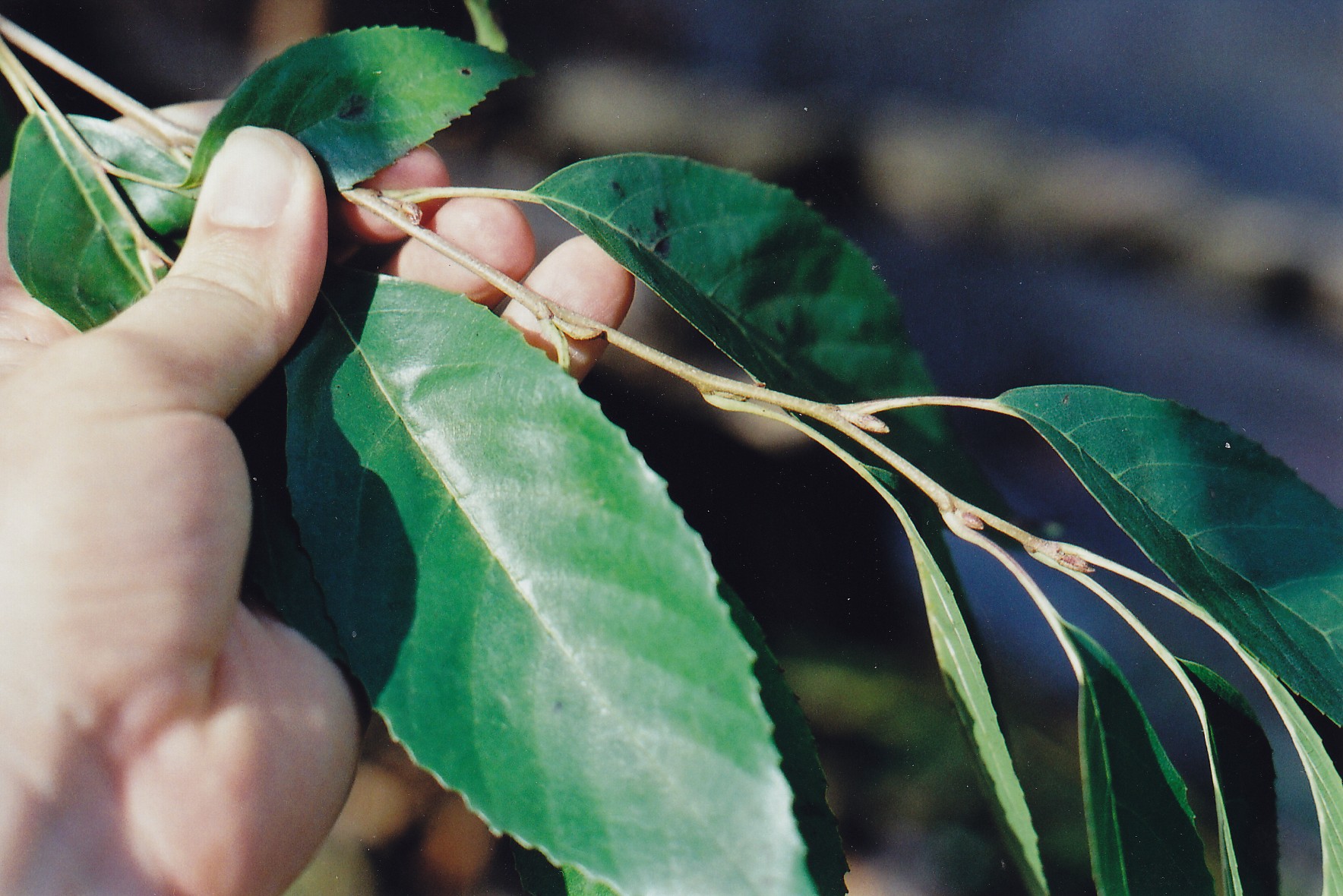
Young female “cone” of a seaside alder (Alnus maritima) in south-central Oklahoma. The Oklahoma subspecies grows only in a small area on the Blue River and nearby creeks.
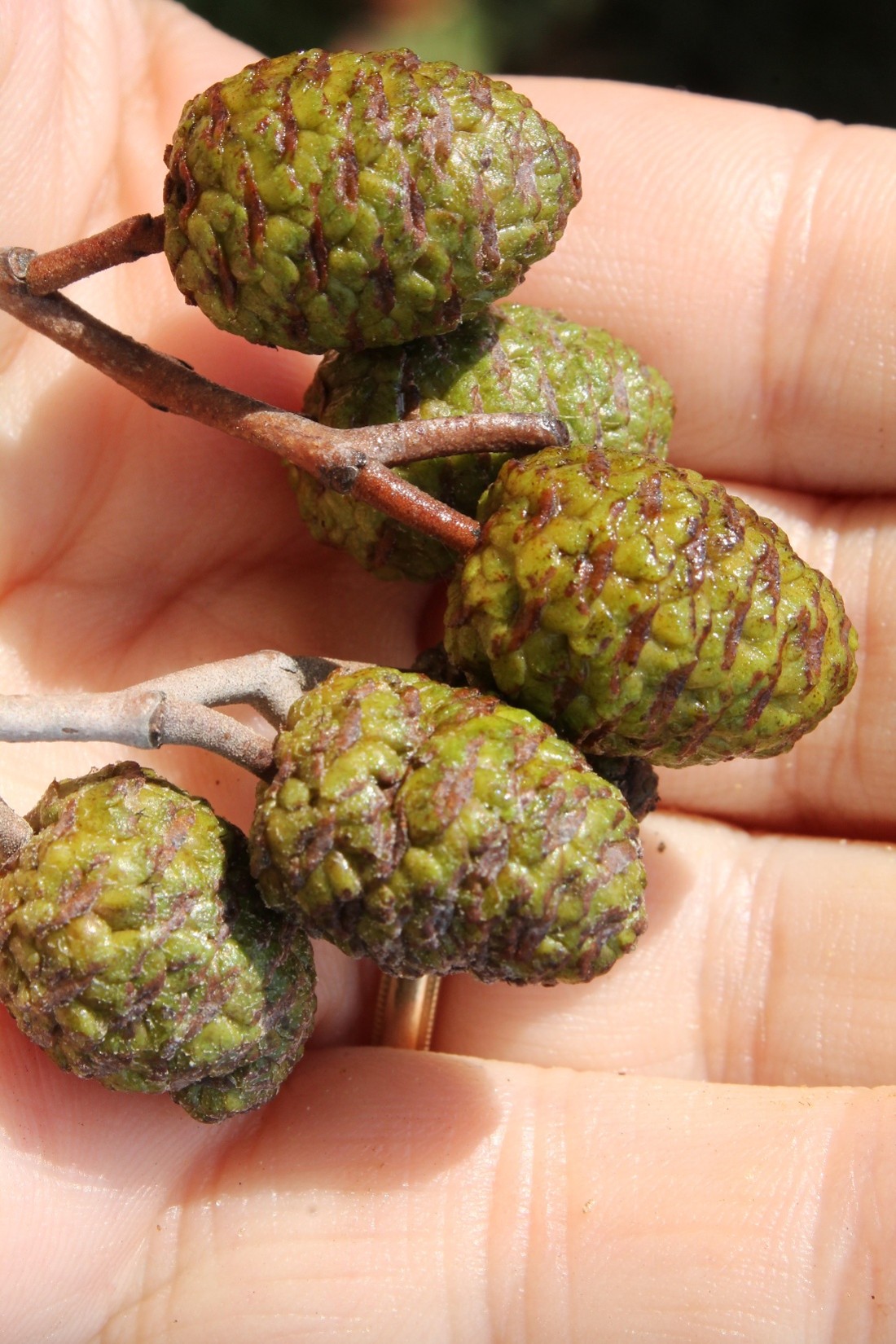
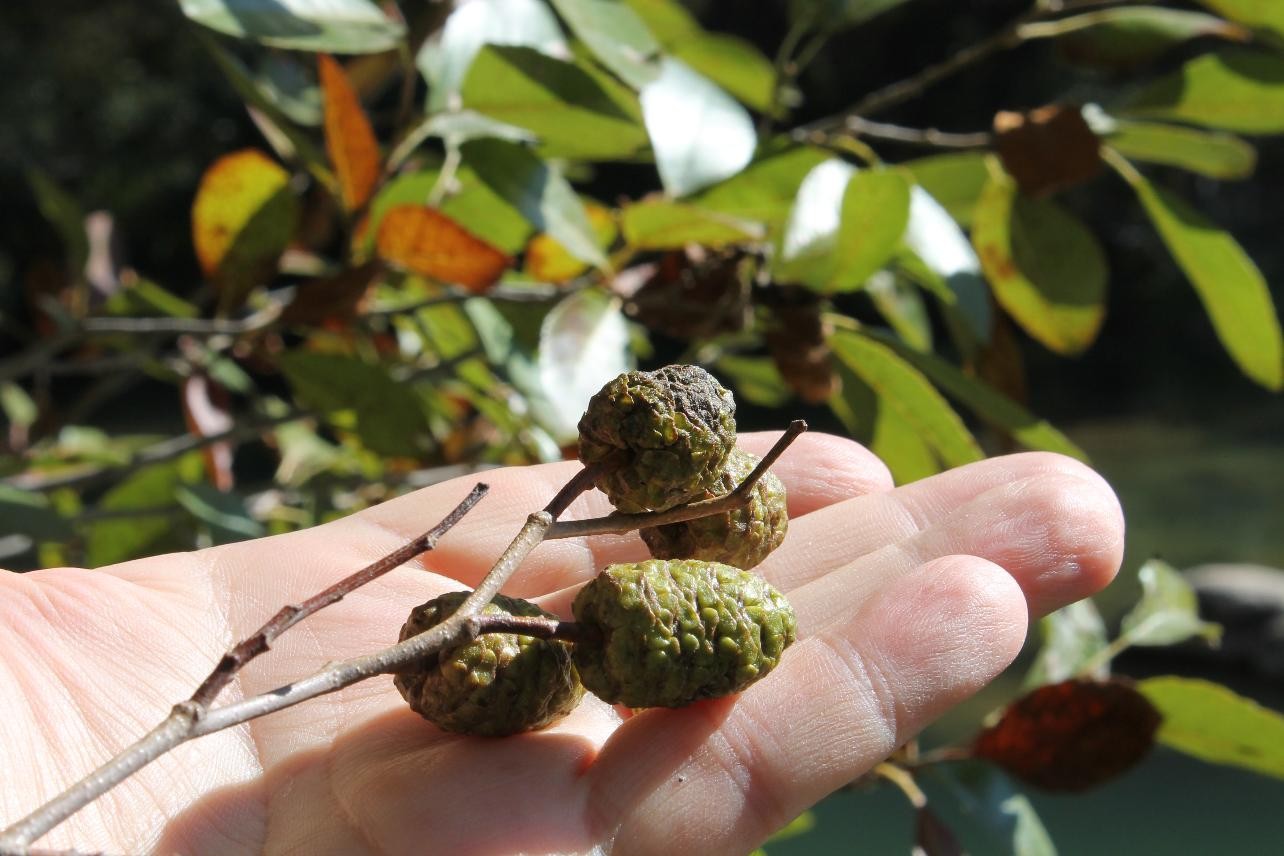
Female “cones” of a seaside alder (Alnus maritima) in south-central Oklahoma. The Oklahoma subspecies grows only in a small area on the Blue River and nearby creeks. Photo by Stan Rice.
Sassafras flowers (Sassafras albidum) in a deciduous forest in southeastern Oklahoma.
Soapberry (Sapindus drummondii) flowers in a dry forest in Oklahoma.
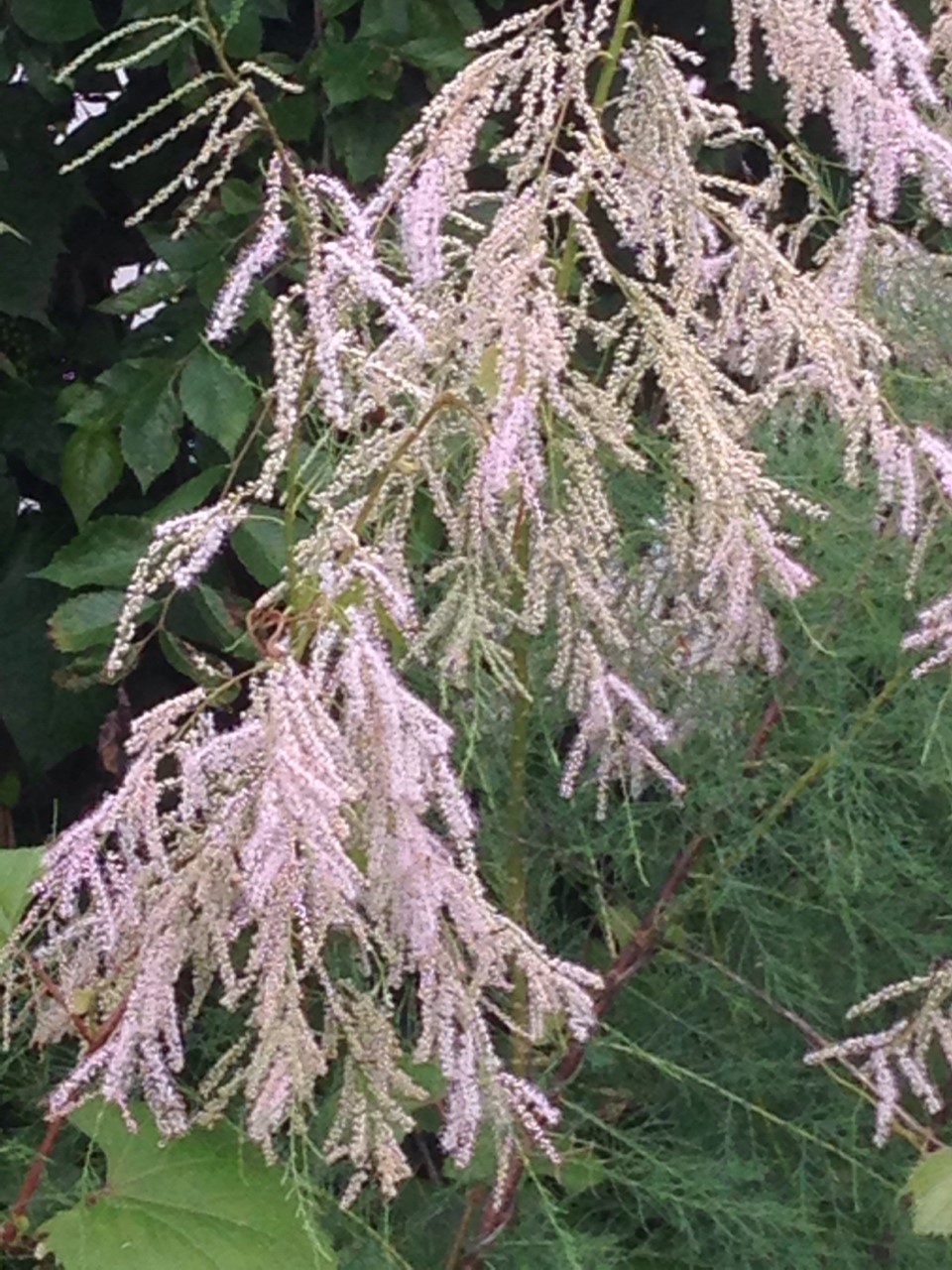
Flowers of saltcedar (genus Tamarix) in Oklahoma.
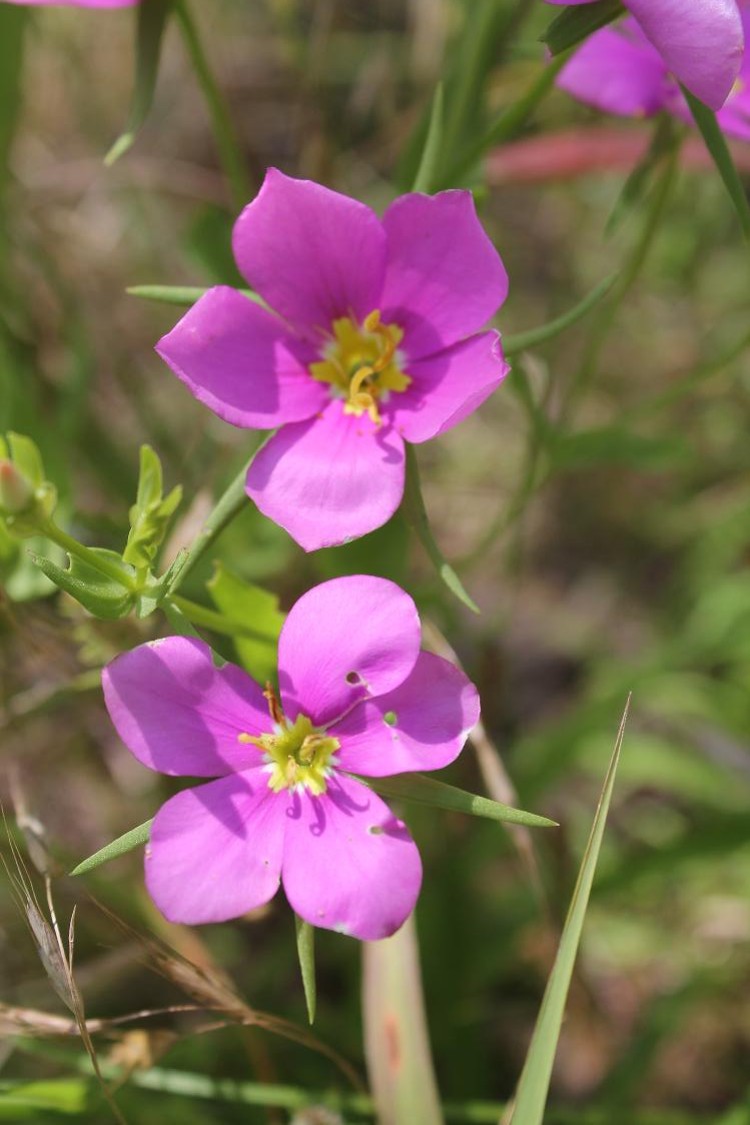
Sabatia campestris (rose gentian) in a field in Oklahoma.
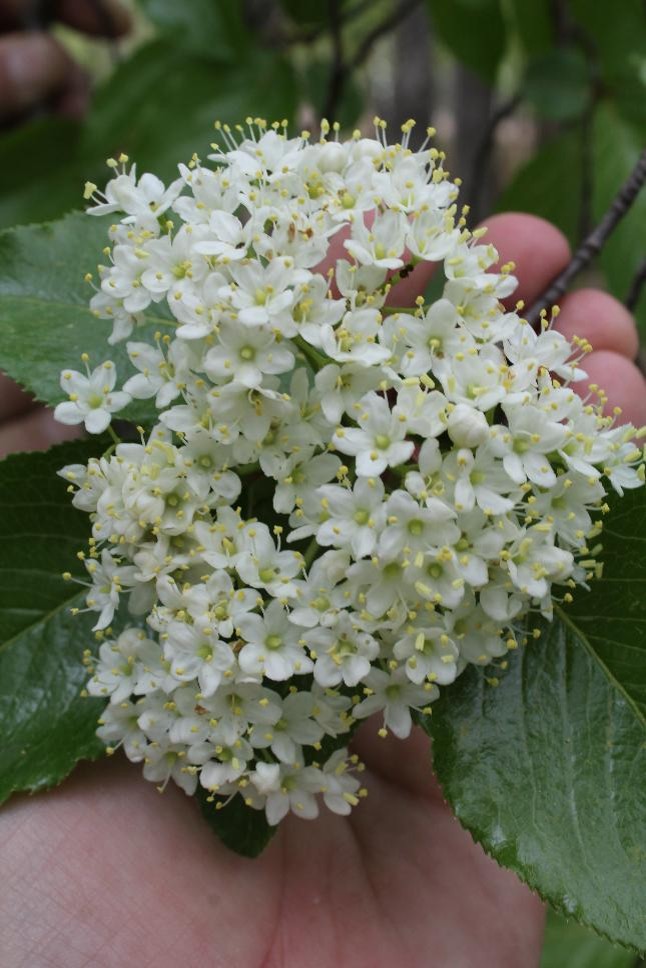
Flowers of rusty blackhaw (Viburnum rufidulum) in a forest in eastern Oklahoma. What appear to be petals are sepals.
A wild petunia flower (Ruellia) on a forest floor in Oklahoma.
A rue anemone (genus Thalictrum) in Oklahoma.
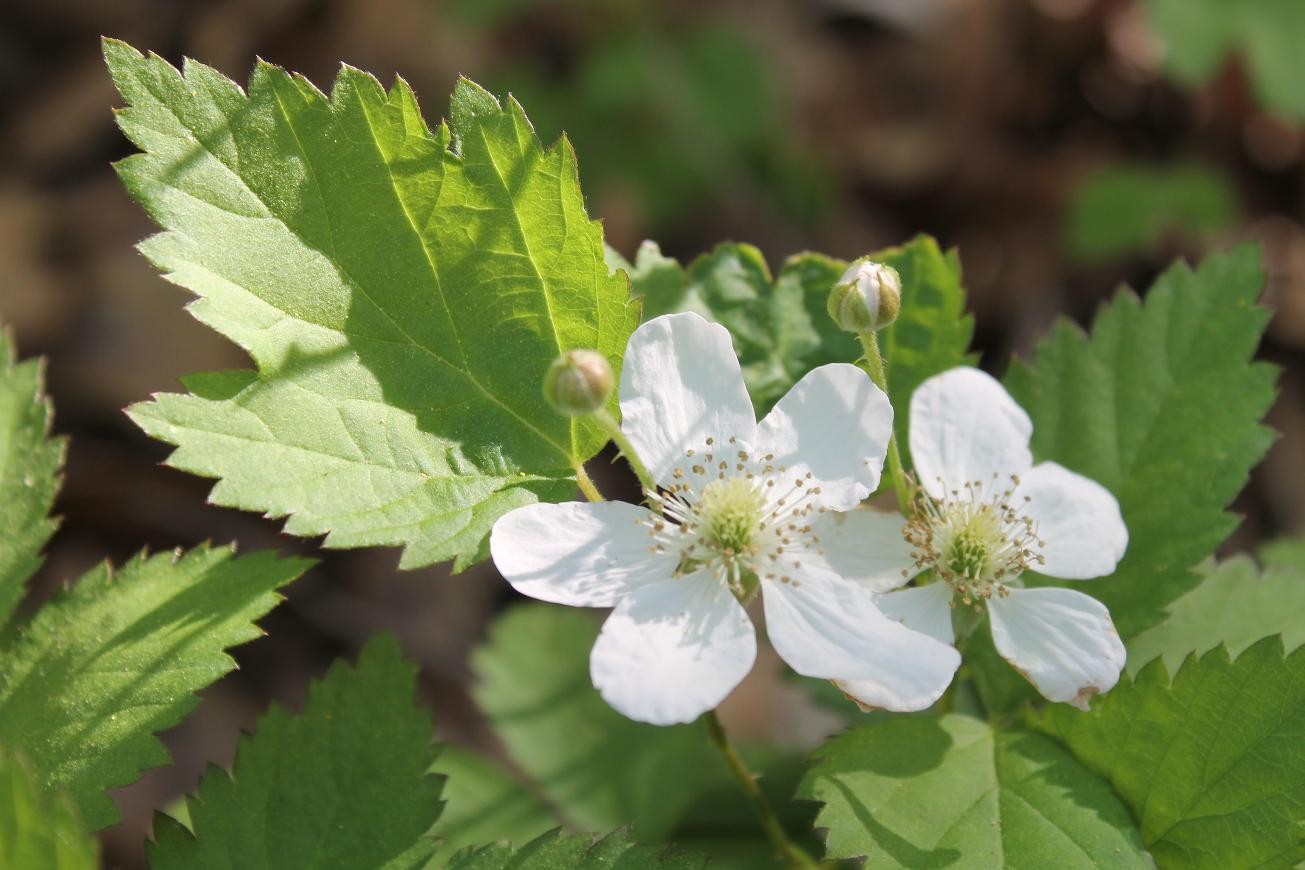
Wild blackberry (genus Rubus) in a field in Oklahoma.
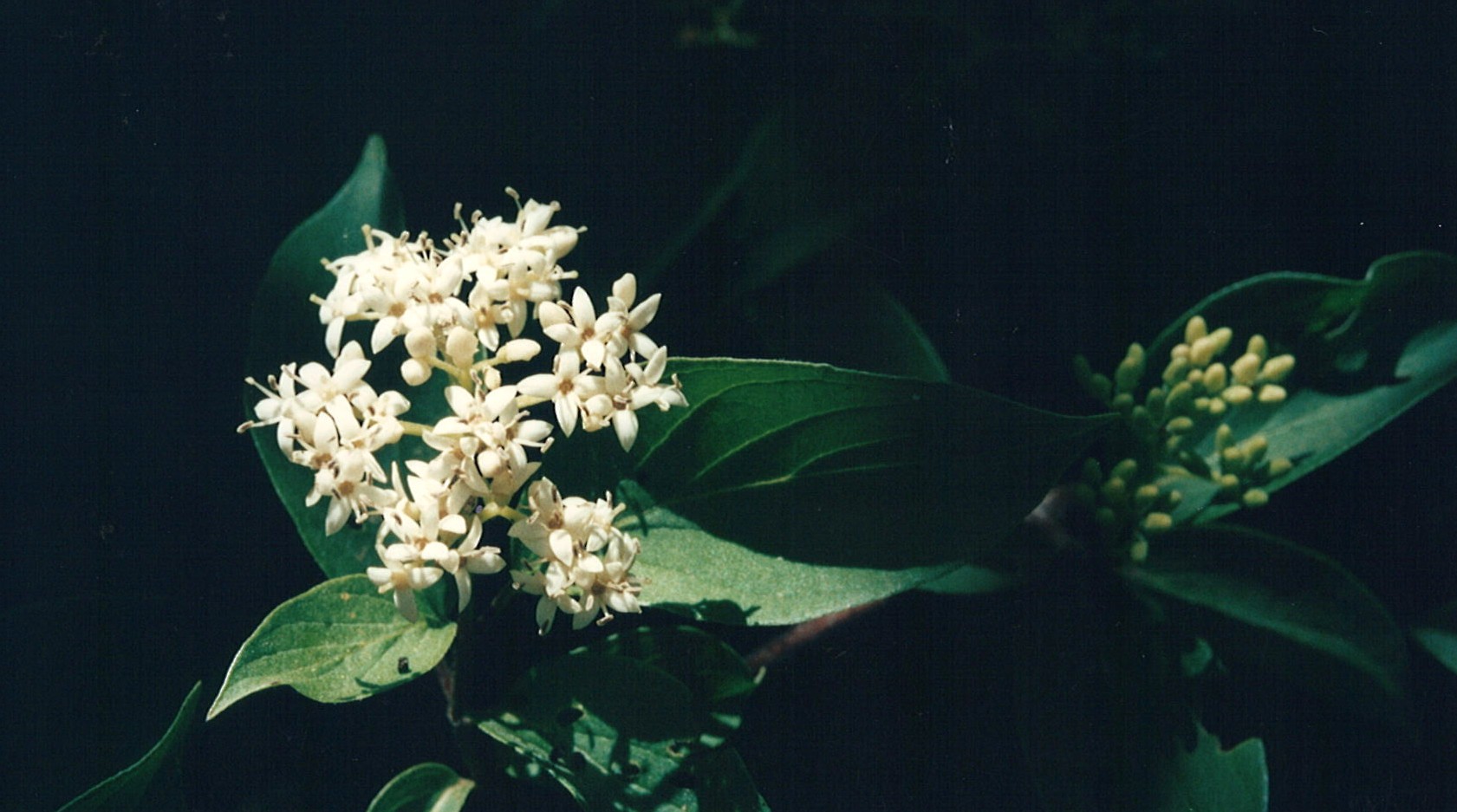
Rough dogwood (Cornus nuttallii) in a forest in Oklahoma. Unlike many other dogwood species, this one has no large flowerlike bracts.
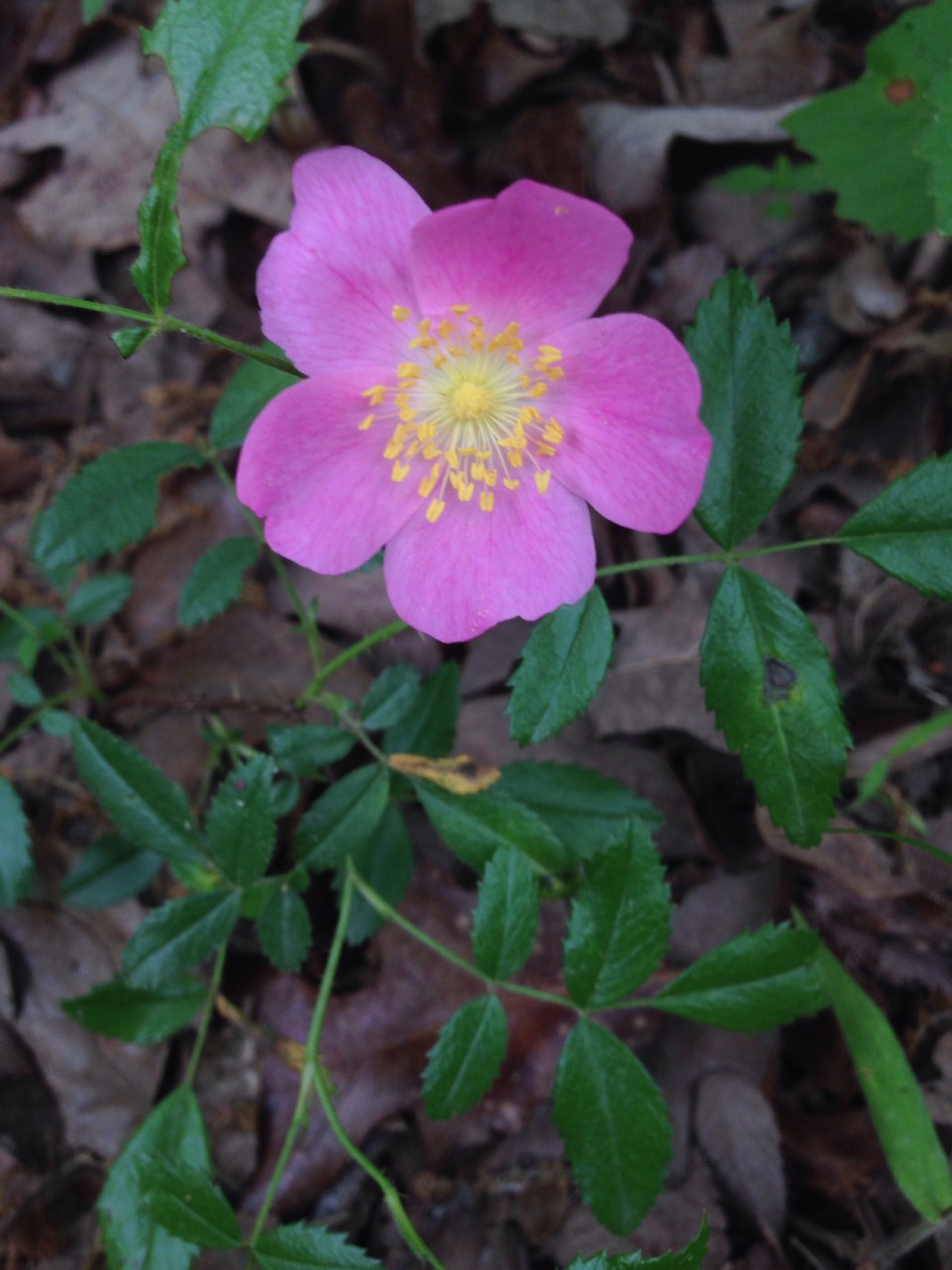
Rosa arkansa, a wild rose in Oklahoma.
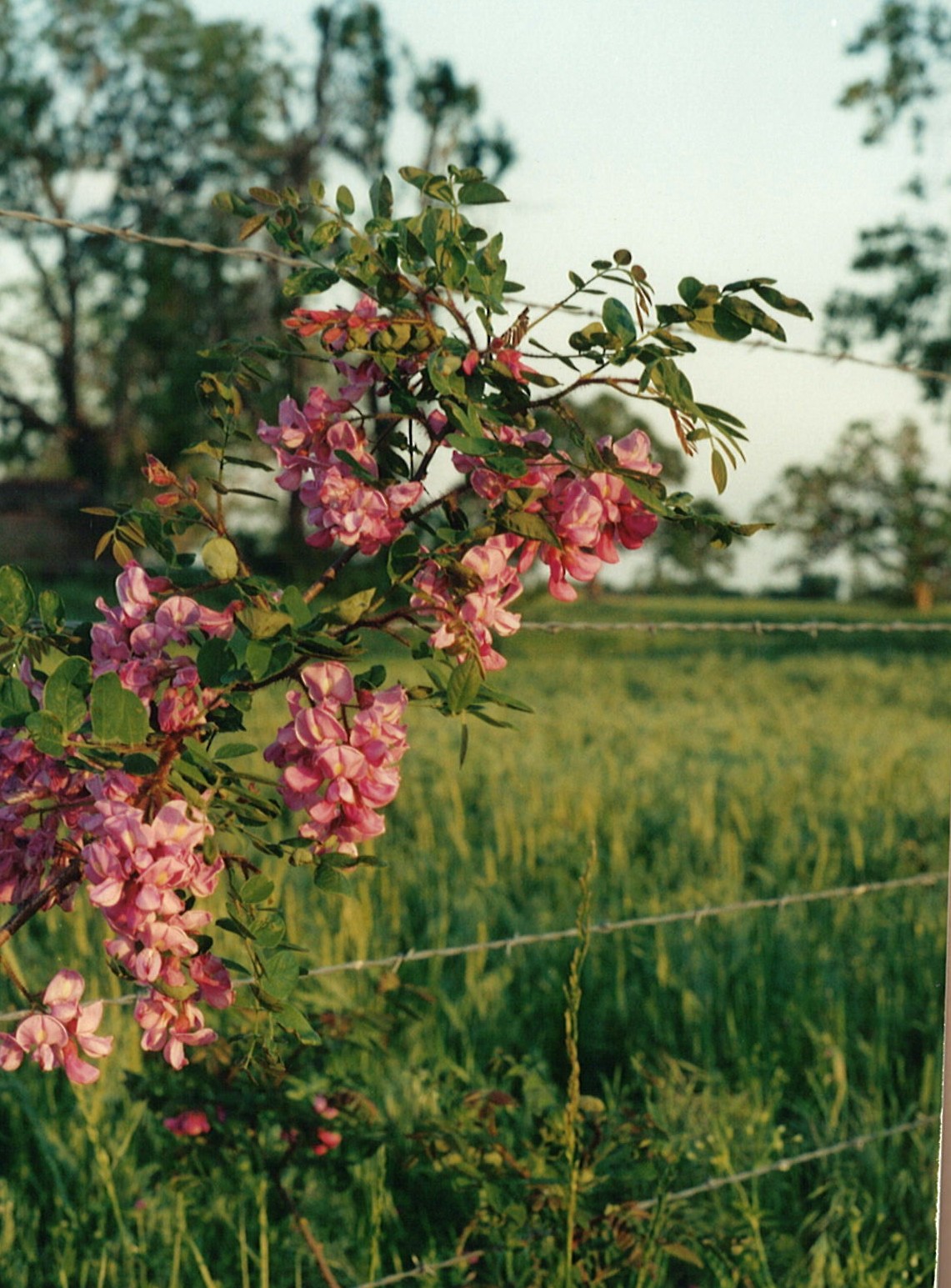
Robinia hispida, a prickly shrub in Oklahoma.
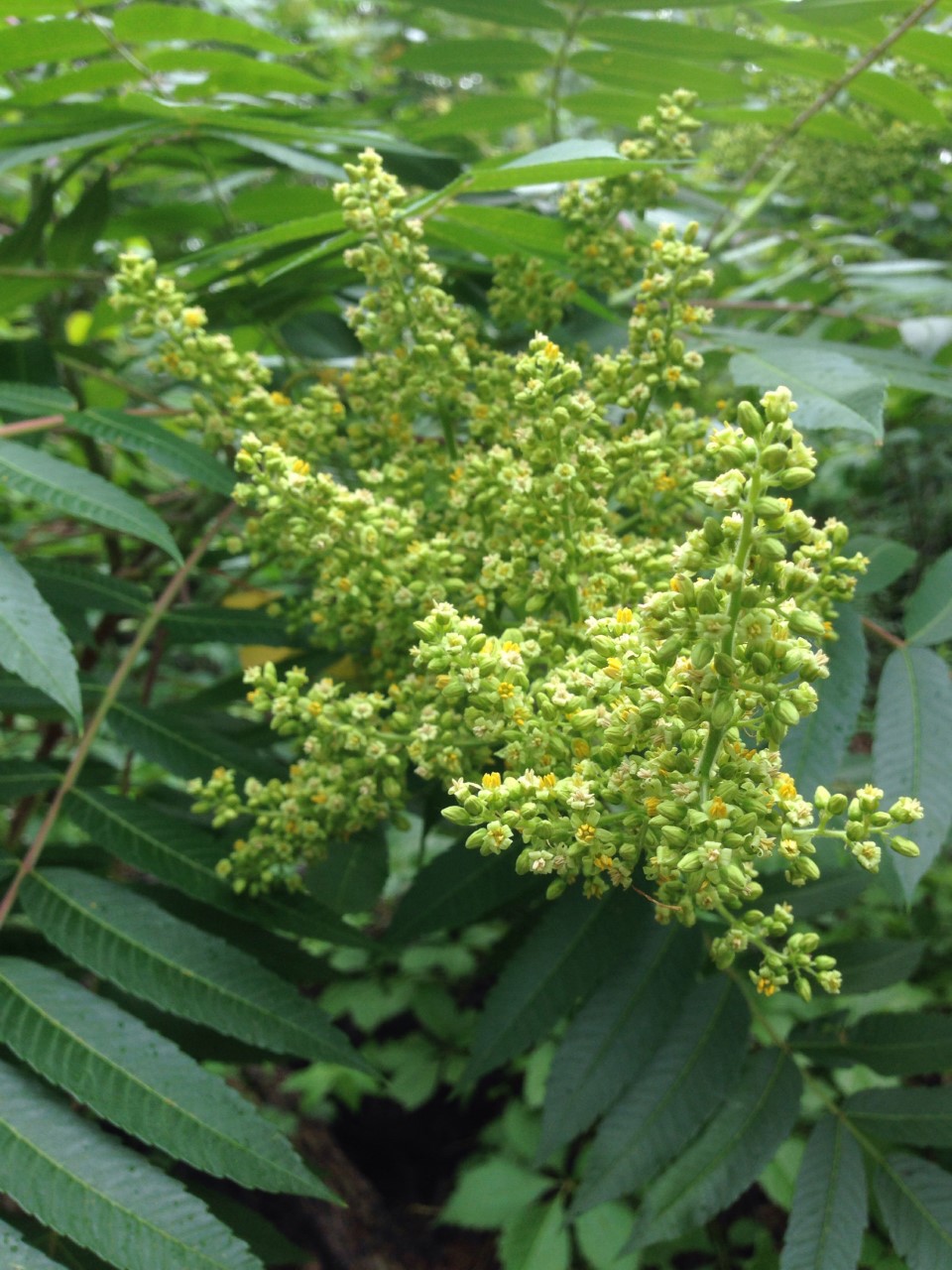
Smooth sumac (Rhus glabra) in bloom in Oklahoma.
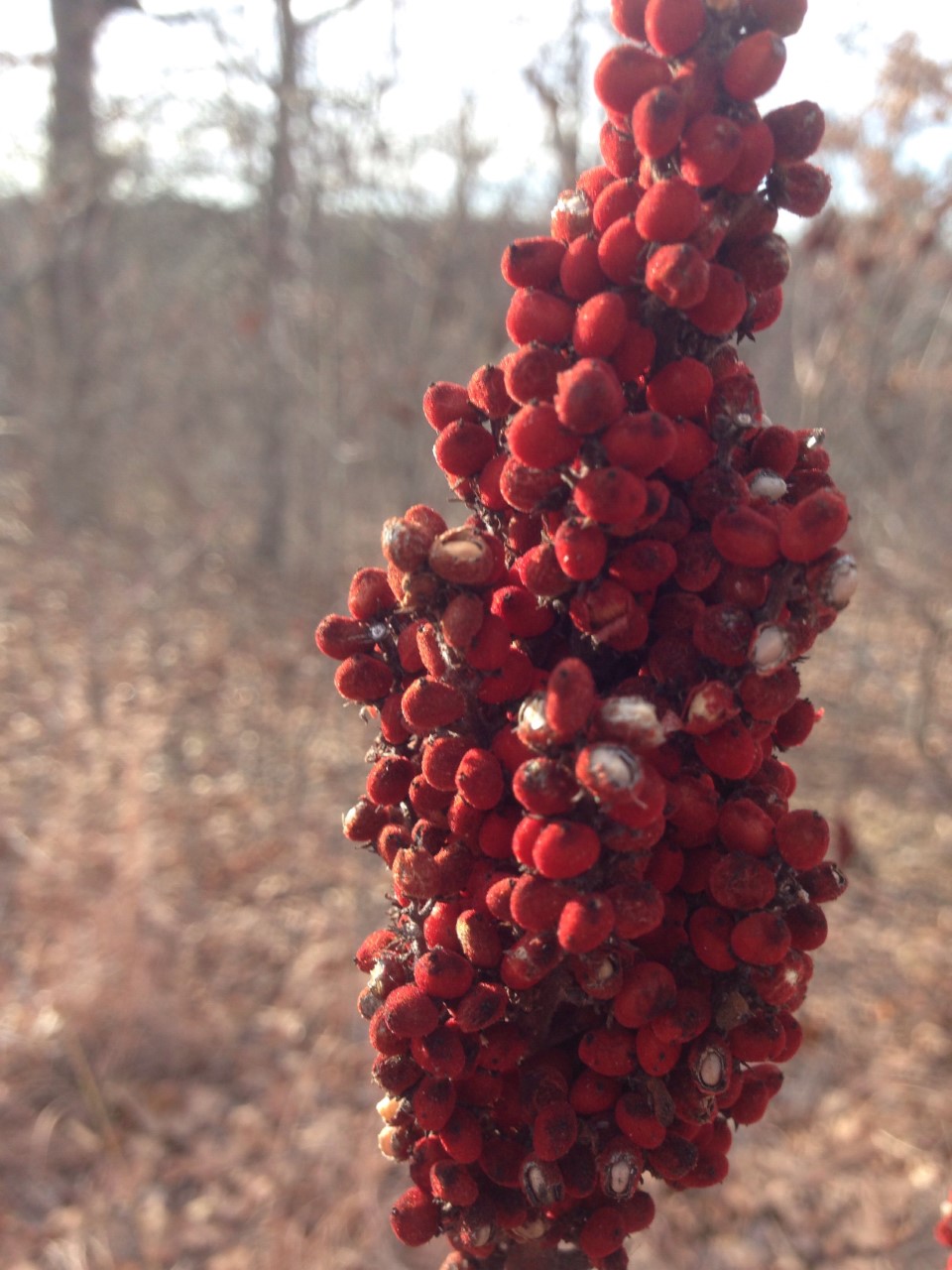
Red fruits of Rhus glabra (smooth sumac) in Oklahoma.
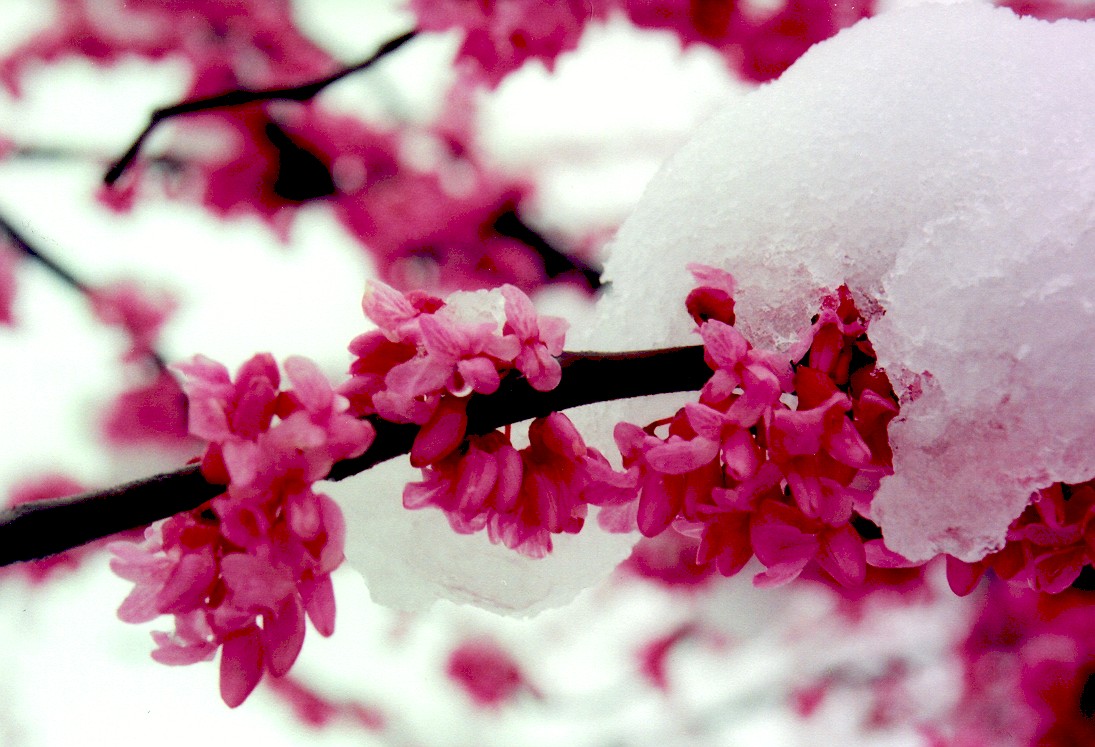
A late spring snowstorm has covered the pink flowers of redbud (Cercis canadensis) in northern Oklahoma.
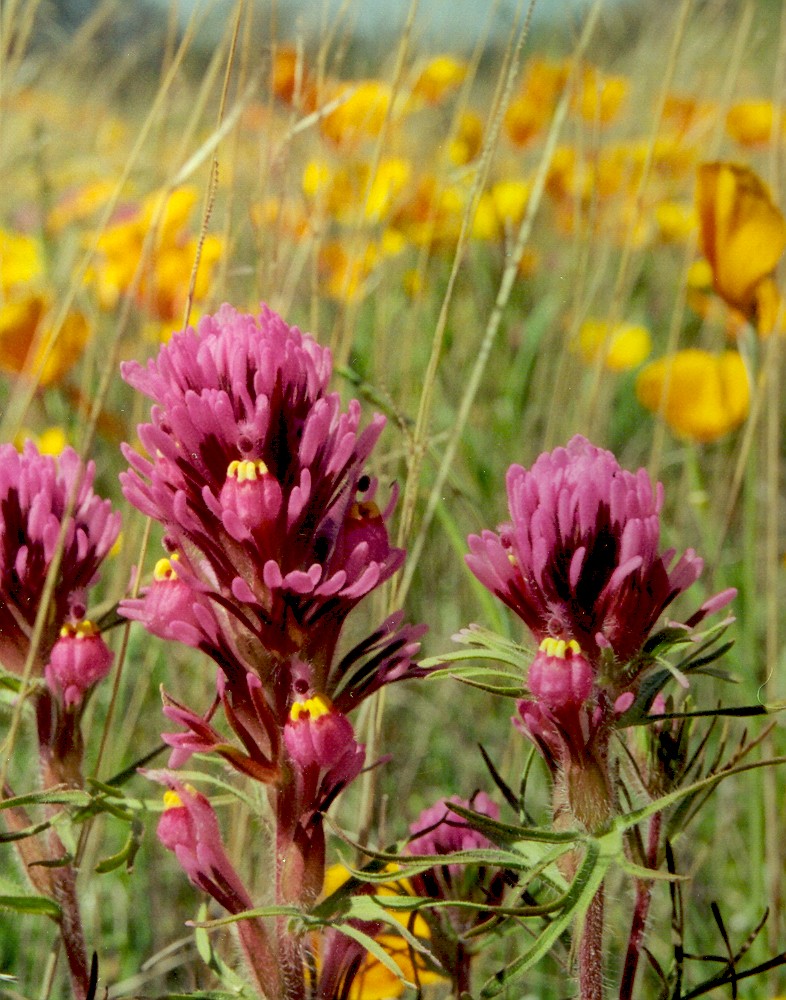
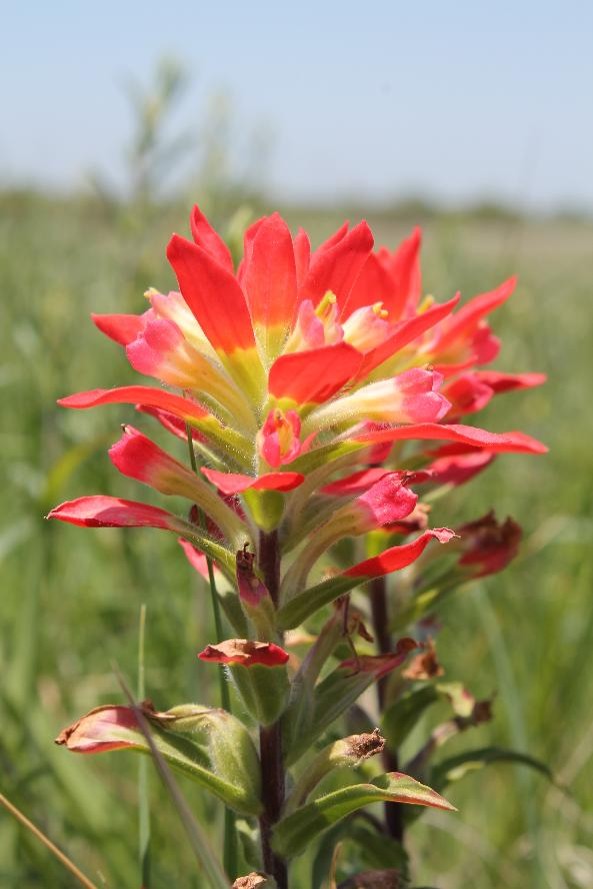
Flowers of Indian paintbrush (genus Castilleja) in a field in Oklahoma. The flowers are green, down inside the red bracts. It is the bracts that attract the pollinators.
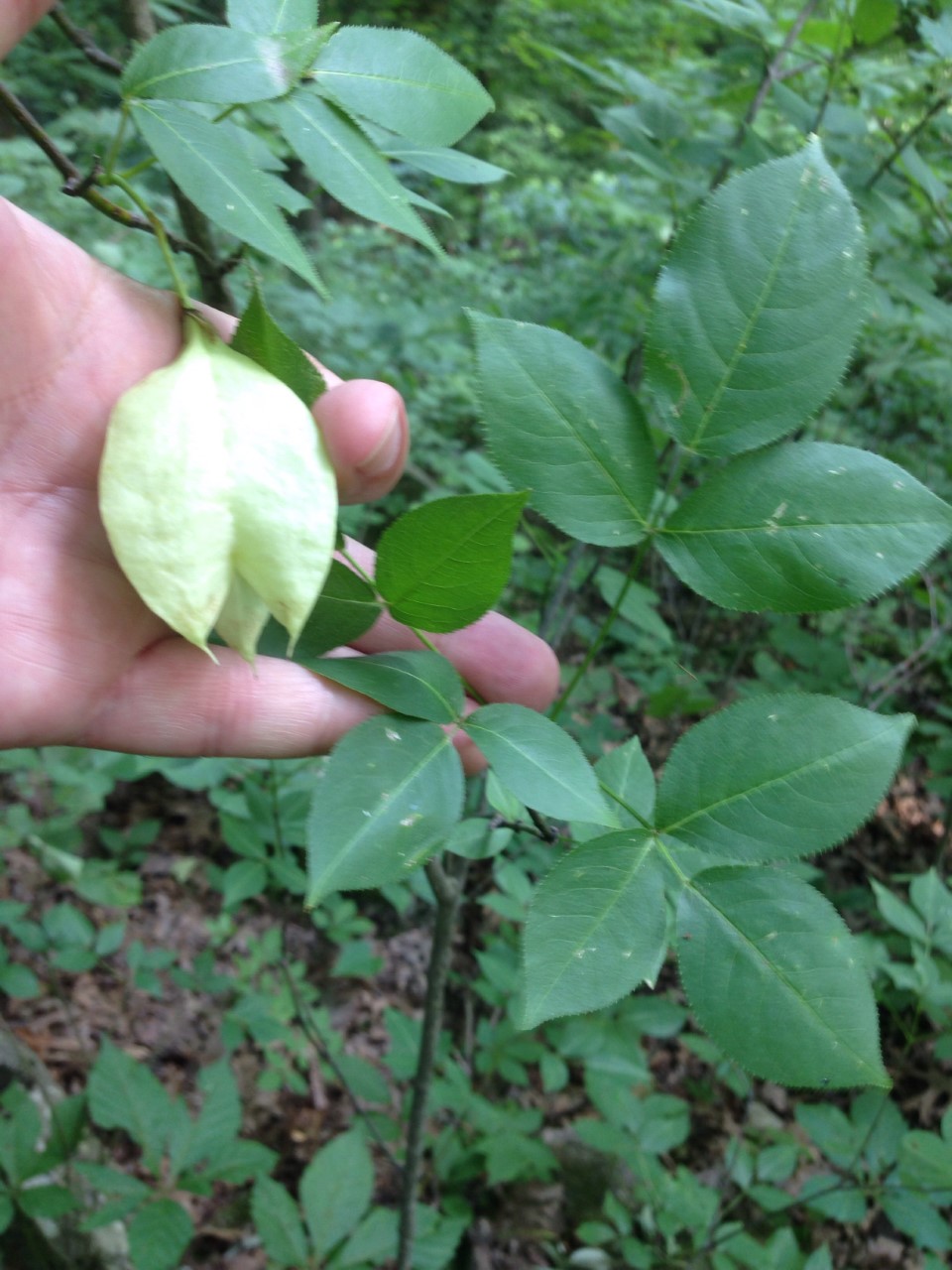
Fruit of Ptelea trifoliata in a forest in Oklahoma.
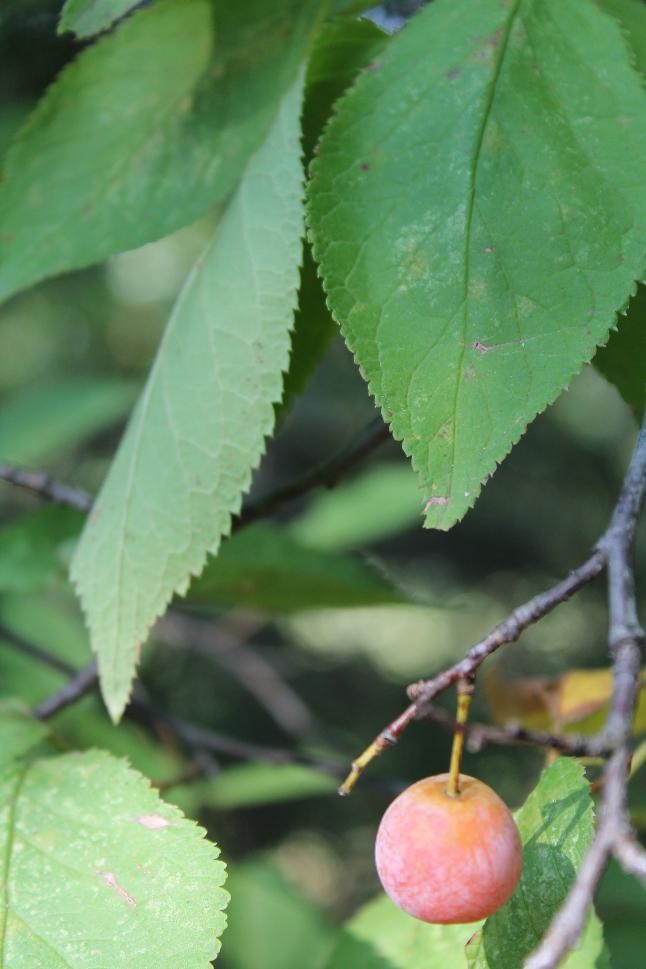
The wild (and very edible) plum Prunus americana in a forest in northern Oklahoma.
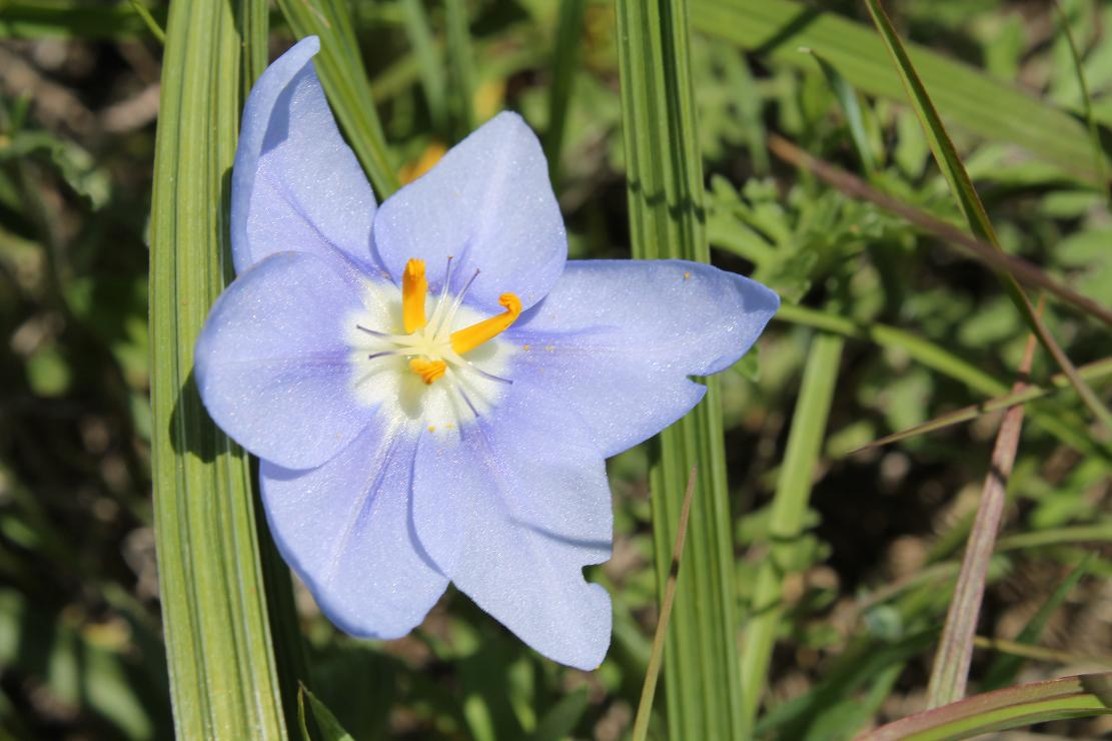
A wildflower in a prairie remnant in Oklahoma, in the iris family. The three, rather than six, stamens distinguish it from the lily family.
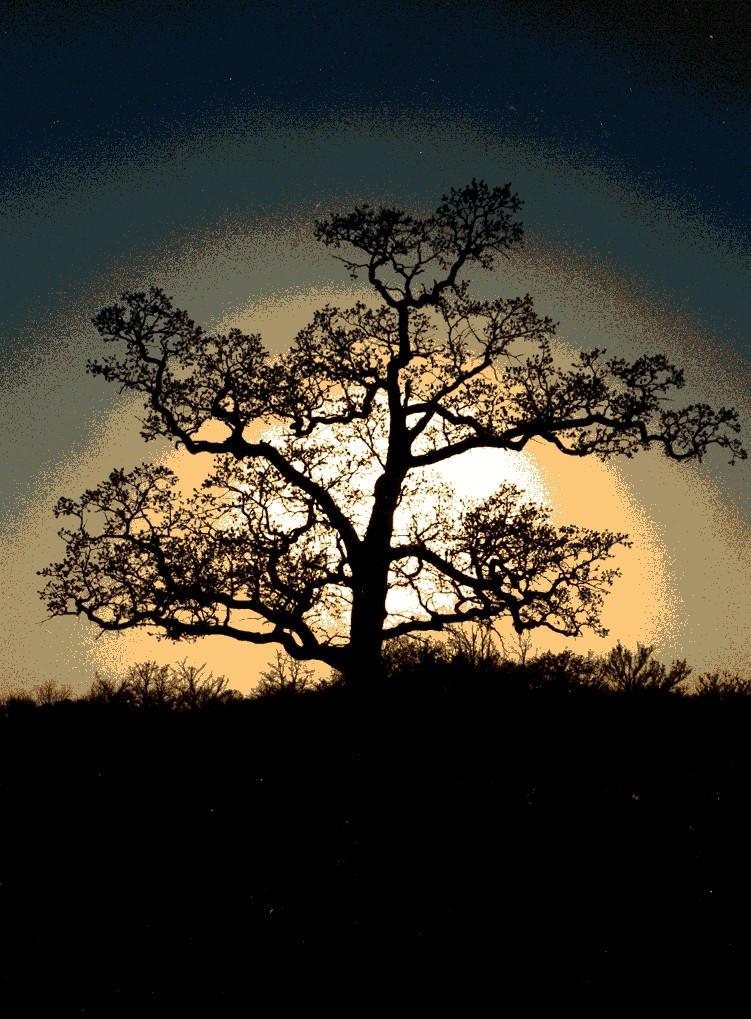
Special effects photo of a sunset behind a post oak tree in Oklahoma. Photo by Stan Rice.
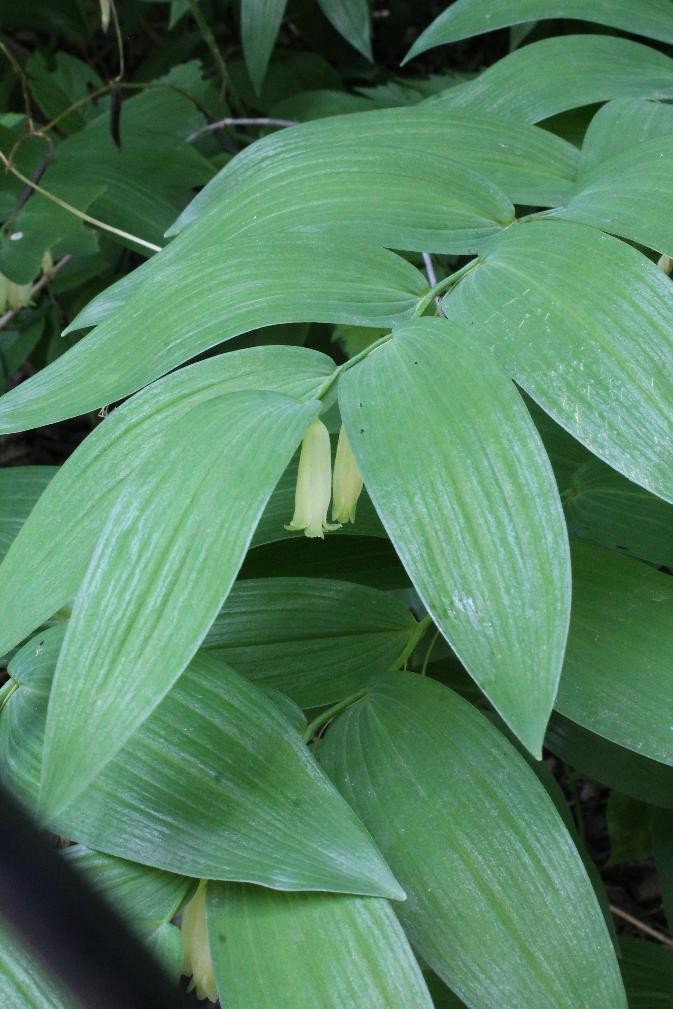
Polygonatum biflorum (Solomon’s seal) in a forest understory in northeastern Oklahoma.
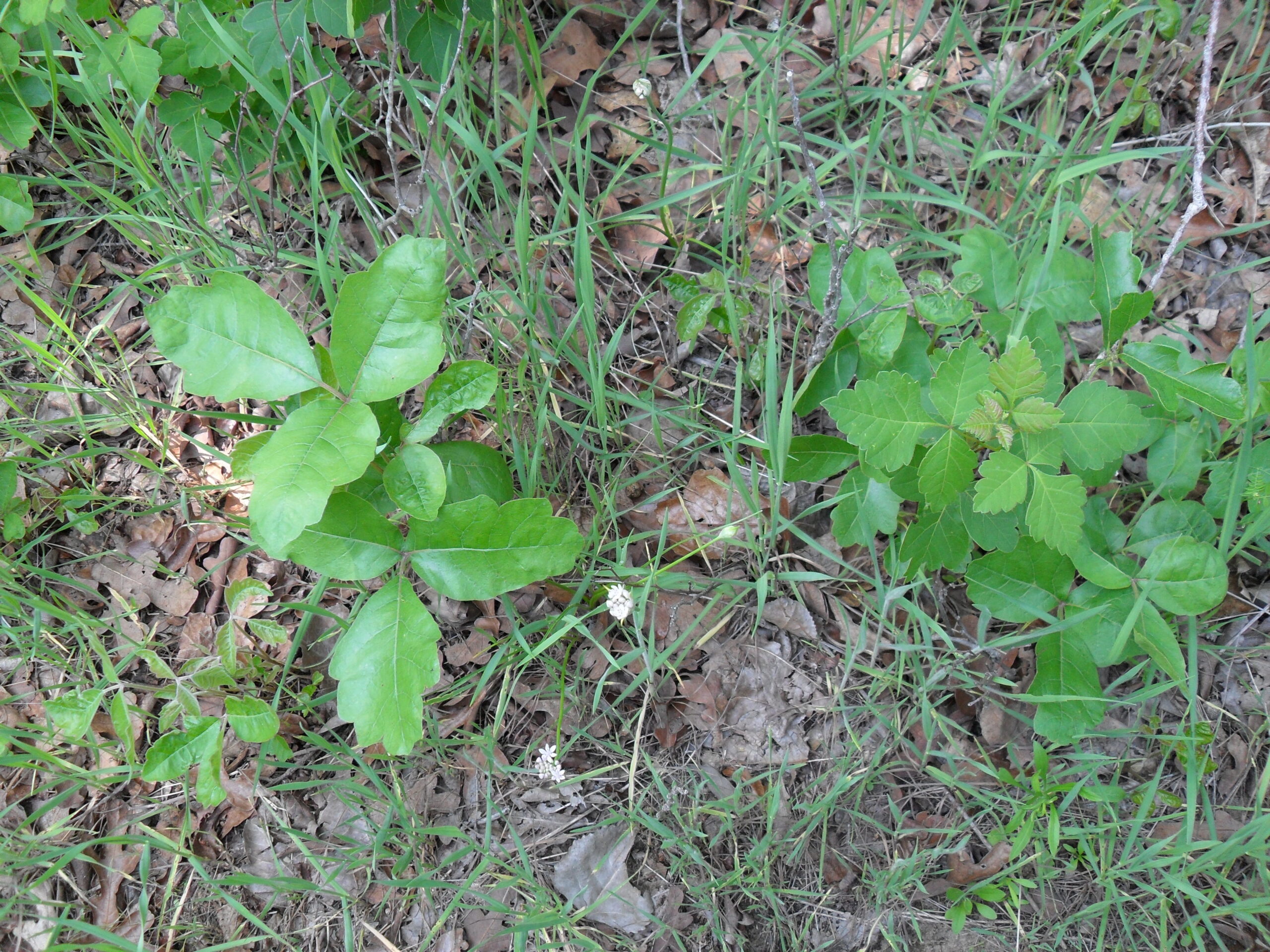
Poison ivy (Toxicodendron radicans, left) and aromatic sumac (Rhus aromatica, right) grow in the same habitats side by side, here in southern Oklahoma. Poison ivy leaves have a stalk on the middle leaflet, the sumac does not.
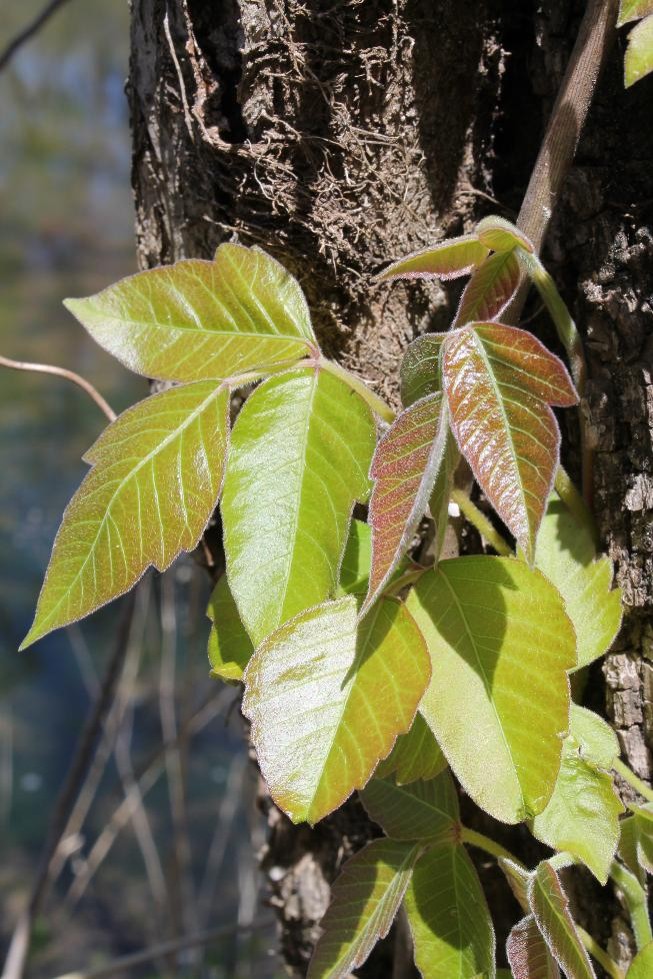
Young poison ivy leaves (Toxicodendron radicans) have a reddish cast and are shiny.
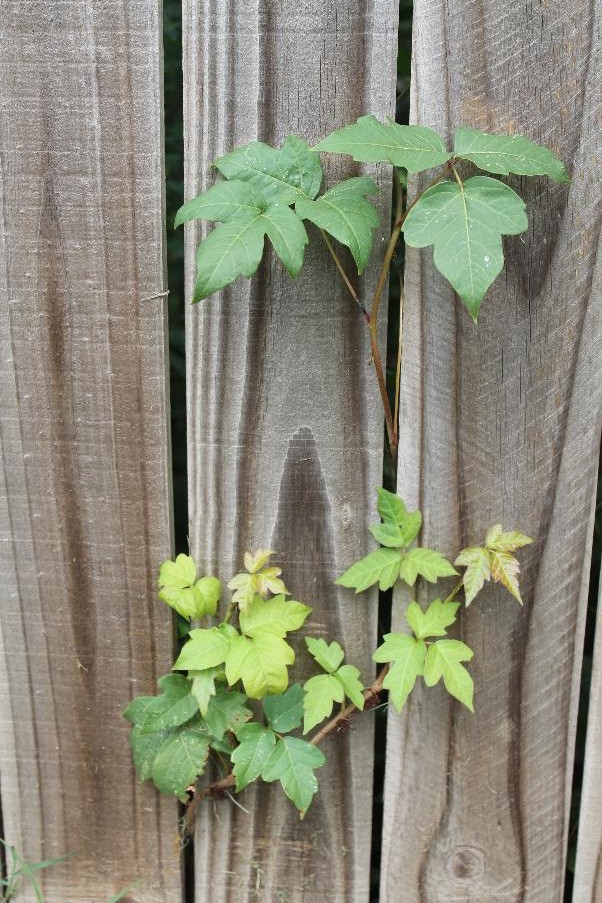
Poison ivy growing through somebody’s fence in Tulsa, Oklahoma.
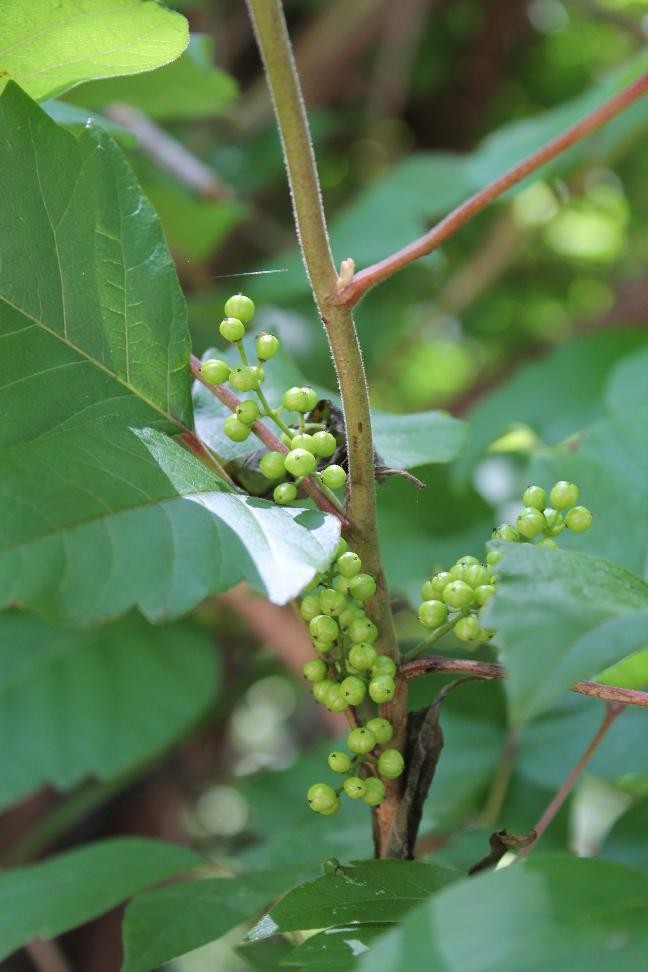
Berries of poison ivy (Toxicodendron radicans) in a forest in Oklahoma.
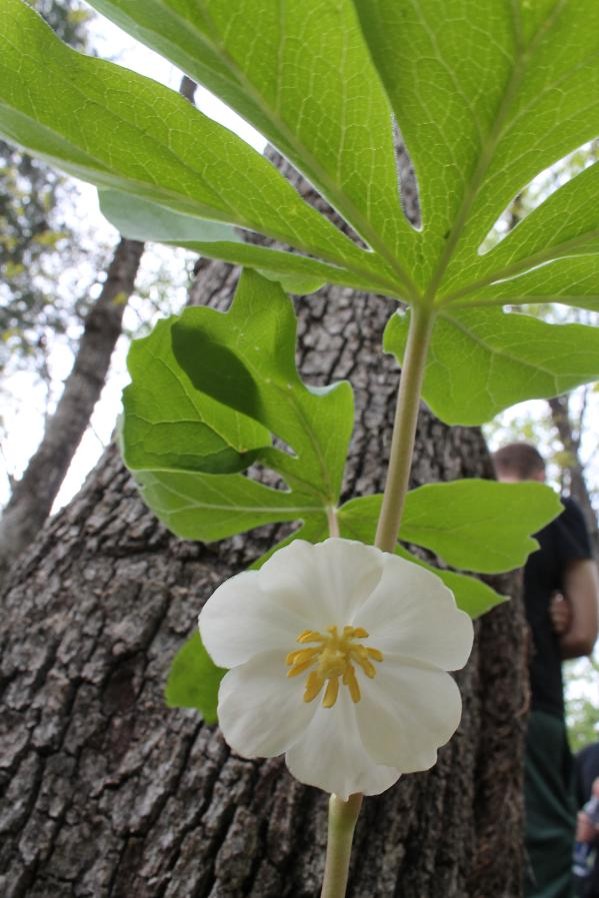
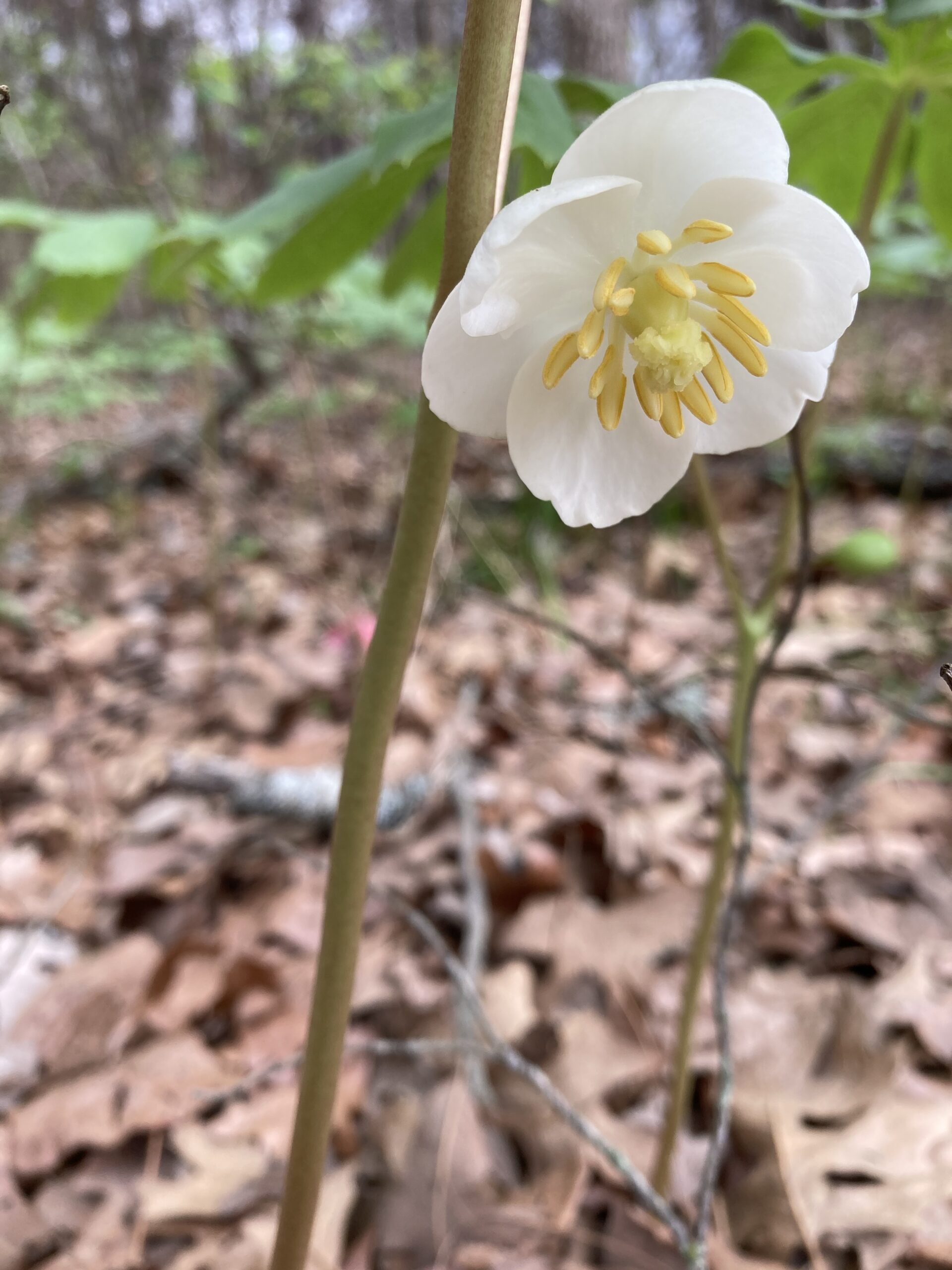
Spring flowers of mayapple (Podophyllum peltatum) face the ground.
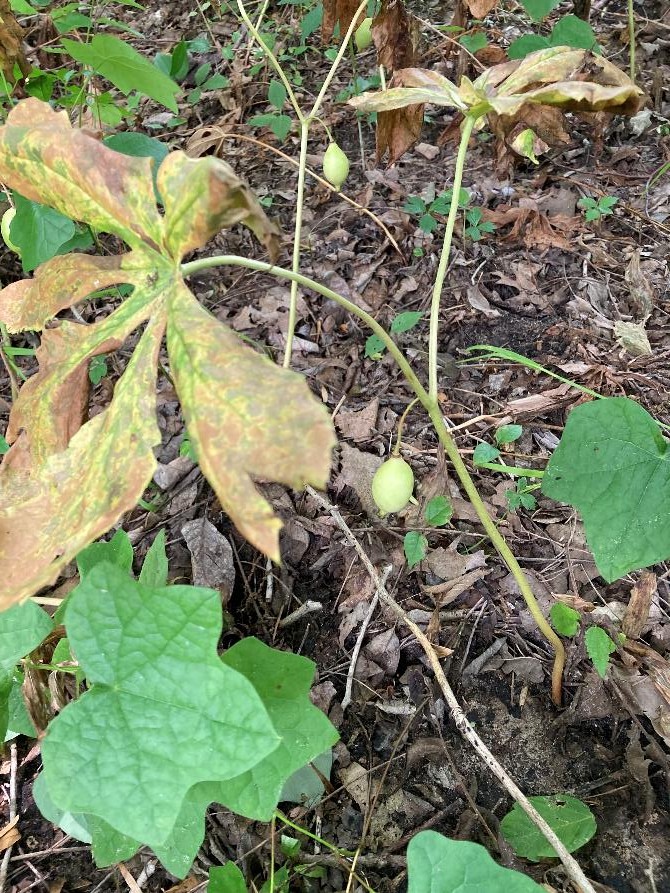
Ripe fruits of mayapple (Podophyllum peltatum) in a forest in southern Oklahoma. The fruits, which ripen when the leaves senesce, are the only edible part of the plant.
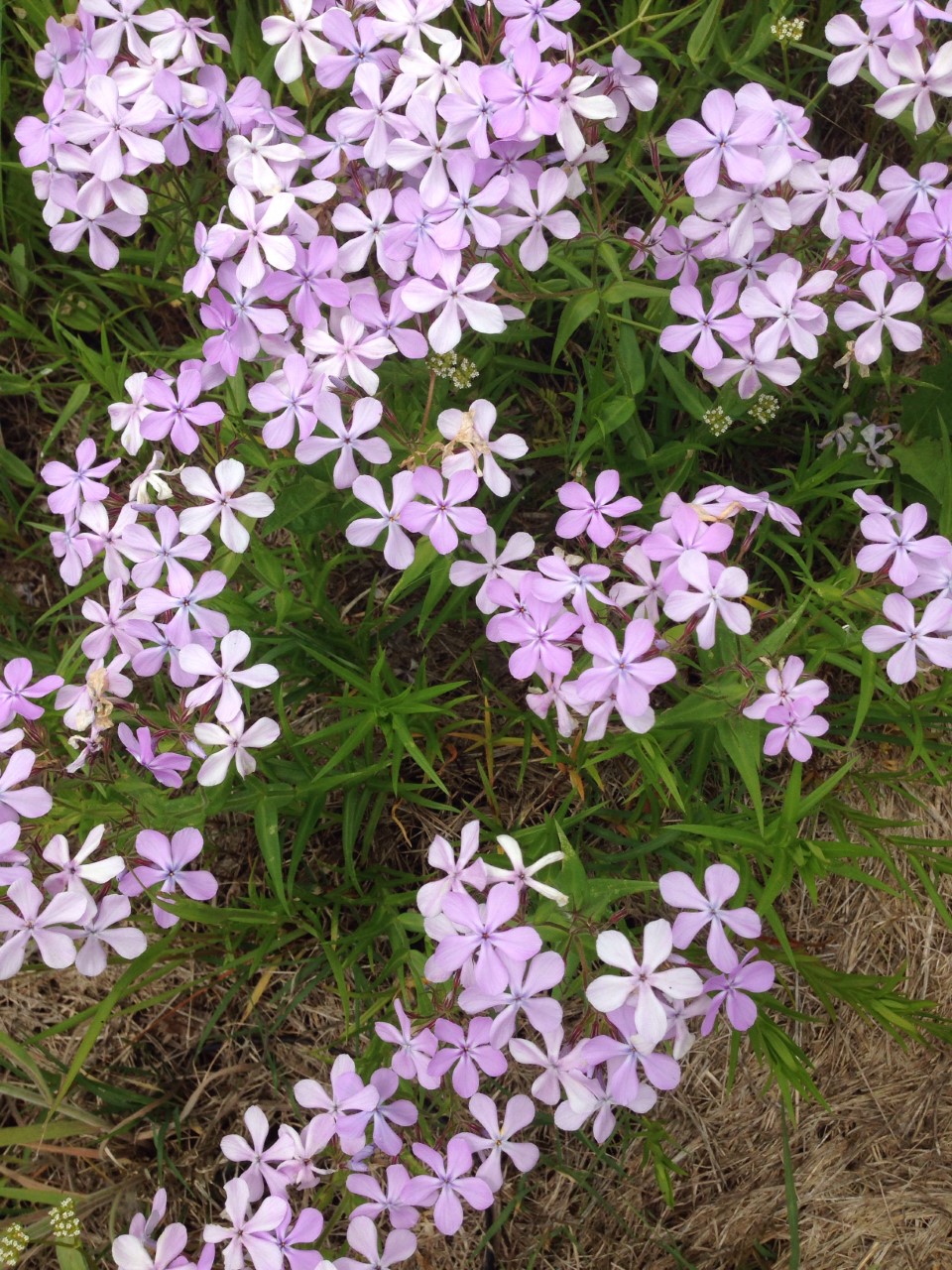
Phlox on an Oklahoma roadside in spring.
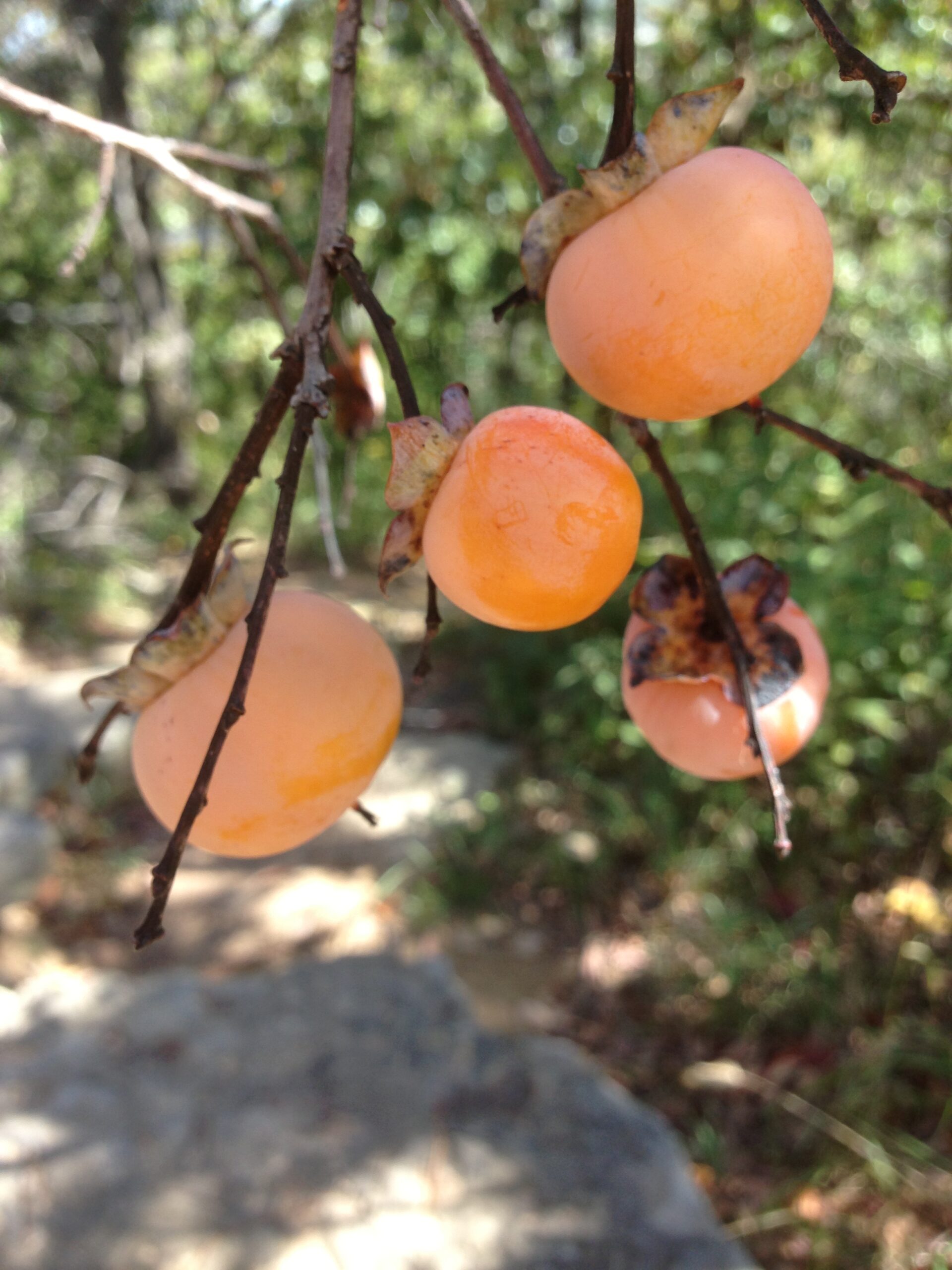
Persimmon fruits (Diospyros virginiana) in Oklahoma. These fruits are not yet edible; they are very astringent. Only after the first frost, when the fruit is dark and wrinkled, does the astringency disappear. The fruits are a favorite of raccoons and coyotes.
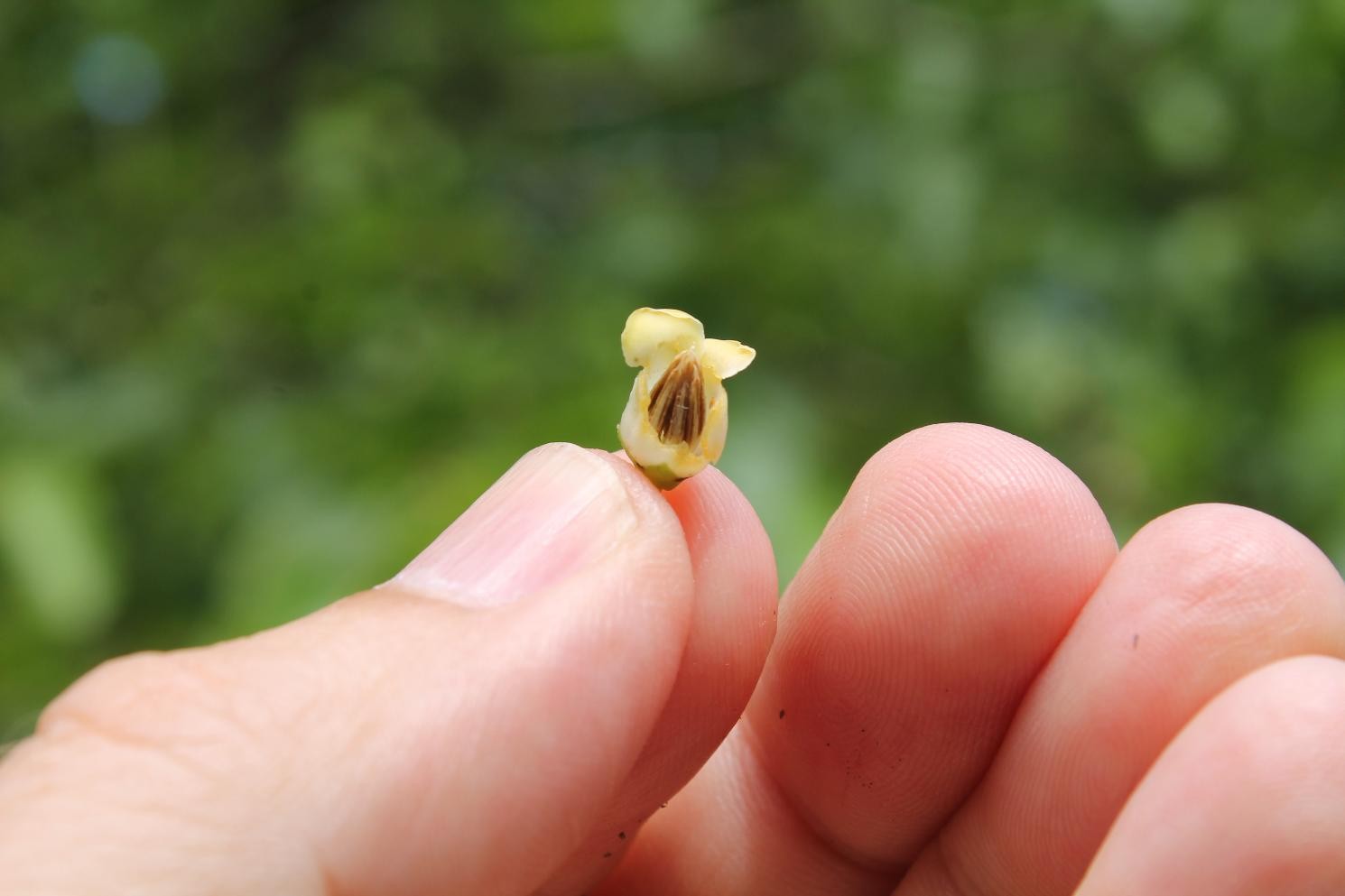
Flower of a male persimmon (Diospyros virginiana) tree in Oklahoma.
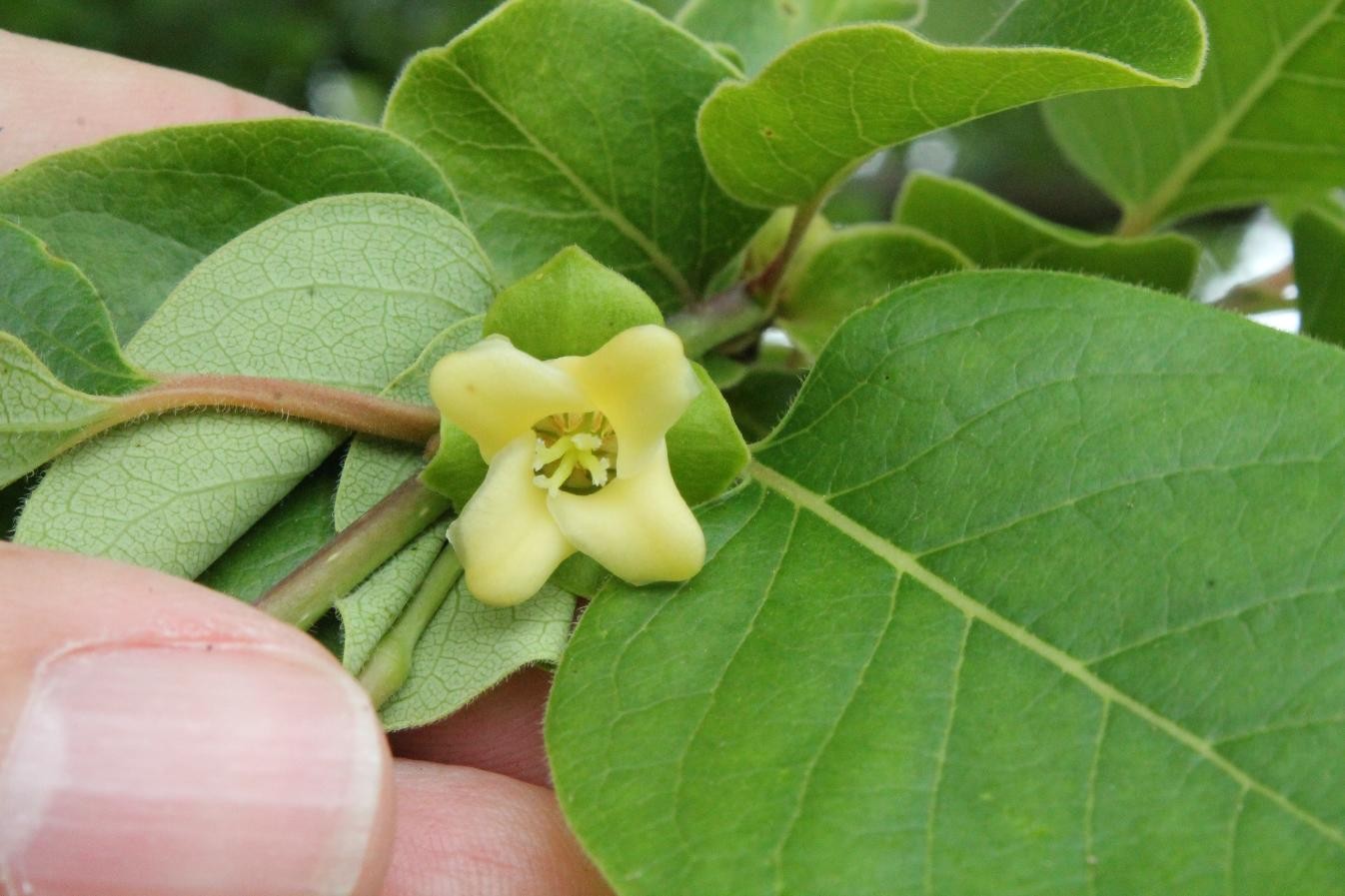
Flower of a female persimmon (Diospyros virginiana) tree in Oklahoma.
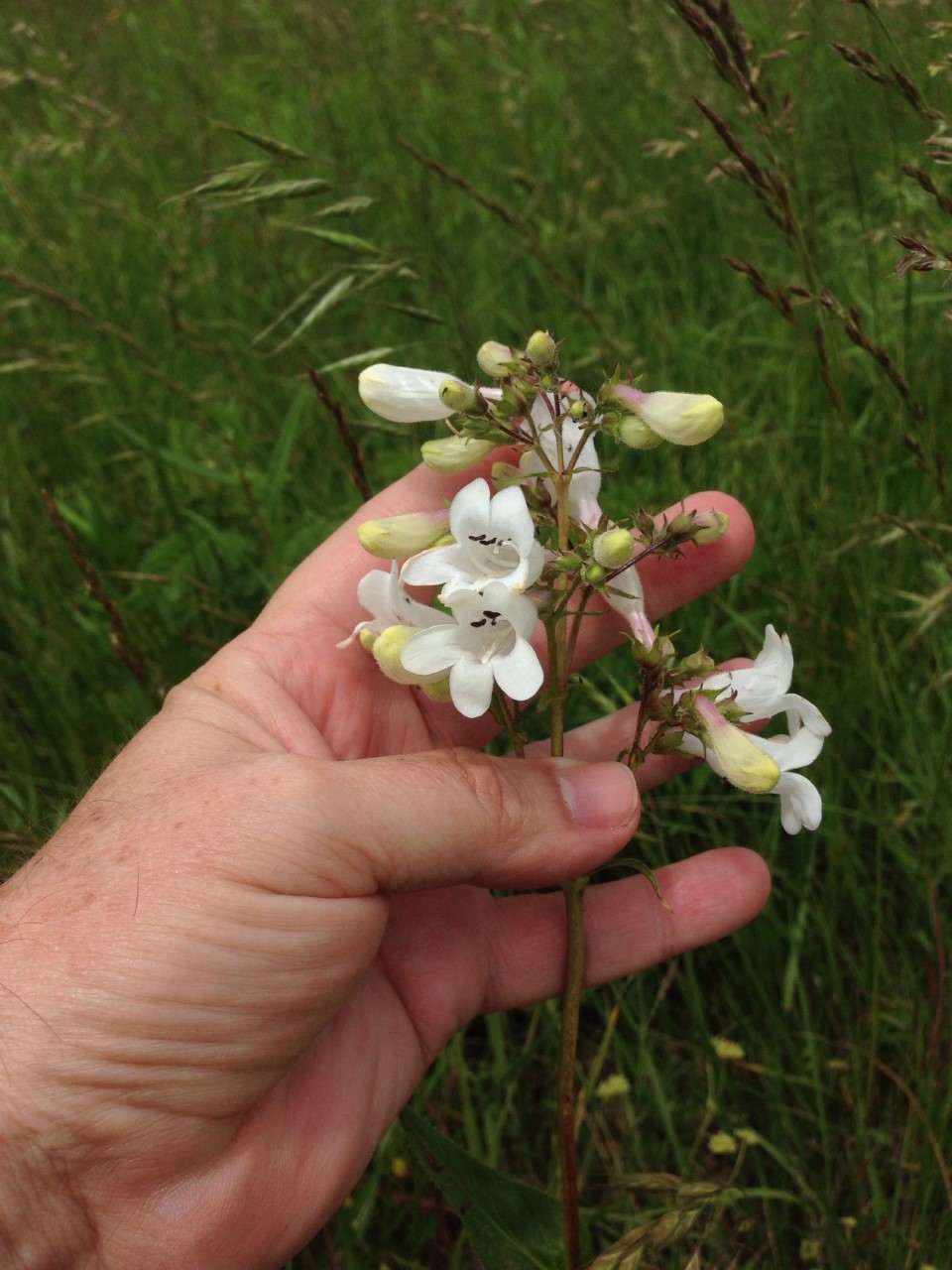
Penstemon pallida in a field in Oklahoma.
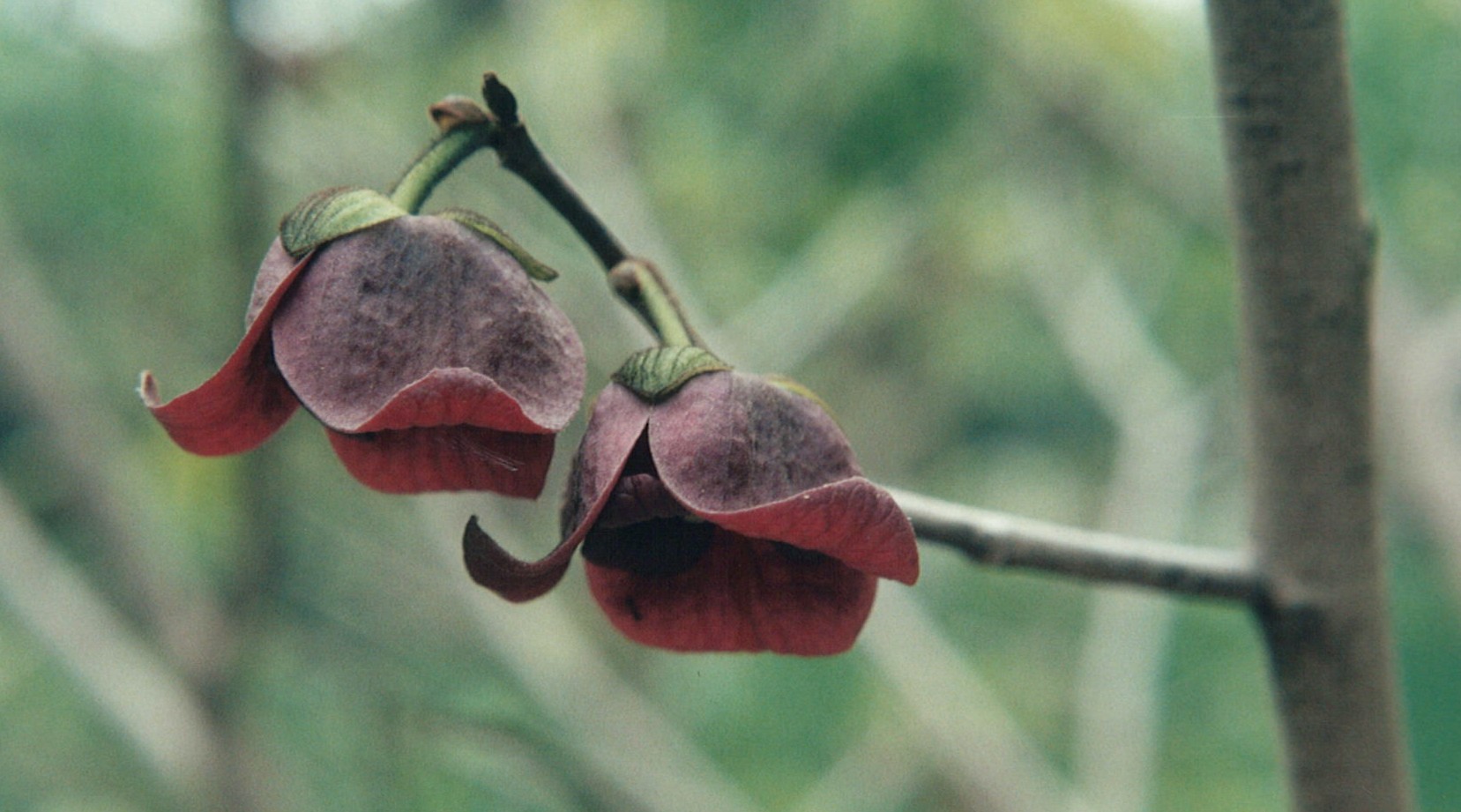
Flowers of pawpaw (Asimina triloba) in a garden in Oklahoma.
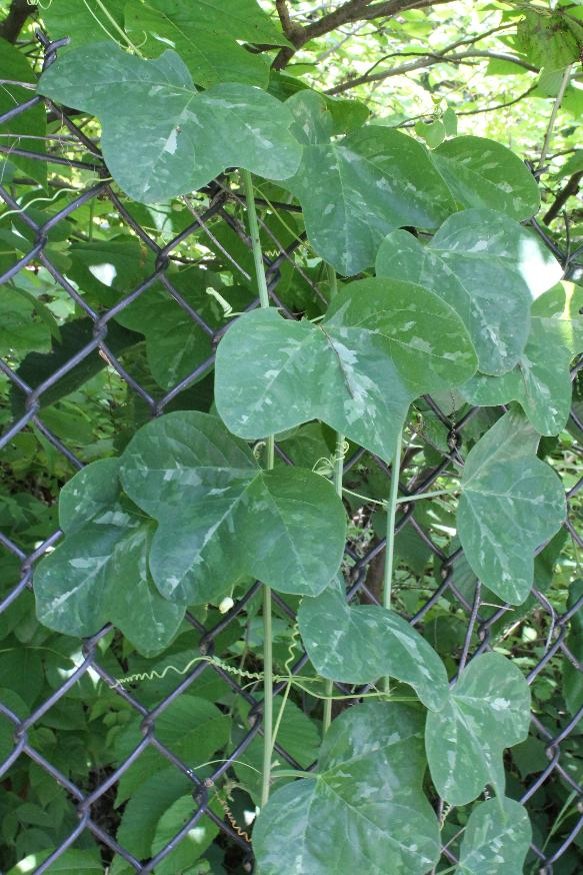
Leaves of a passionflower (Passiflora) vine in Oklahoma are variegated. In other species of passionflower, leaf splotches trick butterflies into thinking the leaves already have insect eggs on them.
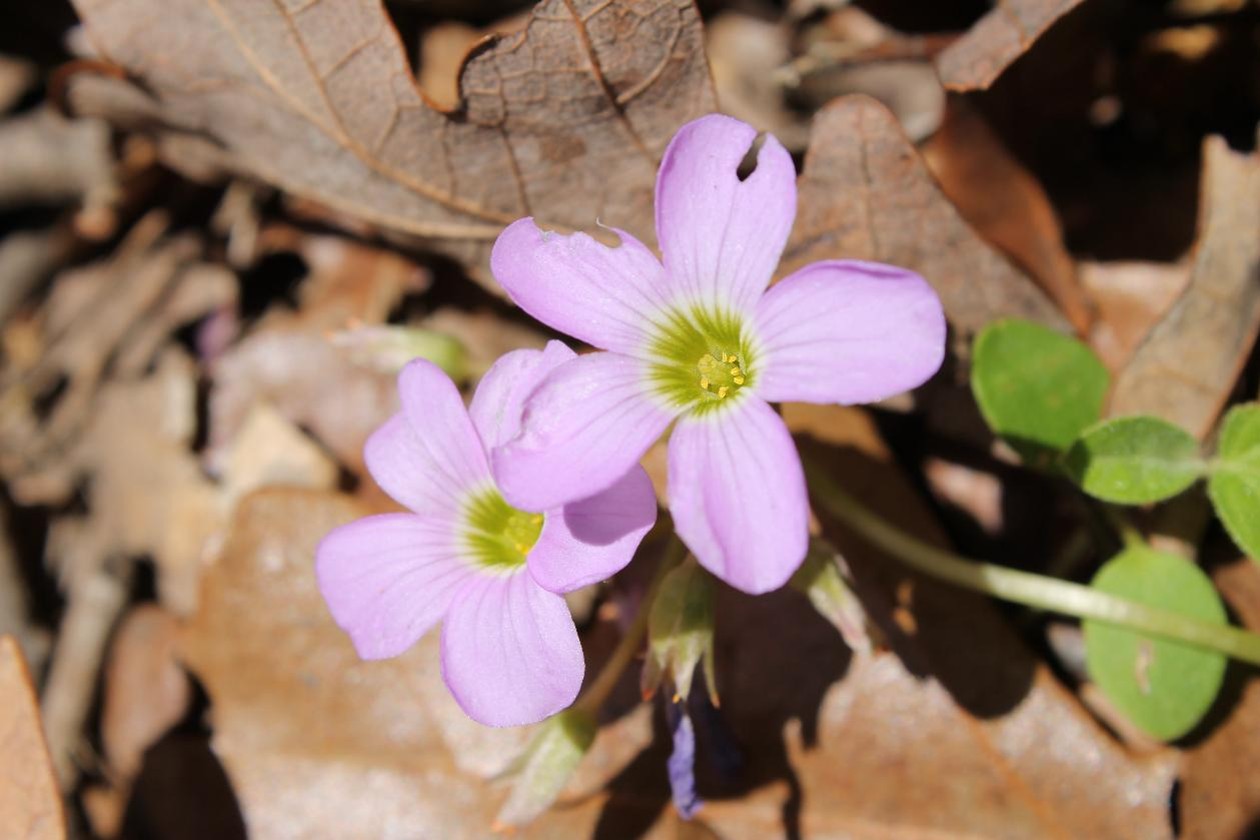
Oxalis violacea on a forest floor in eastern Oklahoma.
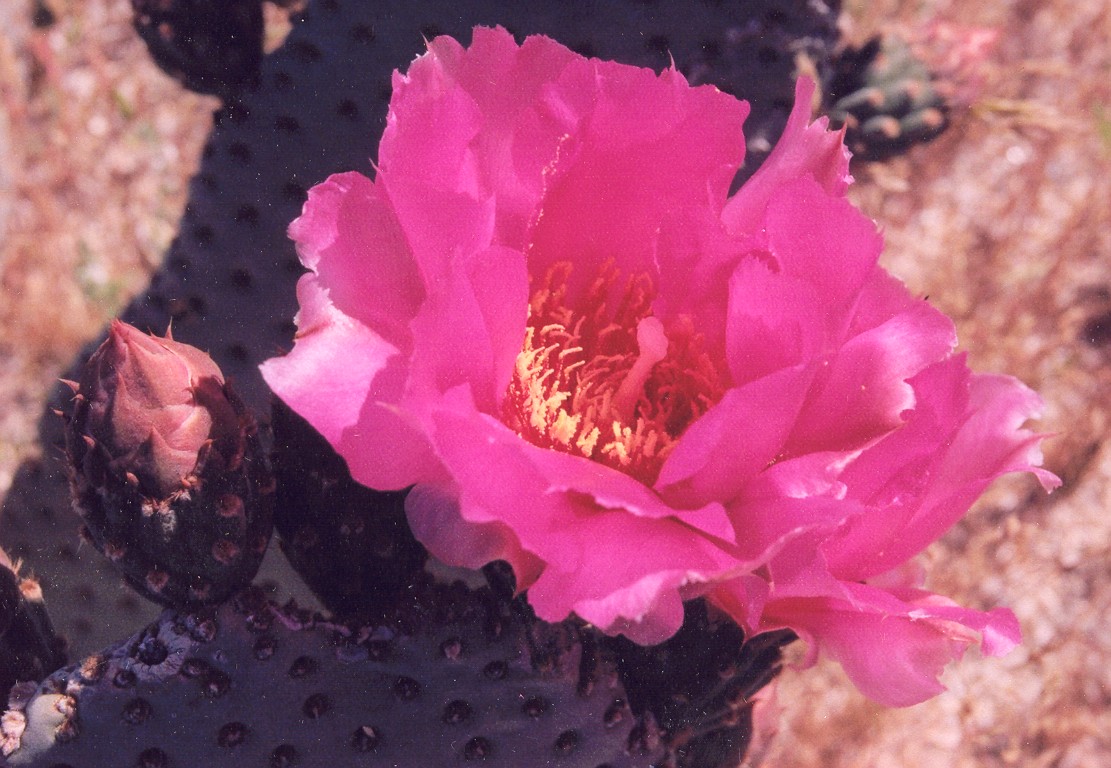
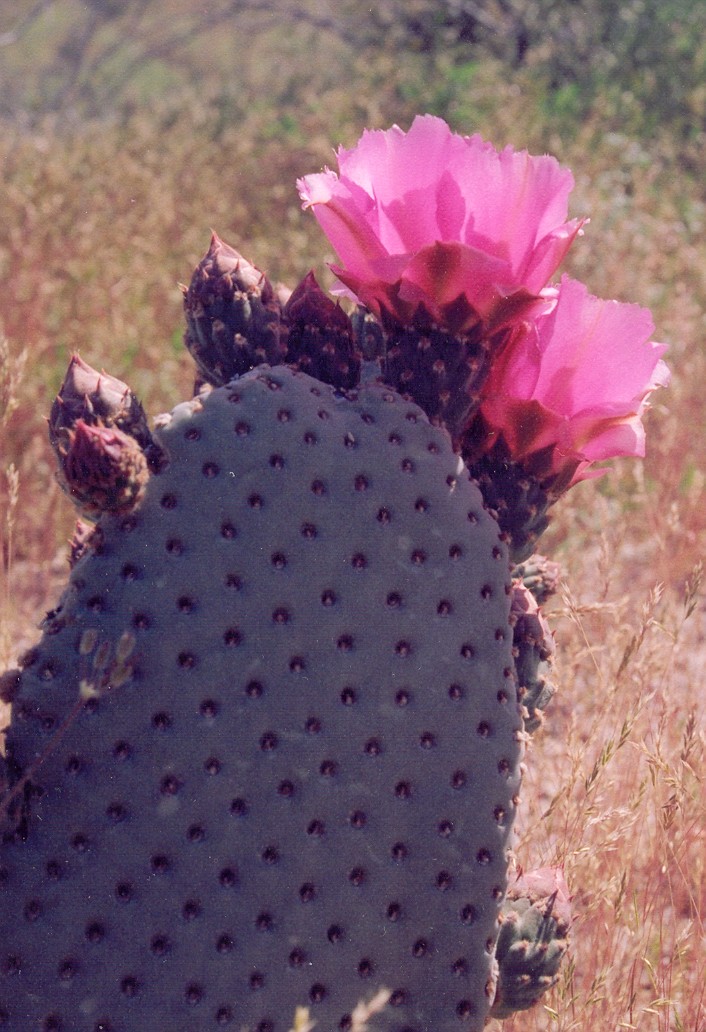
Flowers of an Opuntia cactus in Oklahoma.
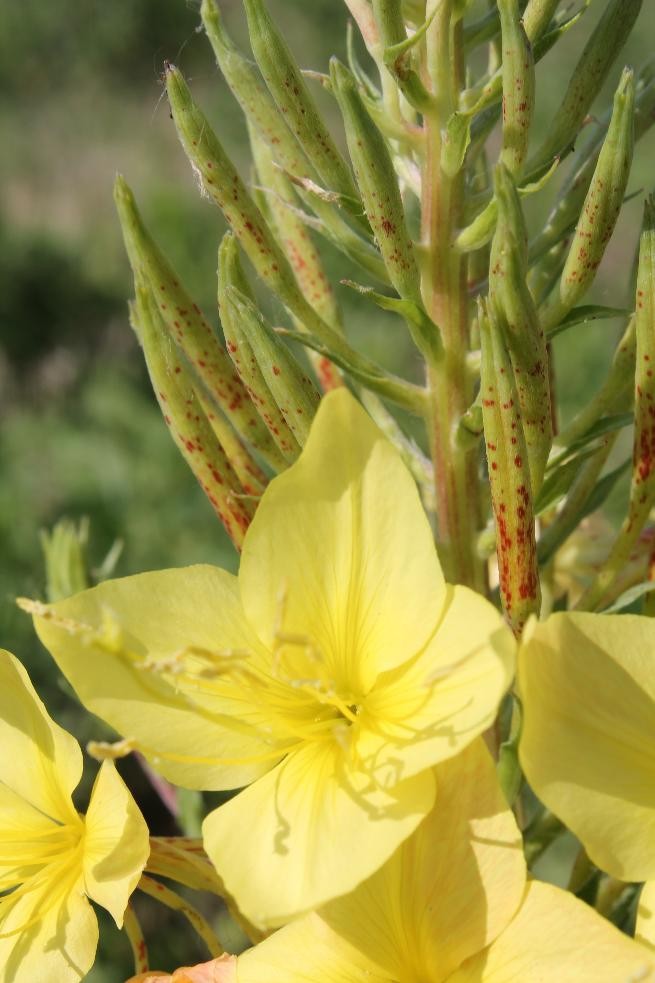
Oenothera (evening primrose) flowers from a roadside in Oklahoma.
Oenothera rhombipetala flowers from a field in Oklahoma.
A mat of the cyanobacteria Nostoc commune on bare ground in Oklahoma. It is sometimes called “star snot” because people used to think it came from meteorites.
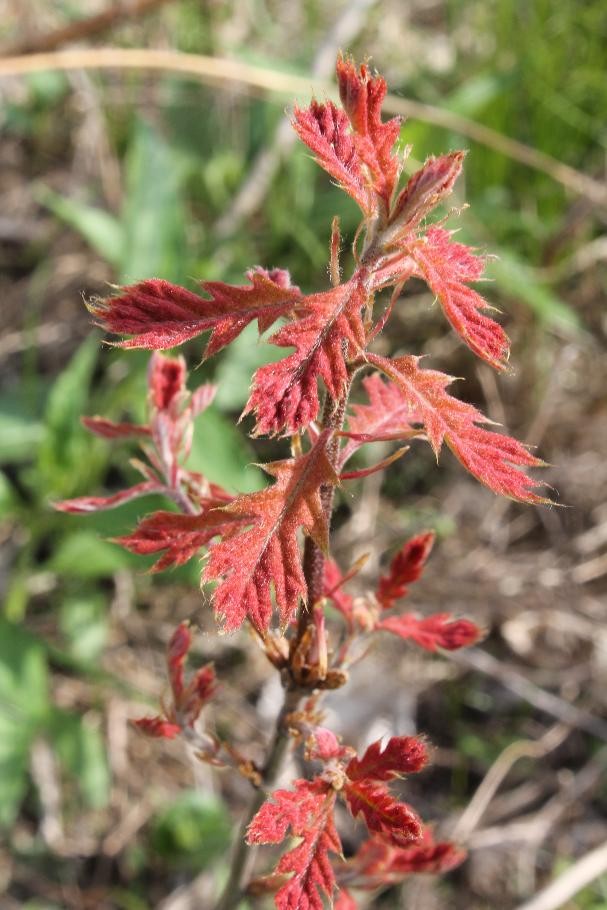
New leaves of black oak (Quercus velutina) in Oklahoma.
Netleaf hackberry (Celtis reticulata) from a dry forest in Oklahoma.
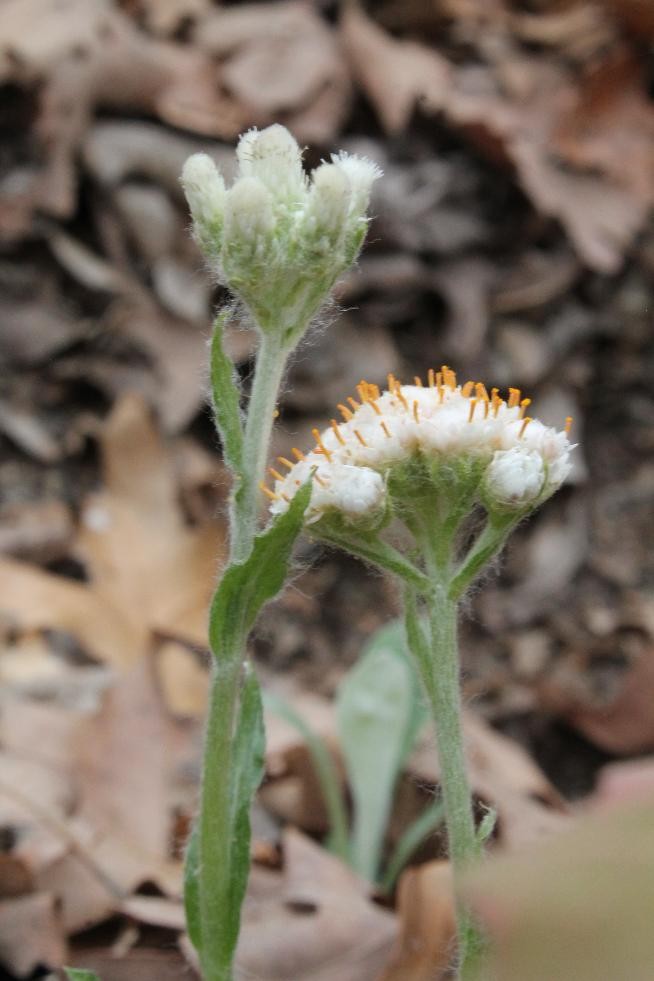
Mr. and Mrs. Pussytoes from a forest floor in Oklahoma. Antennaria parlinii has separate male (with stamens) and female (without) plants.
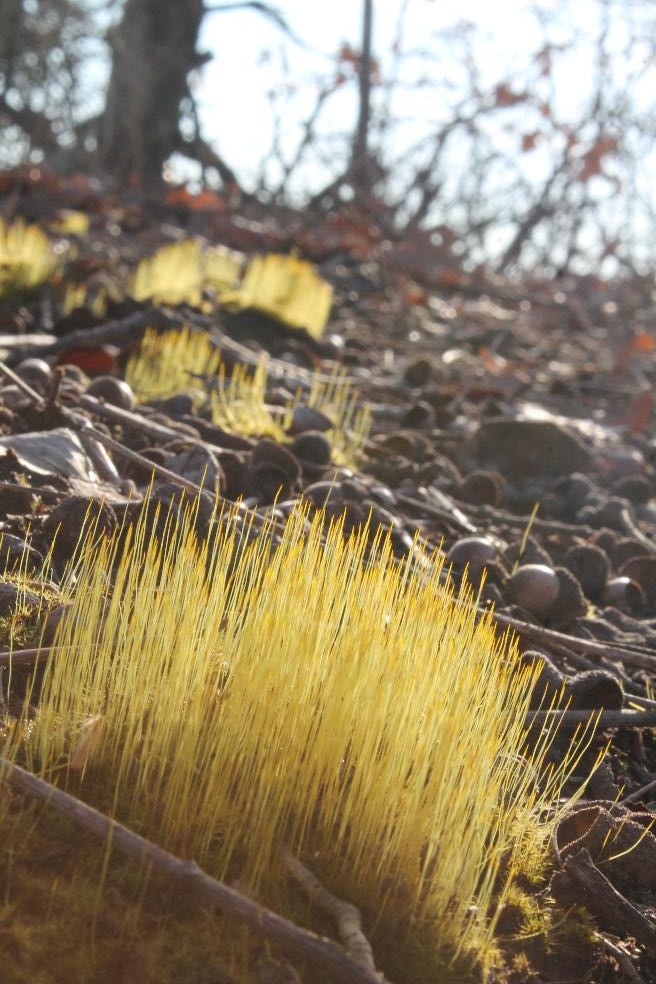
Moss sporophytes (diploid) emerge from the haploid gametophytes on the floor of a deciduous forest (not yet leafed out) in Oklahoma.
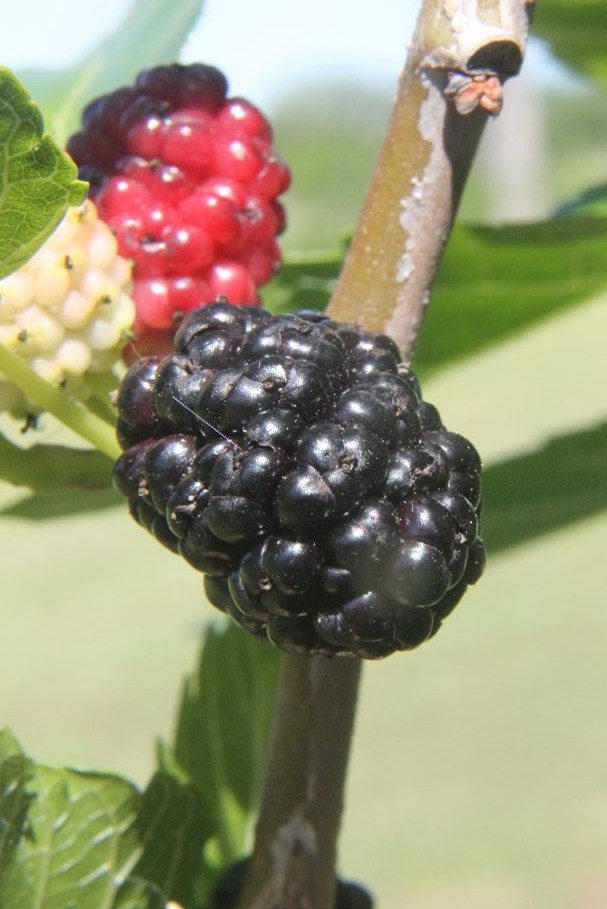
Fruits of Morus alba, the white mulberry, an Asian species now widespread in Oklahoma. Despite the name, the fruits can be white, red, or black. Mulberries have separate male (fruitless) and female trees.
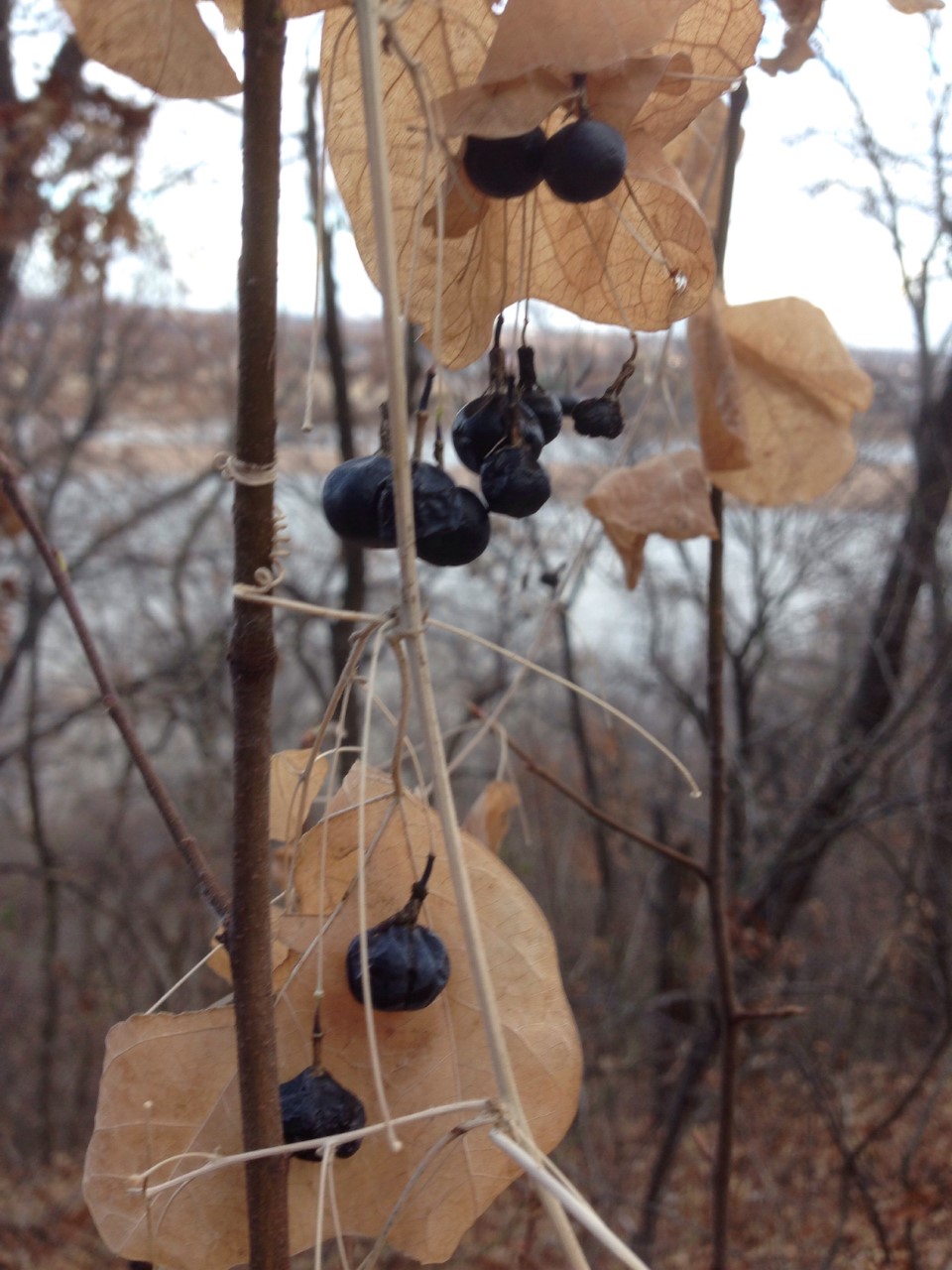
Menispermum canadense (moonseed) in a deciduous forest in Oklahoma in autumn.
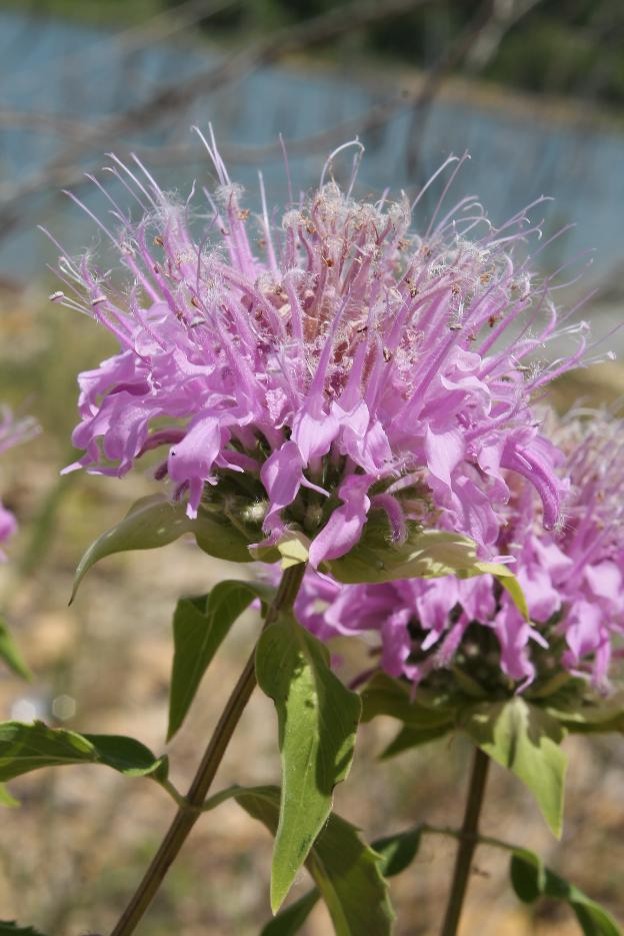
Beebalm (genus Monarda) along a trail in Oklahoma.
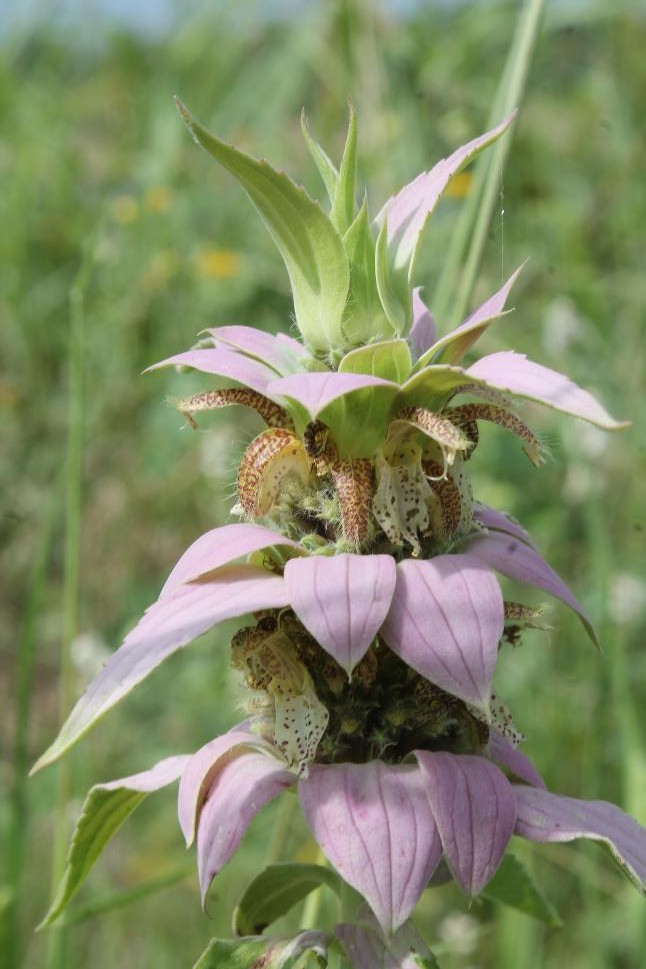
Monarda citriodora (lemon beebalm) along a trail in Oklahoma.
Milkvine (Cynanchum laeve) in Oklahoma. The milky sap has a disagreeable fragrance. Unlike Matalea, Cynanchum is abundant.
Spring flowers of mayapple (Podophyllum peltatum) face the ground.
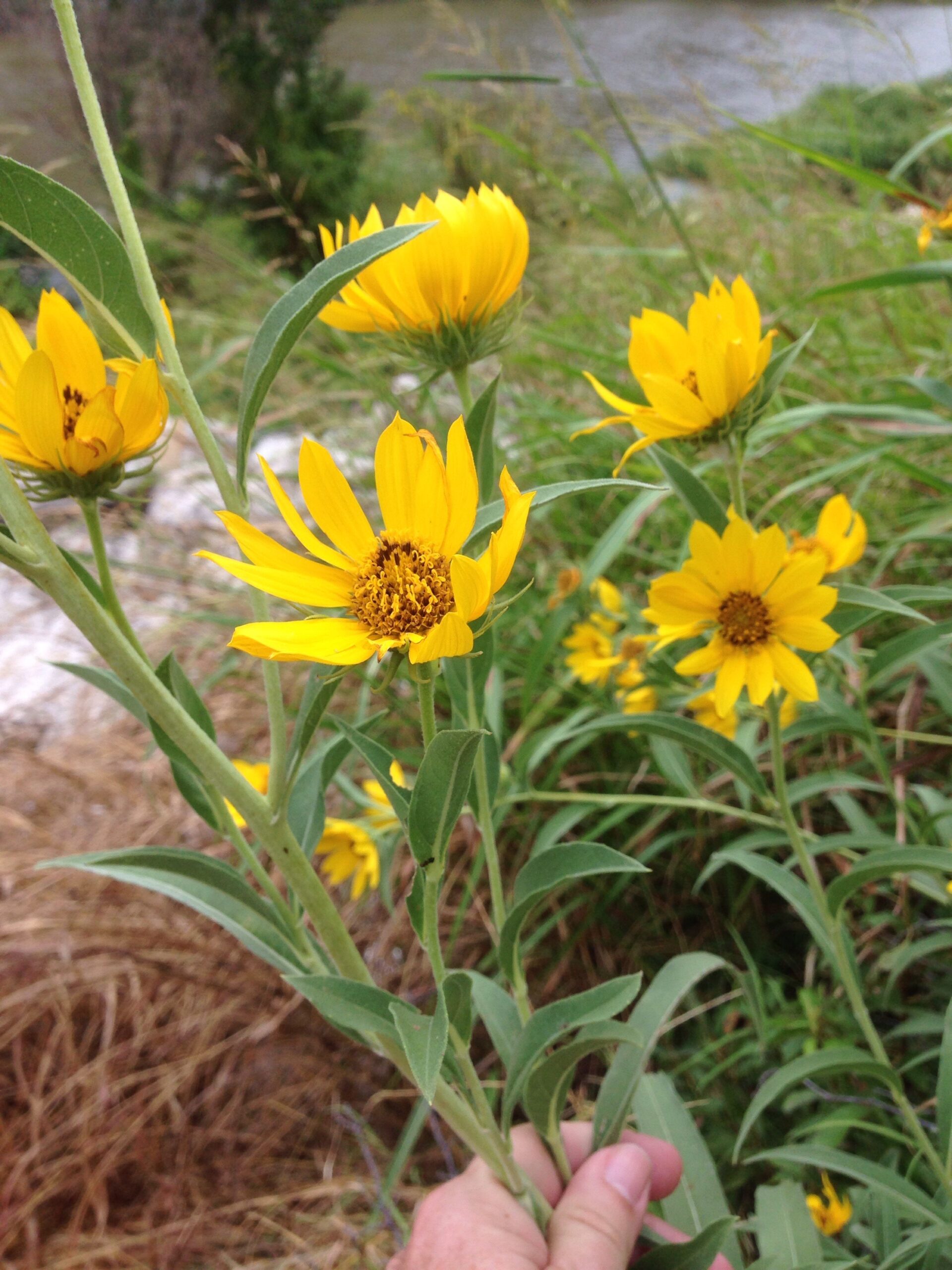
Maximilian sunflower (Helianthus maximiliani) in a remnant prairie on an Oklahoma roadside. The leaves allow it to be distinguished from other sunflowers.
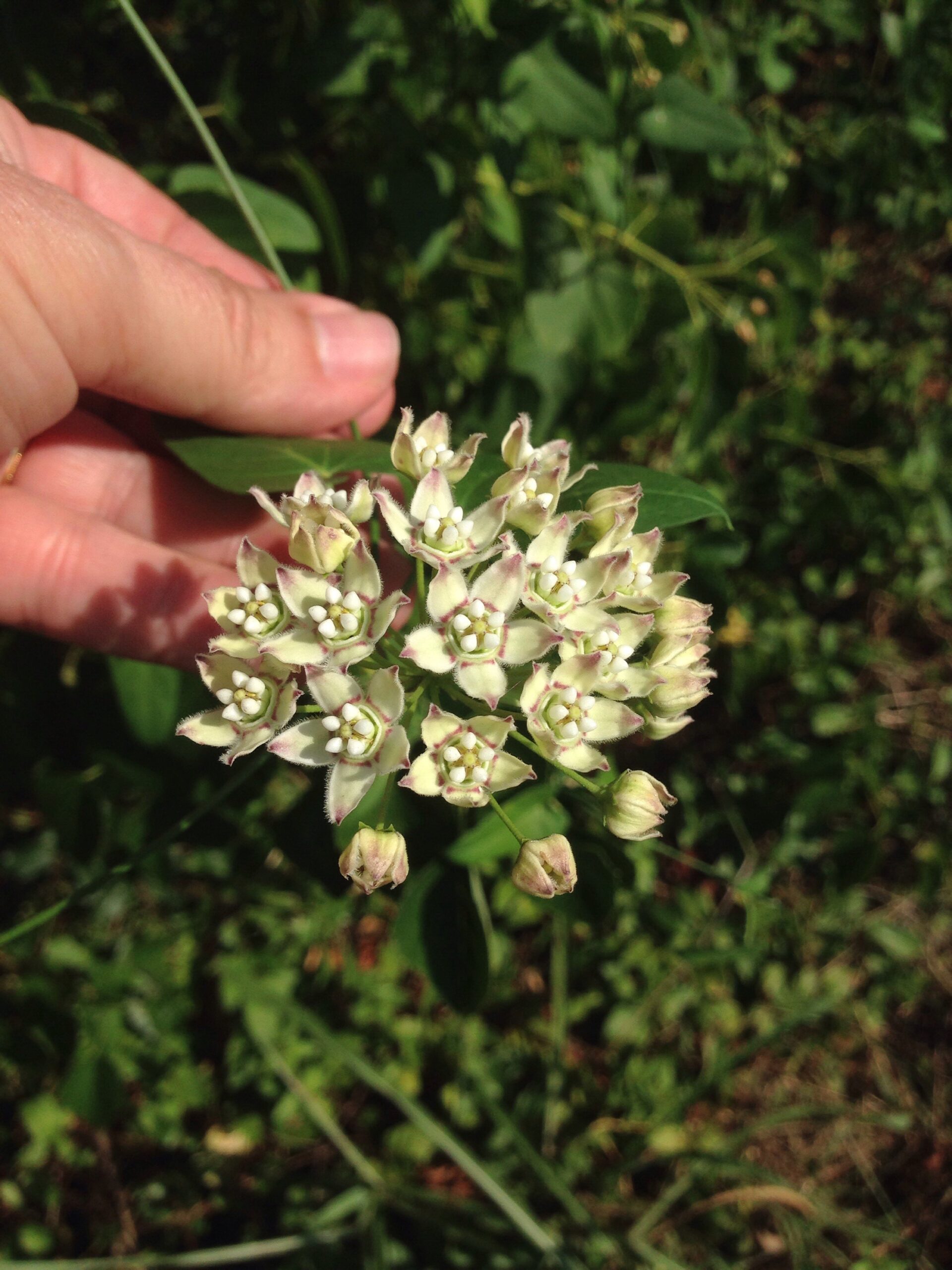
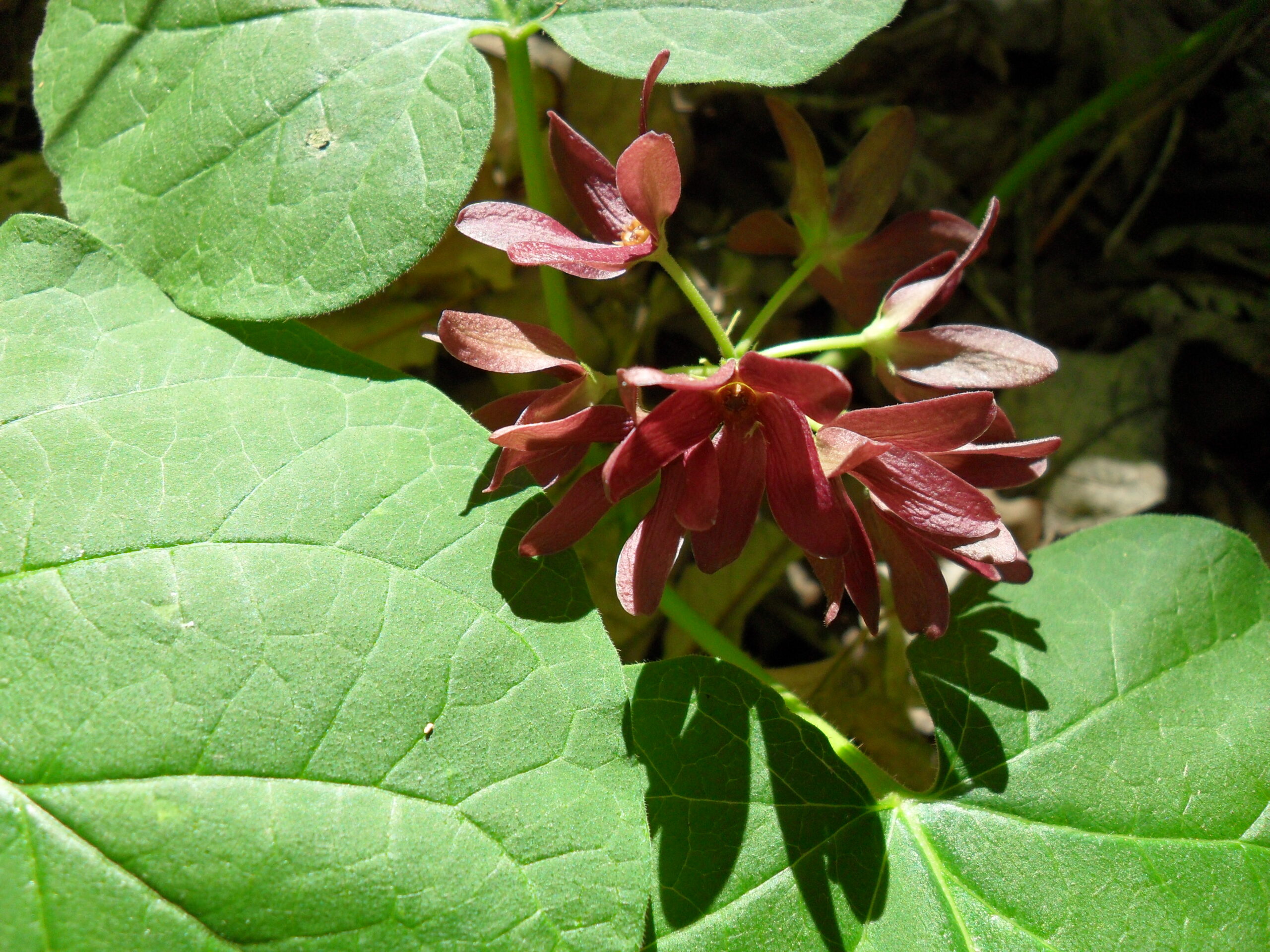
Oklahoma Matalea (milkweed family) in a deciduous forest in northeastern Oklahoma.
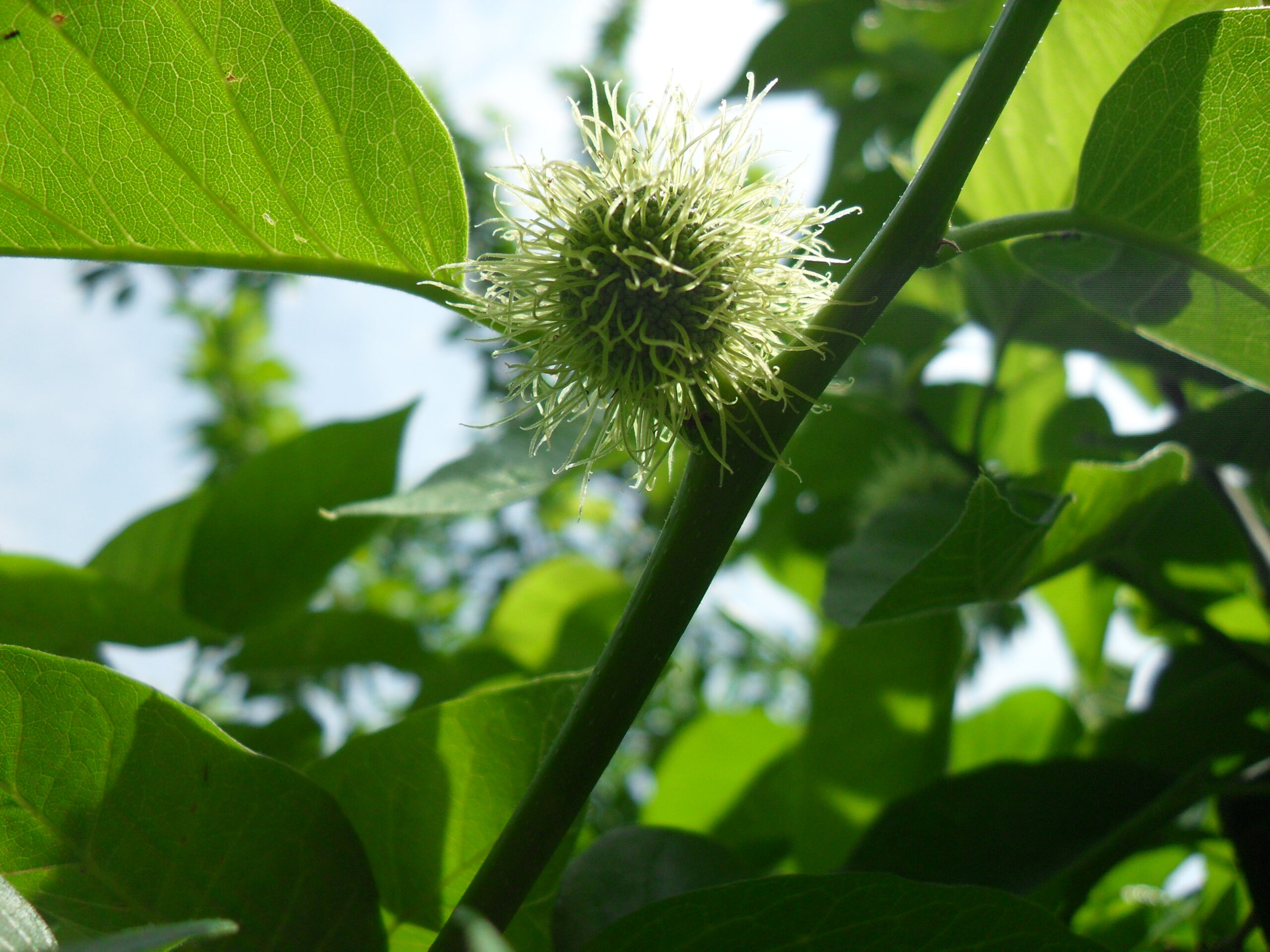
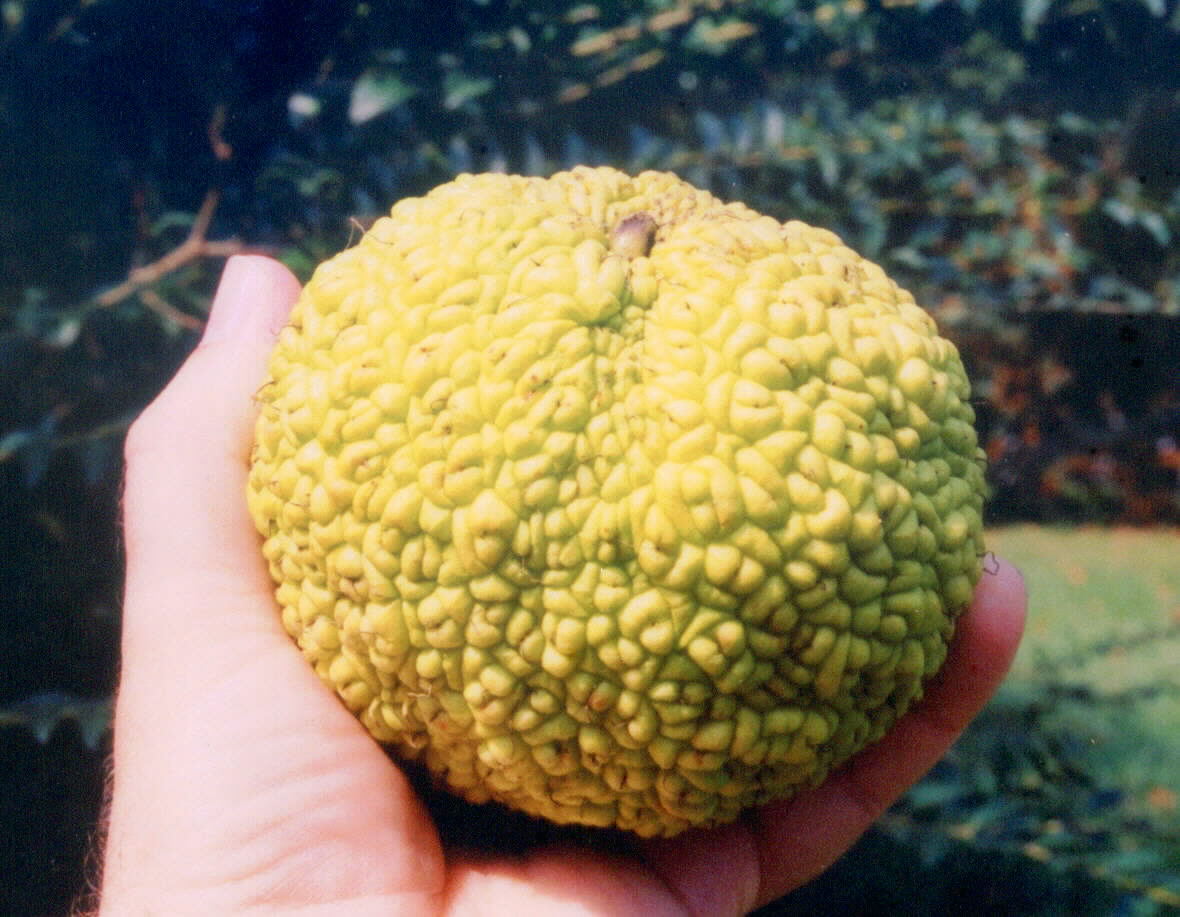
The young fruits of Maclura pomifera (Osage orange, bois-d’arc) bristle with stigmas that catch pollen from males. It is probably wind-pollinated, and the big stigmas help compensate for less wind inside the canopy, after the leaves have emerged.
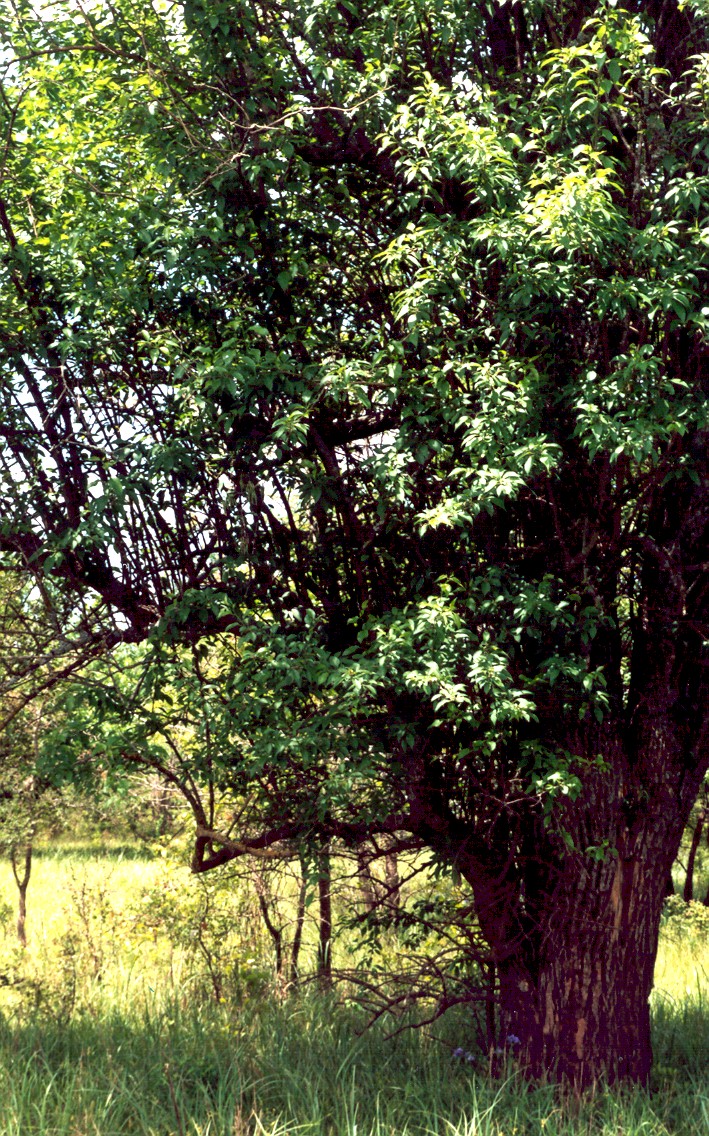
Maclura pomifera (osage orange, bois-d’arc), here at Fort Washita State Park in Oklahoma, often has multiple trunks. This may occur because the trees sprout from entire fruits, with multiple seeds, rather than from seeds dispersed by intestines of large mammals that are now extinct.
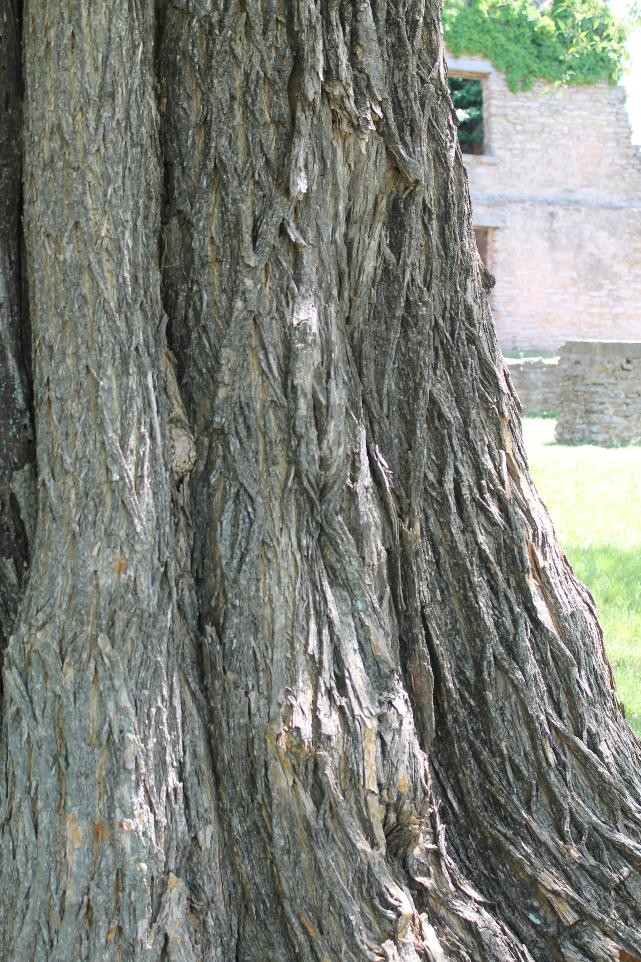
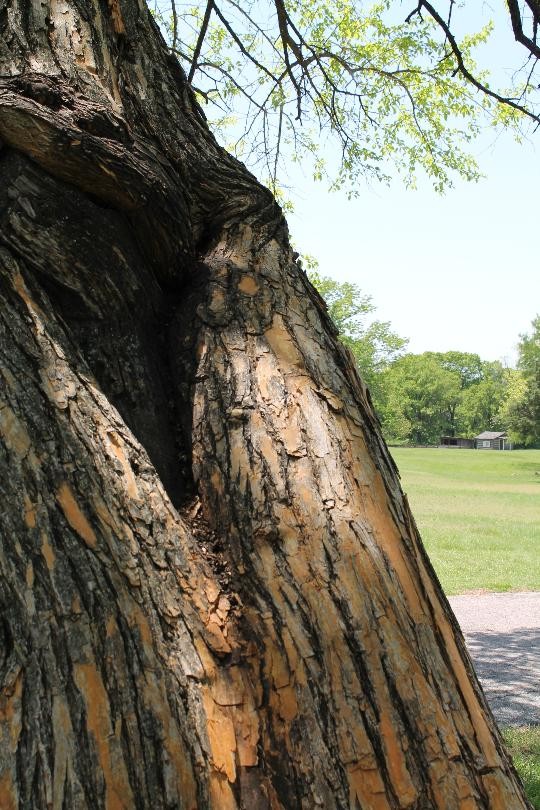
The bark of bois-d’arc, or osage orange (Maclura pomifera) often has a yellow or orange color. Oklahoma.
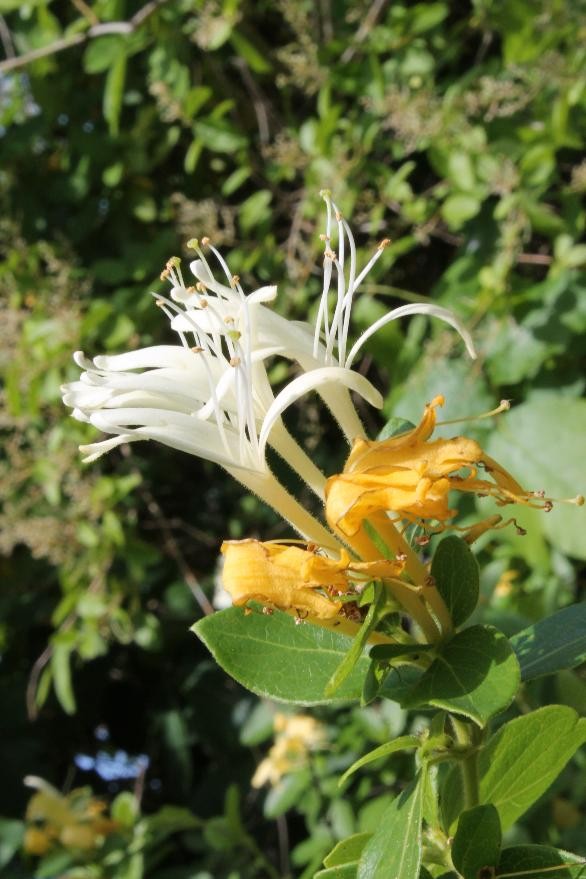
Honeysuckle (Lonicera japonica), an invasive vine in Oklahoma. The new flowers, welcoming pollinators, are white, while the flowers that have been pollinated turn yellow. Abundant fragrant nectar.
Ipomopsis aggregata in a field in Oklahoma. Photo incorrectly labeled Lobelia.
Justicia americana in a drainage ditch in Oklahoma.
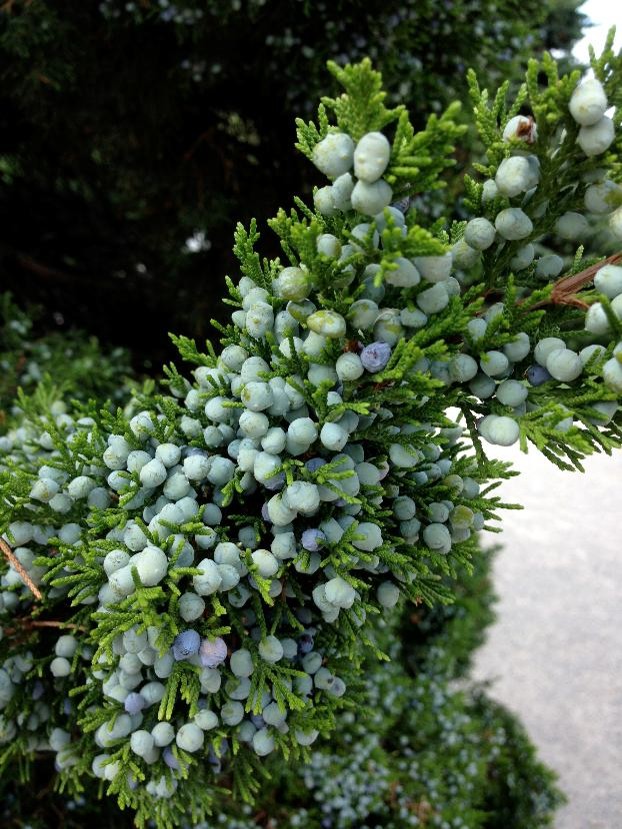
Berries (actually fleshy female cones) on a red cedar (Juniperus virginiana) in Oklahoma. Junipers have separate male (small brown cones) and female (fleshy bluish green cones) plants.
Gymnocladus dioicus is the Kentucky coffee-tree. The female trees produce legminous fruits with big seeds. The seeds, brown when mature, may have been used as game pieces by Native Americans, who carried them across the continent. When seeds got lost, a new grove of Gymnocladus would begin.
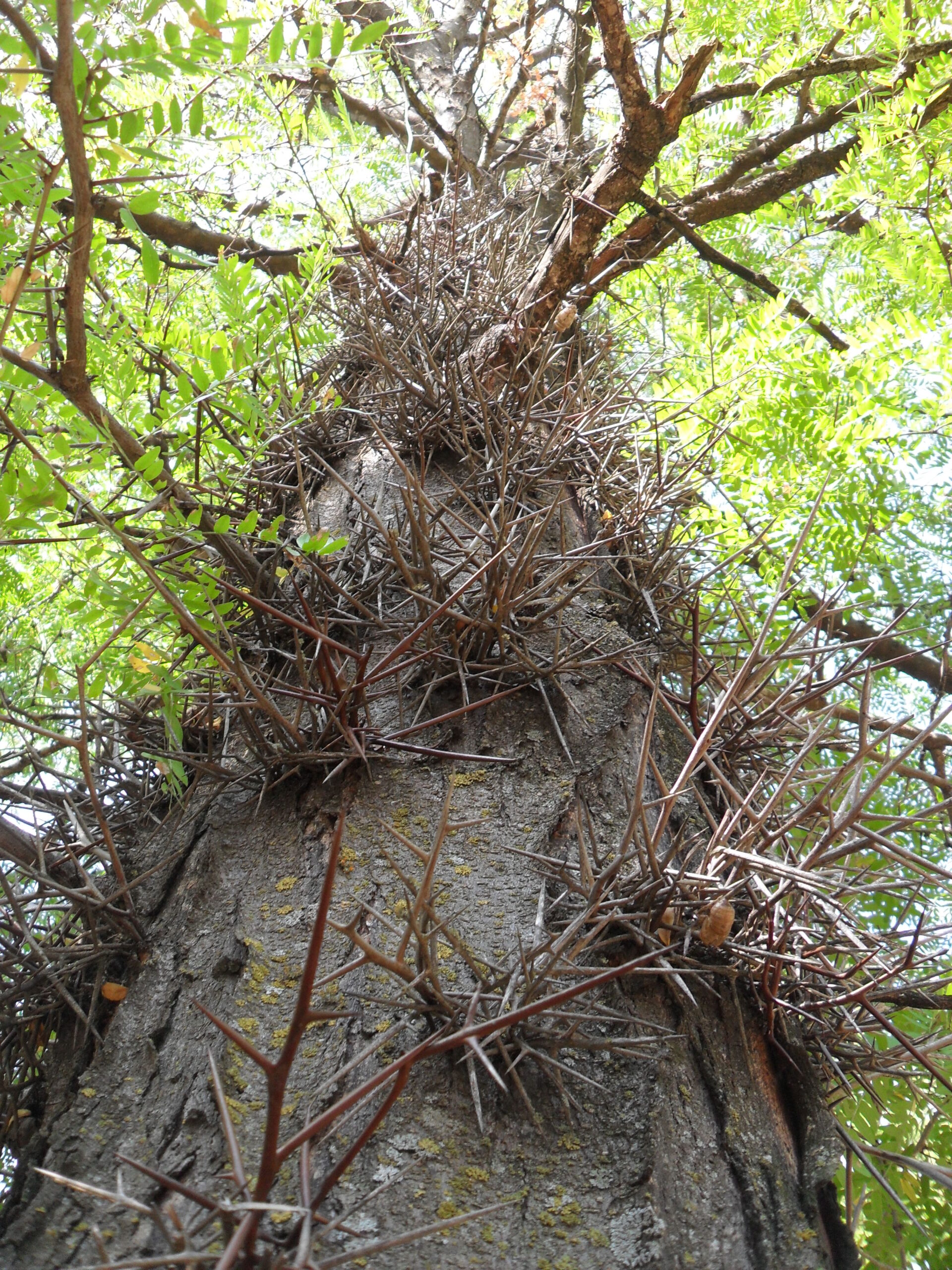
Gleditsia triacanthos (honey locust) with thorns in a forest in Oklahoma.
Comparison of bark of sugarberry (Celtis laevigata, background) and persimmon (Diospyros virginiana, foreground) in Oklahoma.
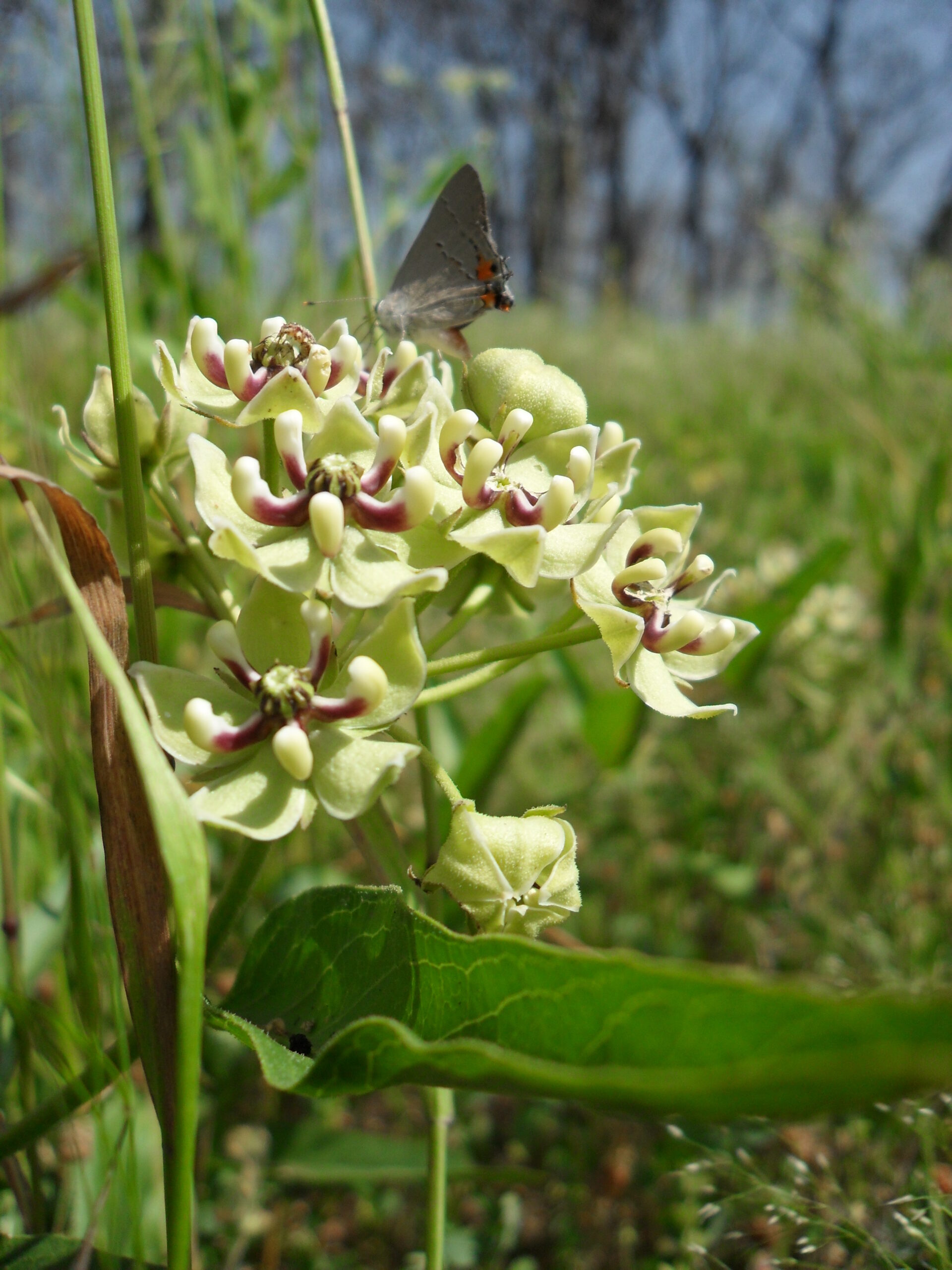
Green milkweed (Asclepias viridis) in a field in Oklahoma.
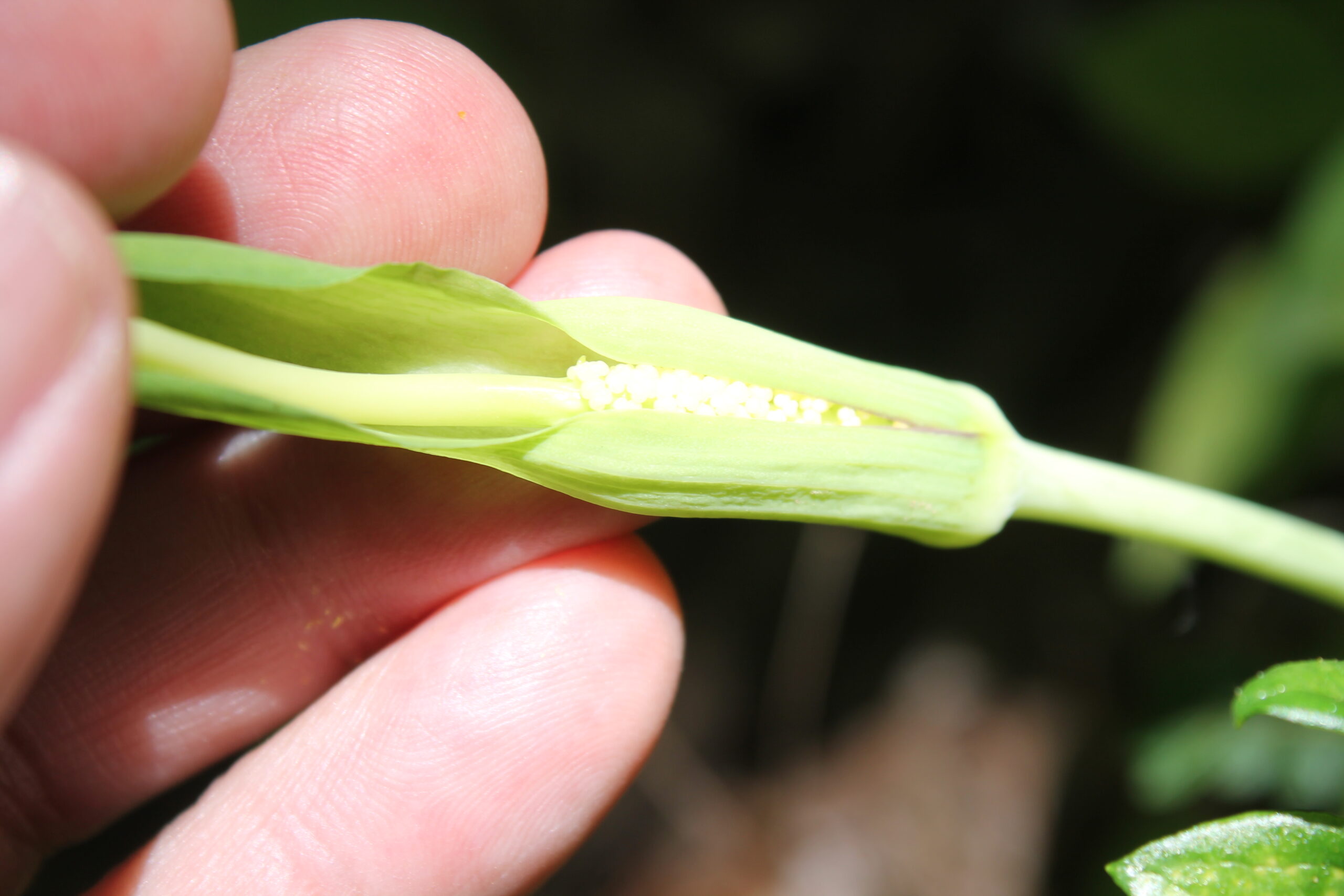
Green dragon (Arisaema dracontium) inflorescence, with rows of flowers inside of a bract, from a deciduous forest in Oklahoma.
Gleditsia triacanthos (honey locust) with thorns in a forest in Oklahoma.
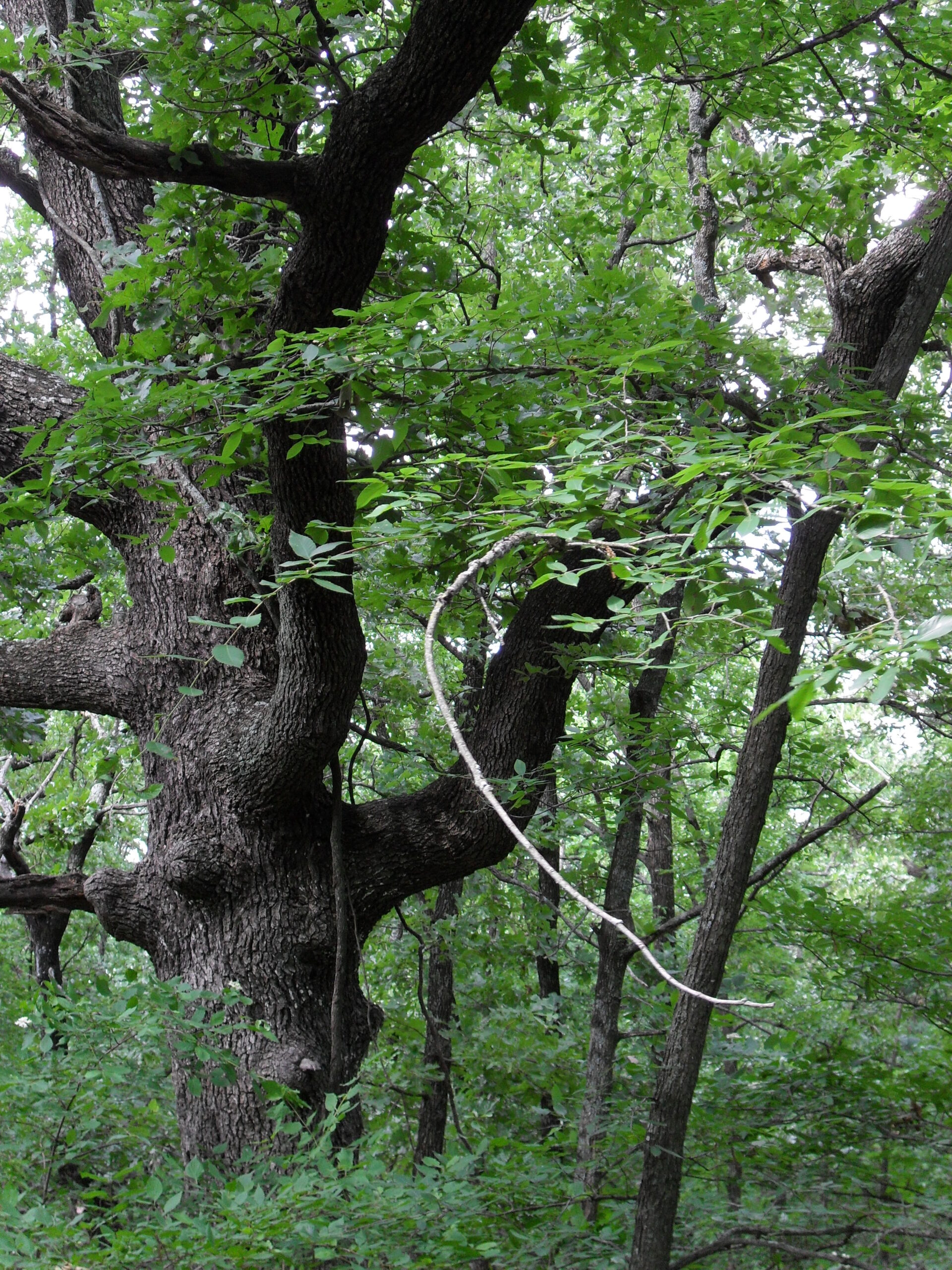
A gigantic post oak (Quercus stellata) trunk in a cross-timbers deciduous forest in Oklahoma.
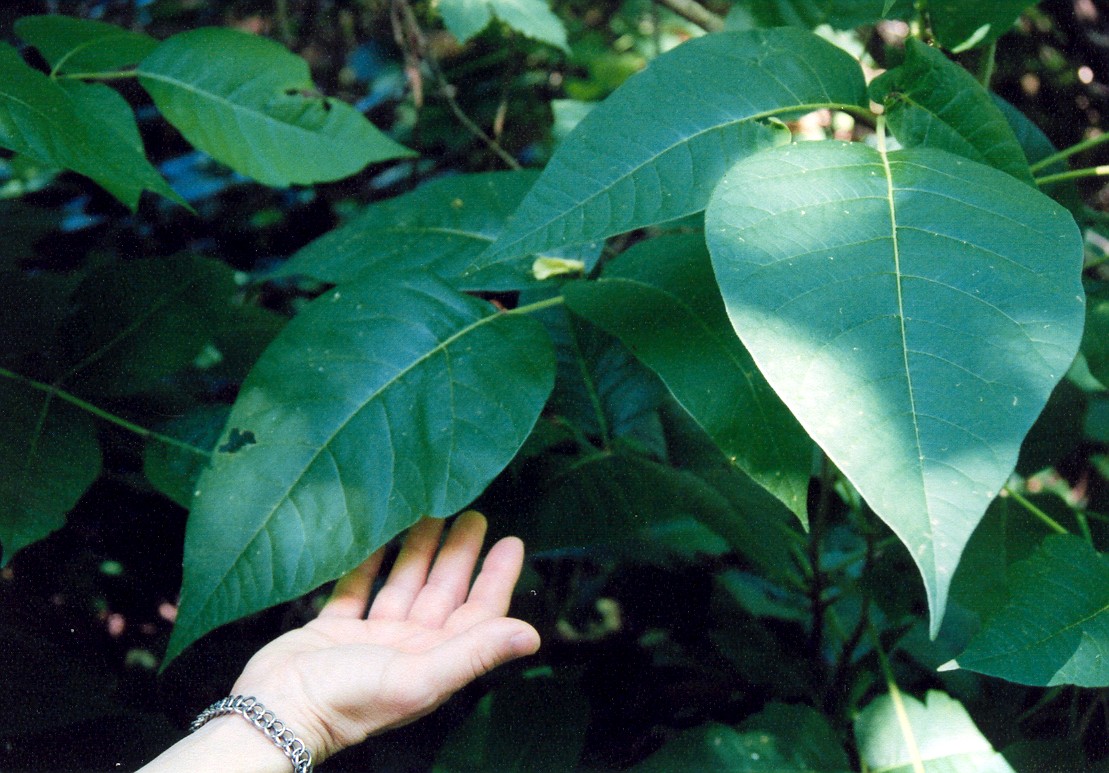
Poison ivy (Toxicodendron radicans) can grow very large leaves in the forests of eastern Oklahoma. The plants out in bright sunlight have smaller leaflets.
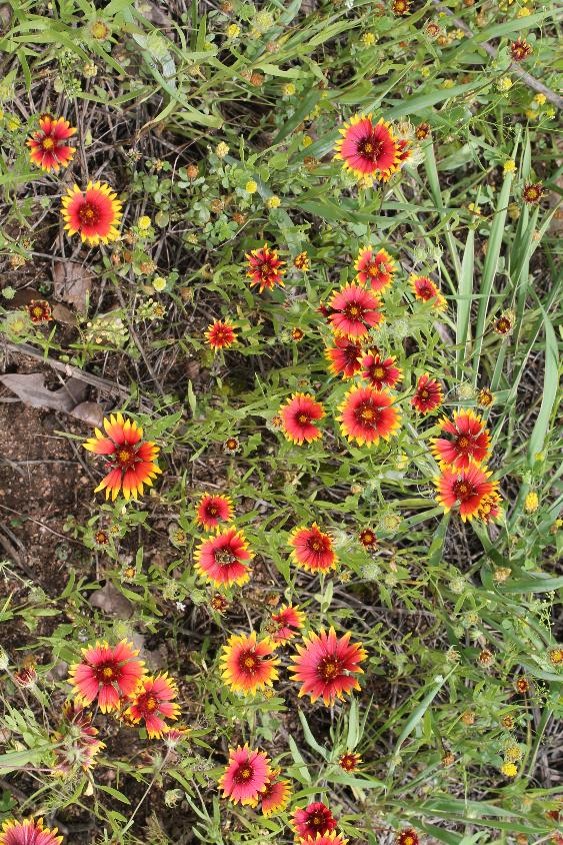
Gaillardia pulchella, a composite flower with red and yellow ray florets. Oklahoma state flower.
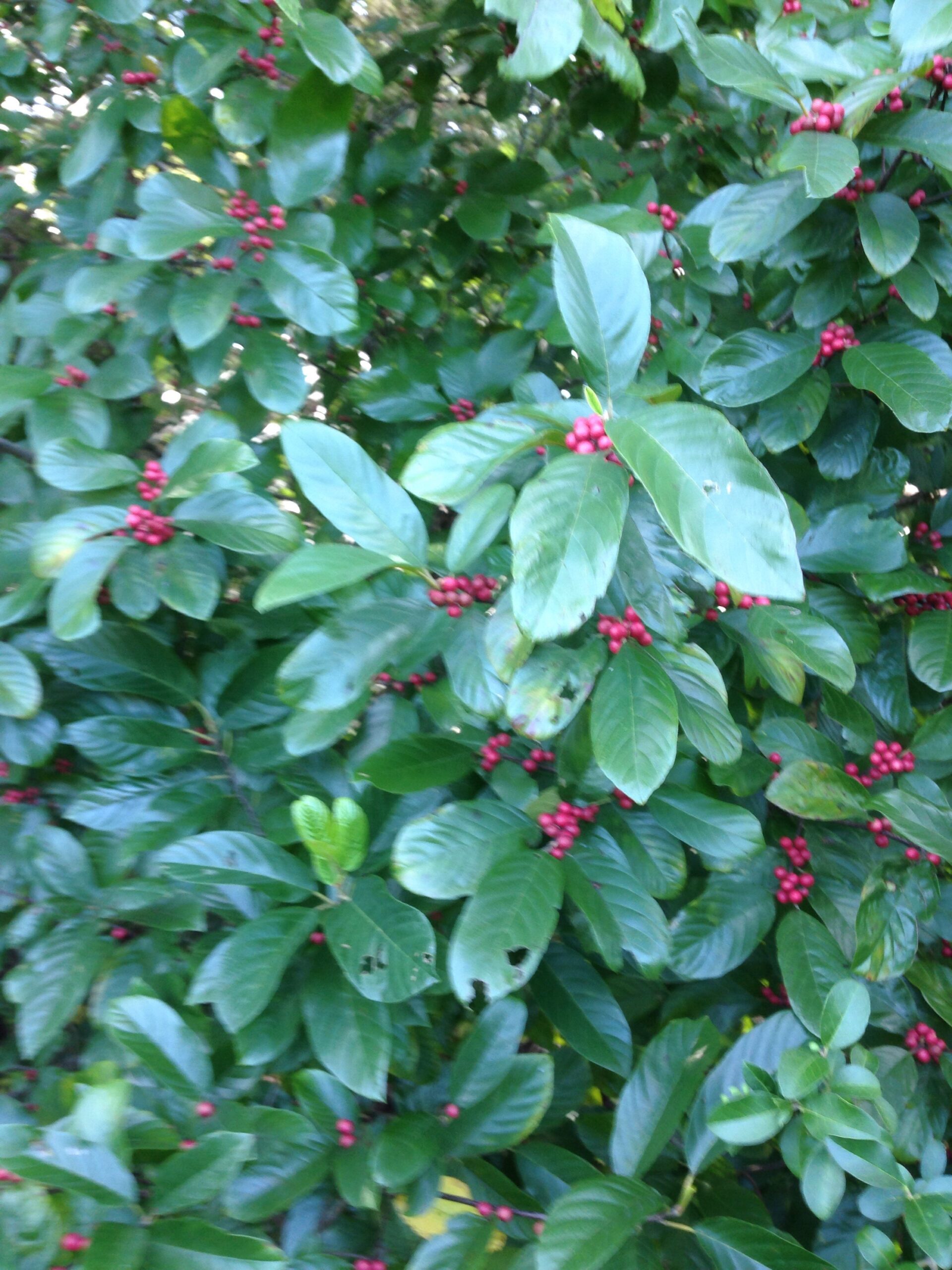
Frangula caroliniana in a deciduous forest in Oklahoma.
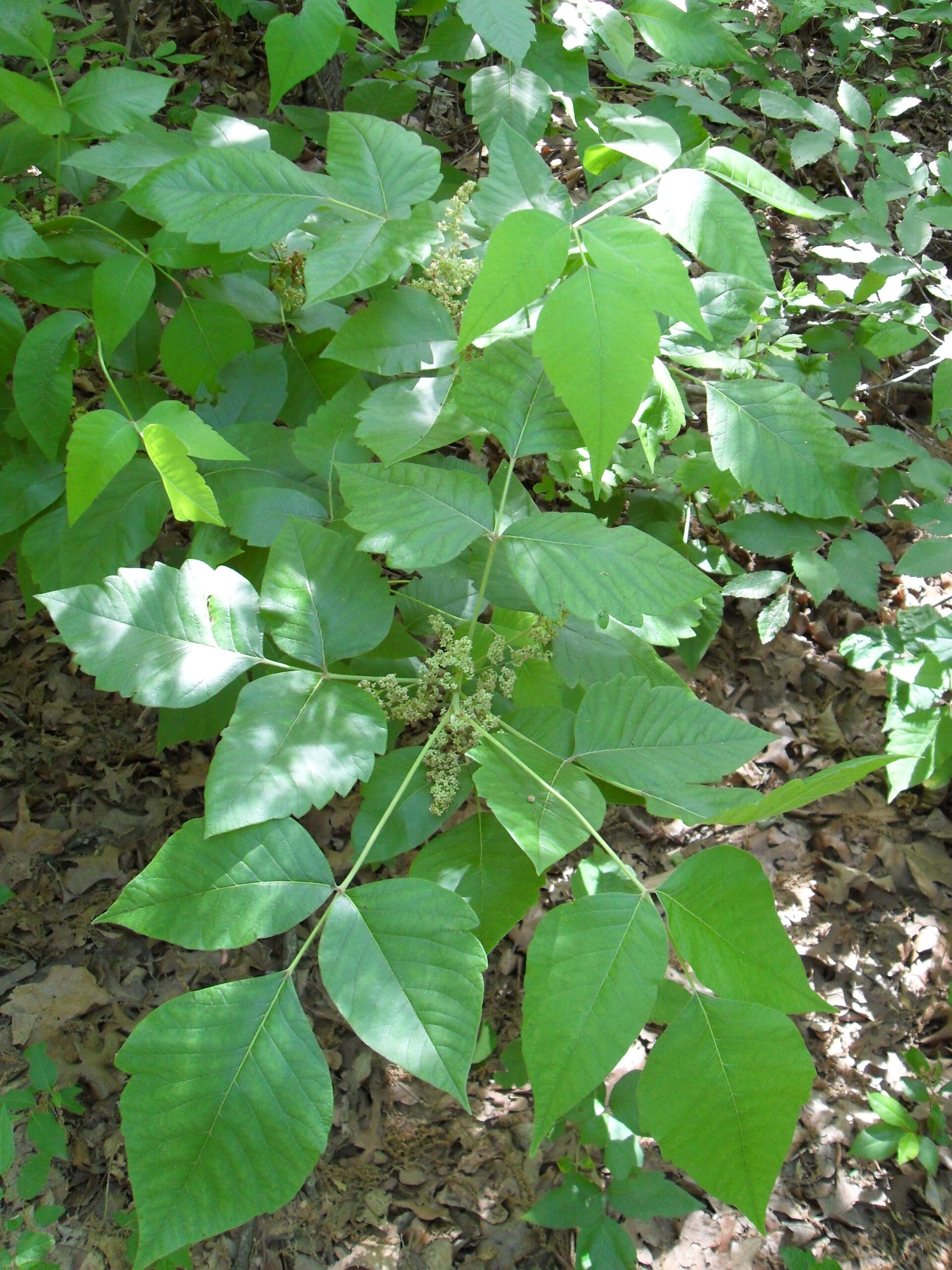
Poison ivy (Toxicodendron radicans) in bloom, a deciduous forest in Oklahoma.
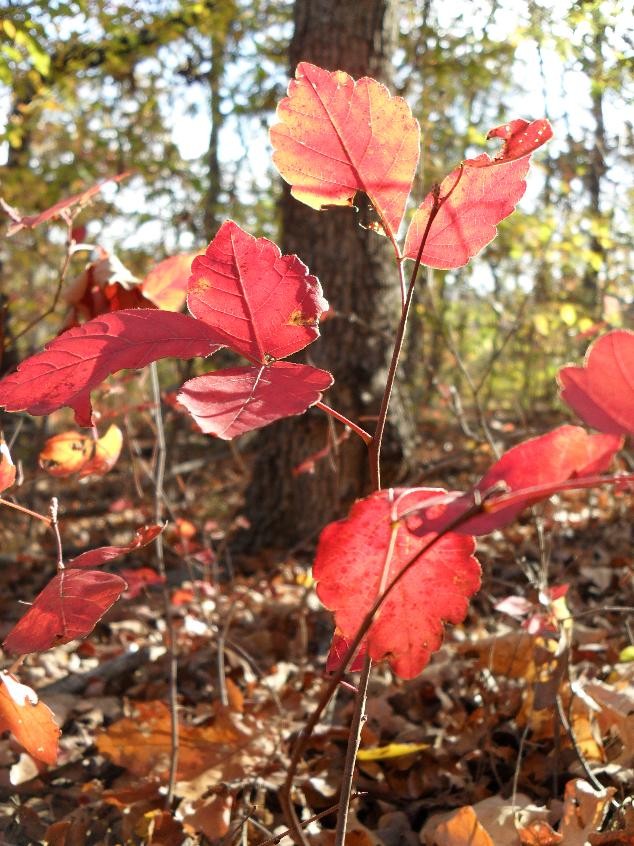
Leaves of aromatic sumac (Rhus aromatica) turn bright red in autumn in this Oklahoma deciduous forest.
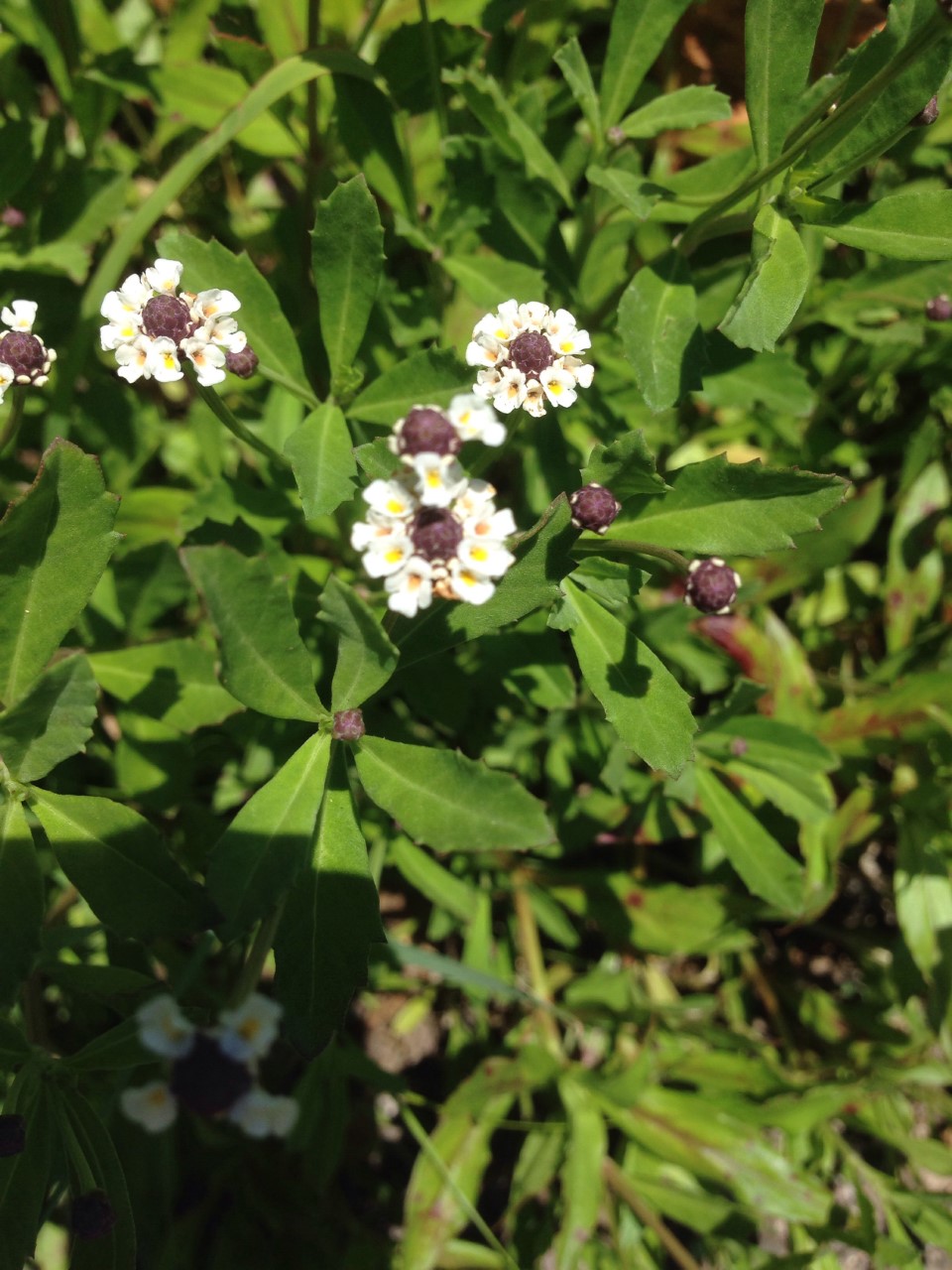
Fogfruit (Phyla lanceolata) in a field in Oklahoma.
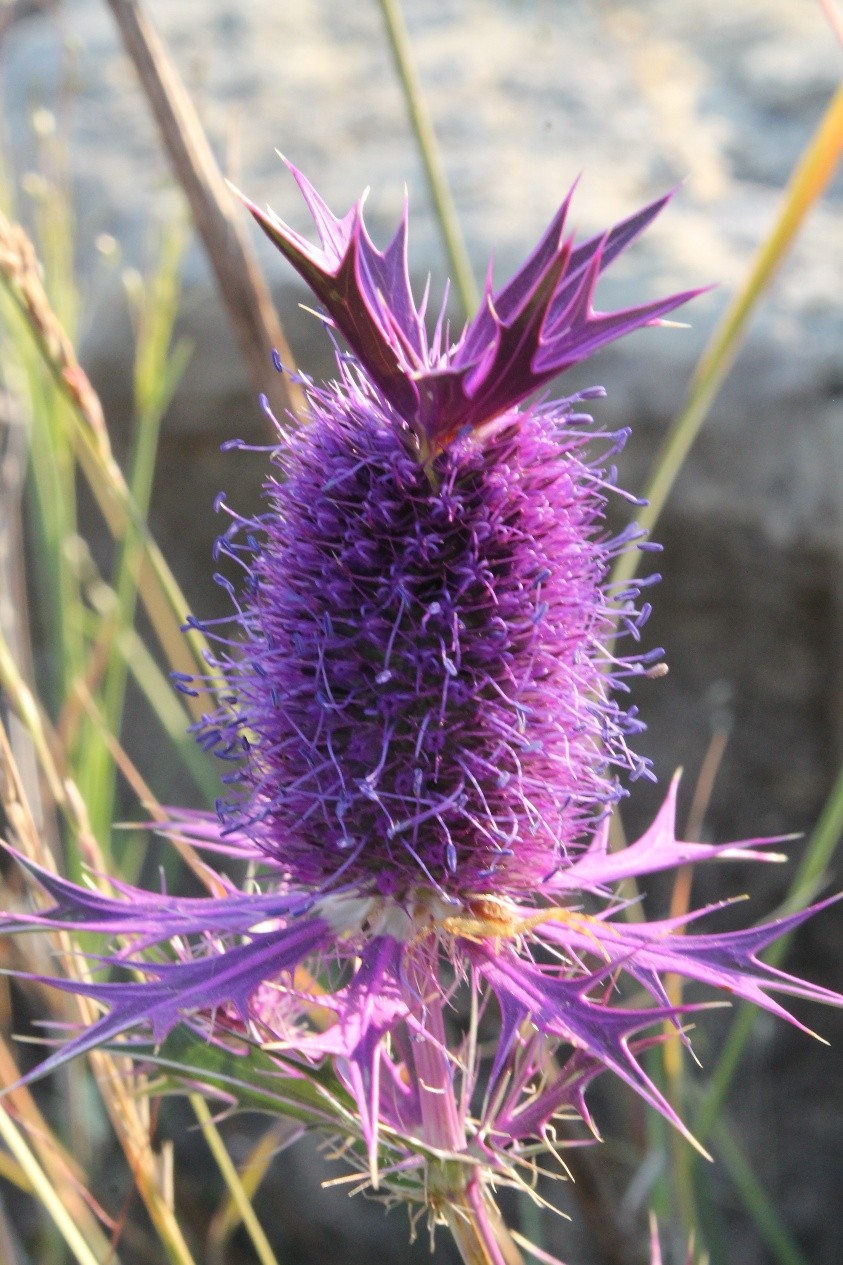
An Eryngium inflorescence, with a cluster of purple flowers protected by sharp bracts, on an Oklahoma roadside.
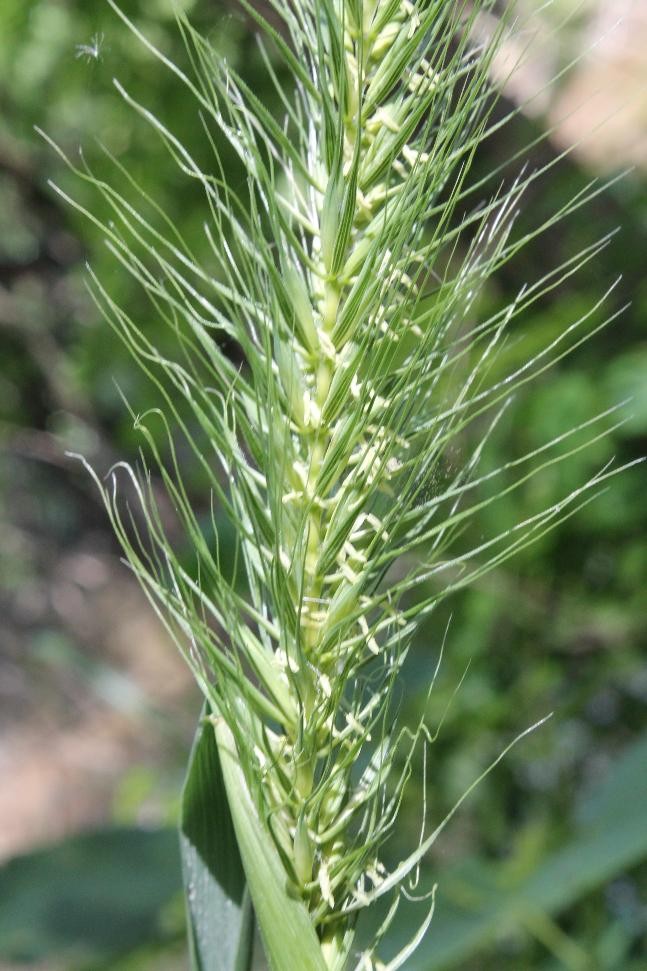
Elymus grass in bloom, with protruding stamens, in Oklahoma.
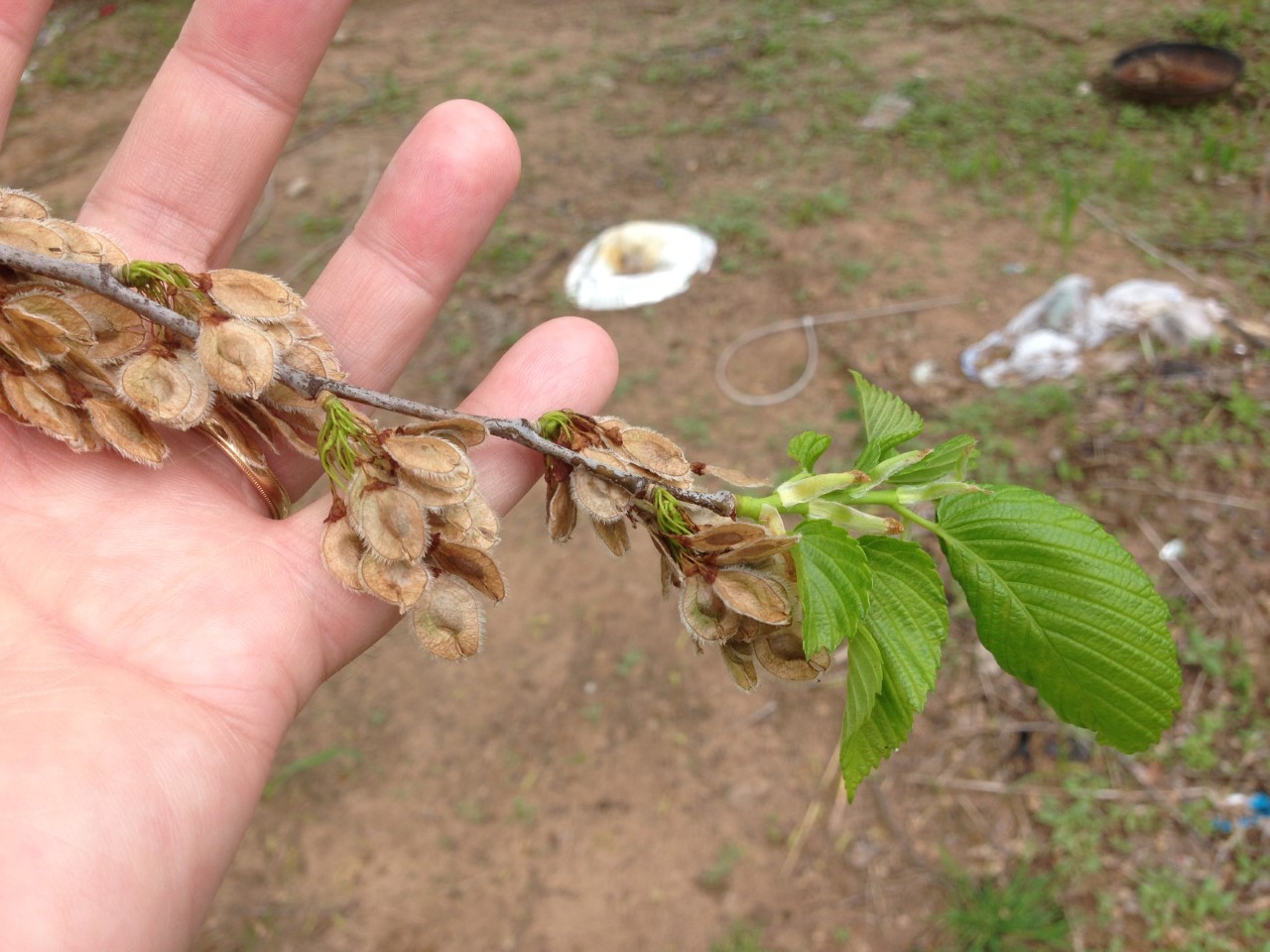
These American elm (Ulmus americana) fruits are already mature by April 7 and ready to disperse in Oklahoma. The wafer-like fruits mature before the leaves emerge, allowing the seeds to blow away in the wind.
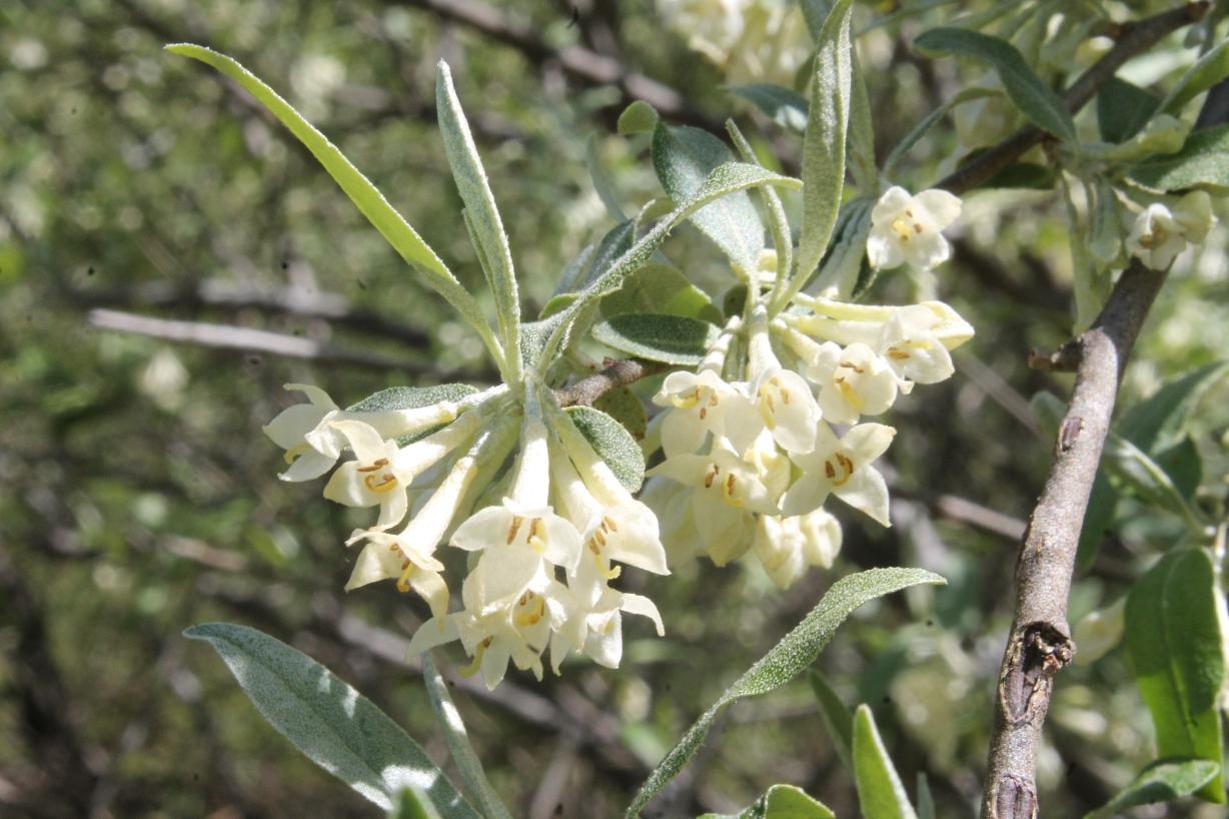
Elaeagnus angustifolia (Russian olive) flowers in a dry area of Oklahoma. The Russian olive is native to dry areas of Asia and is an invasive plant in America.
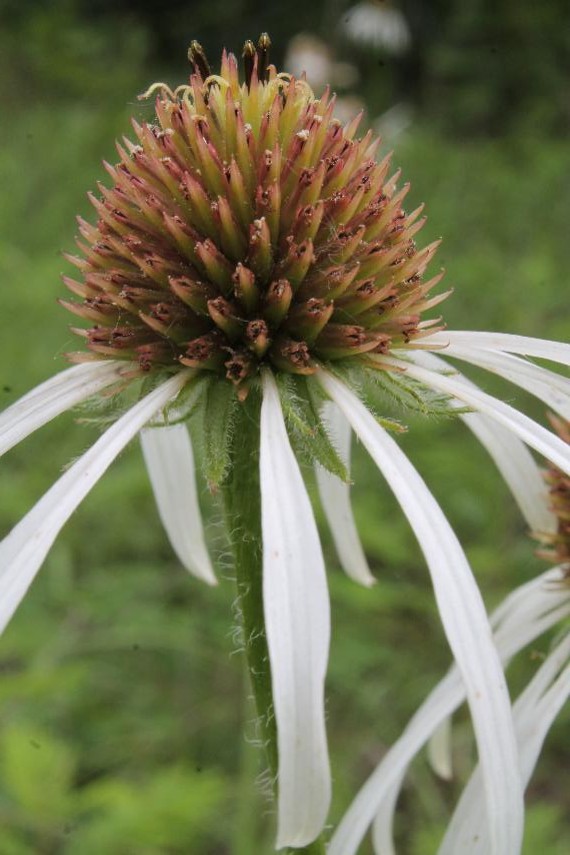
Echinacea pallida, a native tallgrass prairie species in Oklahoma. The ray flowers are narrow and white, and the disc flowers form a cone. Echinacea roots are reputed to have medicinal properties.
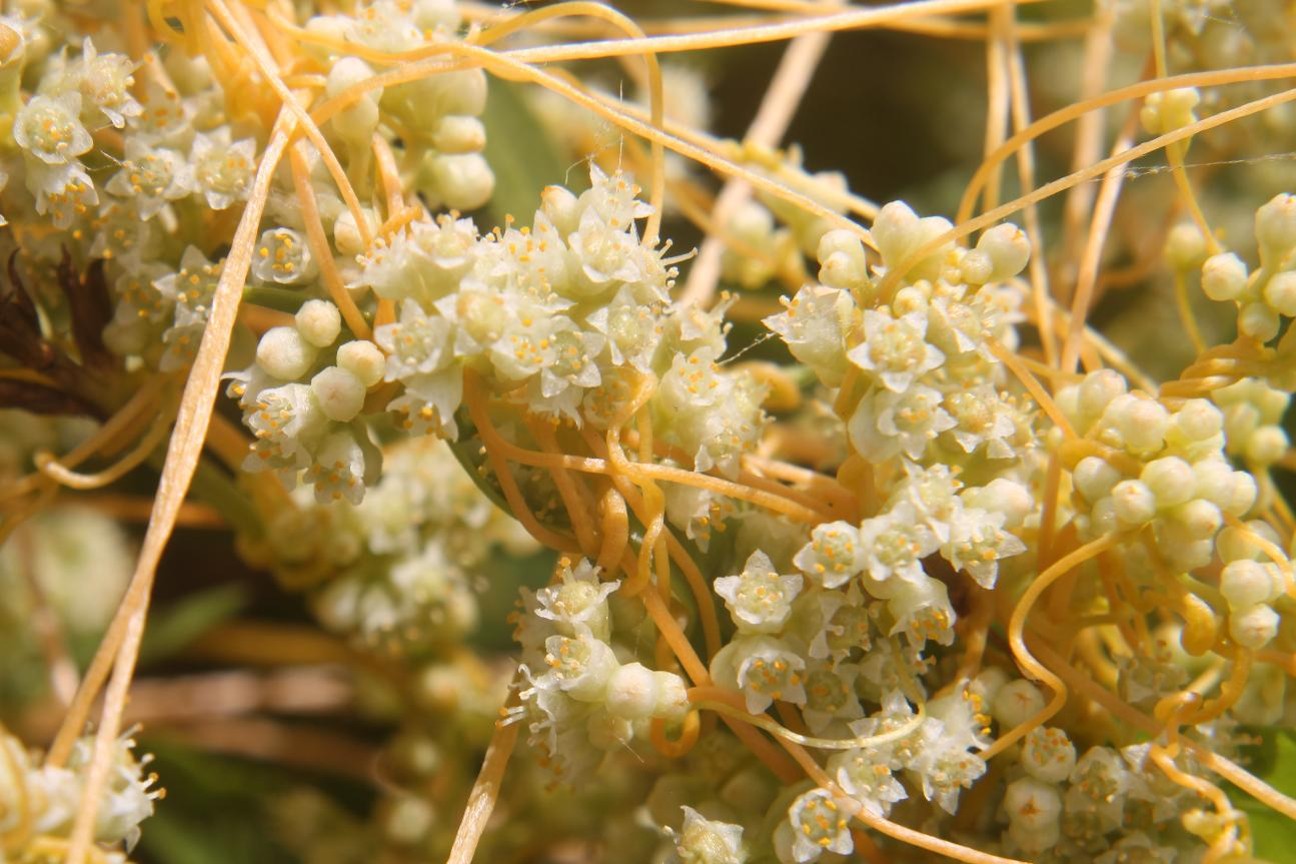
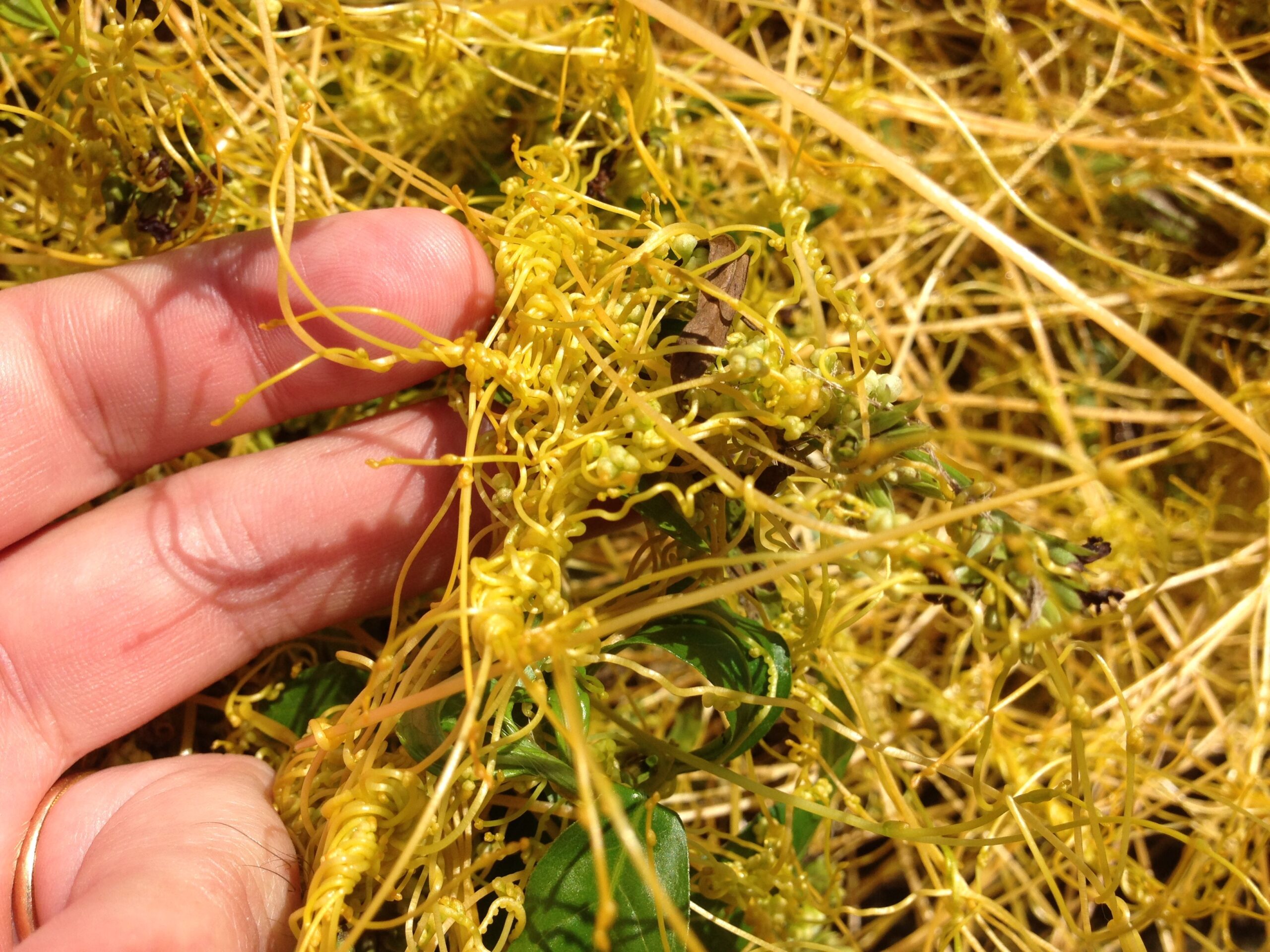
Dodder (genus Cuscuta) growing on Justicia in running water in a ditch in Oklahoma. Cuscuta has no chlorophyll and depends on its host plant for all its nutrients.
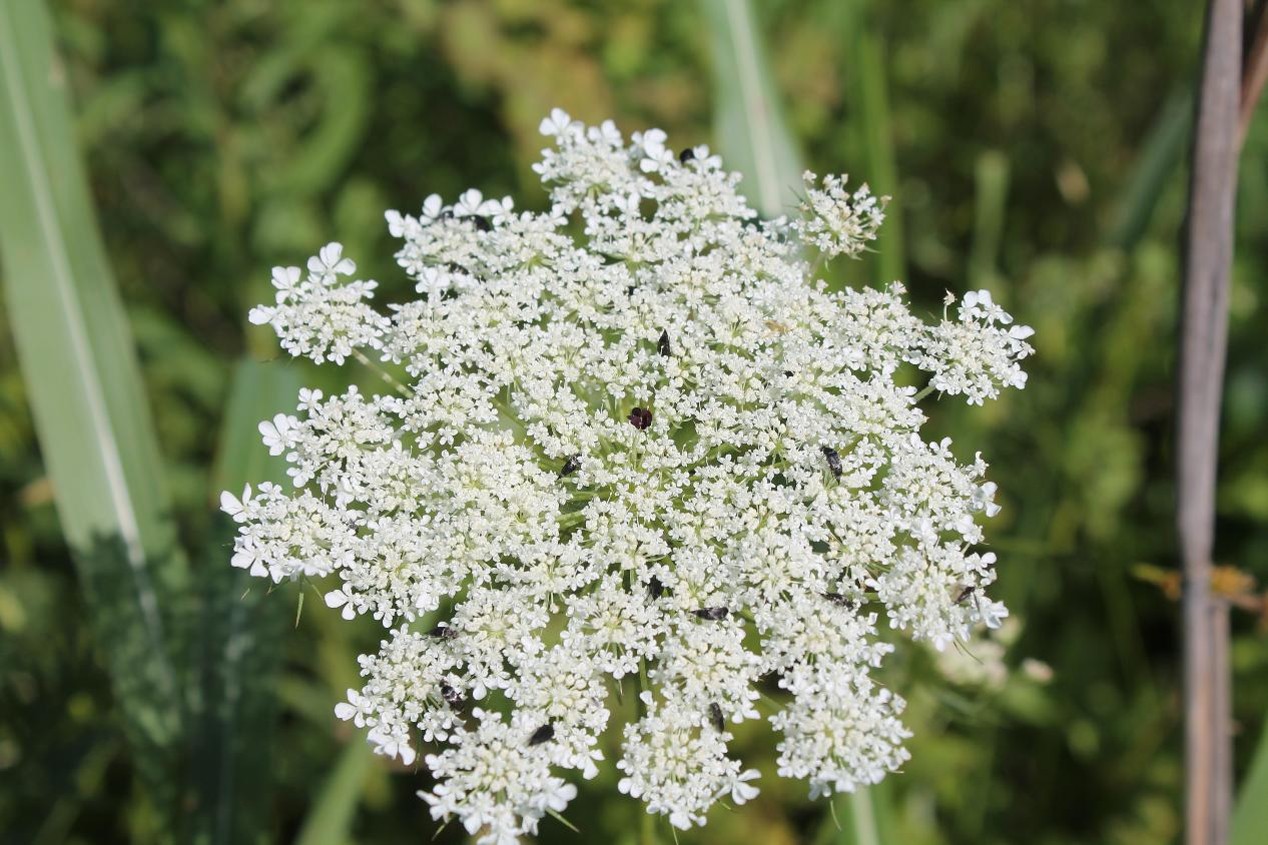
Daucus carota (wild carrot, or Queen Anne’s lace) has many small white flowers in an umbel, or umbrella-shaped inflorescence. Field in Oklahoma.
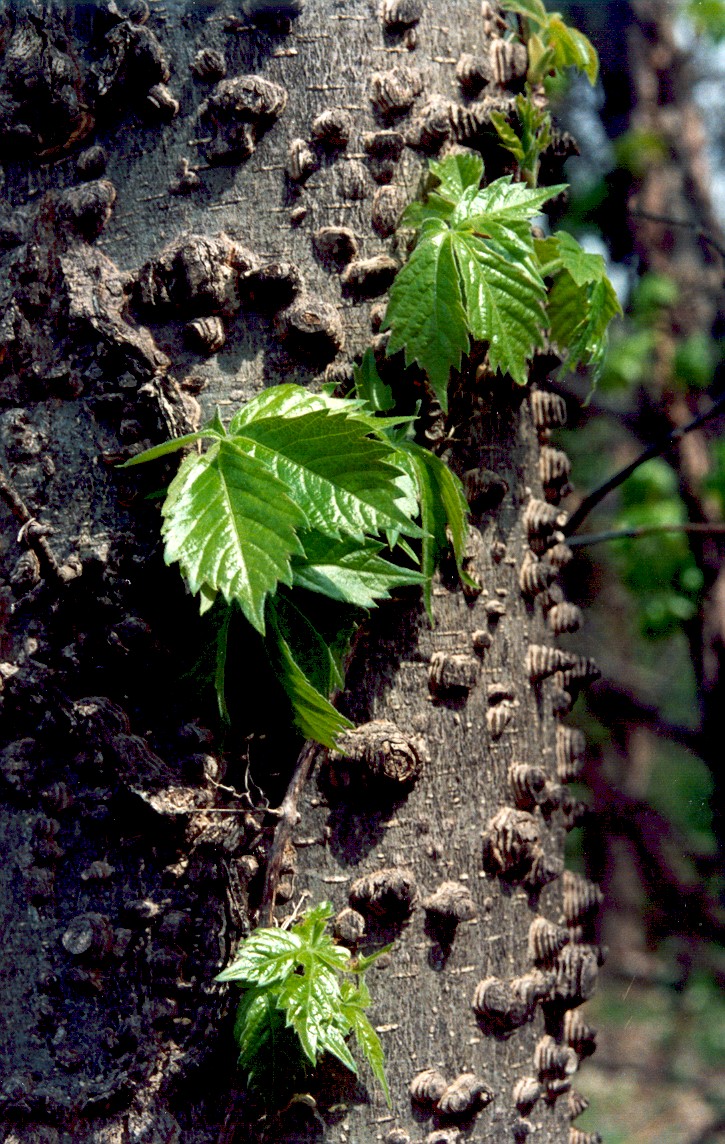
Young leaves of Virginia creeper on sugarberry bark, Oklahoma.
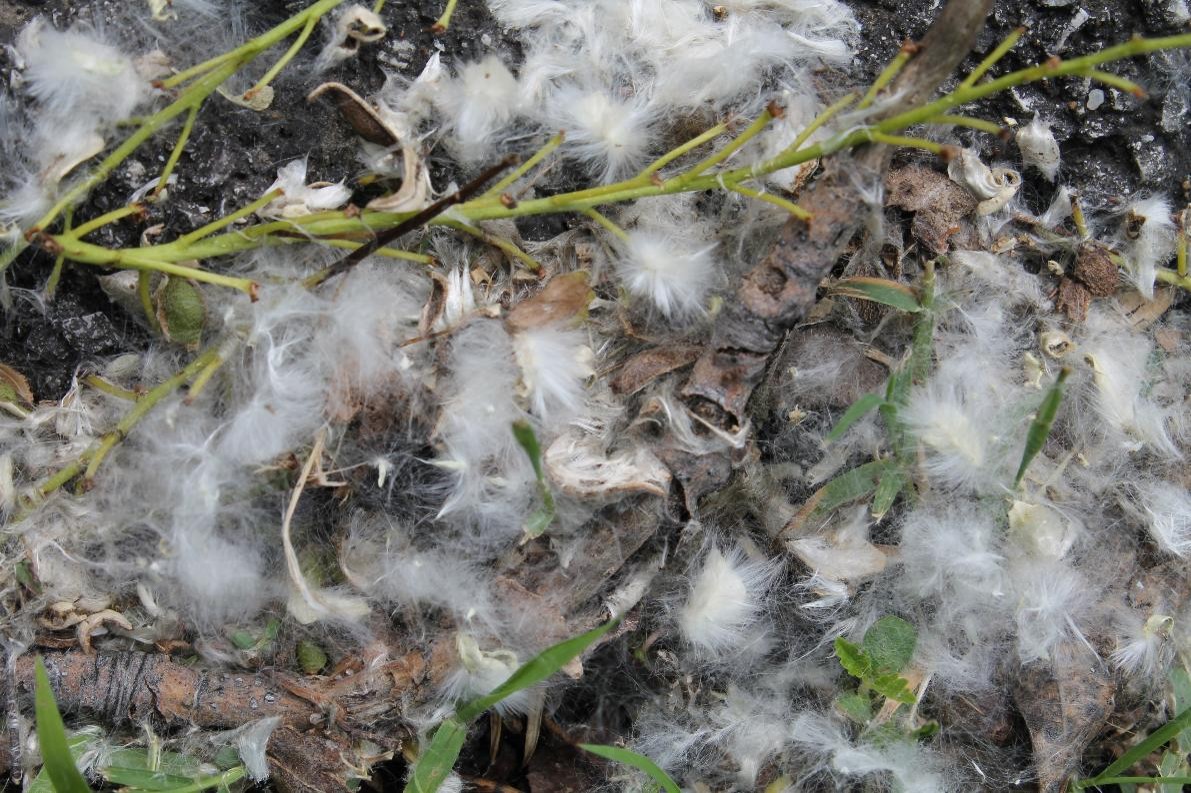
Cottonwood (Populus deltoides) seeds cover the ground along waterways in late spring.
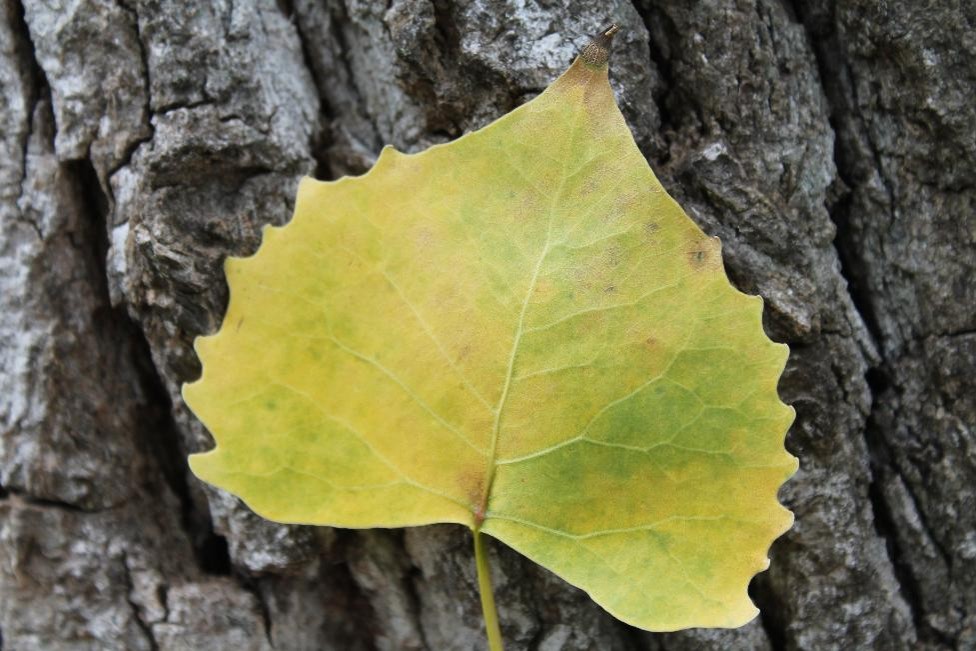
Cottonwood (Populus deltoides) leaf and bark. Deltoides refers to the leaf shape.
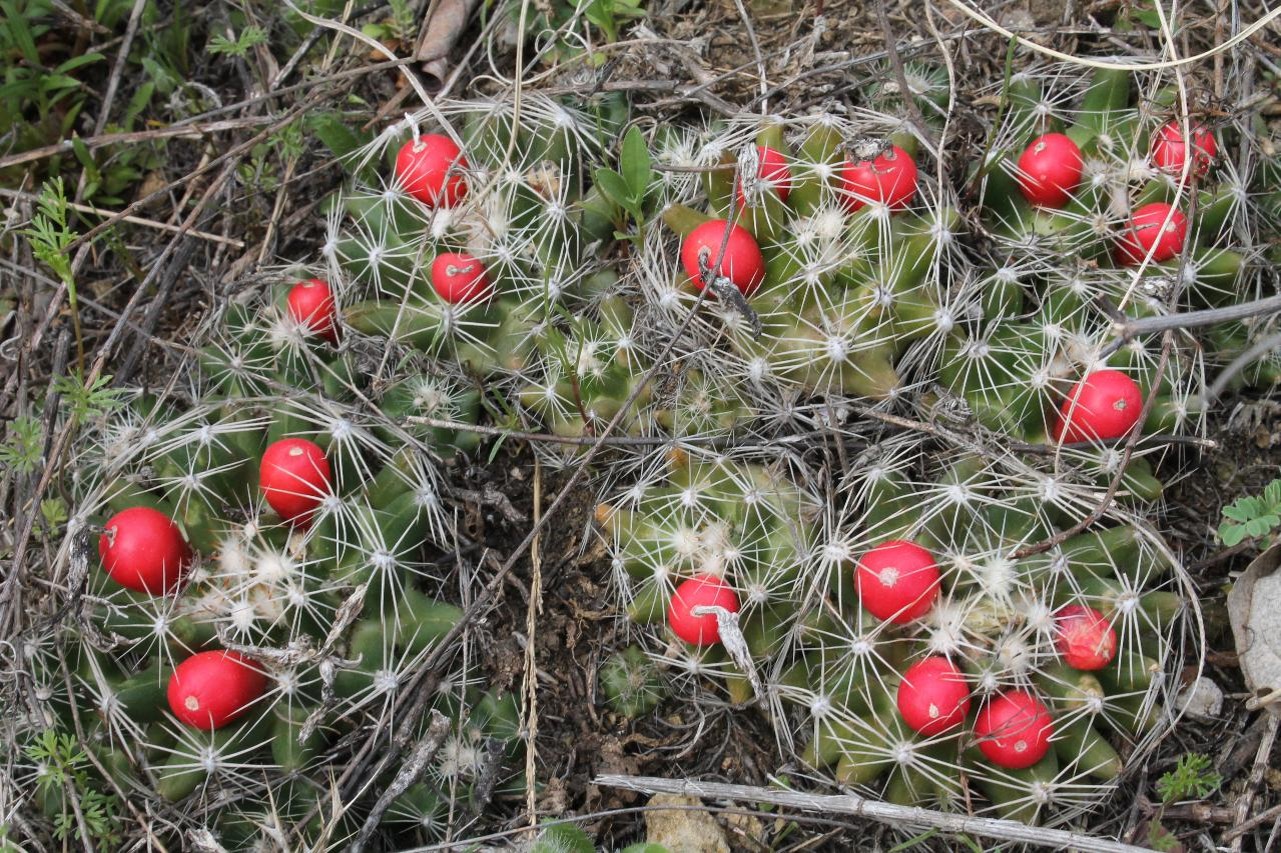
Coryptantha cactus in an open field in Oklahoma.
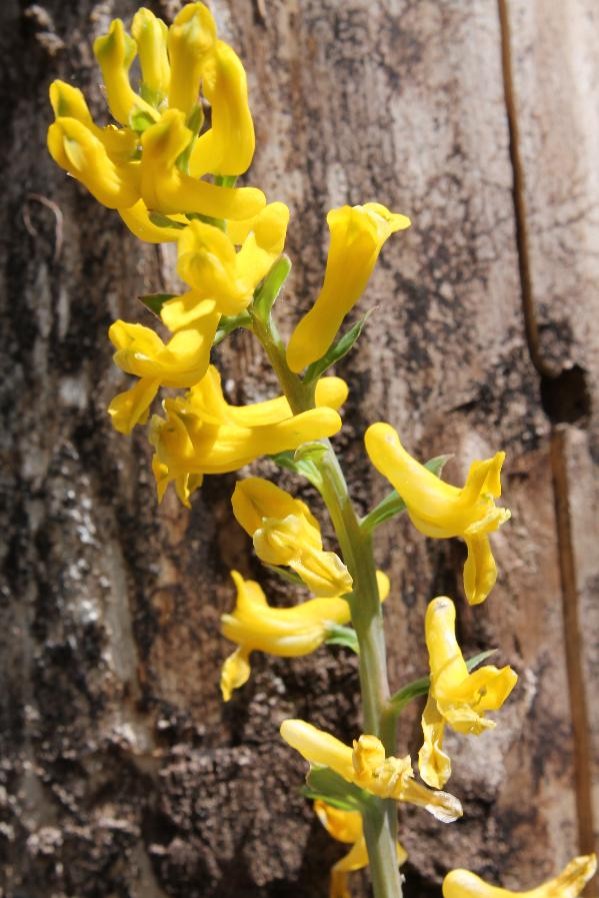
Corydalis flowers in a forest edge in Oklahoma.
Cornus florida (flowering dogwood) in a deciduous forest in Oklahoma. Four large white bracts surround a cluster of small yellow flowers.
A coral-root orchid (genus Corallorhiza) has no chlorophyll and is completely dependent on mutualistic fungi that get nutrients from decomposing vegetation and supply it to the orchid.
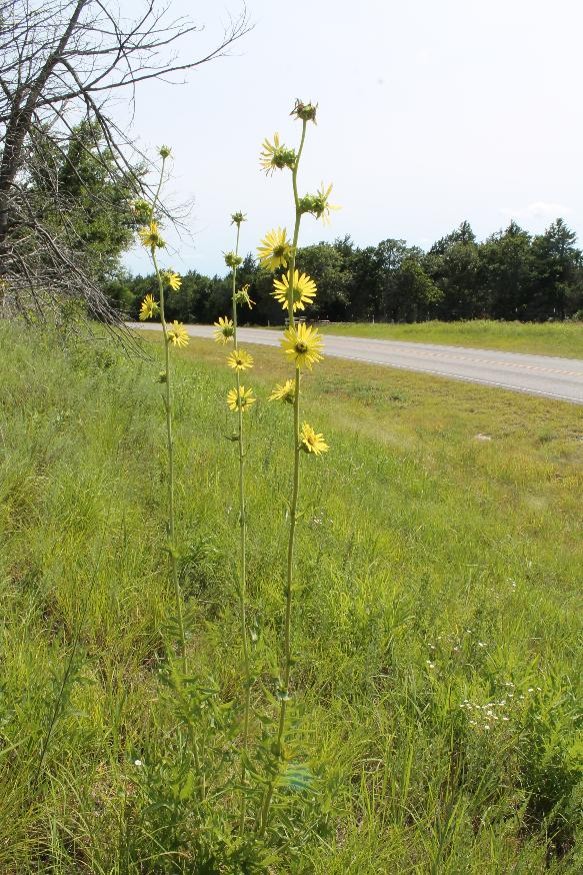
Compass plant (Silphium laciniatum) in a roadside prairie remnant in Oklahoma.
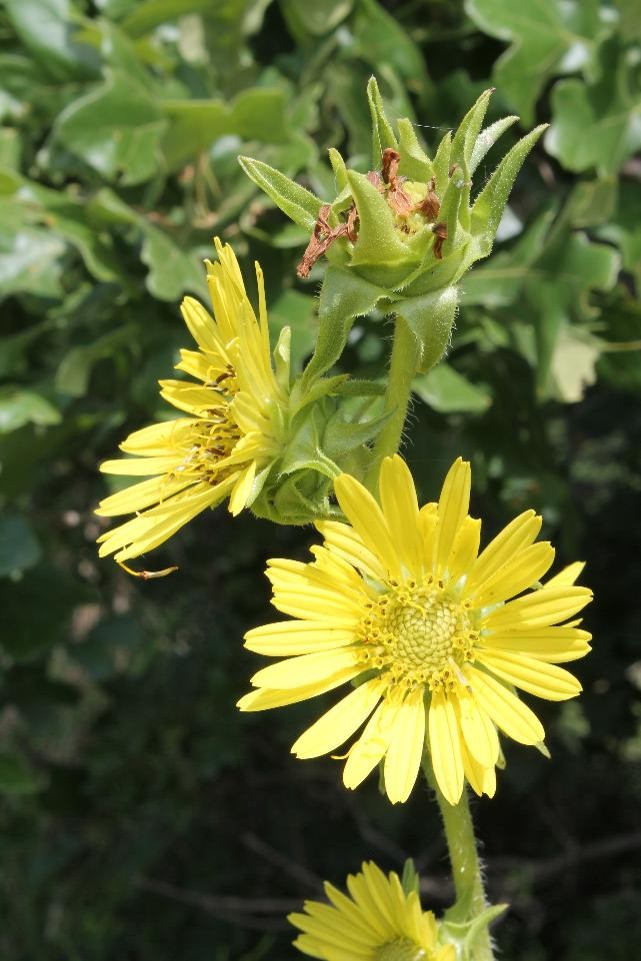
Compass plant (Silphium laciniatum) in a roadside prairie remnant in Oklahoma. The flowers are “composites,” in which ray flowers surround a central disc of disc flowers, both yellow.
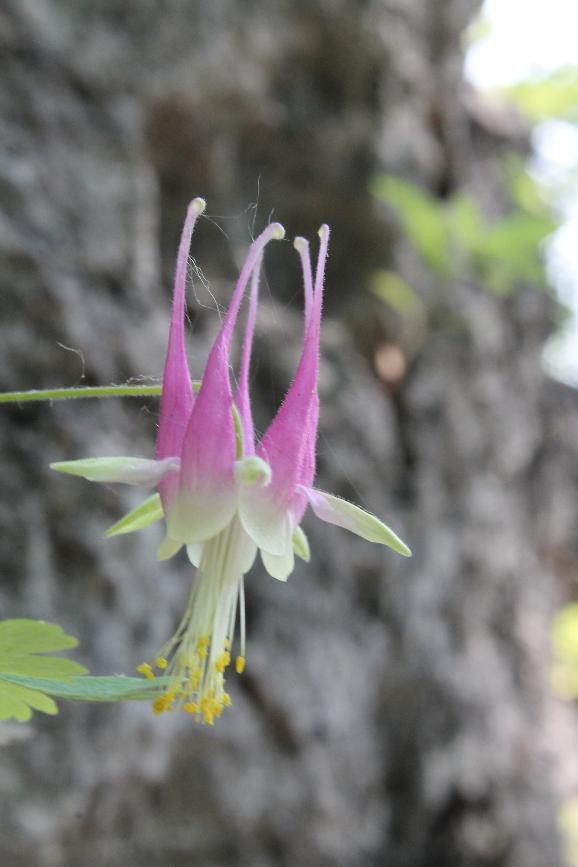
A columbine (genus Aquilegia) in a maple forest in northeastern Oklahoma. The forest remains cool and humid because large cliffs toward the south shade it from direct sunlight.
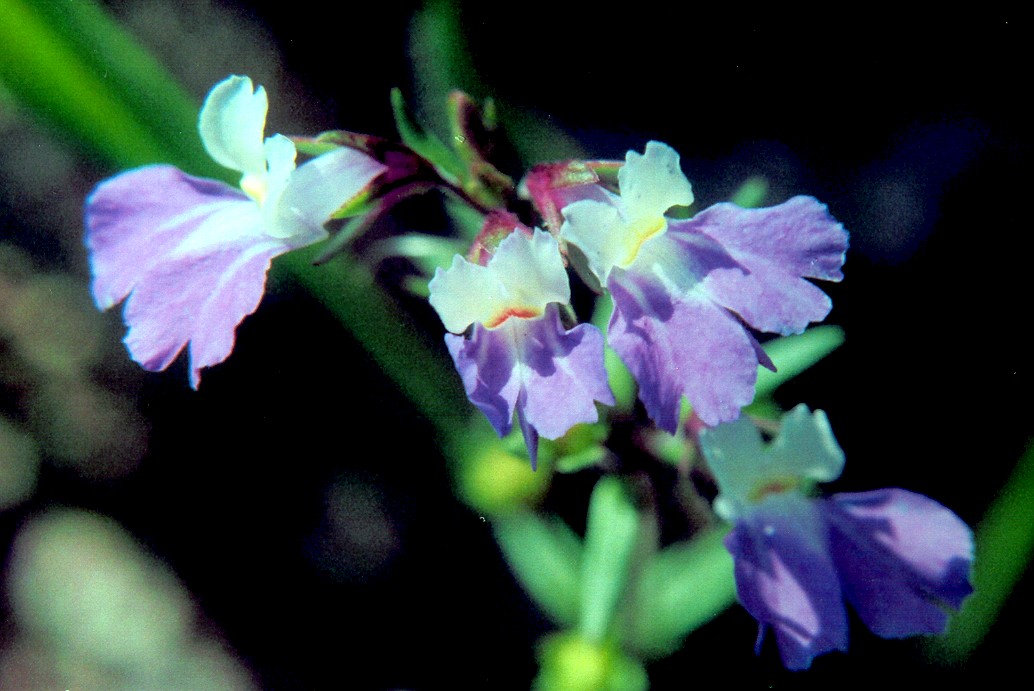
Collinsia verna (blue-eyed Mary) in a field in Oklahoma.
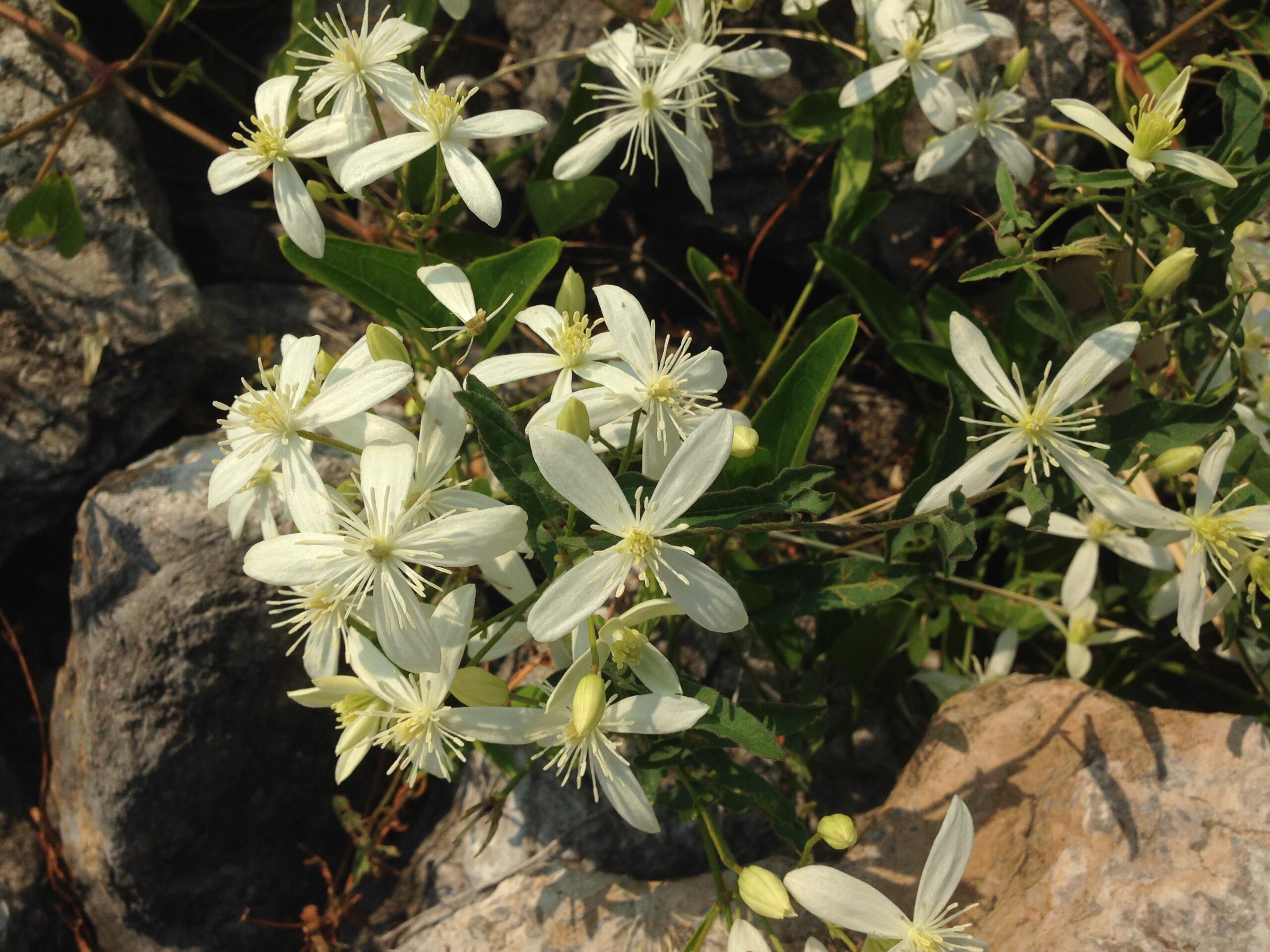
Clematis flowers in Oklahoma.
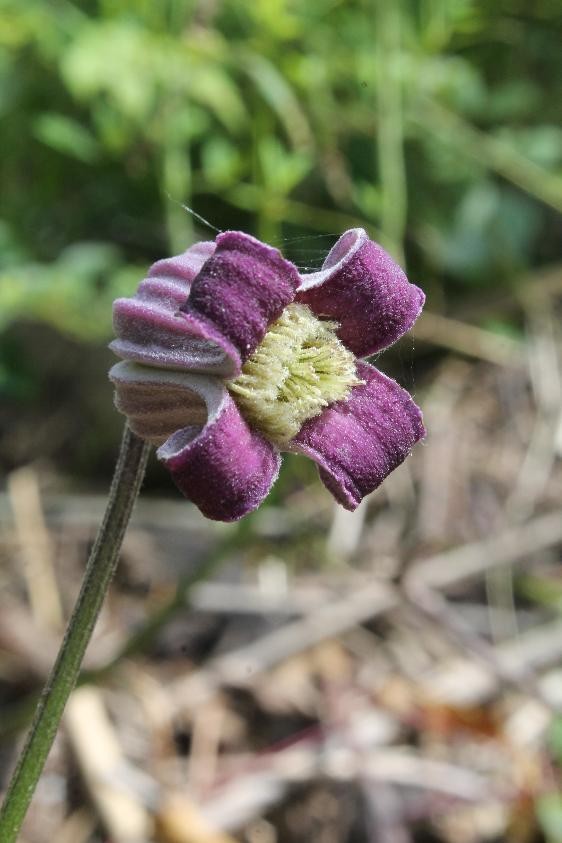
Clematis pitcheri grows in a forest near the Blue River in south central Oklahoma.
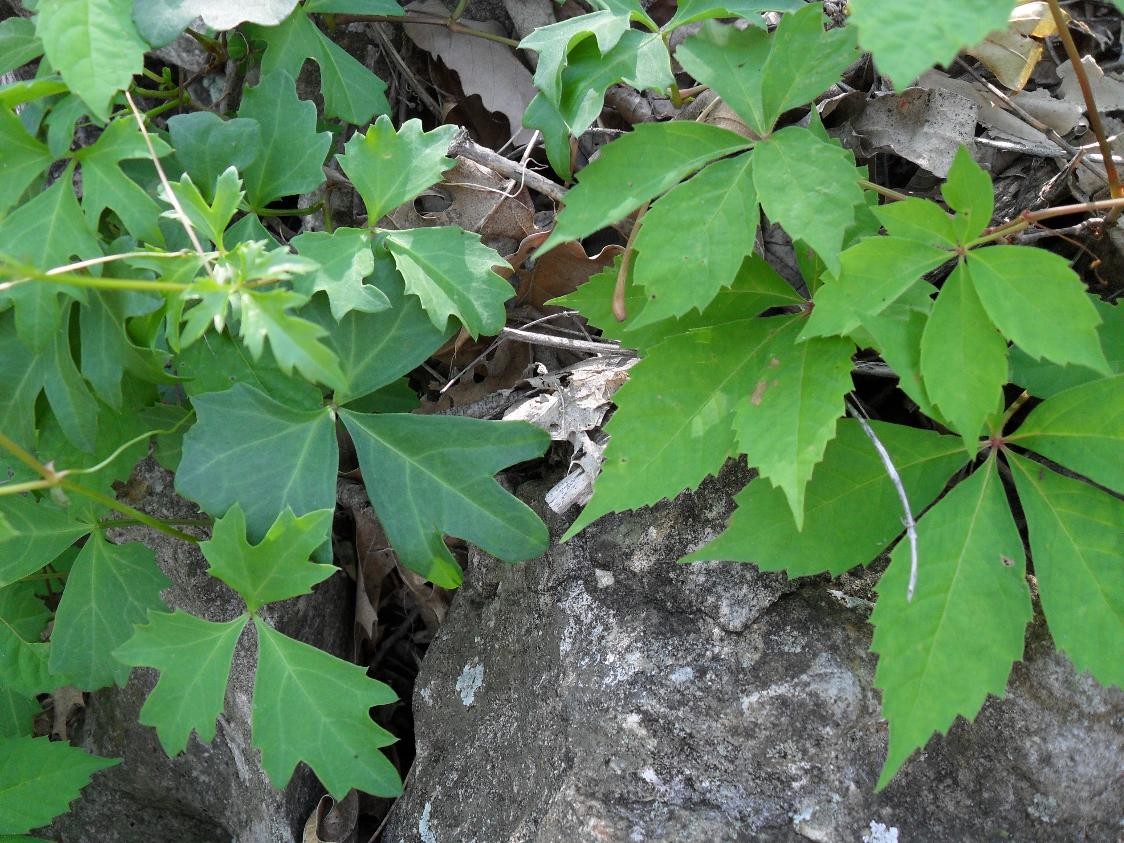
Cissus (with almost-palmately-compound leaves, to the left) vs. Parthenocissus quinquefolia (Virginia creeper, with compound leaves) on the right. The Cissus leaf blade just barely connects the three lobes.
Chasmanthium latifolium grass in Oklahoma is sometimes called fish-on-a-pole.
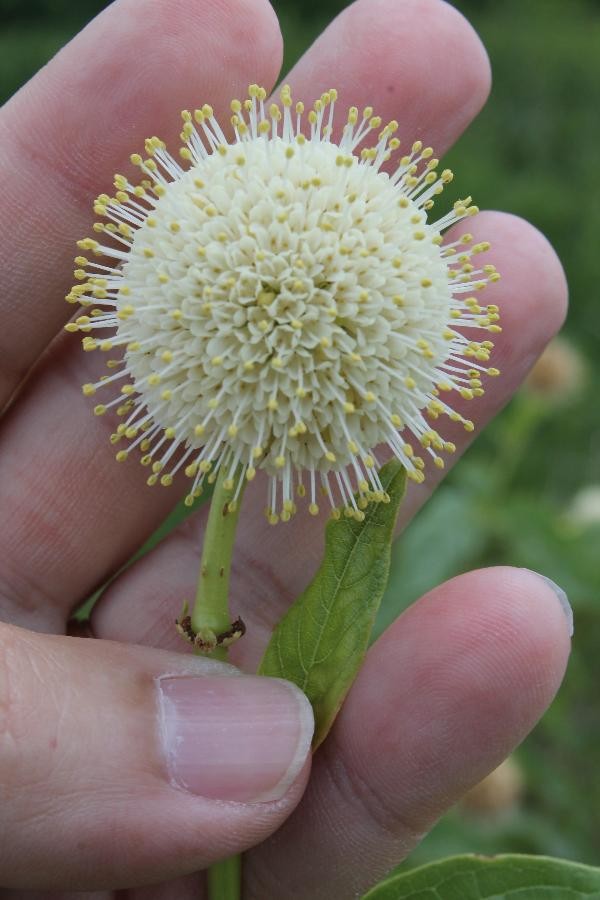
Spherical cluster of flowers, Cephalanthus occidentalis, on a lakeside in Oklahoma.
A Cenchrus sandbur grass in a weedy field in Oklahoma.
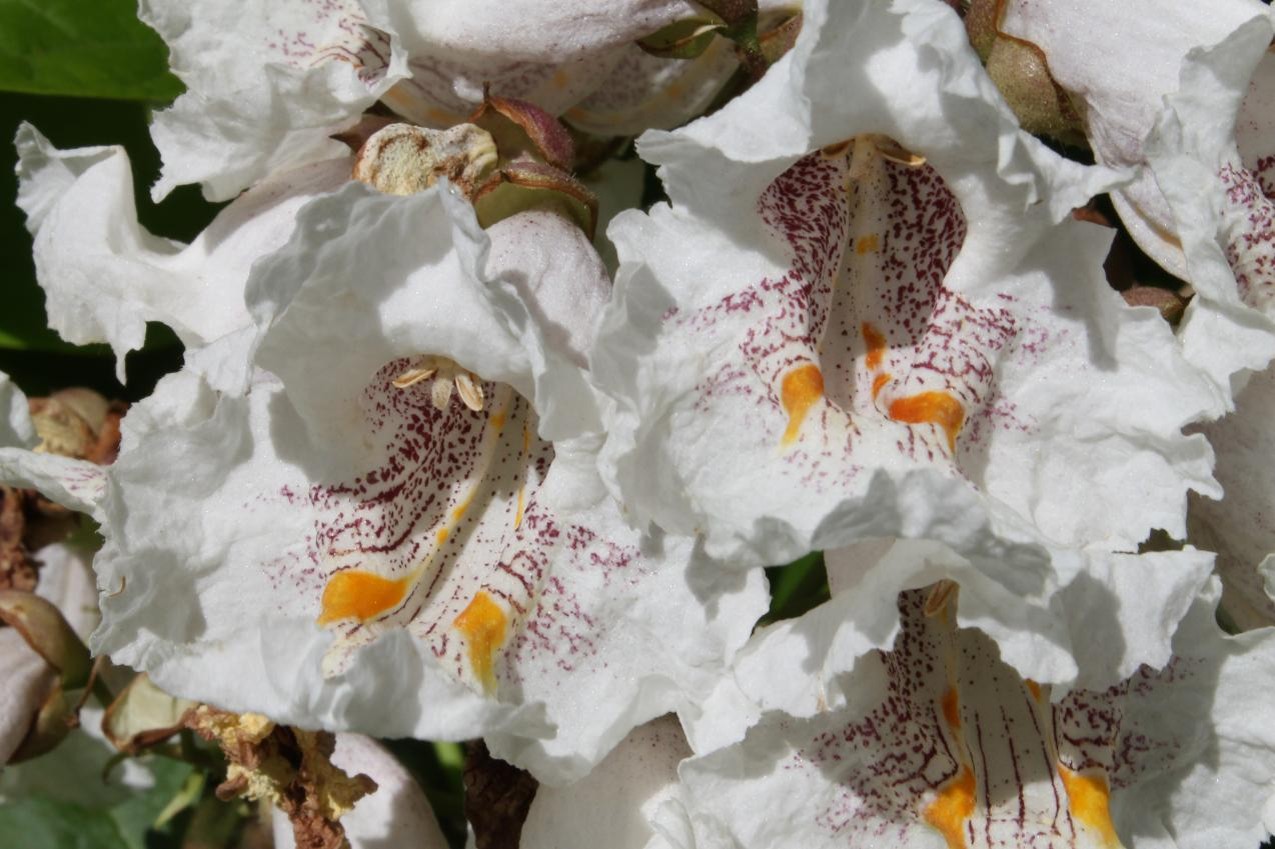
Flowers of Catalpa bignonioides in Oklahoma. The purple and yellow markings are nectar guides that lead pollinators to the nectar so that they brush past the stamens and get pollen on their backs.
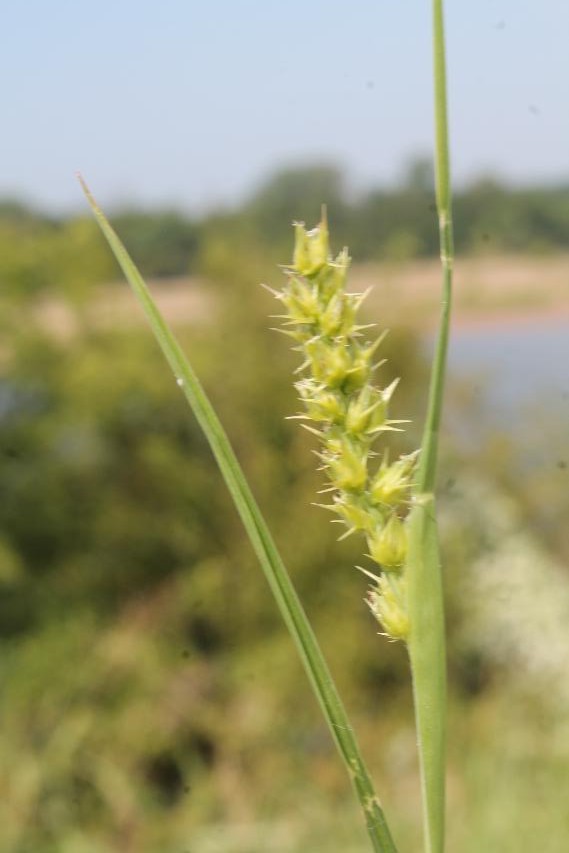
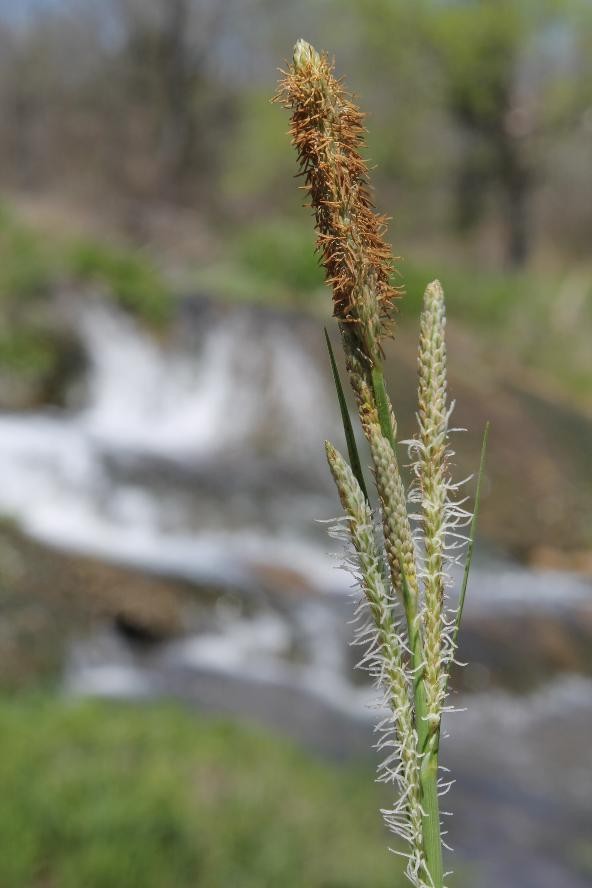
A Carex sedge along the Blue River in Oklahoma. As in many sedges, the male flowers (with stamens, now having lost their pollen) above the female flowers (with fresh, protruding stigmas). In many plants and animals, the male function occurs earlier than the female function.
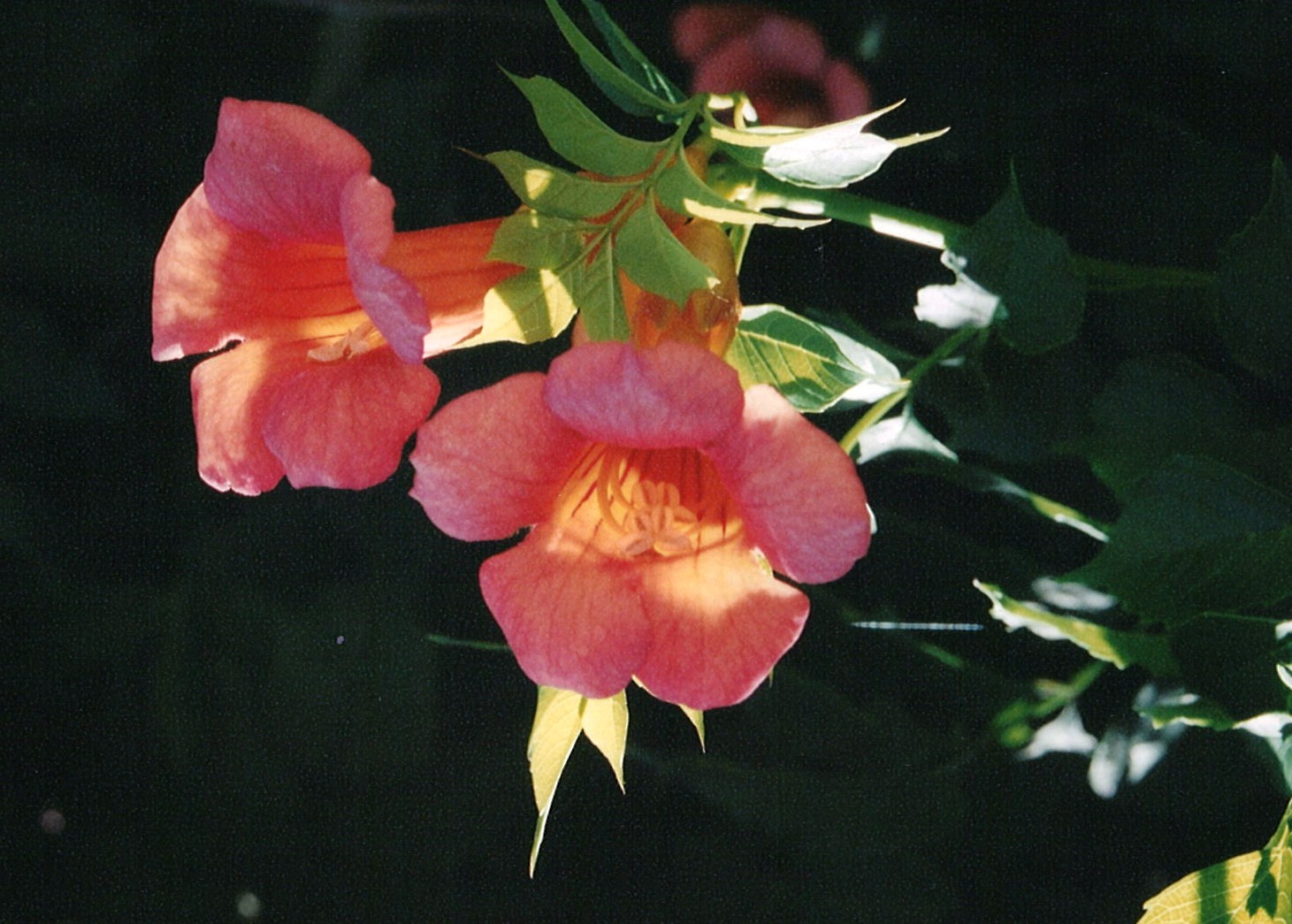
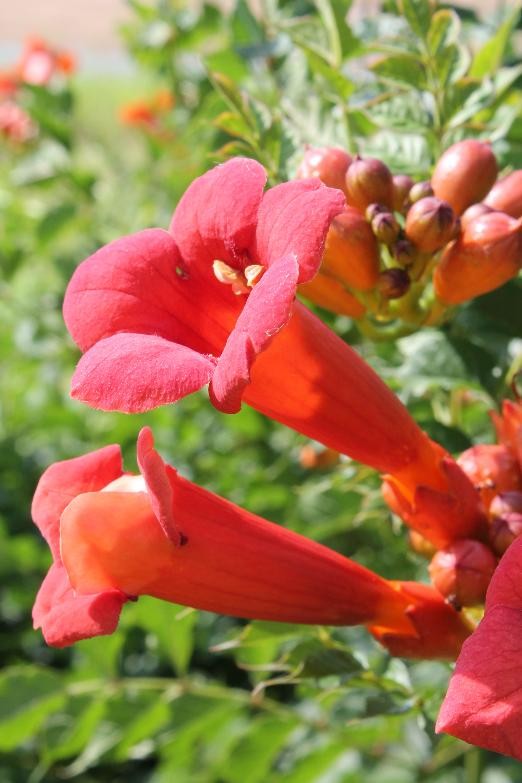
Flowers of Campsis radicans, the trumpet creeper, a vigorous vine. Often pollinated by hummingbirds. The pollinator must stick its beak through the tube, brushing against stamens and pistils to get the nectar.
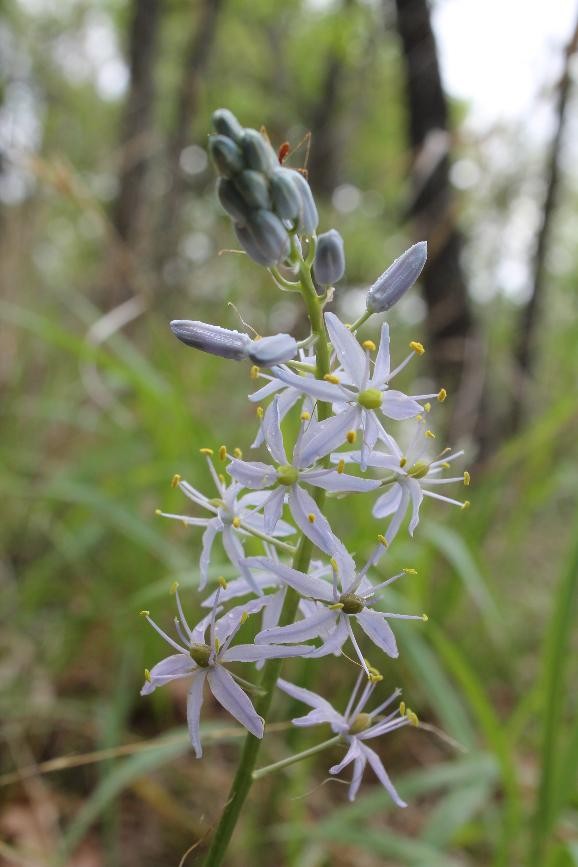
A Camassia lily in an Oklahoma field.
Callirhoe involucrata, the poppy mallow, grows on Oklahoma roadsides.
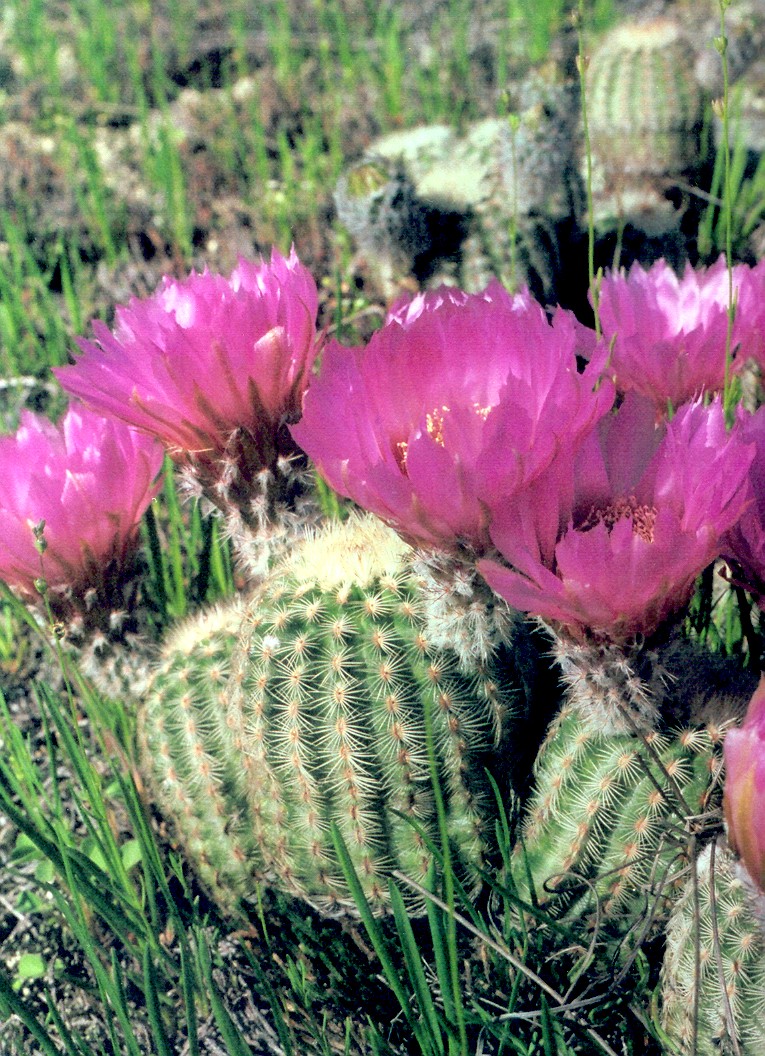
Echinocereus baileyi is a cactus that grows on granite rocks near the Blue River in south central Oklahoma.
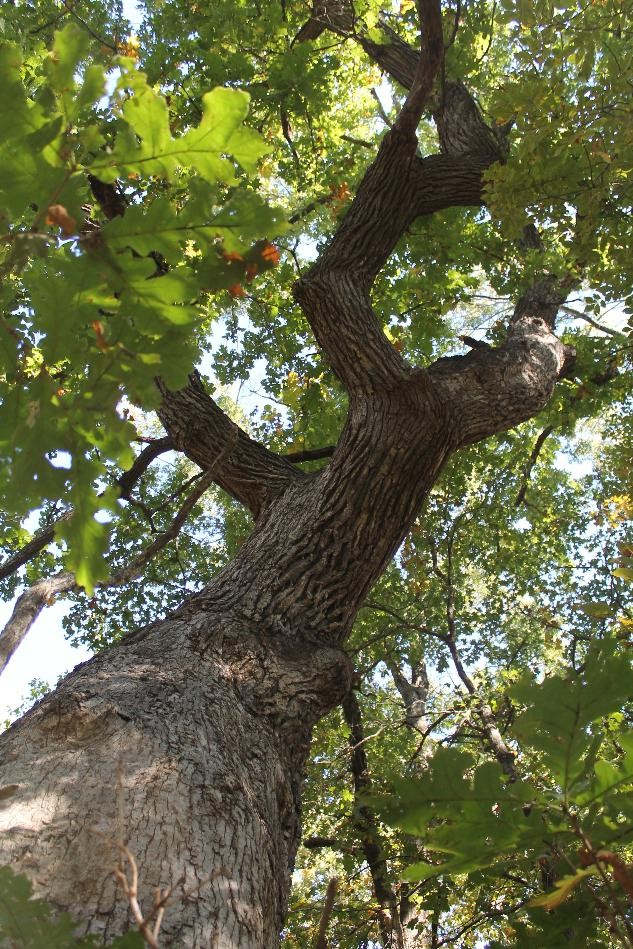
A gigantic bur oak (Quercus macrocarpa) near the Blue River in Oklahoma.
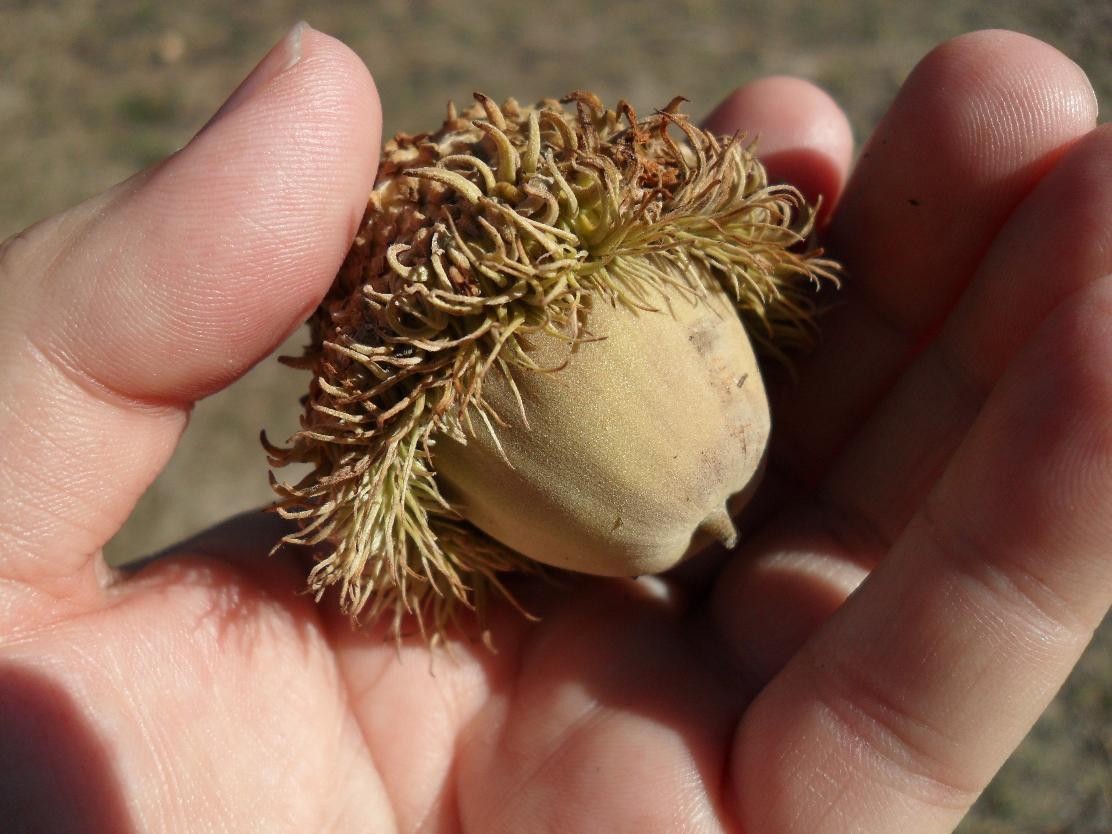
Acorn of a bur oak, Quercus macrocarpa, near the Blue River in Oklahoma.
Bull nettle (Cnidoscolus texana) in Oklahoma. It is actually a spurge and has extremely painful spines.
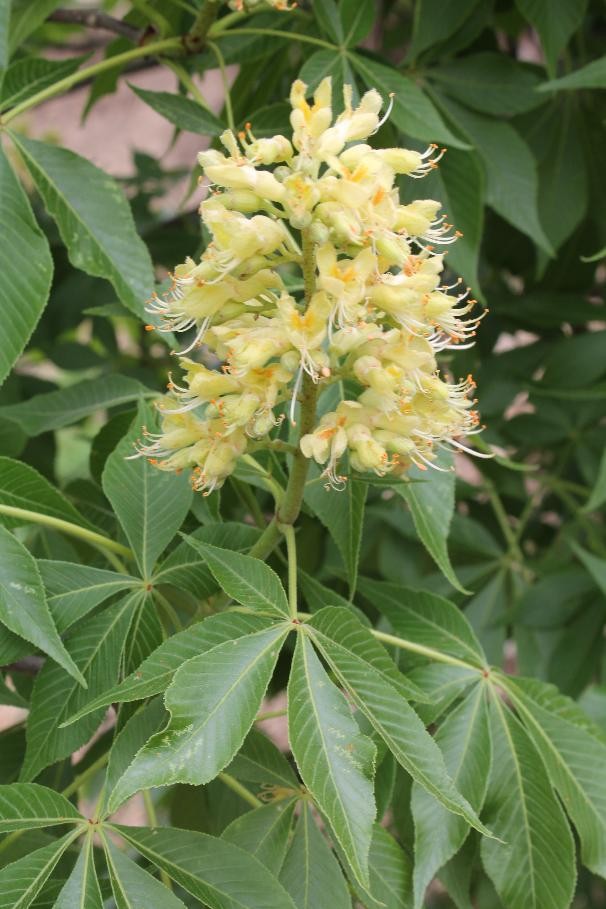
A buckeye (Aesculus glabra) in northeastern Oklahoma.
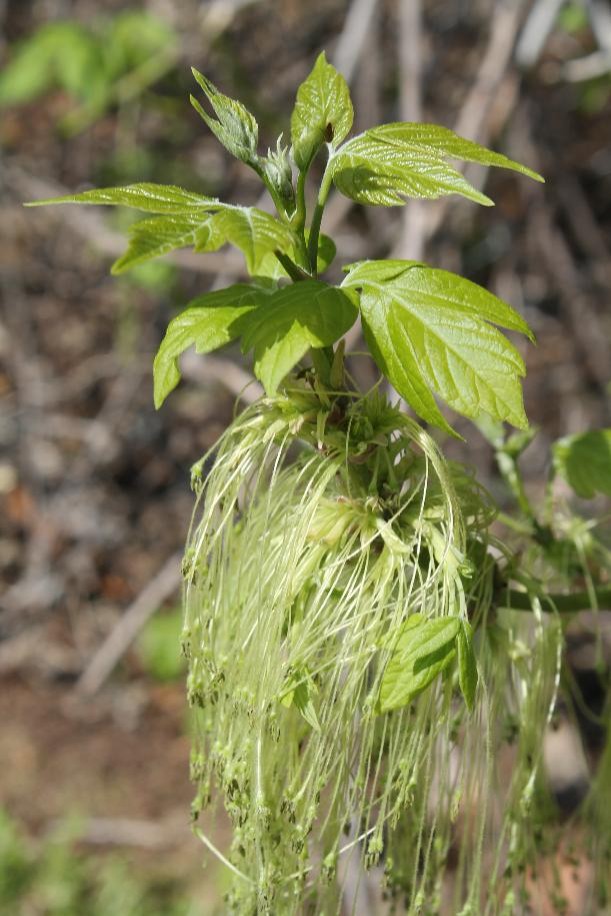
Spring growth of box elder (Acer negundo) in Oklahoma. The flowers and fruits are at the end of long stalks.
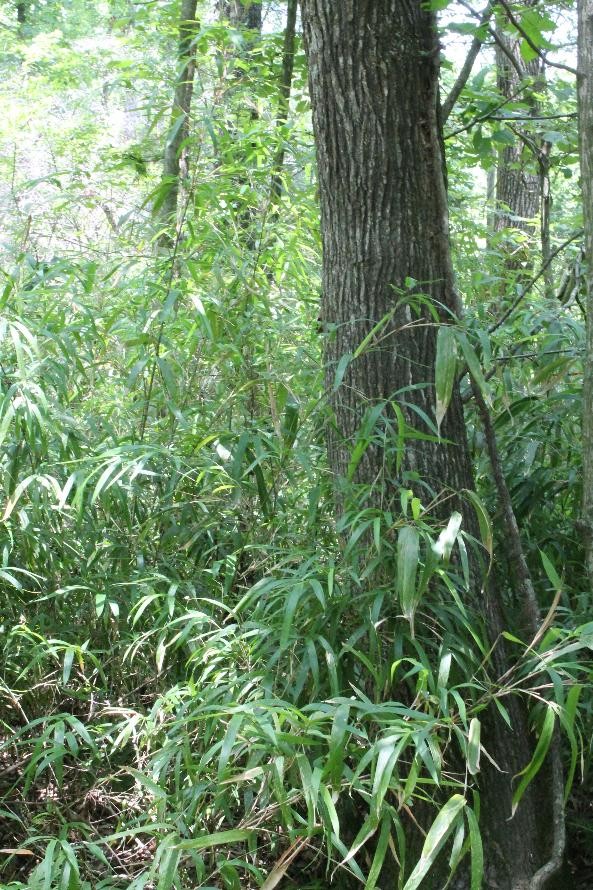
River cane (Arundinaria gigantea) in a wet forest in eastern Oklahoma.
Carpinus caroliniana (American hornbeam) in a lowland forest of eastern Oklahoma.
Mature fruit of Maclura pomifera, the bois-d’arc, in Oklahoma. It is a dense, sticky mass of little fruits related to the mulberry. While squirrels dig out and eat the seeds, no animal today seems to consume the entire fruit and disperse the seeds. Large mammals apparently did so in the last ice age. Bois-d’arc therefore may represent a mutualism in which one of the partners has become extinct, an “evolutionary anachronism.”
Bois-d’arc (Maclura pomifera) in Oklahoma is recognizable by its curved branches and yellowish bark.
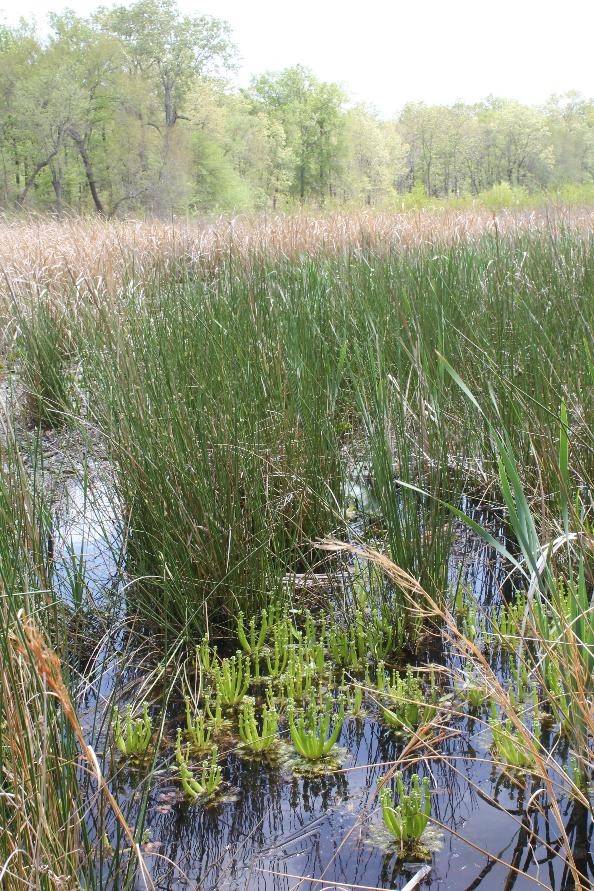
Hottonia inflata plants (foreground) float in the water of Boehler Bog in southern Oklahoma.
Hottonia inflata floats in the water of Boehler Bog, in southern Oklahoma, because its stems contain air. The leaves are finely divided, allowing them to absorb carbon dioxide from the water. Aerial pollination, but aquatic photosynthesis.
Bluejack oak (Quercus incana) grows in Oklahoma in very dry sand, in this case not far from Boehler Bog. The leaves are waxy and reflect excess light.
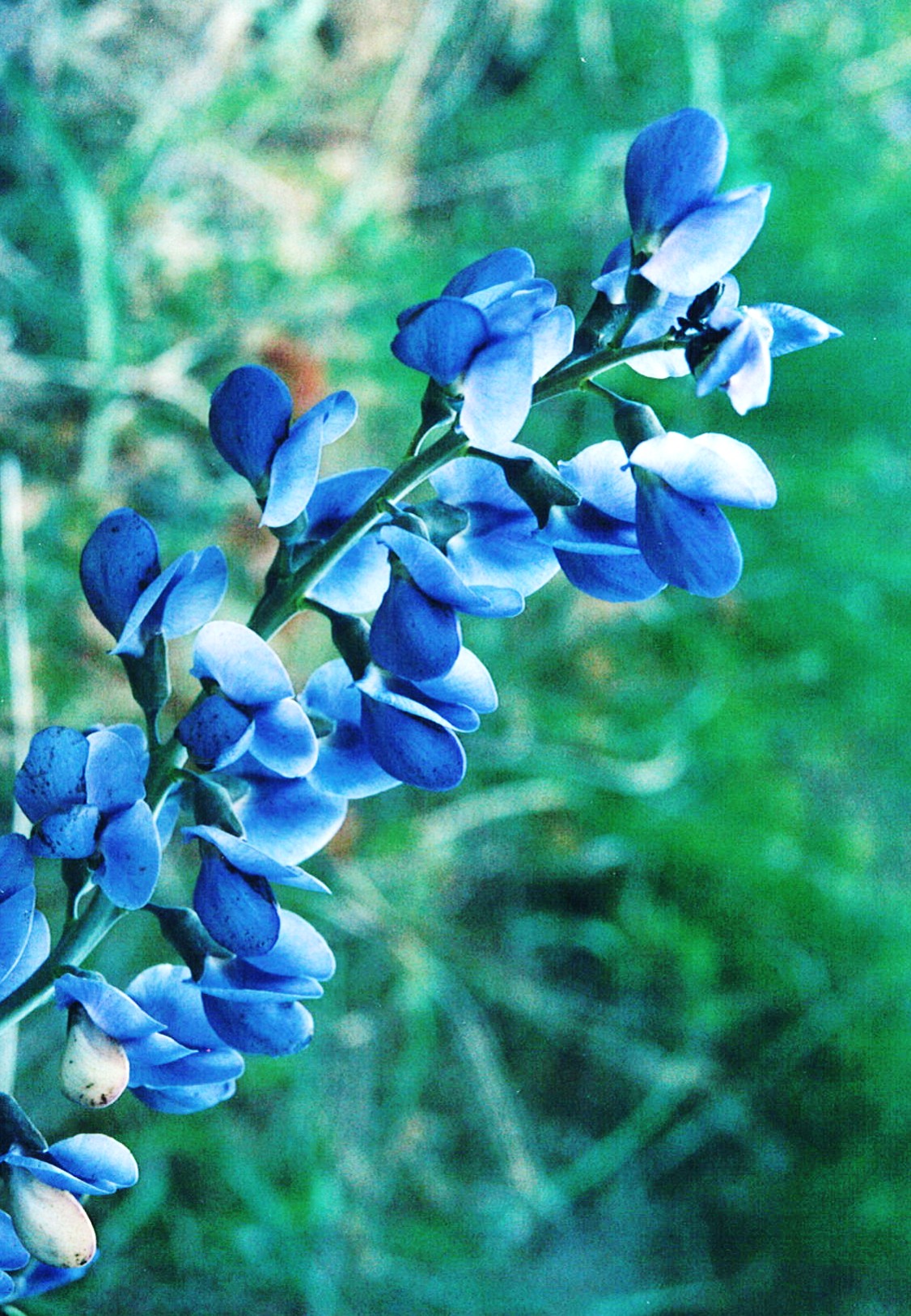
Baptisia australis, the blue wild indigo, grows in prairie remnants in Oklahoma.
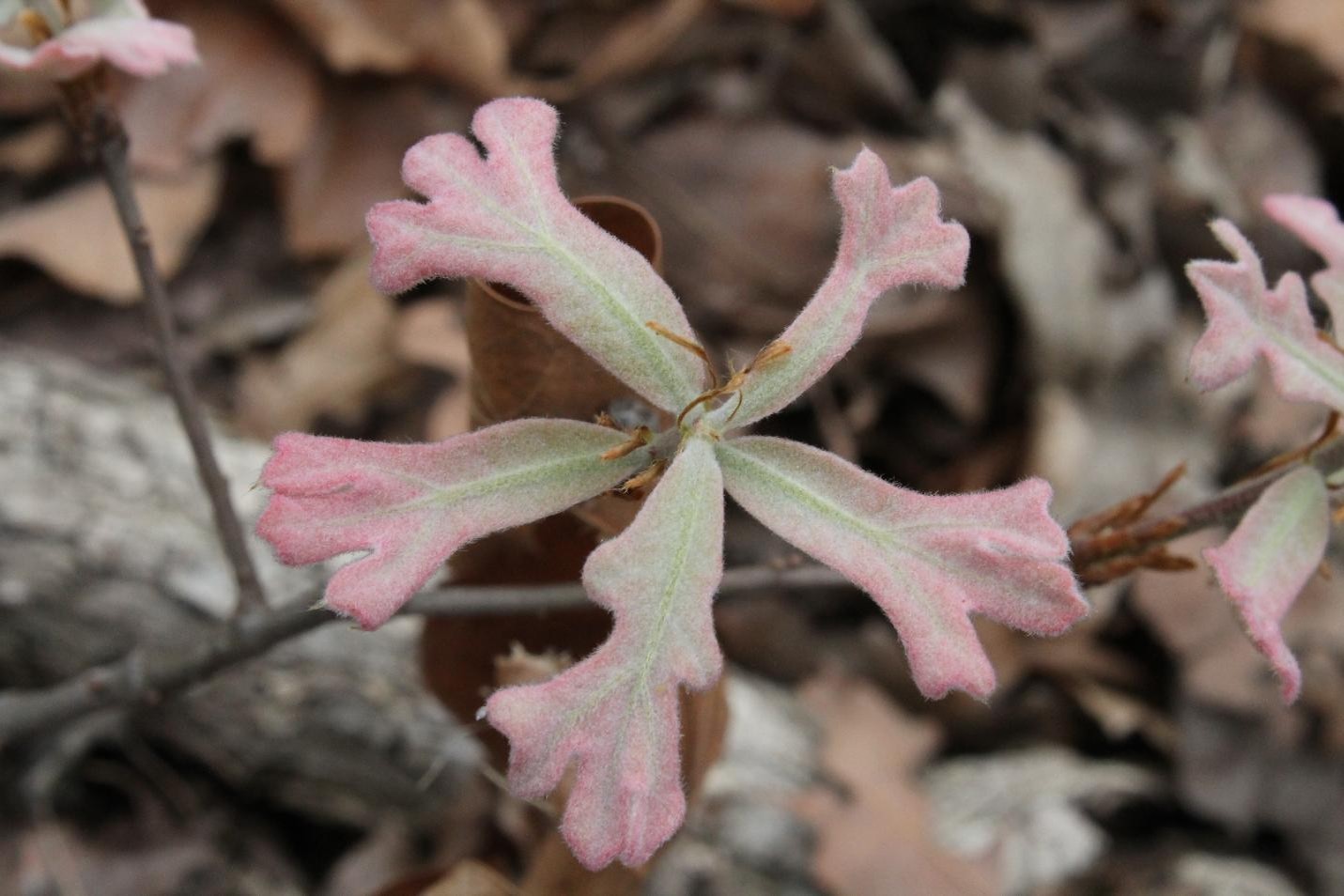
Young leaves of blackjack oak (Quercus marilandica) do not closely resemble the adult leaves.
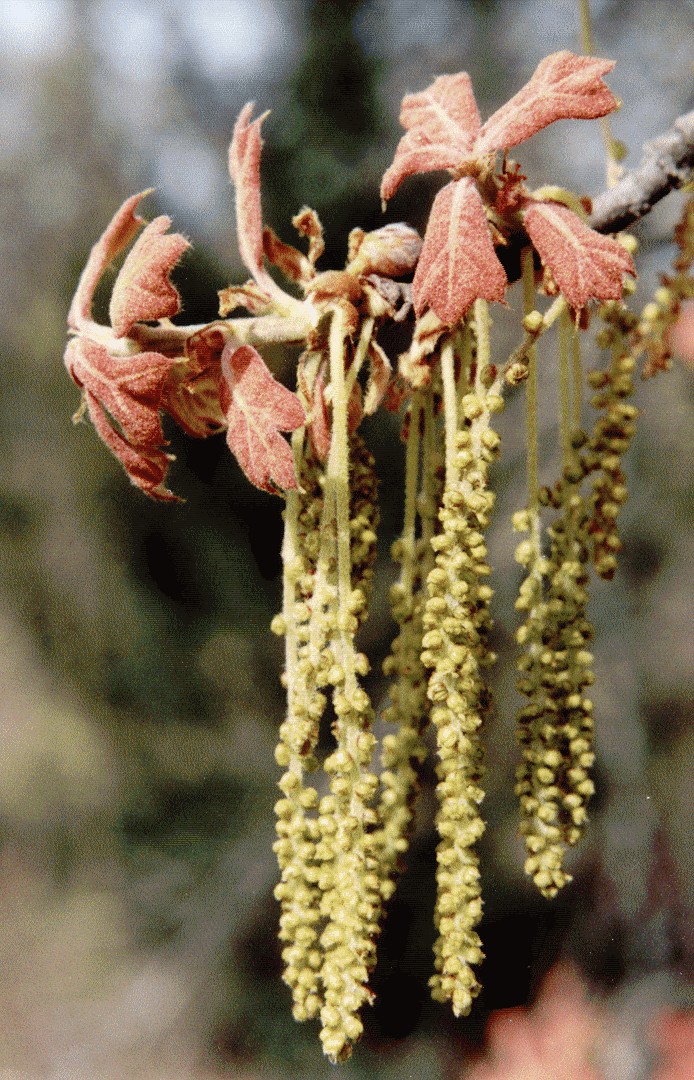
Young leaves and male catkins of blackjack oak (Quercus marilandica) in Oklahoma.
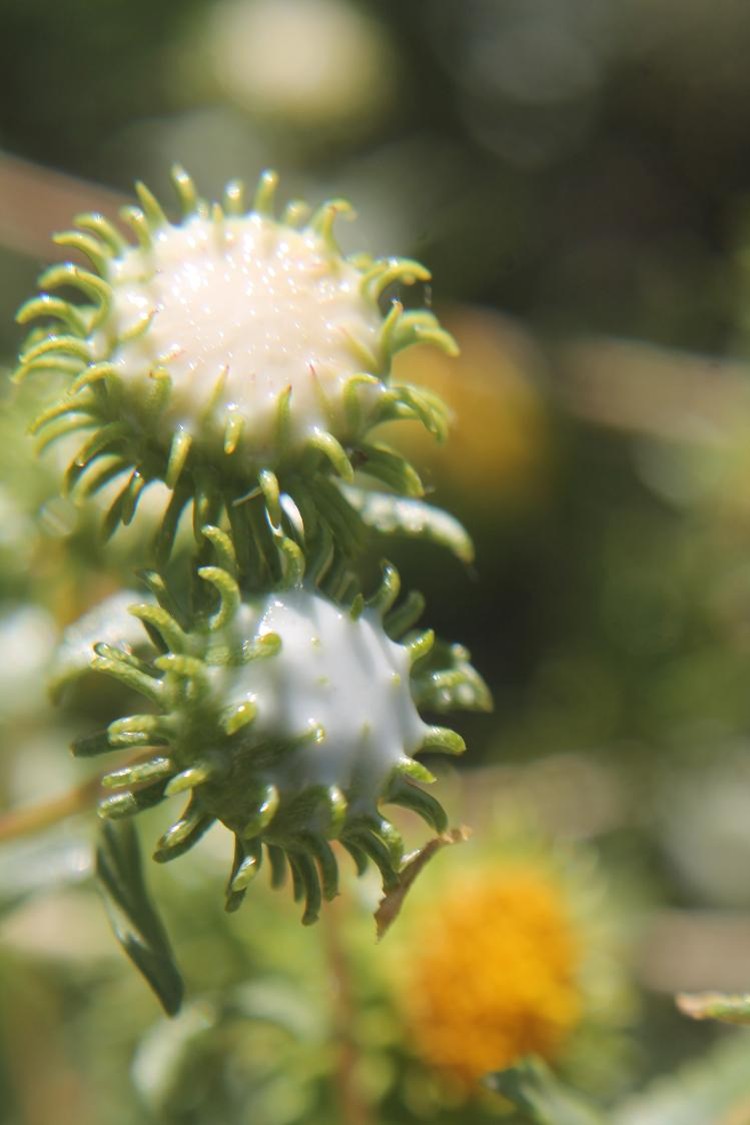
Gumweed (Grindelia) in western Oklahoma. You can see the white latex that gives the plant its name.
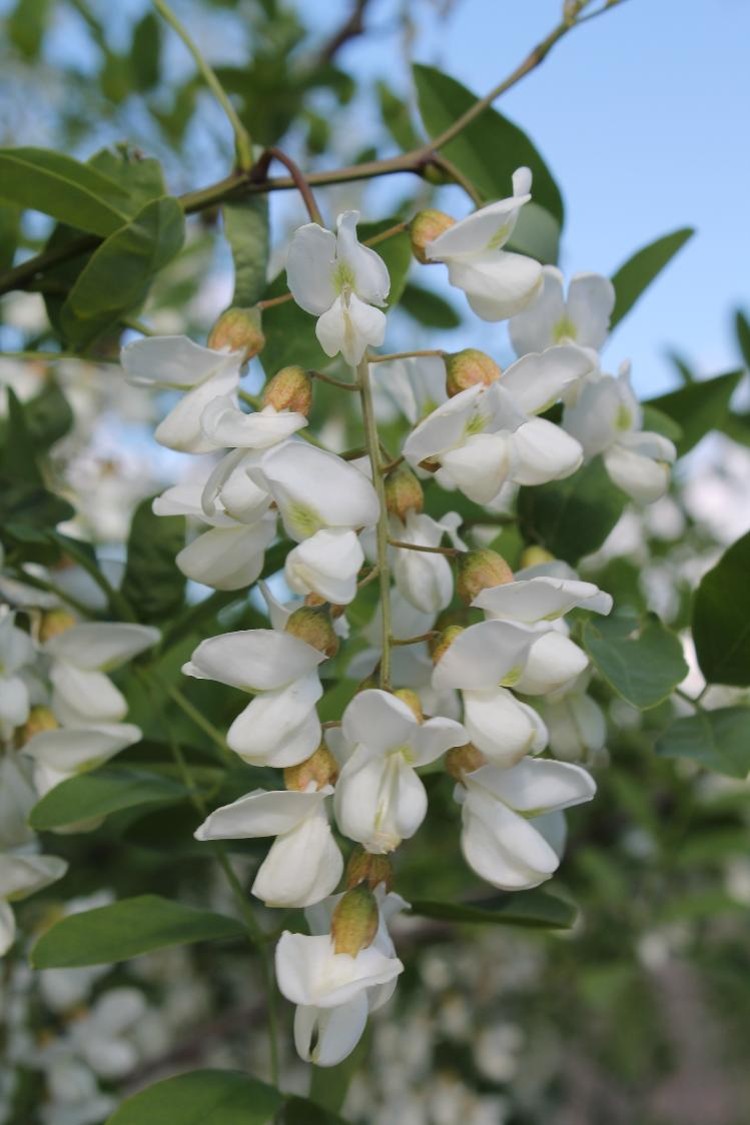
Black locust (Robinia pseudoacacia) flowers at a forest edge in Oklahoma. The flowers produce a heavy sweet fragrance. This species was introduced to Europe, where it has become invasive.
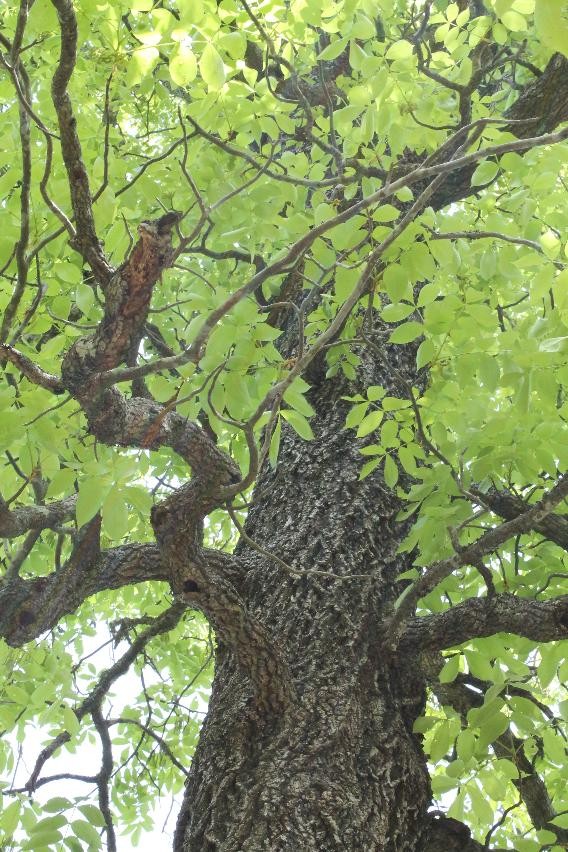
A black hickory tree (Carya texana) in an Oklahoma forest.
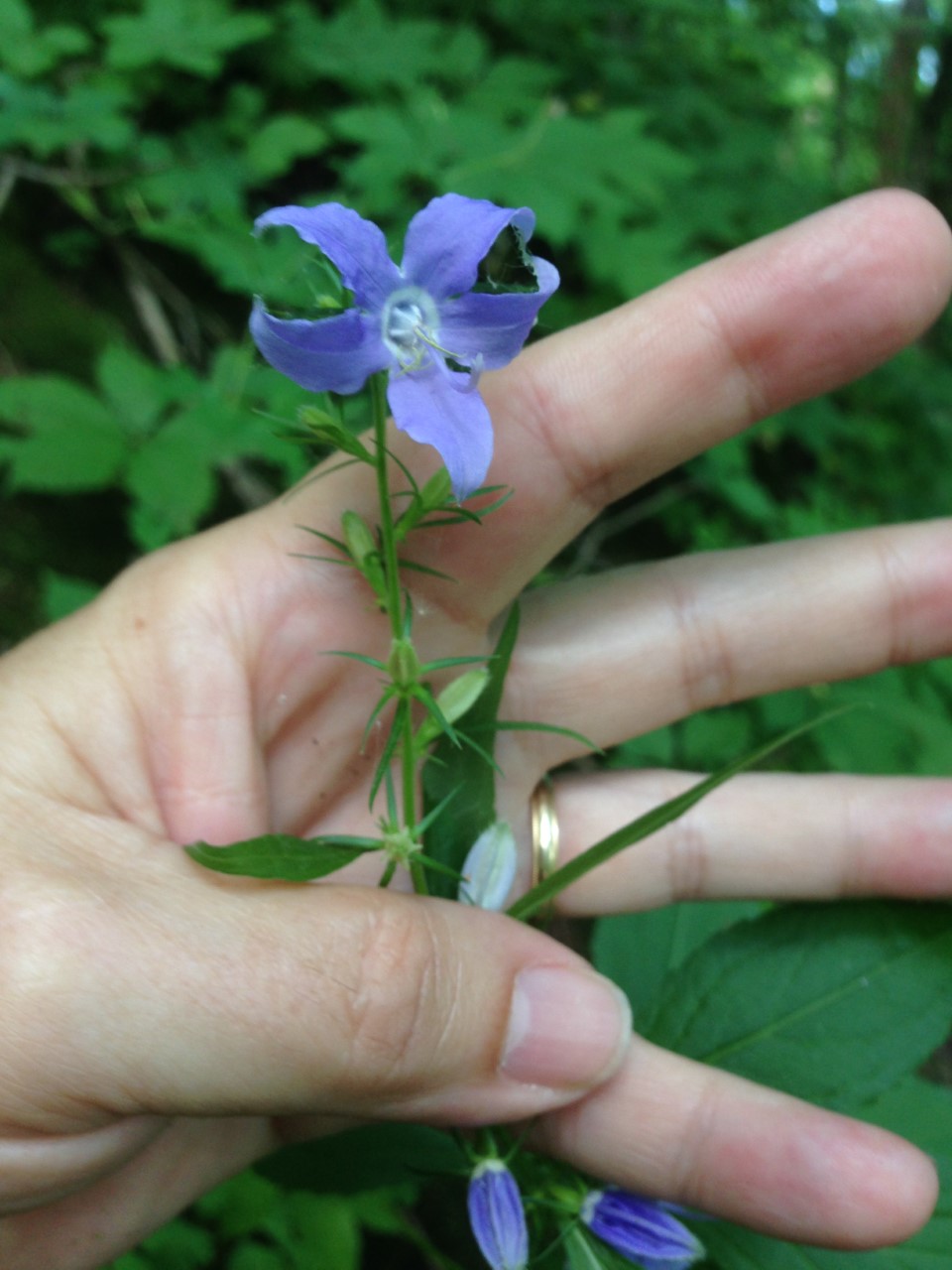
A bellflower (genus Campanula) in Oklahoma.
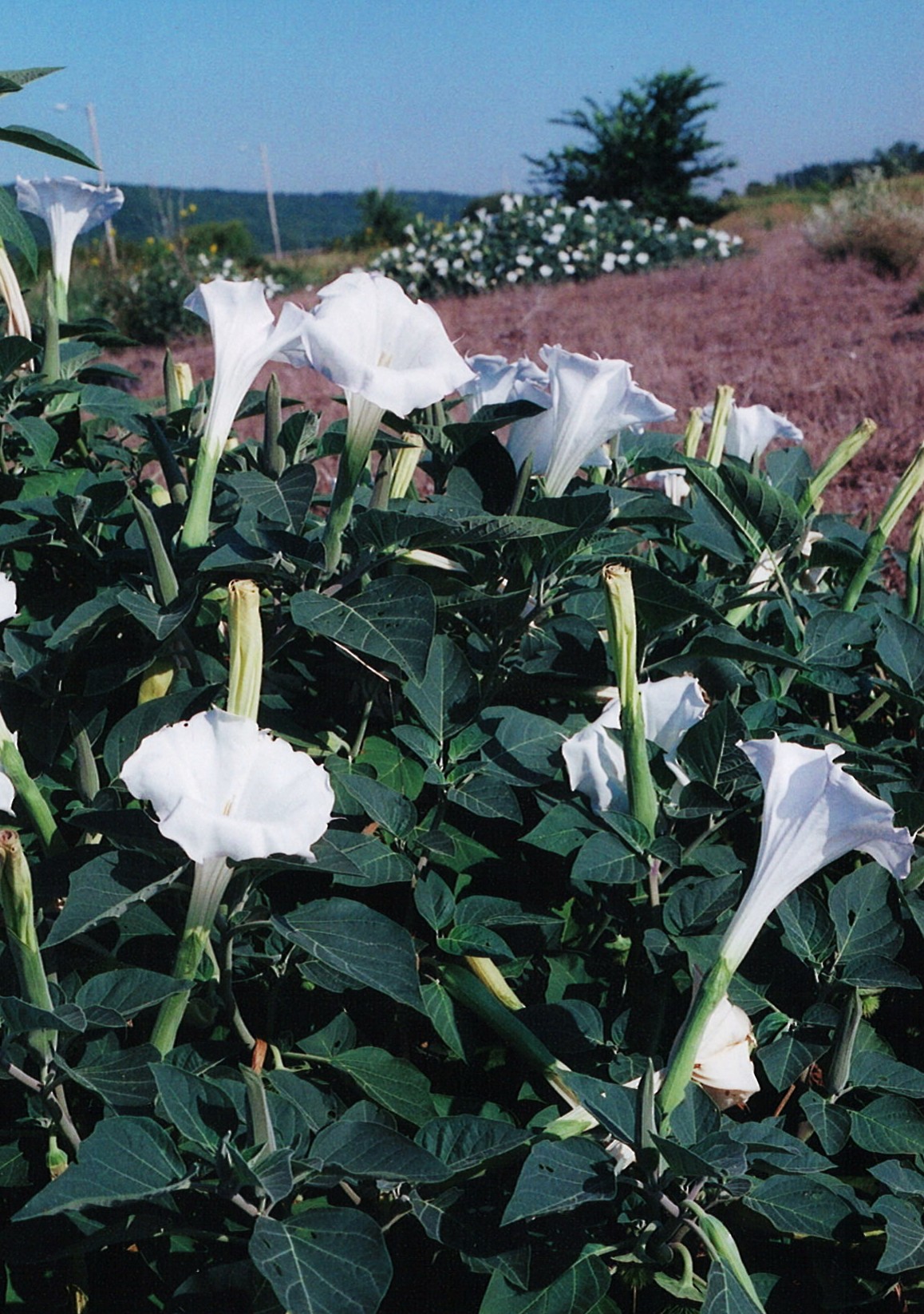
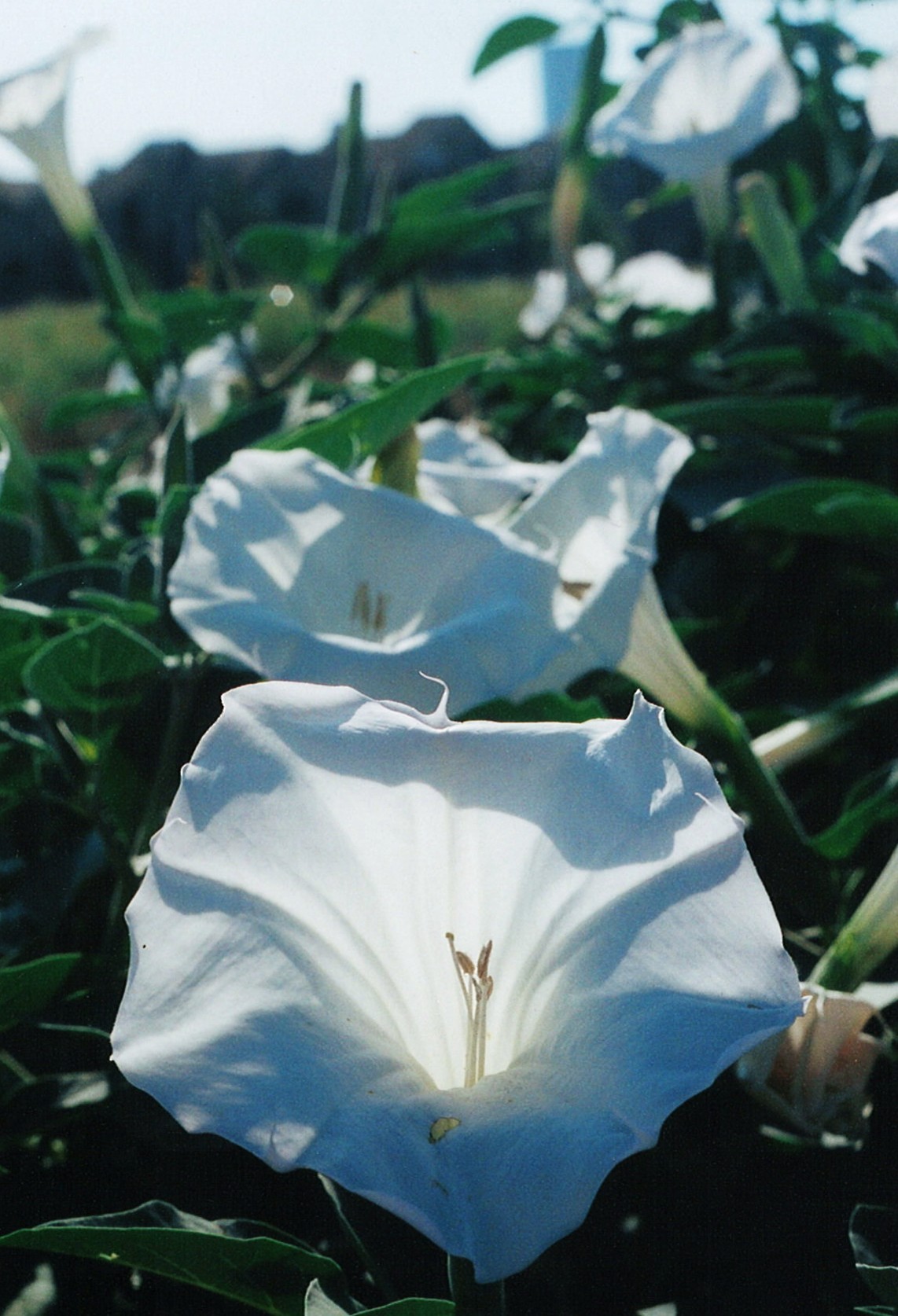
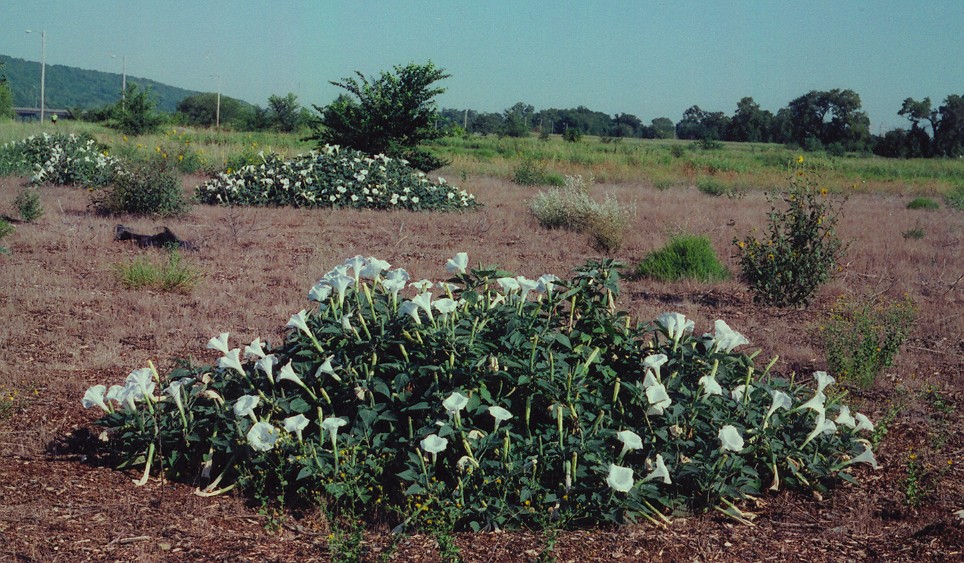
Datura meteloides, the western jimsonweed, along the Arkansas River in Tulsa. It is toxic and hallucinogenic, which is probably why city authorities had all of these plants chopped away. According to legend, jimsonweed got its name from Jamestown, where early English settlers mistook it for tobacco (to which it is related) and tried to smoke it.
American elm (Ulmus americana), here in Oklahoma, have hairy fruits and smooth buds.
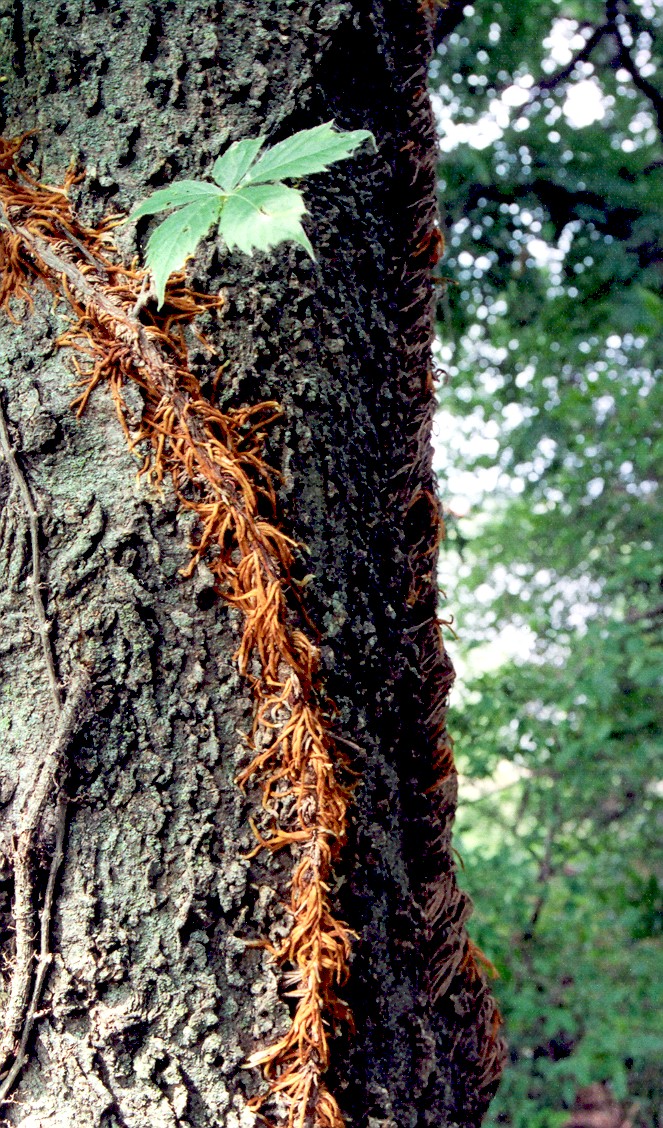
Virginia creeper (Parthenocissus quinquefolia) uses adventitious roots to cling to a tree trunk as it climbs.
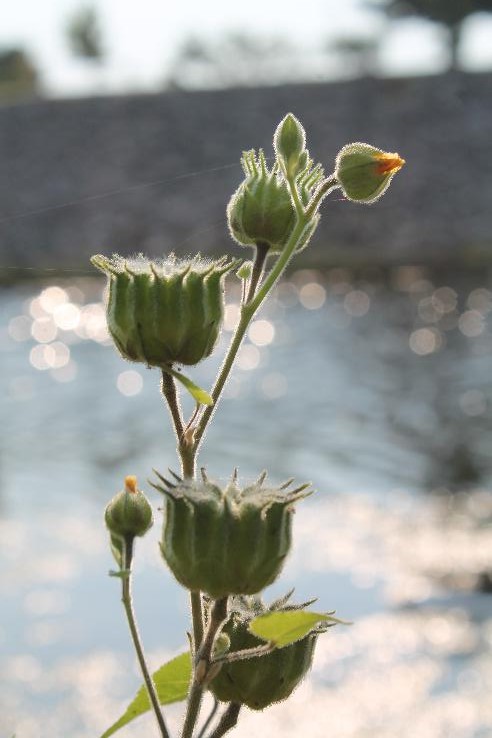
Fruits of Abutilon theophrasti along a drainage ditch in Oklahoma. Oklahoma is generally too hot and dry for this weed, which floated downriver from northern states, but it can form clusters near drainage ditches connected to the rivers.
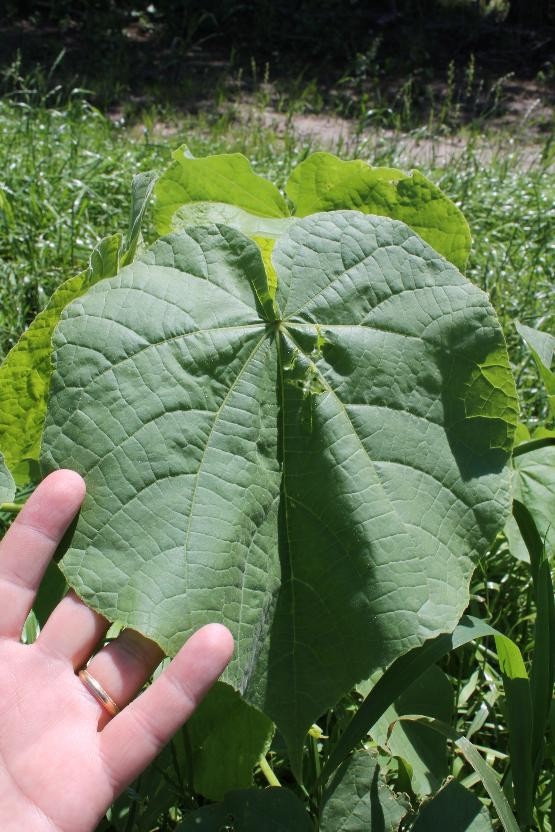
Abutilon theophrasti on an Oklahoma roadside. Abutilon’s range does not generally include Oklahoma, which is too hot and dry for it, but seeds were brought by truck with grass turf used for roadside erosion control.
Mentzelia in western Oklahoma.
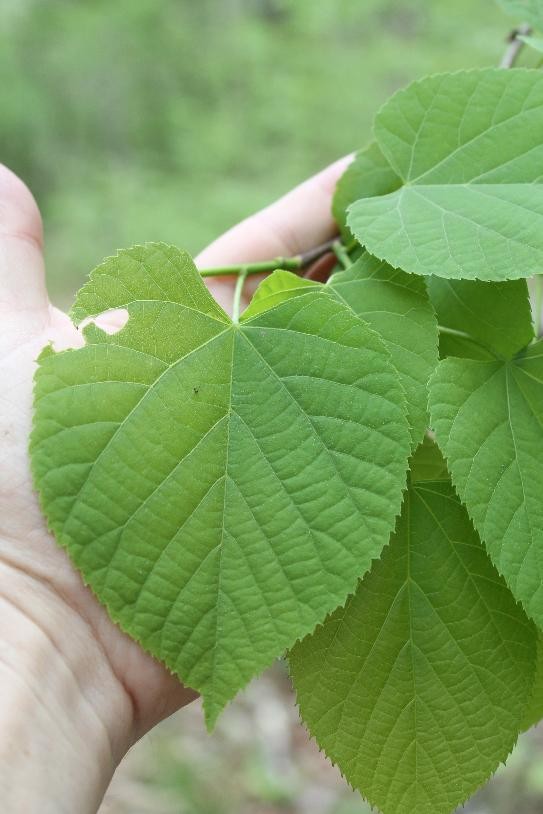
Basswood, or linden, trees (Tilia americana) are rare in eastern Oklahoma deciduous forests.
White shooting stars (genus Dodecatheon) in a field in eastern Oklahoma.
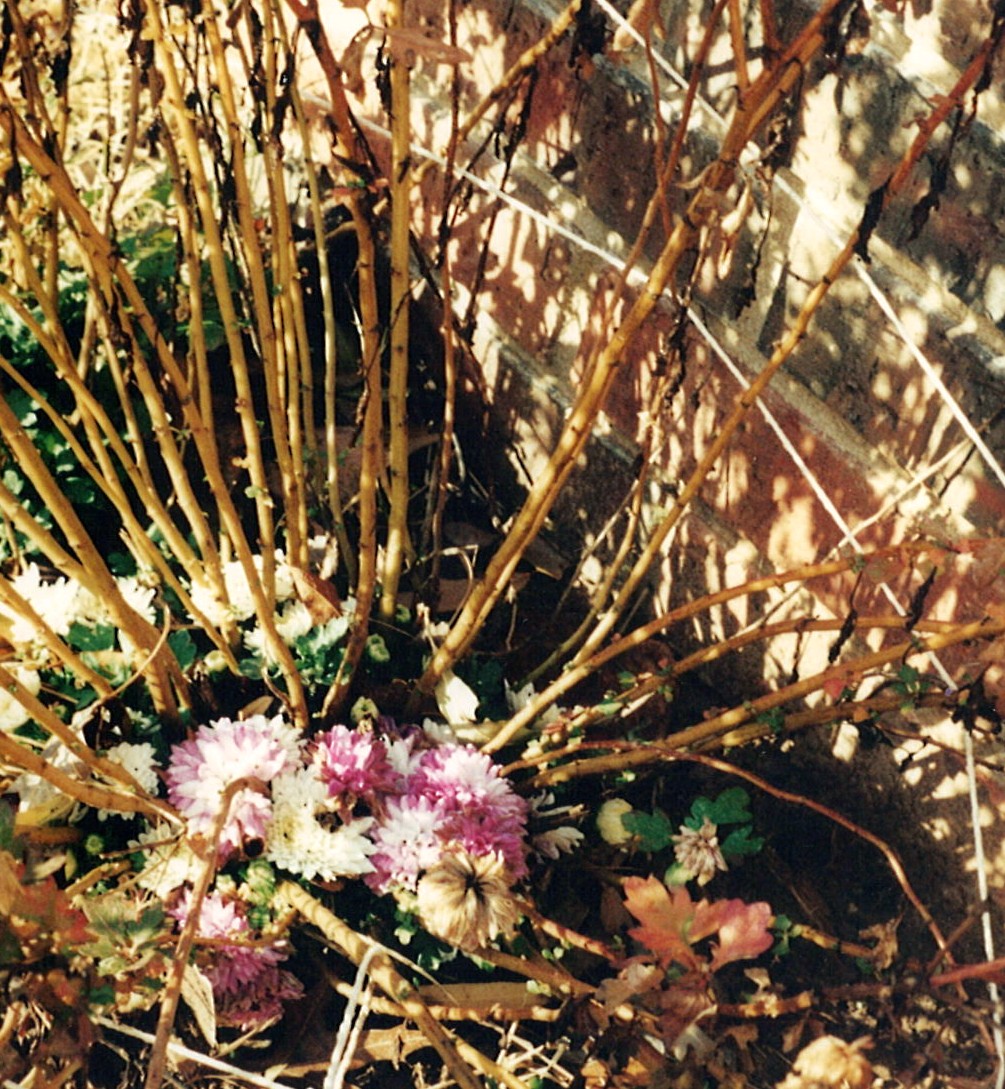
Chrysanthemums blooming at ground level in Tulsa, Oklahoma, in 1999. The leafy stalks died back to the ground in the autumn, then new buds began to grow during the warm winter. Winter days are short, however, so the buds developed into flowers instead of shoots. Short-day plants, such as chrysanthemum, measure the long nights as a signal to develop flowers instead of leafy branches. Photo by Stan Rice.
Calopogon oklahomensis, a rare Oklahoma prairie orchid.
Plants Budburst
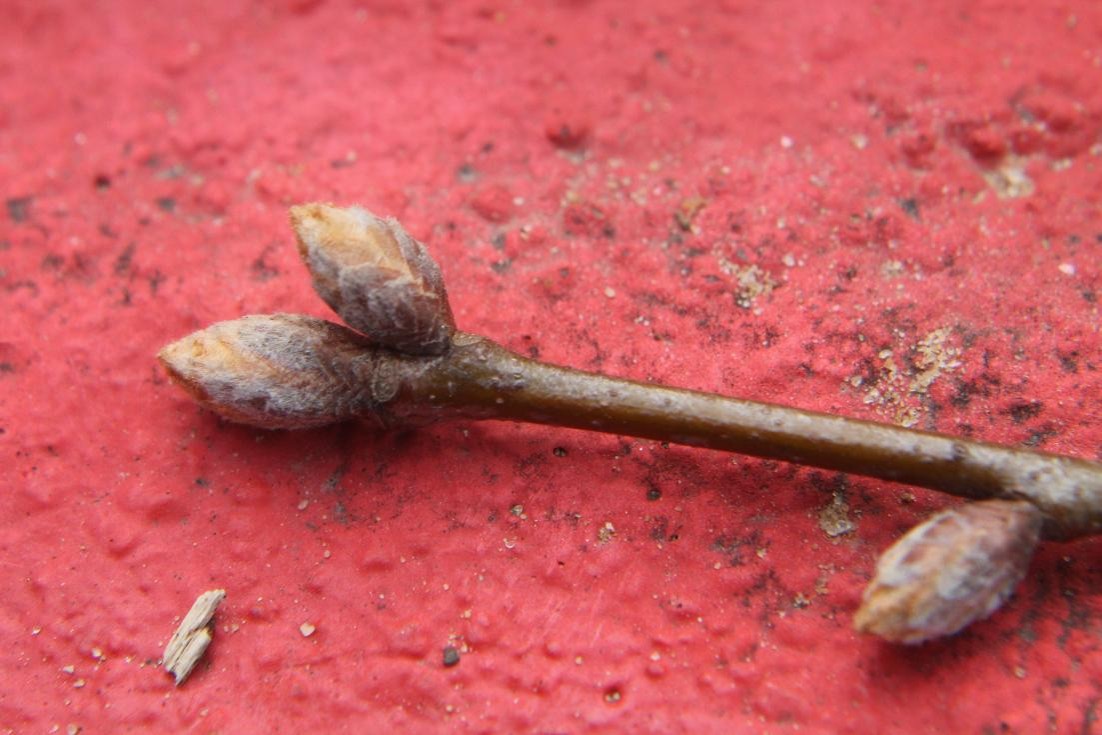
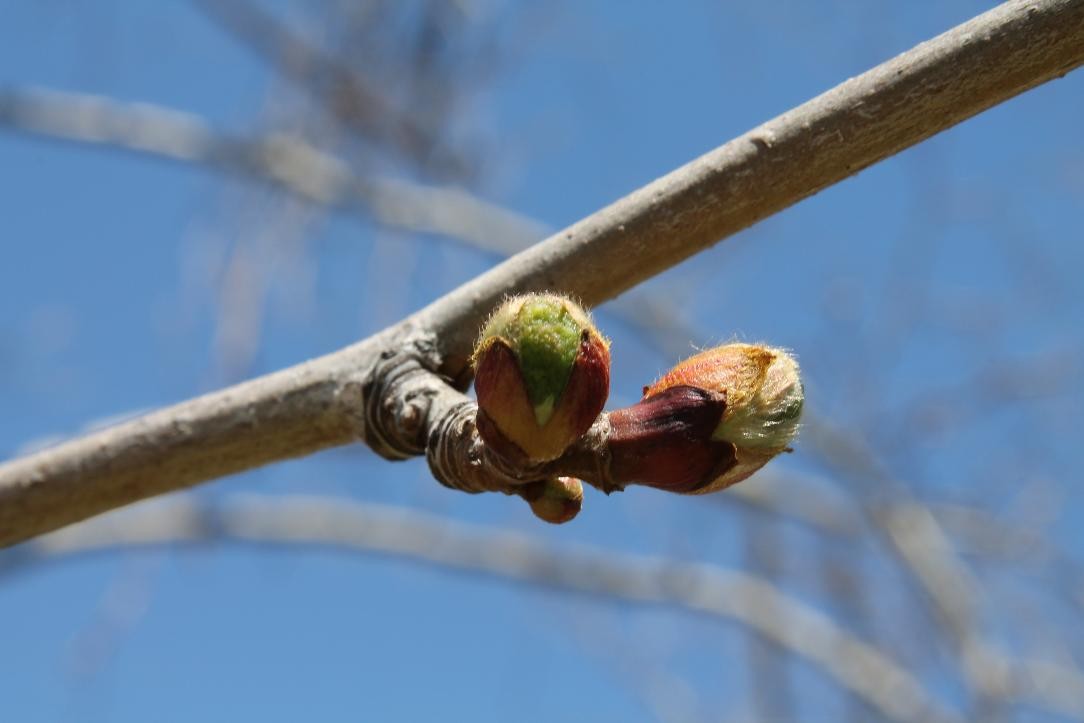
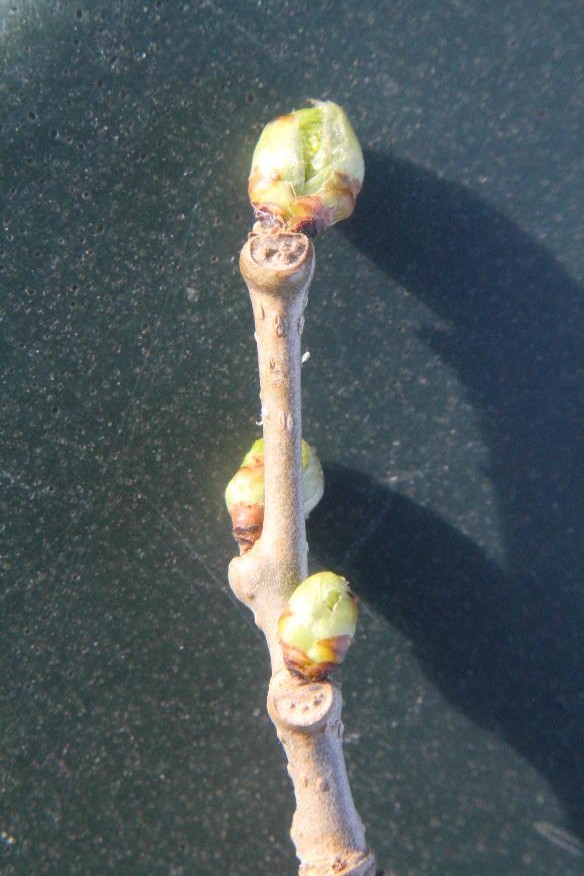
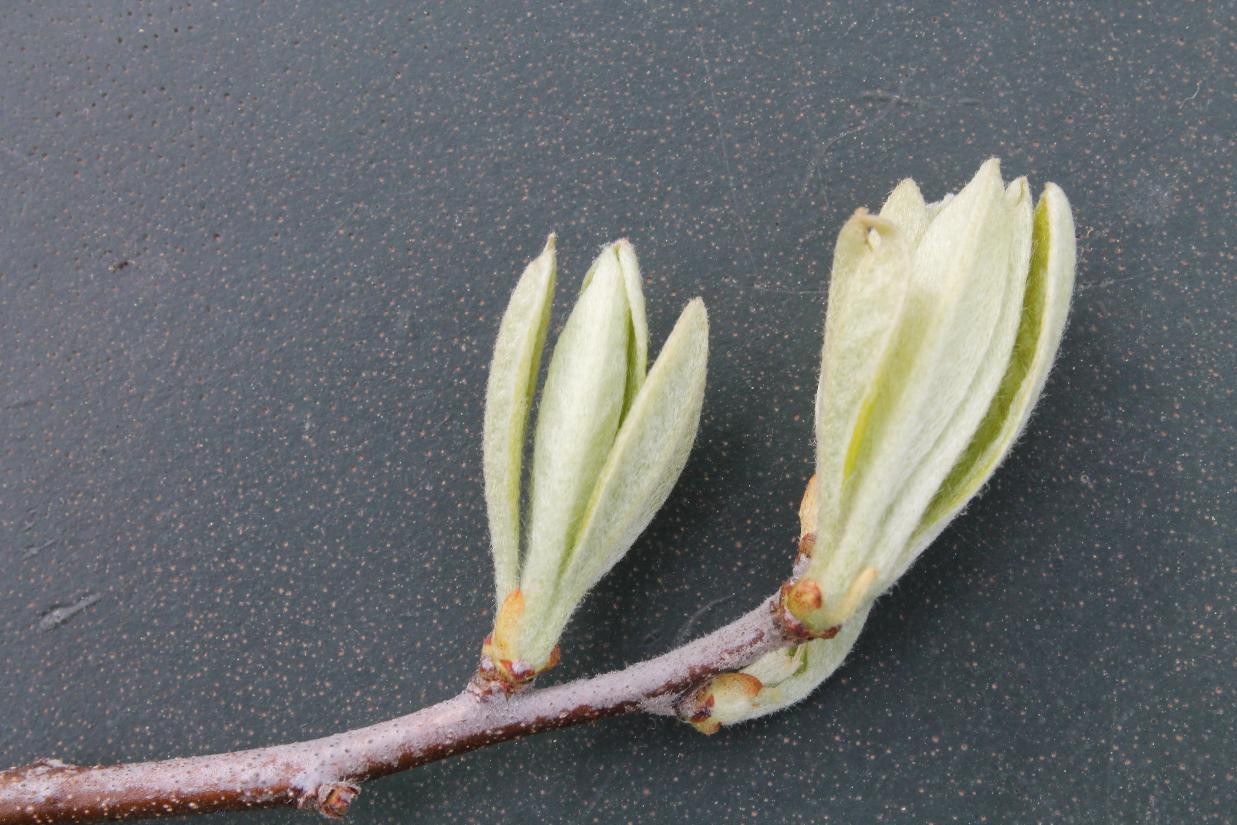
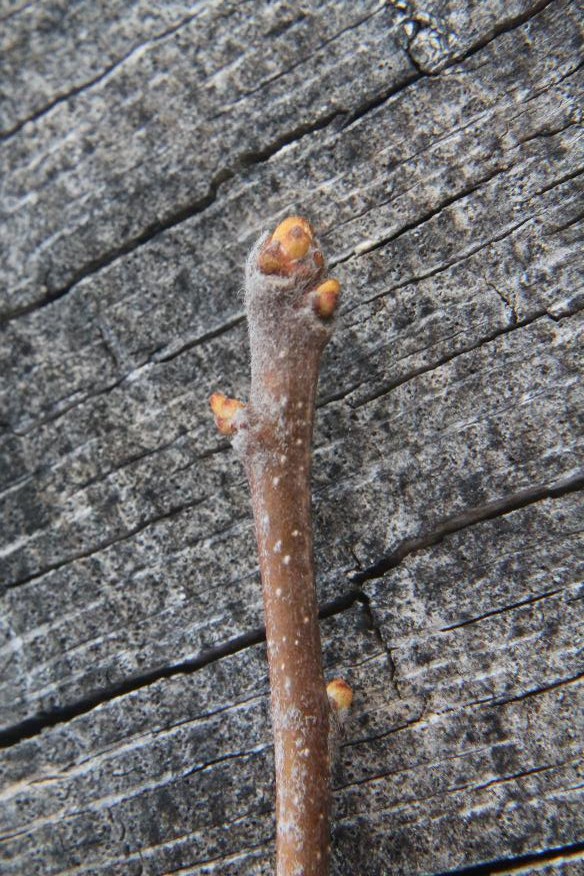
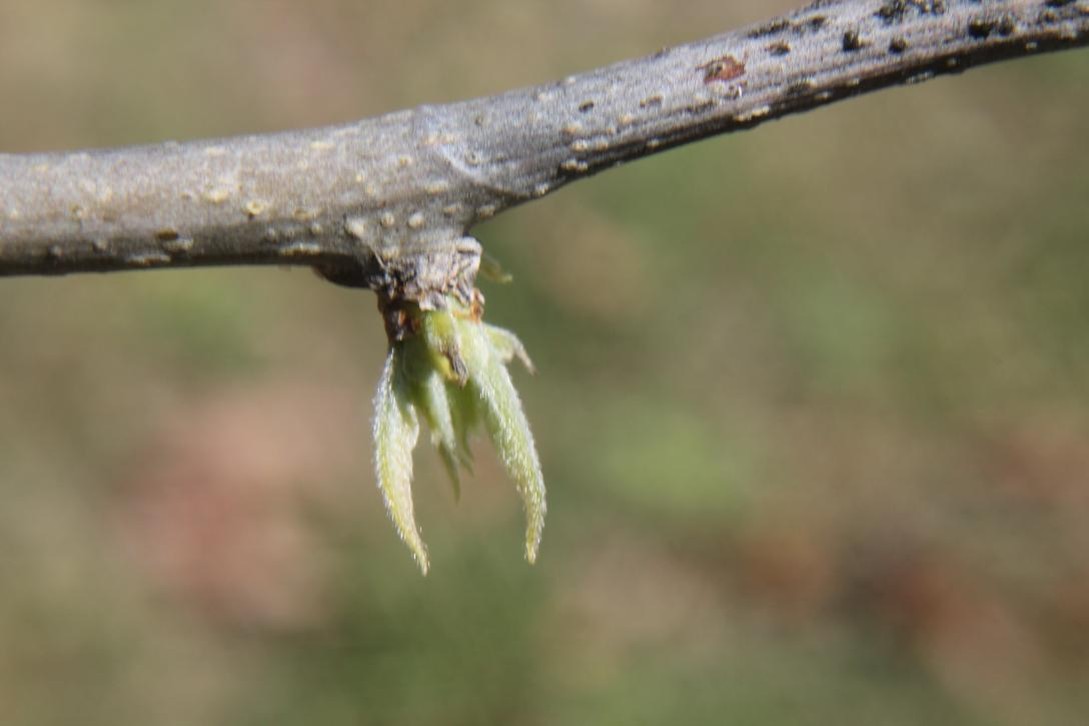
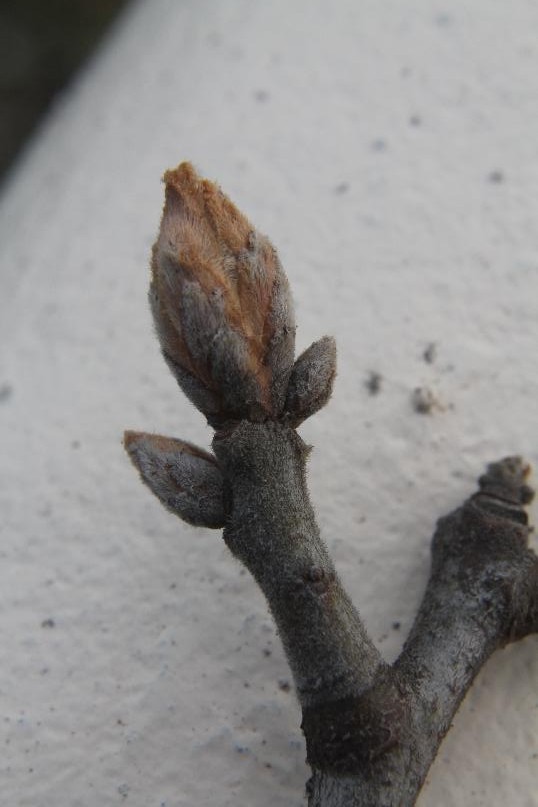
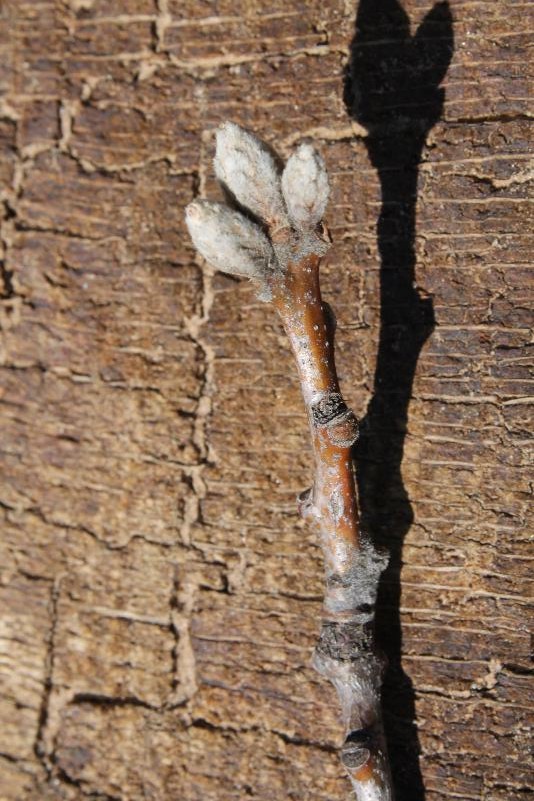
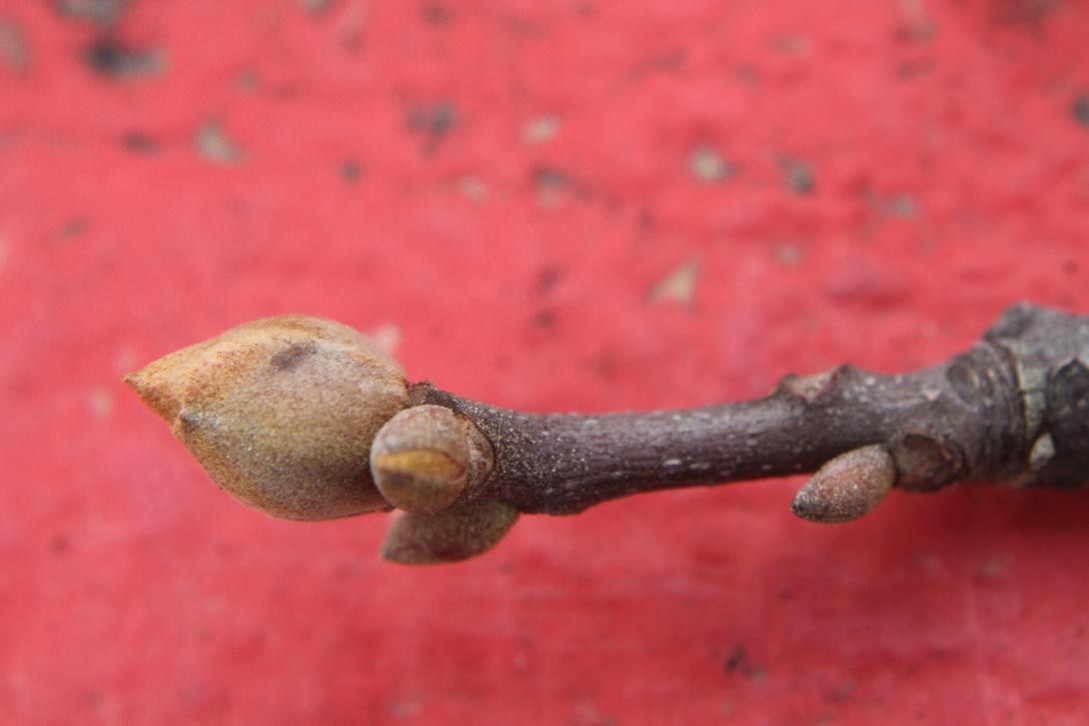
I conducted an extensive study of spring budburst times in deciduous tree species in south central Oklahoma from 2006 to 2022. One of these species was the water oak (Quercus nigra). This study, which shows a clear trend of earlier budburst associated with global warming, is available on this website. Photo by Stan Rice.
I conducted an extensive study of spring budburst times in deciduous tree species in south central Oklahoma from 2006 to 2022. One of these species was the sycamore (Platanus occidentalis). This study, which shows a clear trend of earlier budburst associated with global warming, is available on this website. Photo by Stan Rice.
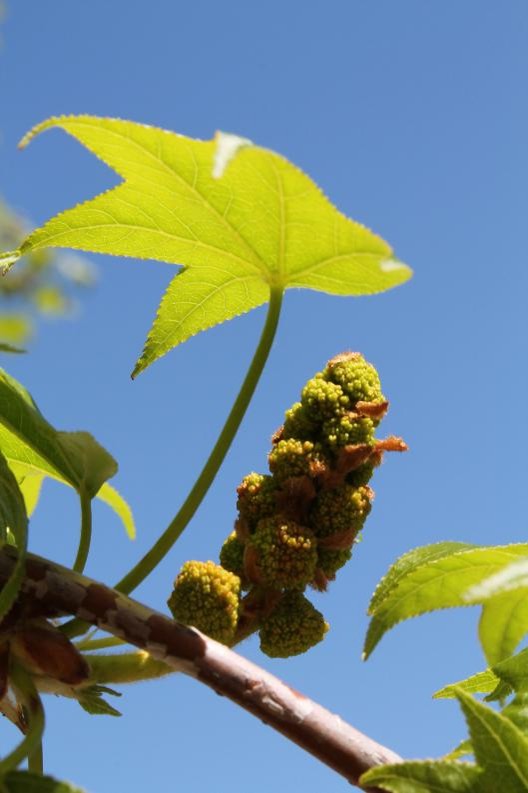
Male flowers emerging from buds of sweetgum (Liquidambar styraciflua) in Oklahoma.
I conducted an extensive study of spring budburst times in deciduous tree species in south central Oklahoma from 2006 to 2022. One of these species was the shumard oak (Quercus shumardi). This study, which shows a clear trend of earlier budburst associated with global warming, is available on this website. Photo by Stan Rice.
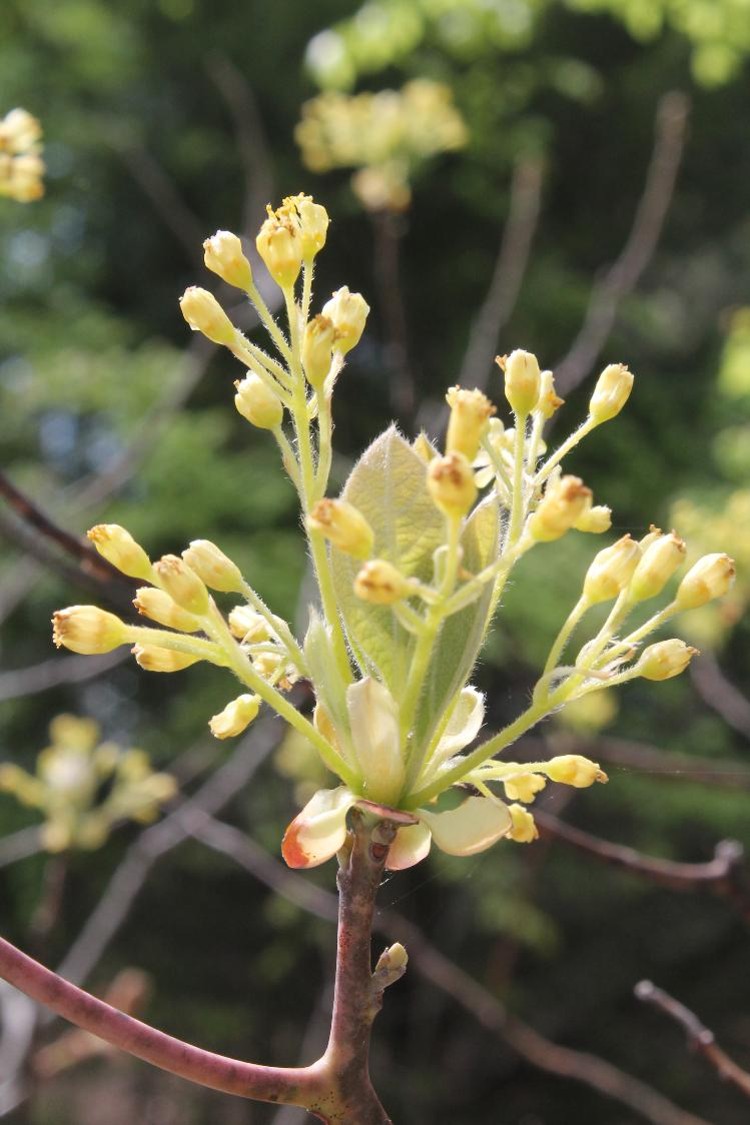
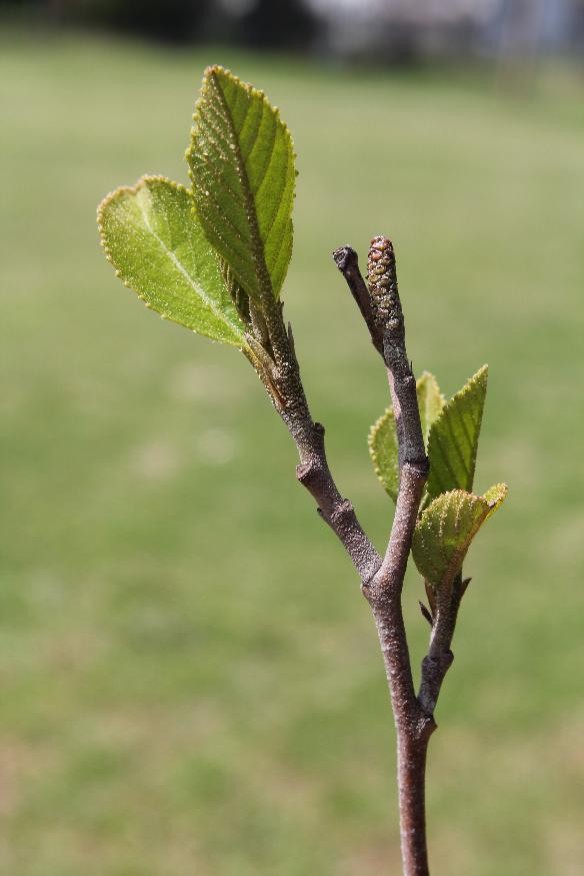
Young spring leaves and a female “cone” on Oklahoma seaside alder (Alnus maritima).
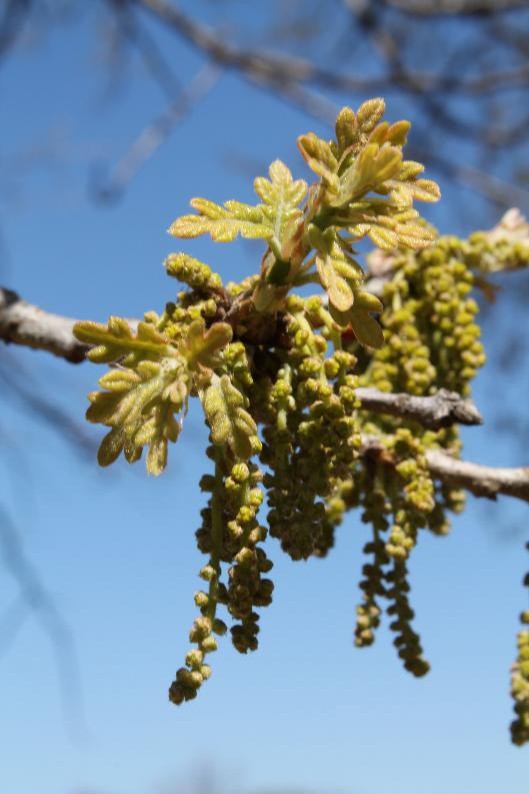
Male catkins and young leaves of post oak (Quercus stellata) in Oklahoma.
I conducted an extensive study of spring budburst times in deciduous tree species in south central Oklahoma from 2006 to 2022. One of these species was the post oak (Quercus stellata). This study, which shows a clear trend of earlier budburst associated with global warming, is available on this website. Photo by Stan Rice.
I conducted an extensive study of spring budburst times in deciduous tree species in south central Oklahoma from 2006 to 2022. One of these species was the mulberry (Morus alba). This study, which shows a clear trend of earlier budburst associated with global warming, is available on this website. Photo by Stan Rice.
Young chittamwood (Sideroxylon lanuginosum) leaves in Oklahoma.
I conducted an extensive study of spring budburst times in deciduous tree species in south central Oklahoma from 2006 to 2022. One of these species was the chittamwood (Sideroxylon lanuginosa). This study, which shows a clear trend of earlier budburst associated with global warming, is available on this website. Photo by Stan Rice.
I conducted an extensive study of spring budburst times in deciduous tree species in south central Oklahoma from 2006 to 2022. One of these species was the bois-d’arc (Maclura pomifera). This study, which shows a clear trend of earlier budburst associated with global warming, is available on this website. Photo by Stan Rice.
I conducted an extensive study of spring budburst times in deciduous tree species in south central Oklahoma from 2006 to 2022. One of these species was the blackjack oak (Quercus marilandica). This study, which shows a clear trend of earlier budburst associated with global warming, is available on this website. Photo by Stan Rice.
I conducted an extensive study of spring budburst times in deciduous tree species in south central Oklahoma from 2006 to 2022. One of these species was the black oak (Quercus velutina). This study, which shows a clear trend of earlier budburst associated with global warming, is available on this website. Photo by Stan Rice.
I conducted an extensive study of spring budburst times in deciduous tree species in south central Oklahoma from 2006 to 2022. One of these species was the black hickory (Carya texana). This study, which shows a clear trend of earlier budburst associated with global warming, is available on this website. Photo by Stan Rice.
Travel
A wasp in Oklahoma, chewing wood to get paper for a nest.
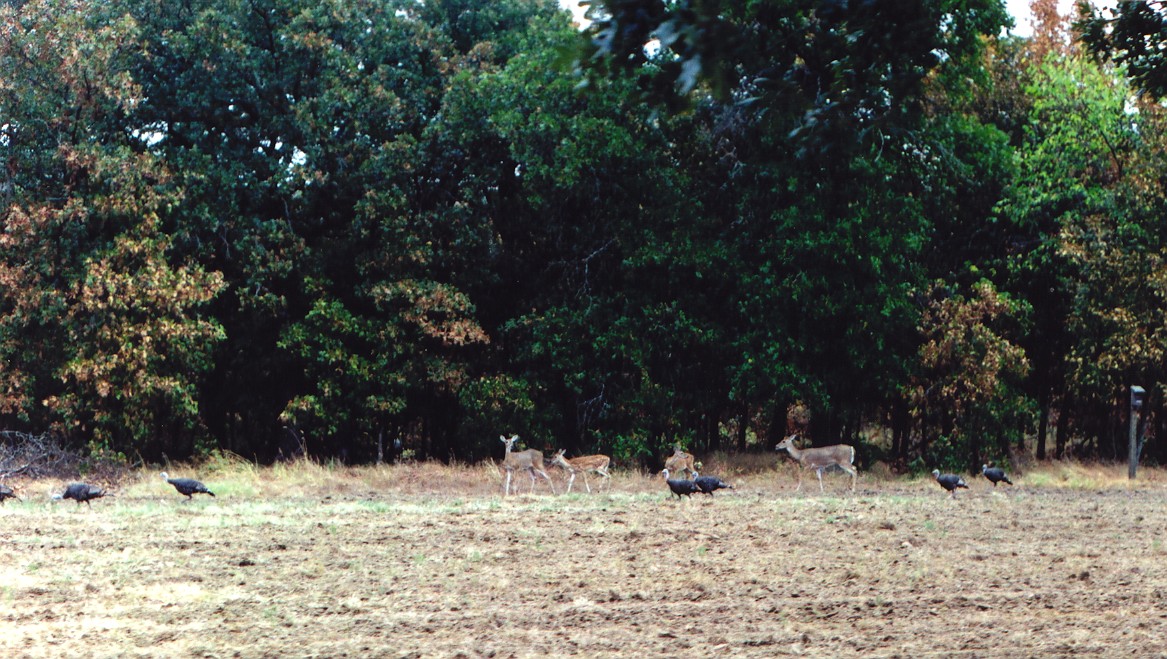
Turkey and deer near a cross-timbers deciduous forest in Oklahoma, near Lake Murray.
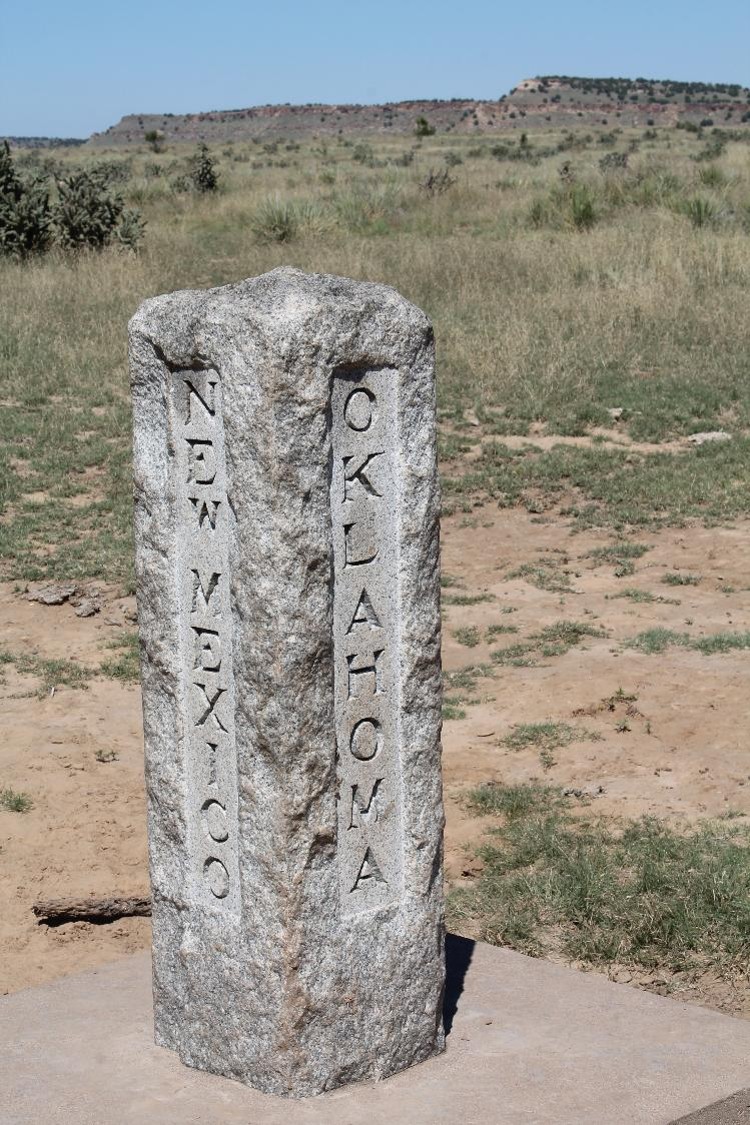
Three Corners Monument, where New Mexico, Oklahoma, and Colorado meet.
Deciduous forest mixed with pines, Robbers Cave State Park, Oklahoma.
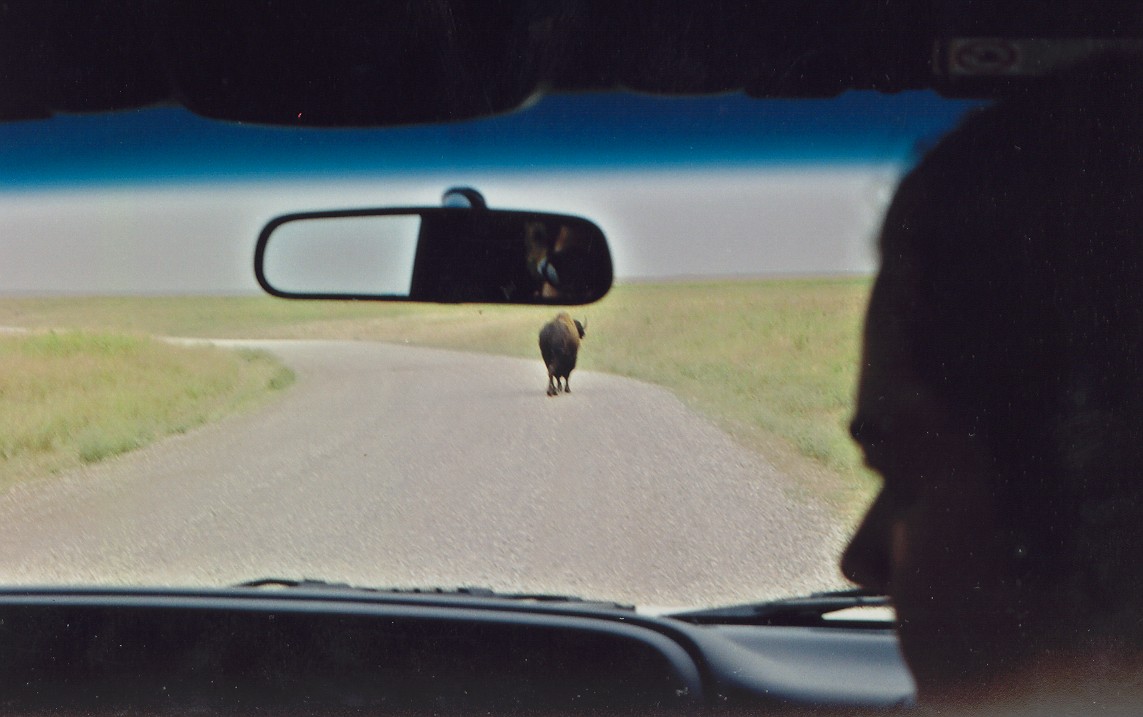
A bison wanders the roadway in the Osage Preserve run by The Nature Conservancy.
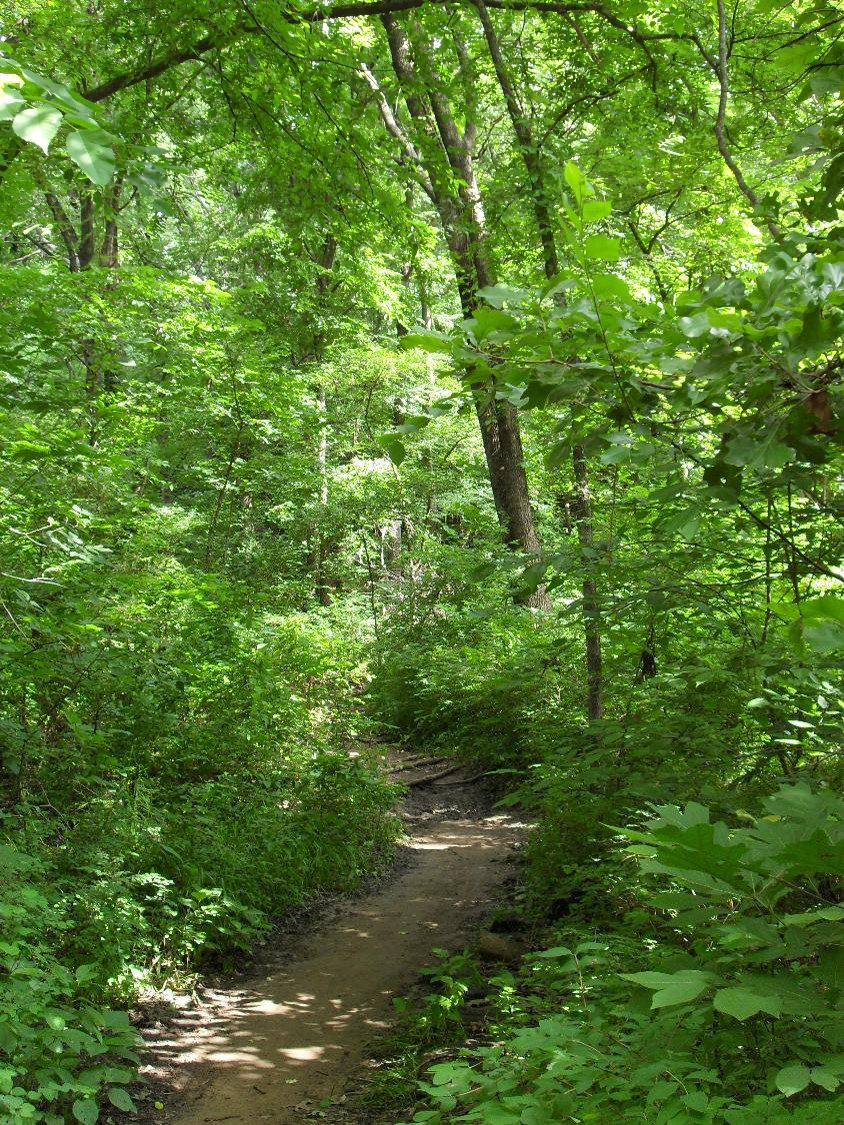
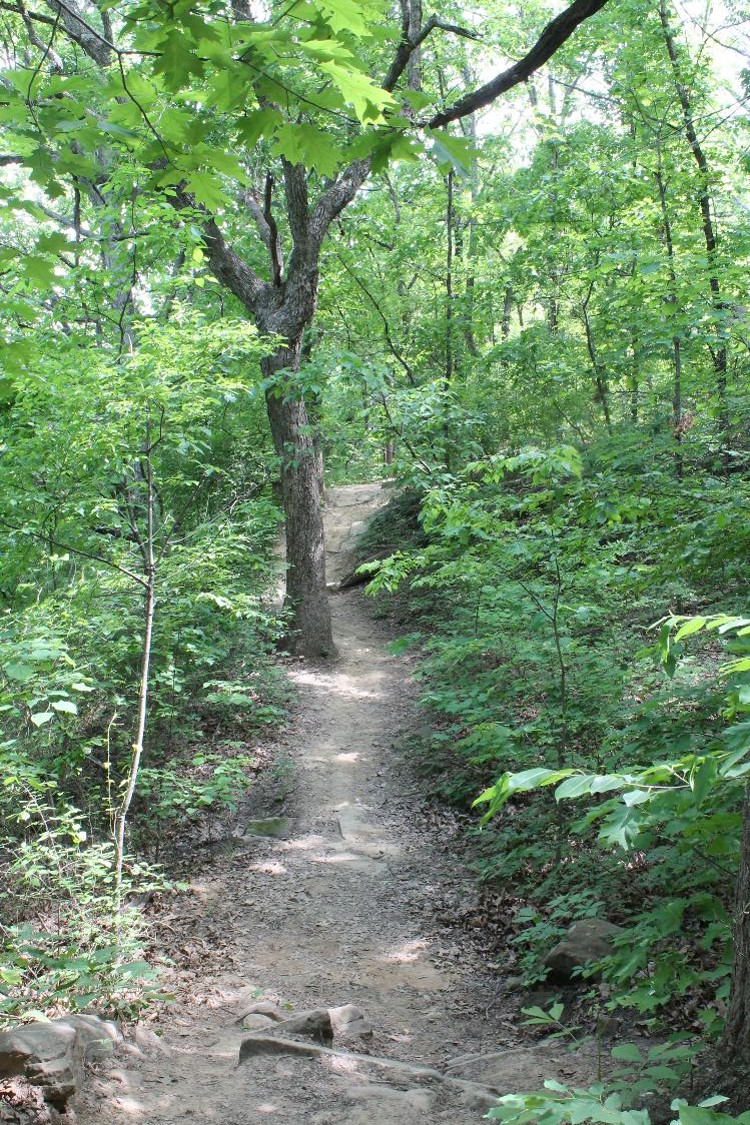
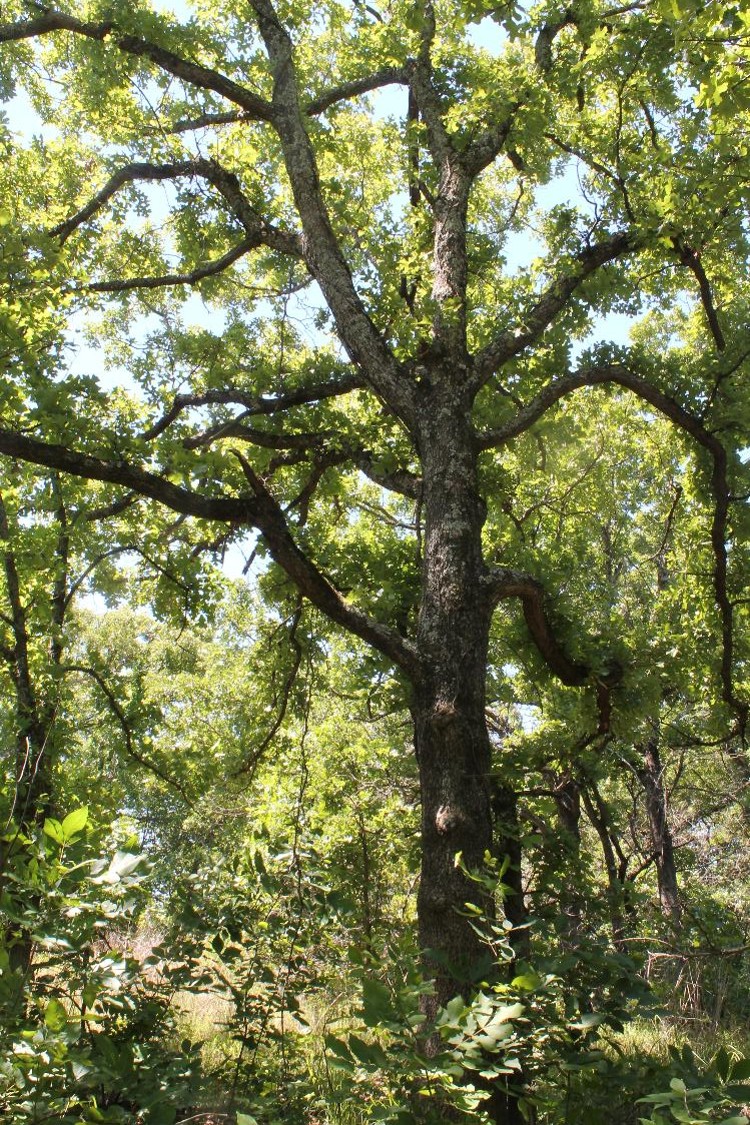
A trail through the cross-timbers deciduous forest on Turkey Mountain near Tulsa, Oklahoma.
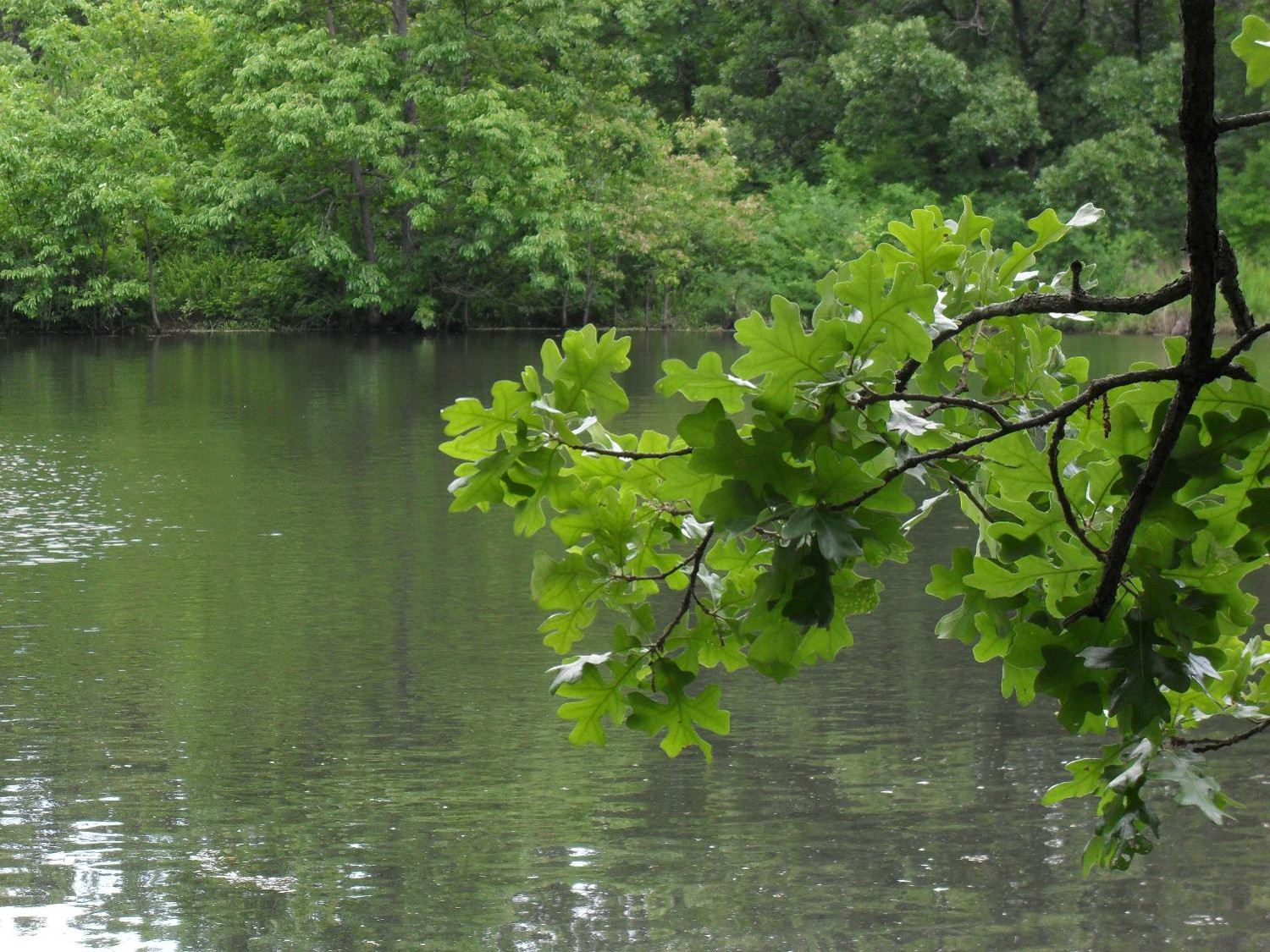
A post oak (Quercus stellata) near a pond on Turkey Mountain outside of Tulsa, Oklahoma.
A tupelo tree (Nyssa sylvatica) in the forest near Boehler Bog, southern Oklahoma.
A trail through the cross-timbers deciduous forest on Turkey Mountain near Tulsa, Oklahoma.
Pelicans stop during their migration along the Arkansas River in Tulsa, Oklahoma.
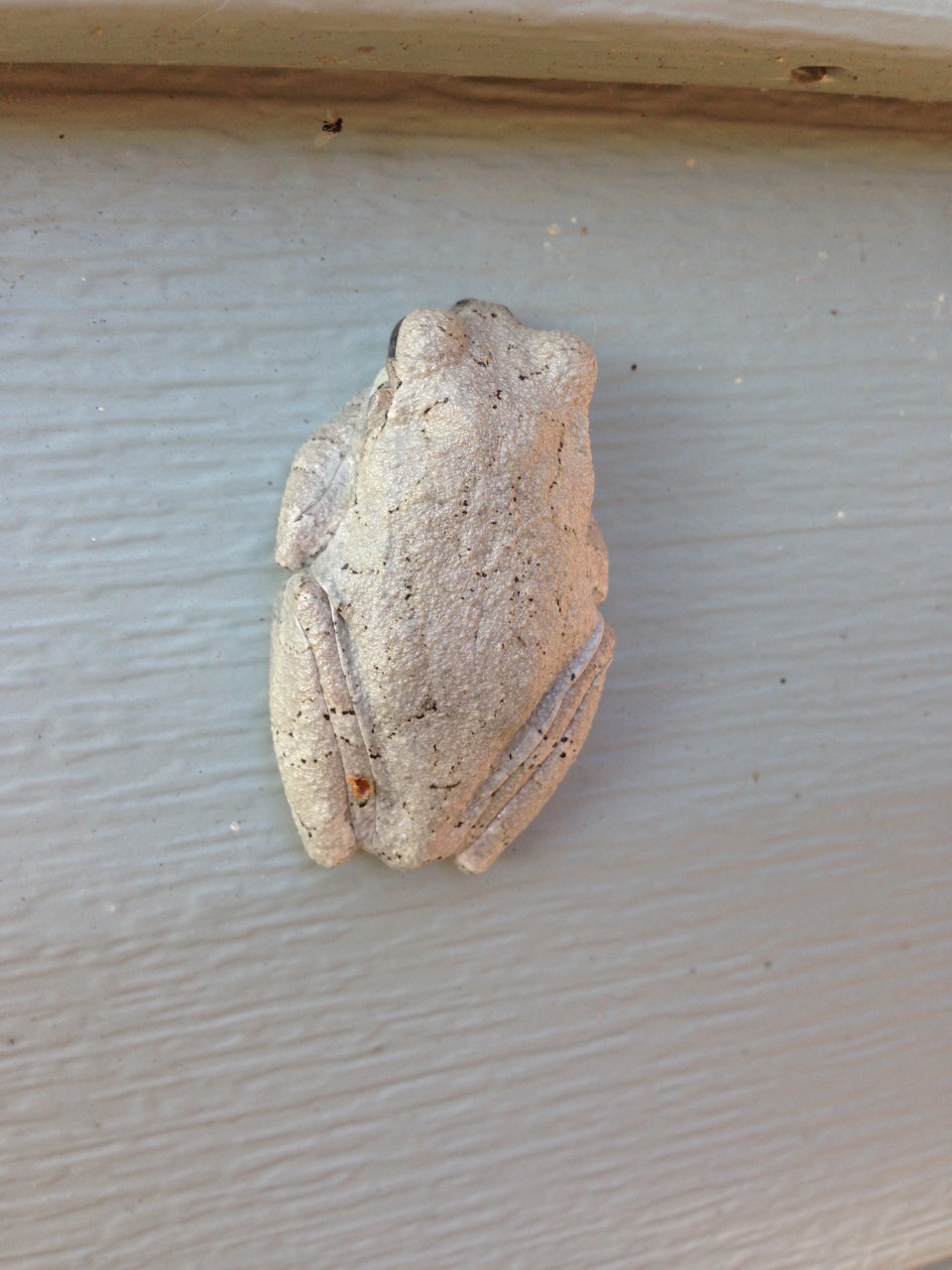
Hyla versicolor is a common frog in Oklahoma.
Golden leaves of hickories during the autumn in a forest in eastern Oklahoma.
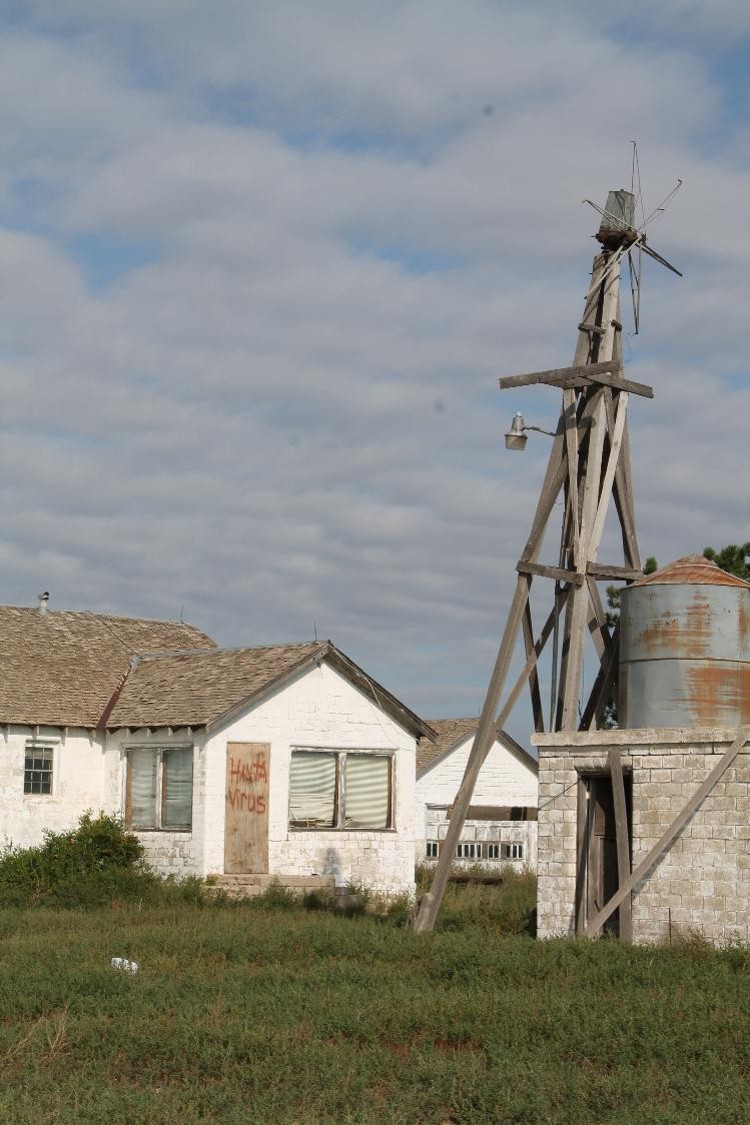
Hantavirus, breathed in with dust, caused deaths in the panhandle of Oklahoma, and the house was abandoned.
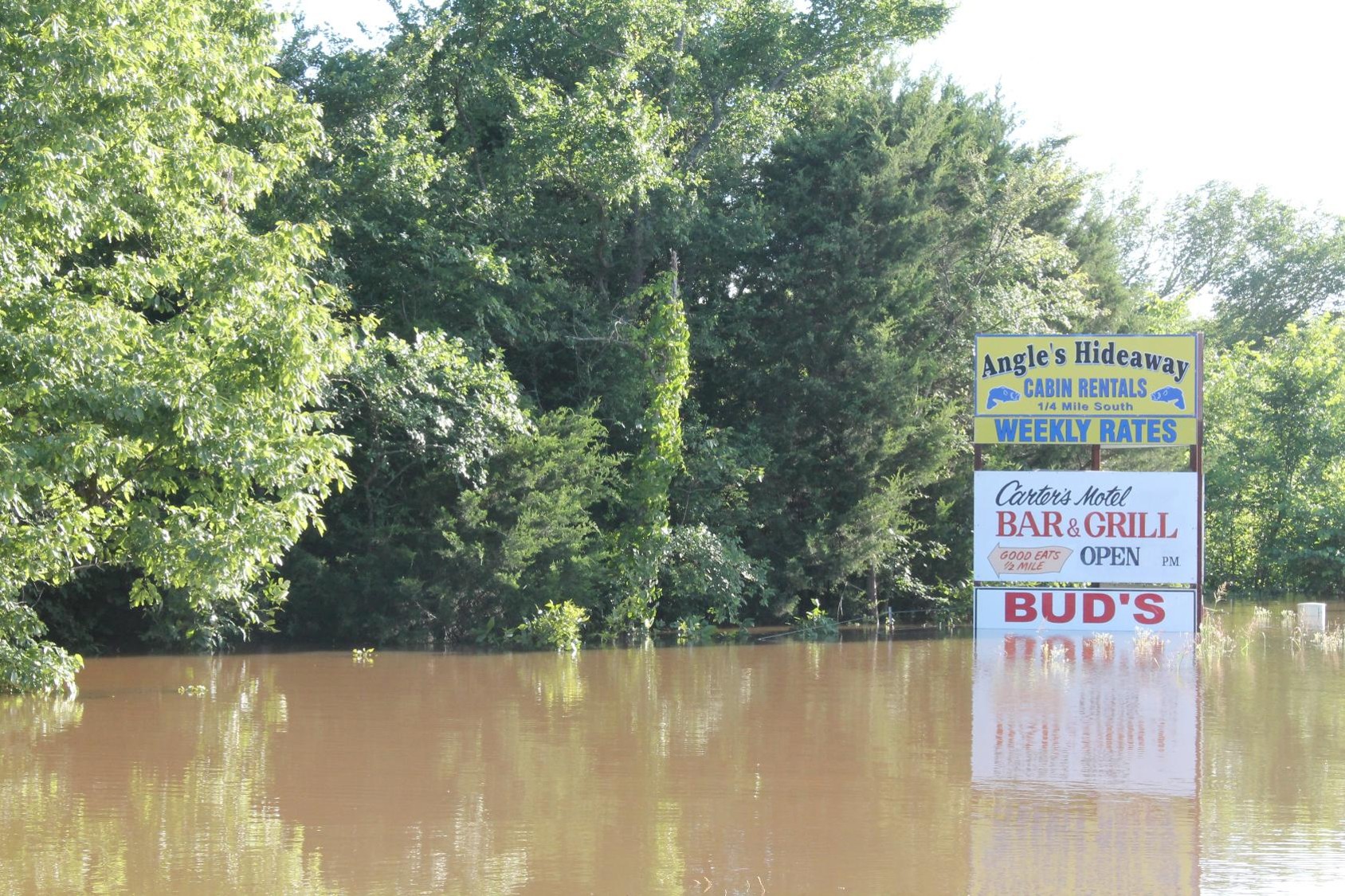
Flooding in 2015 raised the level of Lake Texoma between Oklahoma and Texas.
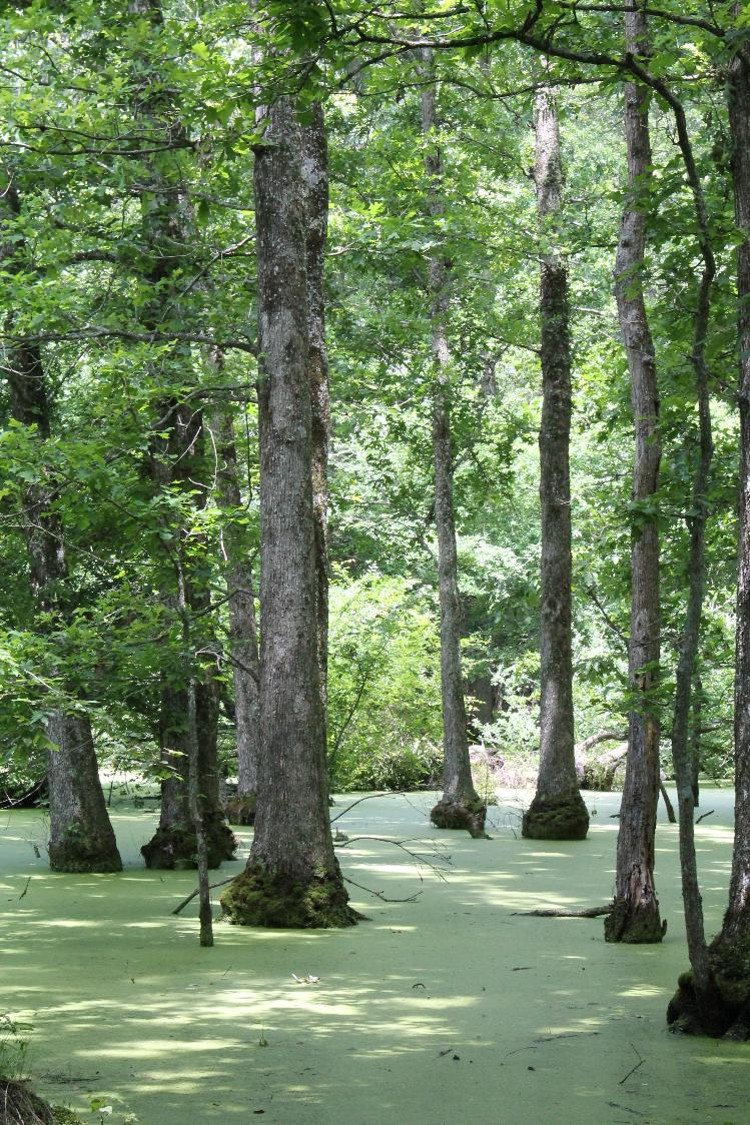
Flooded bottomland forest along the Little River in southeastern Oklahoma. The green scum is duckweed.
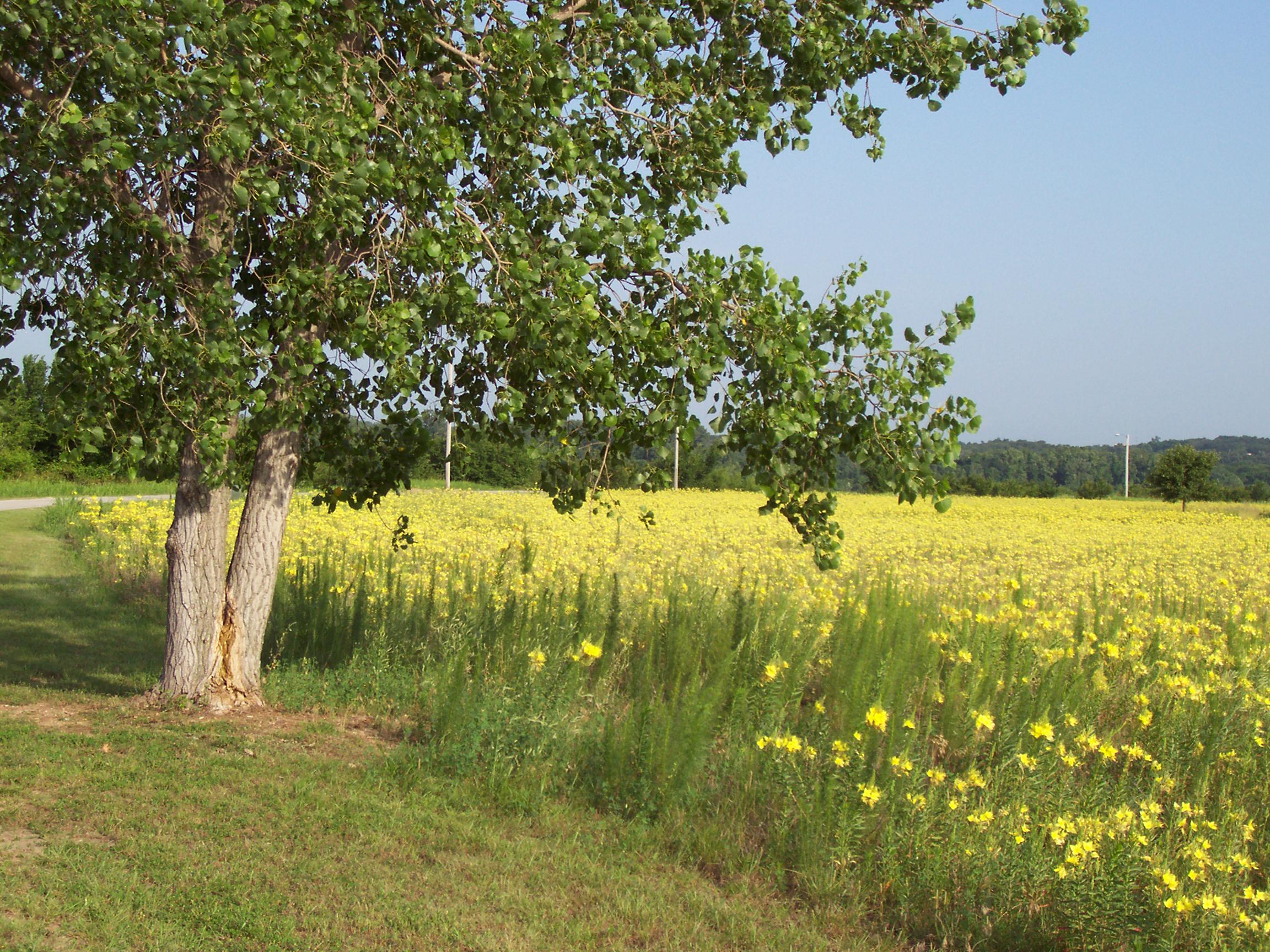
A field of evening primroses (Oenothera rhombipetala) in Tulsa, Oklahoma.
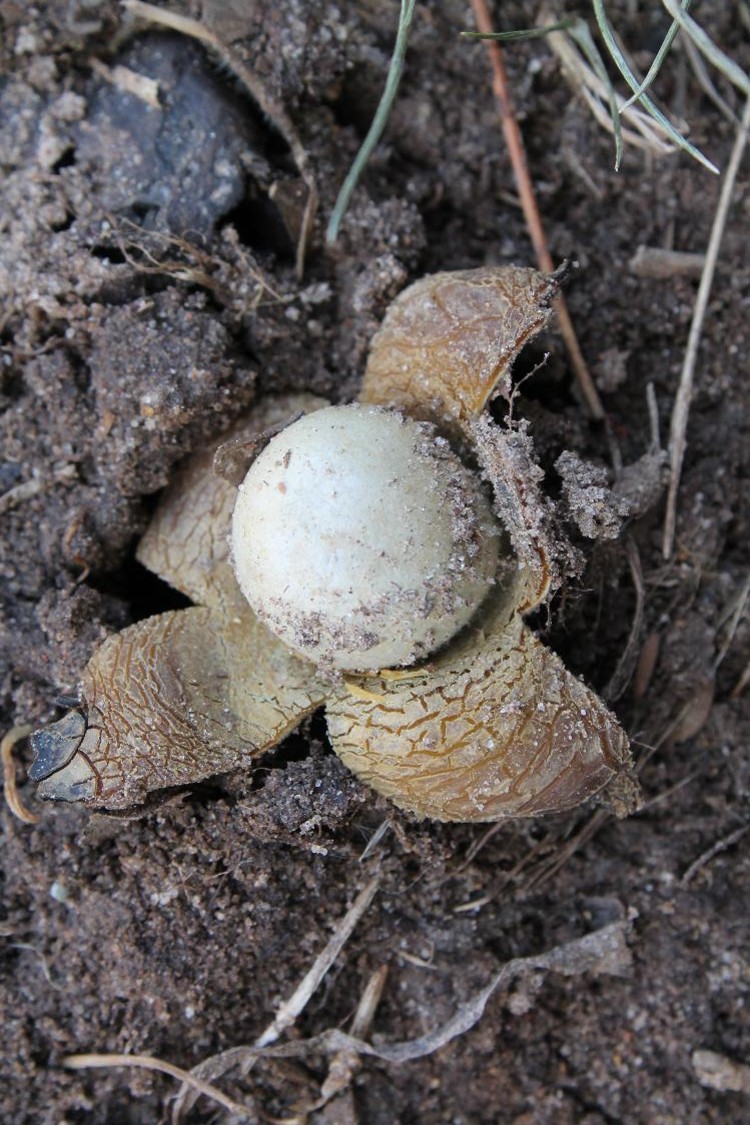
An earth star mushroom (genus Geastrum) in soil in Oklahoma.
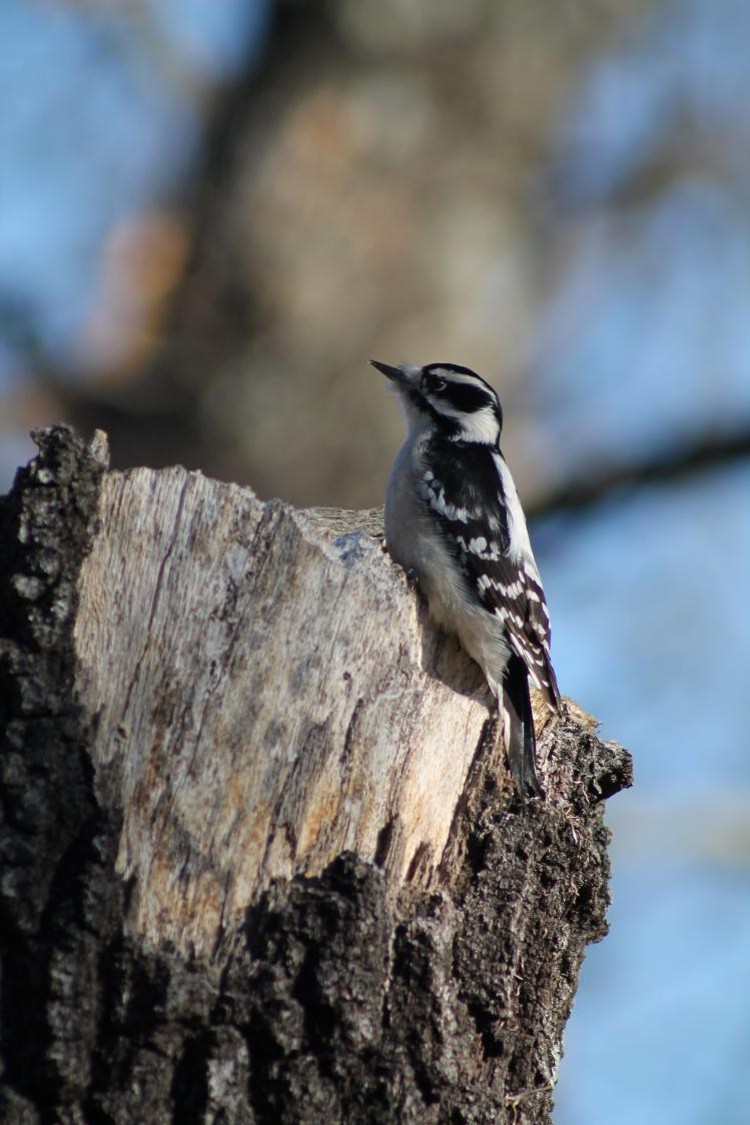
A downy woodpecker in a cross-timbers forest on Turkey Mountain near Tulsa, Oklahoma.
The old growth cross-timbers deciduous forest at Keystone northwest of Tulsa, Oklahoma.
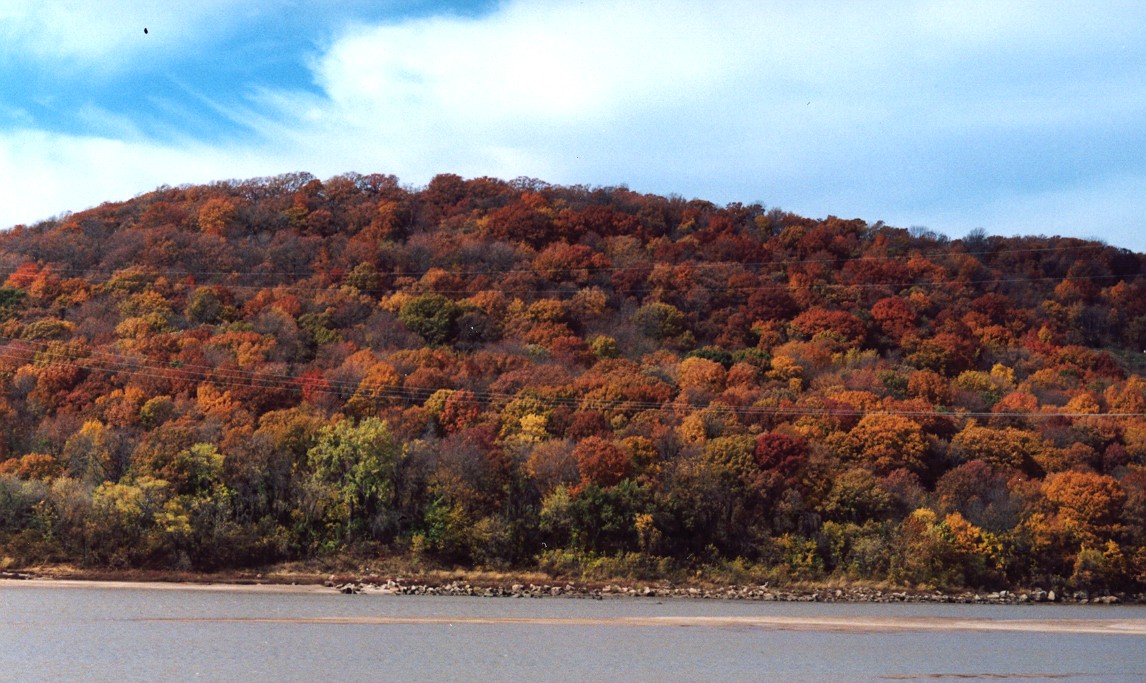
Fall colors in the cross-timbers deciduous forest on Turkey Mountain near Tulsa, Oklahoma.
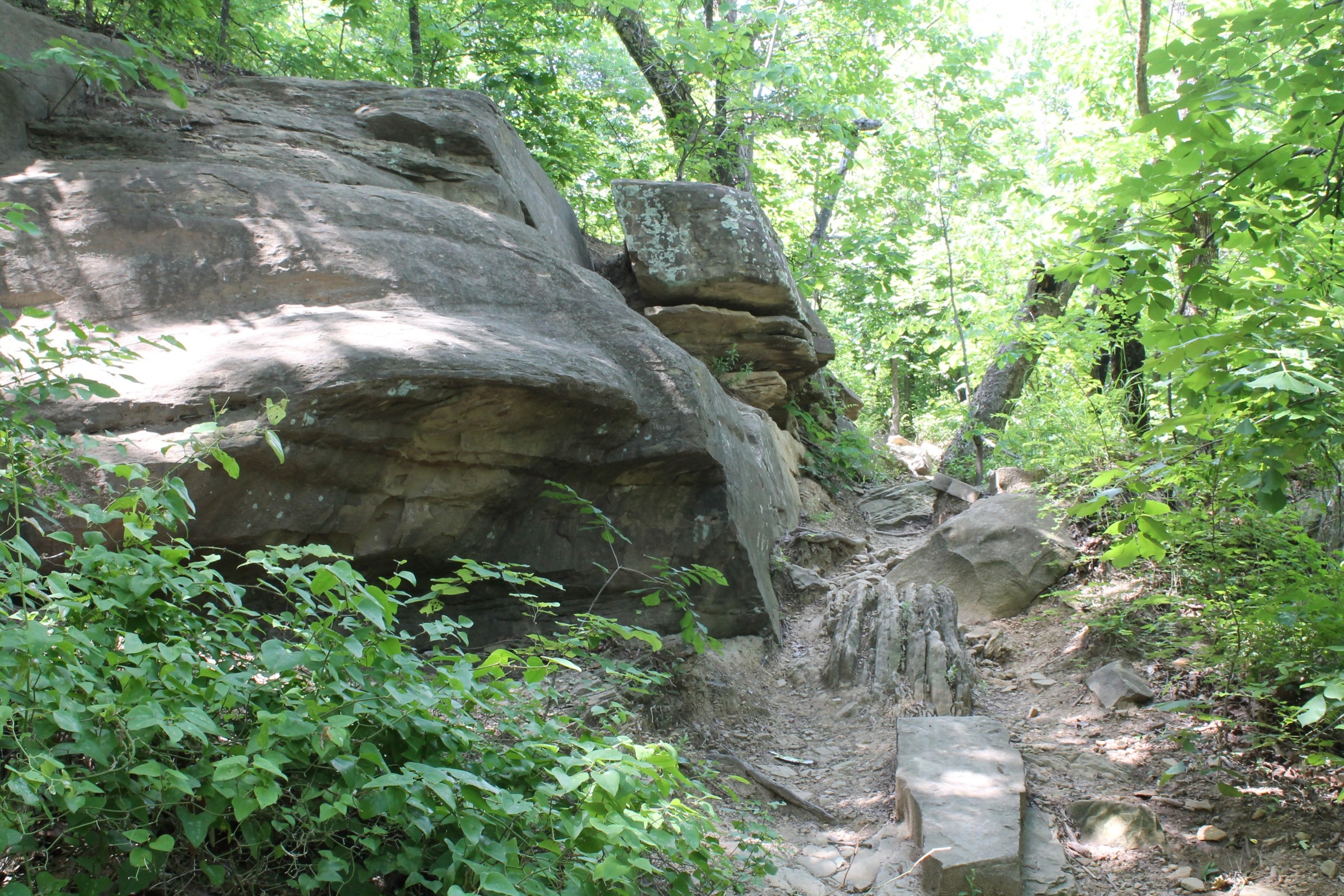
Boulders and deciduous forest on Turkey Mountain, near Tulsa, Oklahoma.
Boehler Bog in southern Oklahoma. There is a layer of sphagnum moss not visible in this photo.
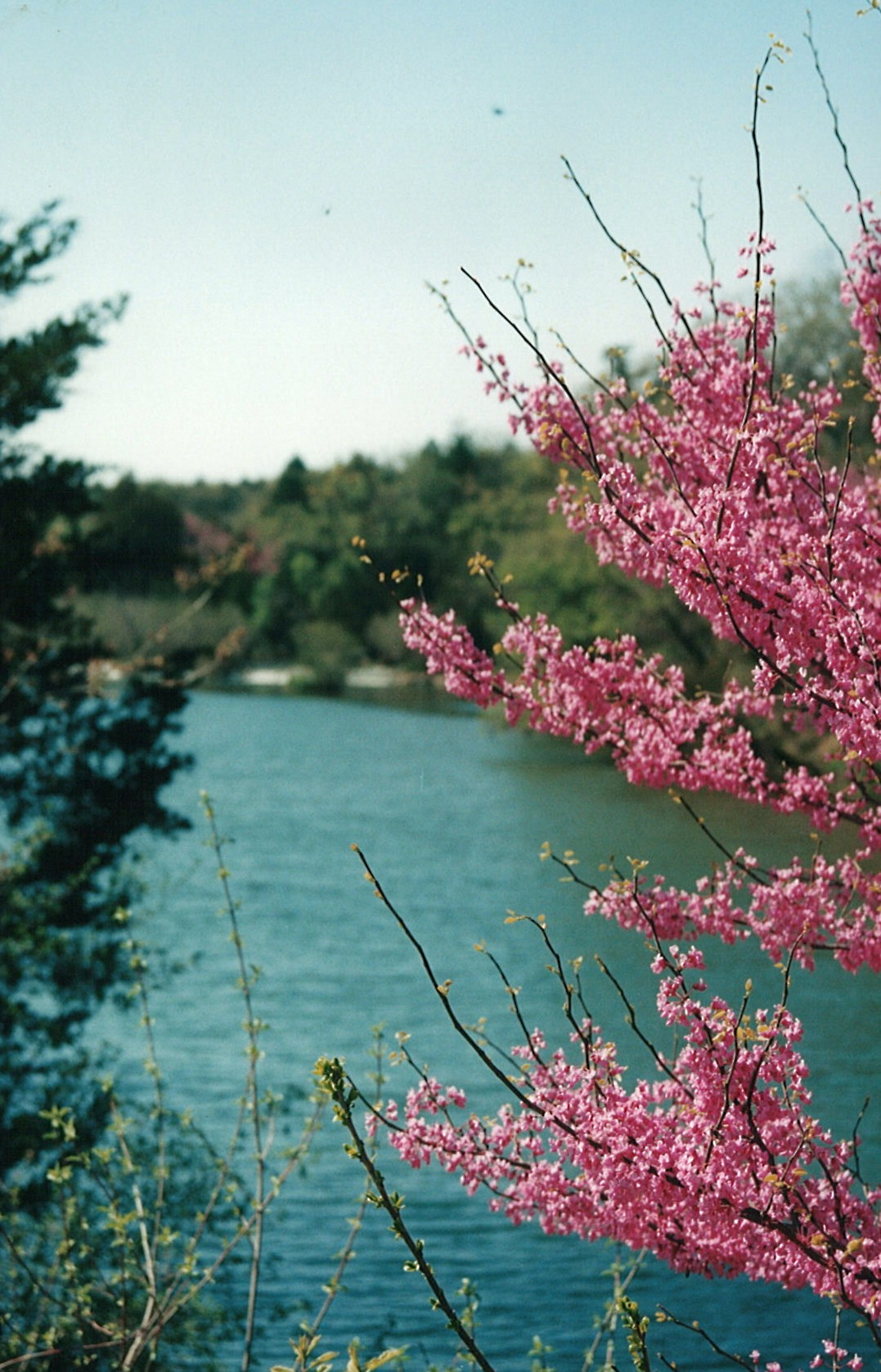
Redbud flowers in the spring along the Blue River in south central Oklahoma.
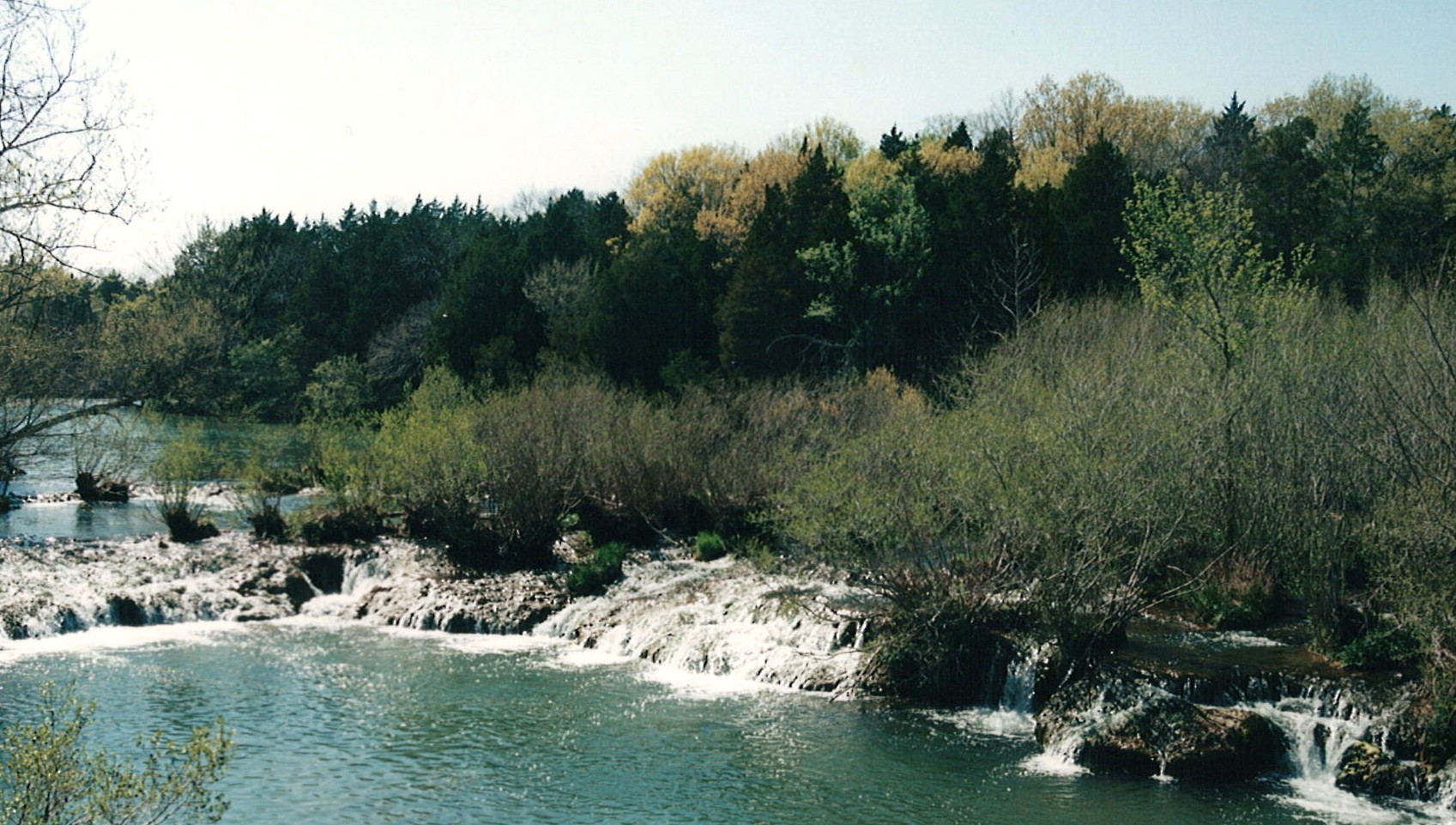
Waterfalls and seaside alders (Alnus maritima) in the Blue River in south central Oklahoma.
Pacific Northwest
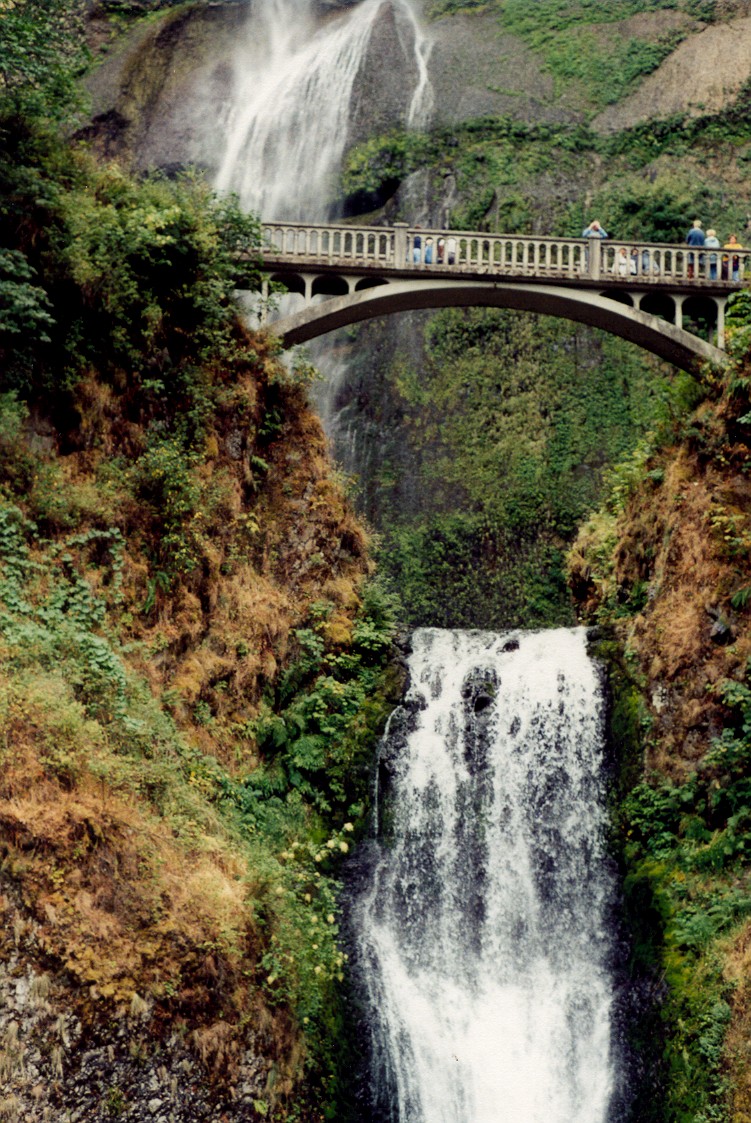
Waterfall and pedestrian bridge near the Columbia River, Oregon.
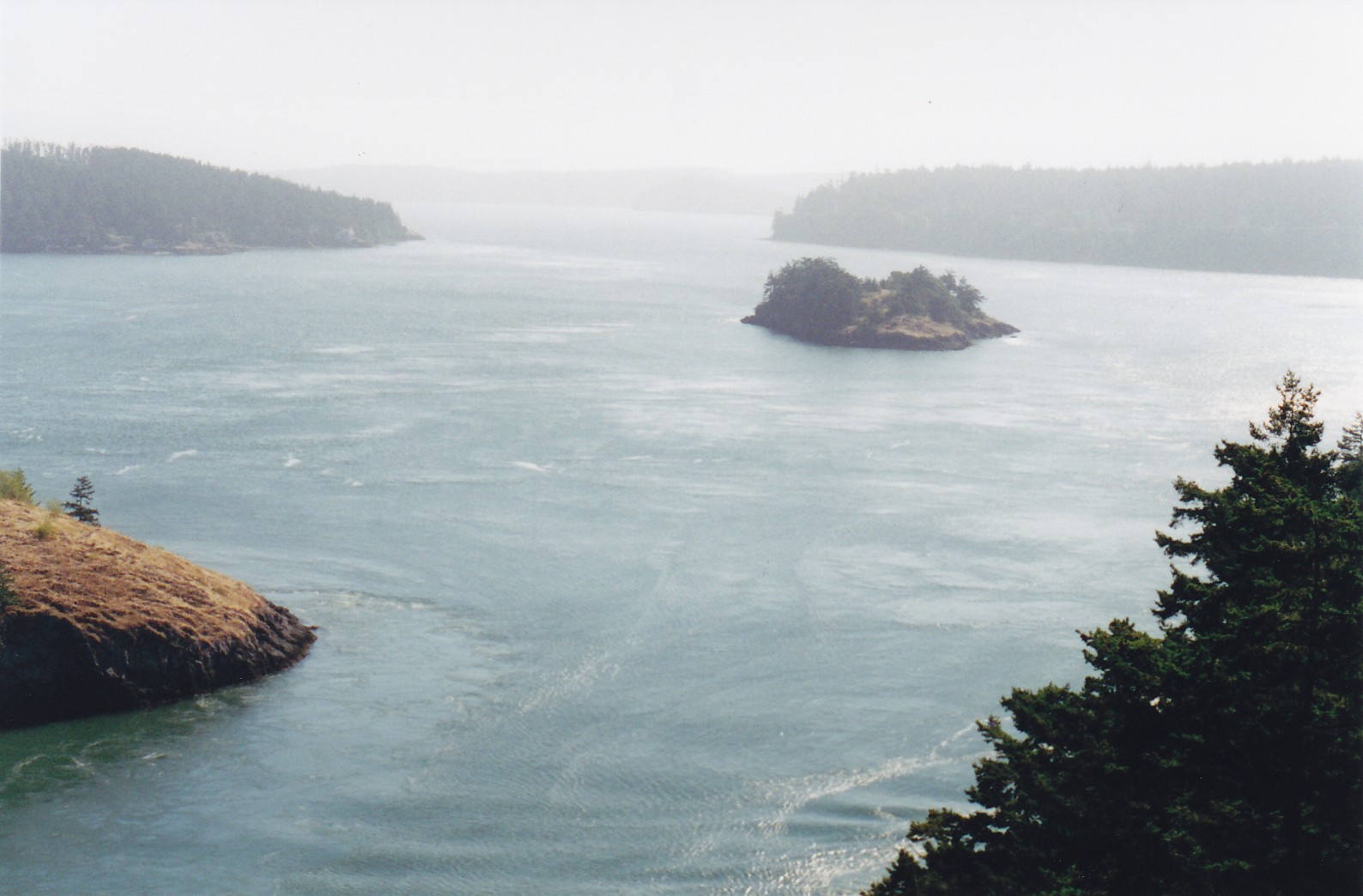
Washington coast islands and trees.
Mt. St. Helens from the air, 28 years after its eruption.
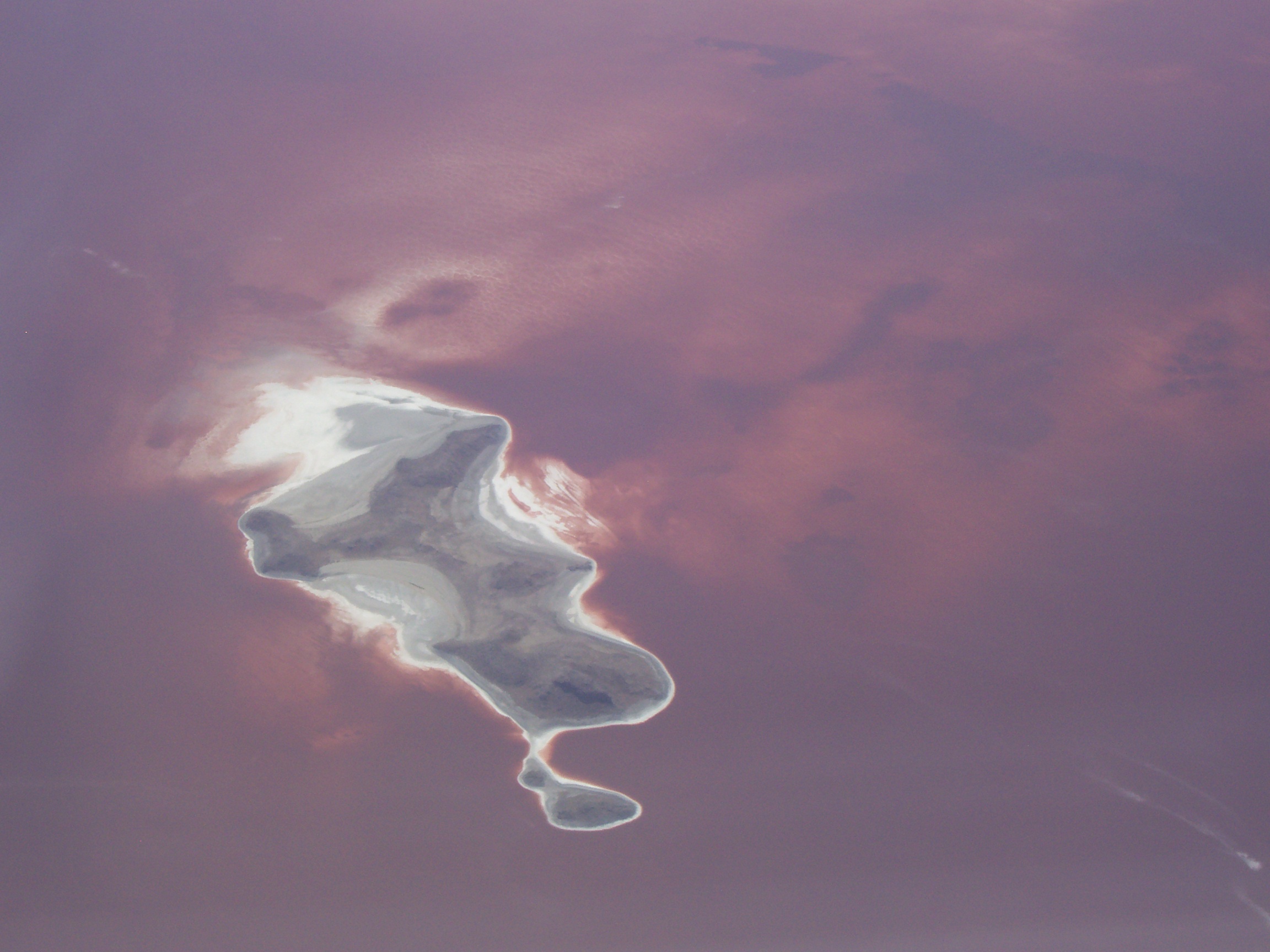
The bed of the Great Salt Lake, seen from the air, is red because of photosynthetic microbes.
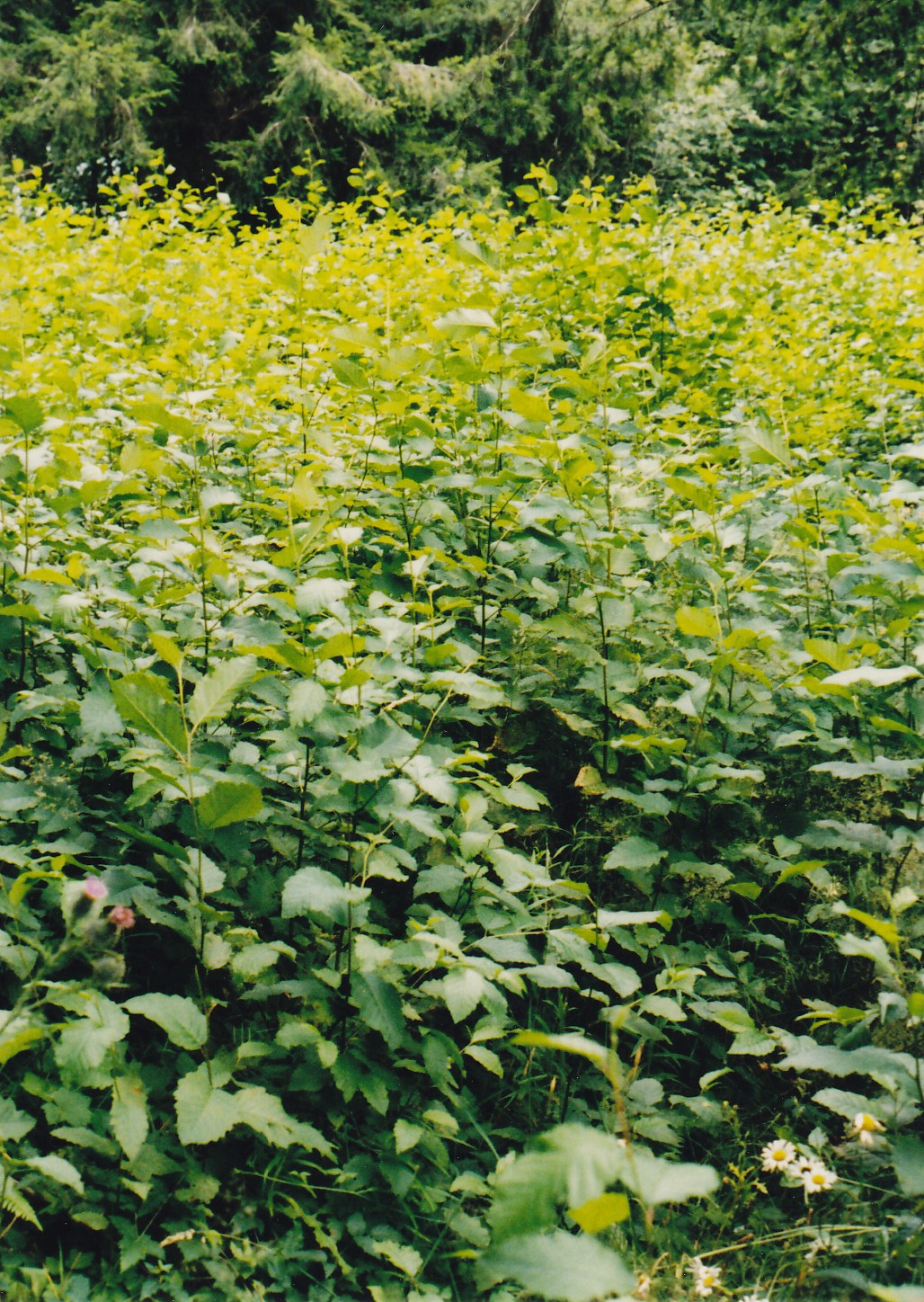
A mass of red alders (Alnus rubra) grow where an old growth forest has been clear cut in Washington.
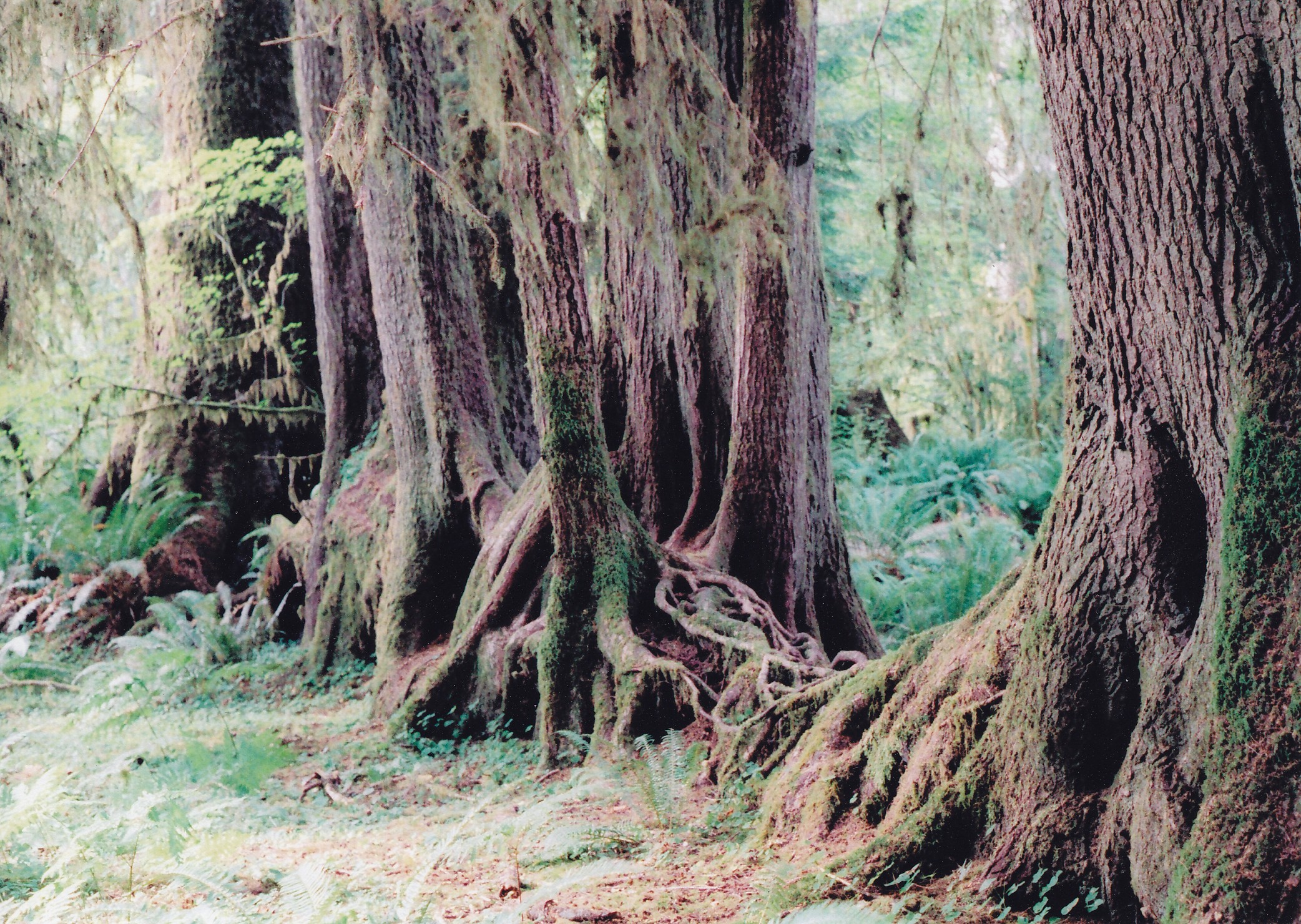
In the Hoh Rainforest of the Olympic Peninsula in Washington, trees began to grow on a log because the soil was too wet and crowded. The log has decomposed but the tree roots maintain its shape. Such a log is called a nurse log.
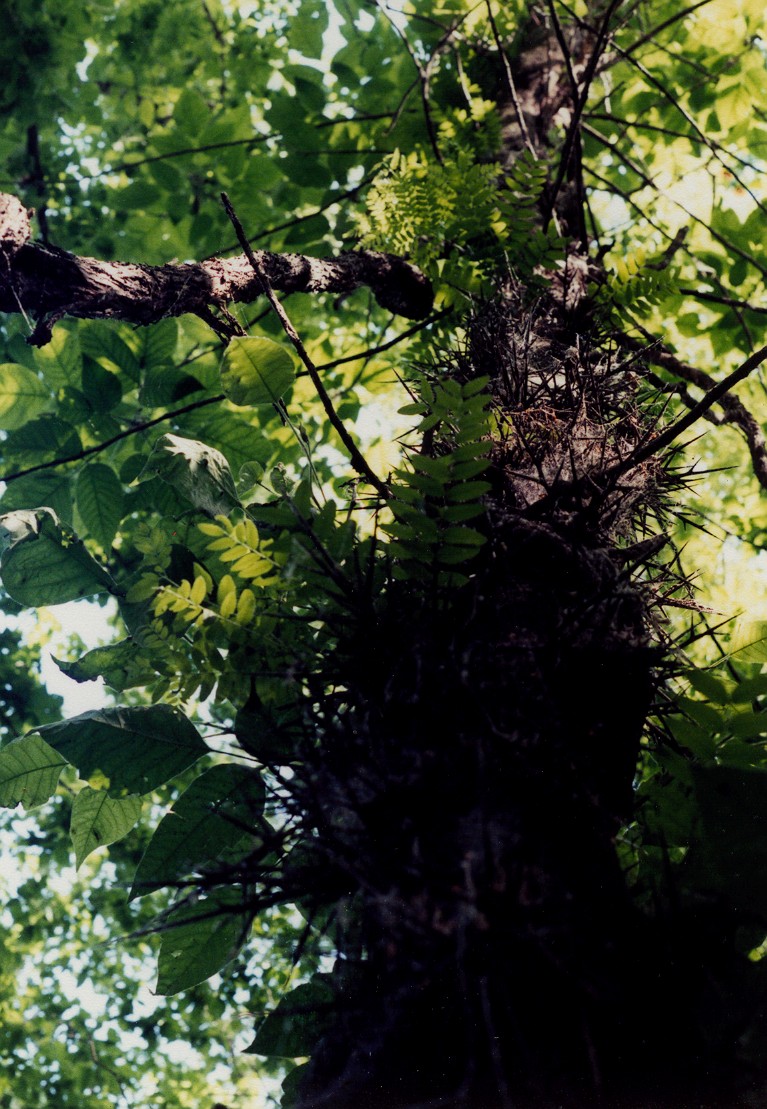
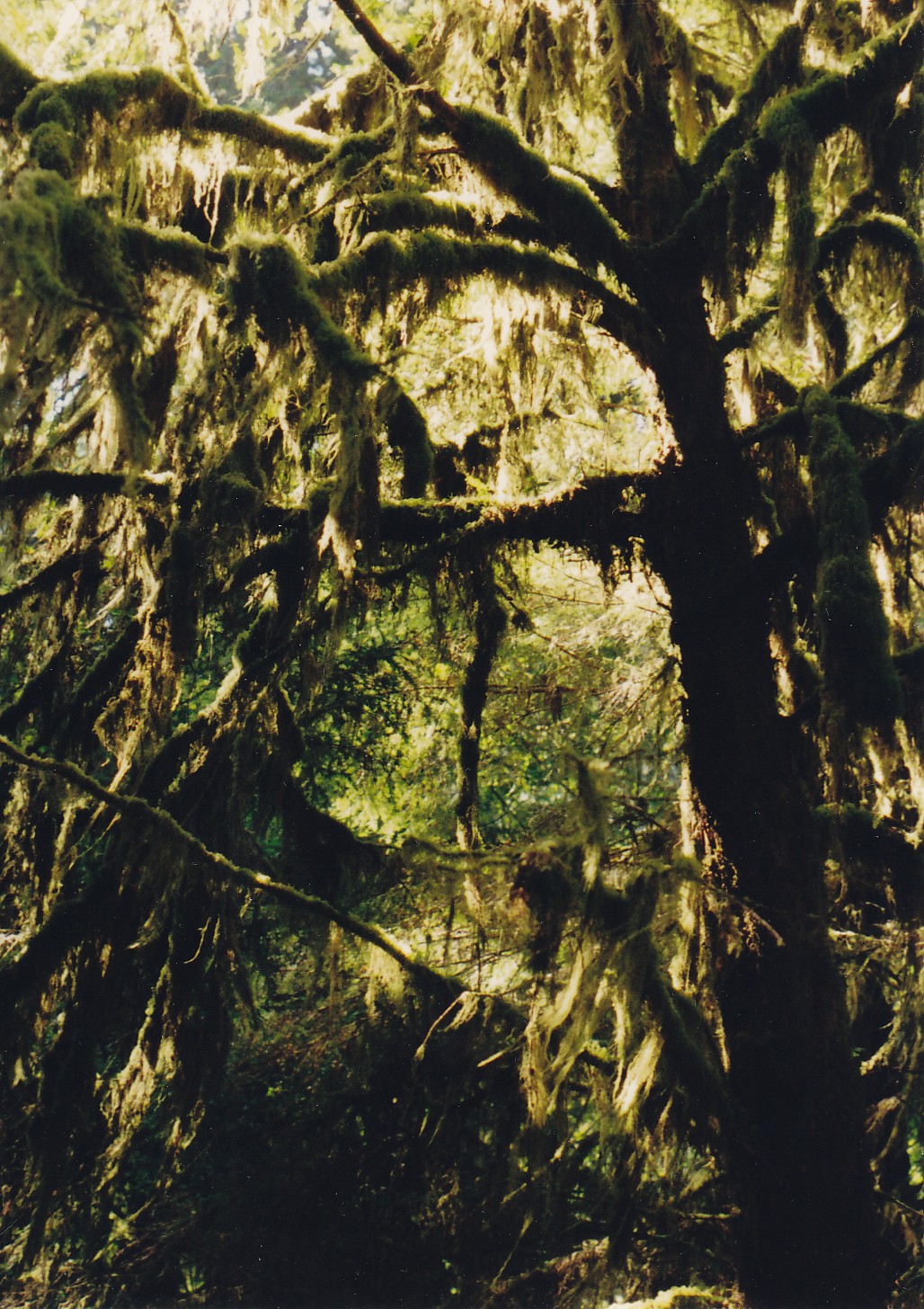
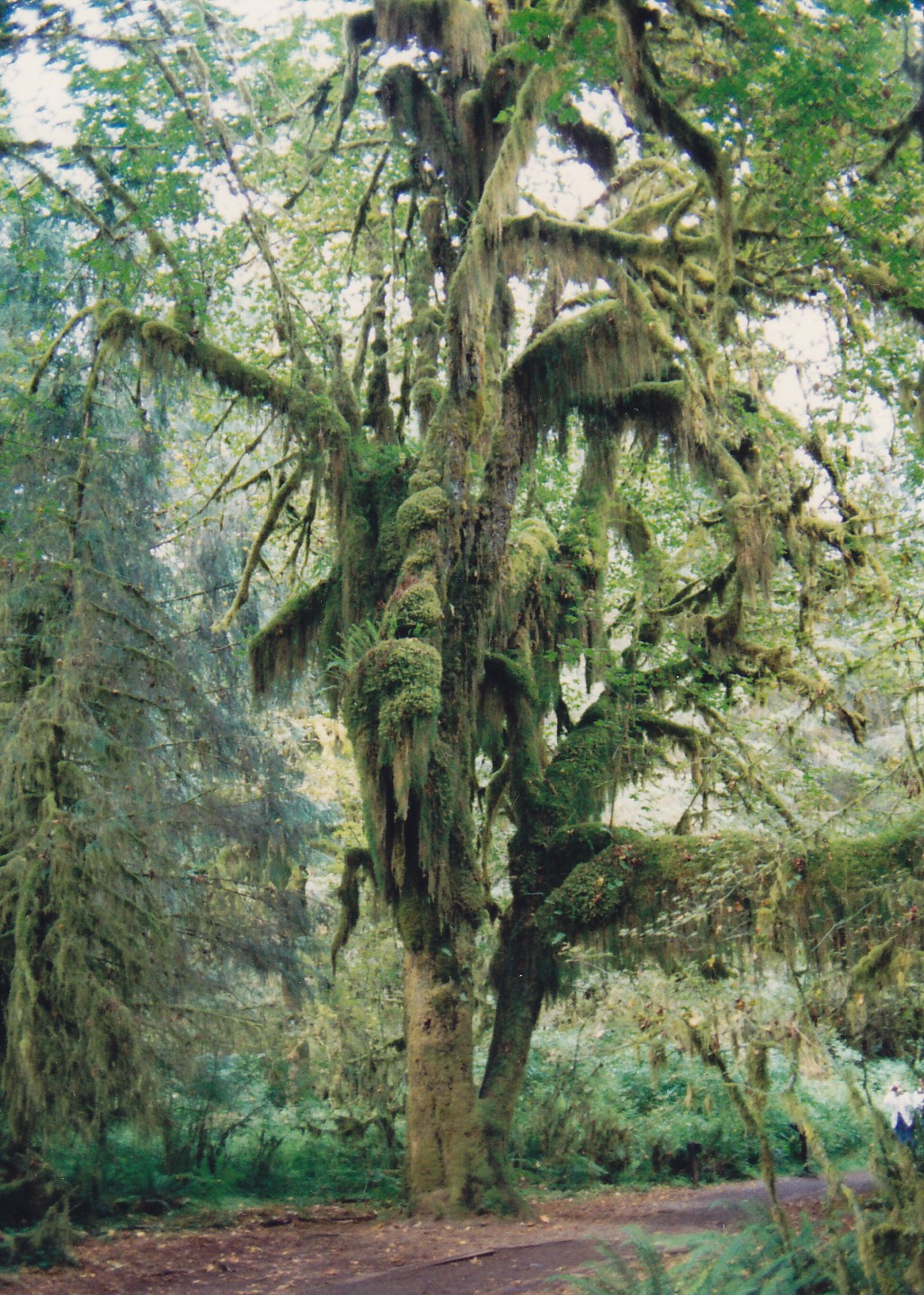
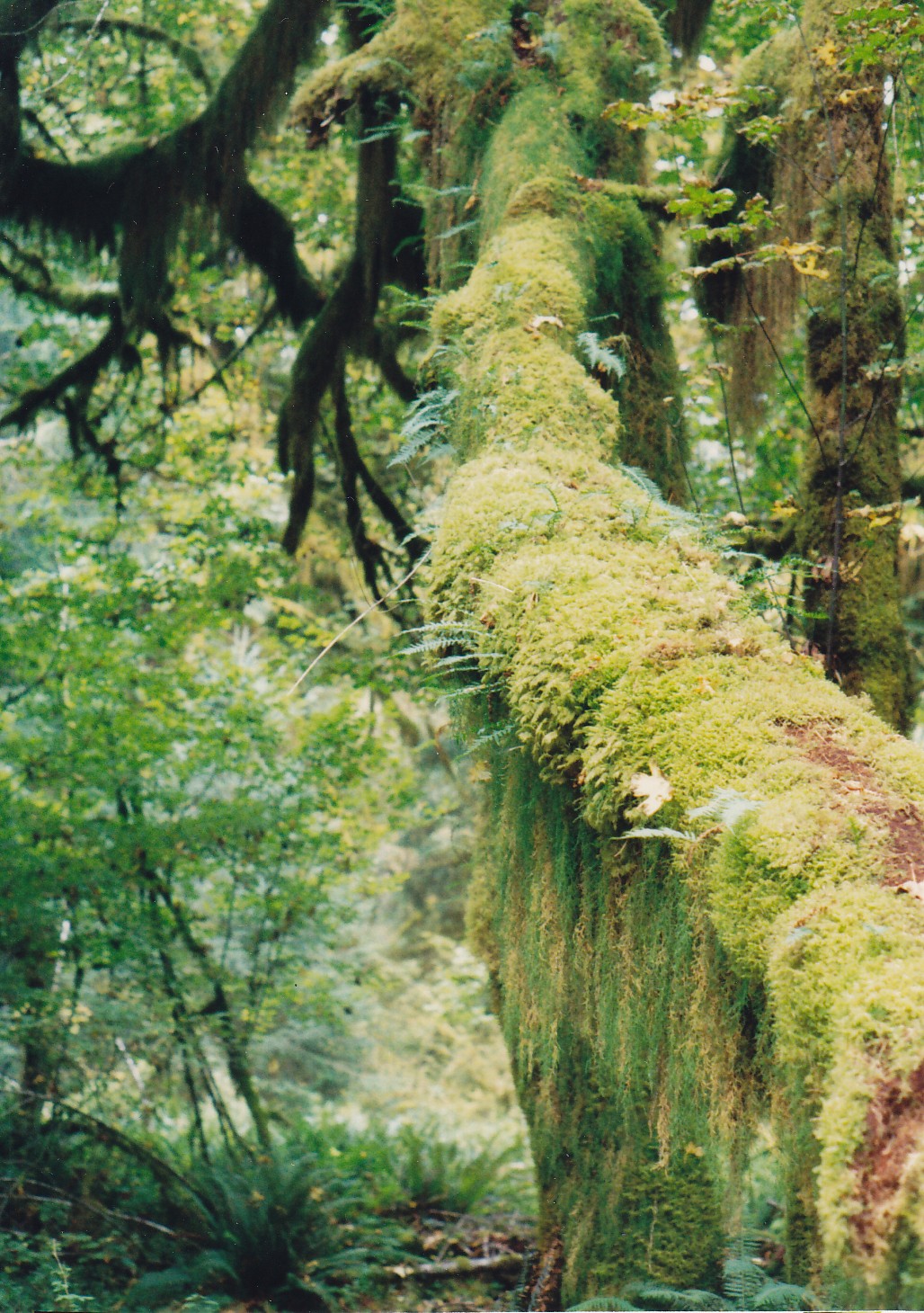
The Hoh Rainforest on the Olympic Peninsula of Washington is thick not only with trees but with epiphytes.
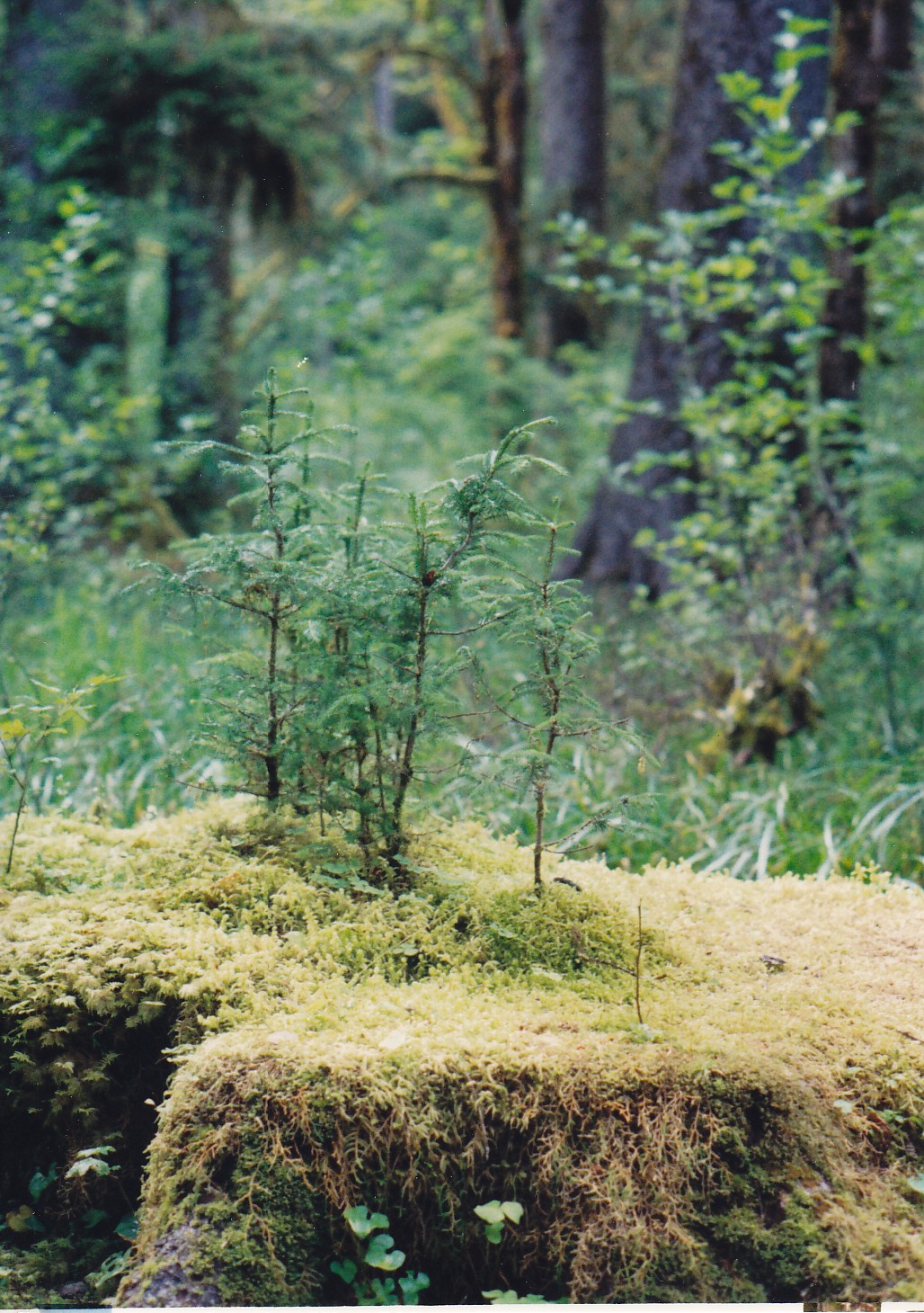
Conifer seedlings would be crowded out in the wet soil of the forest floor in the Hoh Rainforest of the Olympic Peninsula of Washington, but they grow on stumps of douglas fir trees that have been lumbered.
The Hoh Rainforest on the Olympic Peninsula of Washington is thick not only with trees but with epiphytes.
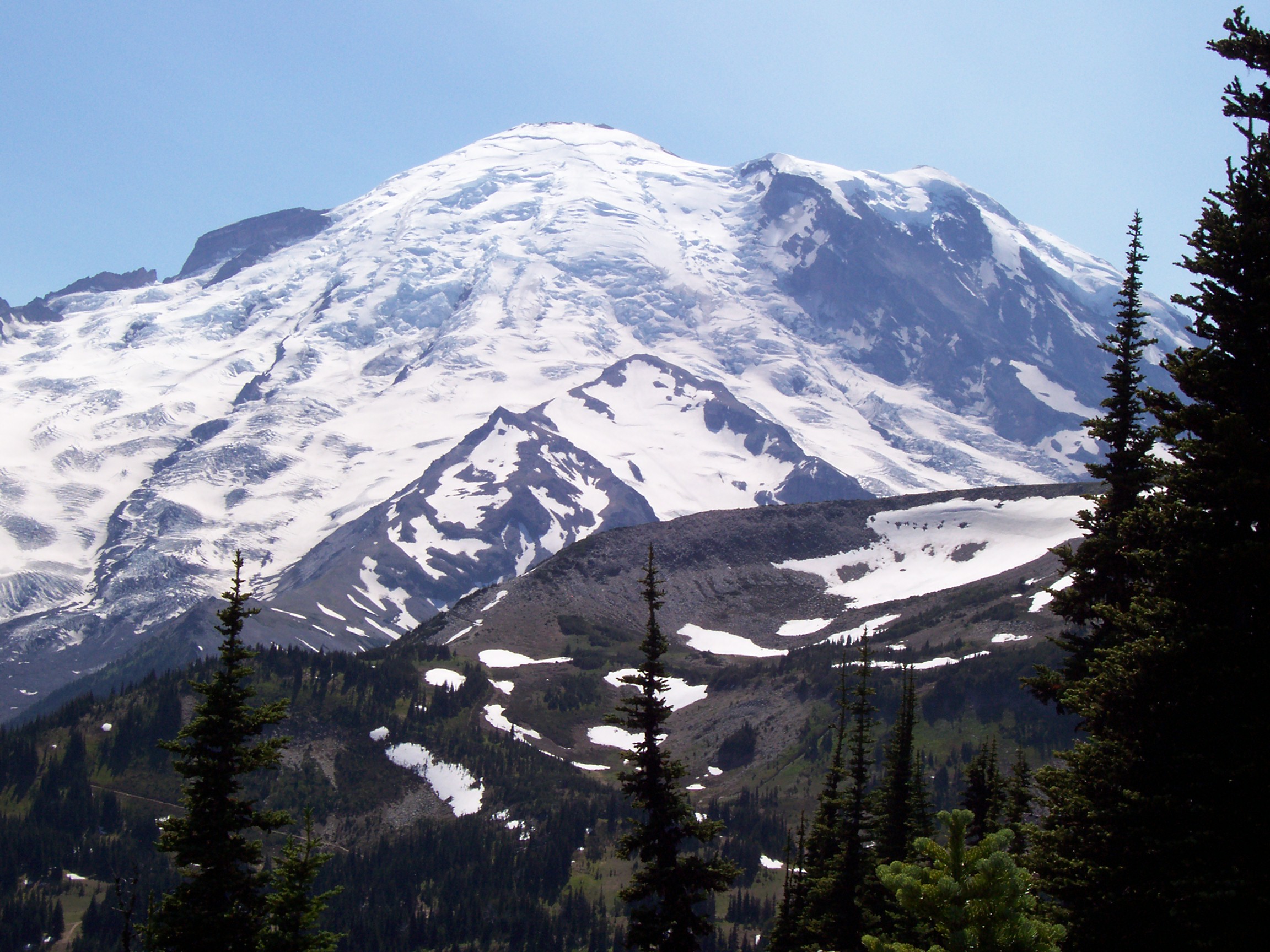
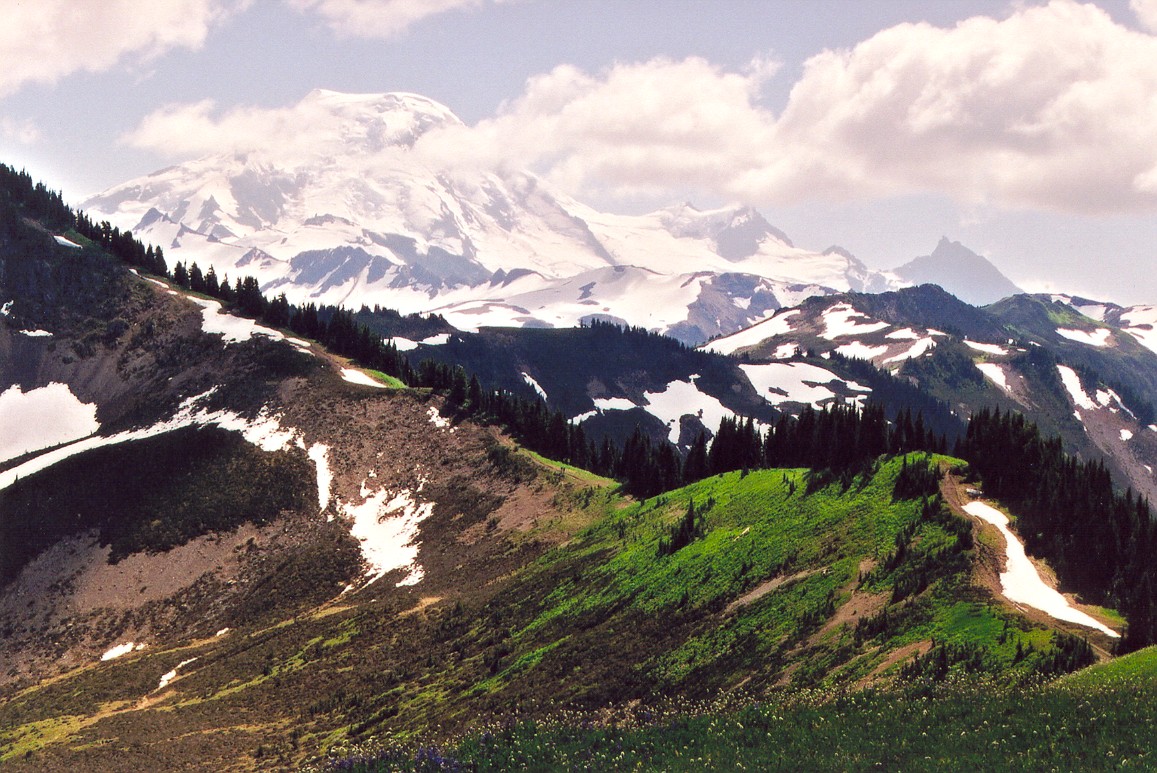
Mt. Rainier, Washington, as seen from the subalpine forest.
Subalpine forest and boulder slopes near Mt. Rainier in Washington.
Subalpine meadow, near Mt. Rainier, Mt. Rainier National Park, Washington.
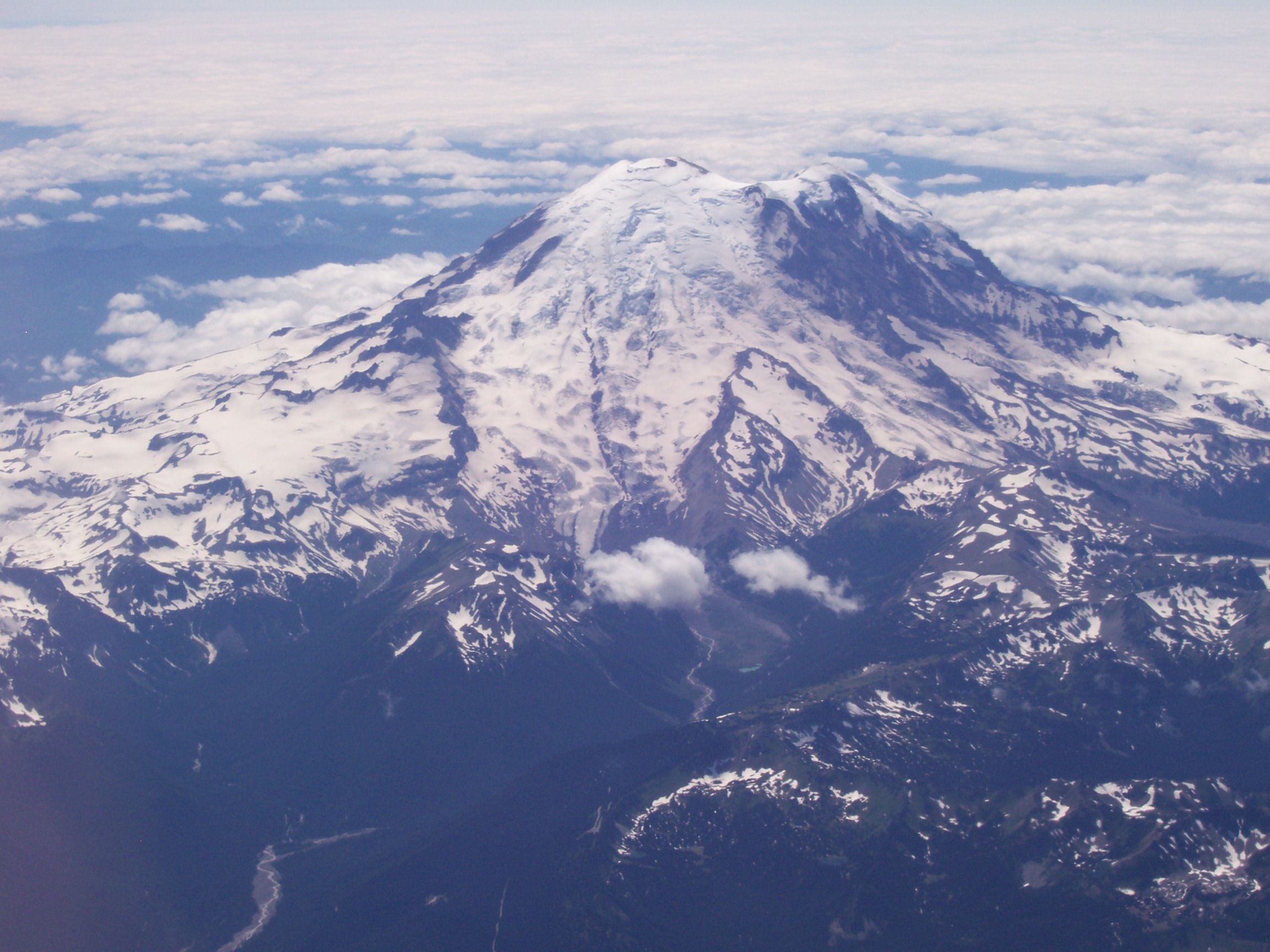
Aerial view of Mt. Rainier, Washington.
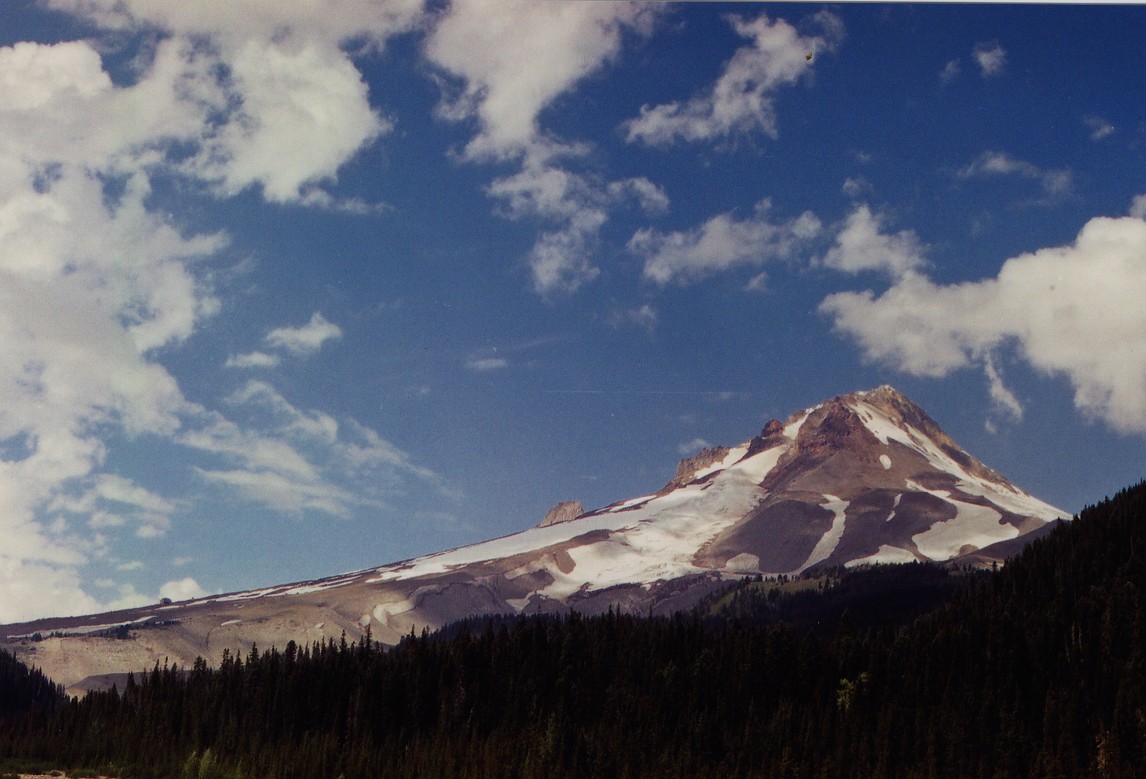
Mt. Hood, a volcano in Oregon.
Mt. Baker, a volcano in Washington.
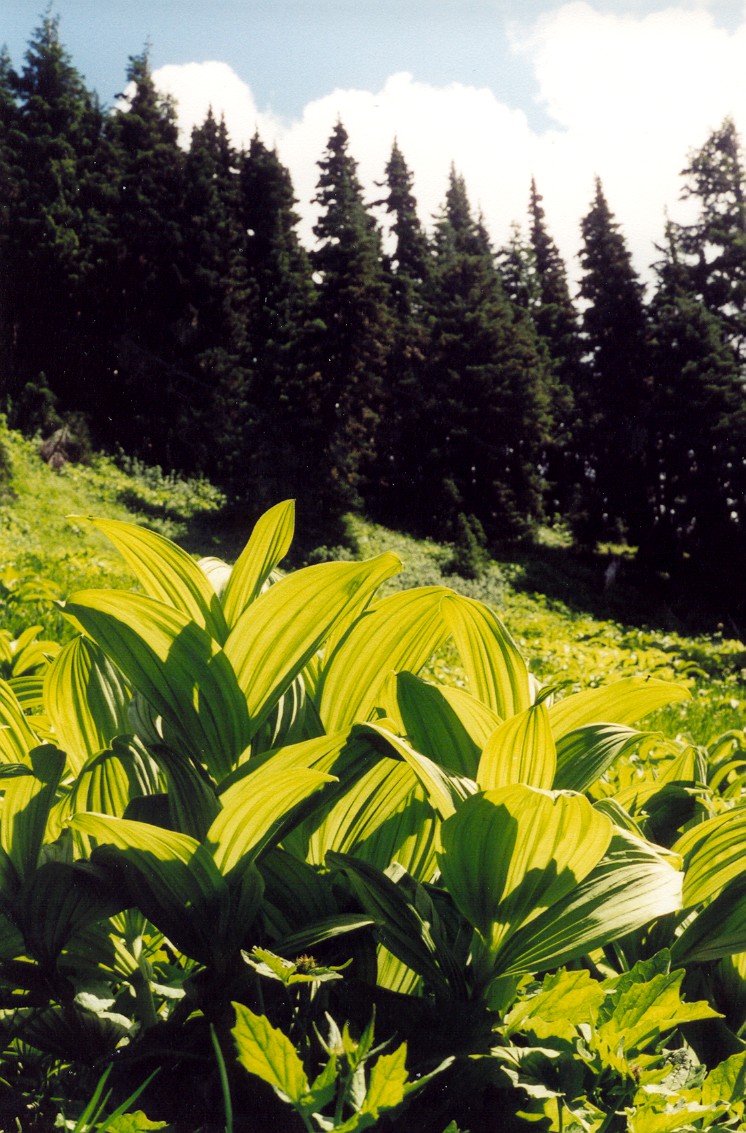
Subalpine meadow near Mt. Rainier, including false hellebores (genus Veratrum).
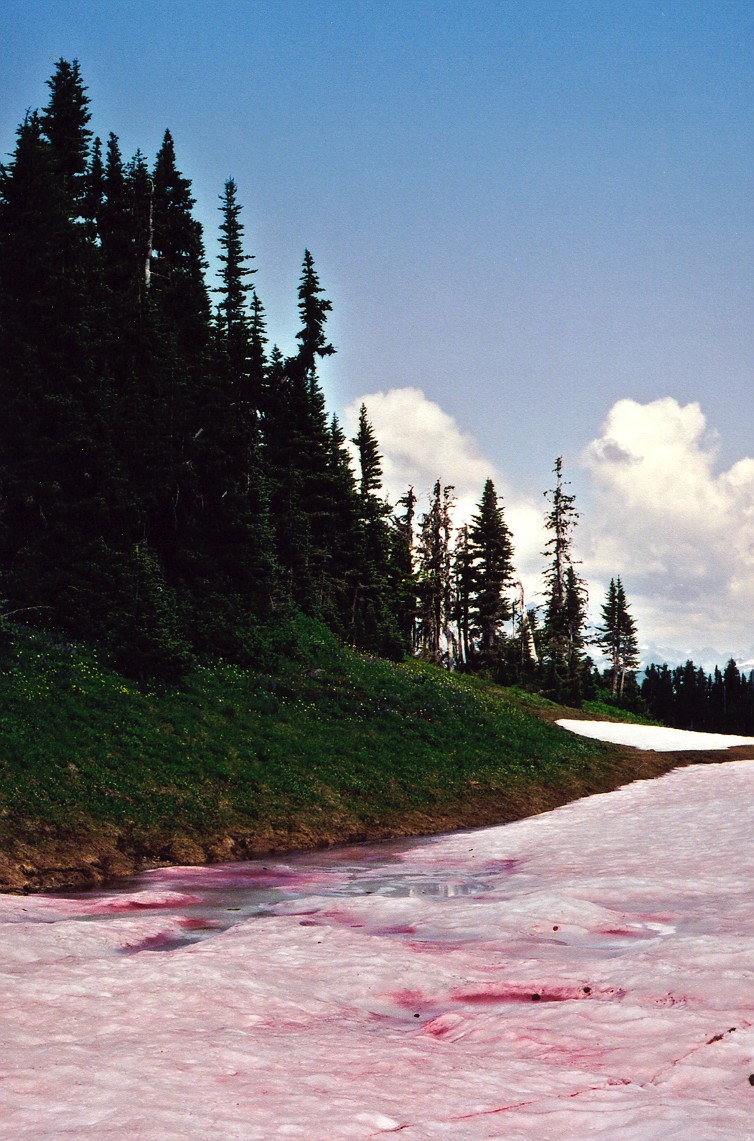
The red subalpine snow is due to photosynthetic green algae (Chlamydomonas nivalis) which has a red pigment (astaxanthin) in addition to chlorophyll. It makes its own food, and gets its minerals from dust.
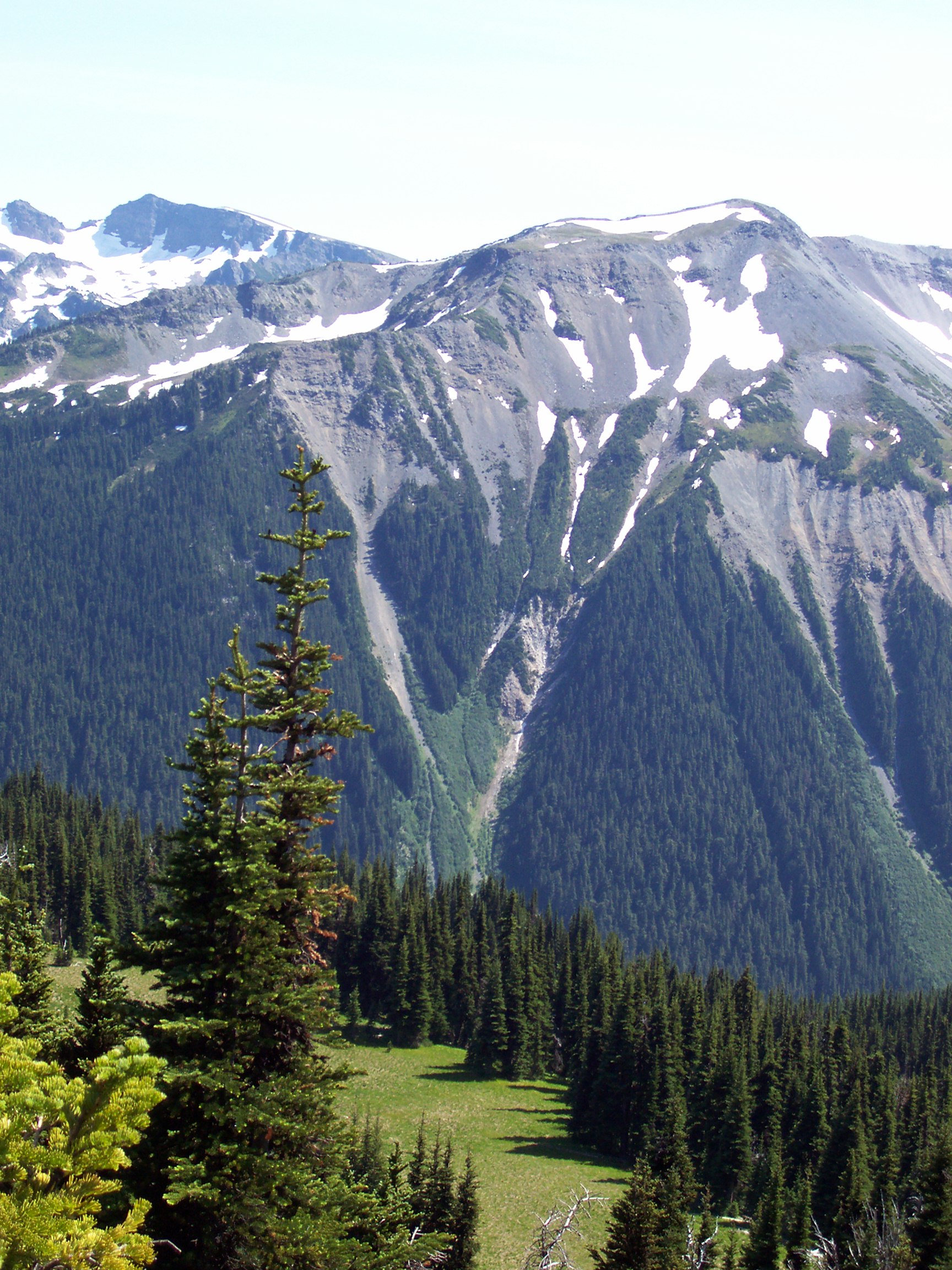
Tatoosh Mountains near Mt. Rainier, subalpine zone.
Low elevation temperate rainforest near Vancouver, British Columbia.
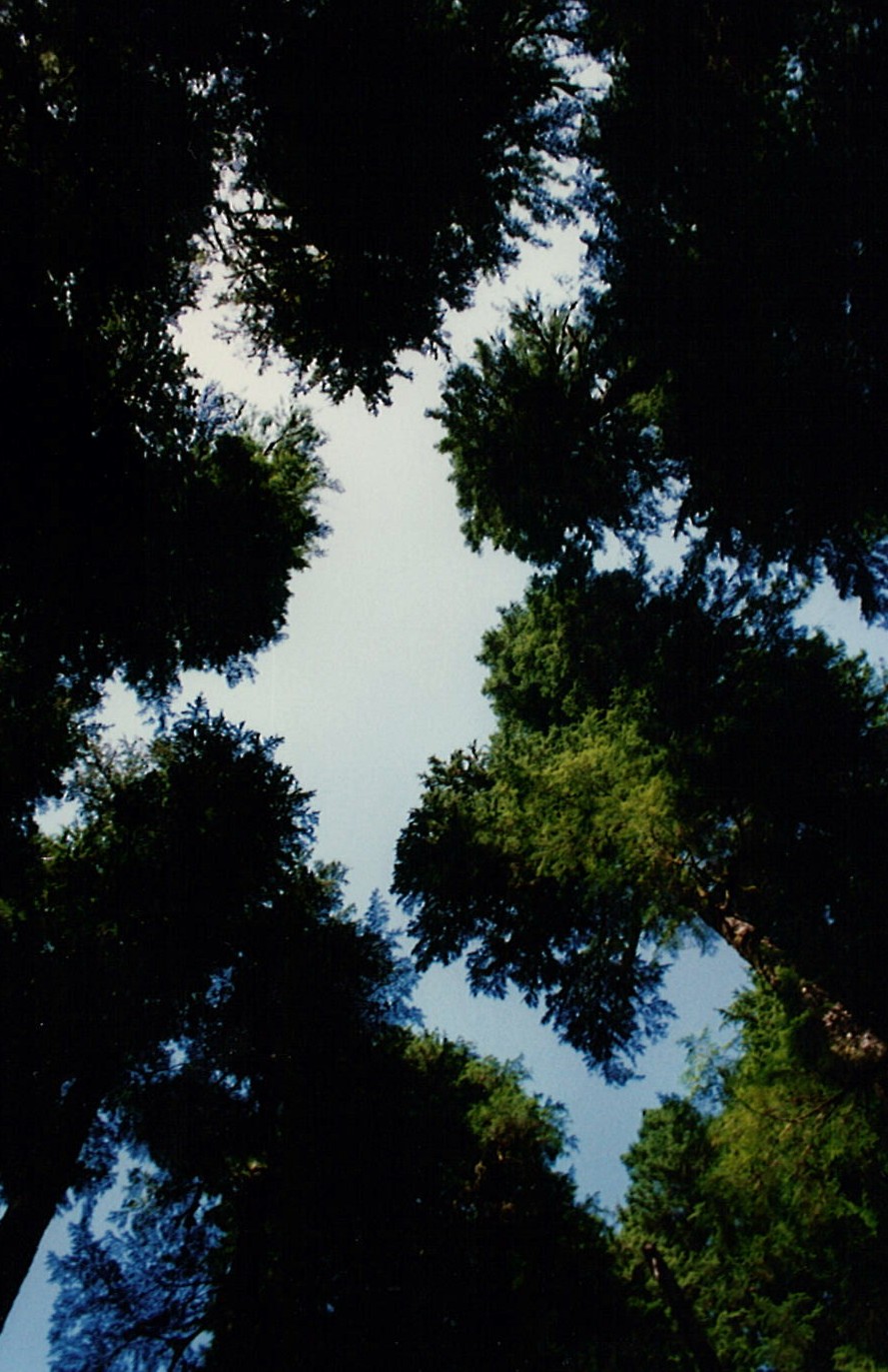
Canopy of the Hoh Rainforest on the Olympic Peninsula of Washington.
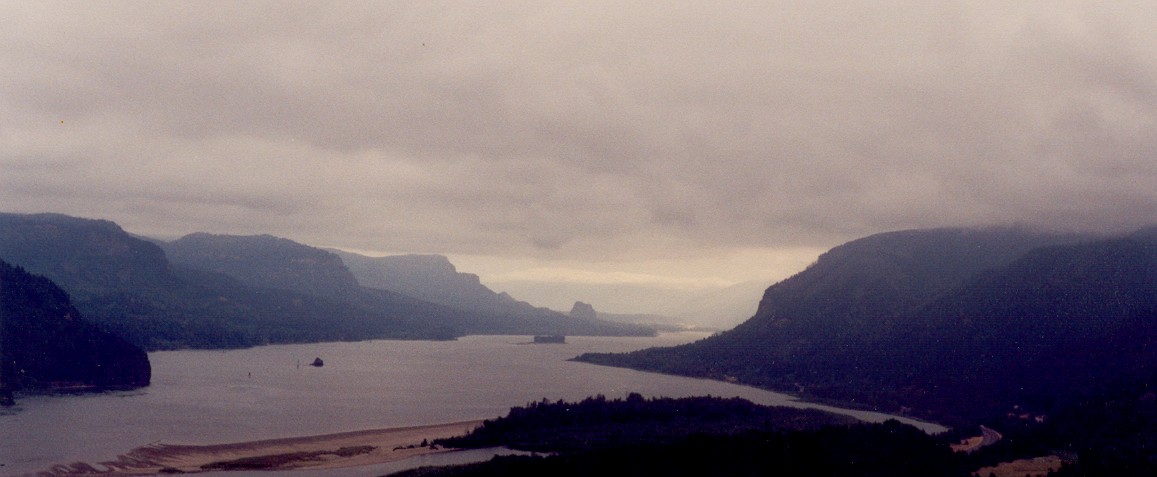
Columbia River gorge, between Oregon and Washington.
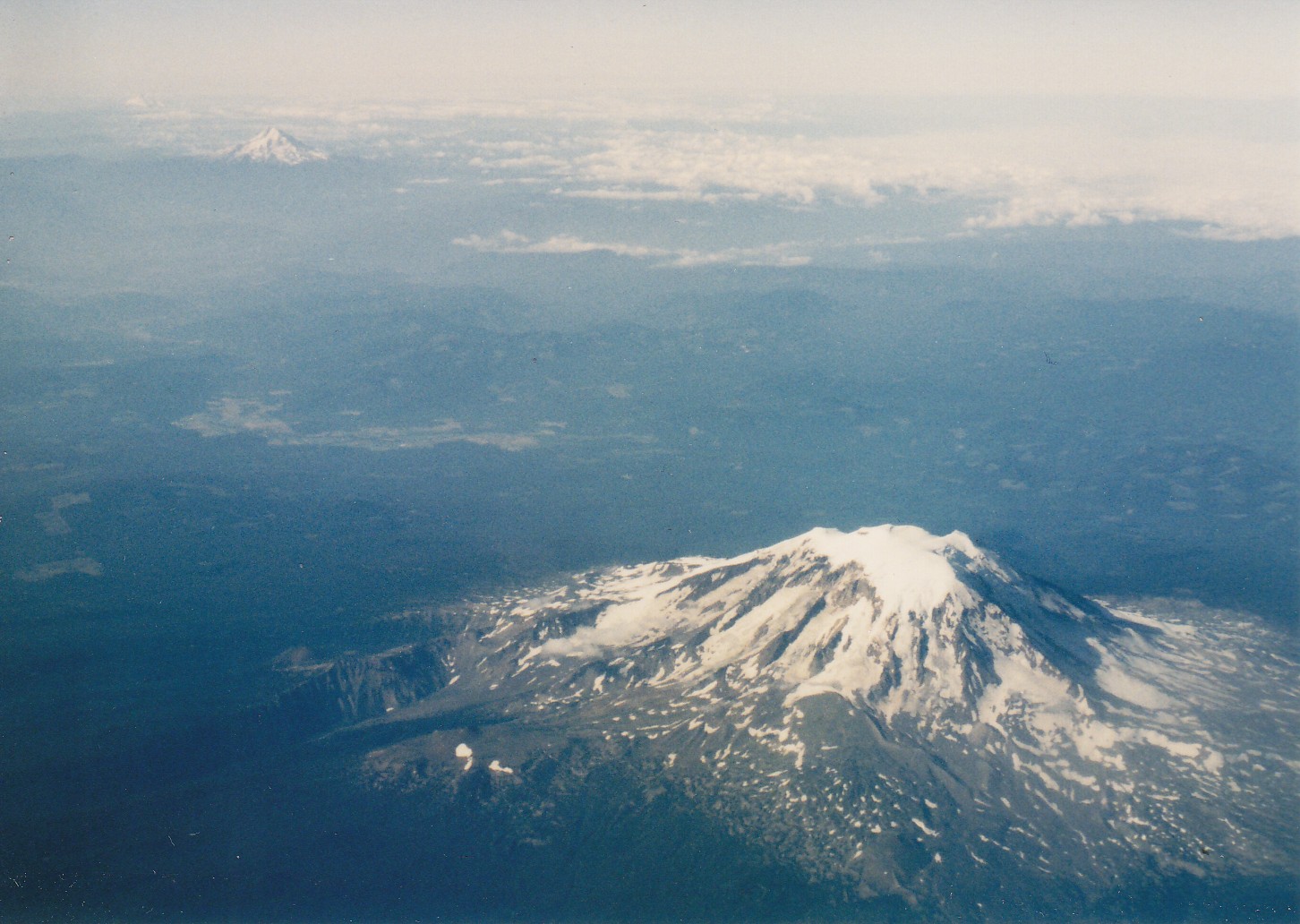
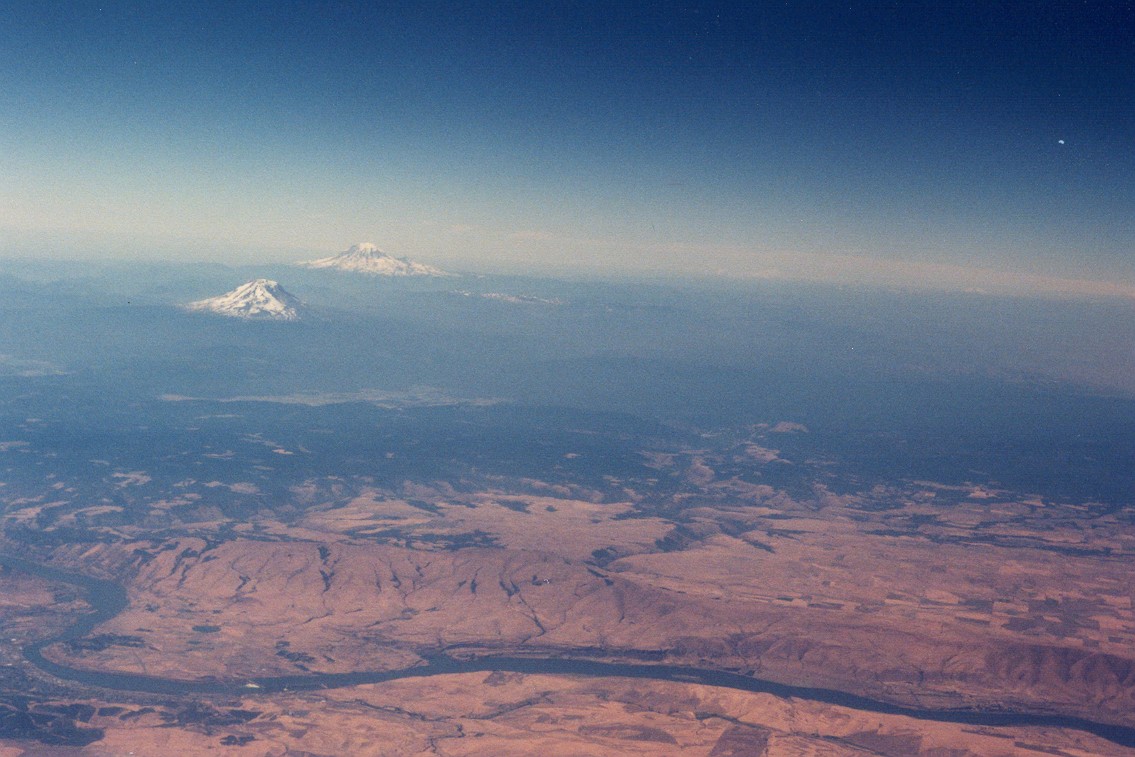
Mt. St,. Helens and Mount Adams in the Cascades, aerial view, north of the Columbia River.
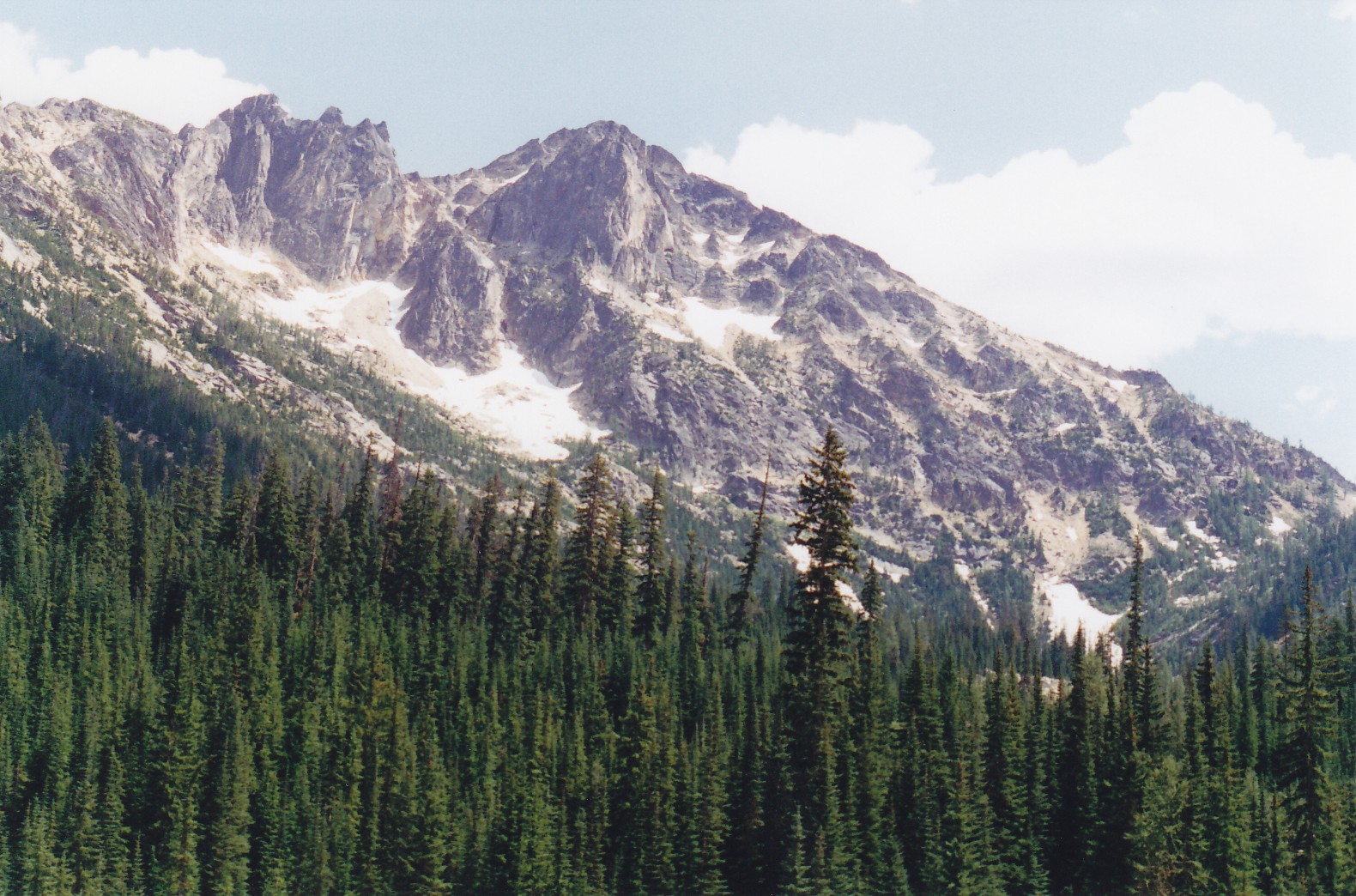
Cascade Mountains near Mt. Rainier, Washington.
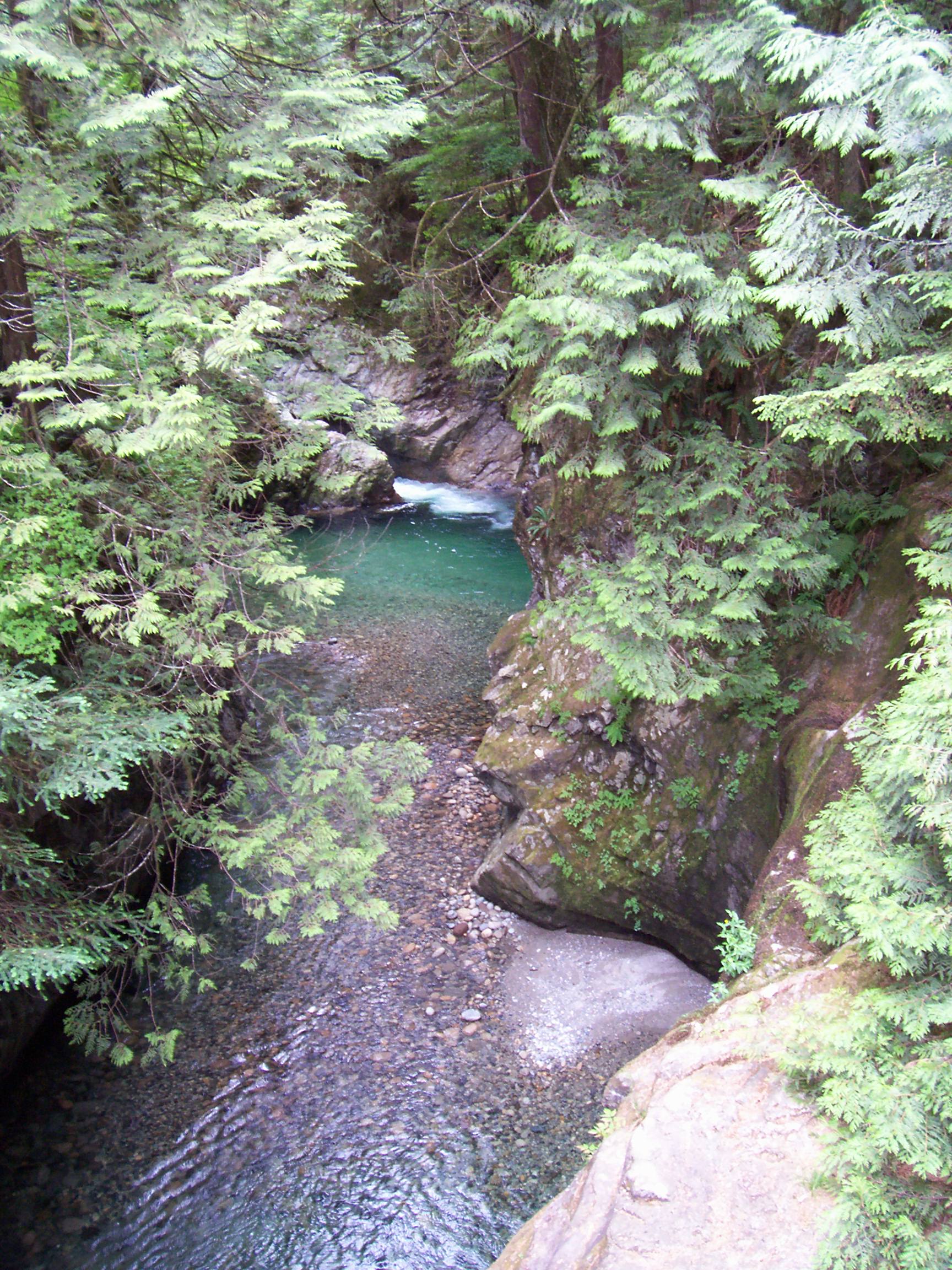
Lynn Canyon north of Vancouver, British Columbia.
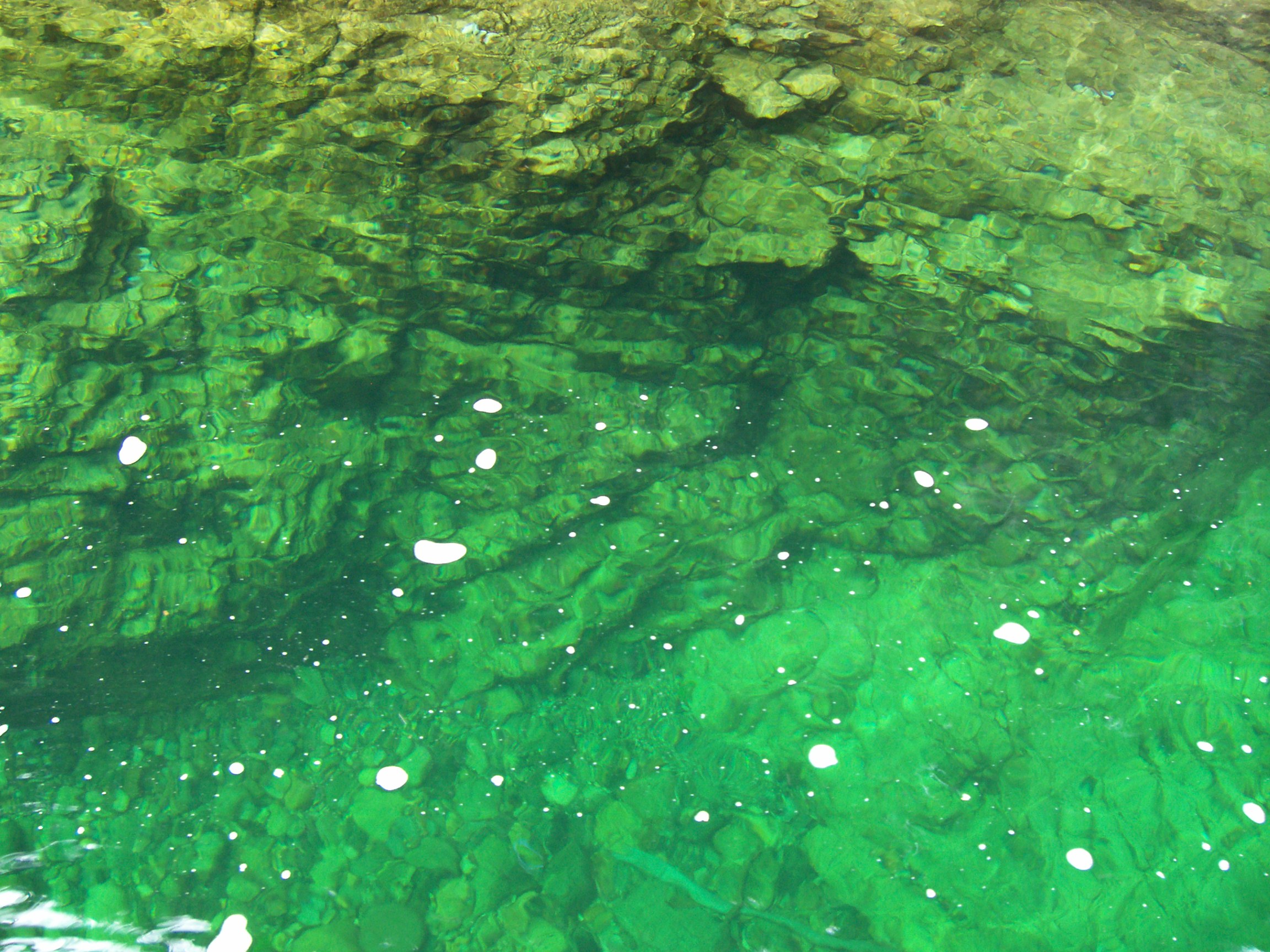
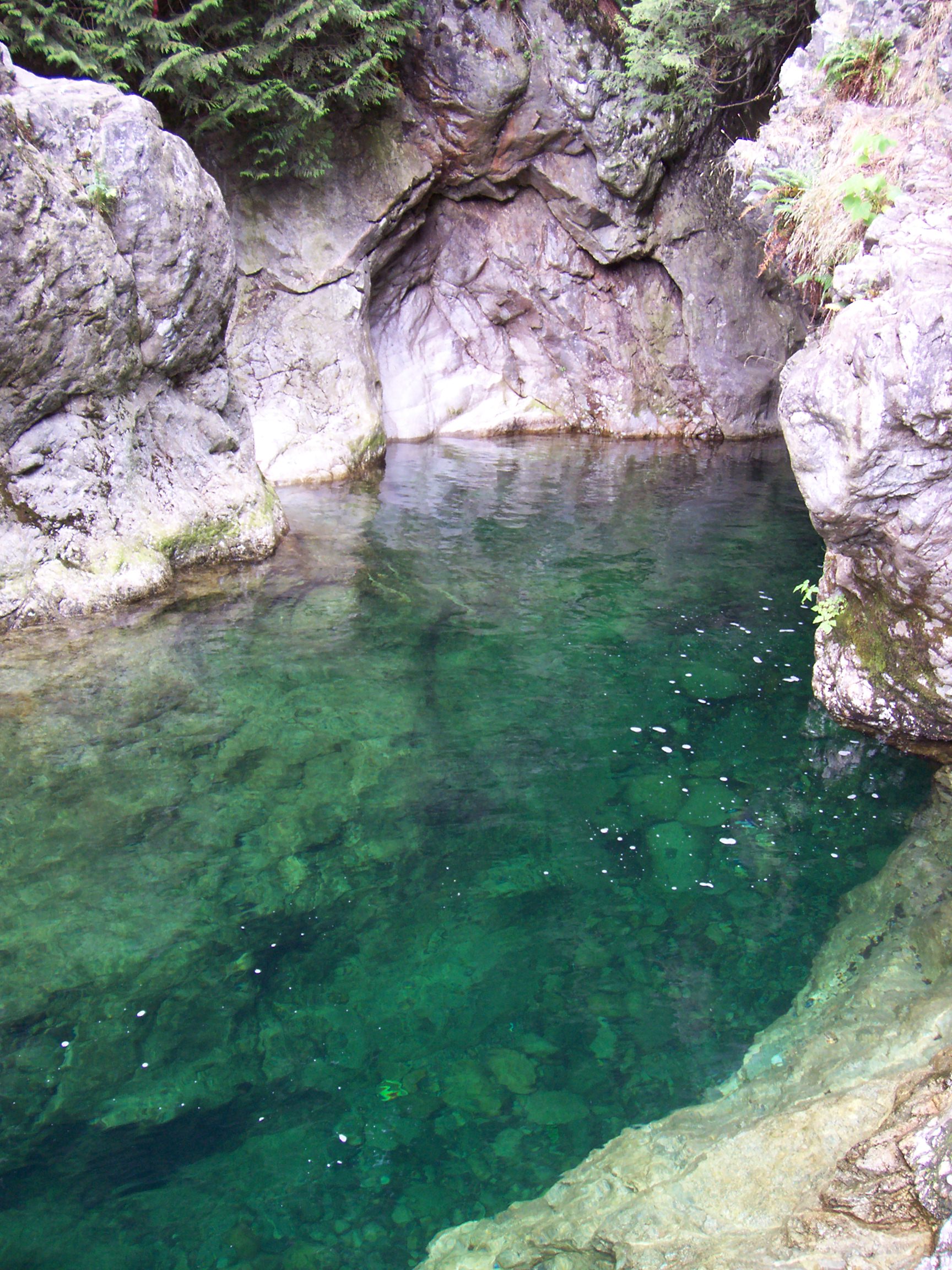
Green clear water in Lynn Canyon, north of Vancouver, British Columbia.
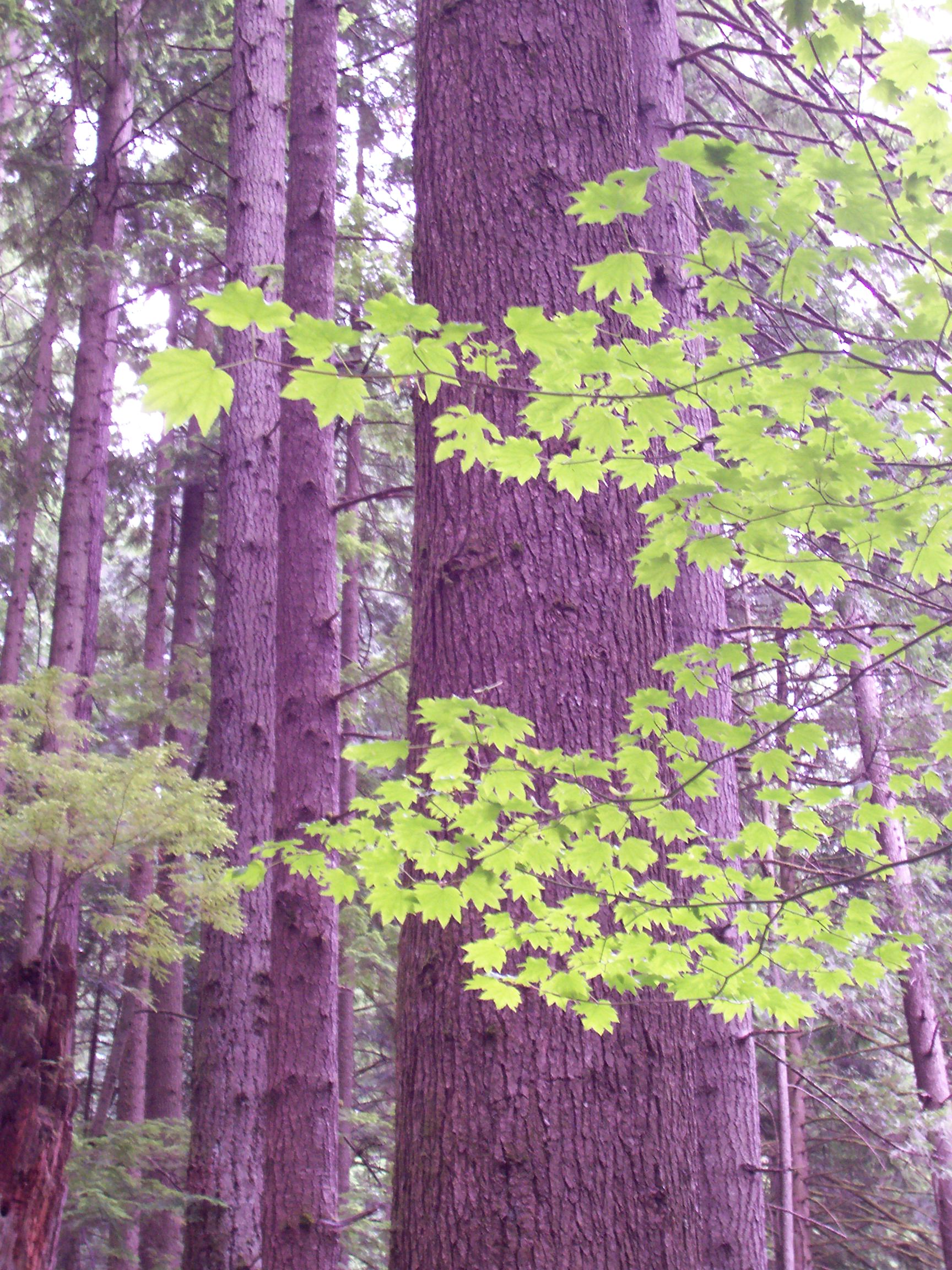
Coniferous forest with bigleaf maple (Acer macrophyllum) understory near Vancouver, British Columbia.
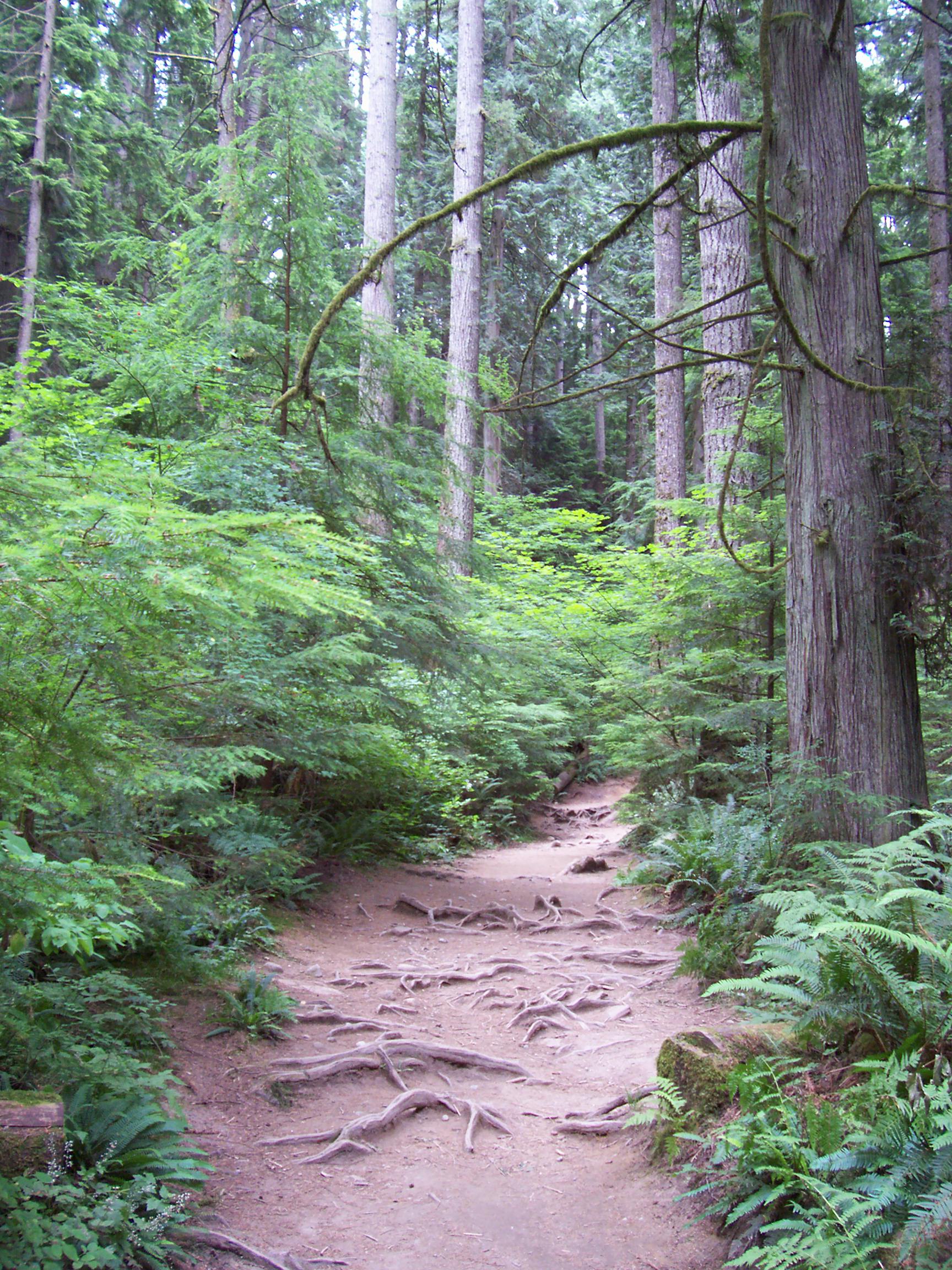
Forest near Lynn Canyon, north of Vancouver, British Columbia.
Seaside Alders 3 Disjunct Populations
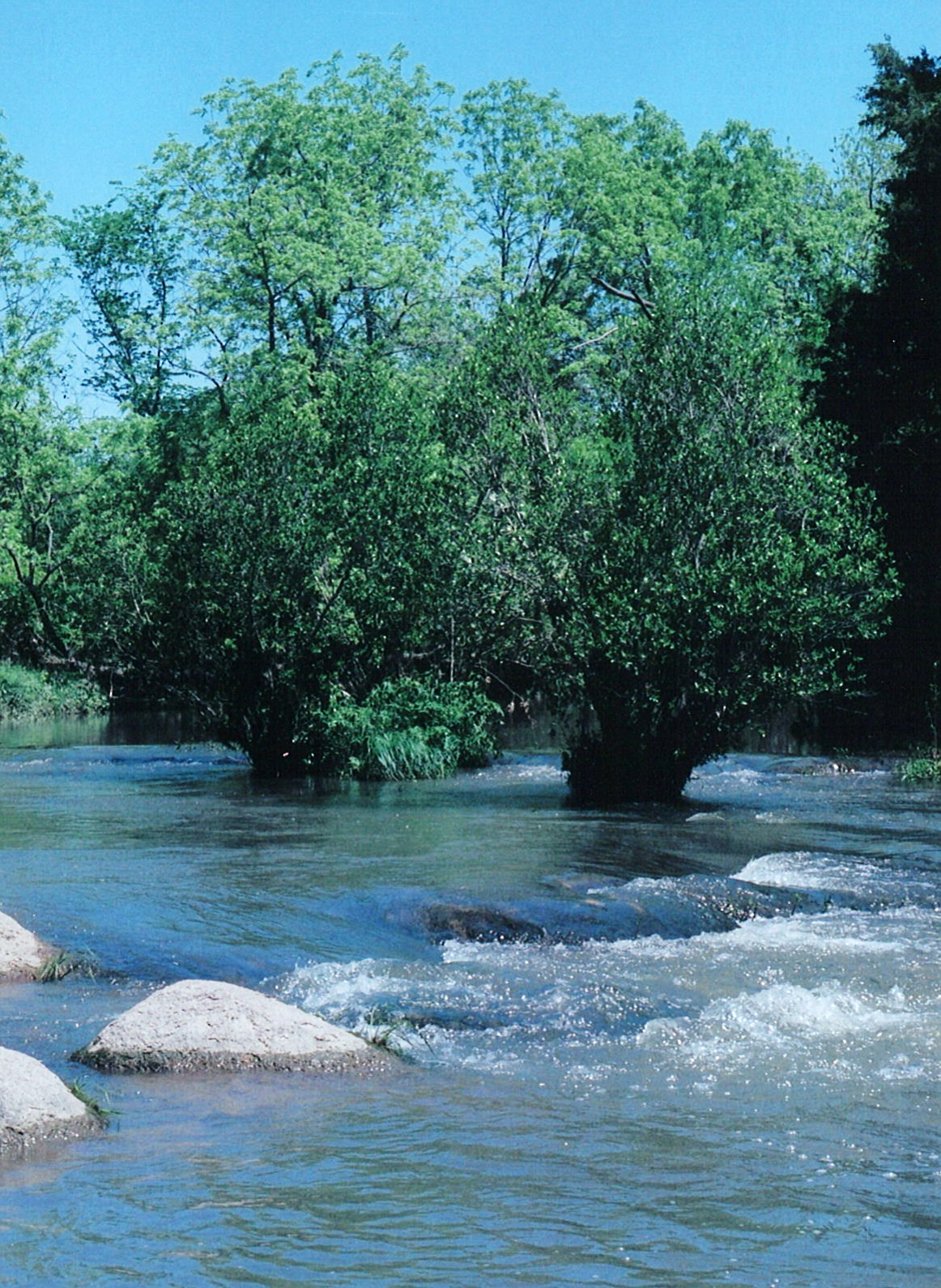
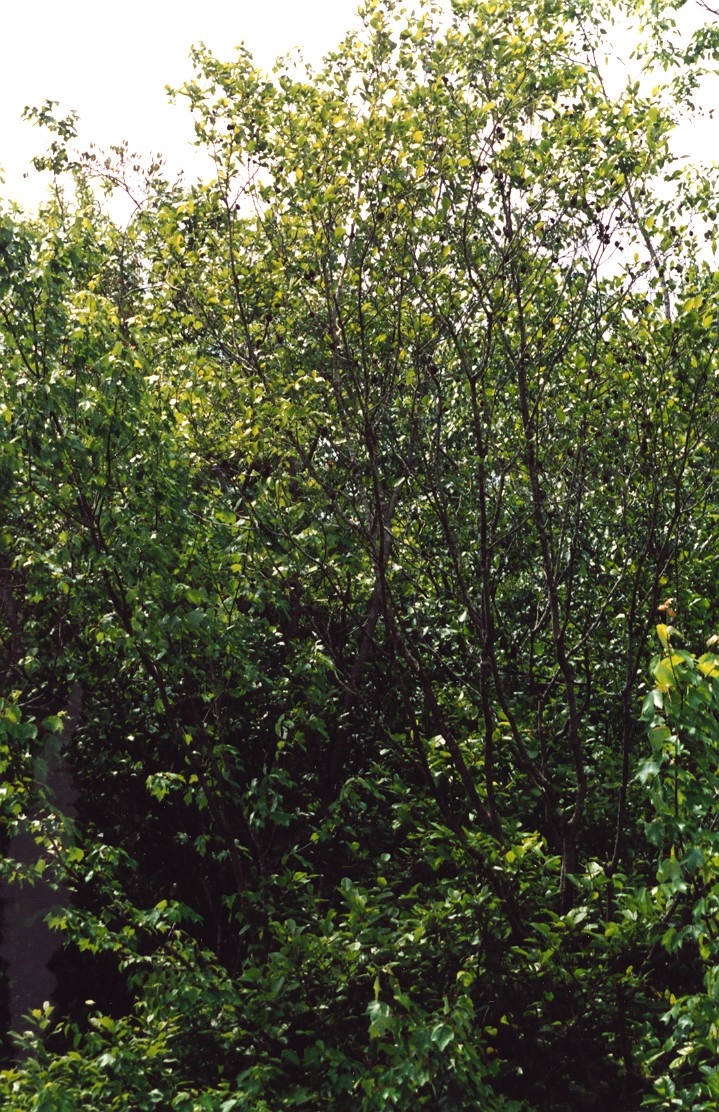
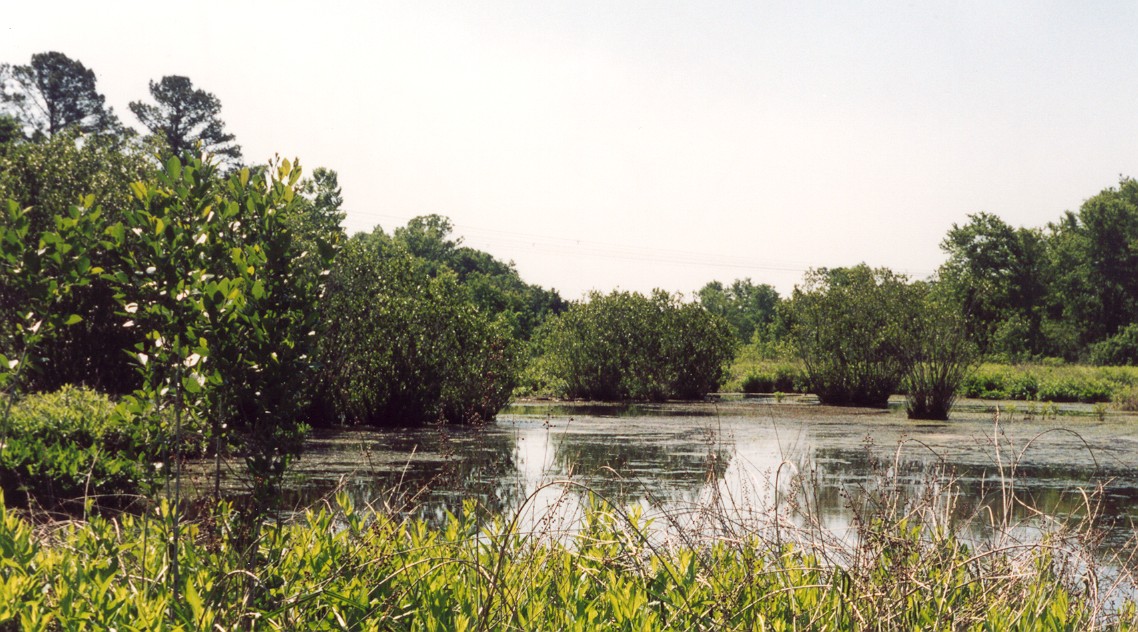
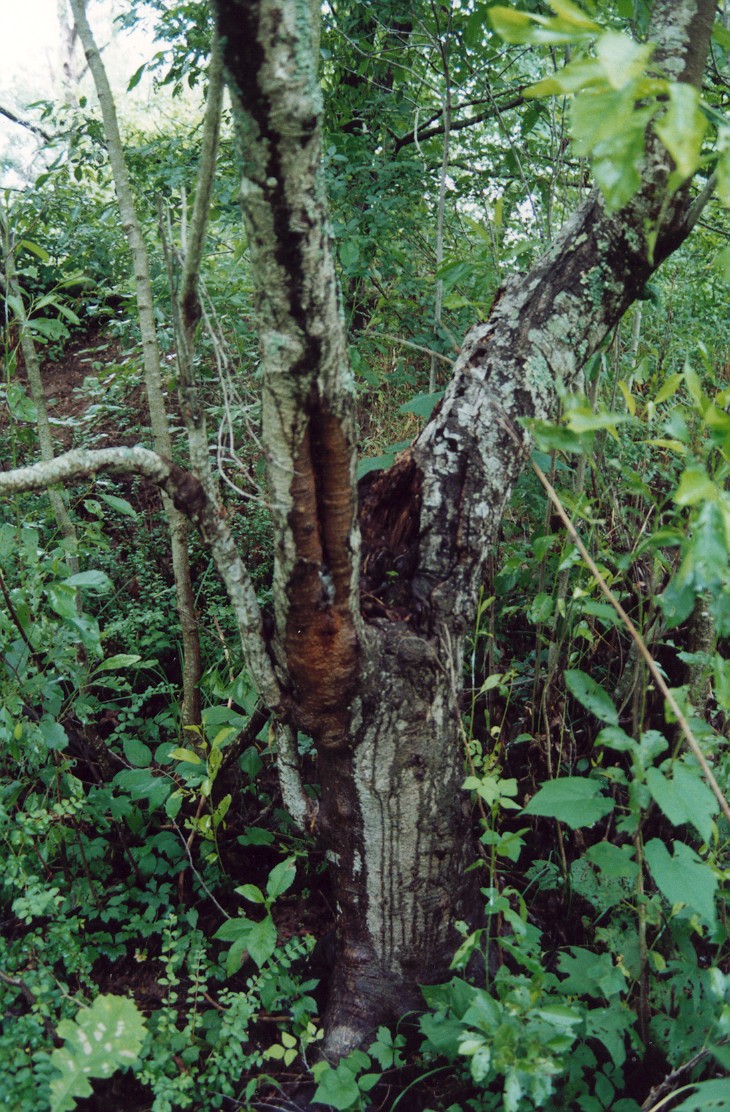
In the Oklahoma subspecies, seaside alders (Alnus maritima) grow in shallow water in the middle of the Blue River in south central Oklahoma. The Oklahoma seaside alder, unlike the other two populations, does not grow with hazel alders (Alnus serrulata); the nearest hazel alder population is about fifty miles to the east.
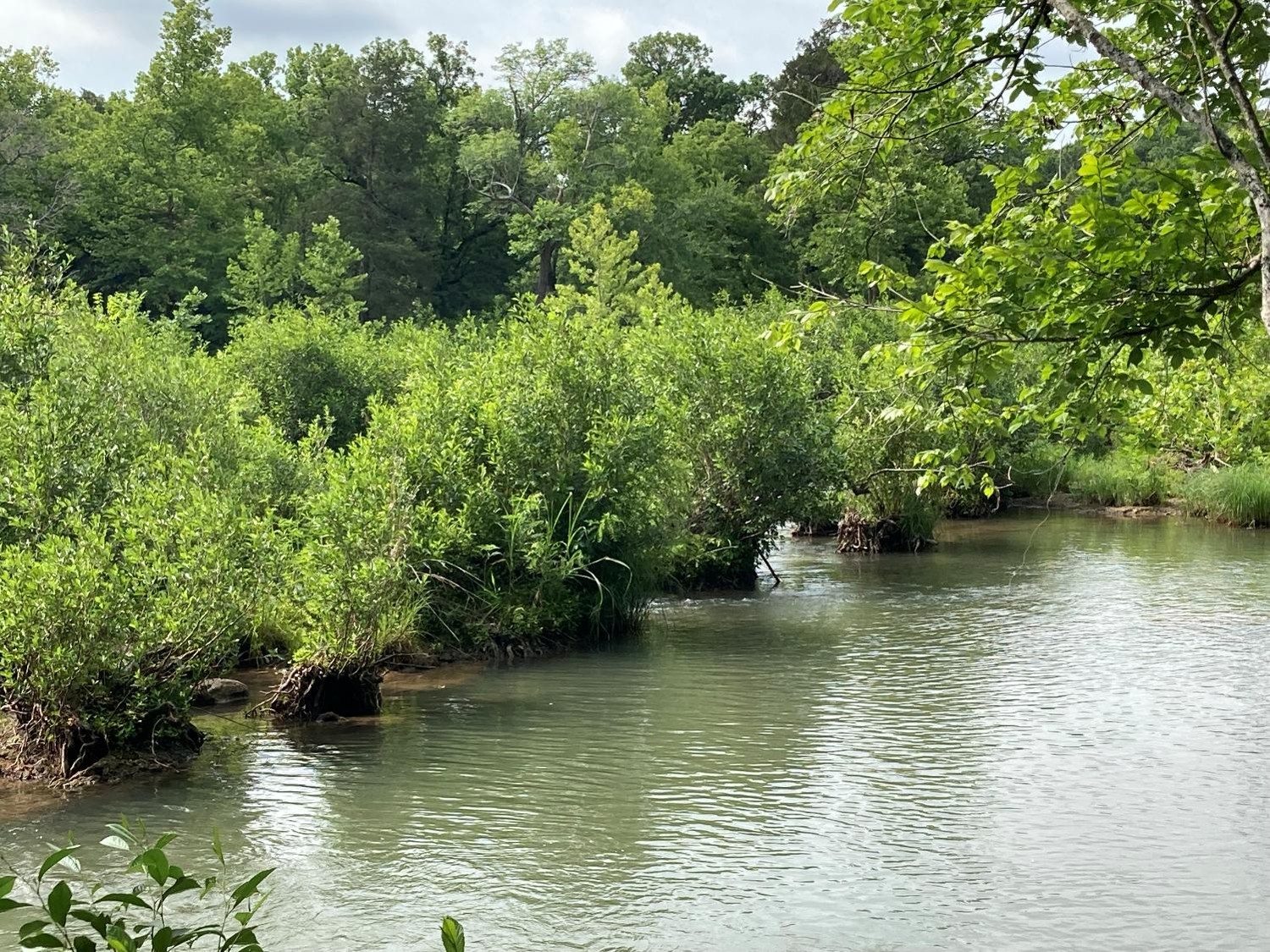
The seaside alders (Alnus maritima) in the Oklahoma subspecies create the islands of vegetation on which they live by holding in sediments and organic material in the Blue River, south central Oklahoma. Root microbes allow the alders to enrich the soil with nitrogen (nitrogen-fixing bacteria) and phosphorus (mycorrhizal fungi). The Oklahoma seaside alder, unlike the other two populations, does not grow with hazel alders (Alnus serrulata); the nearest hazel alder population is about fifty miles to the east.
A seaside alder clump (Delmarva subspecies) grows out in Trap Pond, Delaware. In Delmarva, seaside alders grow alongside hazel alders (Alnus serrulata).
Leaves of the Oklahoma subspecies of the seaside alder (Alnus maritima).
A seaside alder (Alnus maritima) clump in Hudson Pond, Delaware (Delmarva subspecies).
Seaside alders (Alnus maritima) in the Georgia subspecies create islands in ponds and swamps. They grow together with hazel alders, Alnus serrulata, but the hazel alders prefer the shade of other trees.
Most Oklahoma seaside alder trunks are repeatedly destroyed by, and regrow from, floods. But this alder is very old, being far upstream in a little creek. The trunk, though only a few decades old at most, is decaying while the tree is still alive.
A storm approaches across the shortgrass prairie of Nebraska.
An abandoned house in the shortgrass prairie of eastern Colorado, near Two Buttes.
Pinyon-juniper woodland in Arizona. This woodland is not a forest, which would have a continuous canopy covering. It is above the sagebrush zone but below the zone of ponderosa pines and douglas firs.
A southwest Minnesota wetland view.
Seeds of mangroves in Florida start to germinate before they fall from the parent tree, and they spear into the sand, where they take root.
Special effects photo of a sunset at Carhenge, near Alliance, Nebraska. Photo by Stan Rice.
Capulin Volcano is an extinct volcano in northeastern New Mexico surrounded by shortgrass prairie.