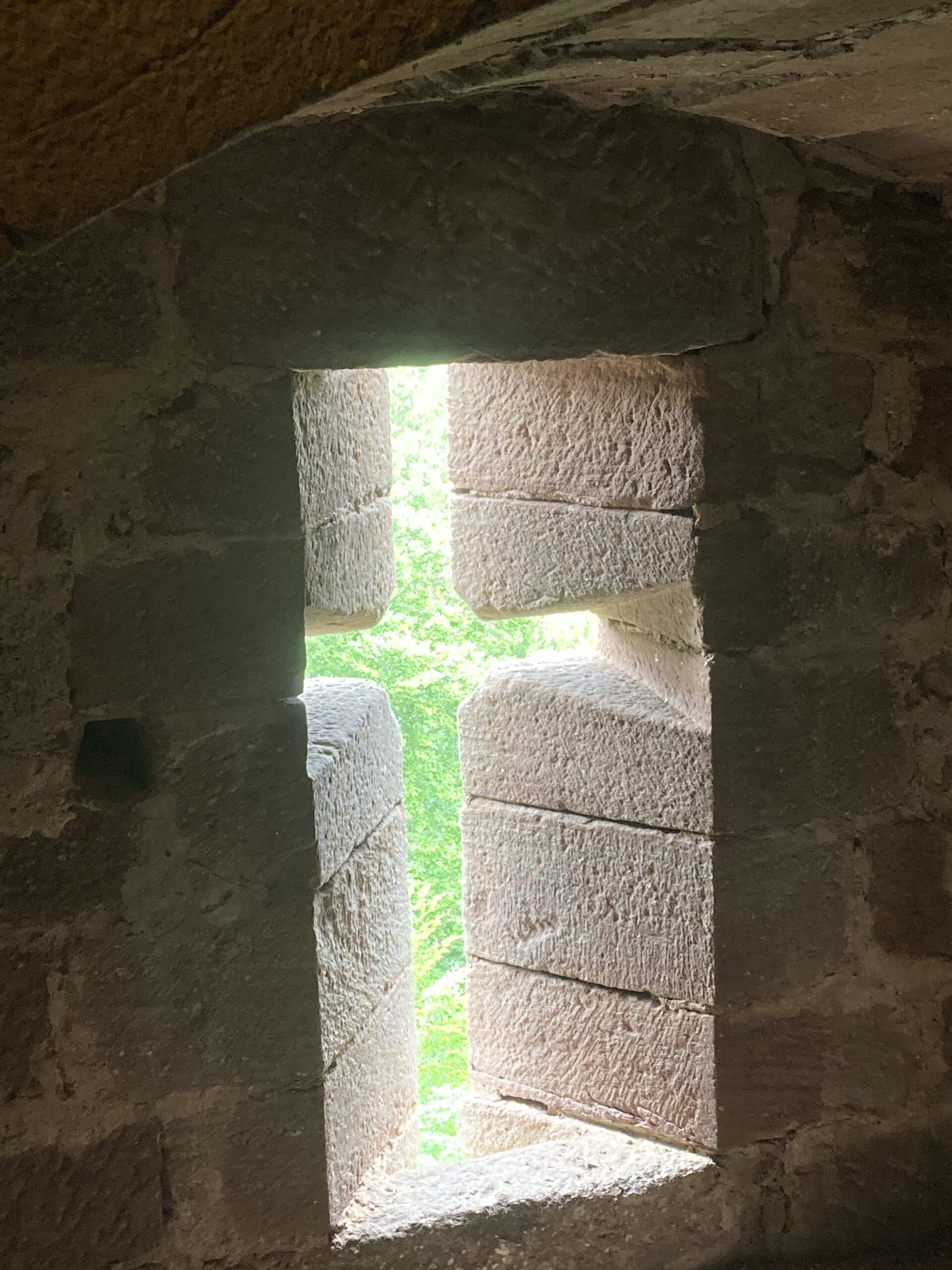
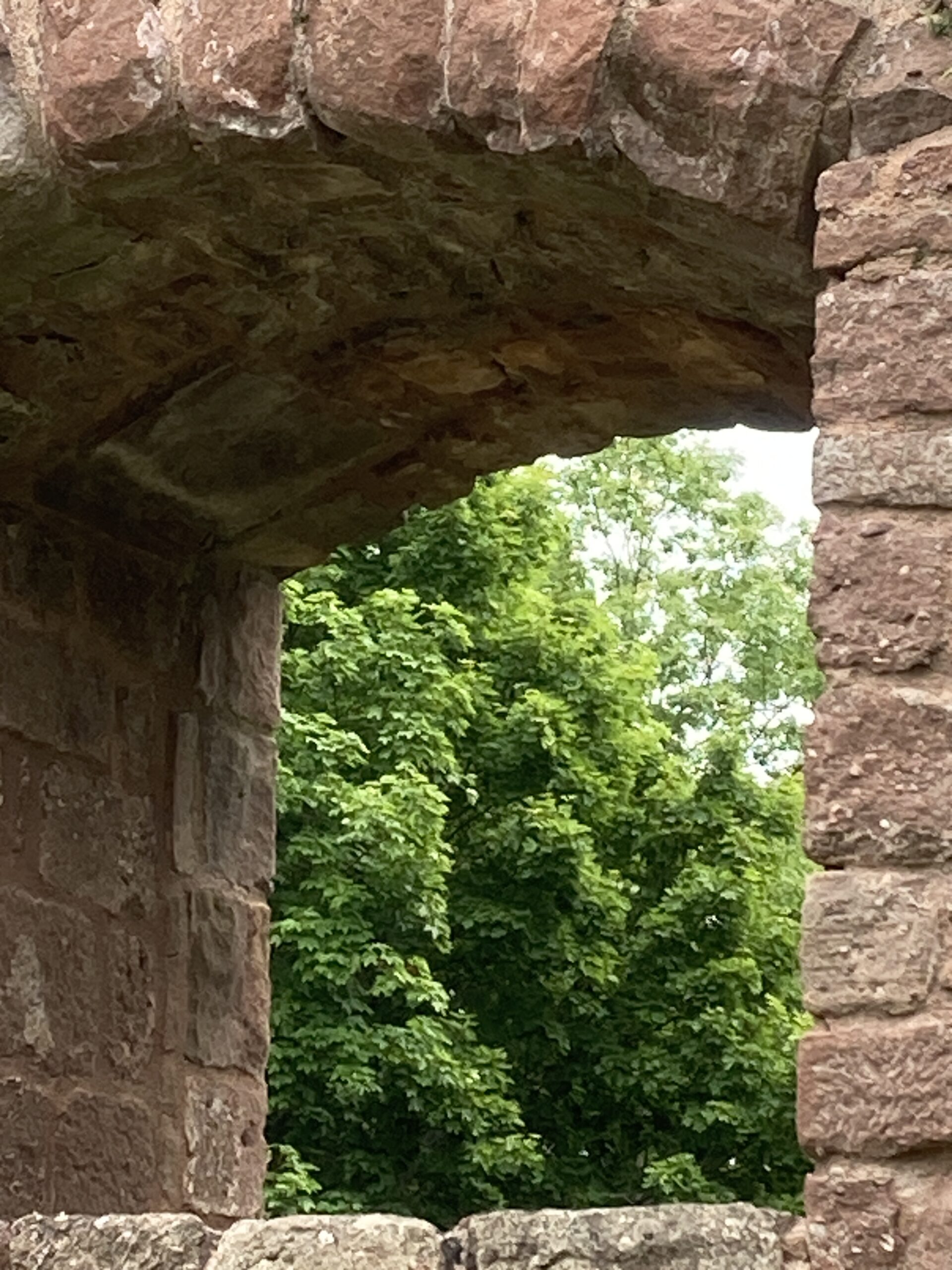
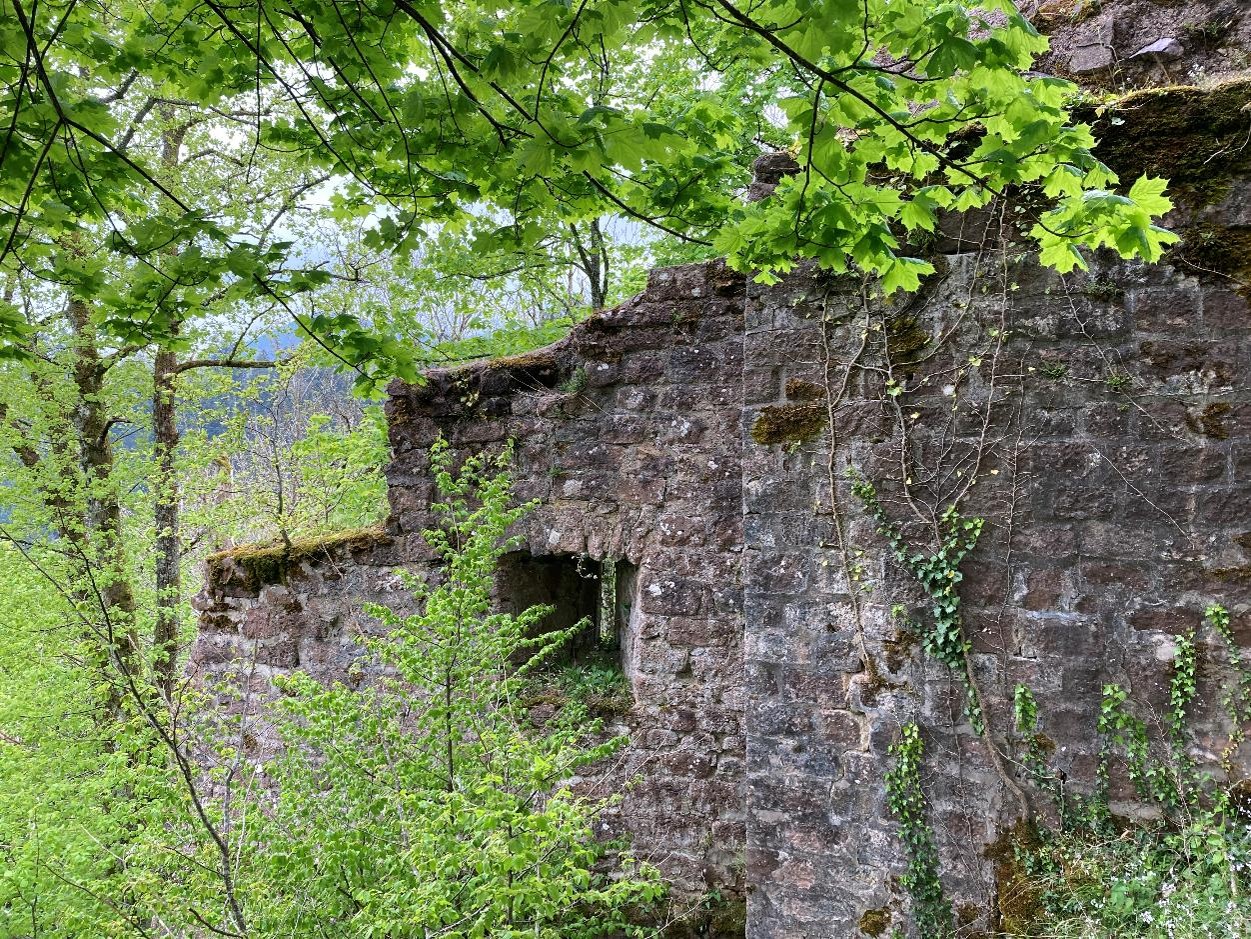
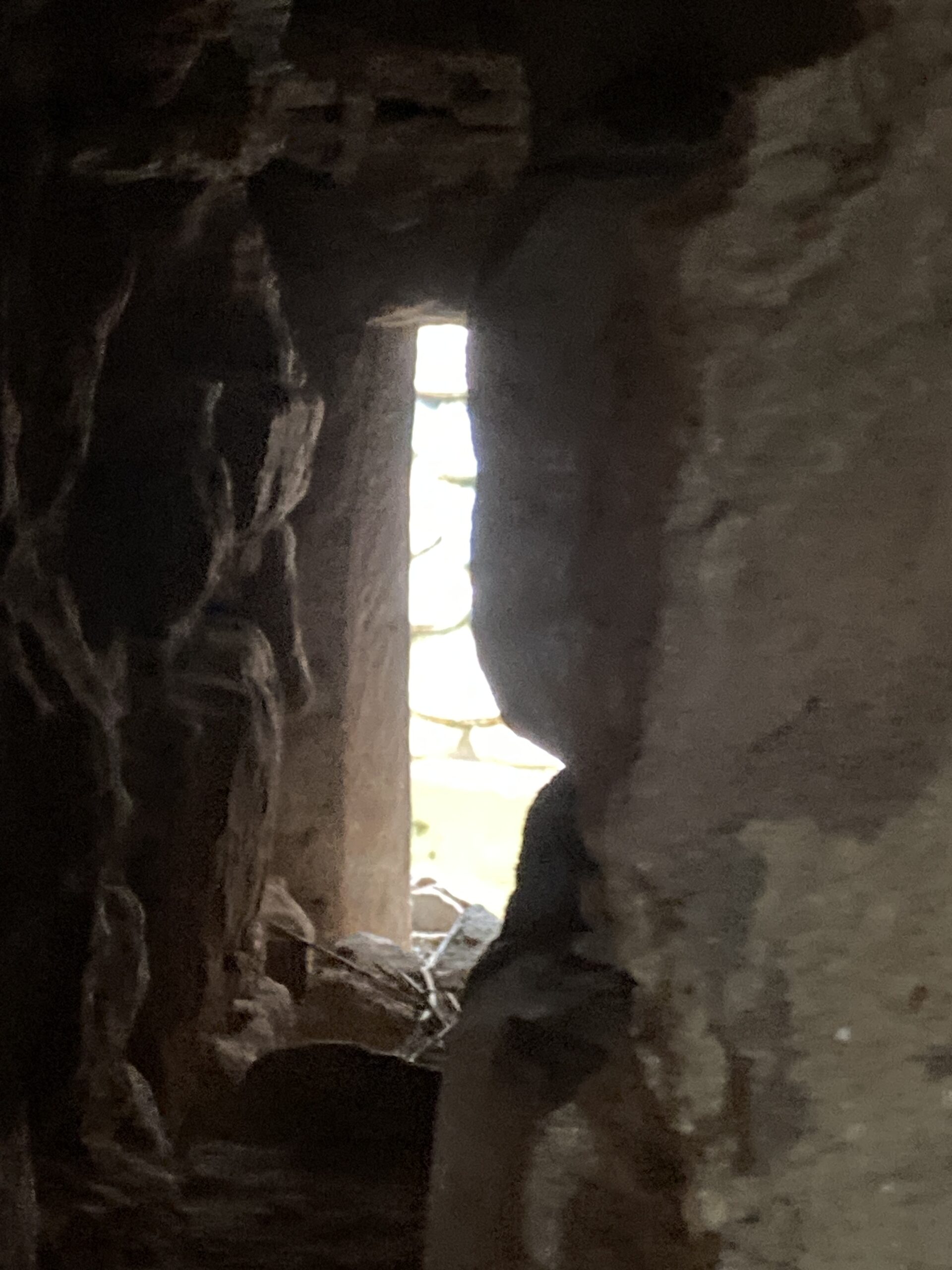
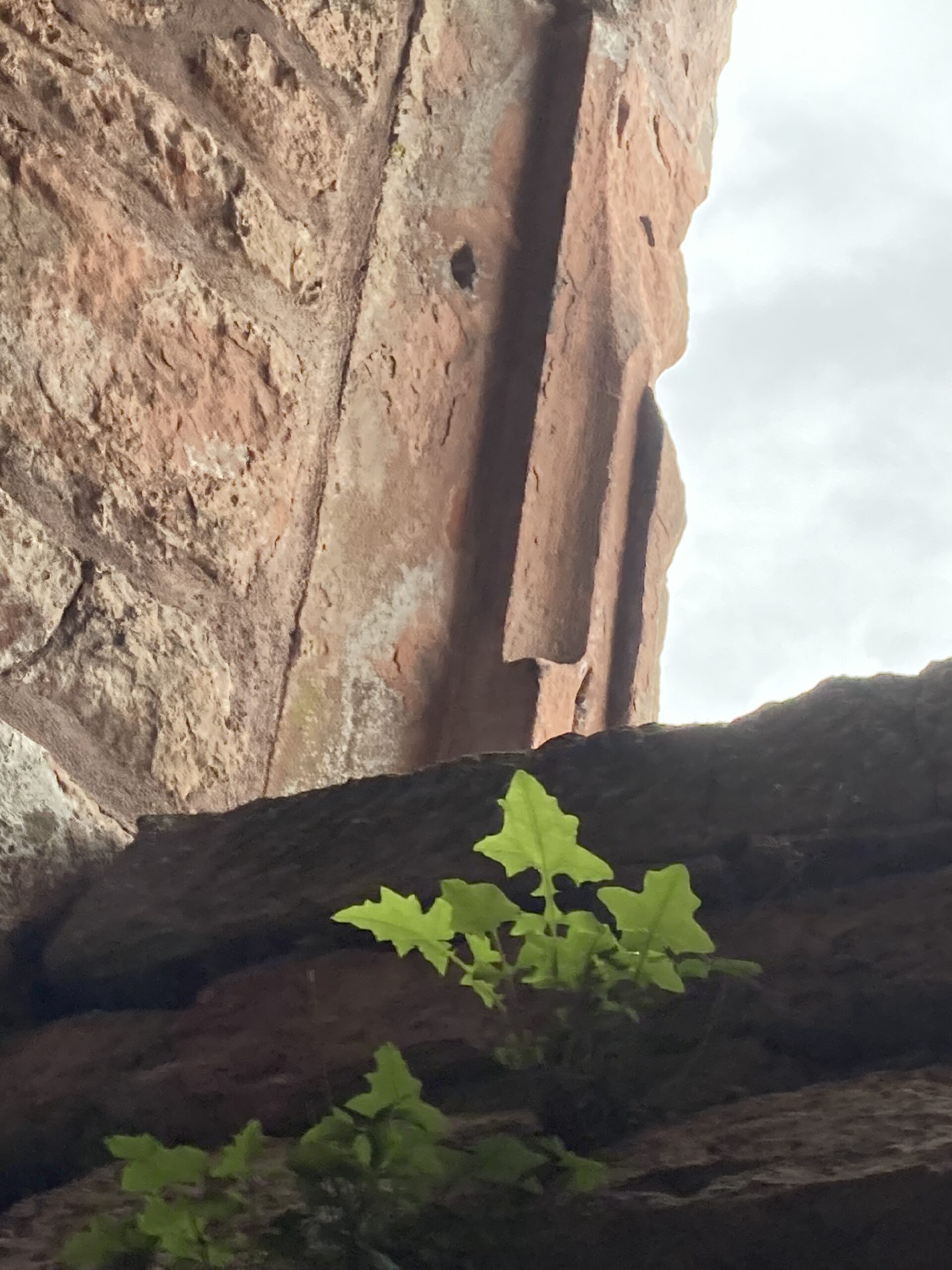
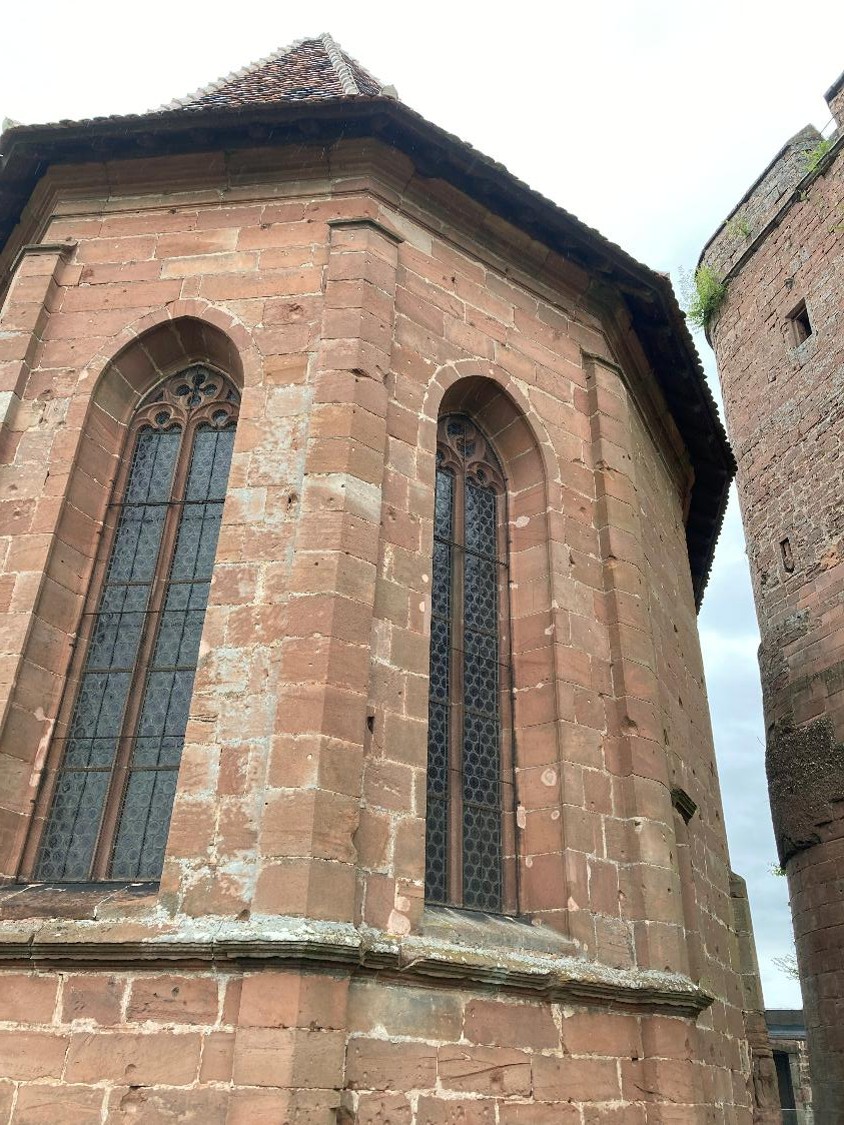
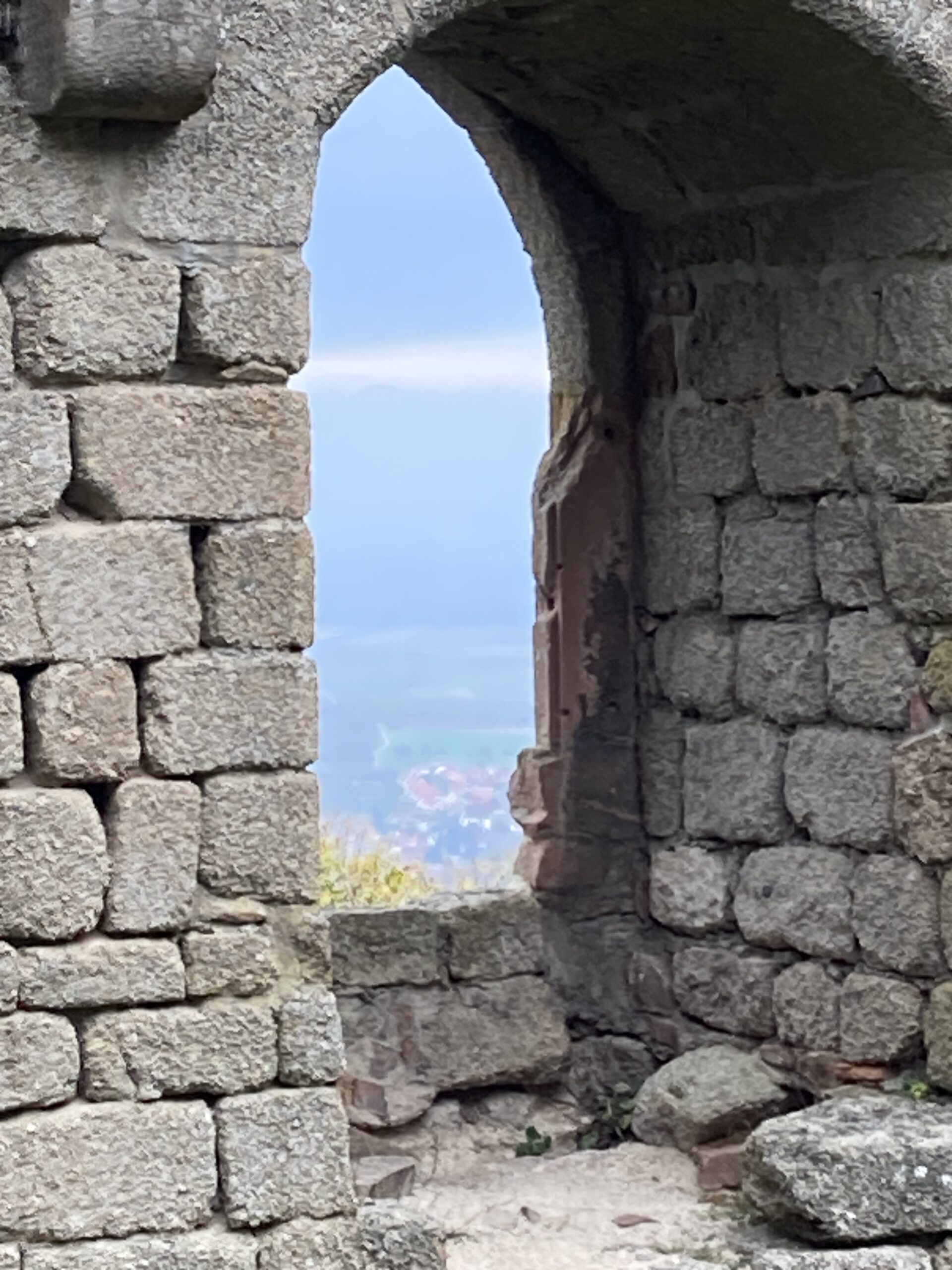
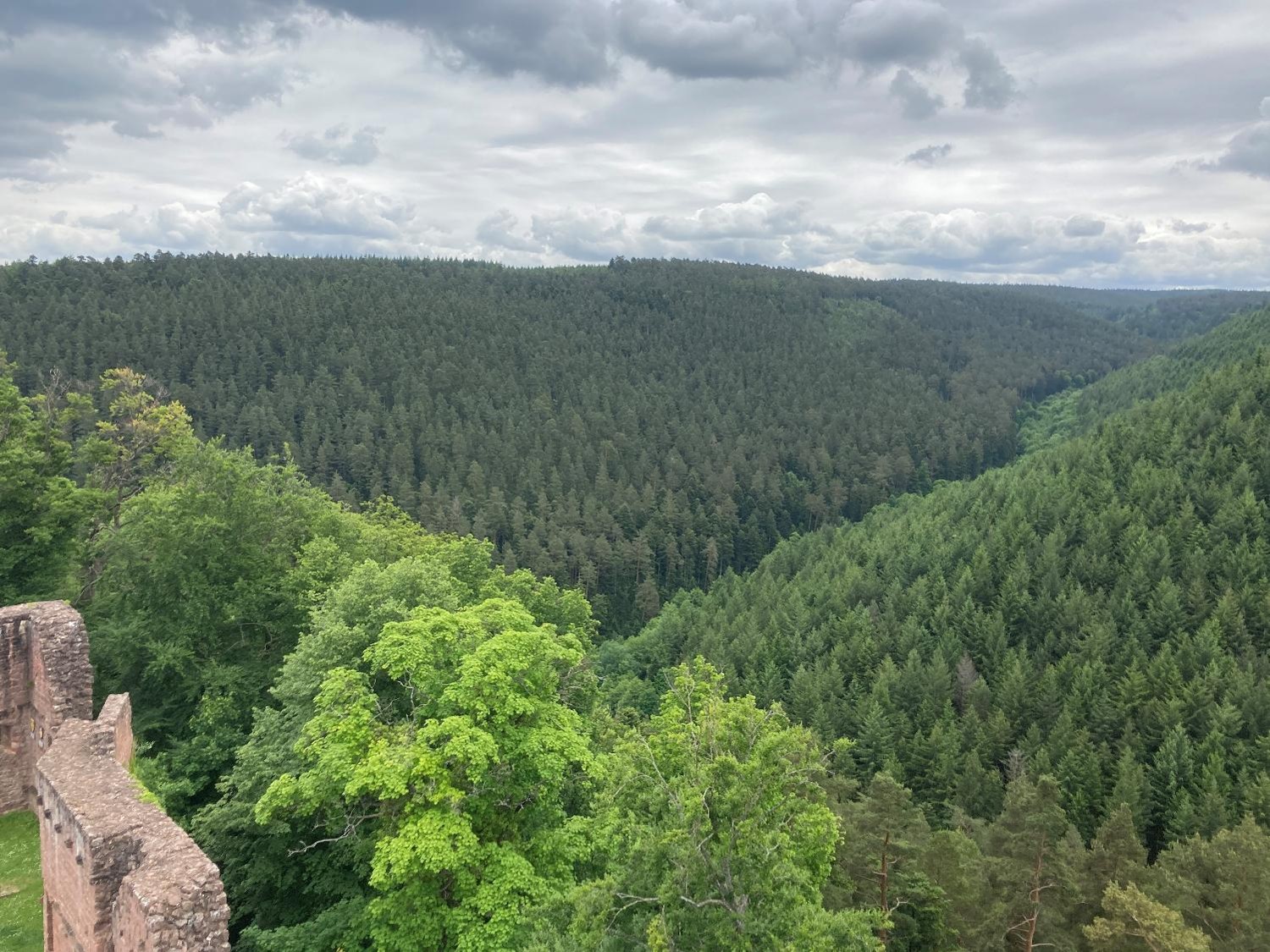
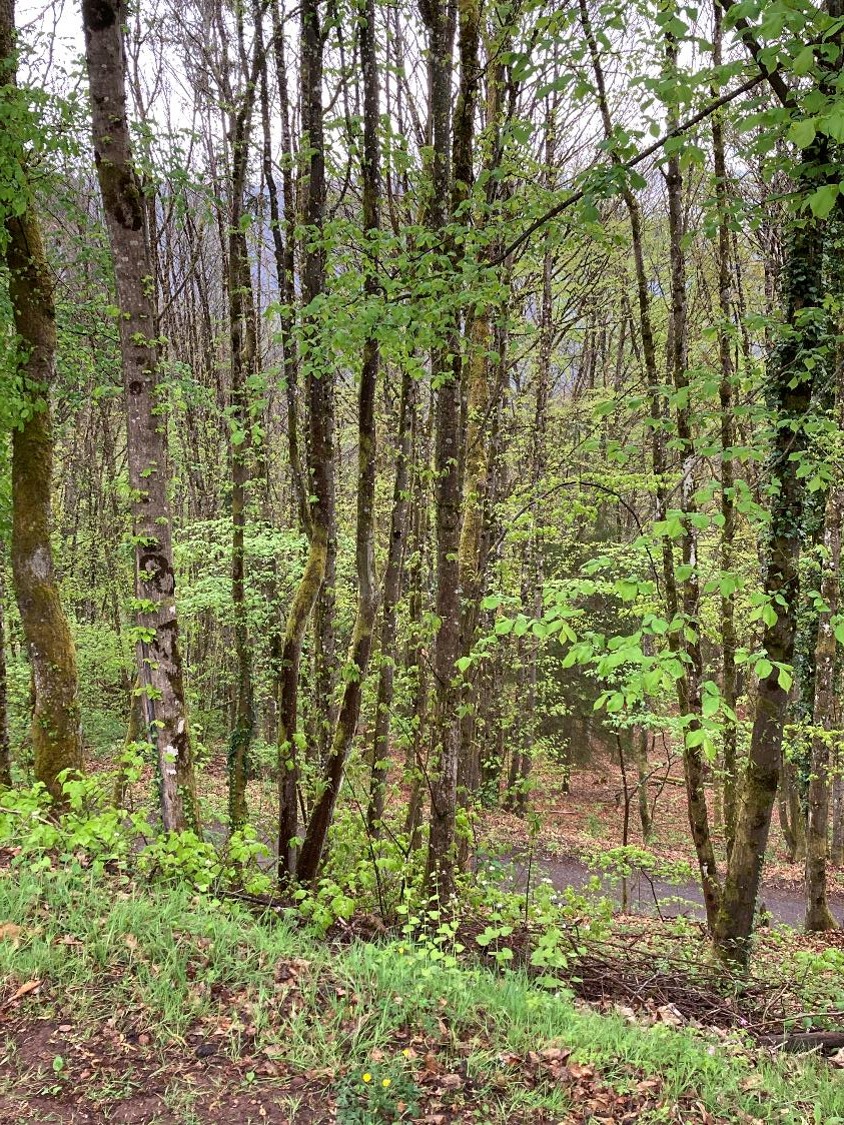
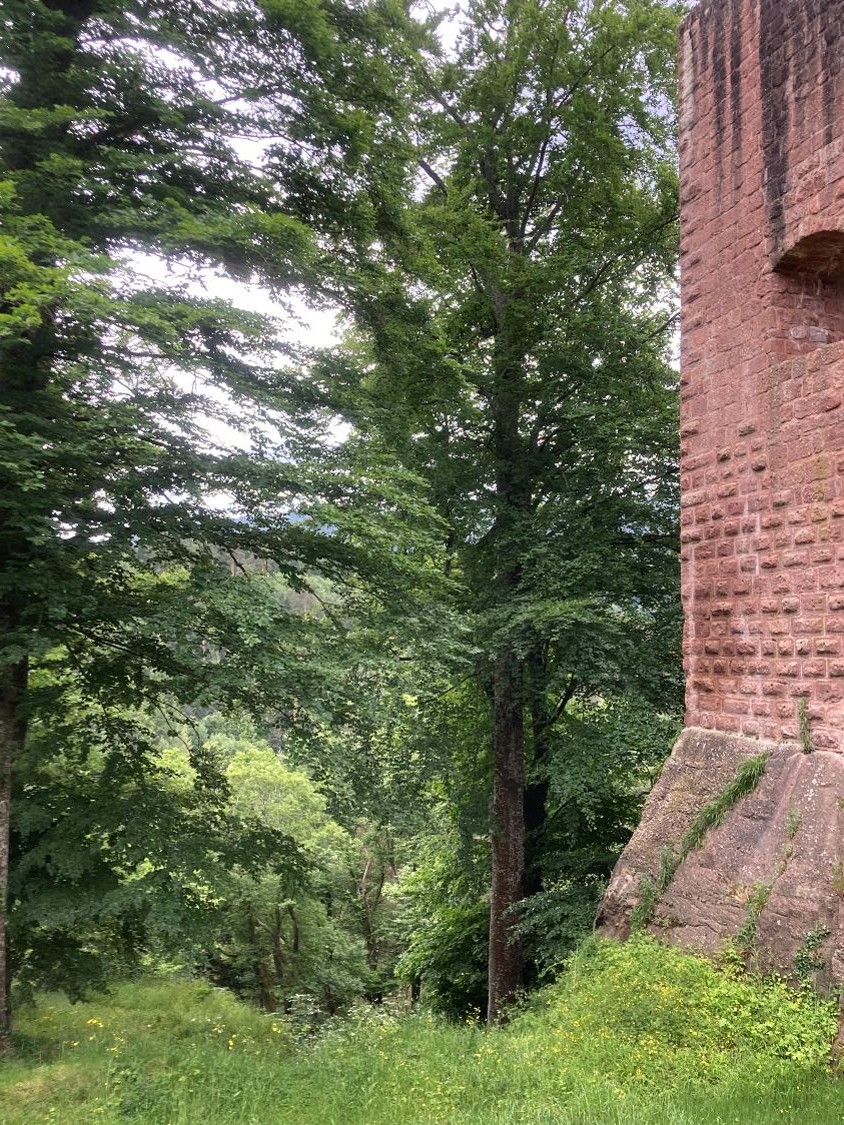
View of forest from window of Wangenbourg Castle, Alsace.
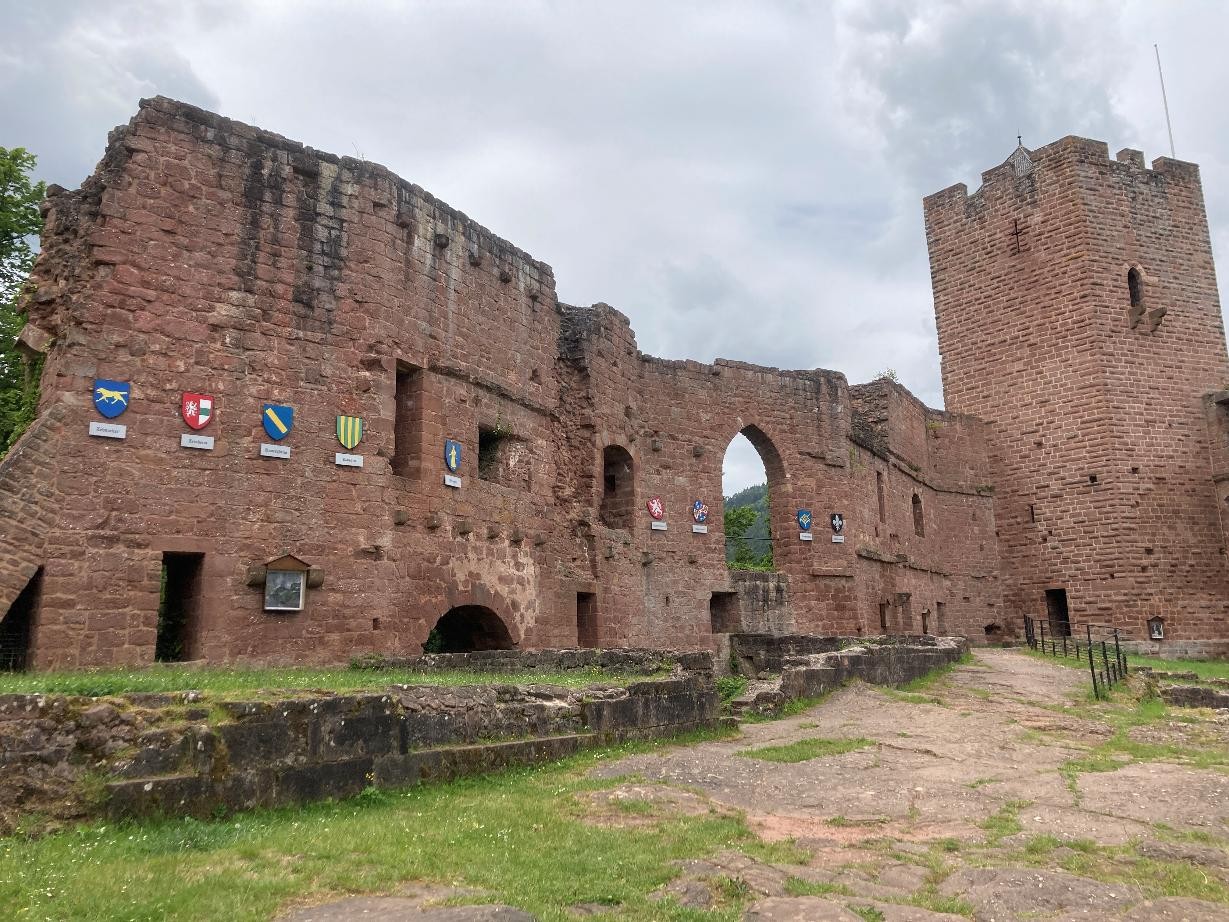
Wangenbourg Castle, Alsace.
View of forest from window of Wangenbourg Castle, Alsace.
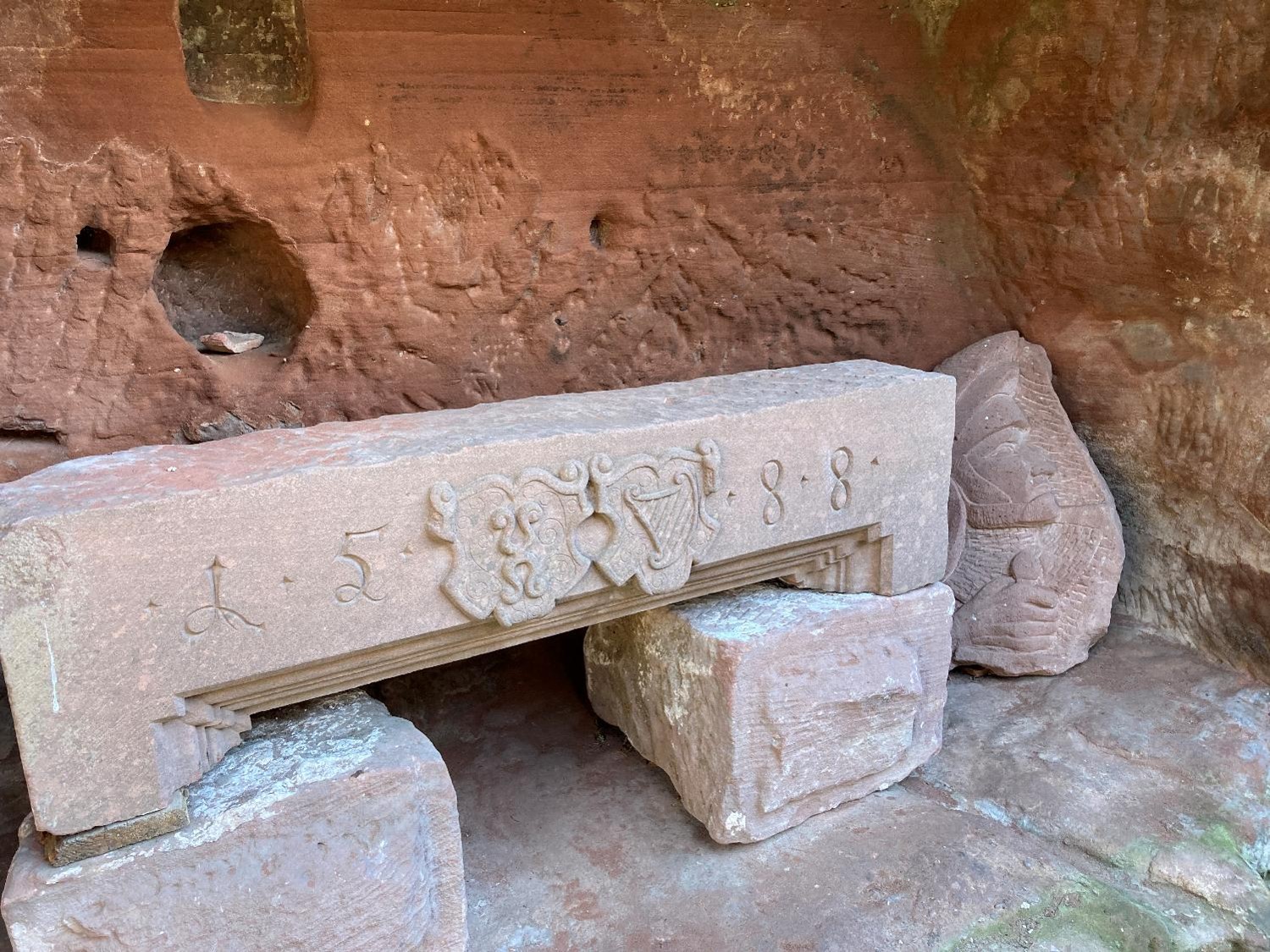
Schoeneck castle cornerstone, 1588, Alsace.
Nideck castle tower, Alsace.
Nideck castle ruins, Alsace.
Lichtenberg Castle, Alsace.
Fort Rapp-Moltke, Alsace. Used by the French army in the Franco-Prussian War.
Inside tunnels of Fort Rapp-Moltke, Alsace. Used by the French army in the Franco-Prussian War.
Forest through window of Andlau Castle, Alsace.
View through window of Andlau Castle, Alsace.
Andlau Castle, Alsace.
French Political Posters
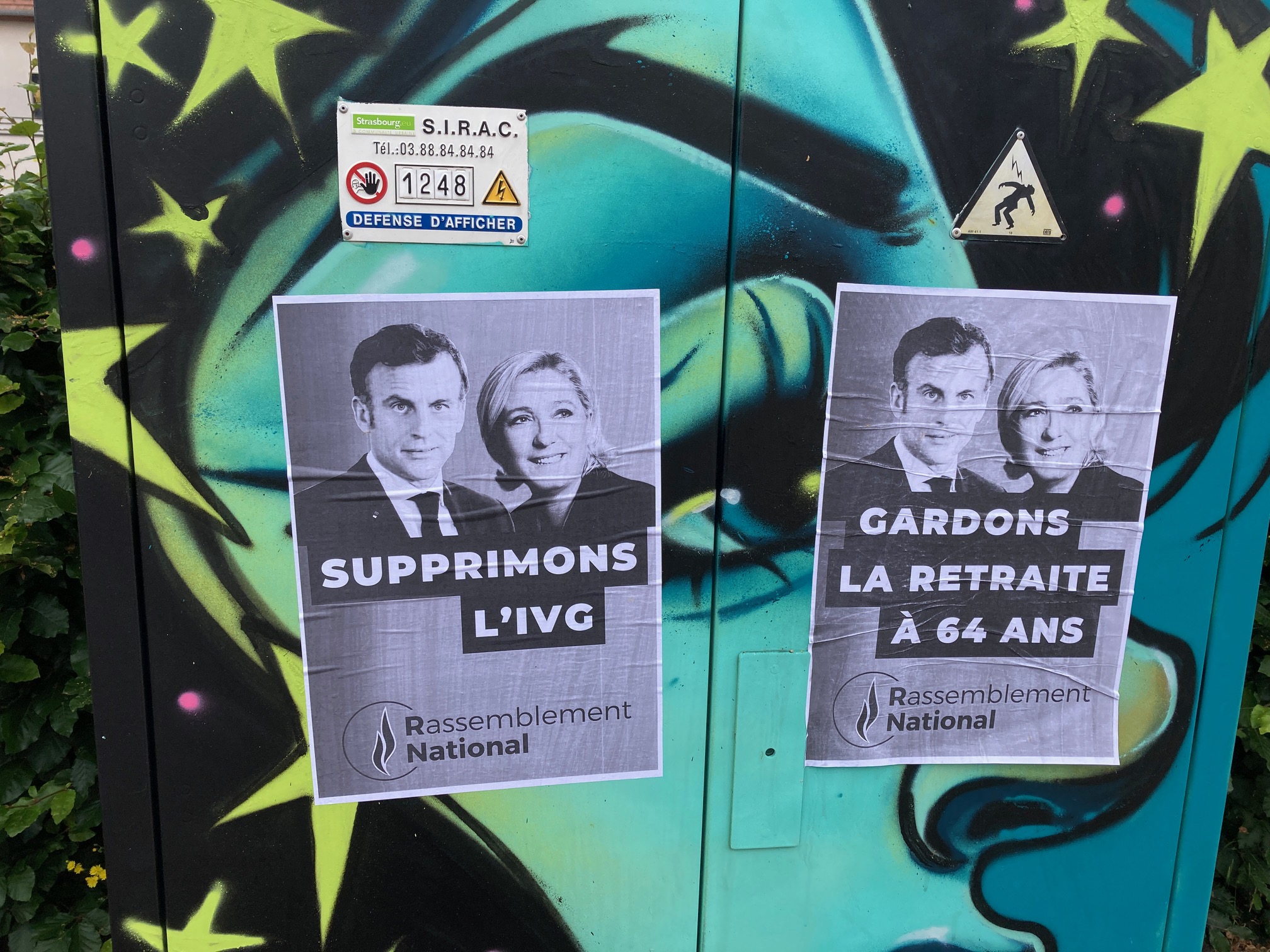
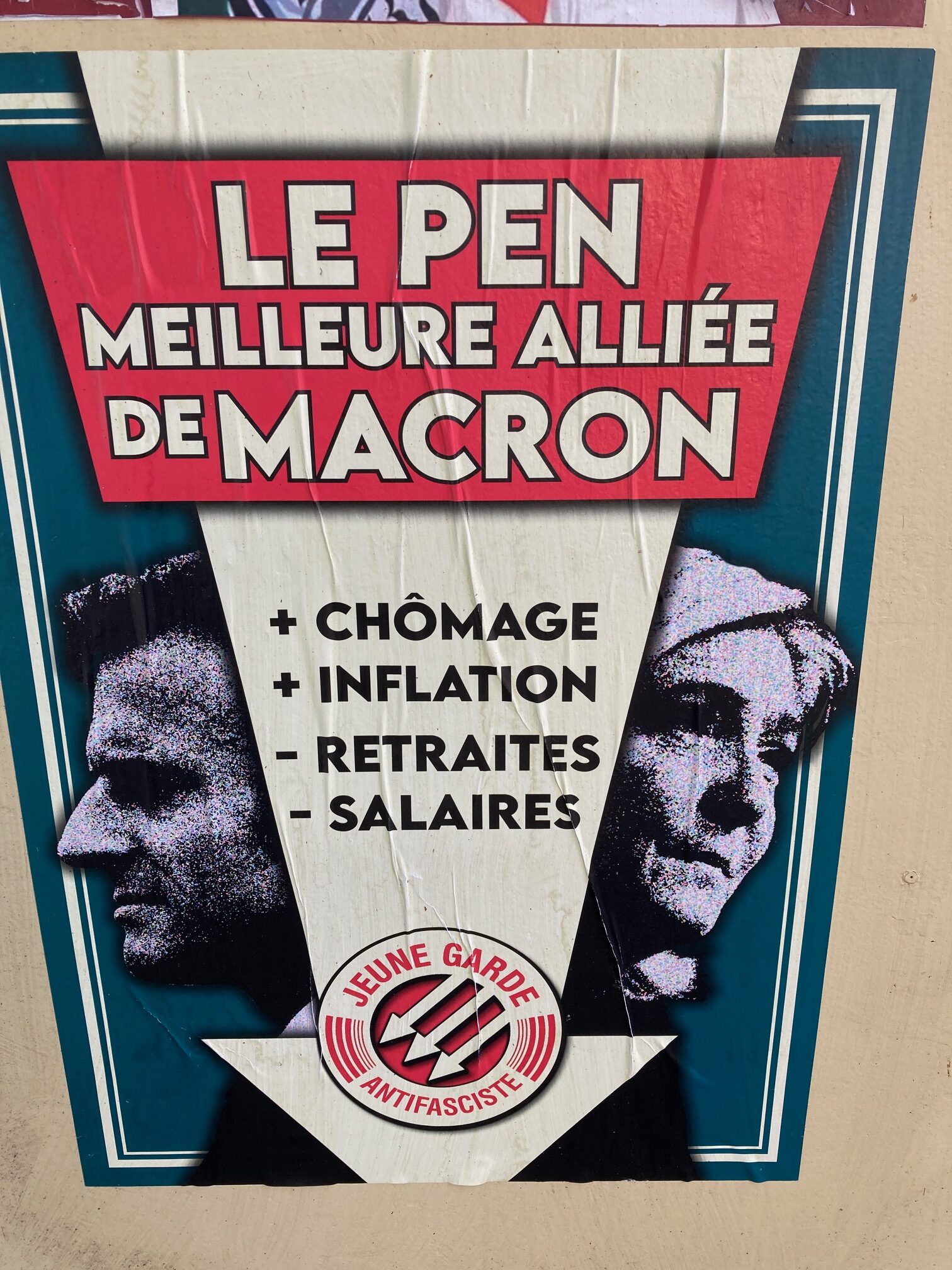
Right-wing political posters in Hoenheim, north of Strasbourg, 2024. Emmanuel Macron is centrist, Marine Le Pen is far right, but both appear on this poster of the far-right Rassemblement National (formerly Front Nationale) campaigning to keep the retirement age at 64 years rather than reducing it to 60 years, as the liberals demanded. Notice the plaque prohibiting posters (defense d’aficher).
Political poster of the “Antifasciste Jeune Garde” (Anti-fascist Young Guard) who associate centrist Emmanuel Macron with the far-right Marine Le Pen, claiming that the centrist-right position will result in more unemployment (chomage) and inflation, and hurt retirement (retraites) and salaries.
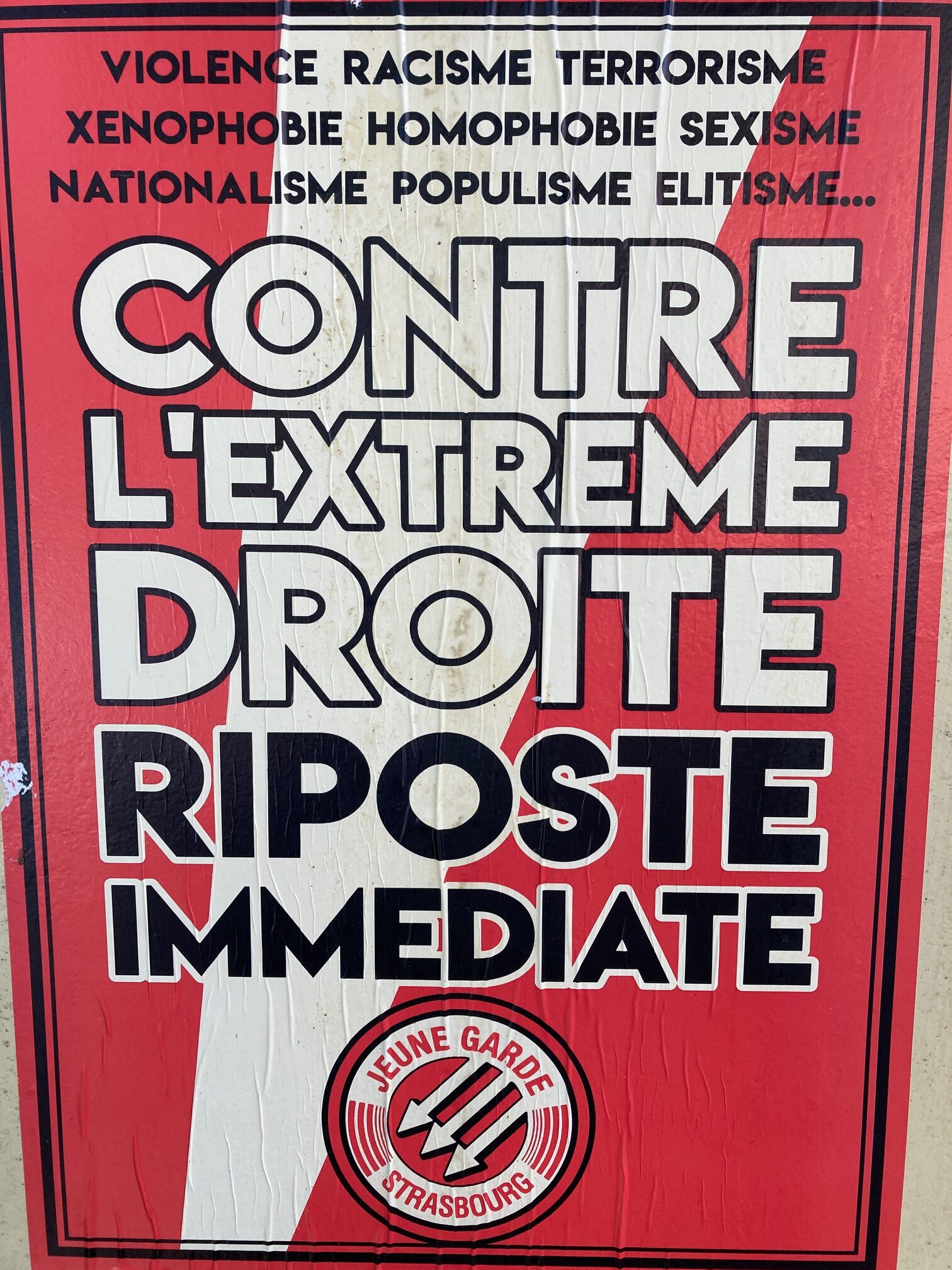
After mid-2024 elections, the right wing gained a lot of power in France, and the Young Guard of Strasbourg demanded immediate action against them, accusing them of a list of evils including violence, racism, terrorism, being homophobes, being xenophobes, elitists, and sexist. The political left gained in the next set of elections.
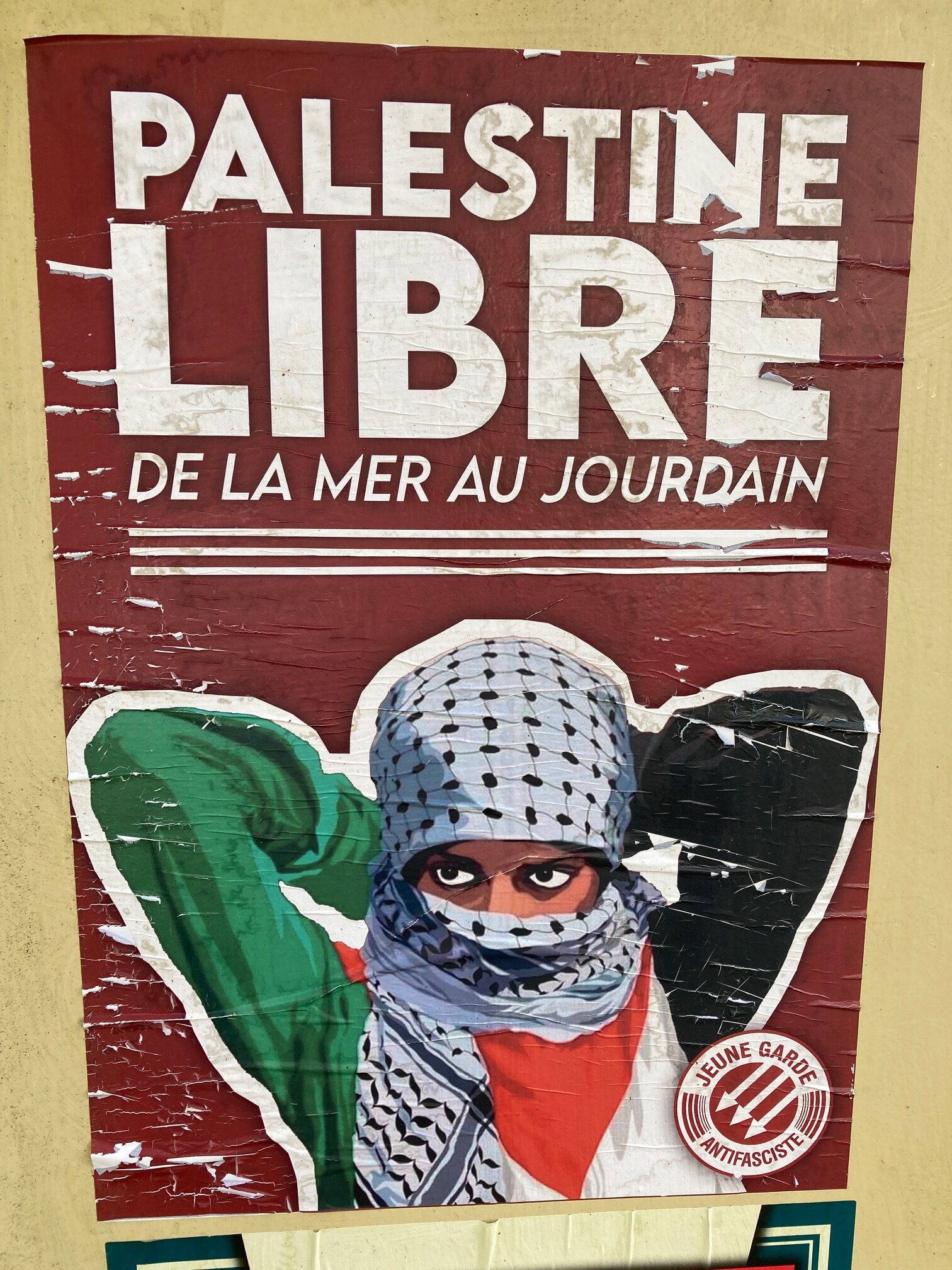
A Pro-Palestinian poster during the 2024 elections in France, calling for a free Palestine from Jordan to the sea. This poster does not call for terrorism but, to some, it implies it. Later, Prime Minister Macron called for the recognition of a Palestinian state.
A 2024 poster from the Esperanto Party, which promotes the adoption of Esperanto as a common language in European countries. It claims this move is just, effective, easy, and ethical. This party did not win any seats in the French or European parliaments.
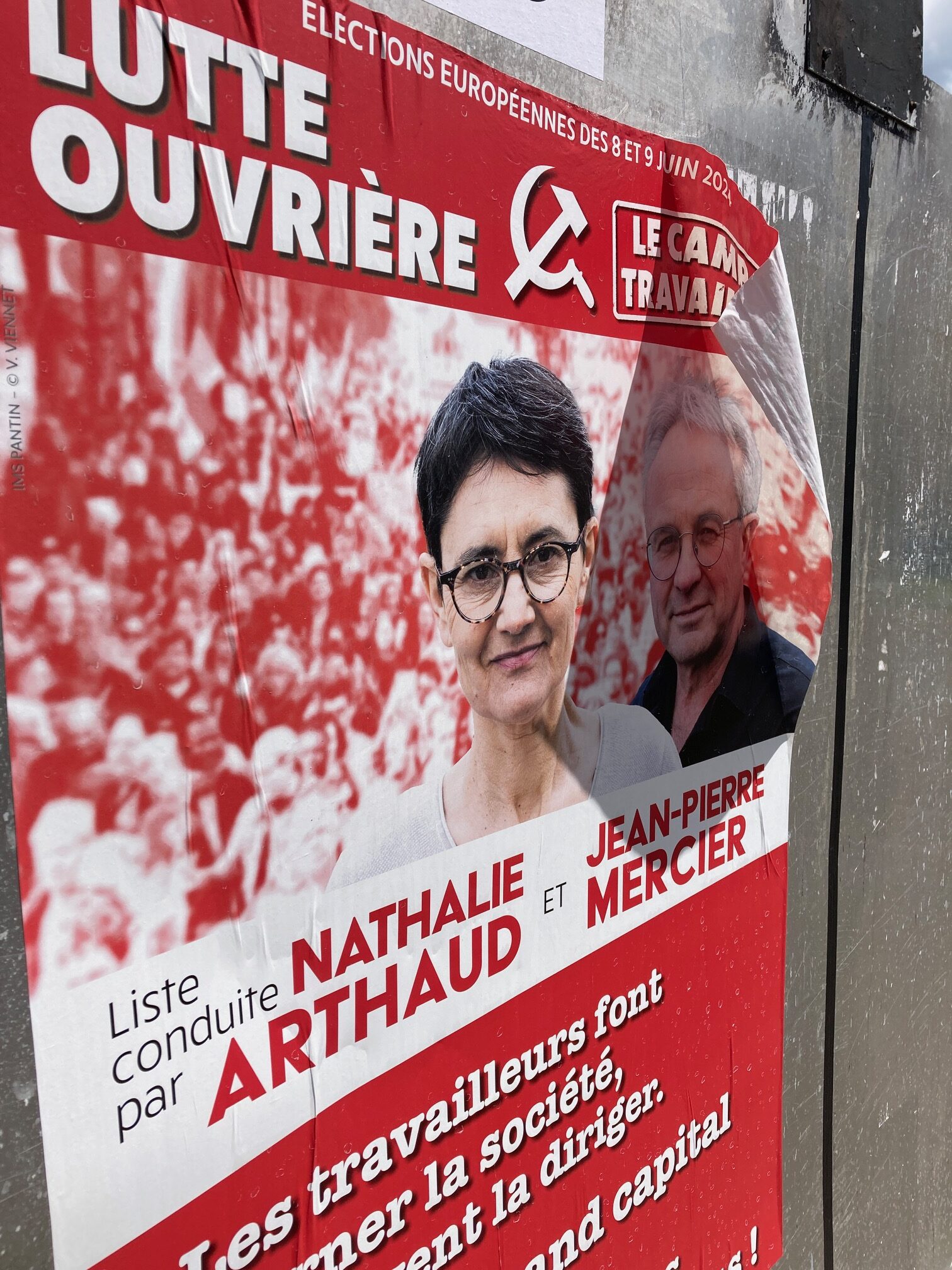
French Communist Party candidates in 2024. The communists remained a minor political group in France. The workers’ struggle! (Lutte ouvriere).
The Animal Rights Party in France made no progress in the 2024 elections.
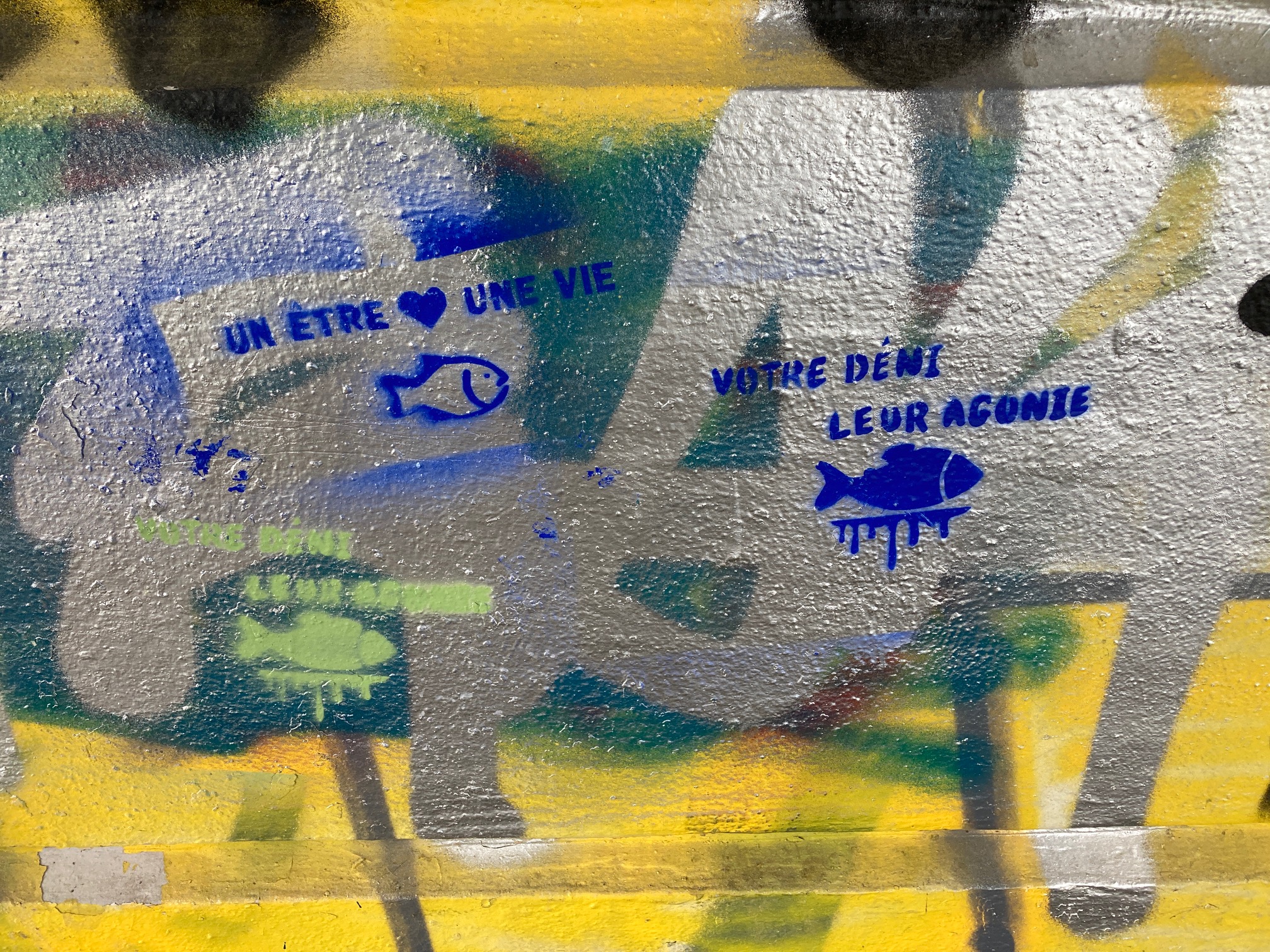
Graffiti along the Canal Marne-au-Rhine in Hoenheim in 2024, where anglers sometimes fish. The graffiti says “Your denial, their agony” and “A life, a being.”
Graphic Cigarette Packs France
A graphic cigarette pack thrown on the ground in Hoenheim, north of Strasbourg, France. Most cigarettes come from Germany, where they are cheaper because they are taxed less than in France. Germany is just over the bridge from Strasbourg. There are a lot of smokers in France, who seem undeterred by the images, and who also disproportionately throw litter on the ground. Was tut man? The sad woman on this pack implies that smoking causes disabilities.
A graphic cigarette pack thrown on the ground in Hoenheim, north of Strasbourg, France. Most cigarettes come from Germany, where they are cheaper because they are taxed less than in France. Germany is just over the bridge from Strasbourg. There are a lot of smokers in France, who seem undeterred by the images, and who also disproportionately throw litter on the ground. Was tut man? The sad man on this pack has just had his “Potenz” (sexual potency) taken away by smoking.
“Smoking causes 9 out of 10 lung cancers.” A graphic cigarette pack thrown on the ground in Hoenheim, north of Strasbourg, France. Most cigarettes come from Germany, where they are cheaper because they are taxed less than in France. Germany is just over the bridge from Strasbourg. There are a lot of smokers in France, who seem undeterred by the images, and who also disproportionately throw litter on the ground. Was tut man? The sad man on this pack has had lung cancer surgery.
“Smoking provokes cardiac crises.” A graphic cigarette pack thrown on the ground in Hoenheim, north of Strasbourg, France. Most cigarettes come from Germany, where they are cheaper because they are taxed less than in France. Germany is just over the bridge from Strasbourg. There are a lot of smokers in France, who seem undeterred by the images, and who also disproportionately throw litter on the ground. Was tut man? The sad man on this pack is having his heart restarted..
“Smoking augments the risk of impotency,” in both French and German. A graphic cigarette pack thrown on the ground in Hoenheim, north of Strasbourg, France. Most cigarettes come from Germany, where they are cheaper because they are taxed less than in France. Germany is just over the bridge from Strasbourg. There are a lot of smokers in France, who seem undeterred by the images, and who also disproportionately throw litter on the ground. Was tut man? The sad man on this pack might as well have his potency destroyed.
I’m not sure how to translate this other than “Smoking fucks up your lungs.” A graphic cigarette pack thrown on the ground in Hoenheim, north of Strasbourg, France. Most cigarettes come from Germany, where they are cheaper because they are taxed less than in France. Germany is just over the bridge from Strasbourg. There are a lot of smokers in France, who seem undeterred by the images, and who also disproportionately throw litter on the ground. Was tut man? The image compares a healthy lung vs. a smoker’s lung.
“Smoking provokes mouth and neck cancer,” in French. The figure shows tongue cancer. A graphic cigarette pack thrown on the ground in Hoenheim, north of Strasbourg, France. Most cigarettes come from Germany, where they are cheaper because they are taxed less than in France. Germany is just over the bridge from Strasbourg. There are a lot of smokers in France, who seem undeterred by the images, and who also disproportionately throw litter on the ground. Was tut man?
“Smoking causes strokes and disabilities,” in German. A graphic cigarette pack thrown on the ground in Hoenheim, north of Strasbourg, France. Most cigarettes come from Germany, where they are cheaper because they are taxed less than in France. Germany is just over the bridge from Strasbourg. There are a lot of smokers in France, who seem undeterred by the images, and who also disproportionately throw litter on the ground. Was tut man? The sad woman has just lost her lover to a stroke.
“Smoking causes 9 out of 10 lung cancers.” A graphic cigarette pack thrown on the ground in Hoenheim, north of Strasbourg, France. Most cigarettes come from Germany, where they are cheaper because they are taxed less than in France. Germany is just over the bridge from Strasbourg. There are a lot of smokers in France, who seem undeterred by the images, and who also disproportionately throw litter on the ground. Was tut man? The picture shows lung surgery in progress.
“Smoking clogs your arteries.” A graphic cigarette pack thrown on the ground in Hoenheim, north of Strasbourg, France. Most cigarettes come from Germany, where they are cheaper because they are taxed less than in France. Germany is just over the bridge from Strasbourg. There are a lot of smokers in France, who seem undeterred by the images, and who also disproportionately throw litter on the ground. Was tut man? The picture shows arterial stitches on extremities.
A graphic cigarette pack thrown on the ground in Hoenheim, north of Strasbourg, France. Most cigarettes come from Germany, where they are cheaper because they are taxed less than in France. Germany is just over the bridge from Strasbourg. There are a lot of smokers in France, who seem undeterred by the images, and who also disproportionately throw litter on the ground. Was tut man?
A graphic cigarette pack thrown on the ground in Hoenheim, north of Strasbourg, France. Most cigarettes come from Germany, where they are cheaper because they are taxed less than in France. Germany is just over the bridge from Strasbourg. There are a lot of smokers in France, who seem undeterred by the images, and who also disproportionately throw litter on the ground. Was tut man? The little kid is learning that it is OK to smoke because he sees his Mom doing it.
A graphic cigarette pack thrown on the ground in Hoenheim, north of Strasbourg, France. Most cigarettes come from Germany, where they are cheaper because they are taxed less than in France. Germany is just over the bridge from Strasbourg. There are a lot of smokers in France, who seem undeterred by the images, and who also disproportionately throw litter on the ground. Was tut man? Do you want to cough up blood like this woman?
North of Strasbourg
Moonset in Hoenheim north of Strasbourg.
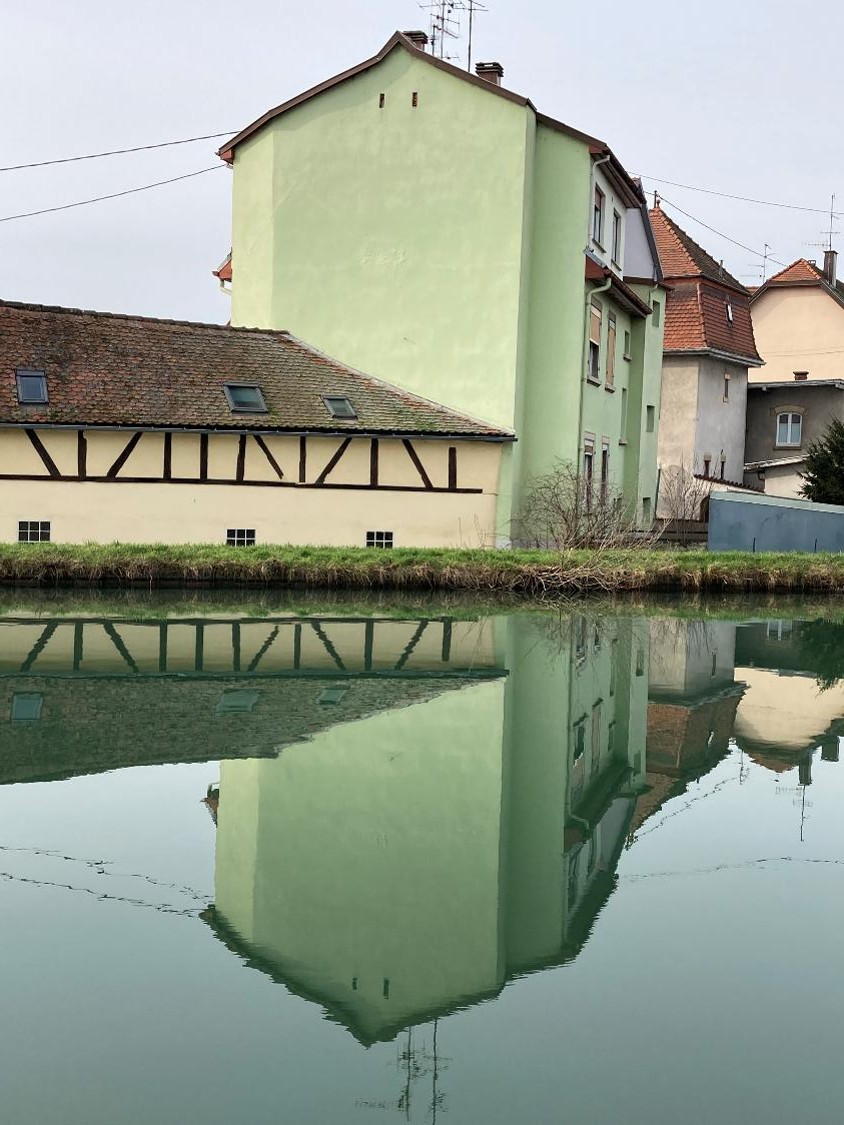
Buildings along the Canal Marne-au-Rhin, north of Strasbourg.
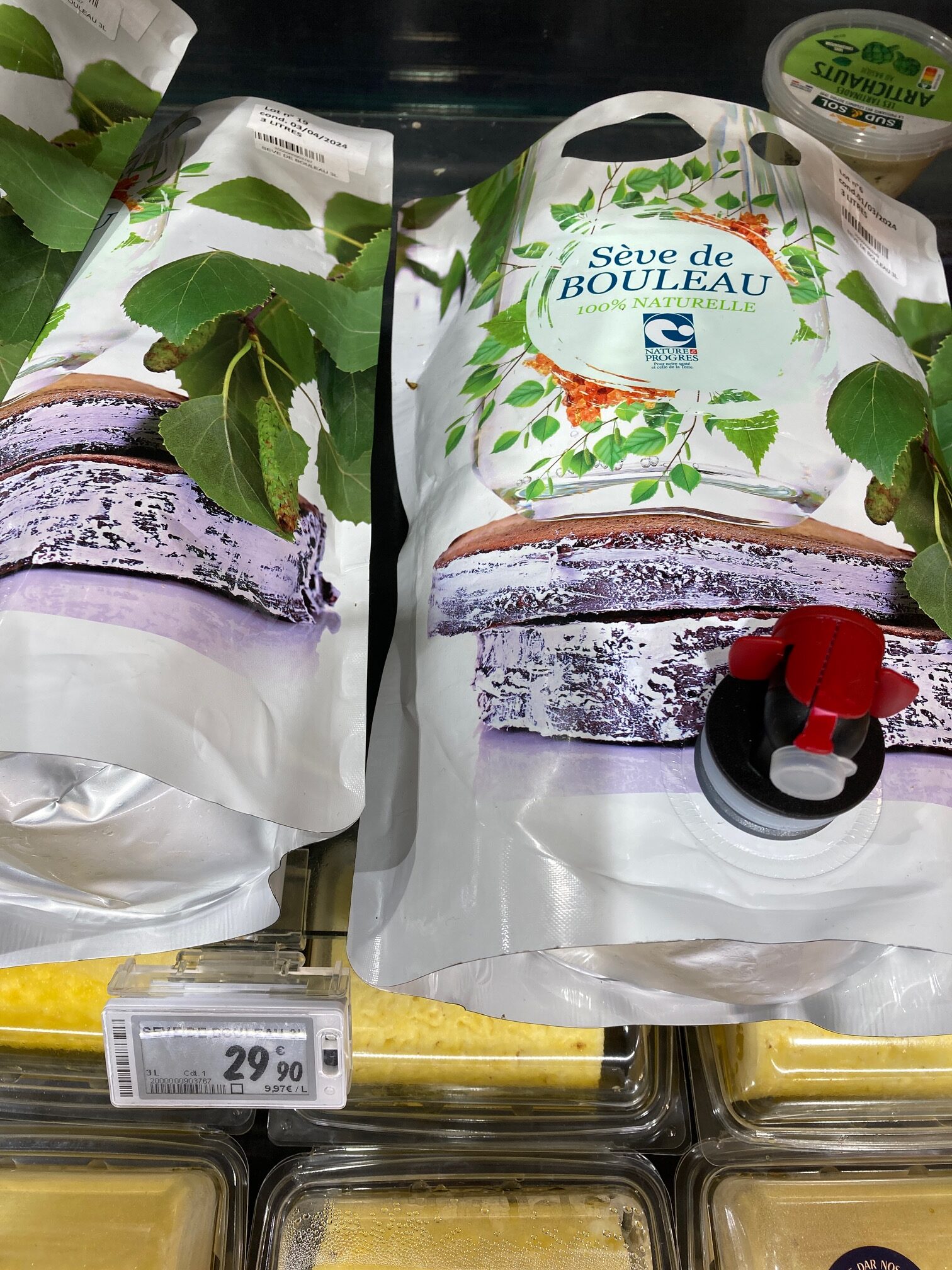
You too can drink birch sap (seve de bouleau) for only 10 euros a liter (30 euros a package). It is just water that has been filtered by the endodermis of birch roots. Supermarket in Hoenheim, north of Strasbourg.
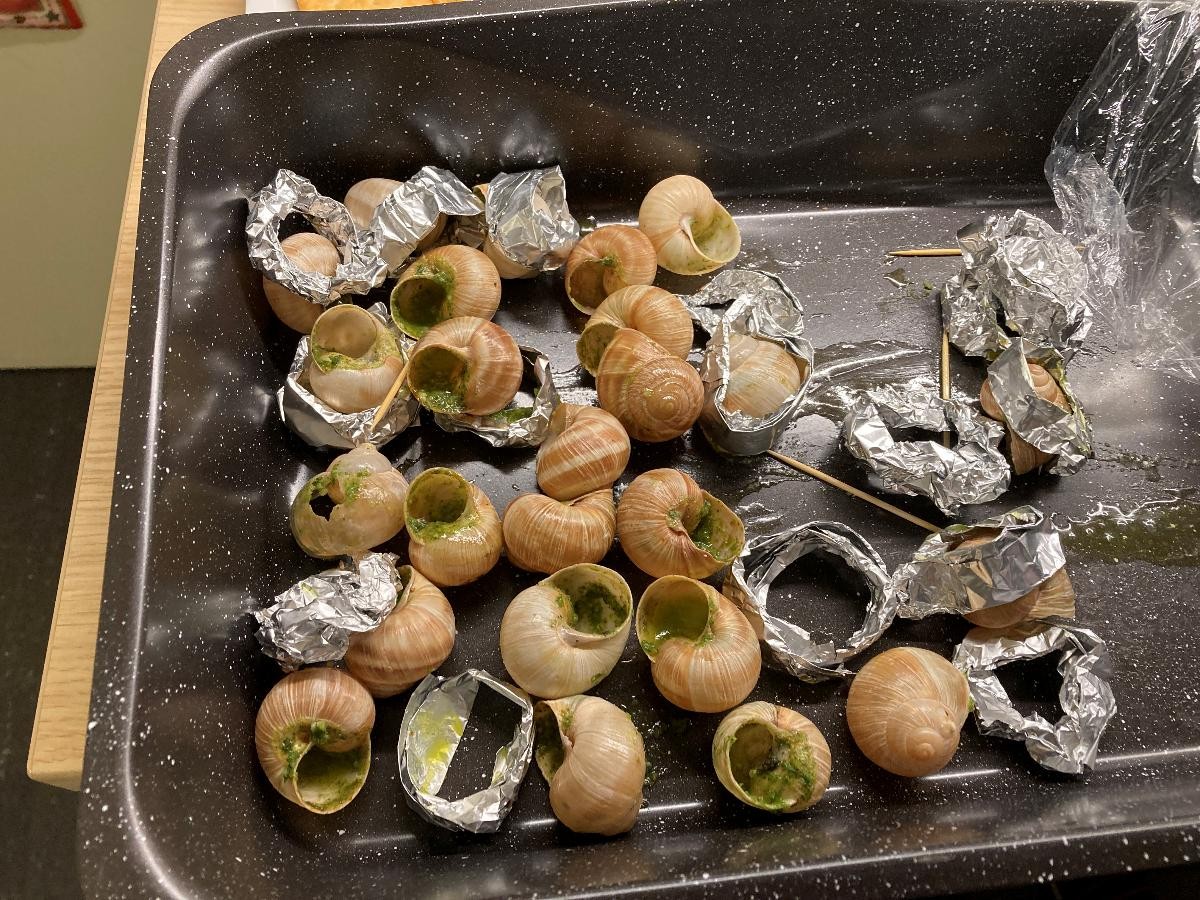
Yes the French do eat snails (with butter and parsley).
A war memorial park in Schiltigheim, north of Strasbourg, France. Which war? There have been a lot of them.
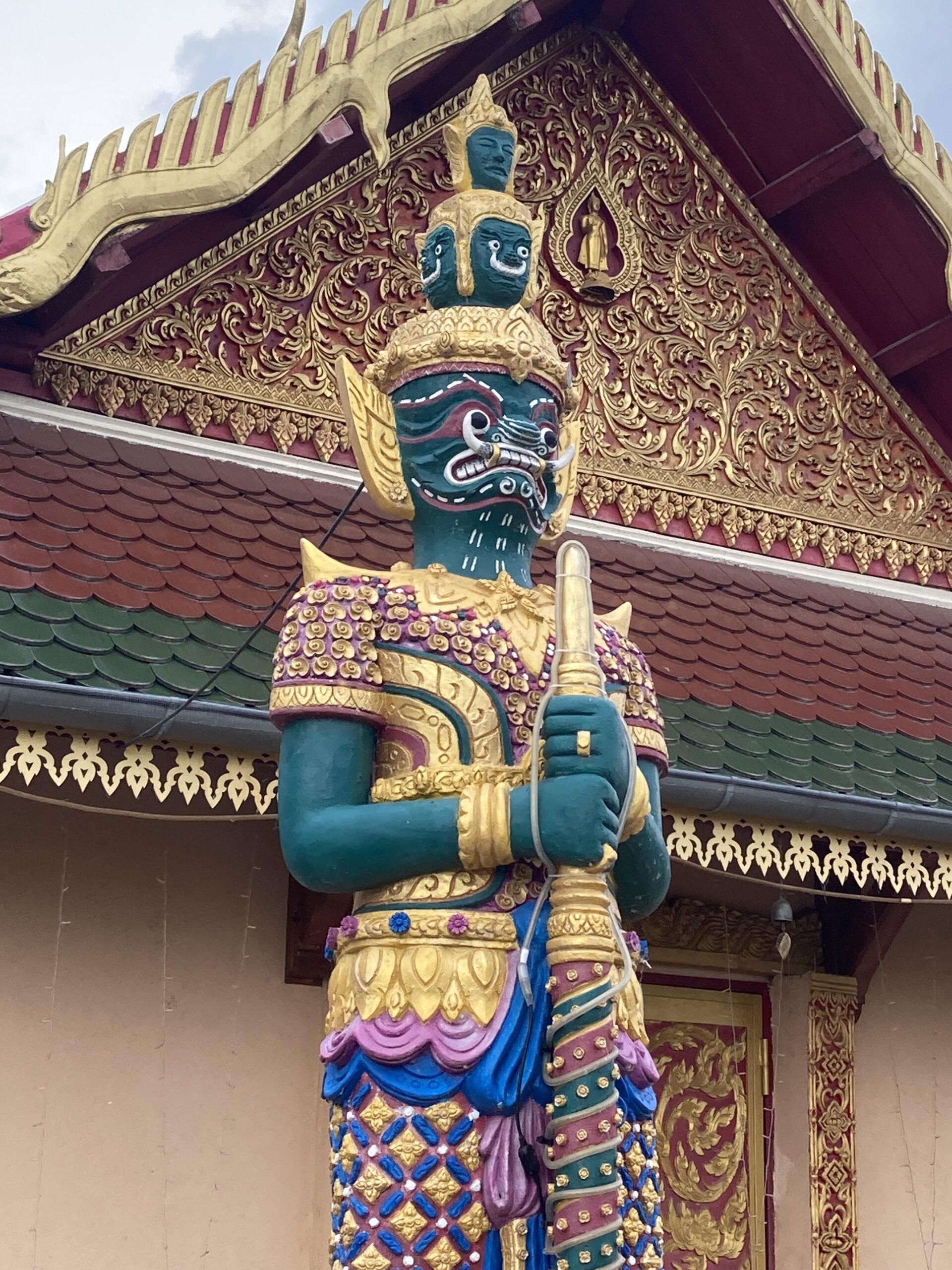
There is a Cambodian Buddhist temple outside of Souffelweyersheim, north of Strasbourg, France.
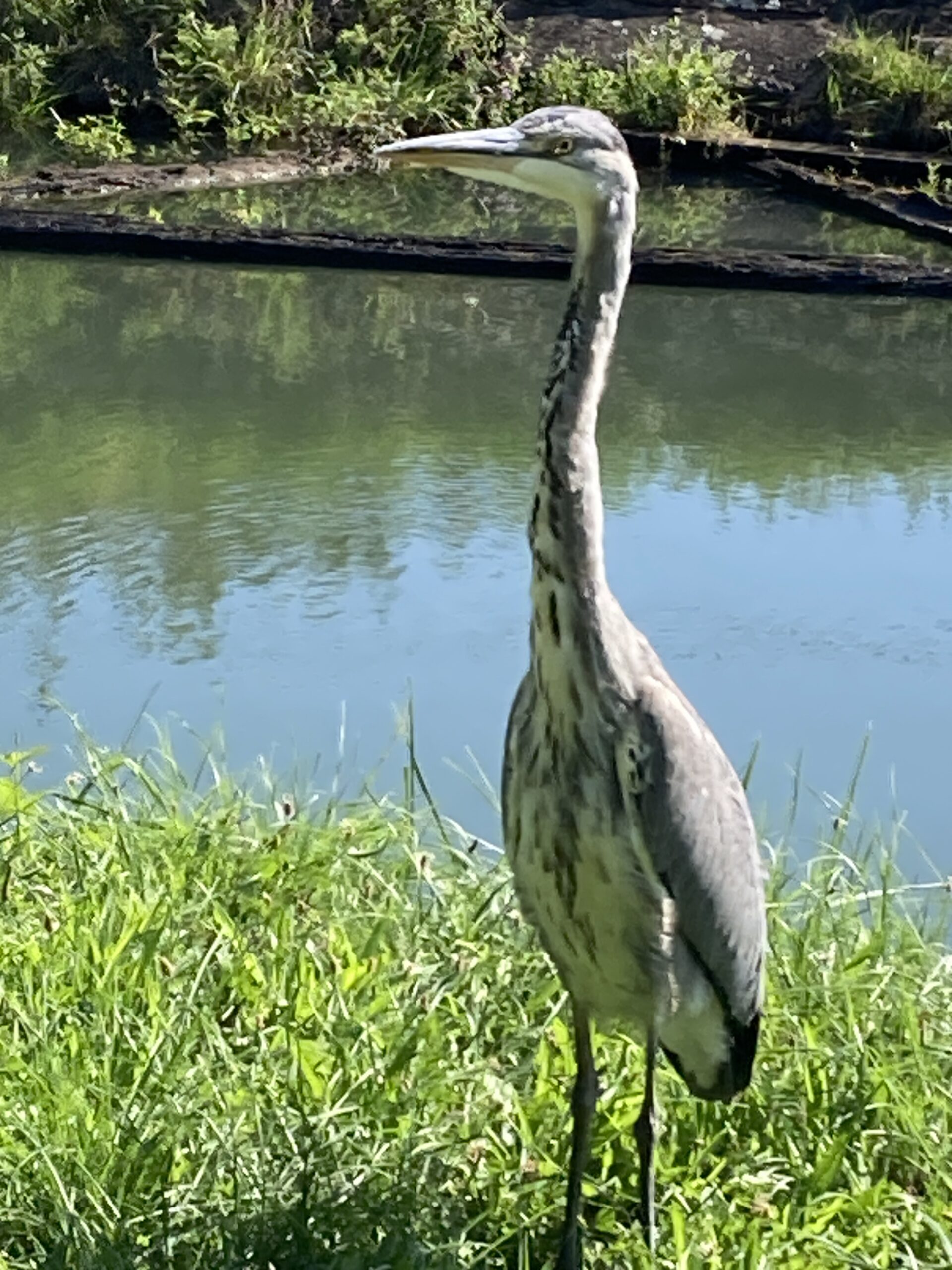
This gray heron (Ardea cinerea) is, unlike the others, unafraid of humans as he stands next to the Marne-au-Rhin canal in Bischheim, north of Strasbourg, France.
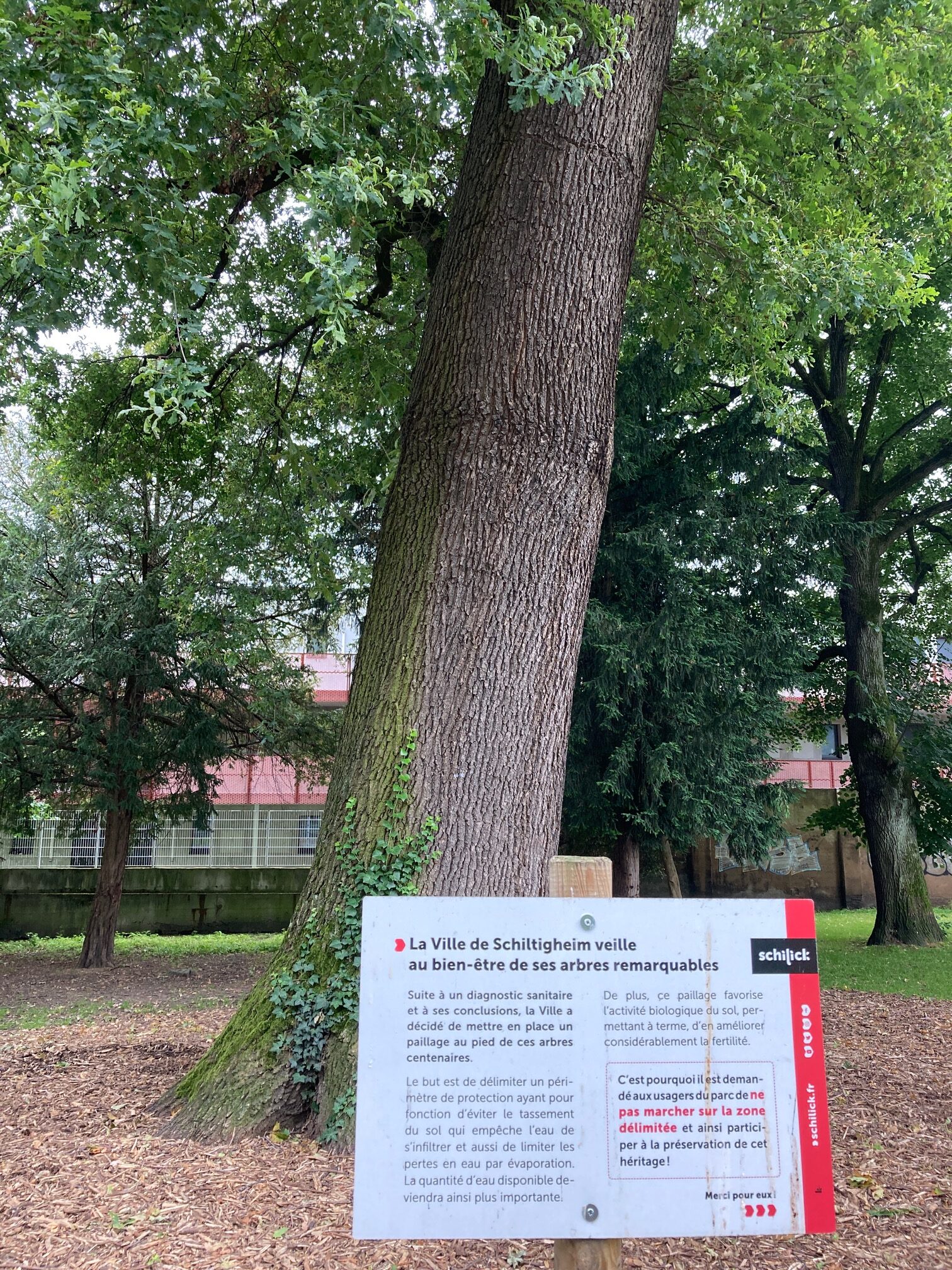
A park in Schiltigheim, north of Strasbourg, has a sign telling people to not walk in the rooting zone of a large pedunculate oak (Quercus robur).
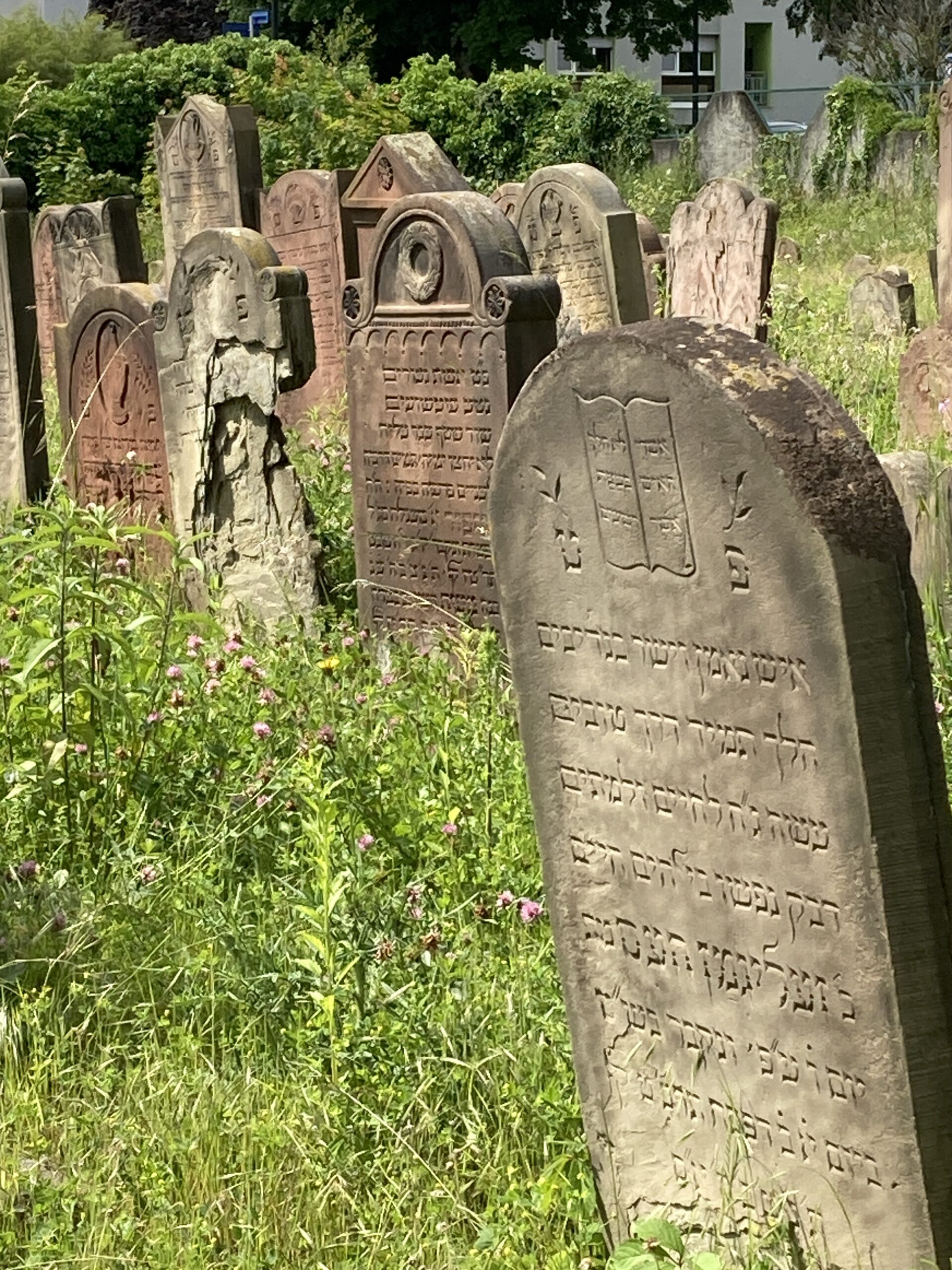
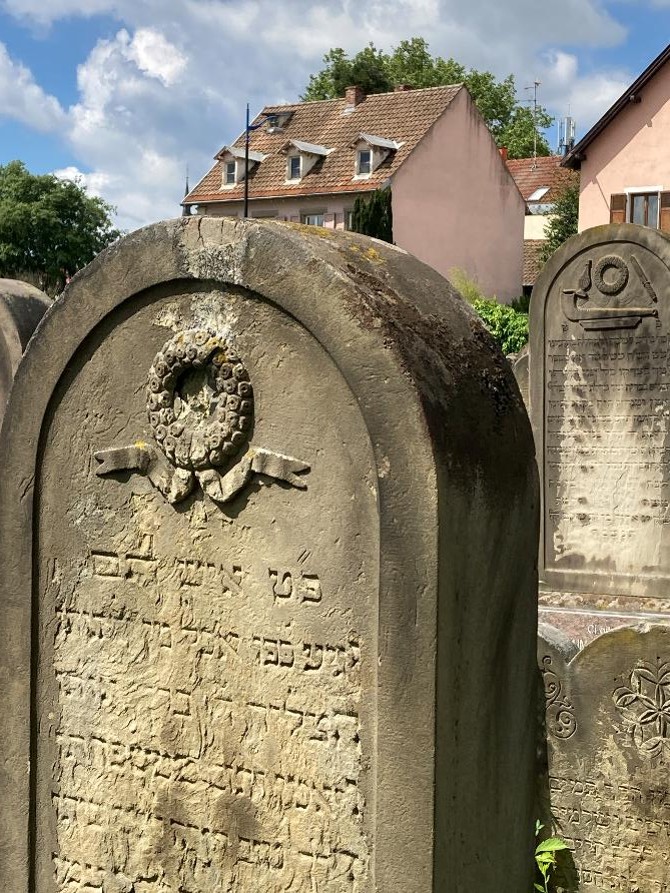
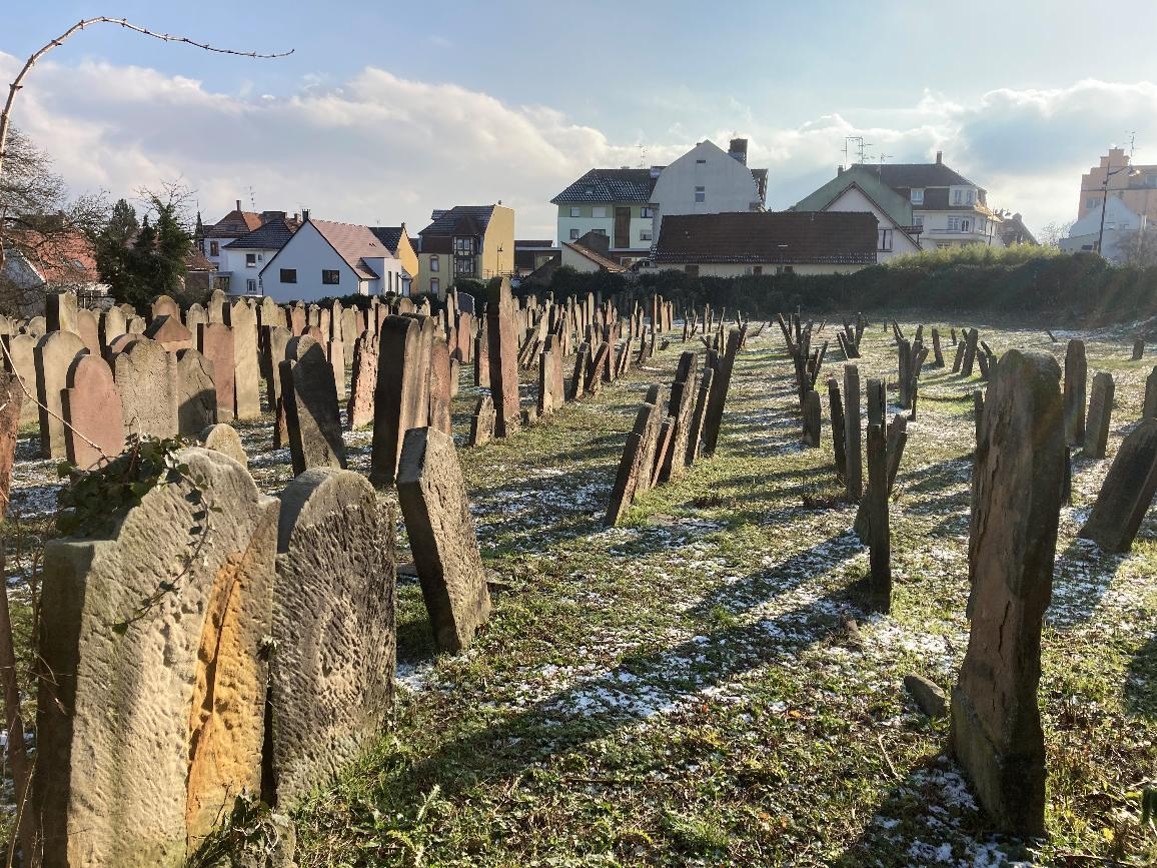
Old Jewish cemetery in Schiltigheim, north of Strasbourg, France.
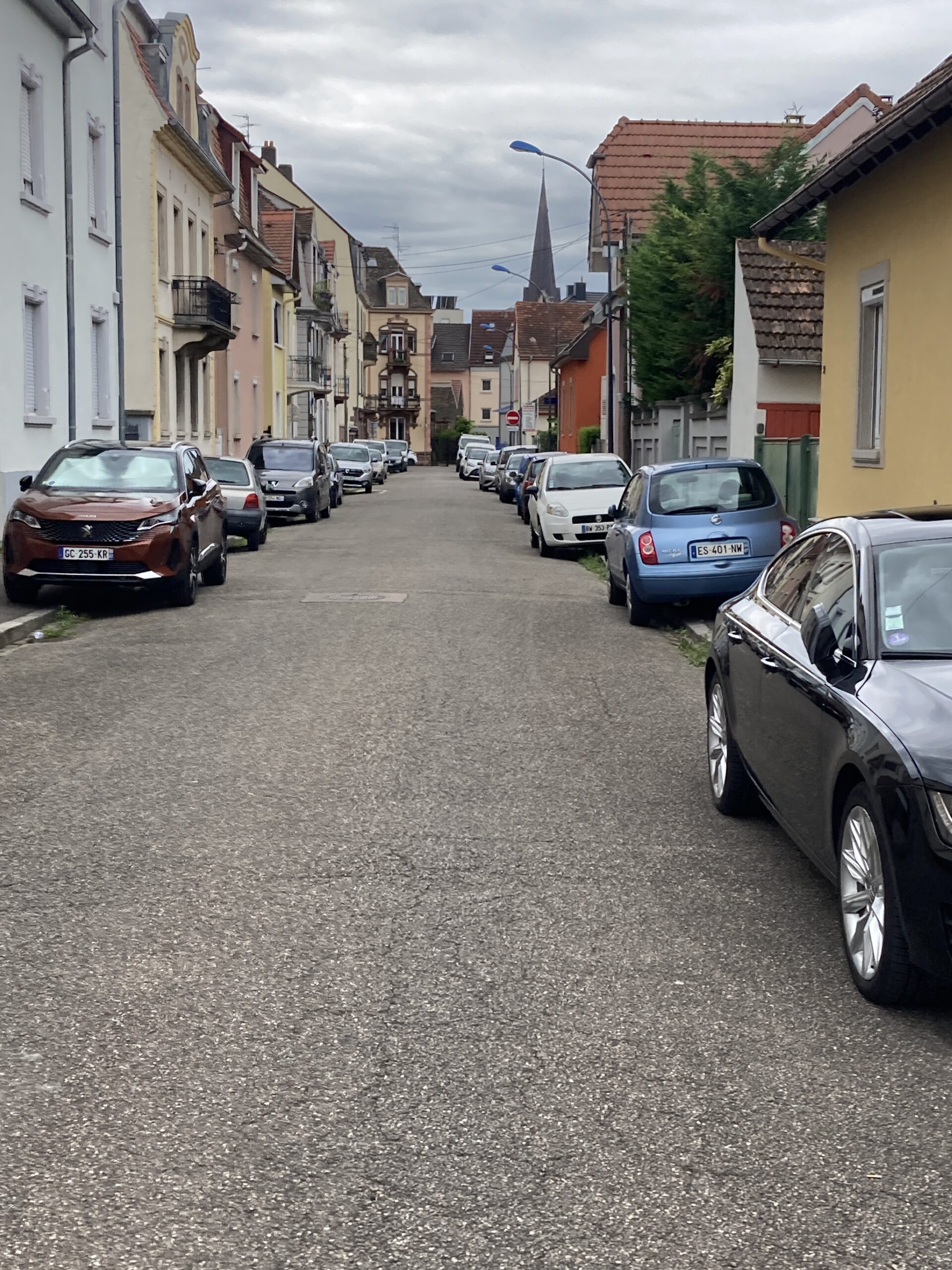
If you don’t like my driving, then stay off the sidewalk! Schiltigheim, north of Strasbourg. Sidewalk parking is legal on these narrow streets.
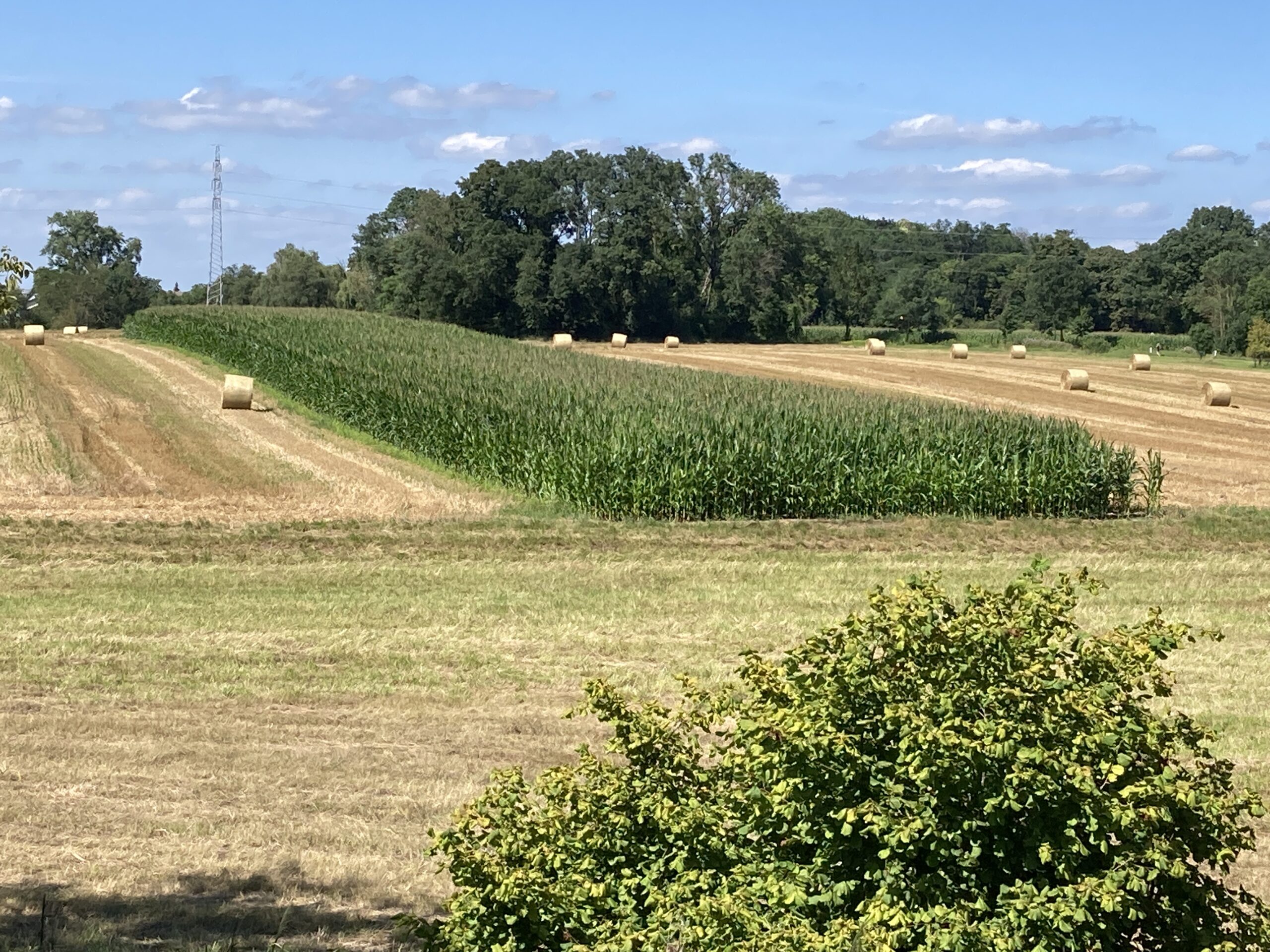
Fields of maize and wheat outside of Reichstett, north of Strasbourg, France. France has monocultures, just like America, but the fields are smaller, which means that pests spread more slowly and less pesticide is needed.
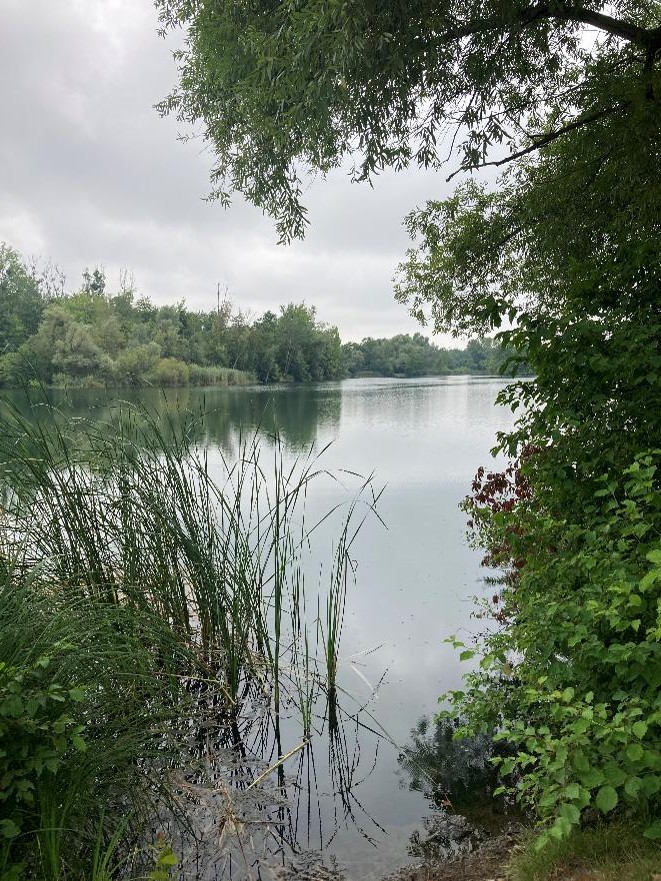
Lake Balastiere, Bischheim, north of Strasbourg, in summer.
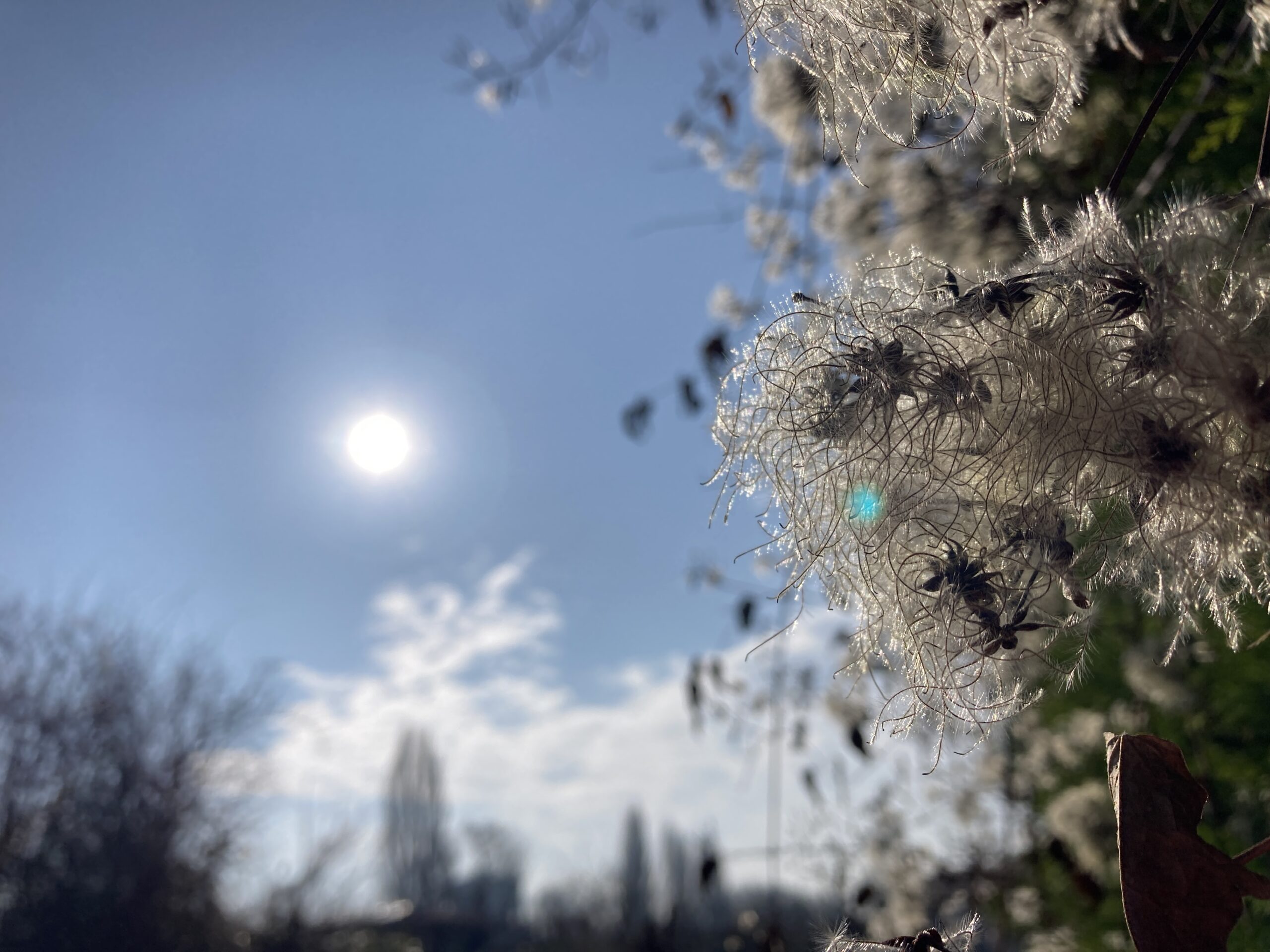
Fruits of Clematis vitalba, called “old-man’s-beard,” in Bischheim, north of Strasbourg.
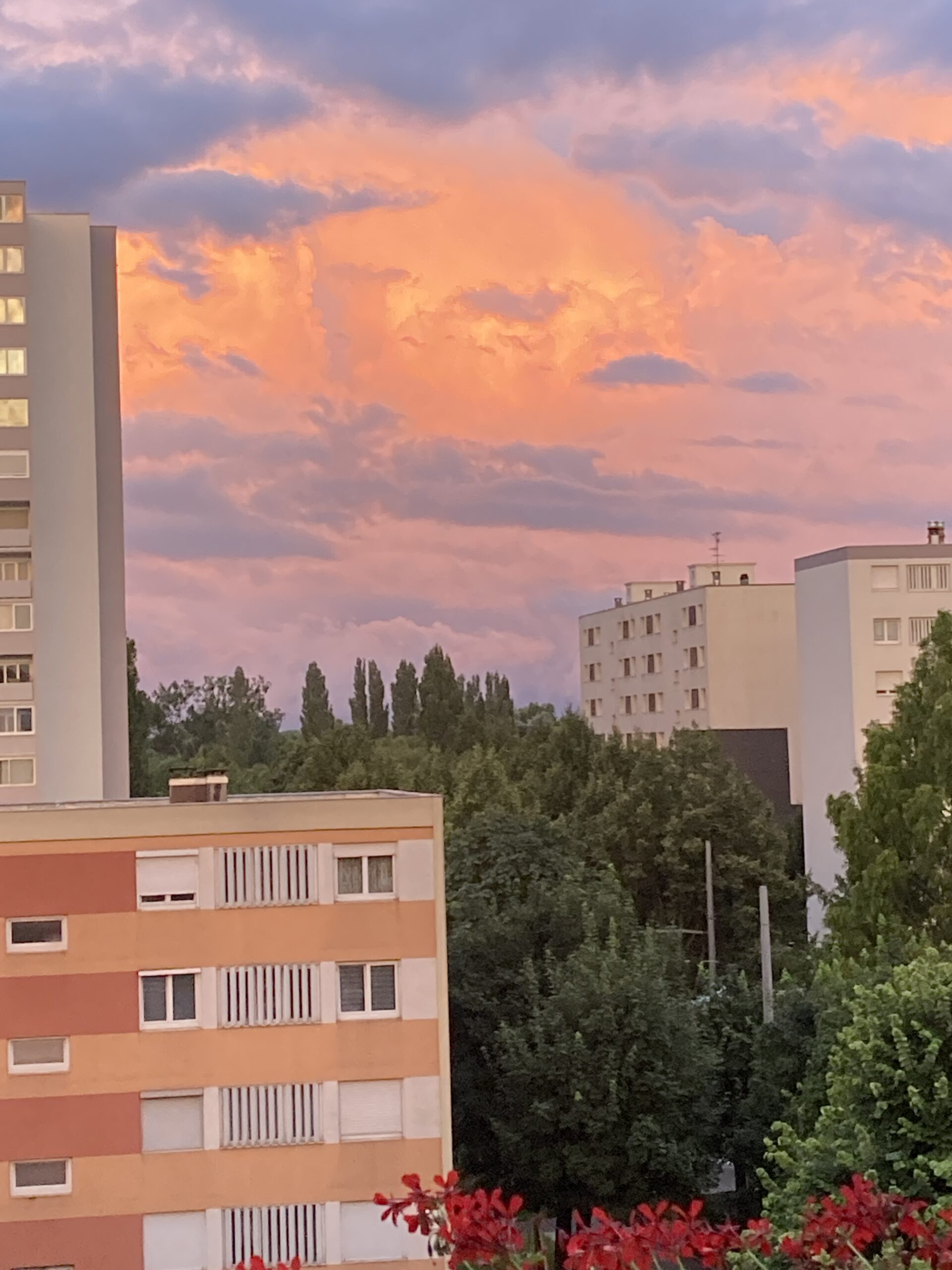
Summer sunset in Hoenheim, north of Strasbourg.
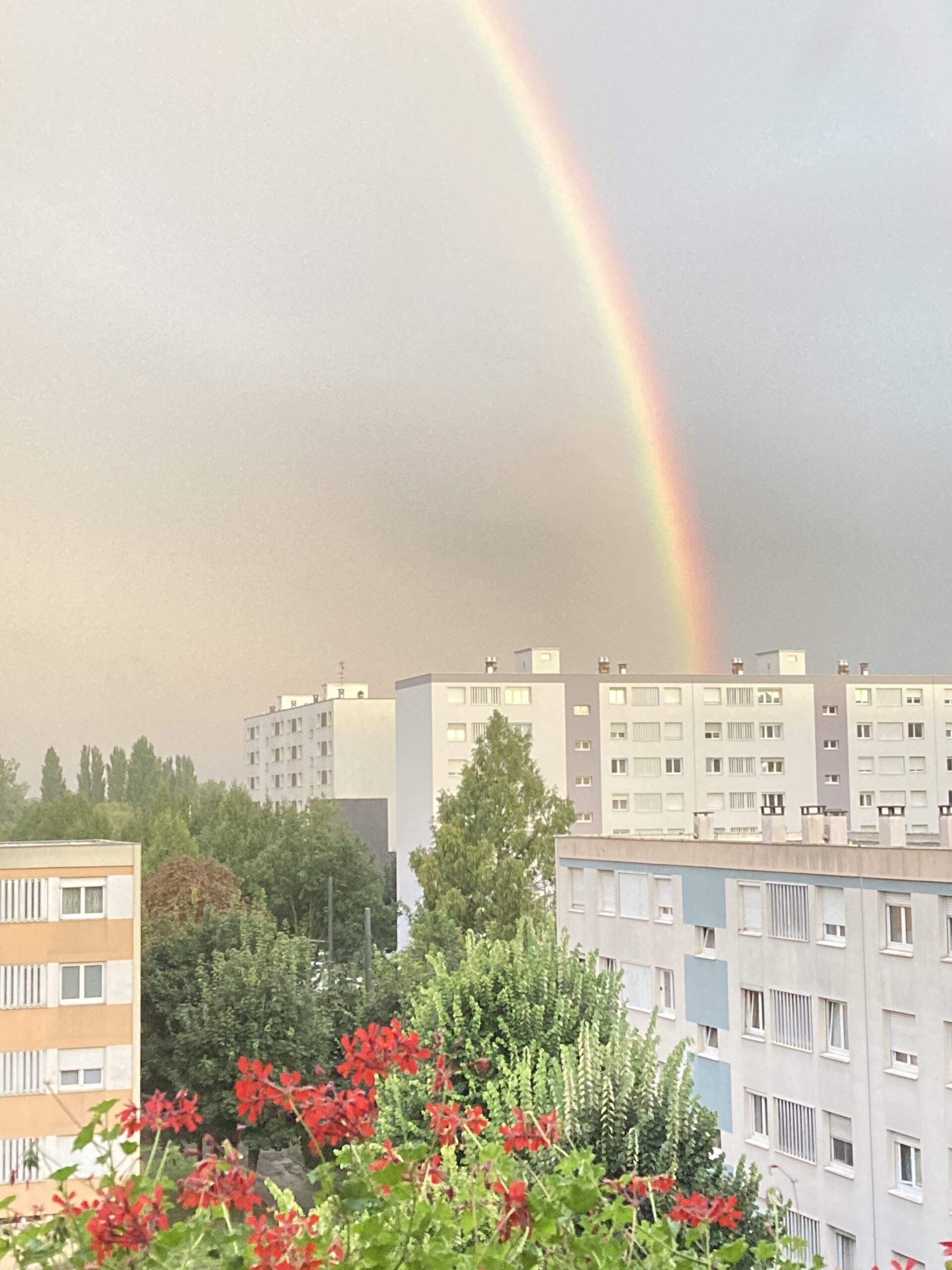
Rainbow in Hoenheim, north of Strasbourg.
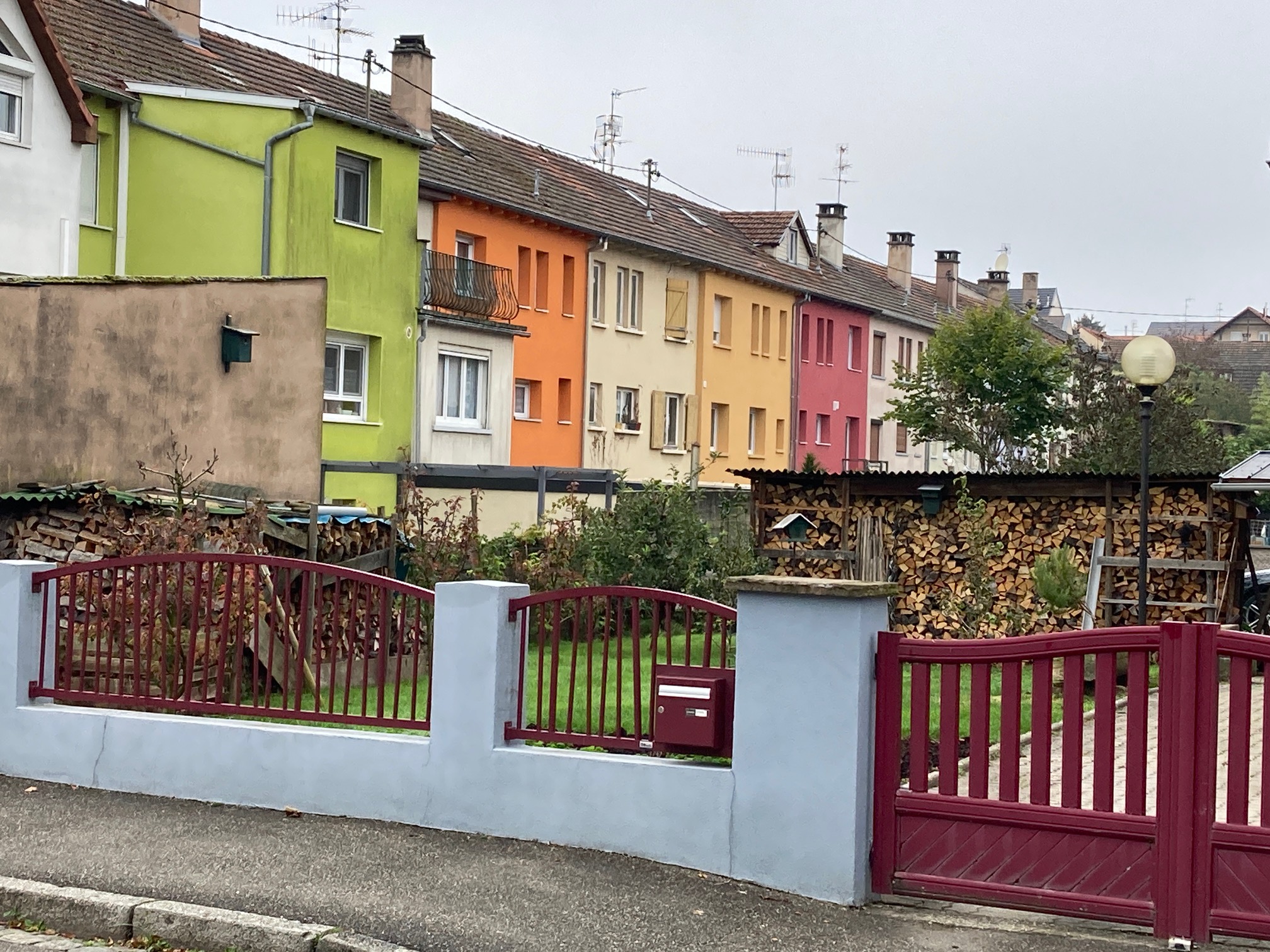
Colorful row houses in Hoenheim, north of Strasbourg.
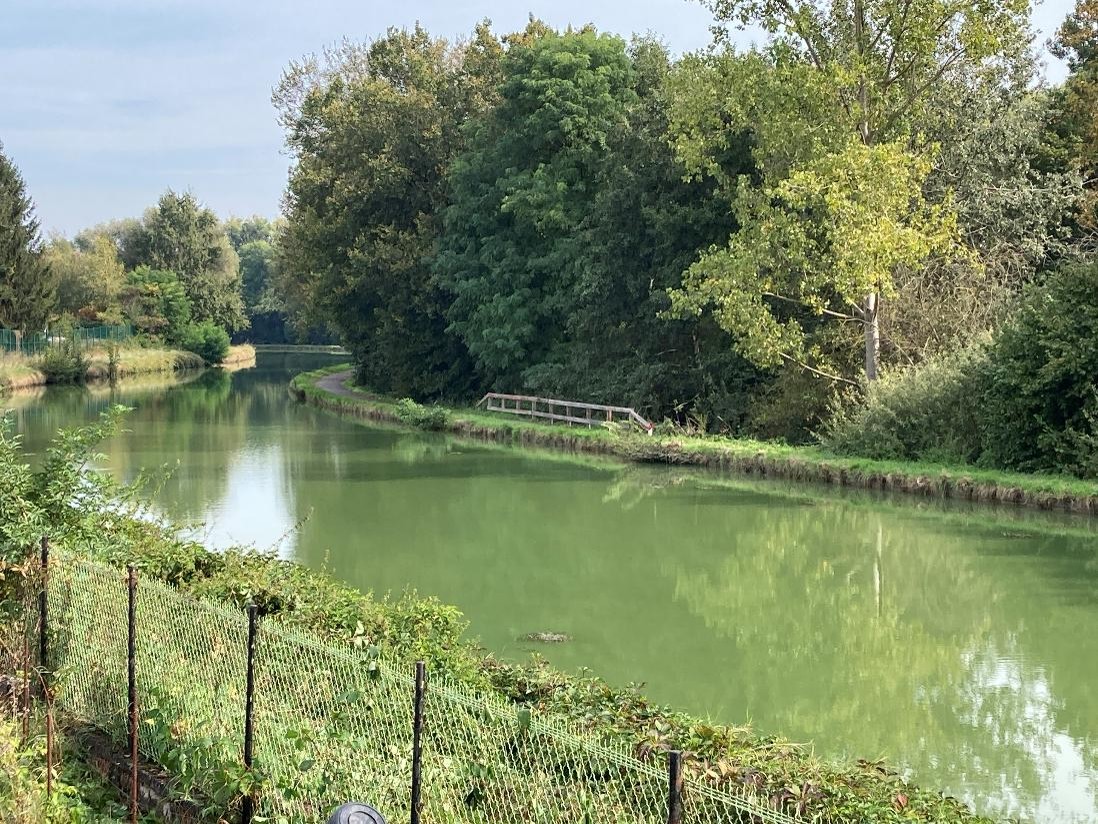
Marne-au-Rhin canal, Hoenheim, north of Strasbourg. This canal prevents most floods, provides tourist transportation, and even generates some electricity.
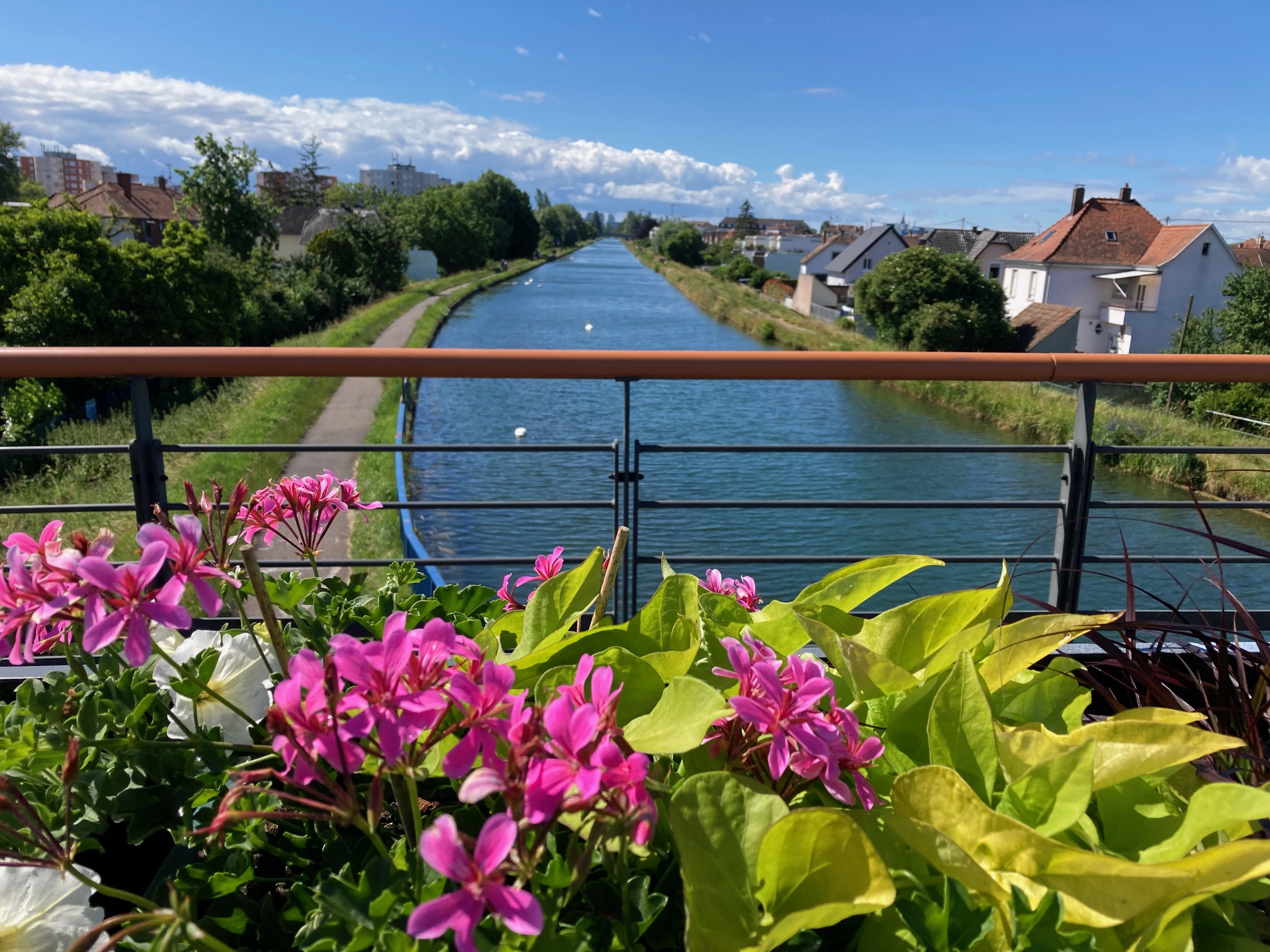
Bridge over the Marne-au-Rhin canal, Hoenheim, north of Strasbourg, with resident swans. The municipality maintains decorative flowers each summer.
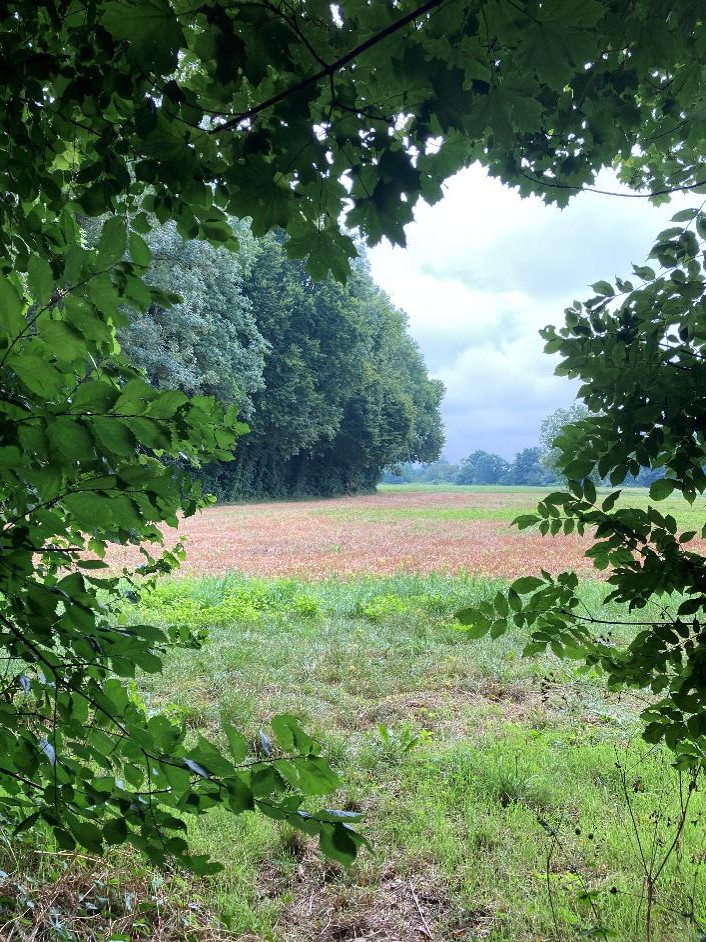
Forest edge near Lake Balastiere, Bischheim, north of Strasbourg.
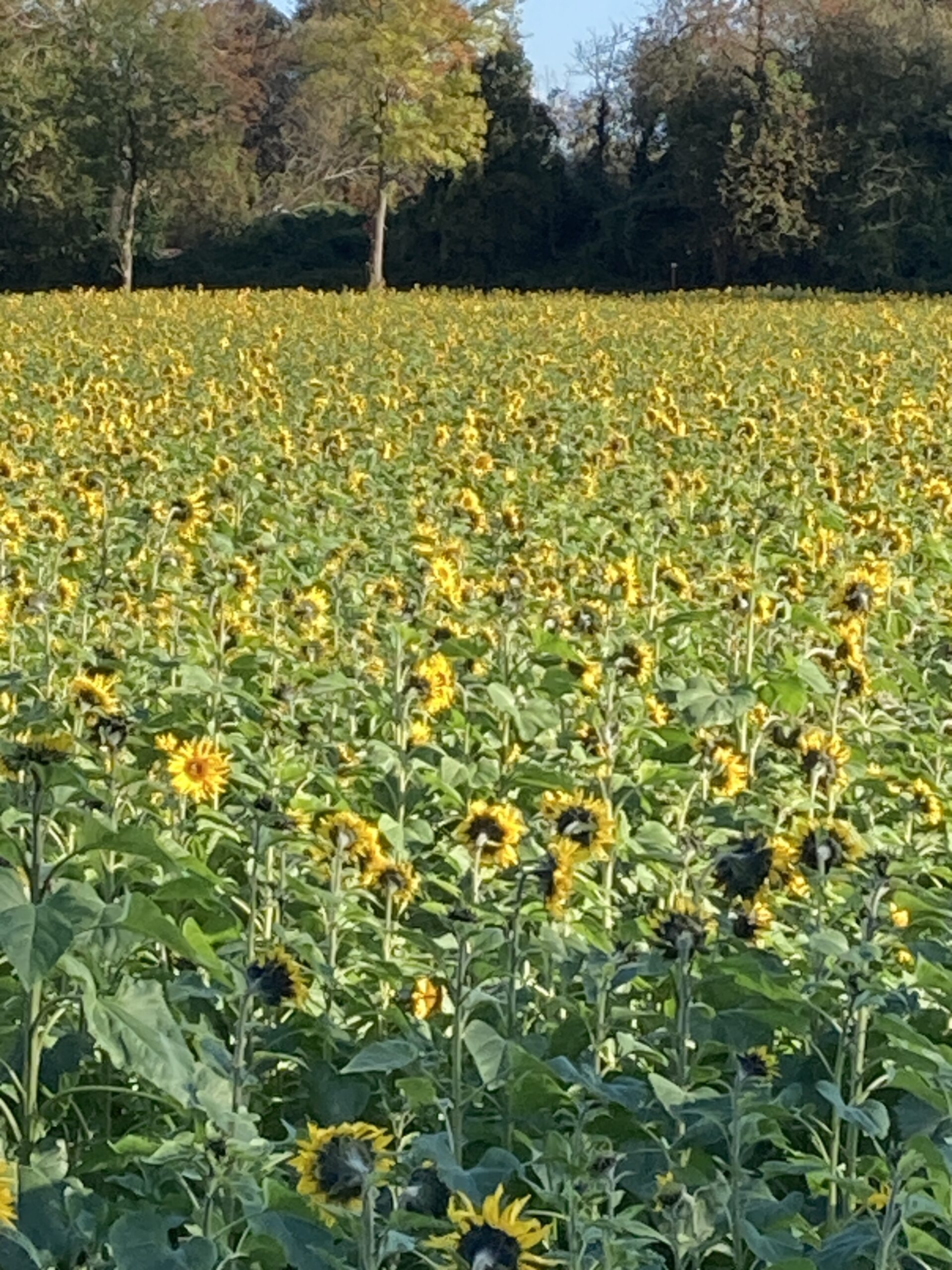
Sunflower field near Bischheim, north of Strasbourg.
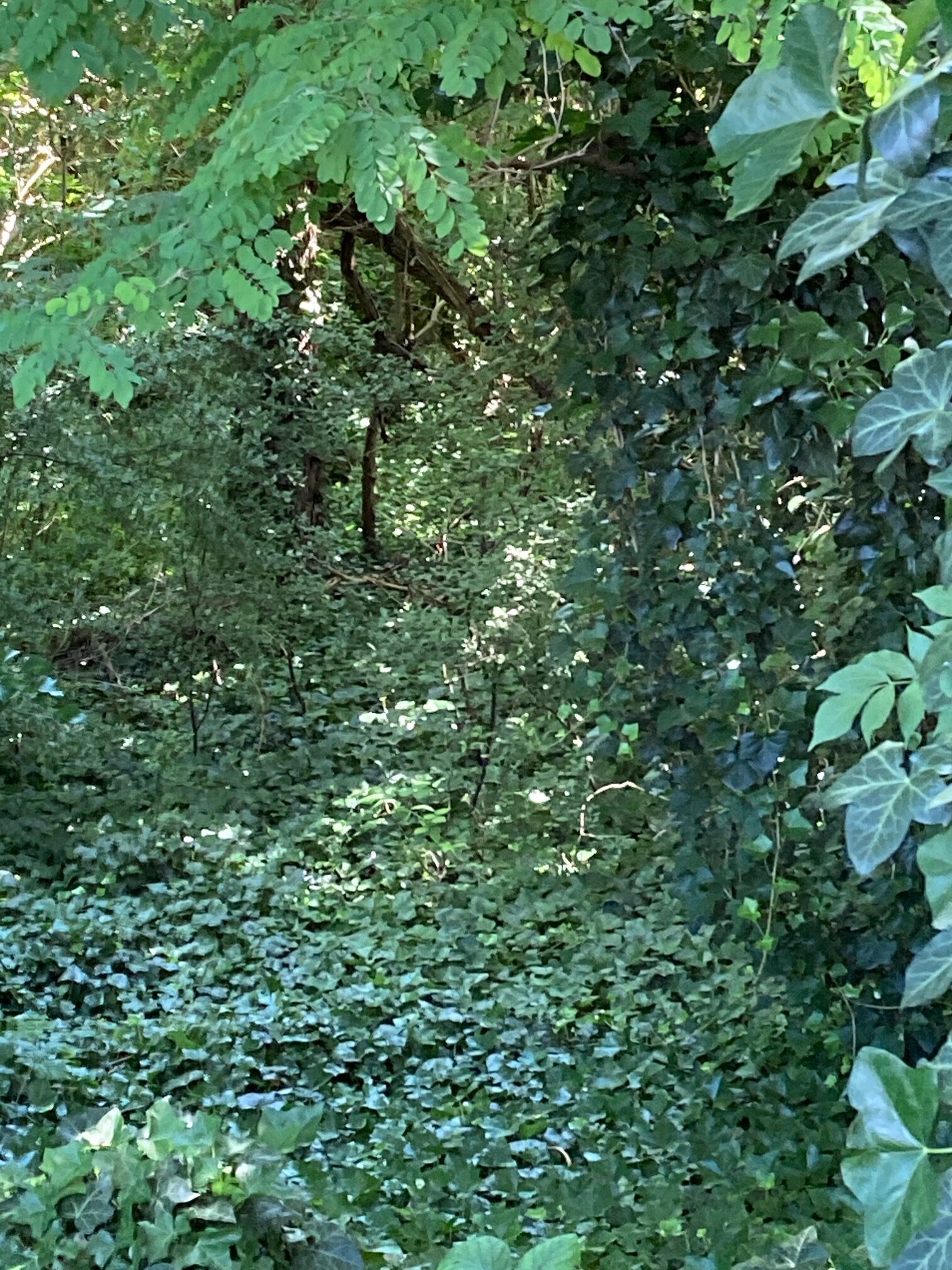
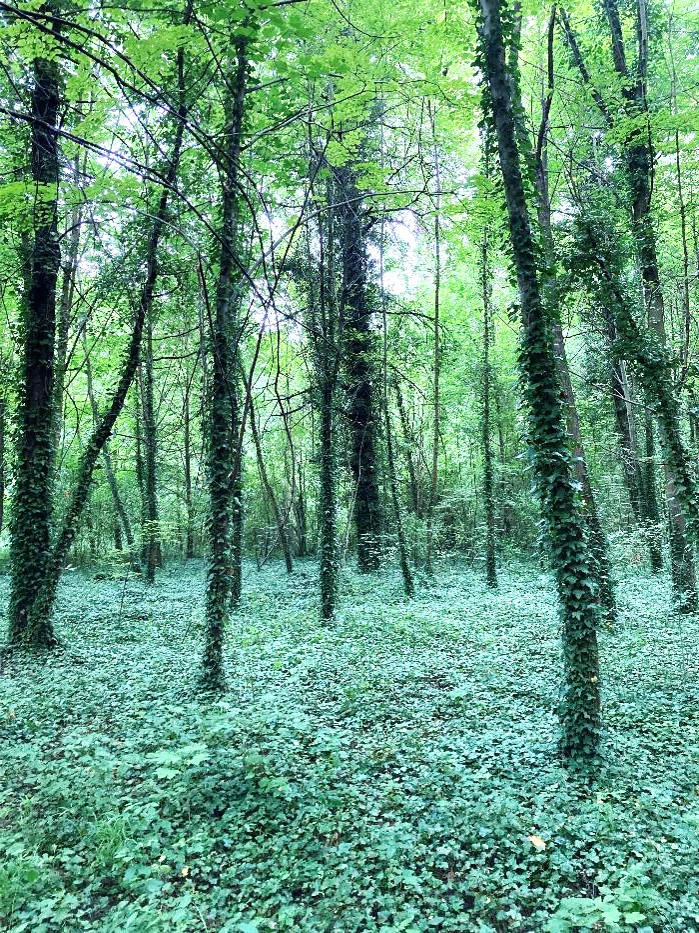
The woods near Lake Balastiere, in Bischheim north of Strasbourg, are filled with lierre (ivy, Hedera helix). At the top you can see leaves of black locust (Robinia pseudoacacia), an invasive tree from North America.
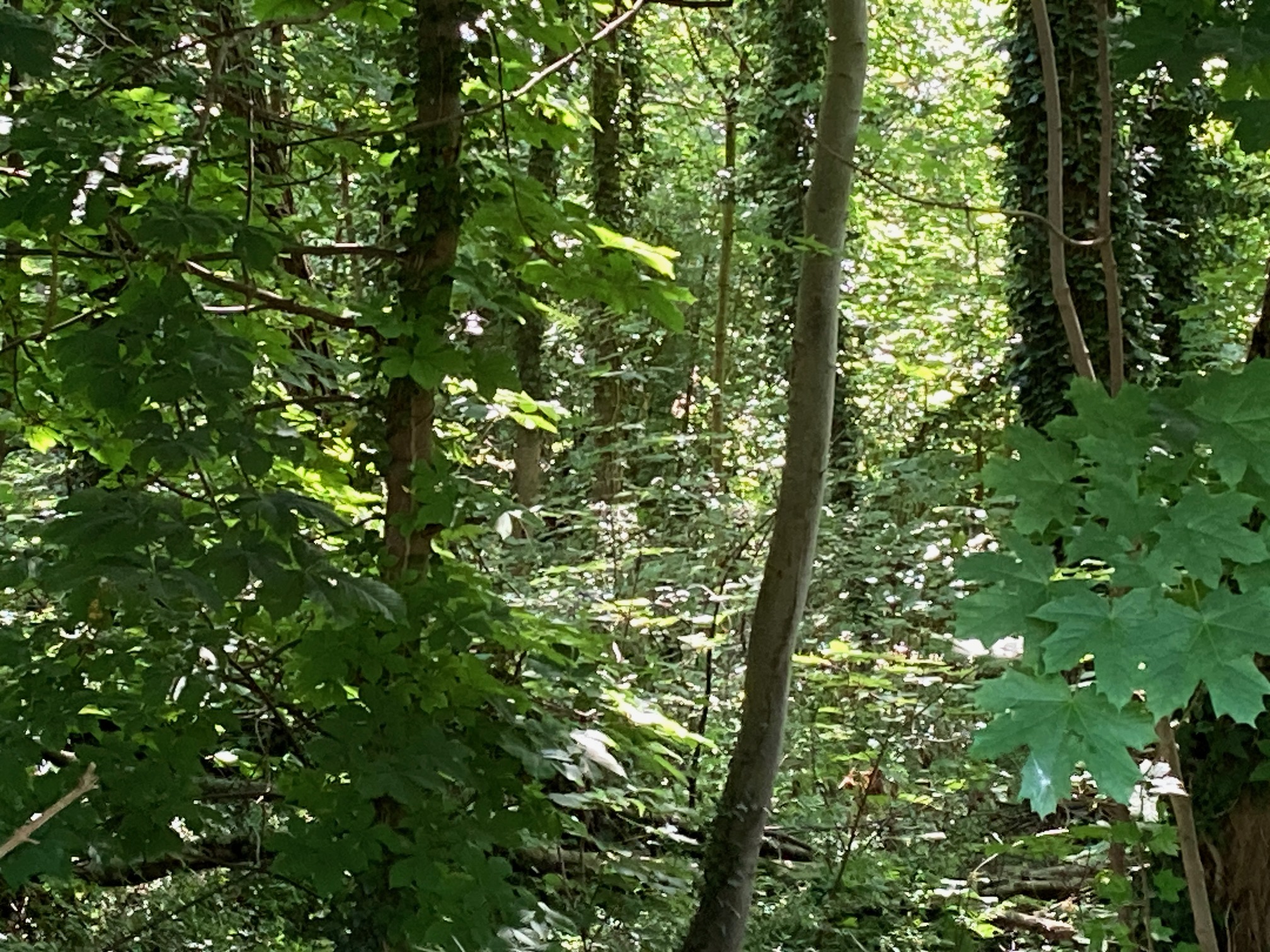
Woodland near Lake Balastiere, Bischheim, north of Strasbourg. This woodland is second-growth but has undergone enough ecological succession that erables (maple trees, Acer pseudoplatanus) and tilleuls (lindens, Tilia heterophylla) dominate the forest.
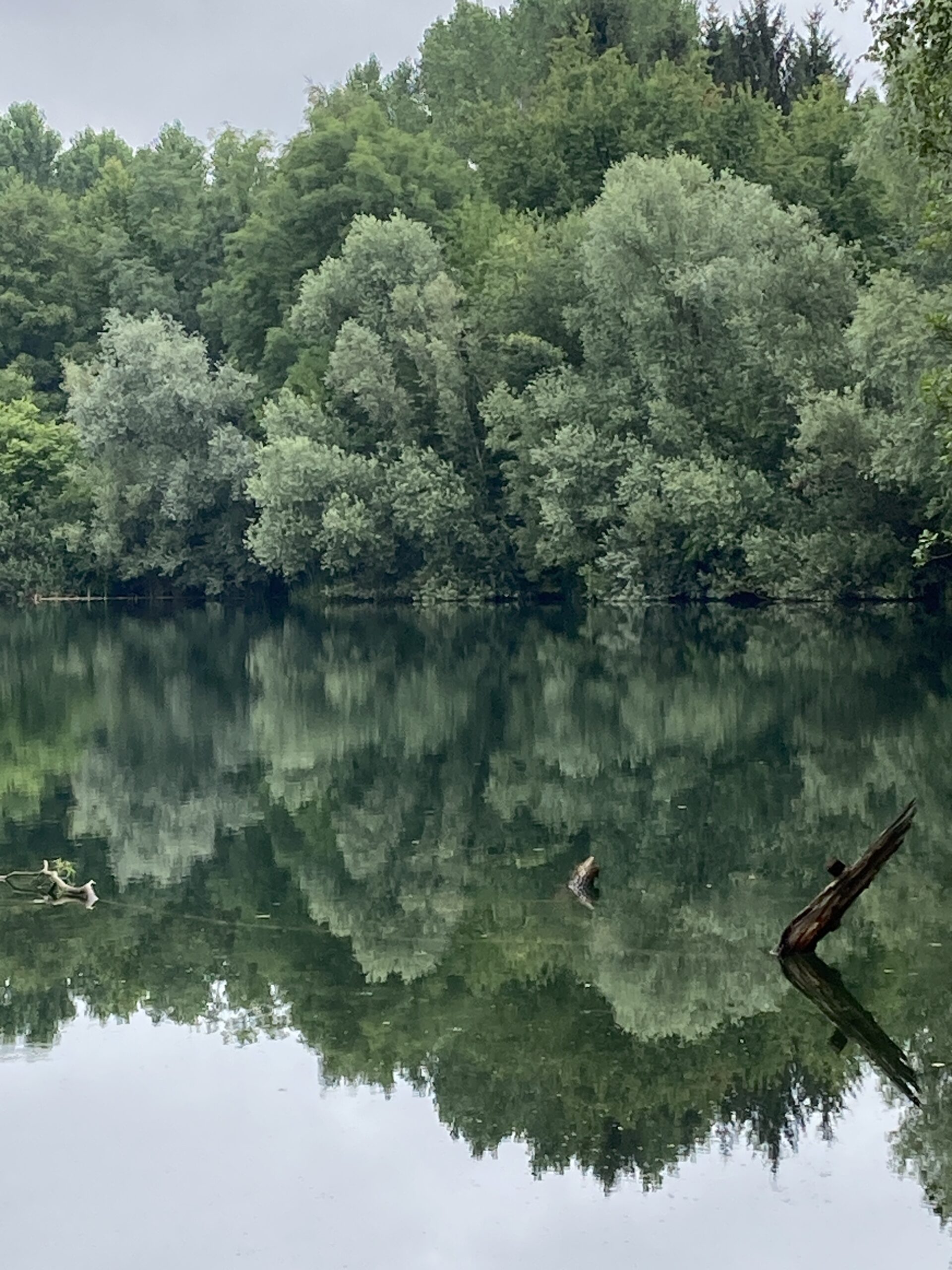
Lake Balastiere, Bischheim, north of Strasbourg. The trees nearest the water are the gray willow (Salix cinerea).
The woods near Lake Balastiere, in Bischheim north of Strasbourg, are filled with lierre (ivy, Hedera helix).
Rhine Floodplain Forests and Ill River
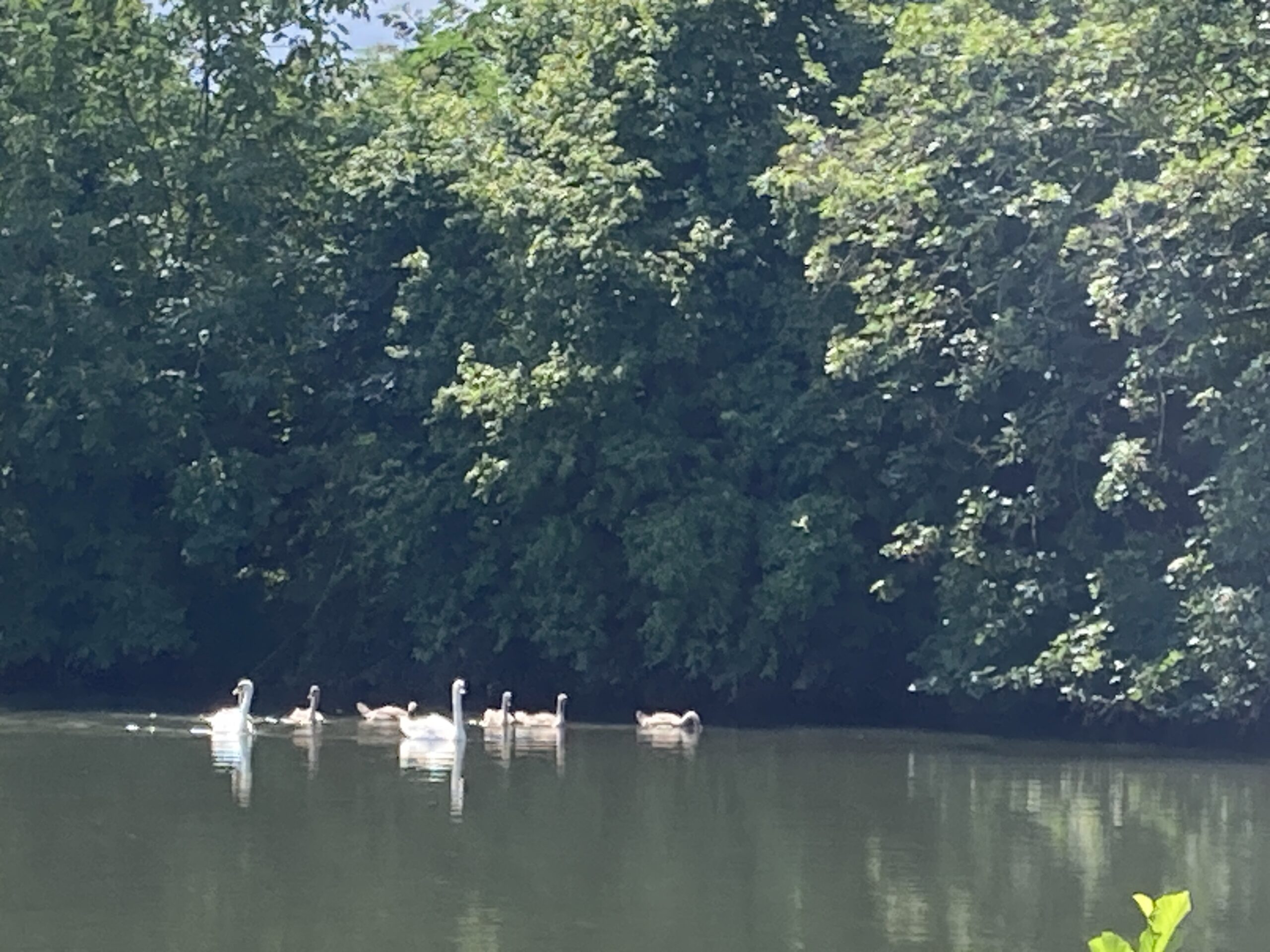
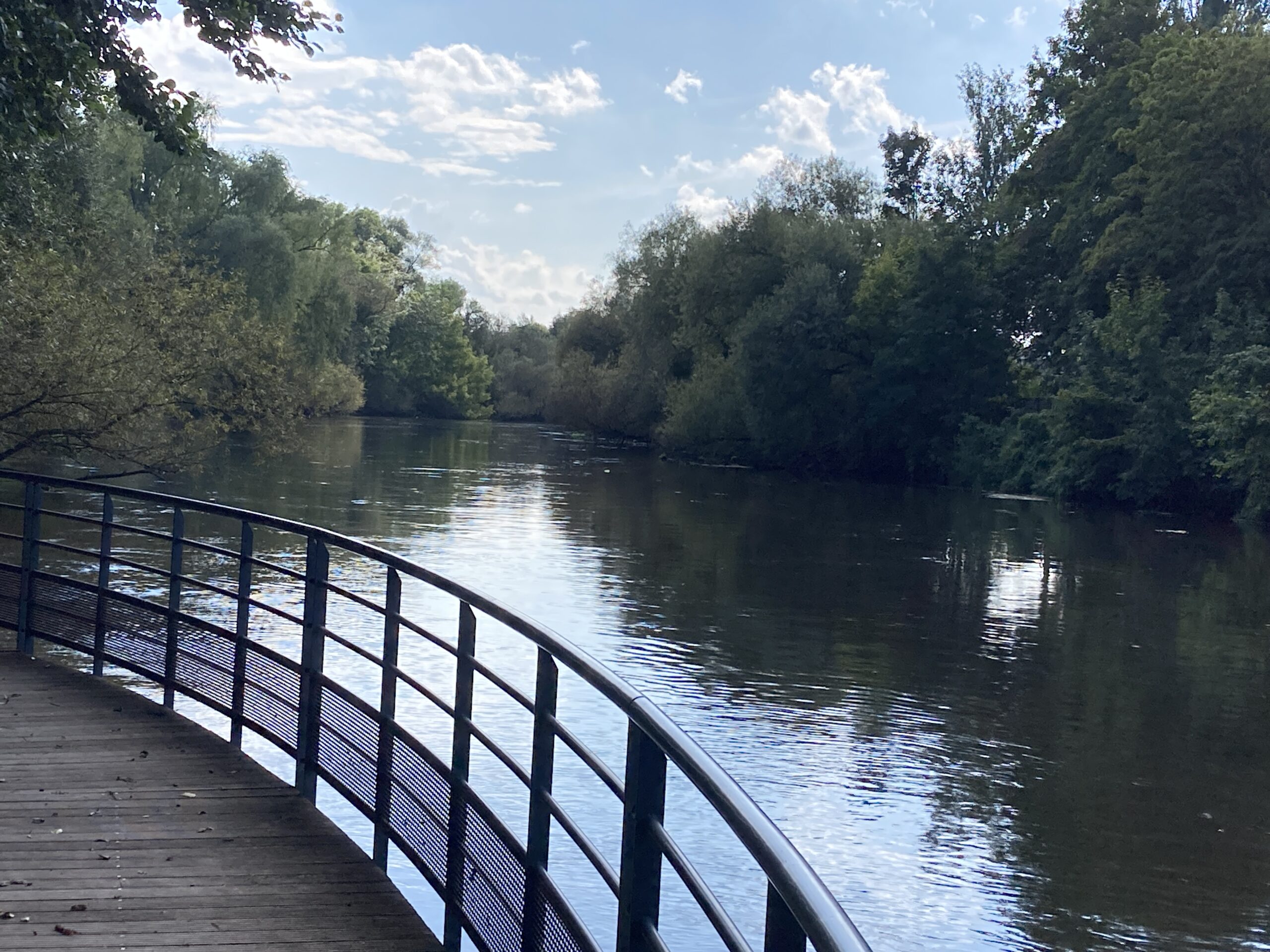
Swans on the Ill River north of Strasbourg.
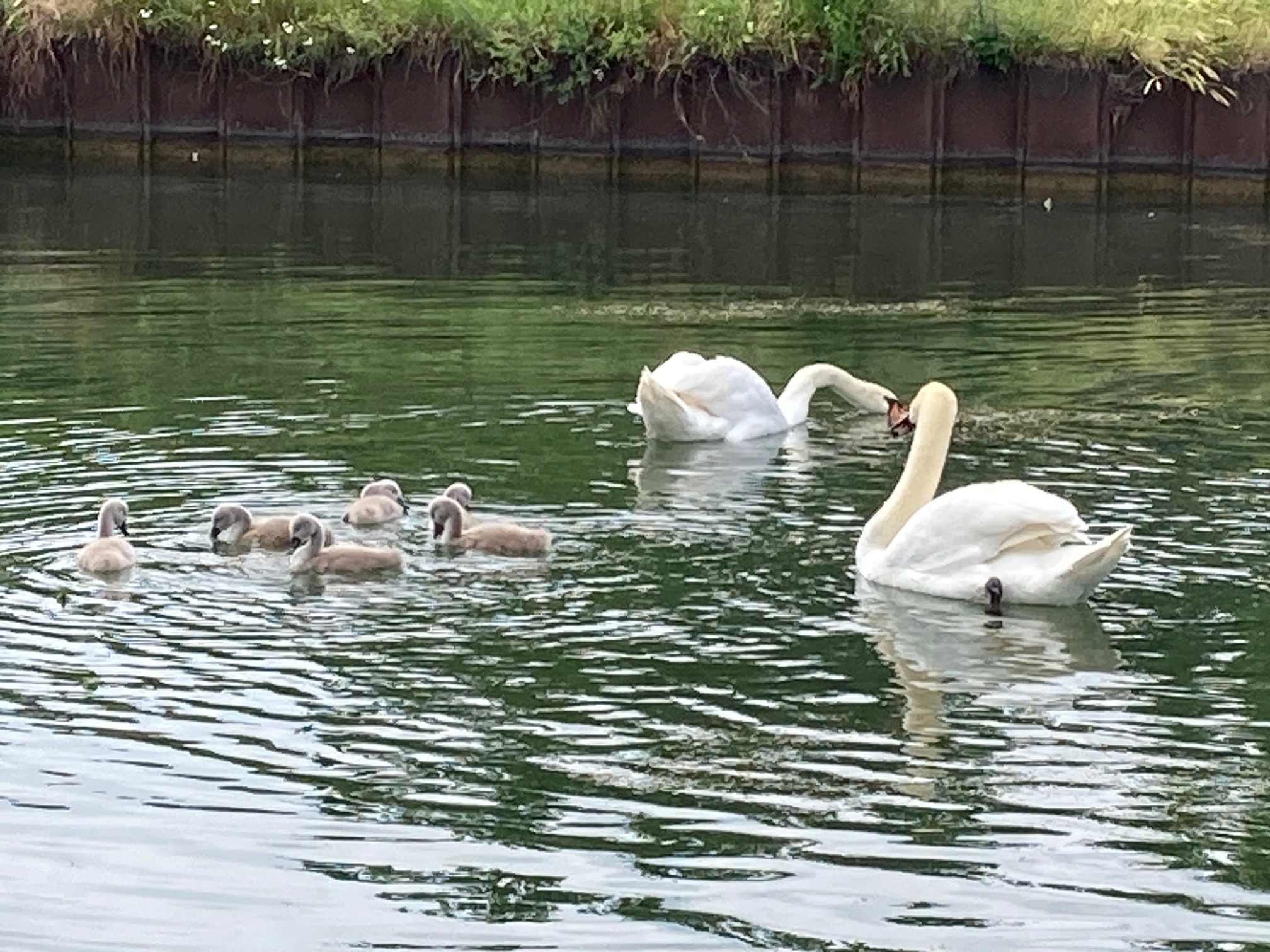
Swans and cygnets on the Ill River north of Strasbourg.
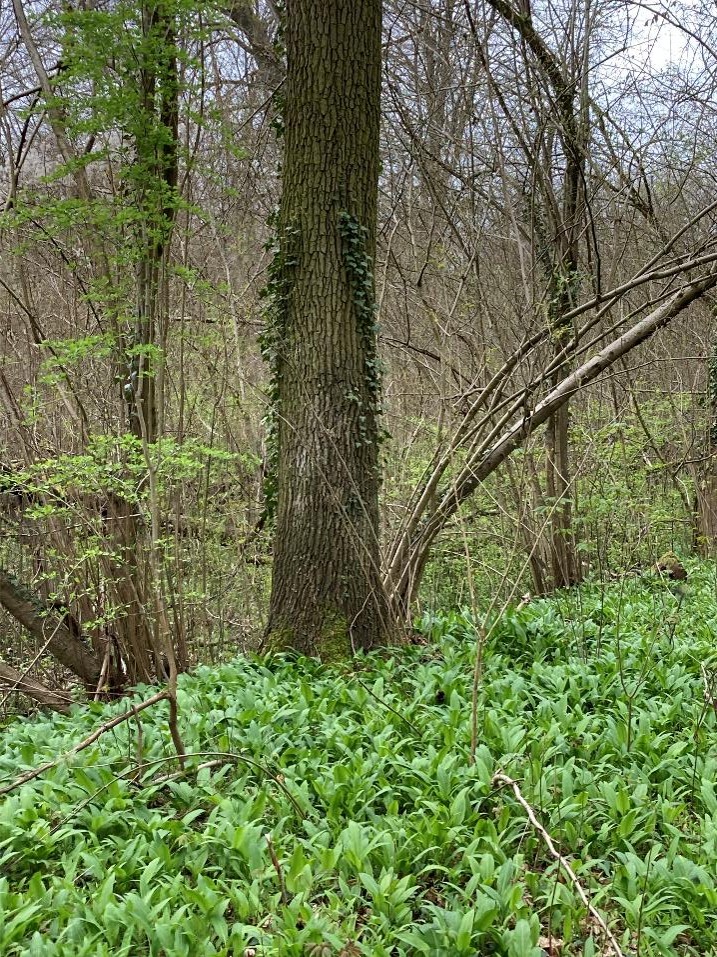
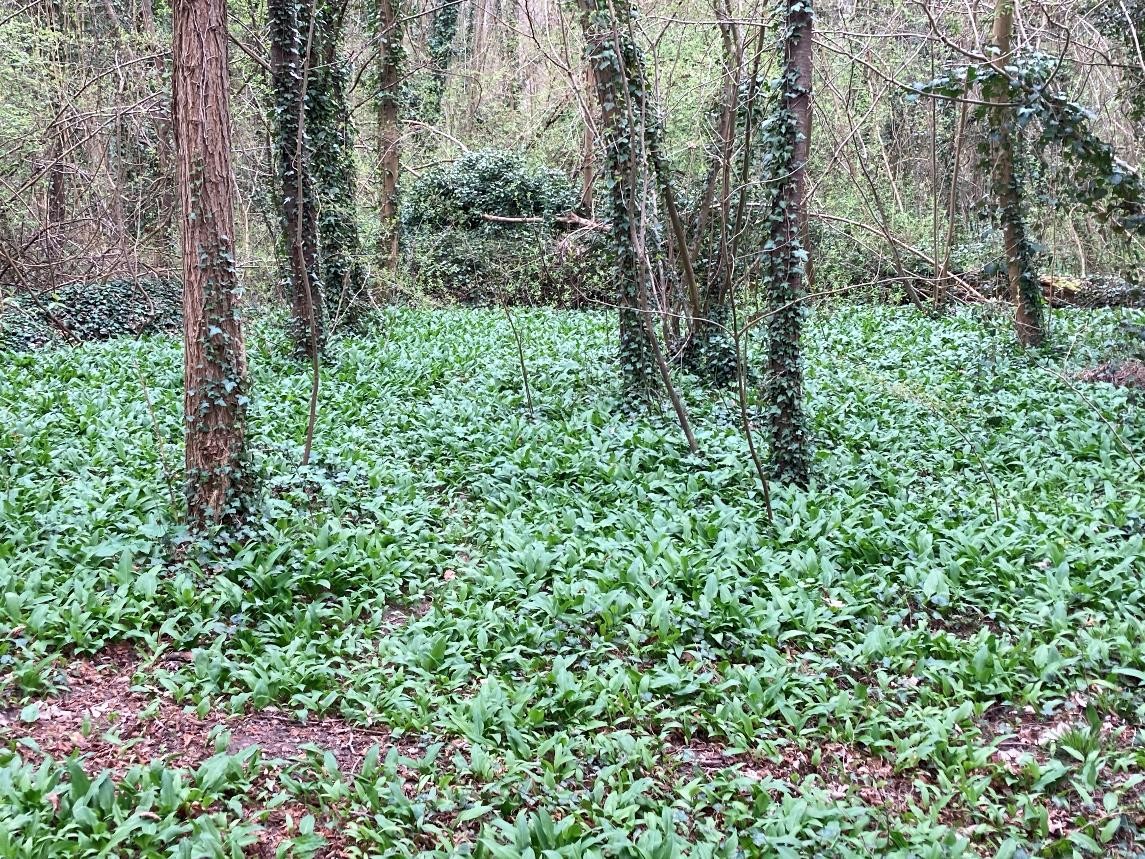
Springtime floodplain forest along Ill River north of Strasbourg, with ail-d’ours (bear garlic, Allium ursinum).
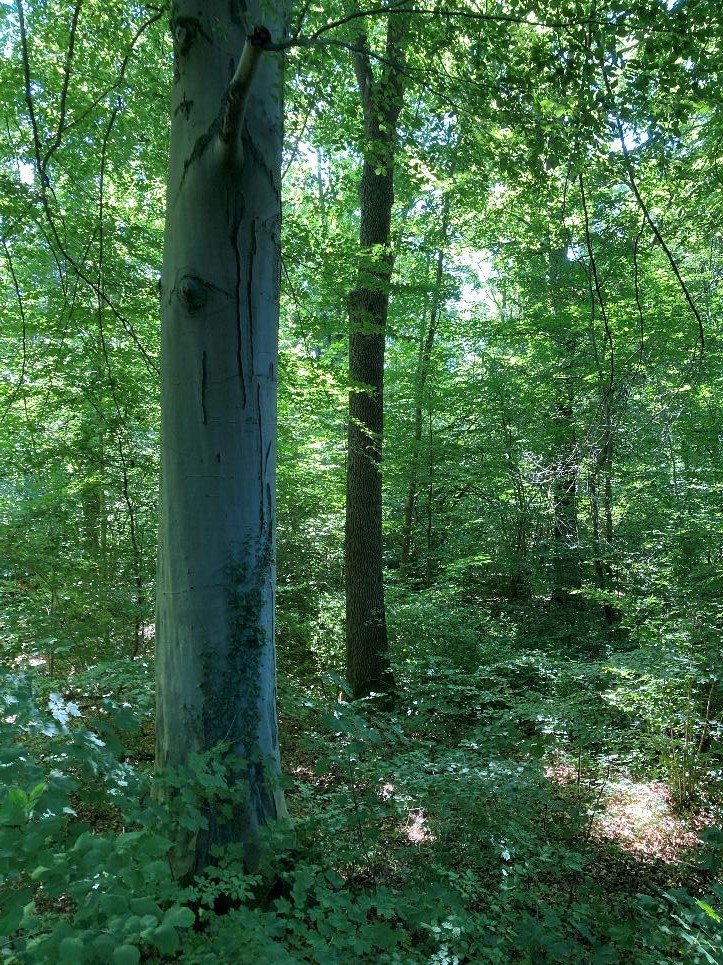
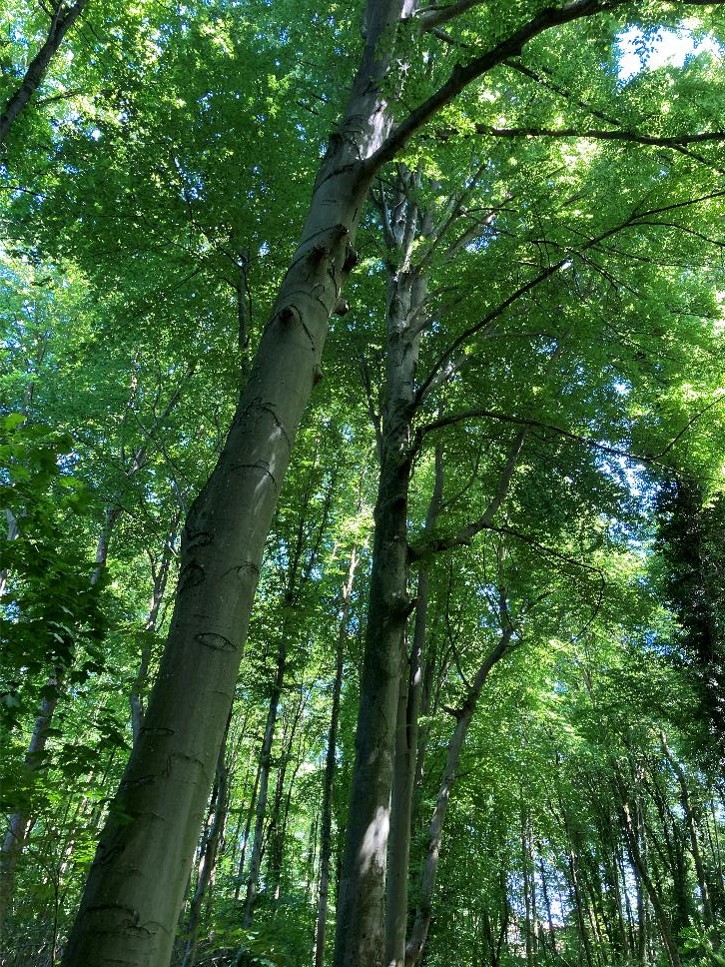
Beeches (Fagus sylvatica) in old forest reserve northeast of Strasbourg, near the Rhine River.
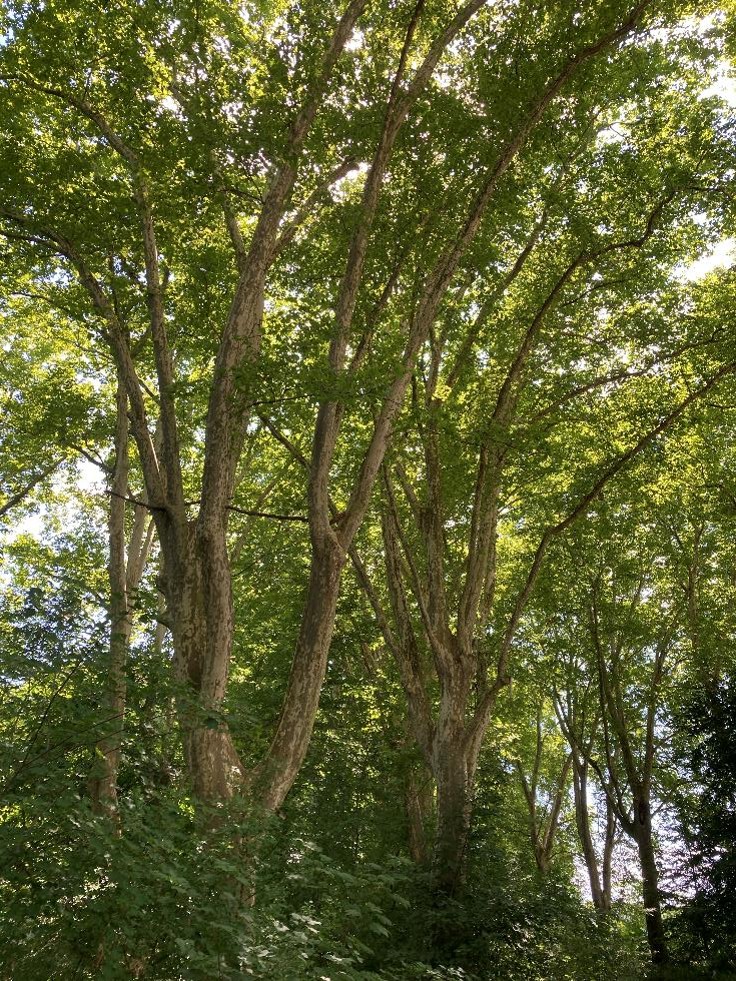
Plane trees (platanes communes) along the Piste de Fortes near Parc de Pourtales, north of Strasbourg. Along an old, paved military road.
Beeches (Fagus sylvatica) in old forest reserve northeast of Strasbourg, near the Rhine River.
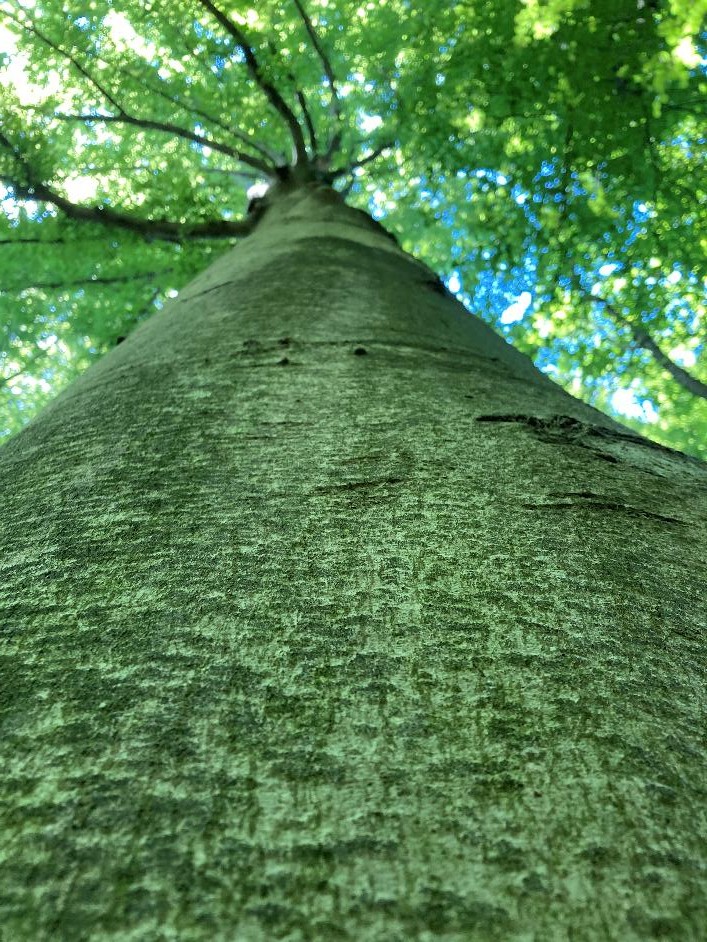
Beech (Fagus sylvatica) in old forest reserve northeast of Strasbourg, near the Rhine River.
Beeches (Fagus sylvatica) in old forest reserve northeast of Strasbourg, near the Rhine River.
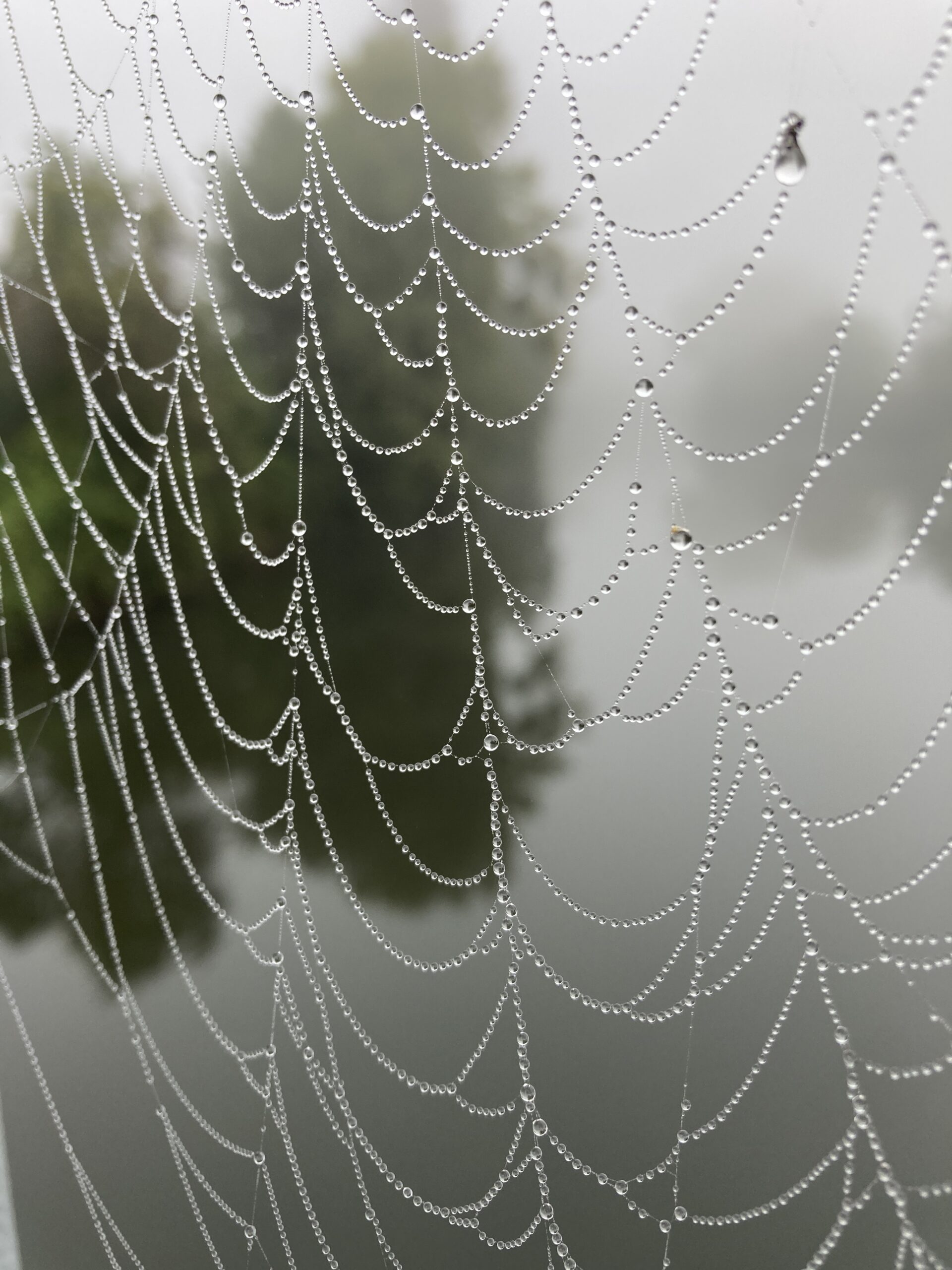
Foggy dew on spiderweb along the Ill River north of Strasbourg.
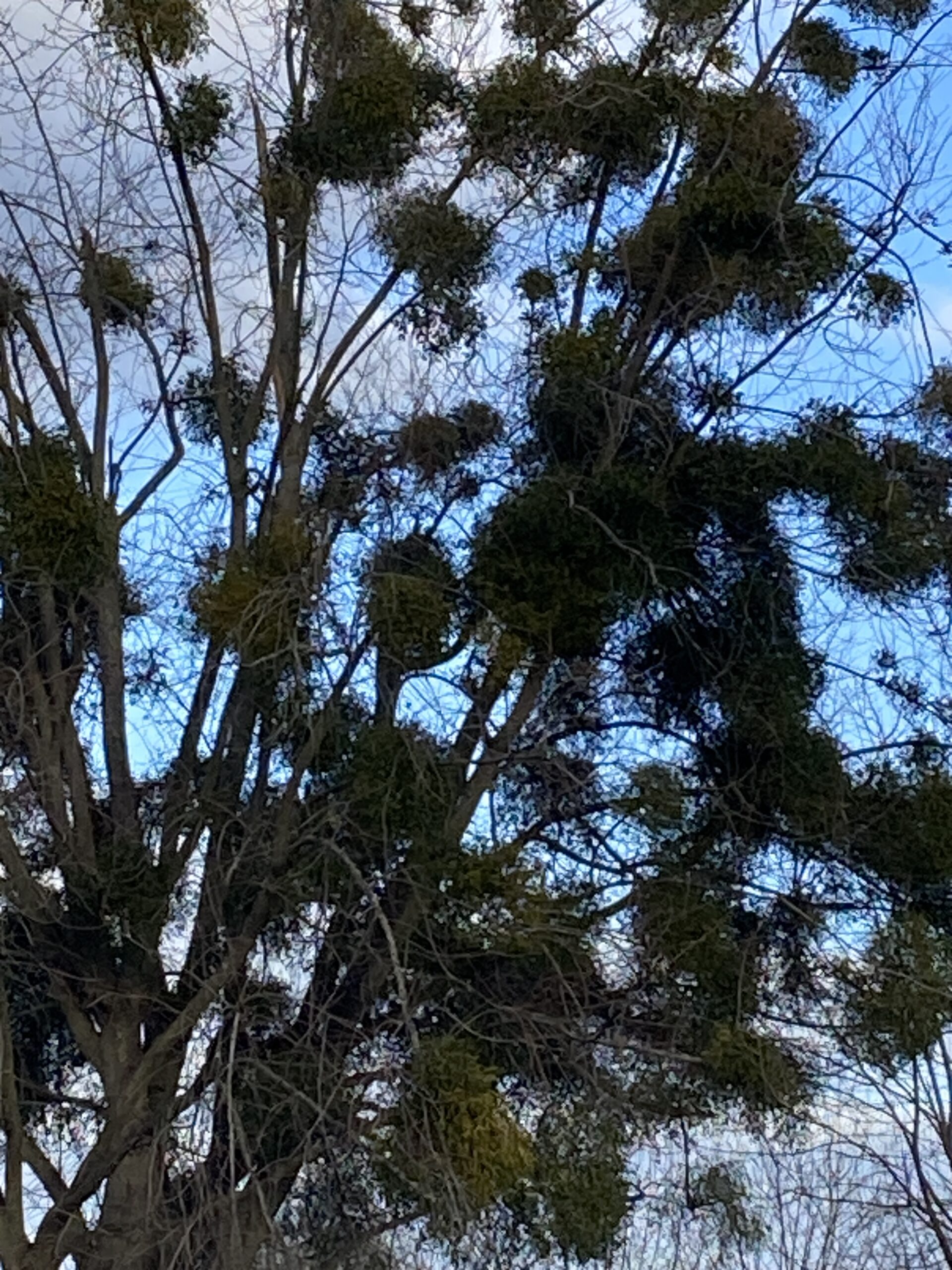
This poplar is heavily infested with gui (mistletoe; Viscum album). Near the Ill River north of Strasbourg.
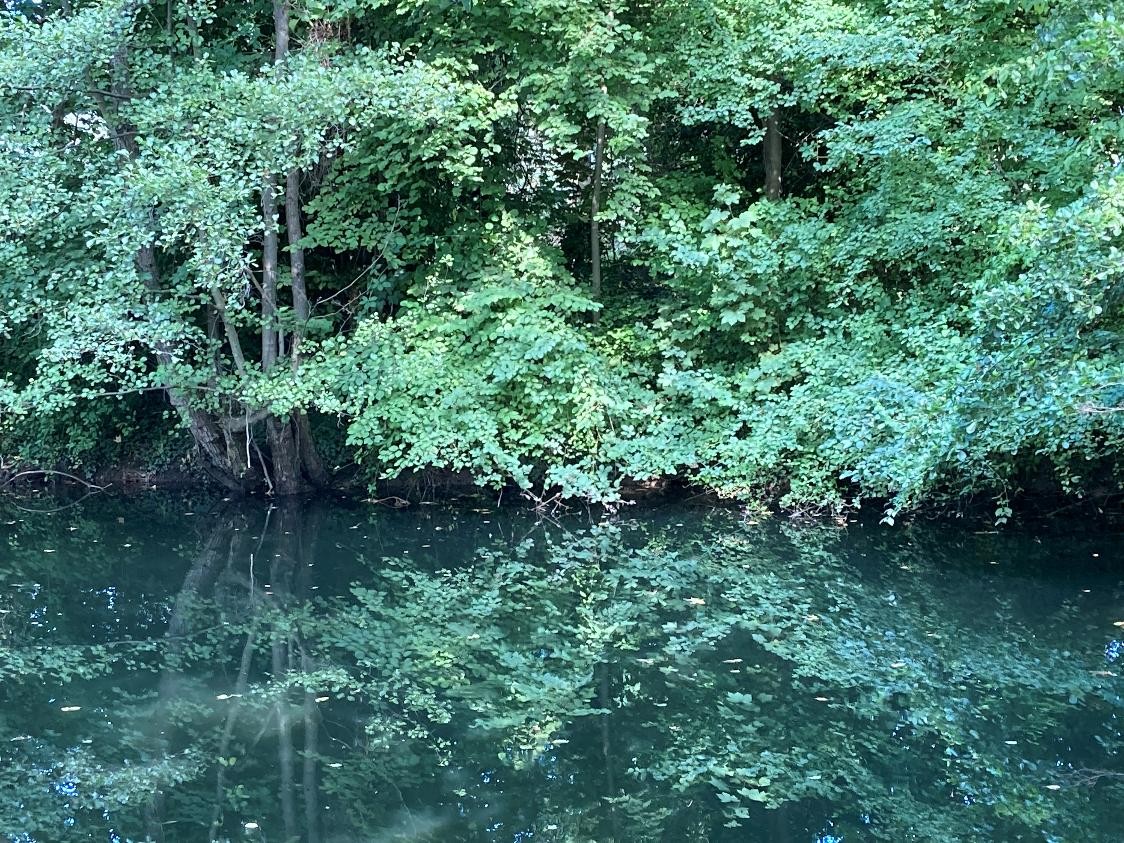
Deciduous forest along an etang (pond) near the Ill River north of Strasbourg.
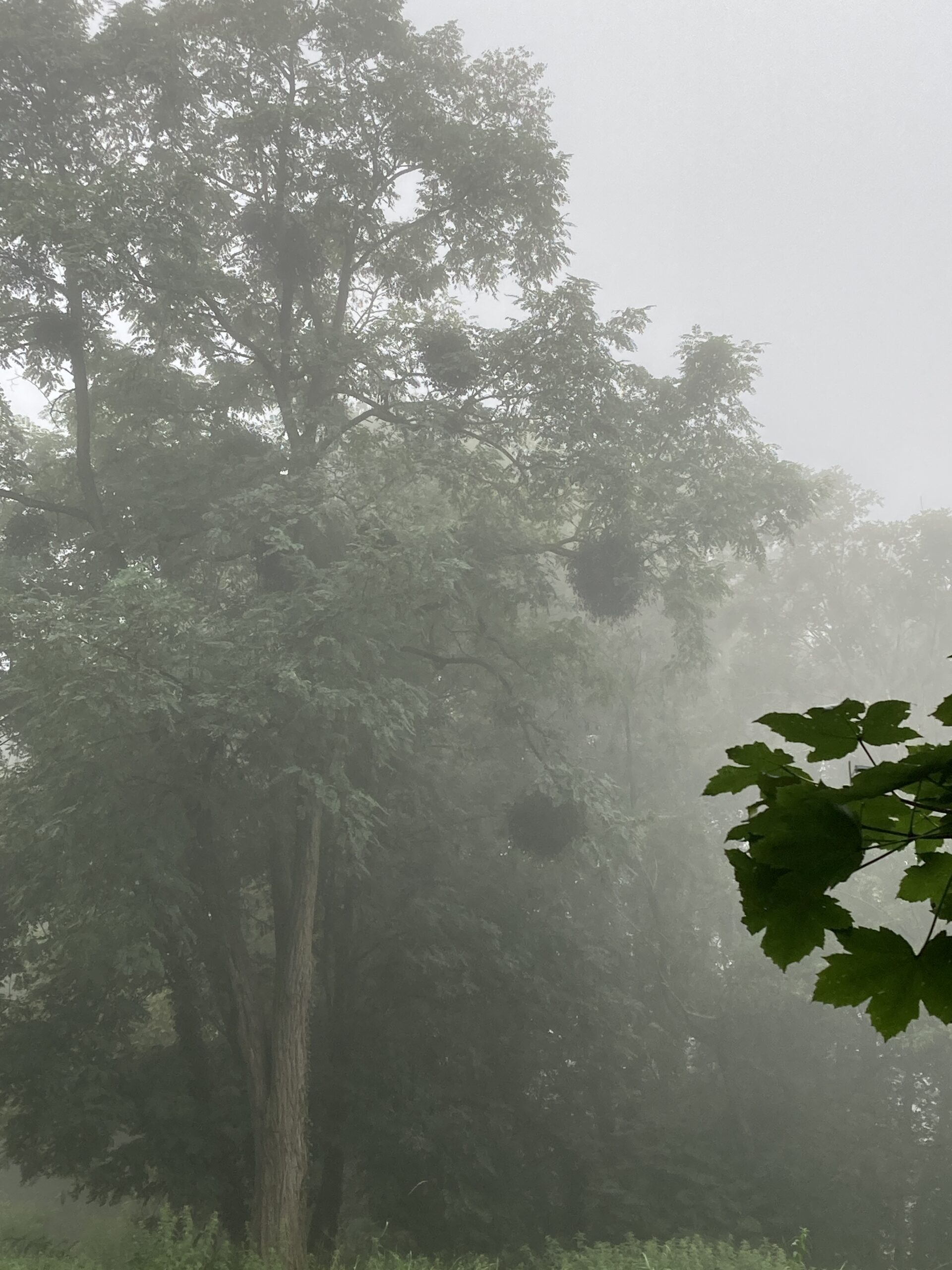
Ill River in fog, north of Strasbourg.
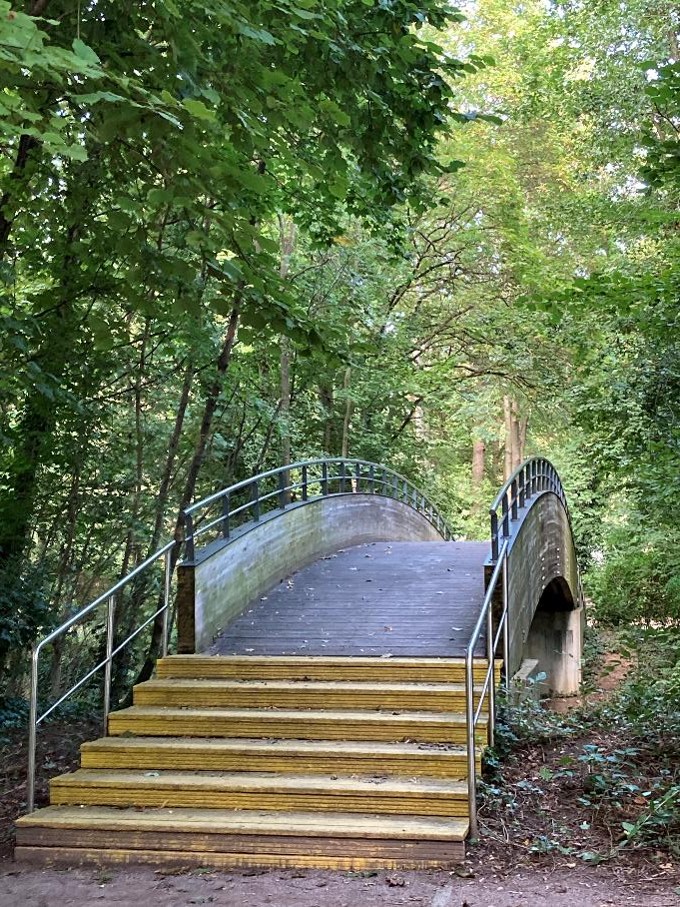
Footbridge near the north bank of the Ill River, near Cite d’Ill north of Strasbourg, France.
Springtime floodplain forest along Ill River north of Strasbourg, with ail-d’ours (bear garlic, Allium ursinum).
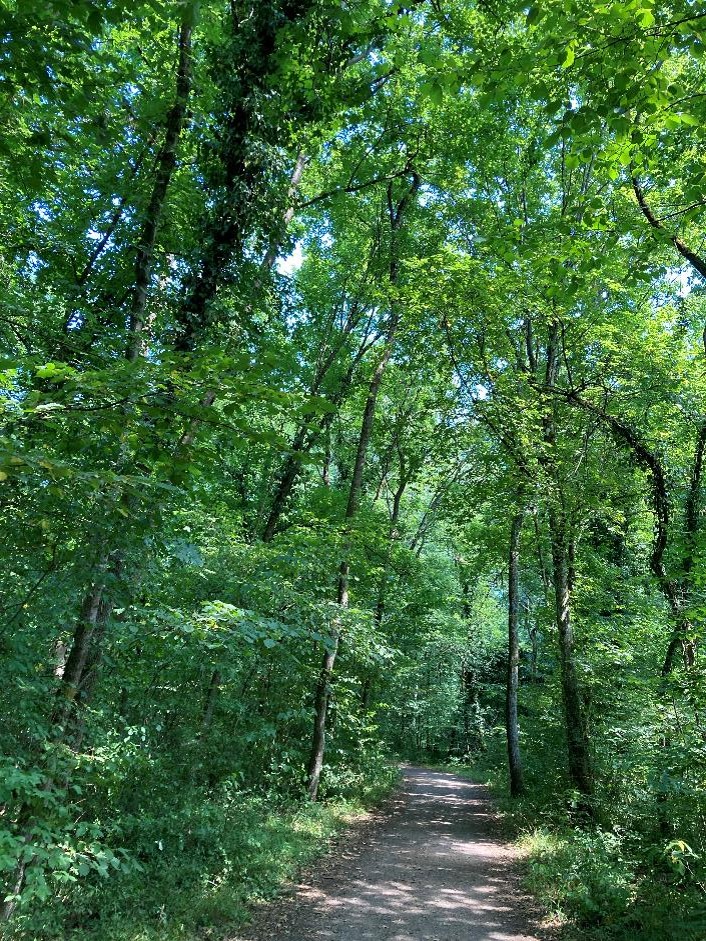
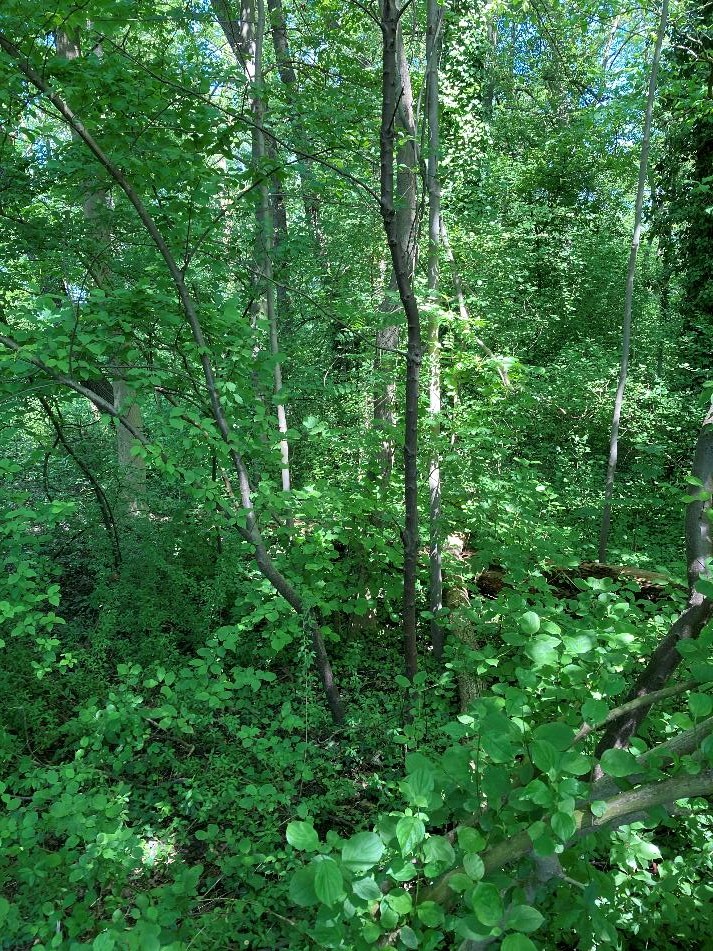
Regrown deciduous forest near Lake Balastiere, Bischheim, north of Strasbourg, France.
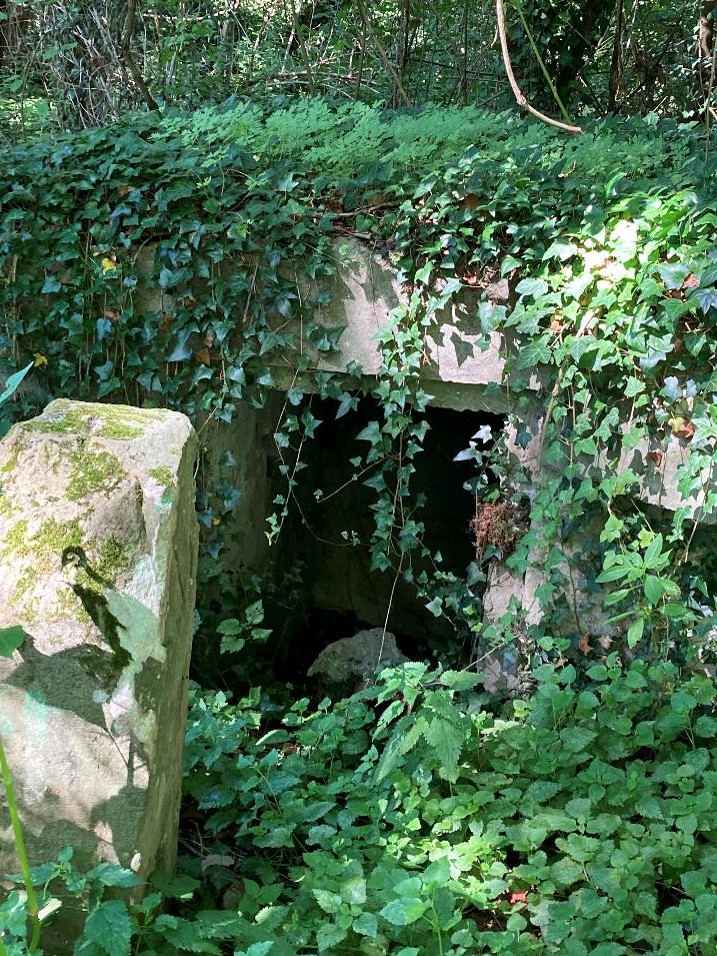
Old concrete bunker built before World War II to defend France from Nazis coming over the Rhine river a mile away. The bunkers were not used because the Nazis invaded through Belgium, from the north, rather than across the Rhine, from the east.
Strasbourg
City
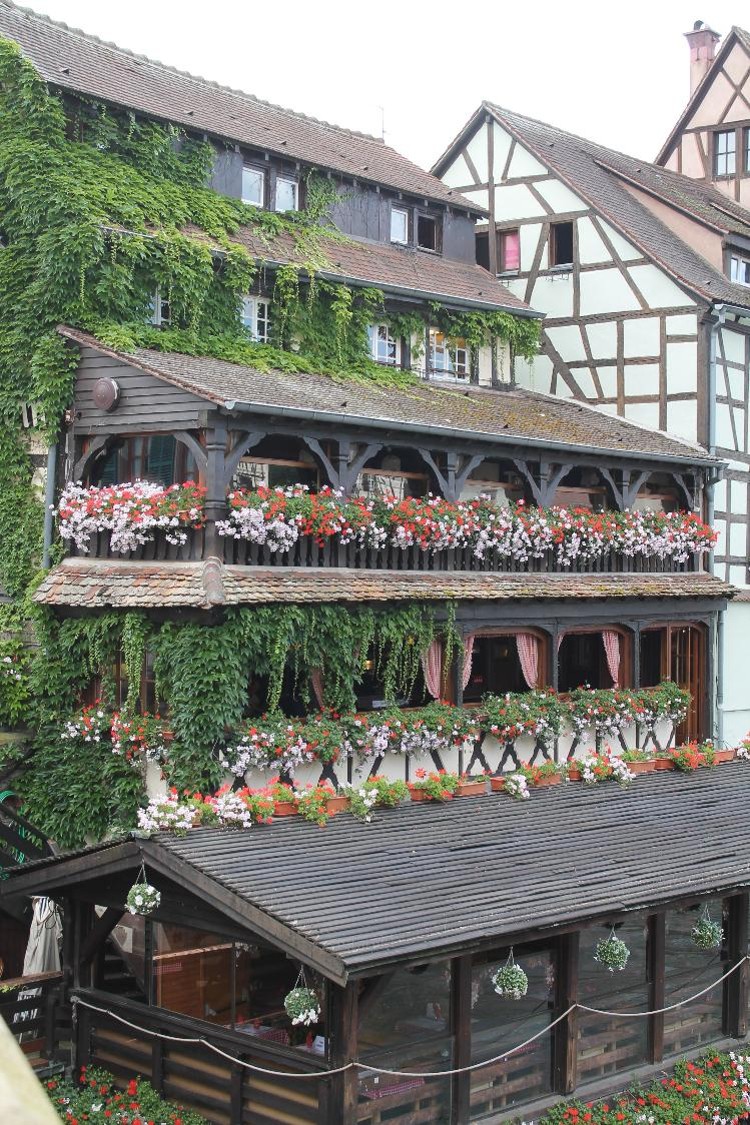
The Barrage Vauban was meant to be not only a bridge across the Ill as it entered Strasbourg but also a fort where the drawbridges could be closed to repel enemy attack.
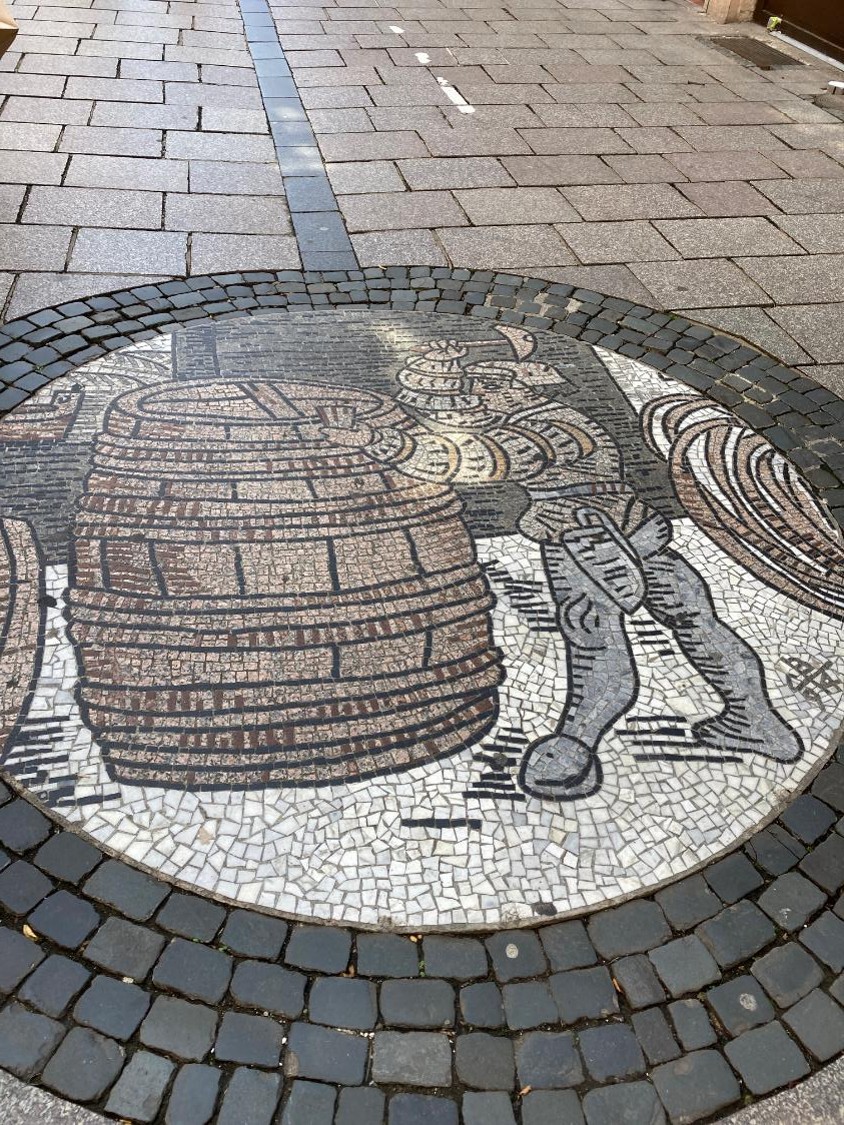
Quarter of the tonneliers (barrel-makers or coopers) in Strasbourg.
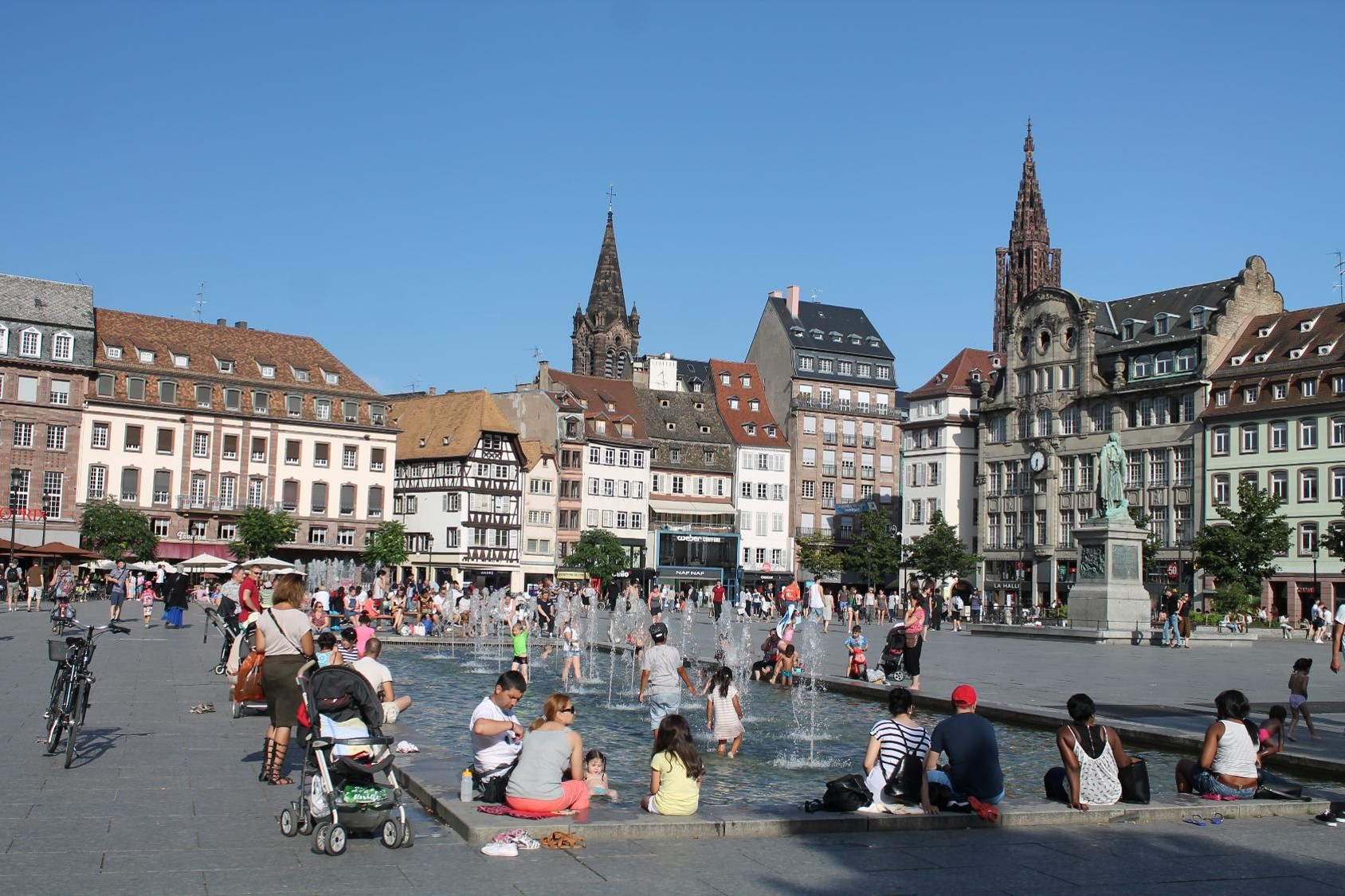
In the hot summer, the Place Kleber with its fountains is the place for families to bring their kids to go wading, in the shadow of the Cathedral and of General Kleber.
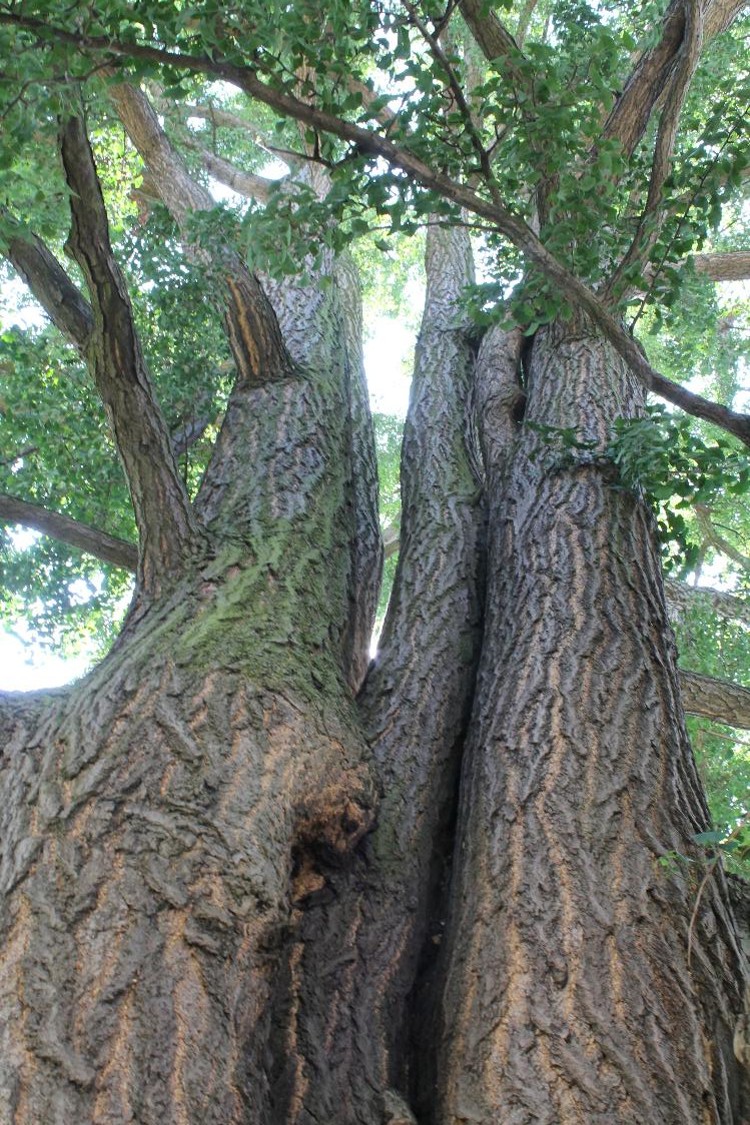
Gigantic ginkgo trees grow in the Place Republique. The trees were the gift of the Emperor of Japan in the nineteenth century.
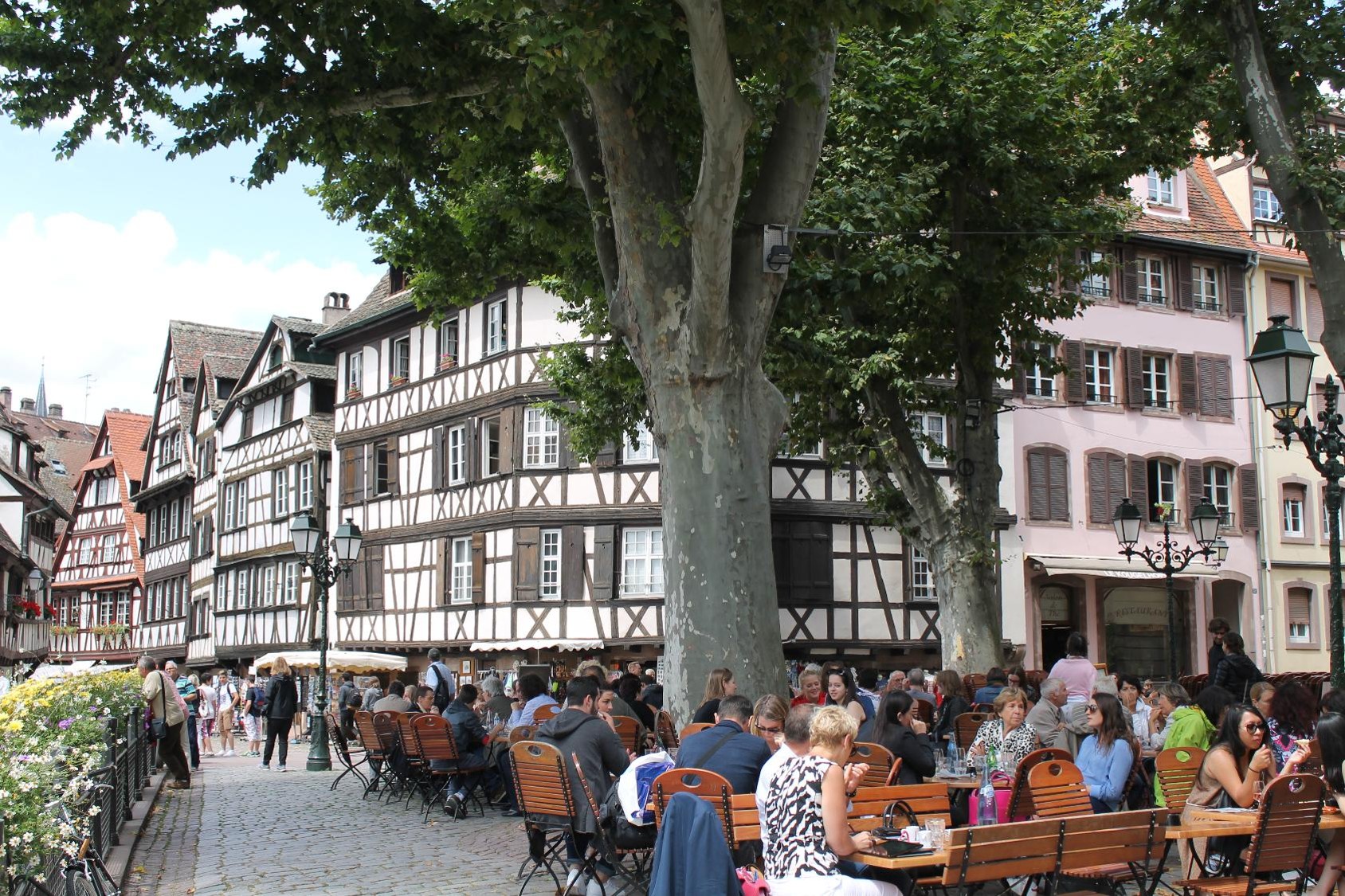
Petite France is one of the most picturesque areas of Strasbourg.
The Parliament building for the entire European Union is located in Strasbourg.
Storks nest on platforms on chimneys of old buildings, here Josephine’s palace in the Orangerie. The storks will build their nests there anyway, you can’t stop them, so the platforms keep the sticks from falling into the chimney, clogging it, and starting a fire. The Orangerie is the favorite place for storks to build nests.
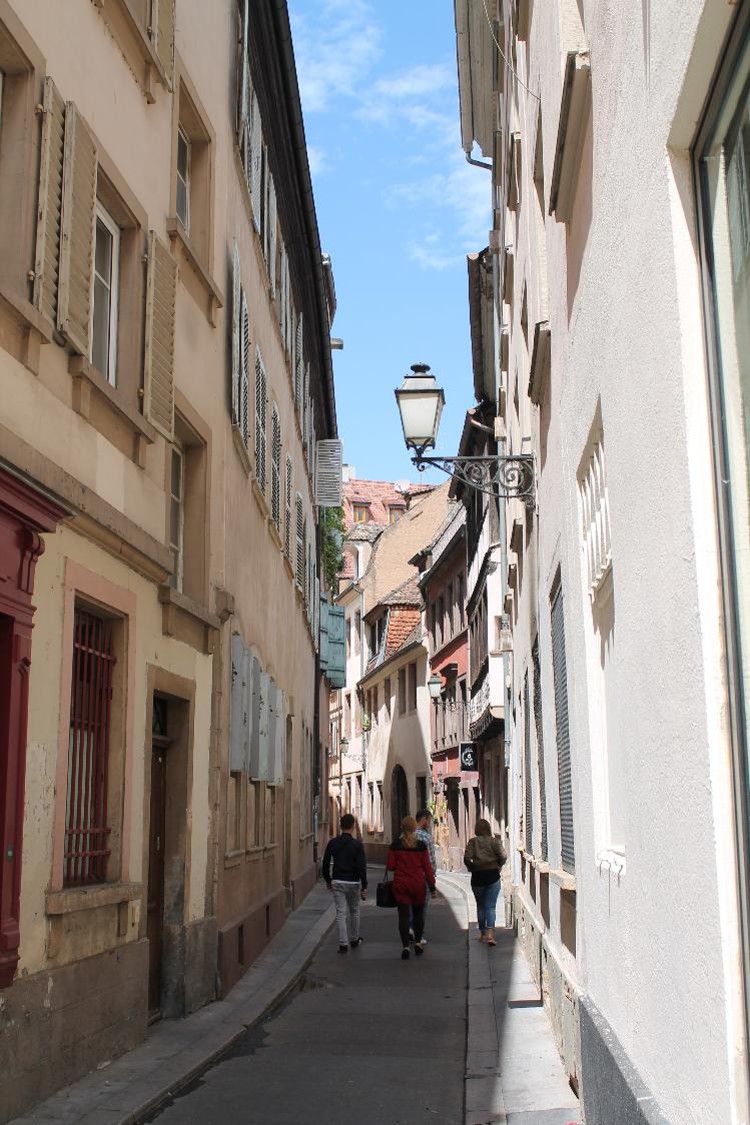
Many streets in medieval Strasbourg were narrow, and they still are today.
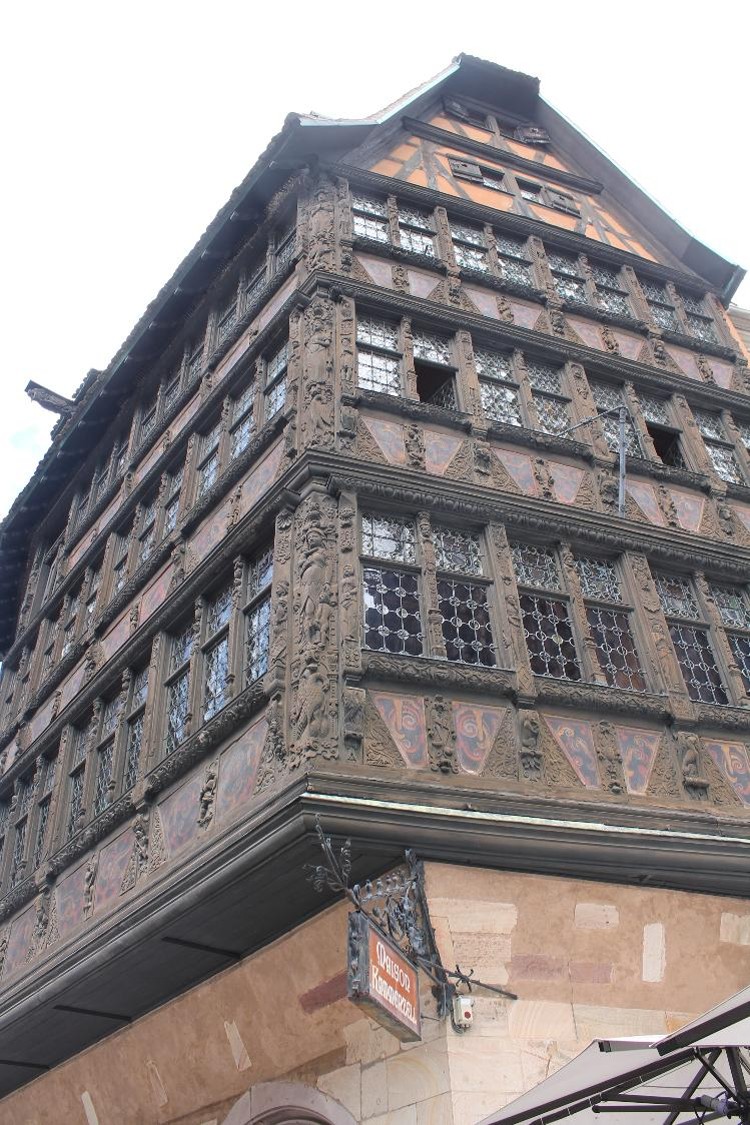
The Maison Kammerzell, right on the Strasbourg Cathedral square, has been serving customers since 1427.
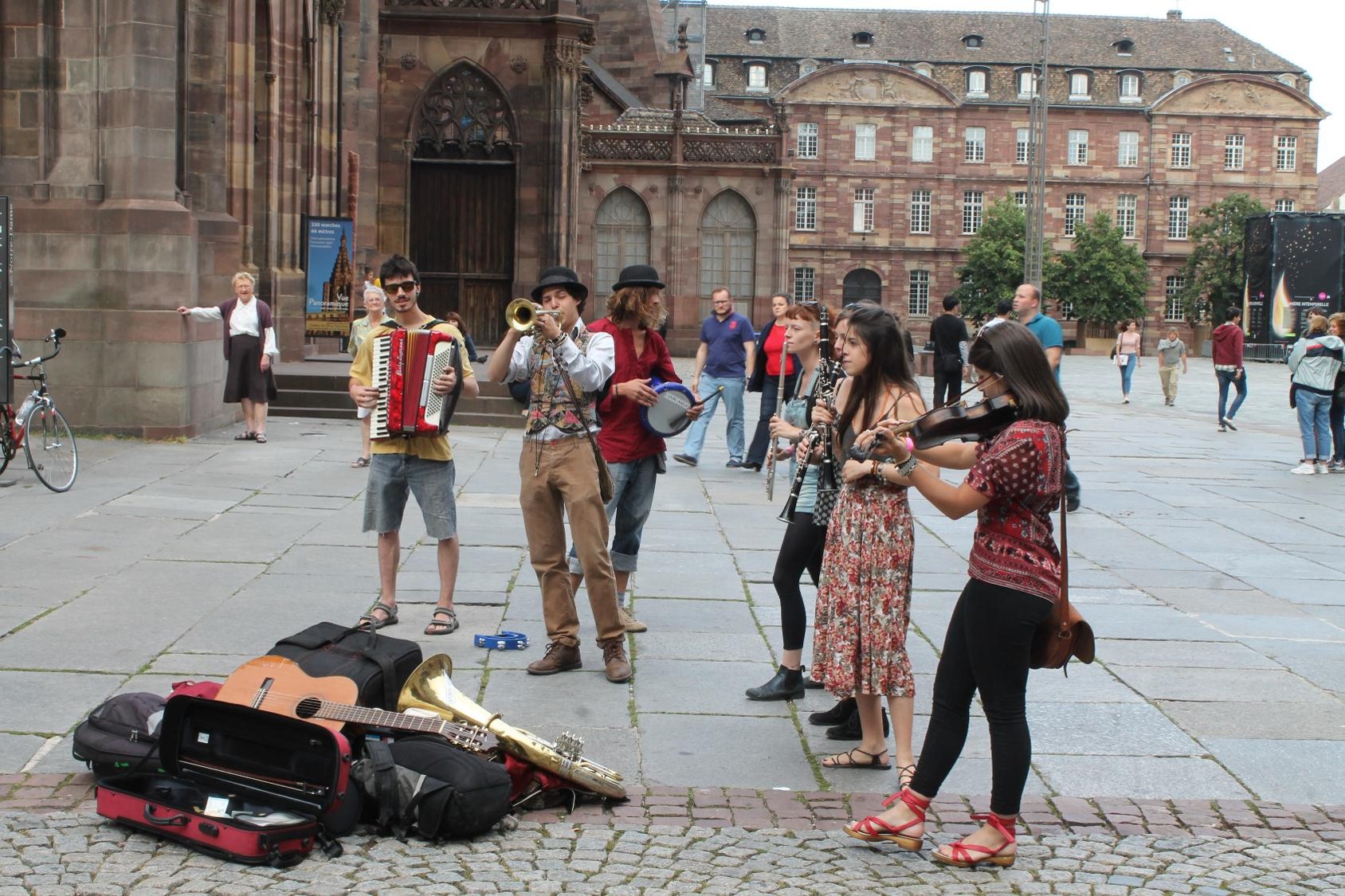
One day in 2016 a klezmer band showed up at the base of the Cathedral and played really fun music. The trumpet/euphonium player even danced around a little as he played. The Cathedral is at the center of centuries of oppression and killing of Jews in Strasbourg, including when Hitler stood at the Cathedral, but now they can celebrate being Jewish. But there is some lingering fear: antisemitic vandalism still occurs, and the band dispersed immediately after they played. Their performance was not announced, lest it attract antisemitic people.
Passerelle (pedestrian bridge) over the Ill in Strasbourg.
Lycee Internationale des Pontonniers, along the Ill River in Strasbourg. It was a military building but today is a high school.
Statue of Gutenberg in Place Gutenberg, near the Cathedral. Gutenberg spent part of his career in Mainz, and part in Strasbourg. He invented the printing press, which forever changed the ability to preserve and spread information and ideas.
One of the panels at the base of the statue of Gutenberg in Place Gutenberg, near the Cathedral. Gutenberg spent part of his career in Mainz, and part in Strasbourg. He invented the printing press, which forever changed the ability to preserve and spread information and ideas. This panel shows the men who signed the American Declaration of Independence, with Benjamin Franklin holding the declaration. The continental congress did not have a printing press, but it was the printing press that spread the word of independence and changed world history. One eventual result was the end of slavery (lower right).
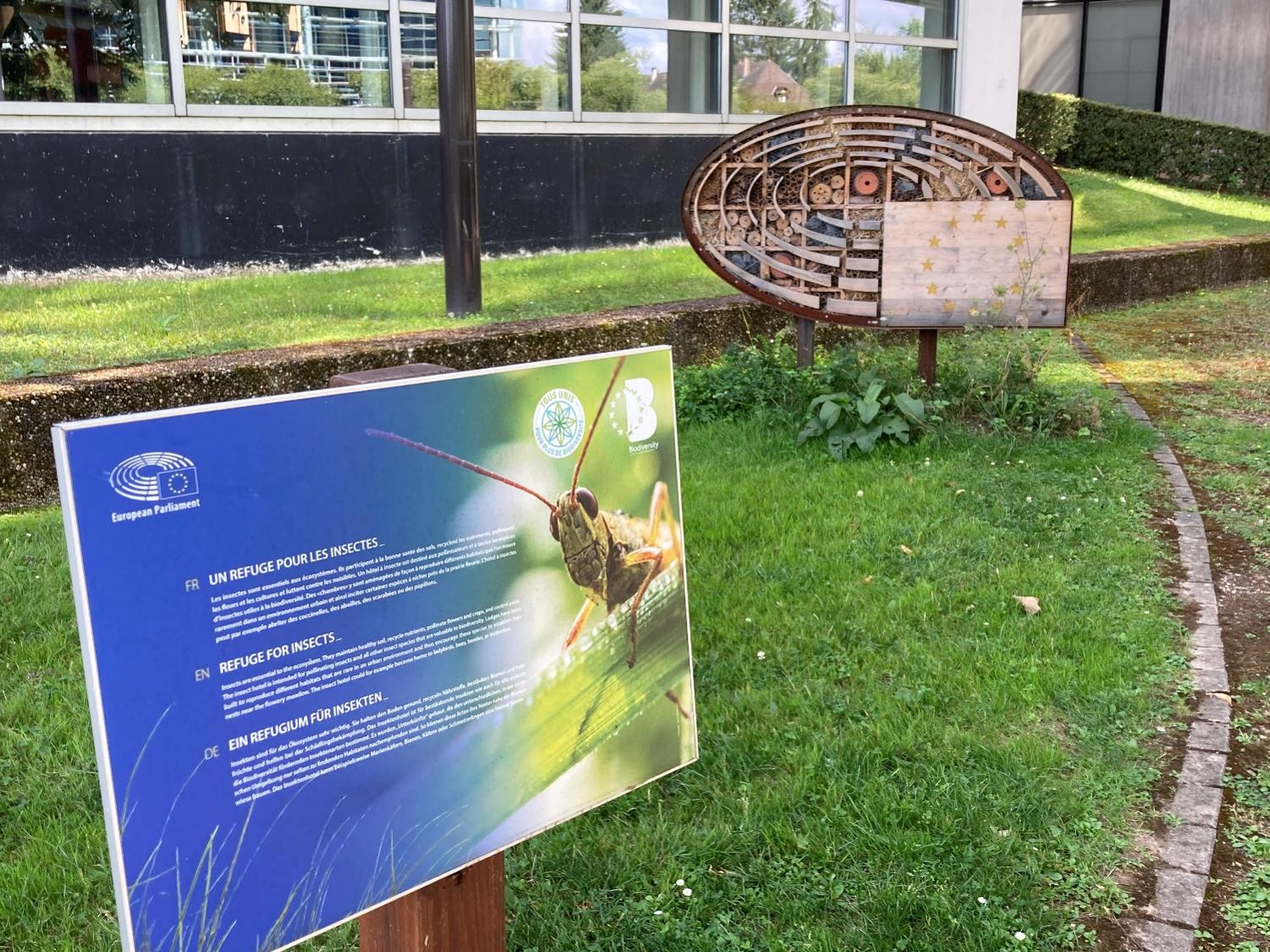
An “insect hotel” near the European Parliament building in Strasbourg. There are many such insect hotels in the world, which provide shelter for beneficial insects that might otherwise get driven out by invasive insects. The European Union installed this to proclaim its devotion to ecological sustainability.
Droits de l’Homme, near the European Parliament building in Strasbourg. This is one of the most important courts for deciding a response to human rights violations. The building is shaped like a ship bearing refugees from oppression.
An old courtyard in downtown Strasbourg, France.
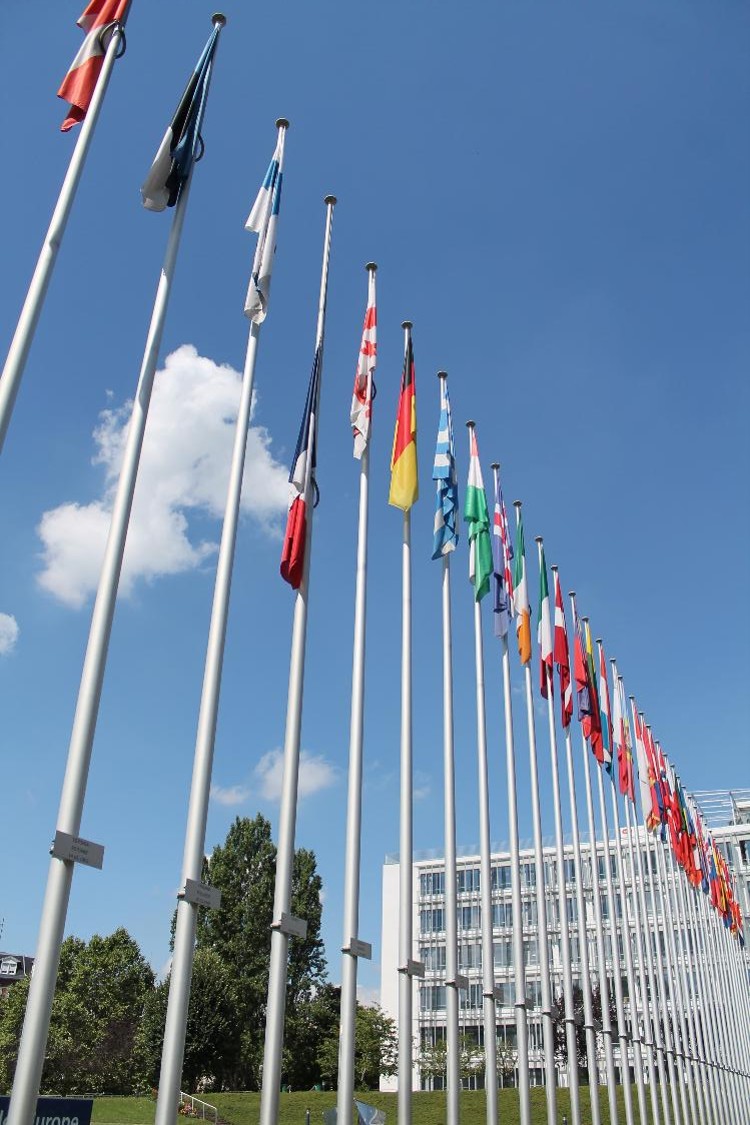
Flags outside the Council of Europe in Strasbourg, 2016. The French flag is at half-staff because of a recent terrorist attack. This photo was taken before Brexit.
Quarter of the tonneliers (barrel-makers or coopers) in Strasbourg.
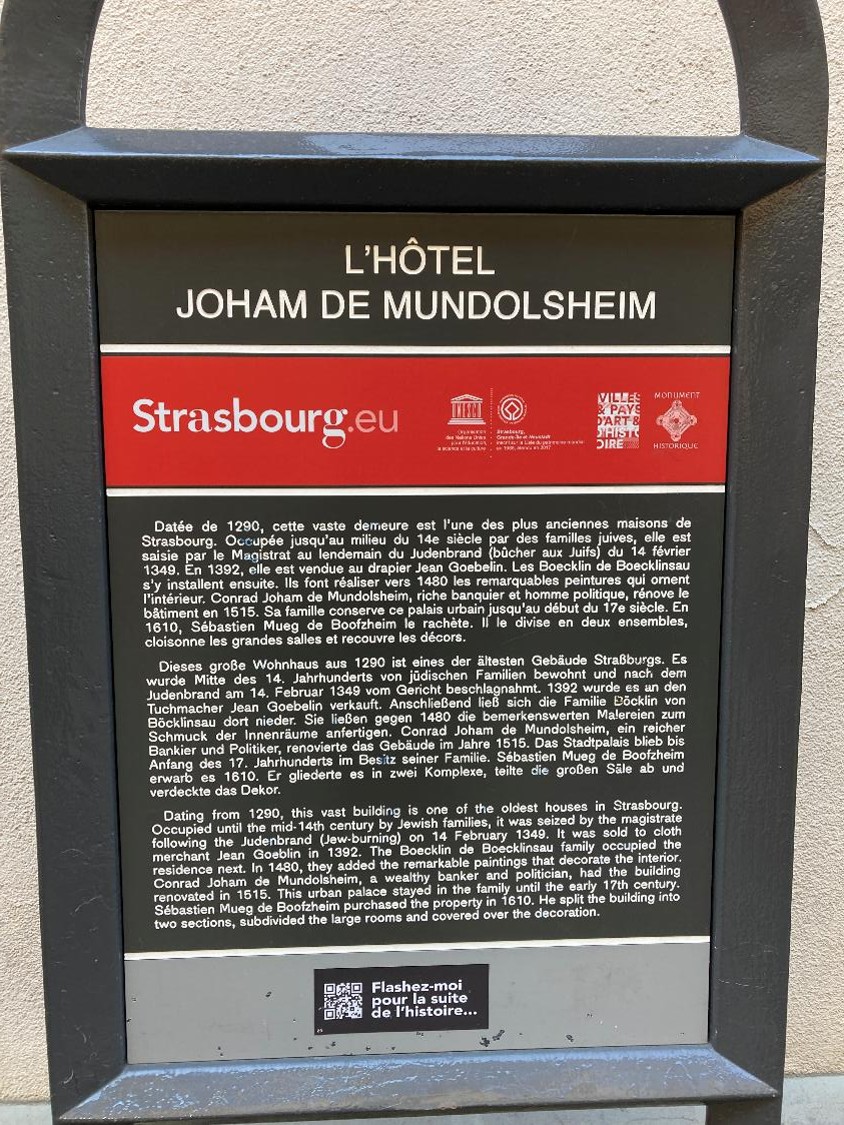
Commemorative plaque of Hotel Joham de Mundolsheim, one of the oldest houses in Strasbourg. Jewish families lived in this house until the Jew-burning of Valentine’s Day 1349, an event commemorated in the name of a nearby street, Rue Brulee.
An old renovated building in Strasbourg, showing the colombage (wood beam) architecture.
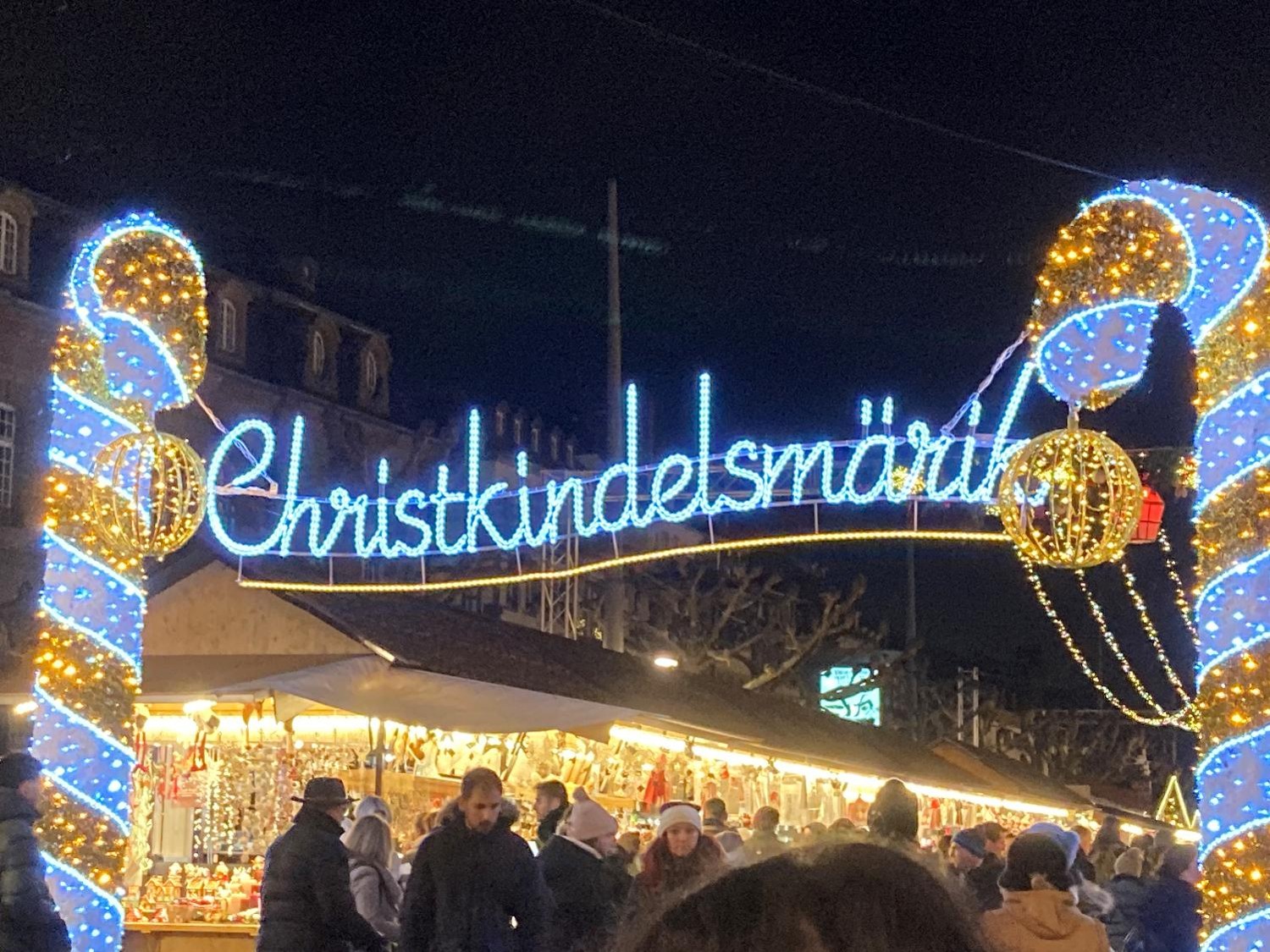
The Strasbourg Christmas Market, which fills Place Kleber and Place Broglie and other places, draws visitors from all over the world. “Marik” is Alsatian for market.
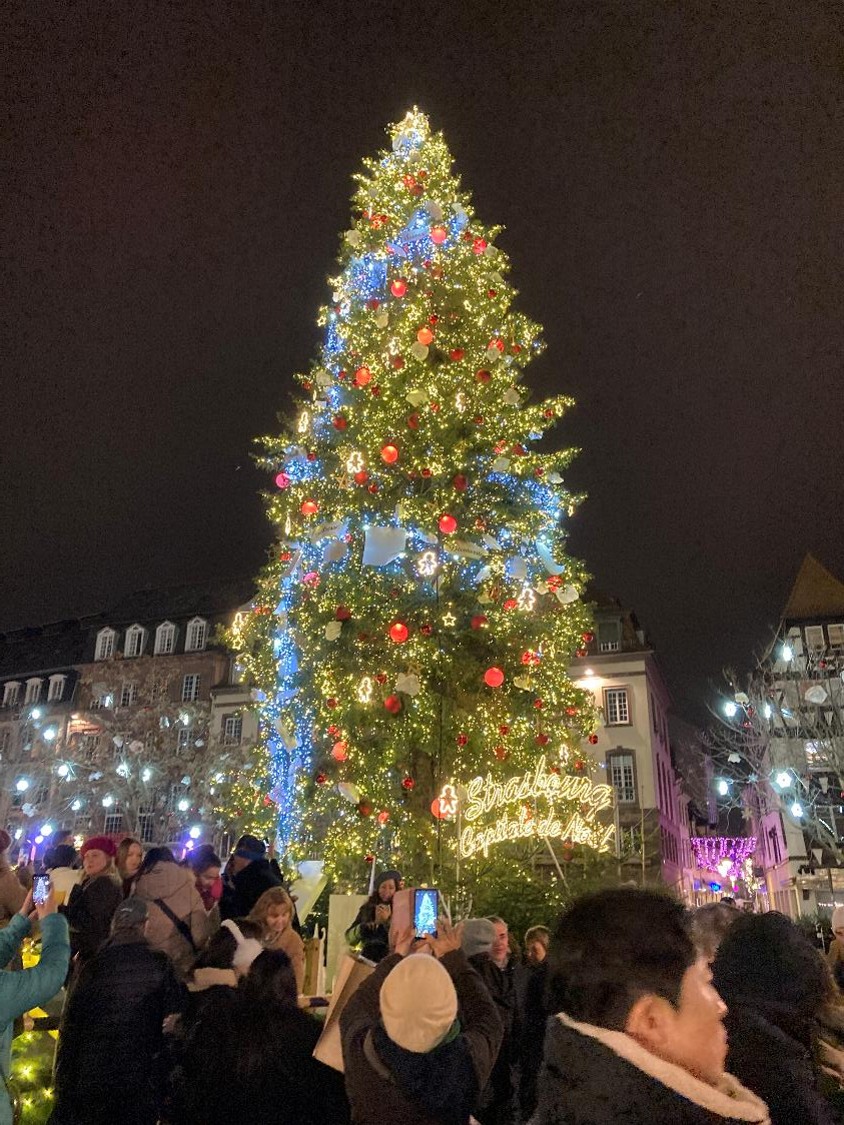
The Strasbourg Christmas Market, which fills Place Kleber and Place Broglie and other places, draws visitors from all over the world. It was the world’s tallest Christmas tree every year.
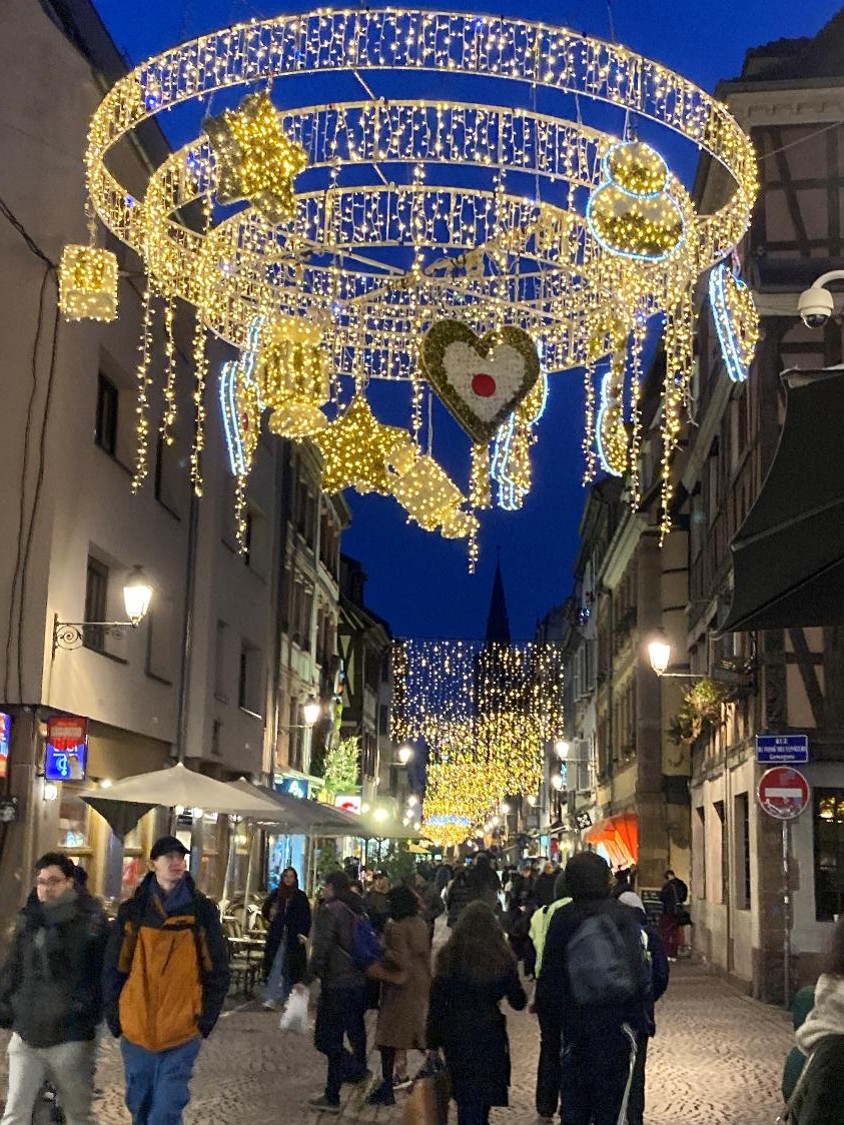
The Strasbourg Christmas Market, which fills Place Kleber and Place Broglie and other places, draws visitors from all over the world.
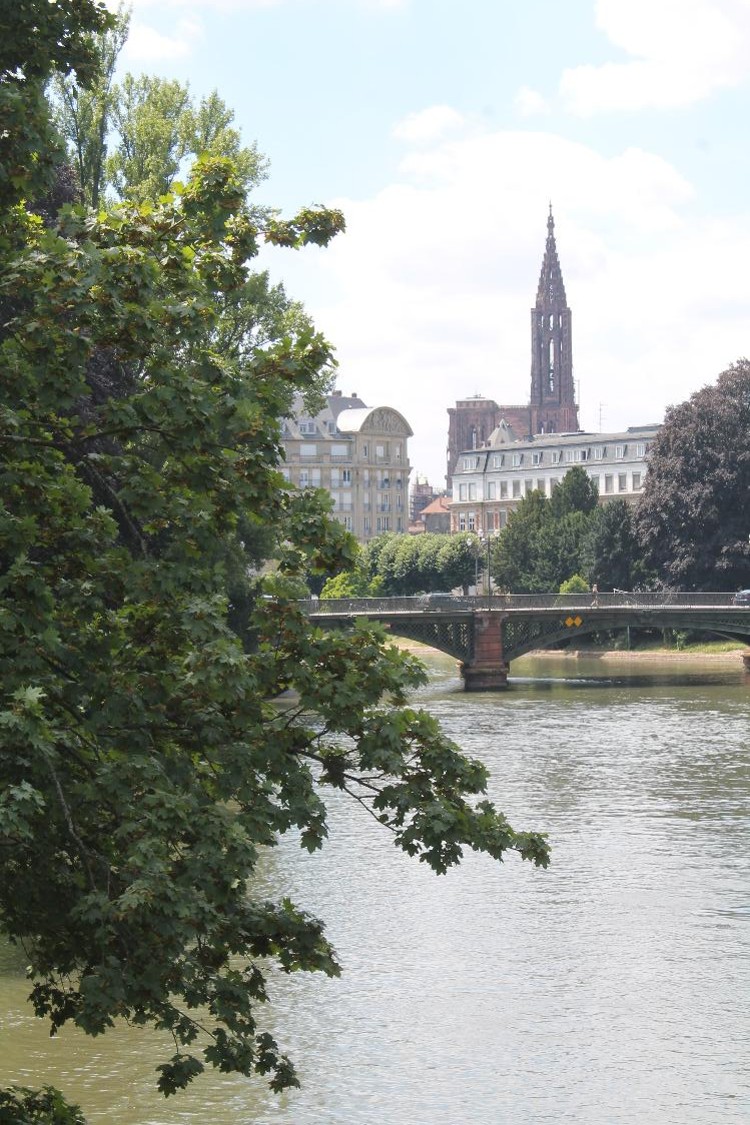
Strasbourg Cathedral (Notre Dame) seen from the Ill River.
Government buildings at the Place Broglie celebrate inclusiveness as a modern European value.
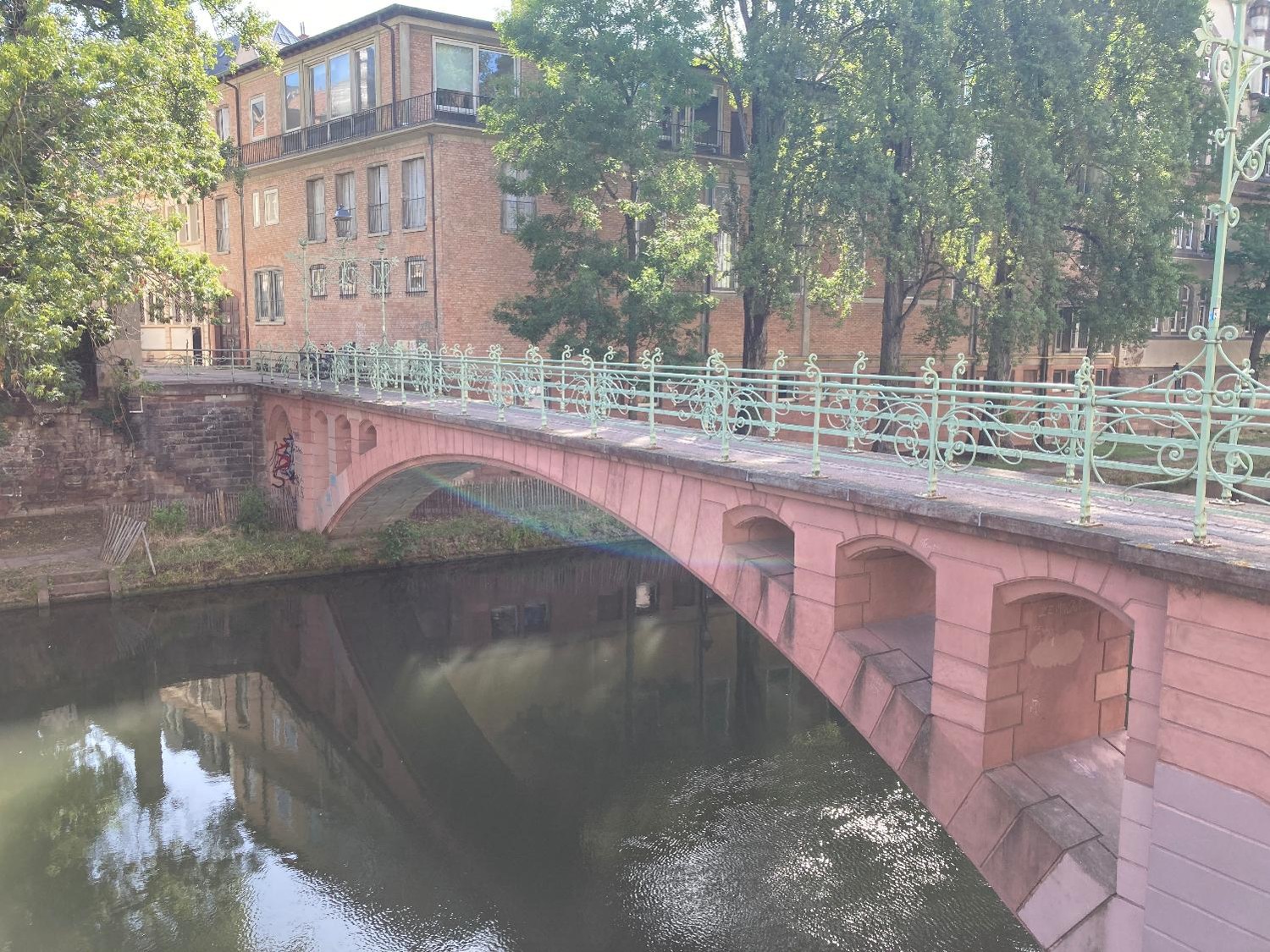
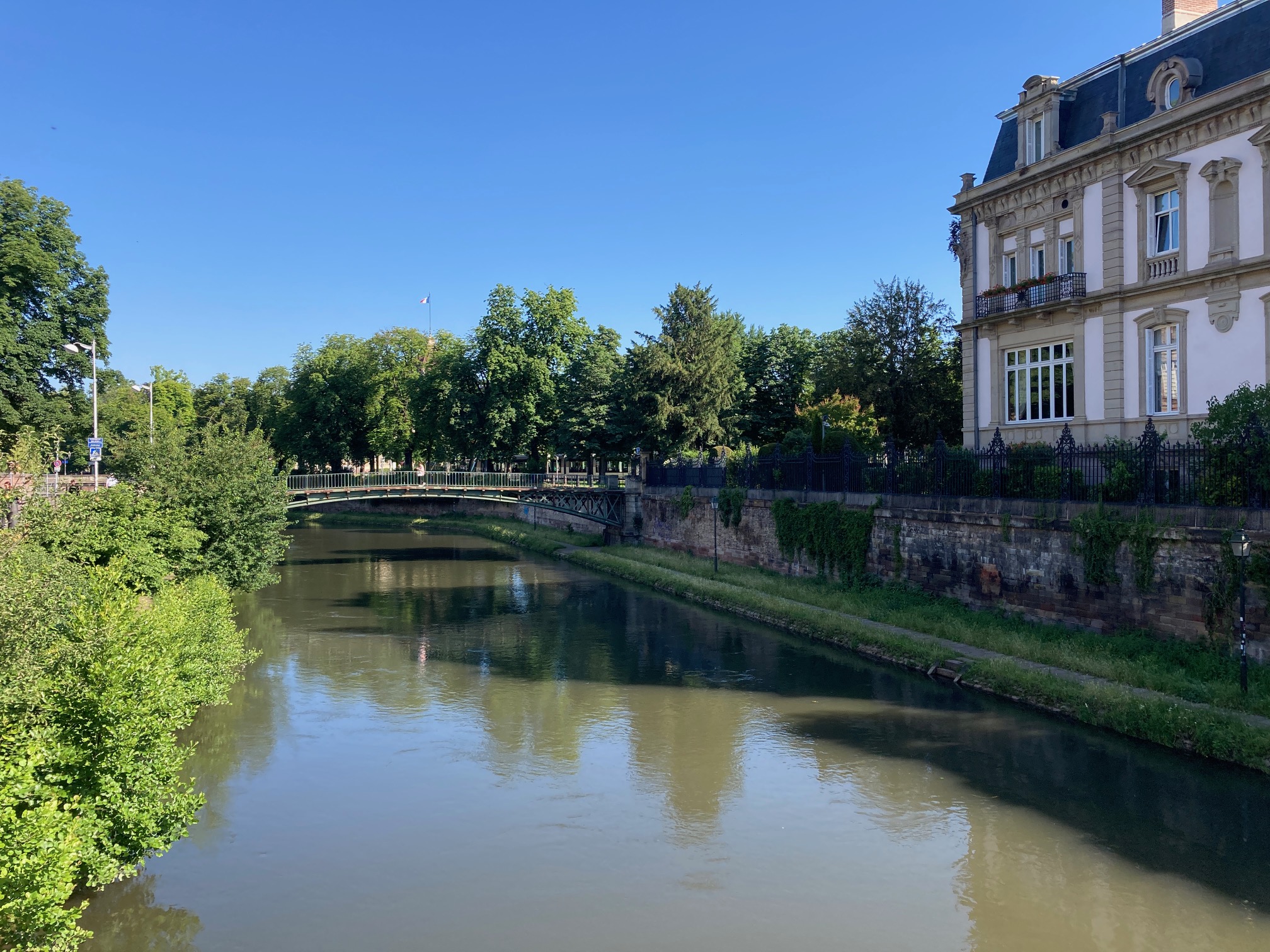
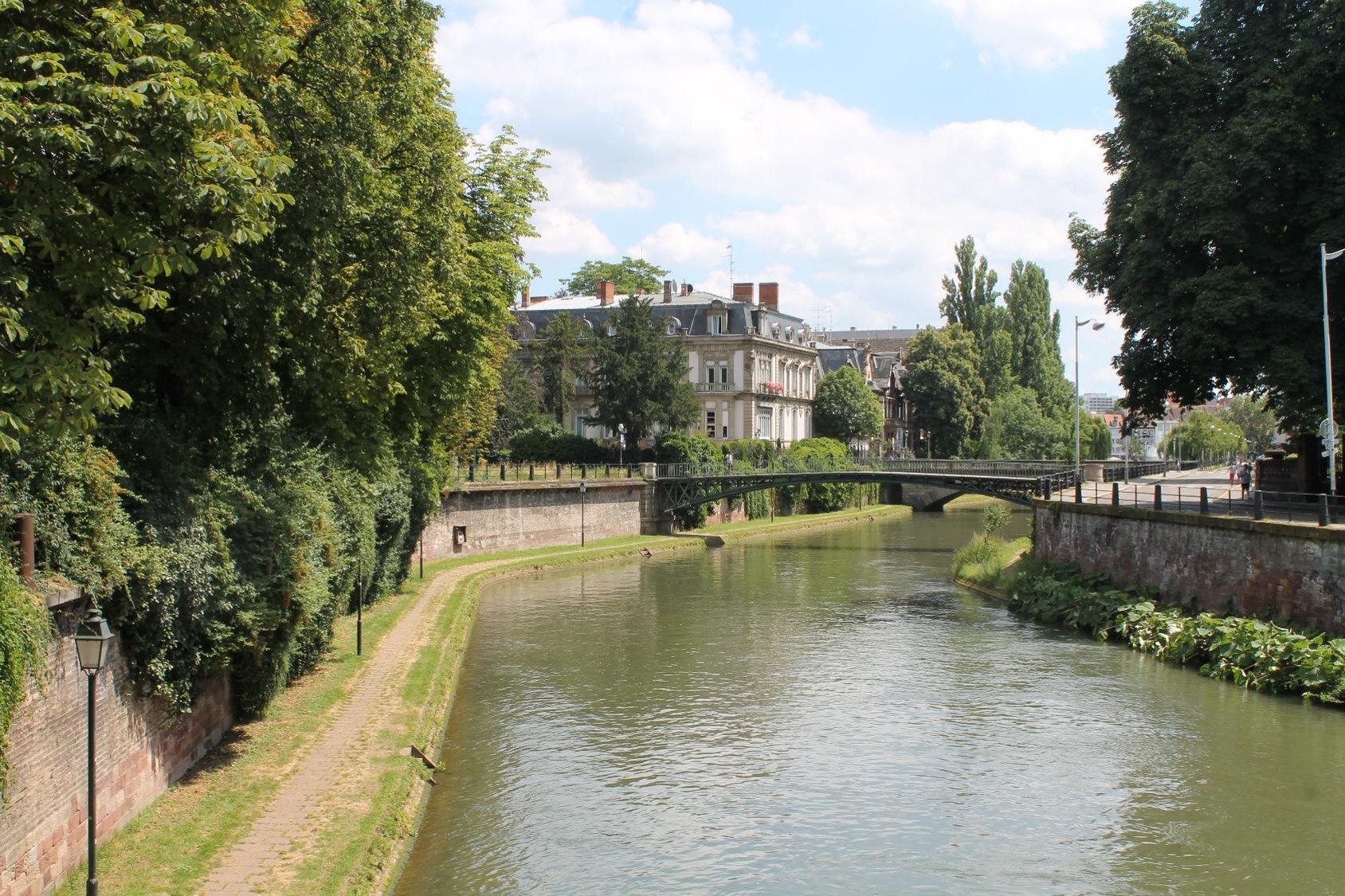
Old bridge over one of the canals that separates Old Strasbourg from the newer districts.
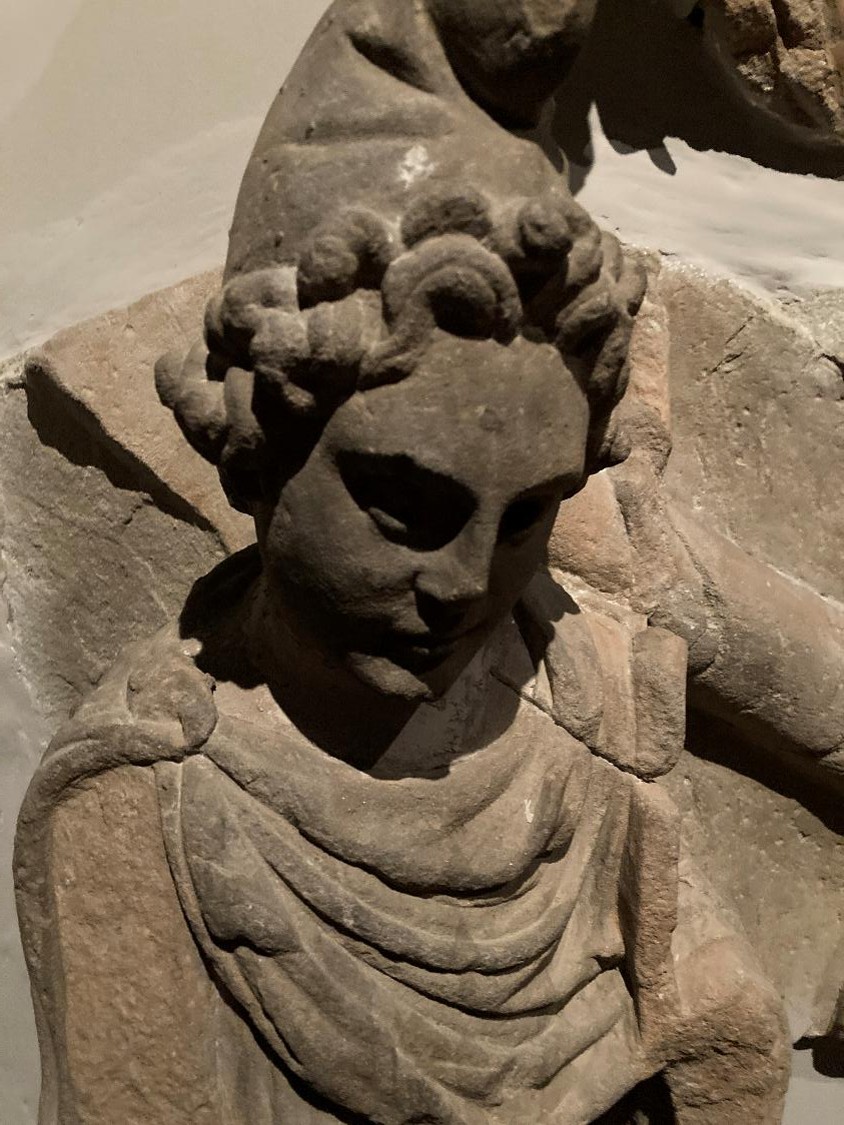
A statue, now in the Archaeology museum, from the period of Roman occupation of France (then Argentoratum).
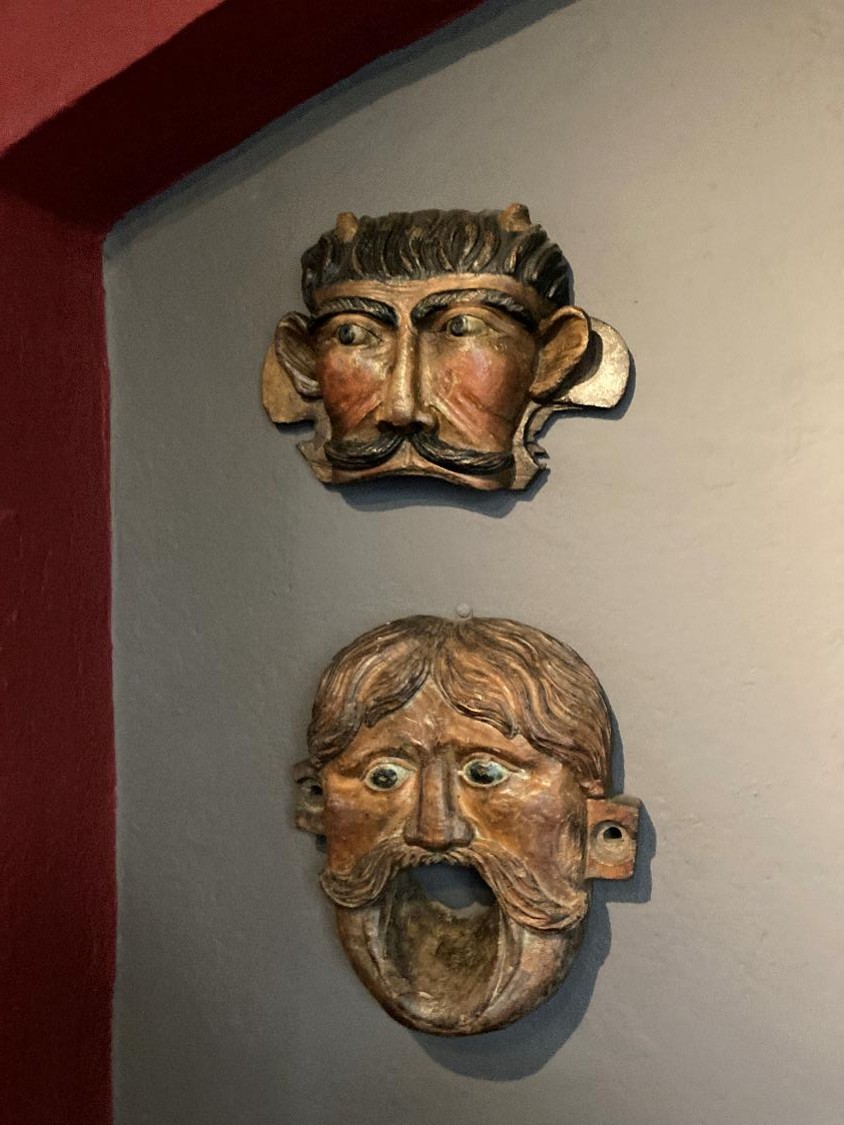
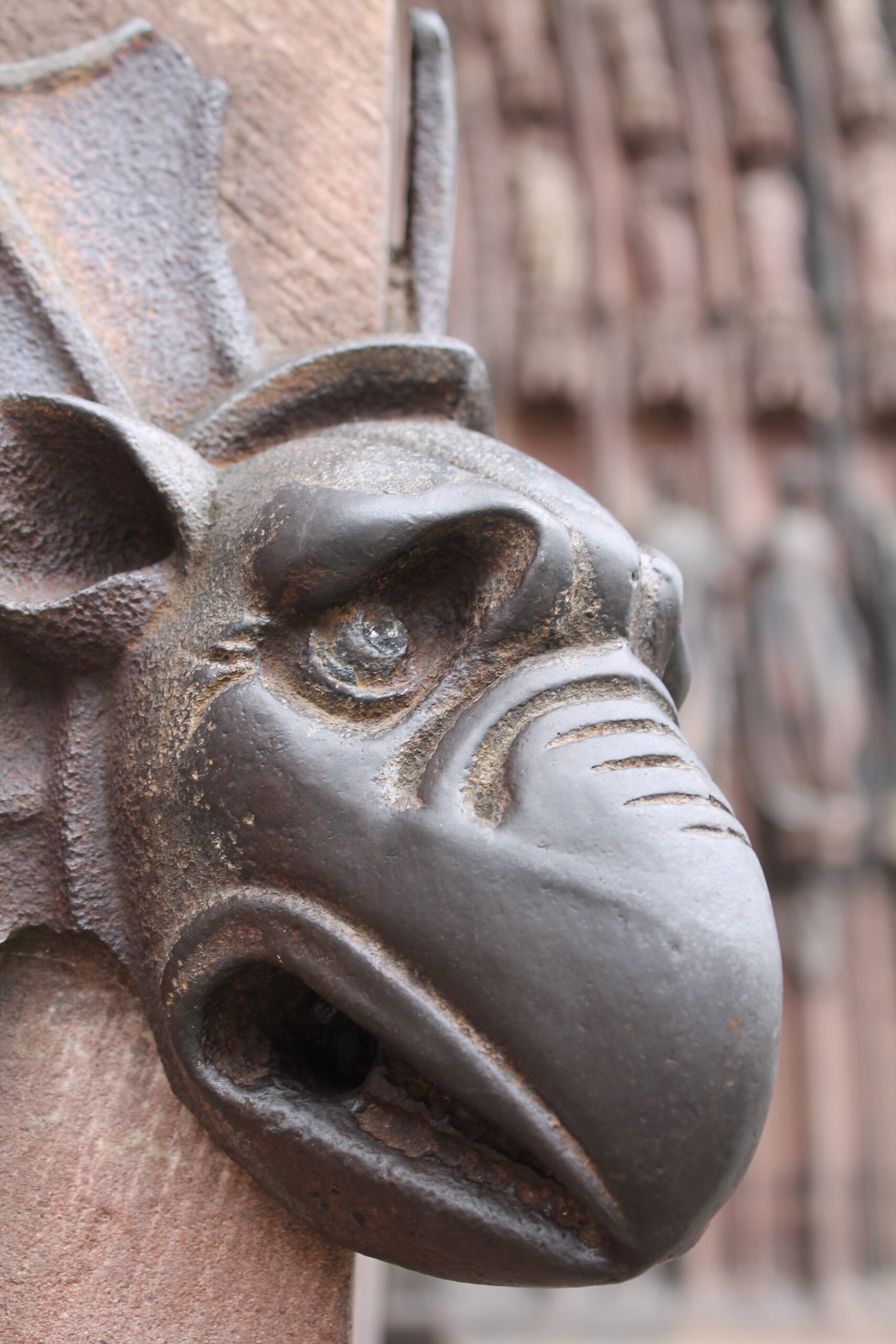
Gargoyle masks from the Alsatian historical museum. Gargoyles were masks at the end of rainspouts.
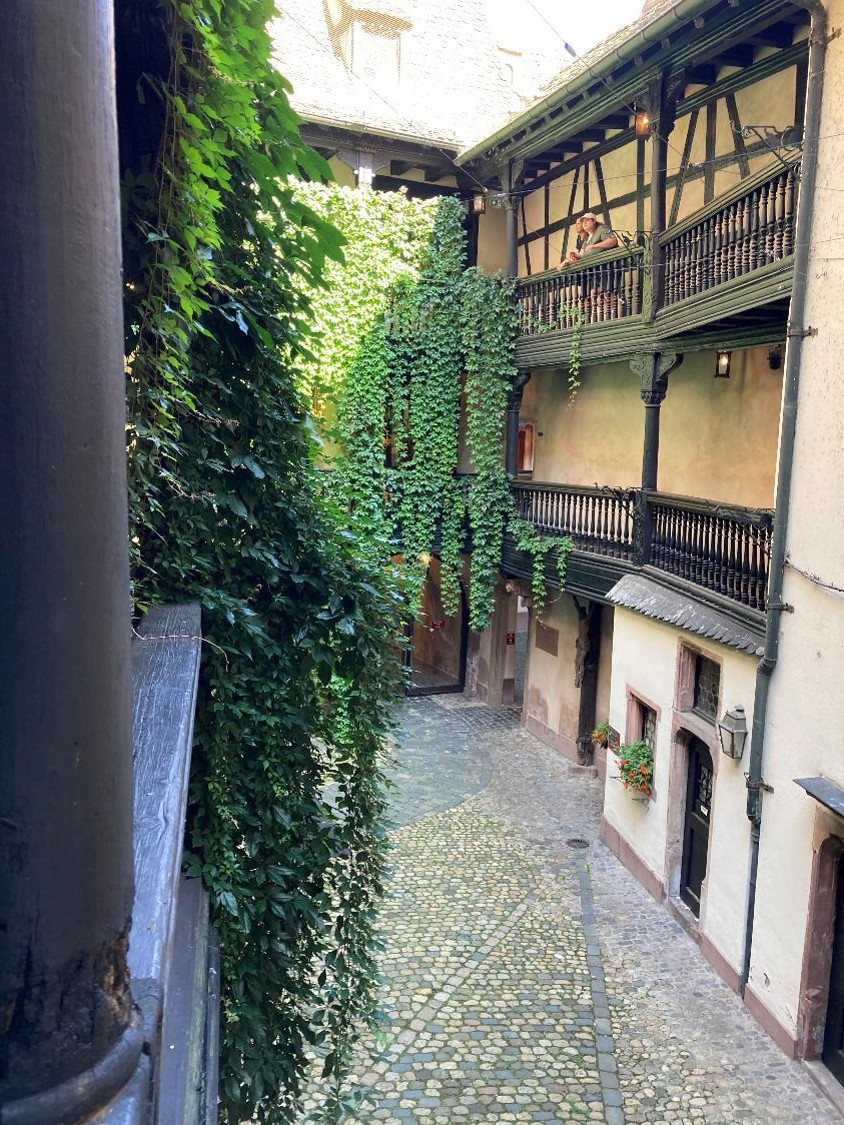
Courtyard of the Alsatian museum in Strasbourg, France.
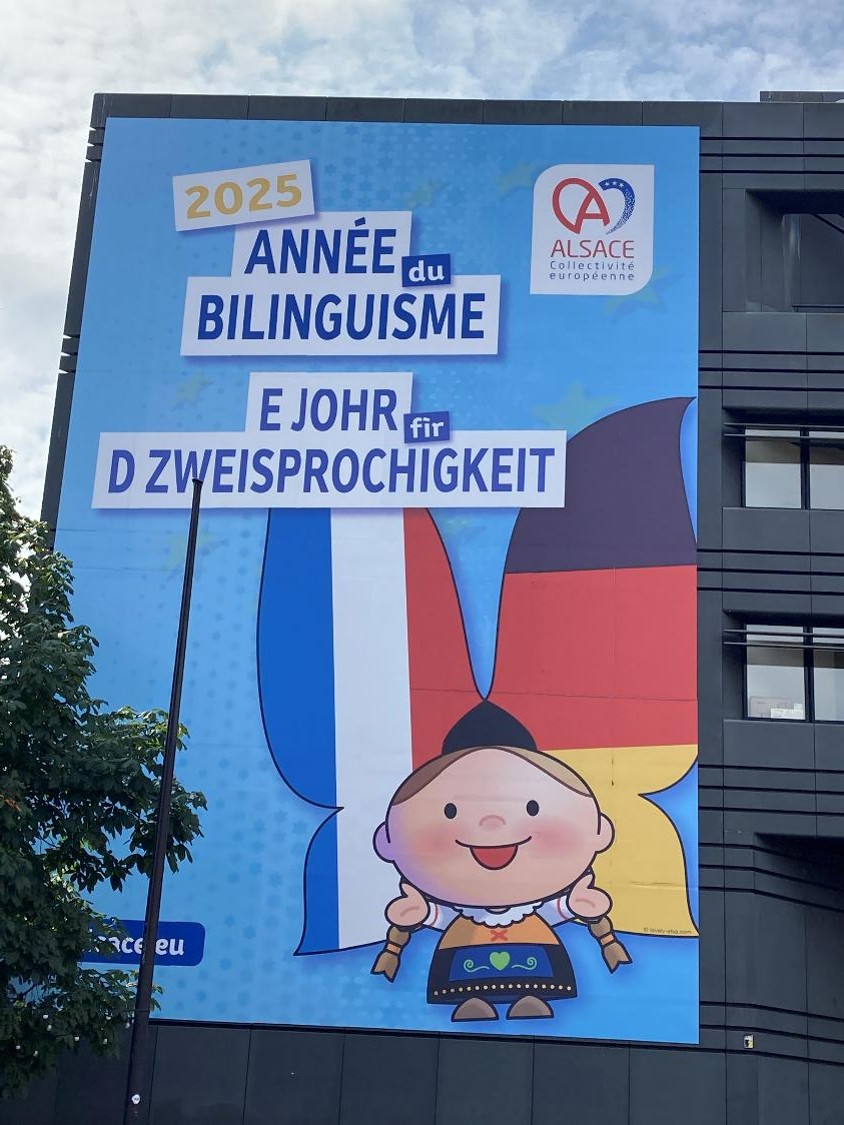
Banner outside of the Alsatian government building in Strasbourg. The traditional language is Alsatian, similar to German, but the official language is French. The girl’s headdress is in the shape of the traditional Alsatian bonnet and sports the colors of France and of Germany. The symbol for Alsace looks like a traditional Alsatian pretzel.
Strasbourg, France, along the Ill River.
Old Strasbourg along the Ill River.
Many streets in medieval Strasbourg were narrow, and they still are today.
St. Michael’s church, Strasbourg, France.
From the Museum of the construction of the Cathedral in Strasbourg, which contains many artifacts no longer in the cathedral. According to tradition, one of the Magi was African.
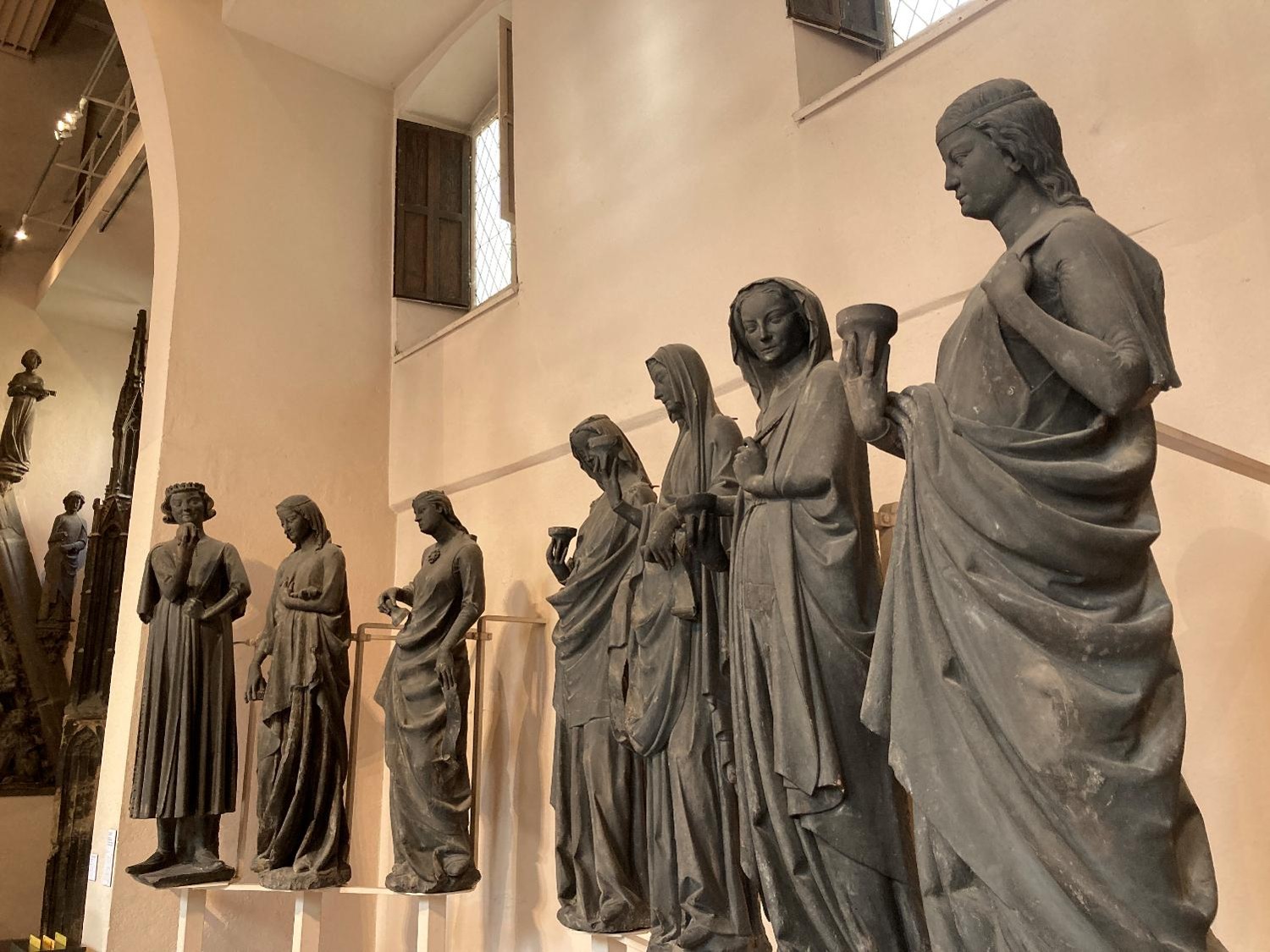
From the Museum of the construction of the Cathedral in Strasbourg, which contains many artifacts no longer in the cathedral. Statues of the seven foolish maidens from Jesus’ parable.
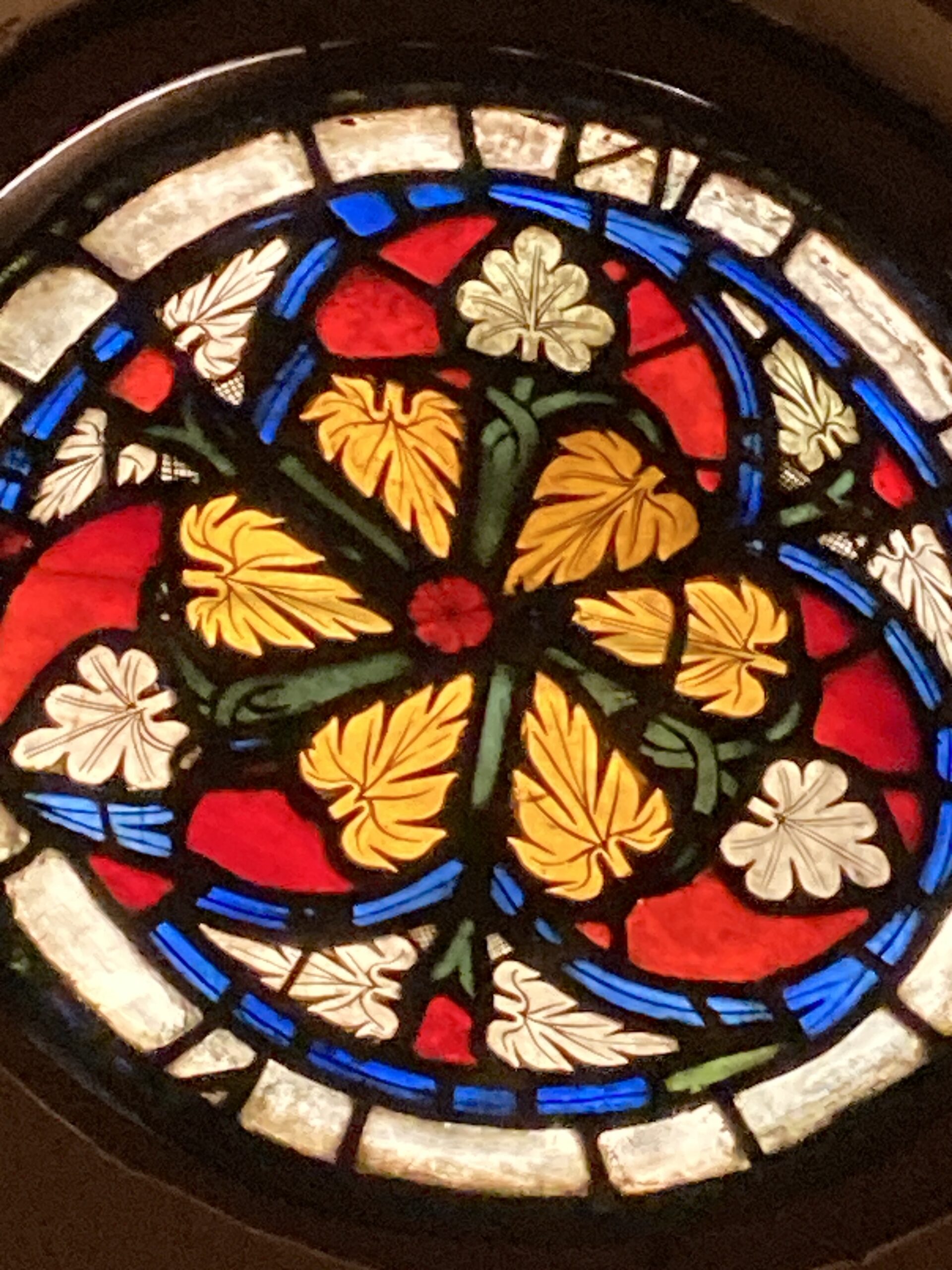
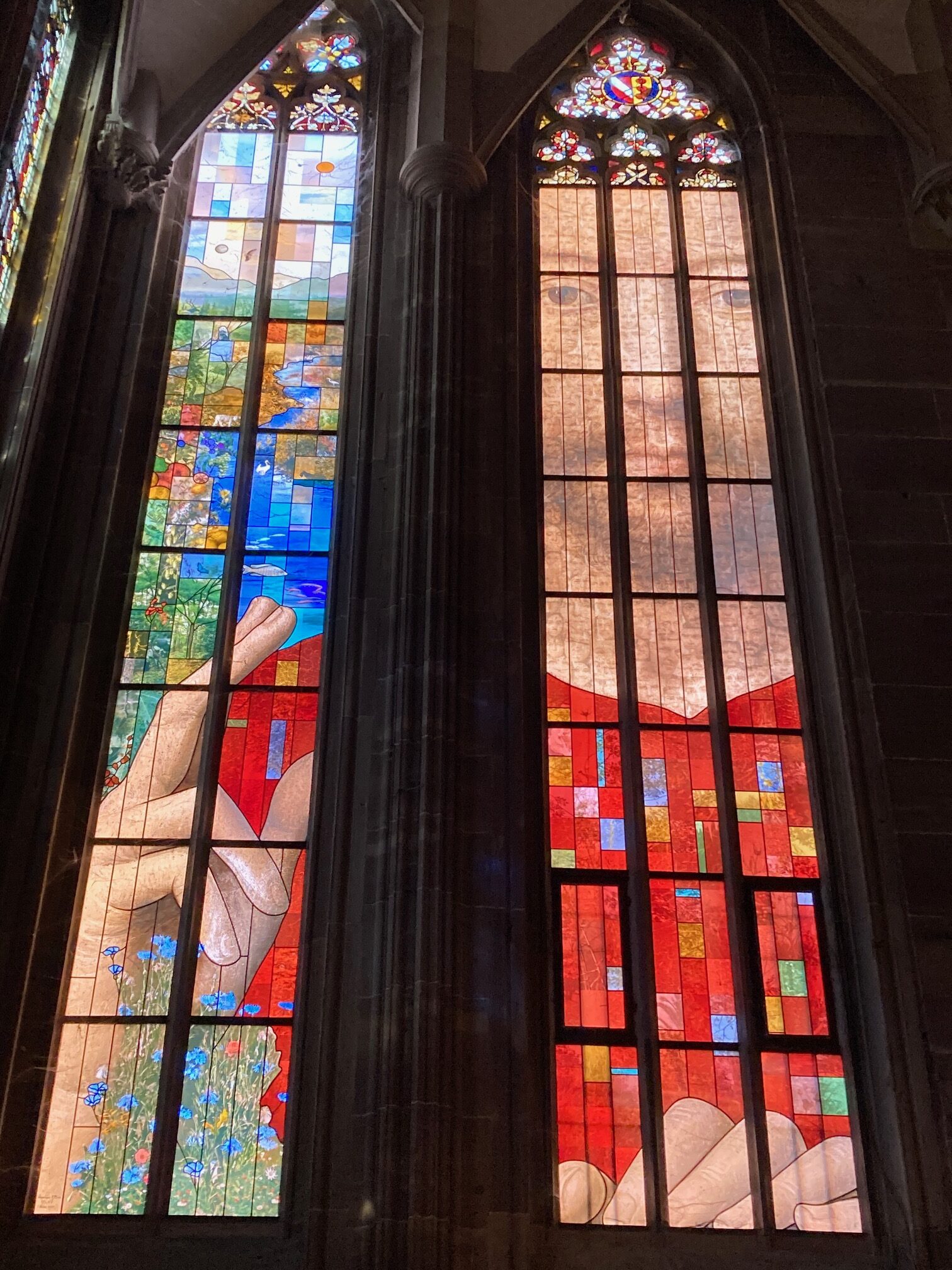
From the Museum of the construction of the Cathedral in Strasbourg, which contains many artifacts no longer in the cathedral. Stained glass window with botanical themes.
The passerelle (footbridge) connecting France and Germany over the Rhine River. There is no border control here, as both countries are members of the European Union.
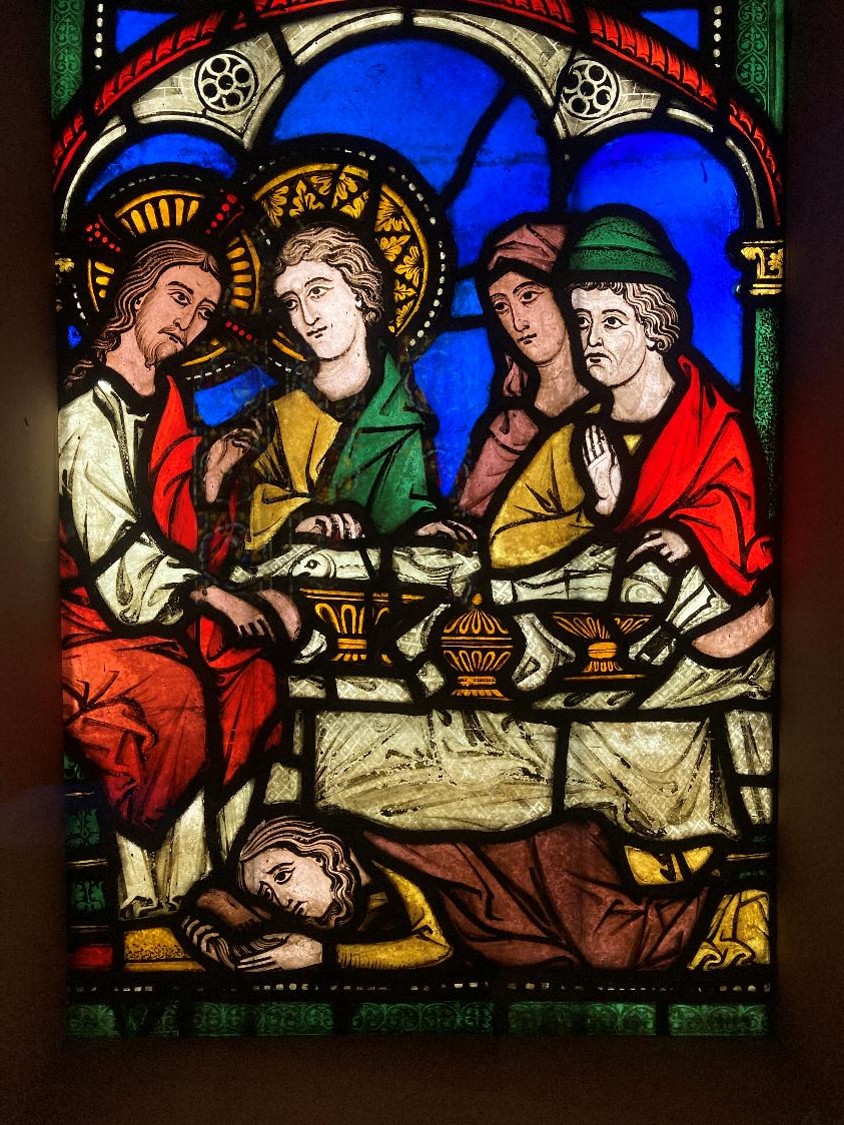
From the Museum of the construction of the Cathedral in Strasbourg, which contains many artifacts no longer in the cathedral. Stained glass window showing the sinful woman kissing Jesus’ feet at a banquet.
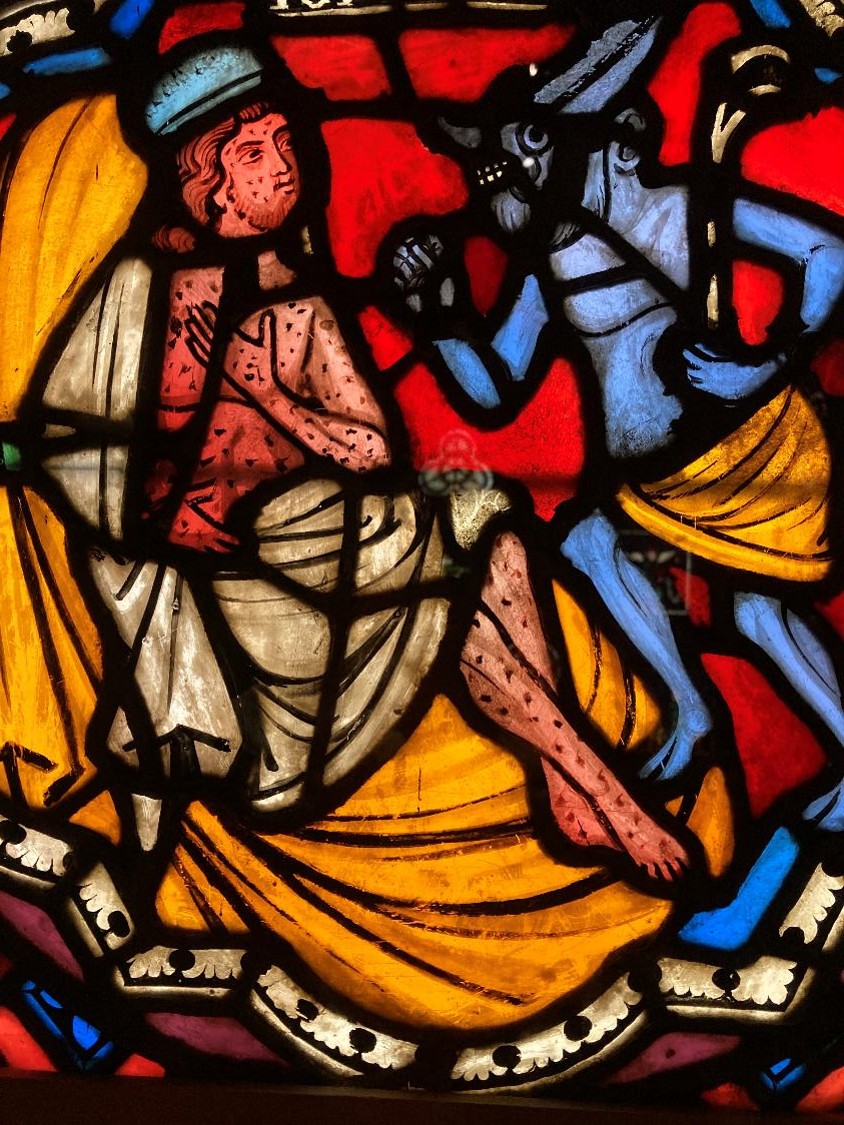
From the Museum of the construction of the Cathedral in Strasbourg, which contains many artifacts no longer in the cathedral. Stained glass window showing a smallpox victim.
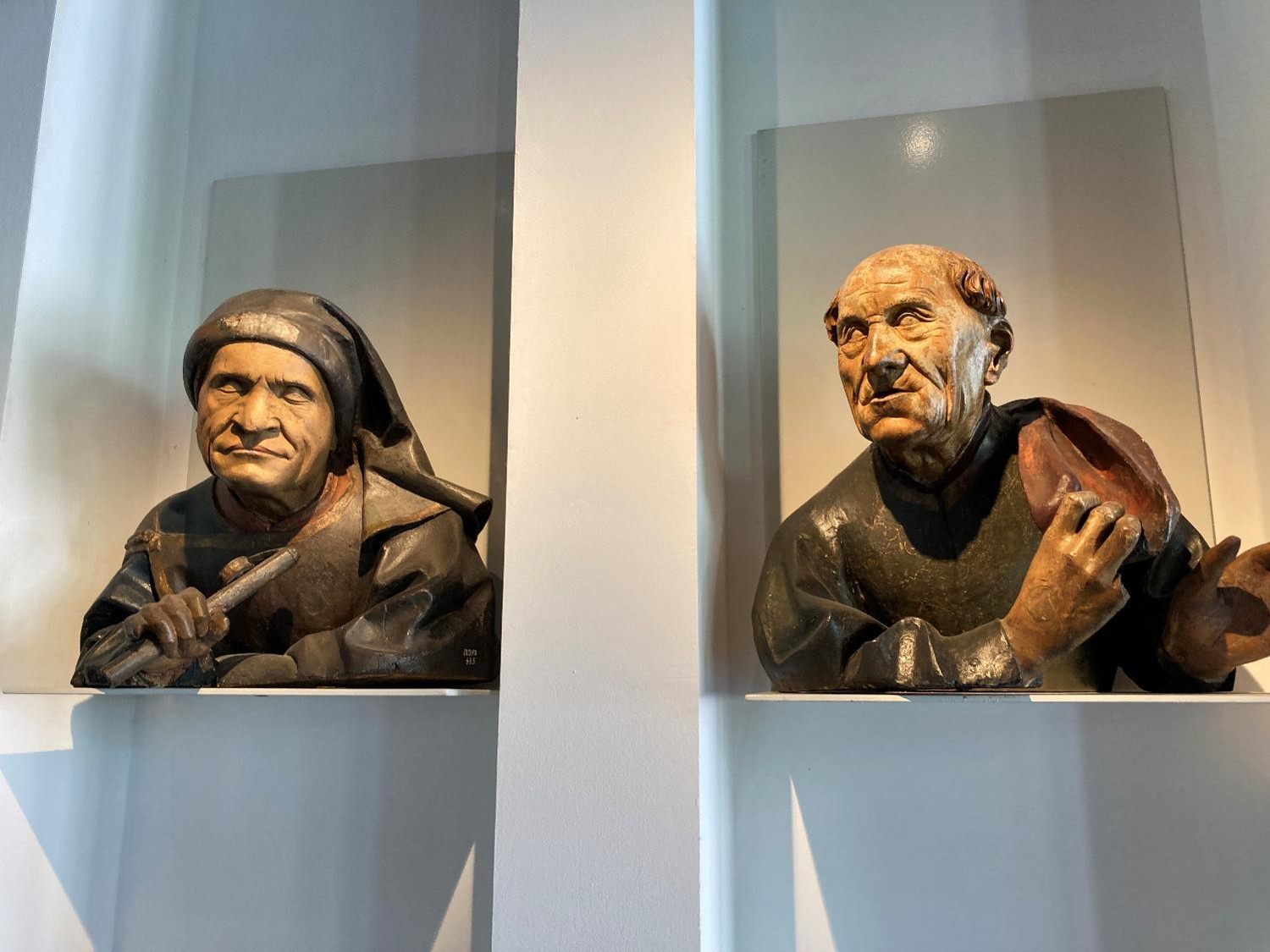
From the Museum of the construction of the Cathedral in Strasbourg, which contains many artifacts no longer in the cathedral. Statues of two common men.
From the Museum of the construction of the Cathedral in Strasbourg, which contains many artifacts no longer in the cathedral. Statue of a dog.
From the Museum of the construction of the Cathedral in Strasbourg, which contains many artifacts no longer in the cathedral. Statue of a man with a disfigured face.
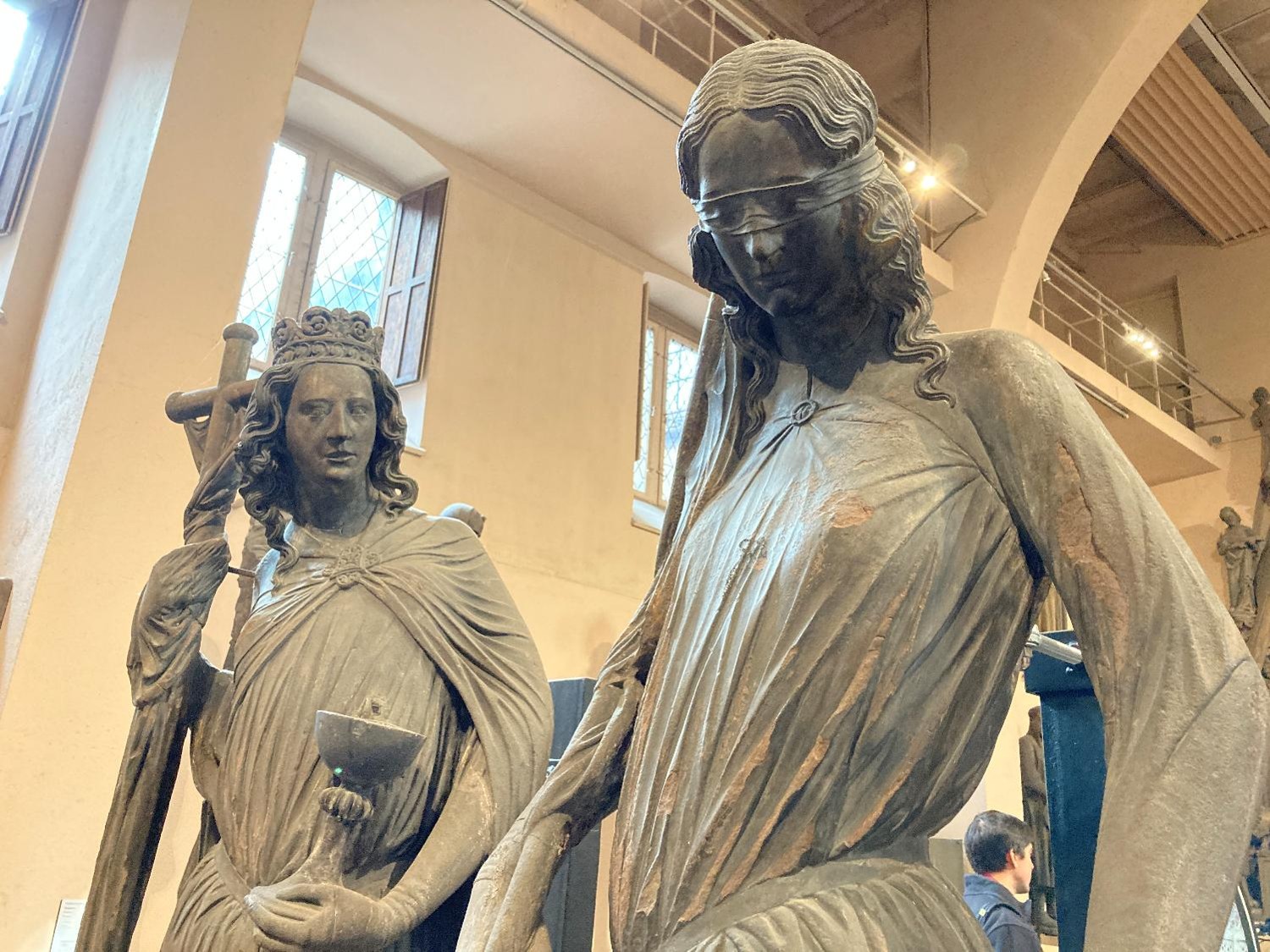
From the Museum of the construction of the Cathedral in Strasbourg, which contains many artifacts no longer in the cathedral. Statues representing Christianity (woman with cross and chalice) and Judaism (blindfolded woman).
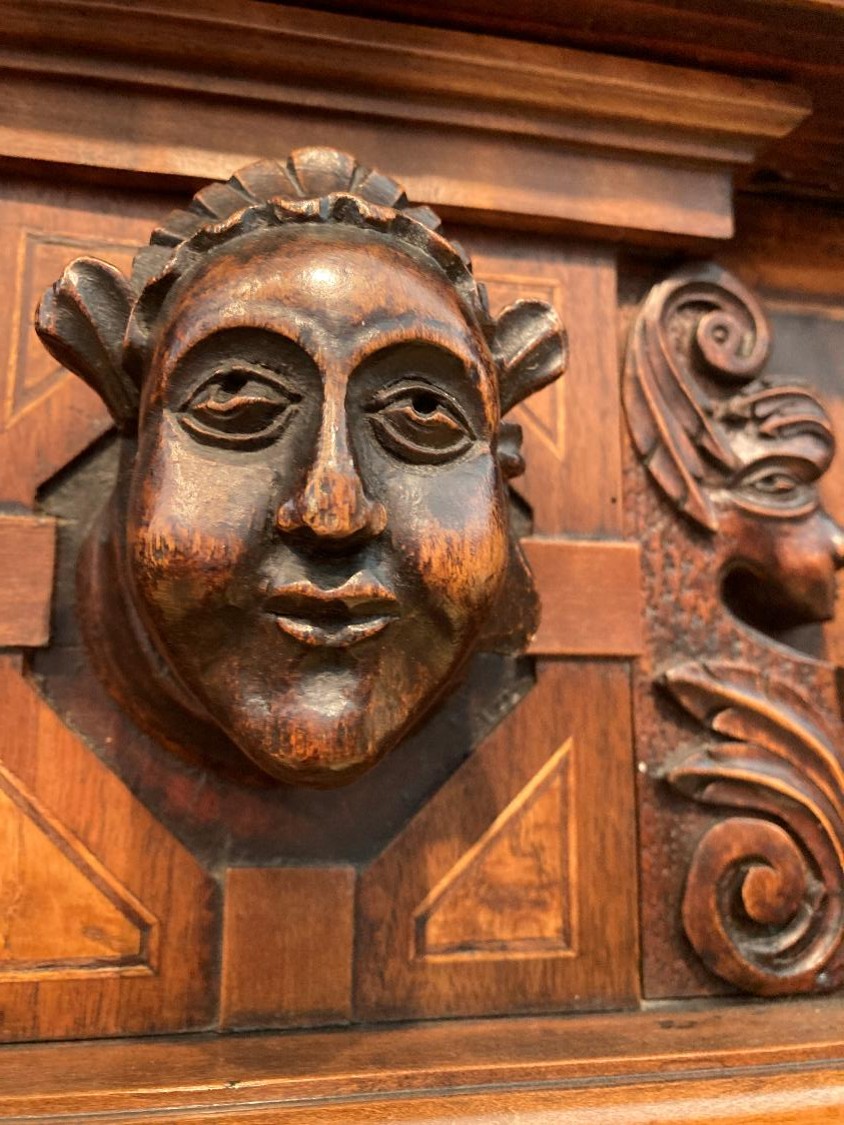
From the Museum of the construction of the Cathedral in Strasbourg, which contains many artifacts no longer in the cathedral. A woman’s face, presumably the patroness of the sculptor, on a wooden armoire.
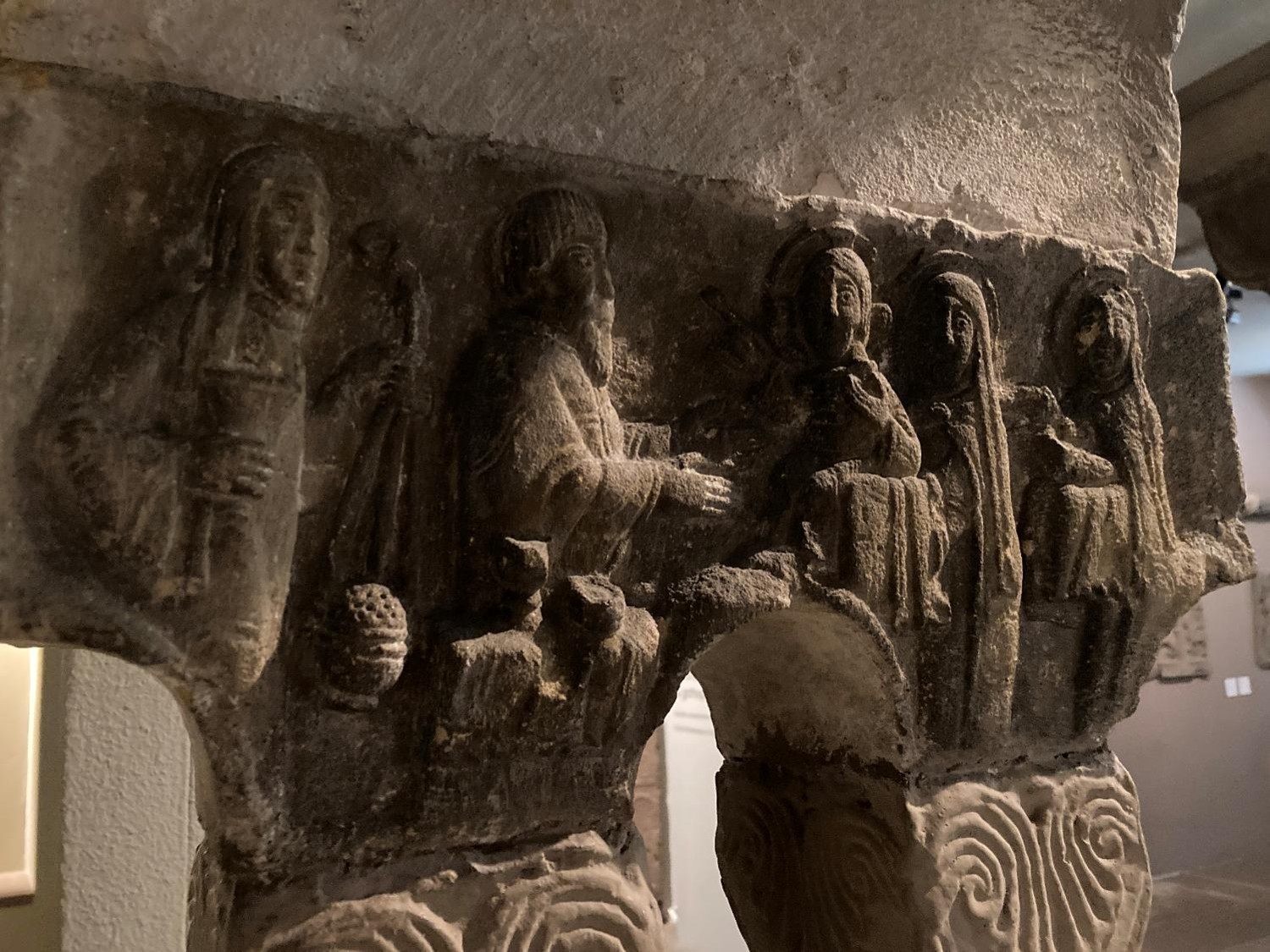
From the Museum of the construction of the Cathedral in Strasbourg, which contains many artifacts no longer in the cathedral. Eleventh-century carvings from an earlier church.
Cathedral
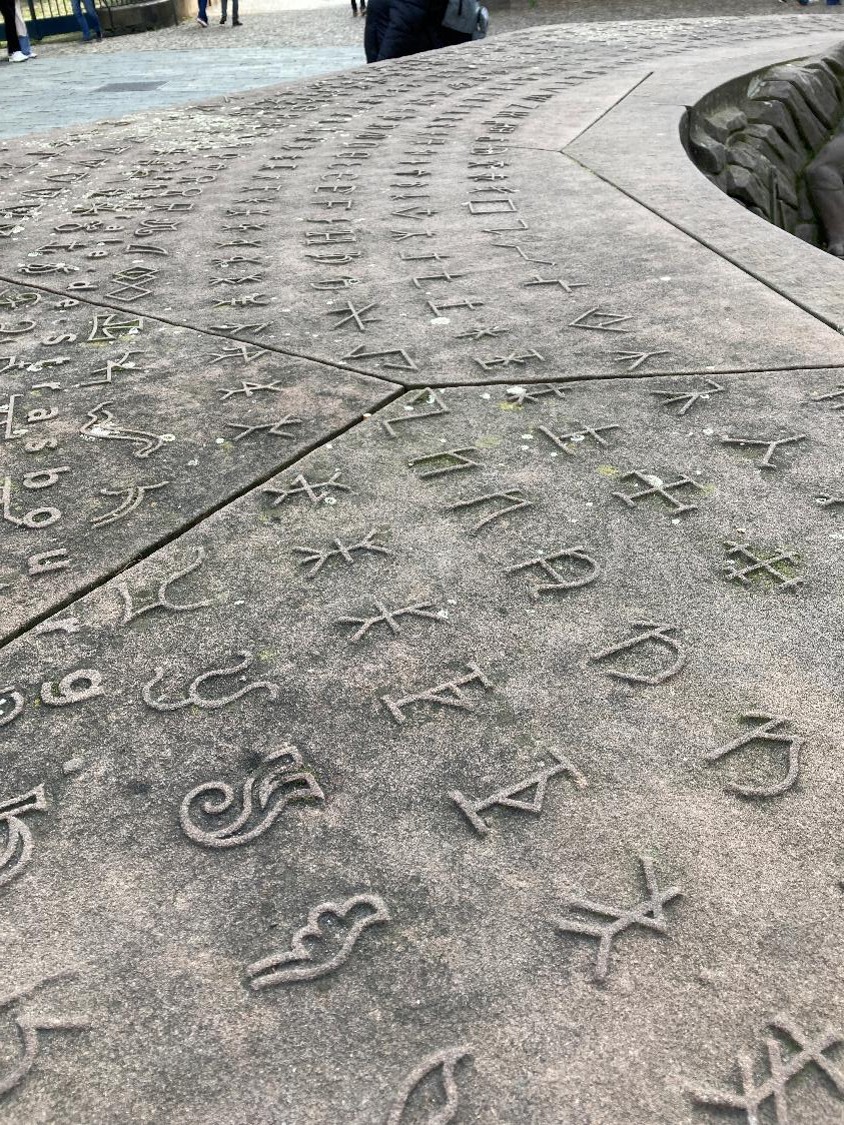
These are the marks of the illiterate medieval workmen who built the cathedral in Strasbourg, so that accurate records could be kept in order to pay them.
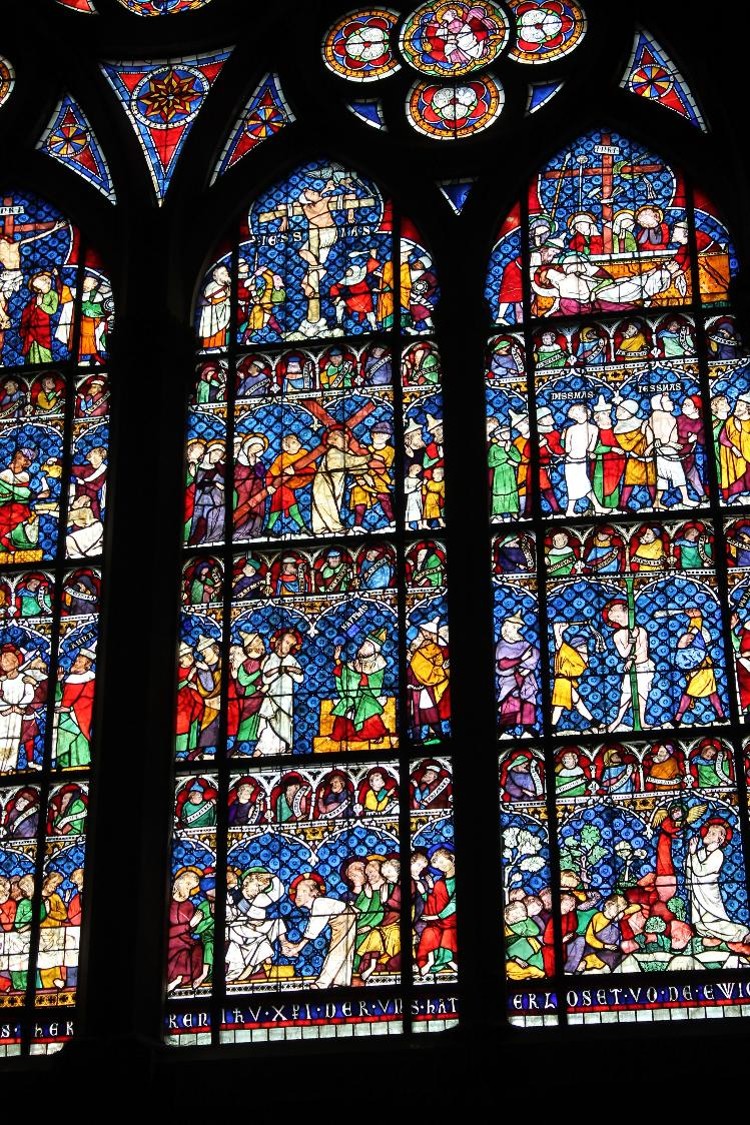
The stained glass windows at the Cathedral in Strasbourg told Bible stories to people who could not read.
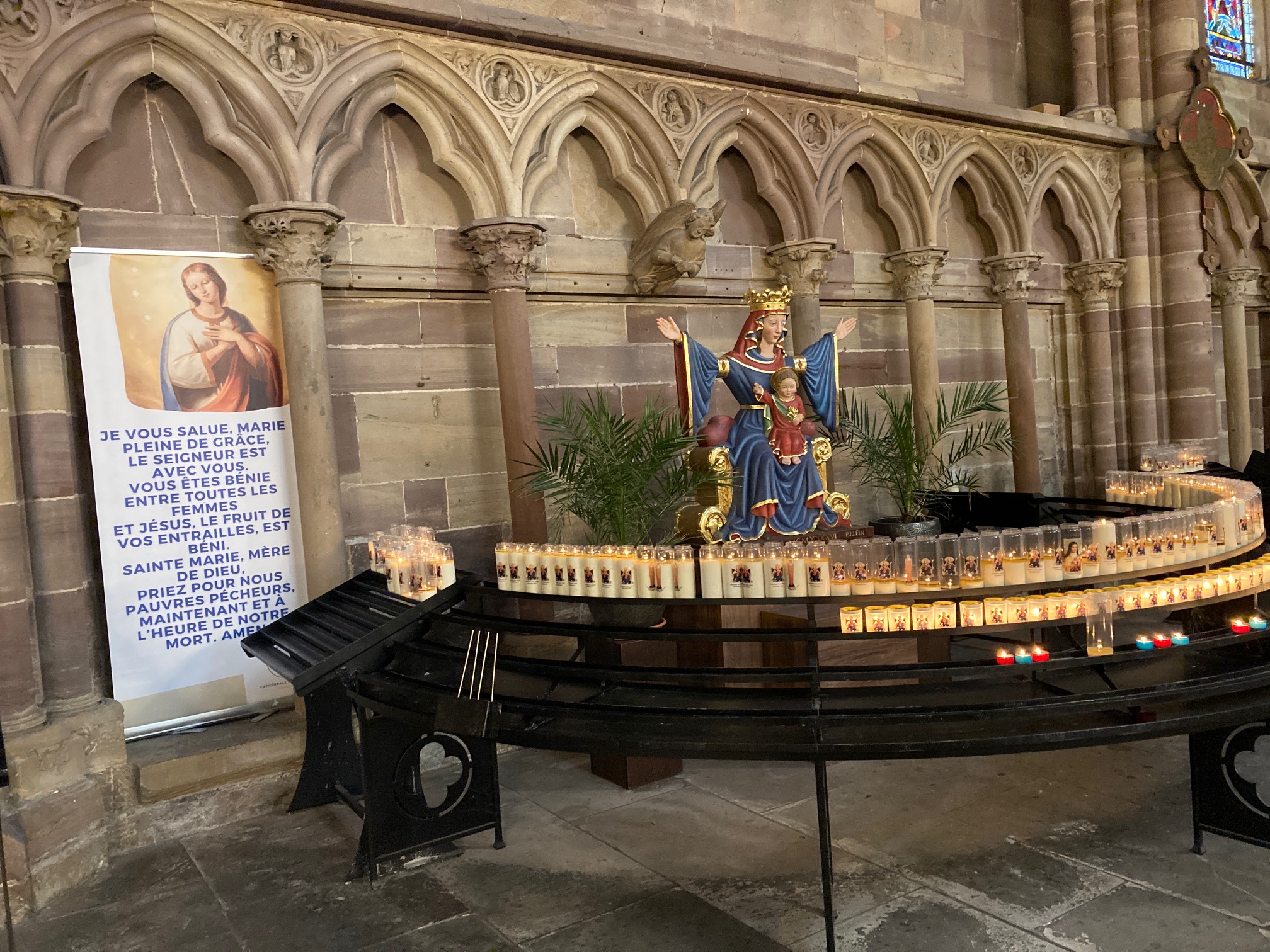
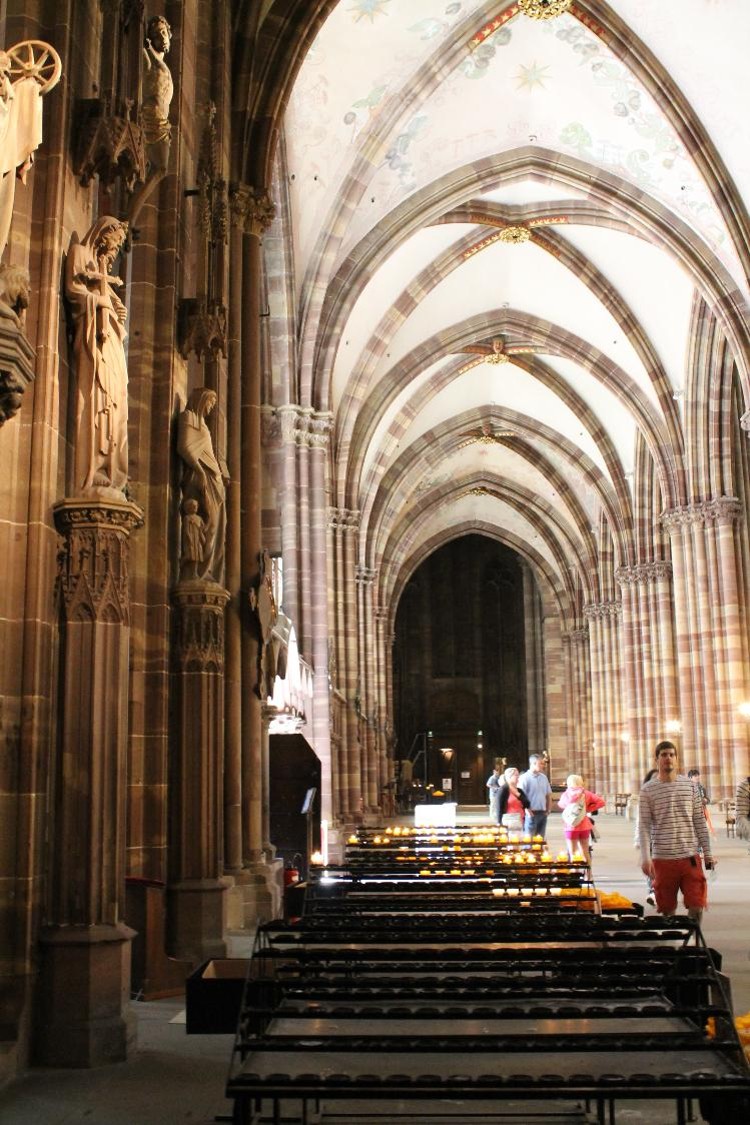
Votive candles in the Cathedral at Strasbourg. The candles do the praying for the people: “St. Mary, mother of God, pray for us poor sinners, now and at the hour of our death.”
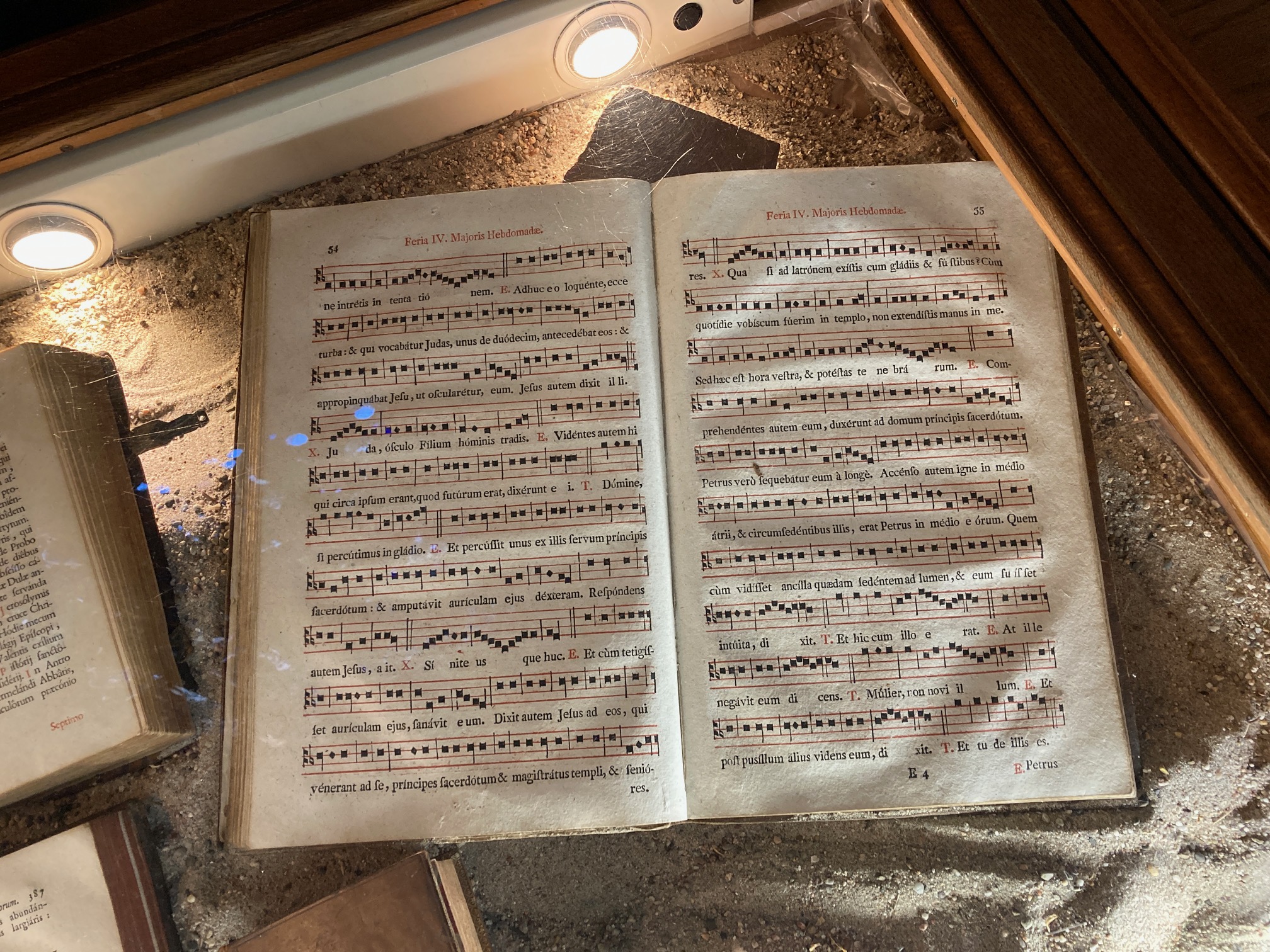
A book of medieval music at the Cathedral in Strasbourg.
The giant stained glass window of Jesus at the Cathedral in Strasbourg.
A gargoyle outside of the Cathedral in Strasbourg. Gargoyles were decorative rain spouts.
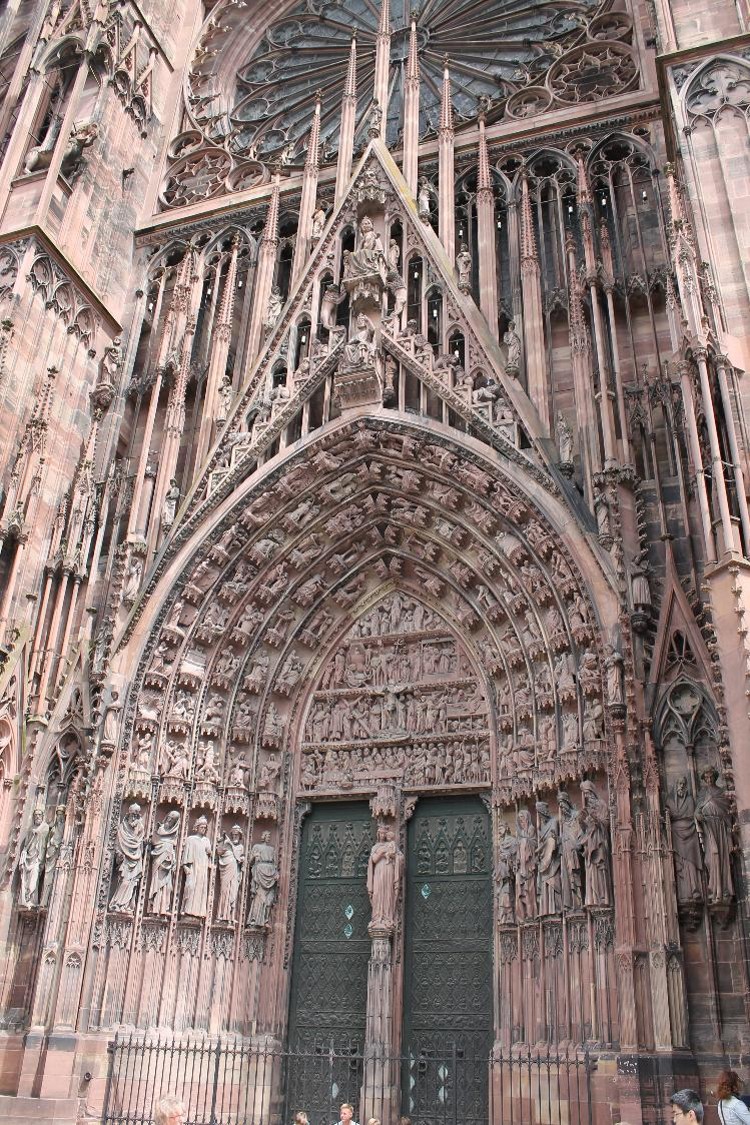
The facade of the Cathedral in Strasbourg contains hundreds of sculptures crammed together.
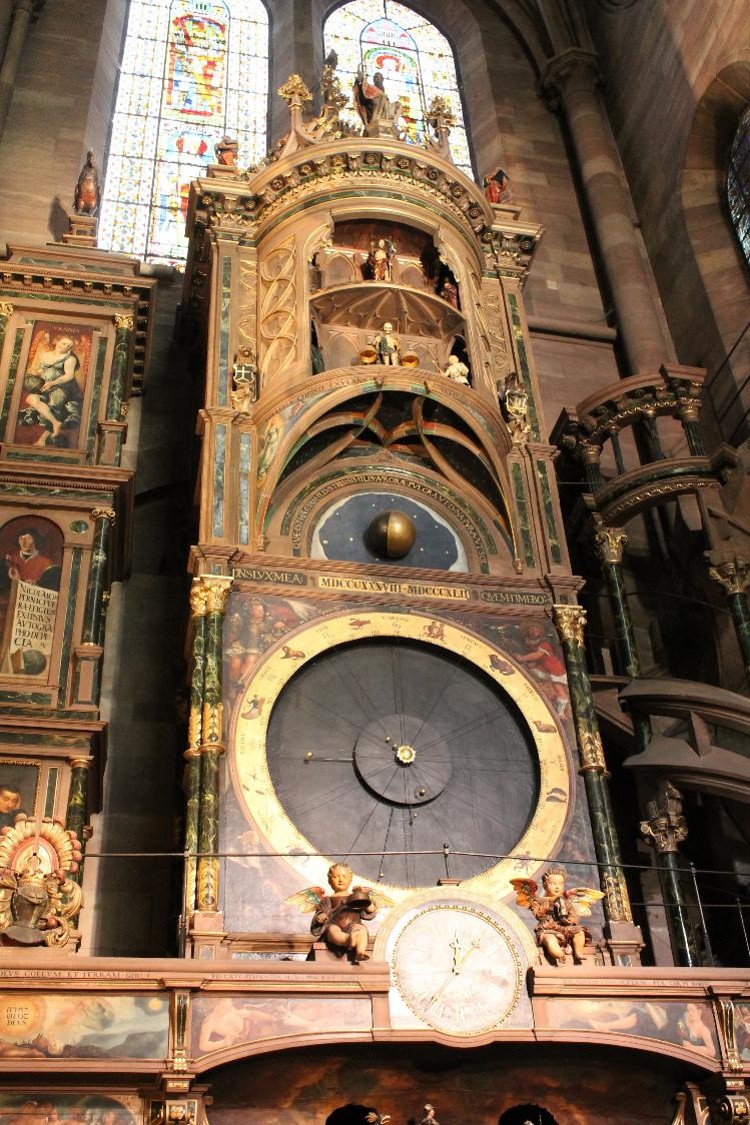
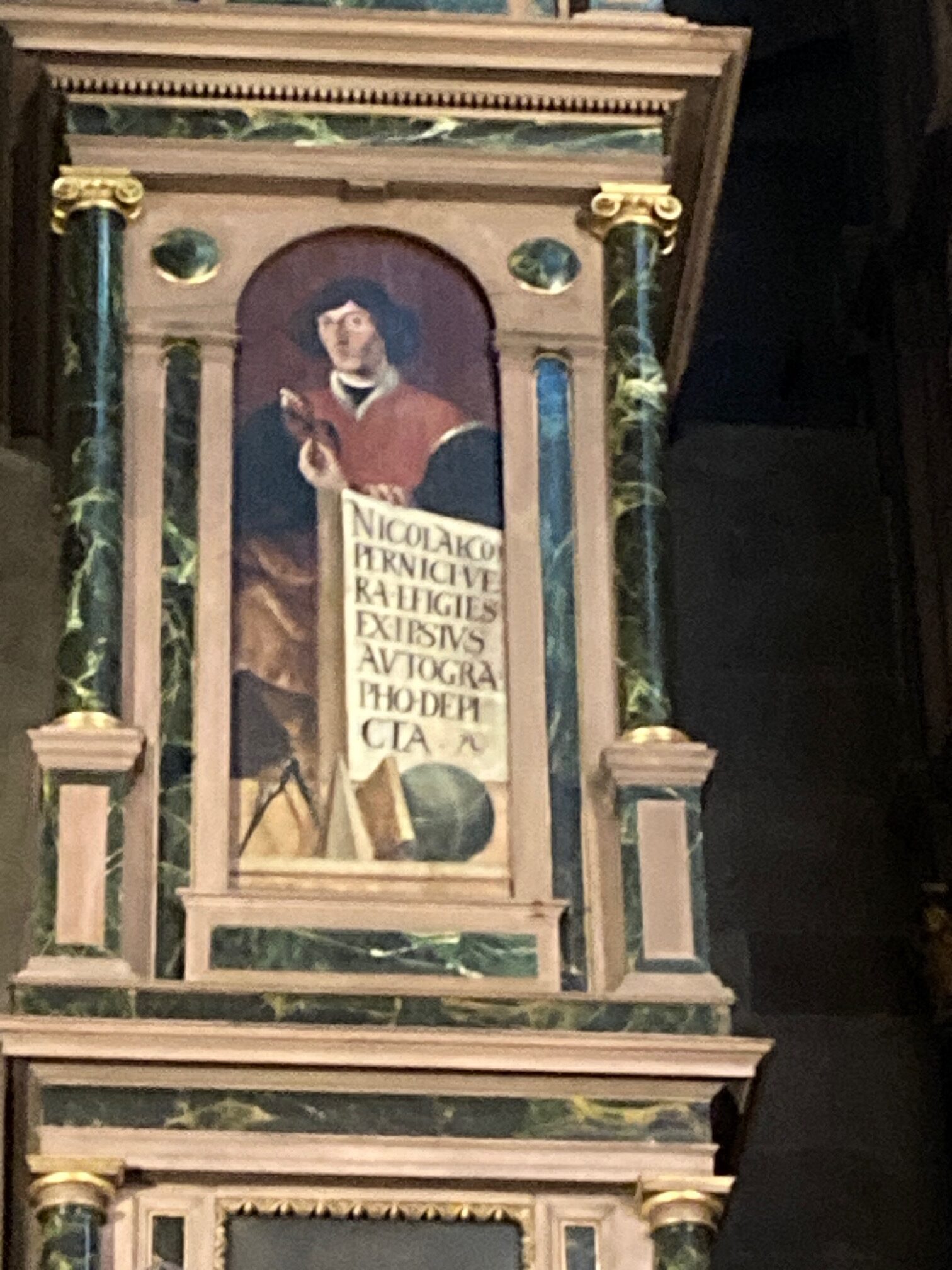
The Horlogue Astronomique in the Cathedral at Strasbourg. At the time the Cathedral at Notre Dame reached its final height, the Copernican system (the planets revolve around the sun) was heresy. A few centuries later, when the Horlogue Astronomique (astronomical clock) was completed, it contained a portrait of Copernicus (middle left)
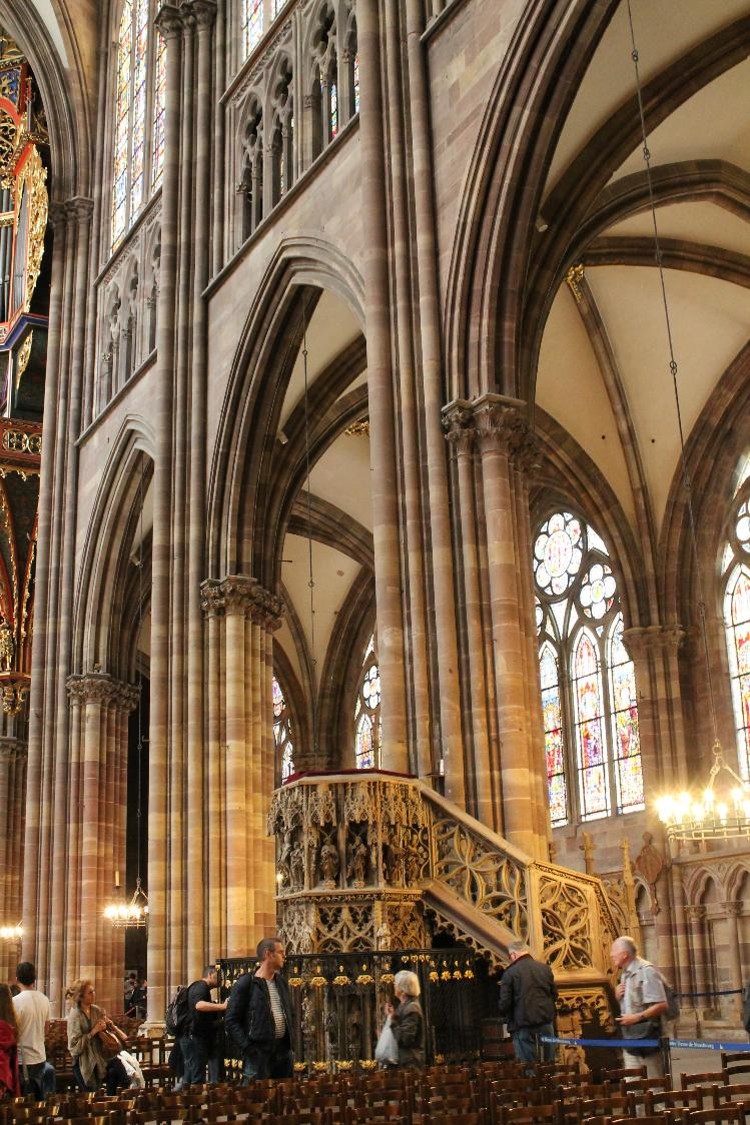
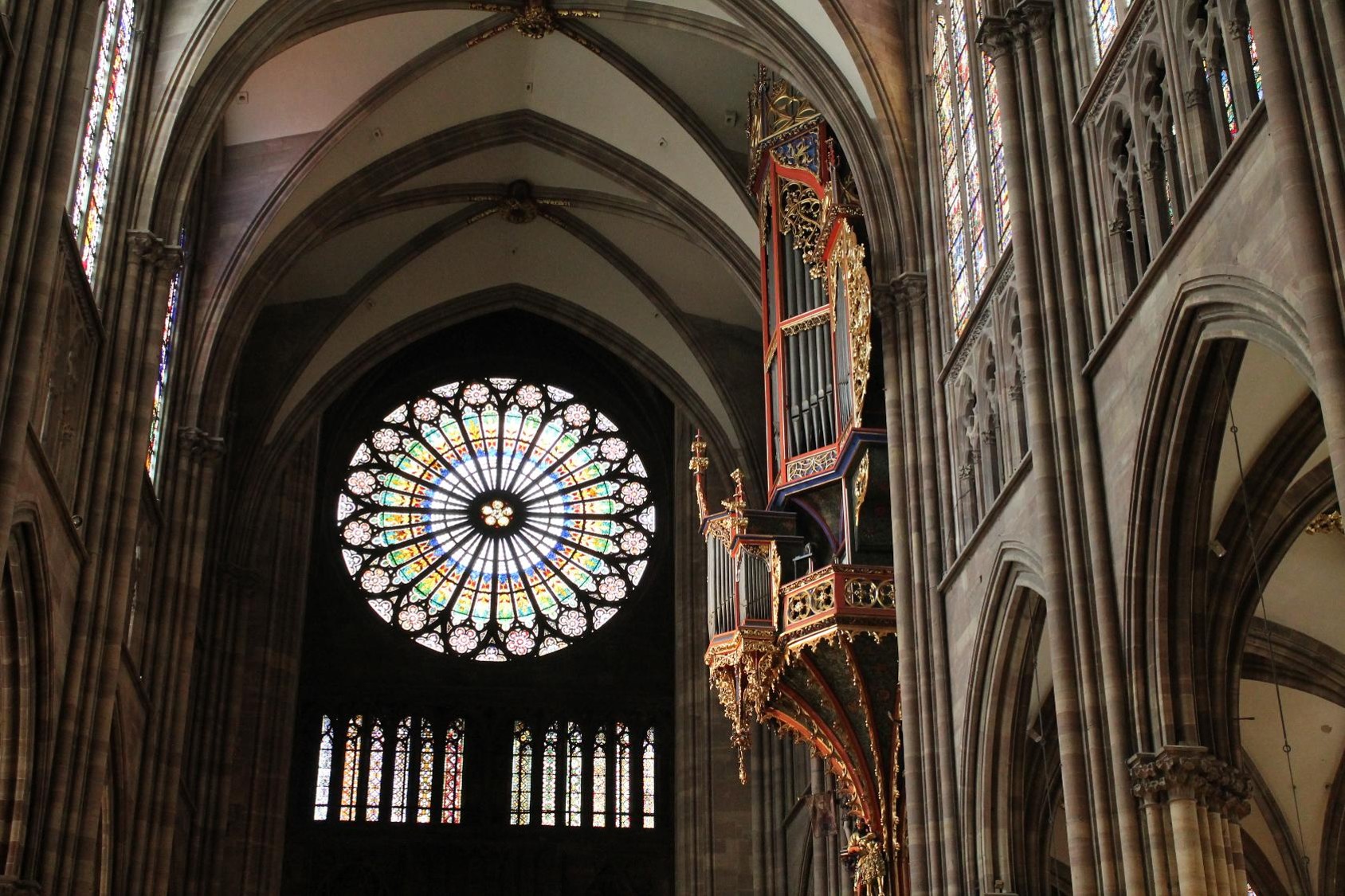
Inside the Cathedral at Strasbourg.
At the time the Cathedral at Notre Dame reached its final height, the Copernican system (the planets revolve around the sun) was heresy. A few centuries later, when the Horlogue Astronomique (astronomical clock) was completed, it contained a portrait of Copernicus.
Inside the Cathedral at Strasbourg.
Votive candles and vaulted ceiling inside the Cathedral at Strasbourg.
Vosges Mountains
Hikes
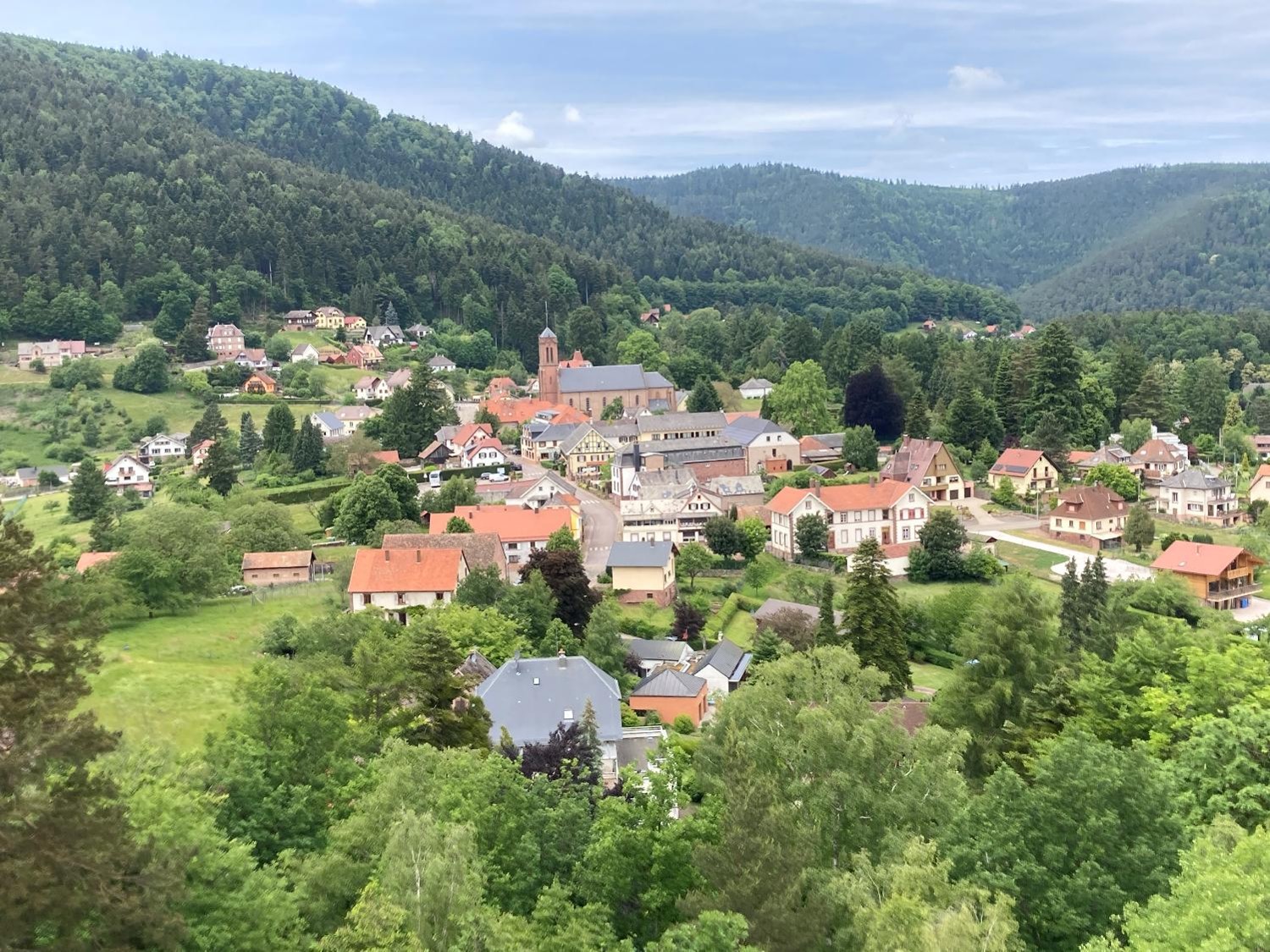
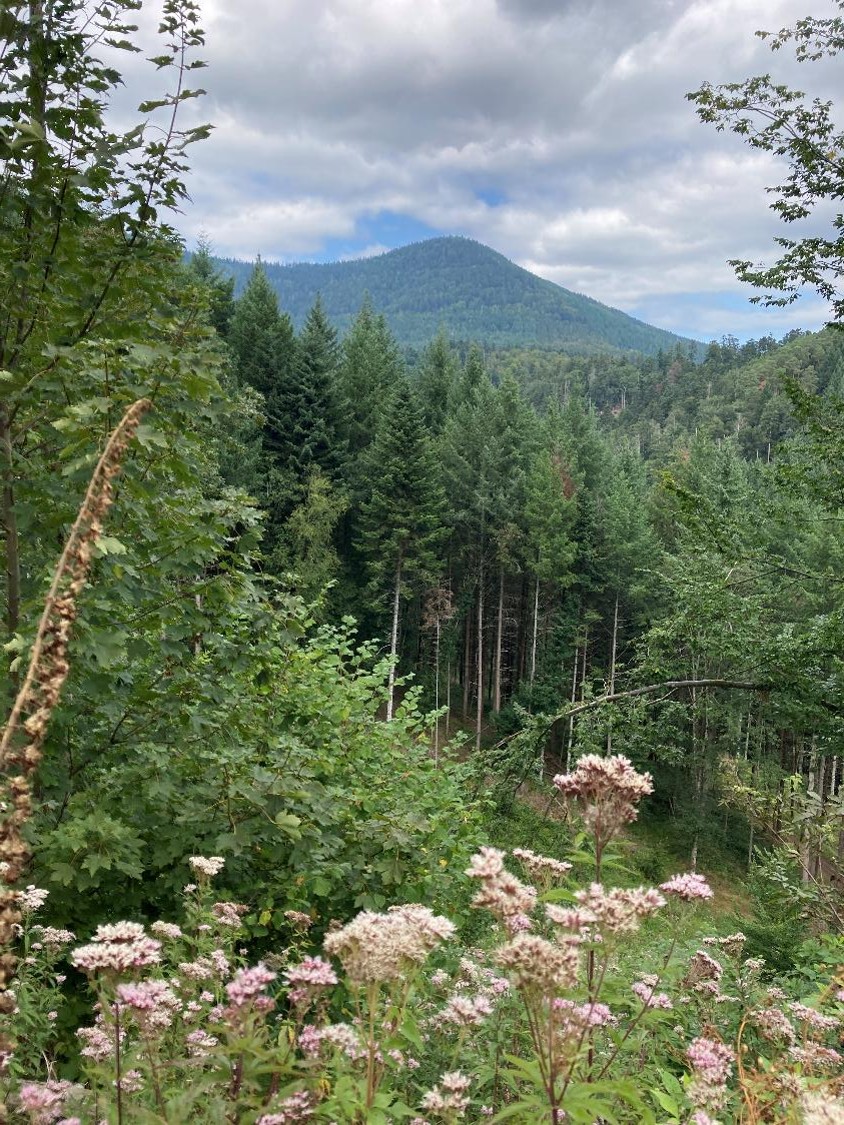
Wangenbourg, a hamlet in the Vosges Mountains in Alsace, France, as seen from the castle.
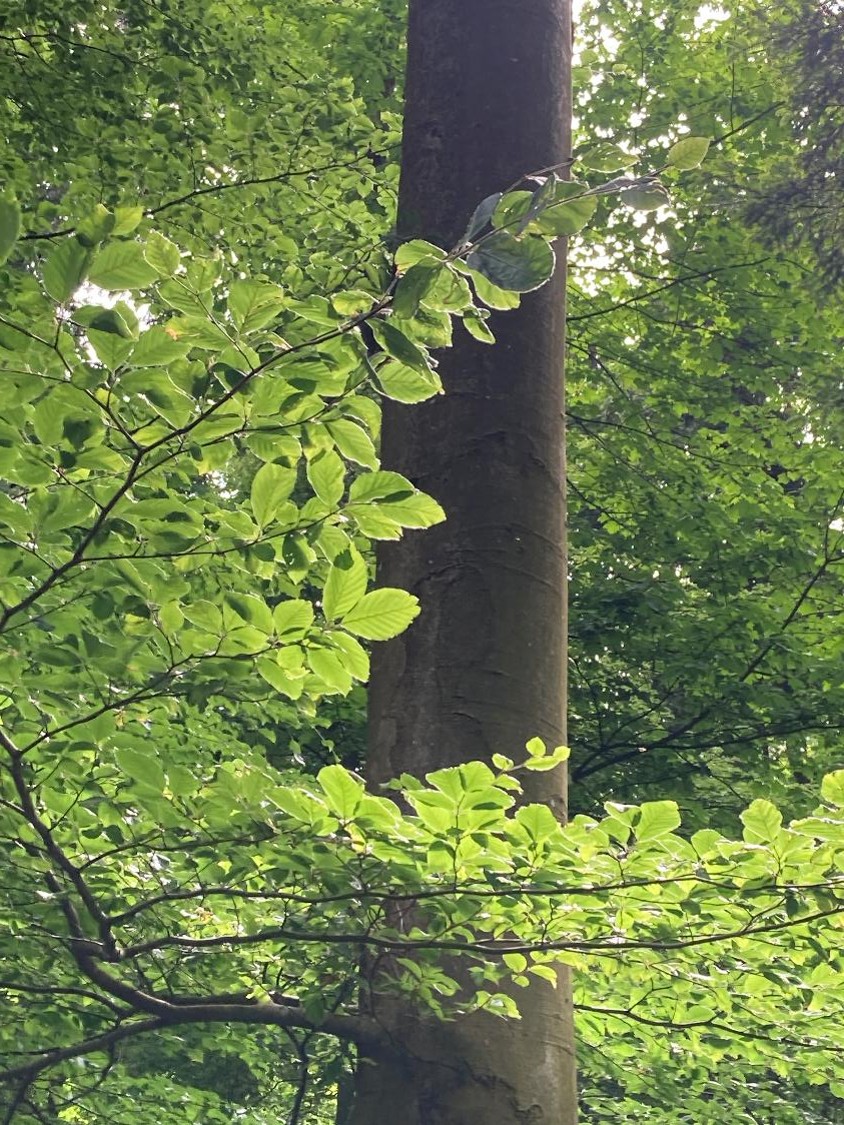
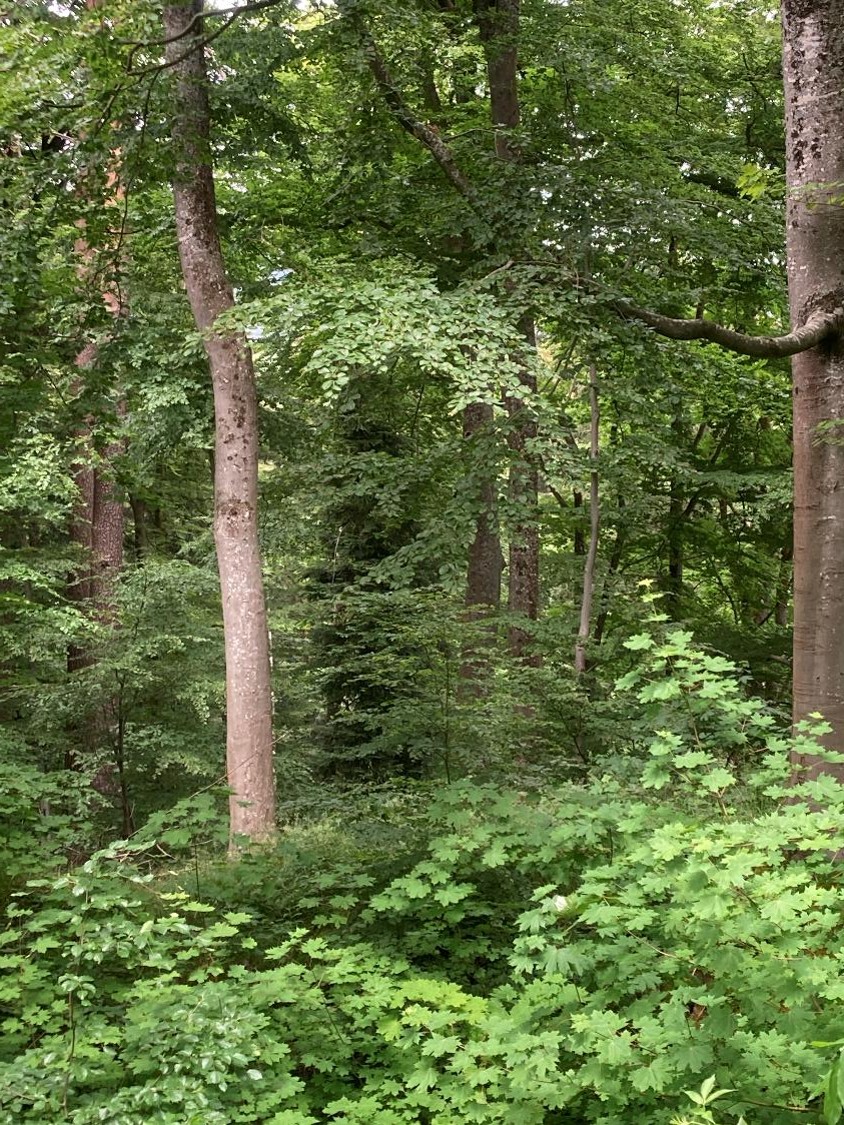
Old growth forest near Wangenbourg in the Vosges Mountains of Alsace, France. The trunk is beech, the understory tree is hazelnut (Coryllus avellana).
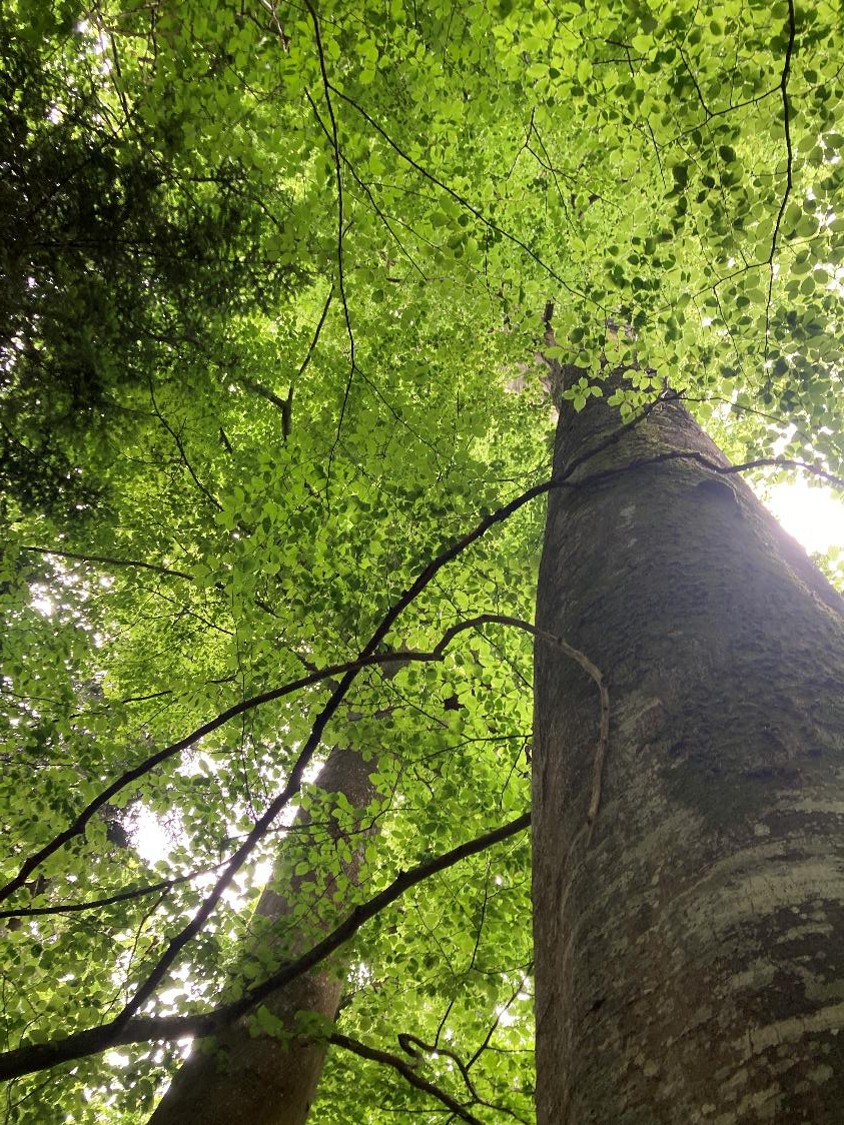
Although the forest near Wangenbourg, in the Vosges Mountains of Alsace, France, were originally deforested then turned into conifer plantations, during the last century very large beech trees (Fagus sylvatica) have grown.
Early spring forests near Wangenbourg castle, Vosges Mountains, Alsace, France. After deforestation, conifer plantations were established, but now beech forests are taking over the cooler, wetter slopes.
A trail through a forest in the Vosges Mountains, Alsace, France, near Orbey.
Lutzelhouse, a village in the Vosges Mountains of Alsace, France.
A forest clearing near Lutzelhouse in the Vosges Mountains, Alsace, France. After deforestation, conifers were planted, and are still used for lumber, while the hardwood trees replace them.
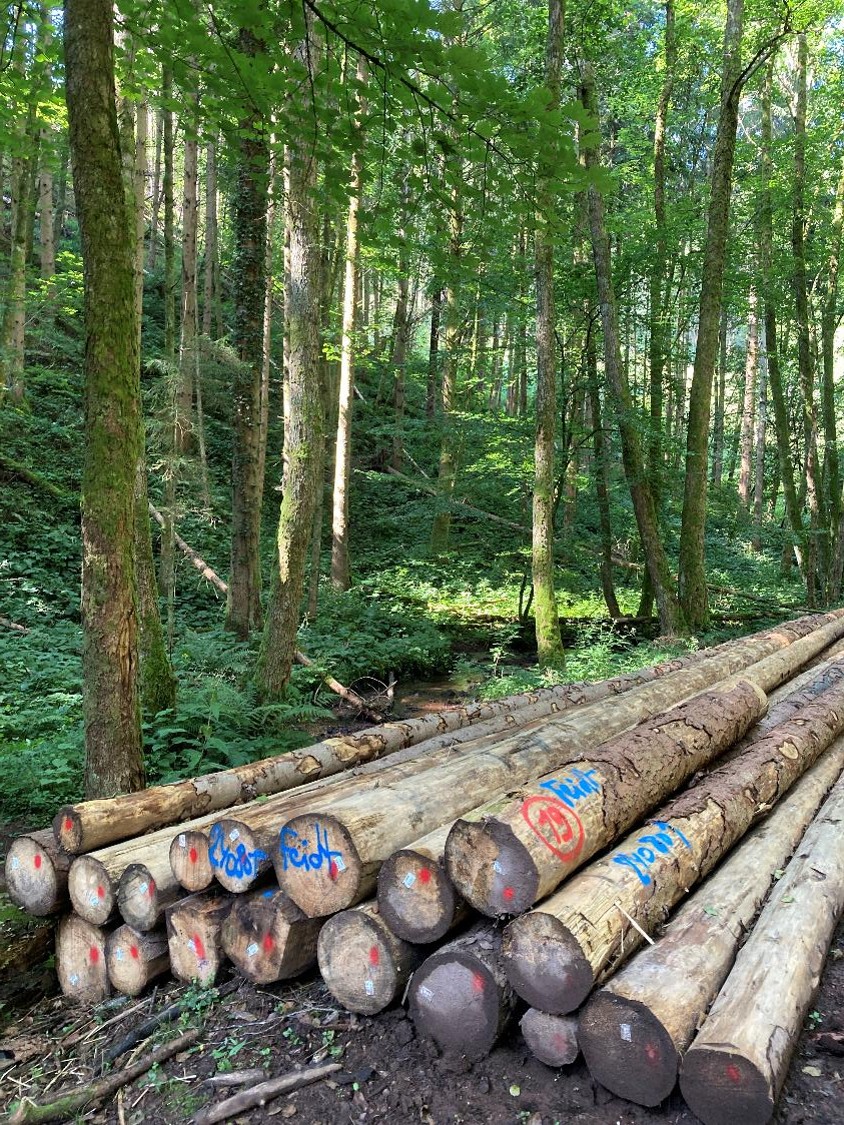
Conifer logs selectively cut from a forest near Lutzelhouse, Vosges Mountains, Alsace, France. Though it is a forest reserve, careful forestry is practiced here.
A waterfall near Nideck castle ruins in the Vosges Mountains, Alsace, France.
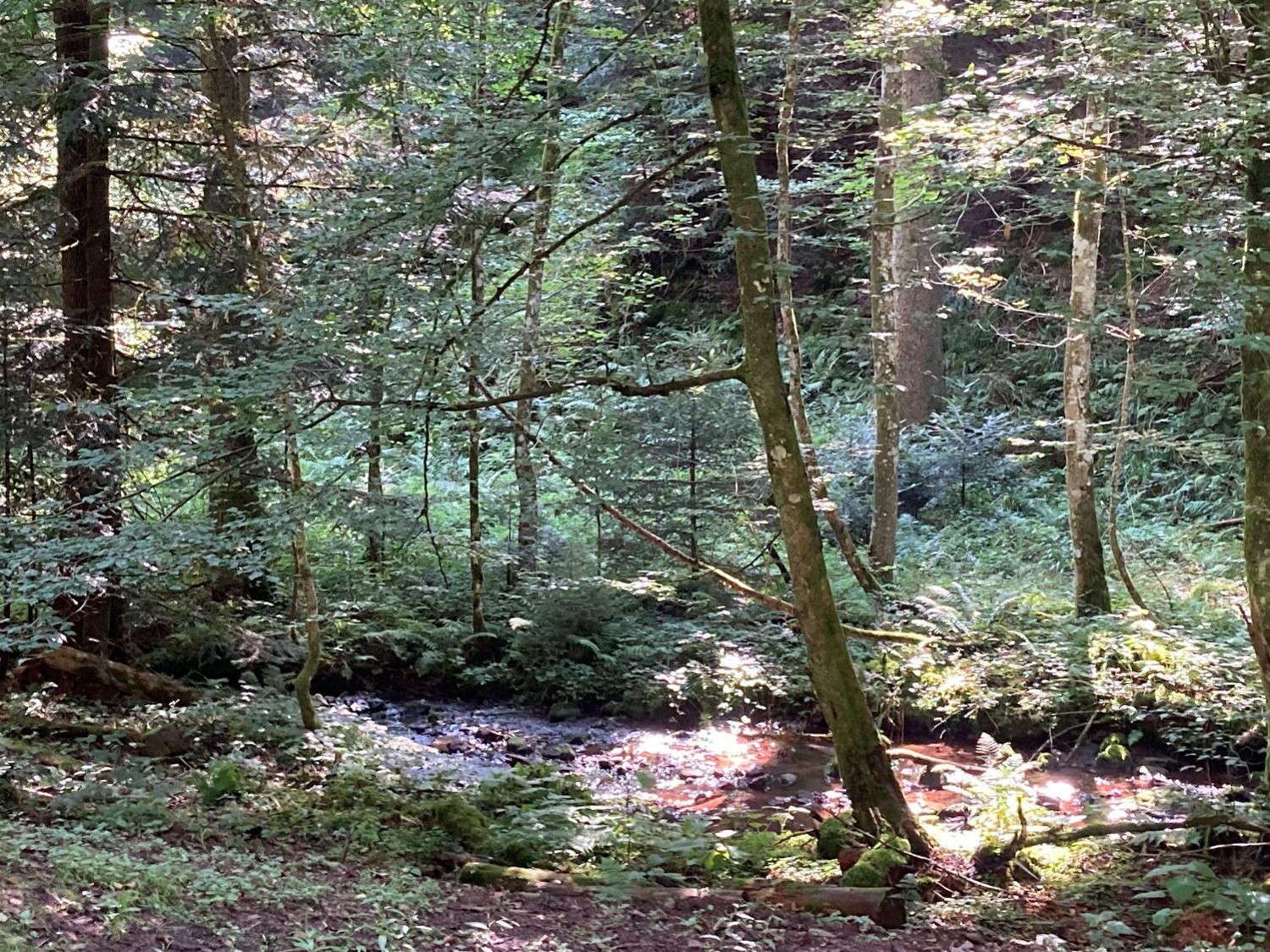
The streamside forests near Lutzelhouse, in the Vosges Mountains, Alsace, France, are very moist and have mosses and ferns.
A streamside forest near Lutzelhouse in the Vosges Mountains, Alsace, France.
The village of Lichtenberg in the Vosges Mountains, Alsace, France, seen from the castle.
Early spring forest near Lichtenberg in the Vosges Mountains, Alsace. France.
An autumn chestnut forest in the Vosges Mountains, Alsace, France.
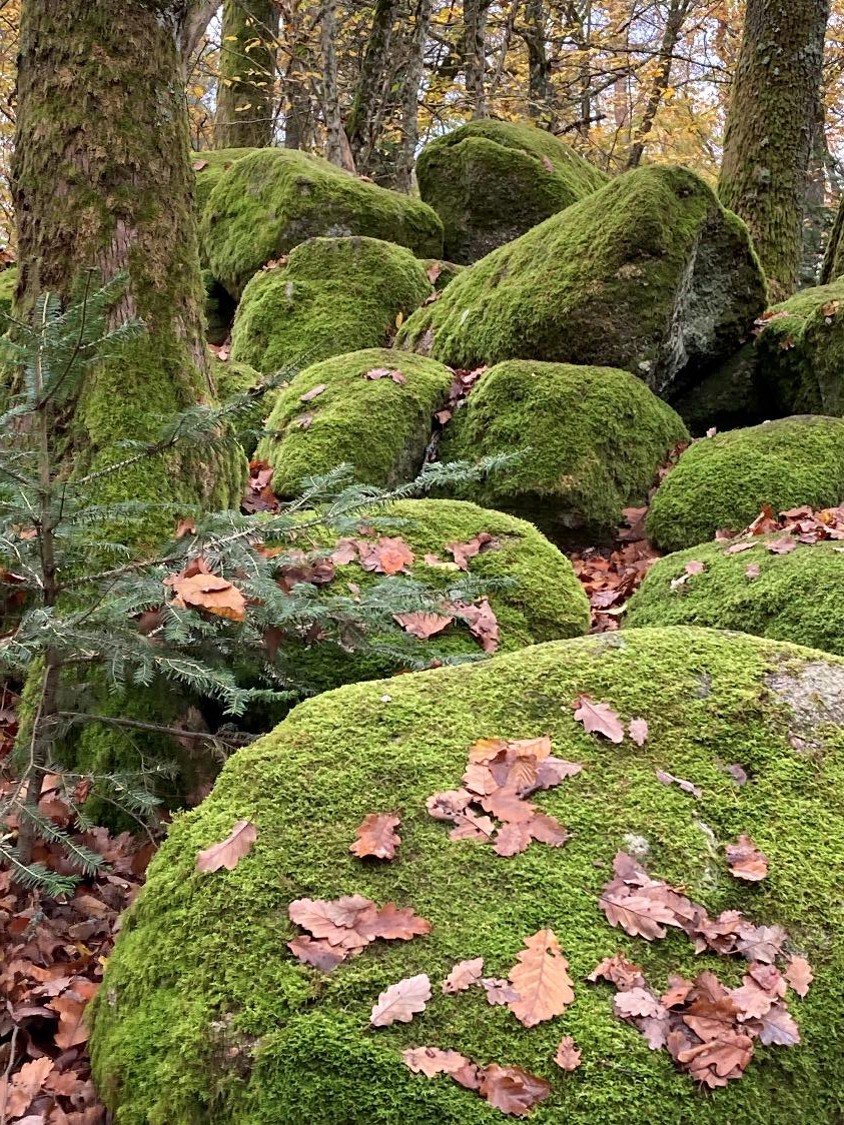
Mosses cover the boulders in the forests of the Vosges Mountains in Alsace, France, because of the frequent mist and fog.
Autumn colors in a beech forest in the Vosges Mountains, Alsace, France.
Vinyards grow on medium elevations between the lowland fields of Alsace and the Vosges Mountains forests in France.
Plants
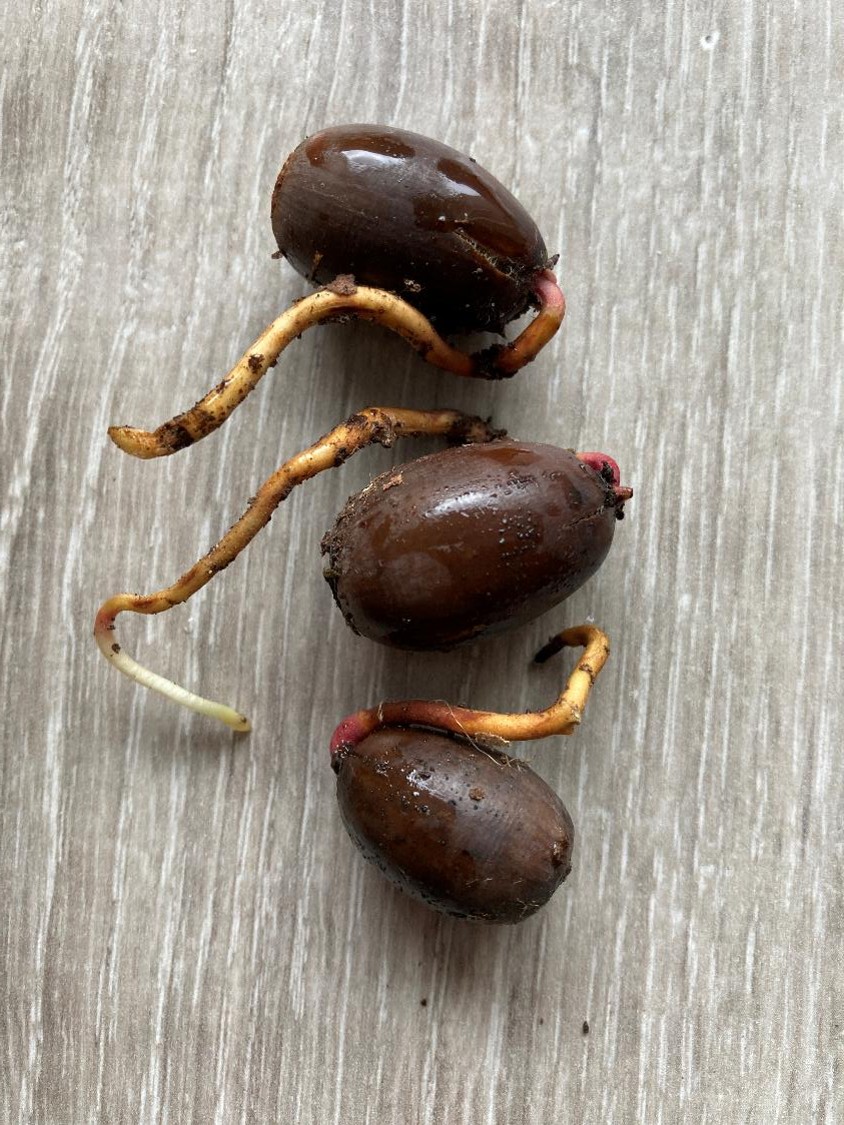
Acorns of Quercus petraea from the Vosges Mountains germinate in the autumn. Squirrels will not eat acorns that have already germinated and started to use up their food supply. This is an evolutionary strategy for escaping from herbivorous “seed predators.” The little seedling overwinters, then the stem and leaves emerge in the spring.
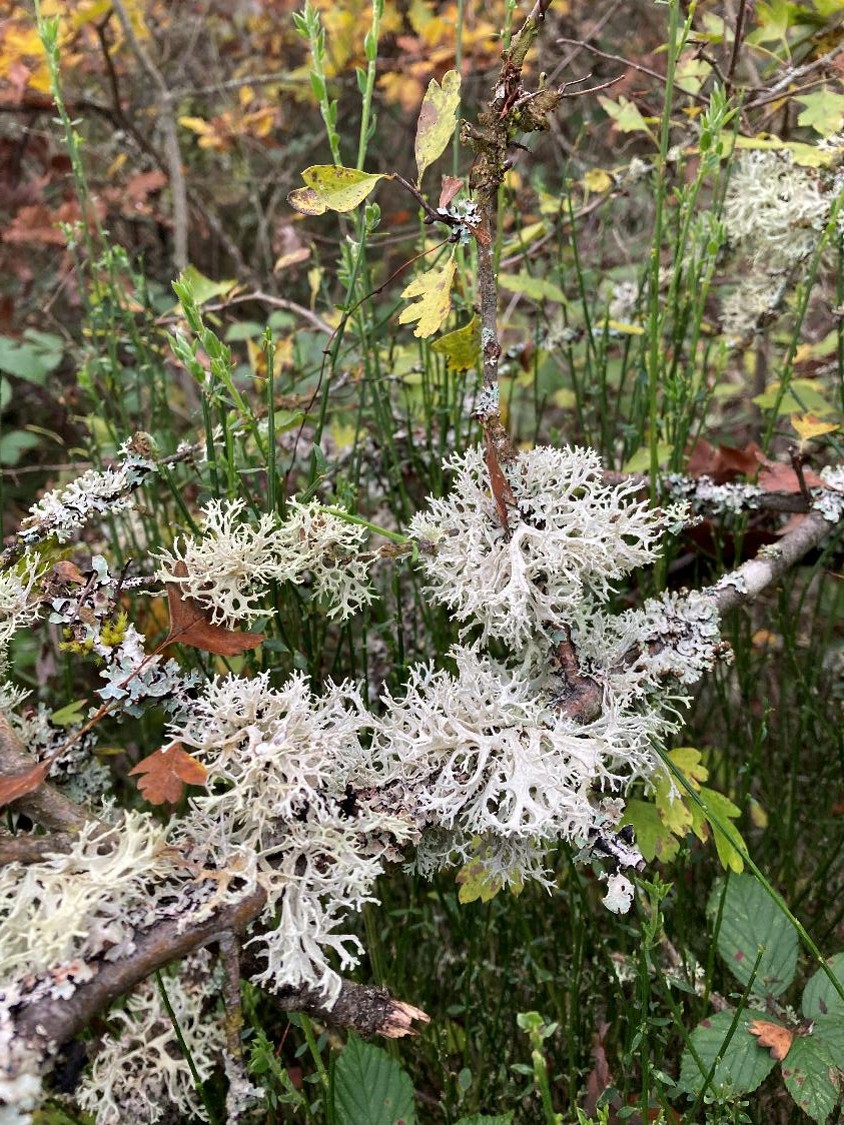
Evernia lichens in the forest above St. Hippolyte in the Vosges mountains of Alsace, France. Lichens are fungi with photosynthetic algae inside of them, thus they do not depend on other organisms for food.
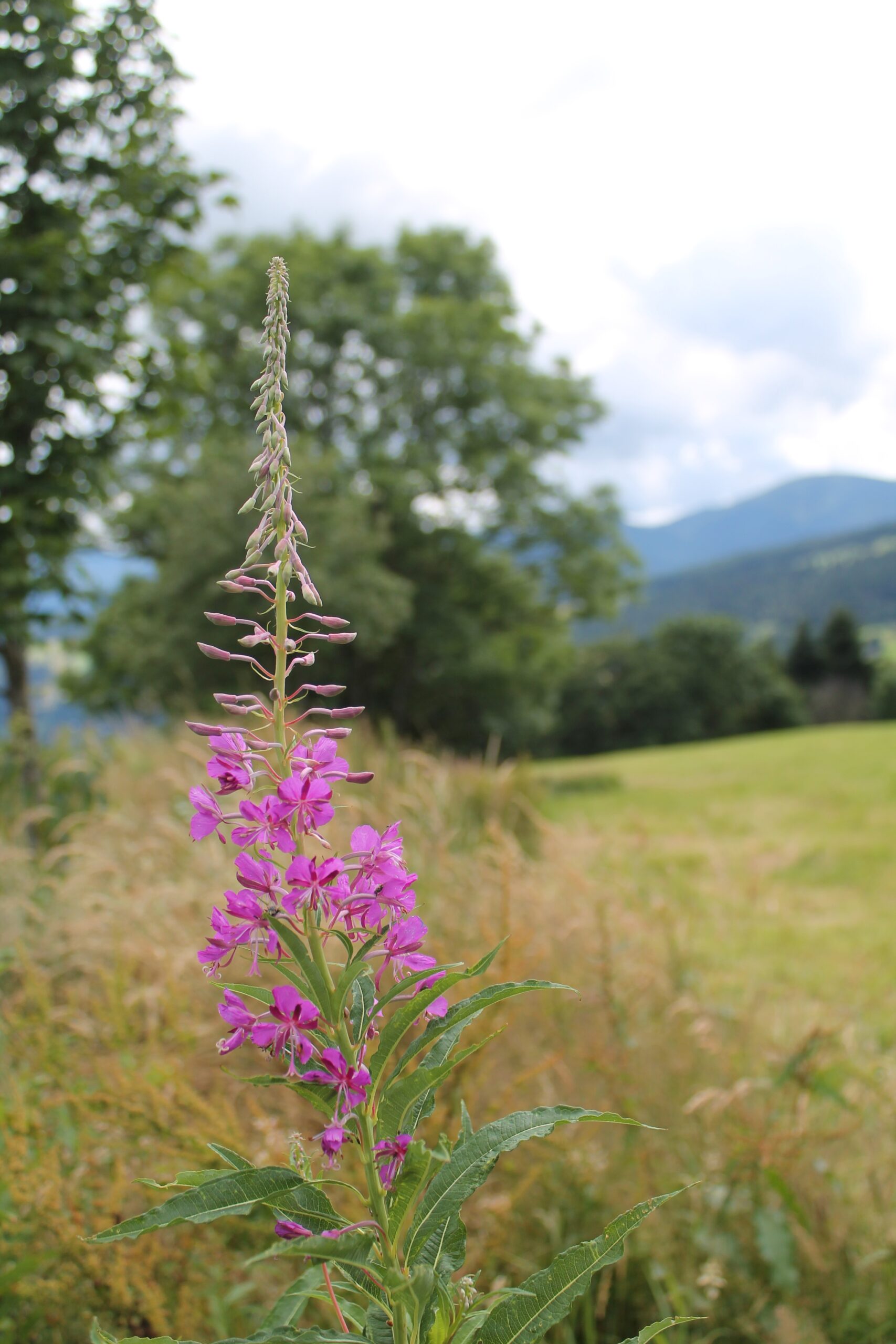
Fireweed (Chamaenerion angustifolium, formerly genus Epilobium), which grows in northern continental areas worldwide, here in the Vosges mountains of France.
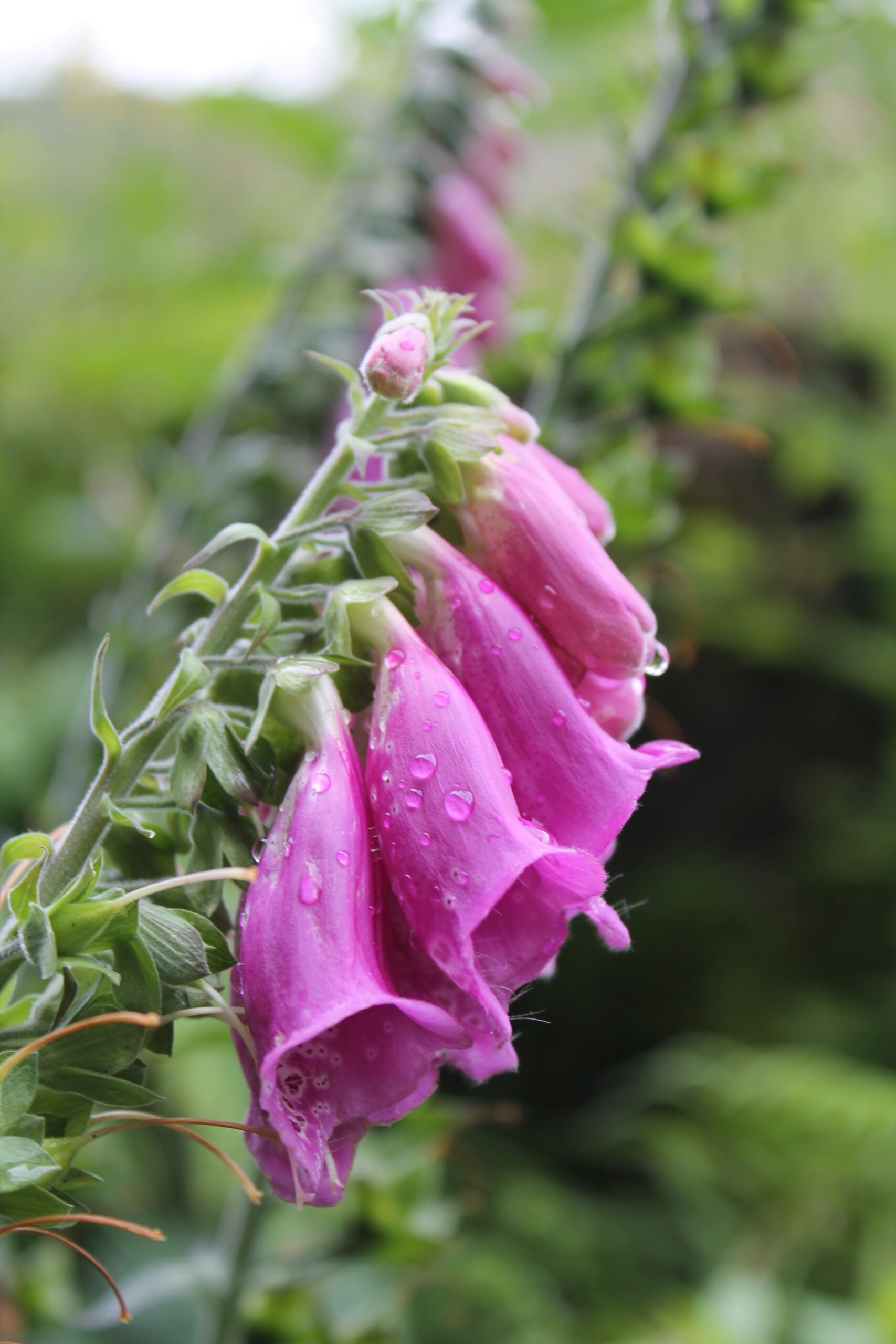
Digitalis purpurea (fingerhuts) growing in an opening in the Vosges mountains of France.
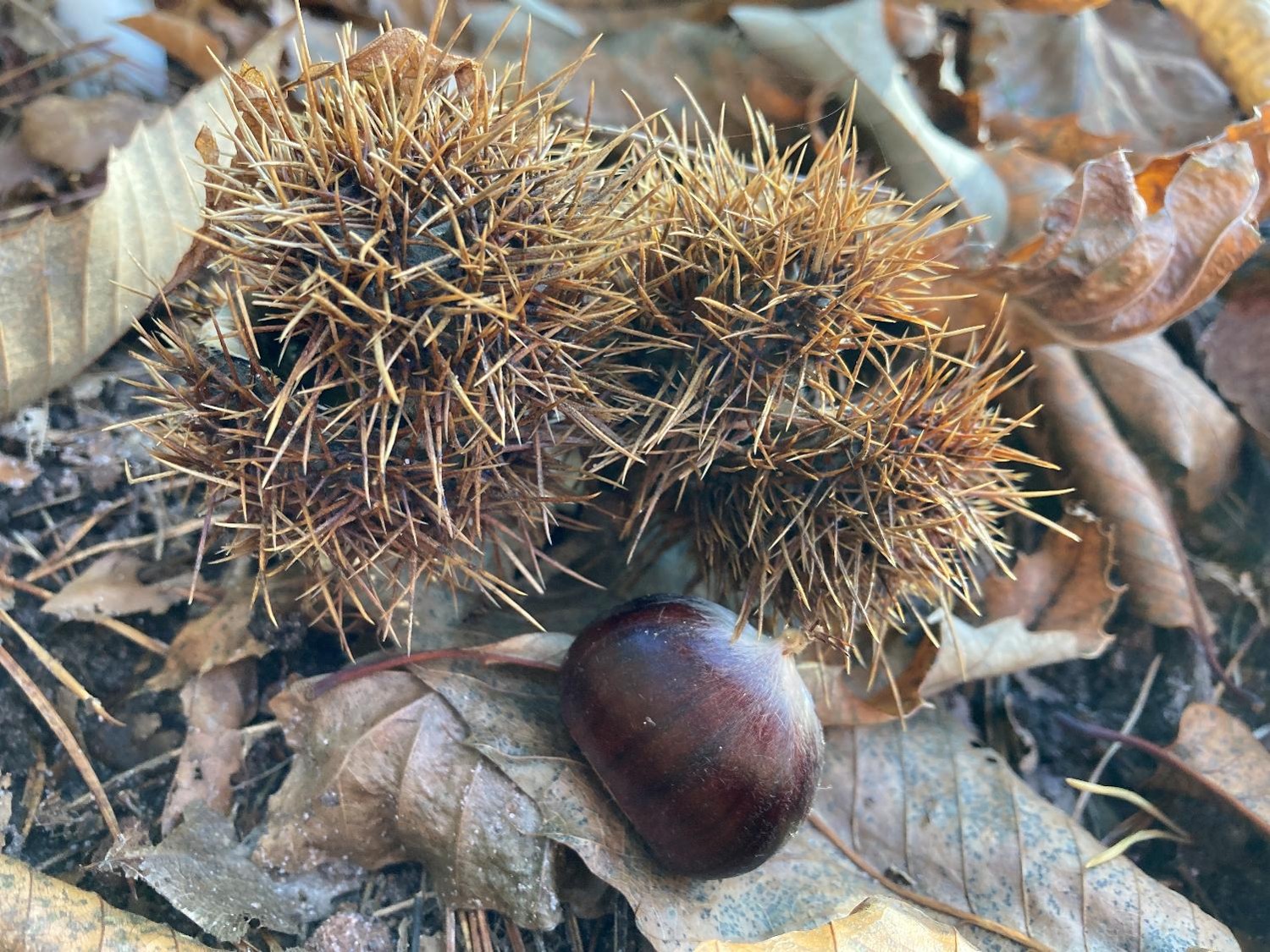
Chestnuts (Castanea sativa) drop their spiny involucres and nuts onto the forest floor in the Vosges Mountains of France, where many people gather them.
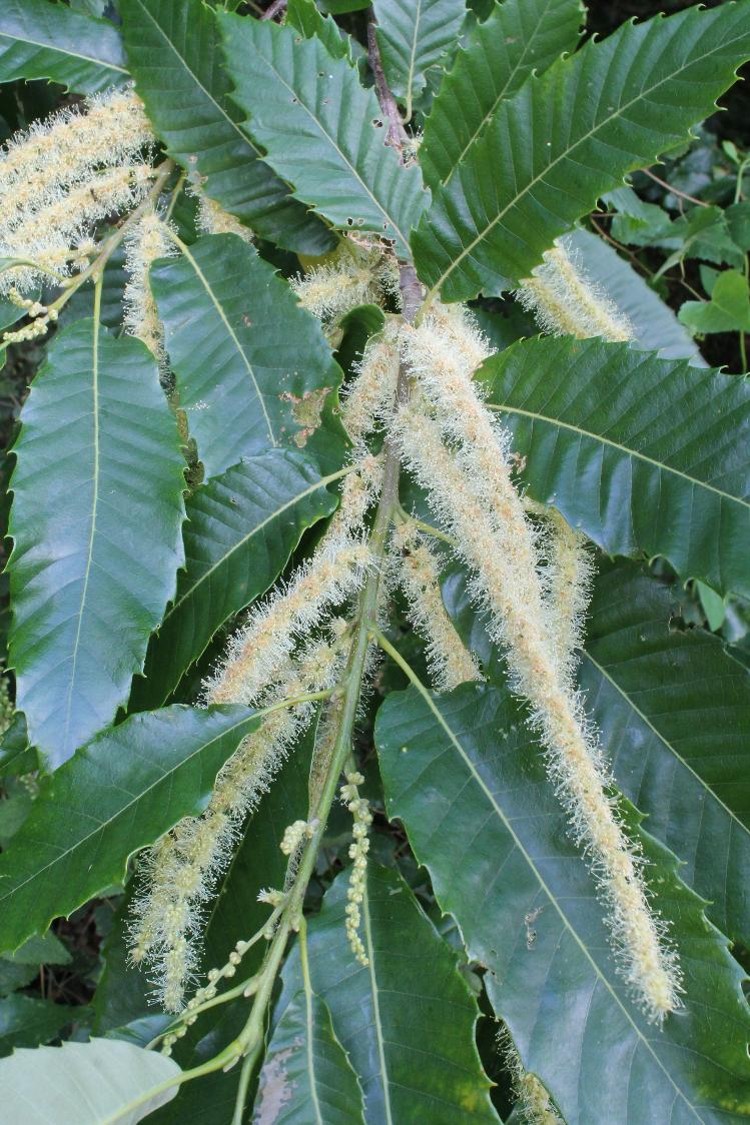
Male flowers of the European chestnut Castanea sativa in the Vosges Mountains of France.
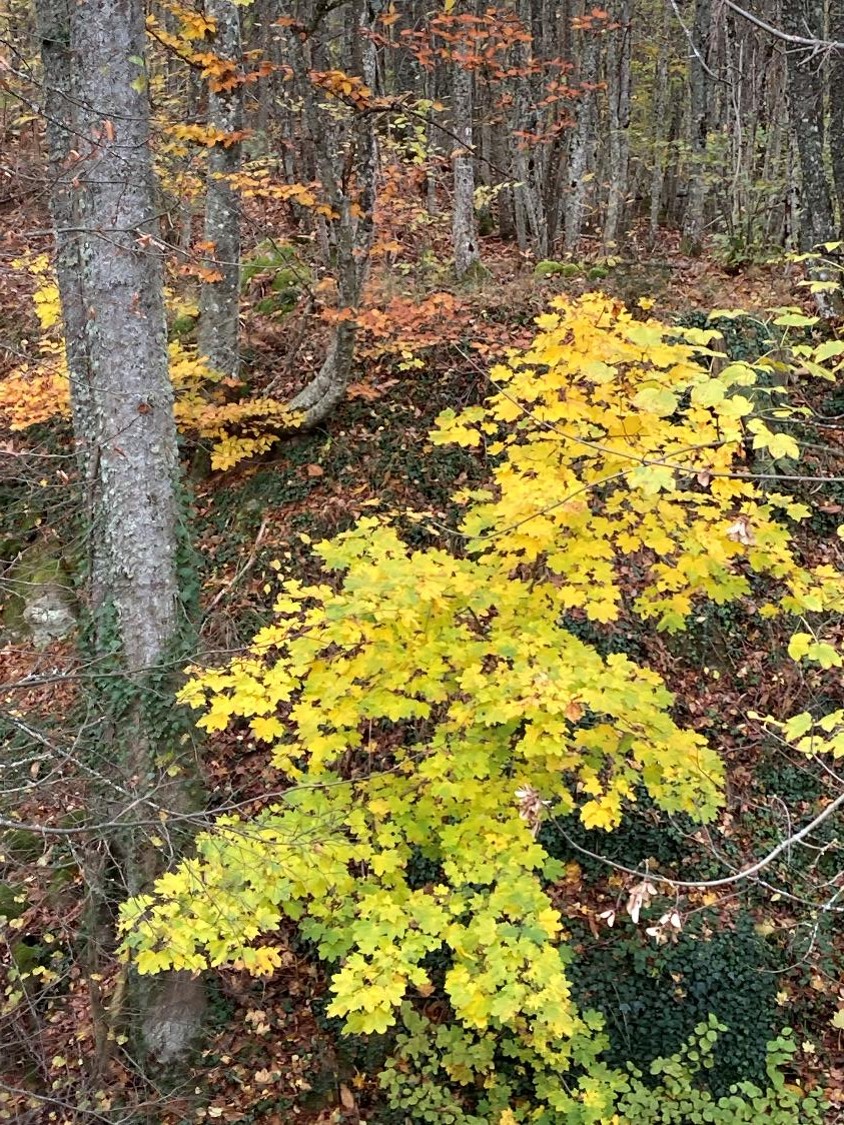
Maple (Acer pseudoplatanum) leaves turn bright gold in the autumn in the Vosges Mountains of France.
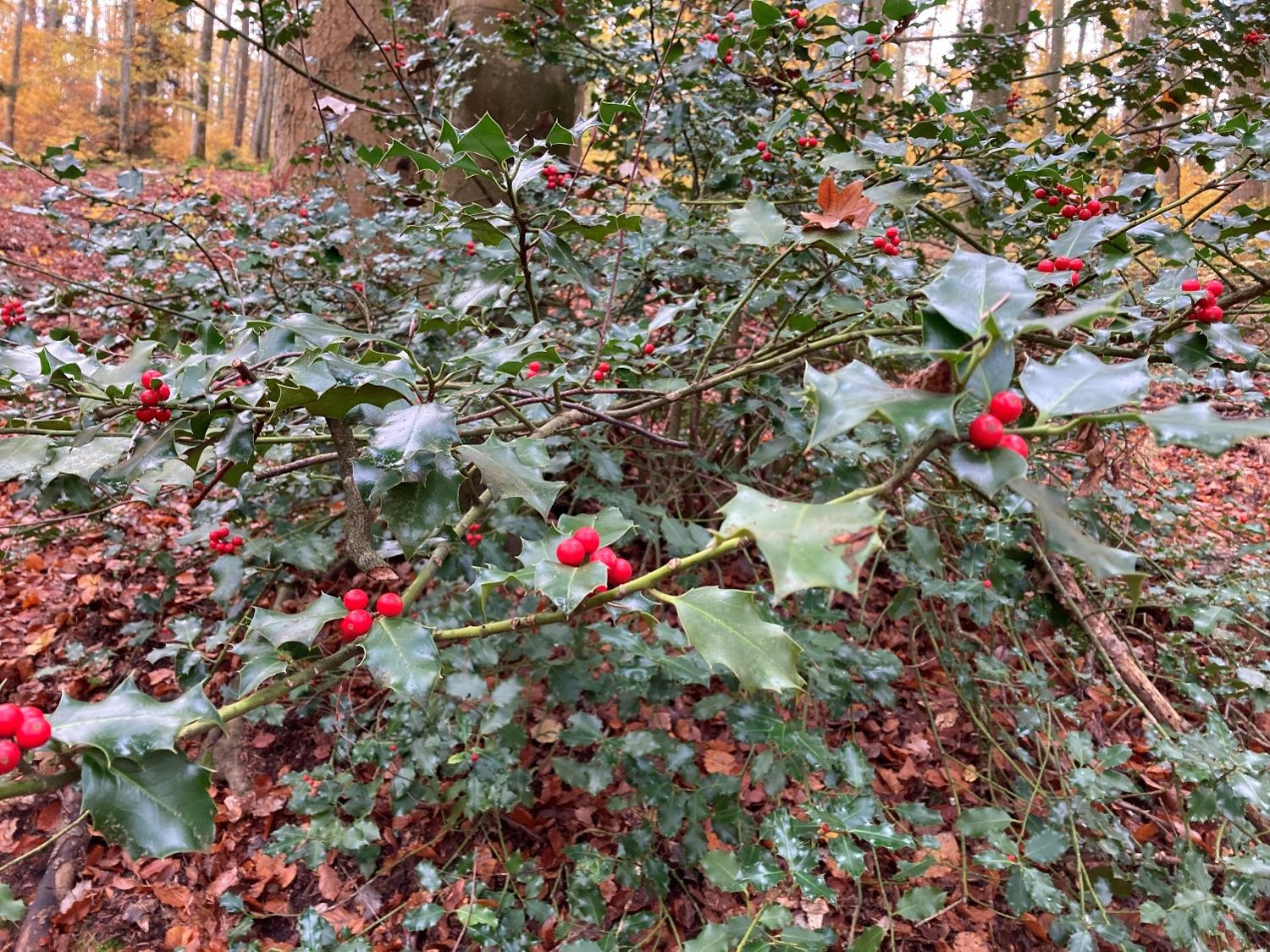
European holly (Ilex aquifolium) have evergreen leaves. The female bushes produce red berries in the autumn. Vosges Mountains, France.