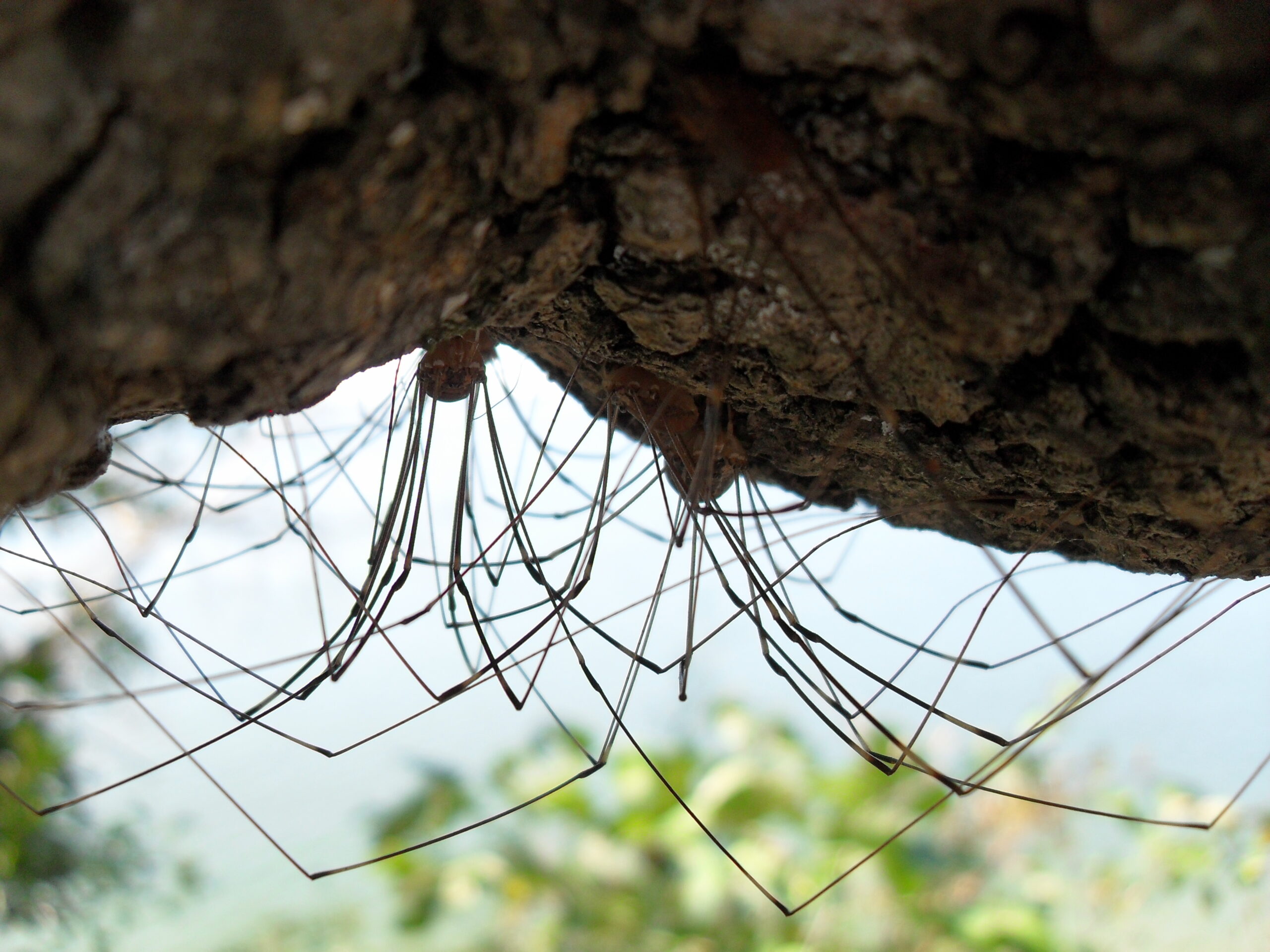
Harvestmen clustering (hiding?) on the underside of a horizontal trunk near Lake Texoma on the border of Oklahoma and Texas.
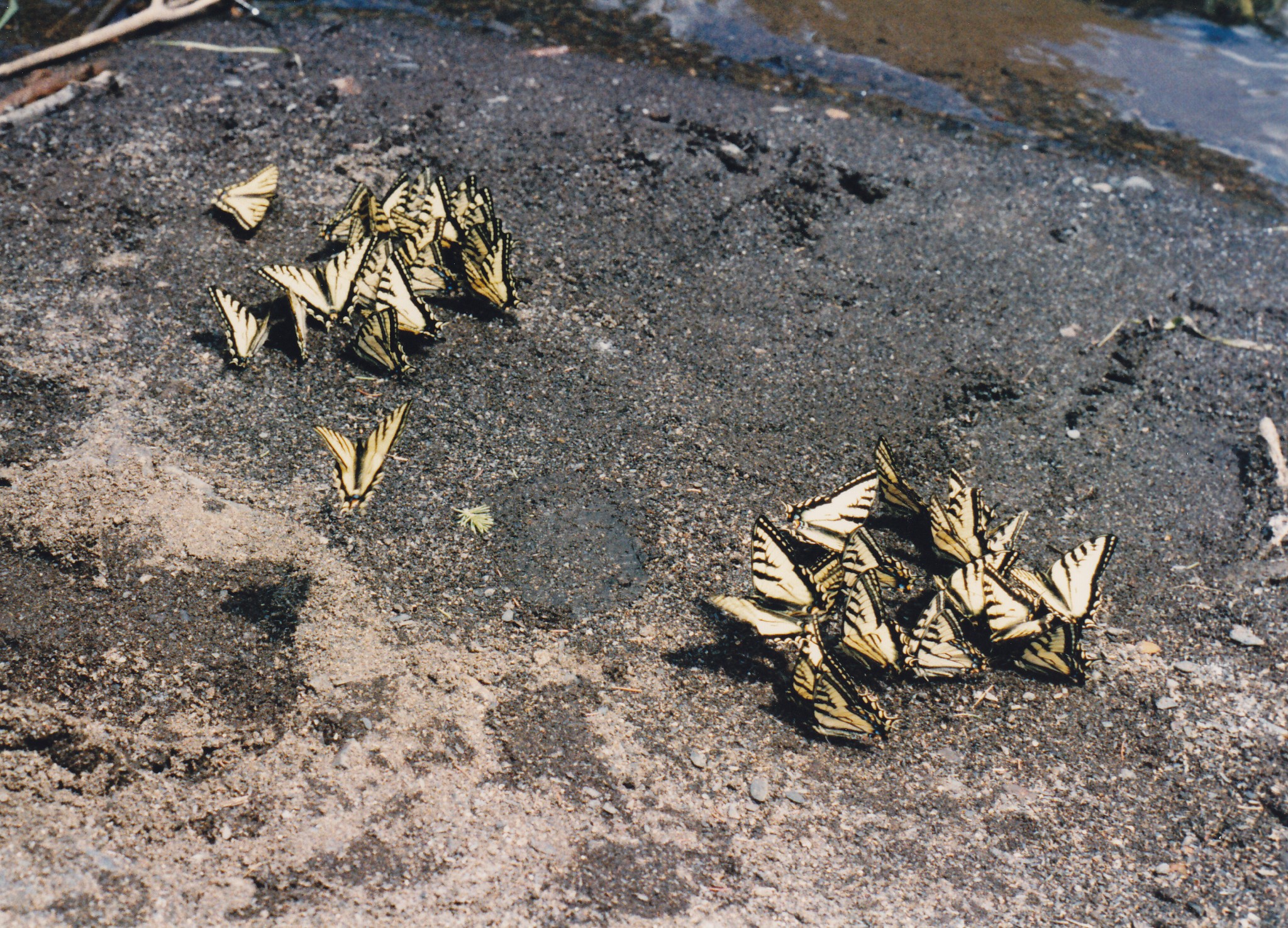
Tiger swallowtail butterflies puddling on sand near Rapid Creek in the Black Hills of South Dakota. The butterflies are all male, and they are gathering salt to offer to prospective mates. The salt probably came from the urine of a vertebrate.
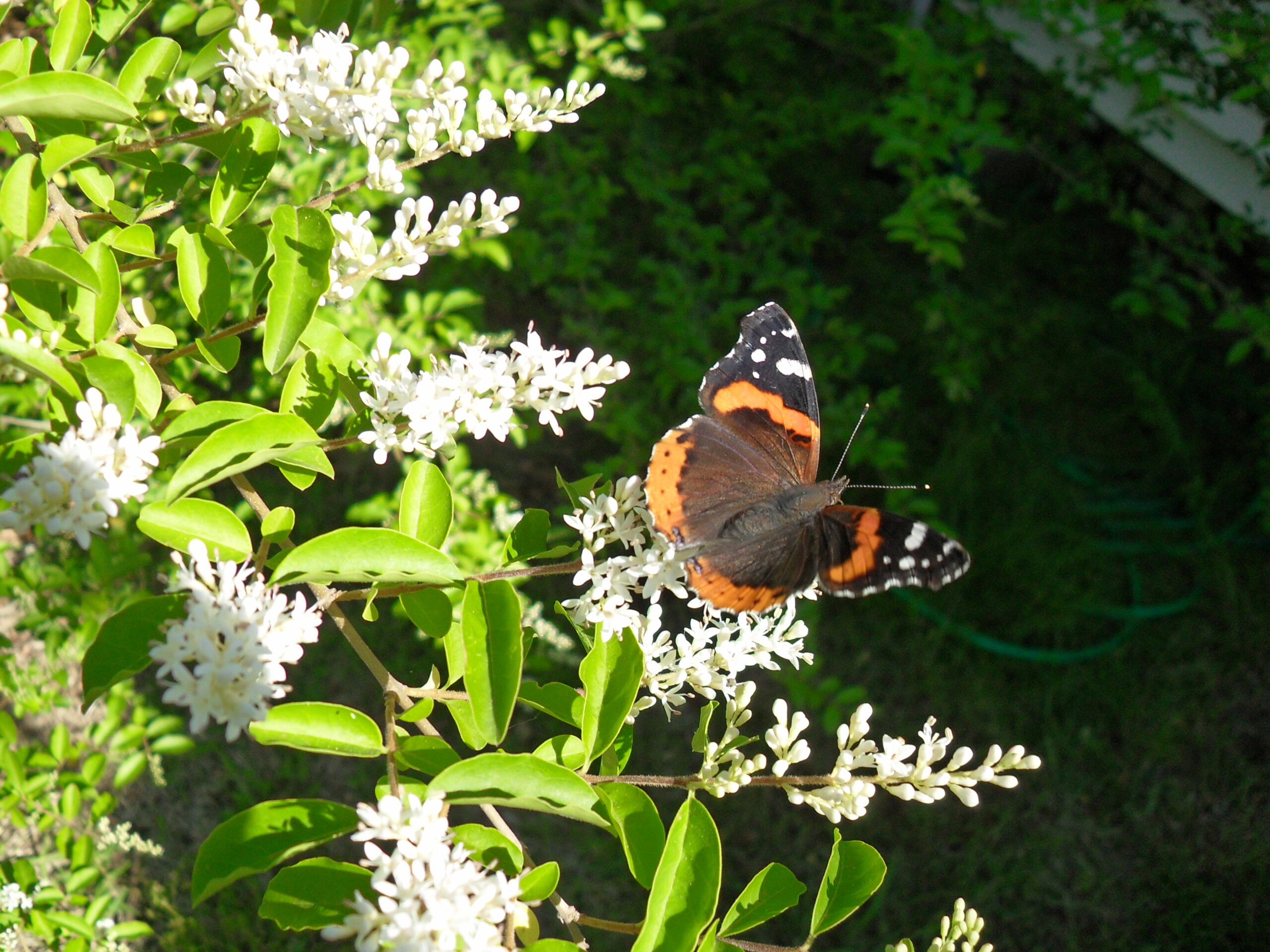
A red admiral butterfly pollinating privet (Ligustrum vulgare) in a yard in Oklahoma.
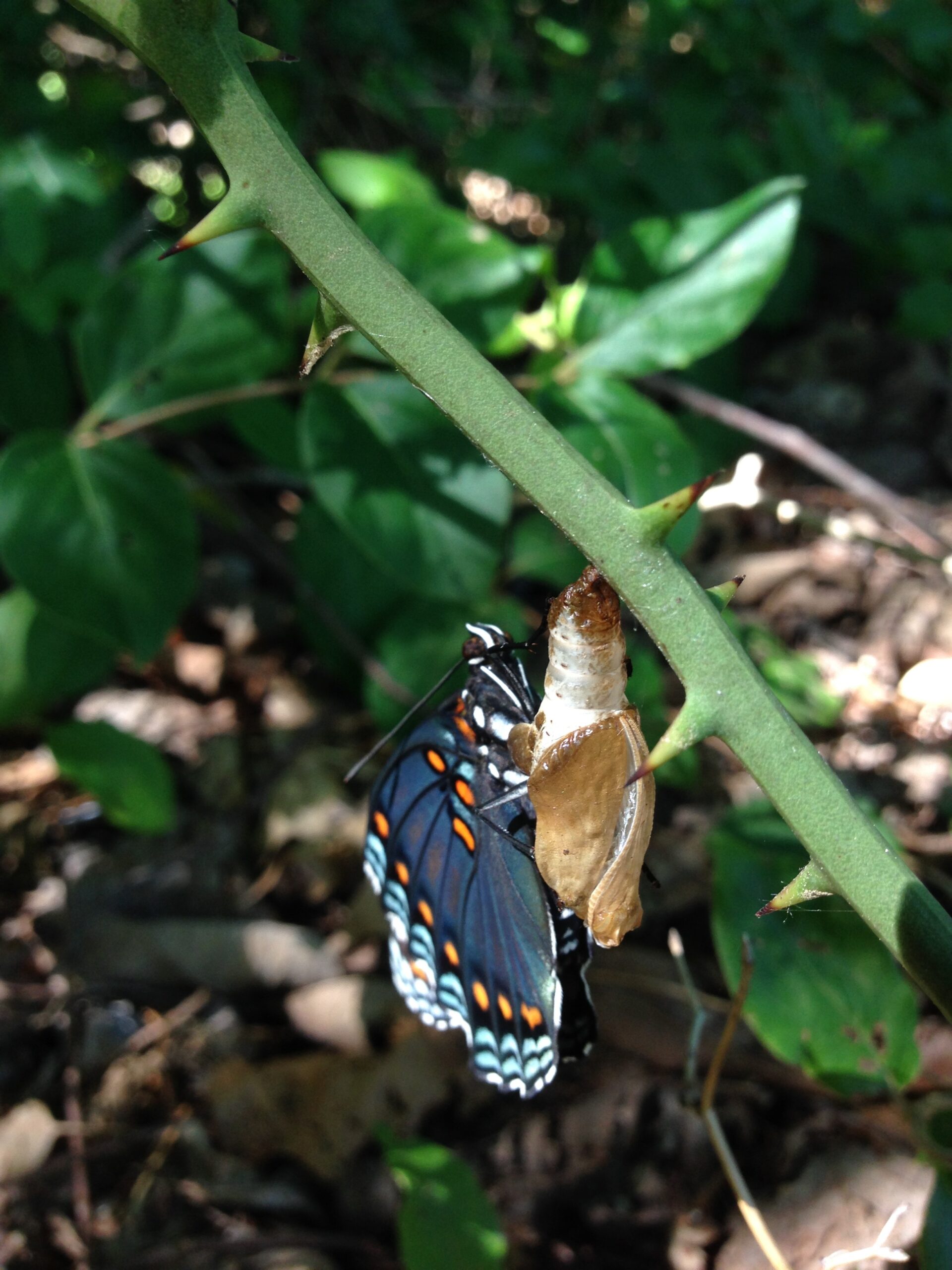
A butterfly emerges from its cocoon in a forest in northeastern Oklahoma.
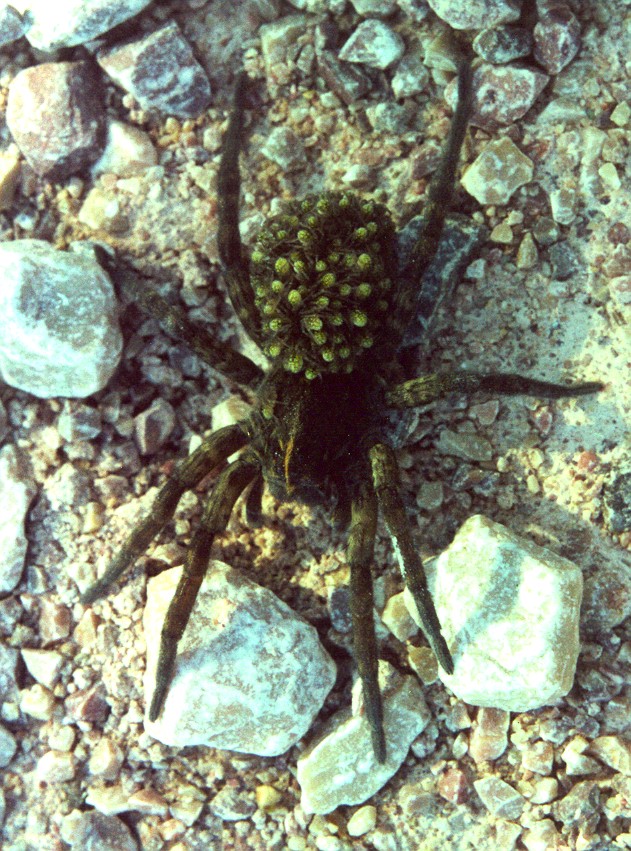
A wolf spider mother in the Badlands of South Dakota carries her offspring on her abdomen when they are young and need protection.
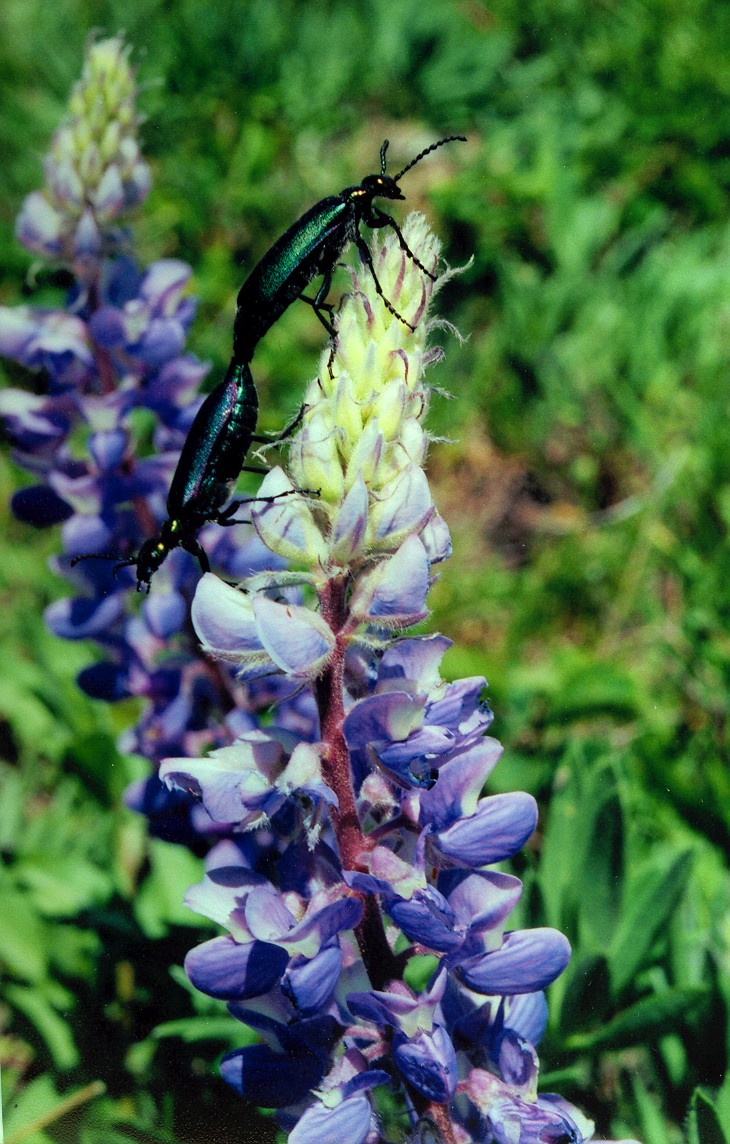
Beetles mating on a lupine at Cement Ridge in the Black Hills, Wyoming.
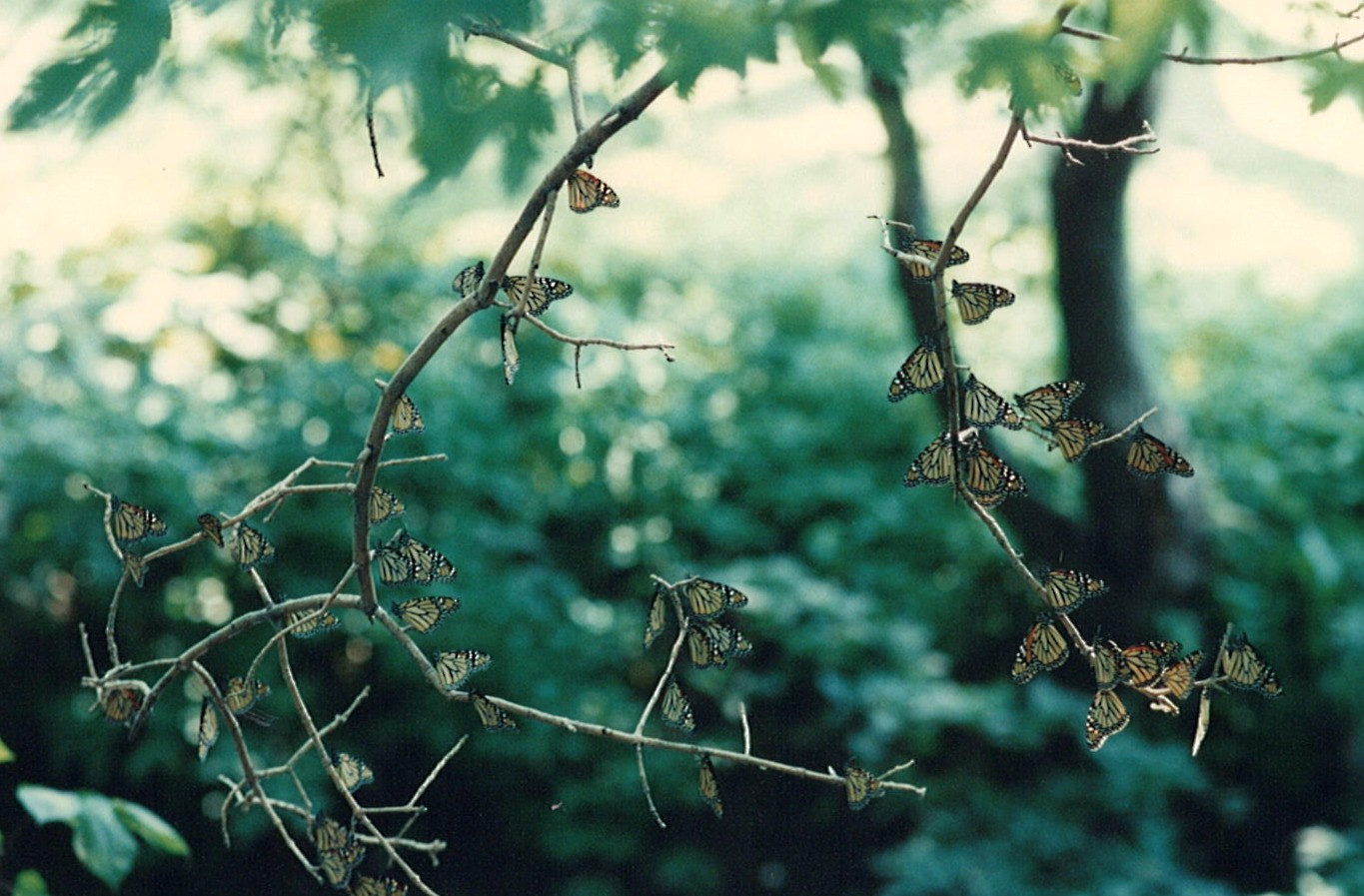
Monarch butterflies stop along the Redwood River in Marshall, southwestern Minnesota, during their migration.
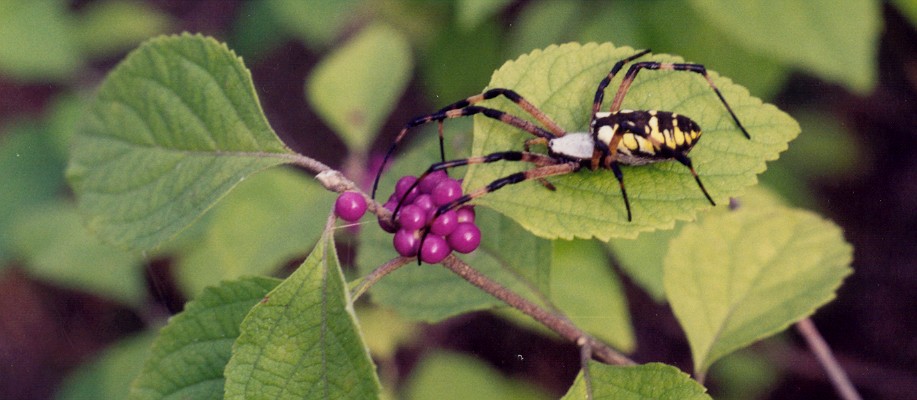
A spider on a beautyberry bush (Callicarpa americana) in a forest in eastern Oklahoma.
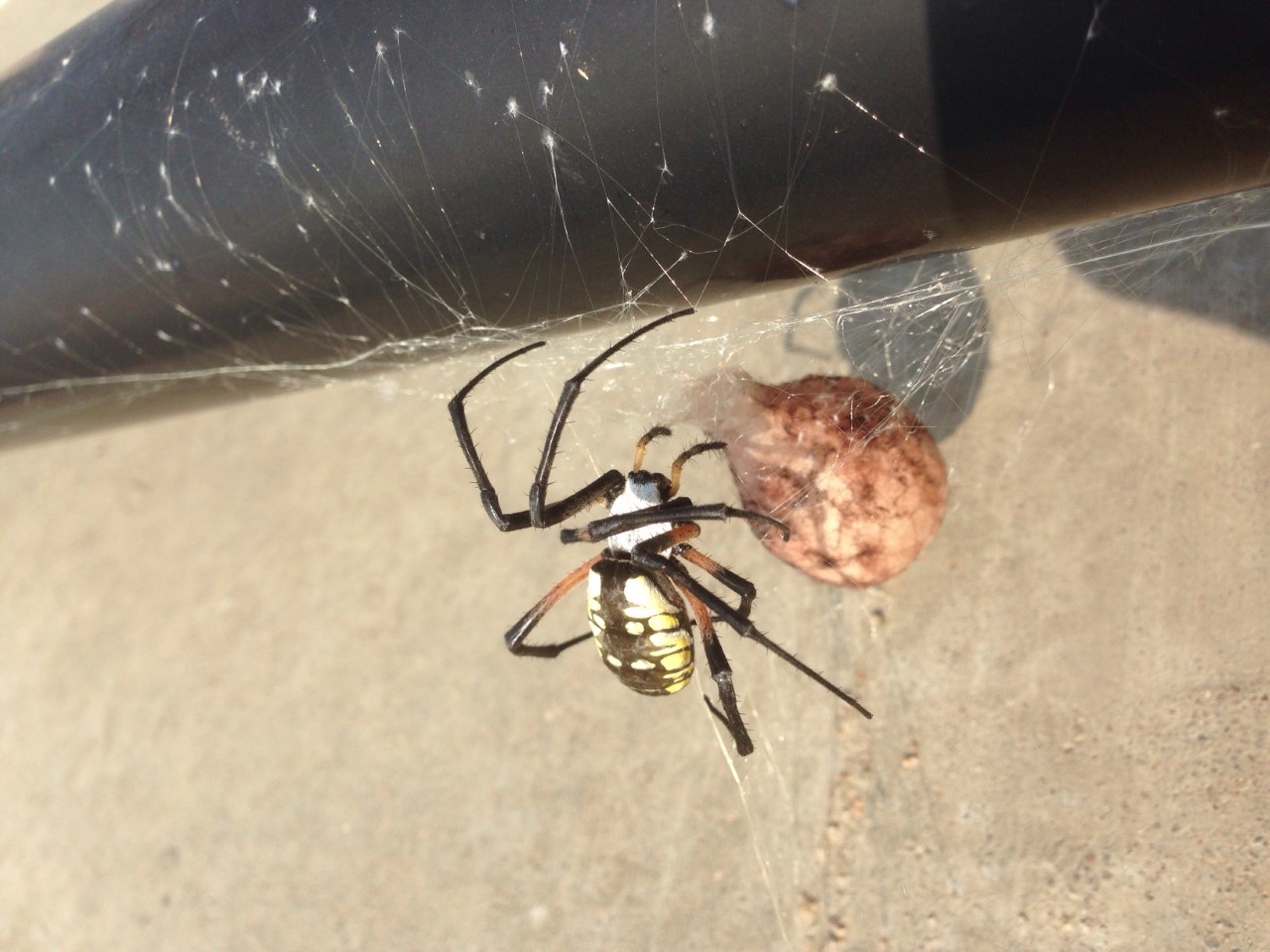
An Argiope spider tends its egg case under a bridge in eastern Oklahoma.
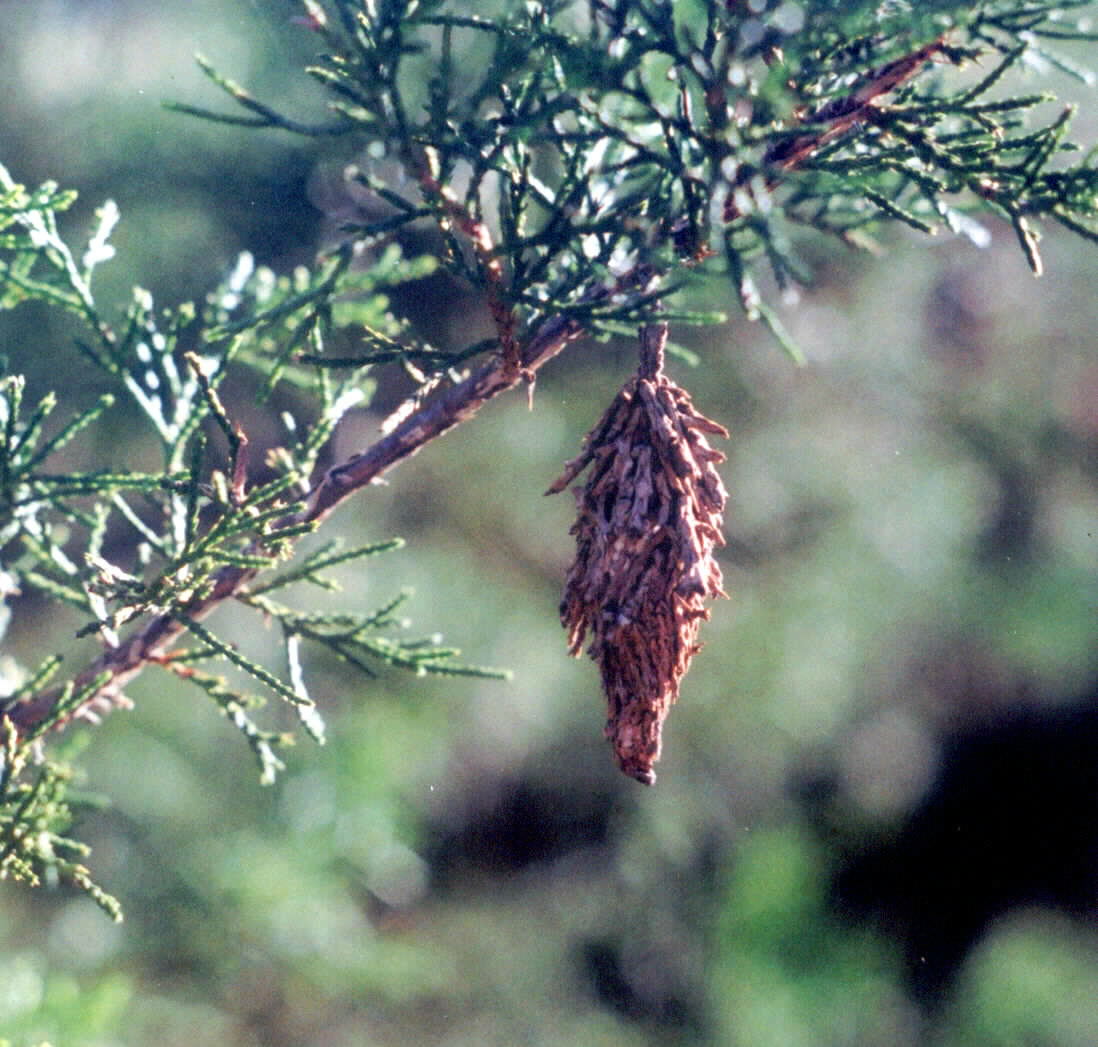
A bagworm pupa hangs from a cedar (Juniperus virginiana) branch in northeastern Oklahoma.
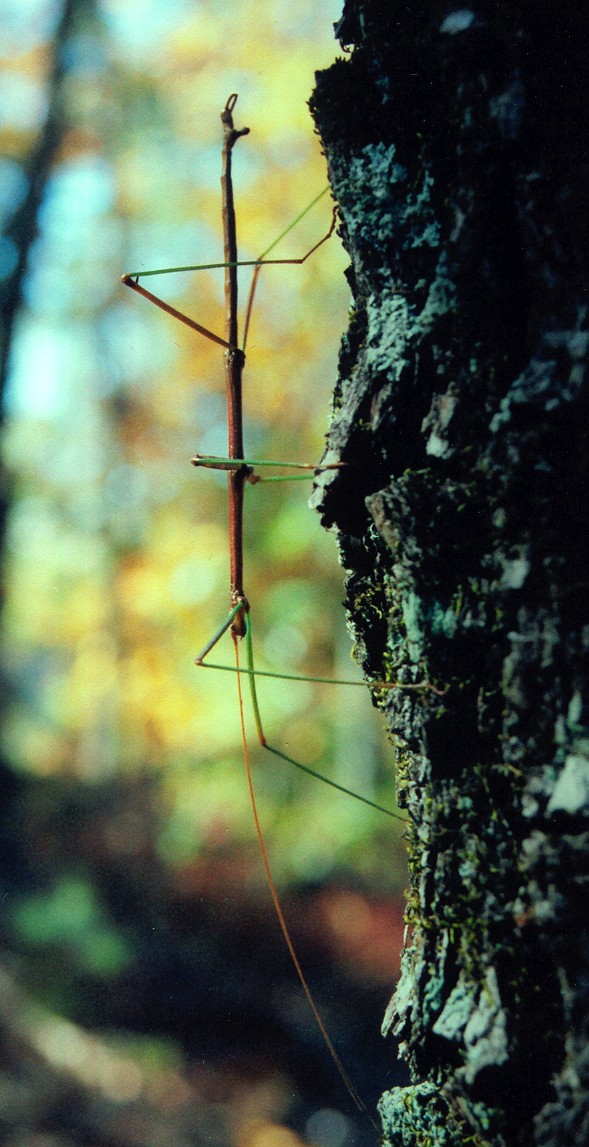
A stick insect on a hickory trunk in Beavers Bend State Park in southeastern Oklahoma.
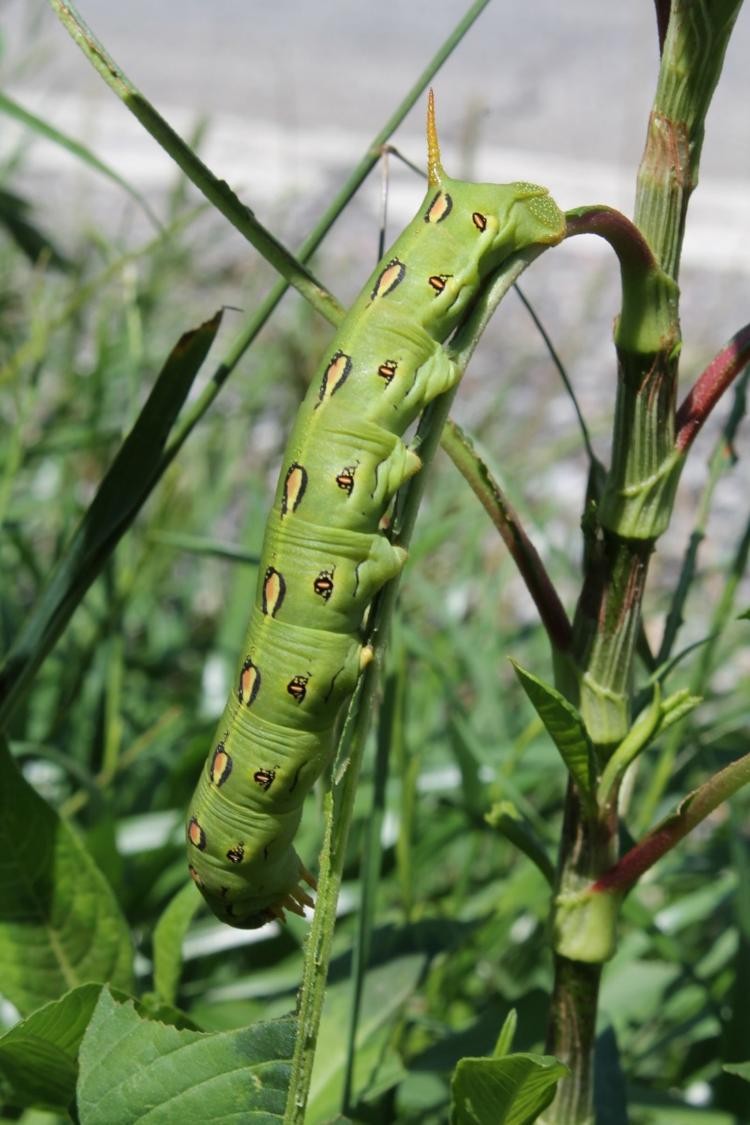
A hornworm (sphinx moth caterpillar) on a Polygonum on a roadside in southern Oklahoma.
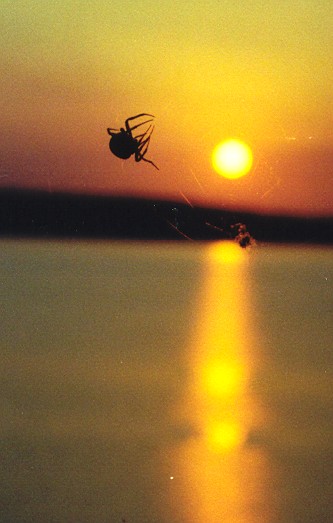
A spider in its web at sunset near Lake Texoma on the Oklahoma-Texas border.
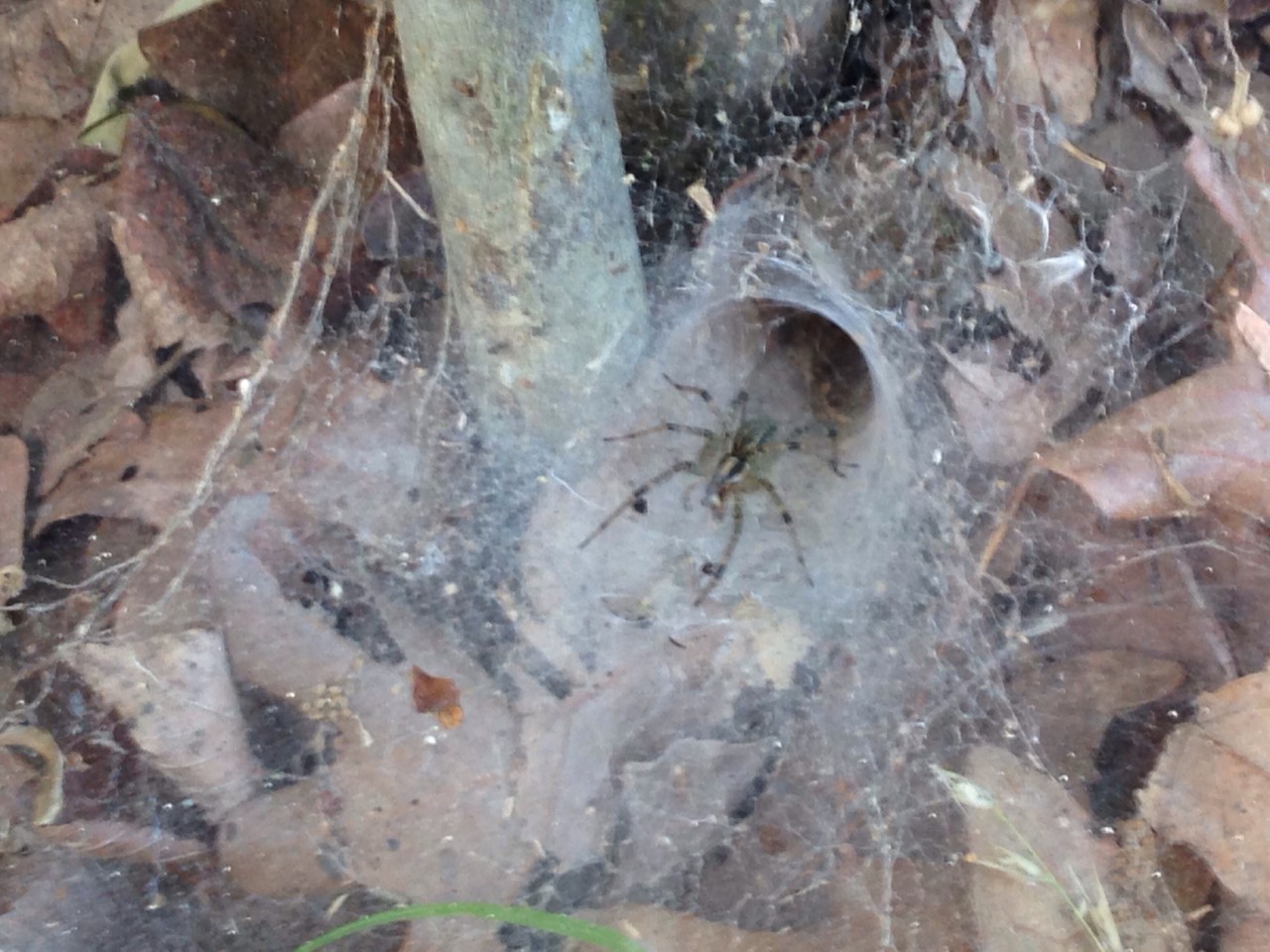
A funnel spider in its web in leaf litter in a forest in Oklahoma. At this time, the entire forest floor was covered by these webs.
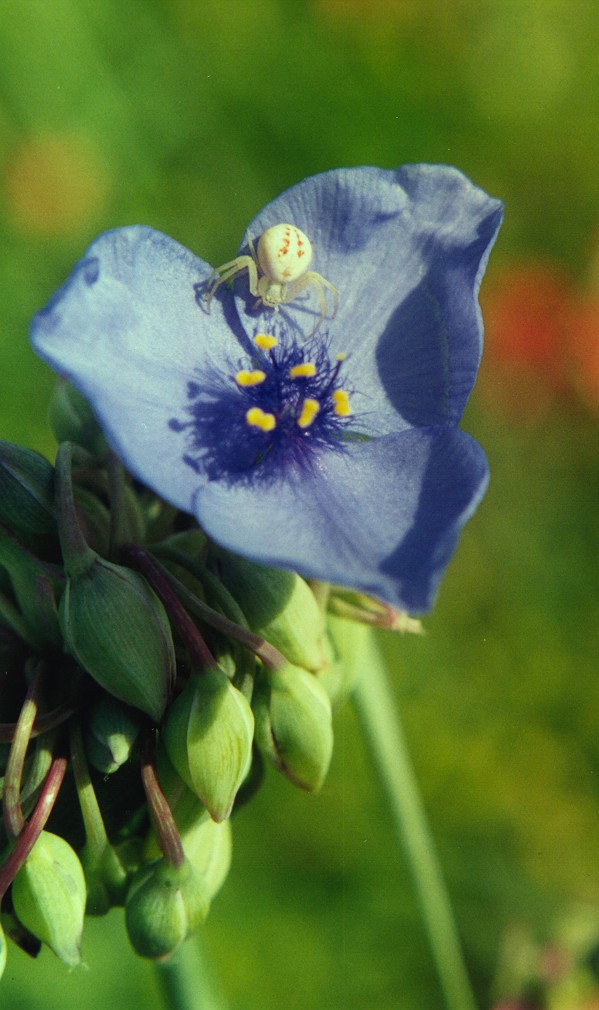
A crab spider waits in a Tradescantia ohiensis flower in Oklahoma for its prey, an insect pollinator.
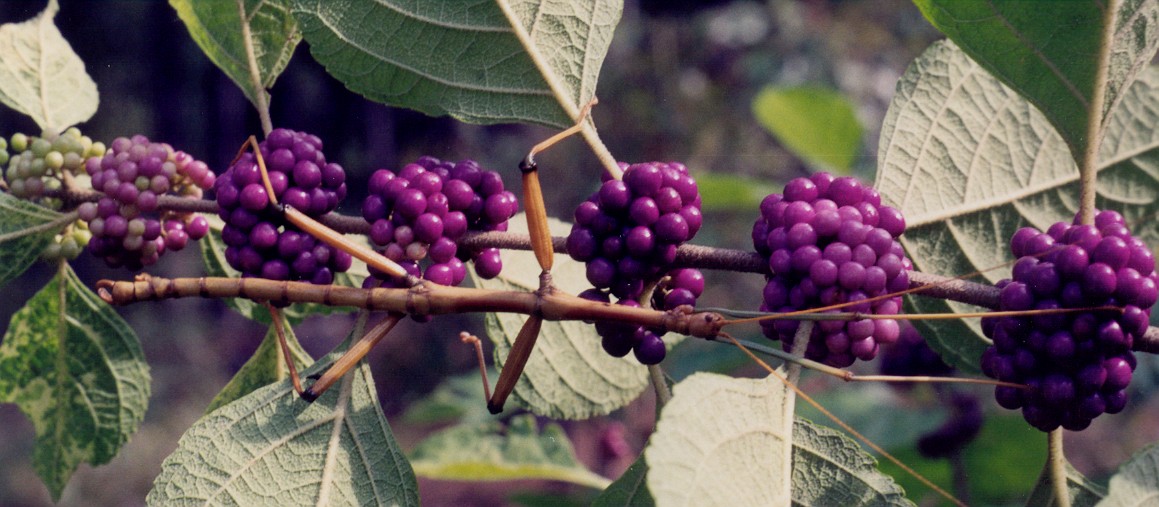
A stick insect on a beautyberry (Callicarpa americana) branch in eastern Oklahoma.
Disturbance and Succession
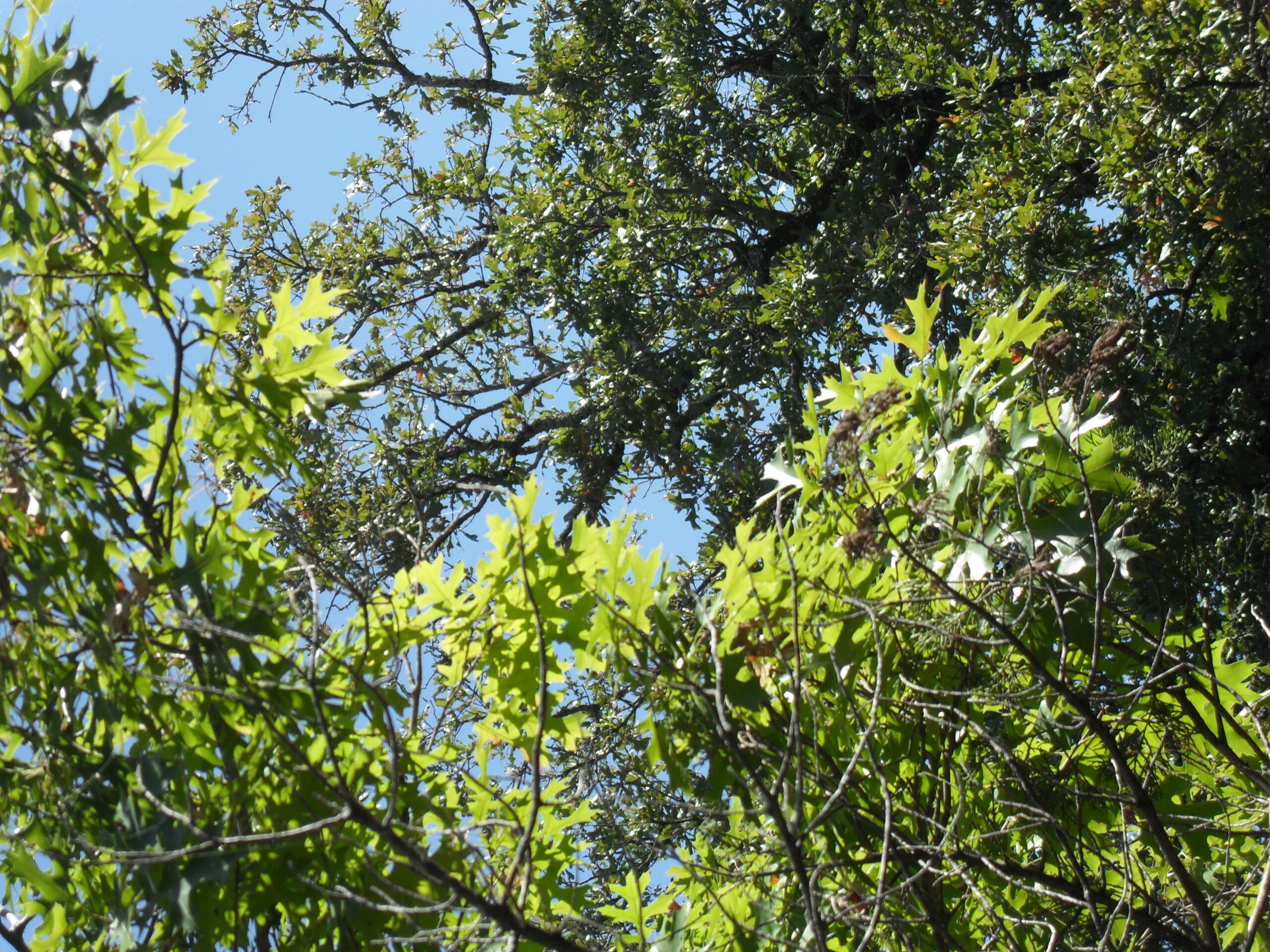
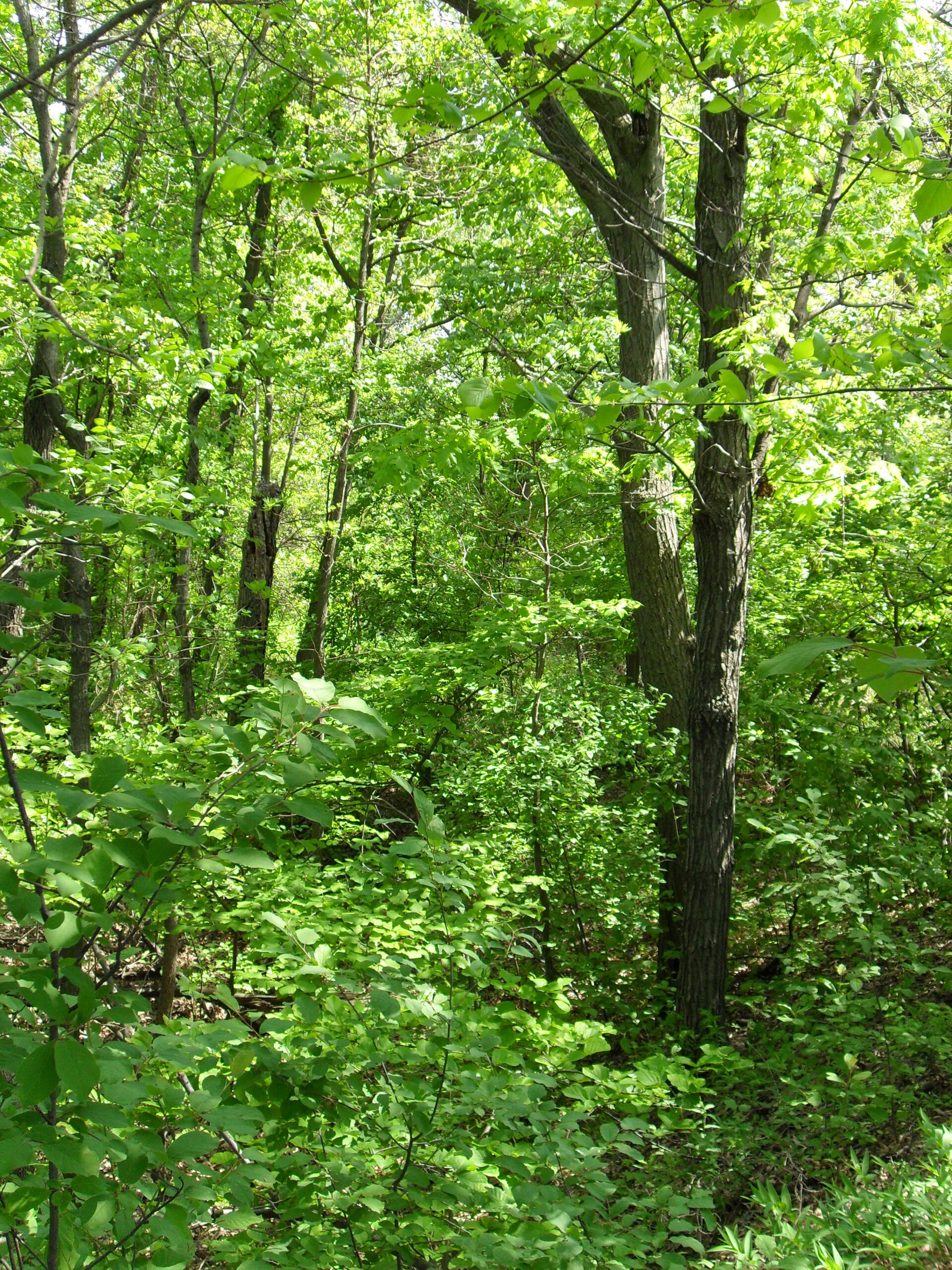
Drought-sensitive shumard oaks (Quercus shumardi) grow under drought-hardy post oaks (Quercus stellata) near Lake Texoma. Eventually, the shumard oaks will replace the post oaks. This process is called mesophication.
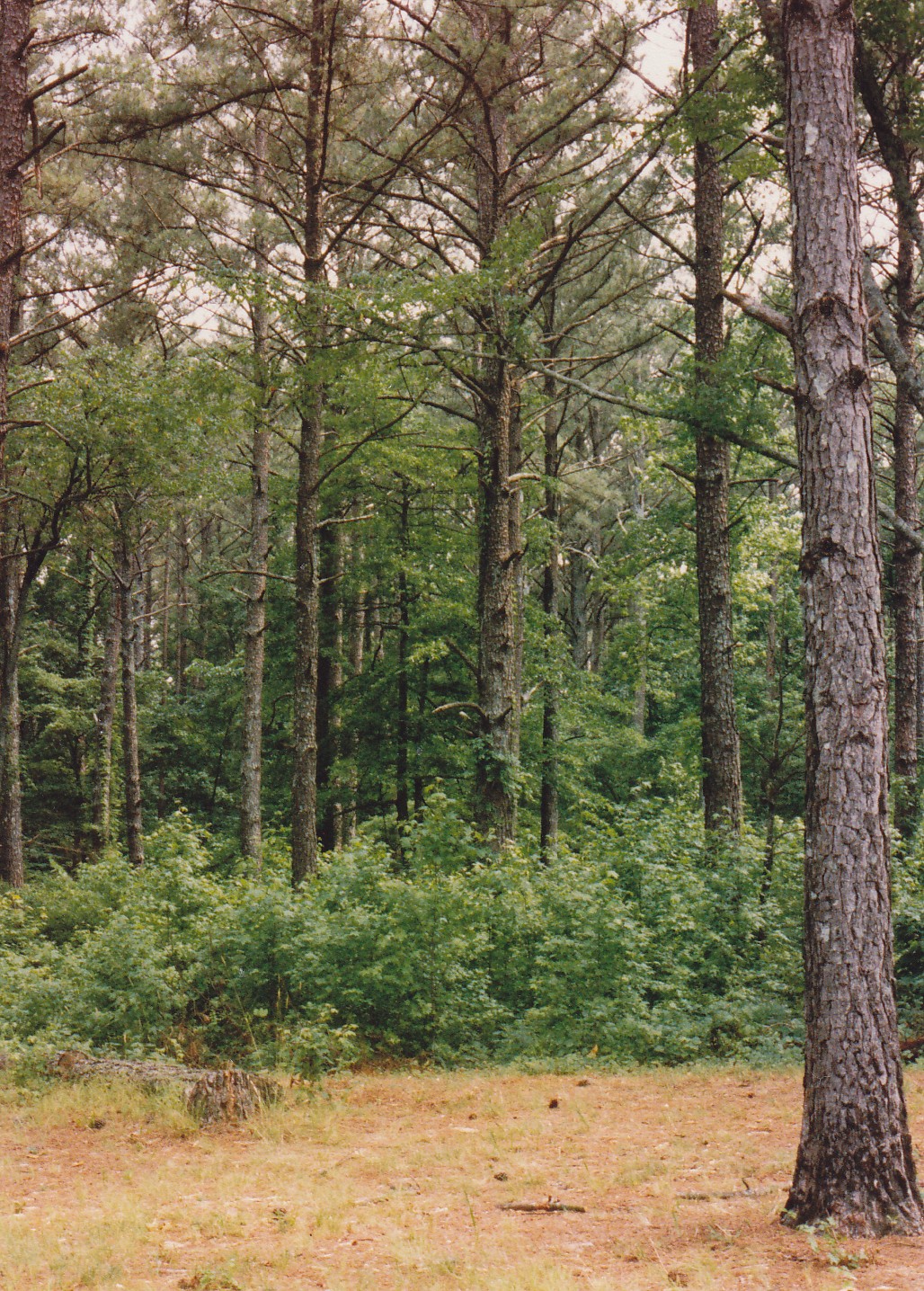
Hardwood saplings grow up underneath pine trees in Georgia, USA, and will eventually replace the pine trees.
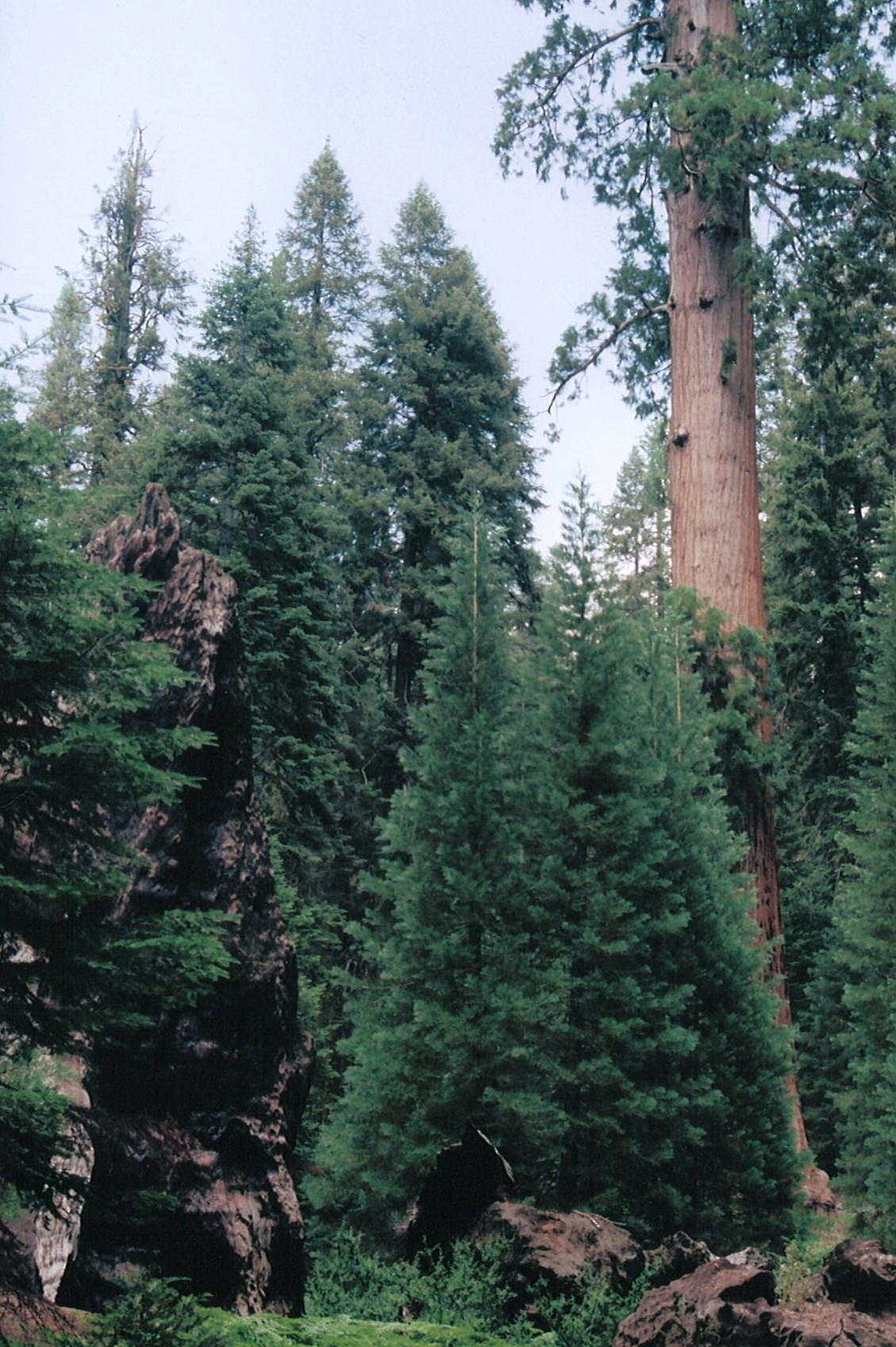
Giant sequoia seedlings (Sequoiadendron giganteum) grow underneath adult sequoia trees after a fire that destroyed an older sequoia tree (charred trunk on the left). Sequoias depend on fires and other disturbances for their seedlings to germinate. Sequoia National Park, California.
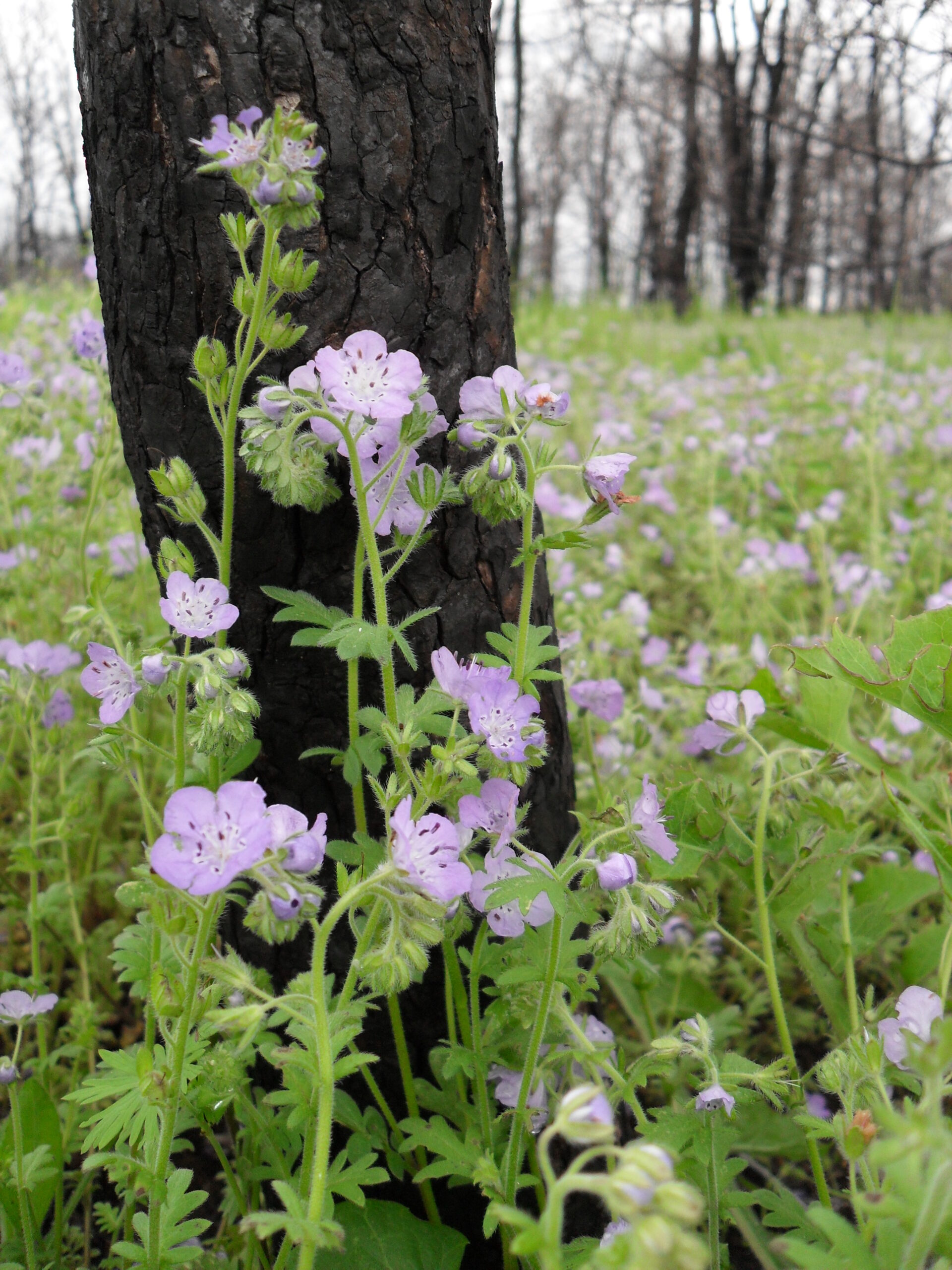
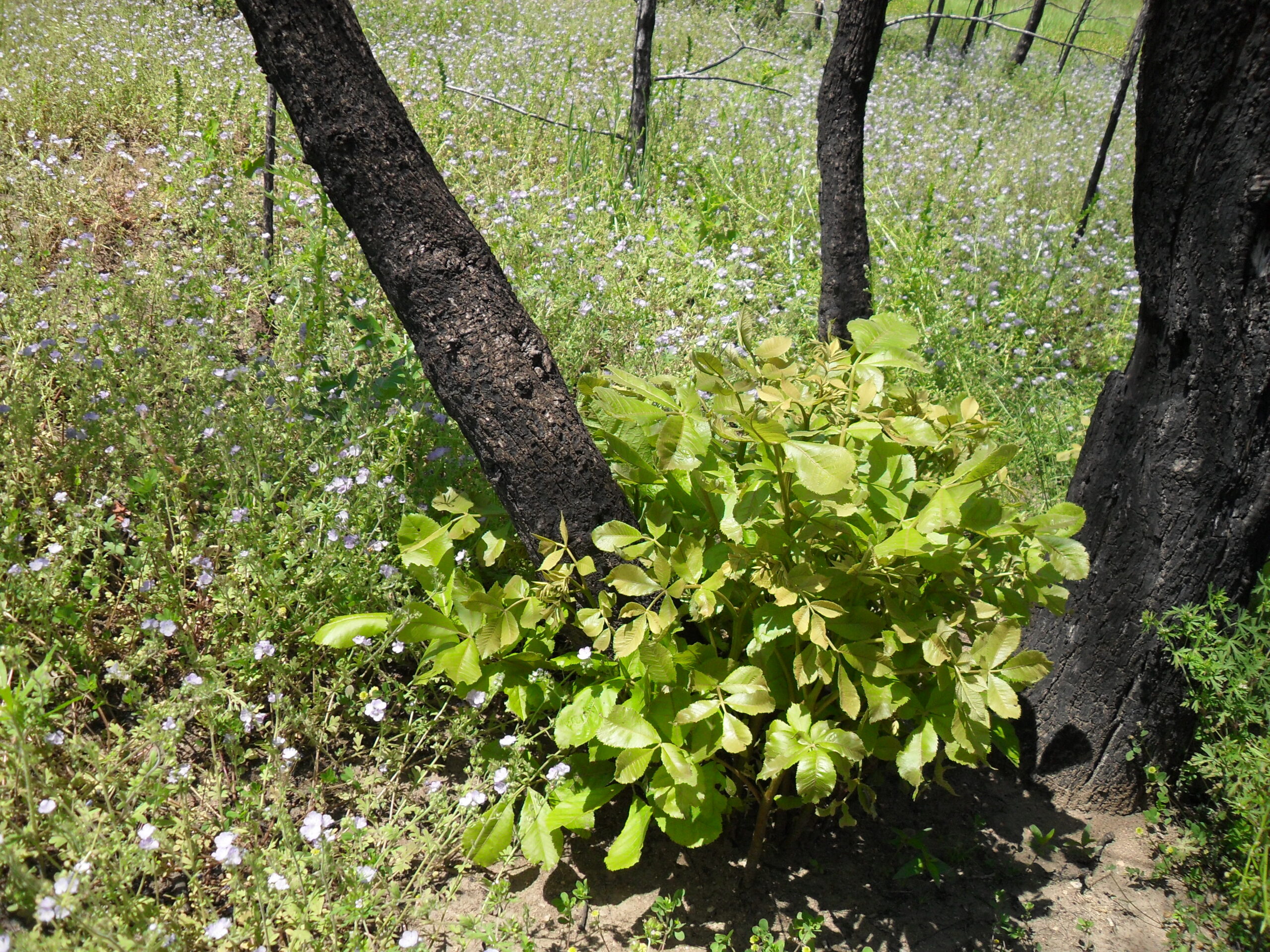
Phacelia strictiflora wildflowers grow in post oak (Quercus stellata) woodlands in southern Oklahoma. They are only abundant, however, after fires have killed the overstory trees. My research has shown that phacelia seeds require smoke chemicals dissolved in water in order to germinate.
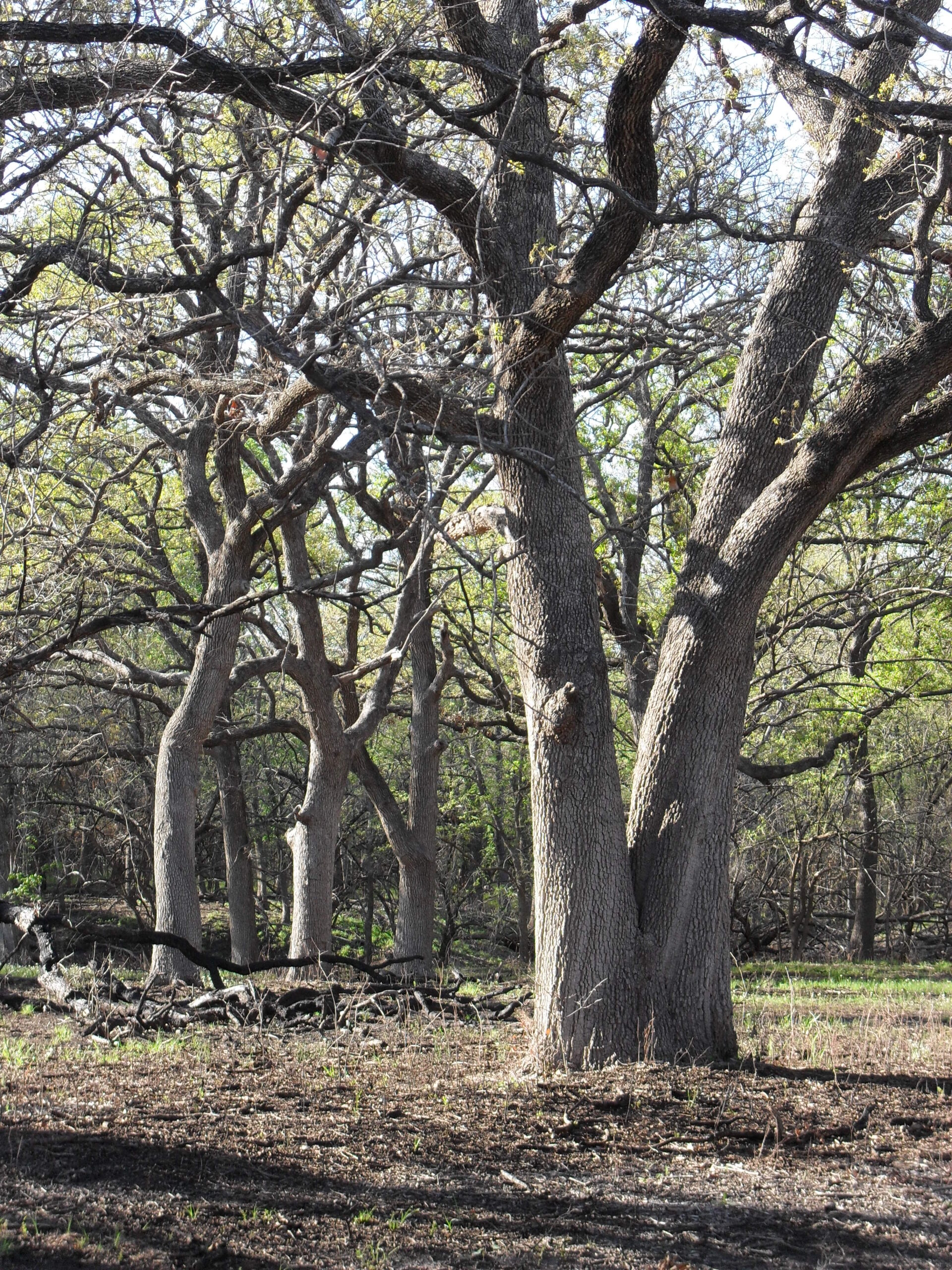
A cross-timbers forest (Quercus stellata) in southern Oklahoma is open after a fire has cleared away the underbrush.
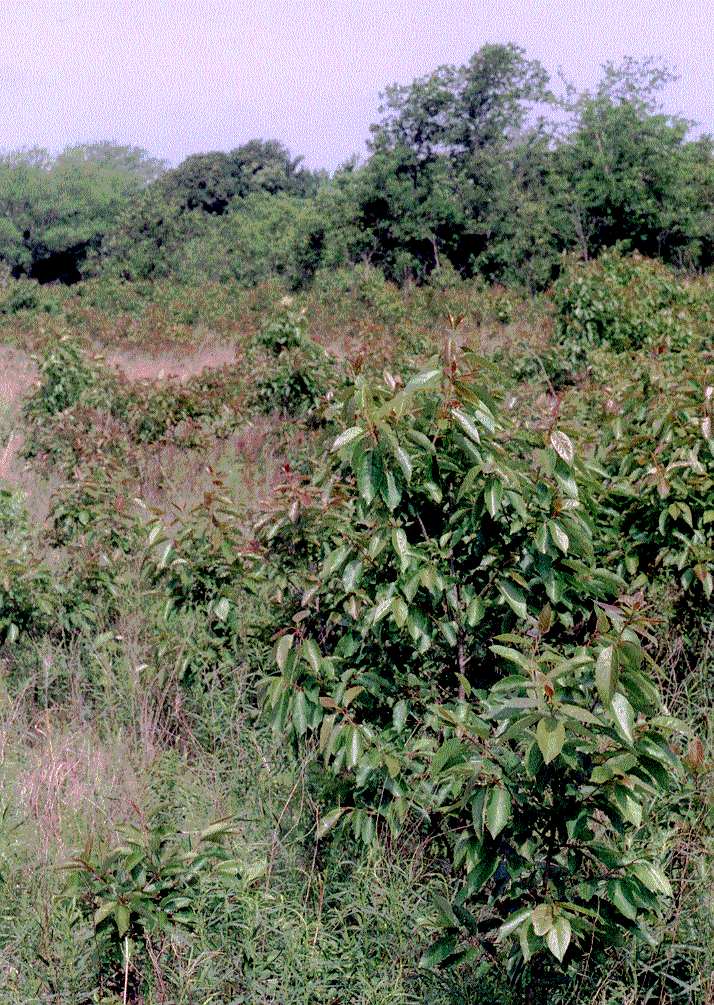
An open field in southern Oklahoma is invaded by persimmon (Diospyros virginiana) saplings. The persimmons take over the field rapidly because they are all connected by underground rhizomes.
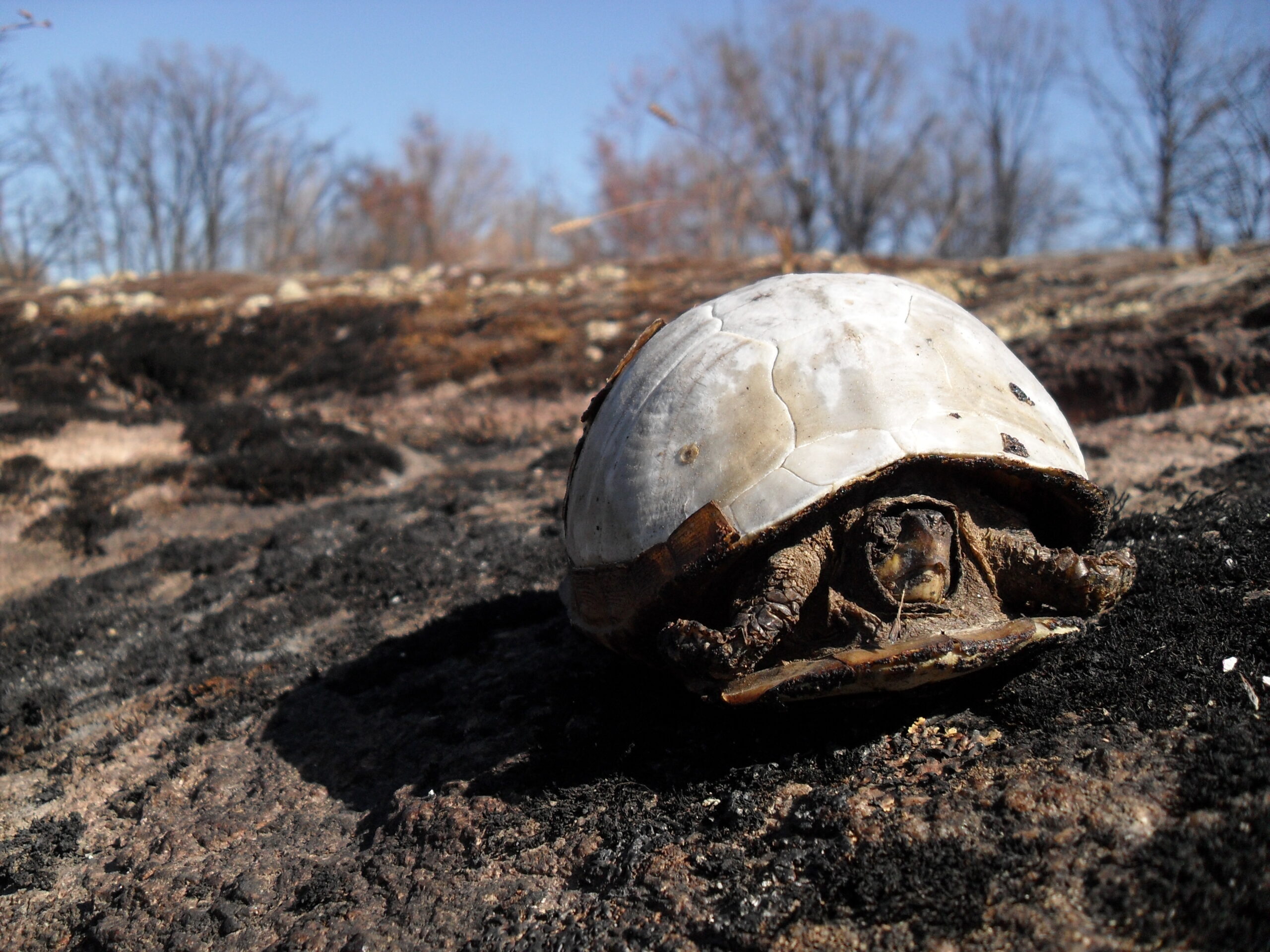
A fire in 2011 in a cross timbers (Quercus stellata) woodland in southern Oklahoma and killed most of the trees. Most of the animals got away, but not this turtle.
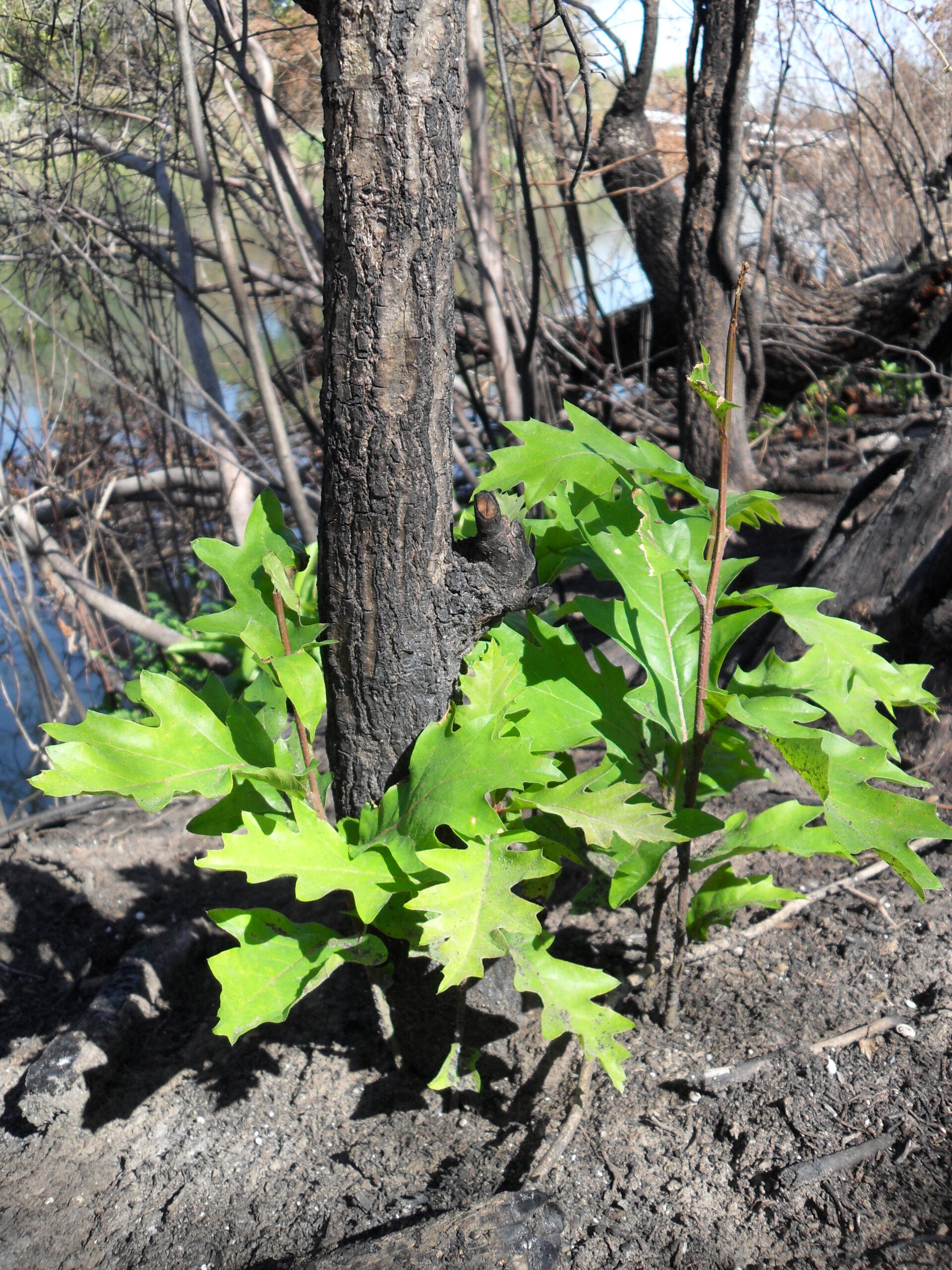
A red oak (Quercus rubra) sapling resprouts soon after a fire has destroyed the aboveground post oak woodland in southern Oklahoma.
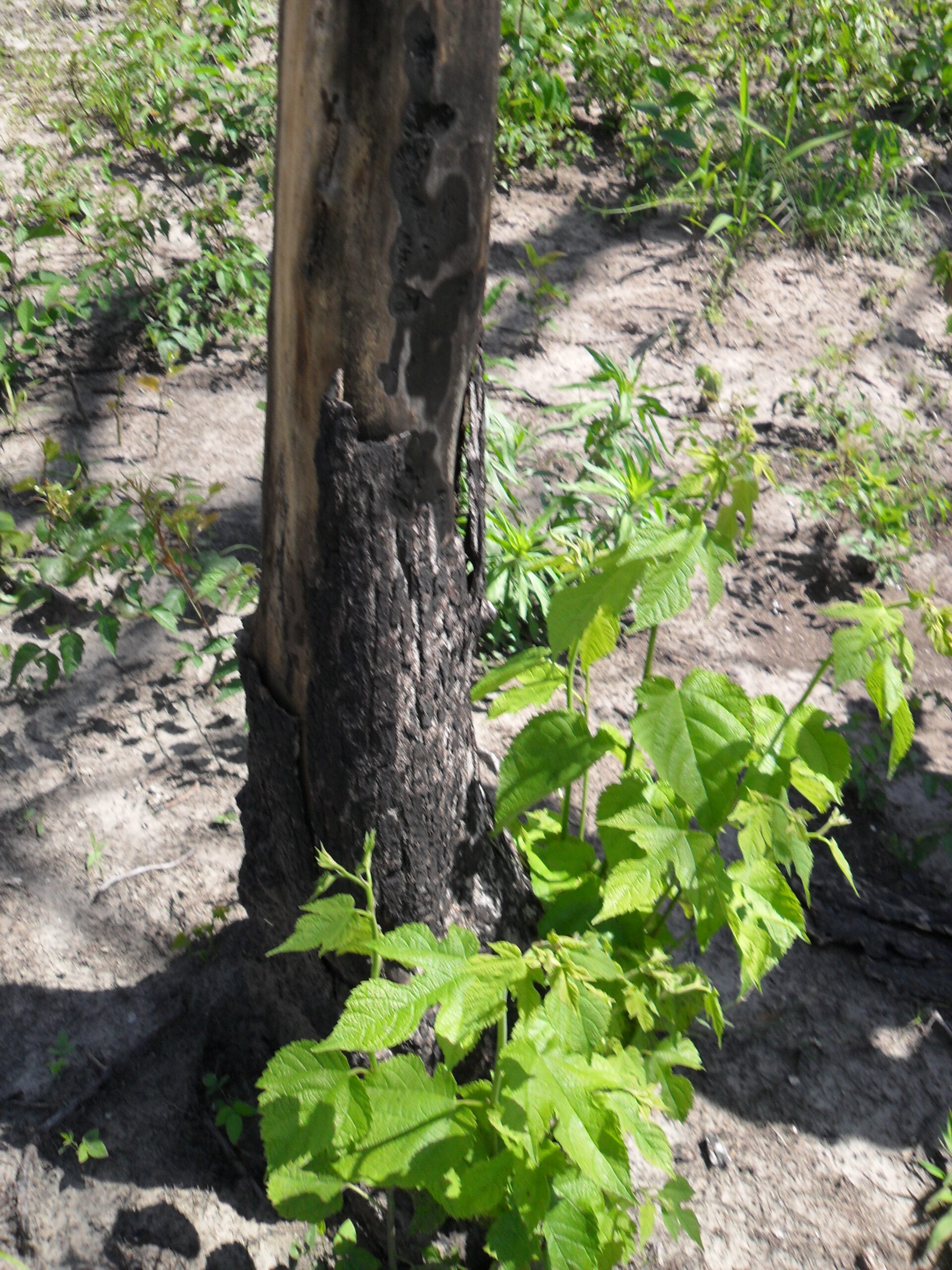
A white mulberry (Morus alba) sapling resprouts soon after a fire has destroyed the aboveground post oak woodland in southern Oklahoma.
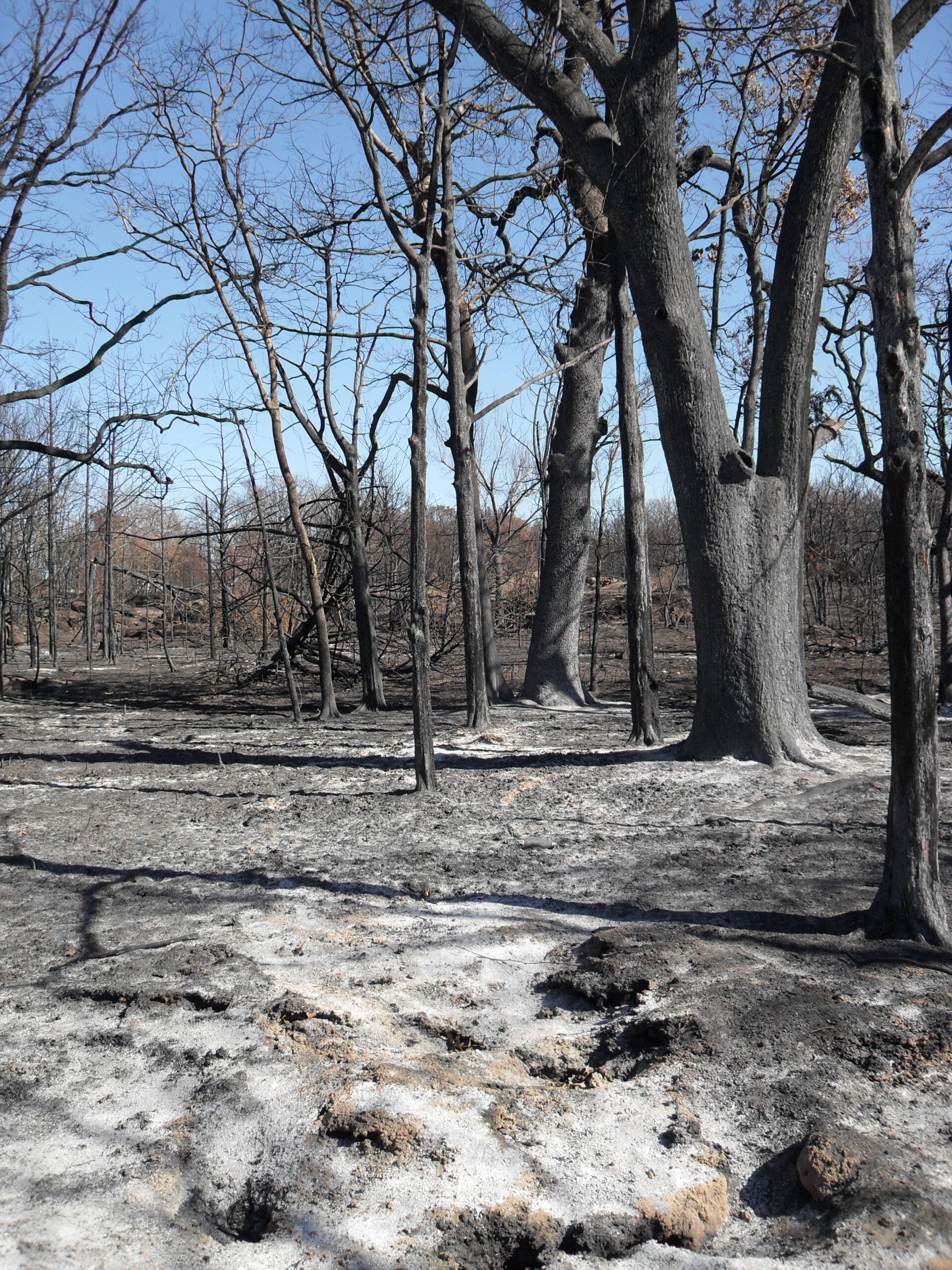
A fire has killed all the above-ground parts of the trees in an Oklahoma post oak (Quercus stellata) woodland. Almost all of these trees, however, later re-sprouted from underground tissues.
A black hickory (Carya texana) sapling resprouts soon after a fire has destroyed the aboveground post oak woodland in southern Oklahoma.
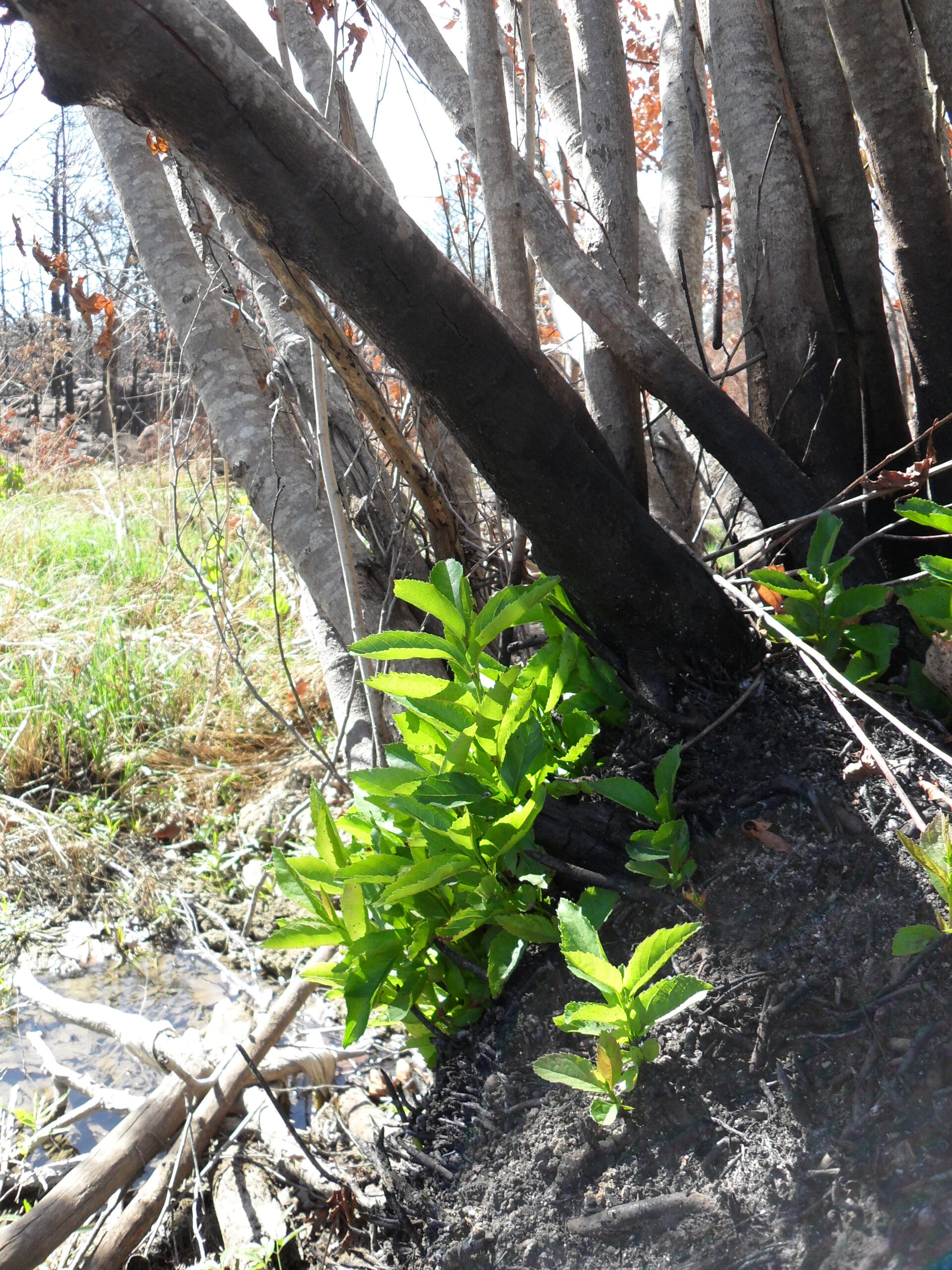
A seaside alder (Alnus maritima) sapling resprouts soon after a fire has destroyed the aboveground post oak woodland in southern Oklahoma. Like other alders, this species grows right next to a river (the Blue River).
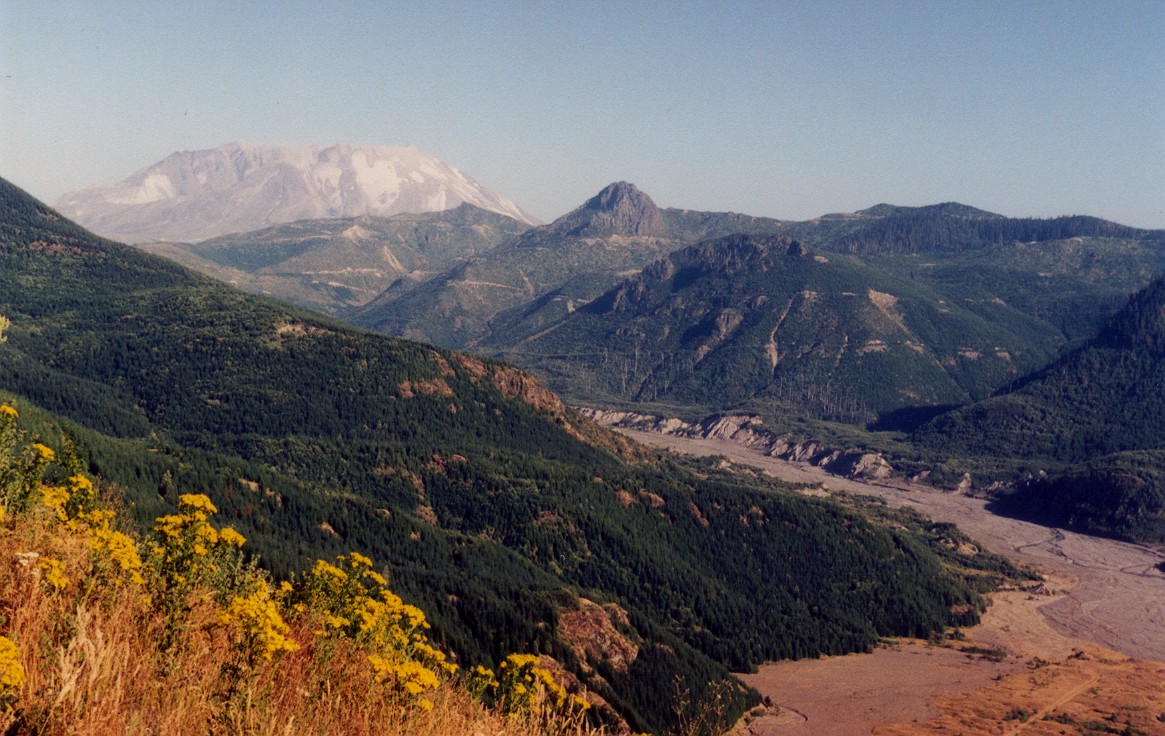
Mt. St. Helens in Washington erupted in 1980, blowing its top off and producing the stream of sediments, 20 years before this photo was taken. Many of the conifers have grown back.
Mt. St. Helens in Washington erupted in 1980, blowing its top off 16 years before this photo was taken. Many of the conifers are starting to grow back.
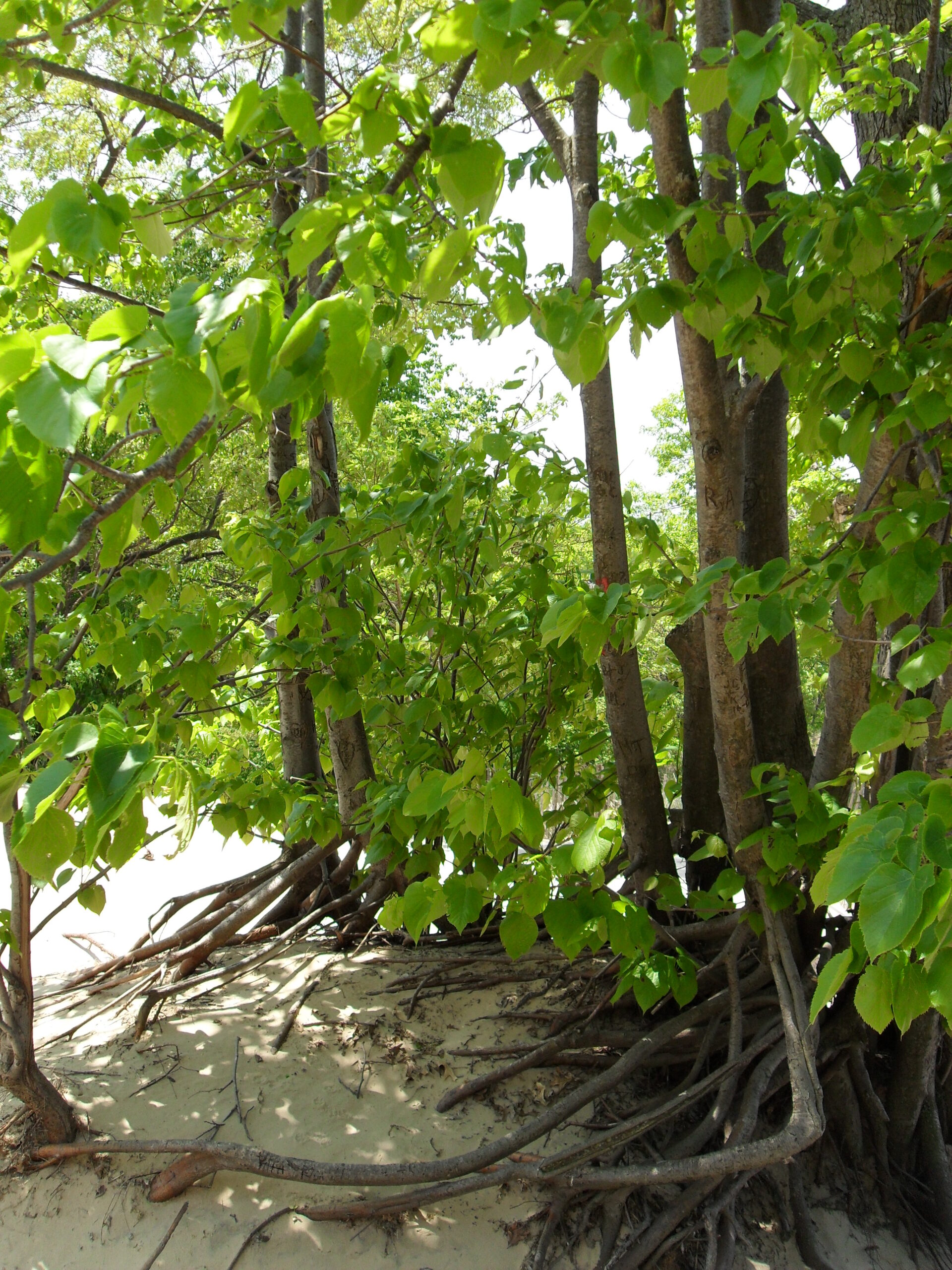
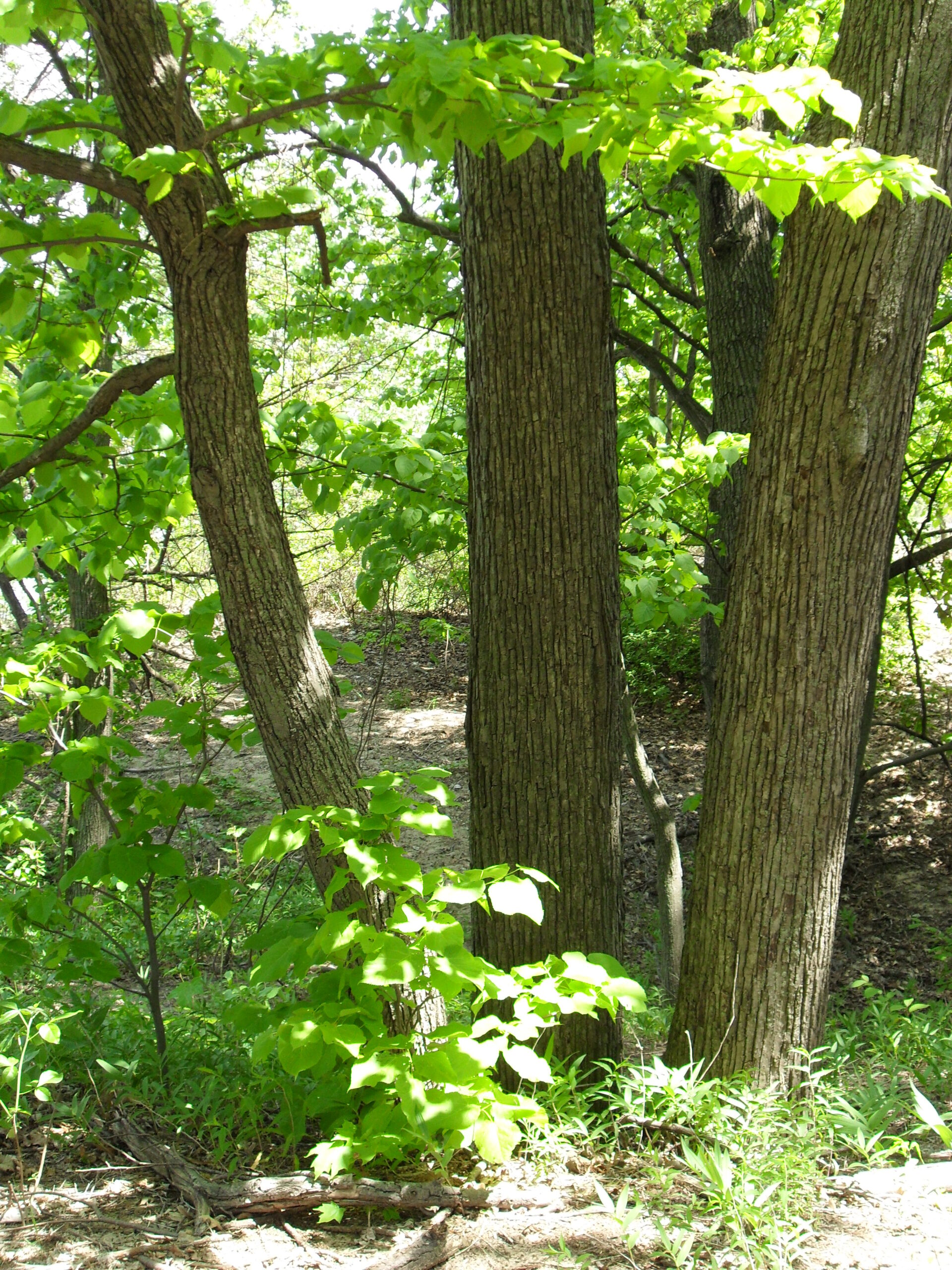
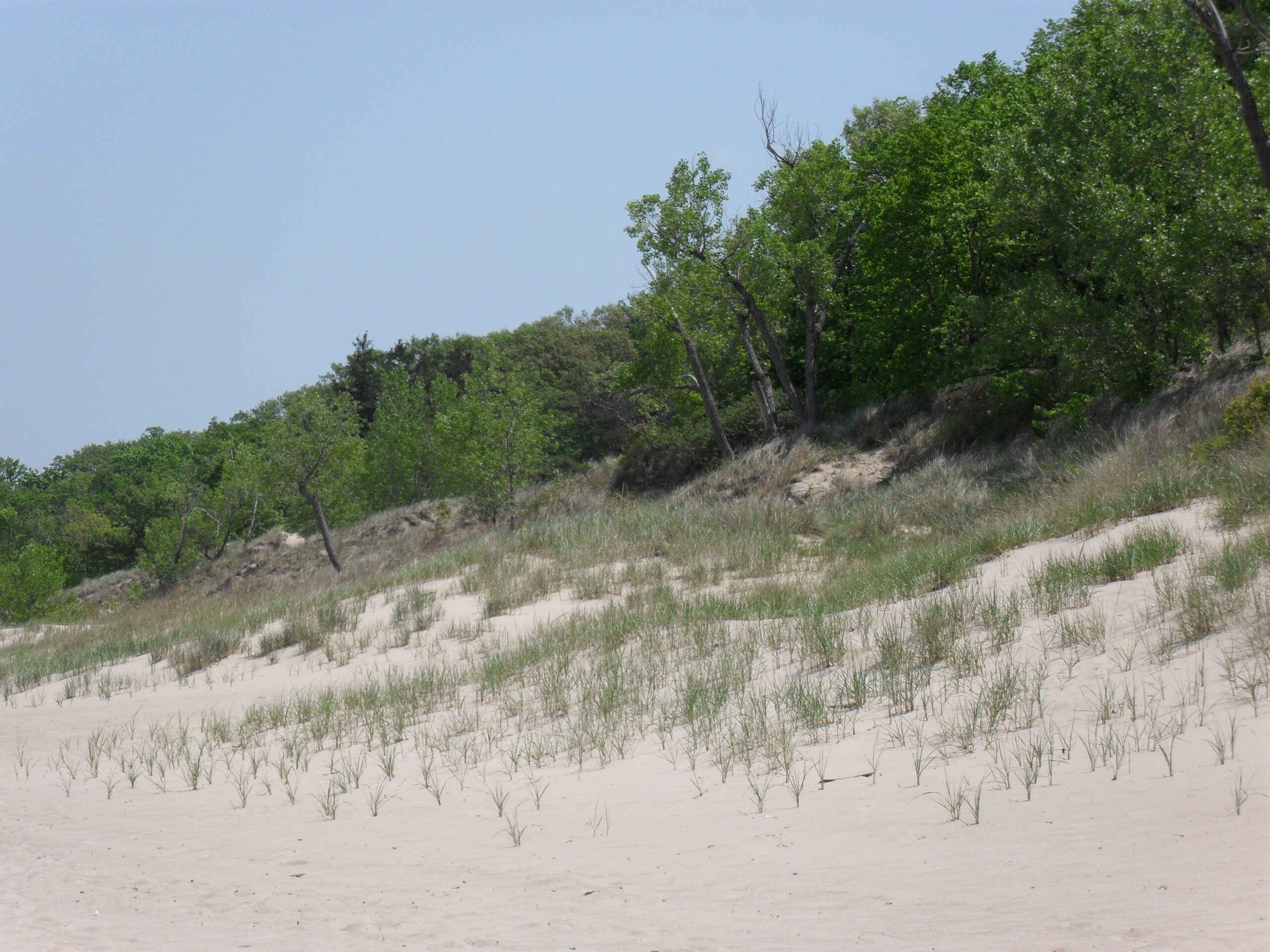
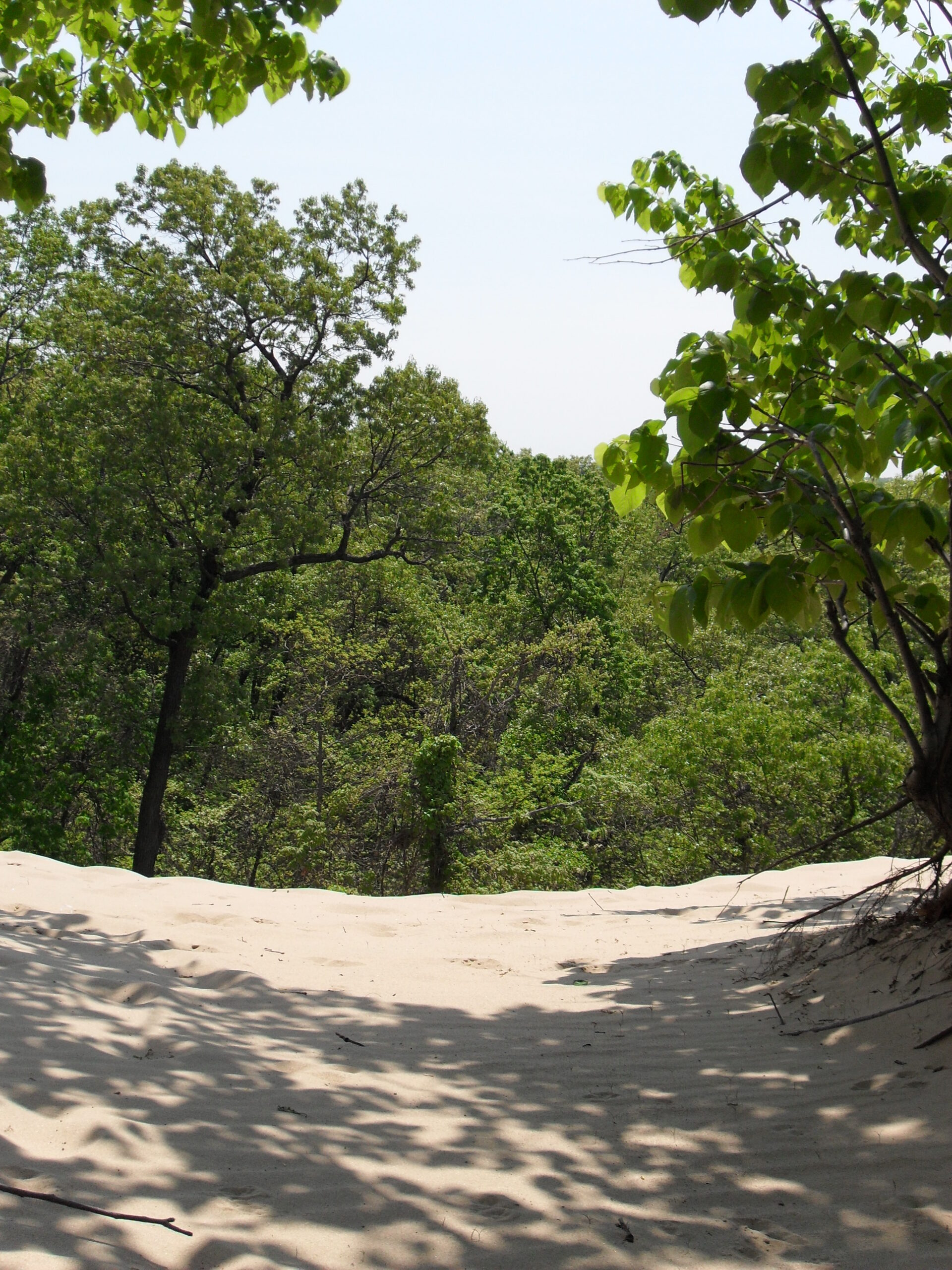
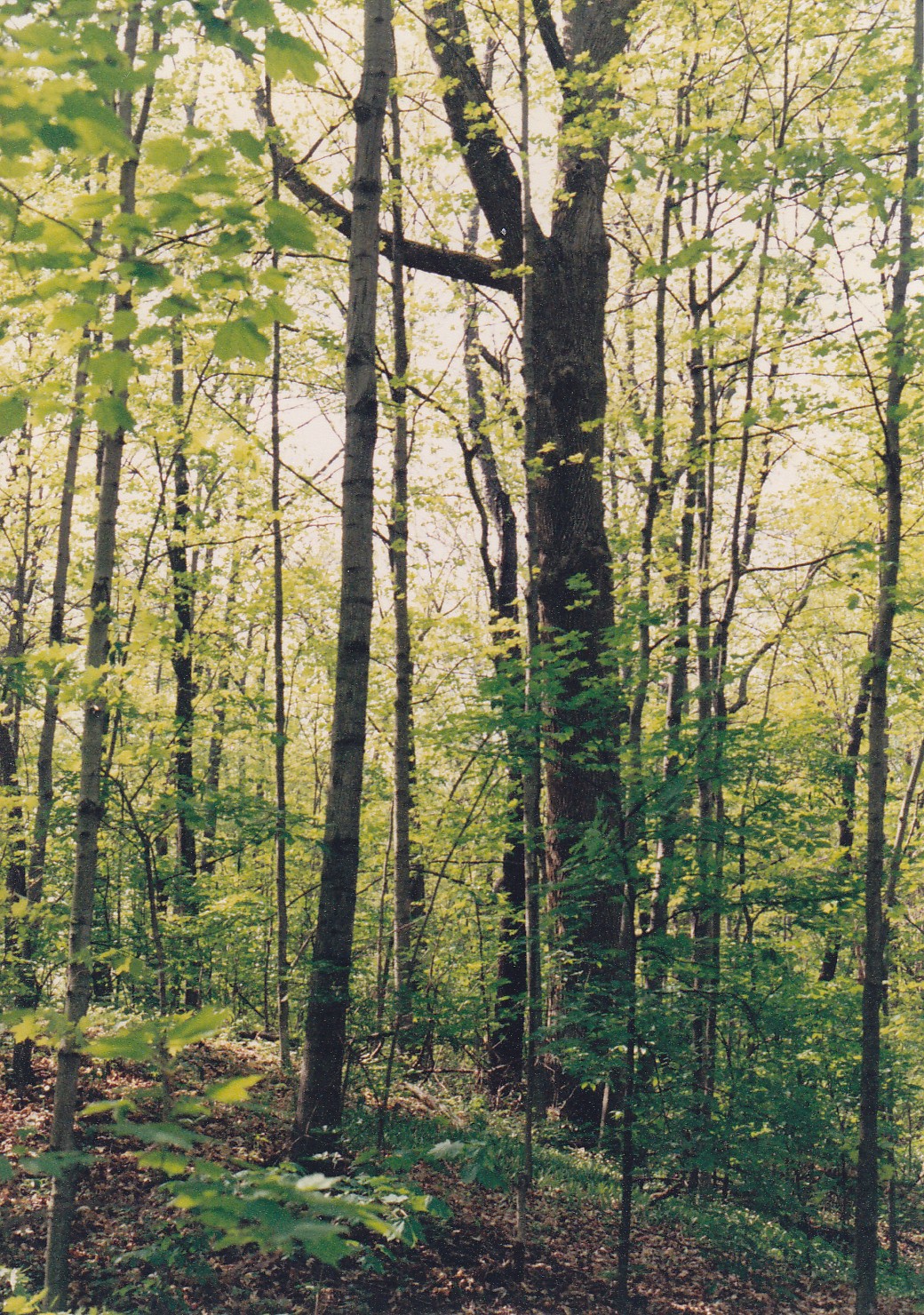
A dense forest of red oak (Quercus rubra) and basswood (Tilia americana) grow on what was once a sand dune in Indiana south of Lake Michigan. This forest was a dune about a century ago. During that century, plants grew in the sand, stabilized it, and added organic material to it that increased its ability to hold water and nutrients. The trees helped to stabilize the sand. This is where Henry Chandler Cowles (University of Chicago) first studied primary succession.
Full-sized basswood trees (Tilia americana) grow in a former sand dune south of Lake Michigan in Indiana. This forest was a dune about a century ago. During that century, plants grew in the sand, stabilized it, and added organic material to it that increased its ability to hold water and nutrients. The trees helped to stabilize the sand. This is where Henry Chandler Cowles (University of Chicago) first studied primary succession.
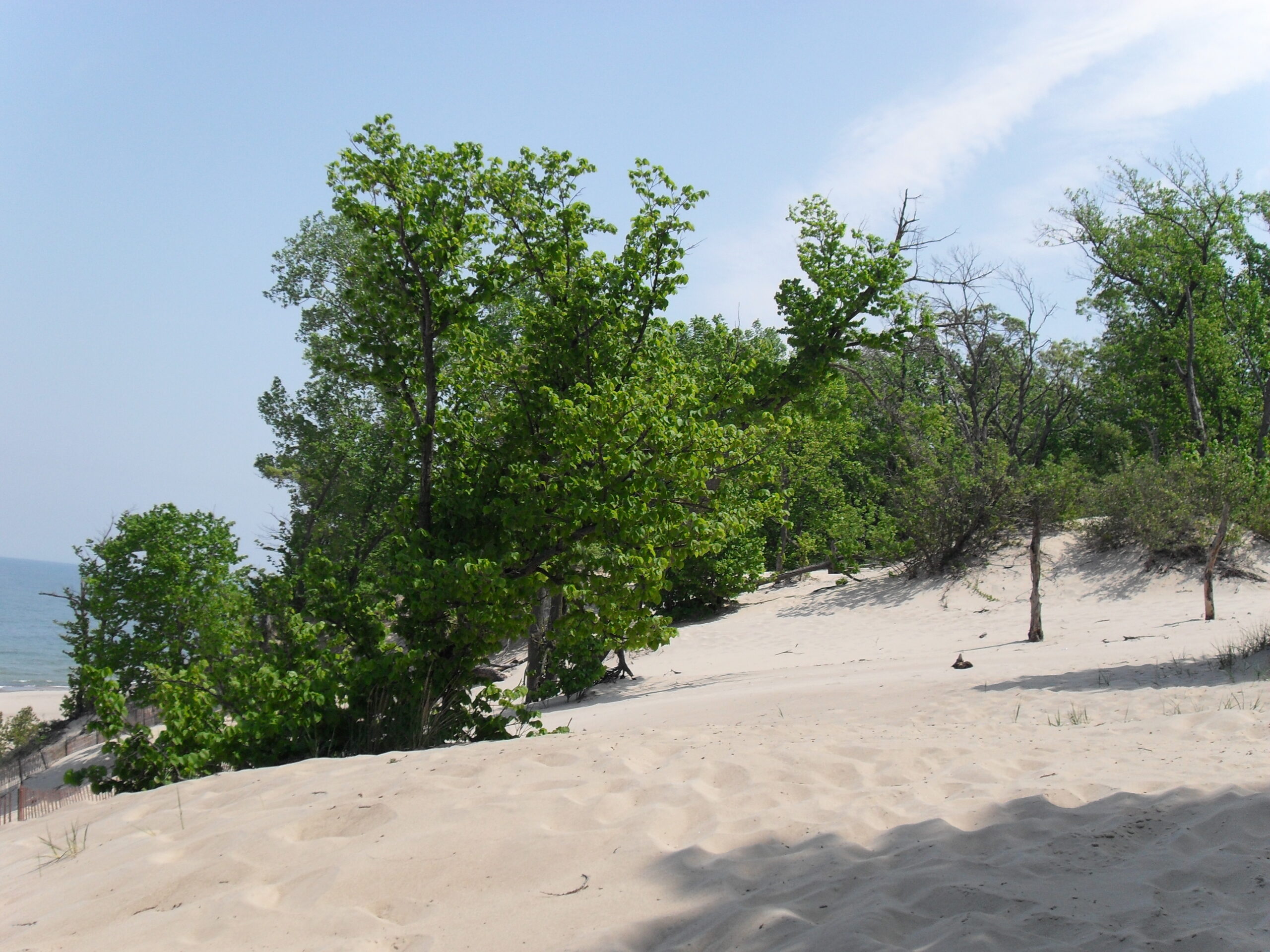
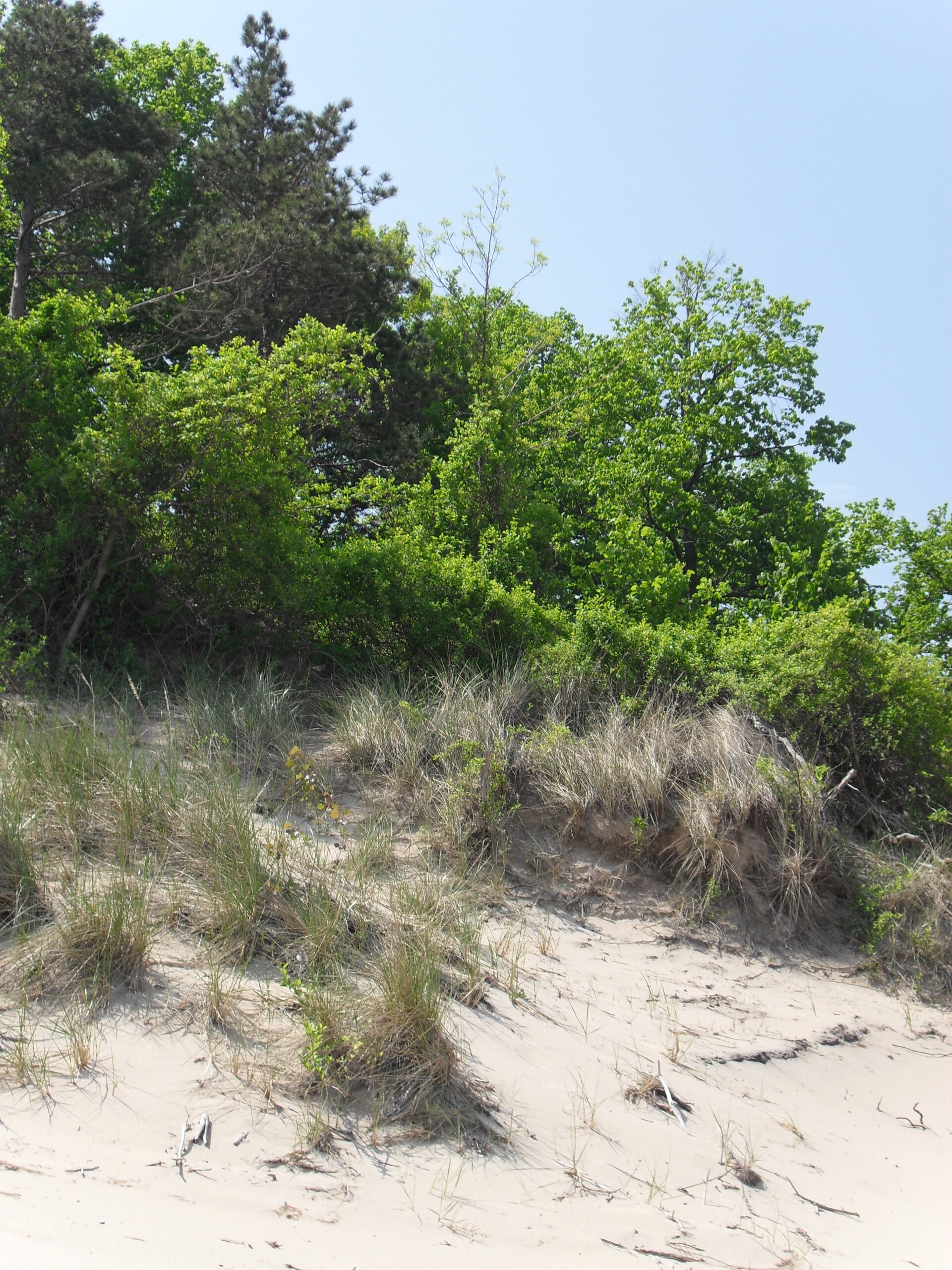
Stages of dune succession on the south shore of Lake Michigan. Grasses, connected together by underground rhizomes, stabilize the dunes. Then shrubs (such as sand cherry) and pines stabilize the dunes more and begin adding organic nutrients and humus. Eventually basswood and red oaks grow in the sand.
Blowouts occur in which the oak-basswood forest growing on the south shore of Lake Michigan on the former sand dune are destroyed and the original dune sand is exposed.
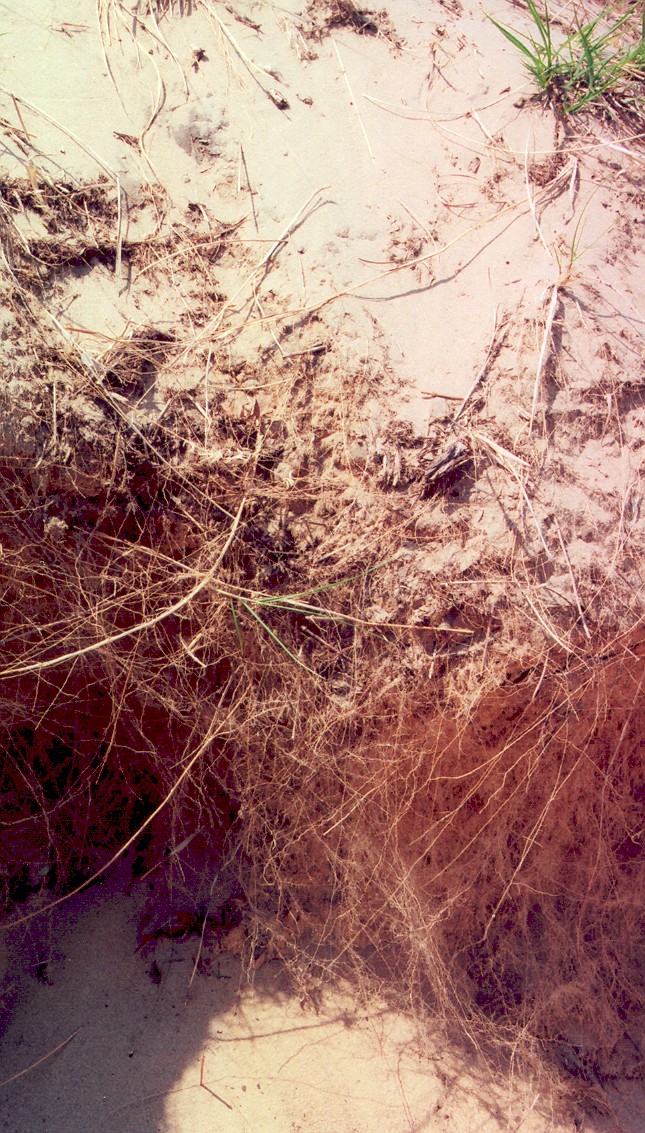
Roots of perennial grasses stabilize the sand dunes south of Lake Michigan, allowing the cherry bushes, pine trees, and eventually red oaks and basswood to grow on what was, about a century ago, sand dunes. This is where Henry Chandler Cowles (University of Chicago) first studied primary succession.
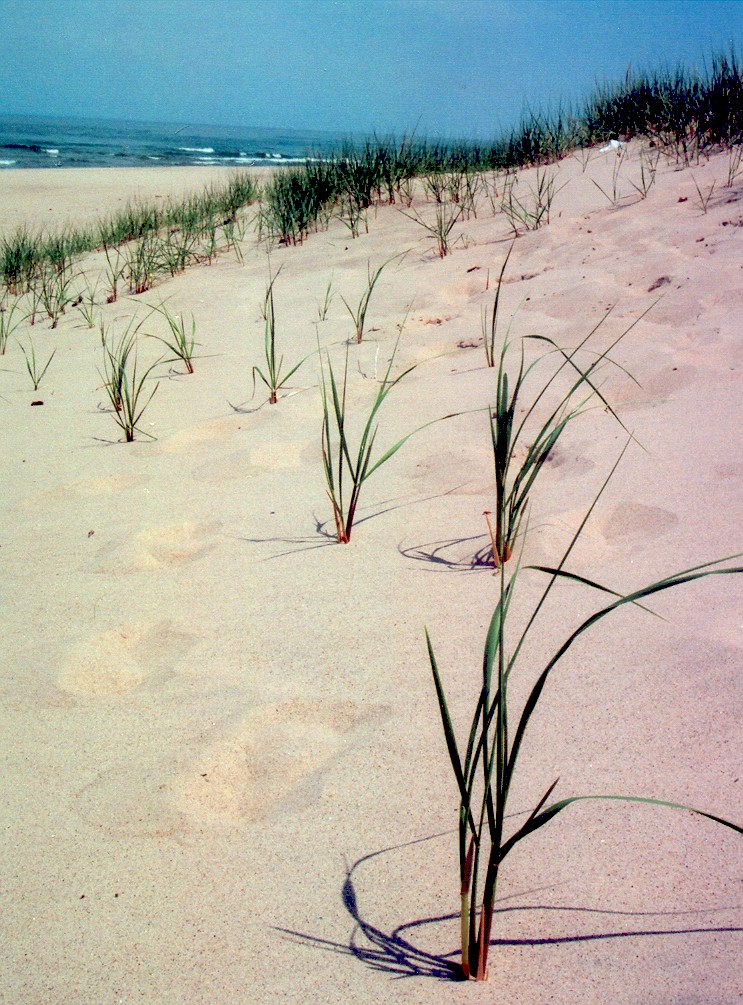
Grasses (Calamovilfa longifolia) sprout in straight lines in dunes south of Lake Michigan because they are connected by underground rhizomes and help to stabilize the dune, on which a forest will later grow.
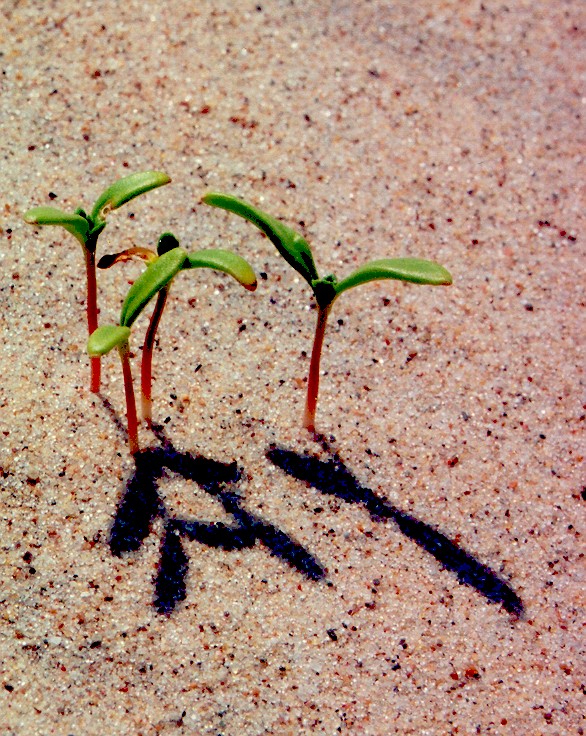
These Cakile maritima seedlings are growing in a dune very near Lake Michigan. They are small herbaceous plants in the mustard family. They can withstand unstable sand, heat, wind, drought, all of which they encounter when growing in sand that has not been stabilized by the roots and humus produced by larger plants.
Roots of perennial grasses stabilize the sand dunes south of Lake Michigan. This is where Henry Chandler Cowles (University of Chicago) first studied primary succession.
In this creekside forest in Huntington, Indiana, sugar maples grow up in the shade of the sycamore trees that were the original creekside forest.
In a bend of a creek in Huntington, Indiana, boxelder seedlings (Acer negundo) are growing. Later they will form a boxelder forest, in which sugar maple seedlings will grow and produce their own forest.
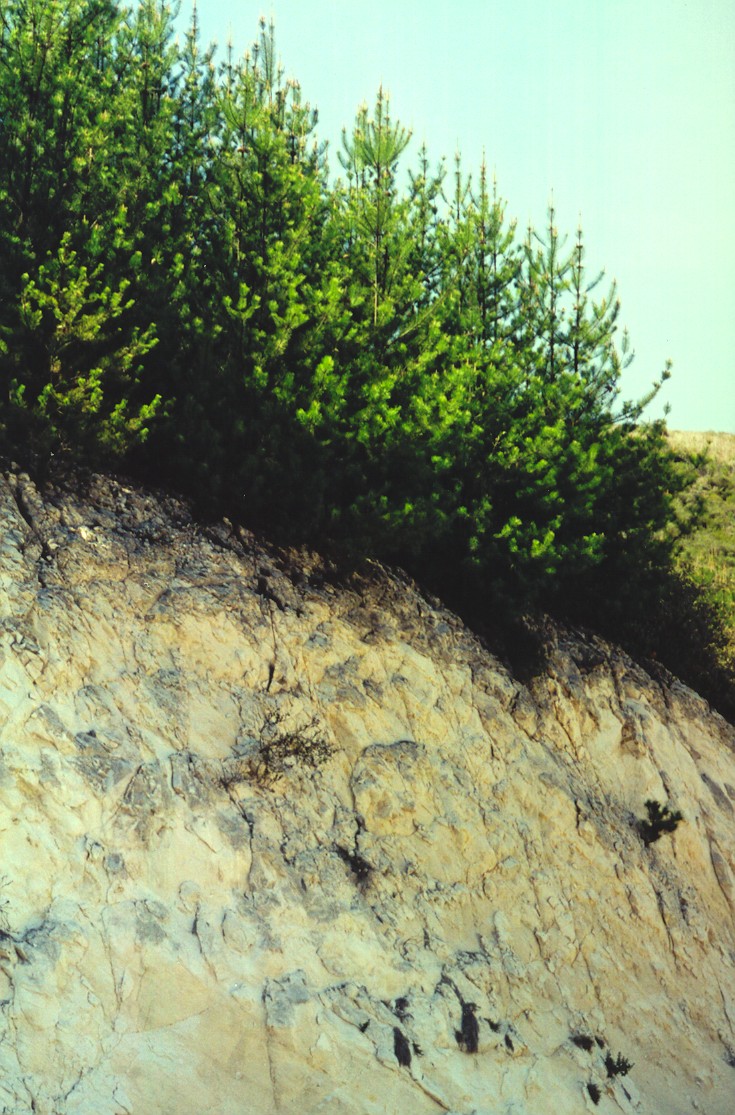
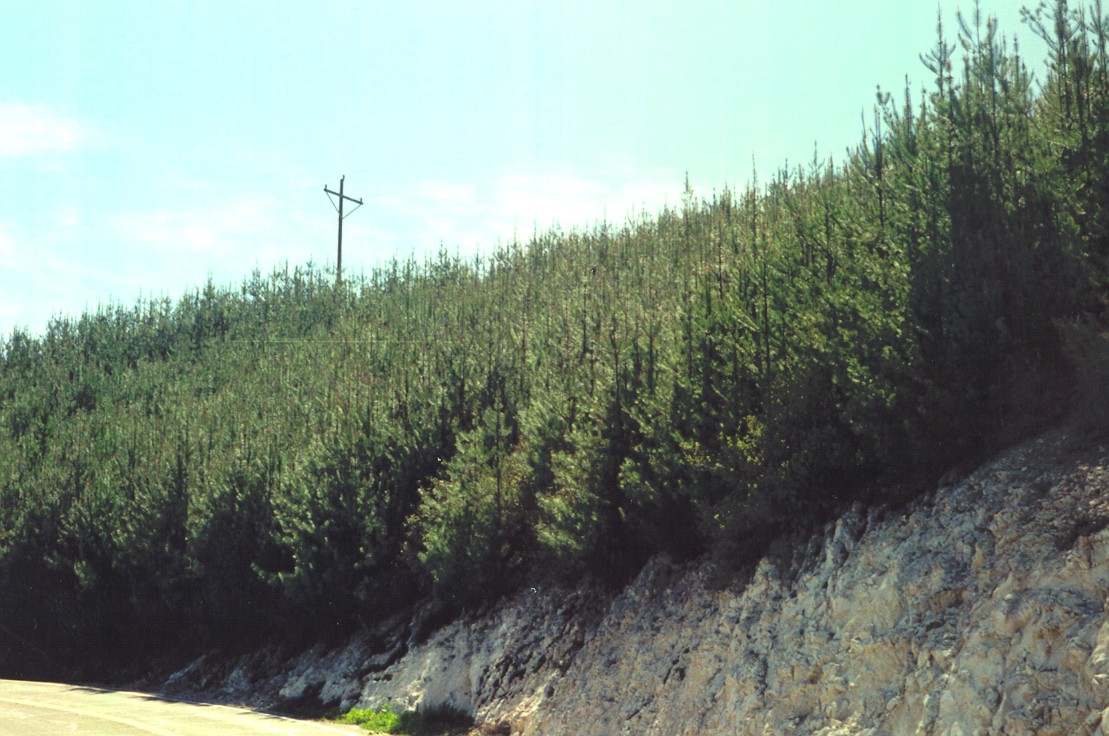
These bishop pine saplings (Pinus muricata) are growing on a thick deposit of diatomaceous earth (diatomite) in the Santa Ynez Mountains of California. It is perhaps because of this unusual soil that these pines are growing miles away from the center of their distribution. They started growing after a fire.
An even-aged stand of bishop pine trees (Pinus muricata) started growing after a fire eight years before the photo. Diatomite hills of the Santa Ynez Mountains, California.
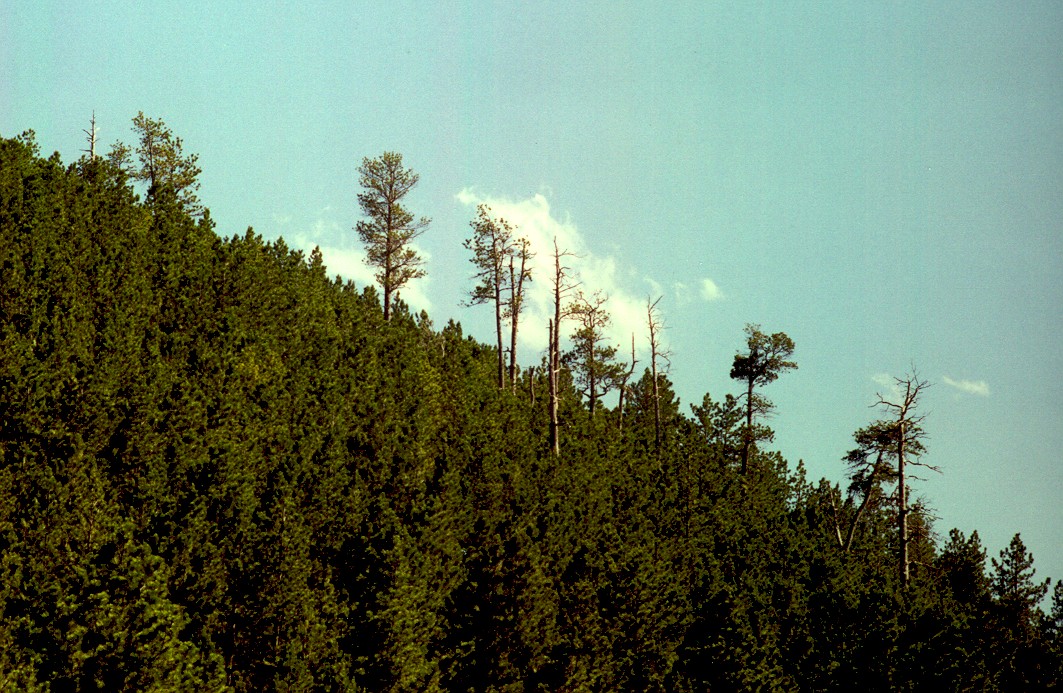
Most of these ponderosa pines are an even-aged stand that started growing after a fire during the 1930s. The fire had a few survivors which are, today, the tall pines that emerge from the even-aged stand. The tall trees are at least two centuries old. In the Black Hills of South Dakota.
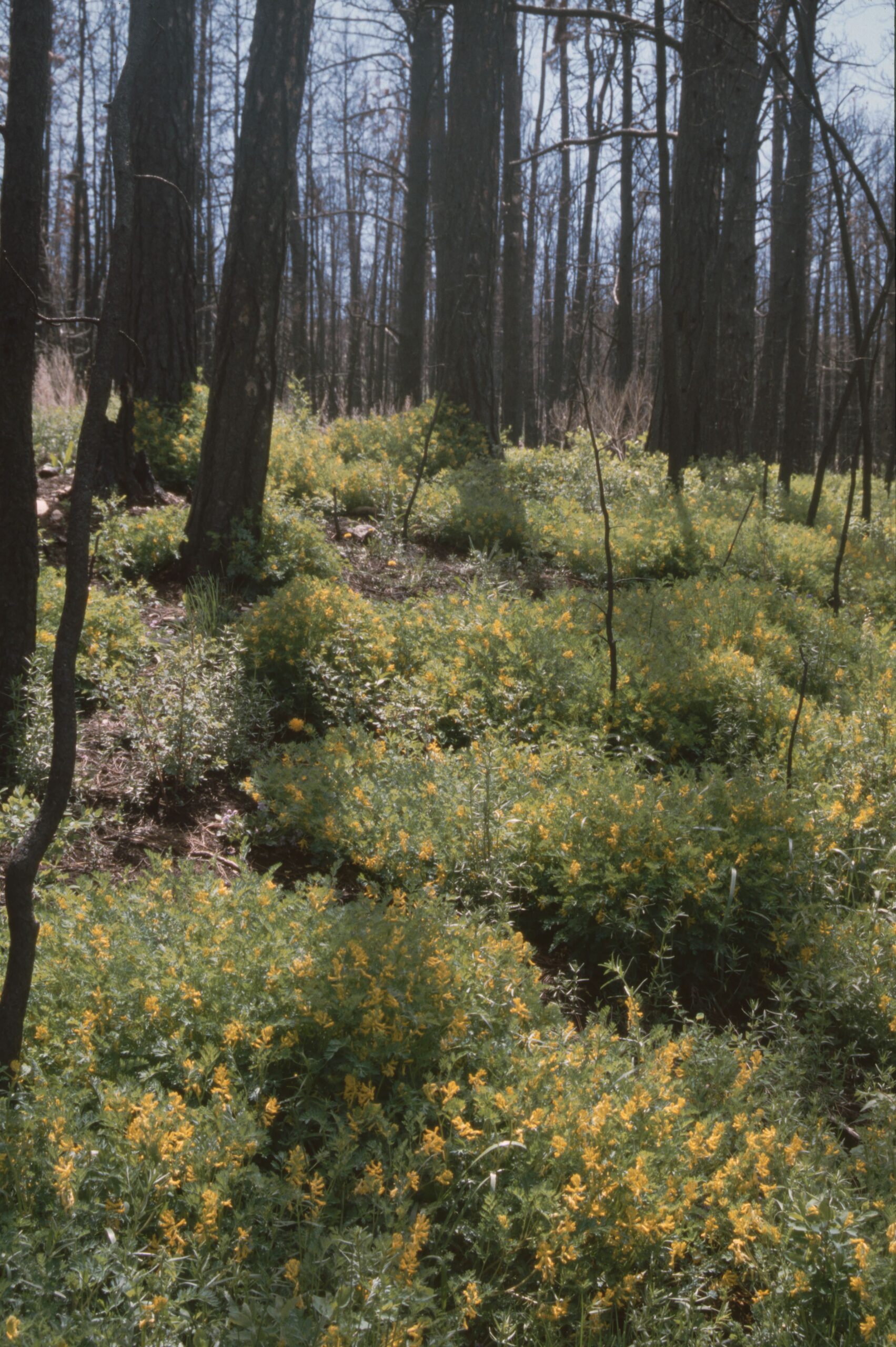
A fire in 2000 destroyed a ponderosa pine forest in the Black Hills of South Dakota. By 2001, a thick stand of Corydalis wildflowers grew under the dead trunks.
Ecological Patterns
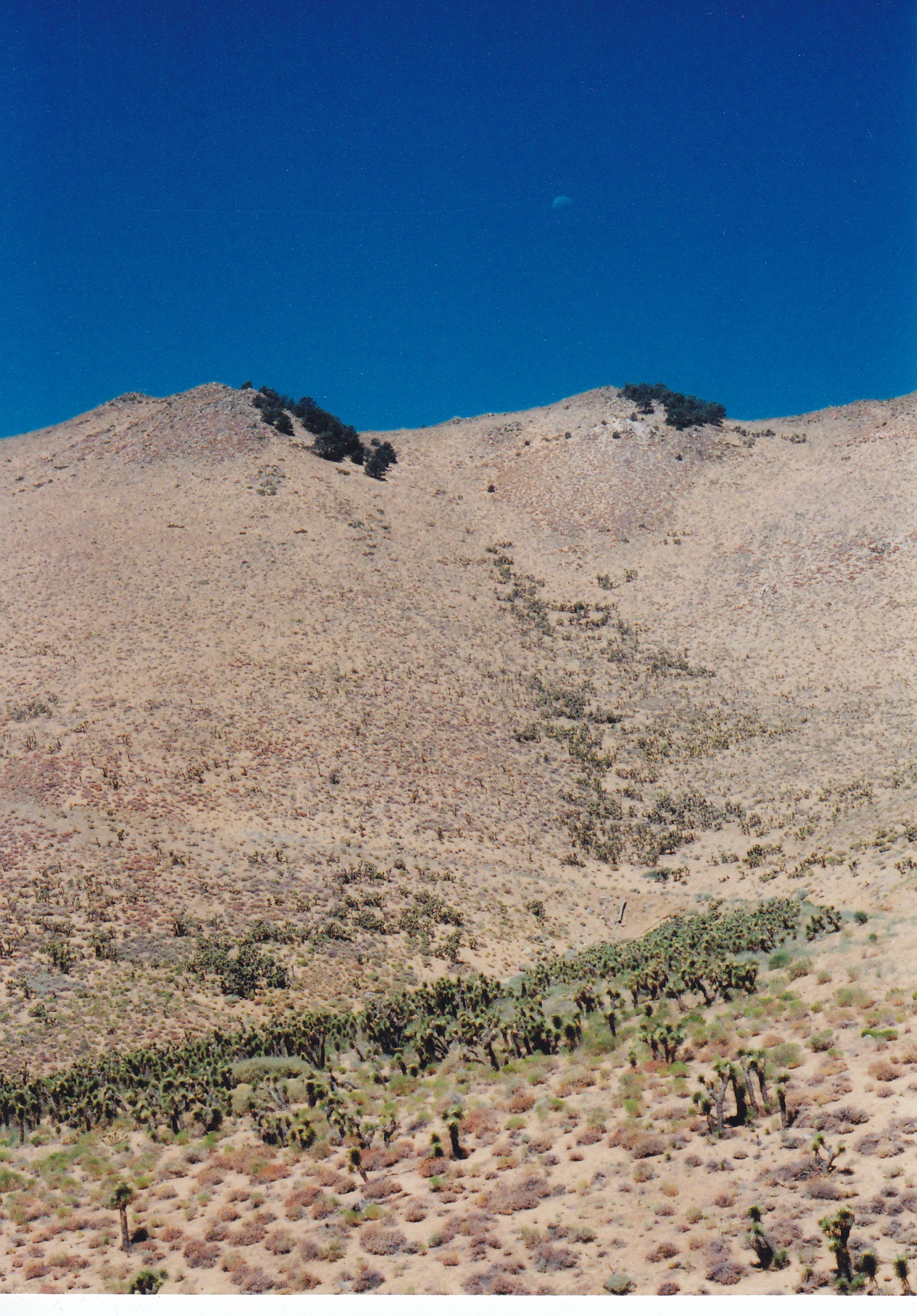
This location in the southern Sierra Nevada in California is on the dry rain shadow (east) side and is mostly desert scrub. Joshua trees grow in the arroyo. The top of this mountain has east-facing and west-facing slopes. The east-facing slope is cooler and wetter than the west-facing slope. East is to the right. The east slope is just enough cooler than the west that live oak trees can grow on the east, but not the west, slope. This photo shows ecological zonation by moisture and temperature.
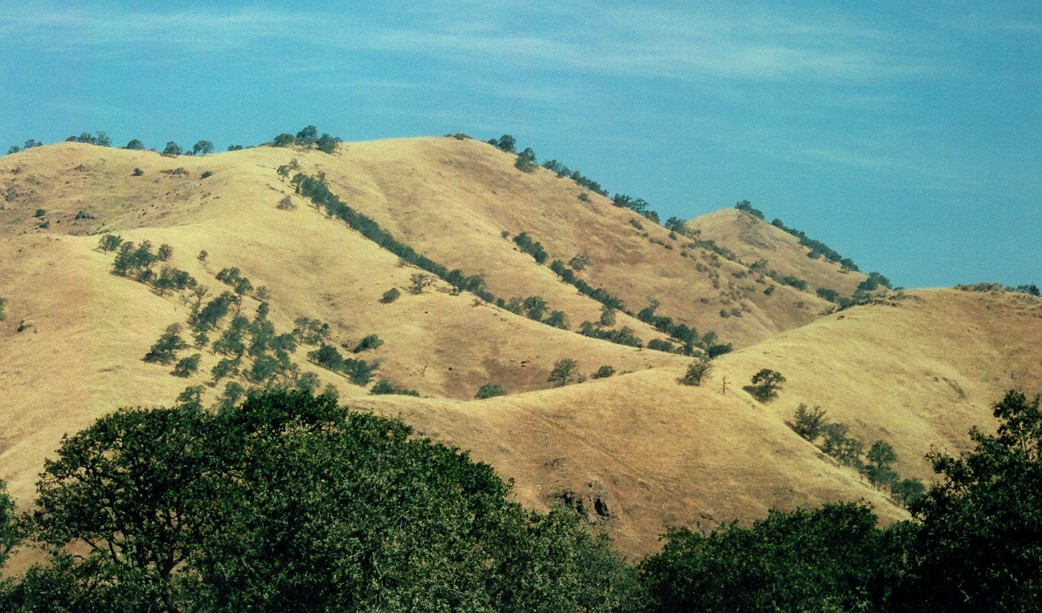
In the Sierra Nevada foothills of California, live oaks grow on the north-facing slopes and dry grasslands cover the south and west facing slopes.
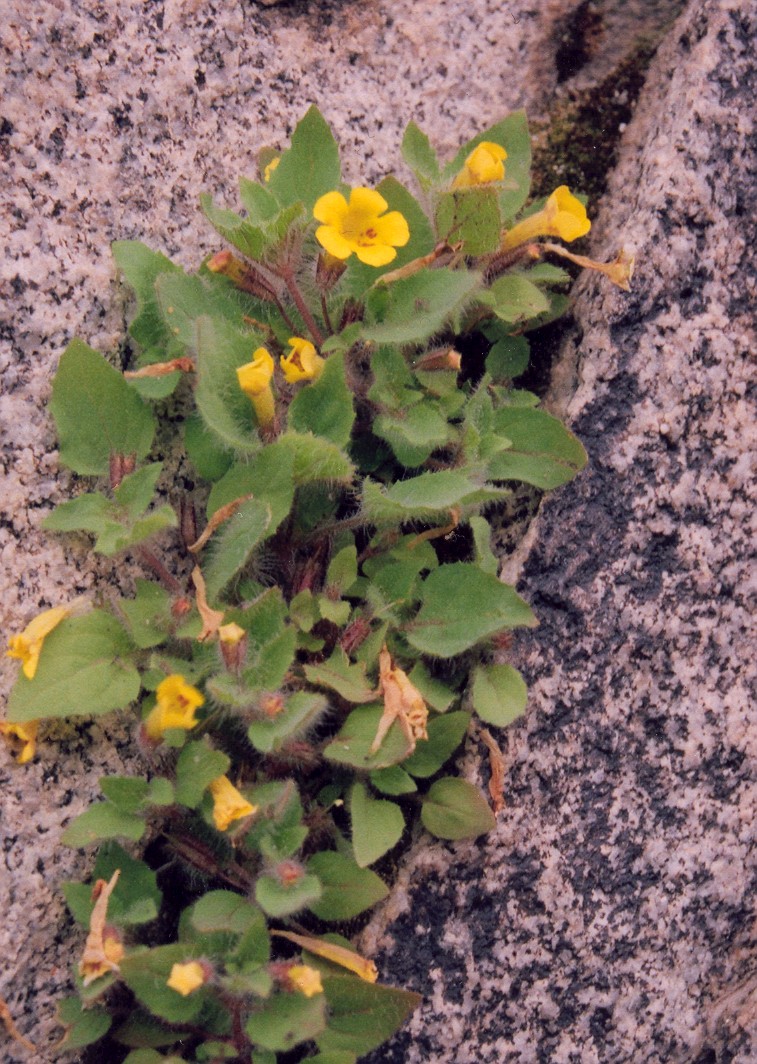
In the Sierra Nevada foothills, the only place to find Mimulus dudleyi is in the cracks of granite boulders during the wet spring. The rock surface is too dry for Mimulus, but the roots can grow deep in the cracks. Mimulus is too small to compete with the plants in the surrounding grasslands, which also have enough moisture.
In the Sierra Nevada foothills of California, blue oaks (Quercus douglasii) grow only amidst granite boulders, not out in the grasslands. Why? Possibly it is because the rock fissures offer a refuge from grazing animals that would otherwise eat or step on them.
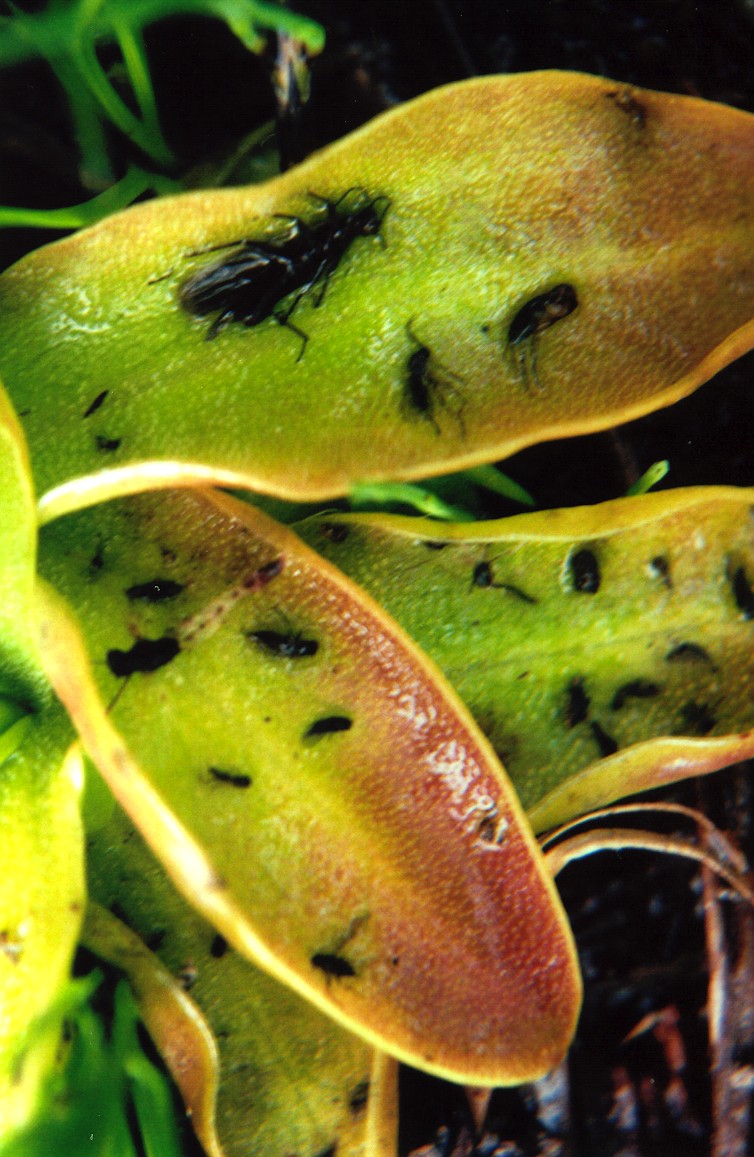
Pinguicula, a carnivorous plant in British Columbia, captures insects in the sticky layer on its leaves, then absorbs the juices from digesting them. Carnivorous plants get only nutrients, not calories, from the insects they entrap.
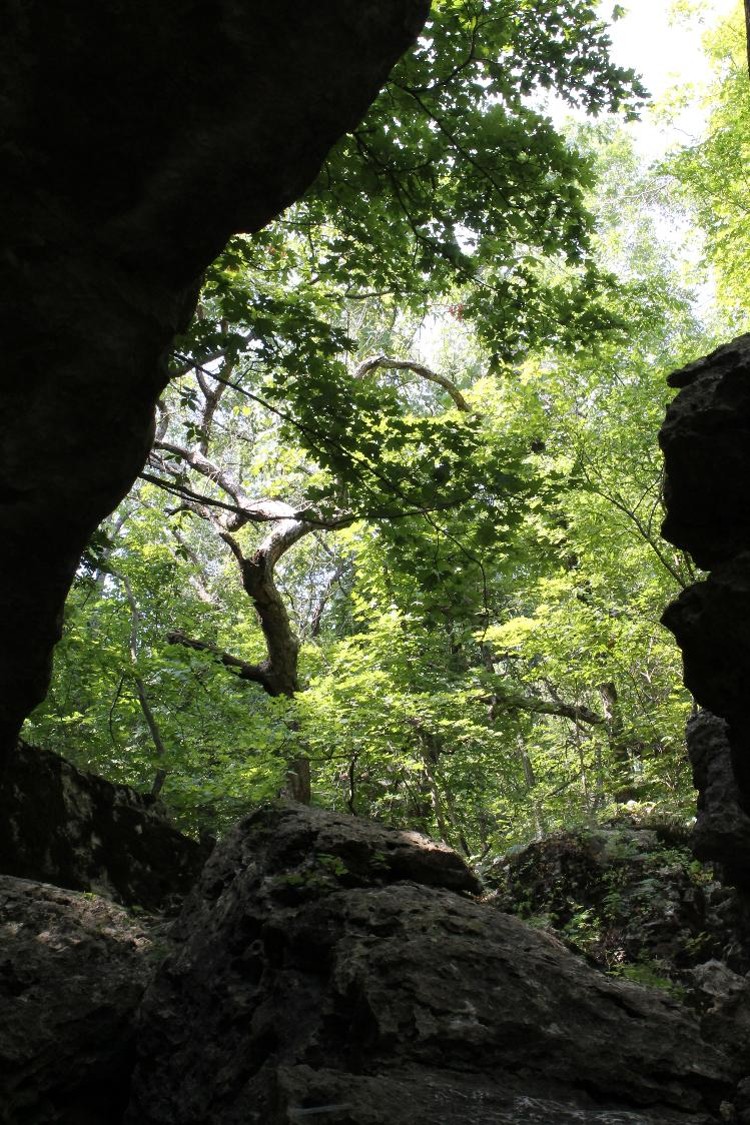
Northeast Oklahoma is too hot and dry for sugar maple (Acer saccharum) forests. Sugar maples grow on the cooler, wetter north sides of cliffs, however.
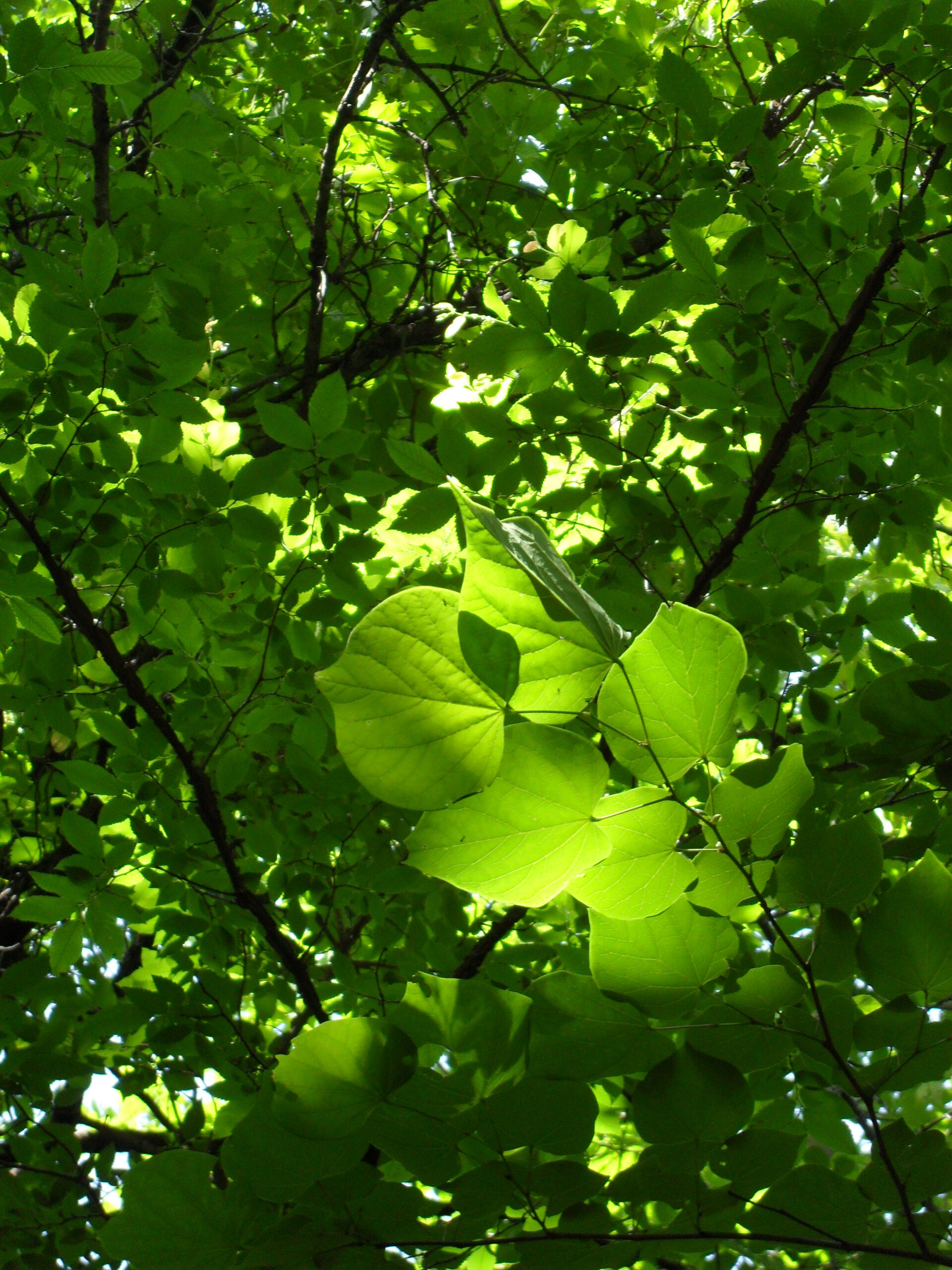
In deep shade, an understory plant might get most of its sunlight energy for the day in a sunfleck of short duration, as is the case with this redbud tree (Cercis canadensis).
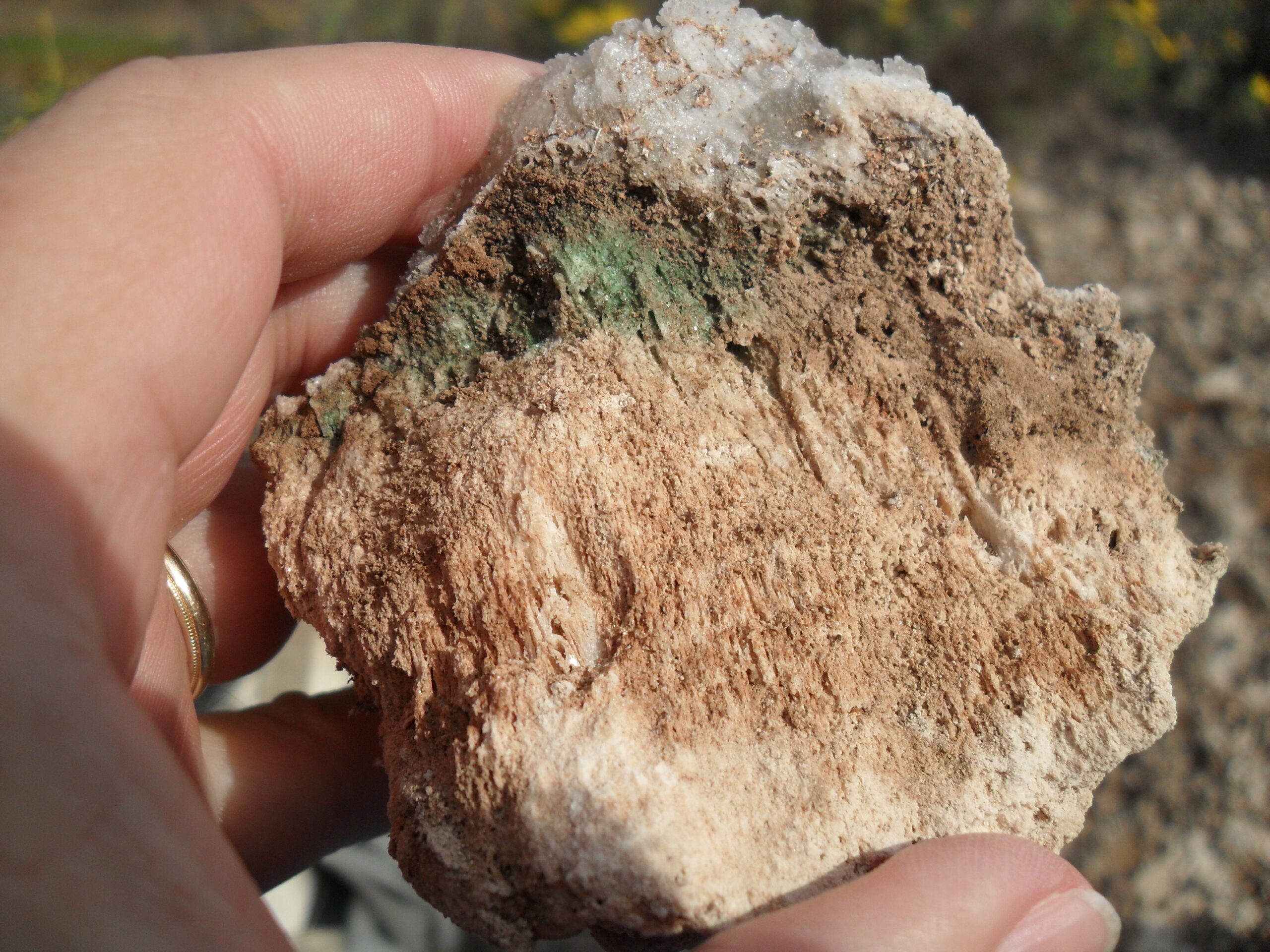
In the gypsum hills of northwest Oklahoma, the surface soil is very dry. Cyanobacteria can live in the gypsum, not on the surface but down inside the rock.
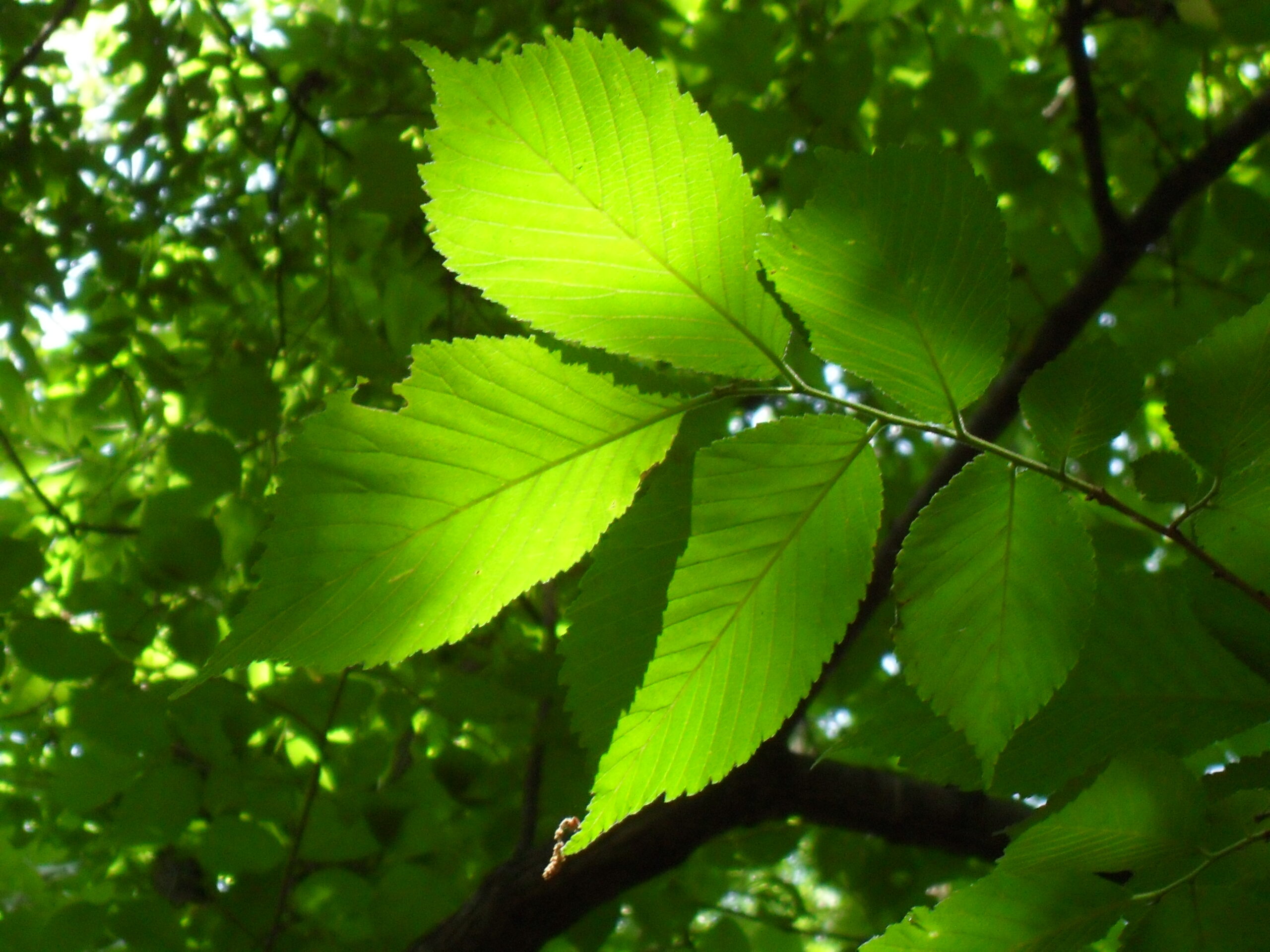
In deep shade, an understory plant might get most of its sunlight energy for the day in a sunfleck of short duration, as is the case with this elm tree (Ulmus americana).
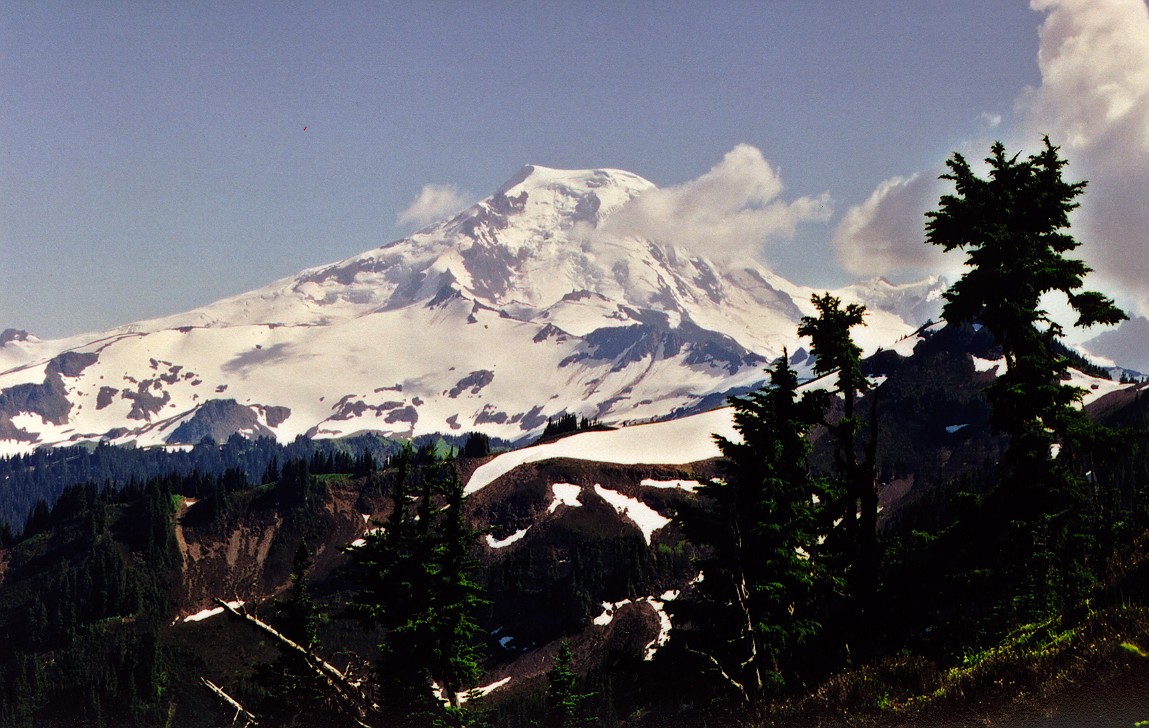
Near timberline (here, Mt. Baker in Oregon), trees may grow in krummholz form. They are short enough to be protected from fierce winds and ice crystals during the winter by being under the snow. The branches grow primarily on the leeward side of the trunk.
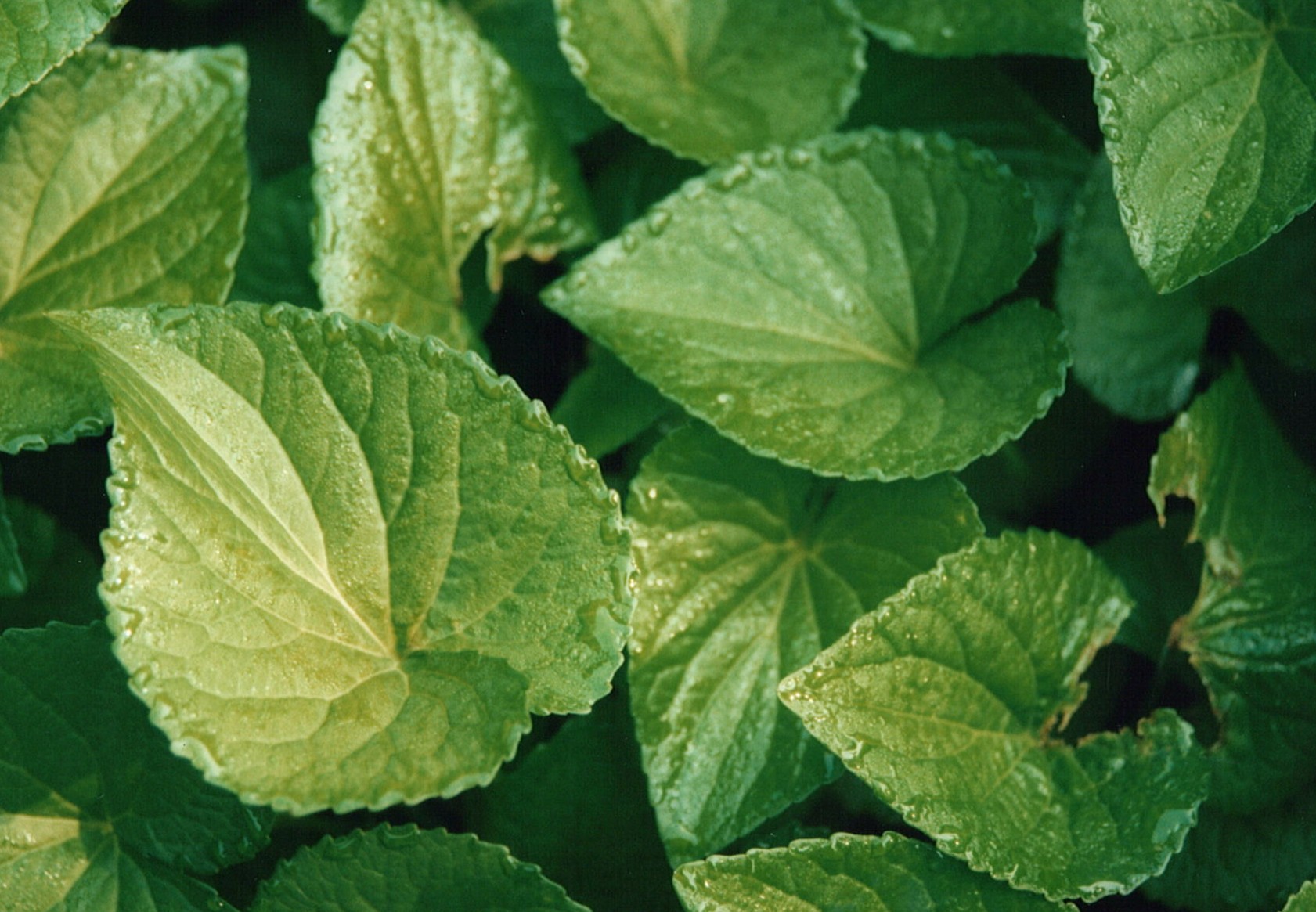
The “dew” on these violet leaves is actually water from guttation. On warm summer nights, root pressure pushes the water through the leaves to the edge, where the xylem pipes end.
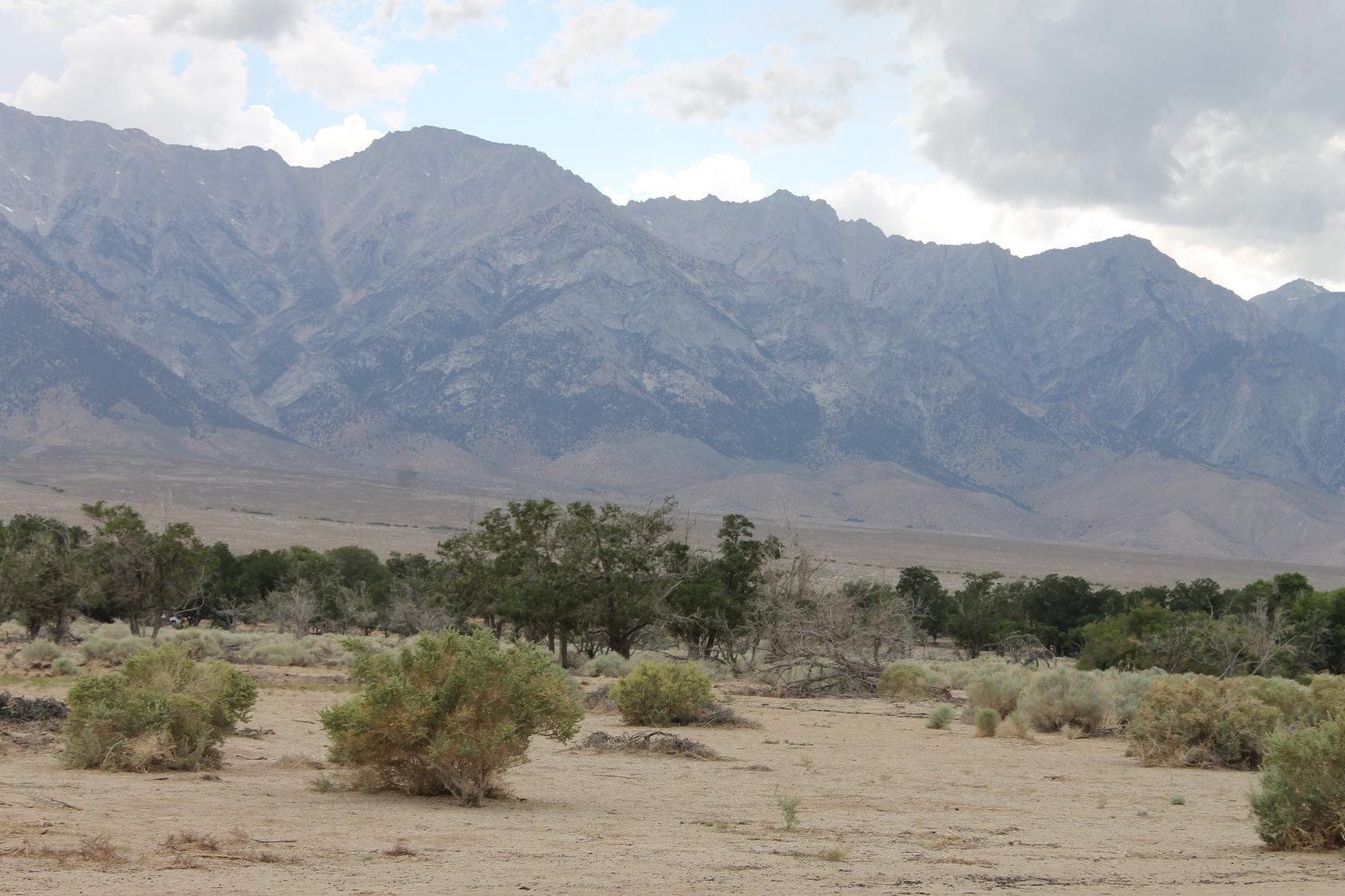
Rain comes over the Sierra Nevada of California from the Pacific Ocean in the west. On the east side, the air has become dry and you find desert bushes. The mountains form a rain shadow. One of the tall peaks in the center is Mt. Whitney, the tallest mountain in the lower 48.
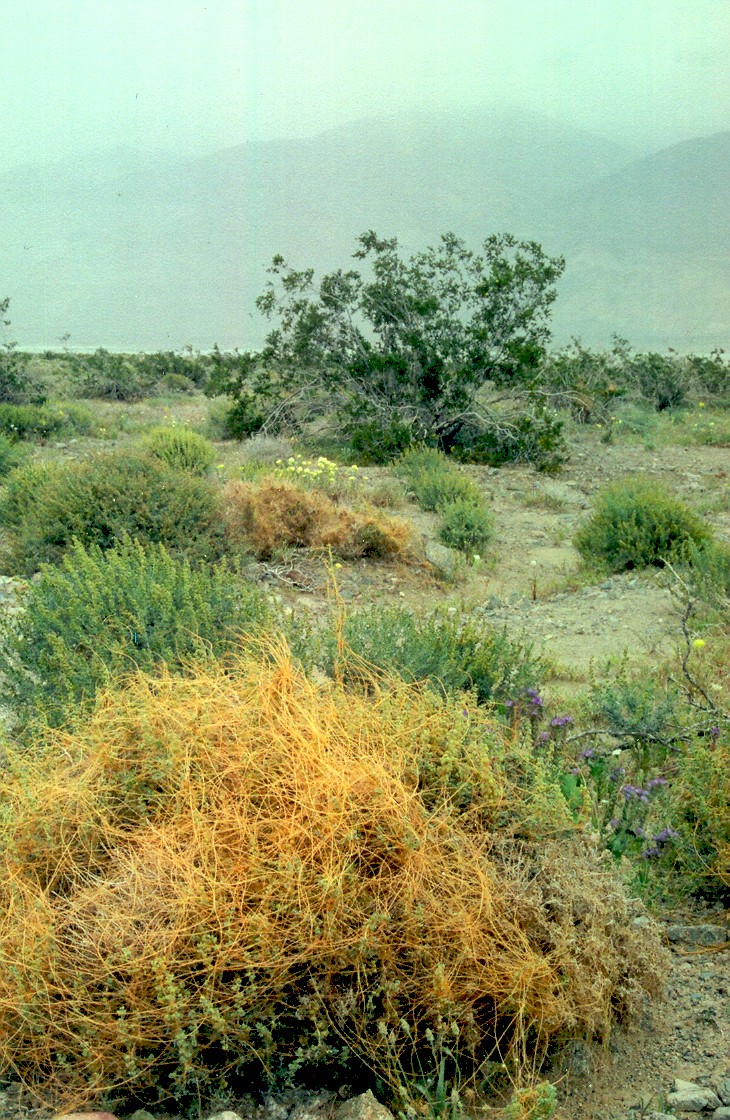
Dodder (genus Cuscuta) is a parasitic plant that has no chlorophyll; it gets all its food and water by sucking it from host plants. They grow on a variety of host plants, including desert shrubs, here seen in Death Valley, California.
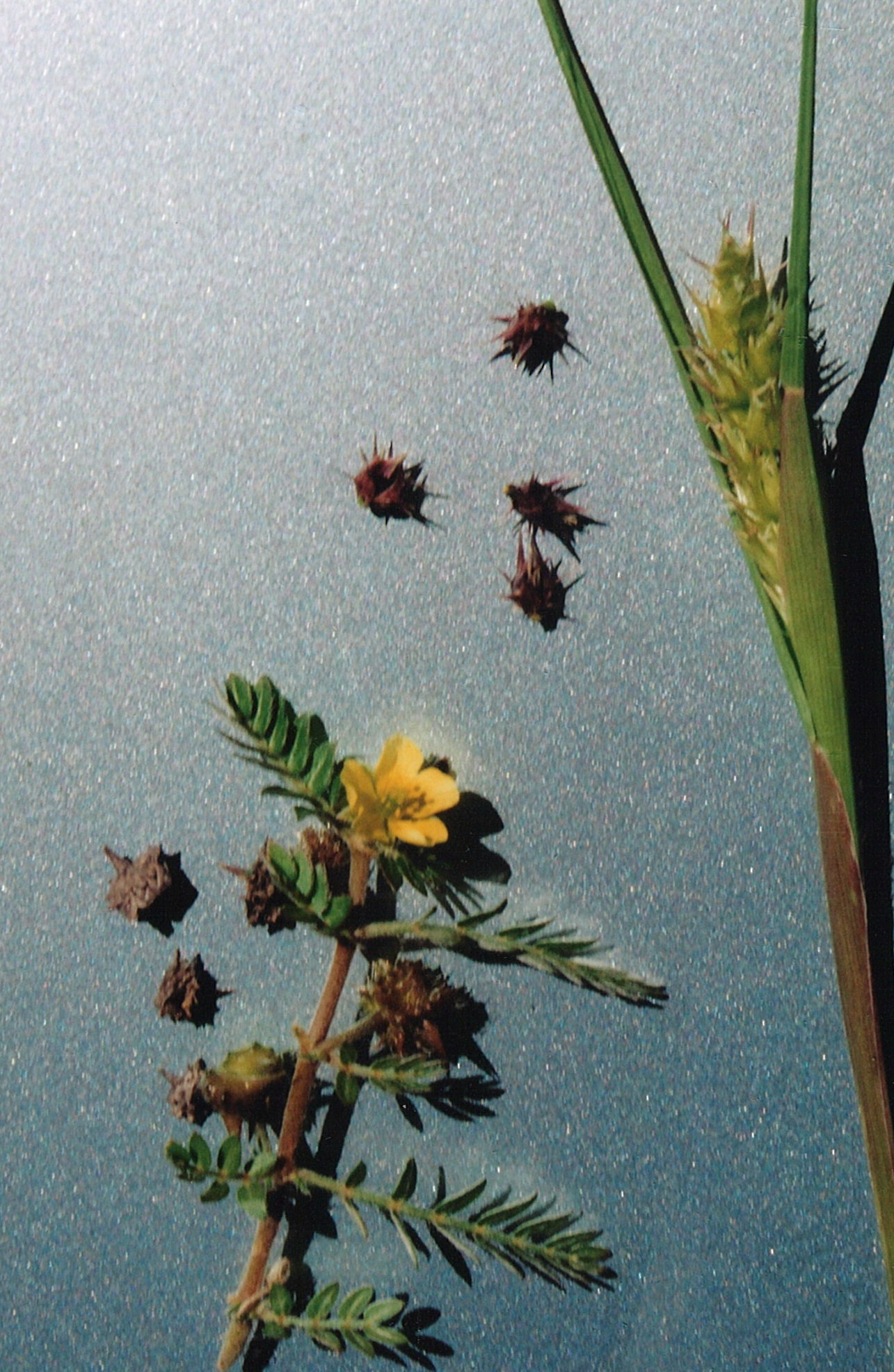
Though their evolutionary lineages have been separate for a hundred million years, caltrops (Tribulus terrestris, on the right) and sandbur grass (genus Cenchris, on the left) have separately evolved sharp spikes on their fruits, which enable the seeds to disperse because the spikes stick in the feet of large animals. This is convergent evolution.
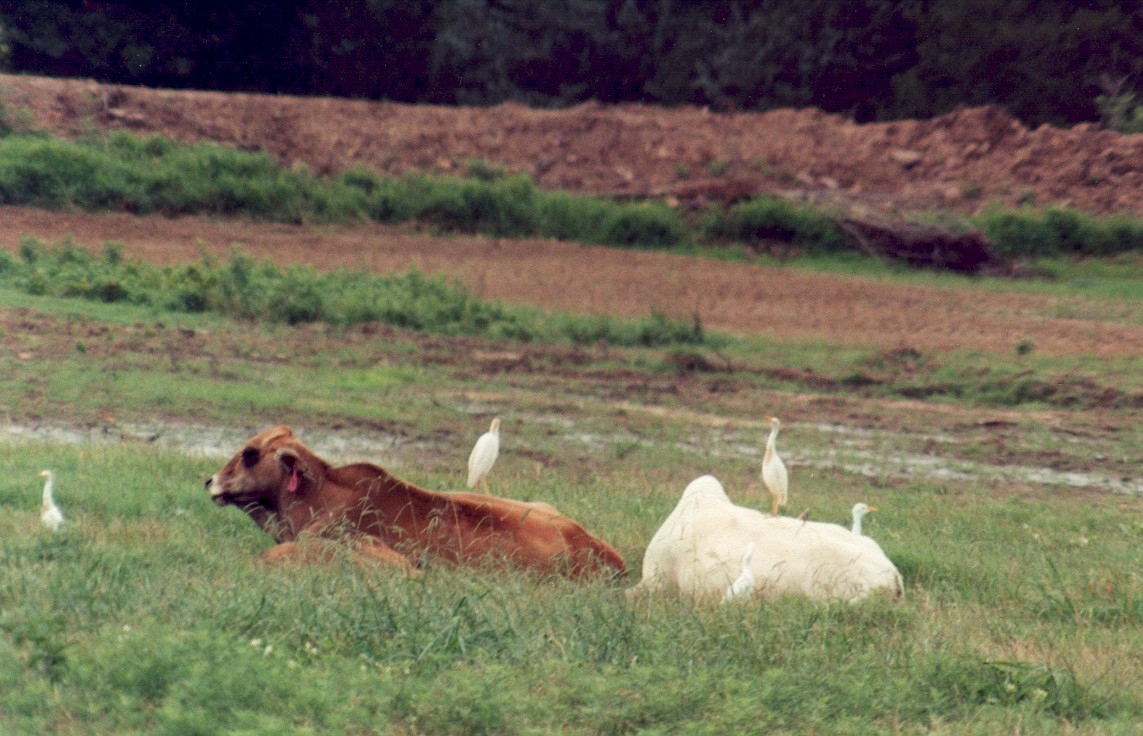
The classic example of commensalism (where one species benefits and the other is unaffected) is cows and cattle egrets. The cows stir up insects in the pasture when they walk. The egrets eat the insects that they would otherwise have to spend a lot of energy flushing out of the grass. The egrets benefit; the cows don’t care.
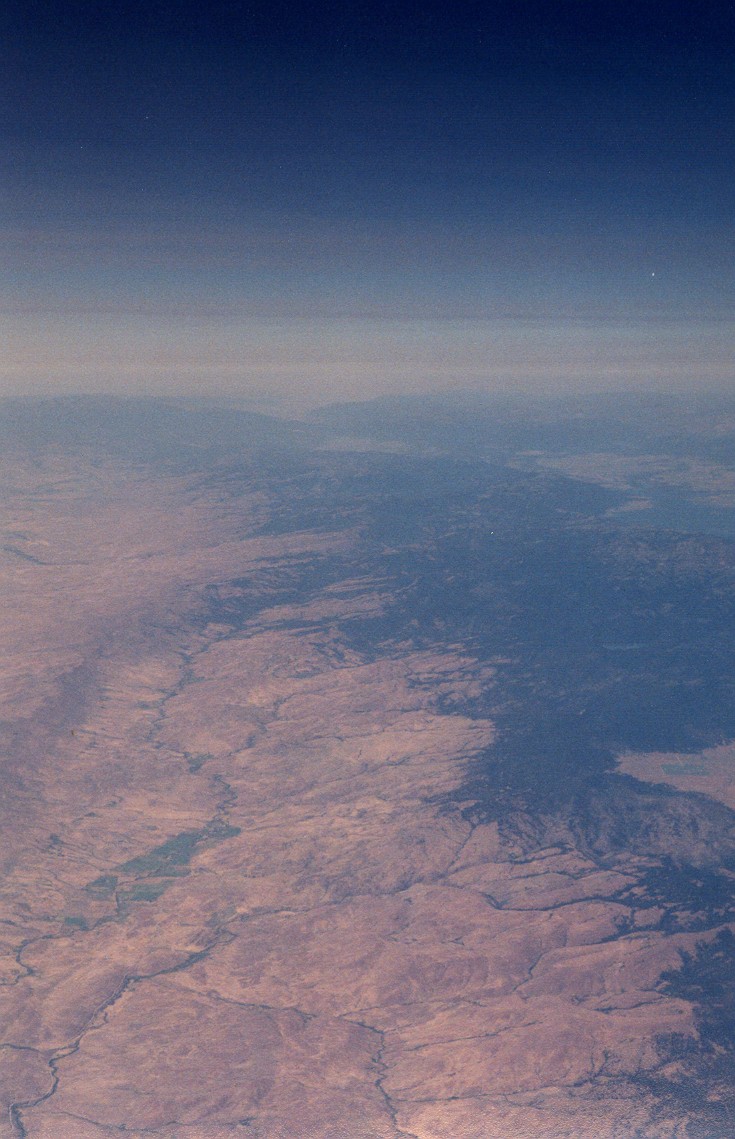
An aerial view of the Sierra Nevada rain shadow in California. The rain and snow comes from the west (right, in this view), and by the time the wind gets to the east side (left), it contains little moisture.
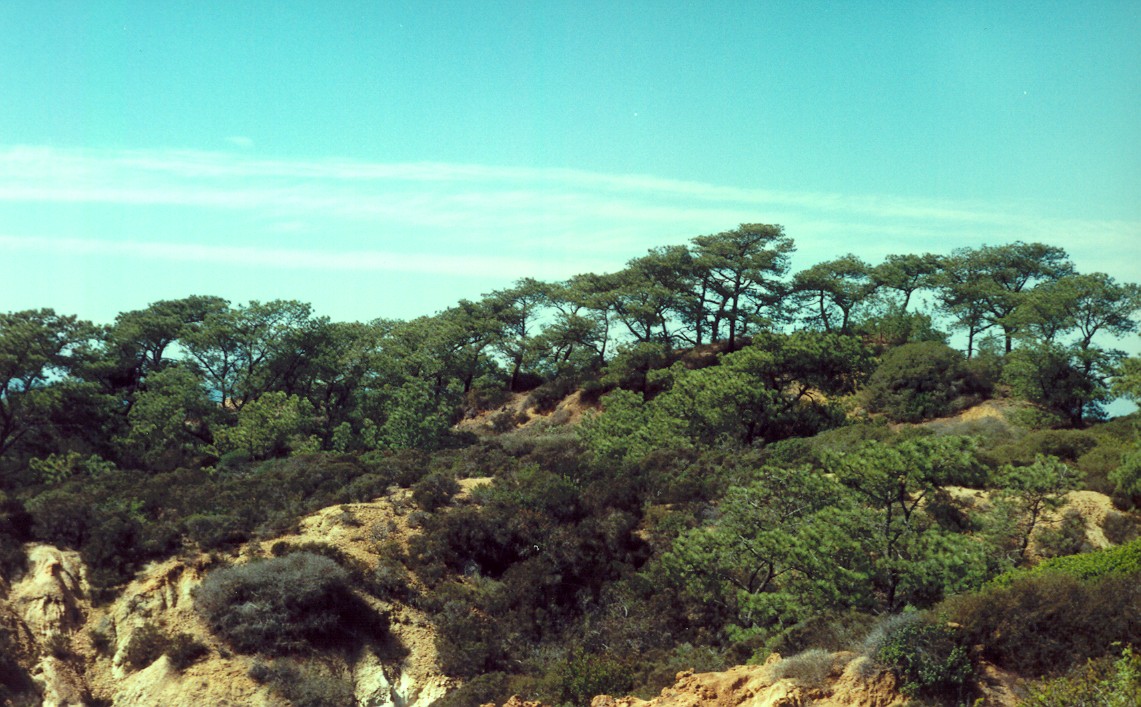
Some species have a very limited range. The California coast range has several species of pines that require fire to open their cones. But no one is entirely sure why one of these species, the Torrey pine (Pinus torreyi) grows only in a few groves near San Diego.
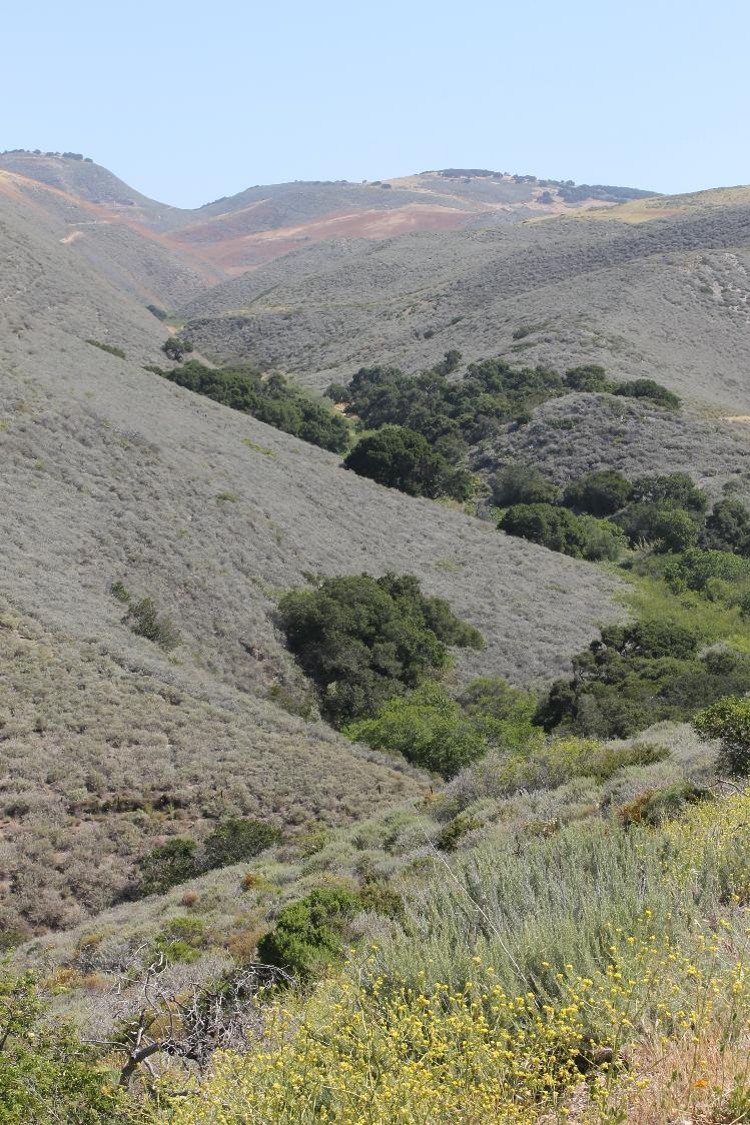
Much of the coast range of California is covered with sage bushes (real sage, genus Salvia) but in the drainage areas there is enough water for live oaks (Quercus) and laurels (Umbellularia) to grow.
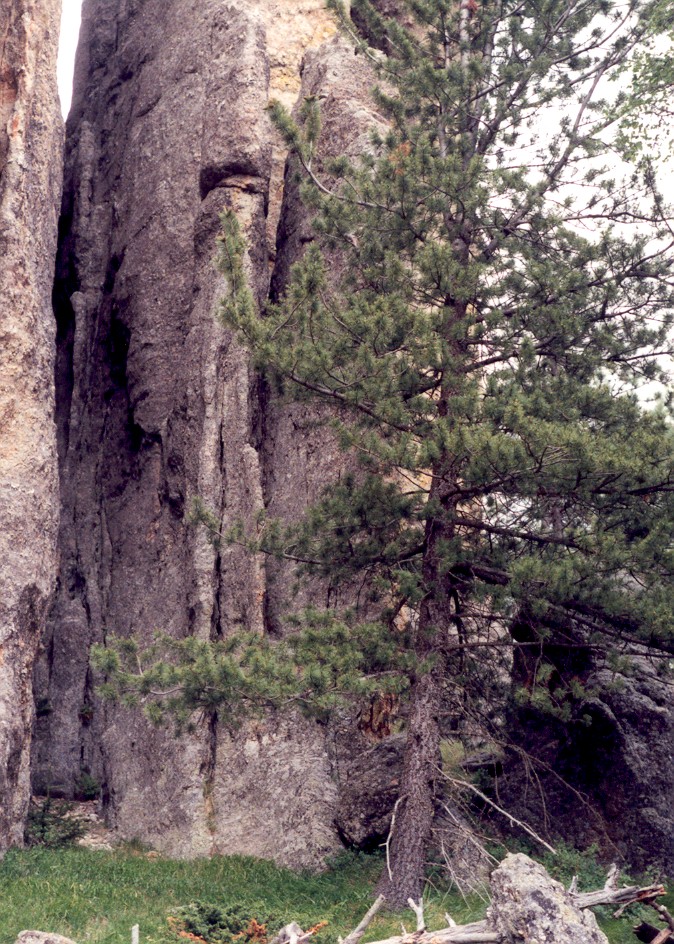
The Black Hills of South Dakota have millions of ponderosa pine trees, but at the highest elevation (here, near Harney Peak) a few subalpine pines have found refuge since the last ice age: the limber pine, Pinus flexilis.
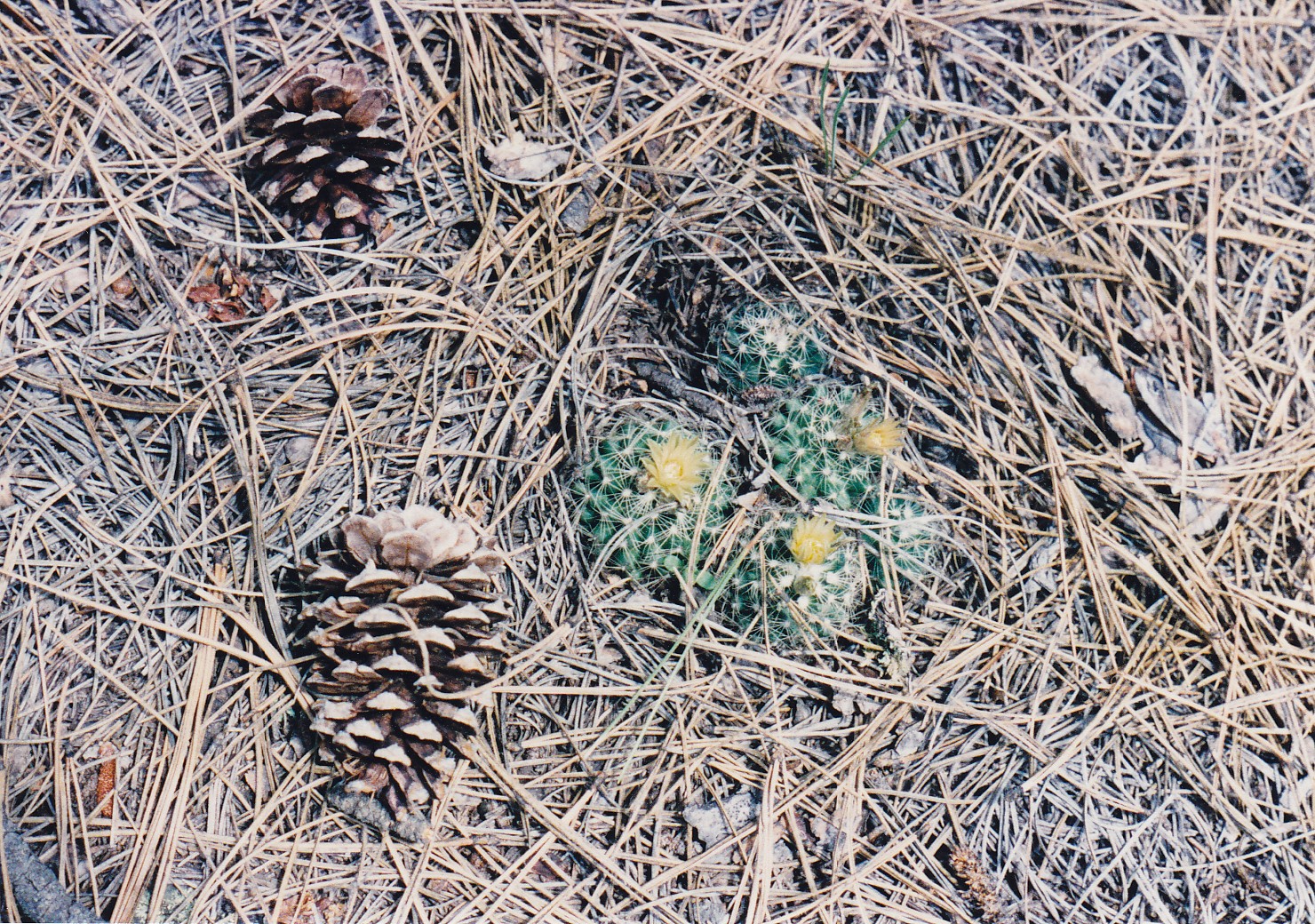
Even though ponderosa pines cover most of the Black Hills of South Dakota, the soil is sometimes thin and dry and small cactuses (such as this Mammilaria) can grow under the pines.
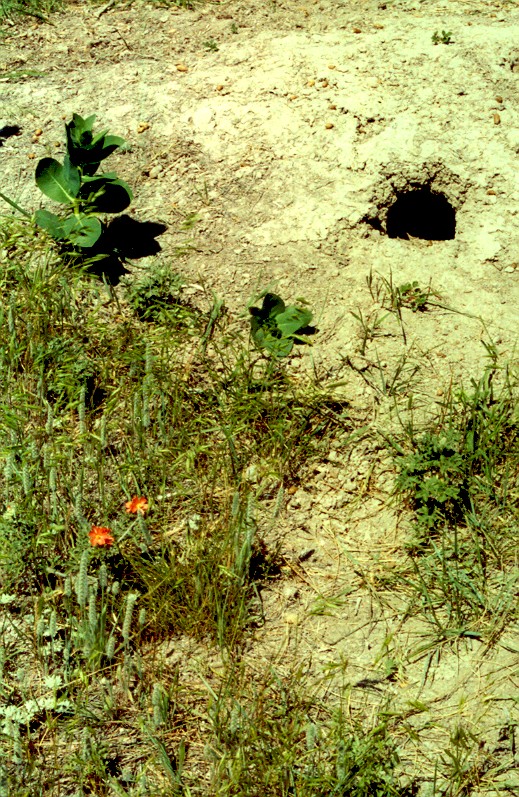
In the Badlands of South Dakota, the grasses are so thick that wildflowers can hardly grow, except where the grasses have been disturbed, for example when prairie dogs dig their tunnels, leaving dirt (fertilized by dung) for the wildflowers to grow, such as milkweed (Asclepias), scarlet globemallow (Sphaeralcea coccinea), and Besseya.
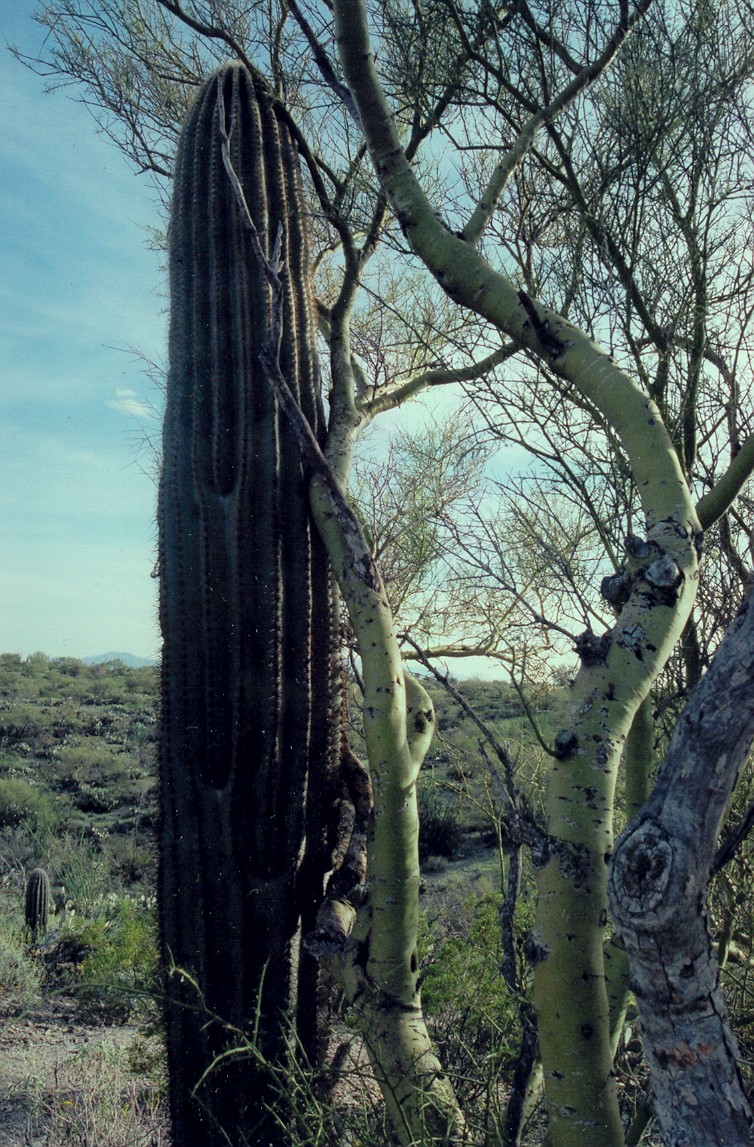
In the Colorado Desert of Arizona, seedlings of saguaro cactus cannot tolerate extreme heat and drought, and they grow under “nurse trees” such as Acacia. Eventually they outgrow the acacia. Adult cactuses can tolerate extreme conditions that their seedlings cannot.
Ecological Problems and Solutions
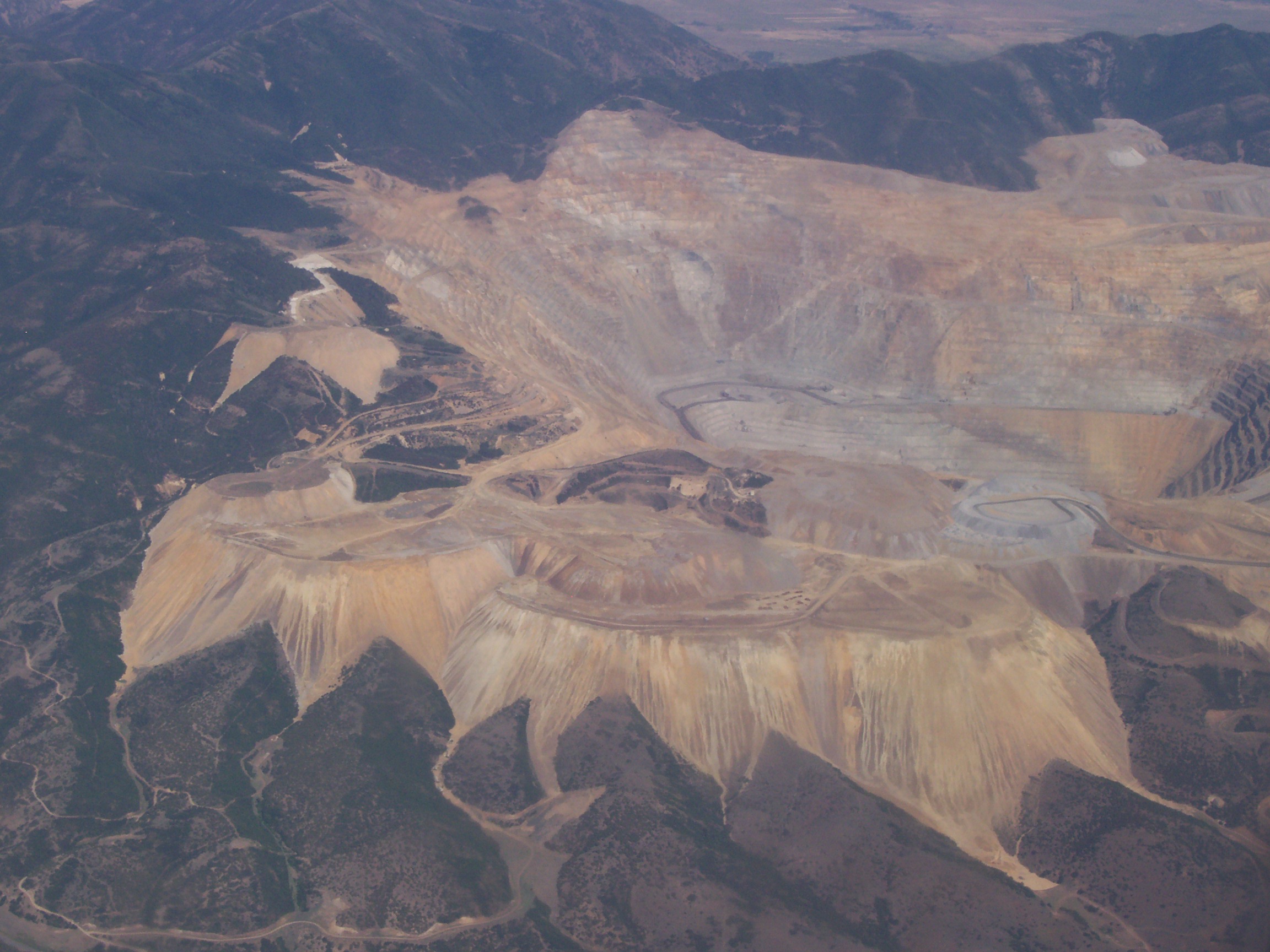
A strip mine in Utah, aerial view.
The San Joaquin Valley, in California, has some of the worst air pollution in the United States. The smog layer is easily visible at sunset from the Sierra Nevada.
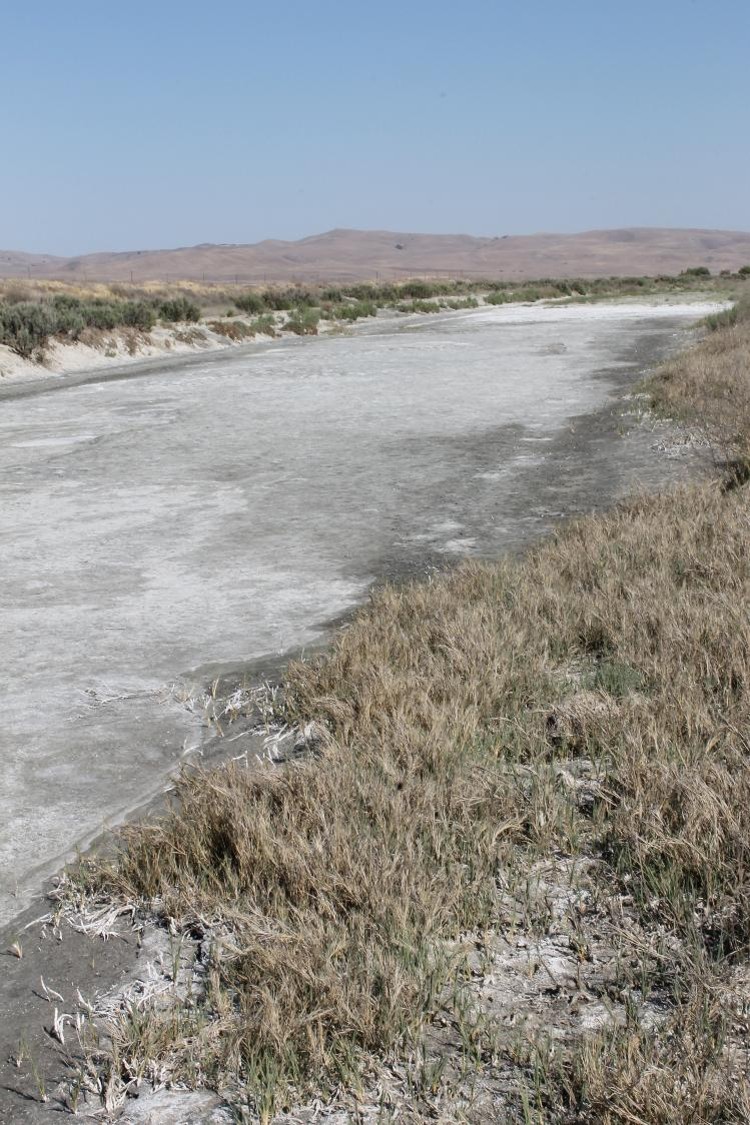
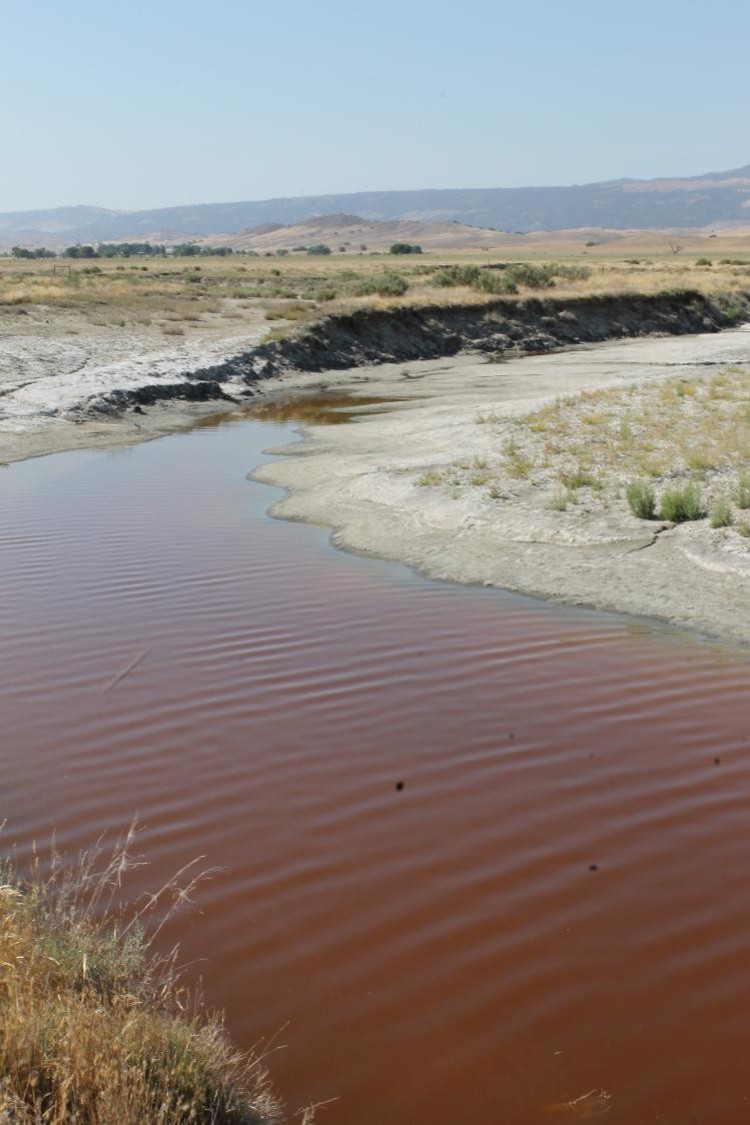
In the coast range of California, irrigation water accumulates in trenches and is filled with salt. The soil has been salinized.
In the coast range of California, irrigation water accumulates in trenches and is filled with salt which promotes the growth of single-celled algae.
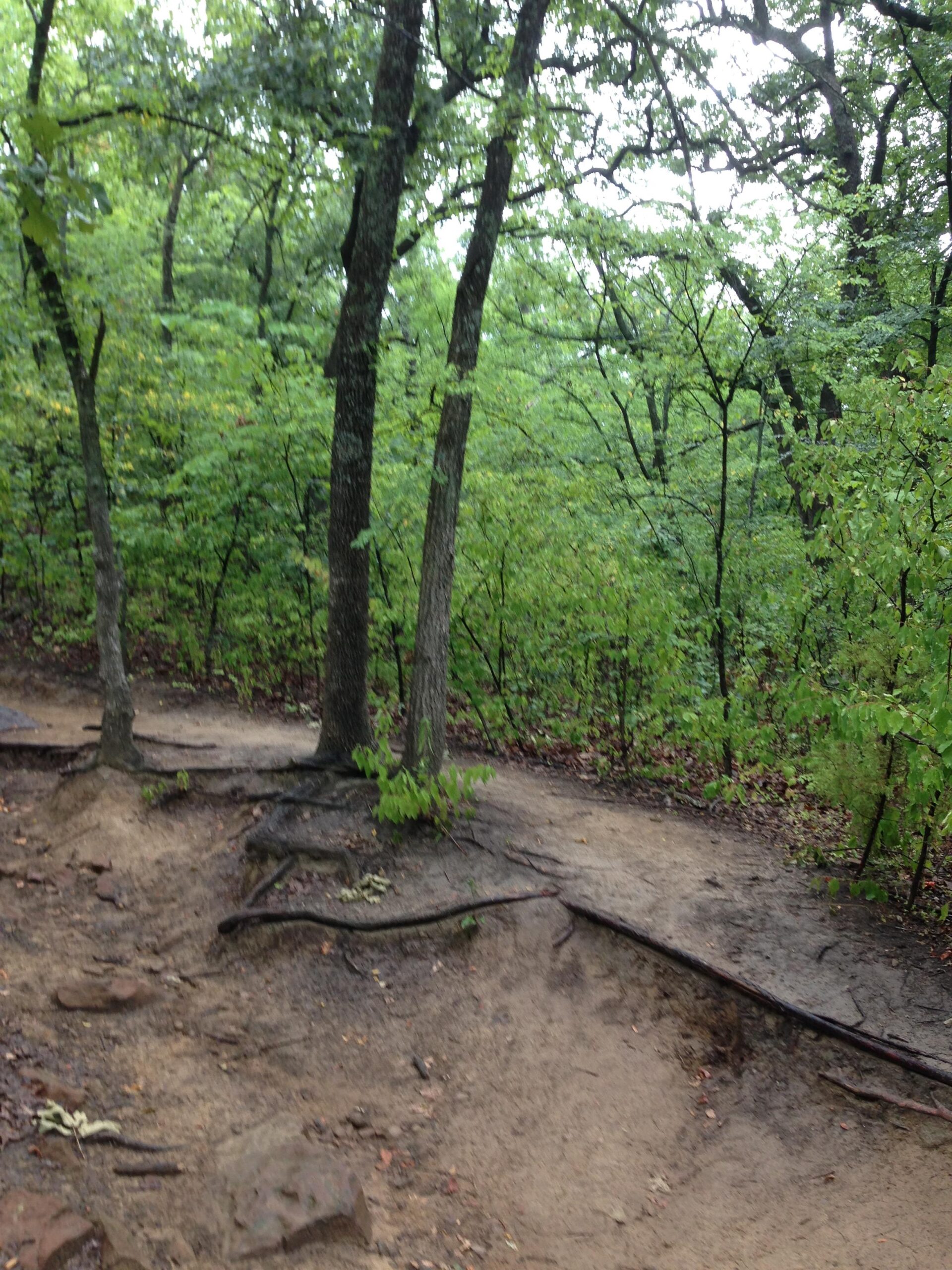
This photo, from a post oak woodland on Turkey Mountain outside of Tulsa, Oklahoma, shows that tree roots help to prevent soil erosion.
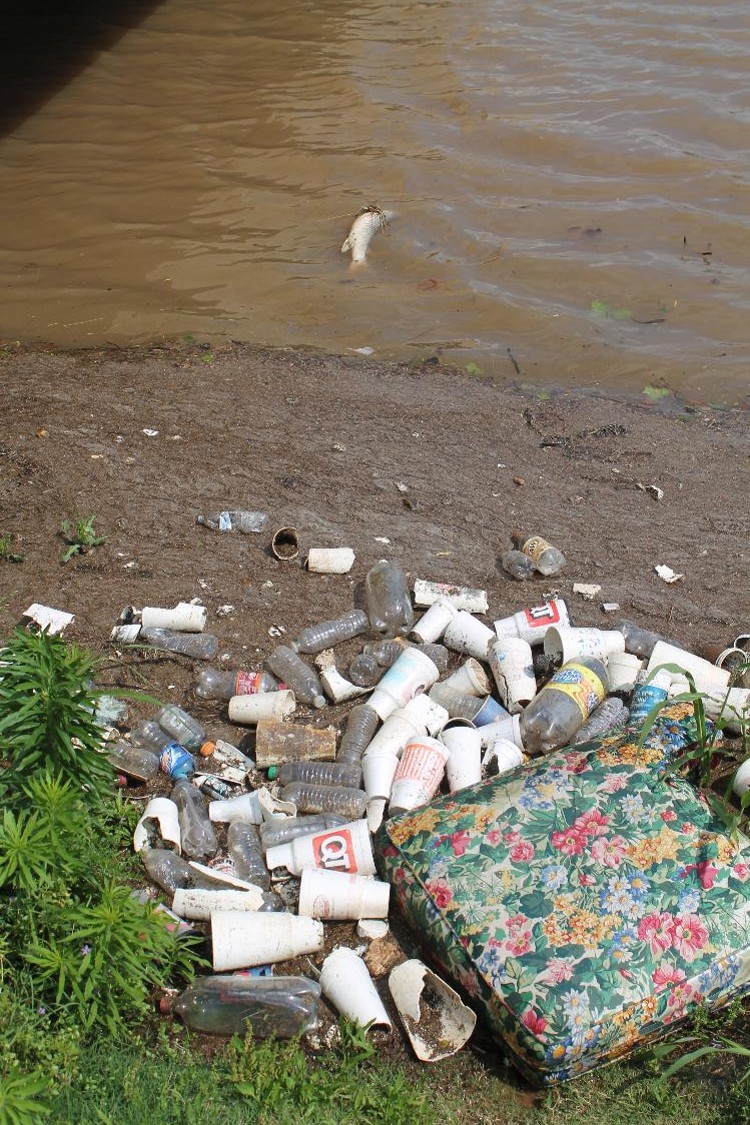
Trash and even dead fish accumulate in a ditch (called Joe Creek) in Tulsa, Oklahoma.
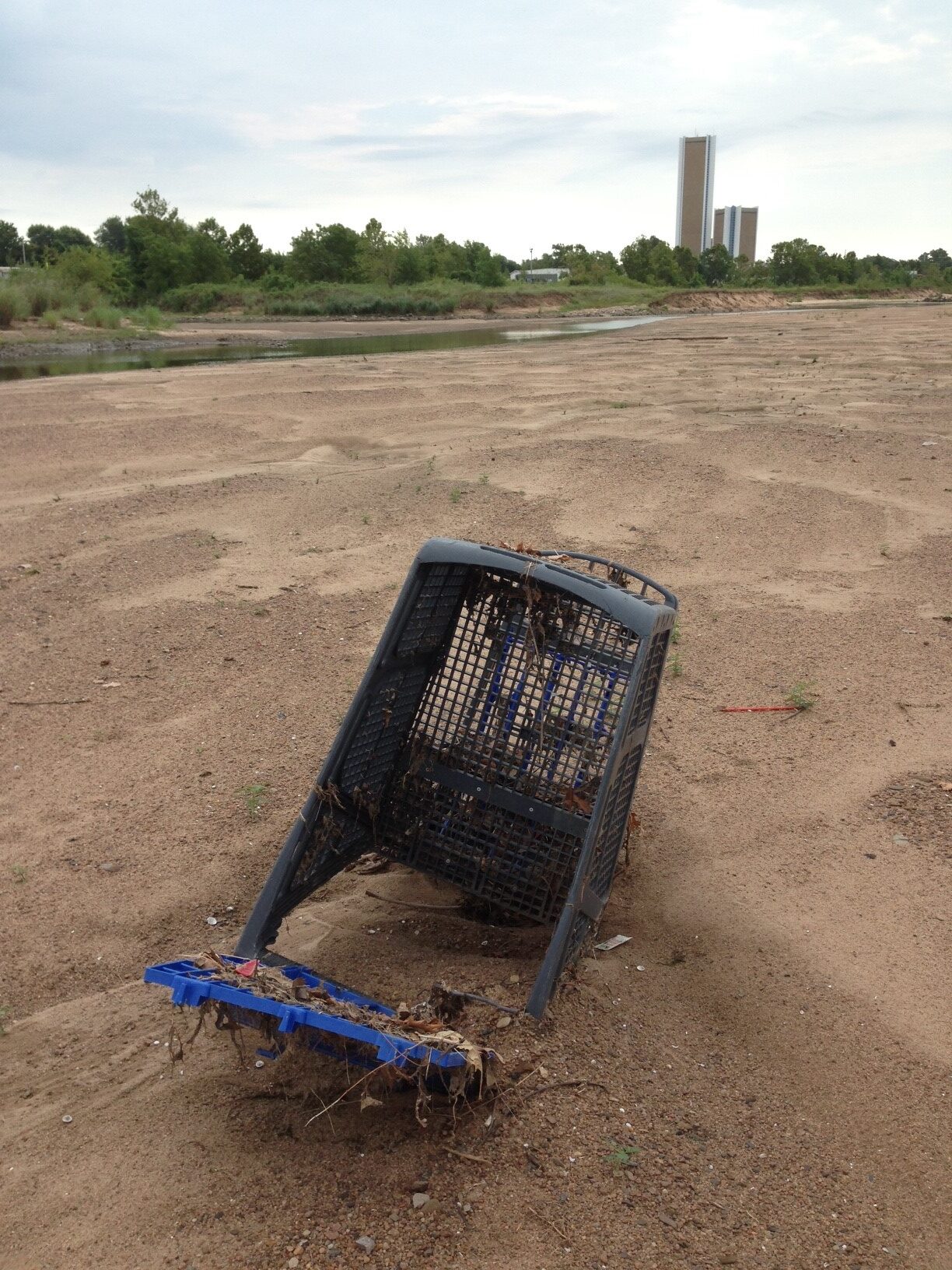
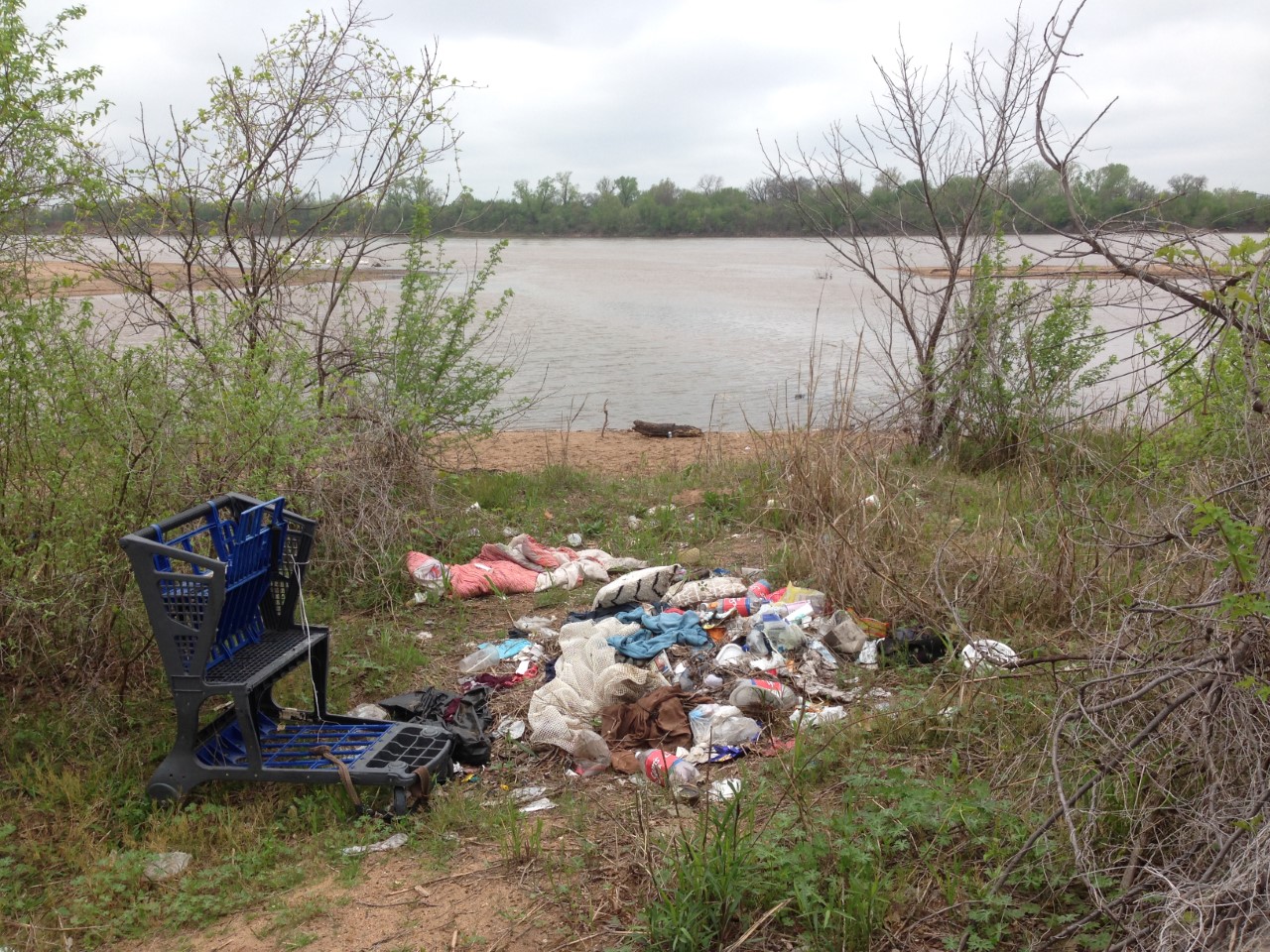
Sometimes large garbage items, such as shopping carts, wash down into the Arkansas River outside of Tulsa, Oklahoma. The Oral Roberts towers are in the background.
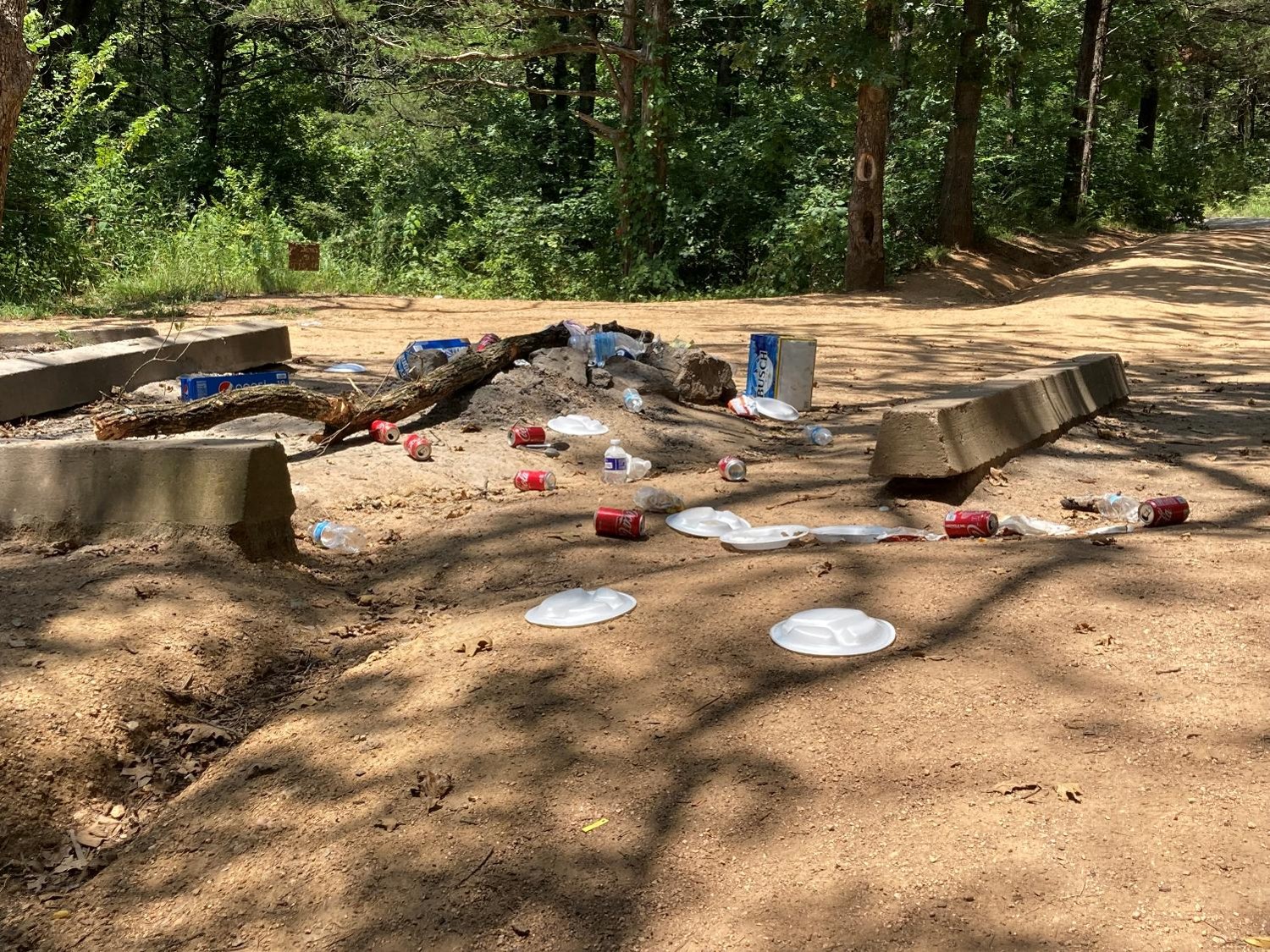
Campsites at state parks and fishing areas are frequently left littered by campers when they leave (south central Oklahoma).
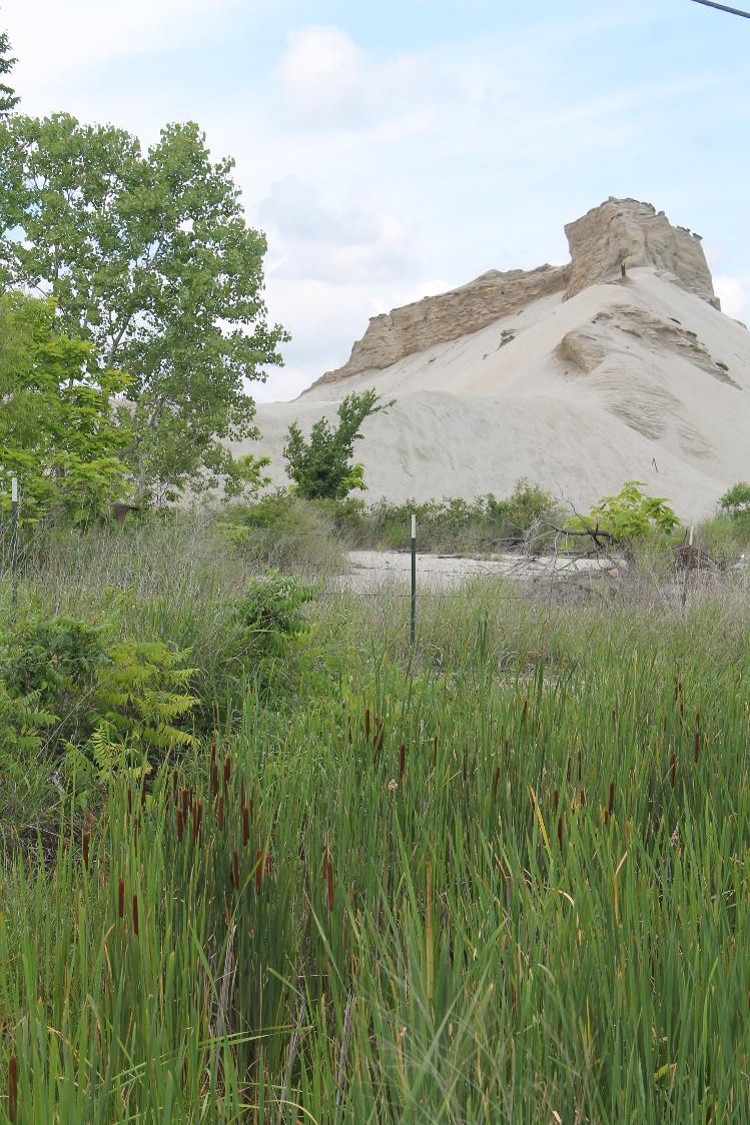
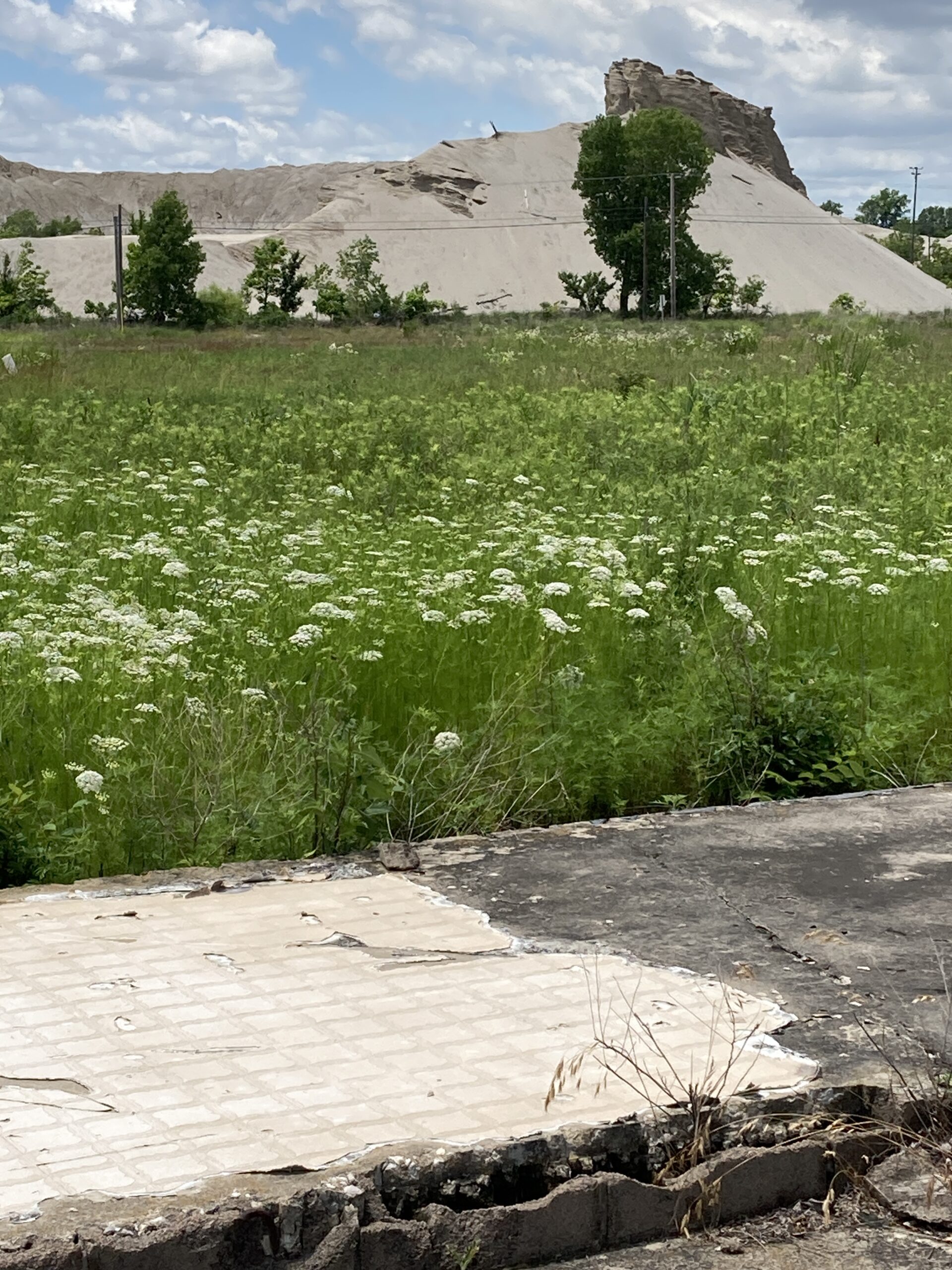
Twentieth century mining companies dumped huge piles of slag outside of Picher, on Quapah Native American land in northeast Oklahoma. The soil, water, and dust is now contaminated by lead so much that most people have left. The cliffs are not rock, but slag from mine tailings.
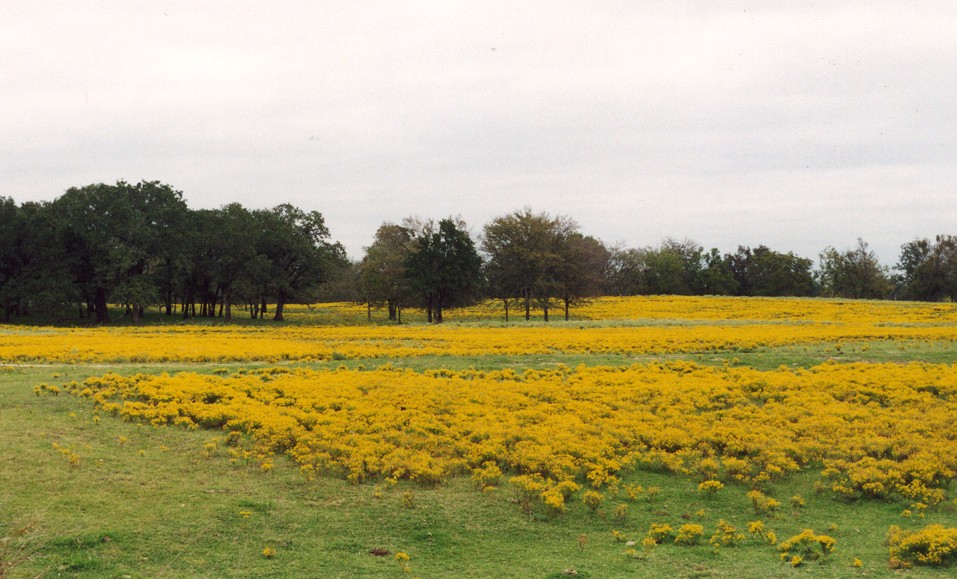
Helenium amarum, a yellow wildflower, has overgrown many pastures in Oklahoma as a result of overgrazing.
In 2019 the Arkansas River in Tulsa flooded many areas because of heavy rainfall upstream, and because the eroded soil upstream could not absorb additional rain water.
Homeless encampments, here in Tulsa, Oklahoma, accumulate a lot of garbage. The rural highways of Oklahoma have about a hundred pieces of litter, visible from a moving car, per mile (I have counted them).
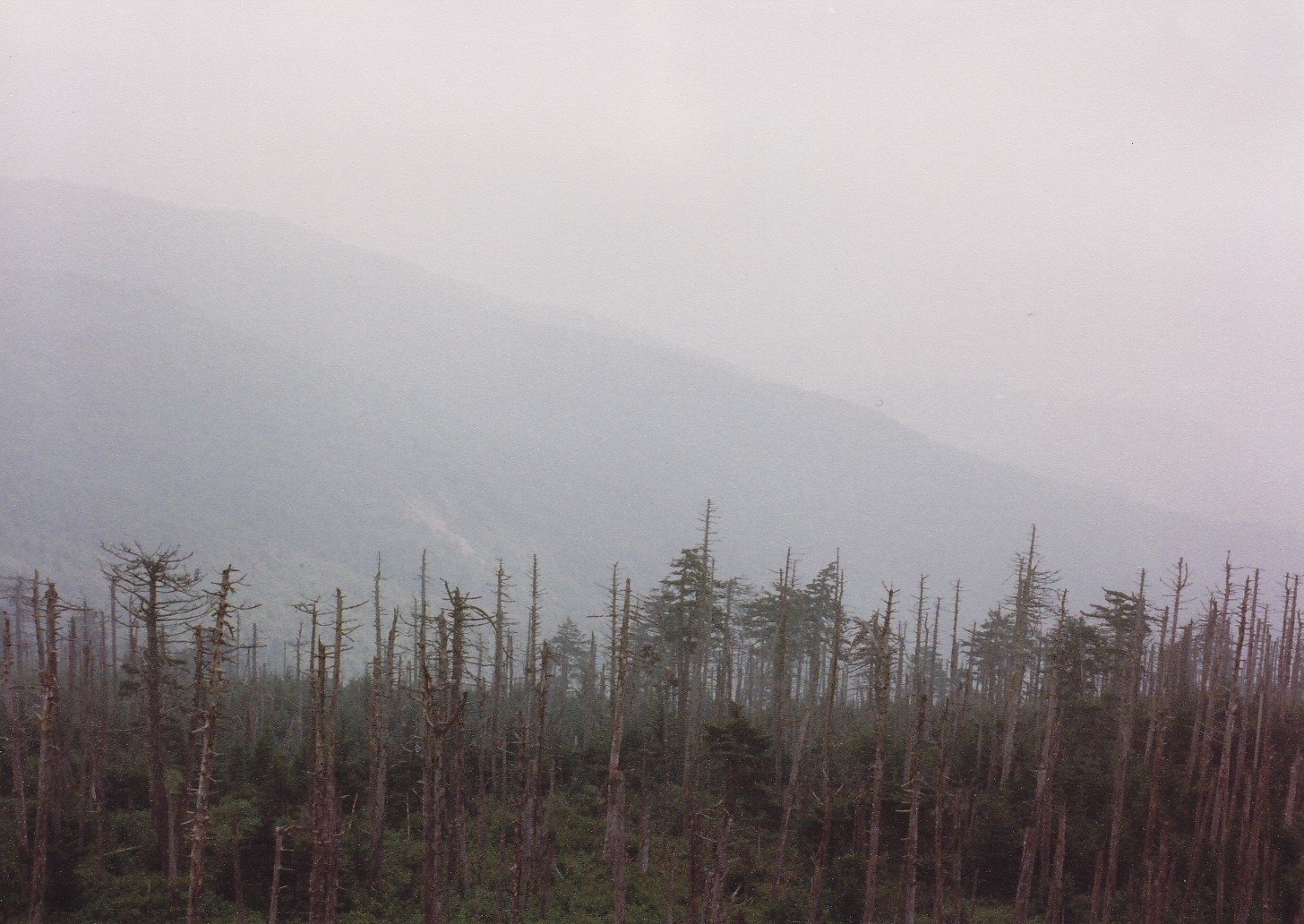
Acid rain has indirectly killed many subalpine conifers on Mt. Mitchell in the Appalachians. The acid rain made the trees unable to resist an insect infestation which spread a microbial disease. But the root cause was acid rain, as well as persistent acid fog.
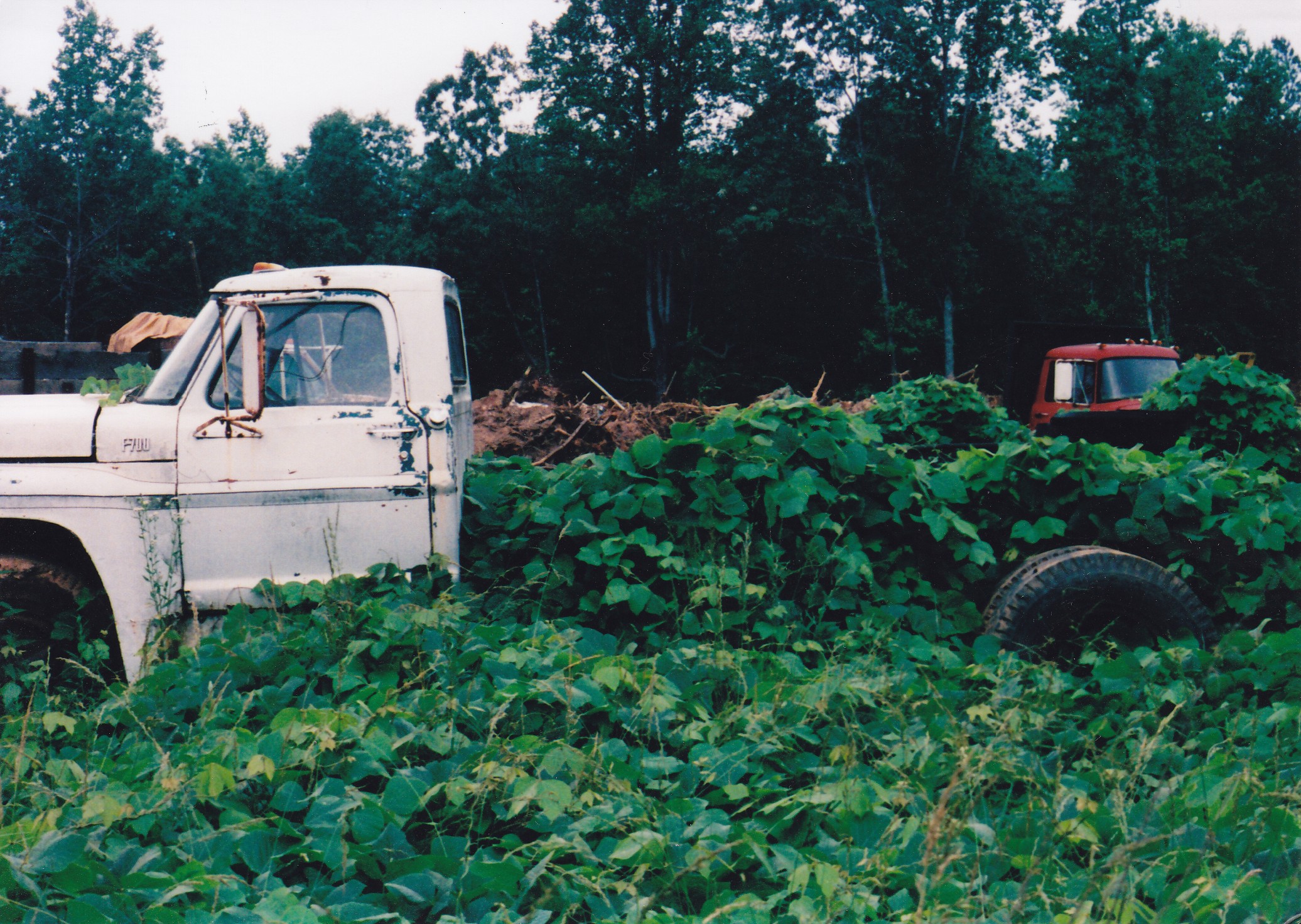
Don’t park your truck too long in Georgia, in the American south! Kudzu (Pueraria lobata) will grow over it. Kudzu was introduced as a plant to control soil erosion and cattle can eat it. But it escaped far beyond pastures.
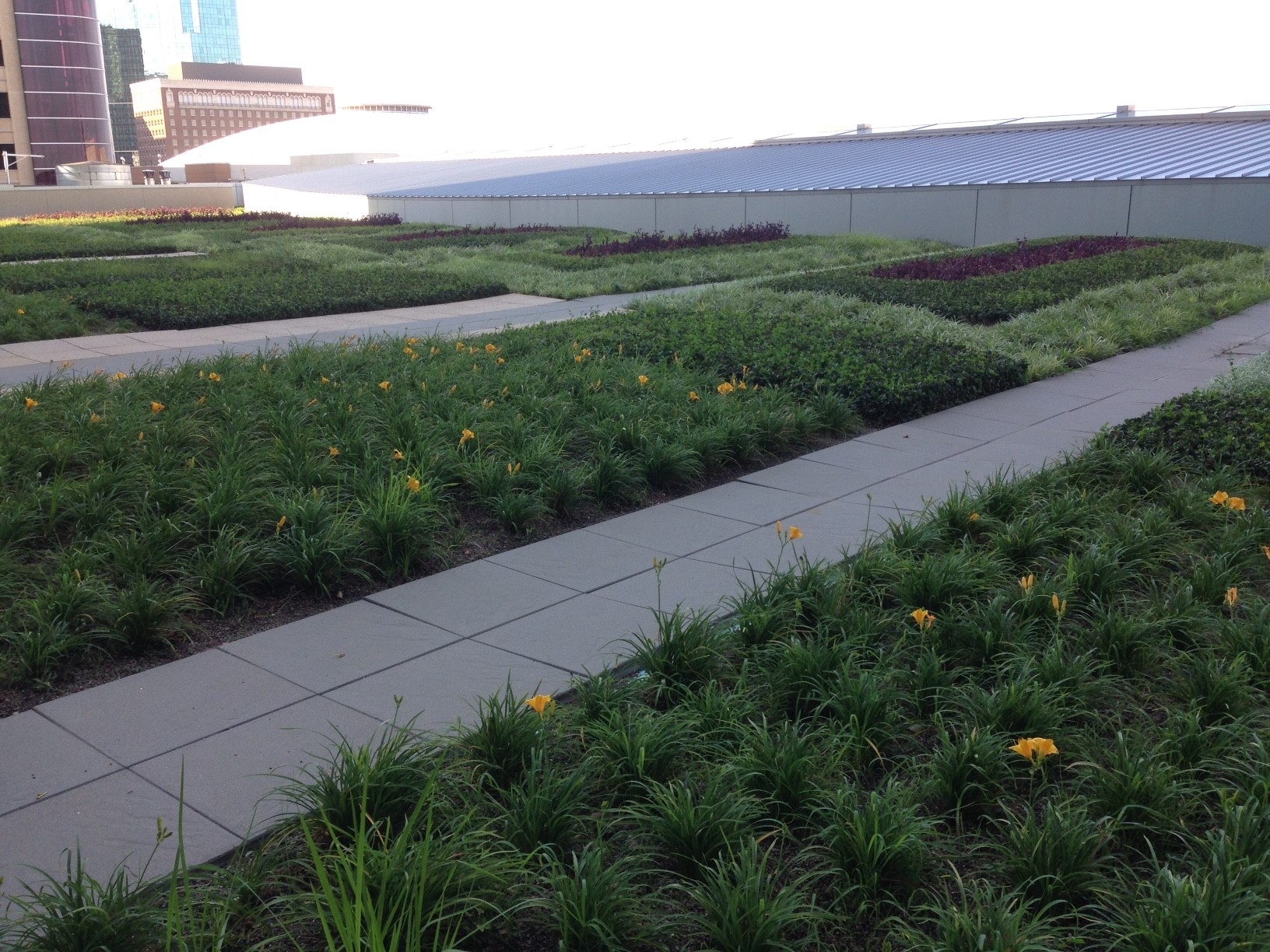
In Fort Worth, Texas, a hotel rooftop is an excellent place for a garden. A “green roof” can help cool the building and absorb rain water that would otherwise drain into the street.
Along the Colorado River in Utah, almost all of the riparian vegetation is salt cedar (genus Tamarix), introduced from Asia. It absorbs a lot of water and dehydrates soil in places near the river.
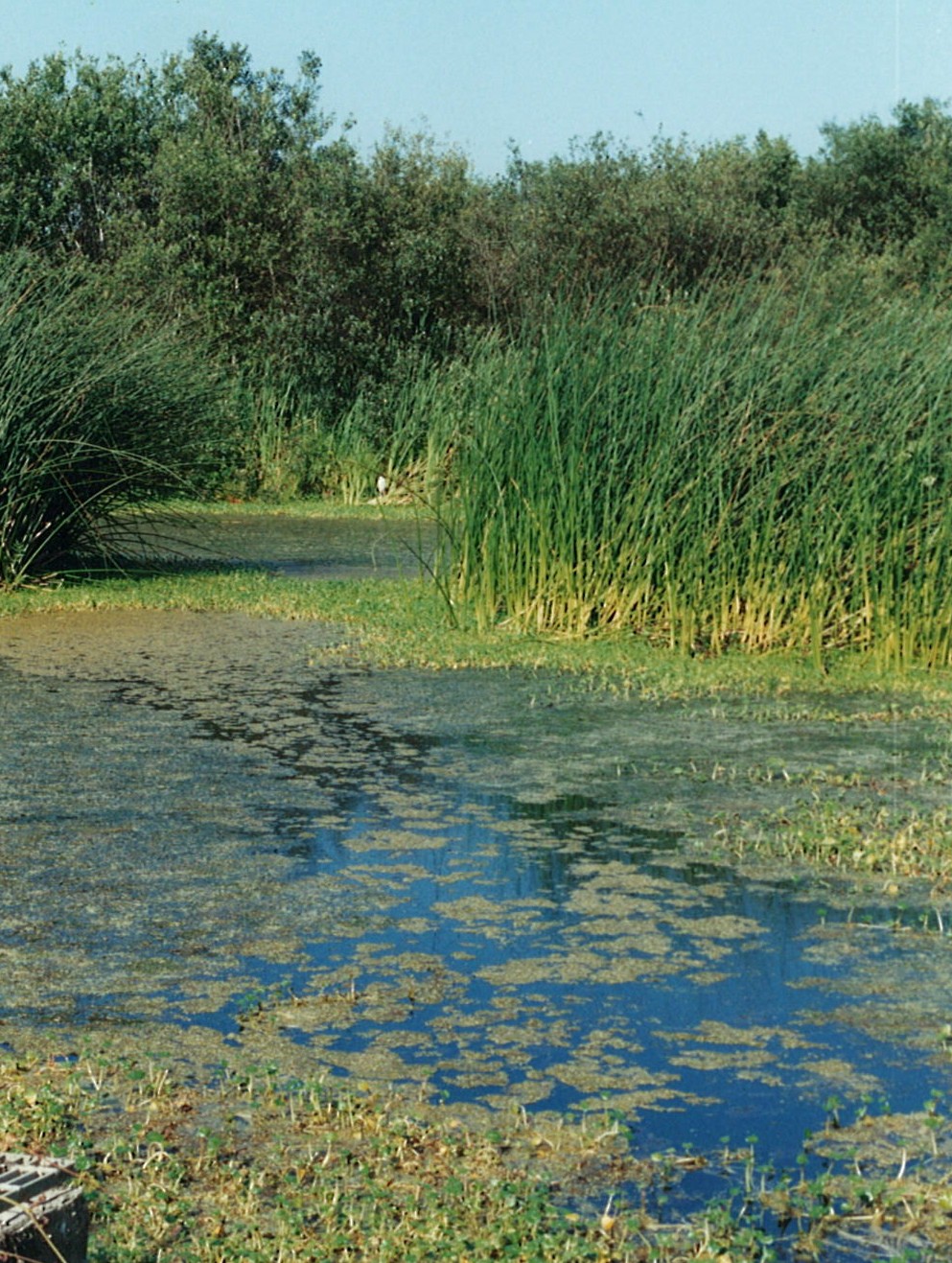
This beautiful salt marsh near Arcata, California, is actually their sewage treatment plant. The bacteria living in the plant root zone break down the sewage.
Abandoned mountains of mining waste have made the soil, air, and water toxic in Picher, Oklahoma, on Quapaw Native American land. Most of the people have moved away, leaving the slabs of abandoned houses.
Fossils Evolution
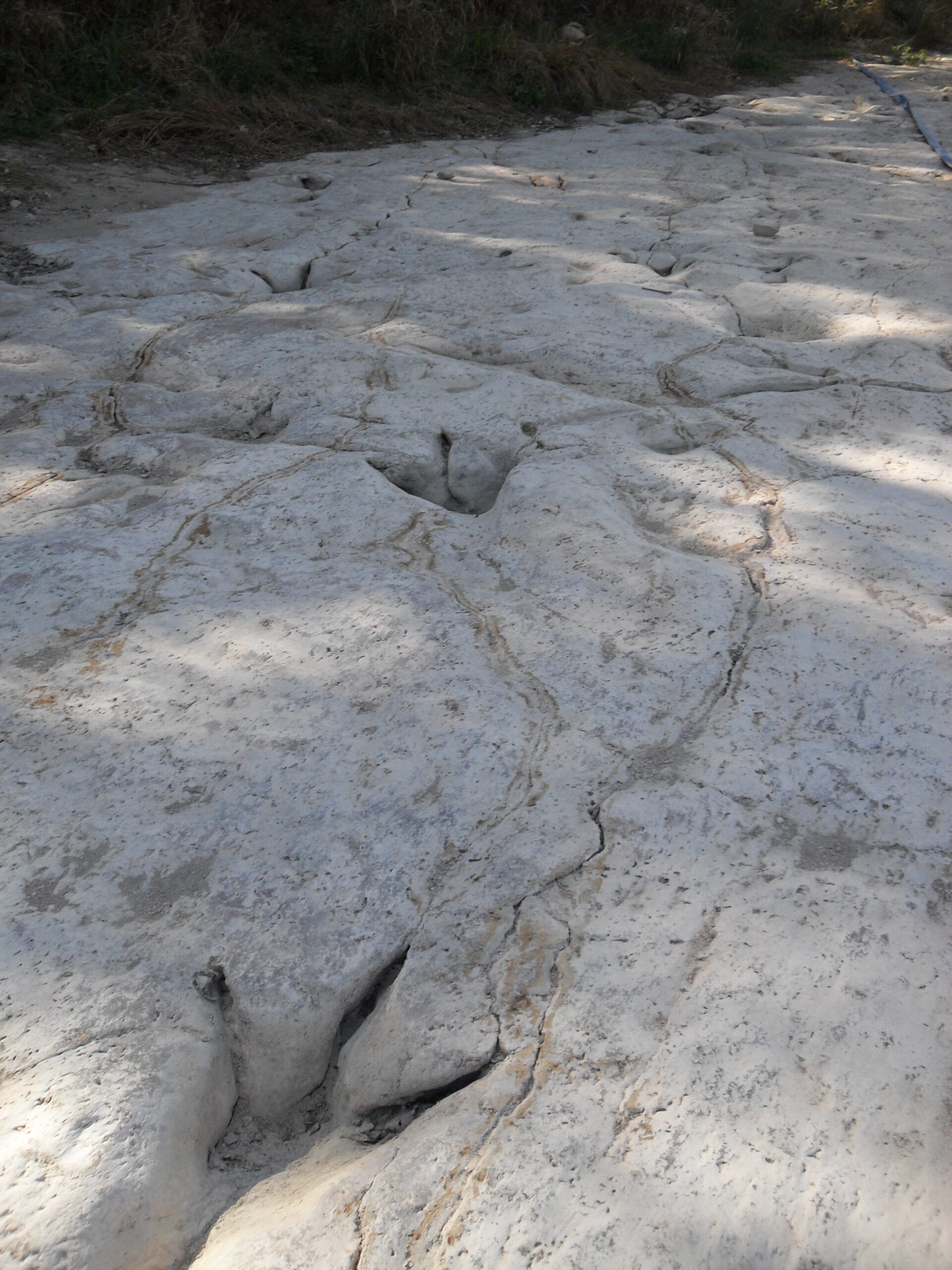
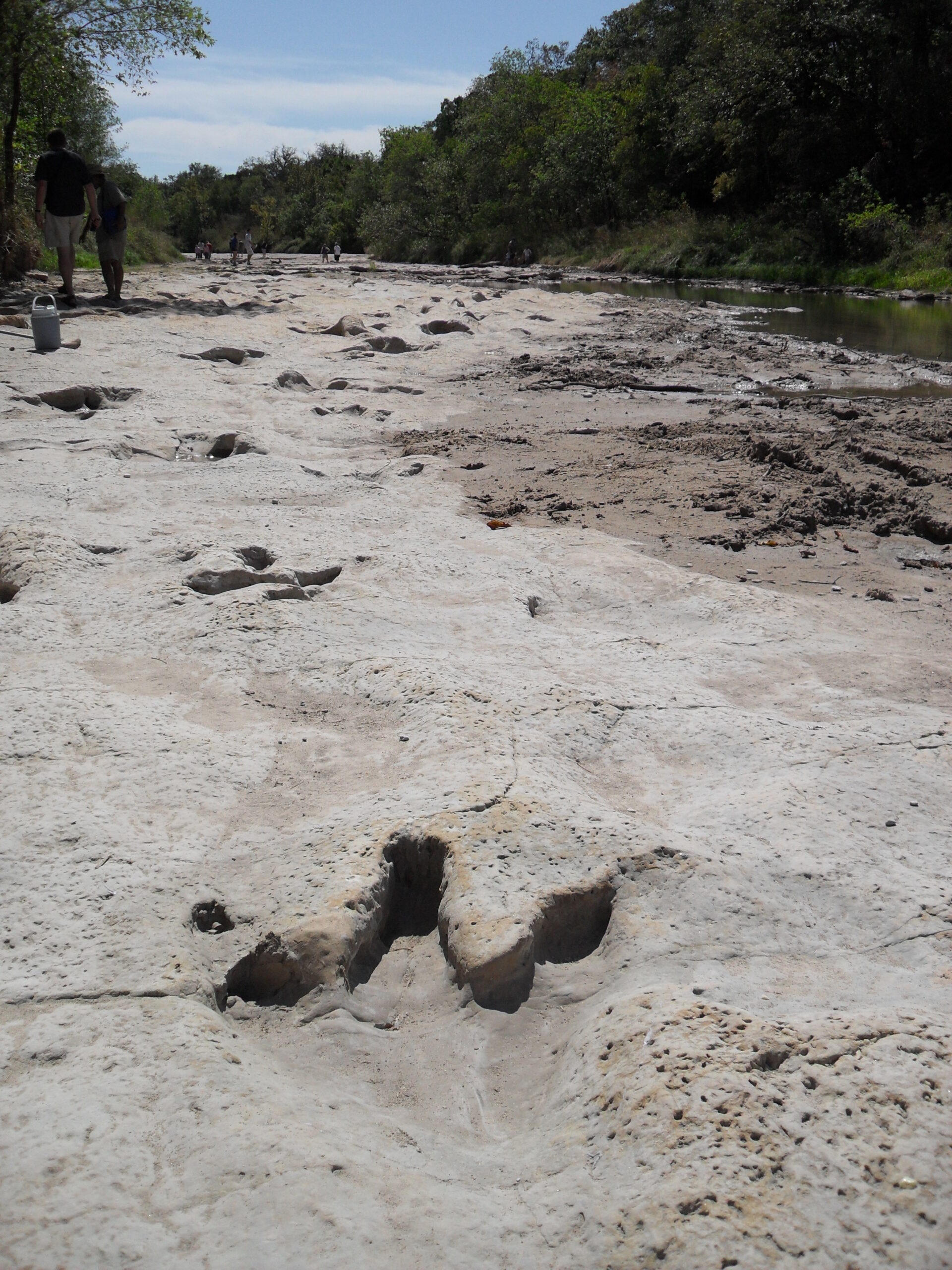
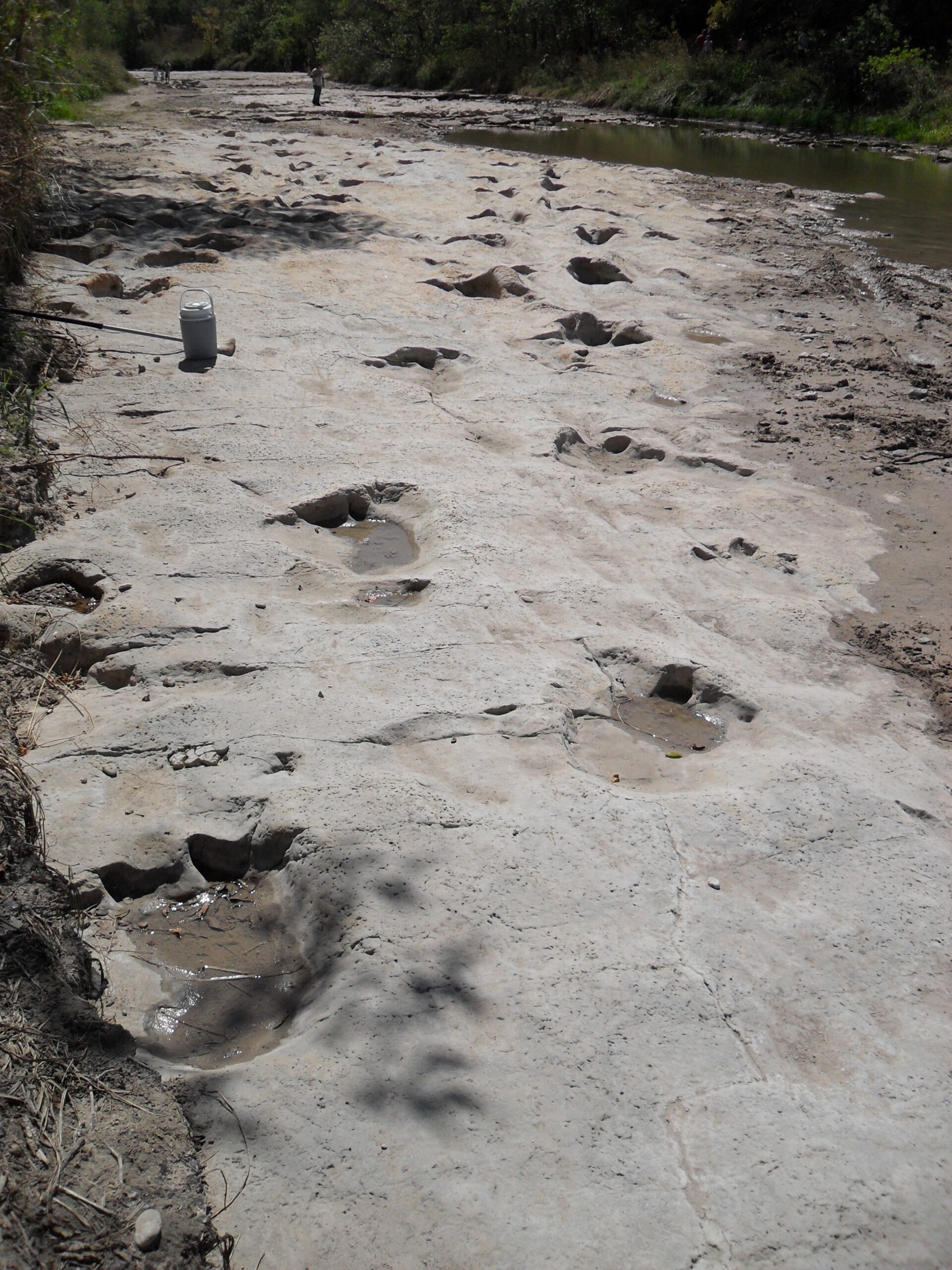
Fossilized footprints of a small carnivorous dinosaur Acrocanthosaurus, which walked here in a shallow sea 110 million years ago. From the distances between footprints in the trackway, and knowing the size of the dinosaur, the speed can be calculated. Paluxy River, Dinosaur Valley State Park, Texas.
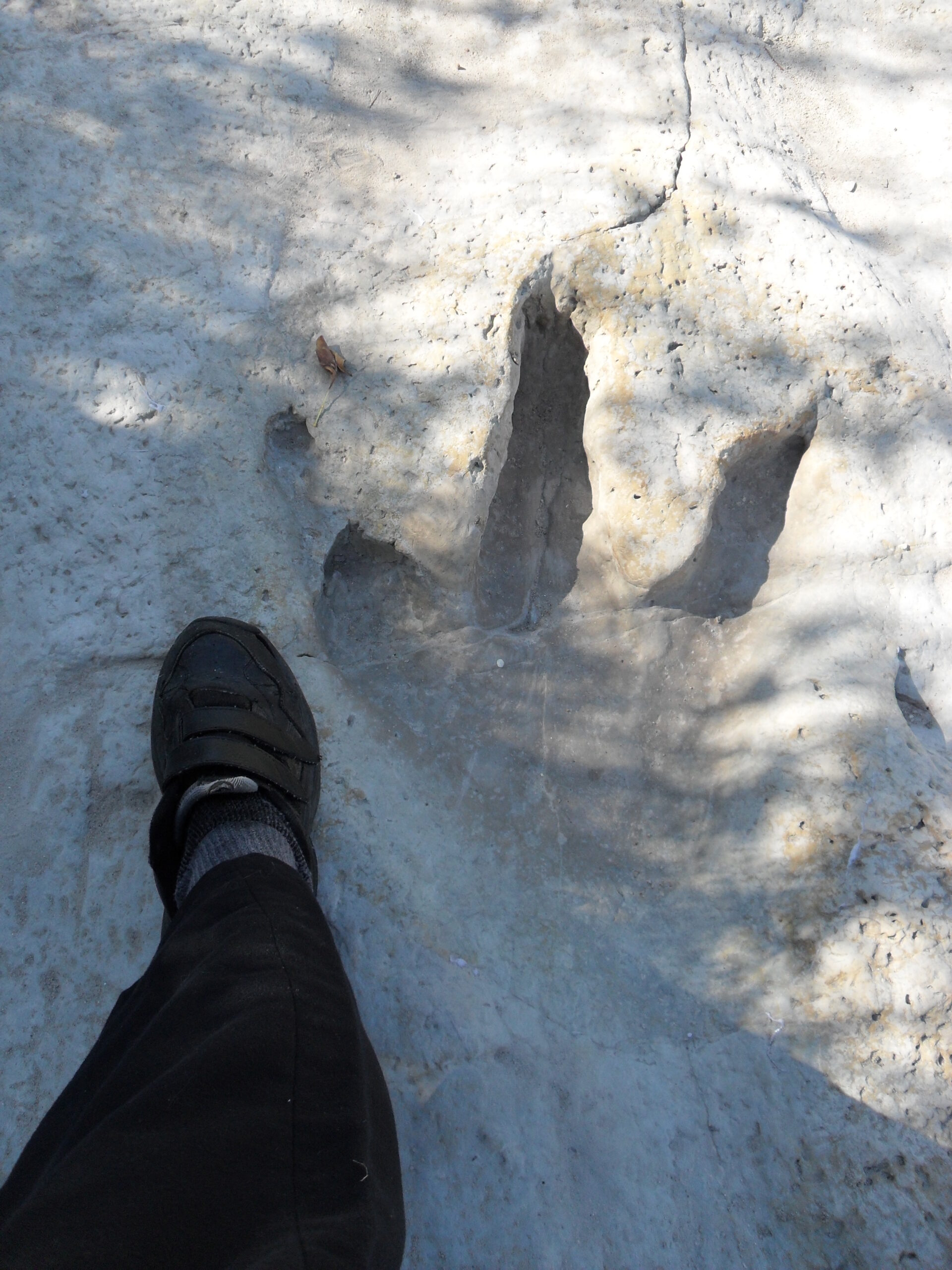
Fossilized footprint of a small carnivorous dinosaur Acrocanthosaurus, which walked here in a shallow sea 110 million years ago. Paluxy River, Dinosaur Valley State Park, Texas.
Fossilized footprints of a large herbivorous sauropod dinosaur Paluxysaurus, which walked here in a shallow sea 110 million years ago. From the distances between footprints in the trackway, and knowing the size of the dinosaur, the speed can be calculated. Paluxy River, Dinosaur Valley State Park, Texas.
Fossilized footprints of a small carnivorous dinosaur Acrocanthosaurus, which walked here in a shallow sea 110 million years ago. From the distances between footprints in the trackway, and knowing the size of the dinosaur, the speed can be calculated. Paluxy River, Dinosaur Valley State Park, Texas.
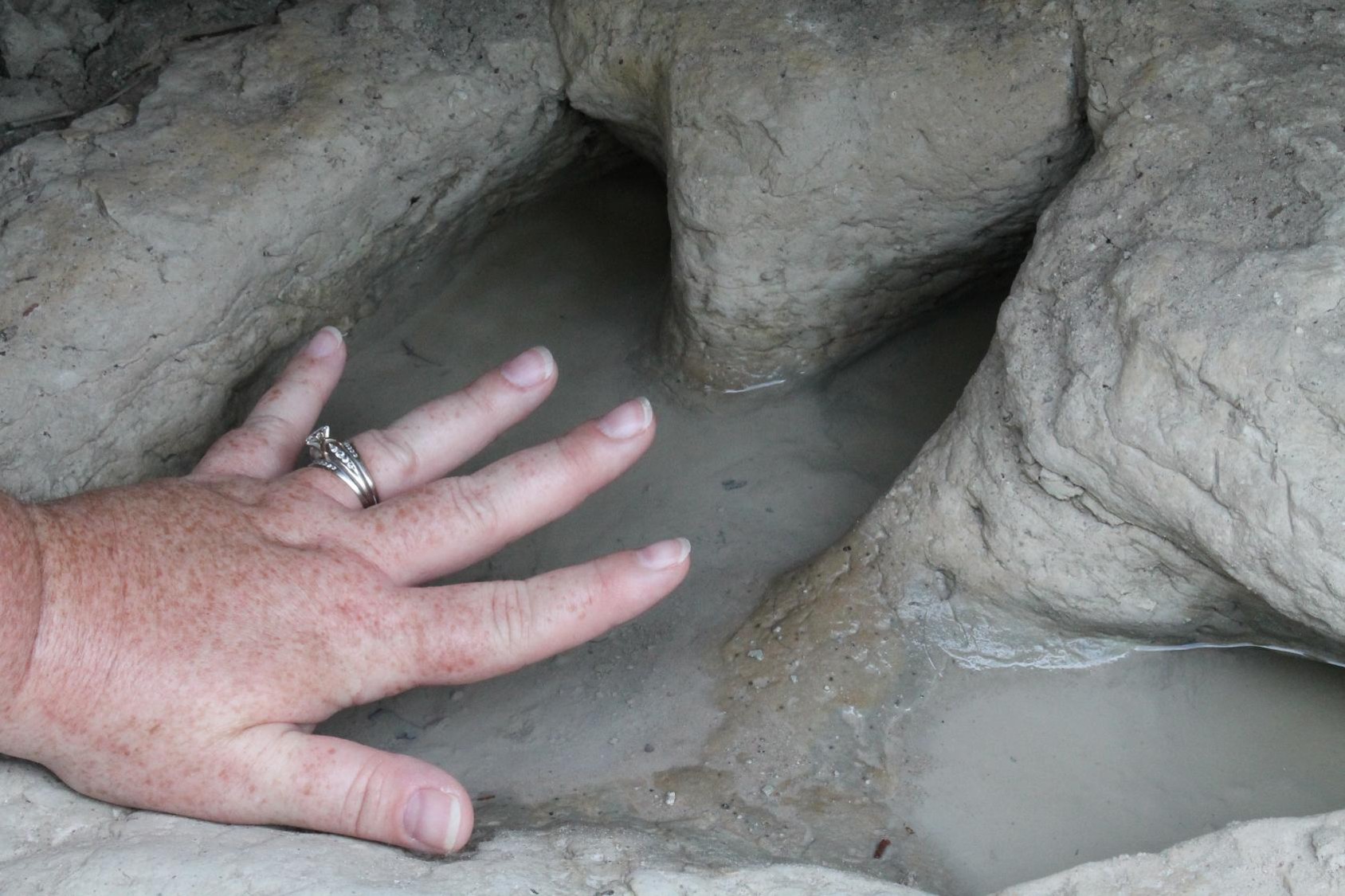
Fossilized footprint of a small carnivorous dinosaur Acrocanthosaurus, which walked here in a shallow sea 110 million years ago. Human hand for comparison. Paluxy River, Dinosaur Valley State Park, Texas.
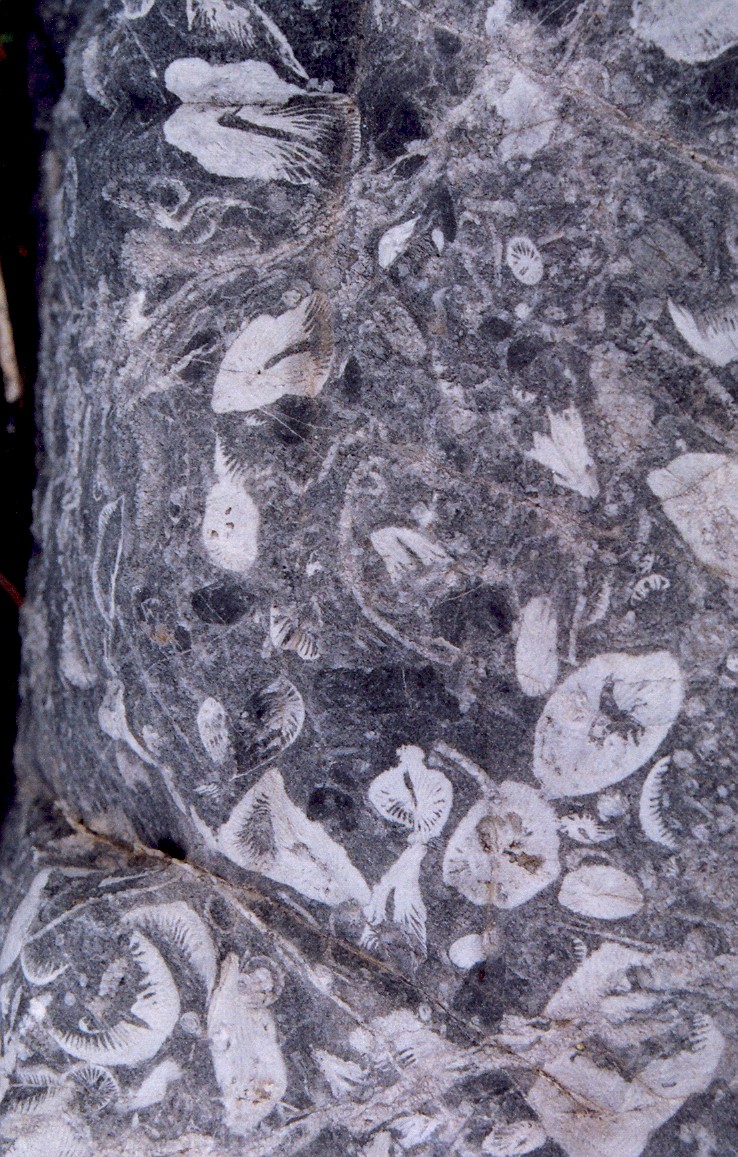
Fossiliferous rock near Snowbird, Utah.
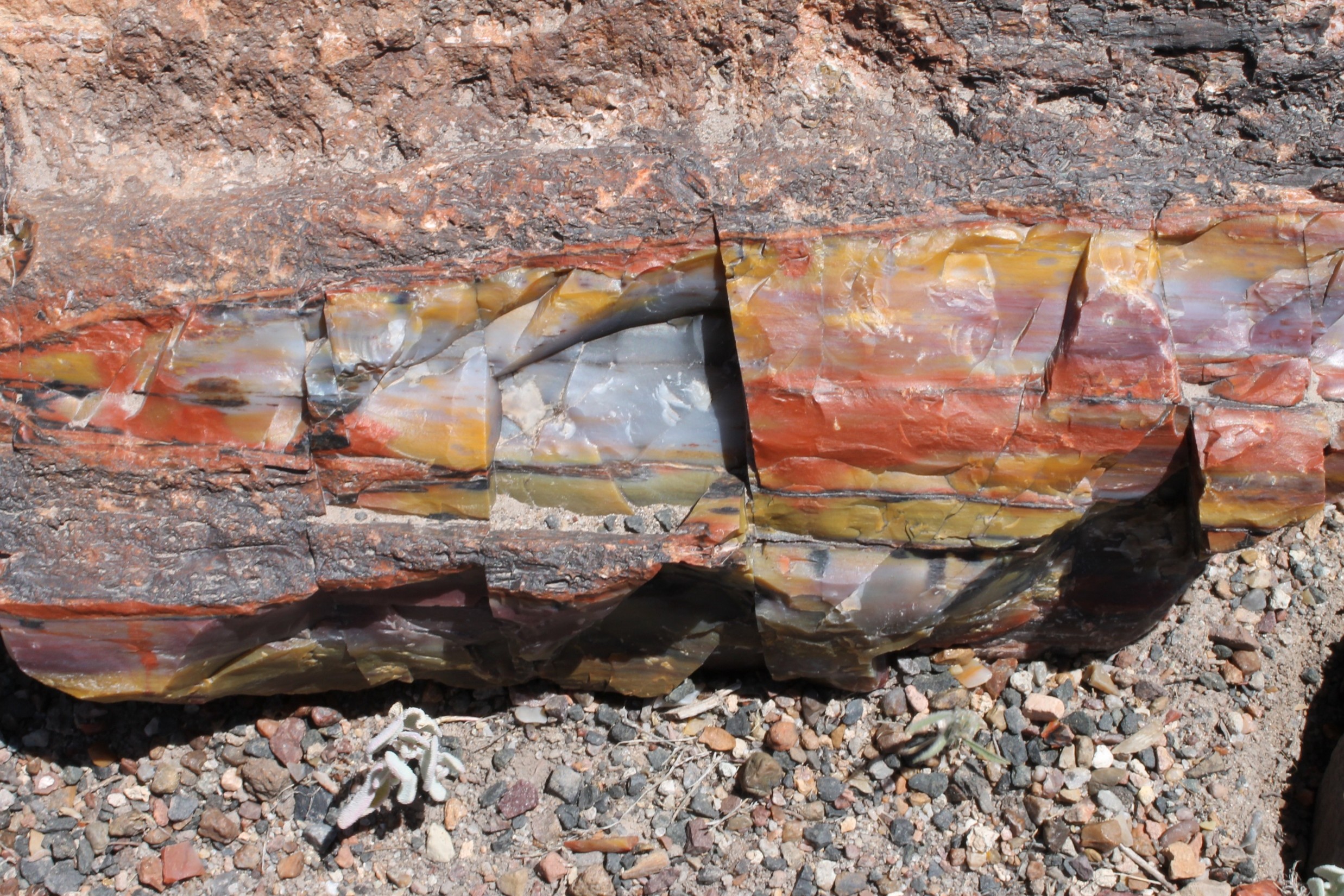
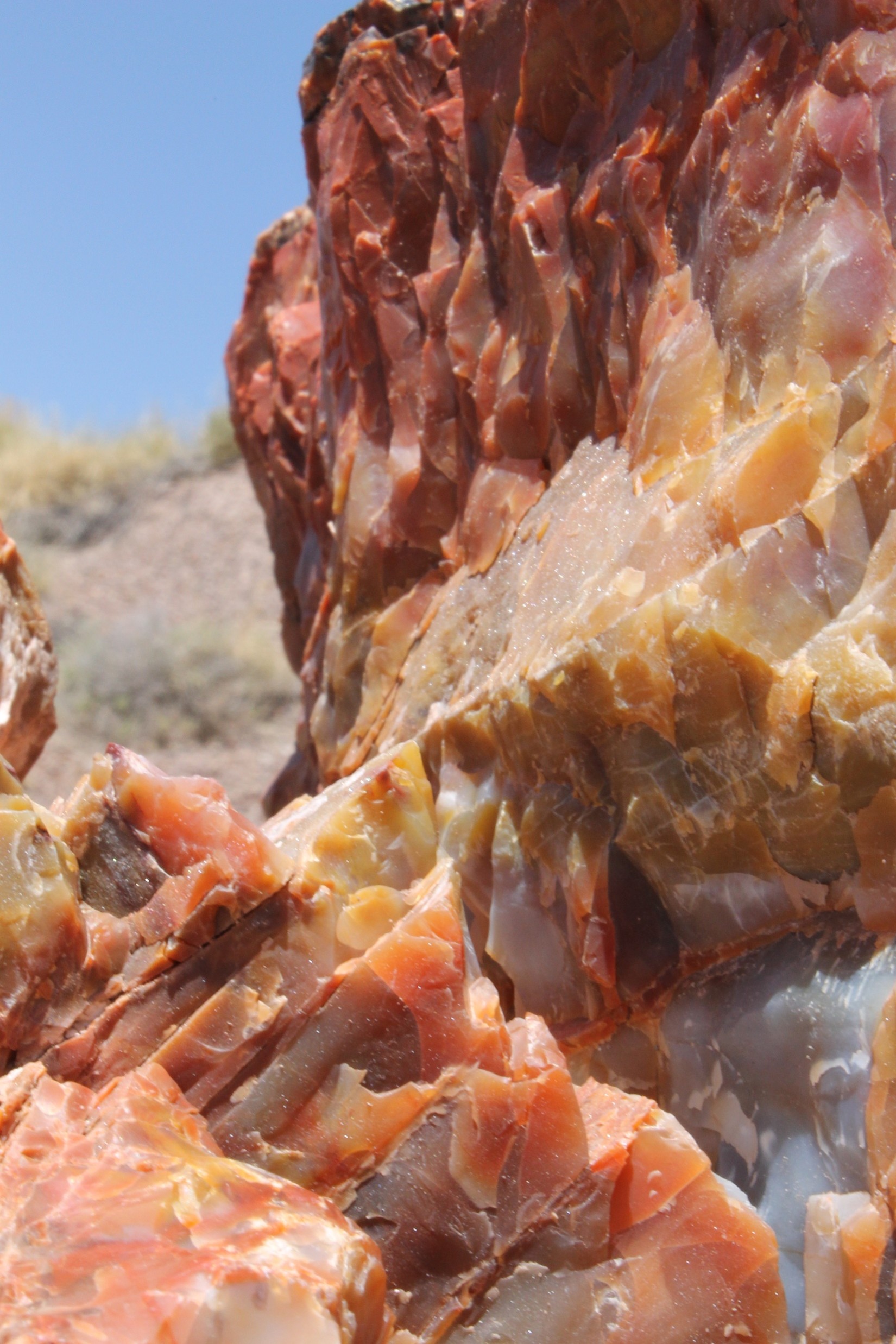
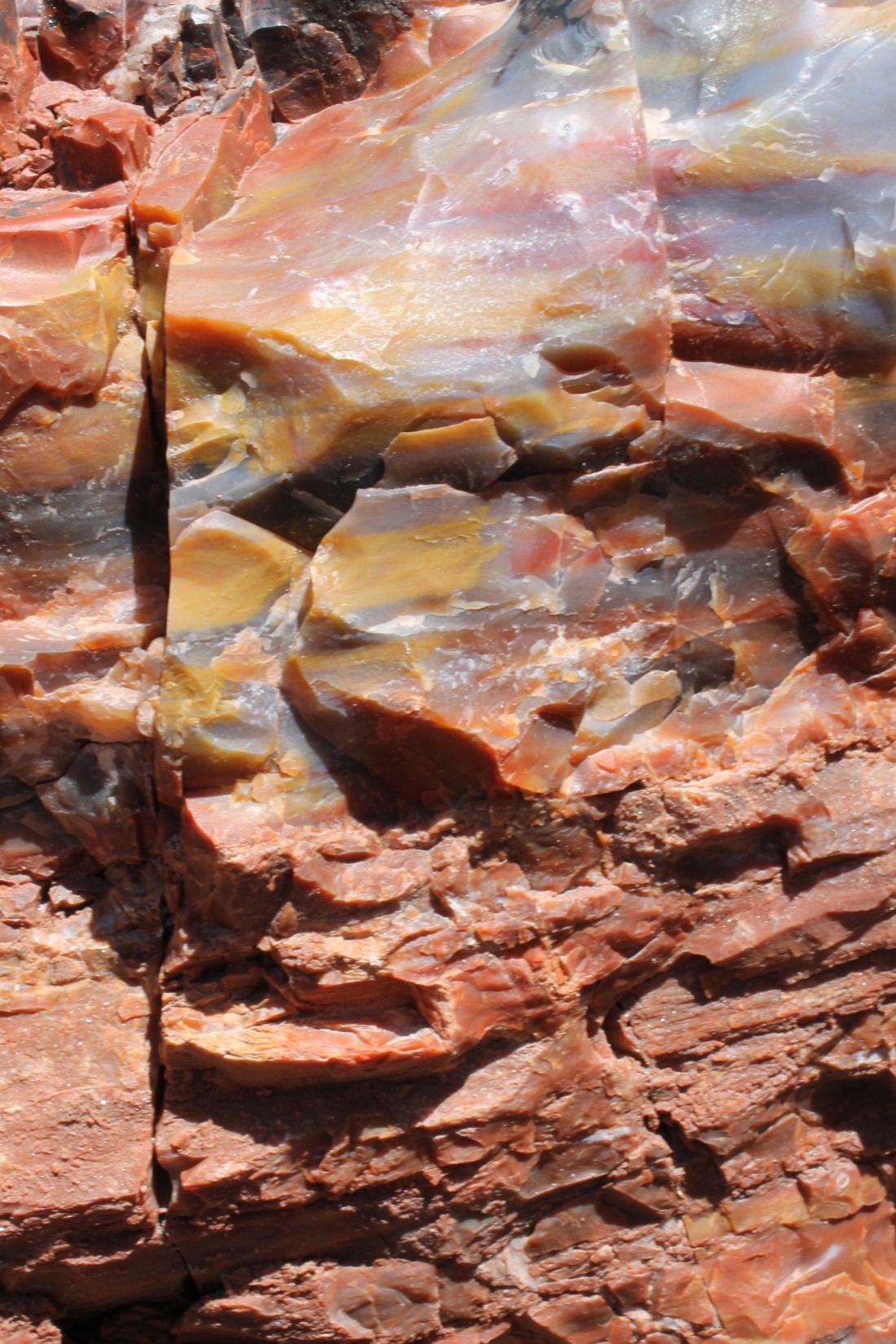
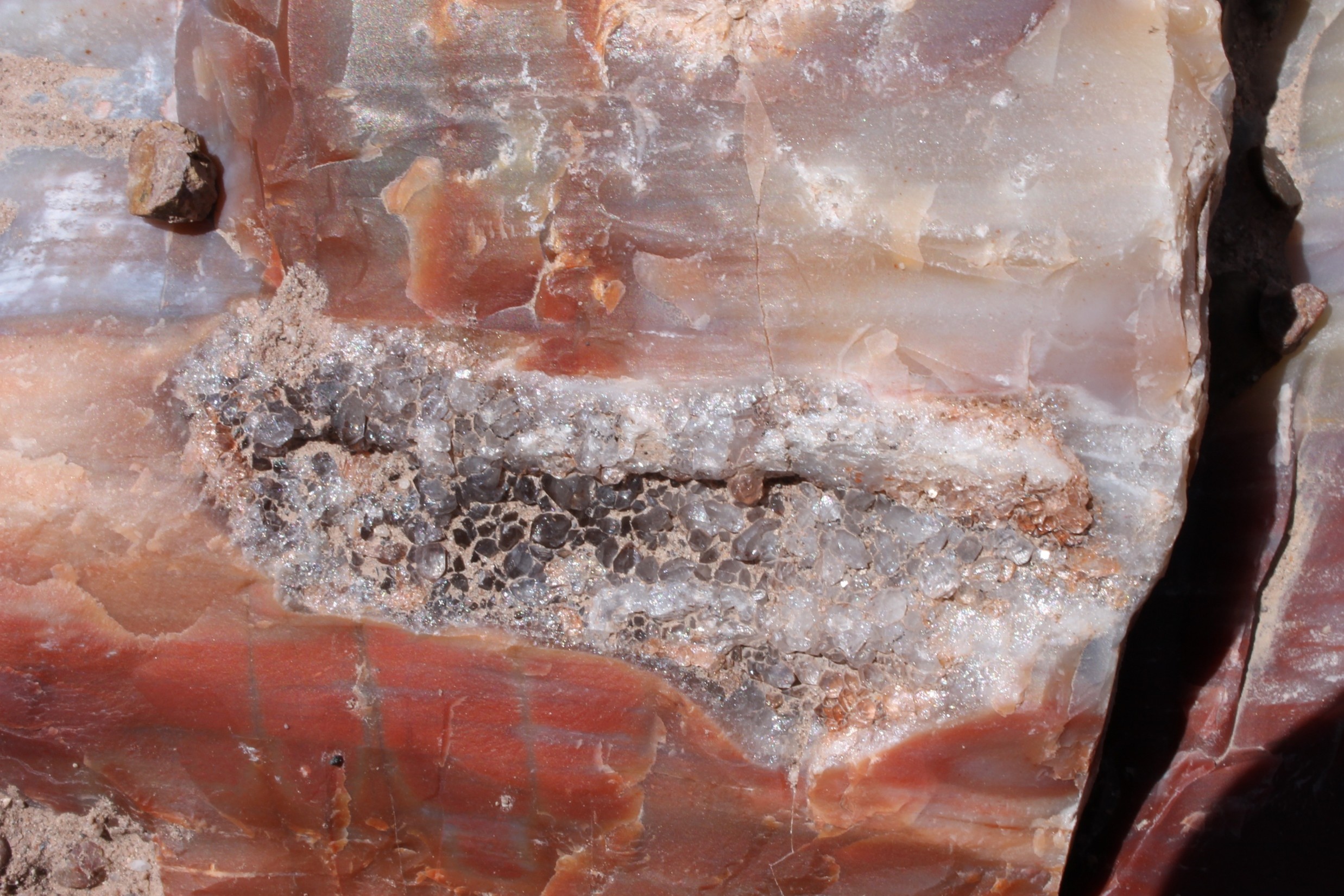
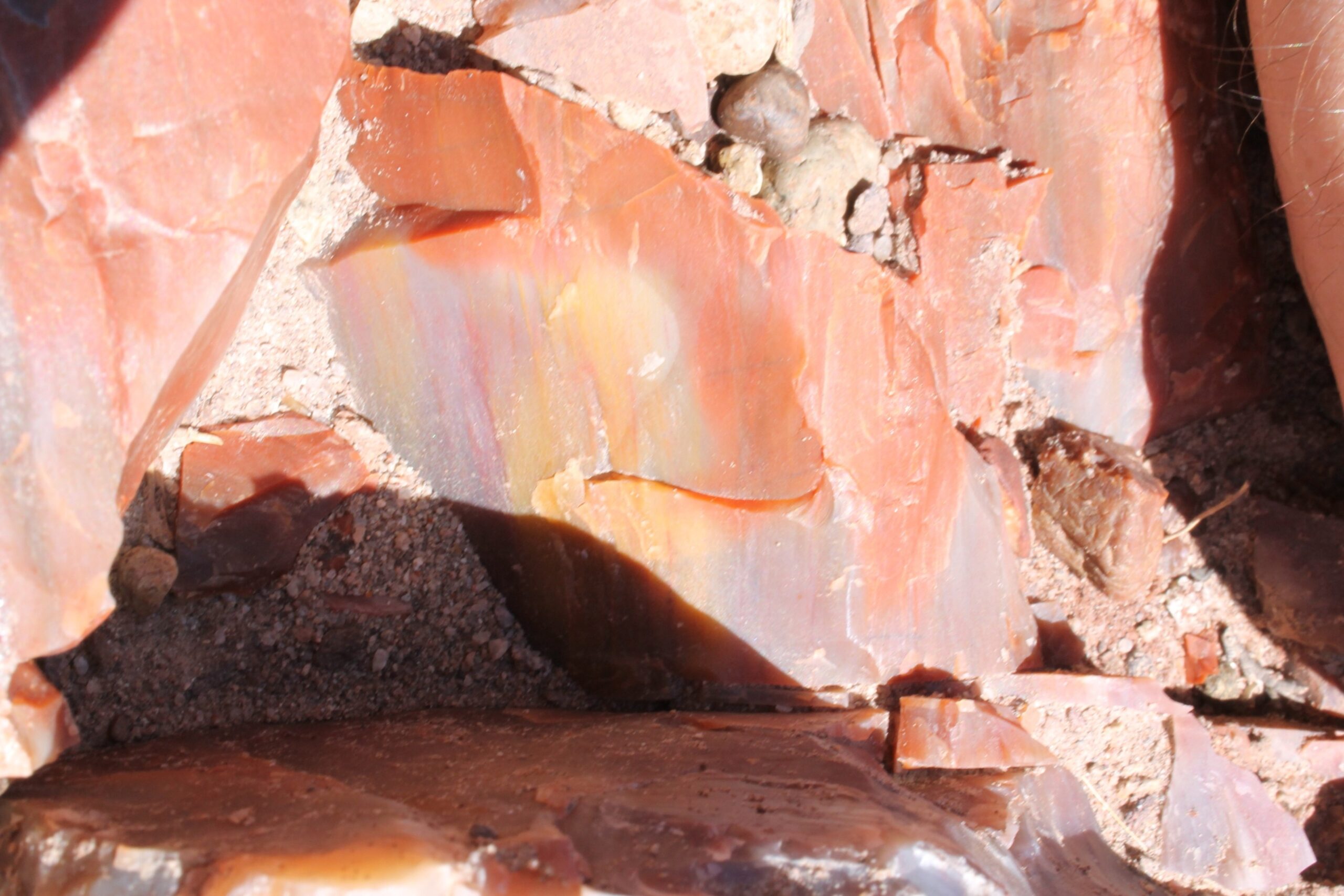
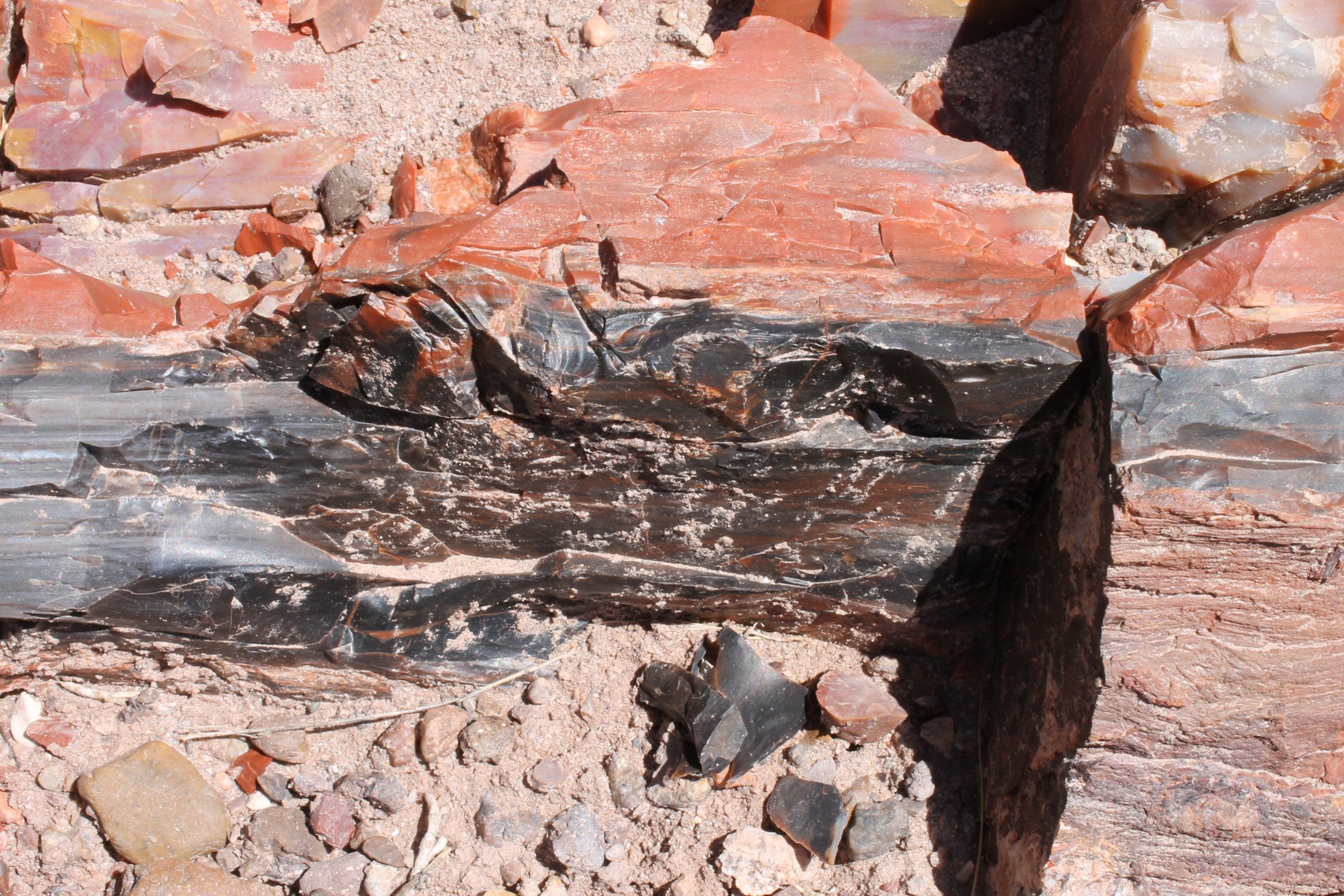
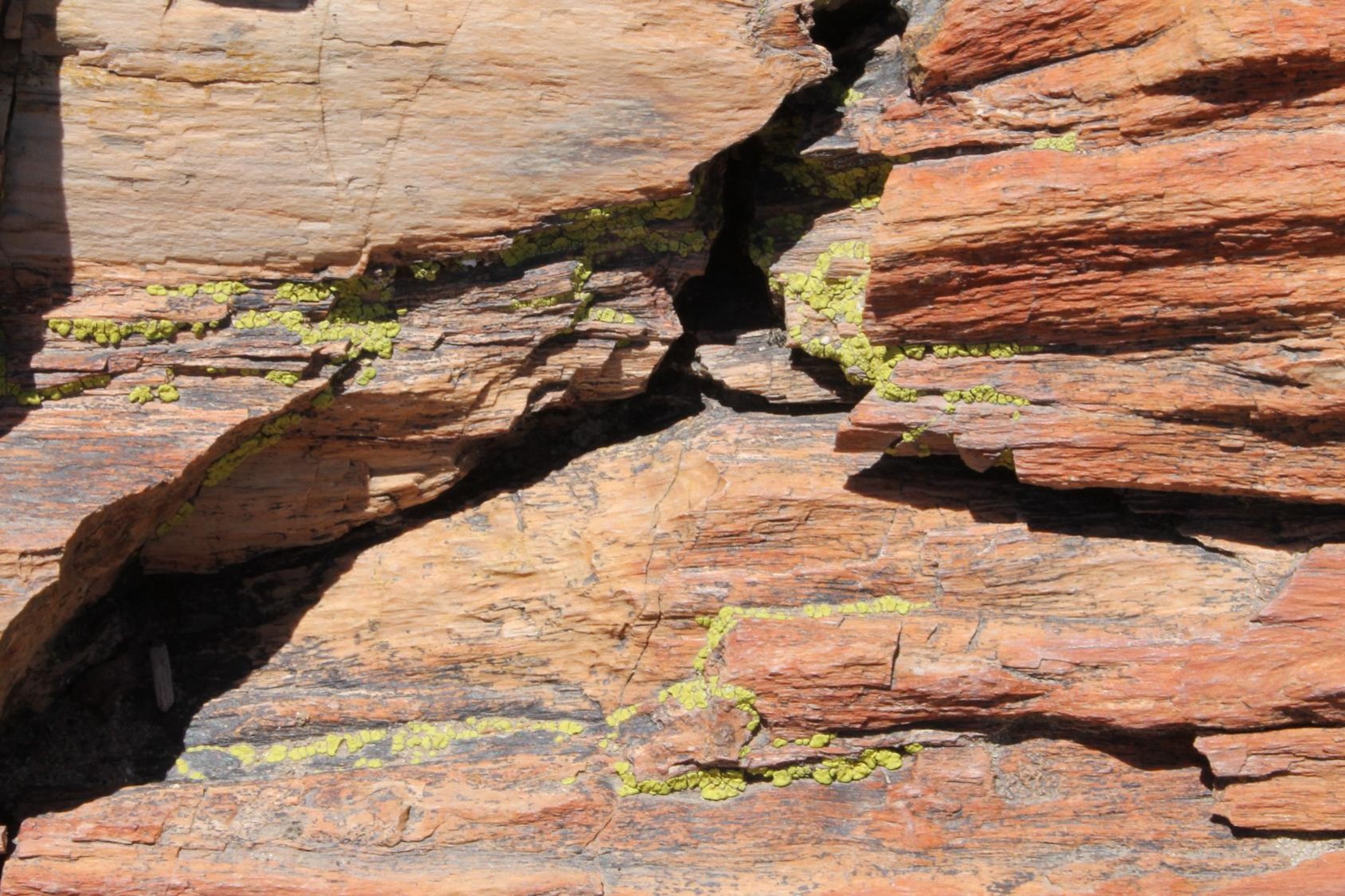
Closeup of petrified wood. Colors come from minerals, primarily iron, in the fossil that replaced the wood as it decomposed slowly. About 260 million years old. Petrified Forest National Park, Arizona.
Closeup of petrified wood. Colors come from minerals, primarily iron, in the fossil that replaced the wood as it decomposed slowly. About 260 million years old. Tangential section shows the original wood grain. Petrified Forest National Park, Arizona.
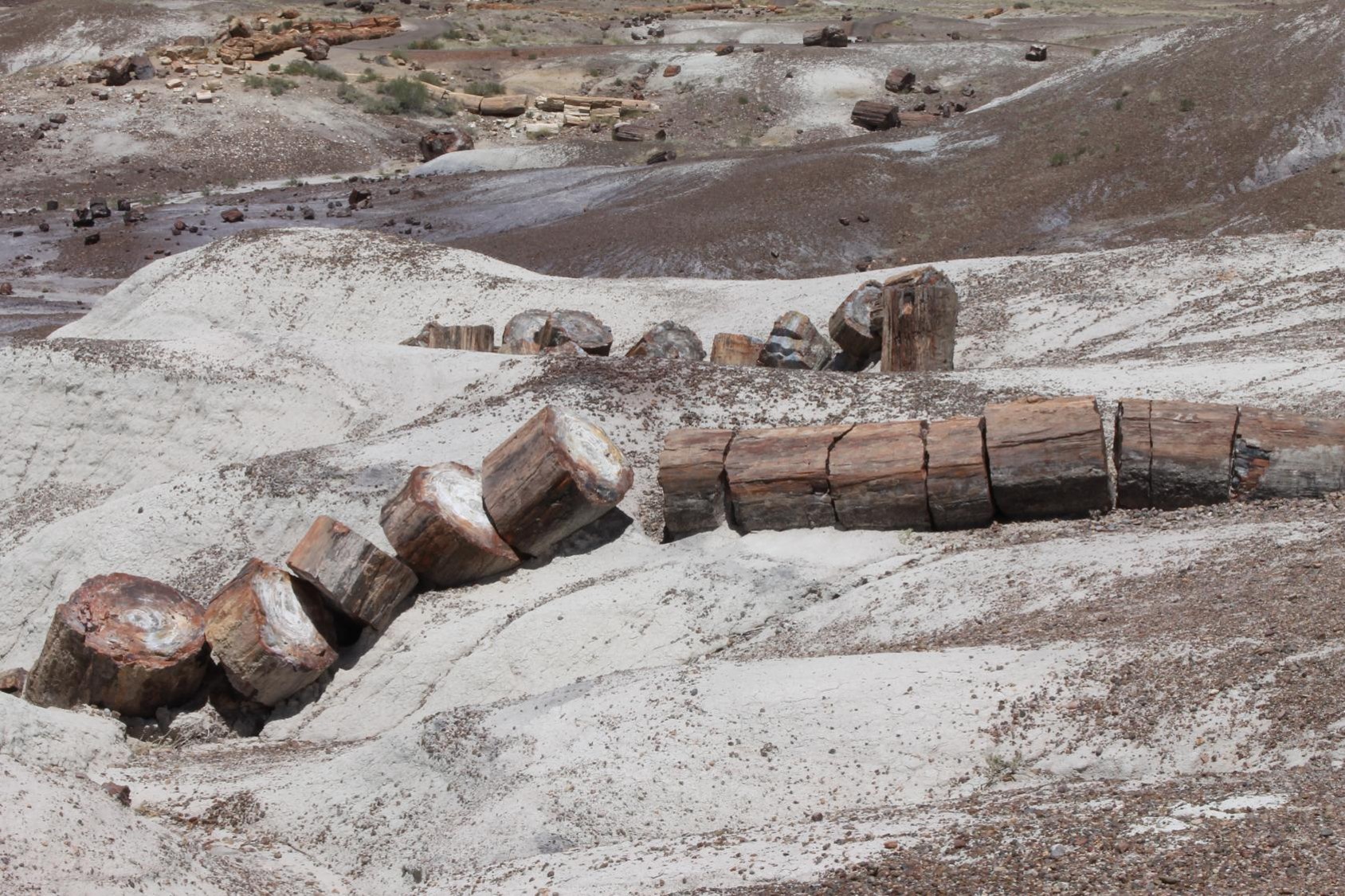
An entire petrified log, about 260 million years old. Petrified Forest National Park, Arizona.
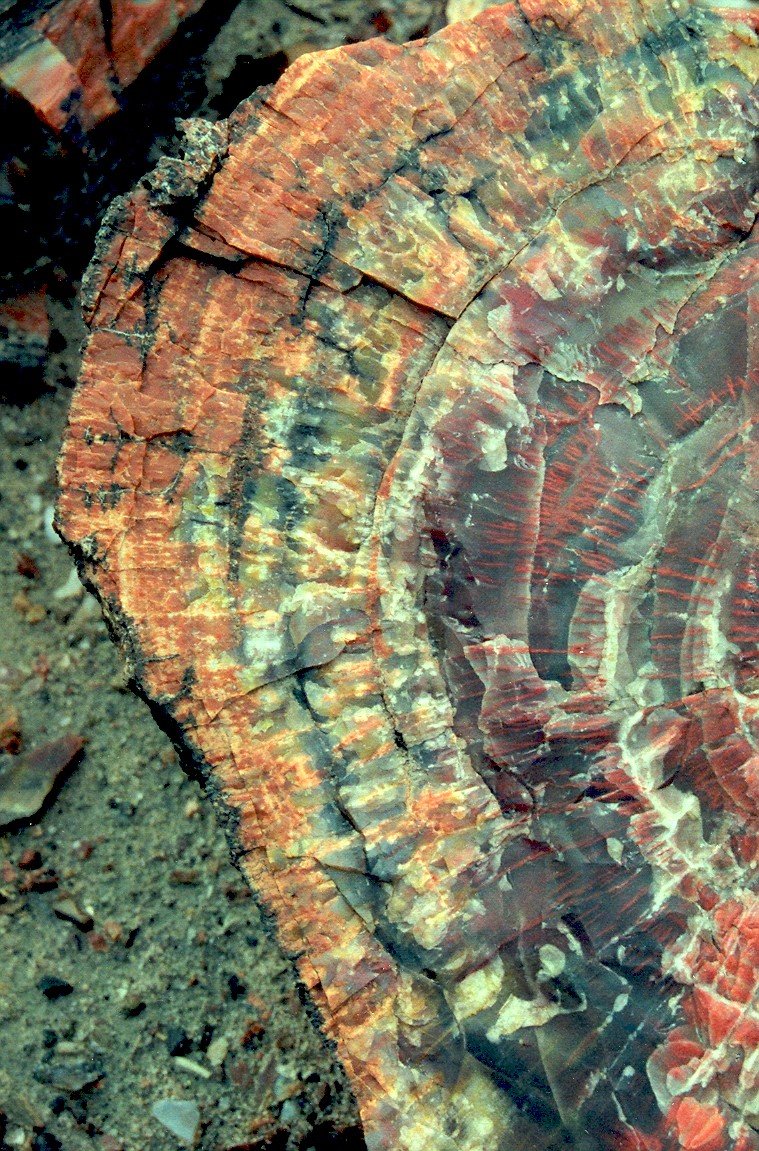
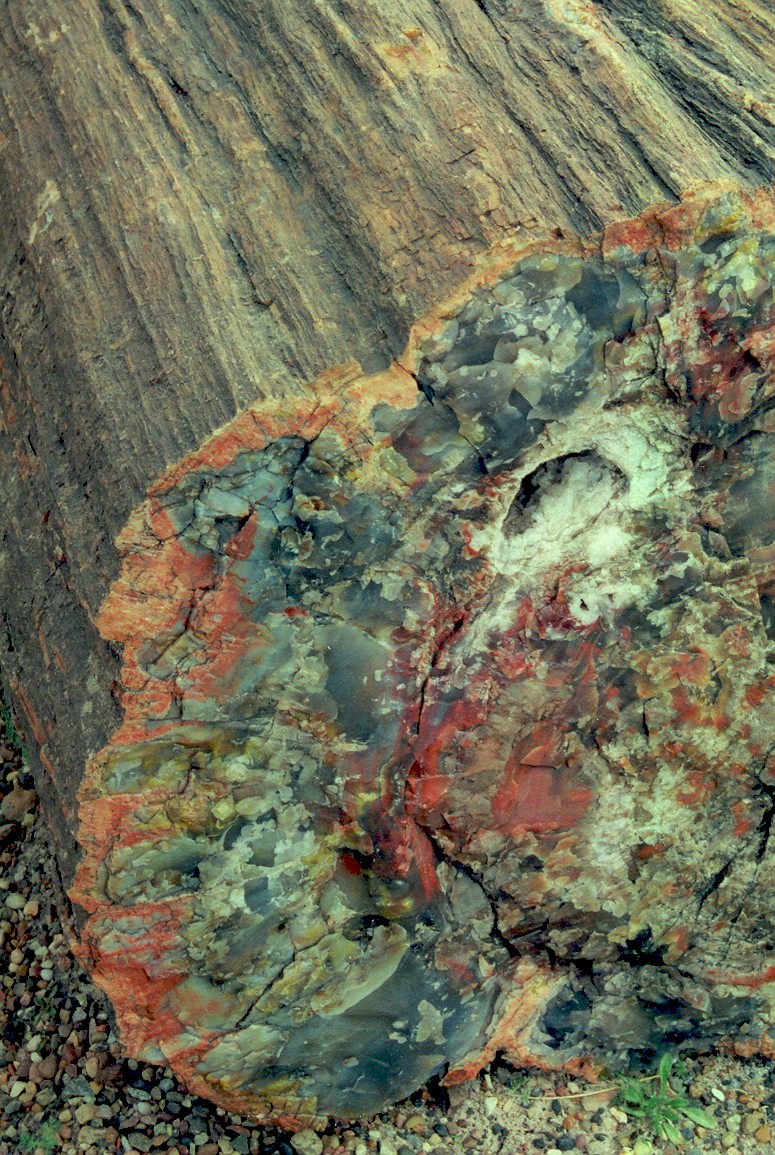
Petrified stump, about 260 million years old. Colors come from minerals, primarily iron, that diffused into the wood as it slowly decomposed. In this cross-section, wood layers can be seen, as well as bright red xylem rays. Petrified Forest National Park, Arizona.
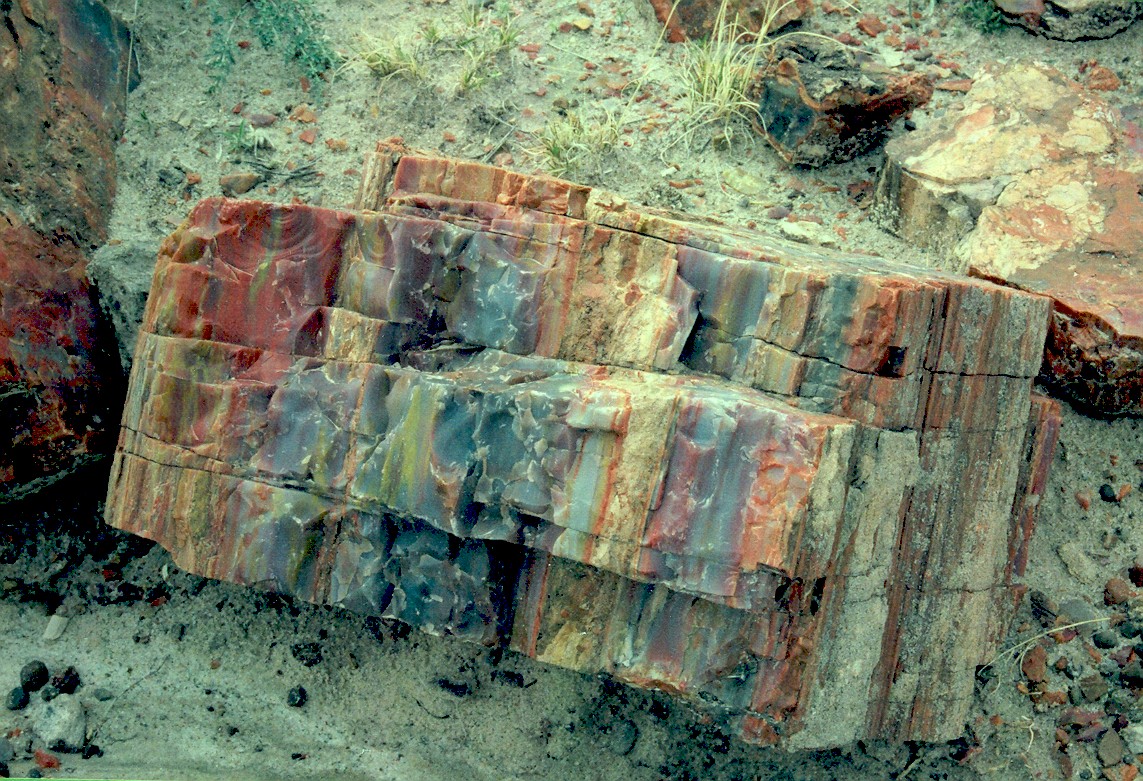
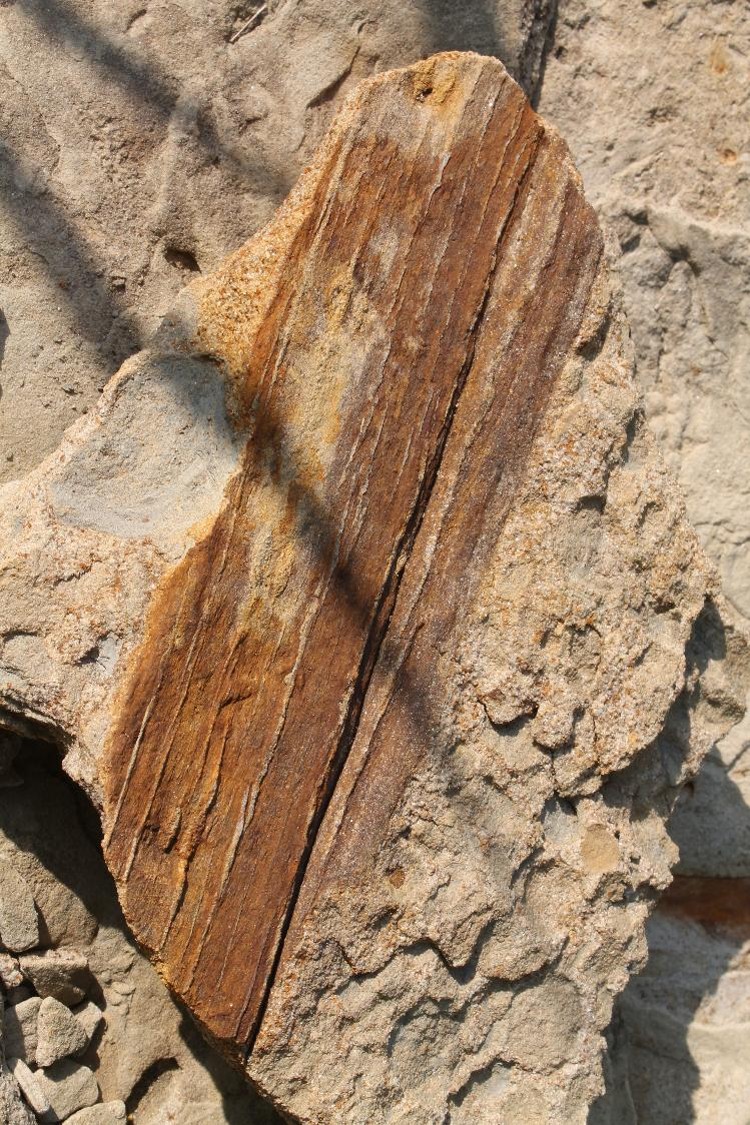
Petrified wood about 260 million years old. In this longitudinal section, the vertical wood grain is visible. Colors come from minerals, primarily iron, that diffused in as the wood slowly decomposed. Petrified Forest National Park, Arizona.
Petrified stump, about 260 million years old. Colors come from minerals, primarily iron, that diffused into the wood as it slowly decomposed. This specimen shows both the longitudinal (wood grain) and cross section. Petrified Forest National Park, Arizona.
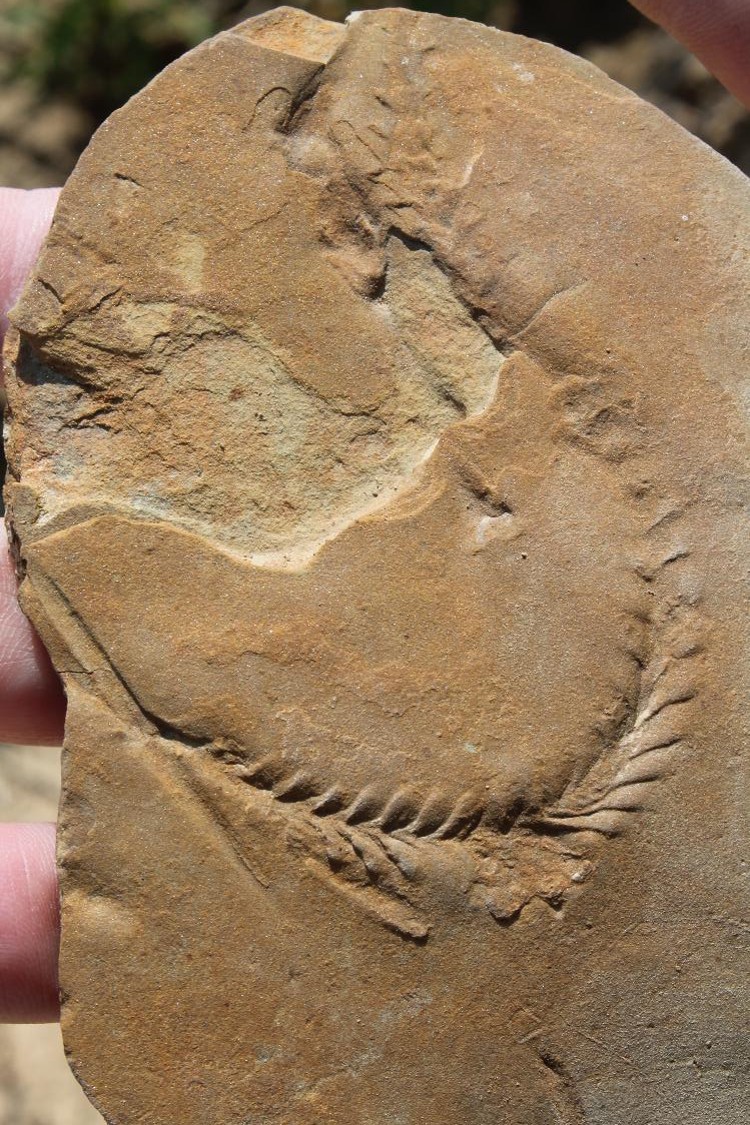
Fossilized worm track in a sedimentary rock in southern Oklahoma.
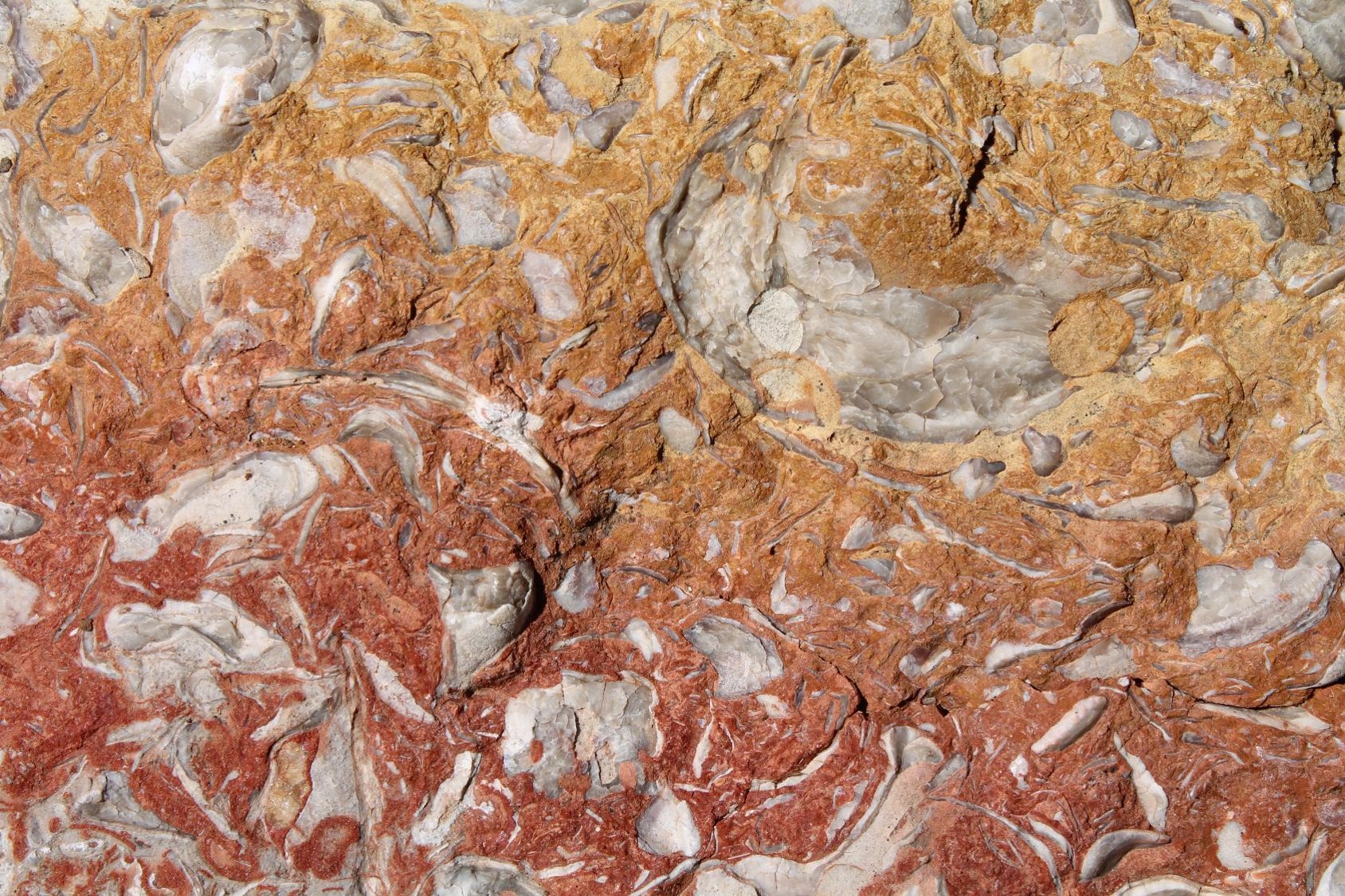
Fossil of a bed of Texigryphaea mollusks, about 110 million years old, from south central Oklahoma. Colors are from minerals, primarily iron.
Fossil impression of wood from a lepidodendrid tree from a Carboniferous forest about 300 million years old in Oklahoma. Coal seams nearby.
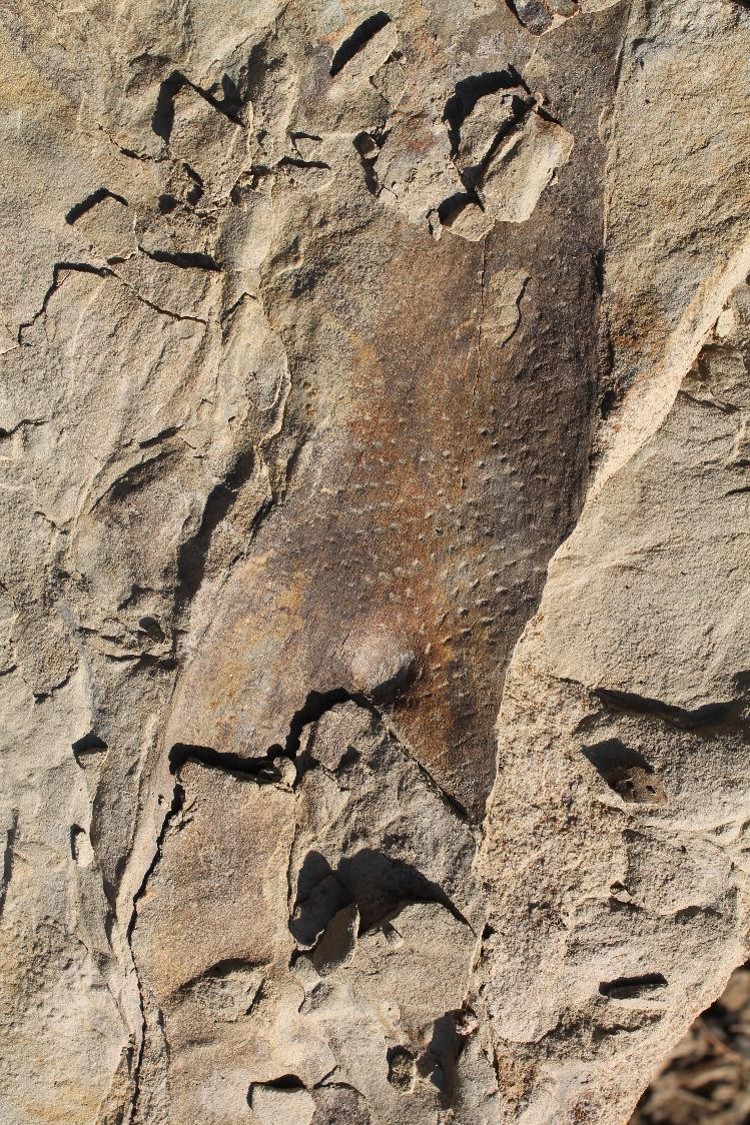
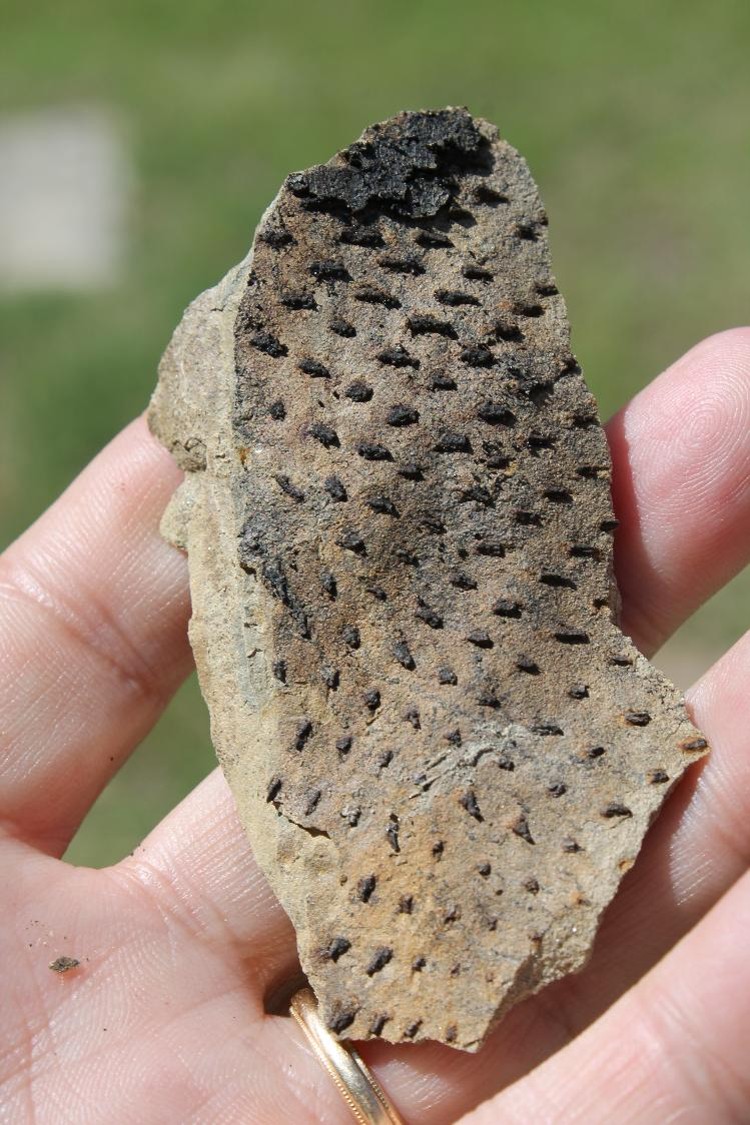
Fossil impression of bark from a lepidodendrid tree from a Carboniferous forest about 300 million years old in Oklahoma. Lepidodendrids had scaly bark. Coal seams nearby.
Fossil impression of bark from a lepidodendrid tree from a Carboniferous forest about 300 million years old in Oklahoma. Lepidodendrids had scaly bark. Coal seams nearby. This is a reverse fossil in which minerals accumulated in the holes left by scales in the bark.
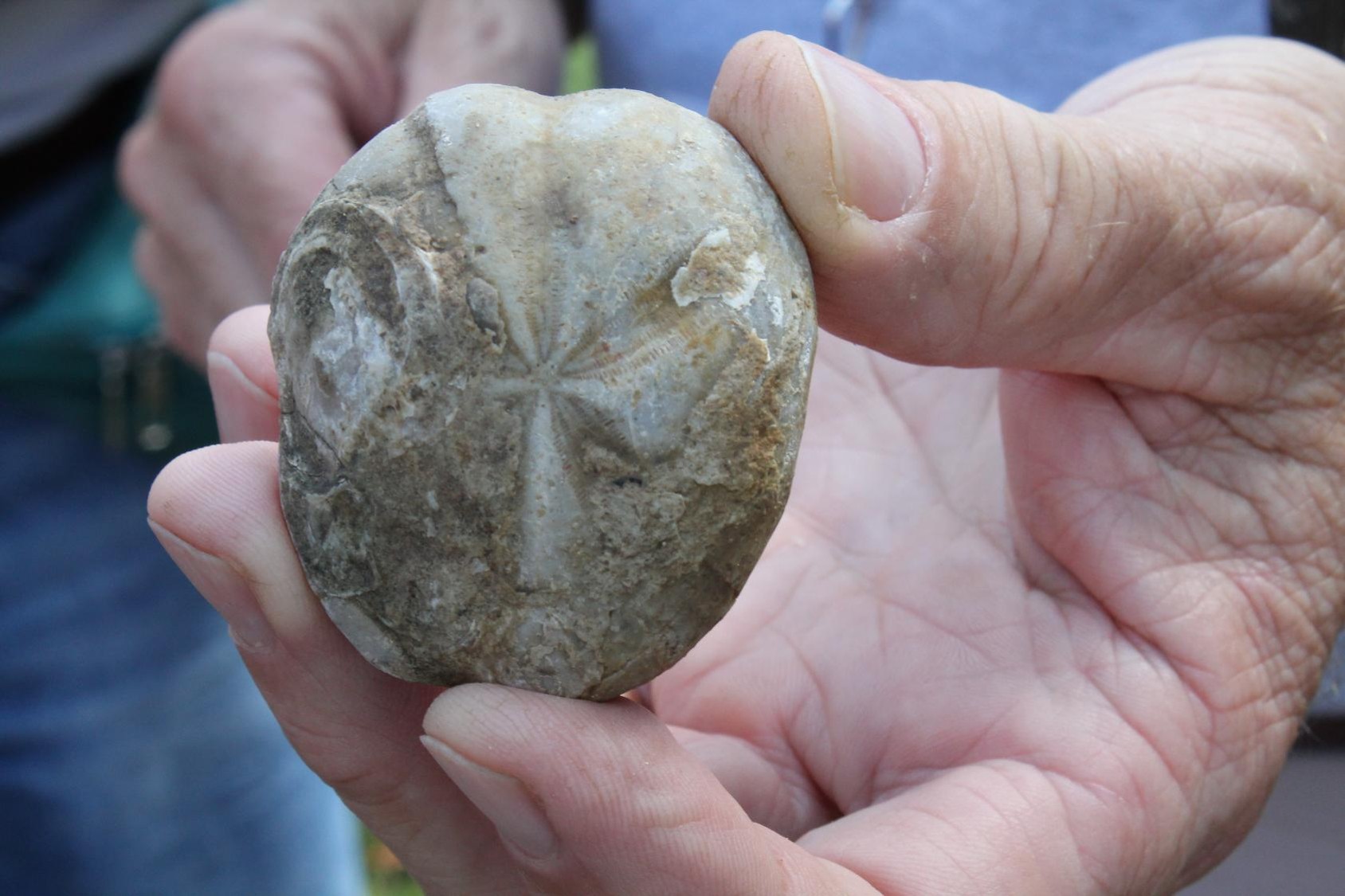
Echinoderm fossil, about 110 million years old, from a creek (limestone formation) in south central Oklahoma.
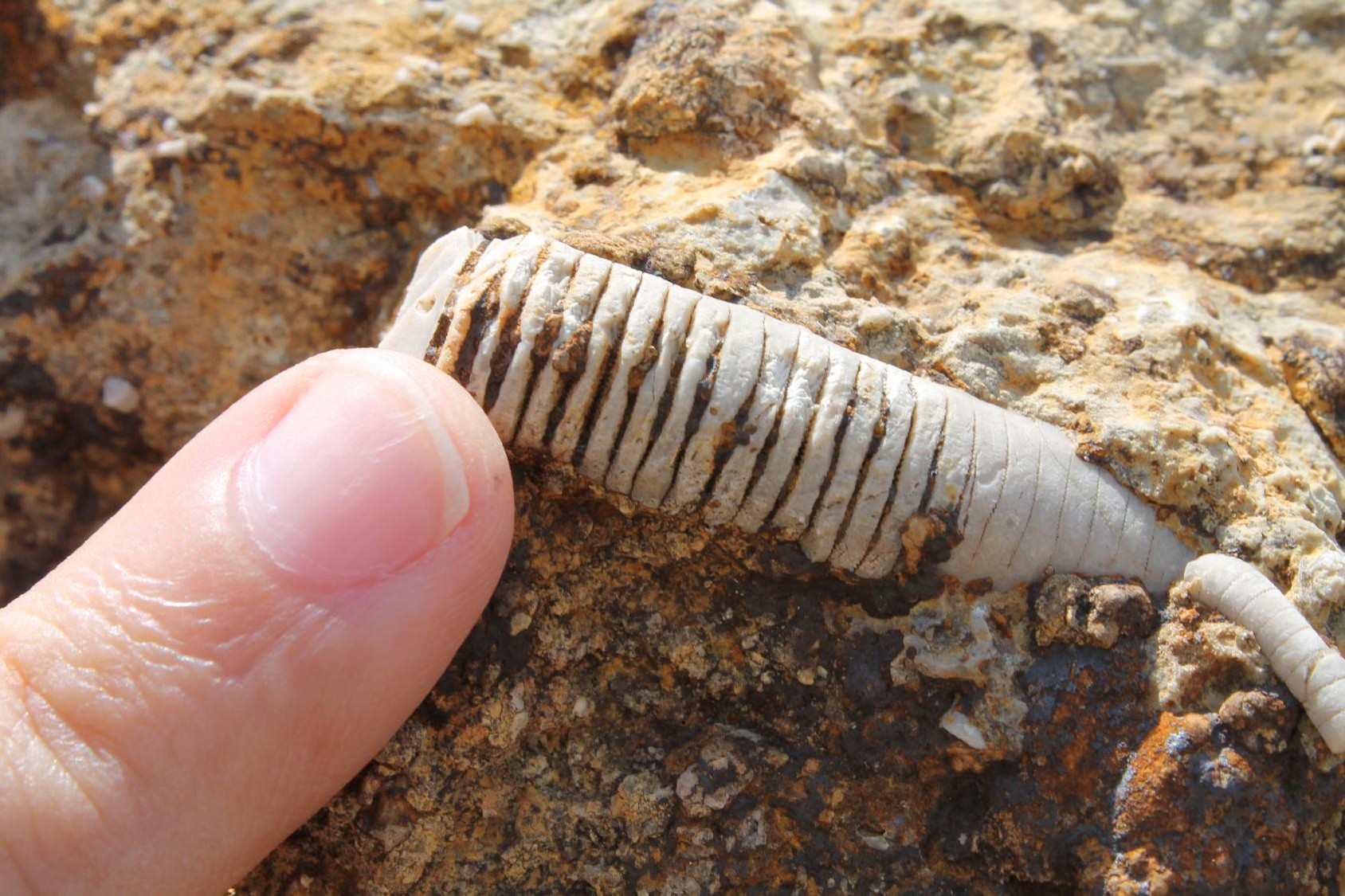
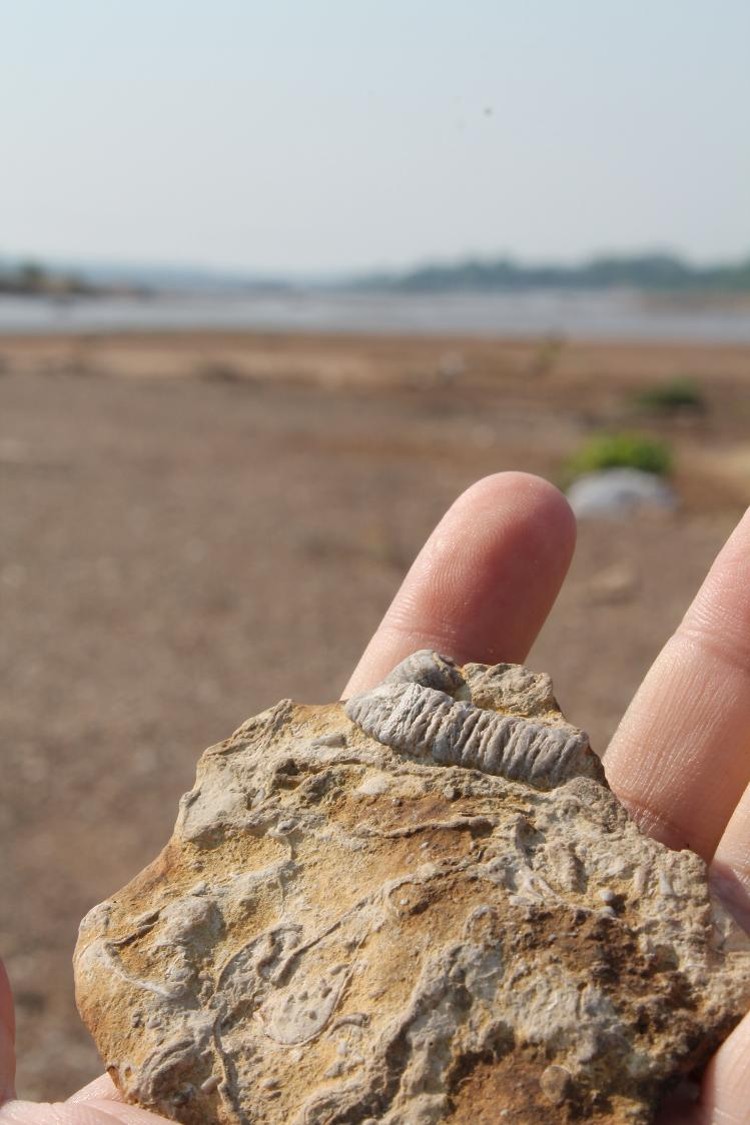
Crinoid stalk fossil, about 110 million years old, from a creek (limestone formation) in south central Oklahoma.
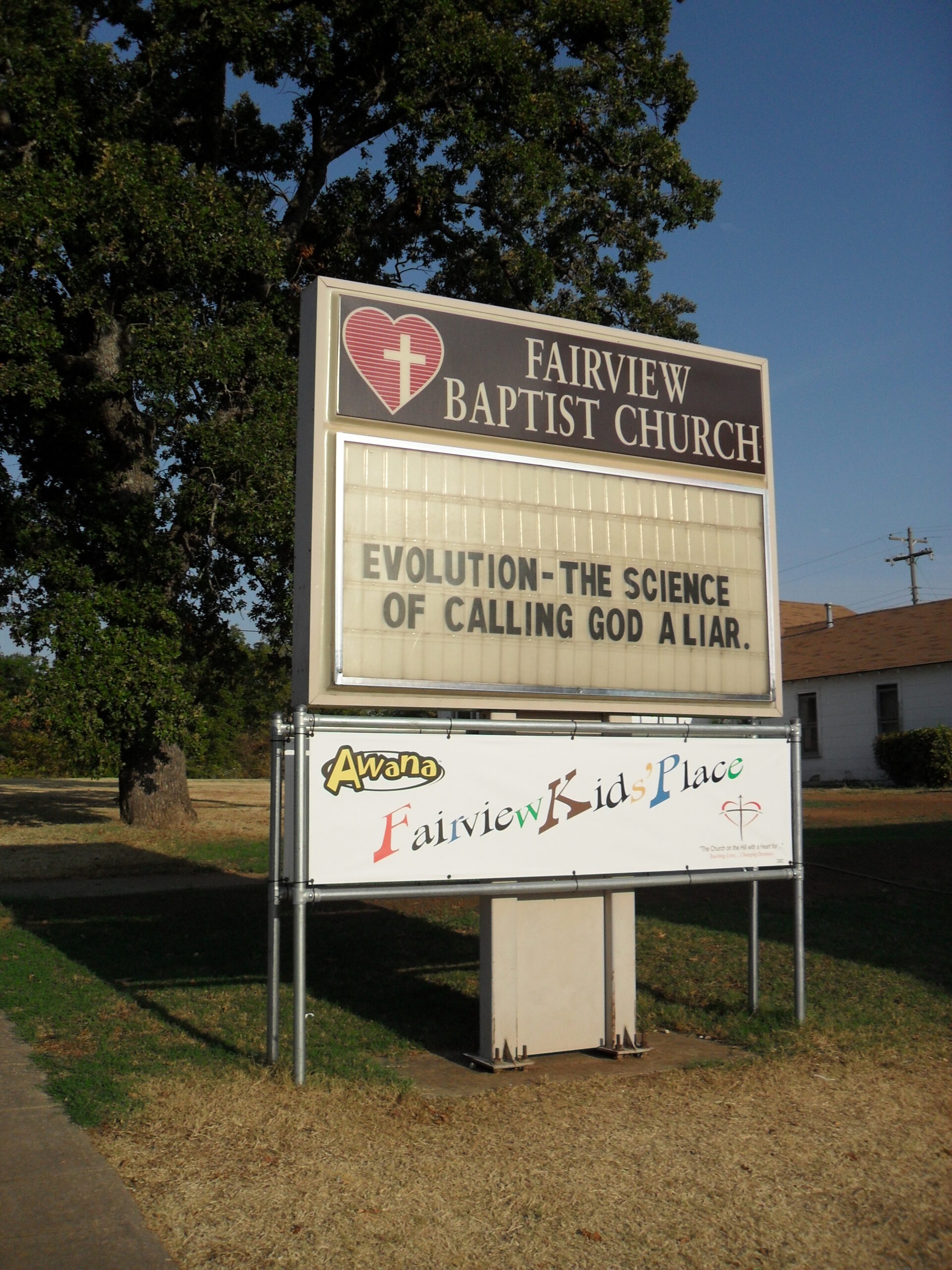
Church marquee in Durant, Oklahoma, a couple of blocks away from the university where I taught evolution.
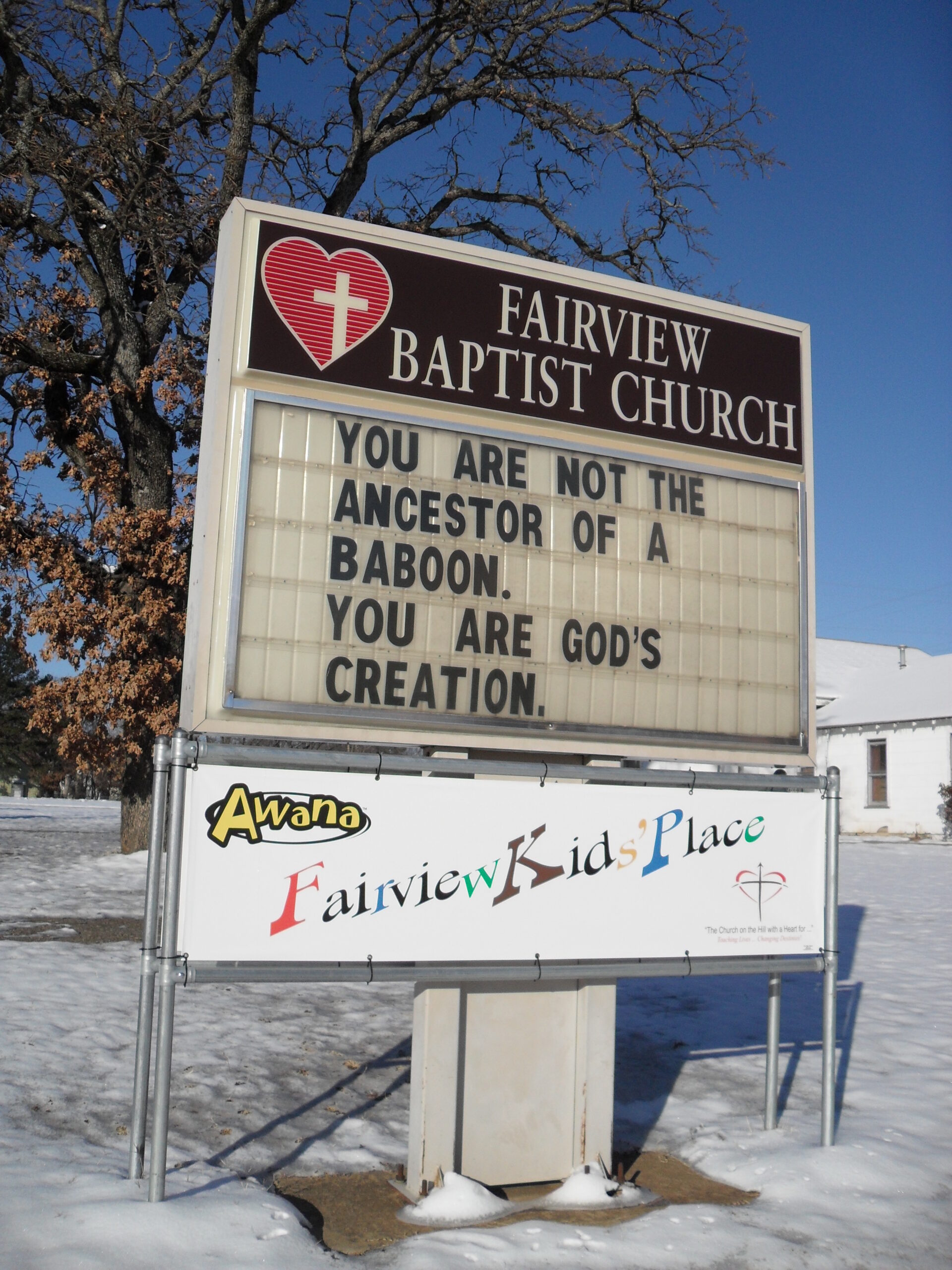
Church marquee in Durant, Oklahoma, a couple of blocks away from the university where I taught evolution. They got ancestor and descendant mixed up.
Crinoid stalk fossil, about 110 million years old, from a creek (limestone formation) in south central Oklahoma.
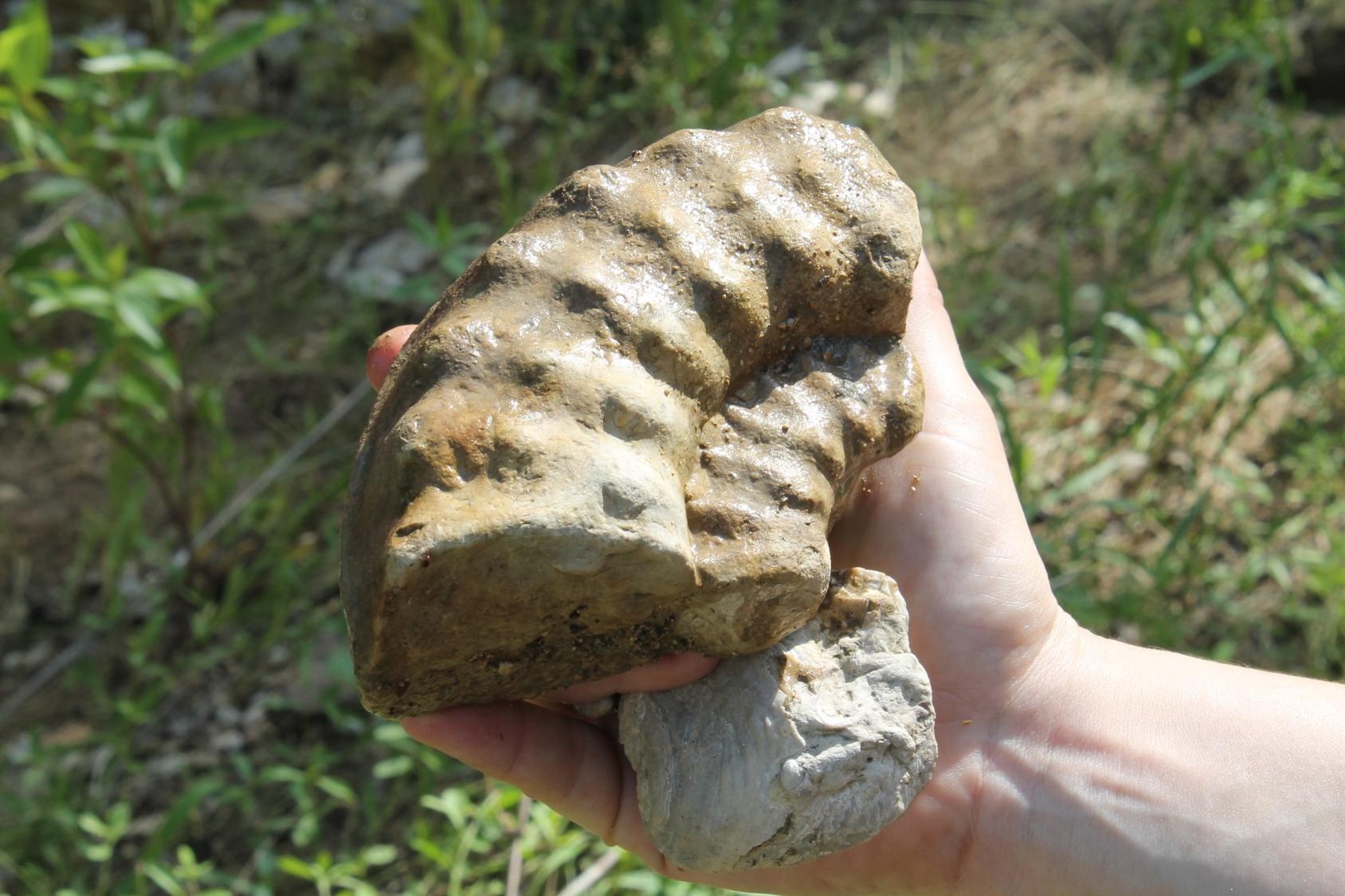
Ammonoid fossil, about 110 million years old, from a creek (limestone formation) in south central Oklahoma.
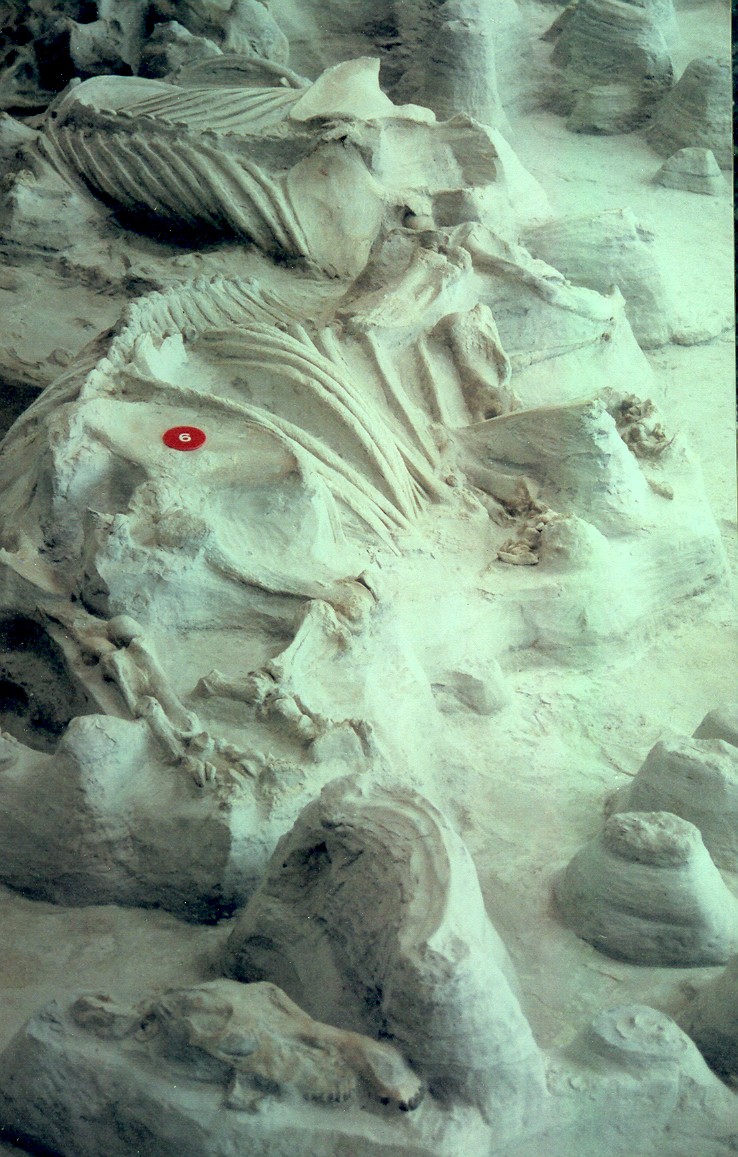
Eleven-million-year-old rhinoceros bones embedded in volcanic ash. They died at a watering hole in what is now Nebraska. Ashfall Beds State Historical Park is unusual in having a dense concentration of mammal fossils that are still articulated (the bones are still in place). Dinosaur fossils are not found here; they had already long been extinct.
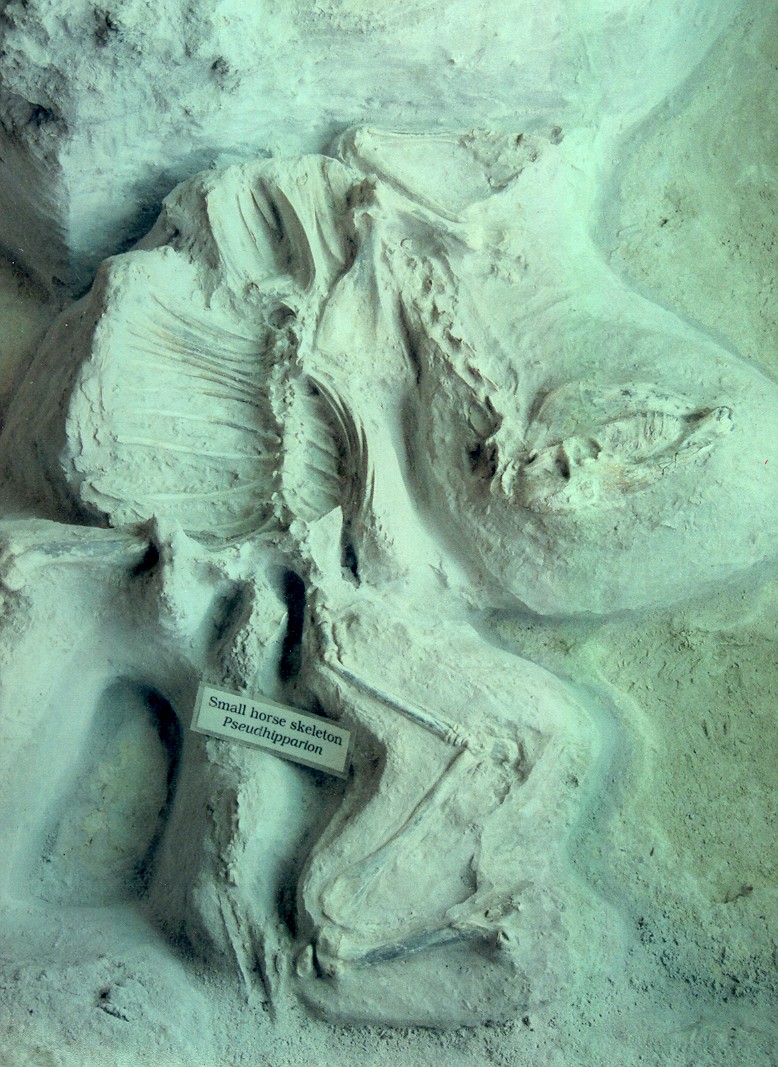
Eleven-million-year-old horse bones embedded in volcanic ash. They died at a watering hole in what is now Nebraska. Ashfall Beds State Historical Park is unusual in having a dense concentration of mammal fossils that are still articulated (the bones are still in place). Dinosaur fossils are not found here; they had already long been extinct. The primitive horses still had three toes.
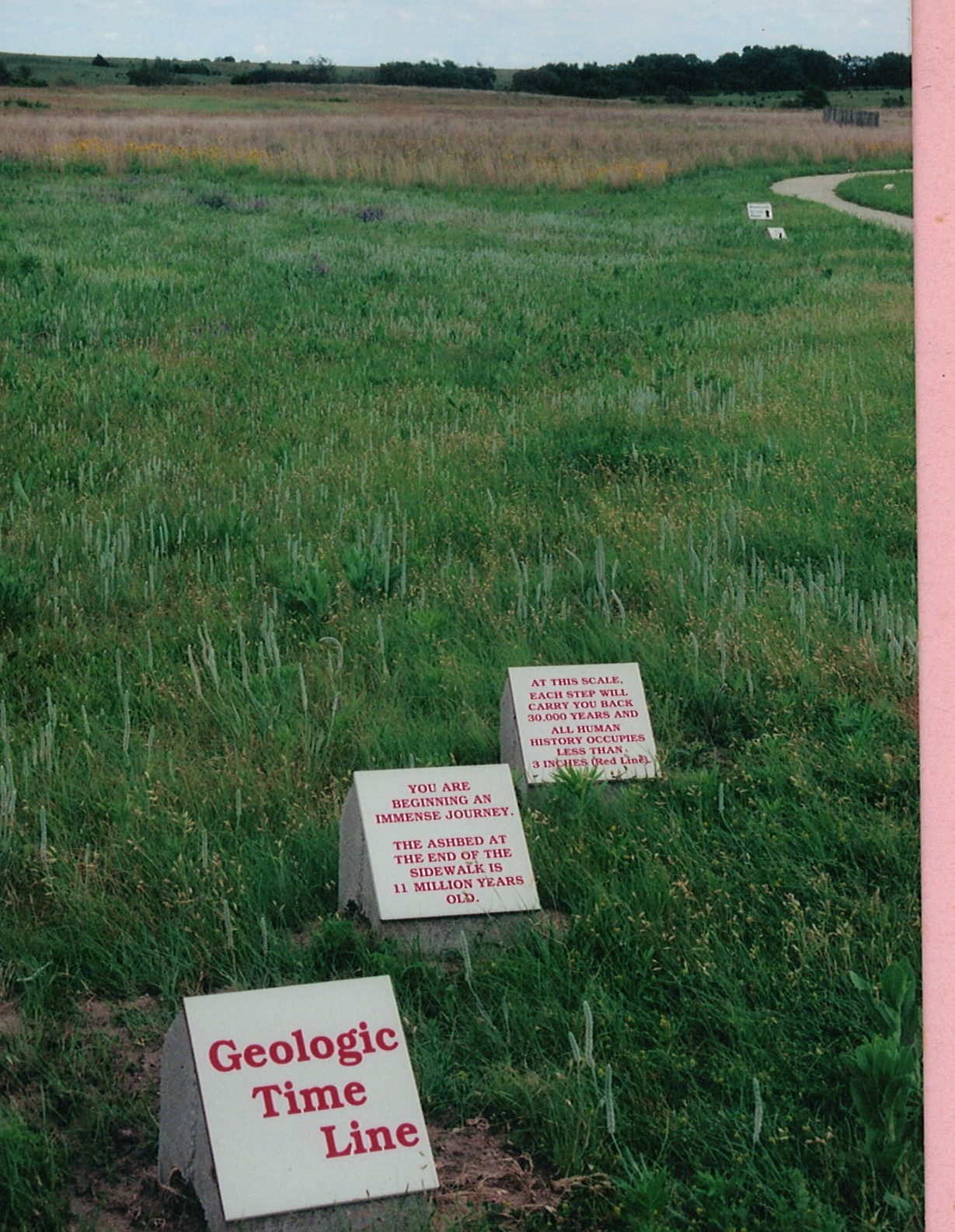
Walkable geologic Time Line at Ashfall Beds State Historical Park in Nebraska.
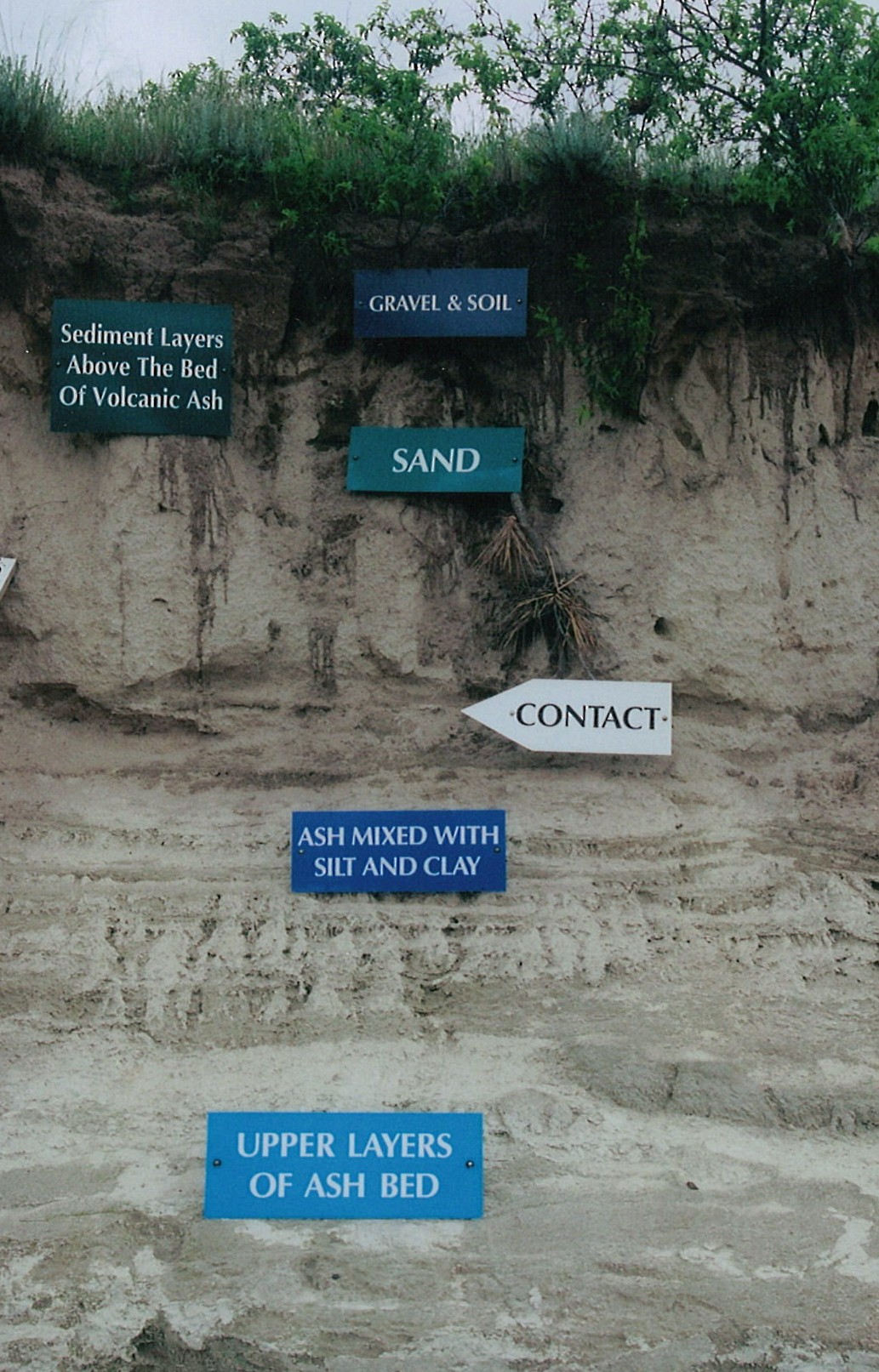
Geological deposit layers at Ashfall Beds State Historical Park in Nebraska.
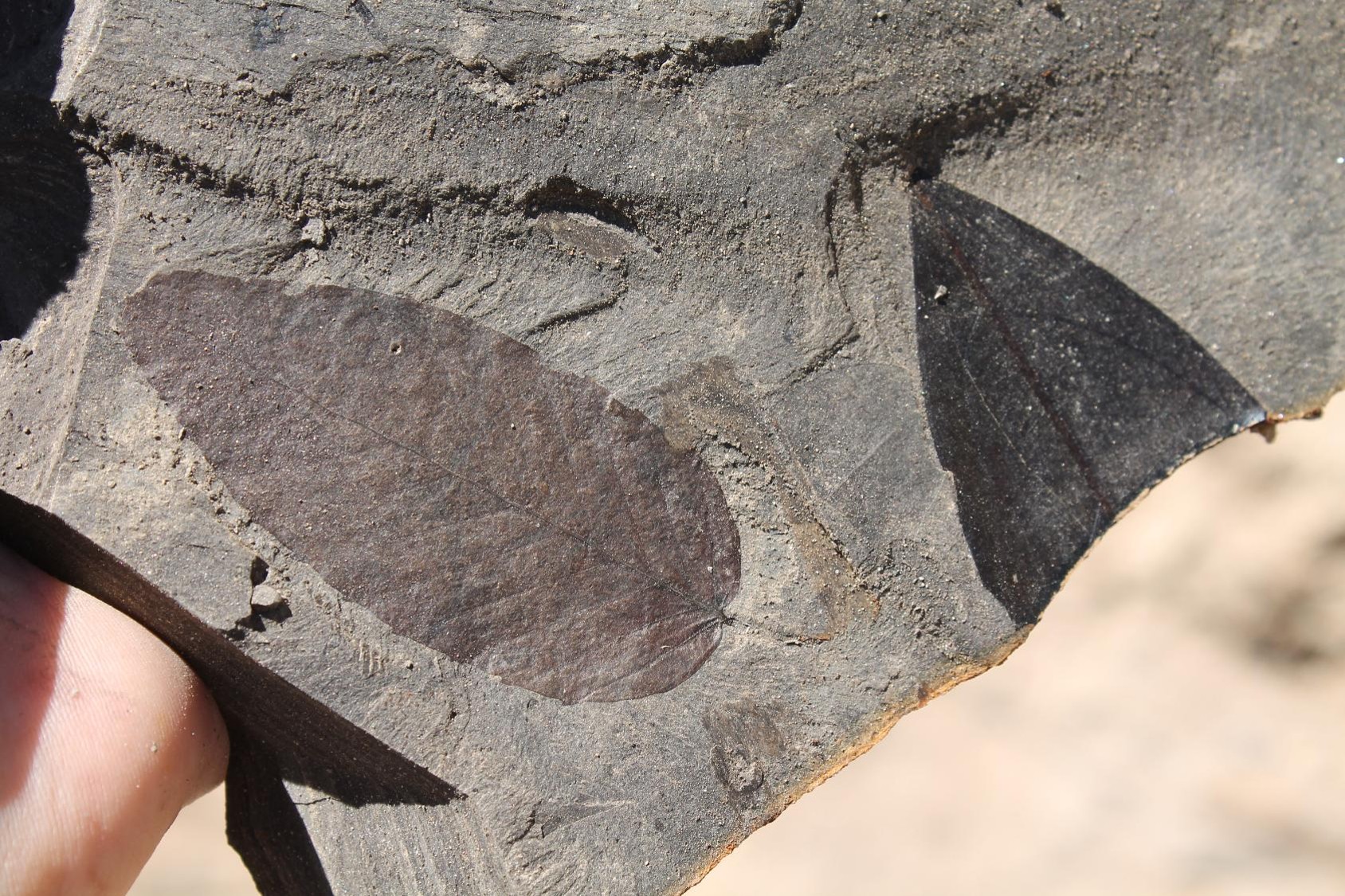
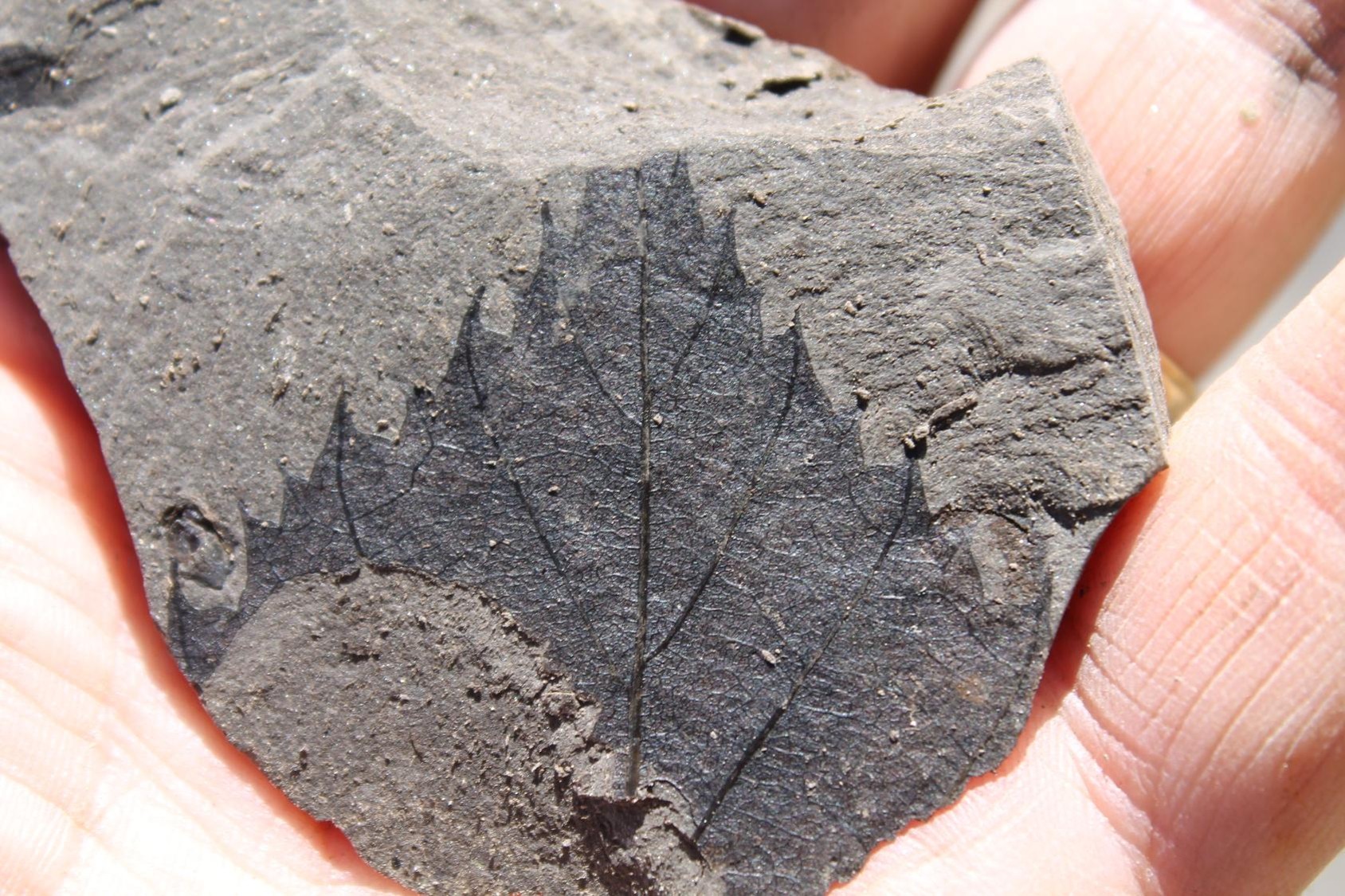
Miocene era leaf specimens (15 million years old) from Fossil Bowl, a deposit south of Coeur-D’Alene, Idaho. These are actual leaves, not fossilized, and some still have the fall colors from the autumn day they fell into the sediments. The leaves quickly turn black (into carbon) upon exposure to the air. DNA (probably bacterial, possibly from chloroplasts) has been extracted from some of the specimens before they carbonized.
Miocene era leaf specimen (15 million years old) from Fossil Bowl, a deposit south of Coeur-D’Alene, Idaho. These are actual leaves, not fossilized, and some still have the fall colors from the autumn day they fell into the sediments. The leaves quickly turn black (into carbon) upon exposure to the air. DNA (probably bacterial, possibly from chloroplasts) has been extracted from some of the specimens before they carbonized.
Miocene era leaf specimens (15 million years old) from Fossil Bowl, a deposit south of Coeur-D’Alene, Idaho. Possibly a sweetgum or mulberry. These are actual leaves, not fossilized, and some still have the fall colors from the autumn day they fell into the sediments. The leaves quickly turn black (into carbon) upon exposure to the air. DNA (probably bacterial, possibly from chloroplasts) has been extracted from some of the specimens before they carbonized.
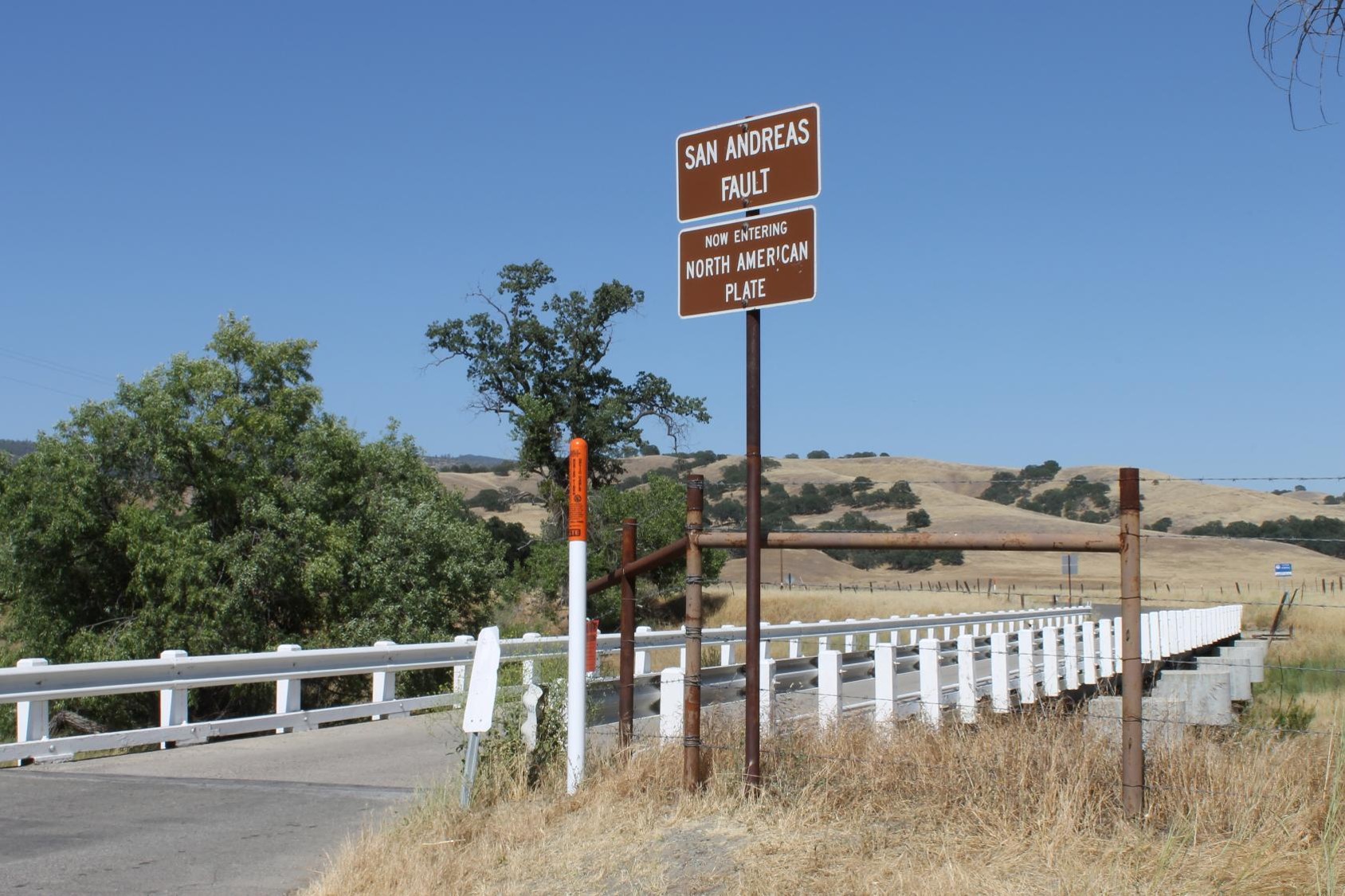
San Andreas fault near Parkfield, California. Water, soil, and aquatic plants have filled the fault. The Pacific Plate slips against the North American plate at this location.
Bridge over the San Andreas fault near Parkfield, California. The Pacific Plate slips against the North American plate at this location.
The Great Unconformity in western North America. Precambrian sedimentary layers formed in the ocean, hardened into rock on land, then were tiled sixty degrees. Once again submerged in the sea, new horizontal layers accumulated (still Precambrian) on the top of the tilted layers. Over a billion years of Earth history is missing at the point of contact in this unconformity. Here seen in the Black Hills National Forest of South Dakota.
Plant Growth and Reprodution
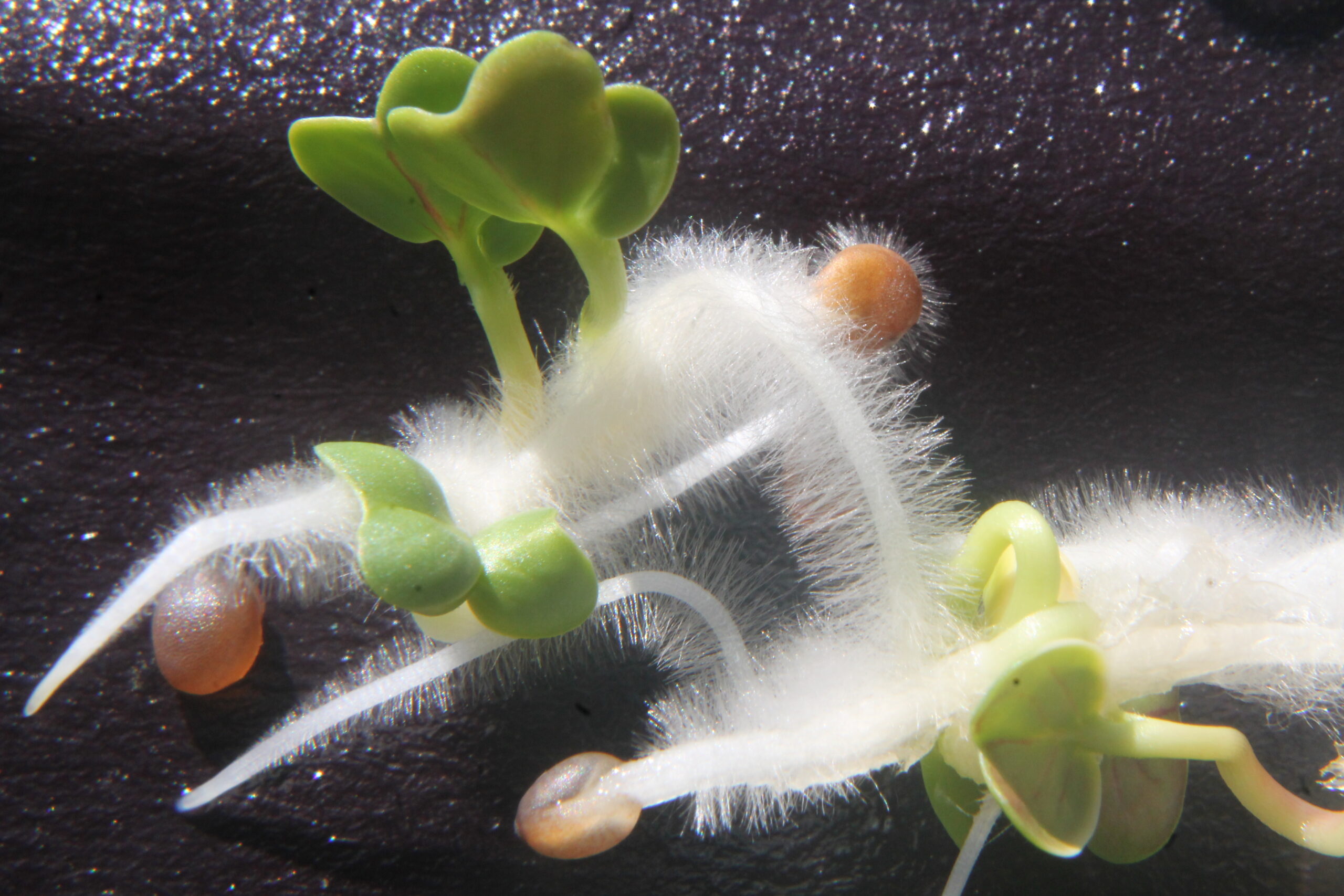
Radish seedlings produce abundant root hairs. The hairs, produced just behind the growing tip, help the roots to absorb water and minerals, and also hold the seedling to the soil as the root grows. Photo by Stan Rice.
Populations of plants contain genetic or epigenetic variation. Often some of the flowers will have the normal color, while others are white, because of a mutation that blocks pigment production. This is Sabatia campestris in southern Oklahoma.
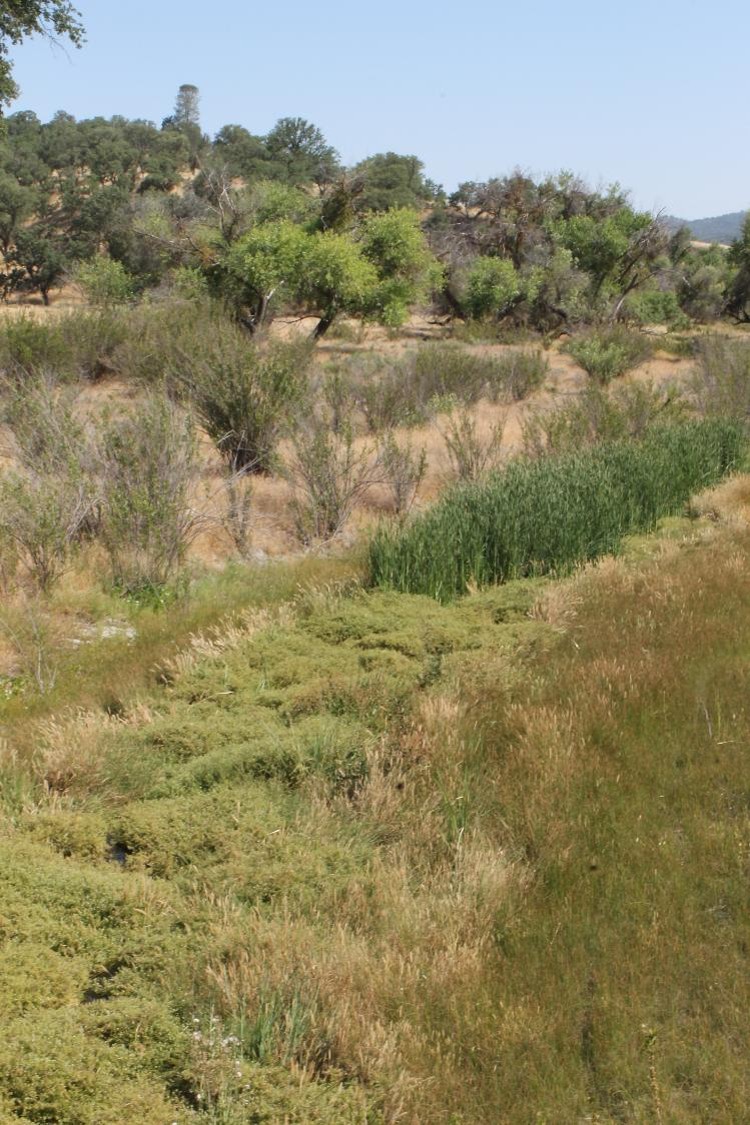
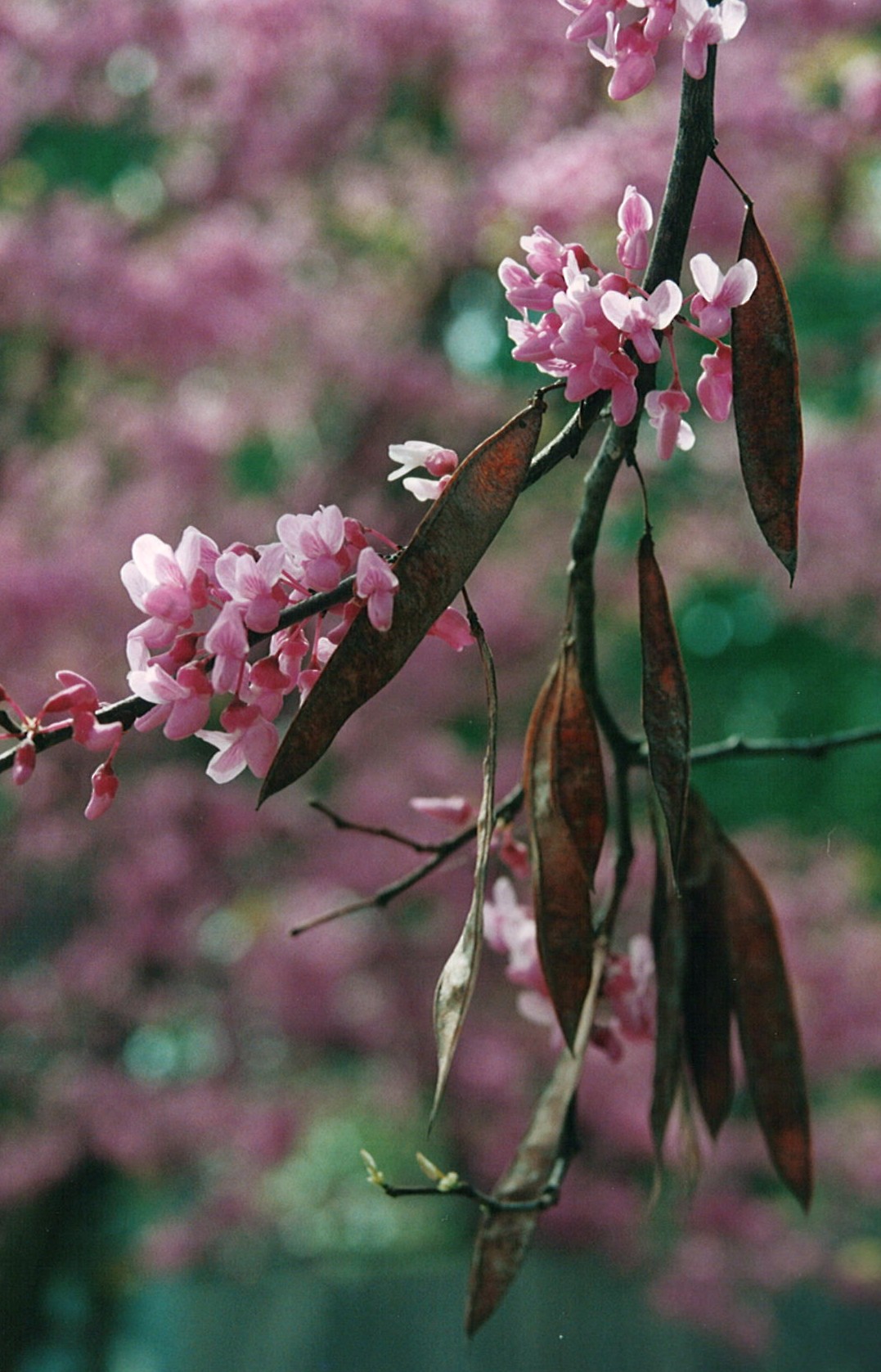
Redbuds (Cercis canadensis) bloom in the spring while the trees still have legume fruits from the previous year.
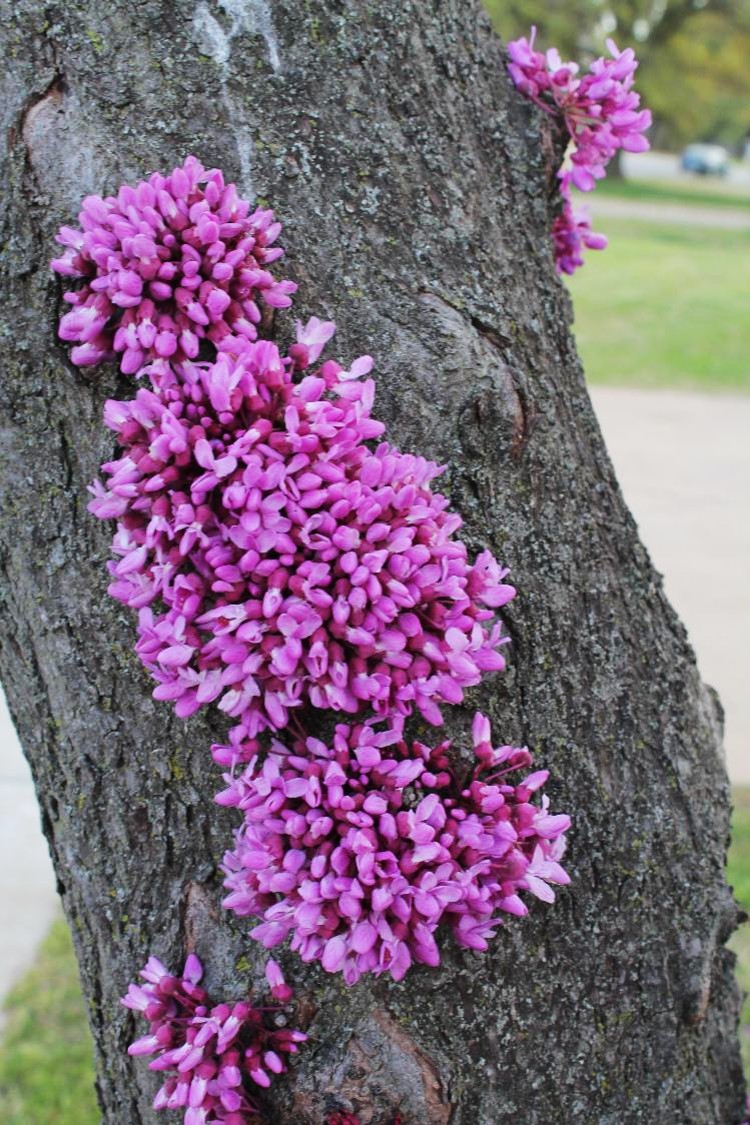
Redbuds (Cercis canadensis, here in eastern Oklahoma) are unusual in producing flowers directly out of the bark, which is called cauliflory.
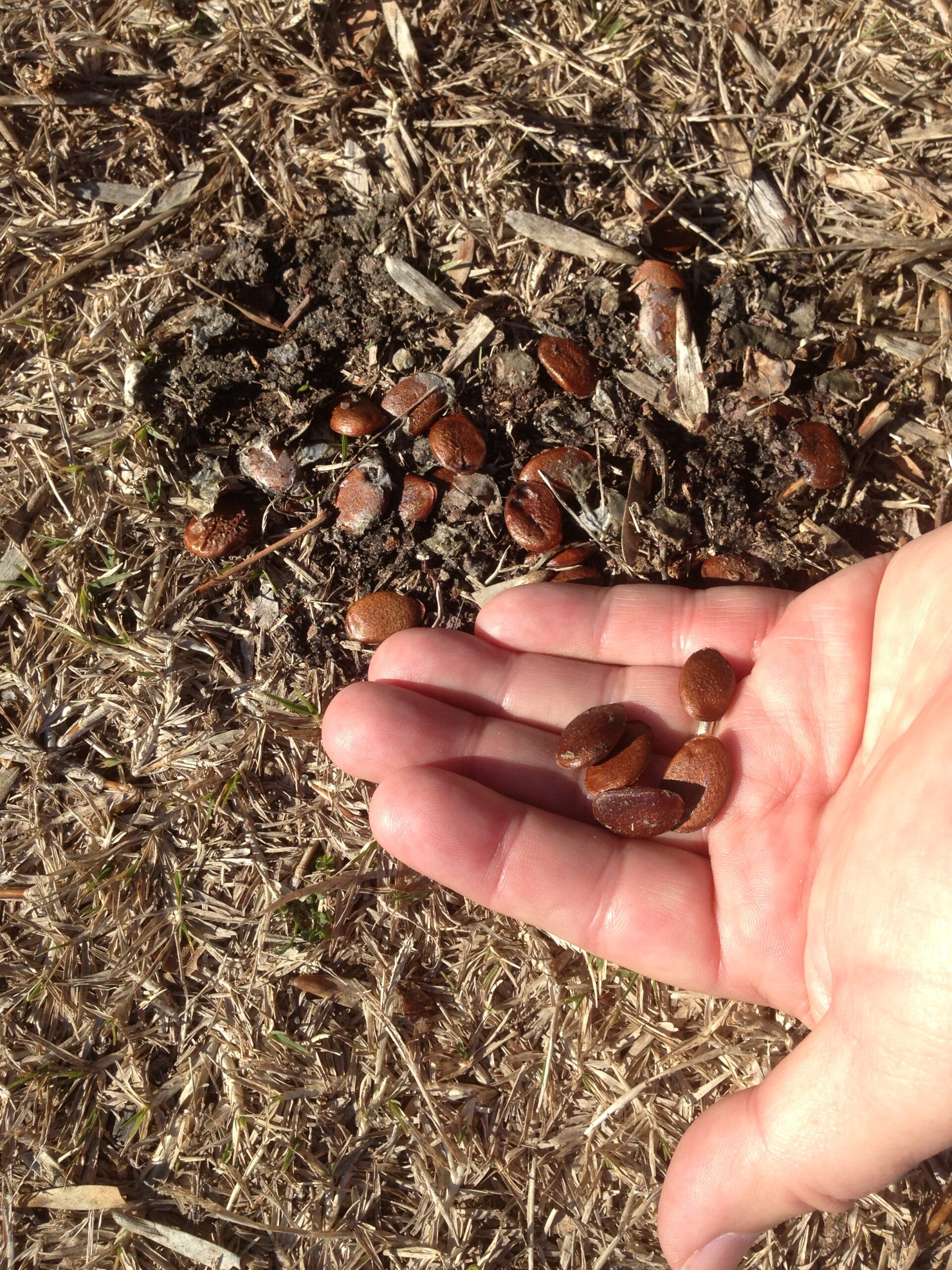
These persimmon seeds (Diospyros virginiana) were consumed by either a raccoon or a coyote and excreted. As shown in a different photo in this collection, the seeds will not grow unless they have been digested by a large mammal, or artificially abraded. This encourages the spread of the seeds to new locations away from the parent plant.
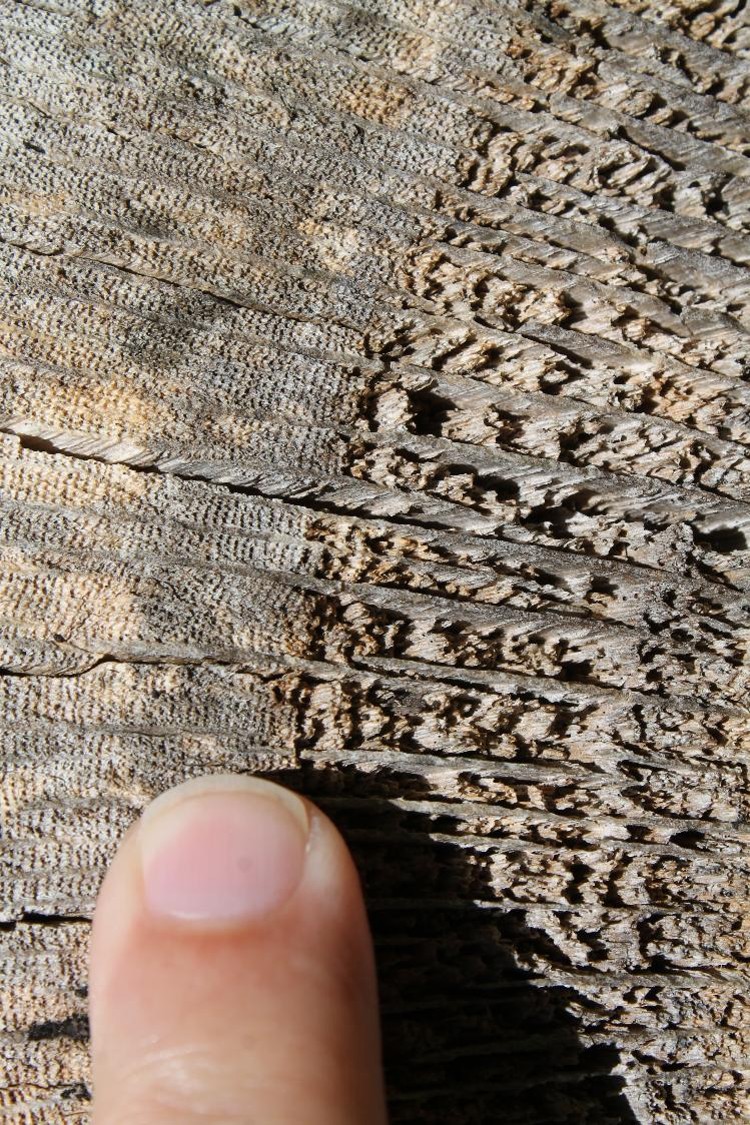
Post oaks (Quercus stellata), here in Oklahoma, grow in hot, dry, poor soils. They grow slowly, as seen in the very thin growth rings of the wood.
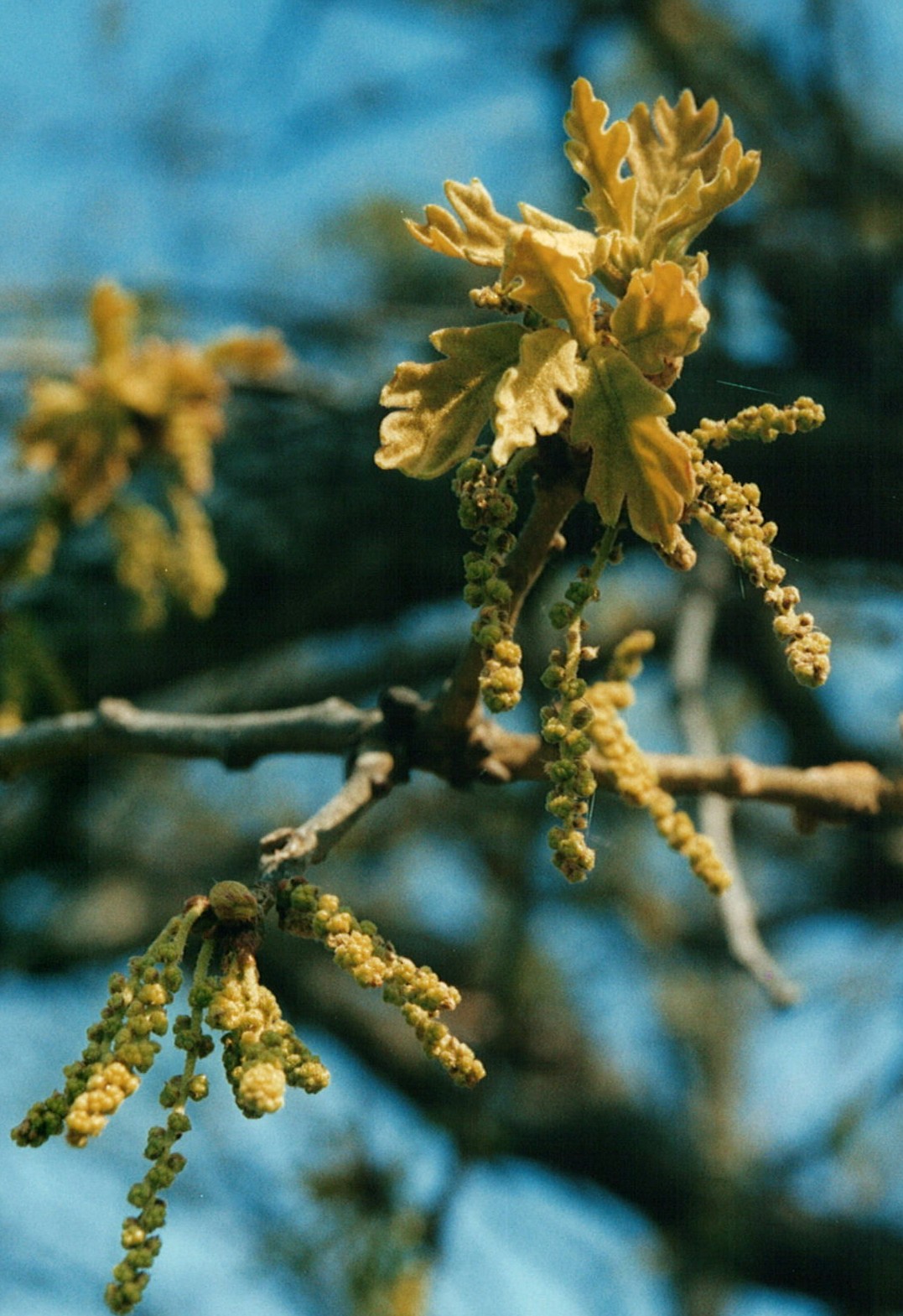
Catkins of male flowers, and newly-expanding leaves, of post oak (Quercus stellata) in Oklahoma.
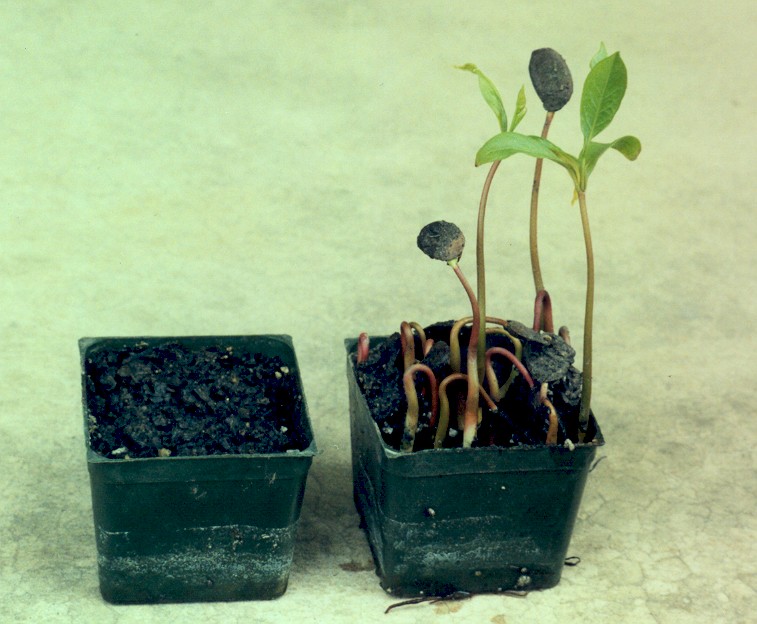
Seeds if persimmon (Diospyros virginiana) have to pass through the digestive tract of a large animal before the hard seed coat is soft enough to allow seed germination. On the left, seeds taken directly from the fruits do not germinate. On the right, digested seeds germinate vigorously.
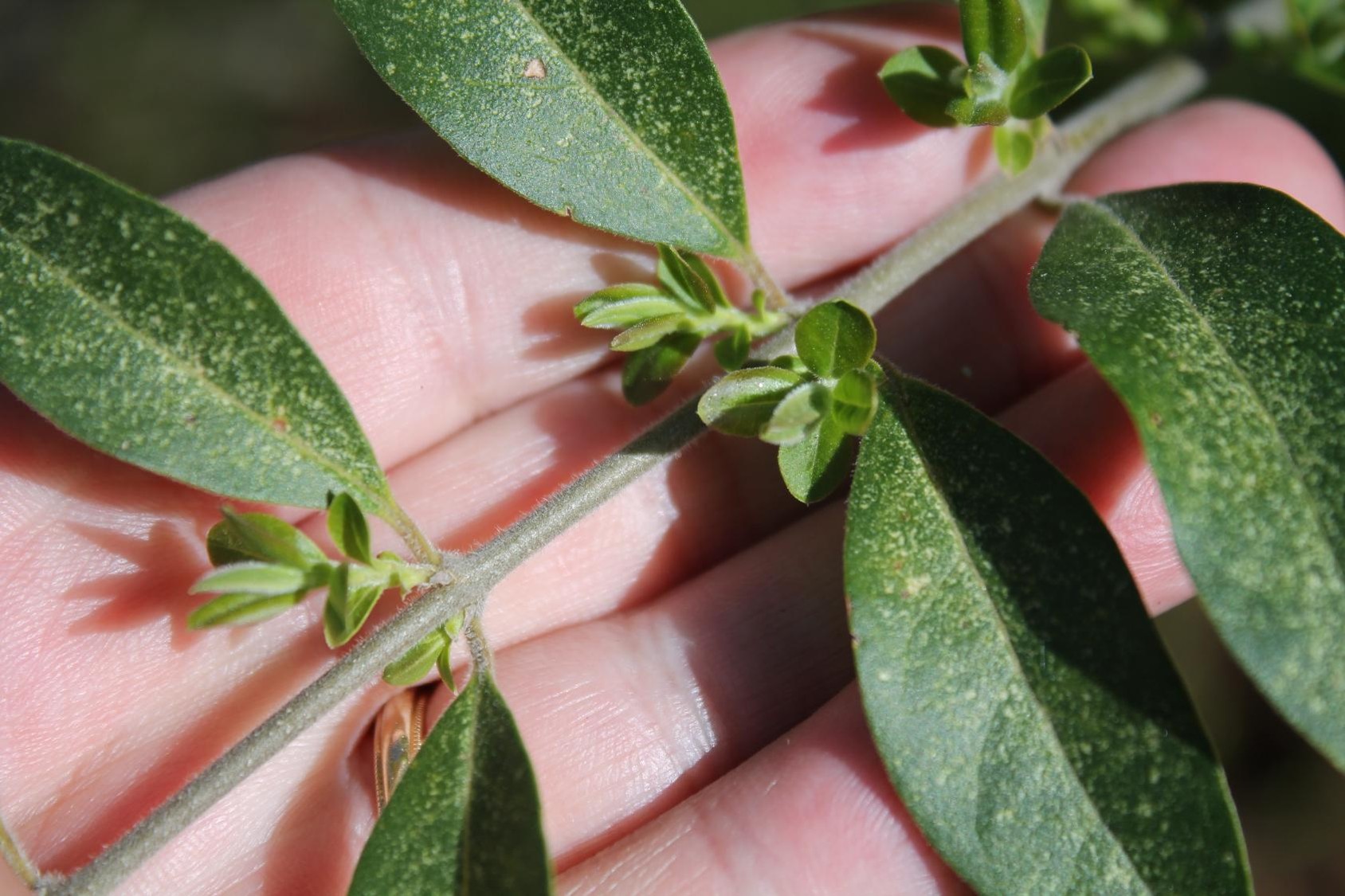
Privet (genus Ligustrum) keeps its old leaves all winter, then begins to drop these leaves as soon as new branches begin to develop in the spring. The bush is evergreen, but the leaves live for only one year.
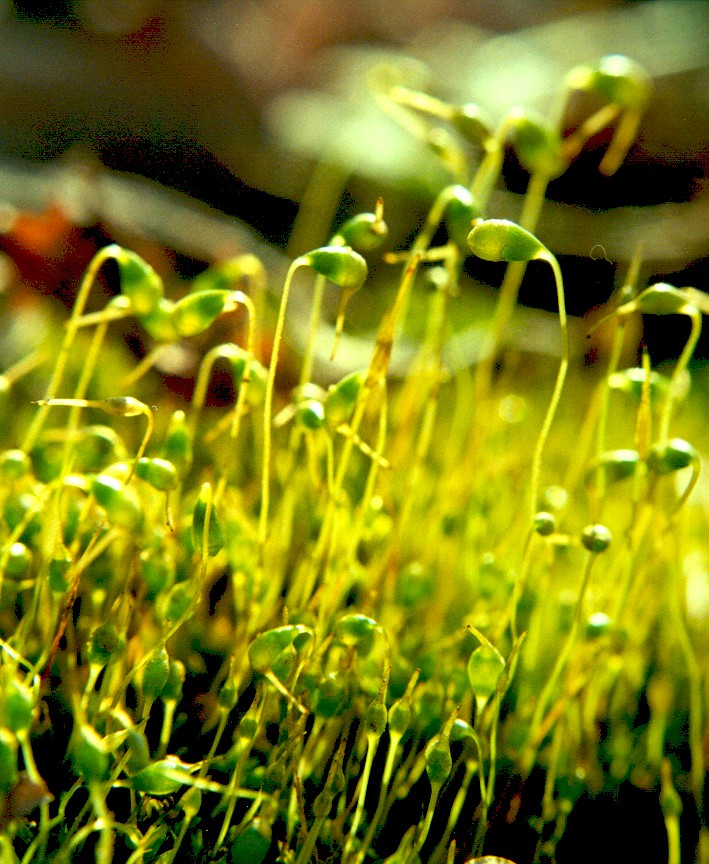
Mosses spend most of their life cycle as haploid gametophytes. But in the spring reproductive structures release sperm which swim to eggs. The fertilized eggs grow into stalklike sporophytes, shown here.
Kentucky coffee-tree (Gymnocladus dioicus) has separate male and female trees. The male flowers produce pollen, but no fruits.
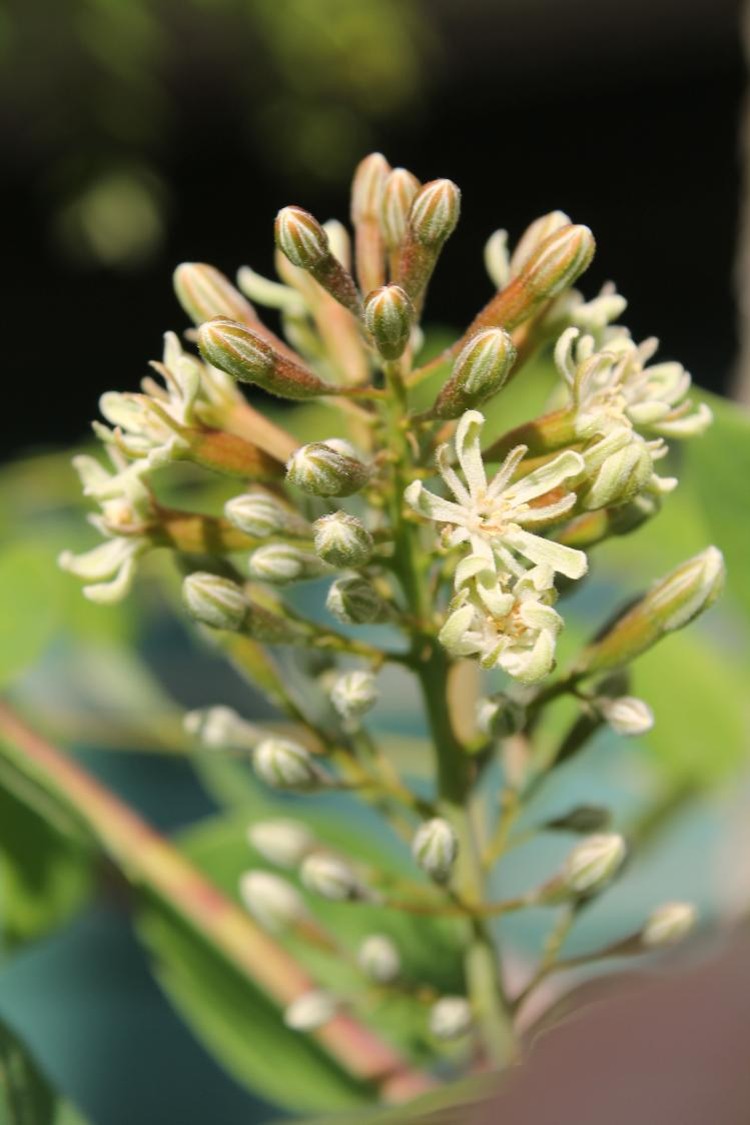
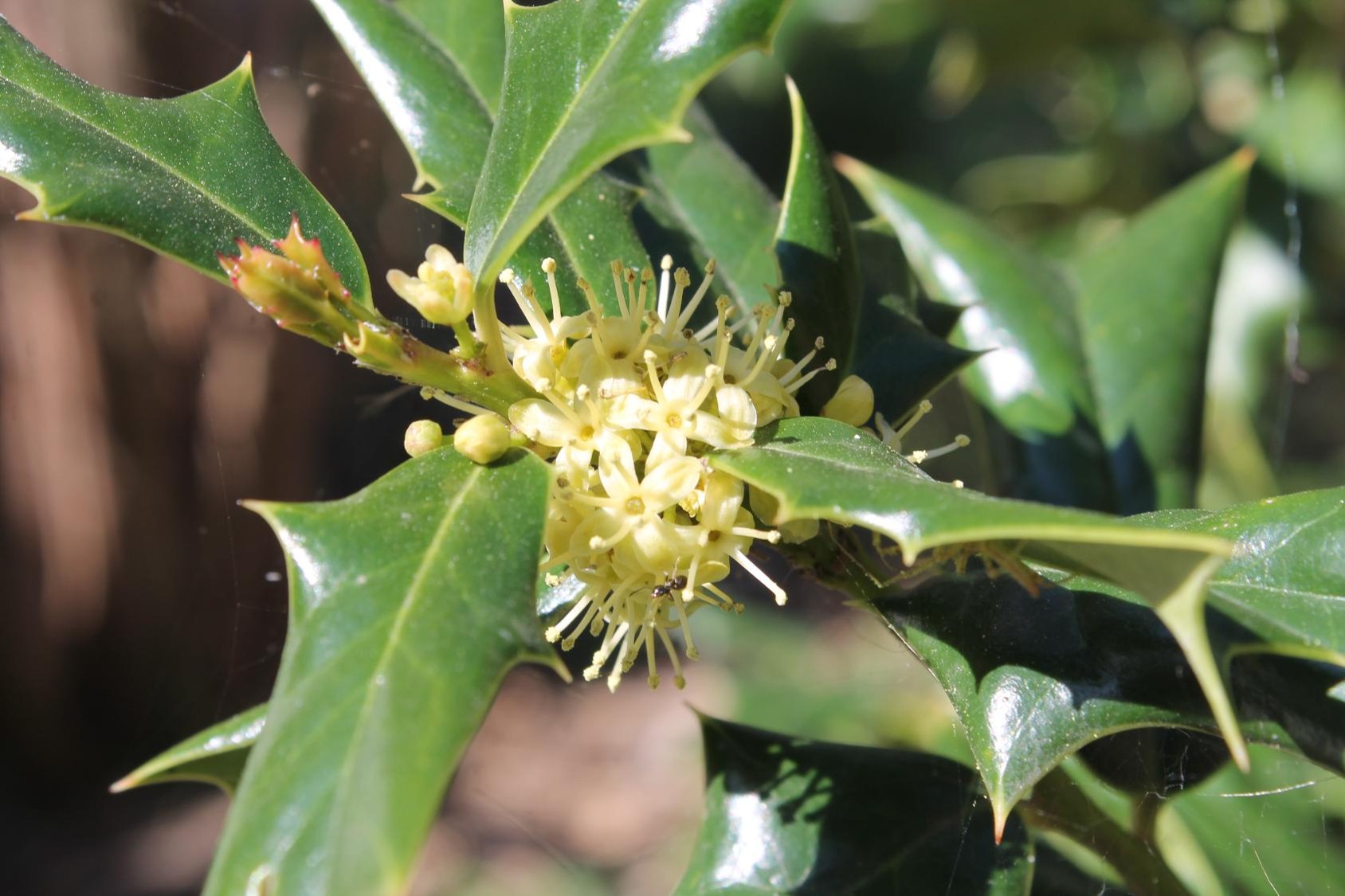
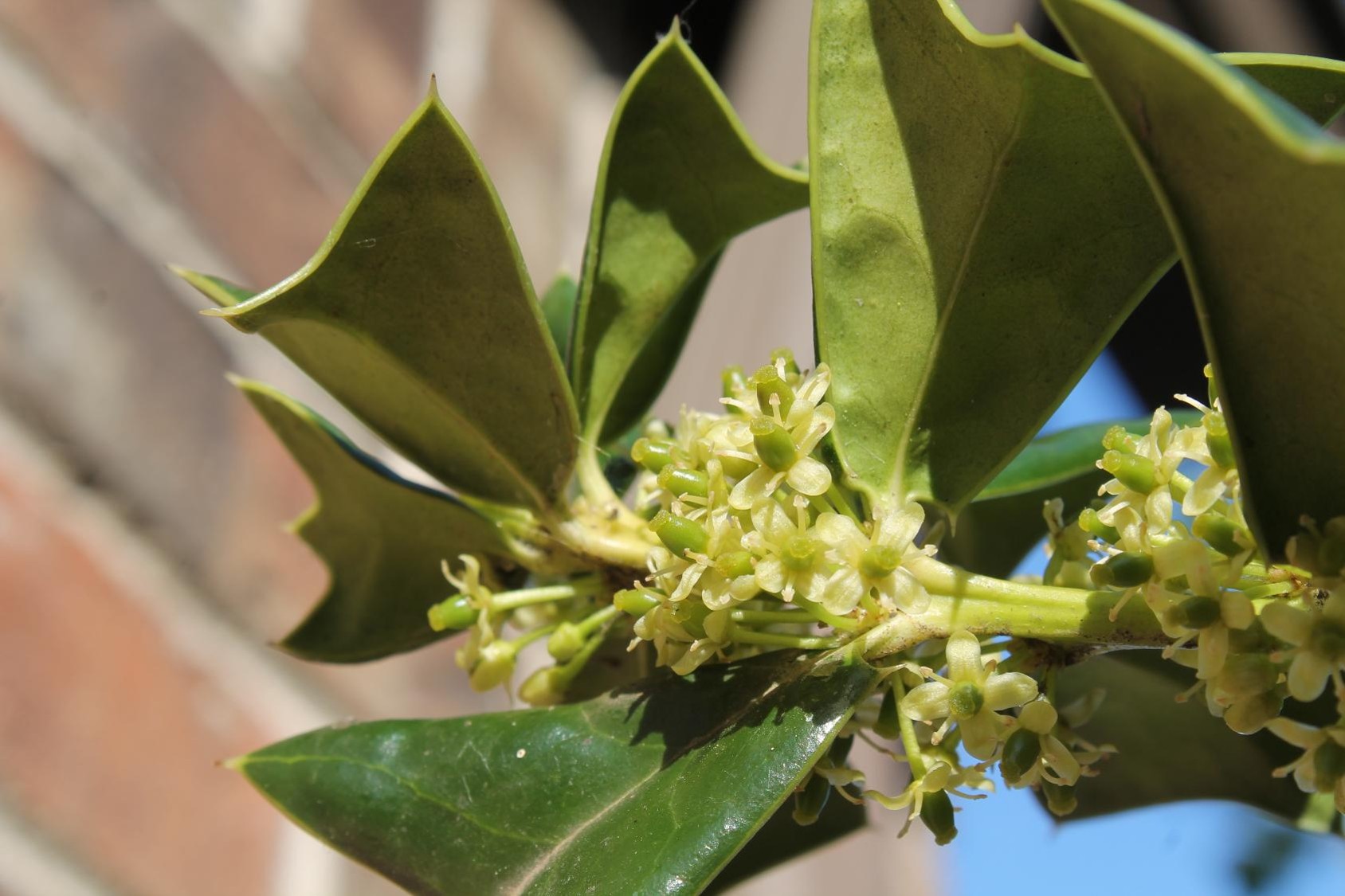
Holly bushes have separate male and female individuals. The male flowers produce pollen, but no fruits.
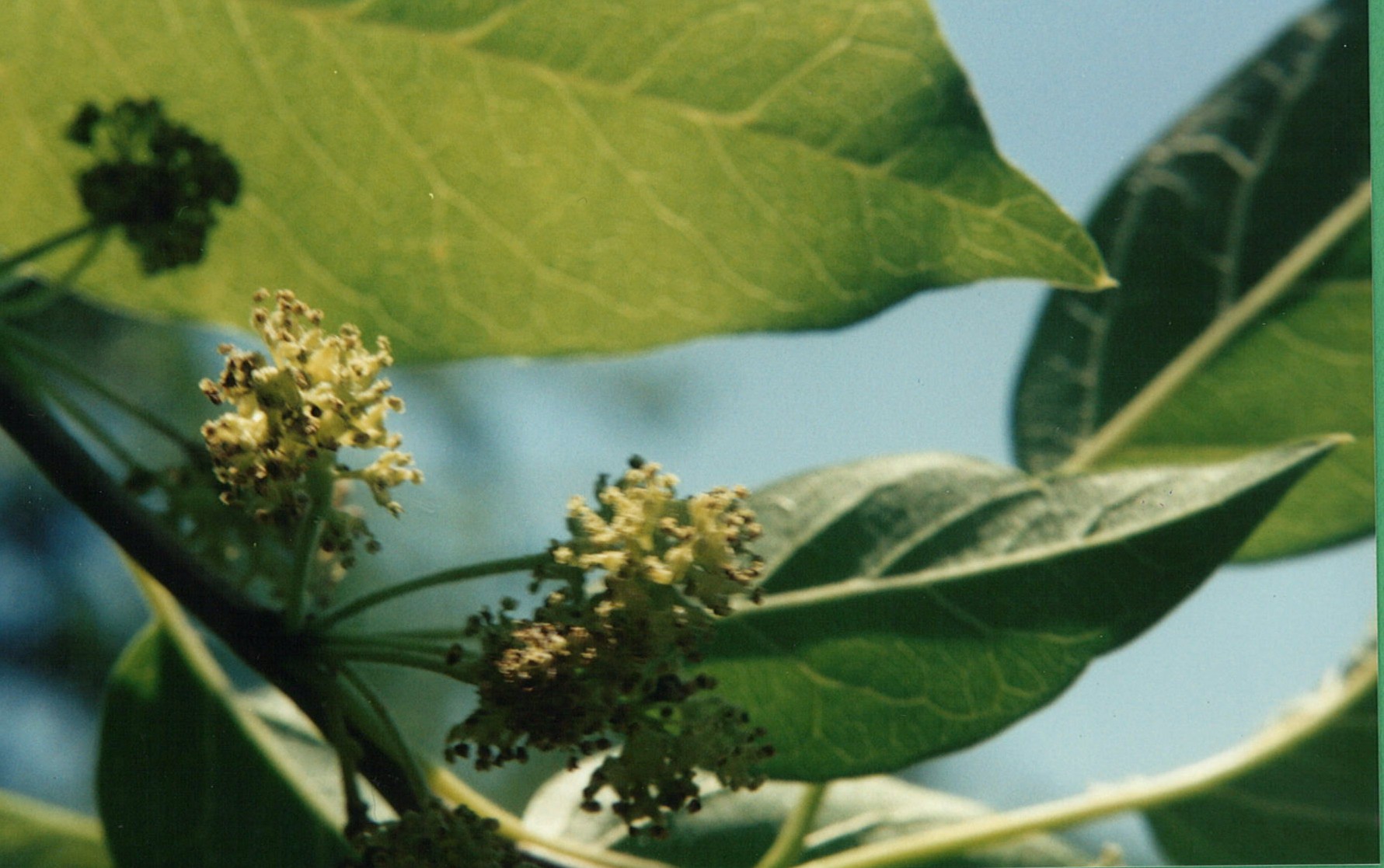
Bois-d’arc trees (Maclura pomifera, here in Oklahoma) have separate male and female trees. The male flowers produce pollen, but no fruits.
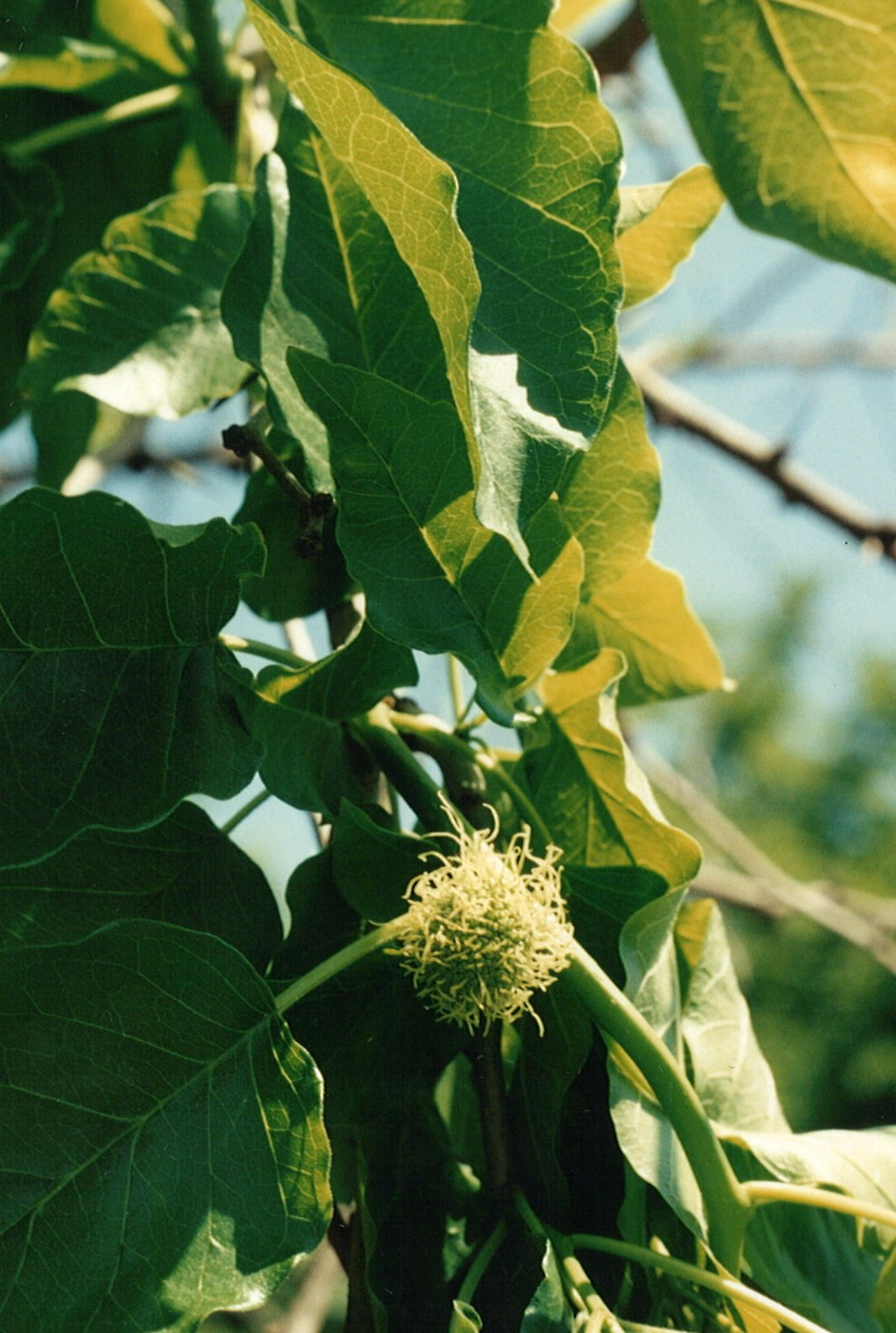
Bois-d’arc trees (Maclura pomifera, here in Oklahoma) have separate male and female trees. The female flowers produce fruits but no pollen. The immature fruit is covered with stigmas that capture pollen.
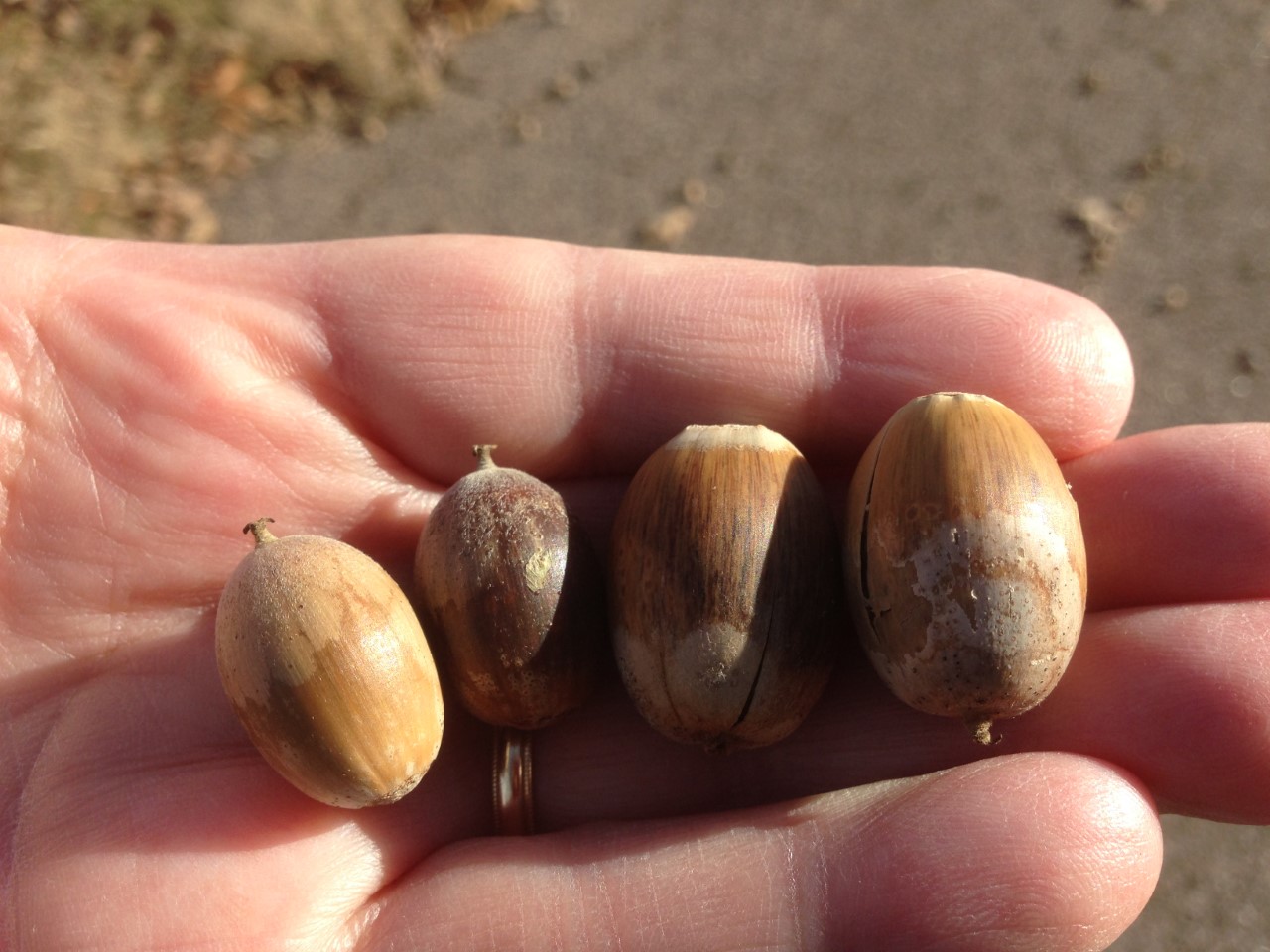
Acorns of post oaks (Quercus stellata) in southern Oklahoma. The two acorns on the left come from a different tree than the two on the right, showing that individual trees differ from one another in many characteristics such as leaf size, leaf shape, acorn size, etc.
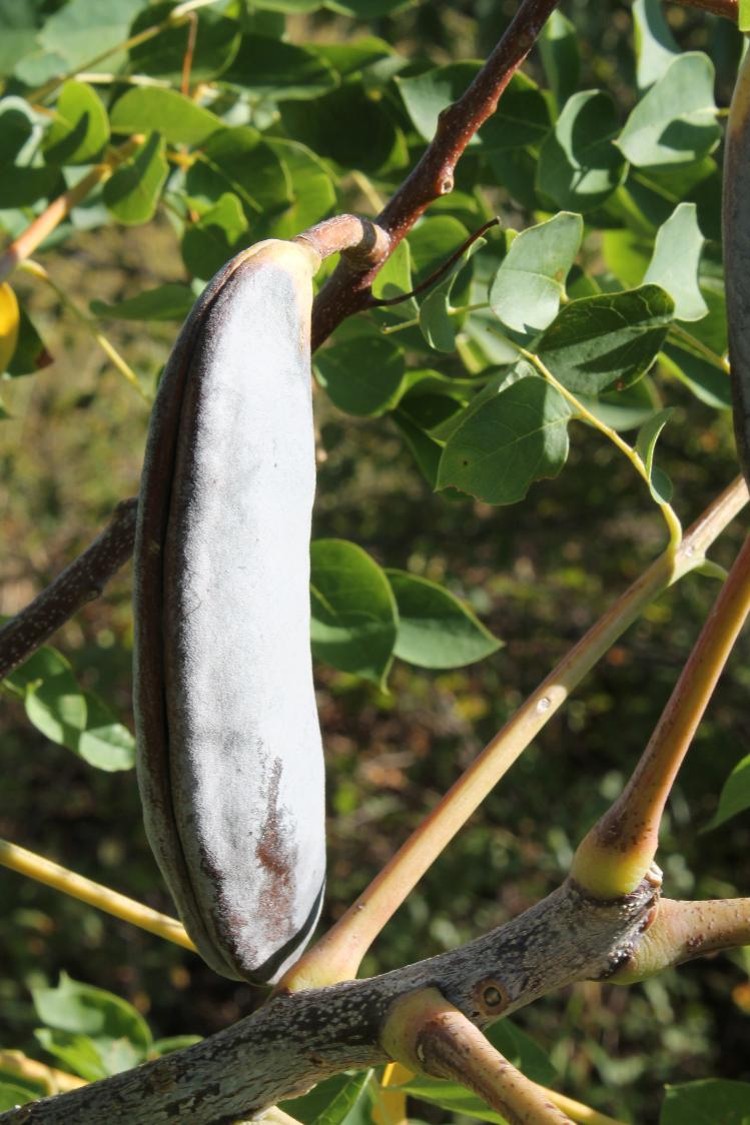
Kentucky coffee-trees (Gymnocladus dioicus, here in Oklahoma) have separate male and female trees. The female flowers produce fruits but no pollen. The fruit is a large brown legume.
Holly bushes have separate male and female individuals. The female flowers produce fruits but no pollen. The female parts of the flower are prominent, the male parts are present but produce no pollen.
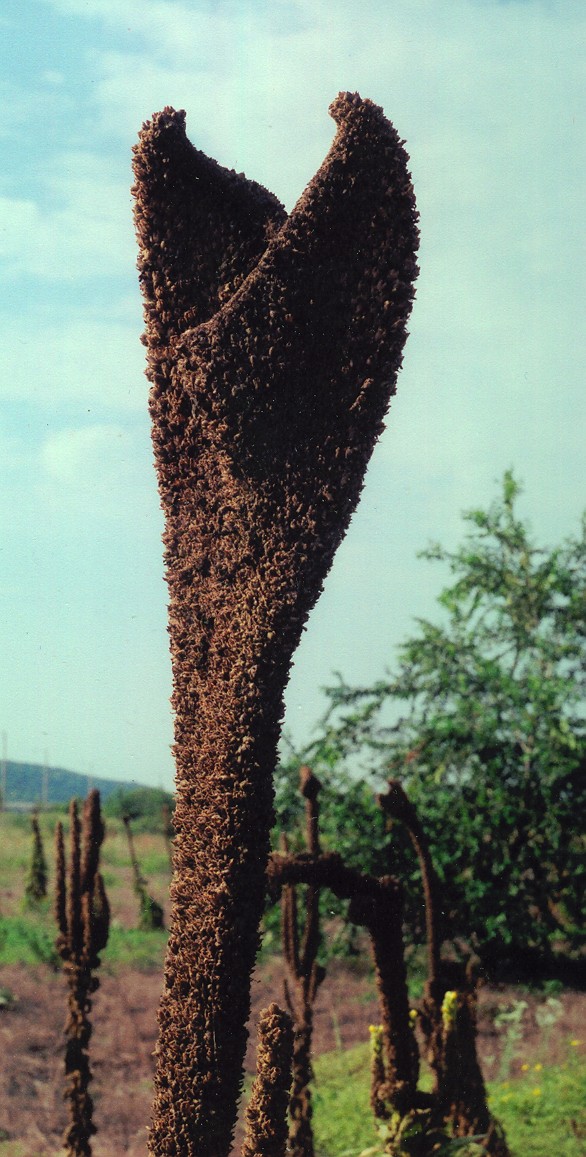
Some mullein plants (Verbascum thapsus) develop fasciated flower stalks, broad and flat rather than cylindrical.
The hole on this Claytonia virginica was made by an insect that wanted to steal the nectar without having to wait for the flower to open, and thus without carrying pollen. Such an insect is called a nectar thief rather than a pollinator.
Populations of plants contain genetic or epigenetic variation. Often some of the fruits will have the normal color, while others are white, because of a mutation that blocks pigment production. This is Callicarpa americana (beautyberry) in eastern Oklahoma.
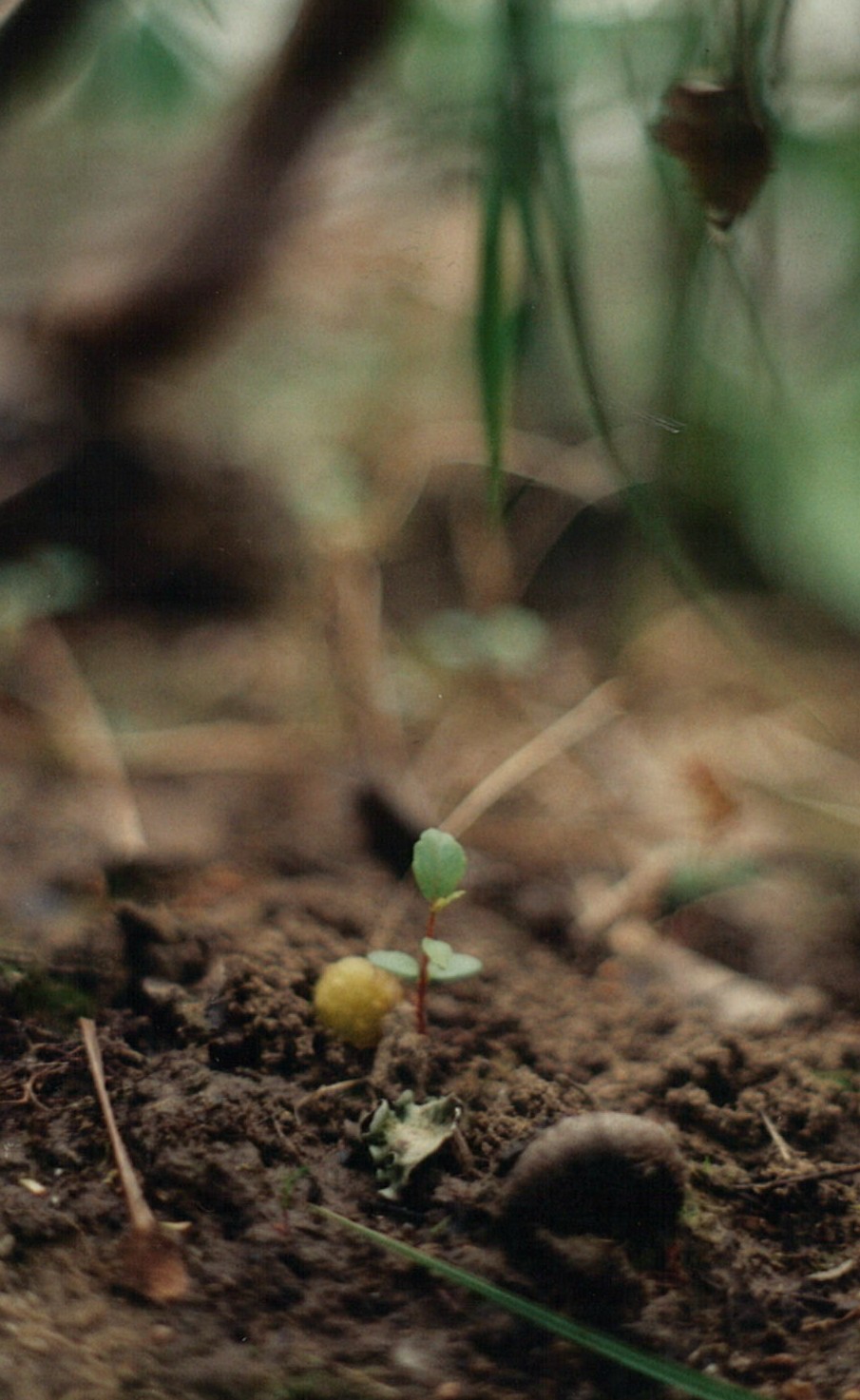
A seedling of Alnus maritima in south central Oklahoma. The adult alder bushes produce thousands of healthy seeds, but the seeds rarely germinate except on wet, sunny gravel, of which there is not very much: if it is wet, the gravel gets shaded by other plants. This is a rare exception. I found only 19 seedlings over hundreds of square meters of riverside soil surface.
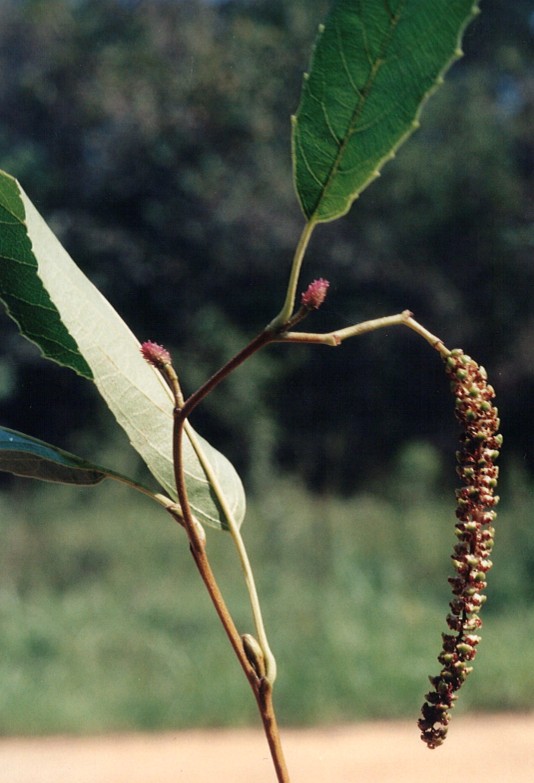
Alnus maritima (south central Oklahoma) produces male and female (small red structures) catkins on the same stem. The flowers are unisexual but the plant has both sexes. Alnus maritima is unusual among North American alders because it produces flowers in the autumn, not in the spring.
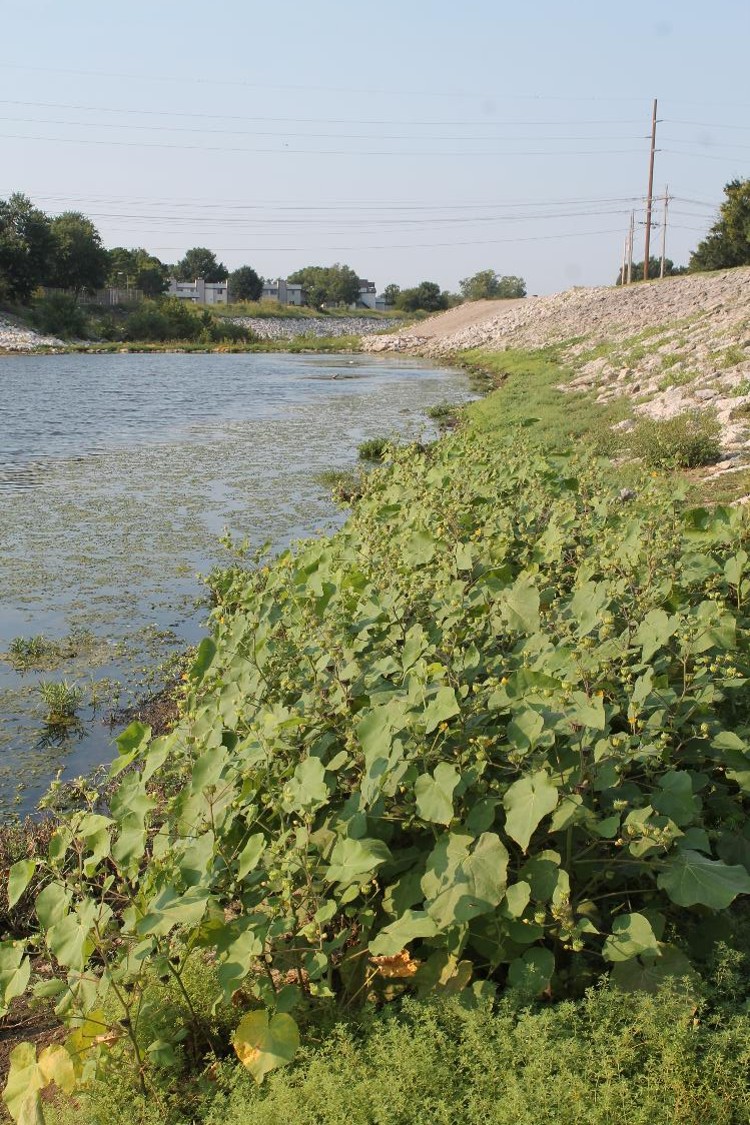
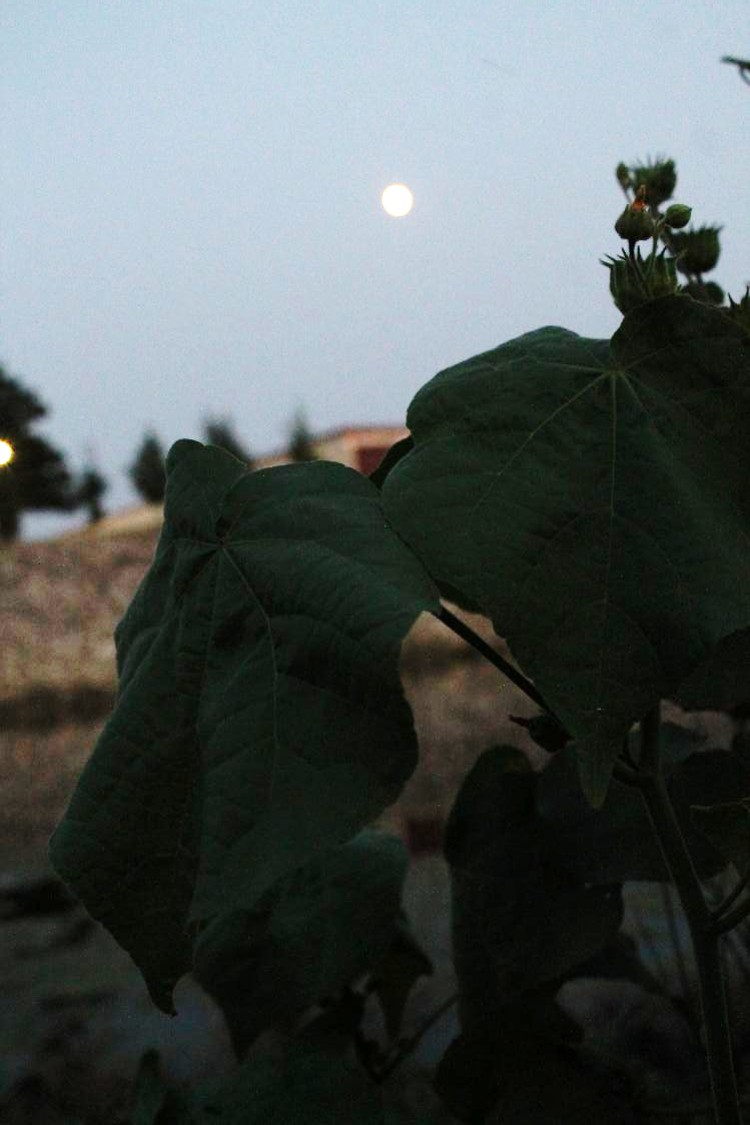
A thick growth of the weed Abutilon theophrasti dominates part of the bank of Joe Creek (a drainage ditch in Tulsa, Oklahoma). During the day, the leaves face the sun, but at night (see other photo in this folder) the leaves orient themselves vertically.
A thick growth of the weed Abutilon theophrasti dominates part of the bank of Joe Creek (a drainage ditch in Tulsa, Oklahoma). During the day, the leaves face the sun, but at night the leaves orient themselves vertically. Nobody knows why some plants, such as Abutilon and Albizzia, re-orient their leaves at night. This phenomenon, called nyctinasty, was first studied by Charles Darwin and his plant physiologist son Francis.
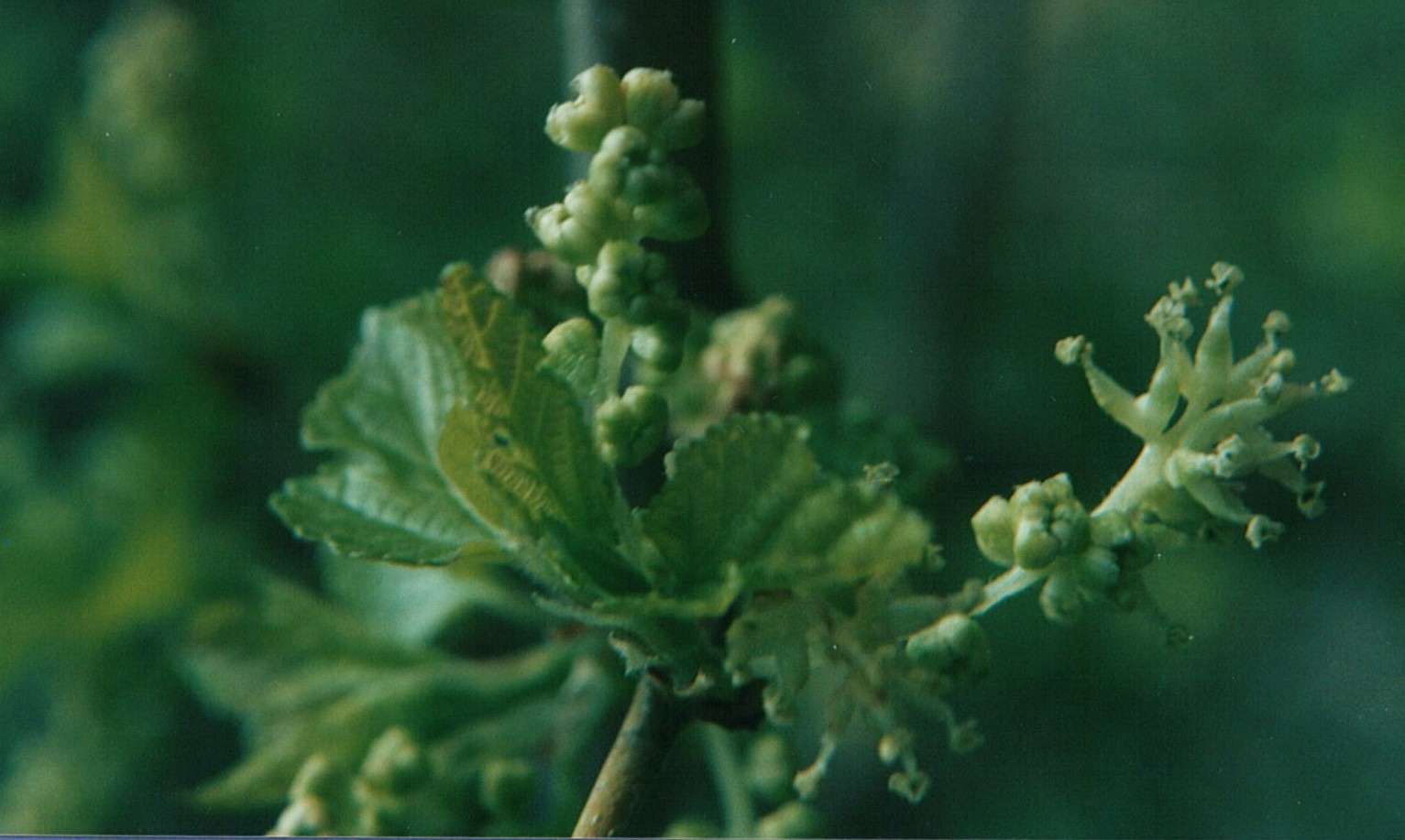
Mulberry trees (Morus alba, here in Oklahoma) have separate male and female trees. The male flowers produce pollen but no fruits.
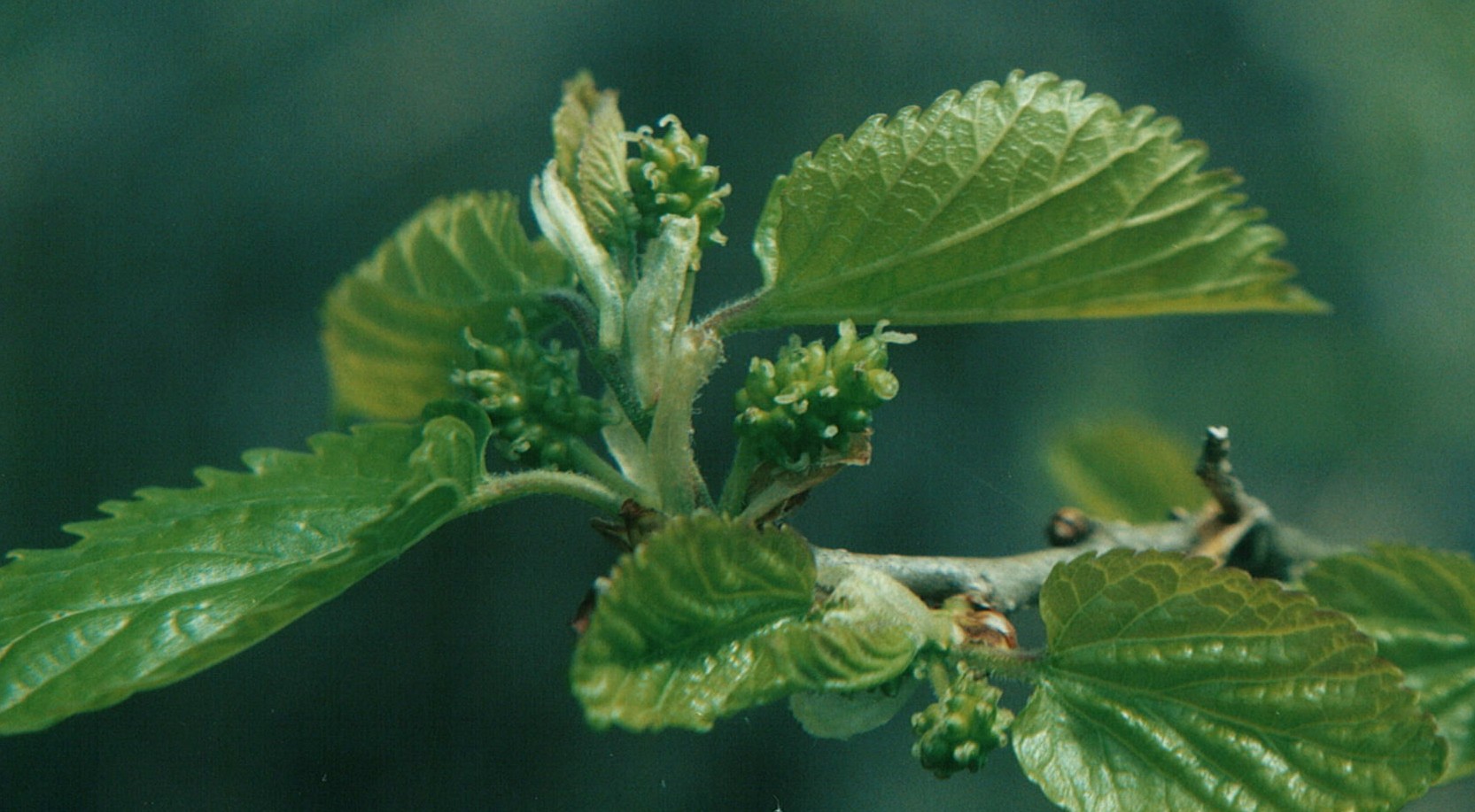
Mulberry trees (Morus alba, here in Oklahoma) have separate male and female trees. The female flowers produce fruits but no pollen.
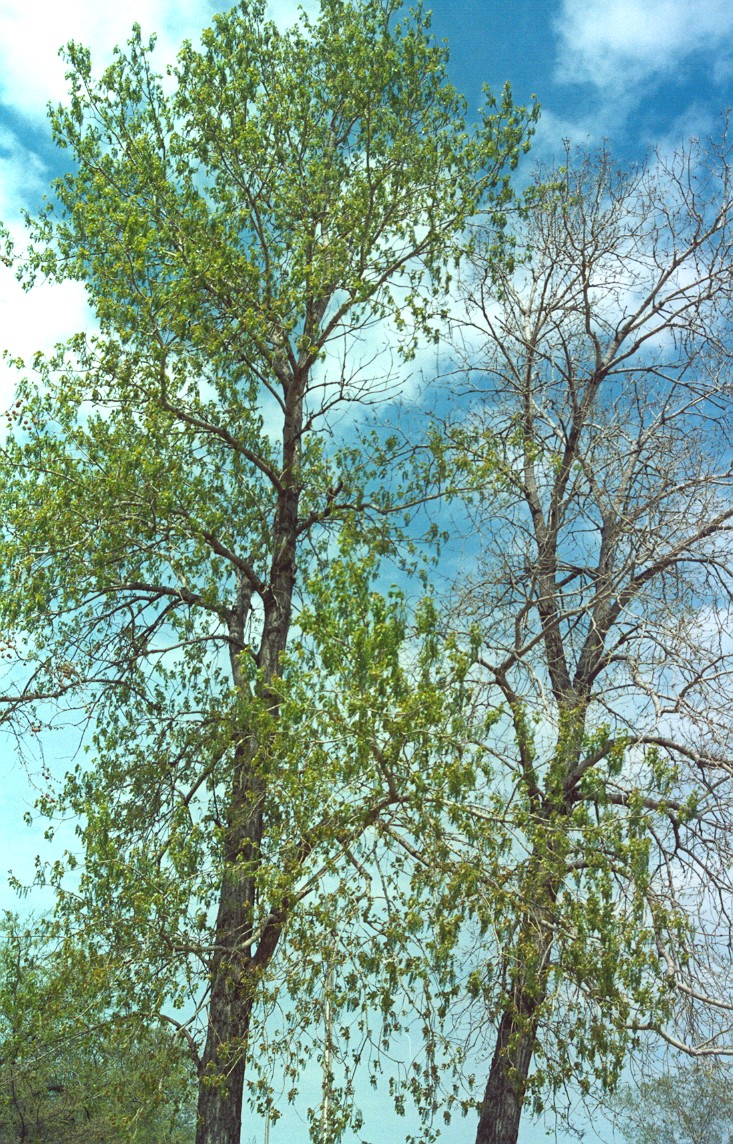
In a study conducted in Oklahoma, we found that male cottonwood trees (here, on the left) opened their spring buds earlier than female cottonwoods (right). We interpret this as sexual competition: the male that can produce the most pollen early will pollinate more female trees than the later males. The very earliest males are too early to pollinate females, and the latest females do not get pollinated. But there is an advantage for males to open their buds early, just not too early. Sexual competition also explains, among other things, why male animals migrate earlier, and establish territories, before the females.
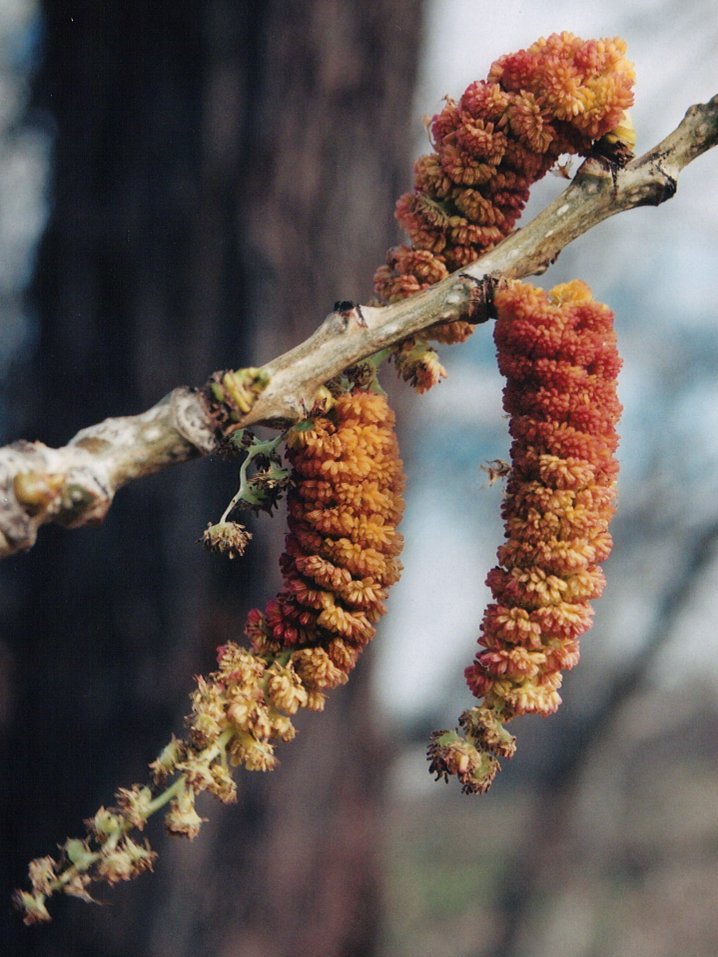
Cottonwood trees (Populus deltoides, here in Oklahoma) have separate male and female trees. The male flowers produce pollen but no seeds.
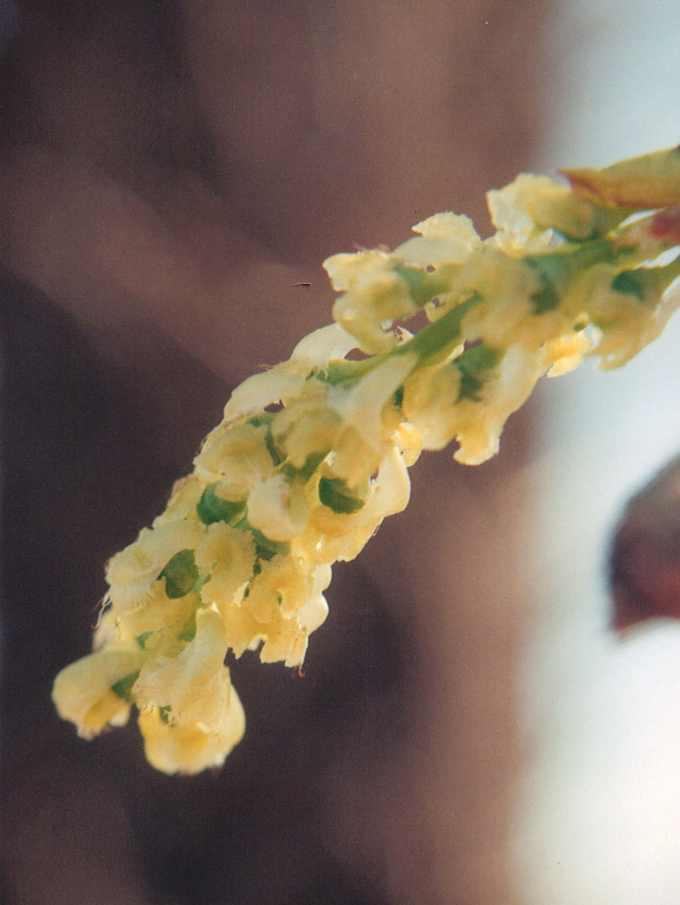
Cottonwood trees (Populus deltoides, here in Oklahoma) have separate male and female trees. The female flowers produce seeds but no pollen.
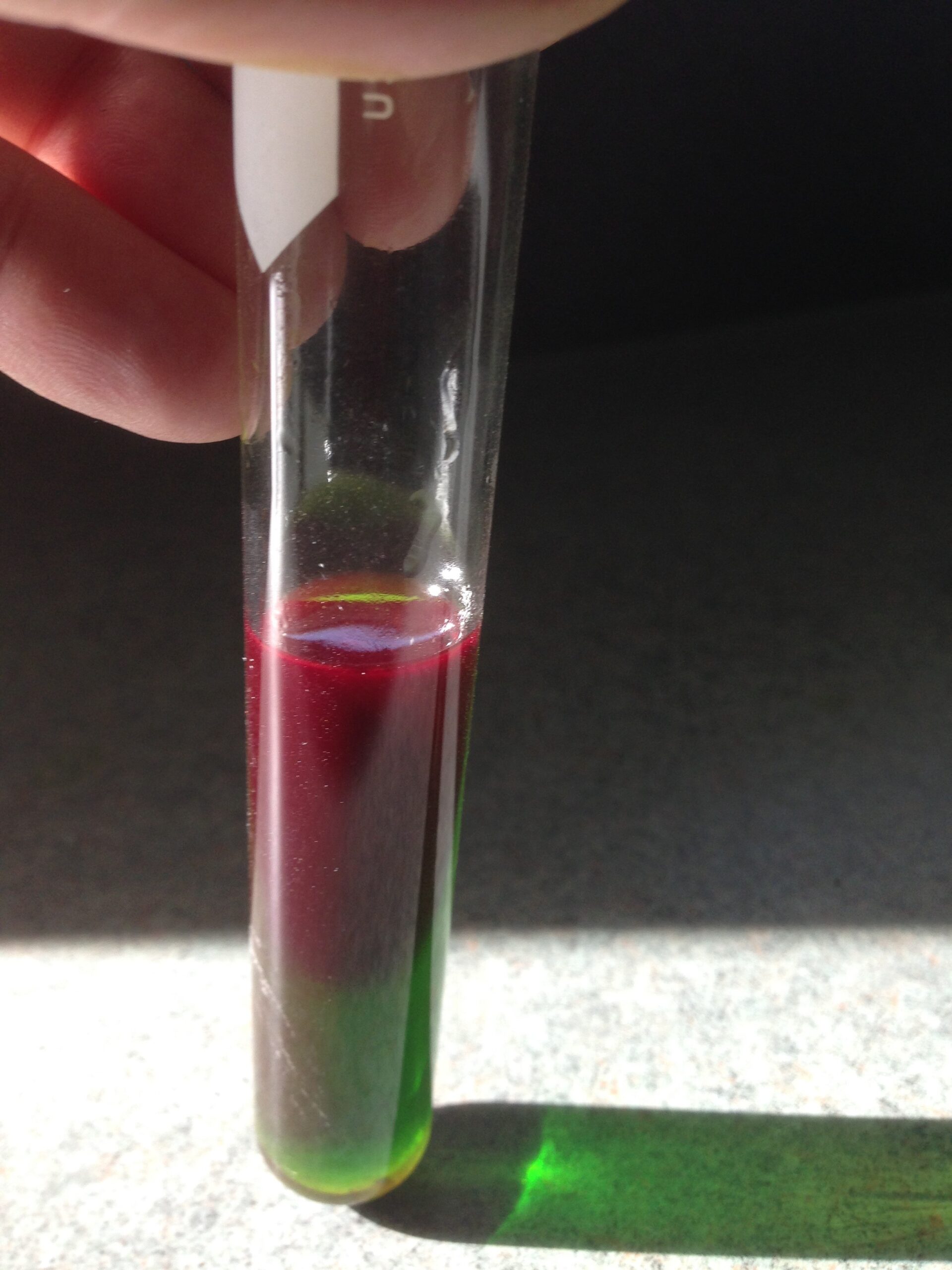
Bright white light comes from the left side and penetrates through a test tube of chlorophyll extract. The chlorophyll absorbs all the colors except green, which is transmitted through the test tube to the right. But the chlorophyll molecules have to get rid of the energy they have absorbed, and they do that by emitting lower-energy red light in all directions. We can see the red light by looking from the side.
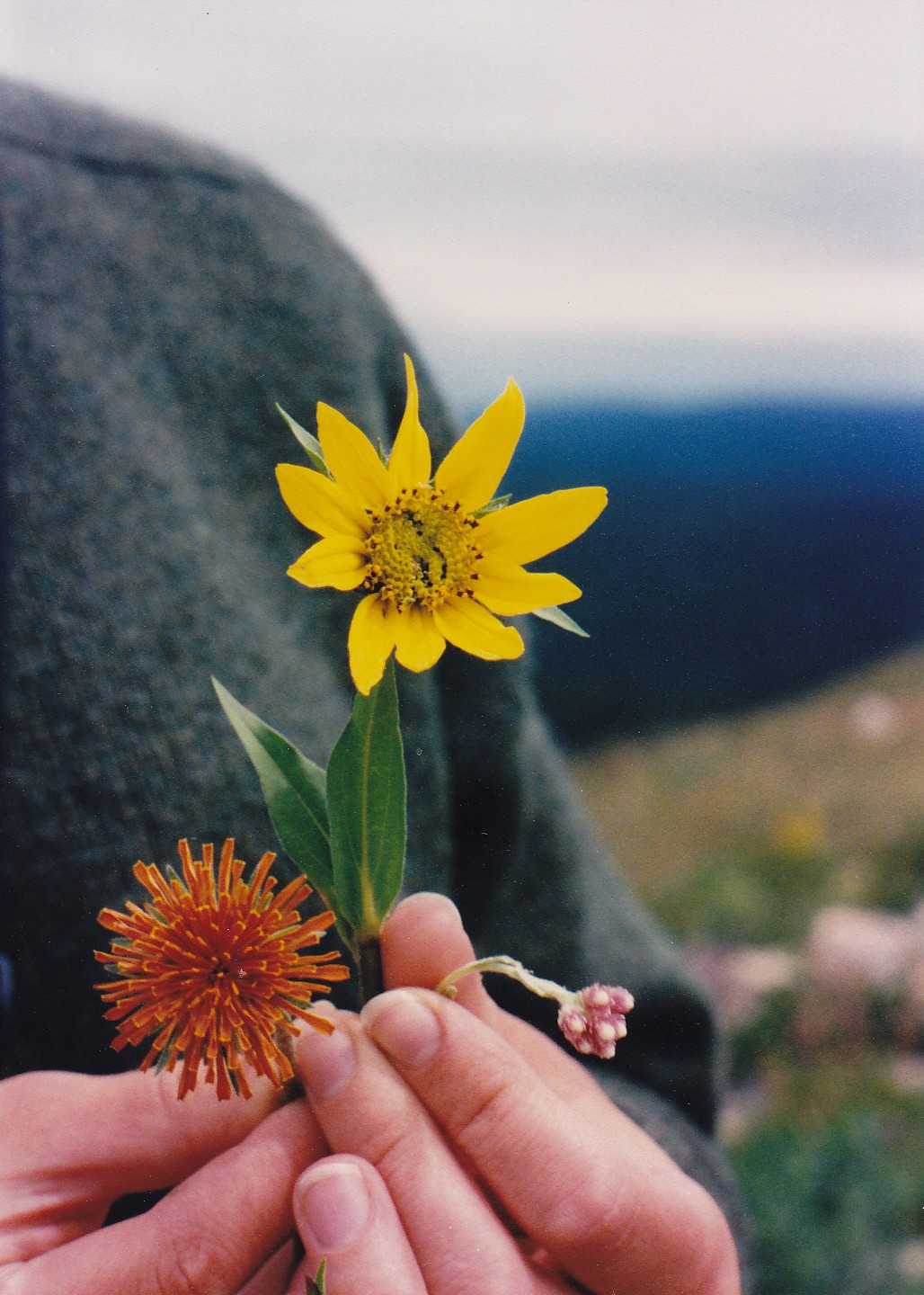
Three composite inflorescences (plant family Asteraceae) on Cement Ridge in the Black Hills of Wyoming. Composite inflorescences may have lots and lots of ray flowers around the outside and disc flowers in the middle. This is the case with Arnica cordifolia, the yellow inflorescence at the top. But they might have just the disc flowers, as is the case with the pink Antennaria to the lower right, or just have ray florets, as is the case with the inflorescence to the lower left.
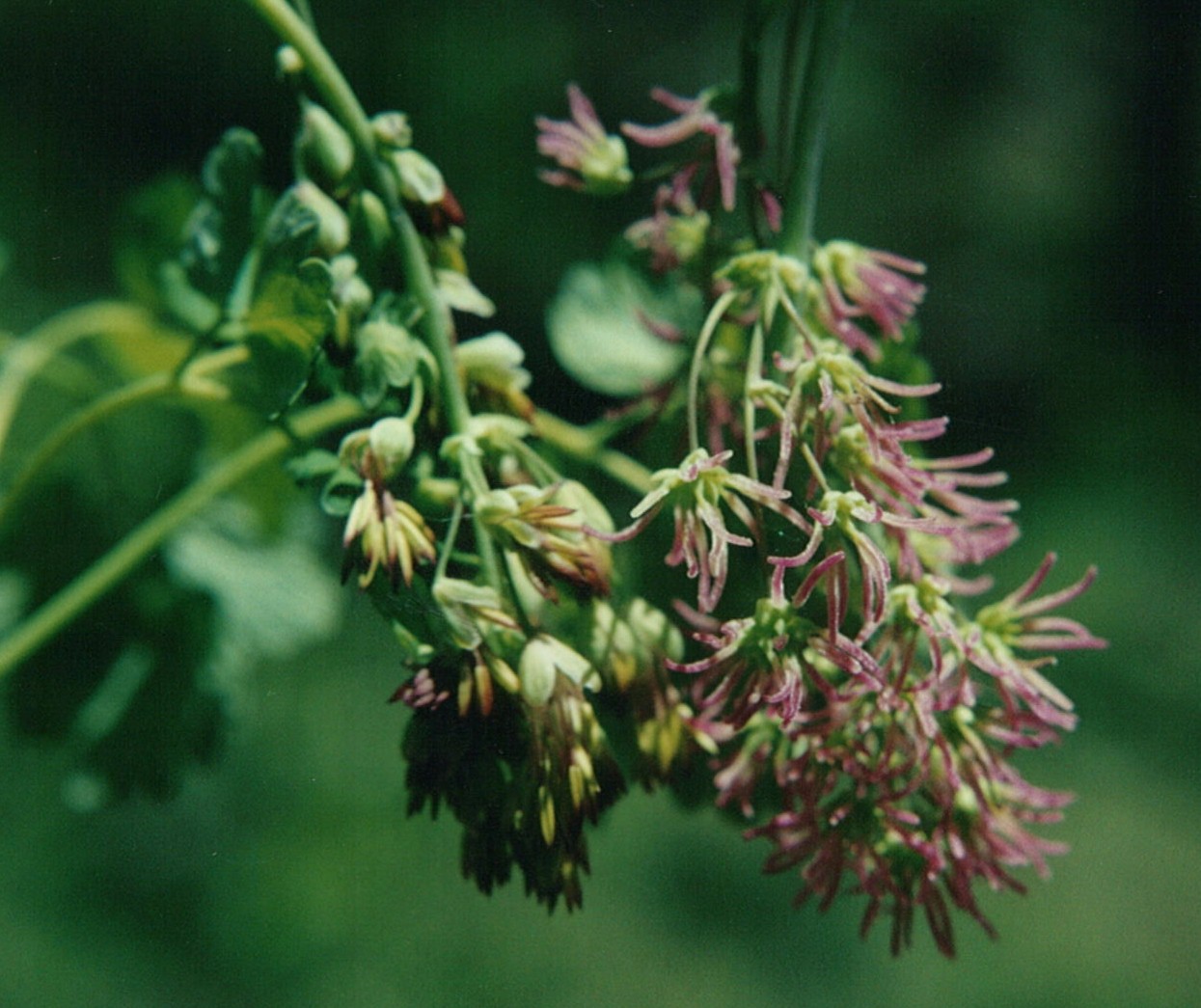
Thalictrum dioicum has separate male and female plants. The male plants (on the left) produce only stamens and the female plants (on the right) produce only stigmas.
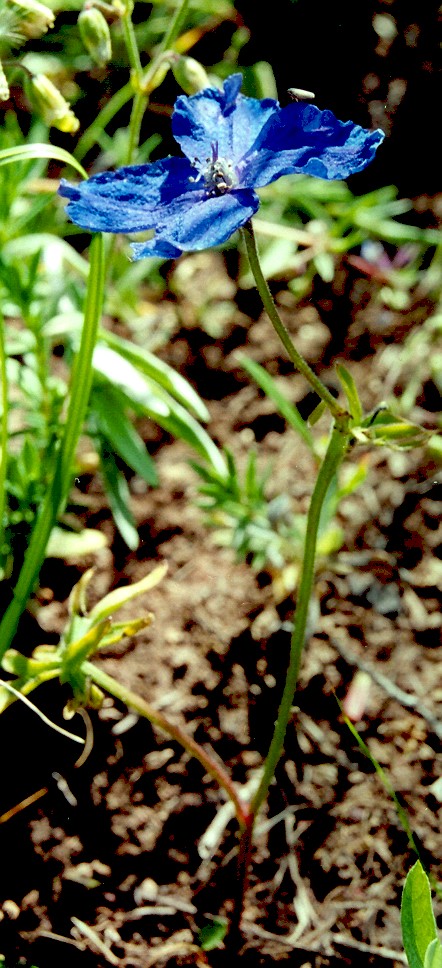
Most mutations in plant populations are minor, such as colored vs. albino flowers. Occasionally some mutations have severe consequences. This larkspur (Delphinium) on Cement Ridge in the Black Hills of Wyoming has only four normal petals; normal larkspurs have five, including one that is large and spurred. The large spurred petal is here either missing or undeveloped. The plant has grown very slowly, in a disturbed area where it does not have to compete with other plants, and it probably died very soon.
Populations of plants contain genetic or epigenetic variation. Often some of the flowers will have the normal color, while others are white, because of a mutation that blocks pigment production. This is Lupinus argenteus on Cement Ridge in the Black Hills National Forest of Wyoming.
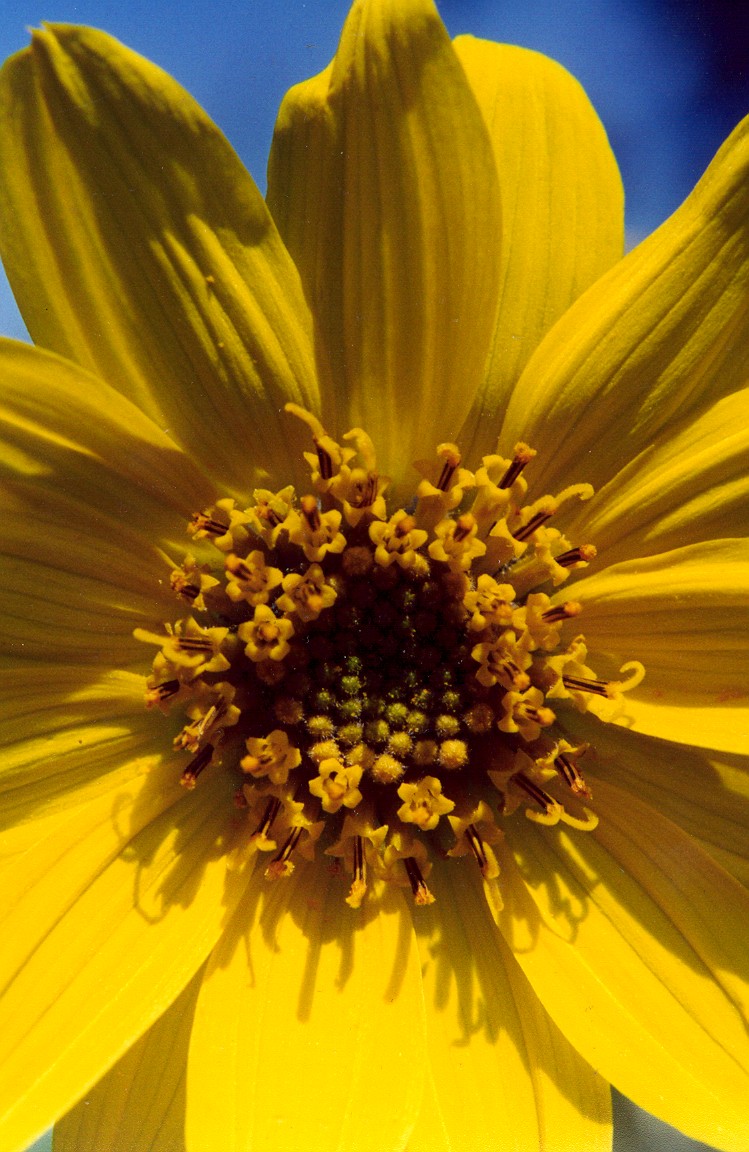
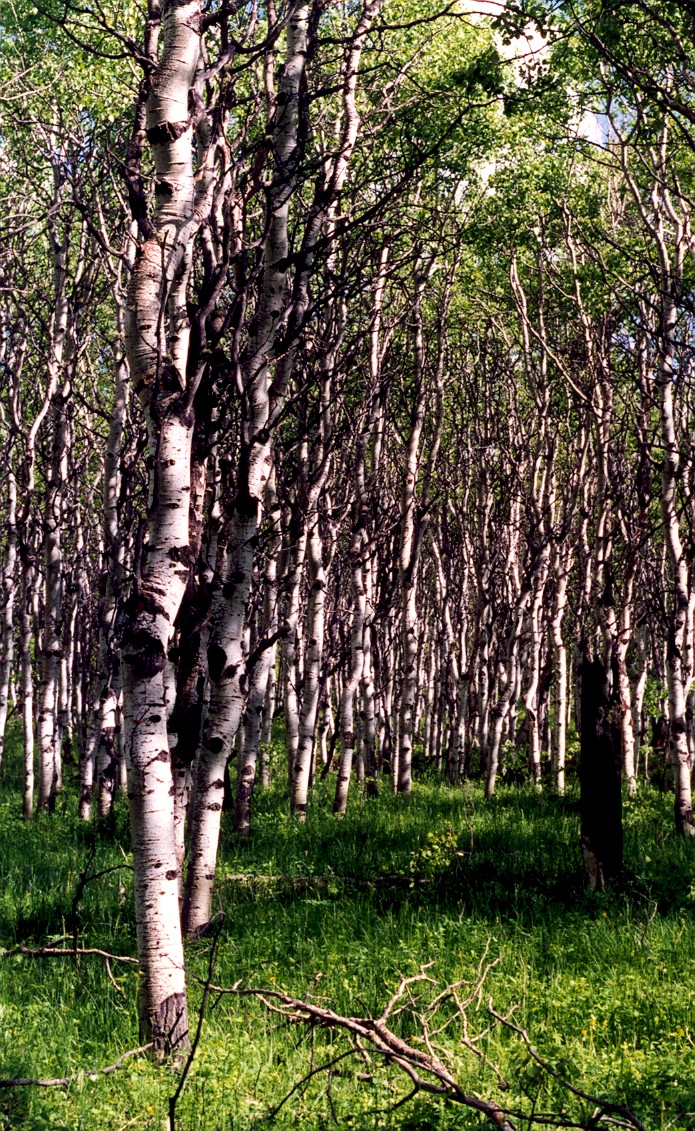
Populations of plants contain genetic or epigenetic variation. Often some of the flowers will have the normal color, while others are white, because of a mutation that blocks pigment production. This is Dodecatheon pulchellum in the Black Hills of South Dakota.
This Balsamorhiza sagittata inflorescence in the Black Hills of South Dakota shows the typical flower of the family Asteraceae: it is a composite of dozens of disc flowers in the center and ray flowers around the outside. As seen in a different photo in this folder, some composite inflorescences consist only of disc or only of ray flowers.
This aspen grove (Populus tremuloides) in the Black Hills of Wyoming is actually just one individual clone with hundreds of trunks, all connected underground. They all began growing at the same time after a fire and are all the same size. Once the clone becomes old and begins to degenerate, another fire will probably burn it back to the ground. Occasionally a spruce tree will grow up underneath the aspen trunks.
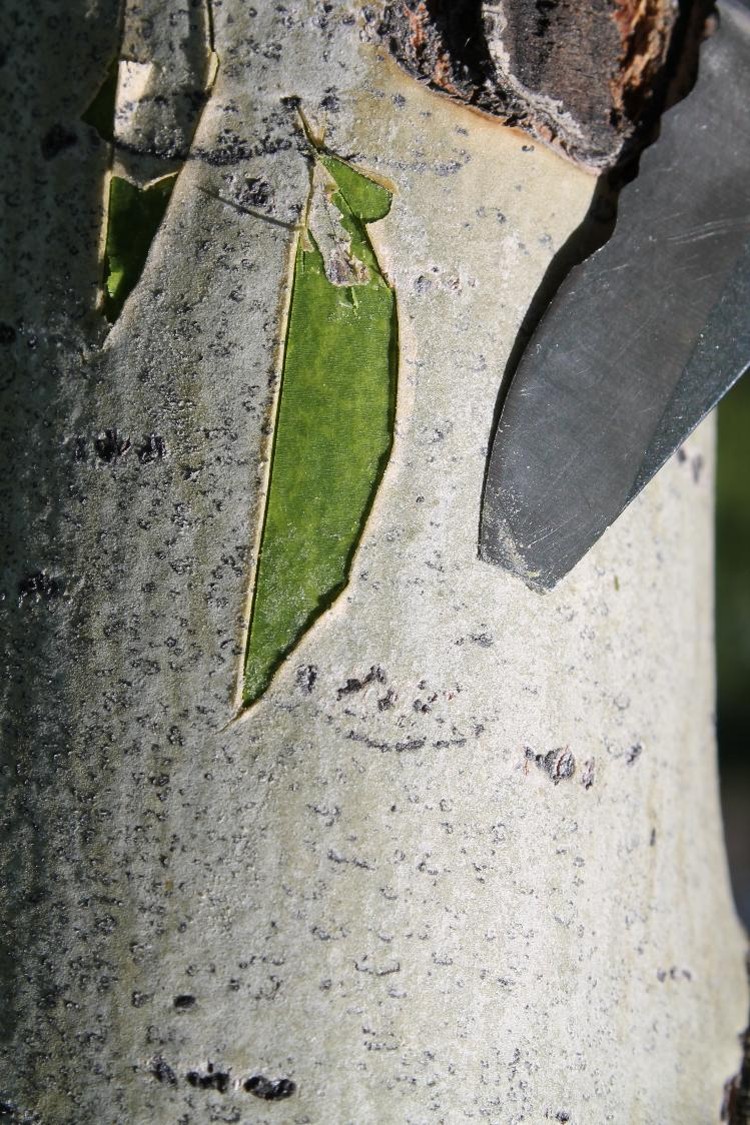
Aspens (Populus tremuloides), here in the Black Hills of Wyoming, grow rapidly. Like other trees, they have green leaves. But in addition to this, they have green photosynthetic tissue (with chlorophyll) underneath the white outer bark. Enough light penetrates the white bark to stimulate the growth of the aspens.
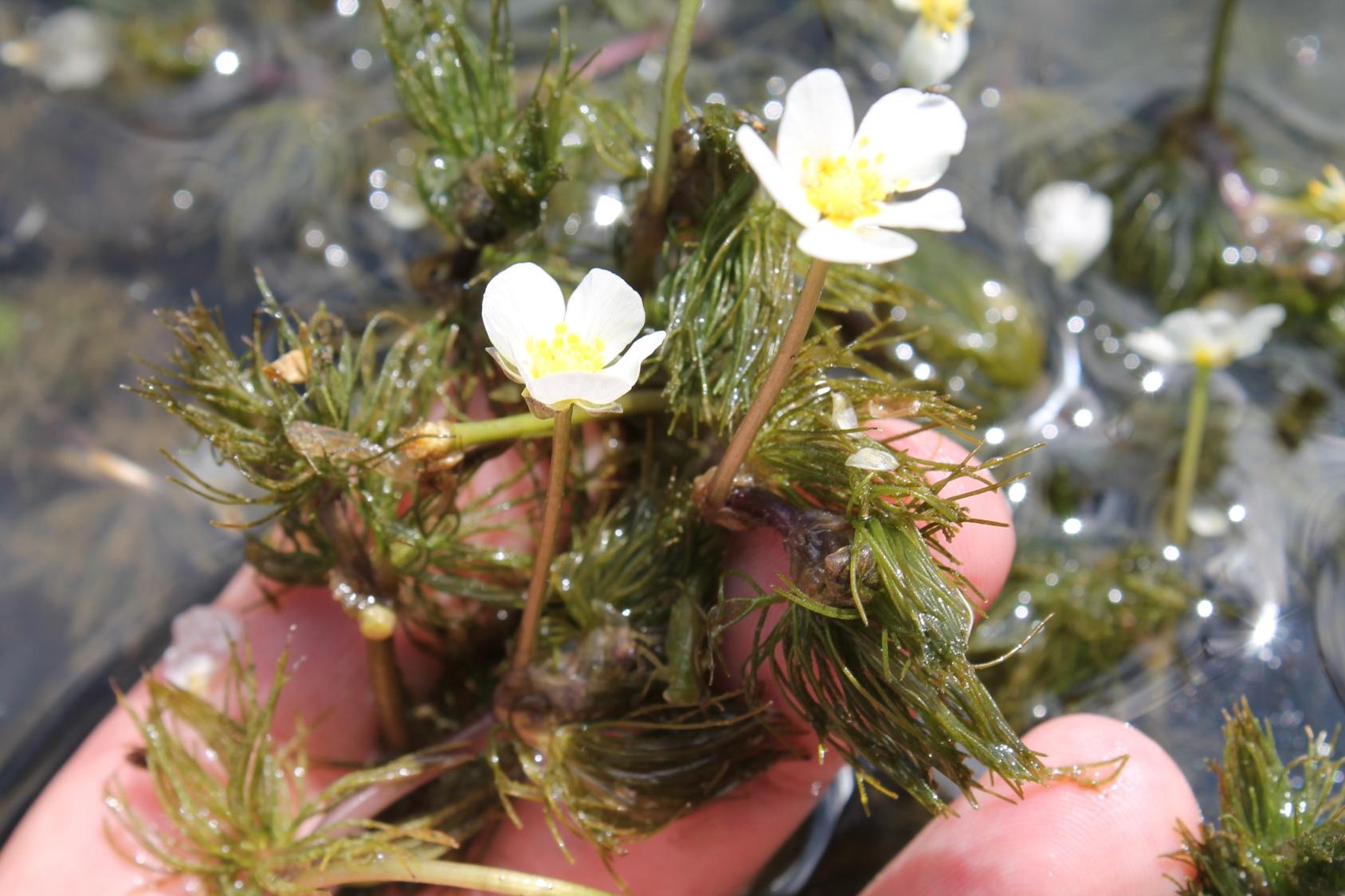
Some buttercups (genus Ranunculus) grow in water, as in a stream in the Black Hills of South Dakota. The flowers open above the water, where bees find them; but the leaves grow underwater, and are finely divided, to more effectively absorb dissolved carbon dioxide from the water.
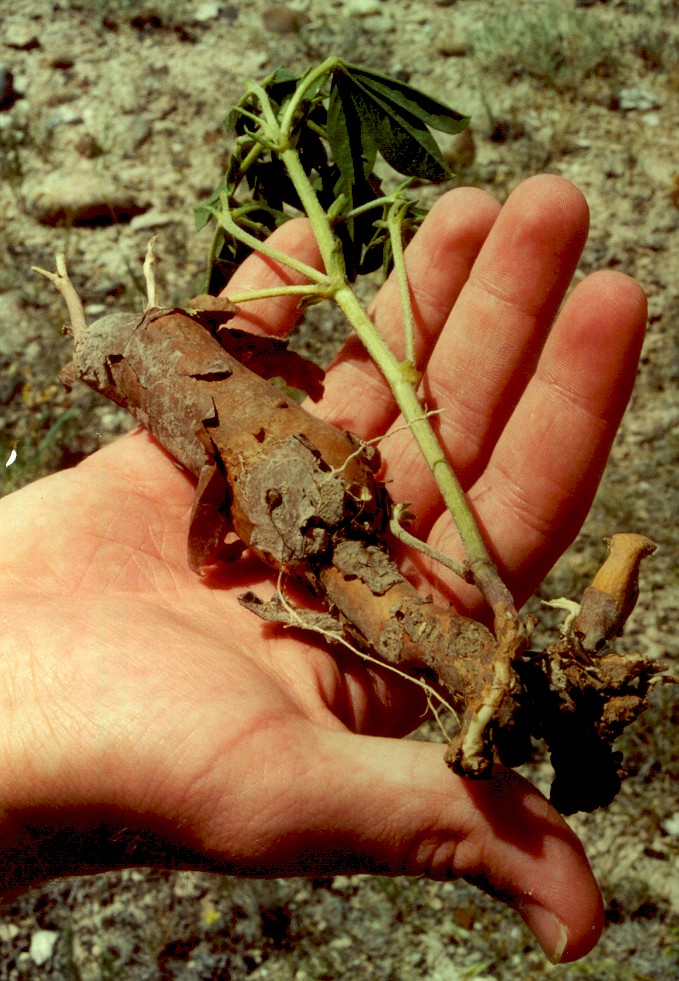
The prairie turnip in the Badlands of South Dakota is not really a turnip; Psoralea esculenta is a lupine. But it stores a lot of food in an underground stem. It was, and remains, a favorite food of Native peoples of the region.
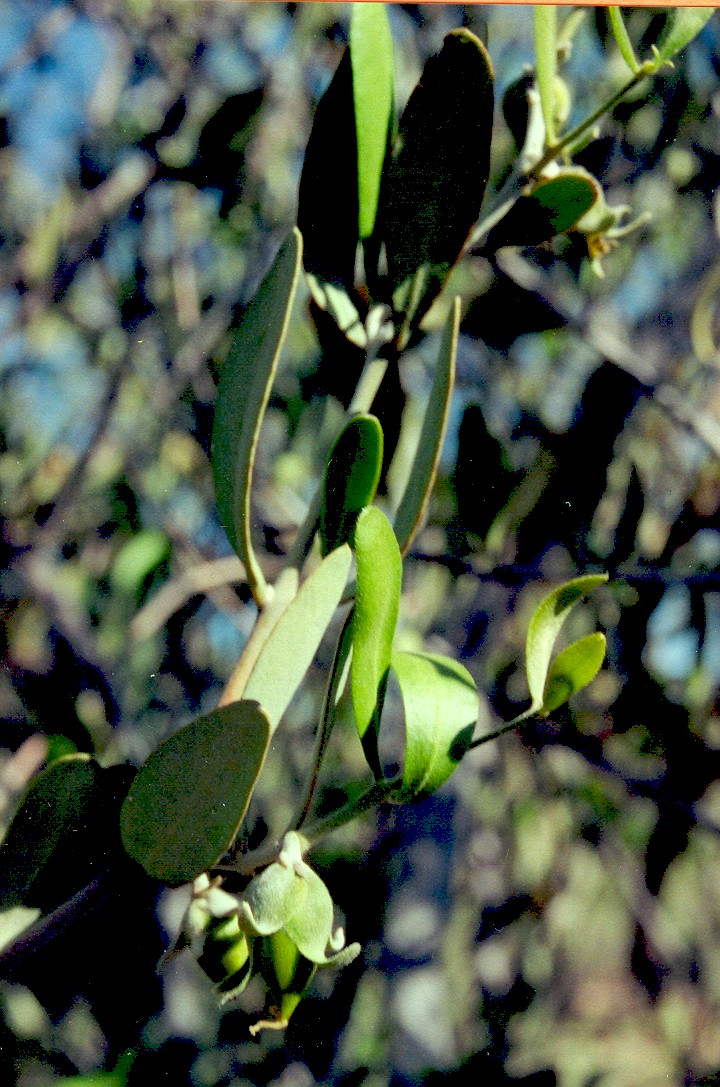
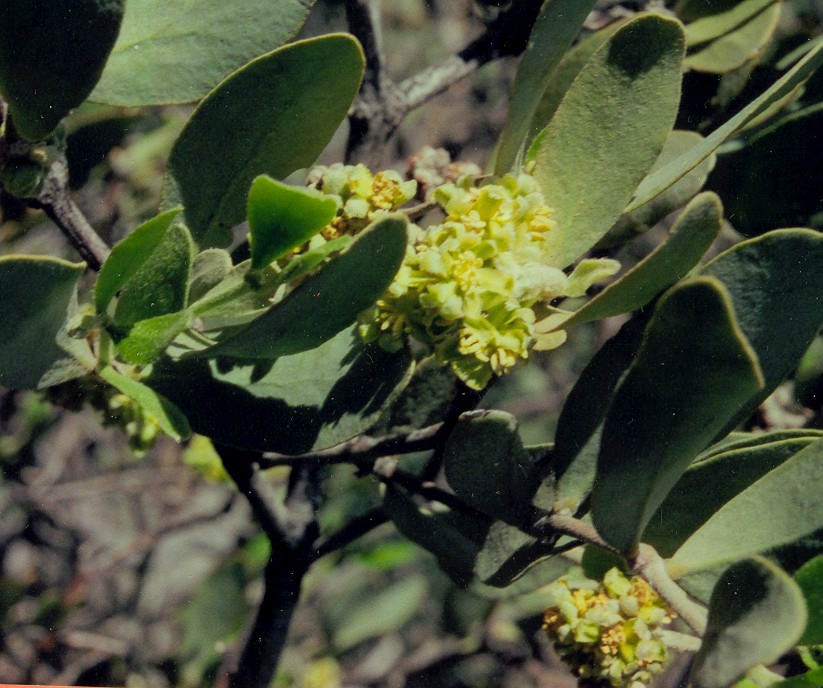
Jojoba bushes (Simmondsia chinensis, here in Arizona) have separate male and female plants. The female plants produce seeds but no pollen. The mature fruits are a good source of heat-stable wax with potential industrial uses.
Jojoba bushes (Simmondsia chinensis, here in Arizona) have separate male and female plants. The male plants produce only pollen but no seeds.
Species Relationships
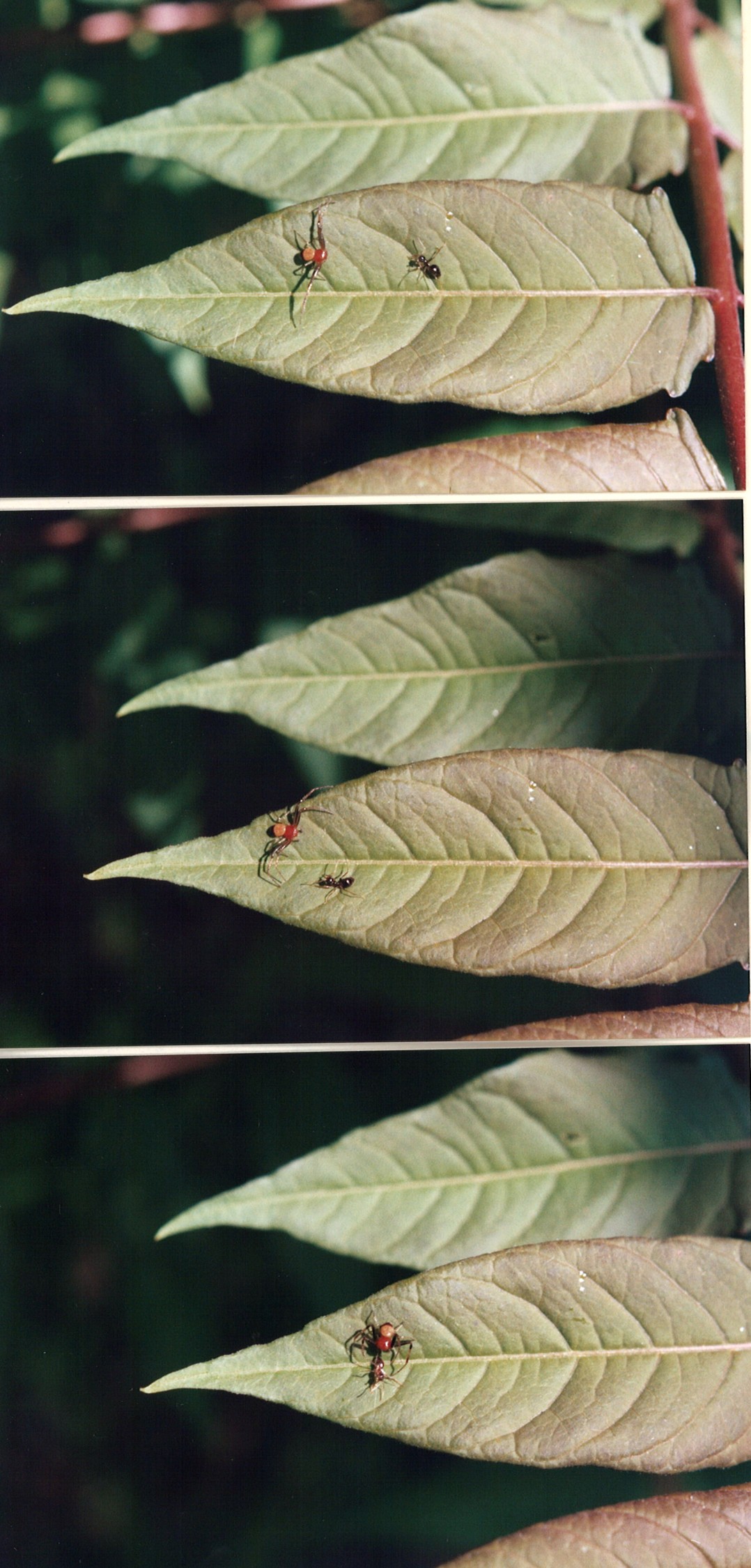
Three stages of a spider capturing an ant, on an Ailanthus leaf in Oklahoma.
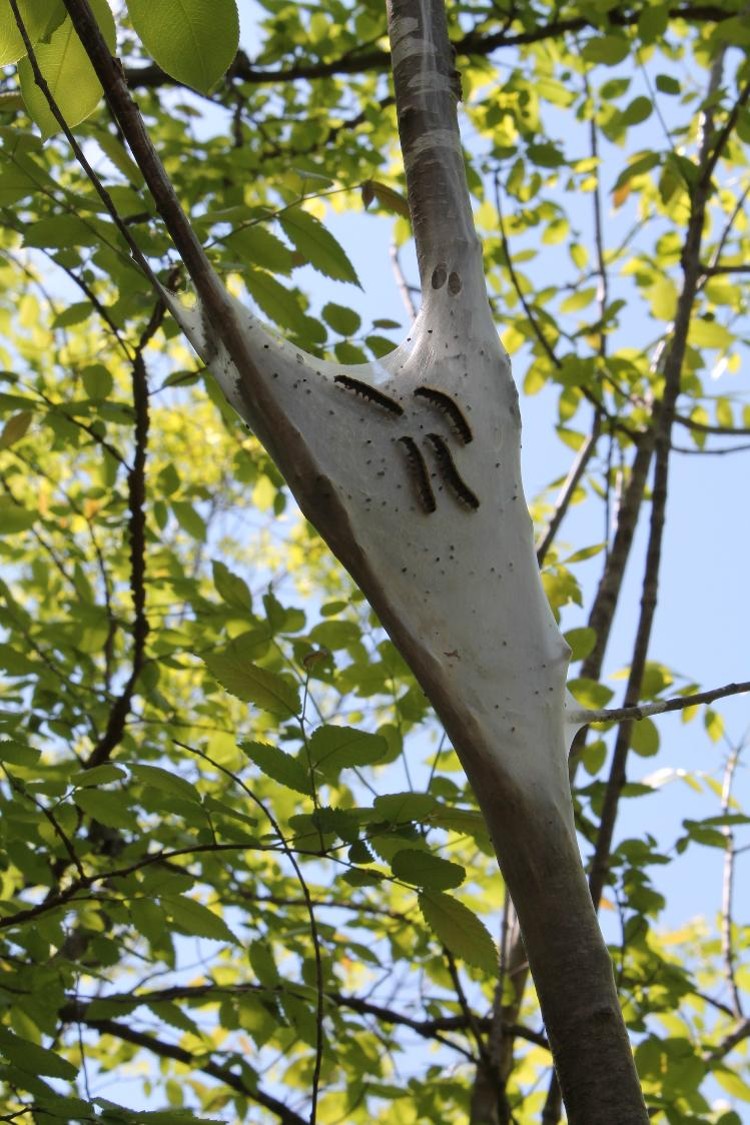
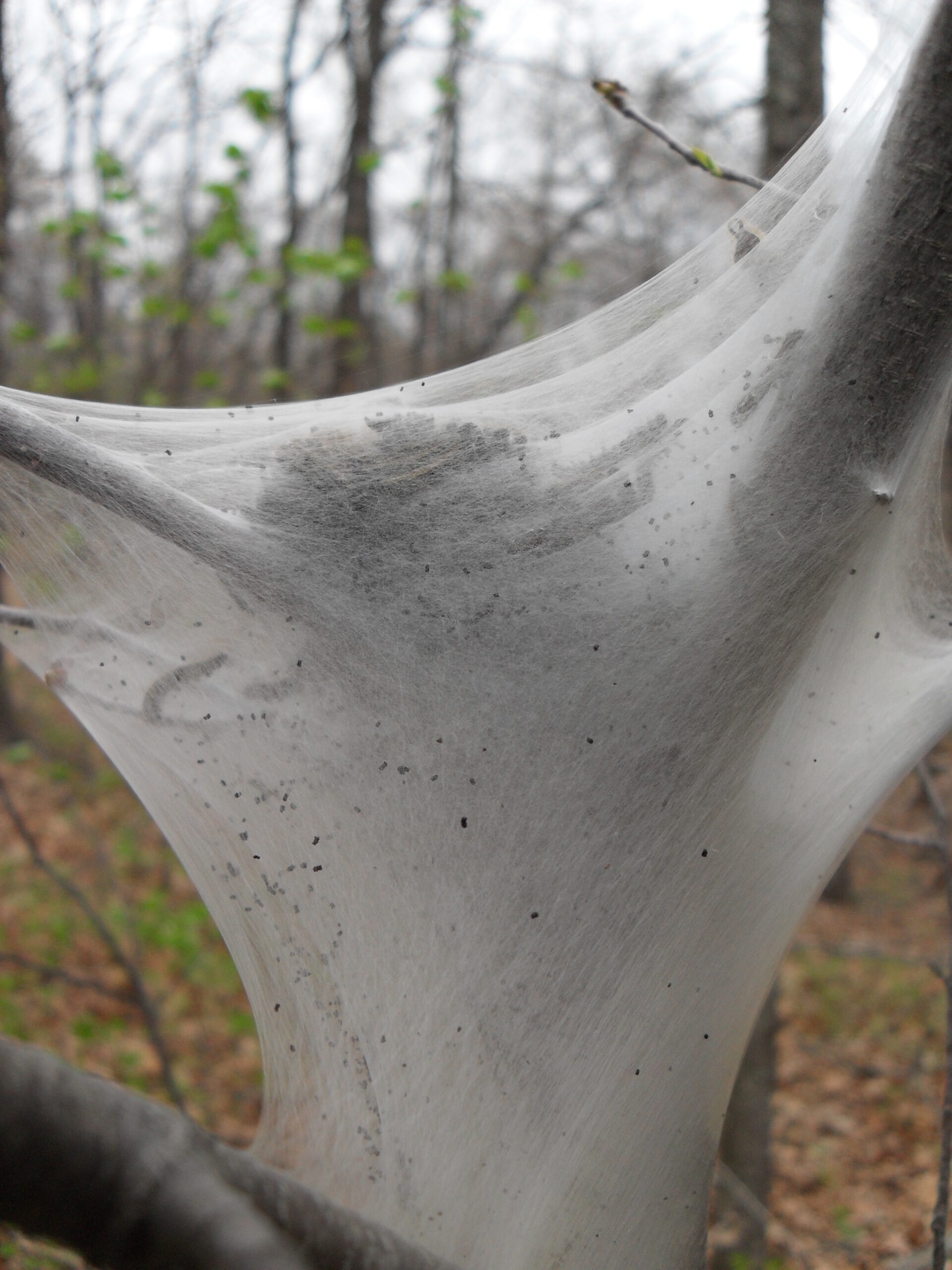
Tentworms in northeastern Oklahoma. Normally tentworms spend the day inside of their strong fibrous tent, safe from most predators. But some of them crawl outside, very obvious to predators, and twitch, making themselves even more obvious. This is probably the result of a parasite which alters the brain activity of the caterpillar. The parasite probably alternates between bird and caterpillar as its host.
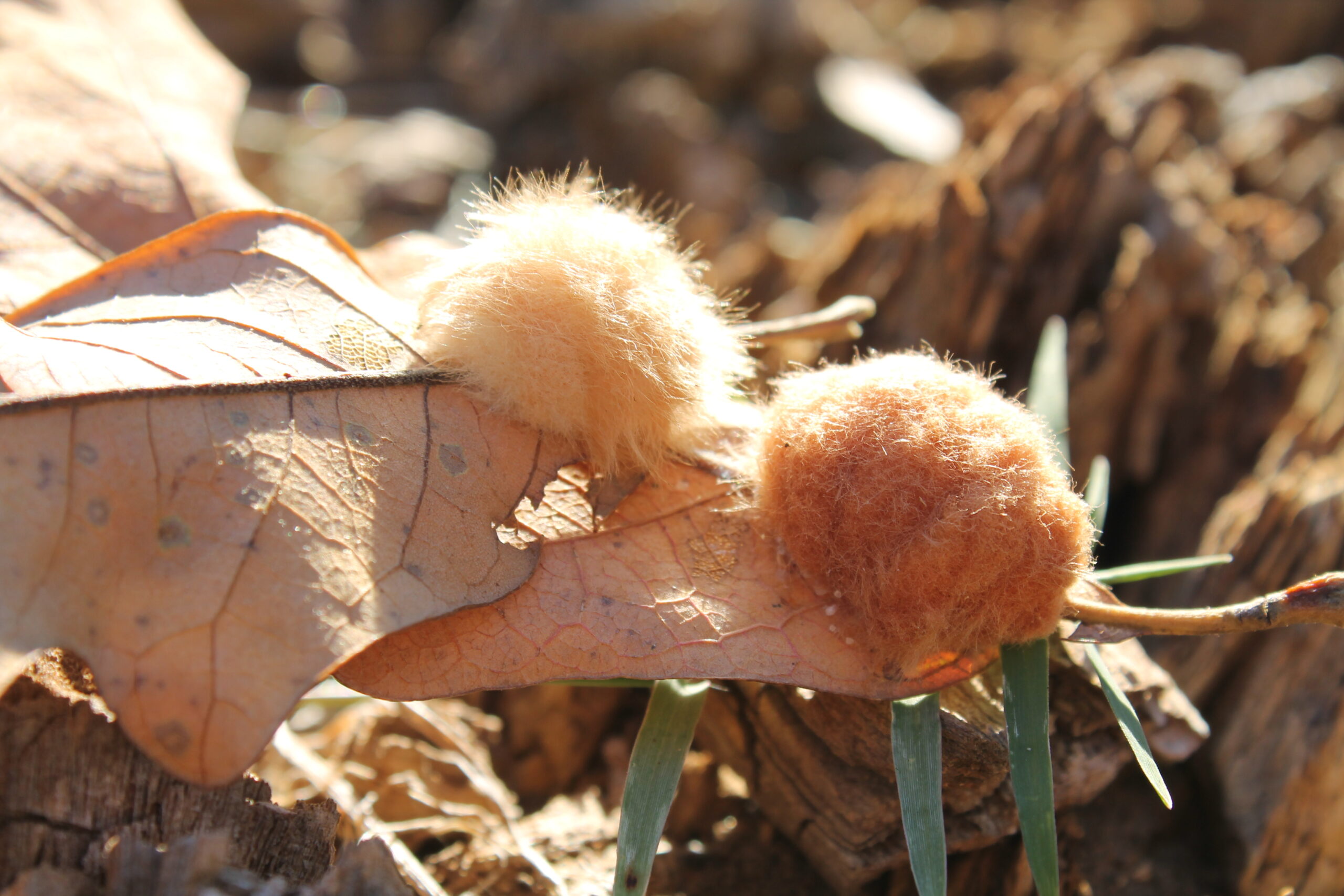
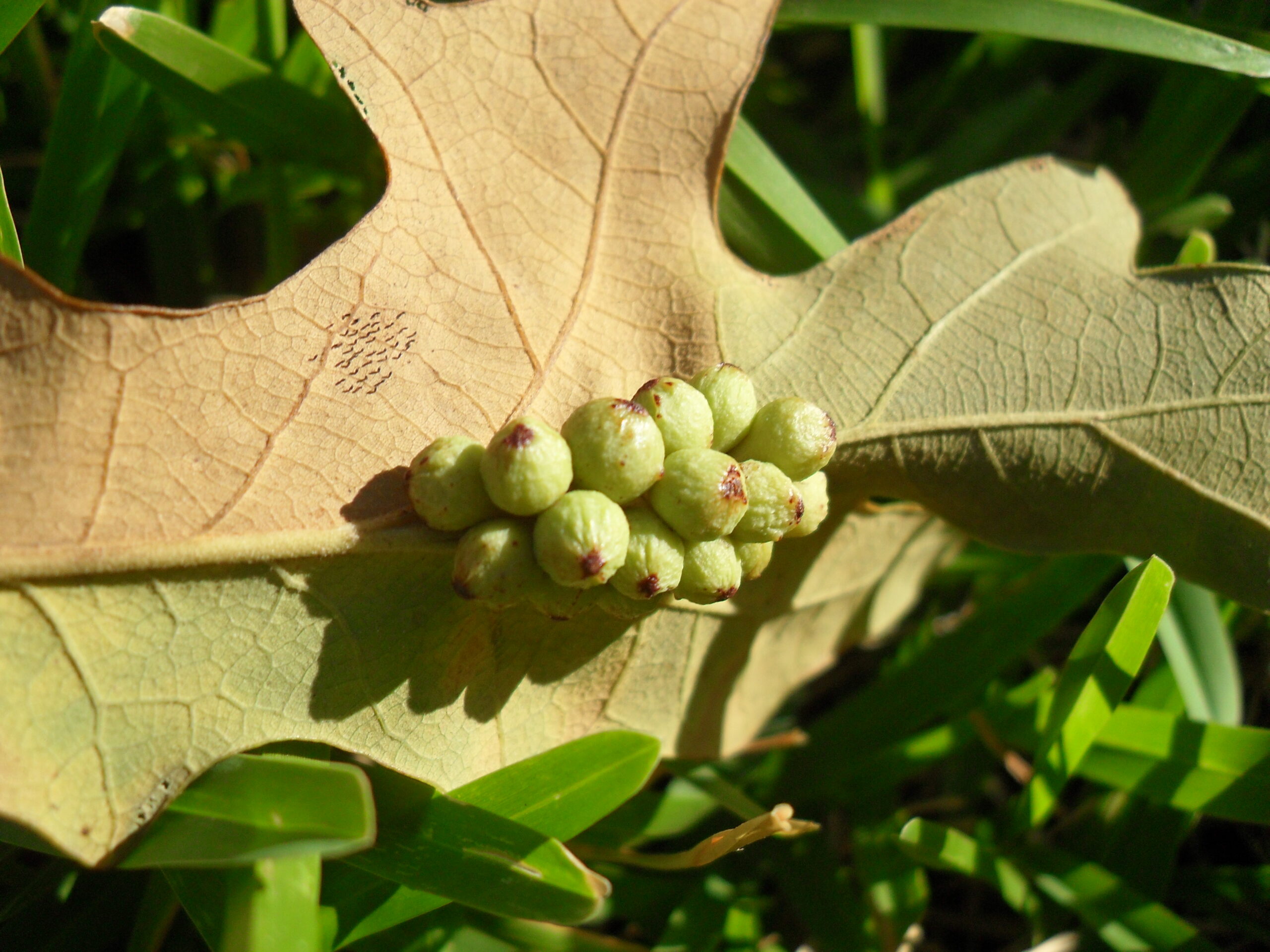
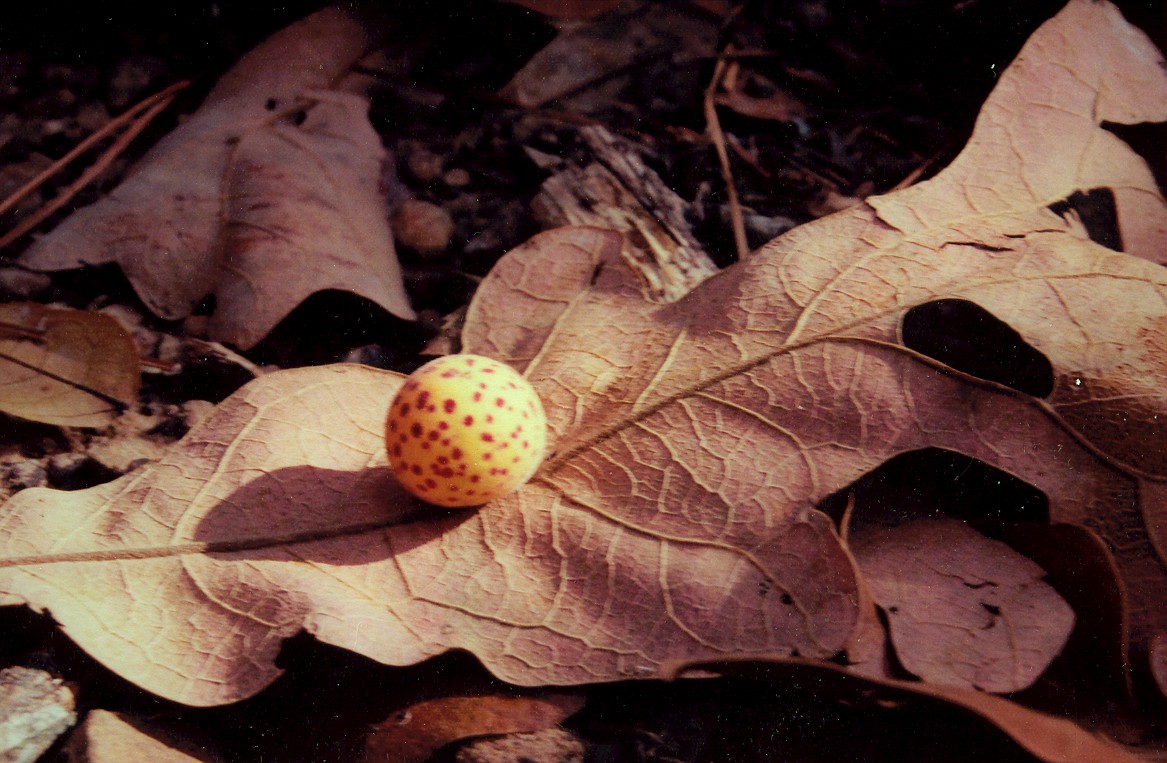
Insect galls on post oak leaves. They produce chemicals that induce the plant host to construct protective chambers where the insect grub can be fed on plant nutrients and protected by camouflage. The main oak tree response is to shed the leaves earlier than their seasonal norm.
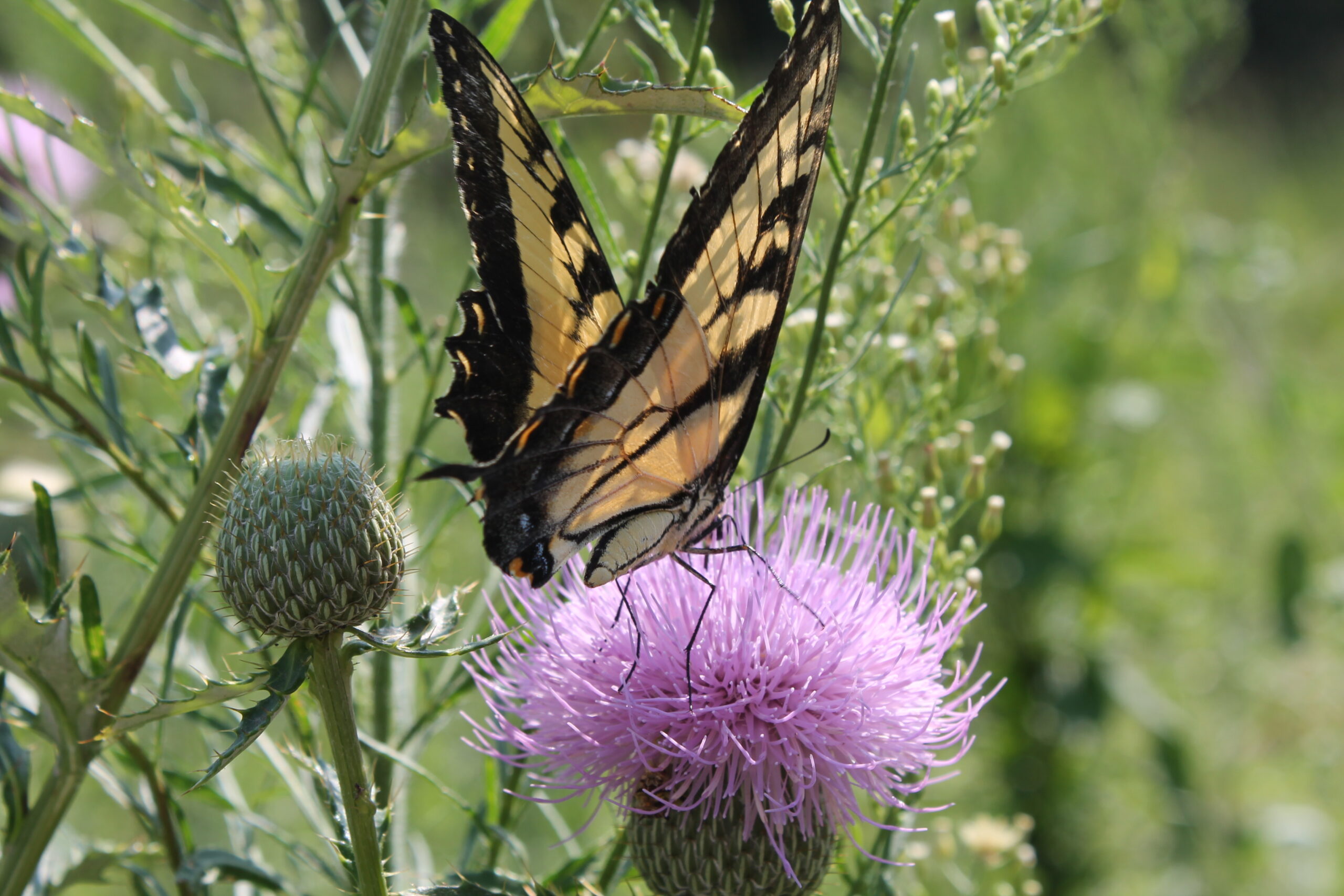
A tiger swallowtail on a thistle in Oklahoma. The butterfly seeks nectar, and it appears to pollinate the thistle, although we do not know if pollen actually gets carried to another thistle.
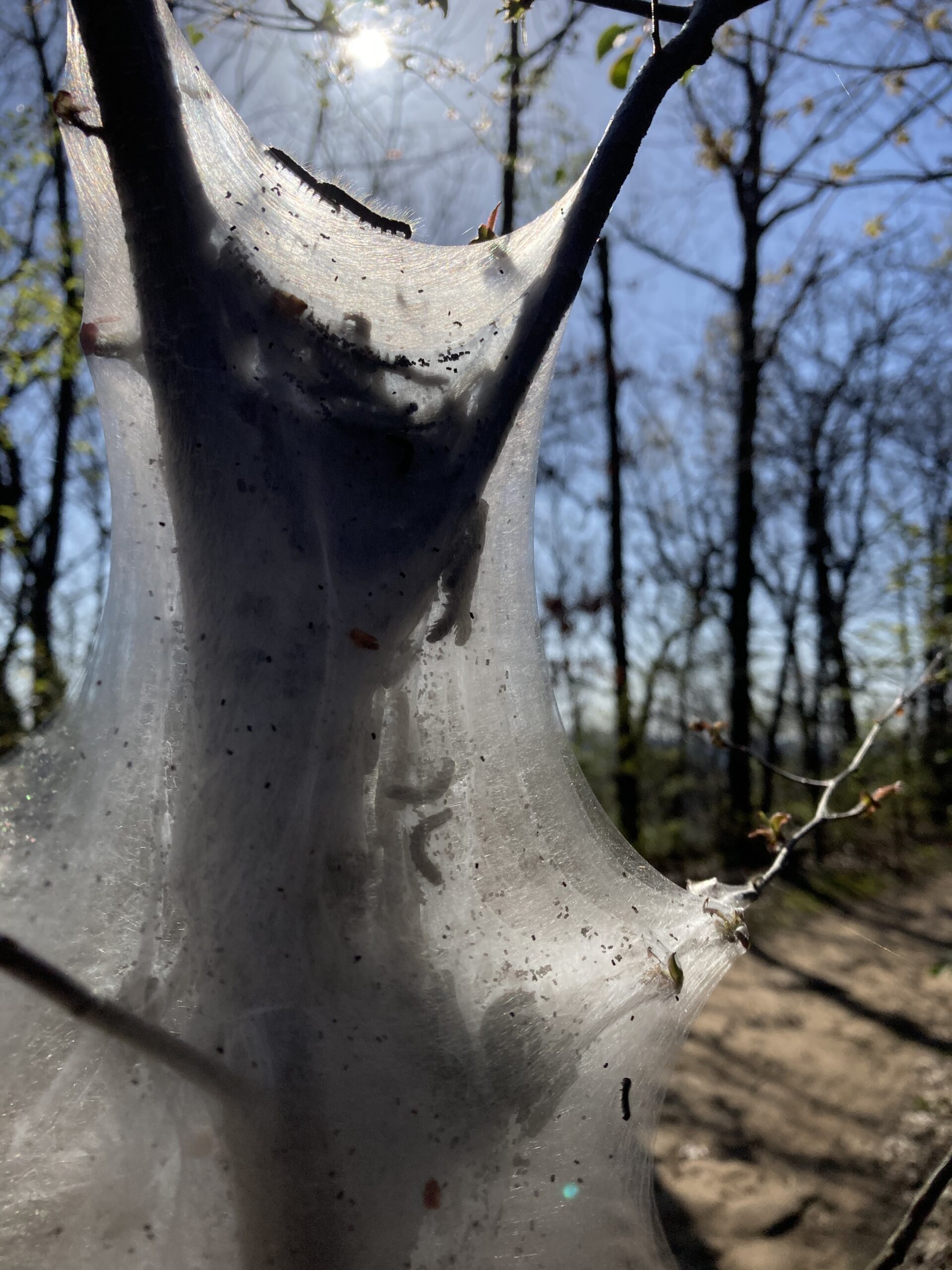
Tentworm caterpillars construct protective fibrous tents in which to hide during the day. At night, they come out and eat tender spring leaves of black cherry trees. Some of the caterpillars have not, or not yet, retreated into the tent.
Tentworm caterpillars construct protective fibrous tents in which to hide during the day. At night, they come out and eat tender spring leaves of black cherry trees.
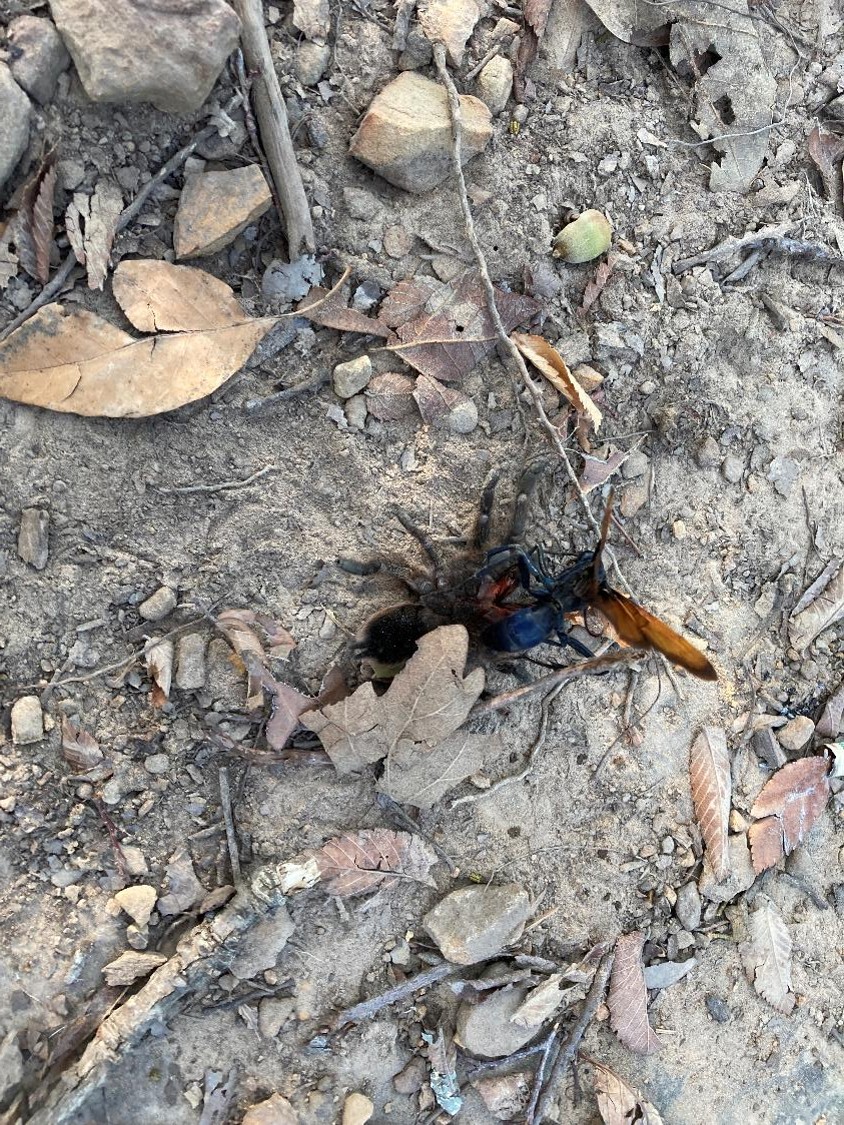
A “tarantula hawk” wasp stings and paralyzes a tarantula in northeastern Oklahoma. The wasp will then lay eggs which hatch and eat the still-living tissues of the tarantula.
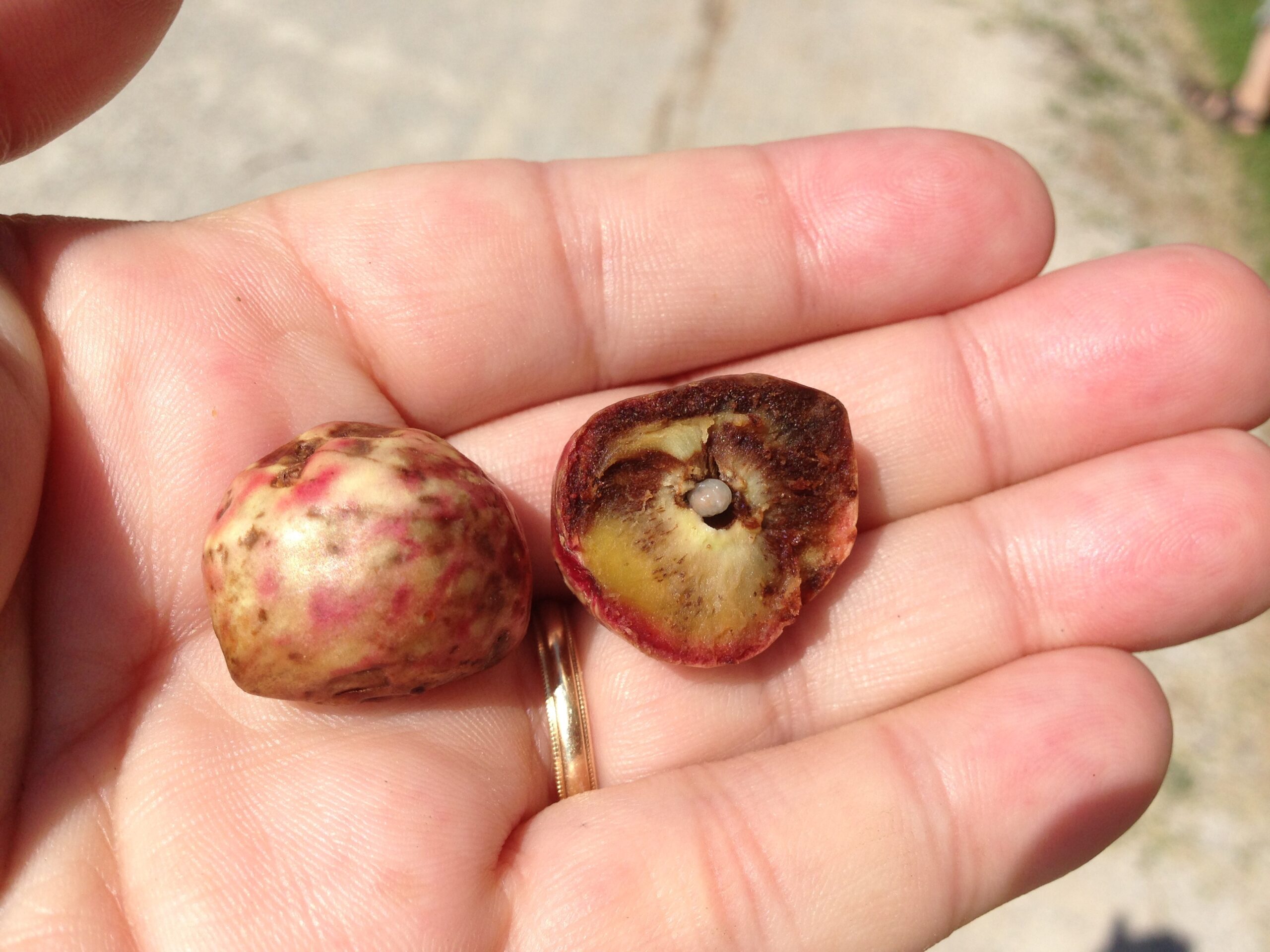
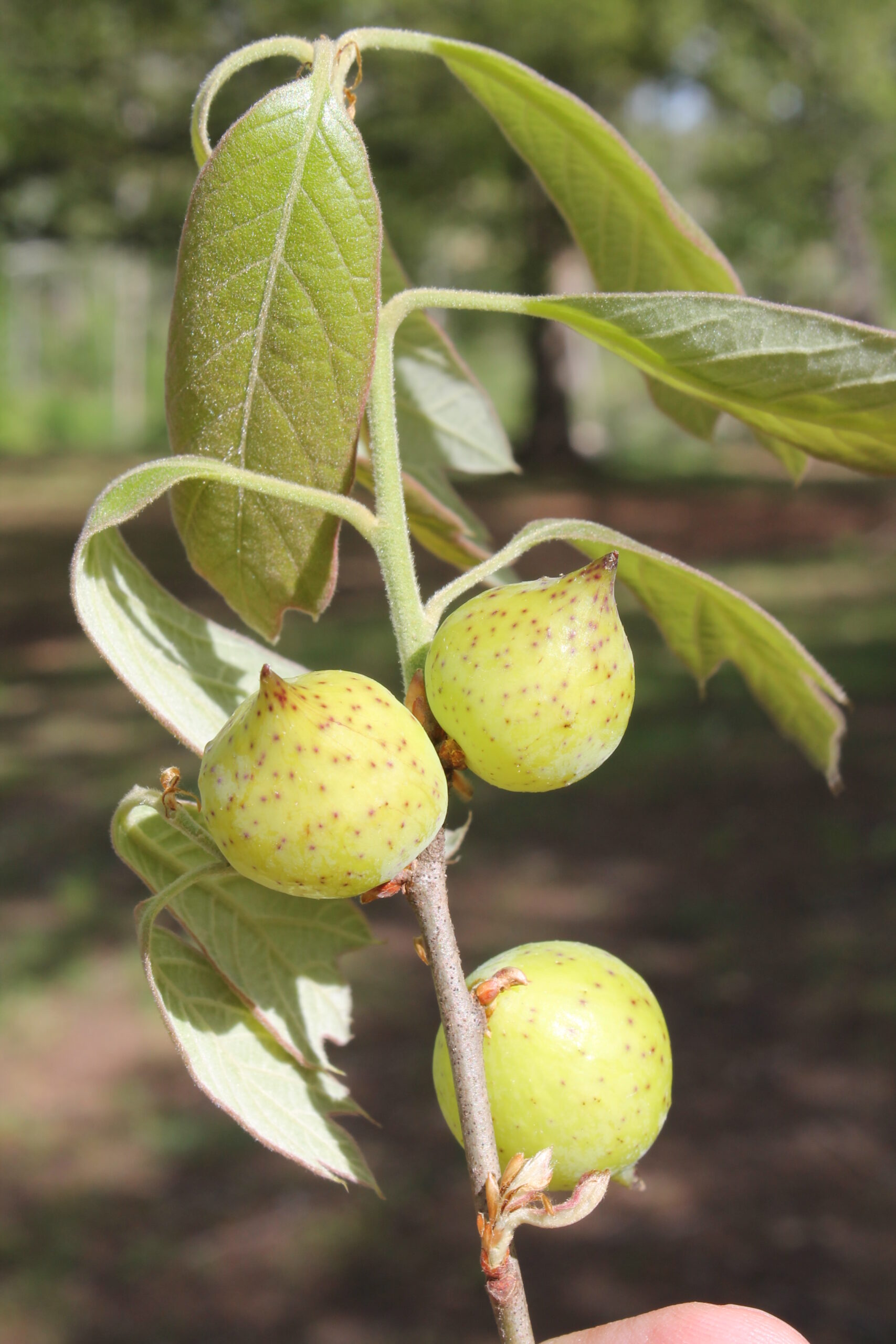
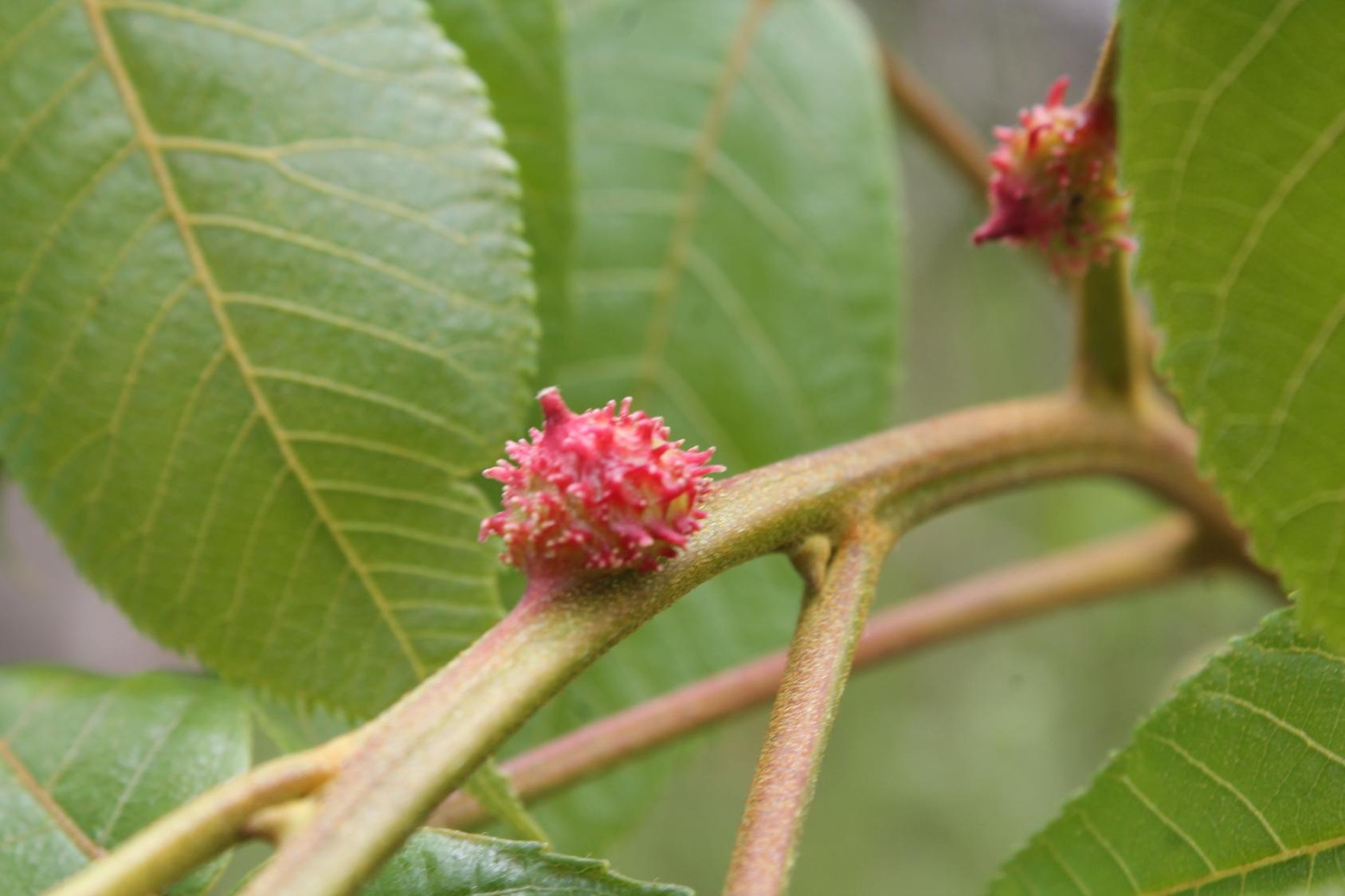
A shumard oak gall (Quercus shumardi) in Oklahoma, in which the grub actually occupies very little of the space. The grub produces chemicals which induce the tree to produce a protective gall inside of which the grub is fed and develops.
Insect galls on Quercus falcata (Southern red oak) in Oklahoma.
Insect galls on the leaf of a post oak (Quercus stellata) in Oklahoma. The grubs produce chemicals that induce the oak to produce chambers in which the grub is fed and protected. The oak’s defense is to shed the leaf earlier than the seasonal norm. To the upper left of the large galls, there appears to be smaller galls of a different insect species.
Insect galls on the leaf of a post oak (Quercus stellata) in Oklahoma. The grubs produce chemicals that induce the oak to produce chambers in which the grub is fed and protected. The oak’s defense is to shed the leaf earlier than the seasonal norm. The gall is strongly attached to the leaf.
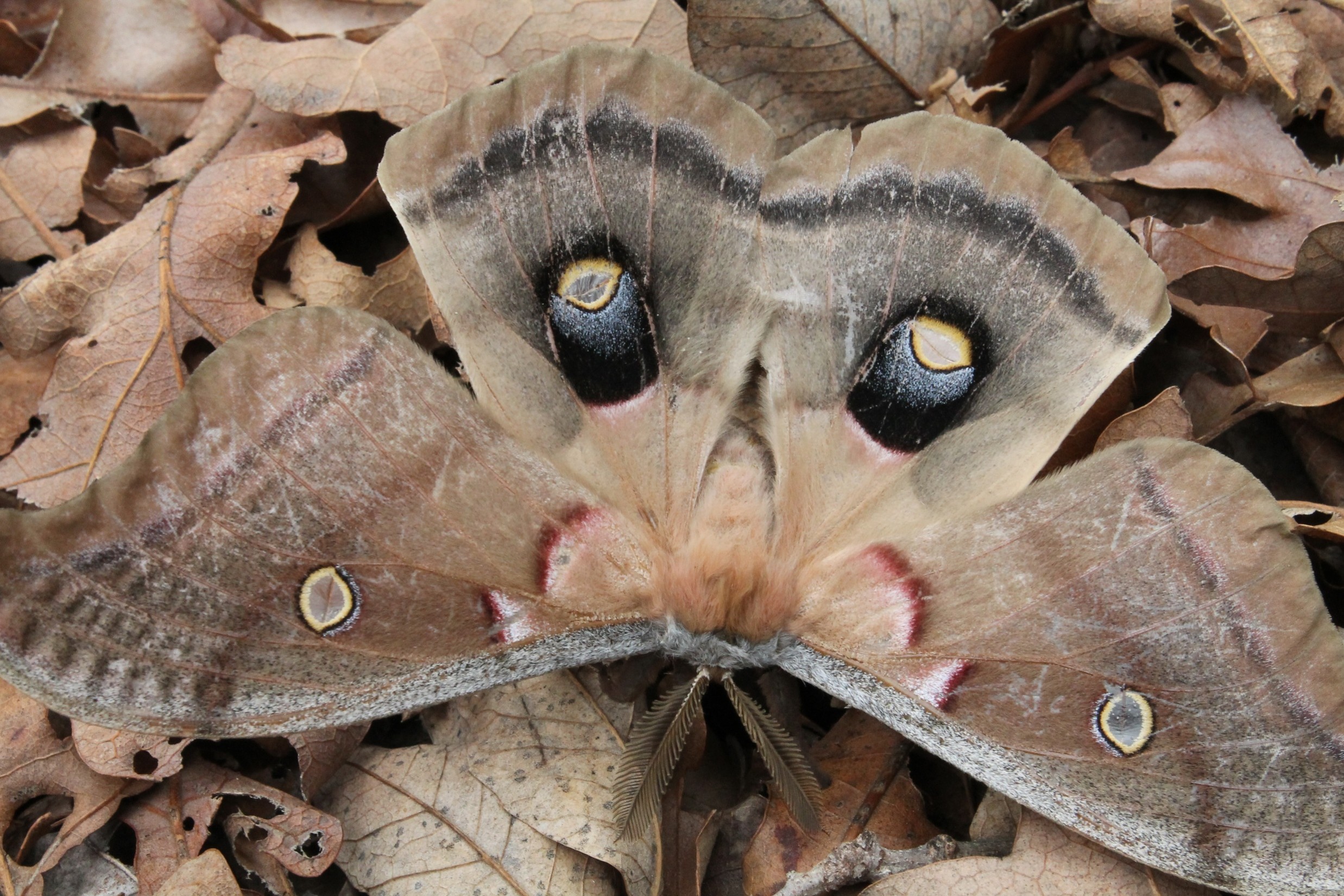
This moth in Oklahoma has wing patterns that suggest the eyes of a large animal, thus scaring away potential predators. This is Batesian mimicry. The moth keeps the mimic-eyes hidden on its lower wings then reveals them suddenly to frighten away the predator.
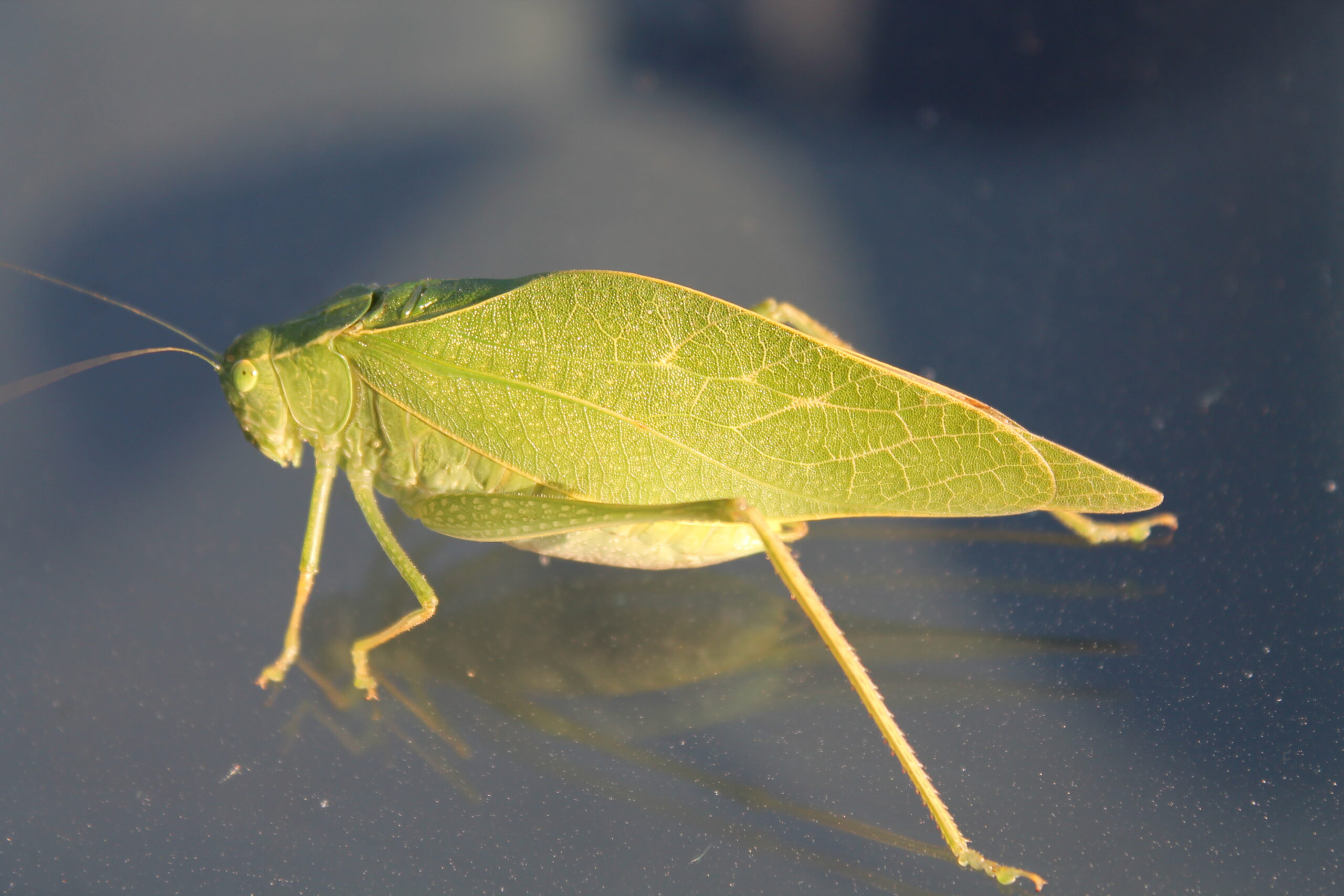
This katydid in Oklahoma is camouflaged to look not just like a leaf but like the leaf of an abundant tree in Oklahoma, the sugarberry genus Celtis.
Insect galls on the leaf of a hickory in Oklahoma. The grubs produce chemicals that induce the hickory to produce chambers in which the grub is fed and protected. The tree’s defense is to shed the leaf earlier than the seasonal norm. The gall looks (at least to us) like a ripe fruit a predator is unlikely to eat.
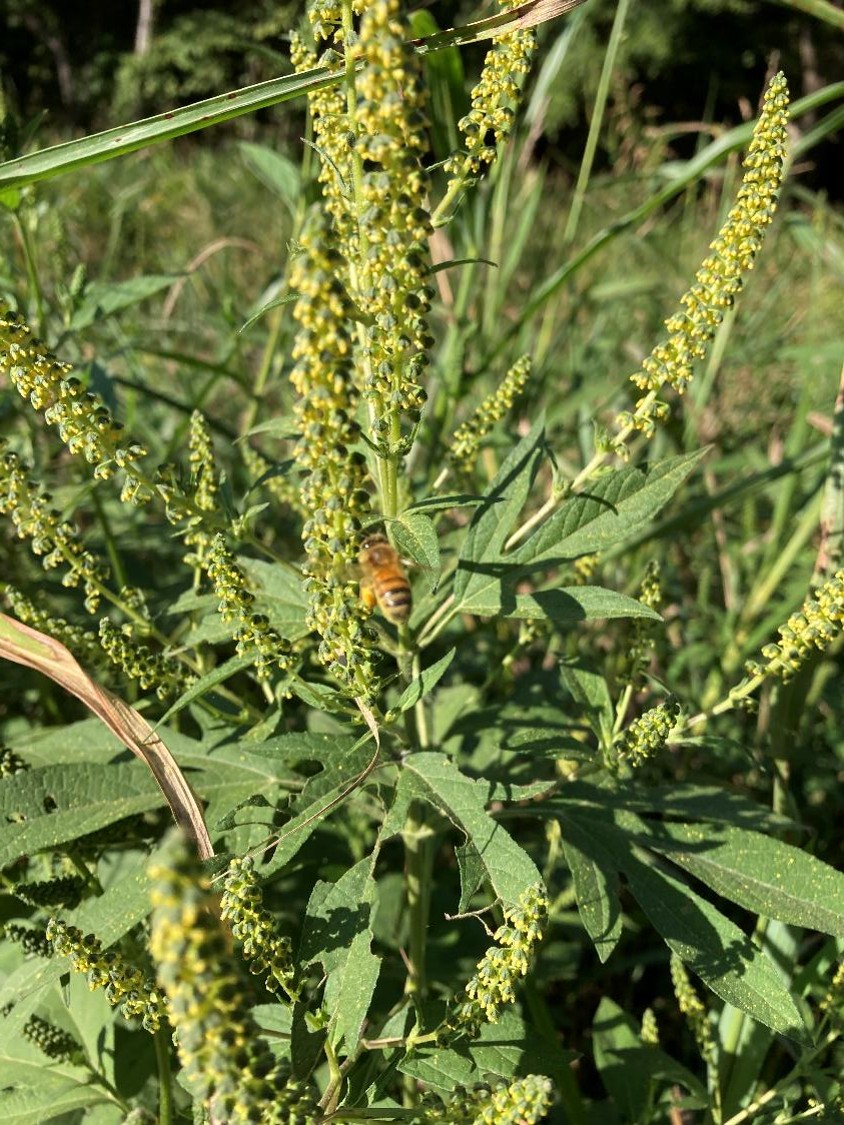
Ragweeds (Ambrosia trifida), here in Oklahoma, are generally considered to be wind-pollinated. They certainly produce a lot of pollen. But here a honeybee visits the flowers.
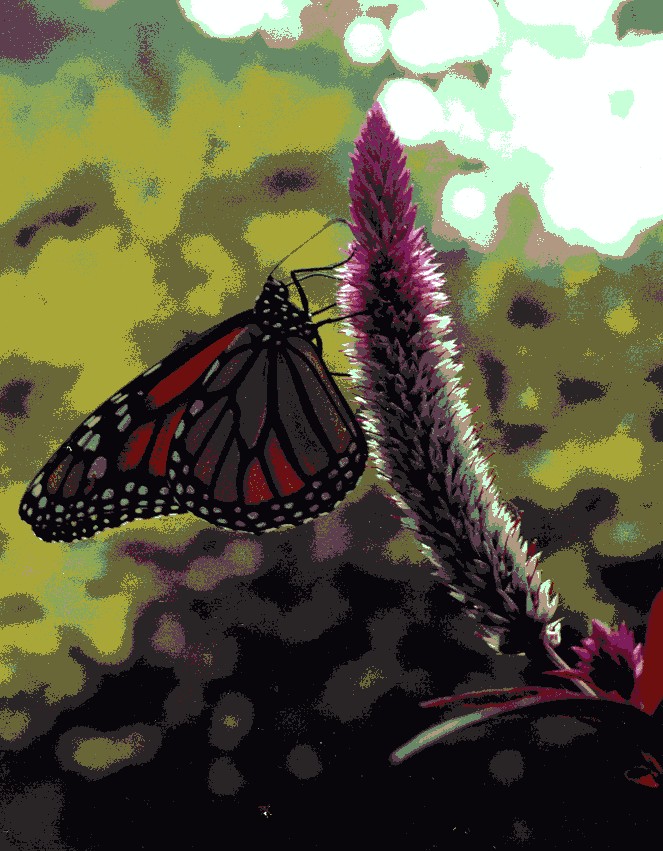
Special effects photo of a monarch butterfly extracting nectar from a flower. Flowers pollinated by butterflies are usually long and narrow, like butterfly tongues, but a butterfly can drink nectar from a short open flower if it chooses to do so.
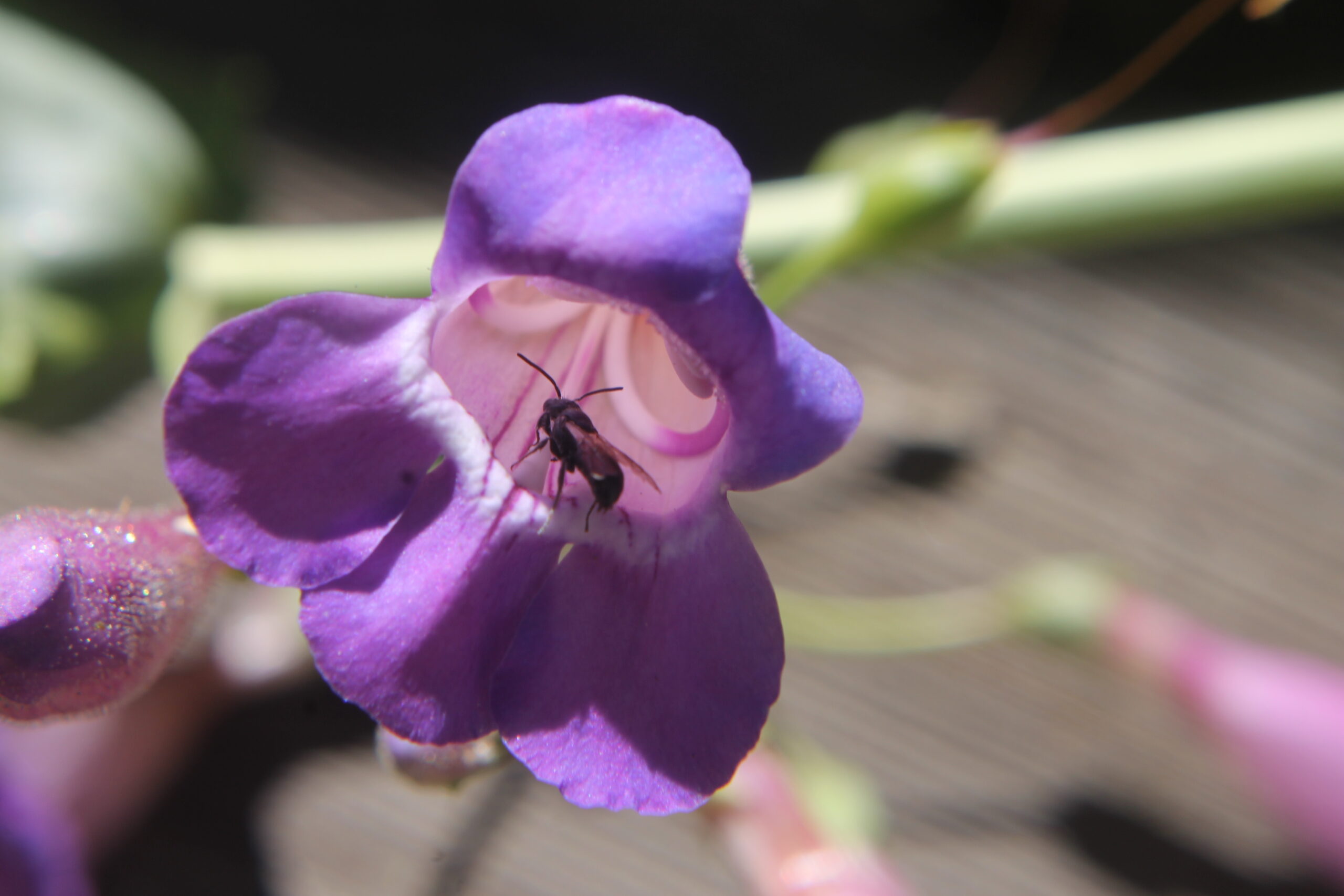
A wasp crawls into a Penstemon flower in the chaparral of southern California.
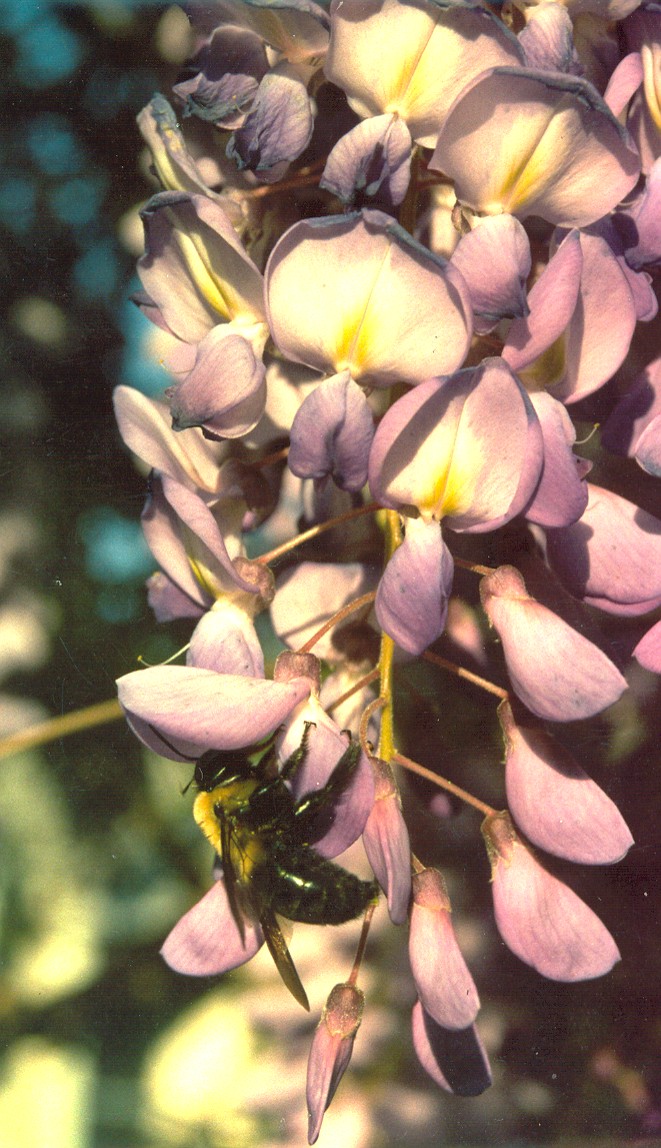
A bumblebee extracts pollen and nectar from a Wisteria flower in Oklahoma. Smaller insects are not strong enough to open the keel of the flower and get to the pollen and nectar.
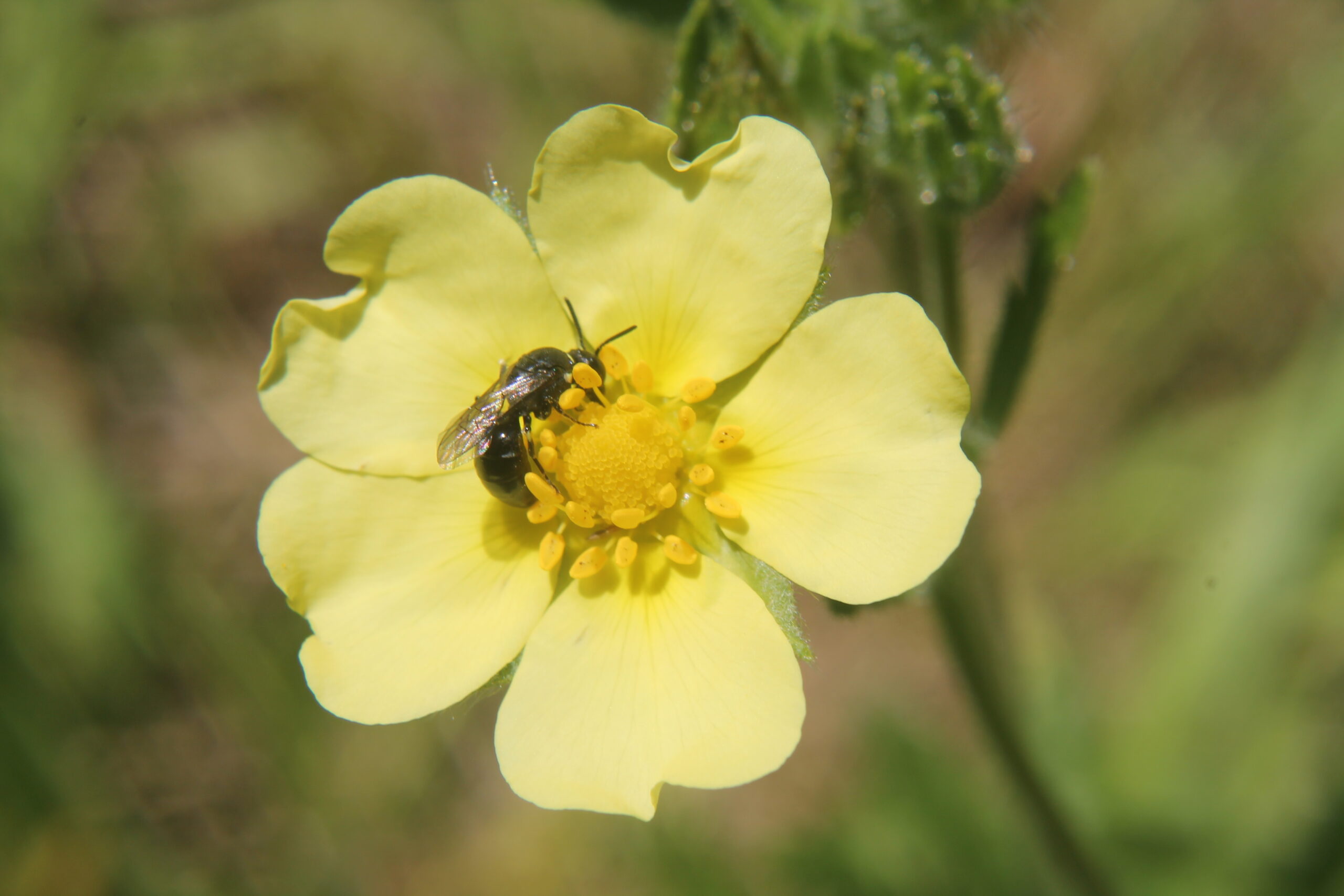
A bee obtains nectar from, and probably pollinates, this Potentilla flower in the Black Hills of South Dakota.
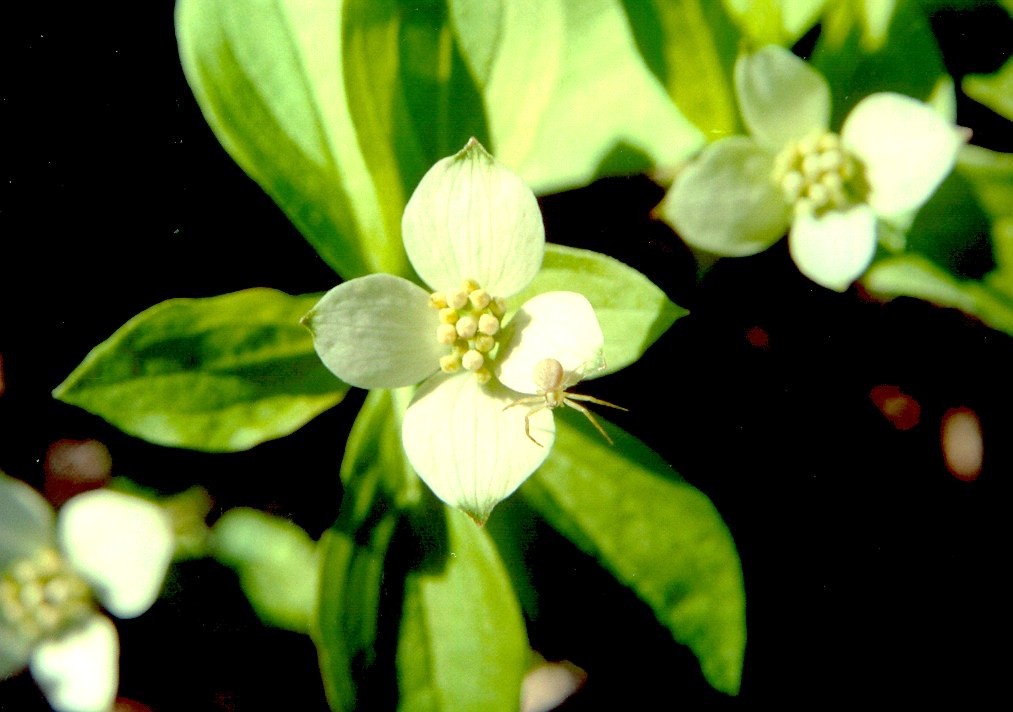
A spider (inconspicuous against the white background) waits on the bracts of a bunchberry (Cornus canadensis) to catch an insect pollinator.
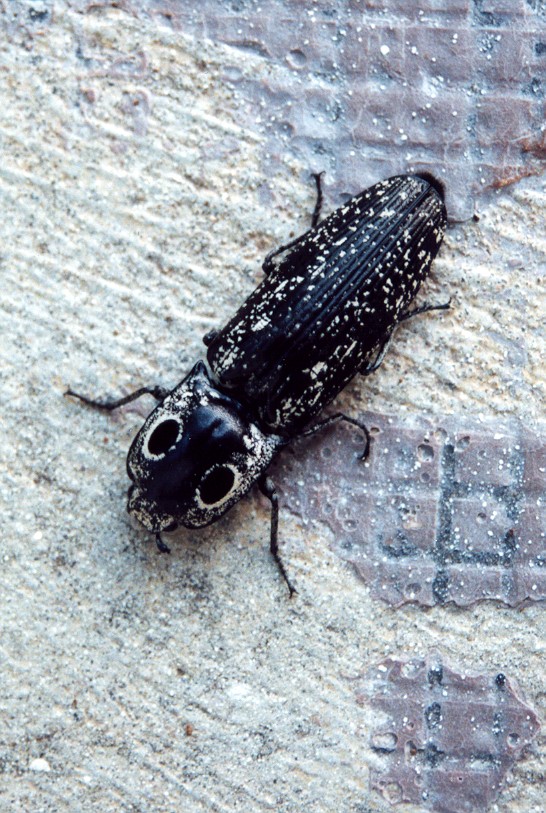
A click beetle has two kinds of defense against predators. The first is Batesian mimicry, in which its exoskeleton spots look like large animal eyes that might frighten the predator. The second is its ability to suddenly “click” and propel itself away from the predator.
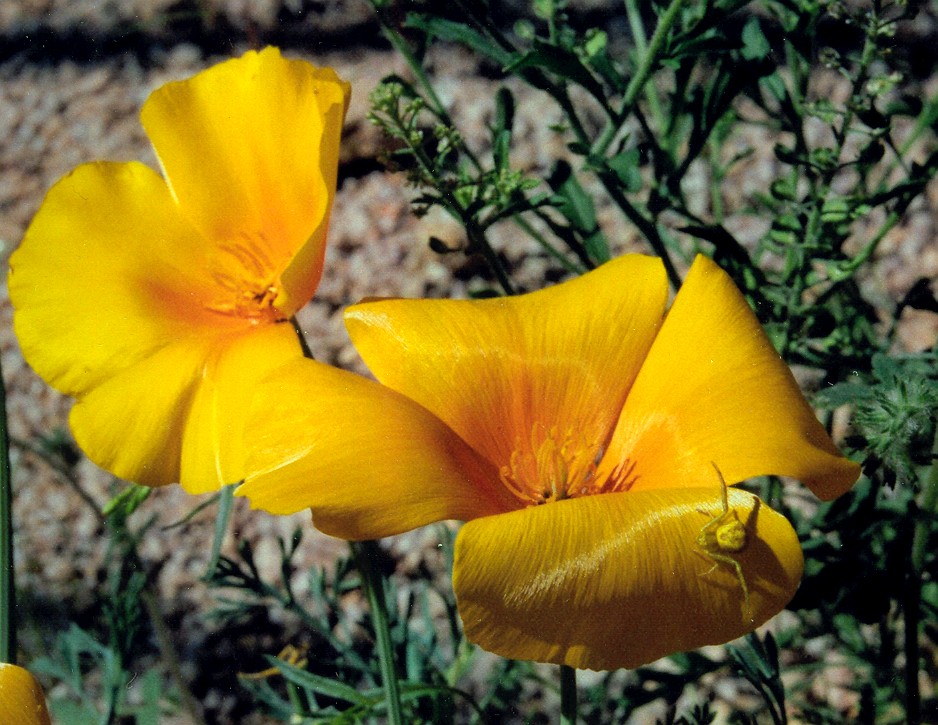
A spider (inconspicuous against the golden background) waits on the petals of a Mexican poppy (Escholtzia mexicana) in Arizona to catch an insect pollinator.
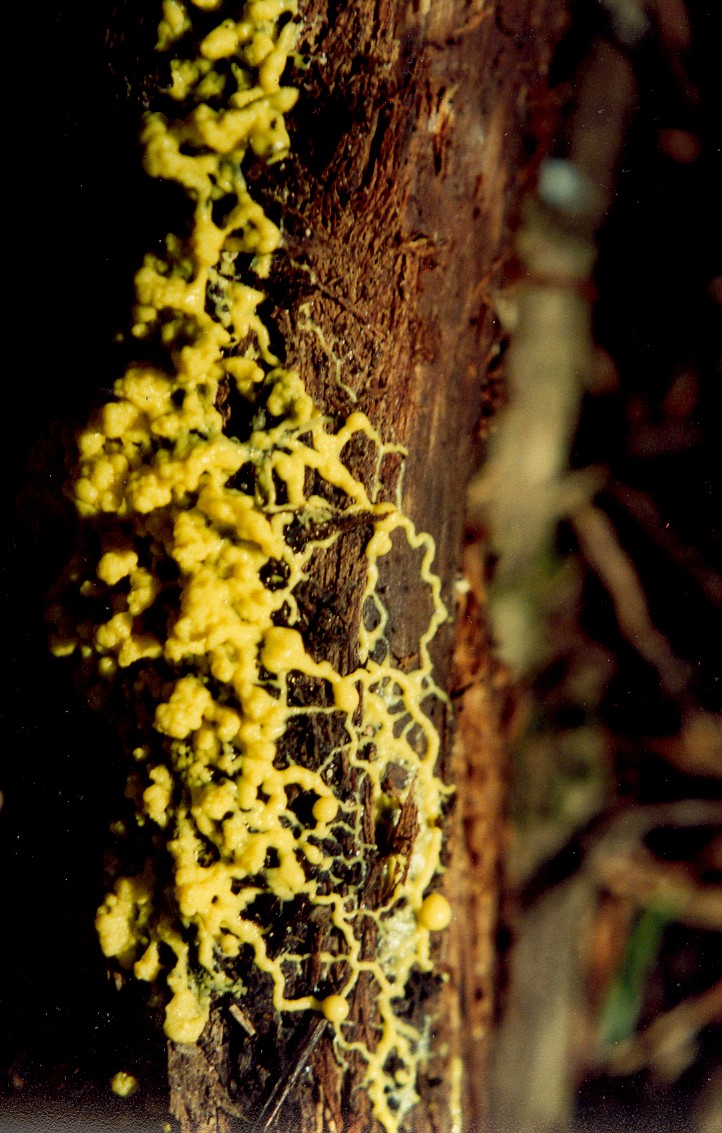
A slime mold in a wet forest of the Pacific Northwest.
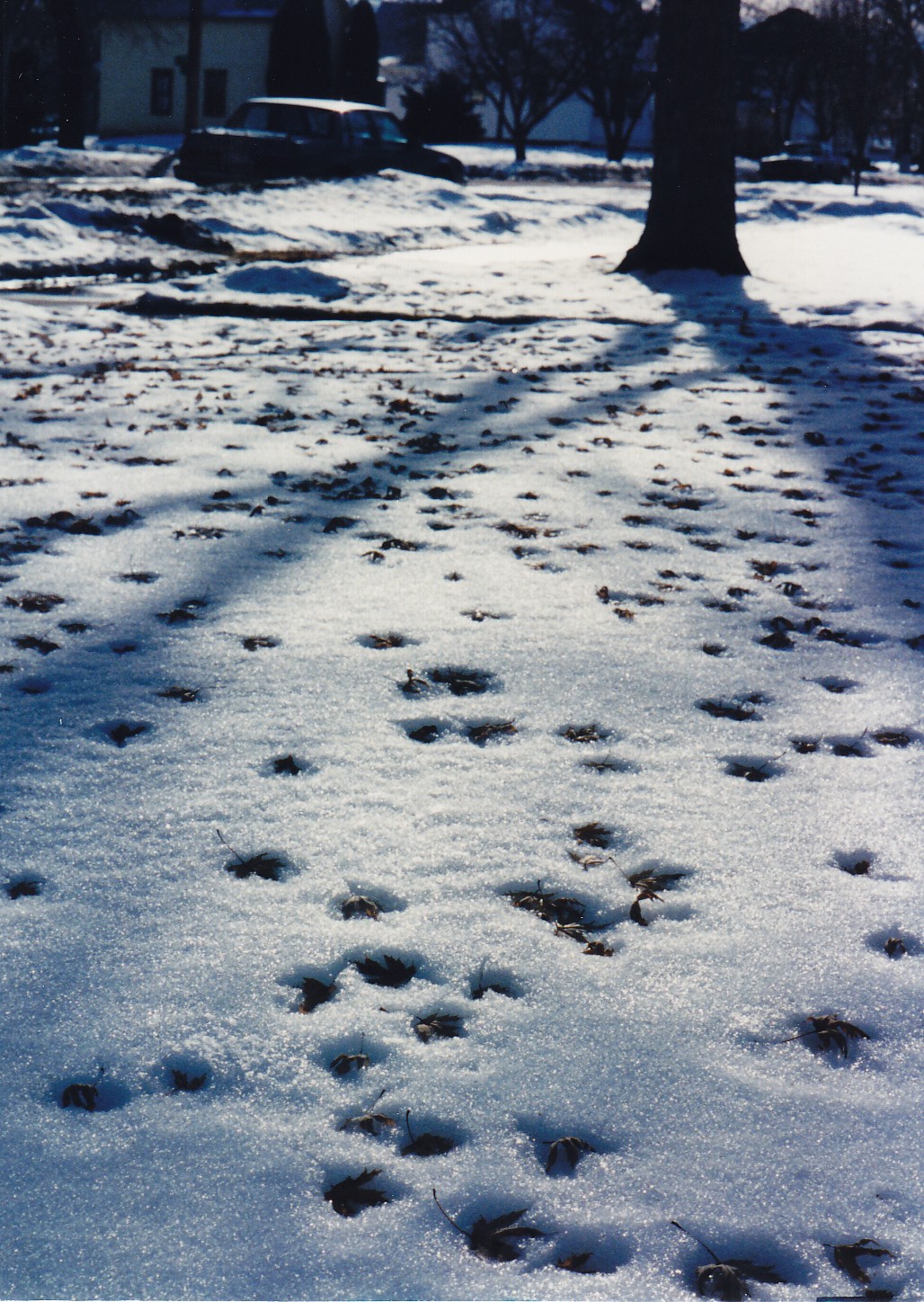
Leaves melt their way into the snow in Minnesota. Leaves absorb sunlight and become warm while the snow reflects the sunlight and remains cold.
Slow image of a fast Darwin bobble-head.
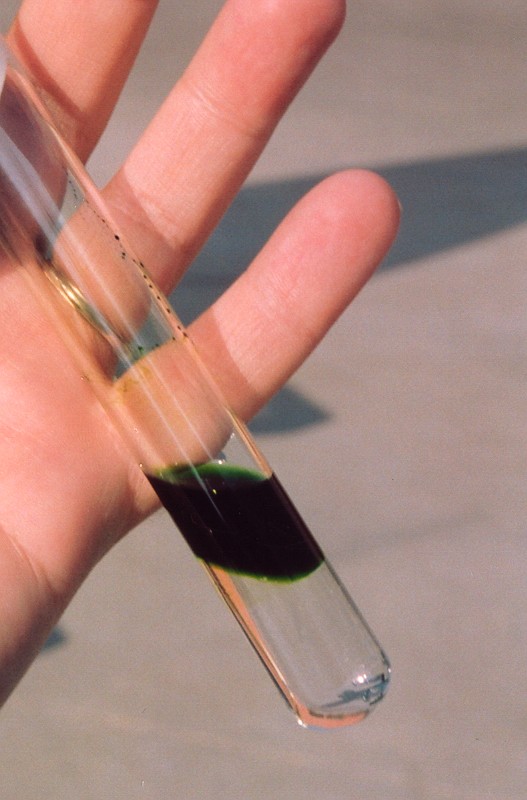
Leaf extract (mostly chlorophyll) is in the organic layer (mostly petroleum ether and acetone). Chlorophyll, being non-polar, does not dissolve in water.
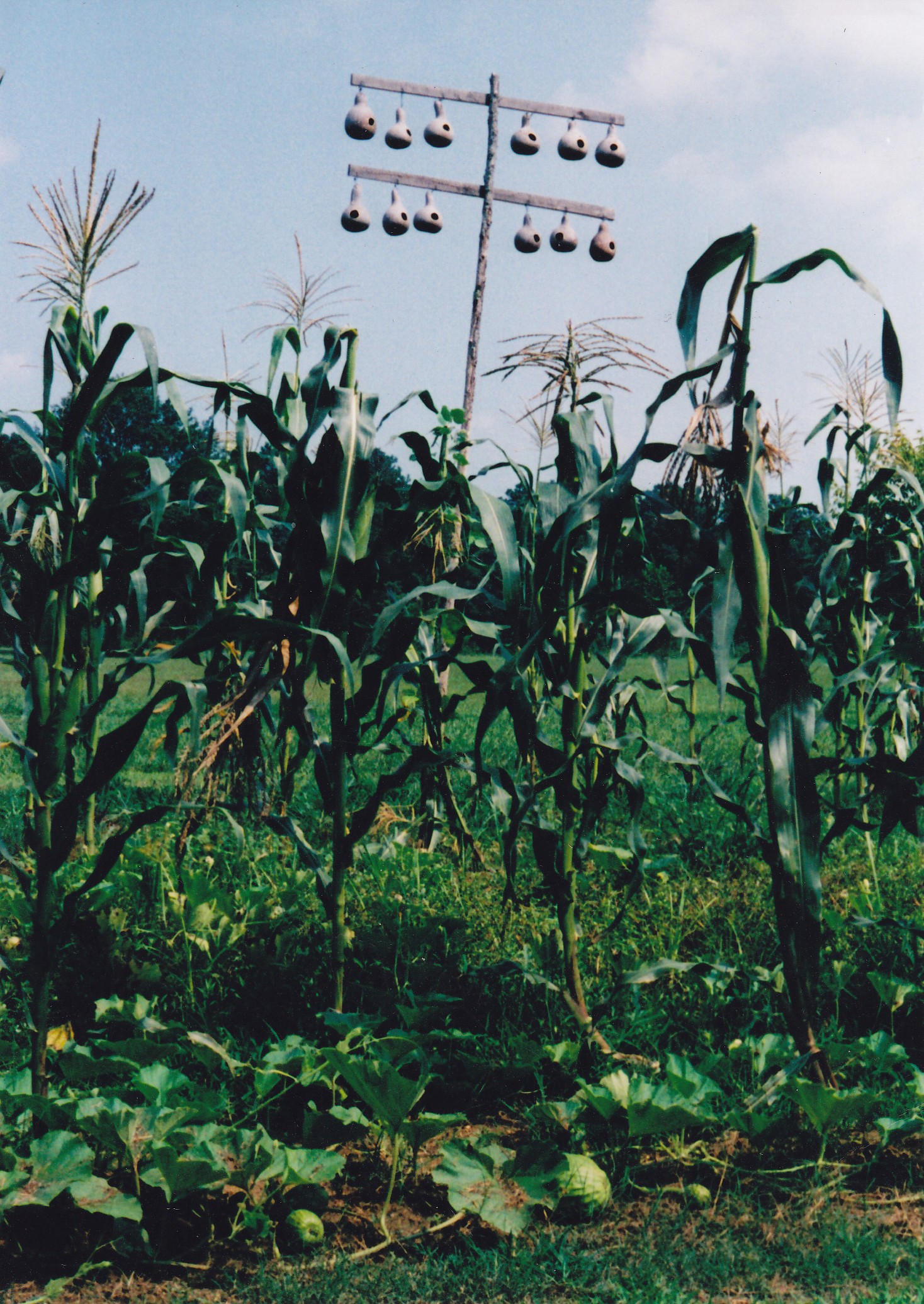
A reconstructed pre-Columbian Cherokee farm at New Echota, Georgia. Maize, squash (in this case, watermelons) and beans grow together, which reduces the pest populations of each plant. The gourds serve as bird houses; the birds eat insect predators. This system needs little if any pesticide.
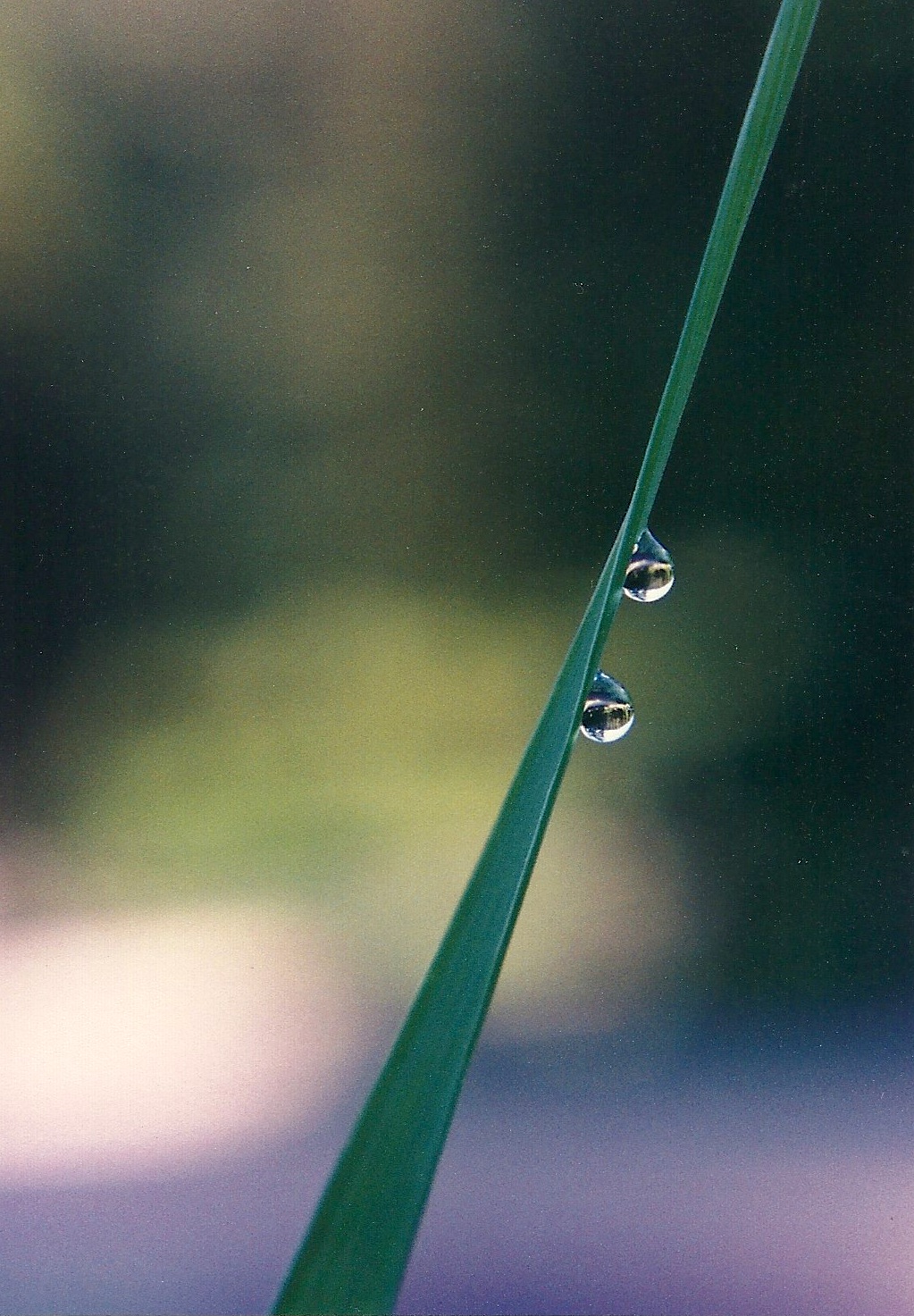
These water drops, on a grass leaf in the Badlands of South Dakota, are not dew. They came from water pushed up from the roots during the night. They refract an inverted view of the world.